

The Portland class heavy cruiser USS Indianapolis set out on its secret mission on July 16, 1945, under the command of Captain Charles Butler McVay III. She was delivering “Little Boy” to the Pacific island of Tinian, the atomic bomb which would later be dropped on Hiroshima.
Indianapolis made her delivery on July 26, arriving at Guam two days later and then heading for Leyte to take part in the planned invasion of Japan. She was expected to arrive on the 31st.
 The Japanese submarine I-58, Captain Mochitsura Hashimoto commanding, fired a spread of six torpedoes at the cruiser, two striking Indianapolis’ starboard bow at fourteen minutes past midnight on Monday, July 30. The damage was massive. Within 12 minutes, the 584-ft, 9,950-ton vessel had rolled over, gone straight up by the stern, and sunk beneath the waves.
Approximately 300 of Indianapolis’ 1,196-member crew were killed outright, leaving nearly 900 treading water. Many had no life jackets. There had been no time, and there were few life boats.
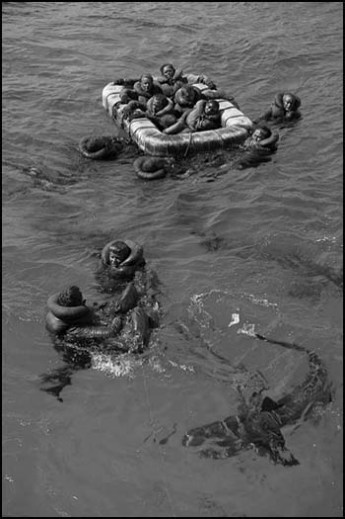
The ordeal faced by the survivors, is beyond description. Alone and stranded in open ocean, these guys treaded water for four days, hoping and praying for the rescue that did not come.
Shark attacks began on the first day, and never let up. Kapok-filled life vests became waterlogged and sank after 48 hours, becoming worse than useless. Exhaustion, hypothermia, and severe sunburn took their toll as the hours turned into days. Some men went insane and began to attack their shipmates, while others found the thirst so unbearable that they drank seawater, setting off a biological chain reaction which killed them within a few hours. Some simply swam away, following some spectral vision that only he could see. Through it all, random individuals would suddenly rise up screaming from the ocean, then to disappear forever, as the sharks claimed another victim.
Navy Command had not the slightest idea of what happened to Indianapolis, nor why she didn’t show up on the 31st. A random patrol aircraft passing the area that Thursday afternoon, that finally discovered men floating in open ocean. The last Indianapolis survivor was plucked from the ocean Friday afternoon, well past half-dead after nearly five days in the water. Of the 900 or so who survived the sinking, only 316 remained alive at the end of the ordeal.
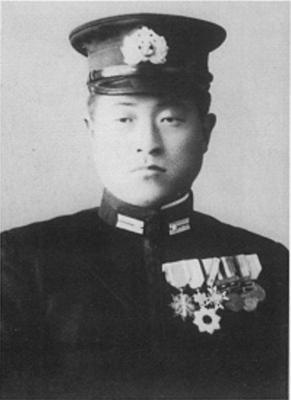
The Navy had committed multiple errors, from denying McVay’s requested escort to informing him that his route was safe, even when the surface operations officer knew there were at least two Japanese submarines, operating in the area.
No captain in the history of the United States Navy was subjected to court-martial for losing a ship sunk by an act of war. The United States Navy lost over 350 ships to combat operations during WW2. It didn’t matter. On this occasion, someone was going to pay.
A hastily convened court of inquiry was held in Guam on August 13, leading to McVay’s court-martial. There was evidence that the Navy itself had put the ship in harm’s way. When prosecutors flew the I-58 commander in to testify, Hashimoto swore that zigzagging would have made no difference. The Japanese Commander even became part of a later effort to exonerate McVay, but to no avail. Charles Butler McVay III was convicted of “hazarding his ship by failing to zigzag“, his career ruined.
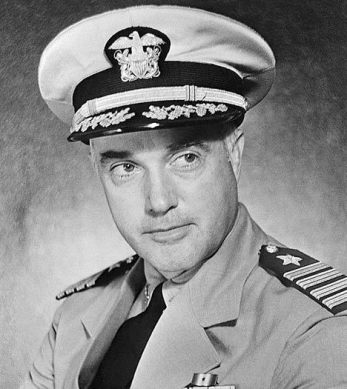
McVay had wide support among Indianapolis’ survivors, but opinion was by no means unanimous. Birthdays, anniversaries and holidays would come and go and there was always some piece of hate mail, blaming him for the death of a loved one. One Christmas missive read “Merry Christmas! Our family’s holiday would be a lot merrier if you hadn’t killed my son”.
McVay began to doubt himself. By 1968 he must have felt the weight of Indianapolis’ dead, like a great stone upon his shoulders.
On November 6, 1968, Charles Butler McVay III sat down on his front porch in Litchfield Connecticut, took out his Navy revolver, and killed himself. He was cremated, his ashes scattered at sea.
It would take more than 20 years, for the evidence which exonerated him to be declassified.
Afterward:
Hunter Alan Scott was eleven and living in Pensacola when he saw the movie “Jaws”, in 1996. He was fascinated by the movie’s brief mention of the Indianapolis’ shark attacks, the next year, he created his 8th grade “National History Day” project on the USS Indianapolis sinking. The boy interviewed nearly 150 survivors and reviewed 800 documents. The more he read, the more he became convinced that Captain McVay was innocent of the charges for which he’d been convicted.
Scott’s National History Day project went up to the state finals, but it was rejected because he had used the wrong type of notebook to organize the material.
 He couldn’t let it end there. Scott began to attend Indianapolis survivors’ reunions, at their invitation, and helped to gain a commitment in 1997 from then-Representative Joe Scarborough that he would introduce a bill in Congress to exonerate McVay the following year.
Senator Bob Smith of NH joined Scarborough in a joint resolution. Hunter Scott and several Indianapolis survivors were invited to testify before Senator John Warner and the Senate Armed Services committee on September 14, 1999.
Holding a dog tag in his hand, Scott testified “This is Captain McVay’s dog tag from when he was a cadet at the Naval Academy. As you can see, it has his thumbprint on the back. I carry this as a reminder of my mission in the memory of a man who ended his own life in 1968. I carry this dog tag to remind me that only in the United States can one person make a difference no matter what the age. I carry this dog tag to remind me of the privilege and responsibility that I have to carry forward the torch of honor passed to me by the men of the USS Indianapolis”.
The United States Congress passed a resolution in 2000, signed into law by President Bill Clinton on October 30, exonerating Charles Butler McVay III of the charges which had led to his court martial, humiliation and suicide.
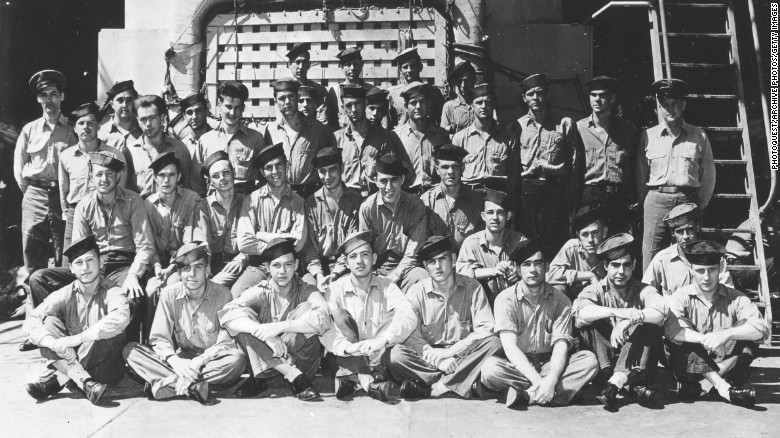
The record cannot not be expunged. Congress has rules against even considering bills altering military records, and there is no means by which to reverse a court-martial. It’s never happened. Yet Captain McVay had exonerated, something that the Indianapolis survivors had tried to accomplish without success. Until the intervention of a 12-year-old boy. Who said one person can’t make a difference?
Today, only 22 of Indianapolis’ survivors remain alive. The wreck of the “Indy” was discovered in August 2017, in 18,000-feet of water. Leader of the civilian expedition which located the wreck, Microsoft co-founder Paul Allen, said”To be able to honor the brave men of the USS Indianapolis and their families through the discovery of a ship that played such a significant role in ending World War II is truly humbling”.
If you enjoyed this “Today in History”, please feel free to re-blog, “like” & share on social media, so that others may find and enjoy it as well. Please click the “follow” button on the right, to receive email updates on new articles. Thank you for your interest, in the history we all share.



 Indeed, such a system has imperfections, not least among them those who would ascend to political office.


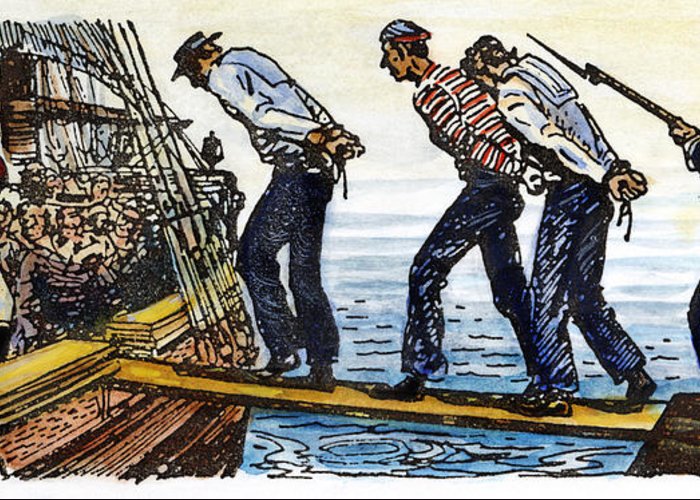
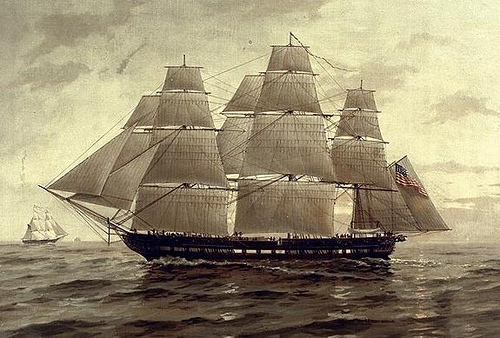
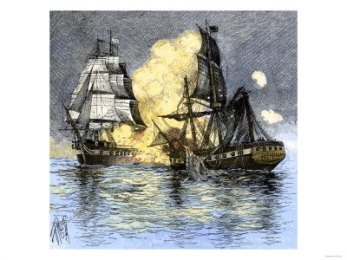 Humphreys then used a hailing trumpet and ordered the American ship to comply, to which Barron responded “I don’t hear what you say”. Humphreys fired two rounds across Chesapeake’s bow, followed immediately by four broadsides.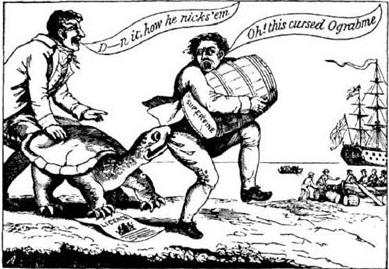
 United States Naval Captain James Lawrence was eager to comply, confident in the wake of a number of American victories in single-ship actions.

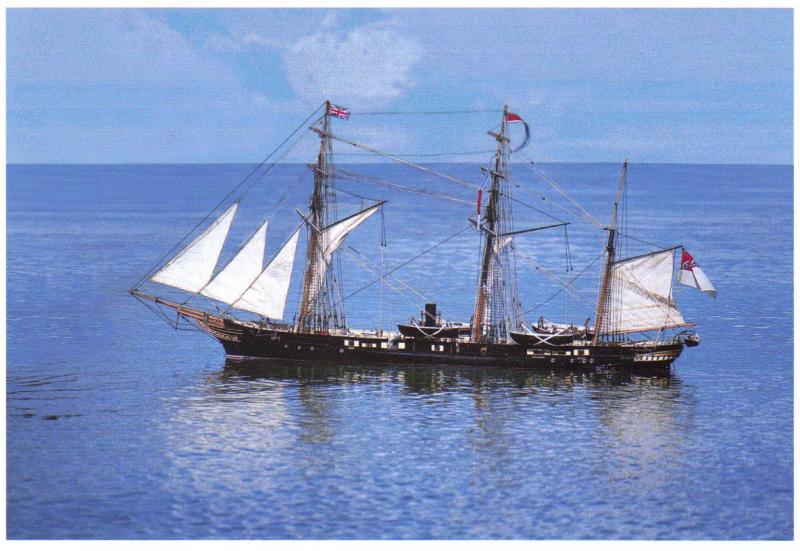
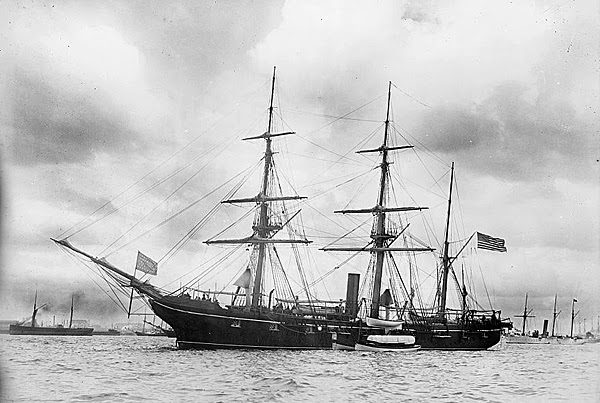

 CSS Alabama steamed out of Cherbourg harbor on the morning of June 19, 1864, escorted by the French ironclad Couronne, which remained nearby to ensure that the combat remained in international waters. Kearsarge steamed further to sea as the Confederate vessel approached. There would be no one returning to port until the issue was decided.
 Captain Winslow put his ship around and headed for his adversary at 10:50am. Alabama fired first from a distance of a mile, and continued to fire as the range decreased.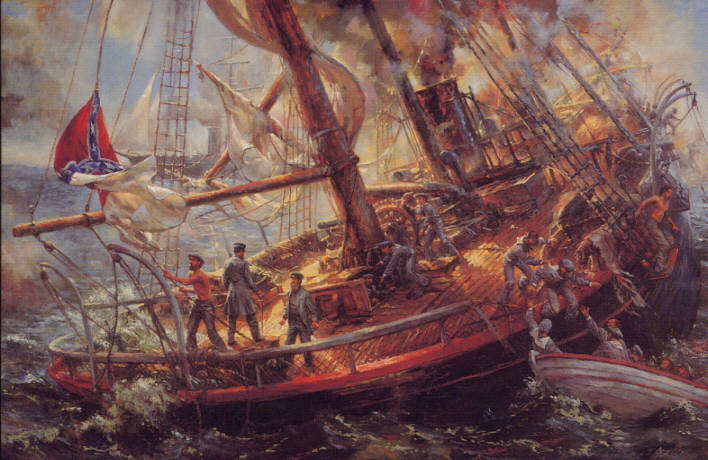
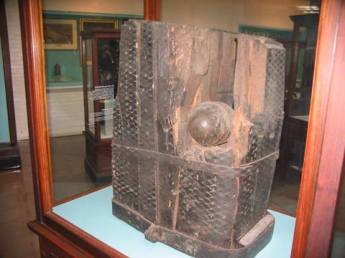



 Boston was all but an island in those days, connected to the mainland only be a narrow “neck” of land. A Patriot force some 20,000 strong took positions in the days and weeks that followed, blocking the city and trapping four regiments of British troops (about 4,000 men) inside of the city.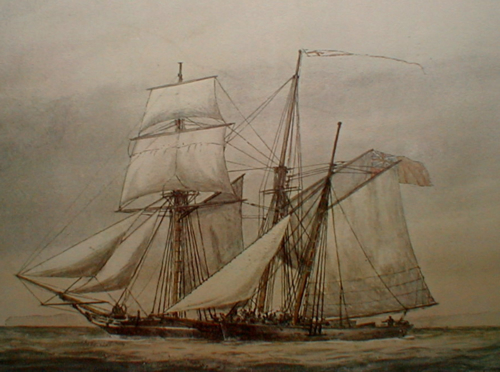
 A group of Machias men approached Margaretta from the land and demanded her surrender, but Moore lifted anchor and sailed off in attempt to recover the Polly. A turn of his stern through a brisk wind resulted in a boom and gaff breaking away from the mainsail, crippling the vessel’s navigability. Unity gave chase followed by Falmouth.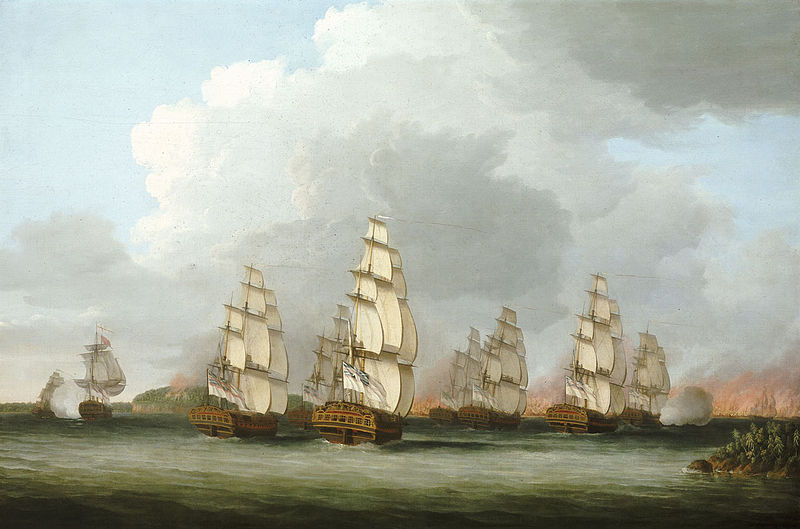

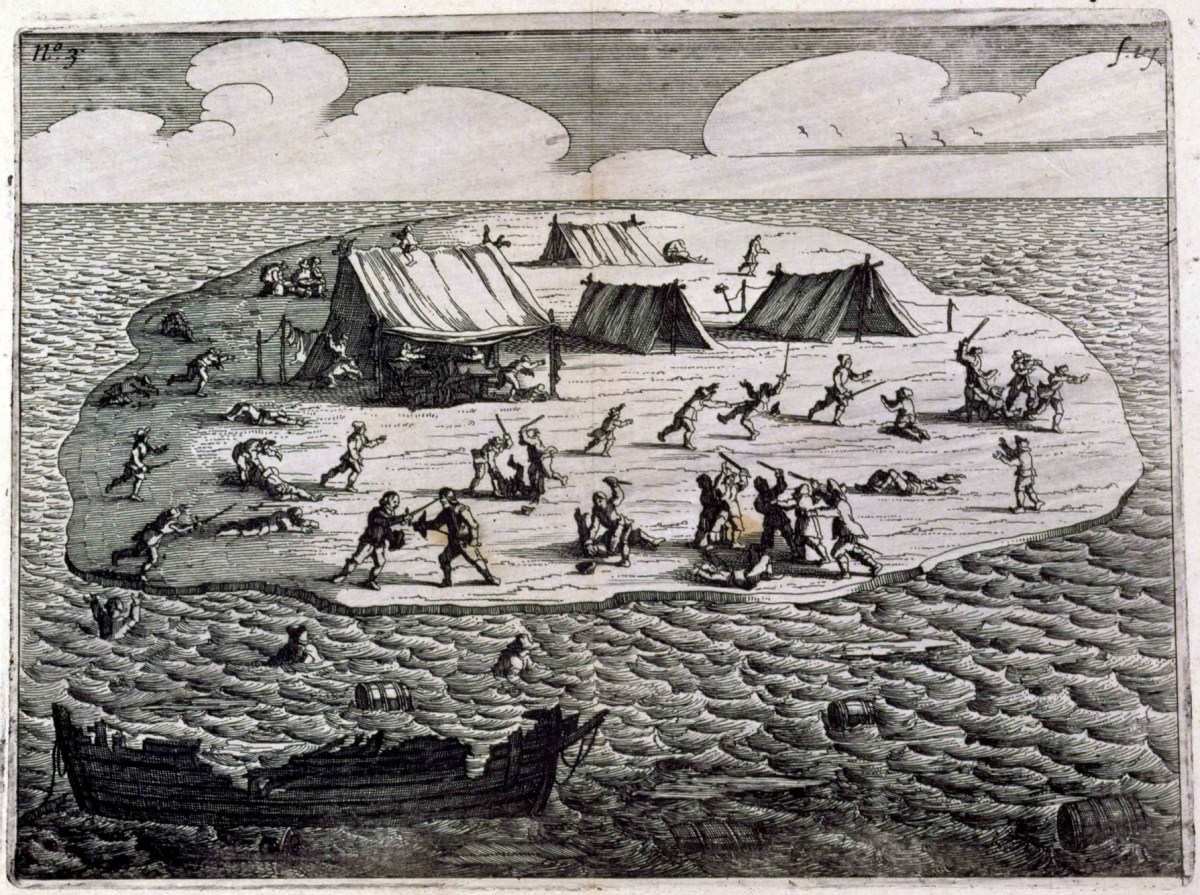


 Perhaps the man was ill at the time but, be that as it may, the die was cast. The conspirators now needed only the right set of circumstances, to put their plans in motion.
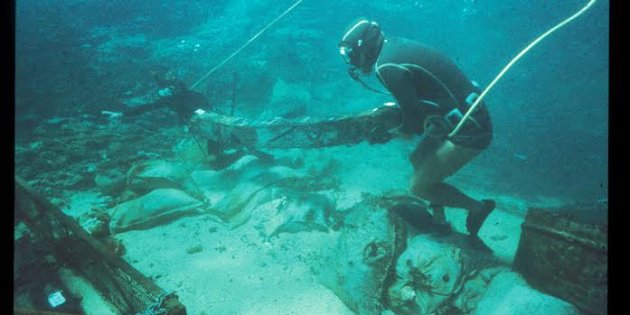


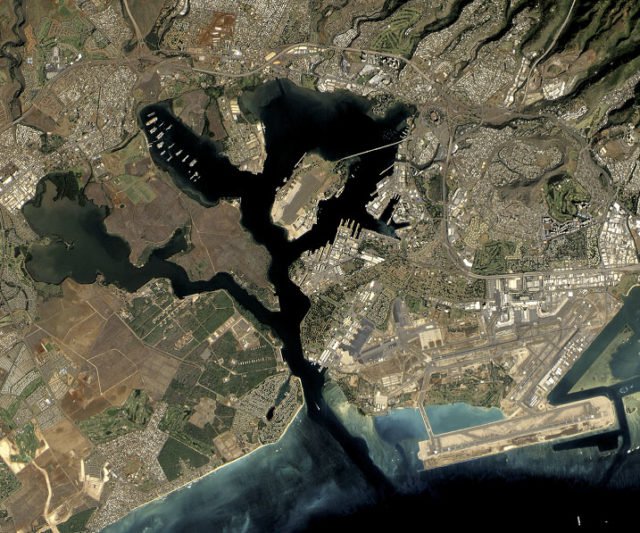

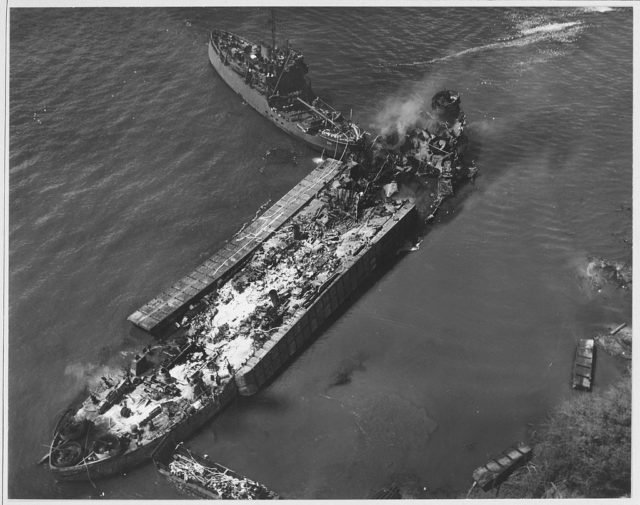

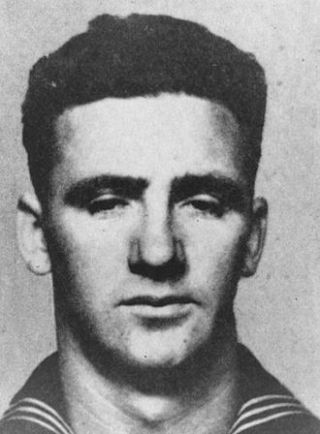
 “…Venturing still farther under the buried hulk, he held tenaciously to his purpose, reaching a place immediately above the other man just as another cave-in occurred and a heavy piece of steel pinned him crosswise over his shipmate in a position which protected the man beneath from further injury while placing the full brunt of terrific pressure on himself. Although he succumbed in agony 18 hours after he had gone to the aid of his fellow divers, Hammerberg, by his cool judgment, unfaltering professional skill and consistent disregard of all personal danger in the face of tremendous odds, had contributed effectively to the saving of his 2 comrades…”.


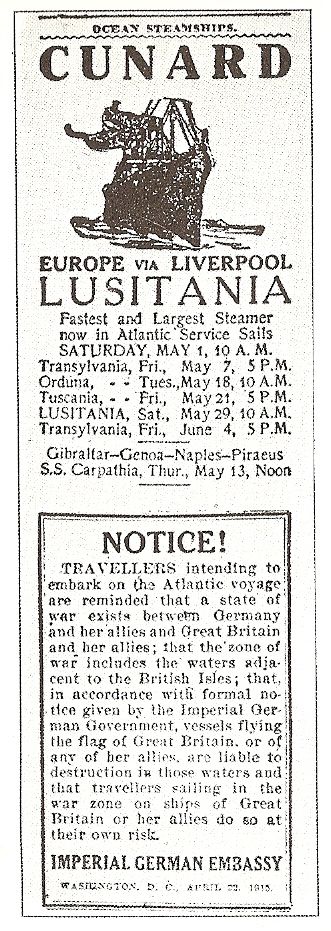 Germany adopted a policy of unrestricted submarine warfare on February 18, 1915. The German embassy took out ads in American newspapers, warning that ships sailing into the war zone, did so at their own risk. That didn’t seem to bother anyone as they boarded RMS Lusitania.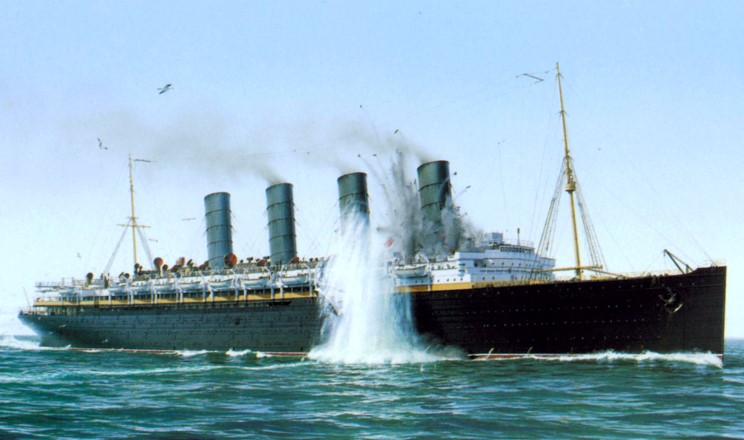
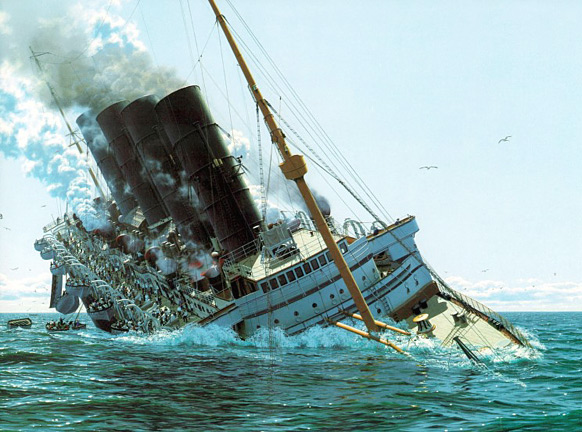
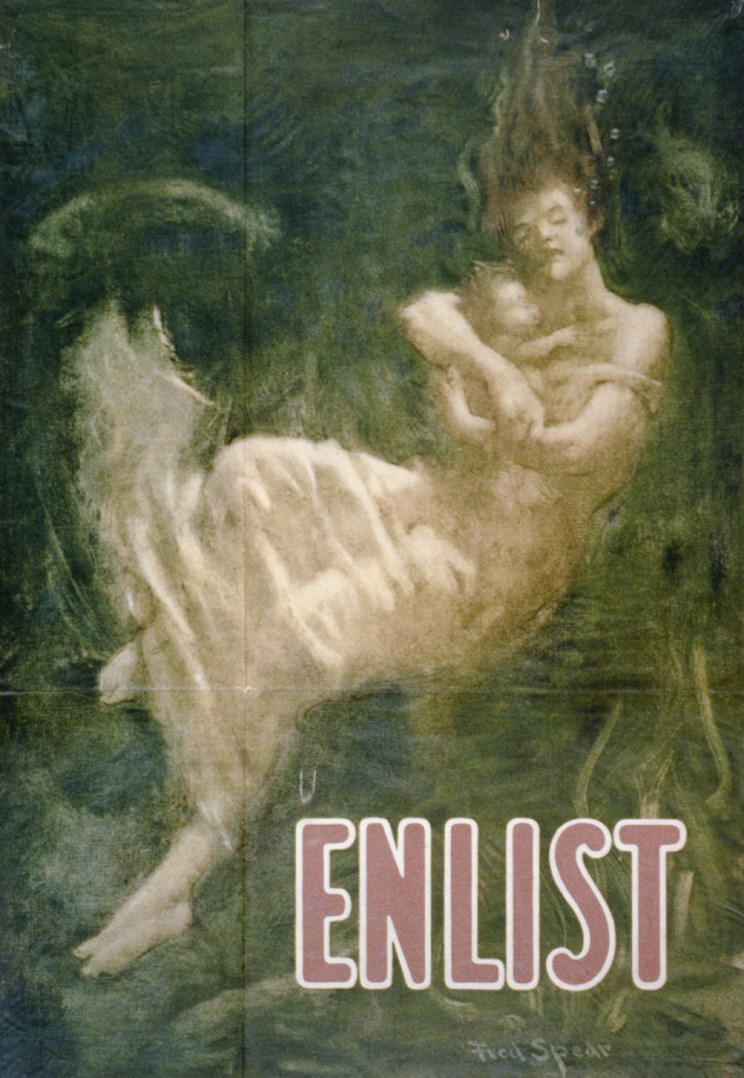
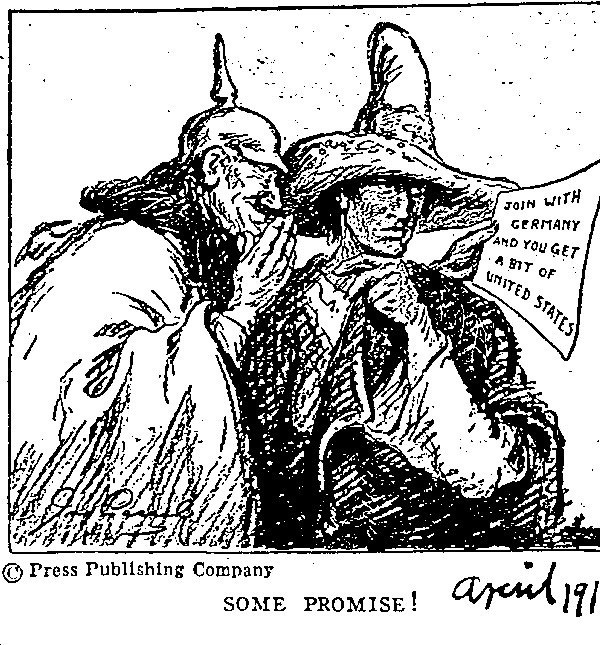 Unrestricted submarine warfare was resumed the same month. In February a German U-boat fired two torpedoes at the SS California off the Irish coast, killing 43 of her 205 passengers and crew. President Wilson asked for a declaration of war in a speech to a joint session of Congress on April 2. From the text of the speech, it seems the Germans were right. It was the resumption of unrestricted submarine warfare which provoked the United States to enter the war against Germany, which it did when Congress declared war on April 6.


You must be logged in to post a comment.