
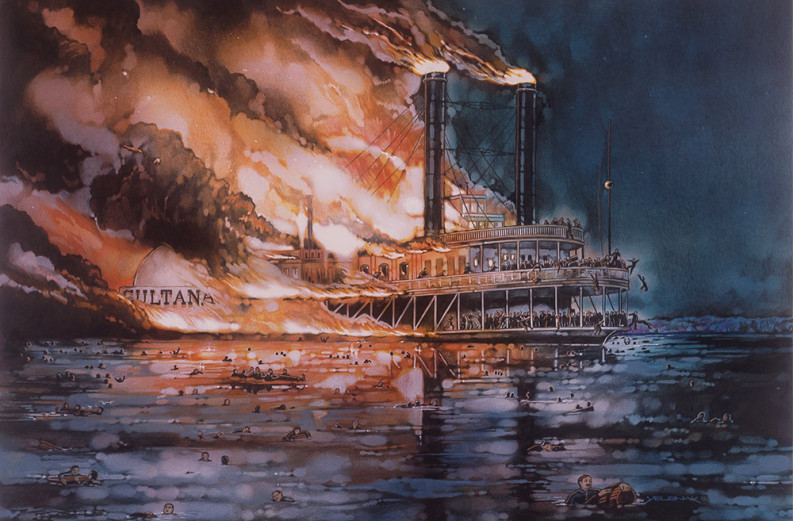
In April 1865, the Civil War was all but ended. General Robert E. Lee surrendered to General Ulysses S. Grant on the 9th. President Abraham Lincoln was assassinated five days later, and John Wilkes Booth run to ground and killed on the 26th. Thousands of former POWs were being released from Confederate camps in Alabama and Georgia, and held in regional parole camps.
The sidewheel steamboat Sultana left New Orleans with about 100 passengers and a few head of livestock, pulling into Vicksburg Mississippi on the 21st to repair a damaged boiler and to pick up a promised load of passengers.
The mechanic wanted to cut a bulging seam out of the boiler and install a new plate, easily three day’s work. Captain J. Cass Mason declined, for fear of losing his passengers. He wanted the seam hammered back into place and covered with a patch, and he wanted it done in a day.
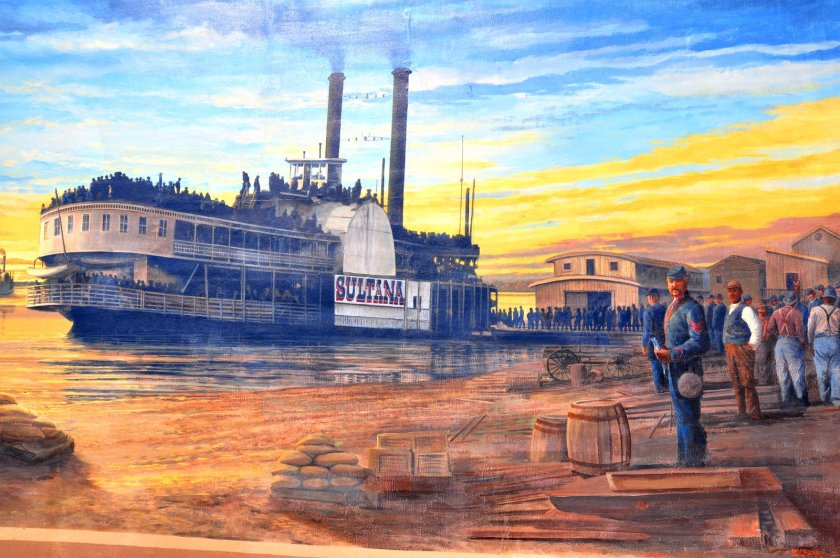
The passengers Mason was so afraid of losing were former prisoners of the Confederacy, and Confederate parolees, returning to their homes in Kentucky and Tennessee.
The Federal government was paying $5 each to anyone bringing enlisted guys home, and $10 apiece for officers. Lieutenant Colonel Reuben Hatch, chief quartermaster at Vicksburg and one of the sleazier characters in this story, had approached Captain Mason with a deal. Hatch would guarantee a minimum of 1,400 passengers, and they’d both walk away with a pocketful of cash.
As it was, there were other riverboats in the vicinity. Mason didn’t have time to worry about boiler repairs.
The decks creaked and sagged, as beams were installed to shore up the load. Sultana backed away from the dock on April 24, with 2,427 passengers. More than six times her legal limit of 376.
Sultana spent two days traveling upstream, fighting one of the heaviest spring floods in the history of the Mississippi River. She arrived at Memphis on the evening of the 26th, unloading 120 tons of sugar from her holds. Already massively top heavy, the riverboat now lurched from side to side with every turn.
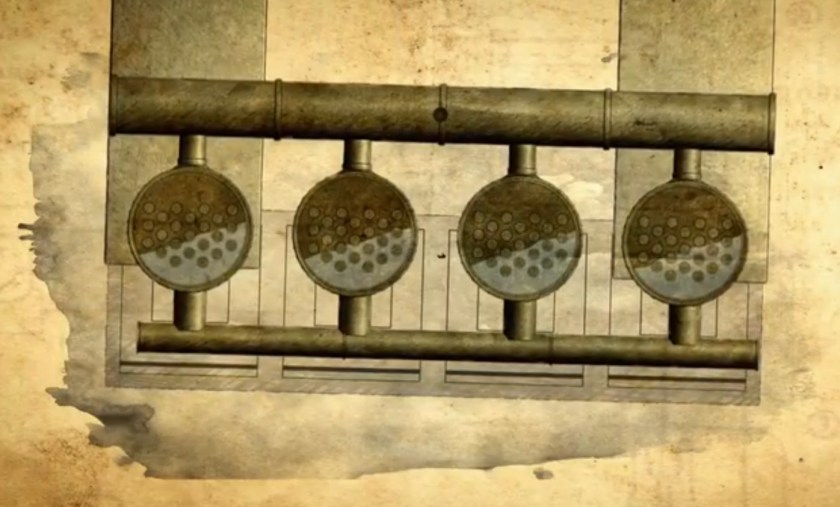
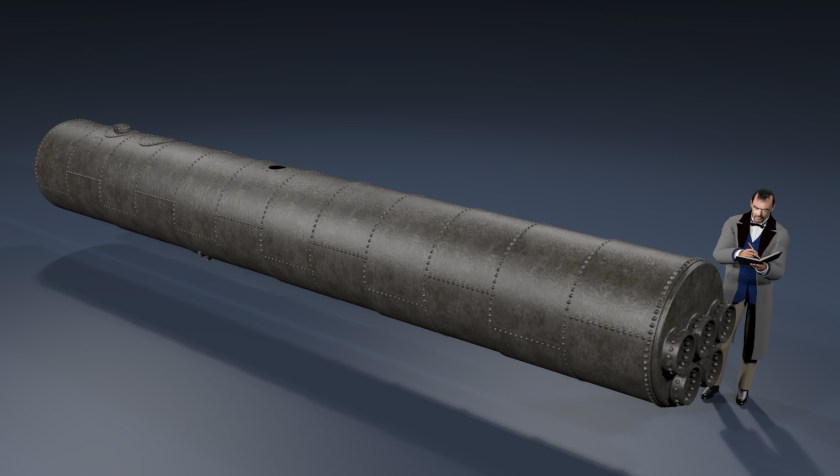
The crew must have exceeded allowable steam pressure, pushing all that load against the current. Pressure varied wildly inside Sultana’s four giant boilers, as water sloshed from one to the next with every turn, boiling water flashing to superheated steam and back to water.
The temporary boiler patch exploded at 2:00am on April 27, detonating two more boilers a split second later. The force of the explosion hurled hundreds into the icy black water. The top decks soon gave way, as hundreds tumbled into the gaping maw of the fire boxes below.
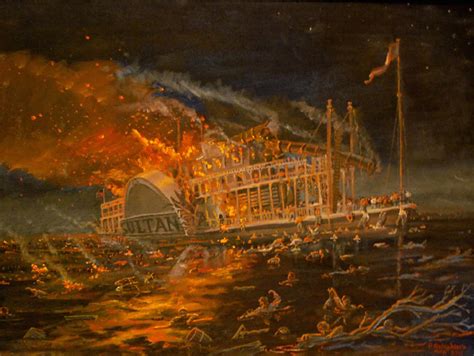
Within moments, the entire riverboat was ablaze. Those who weren’t incinerated outright now had to take their chances in the swift moving waters of the river. Already weakened by terms in captivity, they died by the hundreds of drowning or hypothermia.
The drifting and burnt out hulk of the Sultana sank to the bottom, seven hours later. The steamers Silver Spray, Jenny Lind, and Pocohontas joined the rescue effort, along with the navy tinclad Essex and the sidewheel gunboat USS Tyler. 700 were plucked from the water and taken to Memphis hospitals, of whom 200 later died of burns or exposure. Bodies would continue to wash ashore, for months.
Sultana was the worst maritime disaster in United States history, though its memory was mostly swept away in the tide of events that April. The United States Customs Service records an official count of 1,800 killed, though the true number will never be known. Titanic went down in the North Atlantic 47 years later, taking 1,512 with her.
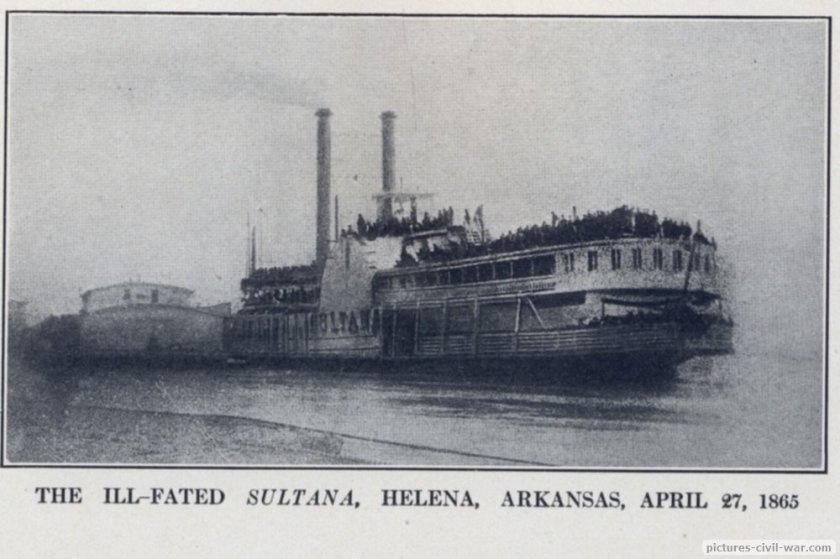
Despite the enormity of the disaster, no one was ever held accountable. One Union officer, Captain Frederick Speed, was found guilty of grossly overcrowding the riverboat. It was he who sent 2,100 prisoners from their parole camp into Vicksburg, but his conviction was later overturned. It seems that higher ranking officials may have tried to make him into a scapegoat, since he never so much as laid eyes on Sultana herself.
Captain Williams, the officer who actually put all those people onboard, was a West Point graduate and regular army officer. The army didn’t seem to want to go after one of its own. Captain Mason and all of his officers were killed in the disaster. Reuben Hatch, the guy who concocted the whole scheme in the first place, resigned shortly after the disaster, thereby putting himself outside the reach of a military tribunal.
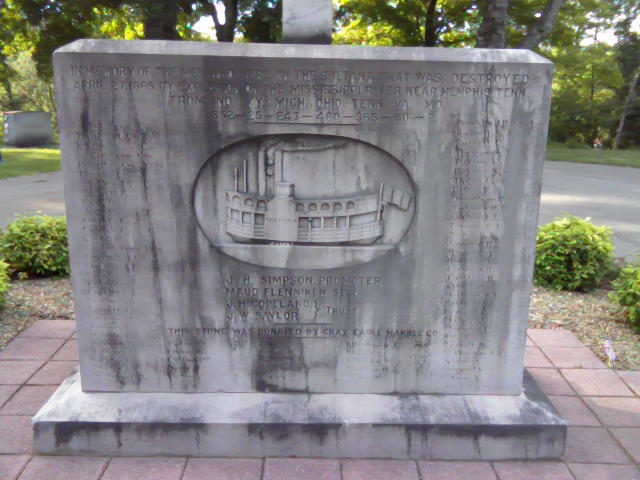
The last survivor of the Sultana disaster, Private Charles M. Eldridge of the 3rd (Confederate) Tennessee Cavalry, died at his home at the age of 96 on September 8, 1941. Three months before the Imperial Japanese attack on Pearl Harbor.

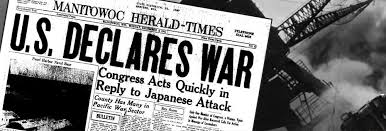
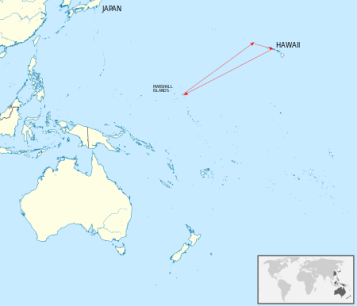 In the months that followed, the United States ramped up its war capacity, significantly. Realizing this but having little information, the Imperial Japanese Navy (IJN) determined to visit Pearl Harbor once again, to have a look around.




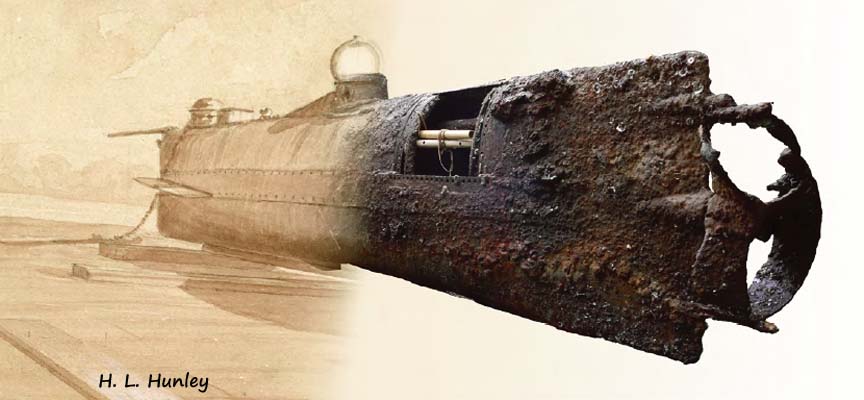
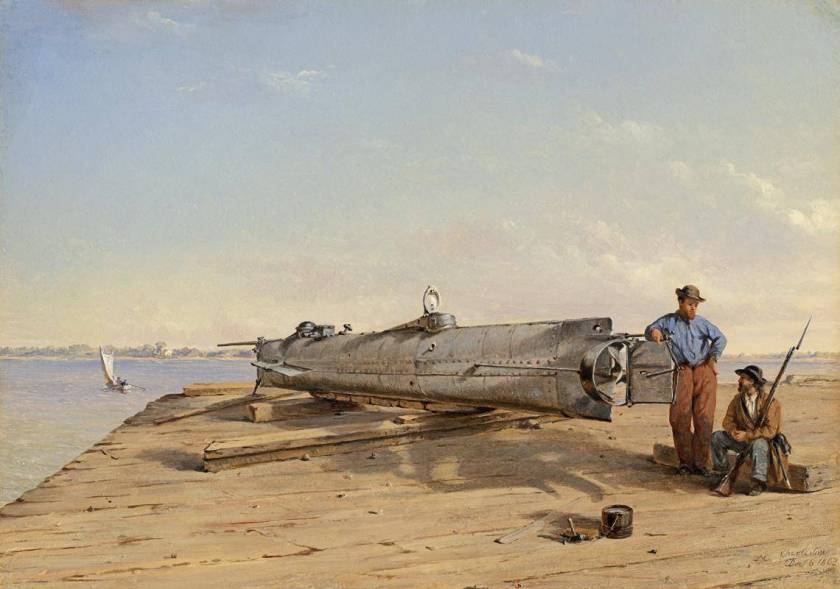
 A second crew tested the submarine on October 15, this one including Horace Hunley himself. The submarine conducted a mock attack but failed to surface afterward, this time drowning all 8 crew members.
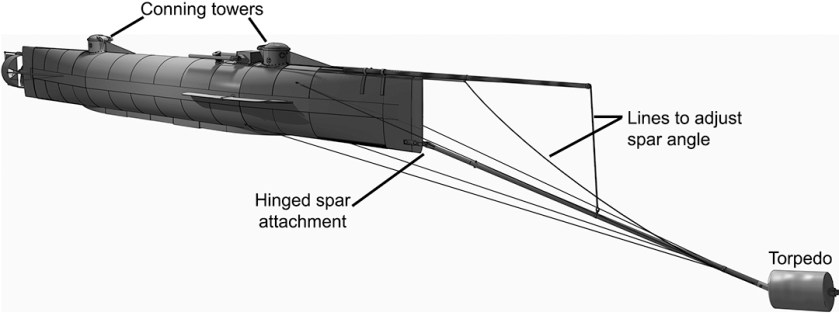
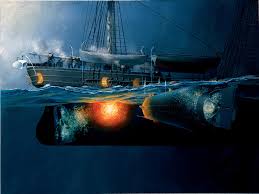 Tide and current conditions in Charleston proved very different from those in Mobile. On several test runs, the torpedo floated out ahead of the sub. That wouldn’t do, so a spar was fashioned and mounted to the bow. At the end of the spar was a 137lb waterproof cask of powder, attached to a harpoon-like device with which Hunley would ram its target.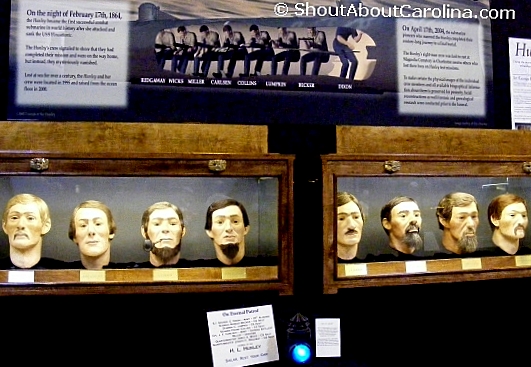
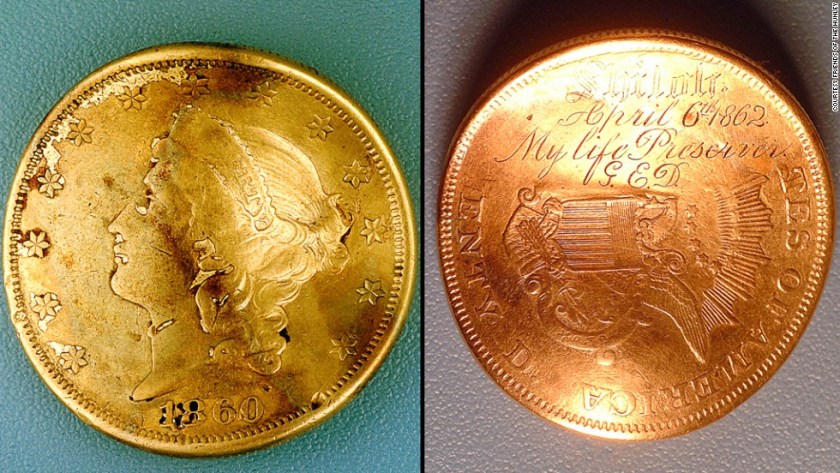 On the coin, clearly showing signs of having been struck by a bullet, are inscribed these words:


 The “Battle of the Atlantic” lasted 5 years, 8 months and 5 days, ranging from the Irish Sea to the Gulf of Mexico, from the Caribbean to the Arctic Ocean. Winston Churchill would describe this as “the dominating factor all through the war. Never for a moment could we forget that everything happening elsewhere, on land, at sea or in the air depended ultimately on its outcome”.
 New weapons and tactics would shift the balance first in favor of one side, and then to the other. In the end over 3,500 merchant ships and 175 warships would be sunk to the bottom of the ocean, compared with the loss of 783 U-boats.


 and crews to breathe while running submerged. Venturer was on batteries when the first sounds were detected, giving the British sub the stealth advantage but sharply limiting the time frame in which it could act.
 With four incoming at as many depths, the German sub didn’t have time to react. Wolfram was only just retrieving his snorkel and converting to electric, when the #4 torpedo struck. U-864 imploded and sank, instantly killing all 73 aboard.


 Those who could escape scrambled onto the deck, injured, disoriented, many still in their underwear as they emerged into the cold and darkness.
 Dorchester was listing hard to starboard and taking on water fast, with only 20 minutes to live. Port side lifeboats were inoperable due to the ship’s angle. Men jumped across the void into those on the starboard side, overcrowding them to the point of capsize. Only two of fourteen lifeboats launched successfully.
 Rushing back to the scene, coast guard cutters found themselves in a sea of bobbing red lights, the water-activated emergency strobe lights of individual life jackets. Most marked the location of corpses. Of the 904 on board, the Coast Guard plucked 230 from the water, alive.
 John 15:13 says “Greater love hath no man than this, that a man lay down his life for his friends”. Rabbi Goode did not call out for a Jew when he gave away his only hope for survival, Father Washington did not ask for a Catholic. Neither minister Fox nor Poling asked for a Protestant. Each gave his life jacket to the nearest man.


 The act served multiple purposes, among them the modernization of what was then a largely WWI vintage merchant marine fleet, serving as the basis for a naval auxiliary that could be activated in time of war or national emergency.


 Where there are government subsidies, there are strings. For SS America, those strings were pulled on May 28, 1941, while the ship was at port in Saint Thomas, in the US Virgin Islands. The ship had been called into service by the United States Navy, and ordered to return to Newport News.


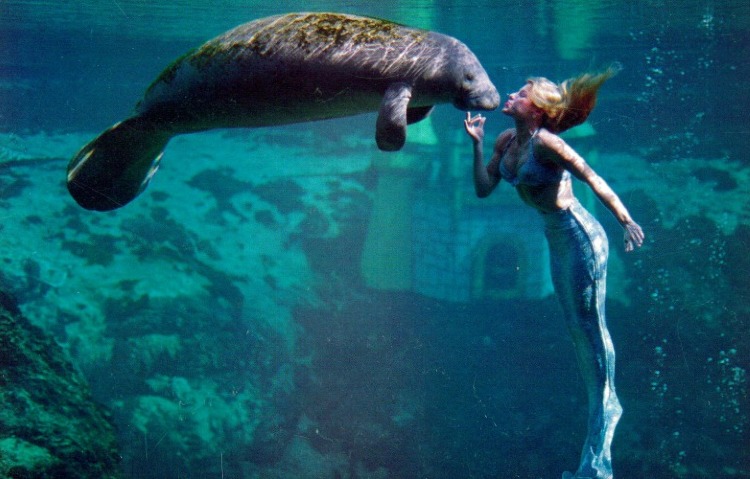


 Columbus had taken his idea of a westward trade route to the Portuguese King, to Genoa and to Venice, before he came to Ferdinand and Isabella in 1486. At that time the Spanish monarchs had a
  Columbus seems not to have been impressed, describing these mermaids as “not half as beautiful as they are painted.”

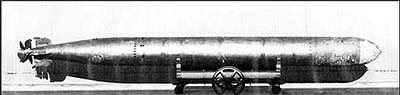 Among the Mark-XIV’s more pronounced deficiencies was a tendency to run about 10-ft. too deep, causing it to miss with depressing regularity. The magnetic exploder often caused premature firing of the warhead, and the contact exploder frequently failed altogether. There must be no worse sound to a submariner, than the metallic ‘clink’ of a dud torpedo bouncing off an enemy hull.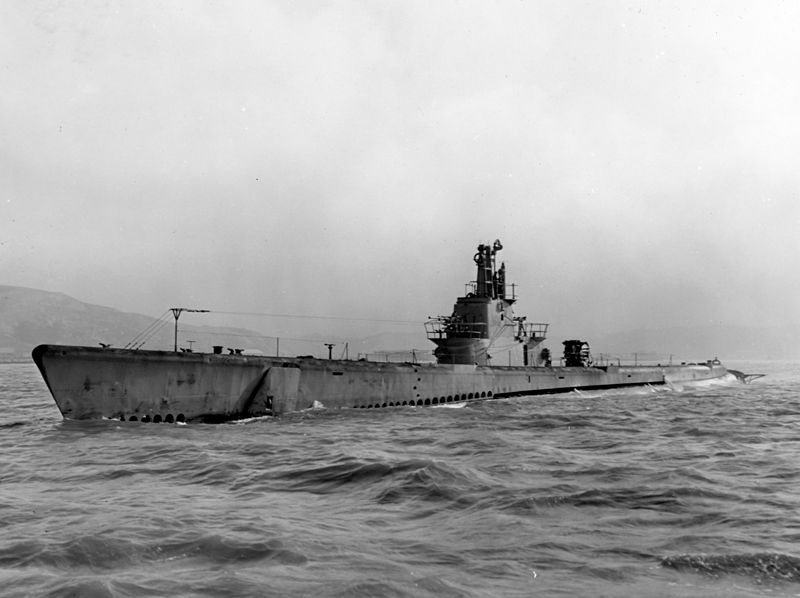
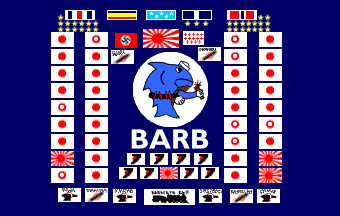
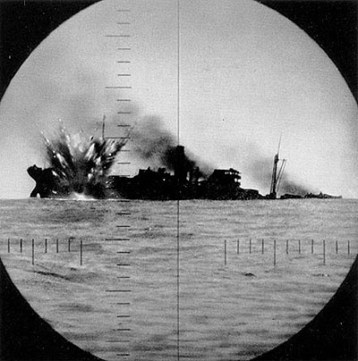 Sam Moses, writing for historynet’s “Hell and High Water,” writes, “In five war patrols between May 1944 and August 1945, the 1,500-ton Barb sank twenty-nine ships and destroyed numerous factories using shore bombardment and rockets launched from the foredeck”.
 Two weeks later, USS Barb spotted a 30-ship convoy, anchored in three parallel lines in Namkwan Harbor, on the China coast. Slipping past the Japanese escort guarding the harbor entrance under cover of darkness, the American submarine crept to within 3,000 yards.
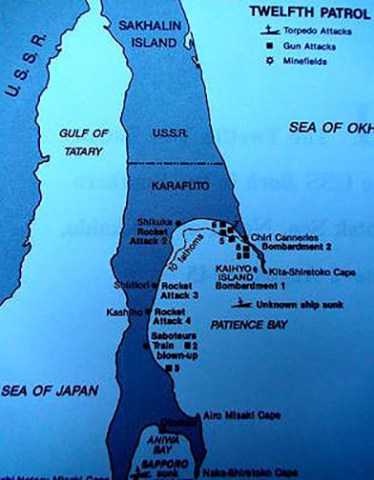 On completion of her 11th patrol, USS Barb underwent overhaul and alterations, including the installation of 5″ rocket launchers, setting out on her 12th and final patrol in early June.
 Working so close to a Japanese guard tower that they could almost hear the snoring of the sentry, the eight-man team dug into the space between two ties and buried the 55-pound scuttling charge. They then dug into the space between the next two ties, and placed the battery.


 Once considered mythical but for the old sailor’s stories and the damage inflicted on ships themselves, the first scientific measurement of a rogue wave occurred in the North sea in 1984, when a 36′ wave was measured off the Gorm oil platform, in a relatively placid sea.

 In 1909, the 500-ft. cargo liner SS Waratah disappeared off Durban South Africa, with 211 passengers and crew.



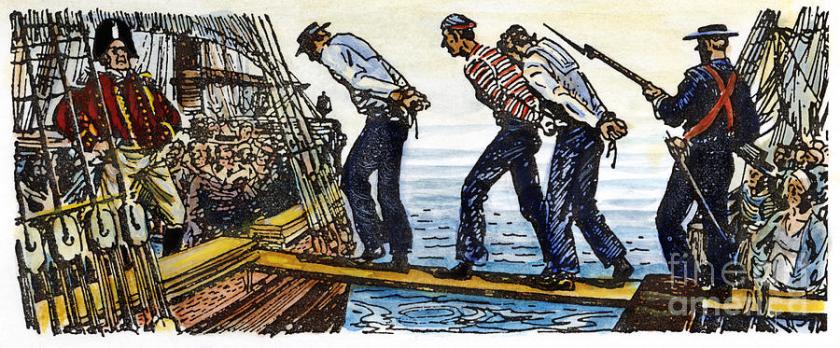
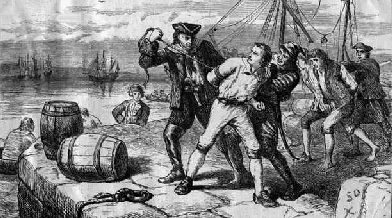 The American public was outraged and there were calls for war in 1807, when HMS Leopard overtook the USS Chesapeake, kidnapping three American-born sailors and one British deserter, leaving another three dead and 18 wounded.
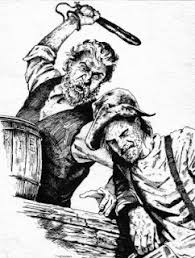 Outside of the British Royal Navy, the practice of kidnapping people to serve as shipboard labor was known as “crimping”. Low wages combined with the gold rushes of the 19th century left the waterfront painfully short of manpower, skilled and unskilled, alike. “Boarding Masters” had the job of putting together ship’s crews, and were paid for each recruit. There was strong incentive to produce as many able bodies, as possible. Unwilling men were “shanghaied” by means of trickery, intimidation or violence, most often rendered unconscious and delivered to waiting ships, for a fee.
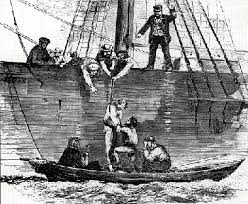 San Francisco political bosses William T. Higgins, (R) and Chris “Blind Boss” Buckley (D) were both notable crimps, and well positioned to look after their political interests. Notorious crimps such as Joseph “Frenchy” Franklin and George Lewis were elected to the California state legislature. There was no better spot, from which to ensure that no legislation would interfere with such a lucrative trade.
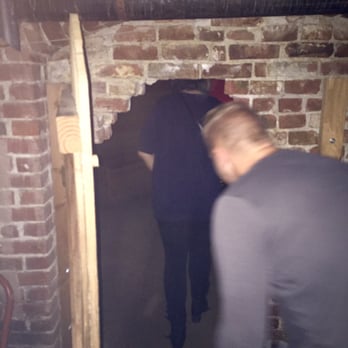 Imagine the hangover the next morning, to wake up and find you’re now at sea, bound for somewhere in the far east. Regulars knew about the trap door and avoided it at all costs, knowing that anyone going over there, was “fair game”.


You must be logged in to post a comment.