January 11, 1693 The Wrath of God

“Then came an earthquake so horrible and ghastly that the soil undulated like the waves of a stormy sea, and the mountains danced as if drunk, and the city collapsed in one miserable moment killing more than a thousand people.” Eyewitness quoted by Stephen Tobriner: The Genesis of Noto: An Eighteenth-century Sicilian City

In his 1897 short story The Open Boat, Stephen Crane writes of the puniness of humanity, when bared and exposed to the wrath of God, or of Nature, as you please.
“If I am going to be drowned — if I am going to be drowned — if I am going to be drowned, why, in the name of the seven mad gods, who rule the sea, was I allowed to come thus far and contemplate sand and trees? 

On this day in 1693, those Seven Mad Gods got together, and unleashed the wrath of the ages.

ABWCWW Earth s CoreDeep in the ground beneath our feet, a rocky shell comprising an outer Crust and an inner Mantle forms a hard and rigid outer shell, closing off and containing the solid inner core of our planet. Between these hard inner and outer layers exists a liquid core of molten material, comprising approximately two-thirds the cross-section of planet Earth.

The air around us is a liquid, exerting a ‘weight’ or barometric pressure at sea level, of 14.696 pounds per square inch. Scientists estimate the pressures within this outer core to be approximately 3.3 million times atmospheric pressure, generating temperatures of 10,800° Fahrenheit, a temperature comparable to the surface of the sun.

That rocky shell closing us off from all that is actually quite elastic, broken into seven or eight major pieces, (depending on how you define them), and several minor bits called Tectonic Plates.

Over millions of years, these plates move apart along constructive boundaries, where oceanic plates form mid-oceanic ridges. Roughly equal and opposite to these are the Subduction Zones, where one plate moves under another and down into the mantle.

The planet is literally “eating’ itself.

Sicily, the largest island in the Mediterranean and one of twenty regions of Italy, lies on the convergent boundary of two such pieces of the planet’s outer shell, where the African plate is subducting beneath the Eurasian plate.  Over time, the forces built up along these subduction zones, are nothing short of Titanic.

Sicily is also home to the terrifying Mount Etna, one of the most active volcanoes, in the world.

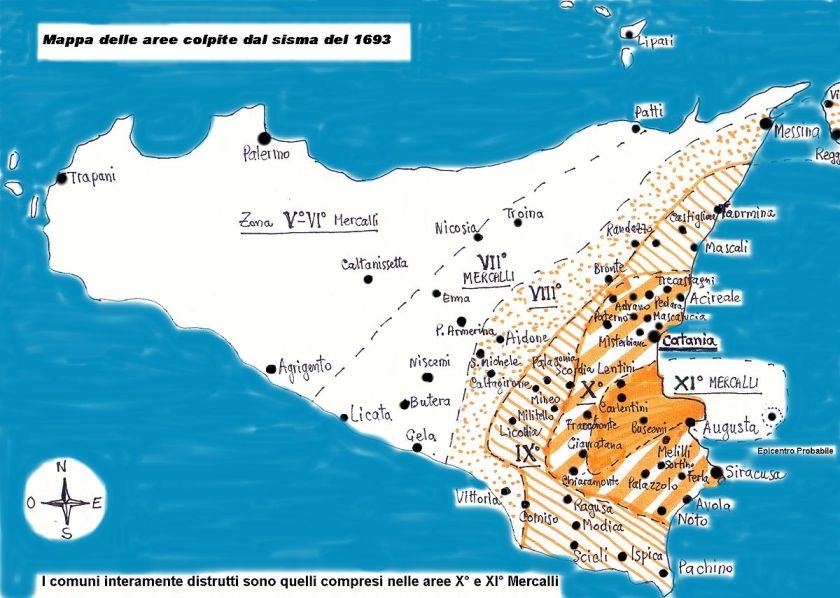
The first foretaste of what was about to happen began at 21:00 local time, January 9, 1693. The earthquake, centered on the east Sicilian coast and felt as far away as the south of Italy and the island nation of Malta, had an estimated magnitude of 6.2 on the Richter scale, and a perceived intensity on the Mercali Intensity Scale of VIII – XI: Severe to Extreme. Mercali describes a Category XI Extreme earthquake:

Few, if any, (masonry) structures remain standing. Bridges destroyed. Broad fissures in ground. Underground pipe lines completely out of service. Earth slumps and land slips in soft ground. Rails bent greatly”.

This thing was only stretching and yawning.  Just getting out of bed.
1200px-sicilia_sisma_1693

The main shock of January 11 lasted four minutes with an estimated magnitude of 7.4 and a very large area that reached X on the Mercali scale, and XI in the province of Syracuse.

The soil beneath our feet, ordinarily so substantial and unmoving, behaves like a liquid at times like this. Low density, sandy soils compress in response to applied loads while dense soils expand in volume or dilate. Saturated soils are like unto quicksand, as underground liquids are driven up to form miniature volcanoes called “sand boils, water spouting up from the ground in geysers, rising 30-feet and more.

christchurch_quake,_2011-02-22
Sand boils resulting from the 2011 earthquake, in Christchurch

The catastrophic eruption of 1669 was well within living memory and reports describe minor eruptions on this day as well.  As if even a small volcanic eruption could be called “minor”.

Several large fractures opened in the earth, one 1,600-feet long and nearly seven-feet wide.

Meanwhile the ocean withdrew from the coast, as the Ionian Sea gathered itself, to strike. The initial withdrawal left the harbor dry at Augusta, damaging several Galleys owned by the Knights of Malta.   The tsunami when it came was at least eight feet in height and possibly as high as 26-feet, inundating an area nearly a mile from the shore.

The final death toll of as many as 60,000 is uncertain, unsurprising in light of the fact that whole regions were blotted out. 63% of the entire population was wiped out in Catania, 51% in Ragusa. Syracuse, Noto, Augusta, Modica – all lost between one-out-of-five, and one-in-three.

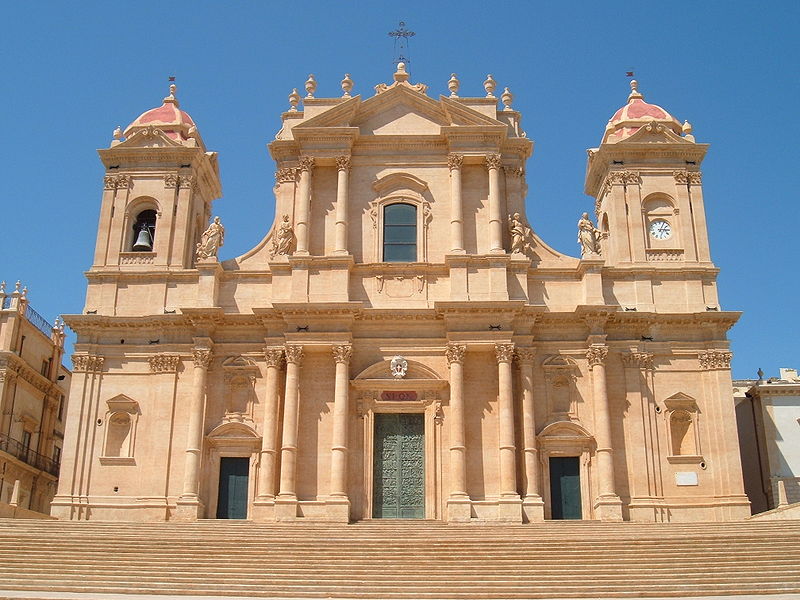
Reconstruction in the wake of the catastrophe was so extensive, as to spawn a new and unique form of art and architecture, known as Sicilian Baroque.
la_cattedrale_di_noto_restaurata
The Cathedral of Noto is one of the many buildings constructed in Sicilian Baroque style after the earthquake of 1693

Today, the colossal Mount Etna remains one of the most active volcanoes, on earth.  Sensors placed along the land and seaward flanks of the volcano reveal the alarming discovery that the volcano itself, is moving.  Mount Etna is sliding at a rate of an inch per year and sometimes more.  One eight-day period in 2008 showed a movement of two inches, raising concerns that Mount Etna may one day collapse into itself.

On May 18, 1980 Mount St. Helens erupted after a 5.1 magnitude earthquake, resulting in 57 deaths and inflation-adjusted property damage, of $3.3 Billion.  The US Geological Survey called the resulting collapse of the north face of the volcano “the largest debris avalanche on earth, in recorded history”.  Should such an event strike the Stratovolcano that is Mount Etna, the result would be felt from the Spanish coast to the shores of Israel, from North Africa to the French Riviera.

Given geologic time scales, such an event could happen next year, or ten thousand years from now.  No one knows.  We are so puny when compared with the Wrath of God, or of Nature, as you please.
castello_di_noto
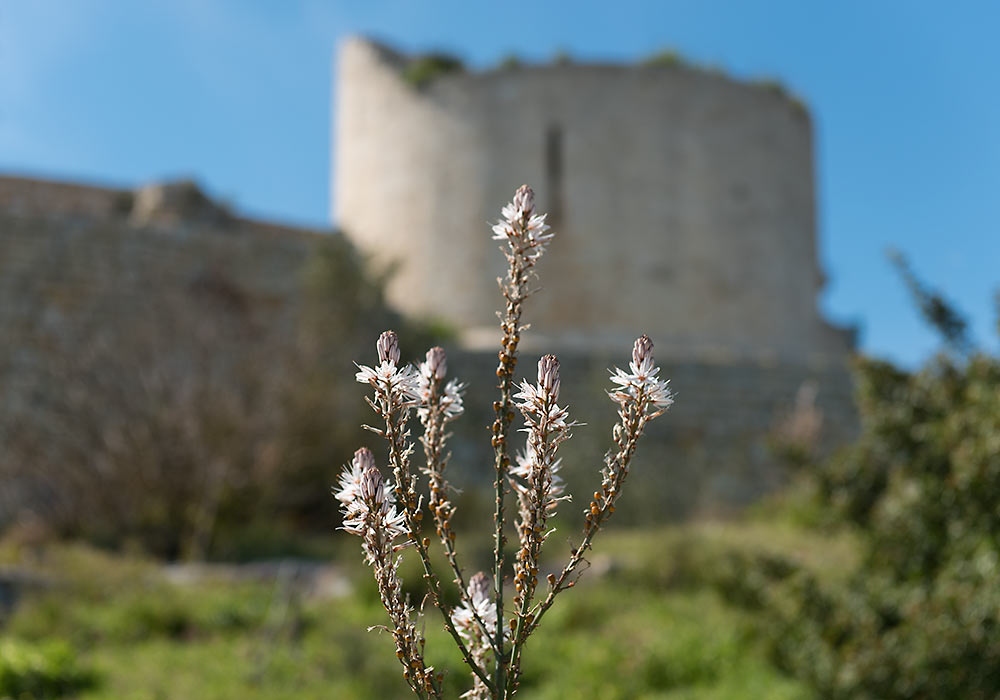
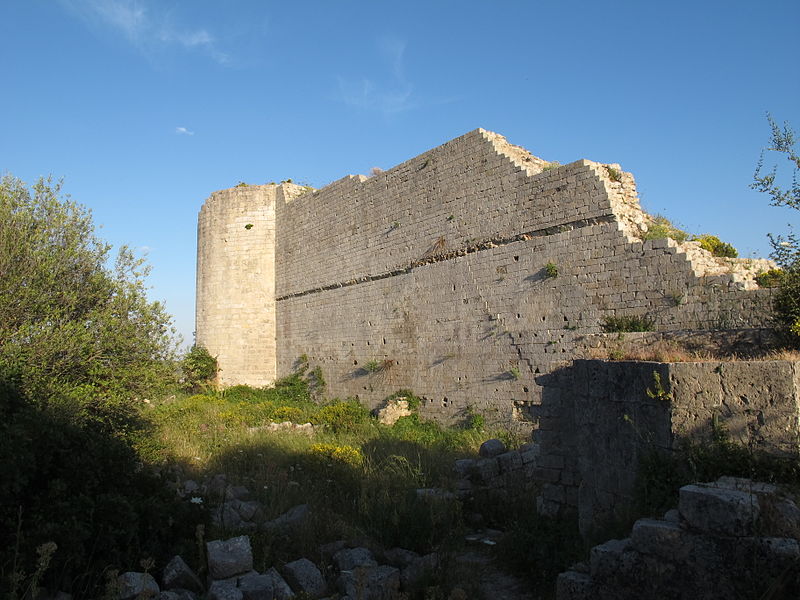
Ruins of the Norman castle in Noto Antica

Featured image, top of page:  New life before the shattered ruins of the old city of Not (Noto Antica), destroyed on January 11, 1693.  The new city of Noto was built, eleven kilometers away

January 10, 1927 Poison Hooch

It’s a crazy, mixed up world full of nut job conspiracy theories. This is not one of those.

prohibition3The Eighteenth Amendment establishing the national prohibition of “intoxicating liquors” was passed out of Congress on December 17, 1917 and sent to the states, for ratification. The National Prohibition or “Volstead” act, so named for Chairman of the House Judiciary Committee Andrew Volstead, was enacted to carry out its intent.
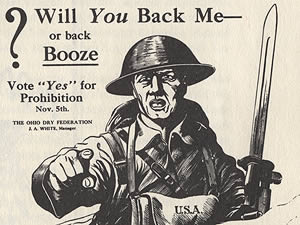
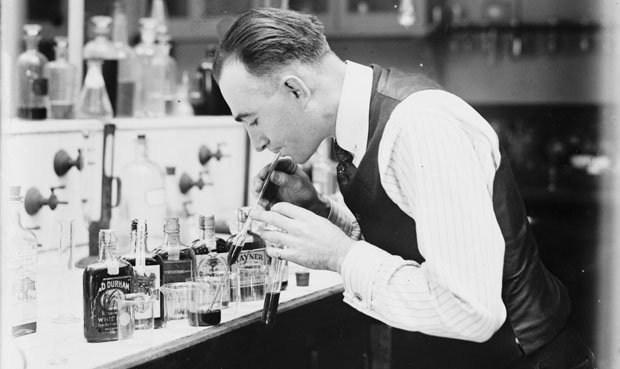
At last ratified in January 1919, “Prohibition” went into effect at midnight, January 16, 1920. For thirteen years, it was illegal to import, export, transport or sell liquor, wine or beer in the United States.

“Industrial alcohol” such as solvents, polishes and fuels were “denatured” and rendered unpalatable by the addition of dyes and chemicals.  The problem was, it wasn’t long before bootleggers figured out how to “renature” the stuff. The Treasury Department, in charge of enforcement at that time, estimated that over 60 million gallons of industrial alcohol were stolen during Prohibition.

war-propaganda
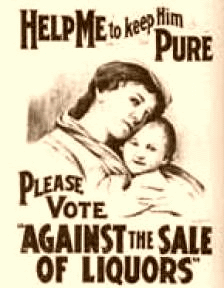
War-propaganda

Not to be defied, the government upped the ante. By the end of 1926, denaturing processes were reformulated with the introduction of known poisons such as kerosene, gasoline, iodine, zinc, nicotine, formaldehyde, chloroform, camphor, quinine and acetone. Better still, Treasury officials required no less than 10% by volume of methanol, a virulent toxin used in anti-freeze.

You can renature all you want. that stuff isn’t coming out.

On Christmas eve 1926, sixty people wound up at New York’s Bellevue Hospital, desperately ill from contaminated alcohol. Eight of them died. Two days later the death toll was thirty-one. By New Year’s Day the number had soared to 400, with no end in sight.

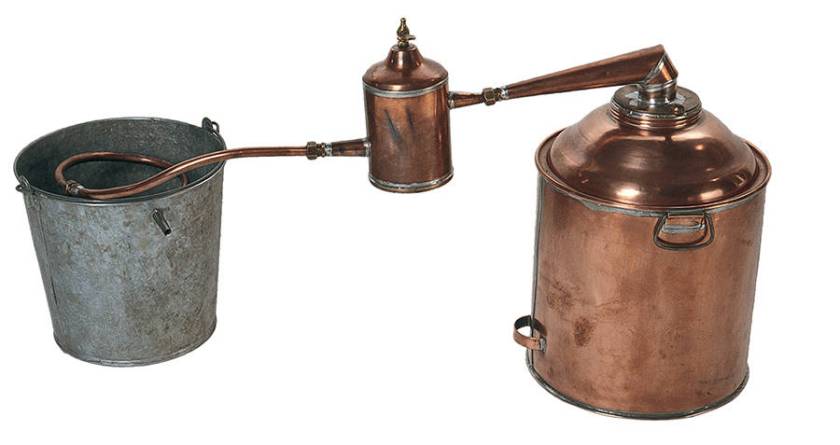
copper-still
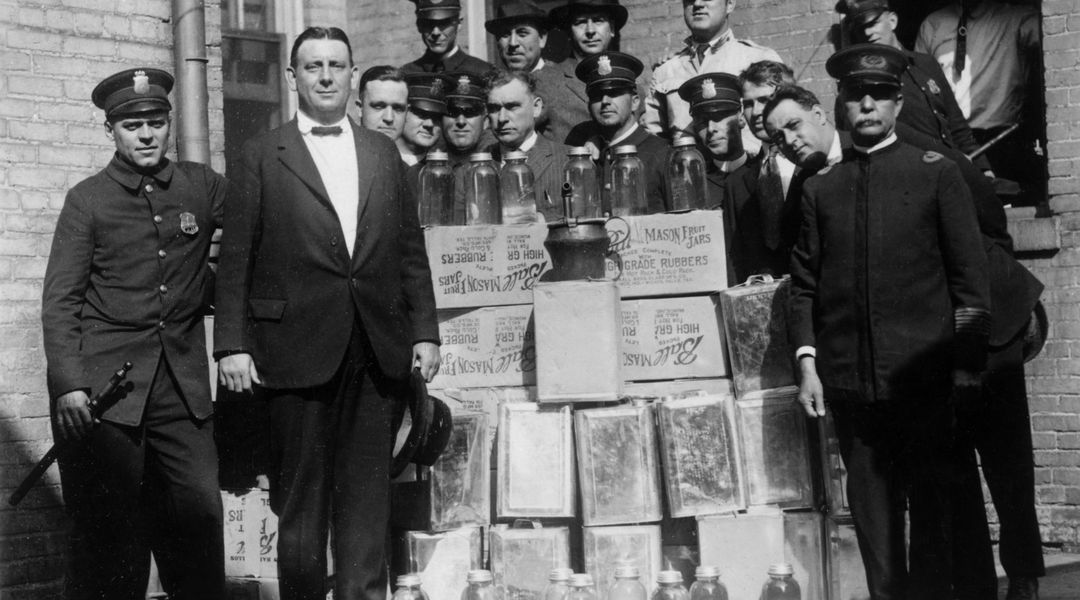
A copper still and bucket, like those used in the creation and renaturing of alcohol at home. H’T allthatsinteresting.com, and Chicago History Museum/Getty Images

Many who didn’t die, may have wished it. Drinkers experienced hallucinations, uncontrollable vomiting, even blindness.

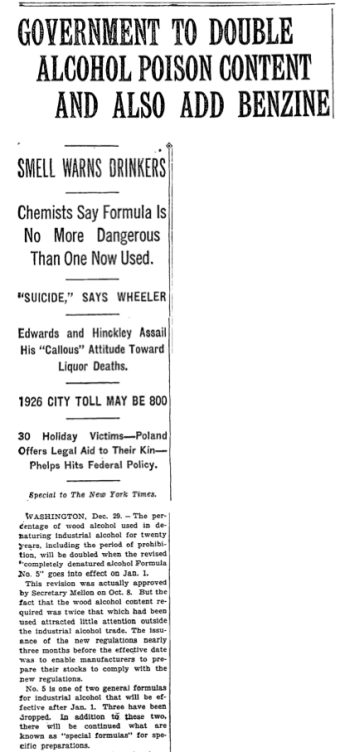
In its January 10, 1927 issue, TIME Magazine reported  a doubling in toxicity levels, from the new method:  “The new formula included “4 parts methanol (wood alcohol), 2.25 parts pyridine bases, 0.5 parts benzene to 100 parts ethyl alcohol” and, as TIME noted, “Three ordinary drinks of this may cause blindness. (In case you didn’t guess, “blind drink” isn’t just a figure of speech.)”

New York medical examiner Charles Norris was quick to understand the problem, and organized a press conference to warn of the danger. “The government knows it is not stopping drinking by putting poison in alcohol,” he said. “Yet it continues its poisoning processes, heedless of the fact that people determined to drink are daily absorbing that poison. Knowing this to be true, the United States government must be charged with the moral responsibility for the deaths that poisoned liquor causes, although it cannot be held legally responsible.”

Norris pointed out that the poorest people of the city, were most likely to be victims: “Those who cannot afford expensive protection and deal in low-grade stuff”.

The towering sanctimony of the other side, is hard to believe.  Teetotalers argued that the dead had “brought it on themselves”. Long-time leader of the anti-saloon league Wayne B. Wheeler claimed “The Government is under no obligation to furnish the people with alcohol that is drinkable when the Constitution prohibits it. The person who drinks this industrial alcohol is a deliberate suicide.”

prohibition_2

In the thirteen years of its existence, Prohibition was an unmitigated disaster.  Portable stills went on sale within a week of enactment, and organized smuggling was quick to follow. California grape growers increased acreage by over 700% over the first five years, selling dry blocks of grapes as “bricks of rhine” or “blocks of port”. The mayor of New York City sent instructions to his constituents, on how to make wine.

Smuggling operations became widespread, as cars were souped up to outrun “the law”. This would lead to competitive car racing, beginning first on the streets and back roads and later moving to dedicated race tracks. It’s why we have NASCAR, today.

alcohol_poison_passed

Organized crime became vastly more powerful due to the influx of enormous sums of cash. The corruption of public officials was a national scandal.

Gaining convictions for breaking a law that everyone hated became increasingly difficult. The first 4,000 prohibition-related arrests resulted in only six convictions, and not one jail sentence.

It’s hard to compare alcohol consumption rates before and during prohibition but, if death by cirrhosis of the liver is any indication, alcohol consumption wasn’t reduced by any more than 10 to 20 per cent.

In the end, even John D. Rockefeller, Jr., a lifelong teetotaler who contributed $350,000 to the Anti-Saloon League, had to announce his support for repeal.

On December 5, 1933, Utah became the 36th state to ratify the Twenty-first Amendment, repealing the Eighteenth and voiding the Volstead Act, returning control over alcohol policy to the states.

Federal officials continued to poison industrial alcohol until the very end, resulting in the death of some 10,000 citizens.   They didn’t even pretend not to know, what was happening.  Assistant Secretary of the Treasury Seymour Lowman may have had the last word, among those who would say “I’m from the government, and I’m here to help”.  Lowman opined that, if deliberately poisoned alcohol resulted in a more sober nation, then “a good job will have been done.”

If you enjoyed this “Today in History”, please feel free to re-blog, “like” & share on social media, so that others may find and enjoy it as well. Please click the “follow” button on the right, to receive email updates on new articles.  Thank you for your interest, in the history we all share.

January 9, 1493 Of Mermaids and Manatees

“Pax Romana”, or “Roman Peace”, refers to a period between the 1st and 2nd century AD, when the force of Roman arms subdued most everyone standing against them. The conquered peoples described the period differently. Sometime in 83 or 84AD, Calgacus of the Caledonian Confederacy in Northern Scotland, said “They make a desert and call it peace”.

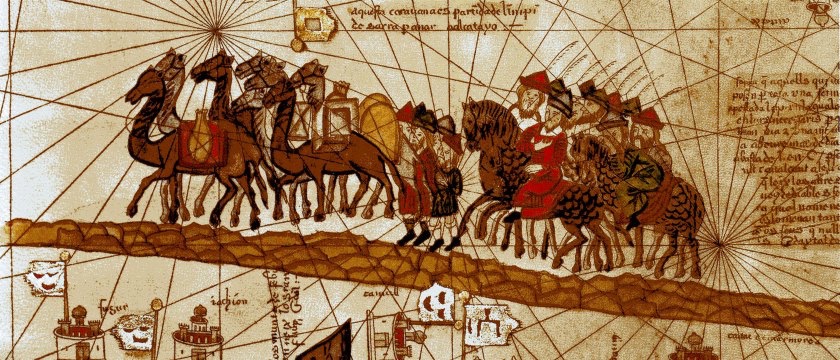
The conquests of Genghis Khan and his successors accomplished much the same during the 13th and 14th century. The “Pax Mongolica” effectively connected Europe with Asia, making it safe to travel the “Silk Road” from Britain in the west to China in the east. Great caravans carrying Chinese silks and spices came to the west via transcontinental trade routes. It was said of the era that “a maiden bearing a nugget of gold on her head could wander safely throughout the realm.”

Never mind the pyramids of skulls, over there.

The “Black Death” and the political fragmentation of the Mongol Empire brought that period to an end. Muslim domination of Middle Eastern trade routes made overland travel to China and India increasingly difficult in the 15th century. After Constantinople fell to the Ottoman Turks in 1453, such travel became next to impossible. Europe began to look for a water route to the East.

It’s popular to believe that 15th century Europeans thought the world was flat, but that’s a myth. Otherwise, the cats would have pushed everything over the edge, by now.

The fact that the world is round had been understood for over a thousand years, though 15th century mapmakers often got places and distances wrong. In 1474, Paolo dal Pozzo Toscanelli detailed a scheme for sailing westward to China, India and the Spice Islands. He believed that Japan, which he called “Cipangu”, was larger than it is, and farther to the east of “Cathay” (China). Toscanelli vastly overestimated the size of the Eurasian landmass, and the Americas were left out altogether.

This is the map that Christopher Columbus took with him in 1492.

Columbus had taken his idea of a westward trade route to the Portuguese King, to Genoa and to Venice, before he came to Ferdinand and Isabella in 1486. At that time the Spanish monarchs had a Reconquista to tend to, but they were ready in 1492. The Nina, Pinta and the Santa Maria sailed that August.

By January 9, 1493, the expedition had been at sea for six months. Sailing off the coast of Hispaniola, what we now call the Dominican Republic, Columbus spotted three “mermaids”.

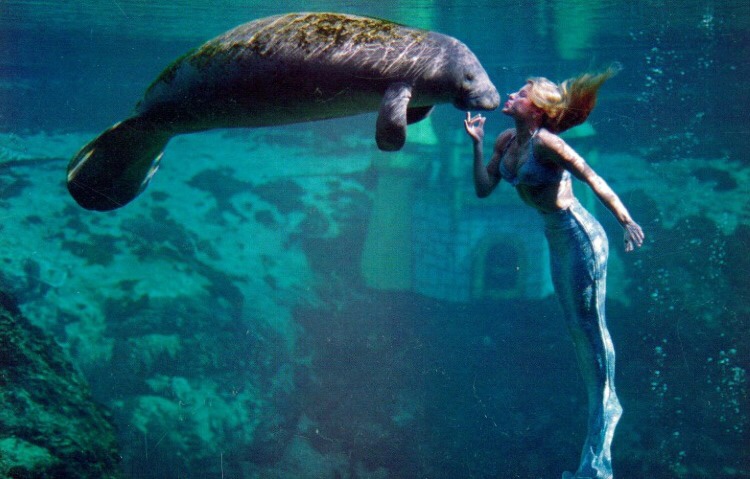
They were Manatee, part of the order “Sirenia”. “Sirens” are the beautiful sisters, half birdlike creatures who live by the sea, according to ancient Greek mythology. These girls, according to myth, sang a song so beautiful that sailors were hypnotized, crashing their ships into rocks in their efforts to reach them.

Columbus seems not to have been impressed, describing these mermaids as “not half as beautiful as they are painted.”

Small wonder. These marine herbivores measure 10 to 13-feet from nose to tail, and weigh in at 800-1,200 lbs.

Not everyone was quite so dismissive. A hundred years later, the English explorer John Smith reported seeing a mermaid, almost certainly a Manatee. It was “by no means unattractive”, he said, but I’m not so sure. It’s just possible Mr. Smith needed to get out a little more.

January 8, 1835 When the Dollar Dies

You’ve worked all your life. You’ve supported your family, paid your taxes, and met your every obligation. You even managed to put a few bucks aside, in hopes of a long and happy retirement. What happens to that retirement “nest egg”, when the cost of the coffee in your hand doubles in the time it takes to drink it?

You’ve worked all your life. You’ve supported your family, paid your taxes, and met your every obligation. You’ve even managed to put a few bucks aside, in hopes of a long and happy retirement.

The subject of currency devaluation is normally left to eggheads and academics, the very term sufficient to make most of us tip over and hit our heads on the floor, from boredom. But, what happens to that “nest egg”, when the cost of the coffee in your hand doubles in the time it takes to drink it?

History records 58 such instances of hyperinflation. The economic train wreck socialism has wrought on Venezuela, constitutes #59. This in a country with the largest proven oil reserves on the planet.

In antiquity, Roman law required a high silver content in the coinage of the realm. Precious metal made the coins themselves objects of value. The Roman economy remained relatively stable for 500 years. Republic morphed into Empire over the 1st century BC, leading to a conga line of Emperors minting mountains of coins in their own likeness. Slaves were worked to death in Spanish silver mines. Birds fell from the sky over vast smelting fires, yet there was never enough to go around. Silver content was inexorably reduced until the currency itself collapsed in the 3rd century reign of Diocletian.

An Empire and its citizens were left to barter as best they could, in a world where money had no value.

The assistance of French King Louis XIV was invaluable to Revolution-era Americans, at a time when colonial inflation rates approached 50% per month. Even so, French state income was only about 357 million livres at that time, with expenses exceeding one-half Billion.

France descended into a Revolution of its own, in the wake of the American conflict. The government printed “assignat”, notes purportedly backed by 4 billion livres in property expropriated form the church. 912 million livres were in circulation in 1791, rising to nearly 46 billion in 1796.

One historian described the economic policy of the leftist radicals behind the Reign of Terror: “The attitude of the Jacobins about finances can be quite simply stated as an utter exhaustion of the present at the expense of the future”.

Somehow, that sounds familiar.

Paper money crashed in the post-Revolutionary Articles of Confederation period as well, when you could buy a live sheep for two silver dollars, or 150 “Continental” (paper) dollars.
Roles reversed and creditors hid from debtors, not wanting to be repaid in worthless scrip. Generations after our founding, a thing could be described as worthless as “Not worth a Continental”.

Germany was a prosperous country in 1914, with a gold-backed currency and thriving industries in optics, chemicals and machinery. The Deutsche Mark had approximately equal value with the British shilling, the French Franc and the Italian Lira, with an exchange rate of four or five to the dollar.

That was then.

While the French third Republic levied an income tax to pay for the “Great War”, the Kaiser suspended the gold standard and fought the war on credit, believing he’d get it back from conquered territories.
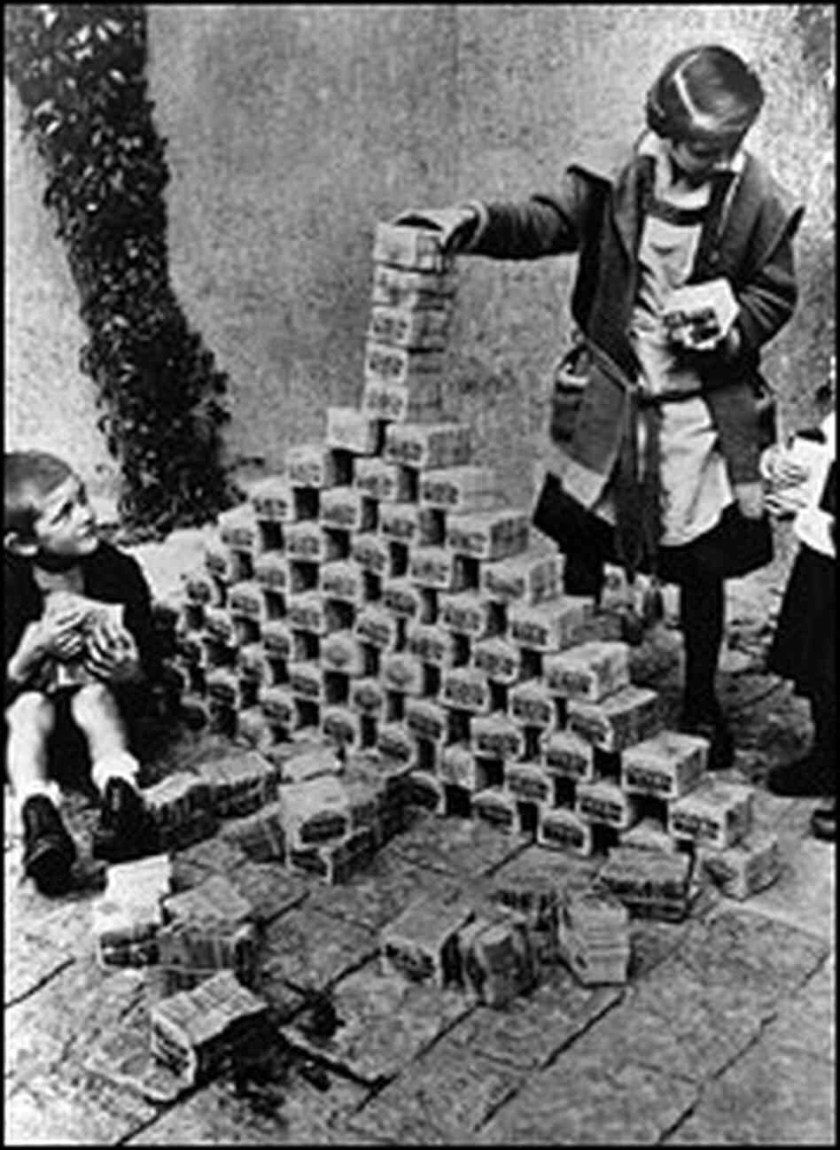
Except, Germany lost. The “Carthaginian peace” described by British economist John Maynard Keynes saddled an economy already massively burdened by war debt, with reparations. Children built ‘forts’ with bundles of hyperinflated, worthless marks. Women fed banknotes into wood stoves, while men papered walls with them. By November 1923, one US dollar bought 4,210,500,000,000 German marks.

The despair of the ‘Weimar Republic’ period resulted in massive political instability, providing rich soil for the growth of the National Socialist German Workers’ Party, of Adolf Hitler.

The Austro-Hungarian Empire was also on the losing side, and broken up after the war. Lacking the governmental structures of more established states, a newly independent Hungary began to experience inflation. Before the war, one US Dollar bought you 5 Kronen. In 1924, it was 70,000. Hungary replaced the Kronen with the Pengö in 1926, pegged to a rate of 12,500/1.

Hungary became a battleground in the latter stages of WW2, between the military forces of Nazi Germany and those of the USSR. 90% of Hungarian industrial capacity was damaged, half destroyed altogether. Transportation became difficult with most of the nation’s rail capacity, damaged or destroyed. What remained was either carted off to Germany, or seized by the Russians as reparations.

The loss of all that productive capacity resulted in scarcity of goods, and prices began to rise. The government responded by printing money. Total currency in circulation in July 1945 stood at 25 Billion Pengö. Money supply rose to 1.65 Trillion by January, 65 Quadrillion that Spring and 47 Septillion, in July. That’s a Trillion Trillion. Twenty-four zeroes.

Banks received low rate loans, so that money could be loaned to companies to rebuild. The government hired workers directly, giving out loans to others and in many cases, outright grants. The country was flooded with money, the stuff virtually grew on trees, but there was nothing to back it up.

Inflation approached escape velocity. The item that cost you 379 Pengö in September 1945, cost 1,872,910 by March, 35,790,276 in April, and 862 Billion in June. Inflation neared 150,000% per day, making the currency all but worthless. Massive printing of money accomplished the cube root of zero. The worst hyperinflation in history peaked in 1946, when the item that cost you 379 Pengö last September, now cost 1,000,000,000,000,000,000,000,000.

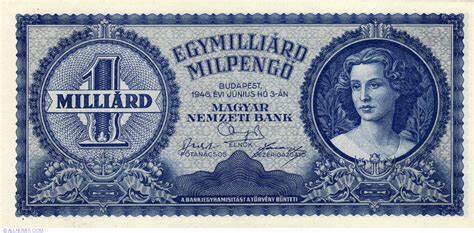
The government responded by changing the name, and the color, of the currency. The Pengö was replaced by the Milpengö (1,000,000 Pengö), which was replaced by the Bilpengö (1,000,000,000,000), and finally by the (supposedly) inflation-indexed Adopengö. This spiral resulted in the largest denominated note in history, the Milliard Bilpengö. A Billion Trillion Pengö.

The thing was worth twelve cents.

One more replacement and all that Keynesian largesse would finally stabilize the currency, but at what price? Real wages were reduced by 80% and creditors wiped out. The fate of the nation was sealed when communists seized power in 1949. Hungarians could now share in that old Soviet joke. “They pretend to pay us, and we pretend to work”.

The ten worst hyperinflations in history occurred during the 20th century, including Zimbabwe in 2008, Yugoslavia 1994, Germany 1923, Greece 1944, Poland 1921, Mexico 1982, Brazil 1994, Argentina 1981, and Taiwan 1949. The common denominator in all ten were massive government debt and a currency with no inherent value, excepting what a willing buyer and a willing seller agreed it was worth.

In 2015, Boston University economist Laurence Kotlikoff testified before the Senate Budget Committee. “The first point I want to get across” he said, “is that our nation is broke. Our nation’s broke, and it’s not broke in 75 years or 50 years or 25 years or 10 years. It’s broke today”. Kotlikoff went on to describe a “fiscal gap”, the difference between US’ projected revenue, and the obligations our government has saddled us with. “We have a $210 trillion fiscal gap at this point”. Nearly twelve times GDP – the sum total of all goods and services produced in the United States.

American public debt hit zero for the first and only time in history on this day in 1835. The number now approaches twenty-two Trillion, more than the combined GDP of the bottom 174 nations, on earth. All that, in a currency unmoored from anything of objective value. What could go wrong?

January 7, 1927 Harlem Globetrotter

No less a figure than Wilt Chamberlain said “Meadowlark was the most sensational, awesome, incredible basketball player I’ve ever seen. People would say it would be Dr. J or even Jordan. For me it would be Meadowlark Lemon”.

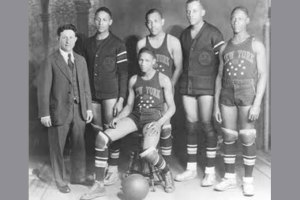
In 1926, 24 year old Abraham Saperstein organized a basketball team.  He called it the “Savoy Big Five,” after Chicago’s famous Savoy Ballroom.  At least that’s what the official team history says, except the Savoy didn’t open until 1927, so we may have to just go with it.

January 7, 1927 Harlem Globetrotters

Saperstein renamed them the “Harlem Globetrotters”, even though they were from Chicago, the team arriving in a Model “T” Ford for their debut game on January 7, 1927.   For two years it had been exhibition games before dances.  Now, the big game in Hinckley, Illinois would be played in front of 300 fans, with a total game payout of $75.

harlemglobetrotters1927
Harlem Globetrotters, 1927

They toured Wisconsin, Minnesota, and Iowa, playing almost every night against any and all challengers. Saperstein himself sometimes suited up to fill in for an injured player.  The Globetrotters played their 1000th game in Iron Mountain, Michigan in 1934.

In 1941, Negro League 1st baseman Reece “Goose” Tatum caught Saperstein’s eye.  A goose-tatummulti-sport athlete and teammate of Satchel Paige, Tatum would entertain the crowd with comedic routines whenever he put a runner out.  He was 6’4″ with an 84″ wingspan, able to touch his knees without bending. He’s credited with inventing the hook shot, an early version of the “skyhook” that would make Kareem Abdul-Jabbar famous, 30 years later.

Tatum was the original “Clown Prince” of the Globetrotters, though that title more often goes Meadowlark Lemon and his confetti-in-the-water-bucket routine.  Tatum combined natural athletic ability with a comedic timing that would change the whole direction of the club.  He passed away in 1967 at the age of 45, when sports reporter Lawrence Casey of the Chicago Daily Defender wrote, “Like Joe Louis in boxing, Babe Ruth in baseball, Bobby Jones in golf, Goose Tatum was king of his chosen sport.”

When Goose was drafted into the Army Air Corps in 1942, the Globetrotters signed their bob-karstensthird Caucasian, the first-ever white player to be offered a contract, Bob Karstens.  Karstens was the newest showman on the team, creating the signature pregame “Magic Circle,” the behind-the-back backhand shot, the “yo-yo” basketball and the “goofball,” a basketball filled with weights to give it a crazy bounce.  It was the early 1940s and the Harlem Globetrotters were the most famous, and the most profitable, professional basketball franchise in the world.

A near-fatal car accident cost Boid Buie his left arm when he was 13.  Never a great athlete before the crash, he worked so hard on his goals that Buie became the “One Armed Firecracker”.  He signed with the Globetrotters in 1946, playing 9 seasons as a starter and averaging 14 points per game.  Ever since the 2011 Elite Showcase Basketball Classic, the MVP Award is presented in the name of Boid Buie.buie

The Globetrotters were a serious basketball team throughout the early years, winning the World Professional Basketball Tournament as late as 1940.  They gradually worked more comic routines into their game in the late 40s and 50s as the newly founded NBA gained popularity until finally, they were better known for entertainment than for sport.

“Playing the bones” has a musical history going back to ancient China, Egypt, Greece and Rome.  Part of 19th century minstrel shows and traditional to musical genres ranging from Irish, to Bluegrass, to Zydeco. Freeman Davis’ “Brother Bones” recording of the 1925 jazz standard “Sweet Georgia Brown” became the Globetrotters’ theme song in 1952.

Former point guard with the NBA Baltimore Bullets, Louis “Red” Klotz, formed an exhibition team in 1952 to play against the Globetrotters.  In a nod to future President Dwight Eisenhower, he called them the Washington Generals.  The Generals played serious basketball while their opponents juggled balls, spun them on fingertips, and made trick shots.  The two teams played 13,000 games between 1953 and 1995, of which the Generals actually won 6.

Those of us who came of age in the 70s remember Curley Neal and Meadowlark Lemon,

who joined the club in 1954.  Who remembers that Wilt “the stilt” Chamberlain joined theteam four years later?  Chamberlain would be the first Globetrotter to have his jersey retired.

Chamberlain and the Globetrotters did their part to warm the Cold War, with a nine game series in Moscow, in 1959.  The Generals stayed at home, this time they brought the “Chinese Basketeers”.  An audience of 14,000 sat in stupefied silence, finally warming when they realized that this was more show than sport.  The team was paid the equivalent of $4,000 per game which could only be spent in Moscow, prompting the American press to observe that the Soviets were becoming capitalists.

abe-sapersteinAbe Saperstein passed away in 1966, aged 63.  The owner and founder of the Harlem Globetrotters, he was also founder and first Commissioner of the American Basketball League, and inventor of the three point shot.   Elected to the Basketball of Fame in 1971.  Here’s a great trivia question for you.  At 5’3″, Saperstein is the shortest male member in the place.  In 2005, he was inducted into the National Jewish Sports Hall of Fame.

Meadowlark Lemon “defends” Betty Ford

Saperstein’s creation went on, signing Olympic Gold Medalist Lynette Woodard their first ever female player in 1985.  Pope John Paul II became an honorary Globetrotter in 1986, in a ceremony in front of 50,000 in Saint Peter’s Square.

The list of official honorary Globetrotters includes Henry Kissinger, Bob Hope, Kareem Abdul-Jabbar, Whoopi Goldberg, Nelson Mandela, Jackie Joyner-Kersee, and Jesse Jackson.  Jesse Owens, the track star who stuffed Adolf Hitler at the 1936 Berlin olympics, accompanied the Globetrotters to Berlin in 1951.  Bill Cosby and Magic Johnson are both signed to $1 a year lifetime contracts, though Cosby’s contract was increased to $1.05 in 1986.

Ninety years after their founding, the Harlem Globetrotters show no signs of slowing down.  In 2015, the team drafted 6’6″ 2015 college slam dunk champion LaQuavius Cotton from Mississippi’s Delta State University, and trick shot expert “Dude Perfect” of Mickinney, Texas.  How do you not root for a team with two guys named LaQuavius Cotton and Dude Perfect?

pope-francis“Flight Time Lang” teaches Pope Francis to spin the ball

Shortly before he passed in 1999, Wilt Chamberlain was asked about the greatest basketball player of all time.  “Meadowlark was the most sensational, awesome, incredible basketball player I’ve ever seen.  People would say it would be Dr. J or even Jordan. For me it would be Meadowlark Lemon.”  Meadowlark Lemon played over 16,000 games with the Harlem Globetrotters before retirement, and passed away on December 27, 2015 in Scottsdale, Arizona, aged 83.  Rest in Peace, sir.  You brought a lot of smiles to the little boy in me.

February 5, AD 62, The lost City of Pompeii

Most were killed where they stood in the pyroclastic surge, that ground-hugging pressure wave seen in test films of nuclear explosions.  Gasses and pulverized stone dust race outward at 400 MPH in the “base surge” phase, super-heated to 1000° Fahrenheit, instantaneously converting all bodily fluids, to steam.

On February 5 in the year AD 62, an earthquake estimated at 7.5 on the Richter scale shook the Bay of Naples, spawning a tsunami and leveling much of the coastal Italian towns of Pompeii and Herculaneum, and surrounding communities.

Massive though the damage had been, the region around Mt. Vesuvius and the Bay of Naples had long been a favorite vacation destination for the upper crust of Roman society, with crowds of tourists and slaves adding to some ten to twenty thousand townspeople, bustling in and out of the city’s bath houses, artisans’ shops, taverns and brothels.

pompeii-2

Reconstruction began almost immediately and continued for the next seventeen years.  Until that day, the world came to an end.

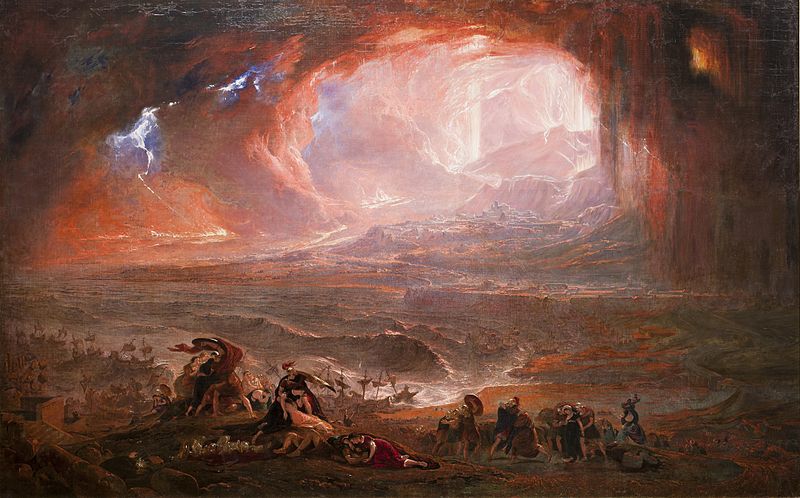
Long dormant and believed extinct, nearby Mount Vesuvius had been quiet for hundreds of years.  The mountain erupted on August 24 in the year 79,  propelling a scorching plume of ash, pumice and super-heated volcanic gases so high as to be seen for hundreds of miles.

The Melbourne Museum has created a stunning, eight-minute animation, of the event.

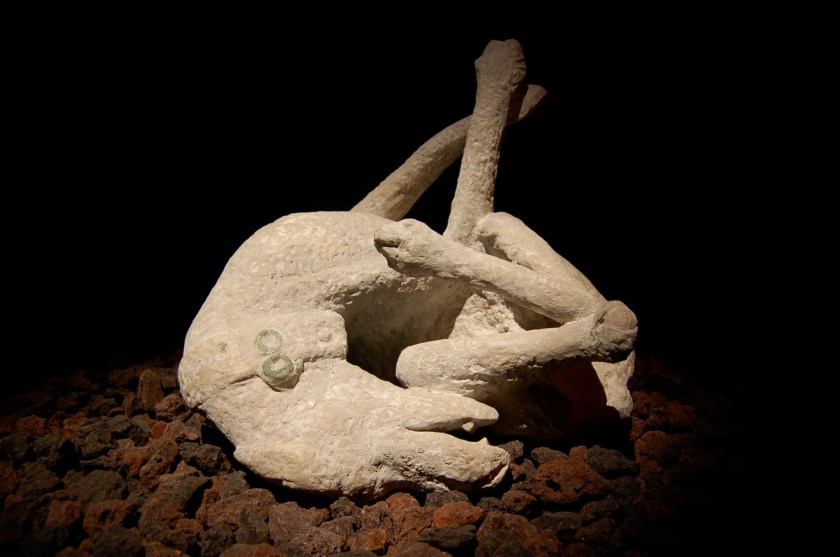
For the next eighteen hours, the air was thick with hot, poisonous gases, as volcanic ash rained down with pumice stones the size of baseballs.  No one who stayed behind stood a chance, nor did countless animals, both wild and domestic.

Most were killed where they stood in the pyroclastic surge, that ground-hugging pressure wave seen in test films of nuclear explosions.  Gasses and pulverized stone dust race outward at 400 MPH in the “base surge” phase, super-heated to 1000° Fahrenheit, instantaneously converting all bodily fluids, to steam.

Pompeii 2
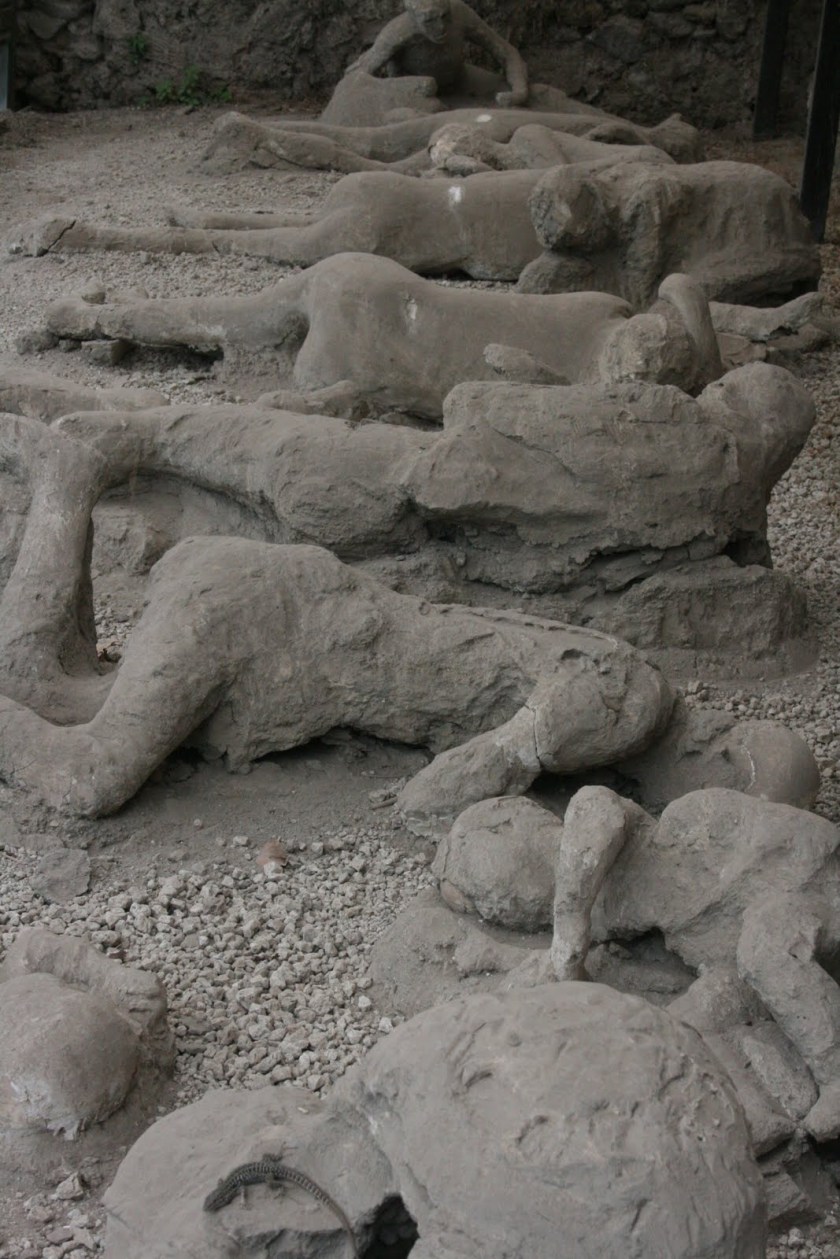
The victims of Mt. Vesuvius’ wrath left their imprints in the ash and rock which would be their tomb.  2,000 years later, remarkably life-like plaster casts, depict the final moments of these unfortunate men, women and children.

For those left alive, the suffocating, poisonous clouds of vapor and rock dust pouring into the city, soon  put and end to all that remained.  Imagine putting your head in a bag of cement, with someone pounding the sides.  Walls collapsed and roofs caved in, burying the dead under fourteen feet or more of ash, rock and dust. Neither Herculaneum, Pompeii nor their surrounding communities would see the light of day, for nearly two thousand years.

dsc_0128

Today, we remember the Roman author, naturalist and military commander Gaius Plinius “Pliny’ Secundus for his work Naturalis Historia (Natural History). We see his work in the editorial model of the modern encyclopedia.

With the cities of Pompeii and Herculaneum already destroyed, Pliny raced to the port of Stabiae some 4½km to the southwest, to rescue a friend and his family. The sixth and largest pyroclastic surge trapped his ship in port, killing the author and everyone in the vicinity. That we have an eyewitness to the event is thanks to two letters written by Gaius Plinius Caecilius Secundus (Pliny the Younger), Pliny’s nephew and a man he had helped to raise, from boyhood.

800px-Destruction_of_Pompeii_and_Herculaneum
Destruction of Pompeii and Herculaneum

Property owners and thieves returned over time to retrieve such valuables as statues. The words “house dug” can still be found, scrawled on the walls.  And then the place was forgotten, for fifteen hundred years.

15

An underground channel was dug in 1562 to redirect waters from the river Samo, when workers ran into city walls.  The architect Domenico Fontana was called in and further excavation revealed any number of paintings and frescoes, but there was a problem.

According to the Annus Mirabilis written by English poet Philip Larkin, sex was invented in the British Isles, in 1963.

“…So life was never better than
In nineteen sixty-three
(Though just too late for me) –
Between the end of the Chatterley ban
And the Beatles’ first LP…”

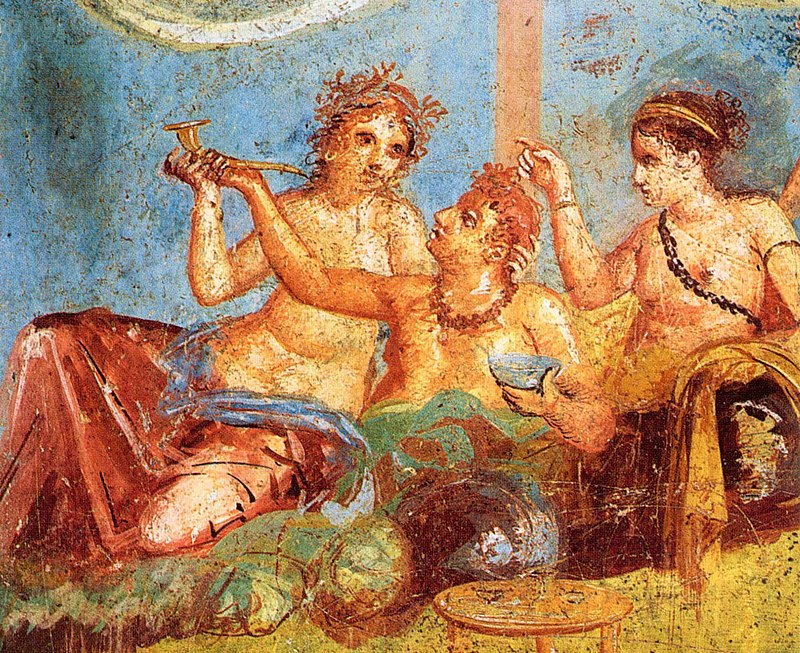
800px-Pompeii_-_Casa_dei_Casti_Amanti_-_Banquet
Pompeian artwork ranges from the merely hedonistic, to the pornographic

The ancients seem to have been somewhat less, “uptight”.   Life in Pompeii was nothing if not hedonistic.  The place has been described by some, as the “red-light district” of antiquity.  I’m not sure about that, but the erotic art of Pompeii and Herculaneum were WAY too much for counter reformation-era sensibilities.  The place was quietly covered up and forgotten, for another two hundred years.

Pompeii was first excavated in earnest in 1748, but it took another hundred years for archaeologists’ findings to be cataloged, and brought to museums.  In 1863, archaeologist Giuseppe Fiorelli realized that occasional voids in the ash layer were left by the long since decomposed bodies of the doomed victims, of Vesuvius.

A technique was developed of injecting plaster.  Today we can see them in excruciating detail, exactly where they fell.  Men, women and children, the dogs, even the fresh-baked bread, left out on the counter to cool.

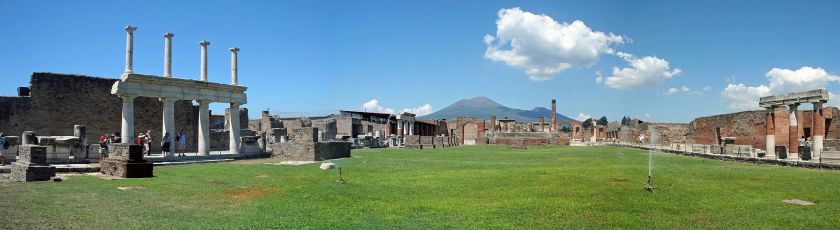
Today you can tour the lost city of Pompeii, from the baths to the forum, to the Lupanar Grande, where the prostitutes of Pompeii once “entertained” clients.  Ongoing excavation is all but a race with time, between uncovering what remains, and preserving what is.  Walls surrounding the “House of the Moralist” collapsed in 2010, so-called because its wealthy wine merchant owners posted rules of behavior, for guests to follow: “Do not have lustful expressions and flirtatious eyes for another man’s wife“.

Heavy rains were blamed for the collapse of the Schola Armatorium in 2010, the House of the Gladiators.  Fierce recriminations have followed and doubt has been cast on local authorities’ abilities, to properly preserve what has become a UNESCO World Heritage site.

Be that as it may, 2,000-year-old buildings do not come along every day.  There is no replacement for antiquity.

Pompeii_Forum

If you enjoyed this “Today in History”, please feel free to re-blog, “like” & share on social media, so that others may find and enjoy it as well. Please click the “follow” button on the right, to receive email updates on new articles.  Thank you for your interest, in the history we all share.

January 6, 1842 I Am the Army

That afternoon, a single mangled soldier rode into Jalalabad on a wounded horse. He was Dr. William Brydon. When asked where the army was, Brydon replied “I am the Army”.

The British East India Company was a British joint stock company, chartered by Queen Elizabeth in 1600 with a trade monopoly in Southeast Asia and India. It was the first of several such companies established by European powers, followed closely by the East India Companies of the Dutch, Danish, Portuguese, French and Swedish, and associated with the valuable trade in such commodities as cotton, silk, indigo, salt, saltpeter, tea and opium.

India means British troops on the Kabul Plain

These organizations were much more than what we associate with the word “company”. In their day they could raise their own armies, enforce the law up to and including trial and execution of accused wrong doers, and largely functioned outside the control of the governments that formed them. By the early 19th century, the British East India Company ruled over large areas of India with its own private armies.

Firmly entrenched by the 1830s and wary of Russian encroachment south through Afghanistan, the British tried without success to form an alliance with the Emir of Afghanistan, Dost Mohammad Khan.

Lord Auckland’s “Simla Manifesto” of October 1838 laid out a justification for British intervention in Afghanistan, based on the need for a trustworthy ally on India’s western frontier. The pro-British, Shuja Shah Durrani was installed as ruler, backed up by an army of 21,000 British and Indian troops under the command of Lieutenant General John Keane, 1st Baron Keane, veteran of the Peninsular War, and the battle of New Orleans.

Afghan Tribesmen

Most of these troops returned to India the following year, as Dost Mohammad unsuccessfully attacked the British and their Afghan protégé, only to be defeated and exiled to India in late 1840.

By 1841, disaffected Afghan tribesmen were flocking to support Dost Mohammad’s son, Akbar Khan, against what they saw as an occupying force. There were warning signs of the deteriorating situation as the spring of 1841 turned to summer, and British freedom of movement around Kabul became increasingly restricted. The British government in India was dismayed at the cost of keeping the Kabul Garrison, when they cut off funds, ending the stream of bribes that all but kept the tribes in check.

It was around this time that Sir William Elphinstone stepped in as commander of the Kabul Garrison. Described by fellow General William Nott as “the most incompetent soldier who ever became General”, Elphinstone found himself in charge of 4,800 Indian and British troops, along with 16,000 camp followers: families, servants and civilian workers.

Akbar Khan

On November 2 1841, Akbar Khan proclaimed a general revolt. Several British officers were murdered along with their families, servants and staff. Afghan leaders invited Civil servant Sir William Hay MacNaghten for tea in December to discuss the situation; only to seize and murder them as the delegation dismounted their horses.

On January 1, Elphinstone agreed to hand over all powder, his newest muskets and most of his cannon, in exchange for “safe passage” out of Kabul, guaranteed by Akbar Khan along with the protection of the sick, wounded and infirm left behind. 16,000 soldiers and civilians moved out on January 6, heading for Jalalabad, 90 miles away.

Akbar Khan’s “safe passage” lasted about as long as it took the column to get out in the open, when Afghans moved in firing at retreating troops while setting fire to garrison buildings containing those left behind.

At one point Akbar Khan met with Elphinstone, claiming ignorance of any betrayal. He claimed that he had been unable to provide the promised escort because they had left earlier than expected, and then asked Elphinstone to wait while he went ahead and negotiated safe passage with local tribesmen.

The delay accomplished nothing more than to allow Akbar Khan time to set up the next ambush. By the evening of the 9th, the column was only 25 miles outside of Kabul. 3,000 people were dead, mostly killed while fighting or frozen to death, while a few had taken their own lives. By January 12, the column was reduced to only 200 soldiers and 2,000 camp followers

Last stand

The last stand took place on a snow-covered hill near the village of Gandamak, on the morning of January 13, 1842. 20 officers and 45 British soldiers were surrounded, with an average of two rounds apiece. That afternoon, one mangled soldier rode into Jalalabad on a wounded horse. He was Dr. William Brydon. Brydon had part of his skull sheared off by an Afghan sword. He was only alive because of a Blackwood’s Magazine, stuffed into his hat to fight off the cold of the Hindu Kush. When asked where the army was, Brydon replied “I am the Army”.

In the end, 115 captured officers, soldiers, wives and children lived long enough to be released. Around 2,000 Sepoys and Indian camp followers eventually made their way back to India, while others were sold into slavery, or abandoned to a life of beggary.

The 1842 Kabul expedition was the most egregious loss to British arms in history, eclipsed only by the fall of Singapore 100 years later, nearly to the day.

According to legend, Brydon’s horse lay down on arrival in Jalalabad, and never got up again.

January 5, 1976 The Killing Fields of Cambodia

Imagine feeling so desperate, so fearful of this alien ideology invading your country, that you convert all your worldly possessions and those of your family to a single diamond, bite down on that stone so hard it embedded in your shattered teeth, and fled with your family to open ocean in a small boat.  All in the faint and desperate hope, of getting out of that place.  That is but one story among millions.  Those were the lucky ones.

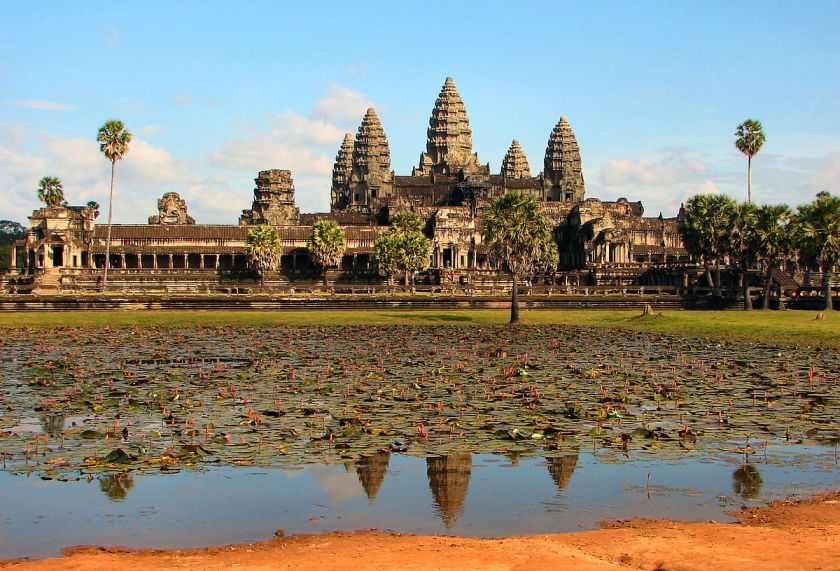
Between the 7th and 14th centuries, the Khmer Empire occupied much of modern-day Cambodia, Thailand, Laos, and southern Vietnam.  Now extinct, this powerful civilization was once home to the largest city in the world.  Until recently overrun by Jungle, the capital city of Angkor, whose original name was Yashodharapura (“Glory-bearing city”), was nearly the size of modern day Los Angeles, and home to roughly a million people.

Even today, the Hindu temple complex of Angkor Wat, built circa 1122, remains one of the largest religious monuments in the world.

1200px-angkor_wat
Temple Complex at Angkor Wat

During the 1950s, a group of some 200 middle-class Cambodian kids were educated at French Universities.  The greater part of that group formed a student organization of Marxist-Leninist intellectuals, dreaming of an agrarian utopia on the Indo-Chinese peninsula.

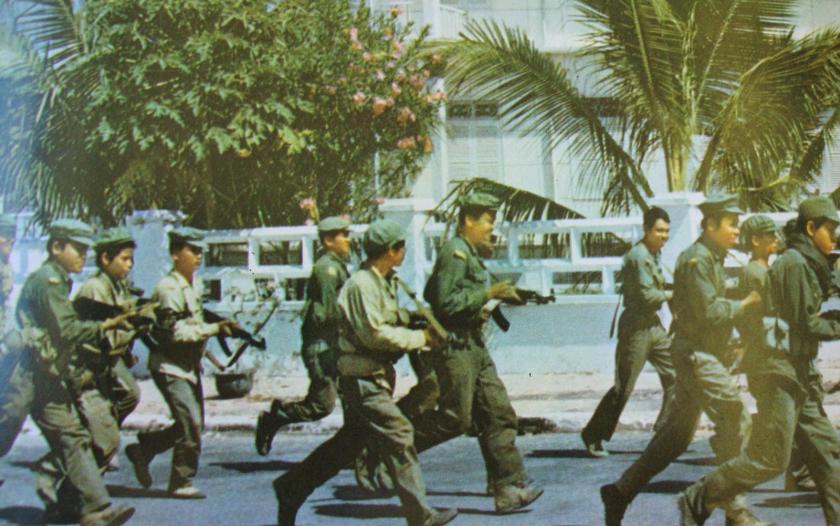
What began as a small leftist insurgency grew in power, thanks to support from Communist China and North Vietnam.  From only a few hundred individuals in 1960, these “Red Khmers” (Khmer Rouge) grew into an effective insurgency against the Khmer Republic’s government of King Norodom Sihanouk and Prime Minister Lon Nol.  By early 1975, the Khmer Rouge had overwhelmed Khmer National Armed Forces.

khmerrougeimage1600_i002653_-1

As the last, humiliating scenes of America’s war in neighboring Vietnam played themselves out in the capital of Saigon, Khmer Rouge forces captured the Cambodian capital at Phnom Penh, overthrowing the Khmer Republic and executing its officers.

This was to be “Democratic Kampuchea”, the name representing a local pronunciation of the word as it comes into English, as Cambodia.

The Kampuchean constitution, formally approved this day in 1976, theoretically vested power in a 250-member, directly elected “Kampuchean People’s Representative Assembly”.  This body met once in April, and never again.  Unlike the cult of personality grown up around the Kim family of North Korea or that of the Stalinist USSR or Maoist China, all power in the CPK (Communist Party of Kampuchea) belonged to “The Center”, a shadowy, nine-member standing committee of those same leftist intellectuals from the Paris student days, led by Prime Minister and Communist General Secretary Saloth Sar, better known as ‘Pol Pot’.

This nine-member “Angkar”, (pronounced ahng-kah), meaning ‘The Organization’, ushered in one of the great horrors of the twentieth century, a four-year genocide remembered as the “Killing Fields”, of Cambodia.

800px-khmer_rouge_clothing
Khmer Rouge Uniforms

The “Khmer Rouge”, self-described as “The one authentic people capable of building true communism”, murdered or caused the deaths of an estimated 1.4 to 2.2 million of their own people, out of a population of 7 million. All to build the perfect, agrarian “Worker’s Paradise”.

Imagine feeling so desperate, so fearful of this alien ideology invading your country, that you convert all your worldly possessions and those of your family to a single diamond, bite down on that stone so hard it embedded in your shattered teeth, and fled with your family to open ocean in a small boat.  All in the faint and desperate hope, of getting out of that place.  That is but one story among millions.  Those were the lucky ones.

The very embodiment of the “ivory tower intellectual”, the Angkar was detached and incapable of connection with the masses.  Theirs was a radicalized ideology, heavily influenced by French communists and the writings of Lenin and Mao, and heavily tinged with ideas of racial superiority.  Paradoxically, it was a creed altogether averse to an educated or merchant class and determined to use violence in pursuit of “class struggle”.

41109936b62749119d222b13e85b9a66

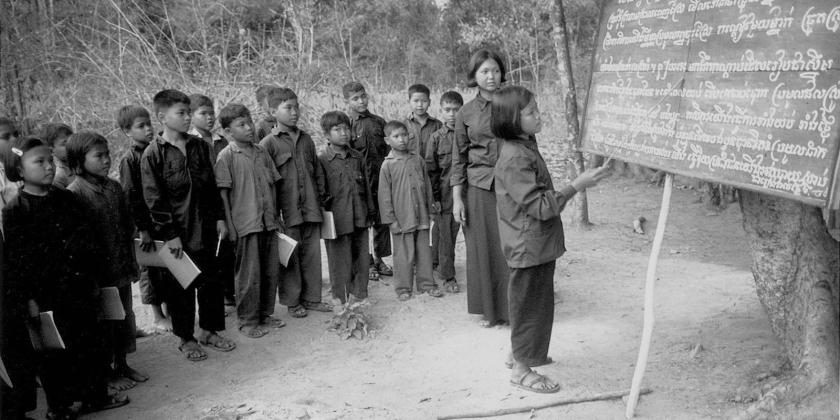
The Khmer rouge set out to create a peasant’s utopia.  An agrarian, atheist state.  Among the first to go were the Buddhist monks, nearly 25,000 of them murdered, most often with a rock, or a club.  All religion was banned, repression of Christians and Muslims, extensive.

For generations, European colonists exploited the mineral resources of “French Indochina”.  Now, abandoned mine shafts filled with the bones of the slain.

Whole cities were liquidated as “parasitic” and “corrupt”.  Shop owners, business people and educators.  Police officers, government employees and ethnic minorities such as Chinese, Vietnamese and Cham.  All were driven from their homes and murdered as “class enemies”.  Anyone who so much as wore eyeglasses or owned a wristwatch, was as good as dead.

killingfields-ft-1.m

Today, the Tuol Sleng (“Hill of Poisonous Trees”) Genocide Museum occupies the former  Chao Ponhea Yat High School, operated during the Cambodian Genocide as Security Prison 21.  In its day, “S-21” held and estimated 20,000 people at one time or another – no one knows for sure.   Between 1976 and ’79, only seven adults survived this place.

The Khmer Rouge operated at least 150 such torture and execution facilities.

There, Khmer interrogators extracted “confessions” by torture.  After two to three months, victims would eagerly agree to anything, thousand-word “confessions” weaving true stories into outlandish tales of conspiracy with Vietnamese, KGB and CIA operatives.  Friends, families and acquaintances would be identified in such narratives as they in turn, would be brought in for “interrogation”.

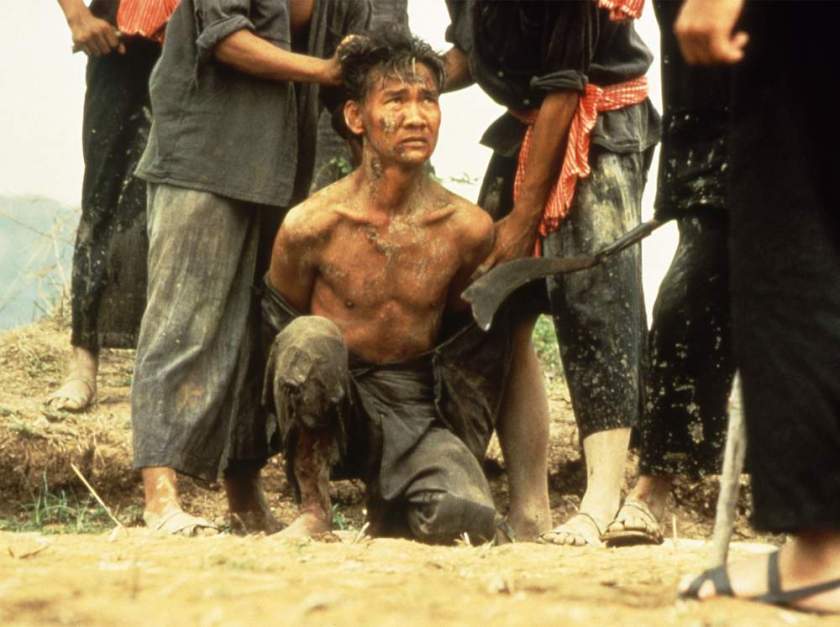
All were turned over to extermination centers, where squads of blank-eyed teenagers awaited with machetes, pick axes and iron bars.  Ammunition was too expensive.

The vast majority of victims were Cambodian, but not all.  488 Vietnamese passed through S-21, as did 31 Thai, one Laotian, an Arab, one Brit, four French, two Americans, a Canadian, one New Zealander, two Australians, and an Indonesian. An unknown number of Indians and Pakistanis also passed through the facility.  Not one foreigner survived.

greenculturaltravel-cambodia-tours-killing-fields-1
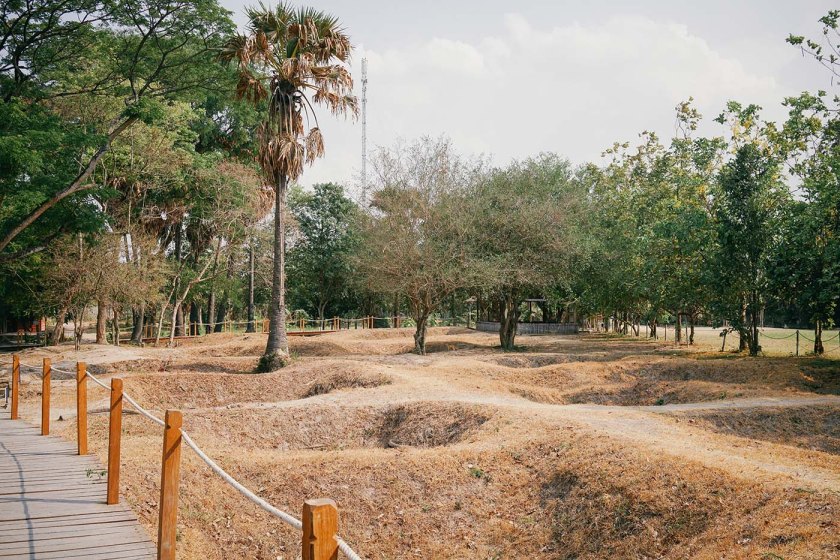
One among 20,000 mass grave sites, in Cambodia

The Khmer Rouge is estimated to have executed over 1.38 million people in this way, with death by starvation, torture, overwork and disease accounting for some 2½ million more.  Twenty-five per cent, of the entire nation.

The last straw came on April 18, 1978, four miles over the border into Vietnamese territory.  Khmer Rouge troops took a page out of their own playbook, murdering 3,000 Vietnamese civilians in what came to be known as the Ba Chuc Massacre.

The New York Times reported:

“The Khmer Rouge then used the same formula for execution as in Cambodia. ‘They pointed their weapons and ordered us to come to a meeting with their superiors,’ said Nga, a dignified, soft-spoken woman.

She was forced toward the border with parents, siblings, husband and six children. Suddenly, their escorts began clubbing the children. Her youngest daughter was struck violently on the head three times and cried ‘Mother, Mother.'”

Four years earlier, North Vietnam had helped the Khmer Rouge take power.  Now the Vietnamese government staged a massive invasion of its neighbor.  By January 7, 1979 it was over, the Khmer regime toppled and a new government installed in Phnom Penh.

k5

Cambodian journalist Dith Pran managed to escape the regime, one among millions swept up in the humanitarian disaster in the wake of the war in Vietnam, and the “Killing Fields” of Cambodia.   It was he who coined the term.

Justice was slow in coming.  Most senior Khmer officials would not be tried, until well into the twenty-first century.  Pol Pot died quietly in his bed, in 1998.

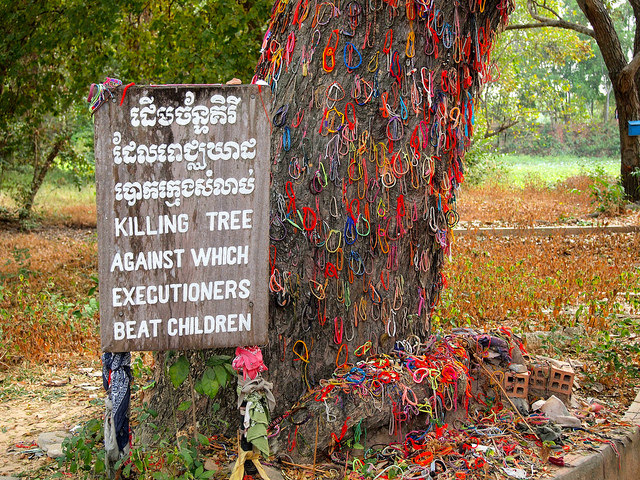
Feature image, top of page:  At least 10,000 children were bashed to death against “killing trees”, of which this is but one.

January 4, 1903 Electrocuting an Elephant

In the six years I’ve been writing “Today in History”, I’ve written about 700 of these stories. A father isn’t supposed to have favorites among his “children”, but I have to confess. I do. This is not one of those. This story, I detest.

Thomas Edison didn’t invent the light bulb.  The first platinum filament bulb arrived some forty years earlier. What he did was to make the thing commercially viable, earlier versions being too expensive, and too quick to burn out. Edison went through thousands of materials before discovering the right filament, finally landing on carbonized bamboo leading to his famous quip, “I have not failed. I’ve just found 10,000 ways that won’t work.”

topsy
Topsy

Half a world away from Edison’s workshop, an elephant was born in the jungles of Southeast Asia, captured by elephant traders and smuggled into the United States.

Adam John Forepaugh, owner of the Forepaugh Circus, bought the animal and named her “Topsy”, after a slave girl from Harriet Beecher Stowe’s novel, Uncle Tom’s Cabin.

Circuses of the era were known for sleazy business practices. Adam Forepaugh was at home in this environment. The Forepaugh circus claimed Topsy was the first elephant born in America, a hoax publicly exposed when the elephant trader who sold the animal, tipped off arch-rival circus operator, P.T. Barnum.

Edison opened his first electrical power plant in 1882, in New York city. Two years later, a young Serbian immigrated to America, and went to work for Edison. His name was Nikola Tesla. Tesla was himself a brilliant inventor and helped his boss improve his Direct-Current generators, while simultaneously developing a different method of electrical distribution: Alternating Current.

Tesla tried to convince Edison the future belonged to AC, but the “Wizard of Menlo Park” was adamant. AC had no future he claimed, Edison would not budge. Tesla quit his job in 1885 and applied for several patents for his work in AC technology. In 1888, he sold his patents to industrialist George Westinghouse, and the Westinghouse Electric Company. The “War of the Currents” had begun.

edison-first-bulb
Edison’s first bulb

Topsy grew to be 10-feet tall and twenty-feet long, and worked for the circus for 27 years.  She gained a reputation for being a “bad” elephant, but it’s hard to separate circus hype, from reality.  Newspapers of course, were happy to play along.   These were the days of Yellow Journalism, and circulation wars were red hot.  Newsies hawked lurid headlines, on the streets. Anything to sell papers – extra extra, read all about it.

forepaugh-elephants-(no-dat

Topsy was supposed to have killed twelve men by 1900.  More common accounts claim she had killed two Forepaugh & Sells Brothers’ Circus workers: one in Paris, Texas and one in Waco.  Journalist Michael Daly wrote in 2013 there is no record of anyone killed by an elephant in Waco.  The handler attacked in Paris received injuries, but there is no record of his being killed.

No matter, the story sold papers.  It was great for attendance too.  People crowded into the circus to see the “man-killing elephant”.

Topsy and the other elephants were being unloaded from a train in June 1902, when one Louis Dodero thought he’d”tickle” her, behind the ear. Topsy seized him around the waist and lifted him high, before hurling him to the ground. It could have been worse but a handler stepped in and savaged her, with a fork.

topsy_the_elephant
An illustration of Topsy from the St. Paul Globe on June 16, 1902. H/T Smithsonian.com

Meanwhile, Edison felt threatened by the rise of AC, which could be distributed over long distances far more cheaply, that DC.  Edison launched a propaganda campaign, publicly executing several dogs and even a horse, to demonstrate the dangers of AC.

When New York came looking for a more humane way to execute the condemned, the one-time opponent of capital punishment recommended an electric chair. In 1890, convicted murder William Kimmler was the first person to die in an electric chair, the apparatus powered by a Westinghouse AC generator designed by a salesman secretly on Edison’s payroll.

Despite such propaganda, Tesla’s low-cost alternative won out. Westinghouse won the contract to power the 1893 World’s Fair in Chicago, and the all-important generators, at Niagara Falls. The War of the Currents was over by 1896. AC has remained dominant in the power industry, to this day.

the current war

In March 1902, one James Fielding Blount entered the elephant’s tent, possibly drunk.  Accounts vary as to what happened next.  The common story is that Blount began teasing the animals each in turn, offering the elephants a bottle of whiskey. He reportedly threw sand in Topsy’s face and then burned the tip of her trunk with a cigar.  Topsy hurled the fool to the ground and crushed the life out of him

320px-topsy_elephant_electrocution_luna_park,_coney_island_january_1903
Being led to the place of execution

Forepaugh sold their “bad” elephant in June, when she was added to the animal menagerie at Coney Island’s Sea Lion Park. William “Whitey” Alt, Topsy’s handler, came along.

A bad summer season and heavy competition convinced owner Paul Boynton to get out of the business. New owners Frederick Thompson and Elmer Dundy decided to expand the park, and Topsy was put to work moving timbers and heavy equipment.

Newspapers and publicity shots characterized the work as “penance” for Topsy’s rampaging ways.

Meanwhile Alt, an habitual drunk and the only person who could handle her (albeit brutally), stabbed Topsy with a pitchfork and then set her loose to run free in the streets. The episode led to Alt’s arrest as did another, in which the drunk handler rode the elephant through the streets of Coney Island and into a local police station, causing the officers to dive for the cells for protection.

Alt was fired after that episode, and the owners claimed they had no way of handling the park’s elephant.  Thompson and Dundy tried to give her away without success, before hitting on an idea.  They would execute their problem elephant by hanging, and charge admission to witness the spectacle.

electrocuting_an_elephant_edison_film_1903_frame_shot

President of the American Society for the Prevention of Cruelty to Animals John Peter Haines got wind of the plan, and objected to the “needlessly cruel” means of execution. Weeks of negotiations ensued, in which the owners offered to give Topsy to the SPCA, before settling on an “all of the above” means of execution including poison, strangulation by means of ropes tied to a steam powered winch, and electrocution.

The execution was carried out on August 4, 1903 and recorded by an Edison film crew, one of many “actuality” films produced by the Edison Mfg. Co. from 1897, on.  The short film “Executing an Elephant” runs for 74 seconds. You can find it on Youtube if you are so inclined. I don’t want to see it again.

In the following years, Thomas Edison was blamed for staging the spectacle, to discredit his rival. The story is repeated from that day to this, but it’s a myth.

Edison lost his battle to supply the world’s electricity, years before. There’s no evidence he was even there on the date of execution, and his written correspondence contains no mention of it.  This then, is the story of an innocent animal, caught between ignorance and a changing business climate.  I do not think I could hate this story, more.


January 3, 2000 Peanuts

Over fifty years, Schulz drew nearly 18,000 strips, taking vacation only once in 1997, to celebrate his 75th birthday.  In all that time, that five-week stretch was the only time the papers ever had Peanuts reruns.

Schutz-LetterCharles Monroe Schulz was one of the brighter kids at Central High School in Saint Paul, Minnesota, but that didn’t help his social life. He was already a shy boy and skipped two half-grades, graduating as the youngest student in the class of 1940.

The boy loved to draw. He was good at it, too. The family once owned a hunting dog called “Spike”, with the cringe-worthy habit of eating sharp objects. It didn’t seem to bother him much, and the boy sent a drawing to Ripley’s Believe It or Not! who ran it, complete with a description of Spikes unusual predilections.

The drawing was signed, “Sparky”.  Even with Schulz later celebrity, you could always Charles_Schulz_HS_Yearbookweed out those who merely claimed to know him, if they called him “Charles”, or “Chuck”.  Schulz’ uncle called him “Sparky” as a boy, after the horse Spark Plug in Billy DeBeck’s comic strip, Barney Google.  He always signed the strip “Schulz”, but friends and family knew him as Sparky, until the day he died.

Schulz was drafted into the Army in 1943, a Staff Sergeant with the 20th Armored Division in Europe and squad leader on a .50-caliber machine gun team.

He never got a chance to fire his weapon, though he did come face-to-face with a Wehrmacht soldier, once.  His blood must’ve turned cold in his veins when he realized he’d forgotten to load, but the man he faced was no Nazi fanatic.  This was just a guy, who wanted to go home. The German surrendered, happily.  I hope he did get to go home.

Schulz returned to Minneapolis after the war where he did lettering for a Catholic comic magazine, Timeless Topix. He took a job in 1946 at Art Instruction, Inc., reviewing and grading lessons submitted by students, a job he held for several years while developing his talents as comic creator.

1392261715-0

Charlie Brown, that little boy who was always close but never quite succeeded, first appeared in a series of single-panel jokes called “Li’l Folks“, along with a dog who looked something like Snoopy. It was published in the local papers from June 1947 to January ’50, and later syndicated.  The first strip was published in seven newspapers on October 2, 1950, but United Features thought the name was too close to two strips already in syndication, Li’l Abner, and “Little Folks“.

They called it “Peanuts” after the peanut gallery of the old Vaudeville days, the cheapest and rowdiest seats in the theater. Schulz didn’t like the name, saying it “made it sound too insignificant,” but the name, stuck.

Peanuts

Schulz took pride in his service during the war, and his strip paid tribute to Rosie the Riveter and Ernie Pyle.  More than any other, he’d honor “Willy & Joe”, those two GIs from the imagination of war correspondent and cartoonist Bill Mauldin, a man to whom Schulz always referred as “My Hero”.  Over the years, Snoopy visited with Willie & Joe no fewer than 17 times. Always on Veterans Day.

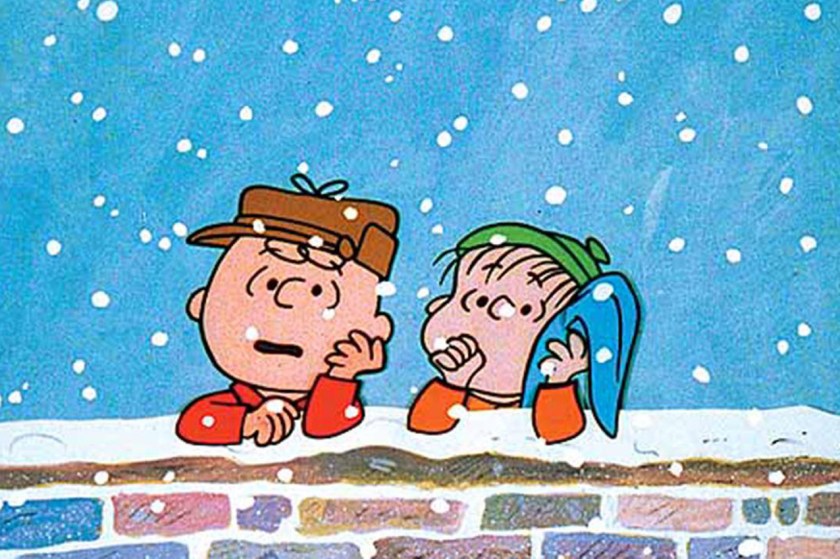
A Charlie Brown Christmas has been a staple of the Christmas season since 1965, but Linus almost didn’t get to tell his famous story of the baby Jesus. ABC executives thought Linus’ recitation of the birth of Christ too overtly religious.  They wanted a laugh track too, but Schulz refused. “If we don’t do it, who will?” So it was that the scene remained, perhaps the most memorable moment in cartoon history. The laugh track version was produced, but never aired.

a-charlie-brown-christmas-abc-11302015

Charlie Brown’s love interest in some of the TV specials, the “Little Red-Haired Girl”, was based on an accountant from that old job at Art Instruction, Donna Mae Johnson.  The two had an office romance, but she turned him down when he proposed they marry.

She wasn’t the only character based on a real person.  Linus and Shermy were patterned after Schulz’ close friends Linus Maurer and Sherman Plepler.  Peppermint Patty was inspired by a cousin on his mother’s side, Patricia Swanson.  Snoopy himself resembles that old family dog Spike, though he was a Pointer, not a Beagle.

American opinion polls showed a sharp drop in support for the war in Vietnam over 1967.  1968 was a wretched year in American politics, beginning with the Tet Offensive in January.   Media reporting turned the American military victory over the Vietnamese New Year, into a thing of despair.  President Johnson withdrew from the Presidential election, that March.  Martin Luther King, Jr. was assassinated in April and riots swept through cities across the country.  Robert F. Kennedy was assassinated that June, after winning the critical California primary.  The Democratic National Convention that August more closely resembled a riot, than a political convention.

Franklin_(Peanuts)
Franklin Armstrong

Race relations were particularly vile, when Los Angeles schoolteacher Harriet Glickman wrote to the cartoonist, asking if he could add a black character.  Glickman never expected a response from the now-famous Charles M. Schulz, but respond he did.  He said he liked the idea, but expressed a concern about seeming “condescending”, to black families.  With Schulz’ permission, Glickman asked friends of African ancestry, how to make such a character “more relatable”.

Franklin Armstrong made his first appearance on July 31, 1968.  What was remarkable for the time, was how unremarkable, he was.  Just another little boy, at first confused about the strange stuff in Charlie Brown’s neighborhood.  Particularly Linus’ obsession with the ‘Great Pumpkin’.  Franklin first met Charlie Brown on a beach.  He said his father was a soldier, off fighting in Vietnam.  “My dad’s a barber,” said Charlie Brown.  “He was in a war too, but I don’t know which one.”

One newspaper editor wrote saying he didn’t mind a “negro” character, but please don’t show them in school together.  Schulz didn’t bother to respond.

Universal Studios Japan

I wonder if Donna Mae Johnson ever regretted turning down that marriage proposal.  Peanuts went on to become a pop culture phenomenon, with countless animated specials combining with merchandise sales to produce revenues in the Billions.  At it’s peak, Peanuts ran in 2,600 papers in 75 countries and 21 languages.  Schulz himself is estimated to have earned $30 to $40 million, a year.

Snoopy-Believe-It-Or-Not-560x290

The command module for the 1969 Apollo 11 mission to the moon was named Charlie Brown and the lunar module, Snoopy.  President Ronald Reagan was a fan, and once wrote to Schulz that he identified with Charlie Brown.

Imitation of Charles Schulz cartoon, mad

Over fifty years, Schulz drew nearly 18,000 strips, taking vacation only once in 1997, to celebrate his 75th birthday.  In all that time, that one five-week stretch was the only time the papers ever had Peanuts reruns.

o-STEPHEN-SHEA-570
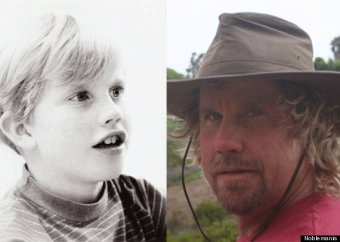
Stephen Shea, H/T Huffington Post

Fun fact: Former child actor Stephen Shea inherited the speaking role for Linus van Pelt when his older brother Chris’ voice changed, and went on to perform in eight animated specials. Chris went to summer camp with a boy who happened to be President of The Doors fan club. It turns out that Jim Morrison was a big Peanuts fan, and invited Chris and his father to be his special guests, at a concert.

Schulz’ health began to deteriorate in the late 1990s, his once-firm hand, now developing a tremor. He never really recovered from the stroke that hit him in November 1999 and announced his intention to retire, on December 14.  The last original Peanuts strip was published on January 3, 2000. This son of a barber and a housewife, just like Charlie Brown himself, passed away just over a month later, a victim of colon cancer.

There will never be another.

470fb32d30dce0ef207d56ab998cf9c8--the-peanuts-peanuts-snoopy

If you enjoyed this “Today in History”, please feel free to re-blog, “like” & share on social media, so that others may find and enjoy it as well. Please click the “follow” button on the right, to receive email updates on new articles.  Thank you for your interest, in the history we all share.