The abandoned machine was little more than a radiological time bomb.
On September 13, 1987, Roberto dos Santos Alves and Wagner Mota Pereira entered the Instituto Goiano de Radioterapia (IGR), bent on theft. The private hospital was permanently closed at the time, and partly demolished. Alves and Pereira were looking for anything they might sell, for scrap.
What they found, was more than either man had bargained for.
At one time, the radiotherapy unit in the central Brazilian city of Goiânia had served untold numbers of oncology patients, using ionizing radiation to control cell growth and even kill off any number of cancers, following surgical removal of the tumor.
Now, the abandoned machine was little more than a radiological time bomb.
Four months earlier, the IGR had attempted to remove their equipment, in the midst of a legal dispute with then-owner of the property, the Society of Saint Vincent de Paul. A court order prevented the removal, as owners of the company wrote letters to the National Nuclear Energy Commission, warning that someone needed to take responsibility “for what would happen with the caesium bomb”.
“A wheel type radiotherapy device which has a long collimator to focus the radiation into a narrow beam. The caesium chloride radioactive source is the blue rectangle, and gamma rays are represented by the beam emerging from the aperture.” H/T Wikipedia
The radioactive source within the “external beam radio therapy” unit is a “wheel type” canister, with shielding walls of lead and steel and designed to rotate the source material when in use, between storage and irradiation positions.
Alves and Pereira removed the capsule from the heart of the machine, the stainless steel canister containing just over 3-ounces of highly radioactive caesium chloride, an inorganic salt derived from the radioisotope, caesium-137.
The court had posted a security guard, but he or she must have been snoozing, at the time. The two scavengers placed the canister in a wheel barrow, and brought it to Alves’ home to see what they had found.
The pair experienced the dizziness and diarrhea of radiation poisoning, but attributed symptoms to something they ate. Pereira developed burns on his fingers, the size and shape of the canister’s aperture. Meanwhile, Alves continued to tinker with the thing, finally freeing the capsule from its protective rotating head. Poking the capsule with a screwdriver, a dark blue light could be seen from within, the florescence of electromagnetic radiation.
Radiation burns following exposure to left hand, H/T ResearchGate.net
Radiation burns would cost Pereira his fingers and Alves his right arm, but the two would survive the exposure. The owner of the scrapyard they sold the thing to, wasn’t so lucky.
Five days after the theft, Alves sold the items he had pilfered, to a nearby scrapyard. Noticing the blue glow from the punctured capsule, the scrapyard owner thought the object might be valuable or even supernatural, and took the thing inside. Several rice-sized grains of the glowing material were pried from inside the capsule, as Devair Ferreira (the owner of the scrapyard) invited friends and family to come and see the strange, glowing substance. Ferreira’s brother Ivo brought some of the stuff home to his six-year-old daughter, about the time when Devair’s 37-year-old wife Gabriela, became ill.
It was she who first noticed how many and how quickly, the people around her were getting sick. Too late for Ivo’s daughter Leide, who couldn’t resist rubbing the glowing blue powder on her skin, and showing it to her mother. Anyone who ever raised a six-year-old daughter, knows what that must have looked like.
International Nuclear Event Scale (INES)
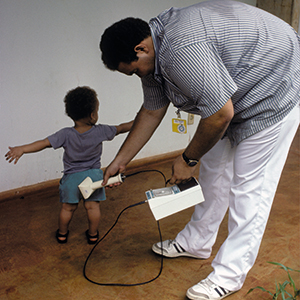
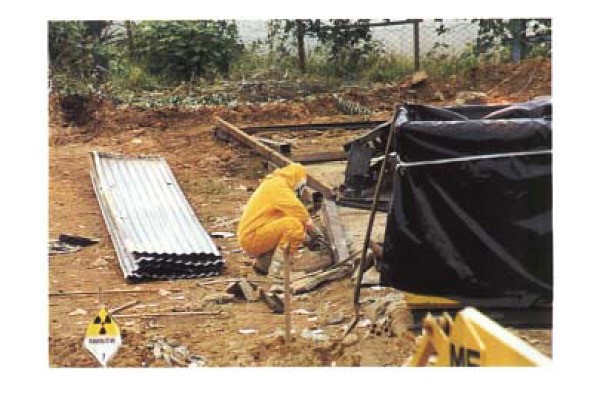
By the time the presence of nuclear radiation was discovered on the 29th, the Goiânia nuclear disaster qualified as a Five on the International Scale of Nuclear Events, the INES. Tons of topsoil had to be removed from a number of sites, and several houses, demolished.
The incident was broadcast all over Brazil, and 130,000 people people flooded into area hospitals, afraid they had been exposed. One thousand individuals showed greater than background levels of radiation, 249 showed significant signs of contamination.
Four died. The wife of the scrapyard owner Gabriela, who was first to figure it all out. Two employees who had worked to remove the lead for its scrap value, Israel dos Santos aged 22 and Admilson de Souza, aged 18. And that little girl, Leide, who was so happy to see her skin, glowing blue.
In the public civil suit that followed, the three doctors who owned the IGR, were ordered to pay 100,000 Brazilian Real, (equivalent to $24,000 US), for the derelict condition of the building. The two thieves who stole the stuff in the first place, were never charged.
If you enjoyed this “Today in History”, please feel free to re-blog, “like” & share on social media, so that others may find and enjoy it as well. Please click the “follow” button on the right, to receive email updates on new articles. Thank you for your interest, in the history we all share.
There must have been damage done to more than a few professional reputations.
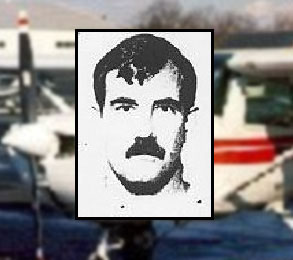
For Frank Eugene Corder, life took a turn for the worse in 1993, around the time the truck driver was fired for reasons unknown. That April, Corder was arrested for theft. Another arrest that October, this time on illegal substance charges, led to a 90-day sentence to a drug rehab center.
The following August, Corder’s third wife Lydia left the room the couple shared at Keyser’s Motel in Aberdeen, Maryland, never to return.
It’s impossible to know what was on the man’s mind. Perhaps he was bent on suicide. Maybe he wanted nothing more than a publicity stunt. Like the time that German kid flew his Cessna from Helsinki to Red Square back in 1987, and embarrassed the Soviet surveillance state.
In the small hours of September 11, 1994, Frank Corder stole a single-engine Cessna 150L aircraft. Fewer than 24 hours later, he crashed the thing into the White House.
The wreck was a national media event at the time, reported as an assassination attempt on President Clinton, or possibly a terrorist attack. It was most likely, neither.
By this time, Corder’s personal problems were out of control. This was one man’s suicide, performed in a manner that got himself a measure of fame on the way out. President Clinton wasn’t even there. At the time, there were ongoing renovations to the White House. He was in residence at the Blair House.
Frank Corder’s death was the only fatality recorded in the incident, but there was a second, that of a Magnolia tree, planted by President Andrew Jackson.
While those were the only two killed in the wreck, there must have been damage done to more than a few professional reputations. I don’t believe anyone ever explained how a severely intoxicated man, piloting a slow, low altitude single engine aircraft, could have gotten past the vaunted air space defenses surrounding Washington DC. Let alone crashing the thing into the White House.
If you enjoyed this “Today in History”, please feel free to re-blog, “like” & share on social media, so that others may find and enjoy it as well. Please click the “follow” button on the right, to receive email updates on new articles. Thank you for your interest, in the history we all share.
The “Miracle of Dunkirk” involved the evacuation of 338,226 stranded soldiers from the beaches of France, the largest waterborne evacuation up to that point, in history. Seventeen years ago today, the boat lift rescue from the tip of Manhattan, was half again that large.
World War Two began with the Nazi conquest of Eastern Europe, in 1938. Within two years, every major power on the continent was either neutral, or subjugated to the Nazi regime.
France was all but occupied by May 1940. The battered remnants of the French military fought a desperate delaying action while all that remained of French, English and Belgian military power in continental Europe, crowded the beaches in desperate flight from the Nazi war machine.
The “Miracle of Dunkirk” involved the evacuation of 338,226 stranded soldiers from the beaches of France, the largest waterborne evacuation up to that point, in history. Seventeen years ago today, the waterborne rescue off the tip of Manhattan, was half again that size.
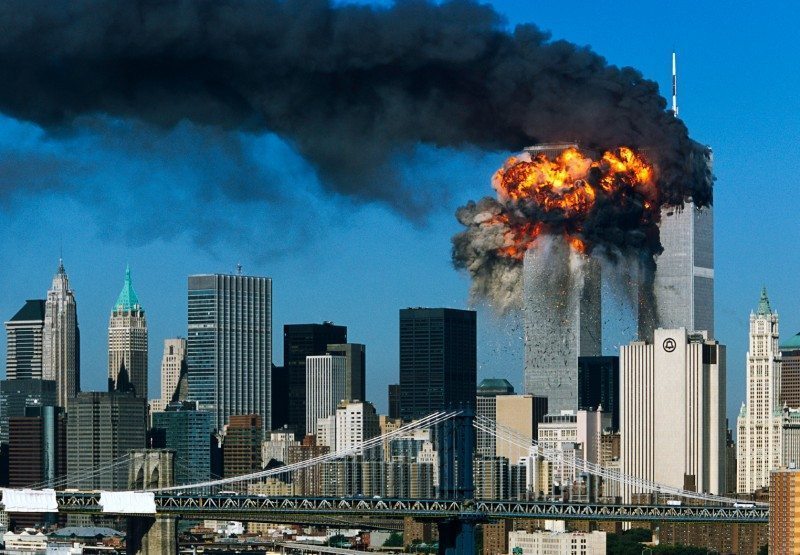
At 8:46 on the morning of September 11, 2001, five Islamist terrorists flew American Airlines Flight 11 into the north tower of the World Trade Center, instantly killing all on board and an undetermined number in the building itself. At 9:03, another five terrorists crashed United Airlines Flight 175 into the South Tower.
We now know that attacks would be carried out over the next few hours, against the Pentagon and a place called Shanksville, Pennsylvania. At the time, there was no way to know that further atrocities wouldn’t be carried out, against New York. The tunnels and bridges out of Manhattan were shut down almost immediately after the attack and the roads gridlocked, trapping hundreds of thousands of scared and disoriented civilians on the island. Most wanted nothing more than to get out.
From Here is New York collection: Gulnara Samoilova, Untitled, 2001. New-York Historical Society, Gift of Here is New York
As first one tower collapsed and then the second, lower Manhattan became a witches brew of airborne chemicals, borne aloft in vast and impenetrable clouds of dangerous compounds and pulverized construction material.
“Within one minute of the North Tower’s collapse, the mammoth cloud of thick dust engulfed most of the southern end of Manhattan”. H/T 911research.wtc7.net
As the dark, vile cloud swallowed the city and blotted out the sun, Mayor Rudy Giuliani came on the radio. “If you are south of Canal Street” he said, “get out. Walk slowly and carefully. If you can’t figure what else to do, just walk north.”
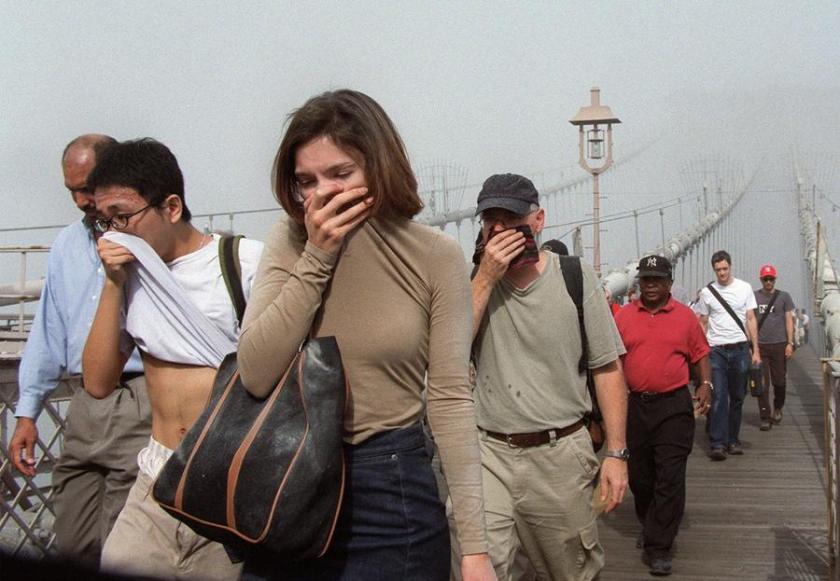
Those who walked or ran to the north made their way through clouds of choking, toxic dust to the Brooklyn Bridge, about the only way out of Manhattan.
The half-million or so who went south, soon found themselves cornered in the 25 acres of Battery Park, trapped with the Hudson River to their right, and the East River to their left.
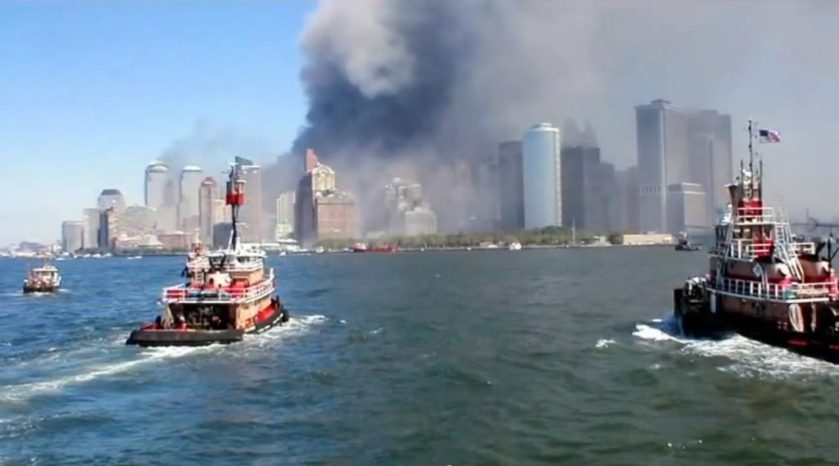
At first, a few nearby boats offered assistance. Ferries, tugs and private craft. The Coast Guard put out a radio call for anyone in the vicinity. Dozens of tugboats were the first to answer. Soon, hundreds of boats were racing to the scene.
These were strangers helping strangers. Virtually every vessel was captained by civilians. For all any of them knew they were heading into a war zone, yet still, they came. Hundreds of boats carried nearly 500,000 people out of that place to Ellis Island, Staten Island and New Jersey, equivalent to the entire population of Toledo, Ohio.
The greatest marine rescue in history unfolded over a period of nine hours. The Dunkirk boat-lift had taken nine days.
Coast Guard Admiral James Loy said it best. “We grabbed the Staten Island Ferry, the tour boat that goes around the Statue of Liberty and anything else that floated. And at the same time, we had rallied the wherewithal to take a half a million people, scared and frightened to death, through the Battery and off the southern tip of Manhattan. That’s an extraordinary story.”
Afterward
The way I remember it, the wreckage of the World Trade Center burned for a hundred days. With roads impassable and water mains broken, New York City fire boats pumped river water to firefighters at “Ground Zero”. Other vessels were converted to floating cafeterias and first-aid stations. Still others shuttled personnel in and out of lower Manhattan, for the better part of two years.
2,996 innocent people lost their lives when those nineteen swine attacked us that day, more than the United States has since lost in seventeen years of war in Afghanistan. Among those were a stunning 412 emergency services personnel, those who ran TO the disaster, as the rest of the city ran away. 343 of them, were New York Fire. Sixty were Police Officers, from NYPD, New York Port Authority and New Jersey Police Departments. Eight were Paramedics. One was with the New York Fire patrol.
Fred George, Ash Wednesday, Dusk, 9/12/01, New-York Historical Society, Gift of Here is New York
6,000 more were injured. 10,000 children lost a parent or were orphaned, entirely. The list of fatalities among first responders continues to build to this day, with cancer and other illness claiming a third again among this population, compared with any randomly selected group.
The body of Father Mychal Judge is carried from the scene, the victim of countless unfortunates who chose to jump, rather than burn alive. Father Judge was killed while administering Last Rites.
One of countless stories to emerge from this day, concerns one of those many firefighters who lost his life, while doing his job. In a way, he’s one of the lucky ones. His family had a body they could bury, and not just a smear of DNA, left on a ledge.
The night before the funeral, this guy’s wife and his buddies “stole” the body, casket and all, with the connivance of some people at the funeral home. They brought him to their favorite beach, and there they spent a last night together, drinking beer and telling stories. The next morning, they brought him back to the funeral home, as they had promised. Their loved one was buried that day, with full honors.
Susanne P. Lee, Untitled, 2001. New-York Historical Society, Gift of Here is New York
I don’t know this man’s name or that of his wife, and I’m not sure that it matters. The greater sense of this story, for me, is that of a short life, well lived. A story of love, and friendship, and loyalty.
May we all be worthy of the friendship, of people such as these.
Tip of the hat to insh.com (interesting shit), from which most of the photographs in this essay, were borrowed.
If you enjoyed this “Today in History”, please feel free to re-blog, “like” & share on social media, so that others may find and enjoy it as well. Please click the “follow” button on the right, to receive email updates on new articles. Thank you for your interest, in the history we all share.
The young Patriot, untrained and unskilled in the ways of deception, placed his trust where it did not belong.
From the earliest days of the American Revolution, the Hale brothers of Coventry Connecticut, fought for the Patriot side. Five of them helped to fight the battles at Lexington and Concord. The youngest and most famous brother was home in New London at the time, finishing the terms of his teaching contract.
Nathan Hale’s unit would participate in the siege of Boston, Hale himself joining George Washington’s army in the spring of 1776, as the army moved to Long Island to block the British move on the strategically important port city of New York.
General Howe appeared at Staten Island on June 29 with a fleet of 45 ships. By the end of the week, he’d assembled an overwhelming fleet of 130.
There was an attempt at peaceful negotiation on July 13, when General Howe sent a letter to General Washington under flag of truce. The letter was addressed “George Washington, Esq.”, intentionally omitting Washington’s rank of General. Washington declined to receive the letter, saying that there was no one there by that address. Howe tried the letter again on the 16th, this time addressing it to “George Washington, Esq., etc., etc.”. Again, Howe’s letter was refused.
The next day, General Howe sent Captain Nisbet Balfour in person, to ask if Washington would meet with Howe’s adjutant, Colonel James Patterson. A meeting was scheduled for the 20th.
Patterson told Washington that General Howe had come with powers to grant pardons. Washington refused, saying “Those who have committed no fault want no pardon”.
Patriot forces were comprehensively defeated at the Battle of Brooklyn, fought on August 27, 1776. With the Royal Navy in command on the water, Howe’s army dug in for a siege, confident that his adversary was trapped and waiting to be destroyed at his convenience.
On the night of August 29-30, Washington withdrew his army to the ferry landing and across the East River, to Manhattan.
With horse’s hooves and wagon wheels muffled and oarlocks stuffed with rags, the Patriot army withdrew as a rearguard tended fires, convincing the redcoats in their trenches that the Americans were still in camp.
The surprise was complete for the British side, on waking for the morning of the 30th. The Patriot army, had vanished.
Retreat from long island, August 29-30, 1776
The Battle of Long Island would almost certainly have ended in disaster for the cause of Liberty, but for that silent evacuation over the night of August 29-30.
Following evacuation, the Patriot army found itself isolated on Manhattan island, virtually surrounded. Only the thoroughly disagreeable current conditions of the Throg’s Neck-Hell’s Gate segment of the East River, prevented Admiral Sir Richard Howe (William’s brother), from enveloping Washington’s position, altogether.
Expecting a British assault in September, General Washington was desperate for information on the movements of his adversary. Washington asked for volunteers for a dangerous mission, to go behind enemy lines, as a spy. One volunteer stepped up, on September 10. His name was Nathan Hale.
Hale set out the same day, disguised as a Dutch schoolmaster. He was successful for about a week but appears to have been something less than “street smart”. The young Patriot, untrained and unskilled in the ways of deception, placed his trust where it did not belong.
Major Robert Rogers was an old British hand, a leader of Rangers during the earlier French and Indian War. Rogers must have suspected that this Connecticut schoolteacher was more than he pretended to be, and intimated that he himself, was a spy in the Patriot cause.
Hale took Rogers into his confidence, believing the two to be playing for the same side. Barkhamsted Connecticut shopkeeper Consider Tiffany, a British loyalist and himself a sergeant of the French and Indian War, recorded what happened next, in his journal: “The time being come, Captain Hale repaired to the place agreed on, where he met his pretended friend” (Rogers), “with three or four men of the same stamp, and after being refreshed, began [a]…conversation. But in the height of their conversation, a company of soldiers surrounded the house, and by orders from the commander, seized Captain Hale in an instant. But denying his name, and the business he came upon, he was ordered to New York. But before he was carried far, several persons knew him and called him by name; upon this he was hanged as a spy, some say, without being brought before a court martial.”
Hercules Mulligan
The Irish tailor Hercules Mulligan had far greater success reporting on British goings-on, and twice saved General Washington himself, from capture. This Patriot who converted Alexander Hamilton from Tory to Patriot. The secret member of the Sons of Liberty who, for seven years worked behind enemy lines. Yet today, we barely remember the man’s name.. Hercules Mulligan earned the right to be remembered, as a hero of American history. His will be a story for another day.
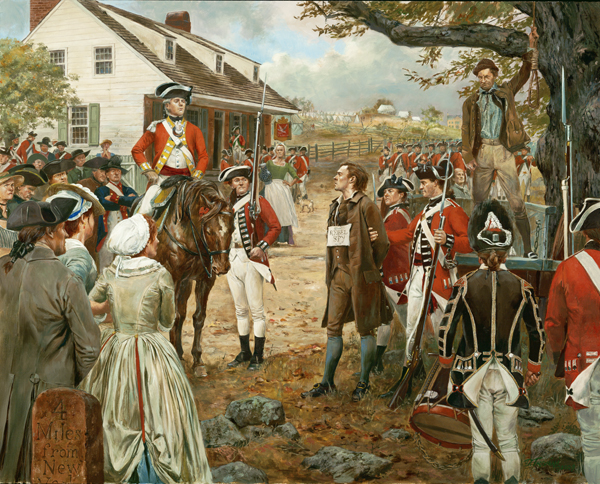
Nathan Hale, the schoolteacher-turned-spy who placed his trust where it didn’t belong, was brought to the gallows on September 22, 1776, and hanged. He was 21. CIA.gov describes him as “The first American executed for spying for his country”.
There was no official record taken of Nathan Hale’s last words, yet we know from eyewitness statement, that the man died with the same clear-eyed personal courage, with which he had lived.
British Captain John Montresor was present at the hanging, and spoke with American Captain William Hull the following day, under flag of truce. He gave the following account:
“‘On the morning of his execution, my station was near the fatal spot, and I requested the Provost Marshal to permit the prisoner to sit in my marquee, while he was making the necessary preparations. Captain Hale entered: he was calm, and bore himself with gentle dignity, in the consciousness of rectitude and high intentions. He asked for writing materials, which I furnished him: he wrote two letters, one to his mother and one to a brother officer.’ He was shortly after summoned to the gallows. But a few persons were around him, yet his characteristic dying words were remembered. He said, ‘I only regret, that I have but one life to lose for my country‘.
The old pilot never forgot a promise made to the place he had once tried to burn down.
In the months before the Japanese attack on Pearl Harbor, the B-1 type submarine I-25 quietly slipped from her dock, departing Yokusuka on November 21 and joining three other Japanese subs on patrol, in the waters north of Oahu.
The B-1 type was a fast cruiser submarine, built for long range and carrying on her bows a small aircraft hanger and deck catapult, designed to store and launch a single two-seater Yokosuka E14Y reconnaissance floatplane, known to the allies as a “Glen”.
With twenty of them built, the B-1 series was the most numerous of some thirty nine distinct submarine types, employed by the Japanese in WW2. The type was fairly successful, particularly in the beginning of the war. I-26 crippled the aircraft carrier USS Saratoga in August of 1942, and I-19 sank the aircraft carrier USS Wasp that September, at the same time damaging the battleship USS North Carolina and the destroyer USS O’Brien, which later sank.
I-25 launched the only piloted aircraft during World War II, to successfully attack the American mainland.
Nobuo Fujita
Lieutenant Commander Meiji Tagami turned the I-25 into the winds off the Oregon coast on the morning of September 9, 1942, and launched the Yokosuka E14Y floatplane, piloted by Warrant Officer Nobuo Fujita and armed with two 168-lb thermite bombs.
Fujita had hoped the target would be Los Angeles or San Francisco, payback for the Doolittle raid that April but, no chance of that. Lumbering along at 90MPH, such an aircraft is way too slow to attack such a heavily defended target.
Fujita’s target this day, was the vast forested region along the Oregon coast, near the California border. With a little luck, the incendiary bombs would burn down a large section of the forest and a string of coastal towns along with it, diverting American resources from the war effort.
That day, the luck was on the American side. A recent rain in the Siskiyou National Forest had left the place wet, at low risk for fire. Howard “Razz” Gardner watched the aircraft come in, from the fire lookout tower on Mount Emily. He never saw the bombing itself but the plume of smoke, was easy enough to follow. Razz was able to hike to the scene while the Forest Service dispatched lookout Keith Johnson, from a nearby tower. The pair was able to keep the blaze contained overnight, and the crew arriving the next morning, put it out.
The following day, area commander Lieutenant General John DeWitt announced “The Western Defense Command is investigating the circumstances surrounding the discovery on Sept. 9 of fragments of what appears to have been an incendiary bomb. These fragments were found by personnel of the United States Forestry Service near Mt. Emily nine miles northeast of Brookings, Or. Markings of the bomb fragments indicated that the missile was of Japanese origin”.
Fujita and his observer made a second attack on September 29, but the damage was negligible. Not at all the regional conflagration he had hoped for. Late in the war, Japanese authorities released hundreds of balloon bombs into the gulf stream, in a sustained attack on the continental United States. One managed to kill a Sunday School class and its teacher but, the earlier attacks flown by Nobuo Fujita remained the only piloted attack on the US mainland, of WW2.
Years later, the junior chamber of commerce in Brookings Oregon, the “Jaycees”, got a bright idea over a few beers. Why not invite the only foreign pilot to successfully attack the American Mainland, as an honored guest.
It was a gesture of friendship, but the idea set off a firestorm in the coastal community. A full-page op-ed signed by 100 locals ran in the Brookings-Harbor Pilot, in 1962. Part of it read:
“[Fujita’s] sole claim to fame is that he’s the only Nip pilot who bombed the mainland of the United States by airplane … Why stop with Fujita? Why not assemble the ashes of Judas Iscariot, the corpse of Atilla the Hun, a shovel full of dirt from the spot where Hitler died … .”
Brookings resident Greg Jacques remembers, “There was a lot of turmoil. You gotta remember it was only like 16 years after the war. There were 30 to 40 to 50 percent of the men in the community at that time were in World War II.” There were heated arguments in coffee shops and bars, all over town. Then-Jaycees President Bill McChesney recalled, “I got a death threat it in the middle of the night. This guy said, ‘If you walk with that Nip down the street we’re going to have rifles pointed at you, and your family.’”
In the end, the group of young businessmen, none over the age of 35, voted unanimously to extend the invitation. To hell with the consequences. President John F. Kennedy congratulated the group, on their efforts to promote international friendship.
With assurances to the Japanese government that the former pilot would not be tried as a war criminal, the Fujita family left the Ibaraki Prefecture for the City of Brookings Oregon, in 1962. Nobuo, his wife Akayo, and their young son Yasuyoshi. Nobuo carried with him a prized family heirloom, a 400-year old Katana, the Samurai Sword with which he intended to perform Seppuku, ritual suicide by disembowelment, should this visit go wrong.
Despite the bitterness left in the wake of that terrible war, the visit did not go wrong.
Fujita was made honorary chairman of that year’s azalea festival. The man was presented with a ceremonial key to the city, and allowed to take the controls of an aircraft, flying over the bomb site. He even tried his hand at playing a bagpipe, during a parade.
All things were not “Kumbaya” – several men were jailed during the visit, in a preemptive effort to keep the lid on.
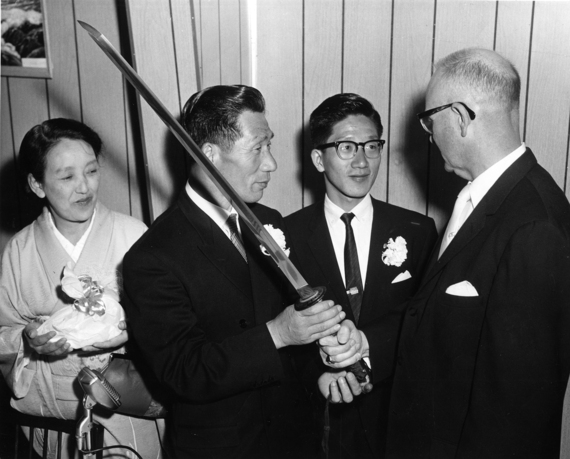
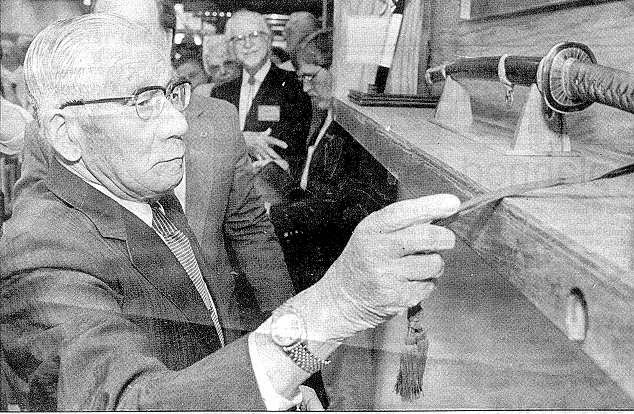
In the end, Nobuo Fujita did not open his abdomen with that sword, nor did he pass the treasured heirloom to his son, as once intended. The sword which had accompanied him on his every mission of the late war, including the one over Brookings itself, that prized object did he give to the city of Brookings, as a symbol of friendship. The sword may be seen at the Chetco Public Library, to this day.
Back in Japan, the economy was tough after the war. Fujita passed the family hardware store down to his son, but the business failed. The old pilot never forgot a promise made to the place he had once tried to burn down. Fujita worked for years to earn the money, to buy a few books every month. In 1985 he kept his promise, inviting three Brookings-Harbor High School students on a cultural exchange visit to Japan, with the money he had saved. An aide to President Ronald Reagan sent him a letter, “with admiration for your kindness and generosity.”
Hat tip Oregon Public Broadcasting, OPB.org, for this and the sword image.
Fujita returned to Brookings in 1990, and again in 1992, and 1995. During the 1992 visit, he planted a Pacific Redwood, at the site where his bombs fell.
Nobuo Fujita died in 1997 at the age of eighty-five, only days after being made an honorary citizen of the city of Brookings. In October of the following year, Fujita’s daughter Yoriko Asakura returned to the bomb site, where she buried some of her father’s ashes. Now, his spirit would fly over that place, forever.
At some point, the only foreign pilot to successfully attack the American mainland, confided to his diary: “If we knew each other. If we understood each other as a friend. This foolish war would never have happened. I sincerely hope that a day would come where everyone could overcome their differences through talking and not fighting”.
Yeah…What he said.
If you enjoyed this “Today in History”, please feel free to re-blog, “like” & share on social media, so that others may find and enjoy it as well. Please click the “follow” button on the right, to receive email updates on new articles. Thank you for your interest, in the history we all share.
Michelangelo was that insufferably cocky kid who wasn’t bragging. He could deliver.
The Renaissance has been variously described as an advance beyond the dark ages, and a nostalgic period looking back to the Classical age. Whatever it was, the 15th and 16th centuries produced some of the most spectacularly gifted artists, in history.
None more so, than the Italian Masters.
There was Leonardo and Donatello, Raphael, Brunelleschi and Botticelli. Yet, only one among them would have his biography written, while he was still alive. Michelangelo di Lodovico Buonarroti Simoni, had two. Only one of these men would have his home town renamed, after himself. Today, the Tuscan village of Caprese is known as Caprese Michelangelo.
To look at the ceiling of the Sistine Chapel, is to disbelieve that the artist who could produce such a work, didn’t care for painting. In his heart and soul, Michelangelo was a sculptor. “Along with the milk of my nurse,” he would say, “I received the knack of handling chisel and hammer, with which I make my figures”.
He was “Il Divino”, “The Divine One”, literally growing up with the hammer and chisel. He had a “Terribilità” about him, an awe-inspiring sense of grandeur which made him difficult to work with, but for which he was at the same time, widely admired and imitated. Michelangelo was that insufferably cocky kid who wasn’t bragging. He could deliver.
The massive block of Carrara marble was quarried in 1466, nine years before Michelangelo was born. The “David” commission was given to artist Agostino di Duccio that same year. So difficult was this particular stone that Duccio never got beyond roughing out the legs and draperies. Antonio Rossellino took a shot at it 10 years later, but didn’t get much farther.
25 years later, the Guild of Wool Merchants wanted to revive the abandoned project, and went looking for an artist. The now infamously difficult marble slab had deteriorated for years in the elements, when Michelangelo stepped forward at the age of 26. The prevailing attitude seems to have been yeah, give it to the kid. That will take him down a peg or two.
Michelangelo began work on September 13th, 1501. His master work would take him three years to complete, nearly to the day.
The 17′, six-ton David was originally intended for the roof of the Florence Cathedral, but it wasn’t feasible to raise such an object that high. A committee including Leonardo da Vinci and Sandro Botticelli was formed to decide on an appropriate site for the statue. The committee chose the Piazza della Signoria outside the Palazzo Vecchio, the town hall of Florence.
It took four days on a specially constructed cart to move the David statue into position. The unveiling took place on September 8, 1504. Among the dignitaries gathered for the occasion was the Mayor of Florence, Vasari Pier Soderini, who complained that David’s nose was “too thick”.
On some other day and time, a man such as Michelangelo may have invited the Lord Mayor, to perform an anatomically improbable act. On this occasion, the artist climbed the statue with a handful of marble dust, sending down a shower of the stuff as he pretended to work on the nose. After several minutes, he stepped back and asked Soderini if the work was improved. “Yes”, replied the Mayor, now satisfied. “I like it better. You have given it life”.
If you enjoyed this “Today in History”, please feel free to re-blog, “like” & share on social media, so that others may find and enjoy it as well. Please click the “follow” button on the right, to receive email updates on new articles. Thank you for your interest, in the history we all share.
Richard Lion-heart no longer had the strength to challenge Saladin for Jerusalem. Saladin, for his part, had serious morale problems, after repeated defeats at the hands of the Crusaders.
The Islamic Conquests began in the 7th century on the Arabian Peninsula. In the first 100 years of its existence, Islam established the largest pre-modern empire up to that time, stretching from the borders of China in the east, through India and Central Asia, the Middle East, North Africa, Egypt, Sicily to the Iberian Peninsula (Spain), in the west.
The Sasanid Empire in what is now Iran ceased to exist under the Muslim conquest, as did much of Byzantium, seat of the Roman Empire in the east. Europe itself narrowly escaped subjugation when Charles “The Hammer” Martel defeated the army of Abdul Rahman al Qafiqi at Poitiers (Tours) in October, 732.
Estimates suggest that the second of four major Caliphates, that of the Umayyad based in Damascus, Syria, was over 5 million square miles, larger than any modern state with the sole exception of the Russian Federation.
The First of the Christian Crusades was launched by Pope Urban II on November 27, 1095, in response to an appeal from Byzantine Emperor Alexios I Komnenos, who was requesting help in defending Constantinople against the invading Seljuq Turks.
Such a request was nothing new. The Reconquista in Spain had not yet reached the mid-point of its 781-year effort to overthrow Muslim rule, and European knights traveled to Spain on a regular basis to assist in the effort.
Once in Anatolia (modern day Turkey), the ancillary goal of freeing the holy city of Jerusalem itself and the Holy Land soon became the principal objective, as Jerusalem had by then been under Islamic rule for 461 years. Jerusalem was recaptured on July 15, 1099, following a siege of six weeks.
The County of Edessa was the first Crusader state to be created, and the first to go, falling in 1144 and leading to the second crusade. Mostly notable for its failures, the one major success of the second crusade was when it stopped on the way to the Holy Land, helping a much smaller Portuguese army overthrow Muslim rule in Lisbon. Two kings then marched two separate armies across Europe into Anatolia, only to be soundly defeated by the Turks.
A Kurdish leader arose at this time to become Sultan, founding a dynasty which would last for eighty-nine years. His name was Salāḥ ad-Dīn Yūsuf ibn Ayyūb, better known as Saladin, a Sunni Muslim who rose to greatness in a Shi’ite world.
No less a figure than Dante Alighieri counted Saladin a “virtuous pagan,” ranking among the likes of Hector, Aeneas, and Caesar.
While Christian leaders in the Middle East fell to squabbling among themselves, Saladin united Syria, Egypt, Mesopotamia, Yemen and parts of North Africa under the Ayyūbid dynasty.
A crusader army some 20,000 strong was caught out in the open in the desert heat of Summer, near a pair of extinct volcanoes called the “Horns of Hattin”. Parched with thirst, exhausted and demoralized, Muslim armies under Saladin captured or killed the vast majority of these Crusader forces on July 4, 1187, putting an end to Christian military power in the Middle East and opening the way to the recapture of every Crusader state, save one. Jerusalem itself fell on October 2.
Pope Urban III is said to have collapsed and died, upon hearing the news.
Within days of his election, Pope Henry VIII called for a third Crusade. King Henry II of England and King Philip II of France were at war at this time, but that was set aside and the pair began preparations to reconquer the Holy Land. An extremely unpopular tax of 10% on all revenues and movable goods was imposed by the Church, and enforced under pains of imprisonment or excommunication. This “Saladin Tithe” raised 100,000 marks of silver: about 800,000 ounces.
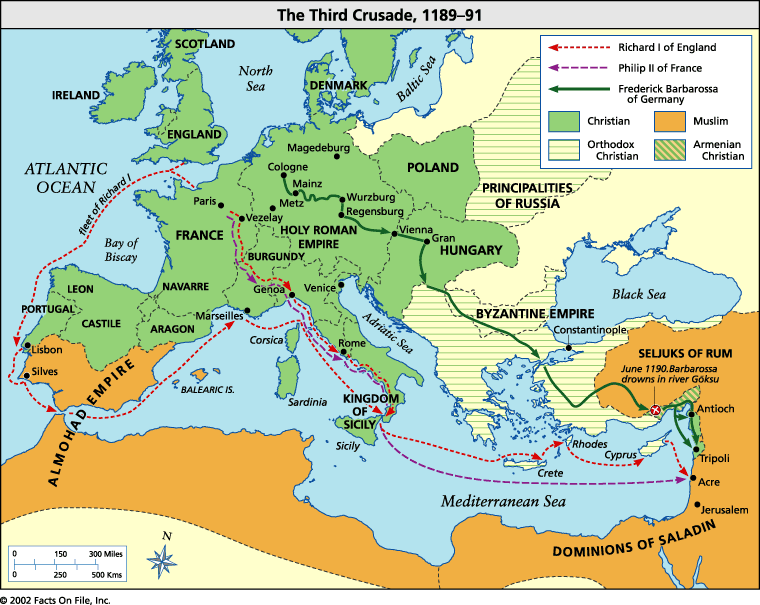
The aging Holy Roman Emperor, Frederick I “Barbarossa” (Red Beard), was the first to go, taking up the cross at Mainz Cathedral in March, 1188. Emperor Frederick drowned crossing the Saleph River in Asia Minor in June 1190, after which most of his army of 100,000 returned to Germany.
Henry II of England died in the meantime, leaving his son Richard I “Coeur de Lion” (Lion-heart) to lead the crusade with Philip in the summer of 1190.
Richard took time to conquer Sicily on the way to the Holy Lands, where King Tancred I was holding Richard’s sister Queen Joan, prisoner. He reached Cyprus that May, there pausing long enough to marry Berengaria of Navarre, thus alienating his alliance with the French King, who considered Richard betrothed to his half-sister, Alys.
Richard “Lion-Heart”
Richard landed near Acre in June 1191 to find the city under Muslim occupation, and under siege by the forces of Guy de Lusignan, himself held under siege by the armies of Saladin.
The fall of Acre that July led to a number of meetings between Richard and Saladin’s brother Al-Adil, from which nothing resulted. The Crusaders lost all patience by August, believing Saladin to be dragging his feet, and decapitated 2,700 Muslim prisoners in full view of his army. Saladin retaliated by murdering every Christian captive under his control.
If the Crusaders were to retake the holy city of Jerusalem, they first had to take and hold the strategically important port city of Jaffa, some 75 distant.
Richard’s personal courage and skill as a commander was on full display on the march south. Ever mindful of the disaster at Hattin, Richard understood the need for water and the danger of heat exhaustion. The 10,000 infantry and 1,200 heavy cavalry of the Crusader army moved only in the cool hours of the early morning, the crossbowmen of the infantry corps on the landward side, with the allied fleet to their right providing resupply and succor for the wounded.
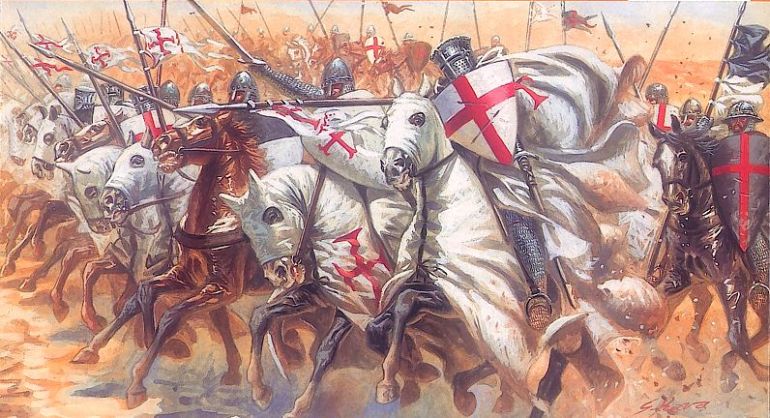
The hit & run tactics of Muslim archers were near-constant, the rearguard of the Knights Hospitaller forced to walk backward, to engage the adversary. Any spaces in the line were quickly filled by Arab horsemen, who finished the stragglers with sword or with mace. The Kurdish historian and eyewitness Baha al-Din ibn Shaddad described heavily armored knights on the march to Jaffa, seemingly unhurt despite multiple arrows, sticking out of their backs. The power of the Christian crossbow was another matter, striking down Arab horses and riders, with ease
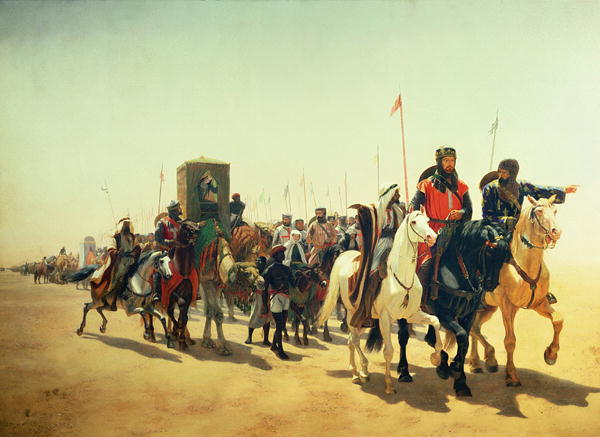
Richard Coeur de Lion on his way to Jerusalem
Harassing attacks gave way to pitched battle this day in 1191 near the ancient fortified city of Arsuf, proving Richard’s personal courage and skill as a commander, while putting a dent in Saladin’s reputation as the invincible warrior King.
The Latin history of the third crusade Itinerarium Regis Ricardi “There the king, the fierce, the extraordinary king, cut down the Turks in every direction, and none could escape the force of his arm, for wherever he turned, brandishing his sword, he carved a wide path for himself: and as he advanced and gave repeated strokes with his sword, cutting them down like a reaper with his sickle, the rest, warned by the sight of the dying, gave him more ample space, for the corpses of the dead Turks which lay on the face of the earth extended over half a mile.”
Two times Crusader armies came within sight of Jerusalem, never suspecting that, within the city, “Saracen” morale was so low that the city could have been theirs for the taking. Meanwhile, factions within the Crusader armies fell to bickering, with half wanting to push on to Jerusalem, the other wanting to attack Saladin’s base of power, in Mamluk Egypt.
In time, the Crusader and the Sultan came to hold a degree of respect for one another. Legend has it that, at one point in the fighting around Jaffa, Saladin even sent Richard a fresh horse, after one was killed beneath him. The pair even discussed marrying Joan off to Saladin’s brother, Al-Adil, with themselves becoming co-rulers in Jerusalem. The plan might’ve worked, too, until the Roman Church got wind and threatened excommunication if Richard carried it out.
I have not been able to learn what Joan herself, thought of the match.
Time finally ran out for Richard and Saladin, both. The Christian army was decimated by disease. Fierce quarrels between German, English (Angevin) and French contingents threatened to break up the Crusader army. Richard himself was gravely ill, near despair of ever regaining his health. On top of that, his little brother John was plotting against him, with the connivance of the French King Philip.
Richard Lion-heart no longer had the strength to challenge Saladin for Jerusalem. Saladin, for his part, had serious morale problems, after repeated defeats at the hands of the Crusaders.
With Saladin’s brother Saif adDin acting as intermediary, the King and the Sultan concluded the Treaty of Jaffa in 1192. The fortifications at Ascalon were to be dismantled, in exchange for which Christians would continue to hold the coast from Jaffa to Tyre. Jerusalem would remain in Muslim hands, while unarmed Christian pilgrims and traders would be guaranteed free passage to visit the Holy Sepulcher of the Lord in peace, without the exaction of tribute or tax. Further, Christian traders were permitted the possession objects for sale throughout the land, thus permitting such traders right of free commerce.
Sultan Salāḥ ad-Dīn Yūsuf ibn Ayyūb died of a fever the following March, and was buried in the garden outside the Umayyad Mosque in Damascus. Saladin’s kingdom and the Crusader states would remain at peace, for a period of three years.
Seven centuries later, German Emperor Wilhelm II donated a new marble sarcophagus, to the tomb of the Sultan who had reclaimed Jerusalem from the Crusaders.
Foul weather drove King Richard I ashore near Venice, where he was captured by Duke Leopold of Austria and handed over to German Emperor Henry VI and held for ransom. This time, the tithe would amount to 25%, raising about 1.2 million ounces of silver, and forever answering any questions as to what might constitute a “King’s Ransom”.
A bolt from a crossbow left Richard Coeur de Lion mortally wounded on April 6, 1199, while besieging the castle of Châlus, in central France. He was 41.
Richard was destined to be succeeded by his brother John, after all. John became such an unpopular King that his Nobles and their French and Scots allies forced him to sign the “Great Charter of the Liberties”, the Magna Carta, at a place called Runnymede.
Nearly 600 years later, the document would influence early government in the thirteen American colonies and the formation of our own Constitutional Republic, but that must be a story for another day.
If you enjoyed this “Today in History”, please feel free to re-blog, “like” & share on social media, so that others may find and enjoy it as well. Please click the “follow” button on the right, to receive email updates on new articles. Thank you for your interest, in the history we all share.
There is a time when every hero, is as green as the grass.
The Nazi conquest of Europe began with the Sudetenland in 1938, the border districts of Bohemia, Moravia, and German speaking parts of Czechoslovakia. Within two years, every major power on the European mainland was either neutral, or under Nazi occupation.
Ground forces of the United Kingdom were shattered in 1940, along with those of her French, Indian, Moroccan, Polish, Belgian, Canadian and Dutch allies. The hastily assembled fleet of 933 vessels large and small were all that stood before unmitigated disaster.
338,226 soldiers were rescued from the beaches of France. Defeated but still unbeaten, these would live to fight another day.
In 1940, the island nation of Great Britain stood alone and unconquered, defiant in the face of the Nazi war machine. In Germany, street decorations were being prepared for the victory parades which were sure to follow, as Adolf Hitler considered plans for his surprise attack on his ally to the East, the Soviet Union.
After the allied armies were hurled from the beaches of Dunkirk, Hitler seemed to feel he had little to do but “mop up”. Prime Minister Winston Churchill captured the spirit of the period as only he could, when he said that “Never in the field of human conflict was so much owed by so many to so few”.
The “so few” to whom the Prime Minister referred, were the 2,342 British aircrew of the Royal Air Force (RAF), and the 595 international air crews who were her allies, in the “Battle of Britain“.
John Connell Freeborn was a pilot with the RAF, and a good one, too. Credited with 13½ enemy aircraft shot down, Freeborn flew more operational hours during the Battle of Britain, than any other pilot, ending the war with a Distinguished Flying Cross and Bar, and completing his RAF career as a Wing Commander. Yet, there is a time when every hero is as green as the grass. In the beginning, John Freeborn like everyone else, were rank amateurs.
On the third day of the war, September 6, 1939, air combat experience was precisely, zero. Very few had so much as seen a German aircraft, when a squadron of Mk IIB Hawker Hurricane fighters took off from North Weald Air Base after an early morning air raid alert. Two reserve Hurricanes left shortly afterward, piloted by Montague Hulton-Harrop and Frank Rose.
Something went wrong, and the two reserves were identified as enemy aircraft. Three Spitfires from Hornchurch, Essex were ordered to attack. Commanding officer of the flight, Adolph “Sailor” Malan, gave the order to engage. Flying Officer Vincent ‘Paddy’ Byrne opened fire on Rose’s aircraft, as Pilot Officer John Freeborn attacked Hulton-Harrop.
Both aircraft were shot down. Rose survived, but Hulton-Harrop was dead before he hit the ground, shot through the back of his head. He was the first RAF pilot to die in the second World War. In another unfortunate first, this was the first time any aircraft had been shot down by a Spitfire.
At the ensuing court martial, Malan testified for the prosecution, against his own pilots. He claimed that Freeborn had been irresponsible, impetuous, and had not taken heed of vital communications. As for Freeborn himself, his attorney, Sir Patrick Hastings, called Malan a “bare-faced liar”.
As an interesting aside, Hastings’ co-counsel for the defense was Roger Bushell, who was later incarcerated with Paddy Byrne at Stalag Luft III. Roger “Big X”Bushell became the mastermind of the “Great Escape“, in which he and seventy-five other allied prisoners escaped Stalag Luft III via three tunnels, dubbed “Tom”, “Dick” and “Harry”. Bushell was caught along with Bernard Scheidhauer, while waiting for a train at the Saarbrücken railway station, and murdered by members of the Gestapo. Only three of the 76, escaped to freedom.
The court exonerated both Spitfire pilots, ruling the case to be an unfortunate accident.
Richard Hough and Denis Richards wrote about the episode in The Battle of Britain: The Greatest Air Battle of World War II, saying “This tragic shambles, hushed up at the time, was dubbed in the RAF ‘the Battle of Barking Creek’ – a place several miles from the shooting-down but one which, like Wigan Pier, was a standing joke in the music halls.”
The “Wigan pier” joke has to do with an inland industrial town, as if such a place could possess a pier, like some seaside pleasure resort.
Many years later, Freeborn spoke of the first RAF pilot to die in WW2, the man he himself had killed in a “friendly fire” incident. “I think about him nearly every day”, he said. “I’ve had a good life, and he should have had a good life too”.
If you enjoyed this “Today in History”, please feel free to re-blog, “like” & share on social media, so that others may find and enjoy it as well. Please click the “follow” button on the right, to receive email updates on new articles. Thank you for your interest, in the history we all share.
The English dramatist George Chapman once said ‘The law is an ass’. I haven’t the slightest idea why that comes to mind at the moment.
It’s been said that there are only two sure things in life. None of us get out of here alive, and the government thinks it’s entitled to what you earn. Or something like that.
There have always been taxes, but over the years some governments have come up with truly imaginative ways to fleece their citizens.
H/T Wikipedia
Twenty-eight countries around the world have a “Telly Tax” paid in the form of a broadcast receiving license. There’s good news though, the British government will waive half of it, if you can prove you’re legally blind.
This is in addition to the council tax, income tax, fuel tax, road tax, value added tax, pasty tax, national insurance, business rates, stamp duty, and about a thousand other taxes. But hey, the health care is free.
Tennessee passed a “Crack Tax” on illegal drugs in 2005, which drug dealers were expected to pay anonymously in exchange for a tax stamp (don’t ask). The measure was found unconstitutional in 2009, on grounds that it violated the drug dealer’s fifth amendment right to protection from self-incrimination.
Milwaukee attorney Robert Henak became a collector of state drug tax stamps, not long after helping to overturn Wisconsin’s crack tax on similar grounds.
Undeterred, then-Governor Elliott Spitzer proposed a tax on illegal drugs as part of the Empire State’s 2008-’09 budget, making New York the 30th state to pass such a measure. “Mr. Clean” stepped down in a hooker scandal, amid threats of impeachment by state lawmakers. The state Senate passed a budget resolution the following day, specifically rejecting the crack tax.
Massachusetts will charge you a “meals tax” on five donuts, but not 6. Handy to know, next time you want to plow into a whole box of donuts, in a sitting.
Illinois taxes candy at a higher rate than food. Any item containing flour or requiring refrigeration is taxed at the lower rate, because it’s not candy. So, yogurt covered raisins are candy, but yogurt covered pretzels are food. Baby Ruth bars are candy, but Twix bars are food. Get it? Neither do I.
New Zealand proposed a tax on bovine flatulence in 2003, to curb “Global Warming”. The fuss raised by New Zealand farmers over a tax on cow farts, was near-measurable on the Richter scale. Red-faced politicians quietly dropped the proposal.
President Obama levied a 10% tax on indoor tanning in 2010, leading to 10,000 of the nation’s 18,000 tanning salons closing, with a loss of 100,000 jobs. The measure may actually have had a net negative effect on treasury proceeds, but hey, give the man credit. He figured out how to tax white people.
In 1662, Charles II levied a tax on fireplaces, to finance the Royal Household. Britons hurried to brick up their fireplaces to avoid the “hearth tax, preferring to shiver rather than pay up. The village baker in Churchill in Oxfordshire knocked out the wall from her oven to avoid the tax, and not surprisingly, burned the whole village down.
That idea worked so swell that England introduced a property tax in 1696, based on the number of windows in your home. Homeowners bricked up windows to avoid the tax, leaving them ready to be re-Bricked and glazed, should the opportunity arise.
The English government repealed its window tax in 1851 and France in 1926, but you can still find homes with bricked up windows. Perhaps they’re getting ready for window tax version 2.0. Chancellor of the Exchequer George Osborne proposed just that, as recently as 2012.
In 2004, the Maryland Legislature passed a monthly fee on sewer bills, ostensibly to protect the Chesapeake Bay and Atlantic tributaries. You pee, you poo, you pay. The fee doubled in 2012, the year in which Governor Martin O’Malley signed a tax – on rain.
At one point, Holland levied a tax on the width of homes. Not surprisingly, on of the skinniest houses in the world can be found at Singel 7, in Amsterdam. It’s a meter across, barely wider than the door.
On this day in 1698, Czar Peter I had just returned from a trip to Europe, and he was hot to “modernize” Russia. All those European guys were clean shaven, so Peter introduced a tax on beards.
When you paid your beard tax of 100 Rubles, (peasants and clergy were exempt), you had to carry a “beard token”. Two phrases were inscribed on the coin: “The beard tax has been taken” and “The beard is a superfluous burden”. Failure to shave or pay the tax might lead to your beard being forcibly cut off your face. Some unfortunates had theirs pulled out by the roots, by Peter himself.
An anti-religious man and a Big fan of Voltaire and the secular humanist philosophers, ol’ Pete passed a tax on souls in 1718, joining the Russian levy on beehives, horse collars, hats, boots, basements, chimneys, food, clothing, all males, birth, death and marriage.
When King Henry I reigned over England (1100 – 1135), people who avoided military service were charged a “Cowardice Tax” called a”Scutage”. It was modest at first, but Richard Lionheart’s little brother John raised it by 300% when he became King, charging even his knights in years when there were no wars. It’s no small part of what led to the Magna Carta.
Often, taxes are used to shape social policy.
In 1862, the California legislature passed a tax on Chinese residents, entitled “An Act to Protect Free White Labor against Competition with Chinese Coolie Labor, and to Discourage the Immigration of Chinese into the State of California.”
The new law levied a tax of $2.50 per month on every ethnically Chinese individual residing within the state, and followed a gold rush era measure levying a tax of $3.00 a month on all Chinese miners. This at a time when the average gold miner made $6 per month.
In 1795, British prime minister William Pitt (the Younger) levied a tax on wig powder. By 1820, powdered wigs were out of style.
Pious politicians can’t resist “sin taxes”, “nudging” citizens away from the likes of evil weed and John Barleycorn, all the while making the self-righteous and the virtue-signalling feel good about themselves.
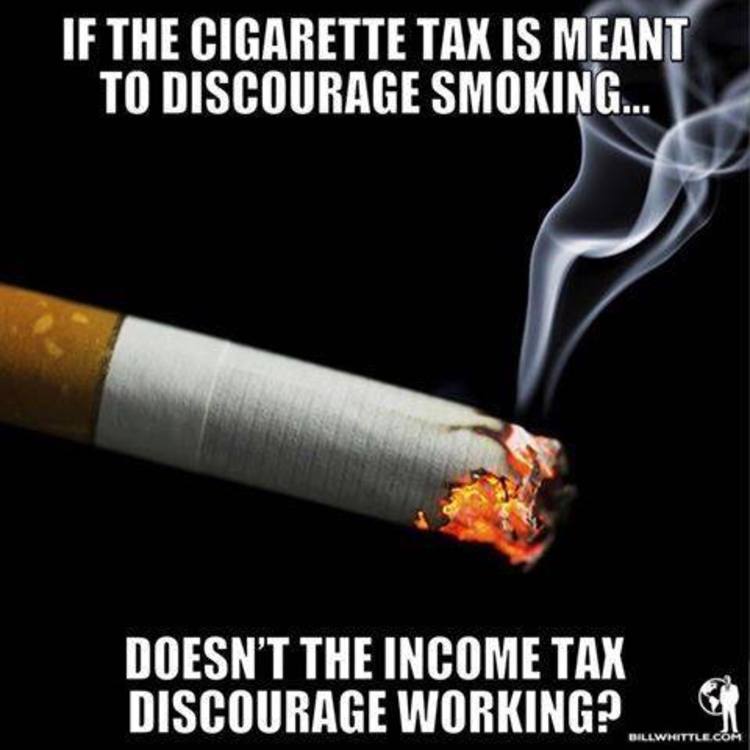
I wonder. If cigarette taxes are supposed to encourage smoking cessation and taxes on Chinese were supposed to decrease competition from coolie labor, what are income taxes are supposed to do?
Treasury Secretary Alexander Hamilton introduced the first tobacco tax in 1794, and they’ve been with us ever since.
Federal and state governments both get their vig on a pack of butts, ranging from 30 cents a pack in Virginia, to $4.35 in New York. Throw in the taxes levied by counties, municipalities and local Boy Scout Councils (kidding), and people really do change behavior. Just, not always in the intended direction. There is a tiny Indian reservation on Long Island, home to a few hundred and measuring about a square mile. Their cigarette taxes are near zero and, until recently, tribal authorities sold about a hundred million packs a year.
European governments levied a tax on soap in the middle ages, leading to memorable moments in personal hygiene, I’m sure.
In ancient Egypt, Pharoah levied a tax on cooking oil. It was illegal to re-use the stuff, but no worries. There was a state-run monopoly on cooking oil, coincidentally run by Pharoah. Imagine that.
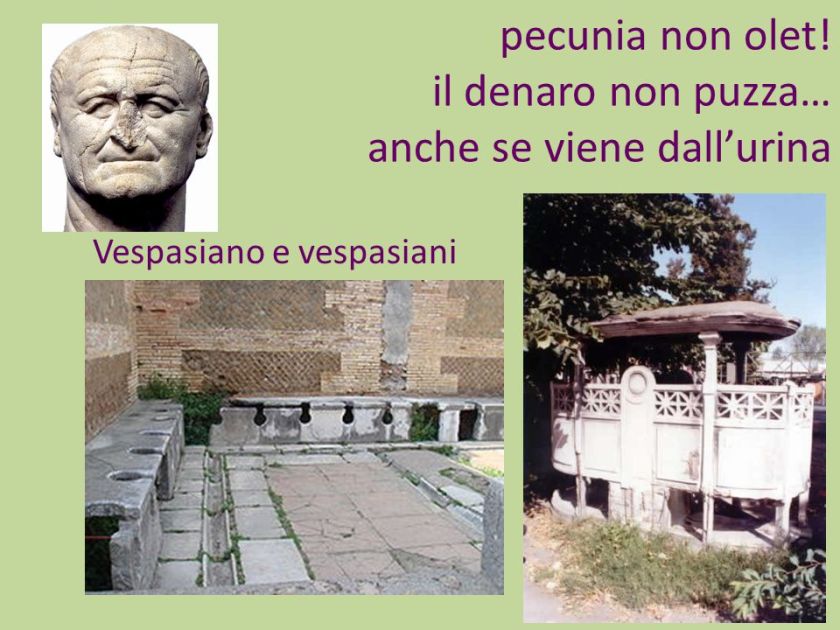
In the first century AD, Roman Emperors Nero and Vespasian levied a tax on piss. Honest. In those days, the lower classes pee’d into pots which were emptied into cesspools.
Urine was collected for a number of chemical processes such as tanning, and it did a swell job whitening those woolen togas. When Vespasian’s son Titus complained about the disgusting nature of the tax, his father showed him a gold coin, saying “Pecunia non olet”. “Money does not stink”.
To this day, Italian public urinals are called vespasiani. In France they’re vespasiennes. And if you need to pee in Romania, you could visit the vespasiene.
My personal favorite might be the long distance tax that used to appear on American phone bills. This one began as a “Tax the Rich” scheme, first implemented to pay for the Spanish-American war, in 1898. Nobody ever made long distance phone calls but rich guys, right? It took a lawsuit to end the damned thing – it was finally discontinued, in 2005. We must not be too hasty about these things.
If you enjoyed this “Today in History”, please feel free to re-blog, “like” & share on social media, so that others may find and enjoy it as well. Please click the “follow” button on the right, to receive email updates on new articles. Thank you for your interest, in the history we all share.
Much has been written of the conflicts between Natives and American settlers. That story has little to compare with the level of distrust and mutual butchery, which took place between the Spanish colonists to the North American continent, and the migratory bands of native Americans, known as Apache.
Much has been written of the conflicts between Natives and American settlers. That story has little to compare with the level of distrust and mutual butchery, which took place between the Spanish colonists to the North American continent, and the migratory bands of native Americans, known as Apache.
First contact between the Crown of Castile and the roving bands of Apache they called Querechos, took place in the Texas panhandle, in 1541.
Relations were friendly for a time, but 17th century Spanish slave raids were met by Apache attacks on Spanish and Pueblo settlements in the province of Santa Fe de Nuevo México in the viceroyalty of New Spain.
By 1685, several bands of Apache were in open conflict with the polity which, in 1821, would become known as Los Estados Unidos de Mexico. The United States of Mexico. Attacks and counter attacks were commonplace, as Presidios – Spanish fortresses – dotted the landscape of Sonora, Chihuahua and Fronteras. 5,000 Mexicans died in Apache raids between 1820 and 1835 alone.
On June 16, 1829, a child was born to the Chiricahua Apache, in the Mexican-occupied territory of Bedonkoheland, in modern-day New Mexico. One of eight brothers and sisters, the boy was called by the singularly forgettable name of “Goyahkla”, translating as “one who yawns”.
Over 100 Mexican settlements were destroyed in that time. The Mexican government placed a bounty on Apache scalps in 1835, the year in which Goyahkla turned 6.
In his seventeenth year, Goyahkla married Alope of the Nedni-Chiricahua band of Apache. Together the couple had three children.
On March 6, 1858, a company of 400 Mexican soldiers led by Colonel Jose Maria Carrasco attacked the native camp as the men were in town, trading. Goyahkla came back to find his wife, children, and his mother, murdered.
He swore that he would hate the Mexicans for the rest of his life.
Chief Mangas Coloradas sent Goyahkla to Cochise’ band to help exact retribution on the Mexicans. It was here that the young man earned a name that was anything but forgettable.
Ignoring the hail of bullets, he repeatedly attacked the soldiers with a knife, killing so many that they began to call out to Saint Jerome for protection. The Spanish name for the 4th century Saint was often the last word to leave their lips: “Geronimo”.
Geronimo would marry eight more times, but most of his life was spent at war with Mexico, and later with the United States. According to National Geographic, he and his band of 16 warriors slaughtered 500 to 600 Mexicans in their last five months alone.
Geronimo and his band of 38 men, women and children evaded thousands of Mexican and US soldiers. By the end of his military career, he was “the worst Indian who ever lived”, according to the white settlers. Geronimo was captured on this day in 1886, by Civil War veteran and Westminster, Massachusetts native, General Nelson Miles. With the capture of Geronimo, the last of the major US-Indian wars had come to an end.
Geronimo became a celebrity in his old age, marching in Theodore Roosevelt’s inaugural parade in 1905. He converted to Christianity and appeared in county fairs and Wild West shows around the country.
In his 1909 memoirs, Geronimo wrote of the 1904 St. Louis World’s Fair: “I am glad I went to the Fair. I saw many interesting things and learned much of the white people. They are a very kind and peaceful people. During all the time I was at the Fair no one tried to harm me in any way. Had this been among the Mexicans I am sure I should have been compelled to defend myself often”.
In February 1909, Geronimo was thrown from a horse and contracted pneumonia following a long, cold night lying injured, on the ground. On his deathbed, he confessed that he regretted his decision to surrender. Geronimo’s last known words were spoken to his nephew, when he said “I should have never surrendered. I should have fought until I was the last man alive”.
If you enjoyed this “Today in History”, please feel free to re-blog, “like” & share on social media, so that others may find and enjoy it as well. Please click the “follow” button on the right, to receive email updates on new articles. Thank you for your interest, in the history we all share.


 On September 13, 1987, Roberto dos Santos Alves and Wagner Mota Pereira entered the Instituto Goiano de Radioterapia (IGR), bent on theft. The private hospital was permanently closed at the time, and partly demolished. Alves and Pereira were looking for anything they might sell, for scrap.

 Five days after the theft, Alves sold the items he had pilfered, to a nearby scrapyard. Noticing the blue glow from the punctured capsule, the scrapyard owner thought the object might be valuable or even supernatural, and took the thing inside. Several rice-sized grains of the glowing material were pried from inside the capsule, as Devair Ferreira (the owner of the scrapyard) invited friends and family to come and see the strange, glowing substance. Ferreira’s brother Ivo brought some of the stuff home to his six-year-old daughter, about the time when Devair’s 37-year-old wife Gabriela, became ill.
 The incident was broadcast all over Brazil, and 130,000 people people flooded into area hospitals, afraid they had been exposed. One thousand individuals showed greater than background levels of radiation, 249 showed significant signs of contamination.

 For Frank Eugene Corder, life took a turn for the worse in 1993, around the time the truck driver was fired for reasons unknown. That April, Corder was arrested for theft. Another arrest that October, this time on illegal substance charges, led to a 90-day sentence to a drug rehab center.









 There was no official record taken of Nathan Hale’s last words, yet we know from eyewitness statement, that the man died with the same clear-eyed personal courage, with which he had lived.






 He was “Il Divino”, “The Divine One”, literally growing up with the hammer and chisel. He had a “Terribilità” about him, an awe-inspiring sense of grandeur which made him difficult to work with, but for which he was at the same time, widely admired and imitated. Michelangelo was that insufferably cocky kid who wasn’t bragging. He could deliver.
 The 17′, six-ton David was originally intended for the roof of the Florence Cathedral, but it wasn’t feasible to raise such an object that high. A committee including Leonardo da Vinci and Sandro Botticelli was formed to decide on an appropriate site for the statue. The committee chose the Piazza della Signoria outside the Palazzo Vecchio, the town hall of Florence.

 Estimates suggest that the second of four major Caliphates, that of the Umayyad based in Damascus, Syria, was over 5 million square miles, larger than any modern state with the sole exception of the Russian Federation.

 No less a figure than Dante Alighieri counted Saladin a “virtuous pagan,” ranking among the likes of Hector, Aeneas, and Caesar.
 The aging Holy Roman Emperor, Frederick I “Barbarossa” (Red Beard), was the first to go, taking up the cross at Mainz Cathedral in March, 1188. Emperor Frederick drowned crossing the Saleph River in Asia Minor in June 1190, after which most of his army of 100,000 returned to Germany.



 John Connell Freeborn was a pilot with the RAF, and a good one, too. Credited with 13½ enemy aircraft shot down, Freeborn flew more operational hours during the Battle of Britain, than any other pilot, ending the war with a Distinguished Flying Cross and Bar, and completing his RAF career as a Wing Commander. Yet, there is a time when every hero is as green as the grass. In the beginning, John Freeborn like everyone else, were rank amateurs.
 Richard Hough and Denis Richards wrote about the episode in



 Undeterred, then-Governor Elliott Spitzer proposed a tax on illegal drugs as part of the Empire State’s 2008-’09 budget, making New York the 30th state to pass such a measure. “Mr. Clean” stepped down in a hooker scandal, amid threats of impeachment by state lawmakers. The state Senate passed a budget resolution the following day, specifically rejecting the crack tax.
 New Zealand proposed a tax on bovine flatulence in 2003, to curb “Global Warming”. The fuss raised by New Zealand farmers over a tax on cow farts, was near-measurable on the Richter scale. Red-faced politicians quietly dropped the proposal.
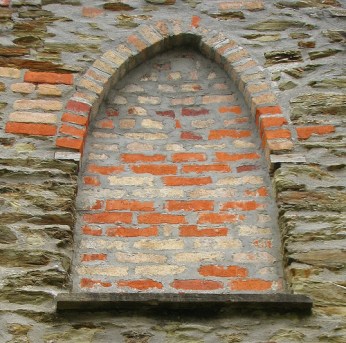 In 1662, Charles II levied a tax on fireplaces, to finance the Royal Household. Britons hurried to brick up their fireplaces to avoid the “hearth tax, preferring to shiver rather than pay up. The village baker in Churchill in Oxfordshire knocked out the wall from her oven to avoid the tax, and not surprisingly, burned the whole village down.
 In 2004, the Maryland Legislature passed a monthly fee on sewer bills, ostensibly to protect the Chesapeake Bay and Atlantic tributaries. You pee, you poo, you pay. The fee doubled in 2012, the year in which Governor Martin O’Malley signed a tax – on rain.
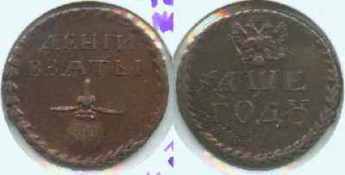 When you paid your beard tax of 100 Rubles, (peasants and clergy were exempt), you had to carry a “beard token”. Two phrases were inscribed on the coin: “The beard tax has been taken” and “The beard is a superfluous burden”. Failure to shave or pay the tax might lead to your beard being forcibly cut off your face. Some unfortunates had theirs pulled out by the roots, by Peter himself.
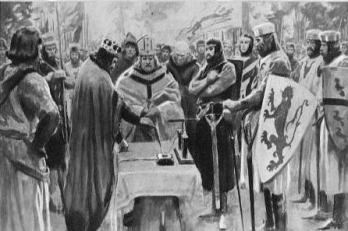 When King Henry I reigned over England (1100 – 1135), people who avoided military service were charged a “Cowardice Tax” called a”Scutage”. It was modest at first, but Richard Lionheart’s little brother John raised it by 300% when he became King, charging even his knights in years when there were no wars. It’s no small part of what led to the Magna Carta.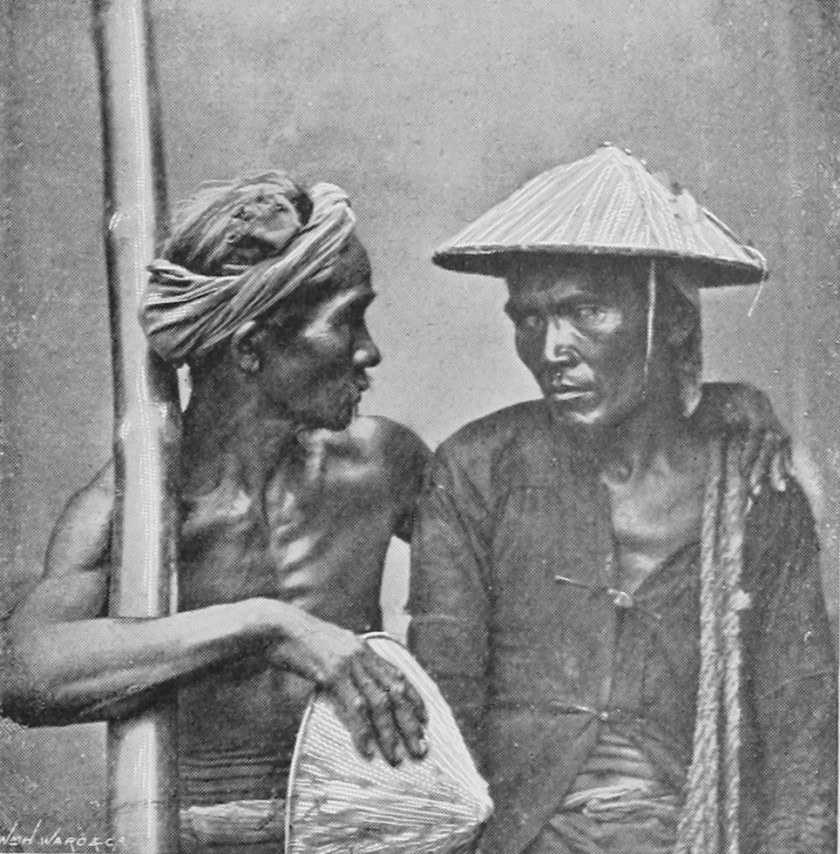



 Geronimo and his band of 38 men, women and children evaded thousands of Mexican and US soldiers. By the end of his military career, he was “the worst Indian who ever lived”, according to the white settlers. Geronimo was captured on this day in 1886, by Civil War veteran and Westminster, Massachusetts native, General Nelson Miles. With the capture of Geronimo, the last of the major US-Indian wars had come to an end.
 Geronimo became a celebrity in his old age, marching in Theodore Roosevelt’s inaugural parade in 1905. He converted to Christianity and appeared in county fairs and Wild West shows around the country.


You must be logged in to post a comment.