

World War Two began with the Nazi conquest of Eastern Europe, in 1938. Within two years, every major power on the continent was either neutral, or subjugated to the Nazi regime.
France was all but occupied by May 1940. The battered remnants of the French military fought a desperate delaying action while all that remained of French, English and Belgian military power in continental Europe, crowded the beaches in desperate flight from the Nazi war machine.
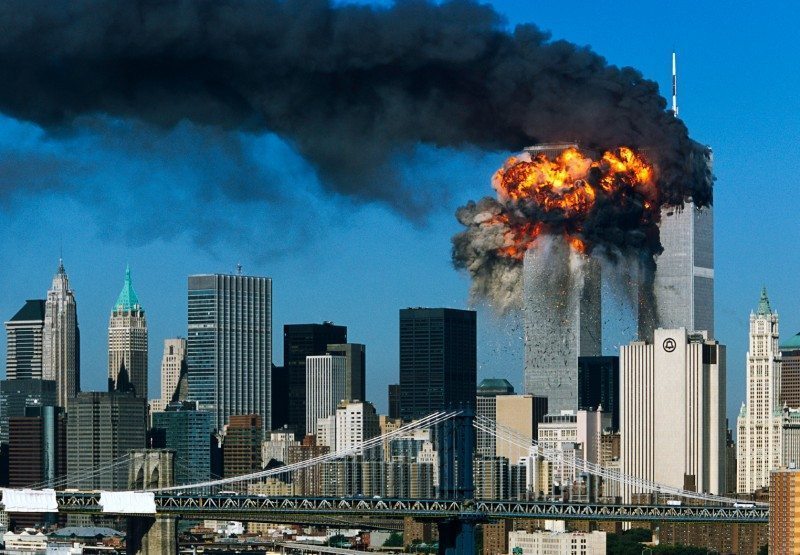
The “Miracle of Dunkirk” involved the evacuation of 338,226 stranded soldiers from the beaches of France, the largest waterborne evacuation up to that point, in history. Seventeen years ago today, the waterborne rescue off the tip of Manhattan, was half again that size.

At 8:46 on the morning of September 11, 2001, five Islamist terrorists flew American Airlines Flight 11 into the north tower of the World Trade Center, instantly killing all on board and an undetermined number in the building itself. At 9:03, another five terrorists crashed United Airlines Flight 175 into the South Tower.

We now know that attacks would be carried out over the next few hours, against the Pentagon and a place called Shanksville, Pennsylvania. At the time, there was no way to know that further atrocities wouldn’t be carried out, against New York. The tunnels and bridges out of Manhattan were shut down almost immediately after the attack and the roads gridlocked, trapping hundreds of thousands of scared and disoriented civilians on the island. Most wanted nothing more than to get out.

As first one tower collapsed and then the second, lower Manhattan became a witches brew of airborne chemicals, borne aloft in vast and impenetrable clouds of dangerous compounds and pulverized construction material.

As the dark, vile cloud swallowed the city and blotted out the sun, Mayor Rudy Giuliani came on the radio. “If you are south of Canal Street” he said, “get out. Walk slowly and carefully. If you can’t figure what else to do, just walk north.”

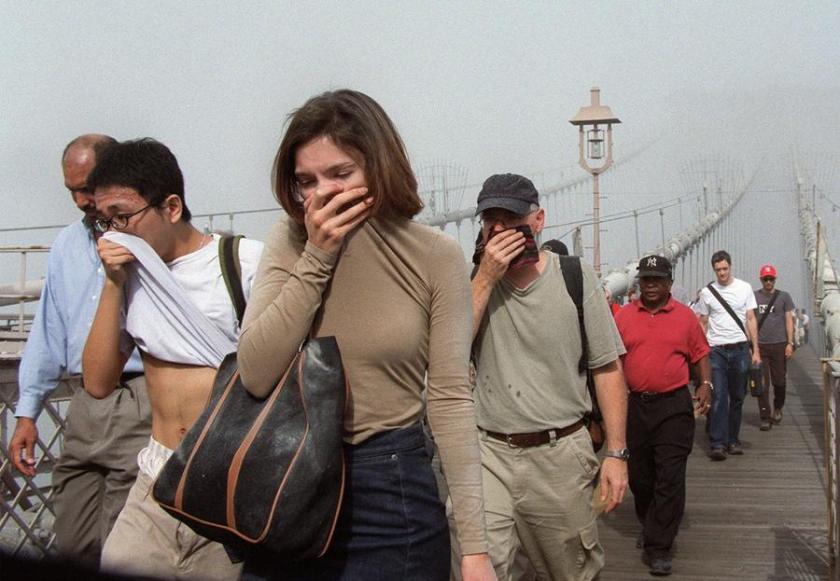
Those who walked or ran to the north made their way through clouds of choking, toxic dust to the Brooklyn Bridge, about the only way out of Manhattan.
The half-million or so who went south, soon found themselves cornered in the 25 acres of Battery Park, trapped with the Hudson River to their right, and the East River to their left.

At first, a few nearby boats offered assistance. Ferries, tugs and private craft. The Coast Guard put out a radio call for anyone in the vicinity. Dozens of tugboats were the first to answer. Soon, hundreds of boats were racing to the scene.
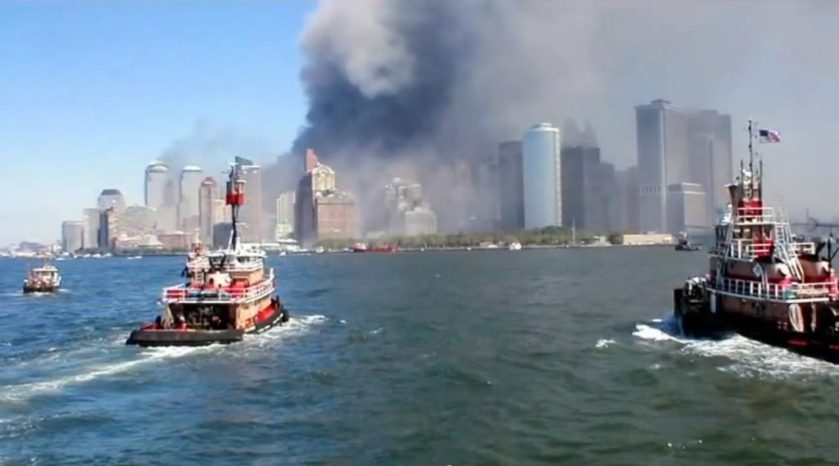
These were strangers helping strangers. Virtually every vessel was captained by civilians. For all any of them knew they were heading into a war zone, yet still, they came. Hundreds of boats carried nearly 500,000 people out of that place to Ellis Island, Staten Island and New Jersey, equivalent to the entire population of Toledo, Ohio.

The greatest marine rescue in history unfolded over a period of nine hours. The Dunkirk boat-lift had taken nine days.
Coast Guard Admiral James Loy said it best. “We grabbed the Staten Island Ferry, the tour boat that goes around the Statue of Liberty and anything else that floated. And at the same time, we had rallied the wherewithal to take a half a million people, scared and frightened to death, through the Battery and off the southern tip of Manhattan. That’s an extraordinary story.”
Afterward
The way I remember it, the wreckage of the World Trade Center burned for a hundred days. With roads impassable and water mains broken, New York City fire boats pumped river water to firefighters at “Ground Zero”. Other vessels were converted to floating cafeterias and first-aid stations. Still others shuttled personnel in and out of lower Manhattan, for the better part of two years.

2,996 innocent people lost their lives when those nineteen swine attacked us that day, more than the United States has since lost in seventeen years of war in Afghanistan. Among those were a stunning 412 emergency services personnel, those who ran TO the disaster, as the rest of the city ran away. 343 of them, were New York Fire. Sixty were Police Officers, from NYPD, New York Port Authority and New Jersey Police Departments. Eight were Paramedics. One was with the New York Fire patrol.

6,000 more were injured. 10,000 children lost a parent or were orphaned, entirely. The list of fatalities among first responders continues to build to this day, with cancer and other illness claiming a third again among this population, compared with any randomly selected group.

One of countless stories to emerge from this day, concerns one of those many firefighters who lost his life, while doing his job. In a way, he’s one of the lucky ones. His family had a body they could bury, and not just a smear of DNA, left on a ledge.

The night before the funeral, this guy’s wife and his buddies “stole” the body, casket and all, with the connivance of some people at the funeral home. They brought him to their favorite beach, and there they spent a last night together, drinking beer and telling stories. The next morning, they brought him back to the funeral home, as they had promised. Their loved one was buried that day, with full honors.

I don’t know this man’s name or that of his wife, and I’m not sure that it matters. The greater sense of this story, for me, is that of a short life, well lived. A story of love, and friendship, and loyalty.
May we all be worthy of the friendship, of people such as these.

Tip of the hat to insh.com (interesting shit), from which most of the photographs in this essay, were borrowed.

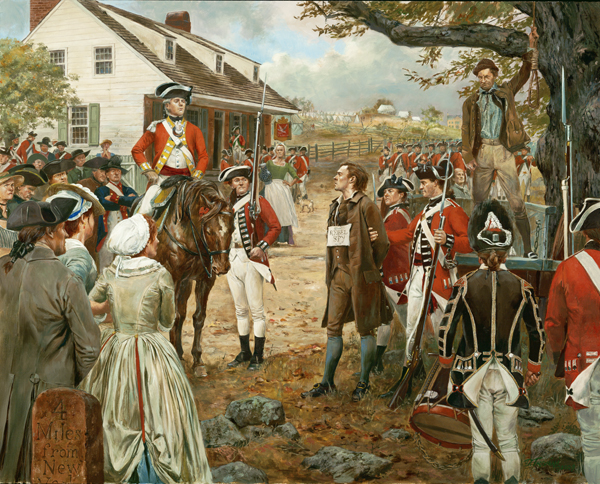


 There was no official record taken of Nathan Hale’s last words, yet we know from eyewitness statement, that the man died with the same clear-eyed personal courage, with which he had lived.


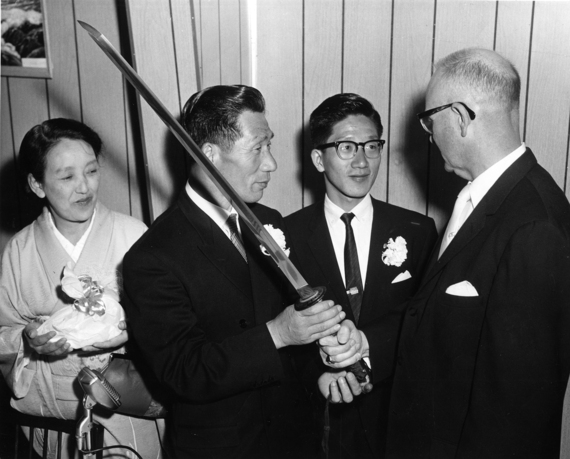


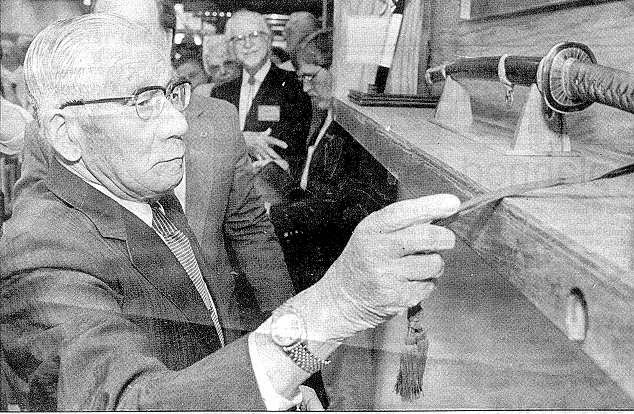


 He was “Il Divino”, “The Divine One”, literally growing up with the hammer and chisel. He had a “Terribilità” about him, an awe-inspiring sense of grandeur which made him difficult to work with, but for which he was at the same time, widely admired and imitated. Michelangelo was that insufferably cocky kid who wasn’t bragging. He could deliver.
 The 17′, six-ton David was originally intended for the roof of the Florence Cathedral, but it wasn’t feasible to raise such an object that high. A committee including Leonardo da Vinci and Sandro Botticelli was formed to decide on an appropriate site for the statue. The committee chose the Piazza della Signoria outside the Palazzo Vecchio, the town hall of Florence.

 Estimates suggest that the second of four major Caliphates, that of the Umayyad based in Damascus, Syria, was over 5 million square miles, larger than any modern state with the sole exception of the Russian Federation.

 No less a figure than Dante Alighieri counted Saladin a “virtuous pagan,” ranking among the likes of Hector, Aeneas, and Caesar.
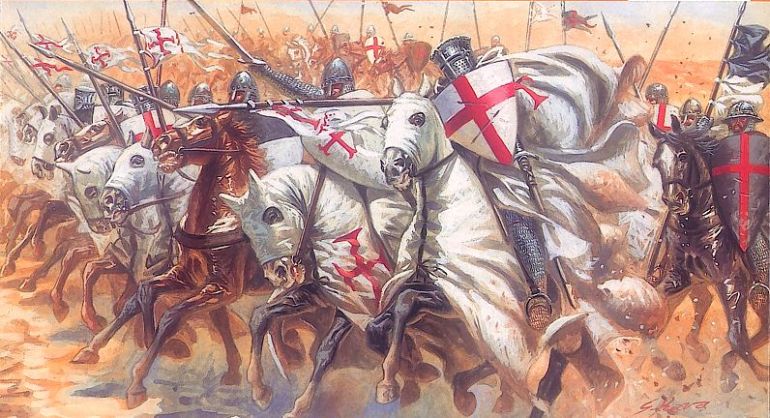
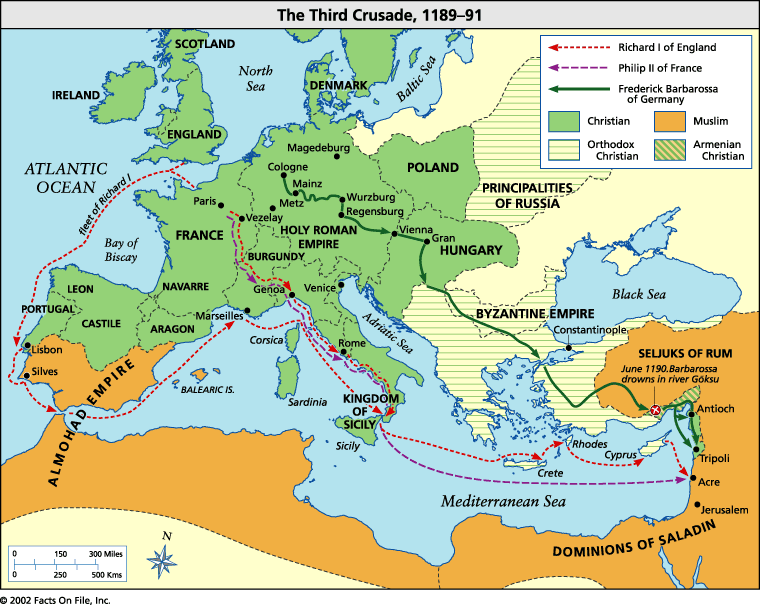 The aging Holy Roman Emperor, Frederick I “Barbarossa” (Red Beard), was the first to go, taking up the cross at Mainz Cathedral in March, 1188. Emperor Frederick drowned crossing the Saleph River in Asia Minor in June 1190, after which most of his army of 100,000 returned to Germany.



 John Connell Freeborn was a pilot with the RAF, and a good one, too. Credited with 13½ enemy aircraft shot down, Freeborn flew more operational hours during the Battle of Britain, than any other pilot, ending the war with a Distinguished Flying Cross and Bar, and completing his RAF career as a Wing Commander. Yet, there is a time when every hero is as green as the grass. In the beginning, John Freeborn like everyone else, were rank amateurs.
 Richard Hough and Denis Richards wrote about the episode in



 Undeterred, then-Governor Elliott Spitzer proposed a tax on illegal drugs as part of the Empire State’s 2008-’09 budget, making New York the 30th state to pass such a measure. “Mr. Clean” stepped down in a hooker scandal, amid threats of impeachment by state lawmakers. The state Senate passed a budget resolution the following day, specifically rejecting the crack tax.
 New Zealand proposed a tax on bovine flatulence in 2003, to curb “Global Warming”. The fuss raised by New Zealand farmers over a tax on cow farts, was near-measurable on the Richter scale. Red-faced politicians quietly dropped the proposal.
 In 1662, Charles II levied a tax on fireplaces, to finance the Royal Household. Britons hurried to brick up their fireplaces to avoid the “hearth tax, preferring to shiver rather than pay up. The village baker in Churchill in Oxfordshire knocked out the wall from her oven to avoid the tax, and not surprisingly, burned the whole village down.
 In 2004, the Maryland Legislature passed a monthly fee on sewer bills, ostensibly to protect the Chesapeake Bay and Atlantic tributaries. You pee, you poo, you pay. The fee doubled in 2012, the year in which Governor Martin O’Malley signed a tax – on rain.
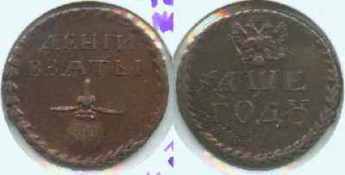 When you paid your beard tax of 100 Rubles, (peasants and clergy were exempt), you had to carry a “beard token”. Two phrases were inscribed on the coin: “The beard tax has been taken” and “The beard is a superfluous burden”. Failure to shave or pay the tax might lead to your beard being forcibly cut off your face. Some unfortunates had theirs pulled out by the roots, by Peter himself.
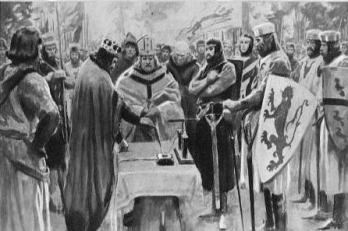 When King Henry I reigned over England (1100 – 1135), people who avoided military service were charged a “Cowardice Tax” called a”Scutage”. It was modest at first, but Richard Lionheart’s little brother John raised it by 300% when he became King, charging even his knights in years when there were no wars. It’s no small part of what led to the Magna Carta.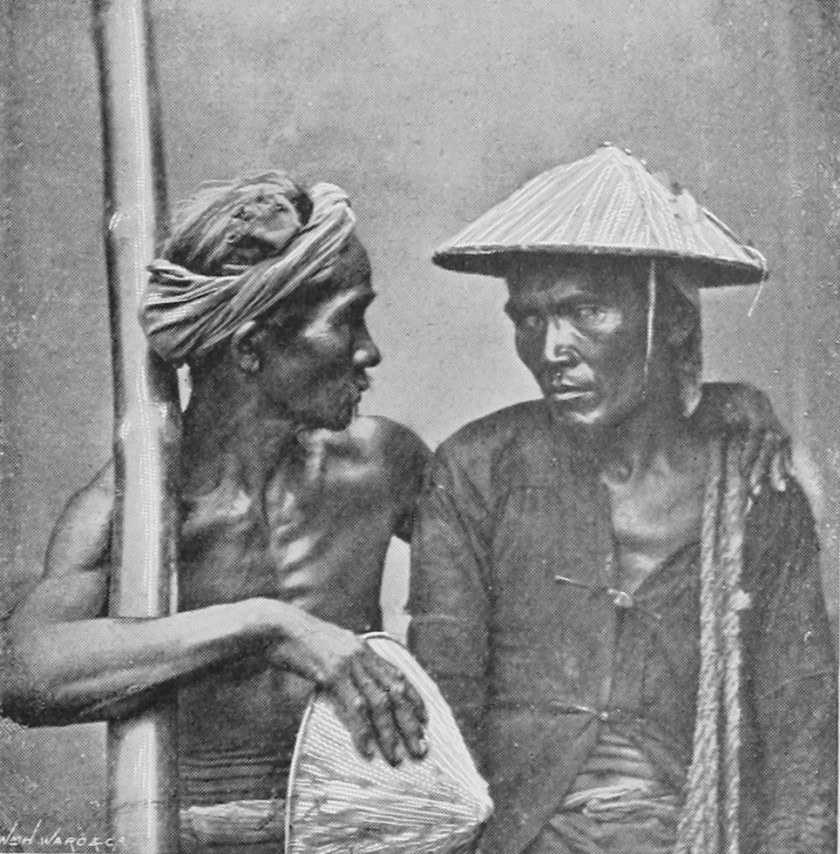




 Geronimo and his band of 38 men, women and children evaded thousands of Mexican and US soldiers. By the end of his military career, he was “the worst Indian who ever lived”, according to the white settlers. Geronimo was captured on this day in 1886, by Civil War veteran and Westminster, Massachusetts native, General Nelson Miles. With the capture of Geronimo, the last of the major US-Indian wars had come to an end.
 Geronimo became a celebrity in his old age, marching in Theodore Roosevelt’s inaugural parade in 1905. He converted to Christianity and appeared in county fairs and Wild West shows around the country.


 The “Calendar Act of 1750” set out a two-step process for adopting the Gregorian calendar. Since the Roman calendar began on March 25, the year 1751 was to have only 282 days so that January 1 could be synchronized with that date. That left 11 days to deal with.
 Benjamin Franklin seems to have liked the idea, writing that, “It is pleasant for an old man to be able to go to bed on September 2, and not have to get up until September 14.”


You must be logged in to post a comment.