

Planet Earth exists at the center of the solar system, the sun and other celestial bodies revolving around it. That was the “geocentric” model of the solar system, from the time of antiquity.
The perspective was by no means unanimous. The Greek astronomer and mathematician Aristarchus of Samos put the Sun in the center of the universe, in the third century BC. Later Greek astronomers Hipparchus and Ptolemy agreed, refining Aristarchus’ methods to arrive at a fairly accurate estimate for the distance to the moon, but theirs remained the minority view.
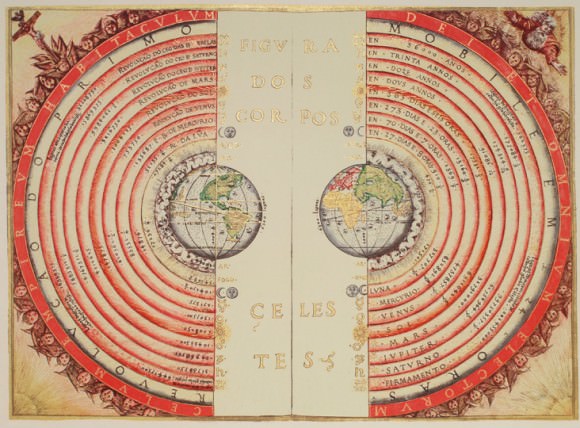
In the 15th century, Polish mathematician and astronomer Nicolaus Copernicus parted ways with the orthodoxy of his time, describing a “heliocentric” model of the universe placing the sun at the center. The Earth and other bodies, according to this model, revolved around the sun.
Copernicus resisted publishing his ideas until the end of his life, fearing to offend the religious sensibilities of the time. Legend has it that he was presented with an advance copy of his “De revolutionibus orbium coelestium” (On the Revolutions of the Heavenly Spheres) as he awakened on his death bed from a stroke-induced coma. He took one look at his book, closed his eyes, and never opened them again.

The Italian physicist, mathematician, and astronomer Galileo Galilei came along, about a hundred years later. Galileo has been called the “Father of Modern Observational Astronomy”, his improvements to the telescope and resulting astronomical observations supporting the Copernican heliocentric view.
They also brought him to the attention of the Roman Inquisition.
Biblical references such as, “The Lord set the Earth on its Foundations; it can Never be Moved.” (Psalm 104:5) and “And the Sun Rises and Sets and Returns to its Place.” (Ecclesiastes 1:5) were taken at the time as literal and immutable fact, becoming the basis for religious objection to the heliocentric model.
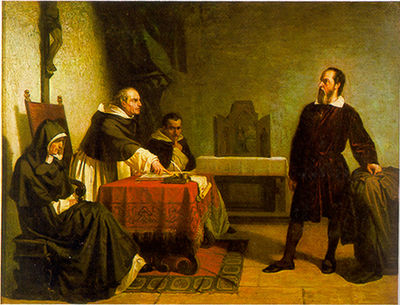
Galileo was brought before inquisitor Vincenzo Maculani for trial in 1633. The astronomer backpedaled before the Inquisition, but only to a point, testifying in his fourth deposition on this day in 1633, that “I do not hold this opinion of Copernicus, and I have not held it after being ordered by injunction to abandon it. For the rest, here I am in your hands; do as you please”.
There is a story about Galileo, which may or may not be true. After his conviction, the astronomer is said to have muttered “Eppur si muove” — “And yet it moves”.
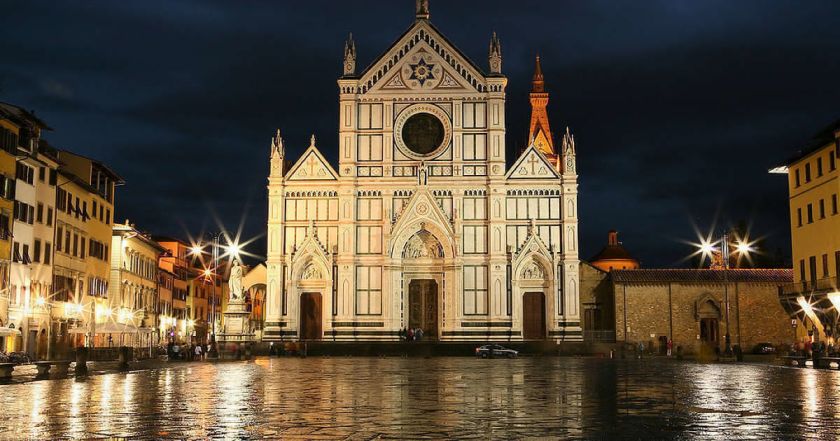
The Inquisition condemned the astronomer to “abjure, curse, & detest” his Copernican heliocentric views, returning him to house arrest at his villa in 1634, there to spend the rest of his life. Galileo Galilei, the Italian polymath who all but orchestrated the transition from late middle ages to scientific Renaissance, died on January 8, 1642, desiring to be buried in the main body of the Basilica of Santa Croce, next to the tombs of his father and ancestors. His final wishes were ignored at the time, though they would be honored some ninety-five years later, when Galileo was re-interred in the basilica, in 1737.
Often, atmospheric conditions in these burial vaults lead to a natural mummification of the corpse. Sometimes, they look almost lifelike. When it came to the saints, believers took this to be proof of the incorruptibility of these individuals, and small body parts were taken as holy relics.
Such a custom seems ghoulish to us today, but the practice was was quite old by the 18th century. Galileo is not now and never was a Saint of the Catholic church, quite the opposite. The Inquisition had judged the man an enemy of the church, a heretic.
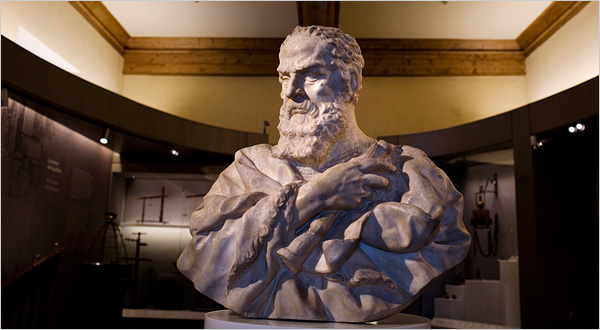
Possibly, the condition of Galileo’s body made him appear thus “incorruptible”. Be that as it may, Anton Francesco Gori removed the thumb, index and middle fingers on March 12, 1737, the digits with which Galileo wrote down his theories of the cosmos. The digits with which he adjusted his telescope.
The other two fingers and a tooth disappeared in 1905, leaving the middle finger from Galileo’s right hand on exhibit at the Museo Galileo in Florence, Italy. Locked in a glass case, the finger points upward, toward the sky.
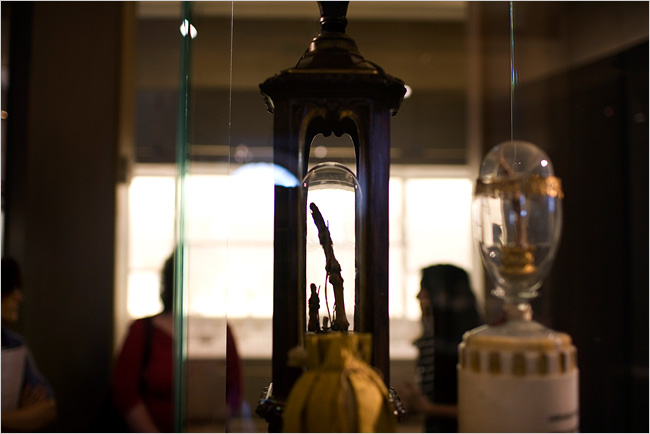 Some 100 years later, two fingers and a tooth were purchased at auction, and have since rejoined their fellow digit at the Museo Galileo. To this day, these remain the only human body parts, in a museum otherwise devoted to scientific instrumentation.
Nearly four-hundred years after his death, Galileo’s extremity points upward, toward the glory of the cosmos. Either that, or the finger rises in eternal defiance, flipping the bird to the church which had condemned him.


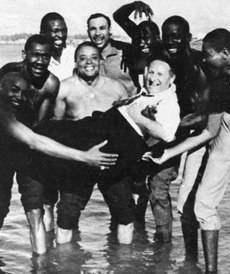 At least, that’s what the official team history says, except the Savoy didn’t open until 1927. We may have to just go with it.
 In 1941, Negro League 1st baseman Reece “Goose” Tatum caught Saperstein’s eye. A multi-sport athlete and teammate of Satchel Paige, Tatum would entertain crowds with comedic routines, whenever he put a runner out. 6’4″ with an 84″ wingspan and able to touch his knees without bending, Tatum is credited with inventing the hook shot, an early version of the “skyhook” that made Kareem Abdul-Jabbar famous, 30 years later
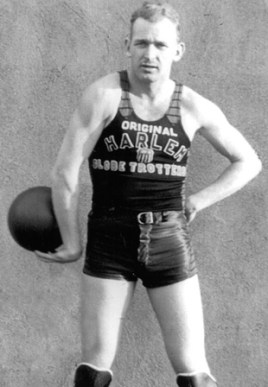 When Goose was drafted into the Army Air Corps in 1942, the Globetrotters signed their third caucasian, the first-ever white player to be offered a contract. Bob Karstens, the newest showman on the team, created the signature pregame “Magic Circle,” the behind-the-back shot, the “yo-yo” basketball and the “goofball,” a basketball filled with weights to give it a crazy bounce.
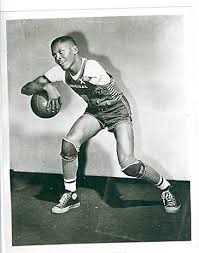 The Globetrotters were a serious basketball team in the early years, winning the World Professional Basketball Tournament as late as 1940. The club worked more gag routines into their game throughout the late 40s and 50s, as the newly founded NBA gained popularity. Finally, the team became better known for entertainment, than for sport.
 Abe Saperstein passed away in 1966, at the age of 63. The owner and founder of the Harlem Globetrotters, he was also founder and first Commissioner of the American Basketball League. Under Saperstein’s direction, the ABL was the first basketball league to institute the 3-point rule, in 1961. Saperstein was inducted into the Basketball of Fame in 1971, and the National Jewish Sports Hall of Fame, in 2005.
 Prior to a 2011 visit to Dallas, the Globetrotters emailed local media, challenging Globetrotter nation to a H.O.R.S.E. competition. If you’re not familiar, a player takes a shot. Any shot. You can spin around and bounce the ball off of your head if you like. If you sink the basket, the next player has to sink the same shot. Otherwise, they get an ‘H’.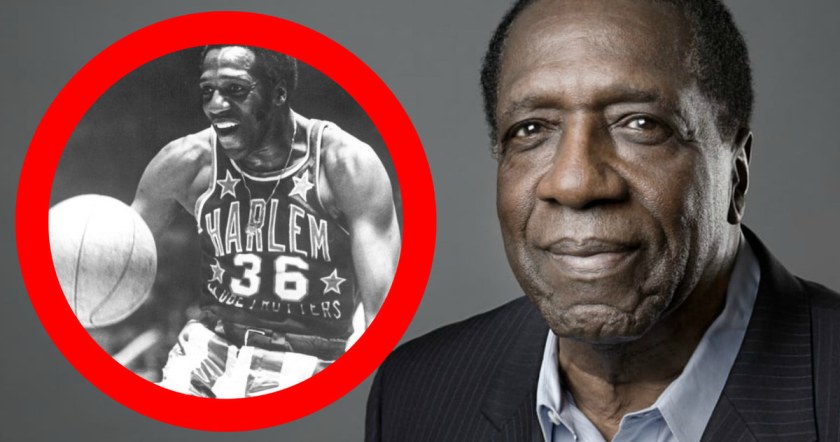






 The blockade made it impossible for the Central Powers of Germany and Austria-Hungary to import war materiel from overseas, while Great Britain, France, and Russia continued to buy products from US farms and factories. American businessmen were happy to sell to any foreign customer who had the cash, but for all intents and purposes, such trade was limited to the allies.


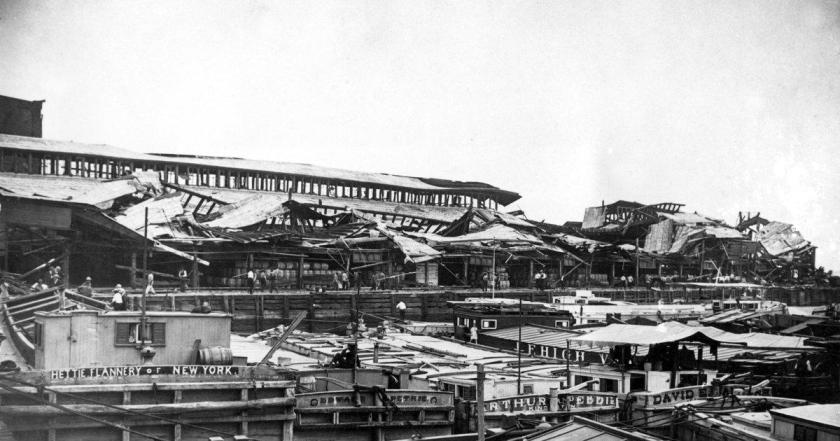 The explosion at Black Tom was the most spectacular, but by no means the only such attack. The archives at cia.gov reports that “[B]etween 1915 and spring 1917, 43 American factories suffered explosions or fires of mysterious origin, in addition to the bombs set on some four dozen ships carrying war supplies to the Allies”.
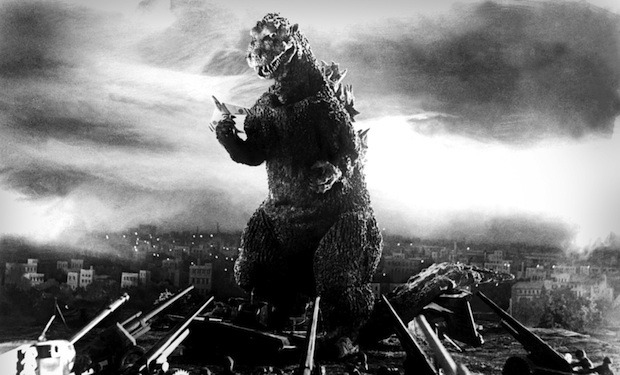
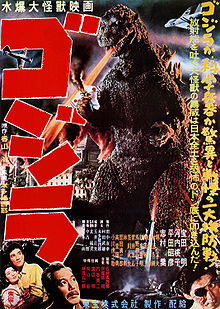
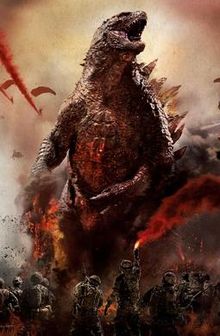 Godzilla got his own star on the Hollywood “Walk of Fame” in 2004, timed to coincide with the release of the 29th movie, “Godzilla: Final Wars.” Instead of nuclear weapons testing, this version was spawned by “environmental pollution”. It takes the superheroes of the “Earth Defense Organization” (but, of course) to freeze him back into the ice of the South Pole. The film was a flop, grossing less than $12 million after a production budget of $19 million.



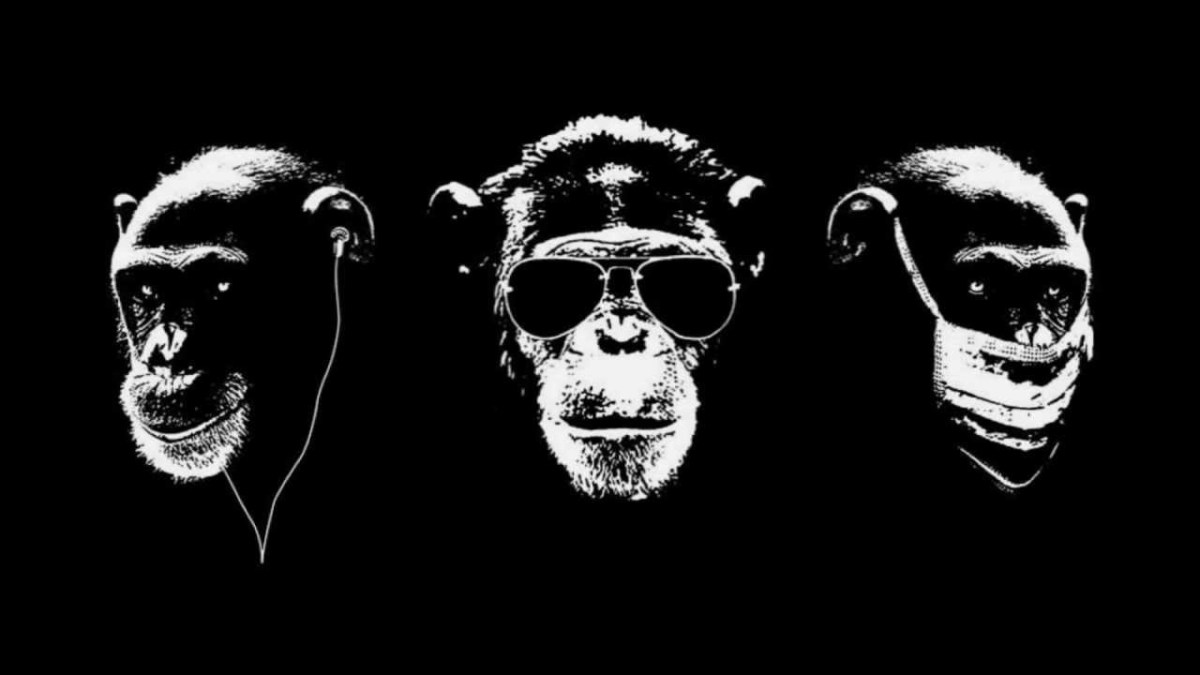
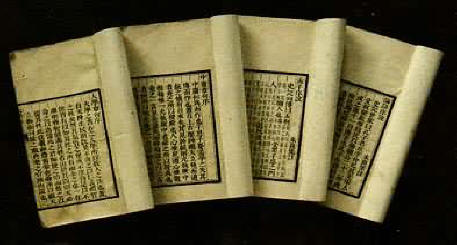 “I beg to ask the steps of that process”, asked Yen Yüan. The Master replied, “Look not at what is contrary to propriety. Listen not to what is contrary to propriety. Speak not what is contrary to propriety. Make no movement which is contrary to propriety”.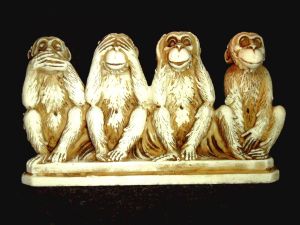
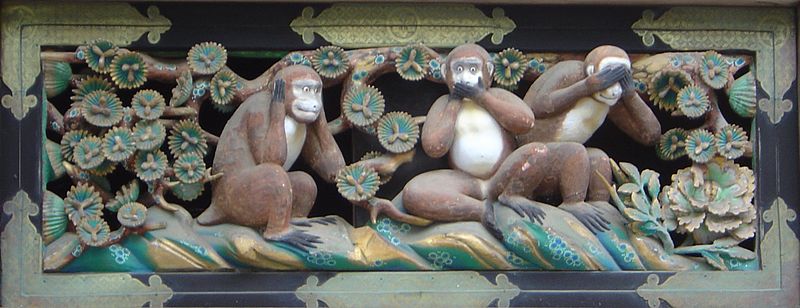
 the Sanskrit “high-souled”, or “venerable”. He is recognized as the Father of modern India, who brought Independence to his country through non-violent protest. Gandhi lived a life of poverty and simplicity, owning almost no material possessions at the time of his assassination by a Hindu nationalist on January 30, 1948. Beside the clothes on his back, Gandhi owned a tin cup and a spoon, a pair of sandals, his spectacles, and a carved set of 3 monkeys, reminding him to hear no evil, see no evil and speak no evil.


You must be logged in to post a comment.