
When the Great Depression fell over the nation in the 1930s, few states had a harder time of it, than Oklahoma. Loyce Edward Deen grew up in this world, the seventh of eight children born to Grace and Allen Deen in the small town of Sulphur.
The family moved to Altus, Oklahoma where Allen worked as a schoolteacher. Loyce would care for his younger brother Lewis, born with Down’s syndrome. The pair became close. It must have broken Loyce’s heart when Lewis became and ill and died, while Loyce was still in Jr. High.
Loyce and his older brother Lance were busy during the High school years, caring for Grace following a debilitating stroke.
Loyce’s niece Bertha Deen Sullivan was little at the time, and still remembers. “Loyce was a tall dark handsome young man with deep blue eyes”. He would pick her up and ask “Who loves ya?”, and then he would kiss her on the forehead.
Altus was the kind of small town, where the newspaper printed the bio of every graduating High school senior. The Times-Democrat wrote that “Loyce Deen is a young man with high ambitions. He plans to enter the US Navy aeronautical mechanics division after graduation and finds subjects such as problems of American democracy, the most interesting. He has also been active in dramatics work at school.”
Loyce worked for a time with the government’s Civilian Conservation Corps (CCC), and later joined the Douglas Aircraft Company in Wichita, building wing sets for the A-26 Invader attack bomber.
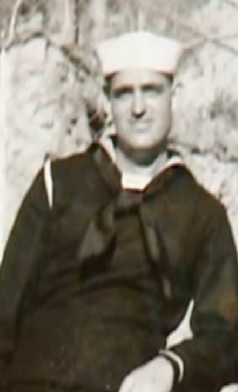 Even before the Japanese attack on Pearl Harbor, Loyce had wanted to join the Navy. In October 1942, he did just that. First there was basic training in San Diego, and then gunner’s school, learning all about the weapons systems aboard a Grumman TBF Avenger torpedo bomber. Then on to Naval Air School Fort Lauderdale, before joining the new 15th Air Group, forming out of Westerly, Rhode Island.
On April 29, 1944, the Air Group reported for duty aboard the “Fightingest Ship in the Navy” at Pearl Harbor. The aircraft carrier, USS Essex.
An Air Group consists of eighty or so aircraft, of three distinct types. First are the fighters, the fast, single seat Grumman Hellcats. Next are the two-seat dive bombers, the Curtiss Helldivers, the pilot joined by a rear-seat gunner whose job it is to lay the one-ton bomb on the target, while handling a machine gun at the same time. Third is the torpedo bomber, the Grumman Avenger, with two enlisted crewmen in addition to the pilot. The Avenger carries a ton of bombs, depth charges or aerial torpedoes and, like the Helldiver, is designed for low-level attack.
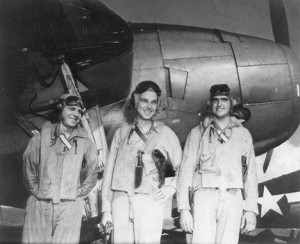 Loyce was the turret gunner on one of these Avengers, assigned to protect the aircraft from above and teamed up with Pilot Lt. Robert Cosgrove from New Orleans, Louisiana and Radioman Digby Denzek, from Grand Rapids, Michigan.
Cosgrove was a superb pilot, often returning aircraft to the carrier, so shot up as to seem unflyable. Digby had several jobs, including arming the weapons systems, and operating the radio. When the team was under fire, Digby would crawl down into a ball turret on the belly of the aircraft, his machine gun defending, from below.
The 15th Air group saw some of the most intense fighting it had ever encountered during the battle of Leyte Gulf of October 24-25, 1944. Commander Lambert, who oversaw the Avenger squadron, described “Coming in through the most intense and accurate AA yet experienced, the squadron made three hits on one battleship, two hits on another battleship, and two hits each on two different heavy cruisers“.
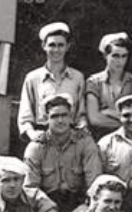
Deen received a shrapnel wound to his foot sometime during the fighting of the 24th. He wrapped the thing up and stayed on to fight, the following day. He would receive a Purple heart medal for the wound. Posthumously.
Following rest and replenishment at Ulithi Atoll in the Caroline Islands, USS Essex was on station for the November 5 Battle of Manila Bay. Loyce could have stayed back on a hospital ship until that foot healed, but chose to ignore the injury and rejoin his unit.
Loyce’s niece Bertha, was not surprised. On being informed of his injury, she said “I’m not surprised he stayed with his unit. Loyce would not have it any other way – he would always remain at his post to make sure his brothers came home safely with him.”
Loyce Deen climbed into his gun turret for the last time on November 5. It was a two hour ride to the target zone in Manila Bay, with Japanese aircraft on the radar for most of that time, and the carriers USS Lexington and Ticonderoga, under kamikaze attack.
Lieutenant Cosgrove’s Avenger came under savage anti-aircraft fire, from a Japanese cruiser. Loyce Deen took two direct hits and was killed, instantly. The Avenger aircraft, tail number 93, was so smashed up as to be all but unflyable. It took all of the pilot’s strength and skill to fly the thing back through two thunderstorms, and land on the Essex.
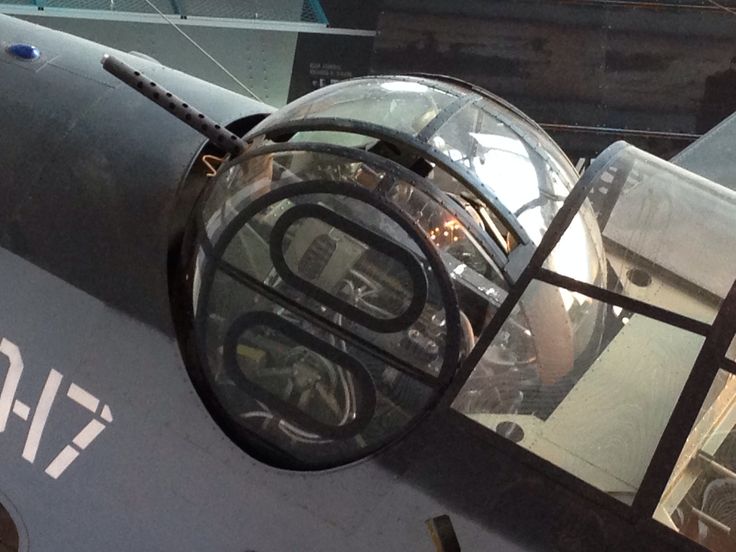
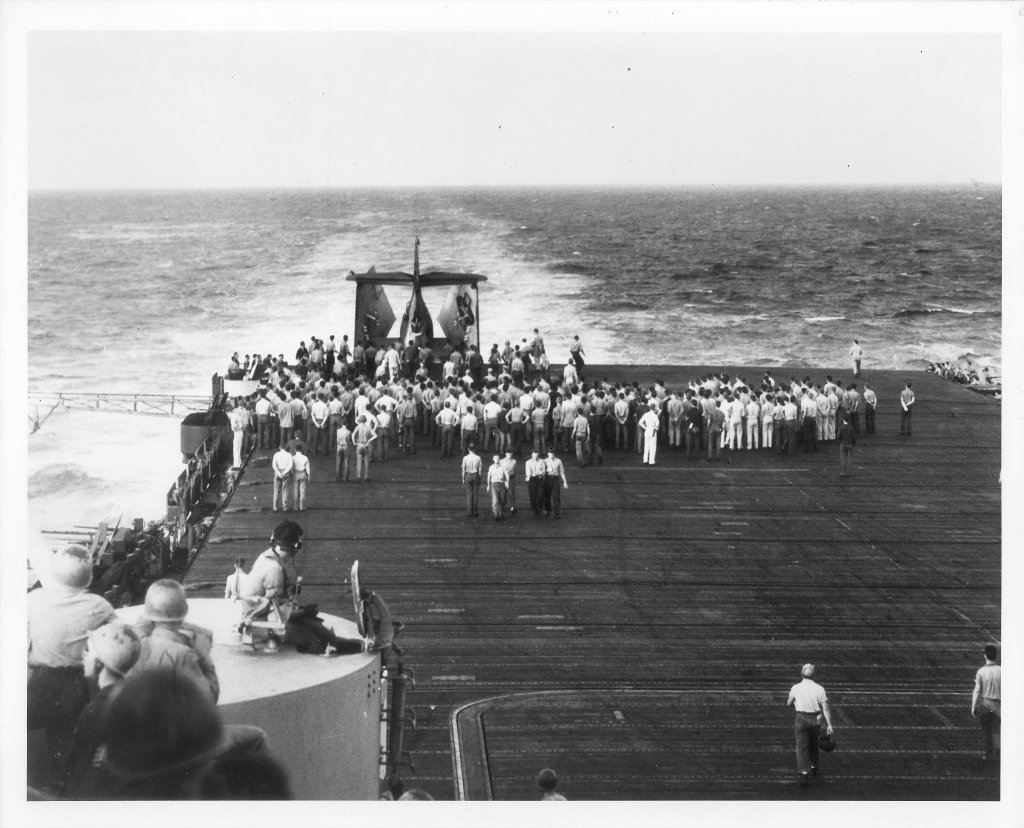
What remained of Loyce Edward Deen was so badly mangled, it was all but impossible to remove him from his smashed turret. For the first and last time in history, a man was deliberately buried at sea, inside of the aircraft he had served.
Fingerprints were taken and dog tags removed. This Avenger was not even scavenged, for parts. With the crew of the USS Essex assembled on deck, the shattered aircraft was pushed over the side. Two other Avengers flew overhead in salute, as the tail dipped beneath the waves.
Loyce Edward Deen, was going home.
Not long after the ceremony, the Essex went to General Quarters. There were kamikazes to deal with.
Lt. Cosgrove and the rest of Air Group 15 got back into their aircraft the following day and again on the 12th, 13th and 14th, and attacked those same cruisers in Manila Bay.
The Deen family would not receive the knock on the door, until Thanksgiving week.


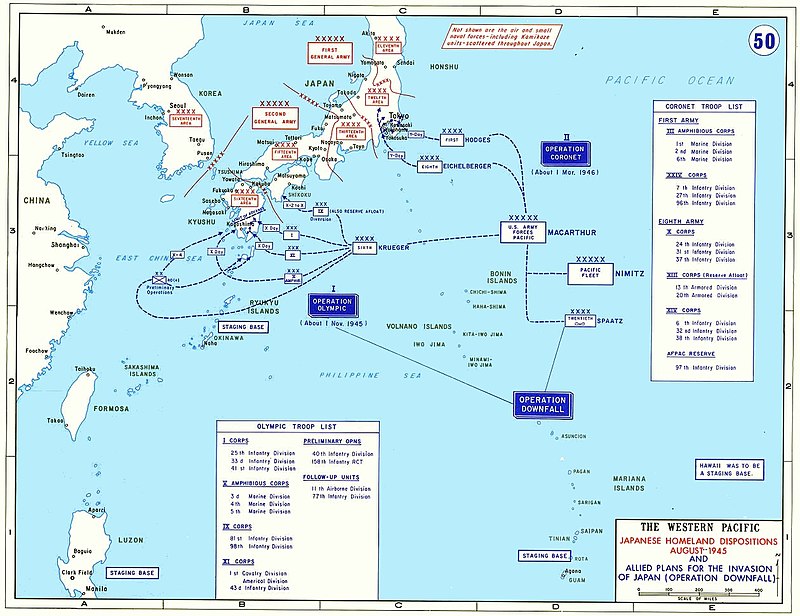
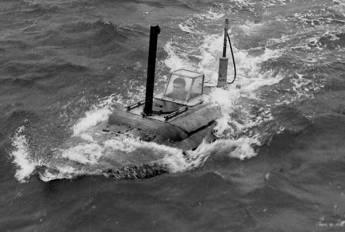 Which brings us back to that funny-looking boat. The Office of Strategic Services (OSS), predecessor to the modern Central Intelligence Agency (CIA), built two of these semi-submersibles, code named “Gimik”, part of a top-secret operation code named “NAPKO”.

 The history of the Navajo code talkers of WWII is relatively well known, but by no means, unique. Indigenous Americans of other nations served as code talkers in WW2, including Assiniboine, Lakota and Meskwaki soldiers, who did service in the Pacific, North African, and European theaters of the war.
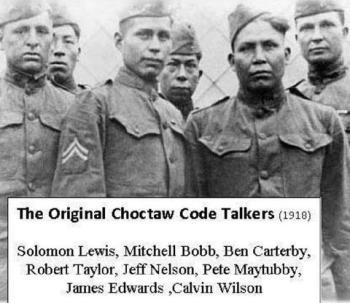 The Choctaw themselves didn’t use the term “Code Talker”, that wouldn’t come along until WWII. At least one member of the group, Tobias W. Frazier, simply described what they did as, “talking on the radio”. Of the 19 who served in WWI, 18 were native Choctaw from southeast Oklahoma. The last was a native Chickasaw. The youngest was Benjamin Franklin Colbert, Jr., the son of Benjamin Colbert Sr., one of Teddy Roosevelt’s “Rough Riders” of the Spanish American War. Born September 15, 1900 in the Durant Indian Territory, he was all of sixteen, the day he enlisted.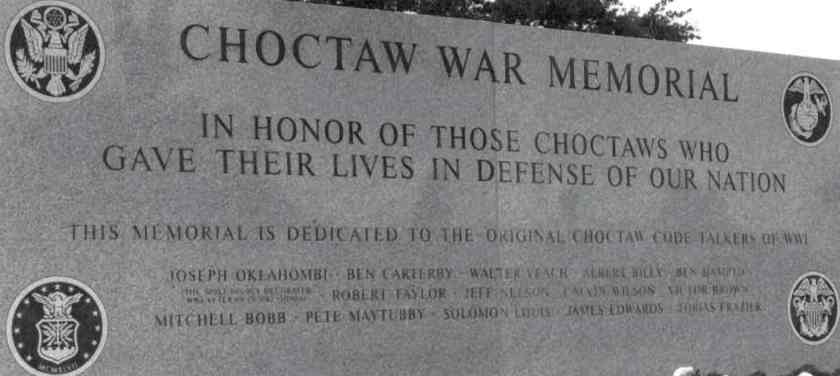


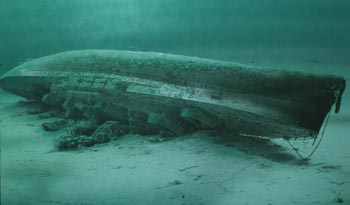
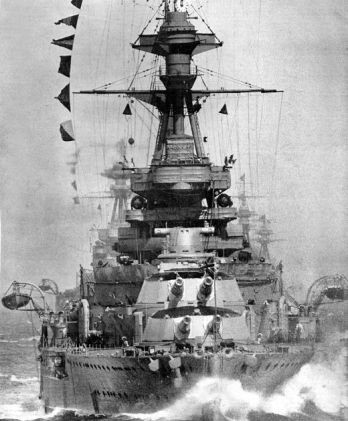 The harbor at Scapa flow had been home to the British deep water fleet since 1904, a time when the place truly was, all but impregnable. By 1939, anti-aircraft weaponry was all but obsolete, old block ships were disintegrating, and anti-submarine nets were inadequate to the needs of the new war.
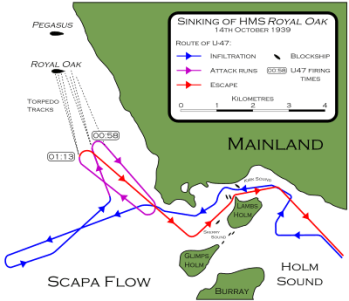 The electric torpedoes of the era were highly unreliable, and this wasn’t shaping up to be their night.


 The European allies and Imperial Germany had about 20,000 dogs working a variety of jobs in WWI. Though the United States didn’t have an official “War Dog” program in those days, a Staffordshire Terrier mix called “Sgt. Stubby” was smuggled “over there” with an AEF unit training out of New Haven, Connecticut.


 Smoky toured all over the world after the war, appearing in over 42 television programs and licking faces & performing tricks for thousands at veteran’s hospitals. In June 1945, Smoky toured the 120th General Hospital in Manila, visiting with wounded GIs from the Battle of Luzon. She’s been called “the first published post-traumatic stress canine”, and credited with expanding interest in what had hitherto been an obscure breed.
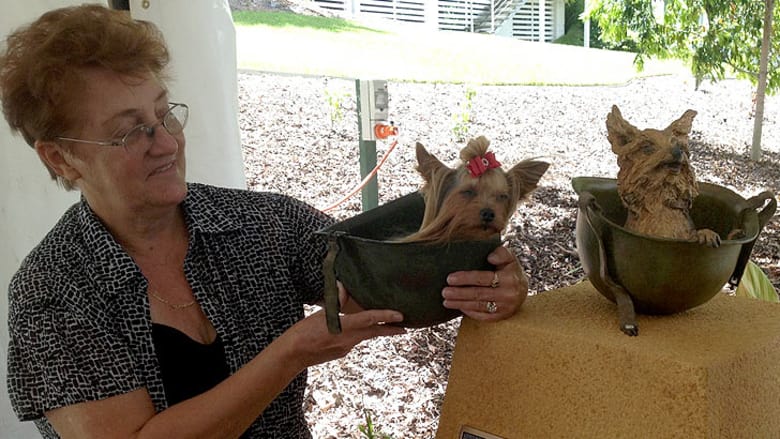 A memorial statue was unveiled on December 12 of that year, at the Australian War Memorial at the Queensland Wacol Animal Care Campus in Brisbane.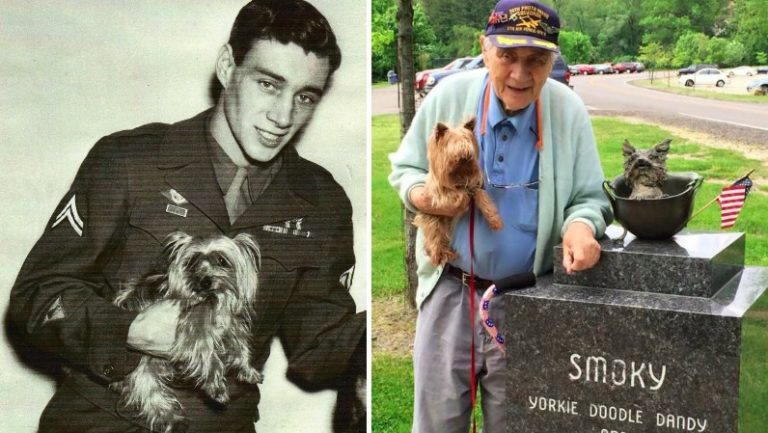


 Early armored cars were fine for moving personnel over smooth roads, but there was a need for a vehicle capable of navigating the broken terrain of no man’s land. In the run-up to WWI, several soon-to-be belligerents were conducting experiments with “land ships”, with varying degrees of success.

 The most unusual tank of WWI was the tricycle designed “Lebedenko” or “Tsar Tank”. Developed by pre-Soviet Russia, the armament and crew quarters on this thing were 27′ from the ground, making them irresistible targets for enemy artillery.


 Interior temperatures rose to 122° Fahrenheit and more, making me wonder if these things weren’t as dangerous to their own crews as they were to the other side.
 The only German project to be produced and fielded in WWI was the A7V. They only made 20 of these things in the armored, “Sturmpanzerwagen Oberschlesien“, “Upper Silesia Assault Armored Vehicle” version, and a few more in the unarmored “Überlandwagen”, “Over-land vehicle”, used for cargo transport.
 It would be very different, in the next war.






 John Connell Freeborn was a pilot with the RAF, and a good one, too. Credited with 13½ enemy aircraft shot down, Freeborn flew more operational hours during the Battle of Britain, than any other pilot, ending the war with a Distinguished Flying Cross and Bar, and completing his RAF career as a Wing Commander. Yet, there is a time when every hero is as green as the grass. In the beginning, John Freeborn like everyone else, were rank amateurs.
 Richard Hough and Denis Richards wrote about the episode in








You must be logged in to post a comment.