
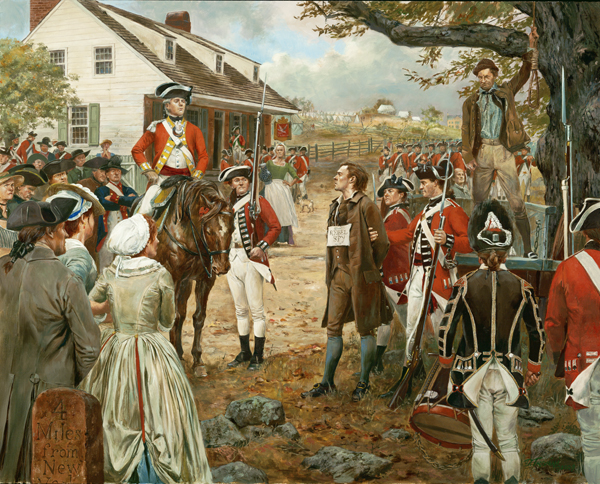
From the earliest days of the American Revolution, the Hale brothers of Coventry Connecticut, fought for the Patriot side. Five of them helped to fight the battles at Lexington and Concord. The youngest and most famous brother was home in New London at the time, finishing the terms of his teaching contract.
Nathan Hale’s unit would participate in the siege of Boston, Hale himself joining George Washington’s army in the spring of 1776, as the army moved to Long Island to block the British move on the strategically important port city of New York.

General Howe appeared at Staten Island on June 29 with a fleet of 45 ships. By the end of the week, he’d assembled an overwhelming fleet of 130.
There was an attempt at peaceful negotiation on July 13, when General Howe sent a letter to General Washington under flag of truce. The letter was addressed “George Washington, Esq.”, intentionally omitting Washington’s rank of General. Washington declined to receive the letter, saying that there was no one there by that address. Howe tried the letter again on the 16th, this time addressing it to “George Washington, Esq., etc., etc.”. Again, Howe’s letter was refused.
The next day, General Howe sent Captain Nisbet Balfour in person, to ask if Washington would meet with Howe’s adjutant, Colonel James Patterson. A meeting was scheduled for the 20th.
Patterson told Washington that General Howe had come with powers to grant pardons. Washington refused, saying “Those who have committed no fault want no pardon”.

Patriot forces were comprehensively defeated at the Battle of Brooklyn, fought on August 27, 1776. With the Royal Navy in command on the water, Howe’s army dug in for a siege, confident that his adversary was trapped and waiting to be destroyed at his convenience.
On the night of August 29-30, Washington withdrew his army to the ferry landing and across the East River, to Manhattan.
With horse’s hooves and wagon wheels muffled and oarlocks stuffed with rags, the Patriot army withdrew as a rearguard tended fires, convincing the redcoats in their trenches that the Americans were still in camp.
The surprise was complete for the British side, on waking for the morning of the 30th. The Patriot army, had vanished.

The Battle of Long Island would almost certainly have ended in disaster for the cause of Liberty, but for that silent evacuation over the night of August 29-30.
Following evacuation, the Patriot army found itself isolated on Manhattan island, virtually surrounded. Only the thoroughly disagreeable current conditions of the Throg’s Neck-Hell’s Gate segment of the East River, prevented Admiral Sir Richard Howe (William’s brother), from enveloping Washington’s position, altogether.
Expecting a British assault in September, General Washington was desperate for information on the movements of his adversary. Washington asked for volunteers for a dangerous mission, to go behind enemy lines, as a spy. One volunteer stepped up, on September 10. His name was Nathan Hale.
Hale set out the same day, disguised as a Dutch schoolmaster. He was successful for about a week but appears to have been something less than “street smart”. The young Patriot, untrained and unskilled in the ways of deception, placed his trust where it did not belong.

Major Robert Rogers was an old British hand, a leader of Rangers during the earlier French and Indian War. Rogers must have suspected that this Connecticut schoolteacher was more than he pretended to be, and intimated that he himself, was a spy in the Patriot cause.
Hale took Rogers into his confidence, believing the two to be playing for the same side. Barkhamsted Connecticut shopkeeper Consider Tiffany, a British loyalist and himself a sergeant of the French and Indian War, recorded what happened next, in his journal: “The time being come, Captain Hale repaired to the place agreed on, where he met his pretended friend” (Rogers), “with three or four men of the same stamp, and after being refreshed, began [a]…conversation. But in the height of their conversation, a company of soldiers surrounded the house, and by orders from the commander, seized Captain Hale in an instant. But denying his name, and the business he came upon, he was ordered to New York. But before he was carried far, several persons knew him and called him by name; upon this he was hanged as a spy, some say, without being brought before a court martial.”

The Irish tailor Hercules Mulligan had far greater success reporting on British goings-on, and twice saved General Washington himself, from capture. This Patriot who converted Alexander Hamilton from Tory to Patriot. The secret member of the Sons of Liberty who, for seven years worked behind enemy lines. Yet today, we barely remember the man’s name.. Hercules Mulligan earned the right to be remembered, as a hero of American history. His will be a story for another day.
Nathan Hale, the schoolteacher-turned-spy who placed his trust where it didn’t belong, was brought to the gallows on September 22, 1776, and hanged. He was 21. CIA.gov describes him as “The first American executed for spying for his country”.
 There was no official record taken of Nathan Hale’s last words, yet we know from eyewitness statement, that the man died with the same clear-eyed personal courage, with which he had lived.
British Captain John Montresor was present at the hanging, and spoke with American Captain William Hull the following day, under flag of truce. He gave the following account:
“‘On the morning of his execution, my station was near the fatal spot, and I requested the Provost Marshal to permit the prisoner to sit in my marquee, while he was making the necessary preparations. Captain Hale entered: he was calm, and bore himself with gentle dignity, in the consciousness of rectitude and high intentions. He asked for writing materials, which I furnished him: he wrote two letters, one to his mother and one to a brother officer.’ He was shortly after summoned to the gallows. But a few persons were around him, yet his characteristic dying words were remembered. He said, ‘I only regret, that I have but one life to lose for my country‘.






 He was “Il Divino”, “The Divine One”, literally growing up with the hammer and chisel. He had a “Terribilità” about him, an awe-inspiring sense of grandeur which made him difficult to work with, but for which he was at the same time, widely admired and imitated. Michelangelo was that insufferably cocky kid who wasn’t bragging. He could deliver.
 The 17′, six-ton David was originally intended for the roof of the Florence Cathedral, but it wasn’t feasible to raise such an object that high. A committee including Leonardo da Vinci and Sandro Botticelli was formed to decide on an appropriate site for the statue. The committee chose the Piazza della Signoria outside the Palazzo Vecchio, the town hall of Florence.

 Estimates suggest that the second of four major Caliphates, that of the Umayyad based in Damascus, Syria, was over 5 million square miles, larger than any modern state with the sole exception of the Russian Federation.

 No less a figure than Dante Alighieri counted Saladin a “virtuous pagan,” ranking among the likes of Hector, Aeneas, and Caesar.
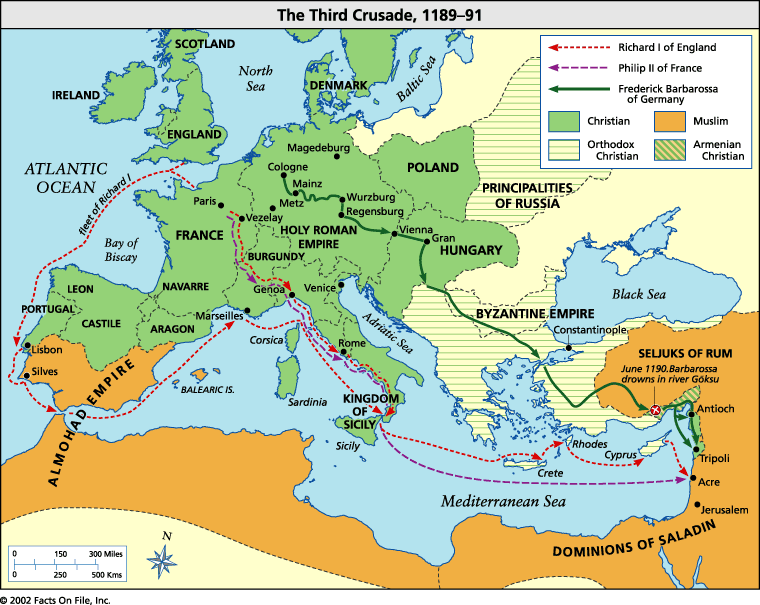 The aging Holy Roman Emperor, Frederick I “Barbarossa” (Red Beard), was the first to go, taking up the cross at Mainz Cathedral in March, 1188. Emperor Frederick drowned crossing the Saleph River in Asia Minor in June 1190, after which most of his army of 100,000 returned to Germany.



 John Connell Freeborn was a pilot with the RAF, and a good one, too. Credited with 13½ enemy aircraft shot down, Freeborn flew more operational hours during the Battle of Britain, than any other pilot, ending the war with a Distinguished Flying Cross and Bar, and completing his RAF career as a Wing Commander. Yet, there is a time when every hero is as green as the grass. In the beginning, John Freeborn like everyone else, were rank amateurs.
 Richard Hough and Denis Richards wrote about the episode in


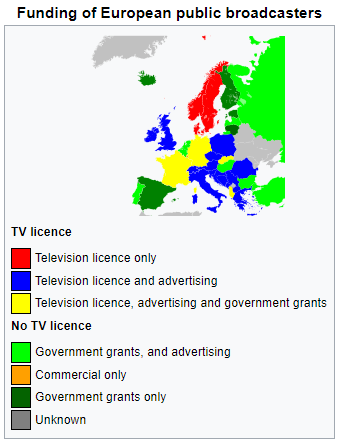
 Undeterred, then-Governor Elliott Spitzer proposed a tax on illegal drugs as part of the Empire State’s 2008-’09 budget, making New York the 30th state to pass such a measure. “Mr. Clean” stepped down in a hooker scandal, amid threats of impeachment by state lawmakers. The state Senate passed a budget resolution the following day, specifically rejecting the crack tax.
 New Zealand proposed a tax on bovine flatulence in 2003, to curb “Global Warming”. The fuss raised by New Zealand farmers over a tax on cow farts, was near-measurable on the Richter scale. Red-faced politicians quietly dropped the proposal.
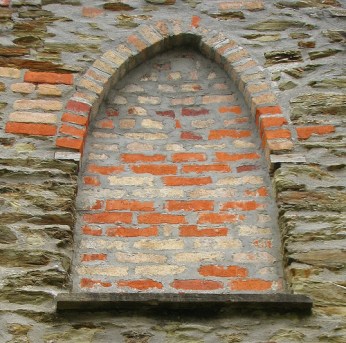 In 1662, Charles II levied a tax on fireplaces, to finance the Royal Household. Britons hurried to brick up their fireplaces to avoid the “hearth tax, preferring to shiver rather than pay up. The village baker in Churchill in Oxfordshire knocked out the wall from her oven to avoid the tax, and not surprisingly, burned the whole village down.
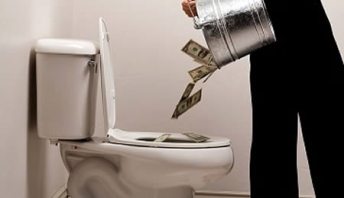 In 2004, the Maryland Legislature passed a monthly fee on sewer bills, ostensibly to protect the Chesapeake Bay and Atlantic tributaries. You pee, you poo, you pay. The fee doubled in 2012, the year in which Governor Martin O’Malley signed a tax – on rain.
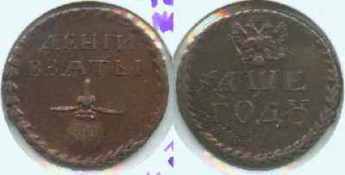 When you paid your beard tax of 100 Rubles, (peasants and clergy were exempt), you had to carry a “beard token”. Two phrases were inscribed on the coin: “The beard tax has been taken” and “The beard is a superfluous burden”. Failure to shave or pay the tax might lead to your beard being forcibly cut off your face. Some unfortunates had theirs pulled out by the roots, by Peter himself.
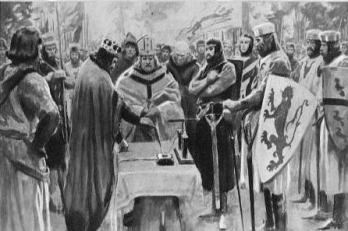 When King Henry I reigned over England (1100 – 1135), people who avoided military service were charged a “Cowardice Tax” called a”Scutage”. It was modest at first, but Richard Lionheart’s little brother John raised it by 300% when he became King, charging even his knights in years when there were no wars. It’s no small part of what led to the Magna Carta.


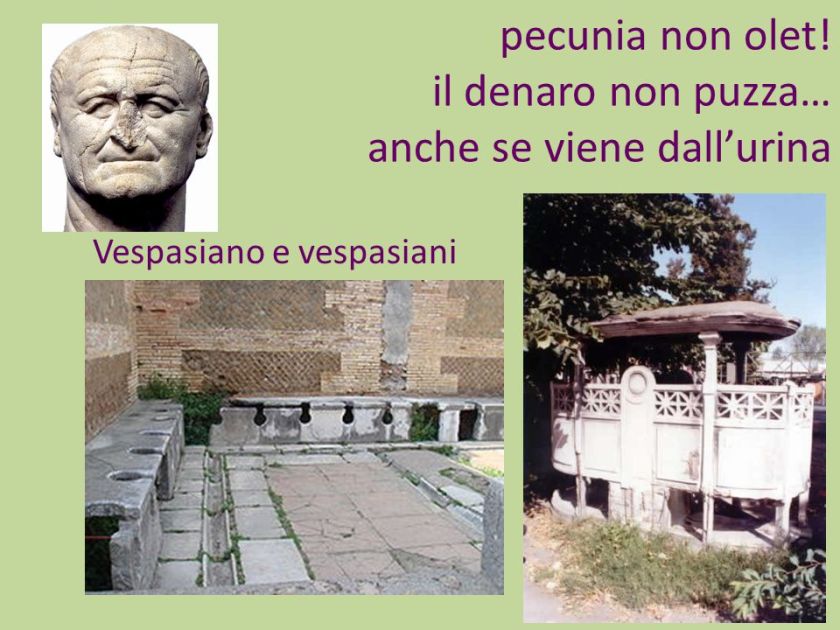


 Geronimo and his band of 38 men, women and children evaded thousands of Mexican and US soldiers. By the end of his military career, he was “the worst Indian who ever lived”, according to the white settlers. Geronimo was captured on this day in 1886, by Civil War veteran and Westminster, Massachusetts native, General Nelson Miles. With the capture of Geronimo, the last of the major US-Indian wars had come to an end.
 Geronimo became a celebrity in his old age, marching in Theodore Roosevelt’s inaugural parade in 1905. He converted to Christianity and appeared in county fairs and Wild West shows around the country.


 The “Calendar Act of 1750” set out a two-step process for adopting the Gregorian calendar. Since the Roman calendar began on March 25, the year 1751 was to have only 282 days so that January 1 could be synchronized with that date. That left 11 days to deal with.
 Benjamin Franklin seems to have liked the idea, writing that, “It is pleasant for an old man to be able to go to bed on September 2, and not have to get up until September 14.”


 A story comes down to us from the Royal Residence of Queen Victoria, of the hapless attendant who told a spicy story one night, at dinner. You could have watched the icicles grow, when the Queen of the United Kingdom of Great Britain and Ireland turned and said: “We are not amused“.



 Historical Easter Eggs - Today in History
You must be logged in to post a comment.