October 26, 1918 Talking in Code

In 1917, Colonel Bloor heard two of his Choctaw soldiers talking to each other, and realized he didn’t have the foggiest notion of what they were saying. If he didn’t understand their conversation, the Germans wouldn’t have a clue.

During the twentieth century, the United States and others specially recruited bilingual speakers of obscure languages, then applying those skills in secret communications based on those languages.  Among these, the story of the Navajo “Code Talkers” are probably best known.   Theirs was a language with no alphabet or symbols, a language with such complex syntax and tonal qualities as to be unintelligible to the non-speaker. The military code based on such a language proved unbreakable in WWII. Japanese code breakers never got close.

The United States Marine Corps recruited some 4-500 Navajo speakers, who served in all six Marine divisions in the Pacific theater.  Guadalcanal, Tarawa, Peleliu, Iwo Jima:  Navajo code talkers took part in every assault conducted by the United States Marine Corps, from 1942 to ‘45.

160907143620-navajo-code-talkers-3-exlarge-169.jpgThe history of the Navajo code talkers of WWII is relatively well known, but by no means, unique.  Indigenous Americans of other nations served as code talkers in WW2, including Assiniboine, Lakota and Meskwaki soldiers, who did service in the Pacific, North African, and European theaters of the war.

Fourteen Comanche soldiers took part in the Normandy landings.  As with the Navajo, these substituted phrases when their own language lacked a proper term.  Thus, “tank” became “turtle”.  “Bombers” became “pregnant airplanes”.  Adolf Hitler was “Crazy White Man”.

The information is contradictory, but Basque may also have been put to use, in areas where no native speakers were believed to be present.  Native Cree speakers served with Canadian Armed Services, though oaths of secrecy have all but blotted their contributions, from the pages of history.

The first documented use of military codes based on native American languages took place during the Second Battle of the Somme in September of 1918, employing on the language skills of a number of Cherokee troops.

The government of Choctaw nation will tell you otherwise, contending that Theirs was the first native language, used in this way.  Late in 1917, Colonel Alfred Wainwright Bloor was serving in France with the 142nd Infantry Regiment. They were a Texas outfit, constituted in May of that year and including a number of Oklahoma Choctaws.

The Allies had already learned the hard way that their German adversaries spoke excellent English, and had already intercepted and broken several English-based codes. Colonel Bloor heard two of his Choctaw soldiers talking to each other, and realized he didn’t have the foggiest notion of what they were saying. If he didn’t understand their conversation, the Germans wouldn’t have a clue.

ChoctawCoders
Choctaw soldiers in training in World War I for coded radio and telephone transmissions

The first test under combat conditions took place on October 26, 1918, as two companies of the 2nd Battalion performed a “delicate” withdrawal from Chufilly to Chardeny, in the Champagne sector. A captured German officer later confirmed the Choctaw code to have been a complete success. We were “completely confused by the Indian language”, he said, “and gained no benefit whatsoever” from wiretaps.

Choctaw soldiers were placed in multiple companies of infantry. Messages were transmitted via telephone, radio and by runner, many of whom were themselves native Americans.

As in the next war, Choctaw would improvise when their language lacked the proper word or phrase. When describing artillery, they used the words for “big gun”. Machine guns were “little gun shoot fast”.
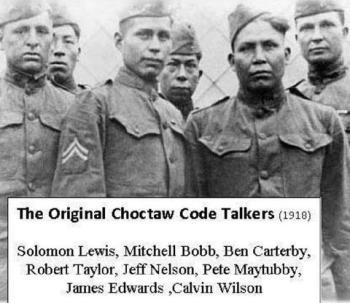
Choctaw code talkersThe Choctaw themselves didn’t use the term “Code Talker”, that wouldn’t come along until WWII. At least one member of the group, Tobias W. Frazier, simply described what they did as, “talking on the radio”.  Of the 19 who served in WWI, 18 were native Choctaw from southeast Oklahoma. The last was a native Chickasaw. The youngest was Benjamin Franklin Colbert, Jr., the son of Benjamin Colbert Sr., one of Teddy Roosevelt’s “Rough Riders” of the Spanish American War. Born September 15, 1900 in the Durant Indian Territory, he was all of sixteen, the day he enlisted.

Another was Choctaw Joseph Oklahombi, whose name means “man killer” in the Choctaw language. Six days before Sergeant York’s famous capture of 132 Germans in the Argonne Forest, Joseph Oklahombi charged a strongly held German position, single-handed. Oklahombi‘s Croix de Guerre citation, personally awarded him by Marshall Petain, tells the story:

“Under a violent barrage, [Pvt. Oklahombi] dashed to the attack of an enemy position, covering about 210 yards through barbed-wire entanglements. He rushed on machine-gun nests, capturing 171 prisoners. He stormed a strongly held position containing more than 50 machine guns, and a number of trench mortars. Turned the captured guns on the enemy, and held the position for four days, in spite of a constant barrage of large projectiles and of gas shells. Crossed no man’s land many times to get information concerning the enemy, and to assist his wounded comrades”.

Unconfirmed eyewitness accounts report that 250 Germans occupied the position, and that Oklahombi killed 79 of them before their comrades decided it was wiser to surrender. Some guys are not to be trifled with.
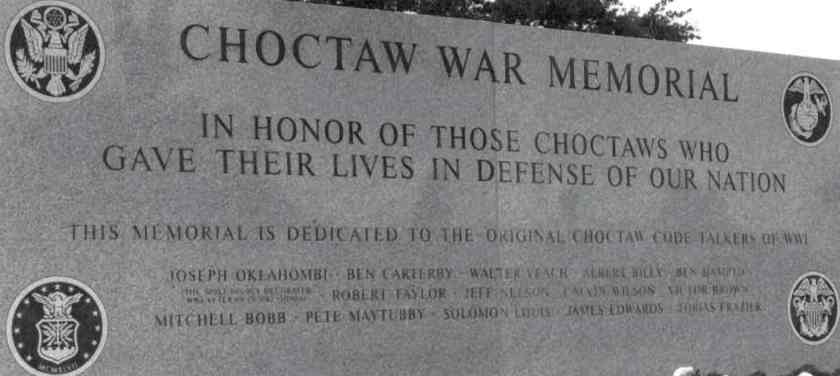
choctawwarmemorial

October 14, 1939 Death of the Royal Oak

Captain Benn was almost alone in believing that his ship was attacked by torpedo.  The cause of the sinking was still being argued over the next day, when divers went down and found a German torpedo propeller. Only then was it understood, that the Kriegsmarine  had taken the war, into British home waters.  By that time, U-47 was gone.

In the early days of WWII, the British Royal Navy based the main part of the Grand fleet at Scapa Flow, in the Orkney Islands north of Scotland.  Protected as it was by blocking ships and underwater cables, the anchorage considered impregnable to submarine attack.

f918c0672ea9cc256d0295ed46d0ca83The harbor at Scapa flow had been home to the British deep water fleet since 1904, a time when the place truly was, all but impregnable.  By 1939, anti-aircraft weaponry was all but obsolete, old block ships were disintegrating, and anti-submarine nets were inadequate to the needs of the new war.
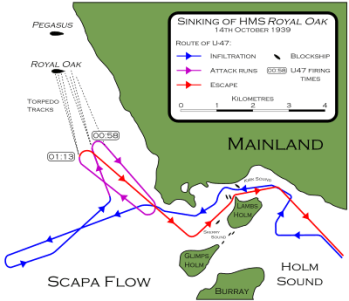
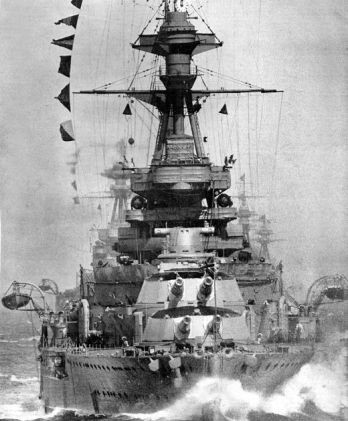
The men of the German Unterseeboot U-47 commanded by officer Günther Prien, were not impressed. U-47 entered the Royal Navy base in the evening hours of the October 13, 1939. By 12:55am on the the 14th, they were within 3,500 yards of the unmistakable silhouette of the WWI era Revenge Class Battleship, HMS Royal Oak.

Believing he had a certain kill, Prien aimed two of his four torpedoes at the Battleship, and the other two at the 6,900 ton Pegasus, which he’d mistaken in the dark for the much larger HMS Repulse. Tubes one, two and three fired successfully, torpedoes away, but #4 jammed. Only one found its mark, blowing a hole in the starboard bow of the Royal Oak, near the anchor chains.

On the battleship, Captain William Benn was told the most likely cause was an internal explosion, either that or a high flying German aircraft had dropped a bomb. Damage control teams were assembled to assess the damage, while aboard U-47, Prien thought his one hit had been against Repulse (Pegasus). He was prepared to run, but saw no threat from oncoming surface vessels.  Coming about and firing the stern torpedo, the crew worked to free the jammed #4 torpedo tube, while reloading bow tubes 1-3. That one missed as well, and the Germans cursed their luck.

400px-U-47_raid.svgThe electric torpedoes of the era were highly unreliable, and this wasn’t shaping up to be their night.
Finally, tubes one and two were reloaded, and the jammed tube #4 was serviced and ready to go. U-47 crept closer and, at 1:25am, fired all three torpedoes at the Royal Oak. All three found their target within ten seconds of one other, blasting three holes amidships on the starboard side. The explosions set off a series of fires and ignited a cordite magazine and exploding with a fiery orange blast that went right through the decks.\

Royal Oak rolled over and sank in thirteen minutes. 833 sailors and officers were lost from ship’s company of 1,234, including Rear Admiral Henry Evelyn Blagrove, commander of the 2nd Battle Squadron.

391702797d7300601188ee909566c8de

The Royal Navy considered the anchorage so secure that, even now, searchlights and anti-aircraft fire raked the sky, searching for the air attack that wasn’t there.  Captain Benn was almost alone in believing that his ship was attacked by torpedo.  The cause of the sinking was still being argued over the next day, when divers went down and found a German torpedo propeller. Only then was it understood that the Kriegsmarine had taken the war, into British home waters.

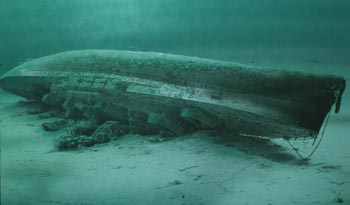
Royal Oak Wreck

The successful attack at Scapa Flow was a crushing defeat for the British, and payback for the Germans. The entire German High Seas Fleet had been interned there at the end of WWI. Admiral Ludwig von Reuter wasn’t about to let his fleet fall into allied hands, and ordered the lot of them, scuttled. British guard ships succeeded in beaching a few at the time, but 52 of 74 vessels had sunk to the bottom.

Many of those wrecks were salvaged in the interwar years, and towed away for scrap. Those which remain are popular sites for recreational divers, but not Royal Oak. As a designated war grave, Royal Oak is protected by the Military Remains Act of 1986.  Unauthorized divers are strictly, prohibited.

The wreck of the Royal Oak lies nearly upside down in 100′ of water, her hull just 16-feet beneath the surface. Each year, divers place the red St. George’s Cross with the Union Flag of the White Ensign at her stern, a solemn tribute to the honored dead of World War 2, and to the first Royal Navy battleship lost in the most destructive war in history.

Royal Oak Ensign

If you enjoyed this “Today in History”, please feel free to re-blog, “like” & share on social media, so that others may find and enjoy it as well. Please click the “follow” button on the right, to receive email updates on new articles.  Thank you for your interest, in the history we all share.

October 3, 1944 Angel from a Foxhole

Once, the small dog was able to perform a task in minutes, which would have otherwise taken an entire airstrip out of service for three days, and exposed a construction battalion to enemy fire.

The first dog may have approached some campfire, long before recorded history. It may have been hurt or it maybe it was looking for a morsel. Dogs have been by our side ever since.

Over history, the unique attributes of Canis Familiaris have often served in times of war. Ancient Egyptian artwork depicts dogs at work in multiple capacities. The ancient Greeks used dogs against Persian invaders at the Battle of Marathon.

_73412601_2001-877_smithsonian_stubby_with_robert_pro_photoThe European allies and Imperial Germany had about 20,000 dogs working a variety of jobs in WWI. Though the United States didn’t have an official “War Dog” program in those days, a Staffordshire Terrier mix called “Sgt. Stubby” was smuggled “over there” with an AEF unit training out of New Haven, Connecticut.

Stubby is credited with saving an unknown number of lives, his keen sense of hearing giving his companions early warning of incoming artillery rounds.

Once, Stubby even caught a German spy who had been creeping around, mapping allied trenches. It must have been a very bad day for that particular Bosch, to be discovered spinning in circles, a 50-pound, muscular terrier affixed to his arse.

The US War Dogs program was developed between the World Wars, and dogs have served in every conflict, since.  My own son in law Nate served in Afghanistan with “Zino”, a five-year old German Shepherd and Tactical Explosives Detection Dog (TEDD), trained to detect as many as 64 explosive compounds.

The littlest war dog first appeared in the jungles of New Guinea, when an American soldier spotted a “golden head” poking out of an abandoned foxhole. It was all of 4-pounds, a seven-inch tall, Yorkshire Terrier.  At the time, nobody had the foggiest notion of how the tiny dog had gotten there. The soldier brought her back to camp and sold her to a comrade for £2 Australian, about $6.44.  He was Corporal William Wynne, who named her “Smoky”.

2013-11-19-BillandSmokywithSmokysnewbornpupforwhichtheBillmaintainscostSmokyherGoodConductmedalforayear1944

Smoky lived a soldier’s life for the next eighteen months, traveling about in a rucksack and learning to parachute from trees.  At first, soldiers thought she might have belonged to the Japanese side, but they brought her to a POW camp and quickly learned that she understood neither Japanese nor English commands.

The little dog flew 12 air/sea rescue and photo reconnaissance missions, secured in Wynne’s backpack. She survived 150 air raids and a typhoon, often giving soldiers early warning of incoming fire.  Wynne credited Smoky with saving his life one time, on an LST transport ship.  It was around October 3, 1944 off Morotai, when the Japanese submarine RO-41 sank the American destroyer escort, USS Shelton.  The decks around them were shaking from anti-aircraft and machine gun fire, when Smoky guided Wynne to duck at the moment an incoming shell struck, killing 8 men standing next to them. She was his “angel from a foxhole.”

YorkieSmokyO

Once, the small dog was able to perform a task in minutes, a job which would have otherwise taken an airstrip out of service for three days, and expose a construction battalion to enemy fire. The air field at Lingayen Gulf, Luzon, was crucial to the Allied war effort.  The signal corps needed to run a teletype communication wire across the field.  To do so in the conventional manner would have taken days, and put the airfield out of operation.  Except, there was one possible workaround.

A 70-foot, 8” drain pipe half filled with dirt, already crossed under the air strip

Wynne credits the dog with enabling the airfield to remain open, saving 40 aircraft and 250 ground crew from exposure to Japanese fire.  Let him tell the story:

o-SMOKY5-570

“I tied a string to Smoky’s collar and ran to the other end of the culvert . . . (Smoky) made a few steps in and then ran back. `Come, Smoky,’ I said sharply, and she started through again. When she was about 10 feet in, the string caught up and she looked over her shoulder as much as to say `what’s holding us up there?’ The string loosened from the snag and she came on again. By now the dust was rising from the shuffle of her paws as she crawled through the dirt and mold and I could no longer see her. I called and pleaded, not knowing for certain whether she was coming or not. At last, about 20 feet away, I saw two little amber eyes and heard a faint whimpering sound . . . at 15 feet away, she broke into a run. We were so happy at Smoky’s success that we patted and praised her for a full five minutes”.

o-SMOKEY7-570Smoky toured all over the world after the war, appearing in over 42 television programs and licking faces & performing tricks for thousands at veteran’s hospitals.  In June 1945, Smoky toured the 120th General Hospital in Manila, visiting with wounded GIs from the Battle of Luzon. She’s been called “the first published post-traumatic stress canine”, and credited with expanding interest in what had hitherto been an obscure breed.
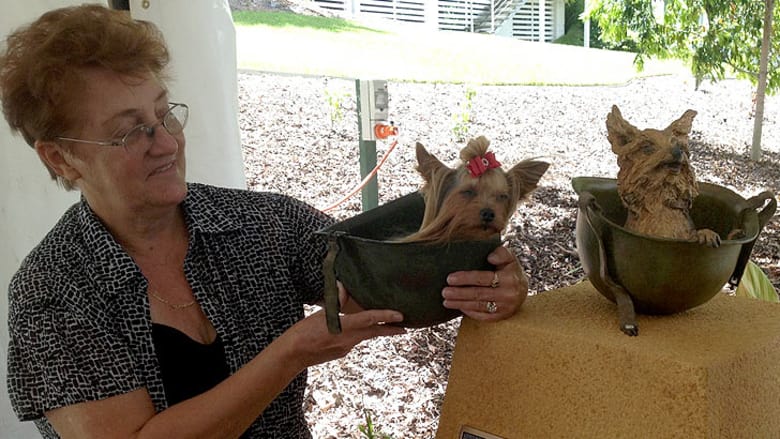
The Littlest Wardog died in her sleep in February 1957 at the age of fourteen, and buried in a .30 caliber ammunition box.  Years later,a  life-size a bronze sculpture of Smoky sitting in a GI helmet was installed over her final resting place in Rocky River Ohio, setting atop a two-ton blue granite base.

Bill Wynne was 90 years old in 2012, when he was “flabbergasted” to be approached by Australian authorities. They explained that an Australian army nurse had purchased the dog from a Queen Street pet store, and became separated in the jungles of New Guinea. sixty-eight years later, the Australian delegation had come to award his dog, a medal.

f88e3abeaa339b1ed4c15d9adbc1387b71c69549A memorial statue was unveiled on December 12 of that year, at the Australian War Memorial at the Queensland Wacol Animal Care Campus in Brisbane.
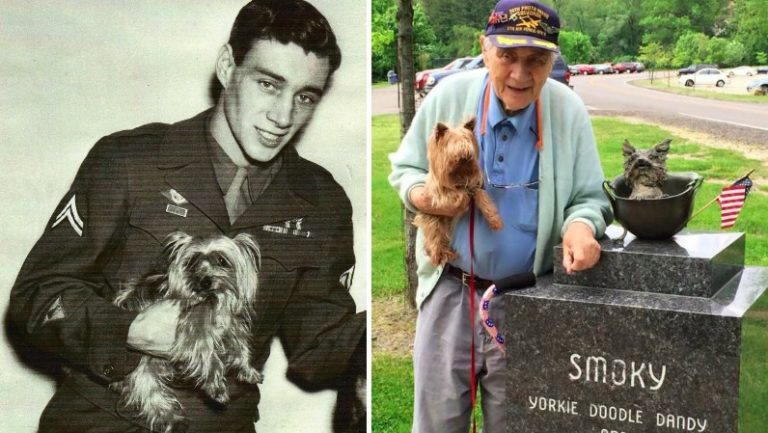
smoky-dog-1-768x433

On December 11, 2015, the Australian Royal Society for the Prevention of Cruelty to Animals (RSPCA) awarded Smoky the Purple Cross.  According to the press release, the award was “established in 1993 to recognize the deeds of animals that have shown outstanding service to humans, particularly where they have demonstrated exceptional courage, by risking their own safety or life, to save a person from injury or death. Since its inception, only nine animals have been awarded the prestigious award”.

“Yorkie Doodle Dandy” by Bill Wynne, tells the story of the dog Animal Planet has called, the first therapy dog. Originally published in 1996 by Wynnesome Press, the book is currently in its 5th edition, by Top Dog Enterprises, LLC.

As a personal aside, Nate and Zino were separated after their tour in Afghanistan. They were reunited in 2014, when the dog came to live with Nate and our daughter Carolyn in their home in Savannah. Last fall, Sheryl and I traveled to Houston with a friend, to celebrate our anniversary at the “Redneck Country Club”.  2,000 miles from home and completely by chance, who do we meet but the trainer who taught Zino to be a TEDD in the first place. Small world.

If you enjoyed this “Today in History”, please feel free to re-blog, “like” & share on social media, so that others may find and enjoy it as well. Please click the “follow” button on the right, to receive email updates on new articles.  Thank you for your interest, in the history we all share.

September 15, 1916 Tanks of the Great War

At first code-named “Water Carriers”, no self-respecting Brit wanted to be riding around in a “WC”, (“Water Closet”), so it was that these contraptions were destined to be known as “Water Tanks”, or just plain Tanks.

Leonardo da Vinci drew sketches of a man-powered, wheeled vehicle encased in armor and bristling with cannon, as early as the 15th century. The design was limited, since no human crew could generate enough power to move it for long, and the use of animals in such confined spaces was fraught with problems..

image11

H.G. Wells’ December 1903 short story “The Land Ironclads”, depicted huge military land vessels, capable of disrupting military defenses and clearing the way for infantry. Wells’ machine was equipped with 8 giant pedrail wheels, each 10′ in height, and armed with cannon and machine-guns.

thelandironcladsEarly armored cars were fine for moving personnel over smooth roads, but there was a need for a vehicle capable of navigating the broken terrain of no man’s land. In the run-up to WWI, several soon-to-be belligerents were conducting experiments with “land ships”, with varying degrees of success.


ILN0-1919-0517-0008-001-004

A French captain named Levavasseur proposed a crawler-tracked armored vehicle equipped with artillery as early as 1903, but the project was abandoned by the Artillery Technical Committee. Later French attempts included the Breton-Pretot machine, sporting huge 10’ x 13’ tracks and the Aubriot-Gabet “Fortress”. Electrically powered, each of these things required its own power supply cable. Needless to say, the idea was not widely imitated.

tumblr_njssestuEC1s7e5k5o1_1280

In 1911, Austrian engineering officer Günther Burstyn and Australian civil engineer Lancelot de Mole independently developed working models of such vehicles, but both designs were rejected by their governments. They too would never be built.

Tsar_tankThe most unusual tank of WWI was the tricycle designed “Lebedenko” or “Tsar Tank”. Developed by pre-Soviet Russia, the armament and crew quarters on this thing were 27′ from the ground, making them irresistible targets for enemy artillery.

Russian shipyard engineer Vasily Mendeleev designed a 170-ton monster while aero-engineer Aleksandr Porokhovschikov developed a small cross-country vehicle running on a single rubber track called the “Vezdekhod”, translating as “He who goes anywhere“.

Vezdekhod_Porokhovshikov

The Russian Revolution would overtake the project before the thing got out of prototype, but post-revolutionary Russian propagandists would seize on the vehicle as “proof” that Russia had designed the first Tank.

1481810086_tritton-trench-crosser-2

The British had the greatest degree of success, after a failed experiment with the “Tritton Trench-Crosser” in May, 1915. This beast had 8′ tractor wheels carrying 15’ girders on a chain, which were lowered into a trench so that the back wheels could roll over it. Girders would then drag behind, until the machine could back over them and rewind.

Caterpillar_3

Finally, British work with the Holt Manufacturing Company of Stockton, California paid off with the most consistently successful track design. These “Caterpillar” treads had long been used on tractors. By 1916, the British army was using about 1,000 of Holt’s Caterpillar tractors on the Western Front.

a-ww1-holt-gun-tractor-towing-a-howlitzer-artillery-gun-replica-passing-E8YFWE

These were the pet project of Winston Churchill, First Lord of the Admiralty, who described them as “Water Carriers” to mask their intended purpose.

battle-cambrai-ww1-007

No self-respecting Brit wanted to be riding around in a “WC”, (“Water Closet”), so it was that these contraptions were destined to be known as “Water Tanks”, or just plain Tanks. The name stuck. The “No1 Lincoln Machine” gave way to “Little Willie” and finally the Mark I “Big Willie”, the familiar Rhomboid shaped caterpillar track design which first appeared on the Somme Front on this day in 1916.

Mark_IV

49 Mark Is were committed in that first tank battle, of which 32 were mechanically sound enough to take part in the advance. German lines fell back in confusion before “der Wagen des Teufels“, “the Devil’s Wagon”, but they were too few to hold.

4266442481_cffb6111dd_b

With no suspension, the bone jarring ride on one of these monsters was just the beginning of what crews were forced to endure.

8e83ac663bebacd82d991cd5da5a3075--british-tanks-wwi-tanks

The interior was so loud that communication was only possible via hand signal. When bullets stuck the metal plates, splinters called “spall” would break away from the interior and fly about the cabin, requiring crew members to protect themselves with thick leather clothing and chain mail masks.

tumblr_m543poyPqo1rxhnogo1_400Interior temperatures rose to 122° Fahrenheit and more, making me wonder if these things weren’t as dangerous to their own crews as they were to the other side.

It was not until November 20 the following year at Cambrai, that the British Tank Corps had their first major success. Over 400 tanks penetrated 6 miles on a 7-mile front. The infantry failed to exploit the tanks’ gains, and almost all territory was recaptured by the Germans. The British scored a far more significant victory on August 8, 1918, with 600 tanks at the Battle of Amiens. General Erich Ludendorff called it a “Black Day” for the German Army.

4182483750_d5b8861719_z

In all, the French fielded about 3,600 light Renault FT tanks in WWI, the British over 2,500 of their heavy Mark I-Vs.

The German General Staff was slow to adopt the tank, concentrating instead on anti-tank weapons. The majority of the 50+/- tanks fielded by Germany in WWI, were captured British vehicles.

mk4germThe only German project to be produced and fielded in WWI was the A7V. They only made 20 of these things in the armored, “Sturmpanzerwagen Oberschlesien“, “Upper Silesia Assault Armored Vehicle” version, and a few more in the unarmored “Überlandwagen”, “Over-land vehicle”, used for cargo transport.

t27It would be very different, in the next war.

If you enjoyed this “Today in History”, please feel free to re-blog, “like” & share on social media, so that others may find and enjoy it as well. Please click the “follow” button on the right, to receive email updates on new articles.  Thank you for your interest, in the history we all share.

September 9, 1942 If we Knew each other

The old pilot never forgot a promise made to the place he had once tried to burn down.

In the months before the Japanese attack on Pearl Harbor, the B-1 type submarine I-25 quietly slipped from her dock, departing Yokusuka on November 21 and joining three other Japanese subs on patrol, in the waters north of Oahu.

The B-1 type was a fast cruiser submarine, built for long range and carrying on her bows a small aircraft hanger and deck catapult, designed to store and launch a single two-seater Yokosuka E14Y reconnaissance floatplane, known to the allies as a “Glen”.

sub2lq6

With twenty of them built, the B-1 series was the most numerous of some thirty nine distinct submarine types, employed by the Japanese in WW2.  The type was fairly successful, particularly in the beginning of the war. I-26 crippled the aircraft carrier USS Saratoga in August of 1942, and I-19 sank the aircraft carrier USS Wasp that September, at the same time damaging the battleship USS North Carolina and the destroyer USS O’Brien, which later sank.

I-25 launched the only piloted aircraft during World War II, to successfully attack the American mainland.

NobuoFujita-flightgearhistorical
Nobuo Fujita

Lieutenant Commander Meiji Tagami turned the I-25 into the winds off the Oregon coast on the morning of September 9, 1942, and launched the Yokosuka E14Y floatplane, piloted by Warrant Officer Nobuo Fujita and armed with two 168-lb thermite bombs.

Fujita had hoped the target would be Los Angeles or San Francisco, payback for the Doolittle raid that April but, no chance of that.   Lumbering along at 90MPH, such an aircraft is way too slow to attack such a heavily defended target.

Fujita’s target this day, was the vast forested region along the Oregon coast, near the California border.  With a little luck, the incendiary bombs would burn down a large section of the forest and a string of coastal towns along with it, diverting American resources from the war effort.

That day, the luck was on the American side. A recent rain in the Siskiyou National Forest had left the place wet, at low risk for fire. Howard “Razz” Gardner watched the aircraft come in, from the fire lookout tower on Mount Emily. He never saw the bombing itself but the plume of smoke, was easy enough to follow. Razz was able to hike to the scene while the Forest Service dispatched lookout Keith Johnson, from a nearby tower. The pair was able to keep the blaze contained overnight, and the crew arriving the next morning, put it out.

img069

The following day, area commander Lieutenant General John DeWitt announced “The Western Defense Command is investigating the circumstances surrounding the discovery on Sept. 9 of fragments of what appears to have been an incendiary bomb. These fragments were found by personnel of the United States Forestry Service near Mt. Emily nine miles northeast of Brookings, Or. Markings of the bomb fragments indicated that the missile was of Japanese origin”.

Fujita and his observer made a second attack on September 29, but the damage was negligible.  Not at all the regional conflagration he had hoped for.  Late in the war, Japanese authorities released hundreds of balloon bombs into the gulf stream, in a sustained attack on the continental United States.  One managed to kill a Sunday School class and its teacher but, the earlier attacks flown by Nobuo Fujita remained the only piloted attack on the US mainland, of WW2.

Years later, the junior chamber of commerce in Brookings Oregon, the “Jaycees”, got a bright idea over a few beers. Why not invite the only foreign pilot to successfully attack the American Mainland, as an honored guest.

5524241949_e7ddcb7a8a_z

It was a gesture of friendship, but the idea set off a firestorm in the coastal community. A full-page op-ed signed by 100 locals ran in the Brookings-Harbor Pilot, in 1962. Part of it read:

[Fujita’s] sole claim to fame is that he’s the only Nip pilot who bombed the mainland of the United States by airplane … Why stop with Fujita? Why not assemble the ashes of Judas Iscariot, the corpse of Atilla the Hun, a shovel full of dirt from the spot where Hitler died … .

Brookings resident Greg Jacques remembers, “There was a lot of turmoil. You gotta remember it was only like 16 years after the war. There were 30 to 40 to 50 percent of the men in the community at that time were in World War II.”   There were heated arguments in coffee shops and bars, all over town.  Then-Jaycees President Bill McChesney recalled, “I got a death threat it in the middle of the night.  This guy said, ‘If you walk with that Nip down the street we’re going to have rifles pointed at you, and your family.’”

In the end, the group of young businessmen, none over the age of 35, voted unanimously to extend the invitation. To hell with the consequences. President John F. Kennedy congratulated the group, on their efforts to promote international friendship.

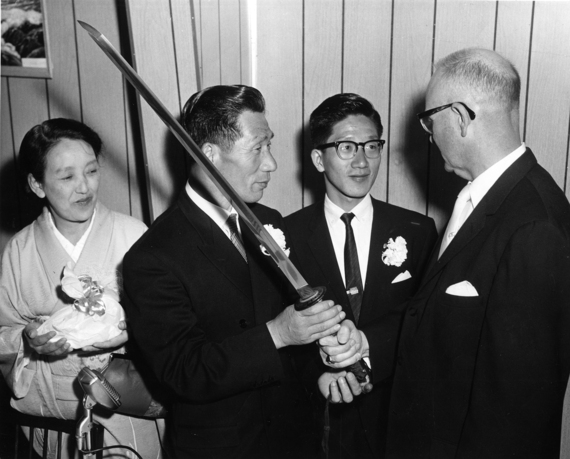
With assurances to the Japanese government that the former pilot would not be tried as a war criminal, the Fujita family left the Ibaraki Prefecture for the City of Brookings Oregon, in 1962. Nobuo, his wife Akayo, and their young son Yasuyoshi. Nobuo carried with him a prized family heirloom, a 400-year old Katana, the Samurai Sword with which he intended to perform Seppuku, ritual suicide by disembowelment, should this visit go wrong.

Nobuo Fujita presents his family's sword to the mayor of Brookin

Despite the bitterness left in the wake of that terrible war, the visit did not go wrong.
Fujita was made honorary chairman of that year’s azalea festival. The man was presented with a ceremonial key to the city, and allowed to take the controls of an aircraft, flying over the bomb site. He even tried his hand at playing a bagpipe, during a parade.

All things were not “Kumbaya” – several men were jailed during the visit, in a preemptive effort to keep the lid on.

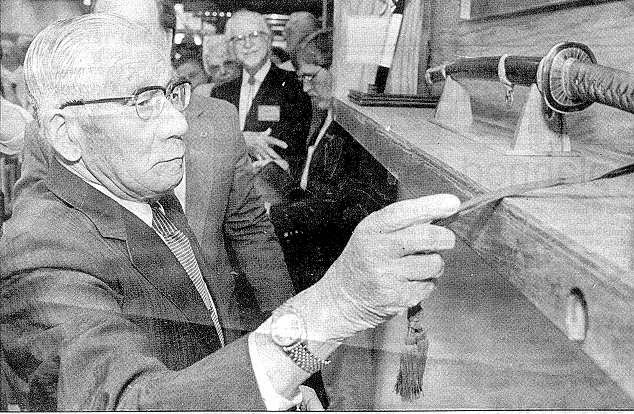
In the end, Nobuo Fujita did not open his abdomen with that sword, nor did he pass the treasured heirloom to his son, as once intended. The sword which had accompanied him on his every mission of the late war, including the one over Brookings itself, that prized object did he give to the city of Brookings, as a symbol of friendship. The sword may be seen at the Chetco Public Library, to this day.

news_sword1-3_jxo1hl

Back in Japan, the economy was tough after the war. Fujita passed the family hardware store down to his son, but the business failed. The old pilot never forgot a promise made to the place he had once tried to burn down. Fujita worked for years to earn the money, to buy a few books every month. In 1985 he kept his promise, inviting three Brookings-Harbor High School students on a cultural exchange visit to Japan, with the money he had saved. An aide to President Ronald Reagan sent him a letter, “with admiration for your kindness and generosity.”

news_tree2-6_txpz9m
Hat tip Oregon Public Broadcasting, OPB.org, for this and the sword image.

Fujita returned to Brookings in 1990, and again in 1992, and 1995. During the 1992 visit, he planted a Pacific Redwood, at the site where his bombs fell.

fujita_nobuo_3

Nobuo Fujita died in 1997 at the age of eighty-five, only days after being made an honorary citizen of the city of Brookings. In October of the following year, Fujita’s daughter Yoriko Asakura returned to the bomb site, where she buried some of her father’s ashes. Now, his spirit would fly over that place, forever.

Fujita NYT obit Oct 3 '97

At some point, the only foreign pilot to successfully attack the American mainland, confided to his diary: “If we knew each other. If we understood each other as a friend. This foolish war would never have happened. I sincerely hope that a day would come where everyone could overcome their differences through talking and not fighting”.

Yeah…What he said.

If you enjoyed this “Today in History”, please feel free to re-blog, “like” & share on social media, so that others may find and enjoy it as well. Please click the “follow” button on the right, to receive email updates on new articles.  Thank you for your interest, in the history we all share.

September 6, 1939 Battle of Barking Creek

There is a time when every hero, is as green as the grass.

The Nazi conquest of Europe began with the Sudetenland in 1938, the border districts of Bohemia, Moravia, and German speaking parts of Czechoslovakia. Within two years, every major power on the European mainland was either neutral, or under Nazi occupation.

Ground forces of the United Kingdom were shattered in 1940, along with those of her French, Indian, Moroccan, Polish, Belgian, Canadian and Dutch allies.  The hastily assembled fleet of 933 vessels large and small were all that stood before unmitigated disaster.

338,226 soldiers were rescued from the beaches of France.  Defeated but still unbeaten, these would live to fight another day.

dunkirkevacuation

In 1940, the island nation of Great Britain stood alone and unconquered, defiant in the face of the Nazi war machine.  In Germany, street decorations were being prepared for the victory parades which were sure to follow, as Adolf Hitler considered plans for his surprise attack on his ally to the East, the Soviet Union.

After the allied armies were hurled from the beaches of Dunkirk, Hitler seemed to feel he had little to do but “mop up”.  Prime Minister Winston Churchill captured the spirit of the period as only he could, when he said that “Never in the field of human conflict was so much owed by so many to so few”.

The “so few” to whom the Prime Minister referred, were the 2,342 British aircrew of the Royal Air Force (RAF), and the 595 international air crews who were her allies, in the “Battle of Britain“.

freeborn2_1715769cJohn Connell Freeborn was a pilot with the RAF, and a good one, too. Credited with 13½ enemy aircraft shot down, Freeborn flew more operational hours during the Battle of Britain, than any other pilot, ending the war with a Distinguished Flying Cross and  Bar, and completing his RAF career as a Wing Commander.  Yet, there is a time when every hero is as green as the grass.  In the beginning, John Freeborn like everyone else, were rank amateurs.

On the third day of the war, September 6, 1939, air combat experience was precisely, zero.  Very few had so much as seen a German aircraft, when a squadron of Mk IIB Hawker Hurricane fighters took off from North Weald Air Base after an early morning air raid alert. Two reserve Hurricanes left shortly afterward, piloted by Montague Hulton-Harrop and Frank Rose.

Something went wrong, and the two reserves were identified as enemy aircraft. Three Spitfires from Hornchurch, Essex were ordered to attack. Commanding officer of the flight, Adolph “Sailor” Malan, gave the order to engage.  Flying Officer Vincent ‘Paddy’ Byrne opened fire on Rose’s aircraft, as Pilot Officer John Freeborn attacked Hulton-Harrop.

Both aircraft were shot down. Rose survived, but Hulton-Harrop was dead before he hit the ground, shot through the back of his head. He was the first RAF pilot to die in the second World War. In another unfortunate first, this was the first time any aircraft had been shot down by a Spitfire.

sqldr.-roger-joyce-bushell-mid.-90120-raf-spitfire-w760

At the ensuing court martial, Malan testified for the prosecution, against his own pilots. He claimed that Freeborn had been irresponsible, impetuous, and had not taken heed of vital communications. As for Freeborn himself, his attorney, Sir Patrick Hastings, called Malan a “bare-faced liar”.

As an interesting aside, Hastings’ co-counsel for the defense was Roger Bushell, who was later incarcerated with Paddy Byrne at Stalag Luft III.  Roger “Big X”Bushell became the mastermind of the “Great Escape“, in which he and seventy-five other allied prisoners escaped Stalag Luft III via three tunnels, dubbed “Tom”, “Dick” and “Harry”.  Bushell was caught along with Bernard Scheidhauer, while waiting for a train at the Saarbrücken railway station, and murdered by members of the Gestapo.  Only three of the 76, escaped to freedom.

The court exonerated both Spitfire pilots, ruling the case to be an unfortunate accident.

RAFHurricaneRichard Hough and Denis Richards wrote about the episode in The Battle of Britain: The Greatest Air Battle of World War II, saying “This tragic shambles, hushed up at the time, was dubbed in the RAF ‘the Battle of Barking Creek’ – a place several miles from the shooting-down but one which, like Wigan Pier, was a standing joke in the music halls.”

The “Wigan pier” joke has to do with an inland industrial town, as if such a place could possess a pier, like some seaside pleasure resort.

Many years later, Freeborn spoke of the first RAF pilot to die in WW2, the man he himself had killed in a “friendly fire” incident. “I think about him nearly every day”, he said. “I’ve had a good life, and he should have had a good life too”.

churchyard1

If you enjoyed this “Today in History”, please feel free to re-blog, “like” & share on social media, so that others may find and enjoy it as well. Please click the “follow” button on the right, to receive email updates on new articles.  Thank you for your interest, in the history we all share.

September 2, 1945 Unit 731

To perform even the most cursory examination of WW2 is to walk among a catalog of atrocities, unimaginable to the modern reader. As if the very nightmare pits of hell had opened and unleashed horrors, unthinkable even to the blackest visions of the perverted and depraved. A true reckoning of the horrors of that war, is capable of producing psychological damage.

As Western historians tell the tale of WW2, the deadliest conflict in history began in September 1939, with the Nazi invasion of Poland. The United States joined the conflagration two years later, following the sneak attack on the American Naval anchorage at Pearl Harbor, by naval air forces of the Empire of Japan.

To perform even the most cursory examination of WW2 is to walk among a catalog of atrocities, unimaginable to the modern reader. As if the very nightmare pits of hell had opened and unleashed horrors, unthinkable even to the blackest visions of the perverted and depraved. A true reckoning of the horrors of that war, is capable of producing psychological damage.

auschwits-birkenau
Auschwitz-Birkenau

The mountains of gold teeth, of eyeglasses and hair and children’s shoes, testify in mute witness to the systematic extermination of eleven million souls in the gas chambers and ovens of the “Master Race”.  The Untermenschen:  The Jews.  The Roma (“gypsies”).  The physically and mentally disabled.  The Poles and other Slavic races, Jehovah‘s Witnesses, homosexuals, and members of political opposition groups.

Mass graves and savage reprisals by Nazi death squads for the imaginary “collective guilt” of civil populations. The vicious brutality inflicted upon the diseased and starving captives of the countless prison camps, of the “Greater East Asia Co-Prosperity Sphere“.

JapanesePowCamps-WWII-front
“Imperial Japanese-run prisoner-of-war camps within the Greater East Asia Co-Prosperity Sphere known during World War II from 1941 to 1945”. H/T Wikipedia

The tales are widely told and deservedly so.  Never should such atrocities be forgotten, any more than the cataclysmic fire bombing campaigns of entire cities, nor the nuclear annihilation which brought this whole ghastly conflagration, to a close.

Yet, of 100 randomly selected adults, how many are aware of “Unit 731″ and the other “medical experimentation” centers of the Kempetai, possibly the most hideous episode in this entire parade of horribles?

Shiro-ishii
General Shirō Ishii, Commandant of Unit 731

In the East, the war which began in 1939 dates back to 1931, and the Japanese invasion of Manchuria beginning on September 18.

The invasion followed the Mukden incident, an entirely staged “false flag” operation and bald pretext to war, carried out by Japanese military personnel and identical in purpose, to that carried out against Poland by Nazi aggressors eight years later, almost to the day.

The puppet state of Manchukuo now joined most of the Korean peninsula under Japanese subjugation.  This and subsequent invasions and the famine and civil wars which ensued, killed more people during this eight-year period, than the modern populations of Canada and Australia.  Combined.

The covert biological and chemical warfare research program conducted by Unit 731 began operations two years before the European war, during the “second Sino-Japanese War” of 1937-’45. Originally set up by the Kempeitai military police arm of the Imperial Japanese army, Unit 731 was taken over and commanded until the end of the war by General Shirō Ishii, a combat medic officer of the Kwantung Army.

Thousands of so-called “logs” (“Maruta”, in Japanese) were brought through the 150 buildings comprising Unit 731, and smaller facilities known as Unit 100 and Unit 516.  They were men, women and children, captives subjected to unspeakable acts of barbarity, in the name of medical “science”.   70% of Unit 731’s victims were ethnic Chinese, but the list includes Soviet, Mongolian and Korean nationals and possibly European, American and Australian POWs, as well.

unit-731-frostbite
Frostbite “experiment”

One example of the work there, is physiologist Yoshimura Hisato’s interest in hypothermia. The arms and legs of prisoners were submerged in ice or exposed to sub-zero winter cold until frozen solid, with ice accumulated on skin. Limbs were judged “ready” when they made a sound like a wooden board, when struck with a cane. Re-warming methods were carried out, from exposure to open fire to dousing in hot water. Sometimes the subject was simply left alone, to see how long a person’s own blood took to warm up the now-destroyed limbs.

germ-warfare
“Japanese personnel in protective suits carry a stretcher through Yiwu, China during Unit 731’s germ warfare tests. June 1942”. H/T allthatsinteresting.com

Human beings were intentionally infected with diseases such as cholera, anthrax or venereal disease, or nerve, chemical and biological warfare agents of every description. Then, as always, the live dissections, and examination of the prisoner’s organs.

unit-731-germs
“Germ” warfare experiment, being carried out at Unit 731

Female prisoners were subjected to rape and forced pregnancy, to test the “vertical transmission” of all of it, from mother to child.

Unit 731 museum
Unit 731 Museum, Harbin. “A permanent lab of the Troop No.731 to research the formation, therapy and prevention of frostbite. Before 1939, the troop did frostbite experiments generally in the fields.” Credit Samuel Kim, China Chronicles

Such “medical experiments” were carried out with no regard for the subjects’ survival.  In fact, live dissections were performed on fully aware and un-anesthetized victims, unless they were merely buried alive.  Such humane measures as unconsciousness, were thought to skew the “data”.  Not a single prisoner assigned to Unit 731, survived.  Not one.

Photographs may be found on-line if you wish, of the vivisection of live and fully conscious human beings.  I didn’t go there.   The images I decided to show, are bad enough.

Unit 731 prisoners were herded together onto firing ranges, to measure the damage done by weapons from swords to the Nambu 8mm pistol, to machine guns or bayonets and grenades.  Even flame throwers.

Bubonic plague-infected fleas were bred in laboratories at Unit 731 and Unit 1644, and spread by low flying aircraft in the coastal city of Ningbo and Changde in the Province of Hunan. Chinese civilians killed in outbreaks of bubonic plague, number thirty thousand or more.

children-researchers
“Unit 731 researchers conduct bacteriological experiments with captive child subjects in Nongan County of northeast China’s Jilin Province. November 1940”. H/T allthatsinteresting.com

Throughout the eight years of its existence, 1937 -1945, Unit 731 and its counterparts received generous support from the Japanese government.

On this day in 1945, Representatives of the Imperial Japanese government signed the formal instrument of surrender aboard the “Mighty Mo”, the Iowa-class battleship USS Missouri, ending World War 2 in the Pacific.

douglas-macarthur-and-hsu-yungchang-P
September 2, 1945

After the war, Unit 731 records were burned and researchers resumed civilian lives, as if nothing had happened. Many went back to faculty positions. Like “Operation Paperclip”, the combined British – American effort to scour the German talent pool for scientists and technicians of every sort, Japanese researchers were given immunity from prosecution, in exchange for what they knew.

Shirō Ishii was arrested by US occupation authorities after the war, and managed to negotiate immunity, in exchange for their full disclosure of germ warfare data based on human experimentation. On May 6 1947, General Douglas MacArthur wrote to Washington that “additional data, possibly some statements from Ishii probably can be obtained by informing Japanese involved that information will be retained in intelligence channels and will not be employed as ‘War Crimes’ evidence.”

After that, Ishii all but stepped off the pages of history.

Building_on_the_site_of_the_Harbin_bioweapon_facility_of_Unit_731
Today, the former Unit 731 bioweapon facility at Harbin is open to the public, as a war crimes museum

Cambridge University history lecturer Richard Drayton claims that he showed up in Maryland, to advise on bioweapons. Some sources place him on the Korean peninsula in 1951, still others claim he never left Japan where he died of throat cancer, at the age of 67.

In April of this year, the National Archives of Japan disclosed for the first time, a full list of the 3,607 people who worked for Unit 731. The Japanese government has yet to apologize for its acts of barbarity, nor is it likely to, anytime soon.  No more than the government in China, is likely to forget.

harbin-facility
Unit 731 facility, in Harbin

August 17, 1942 Makin Island Raid

The war in the Pacific continued for another three years, but the Butaritari people never forgot the barbarity of the Japanese occupier, nor the Marines who had given their lives in the attempt to throw them out.

Military forces of the Japanese Empire appeared unstoppable in the early months of WWII, attacking first Thailand, then the British possessions of Malaya, Singapore, and Hong Kong, as well as American military bases in Hawaii, Wake Island, Guam and the Philippines.

The United States was grotesquely unprepared to fight a World War in 1942, and dedicated itself to beating Adolf Hitler, first. General Douglas MacArthur abandoned the “Alamo of the Pacific” on March 11 saying “I shall return”, leaving 90,000 American and Filipino troops without food, supplies or support with which to fight off the Japanese offensive.

That April, 75,000 surrendered the Bataan peninsula, beginning a 65-mile, five-day slog into captivity through the heat of the Philippine jungle. Japanese guards were sadistic,  beating marchers at random and bayoneting those too weak to walk. Japanese tanks would swerve out of their way to run over anyone who had fallen and was too slow in getting up. Some were burned alive. Already crippled from tropical disease and starving from the long siege of Luzon, thousands perished in what came to be known as the Bataan Death March.

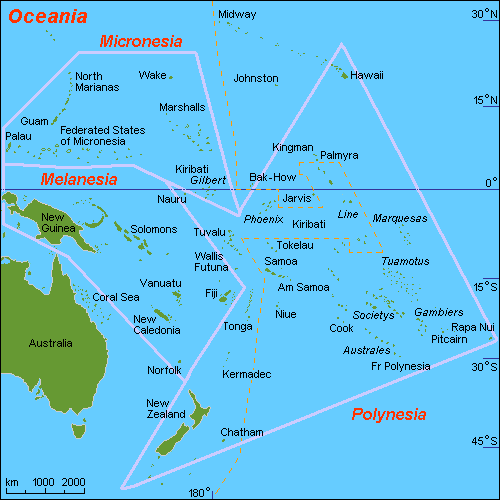
The Imperial Japanese Navy asserted control over much of the region in 1941, installing troop garrisons in the Marshall Island chain and across the ‘biogeographical region’ known as Oceana.

Map_OC-Oceania
WWF Map of the biogeographic region ‘Oceana

The “Island hopping strategy” used to wrest control of the Pacific islands from the Japanese would prove successful in the end but, in 1942, the Americans had much to learn about this style of warfare.

Today, the island Republic of Kiribati comprises 32 atolls and reef islands, located near the equator in the central Pacific, among a widely scattered group of federated states known as Micronesia. Home to just over 110,000 permanent residents, about half of these live on Tarawa Atoll.  At the opposite end of this small archipelago is Butaritari, once known as Makin Island.

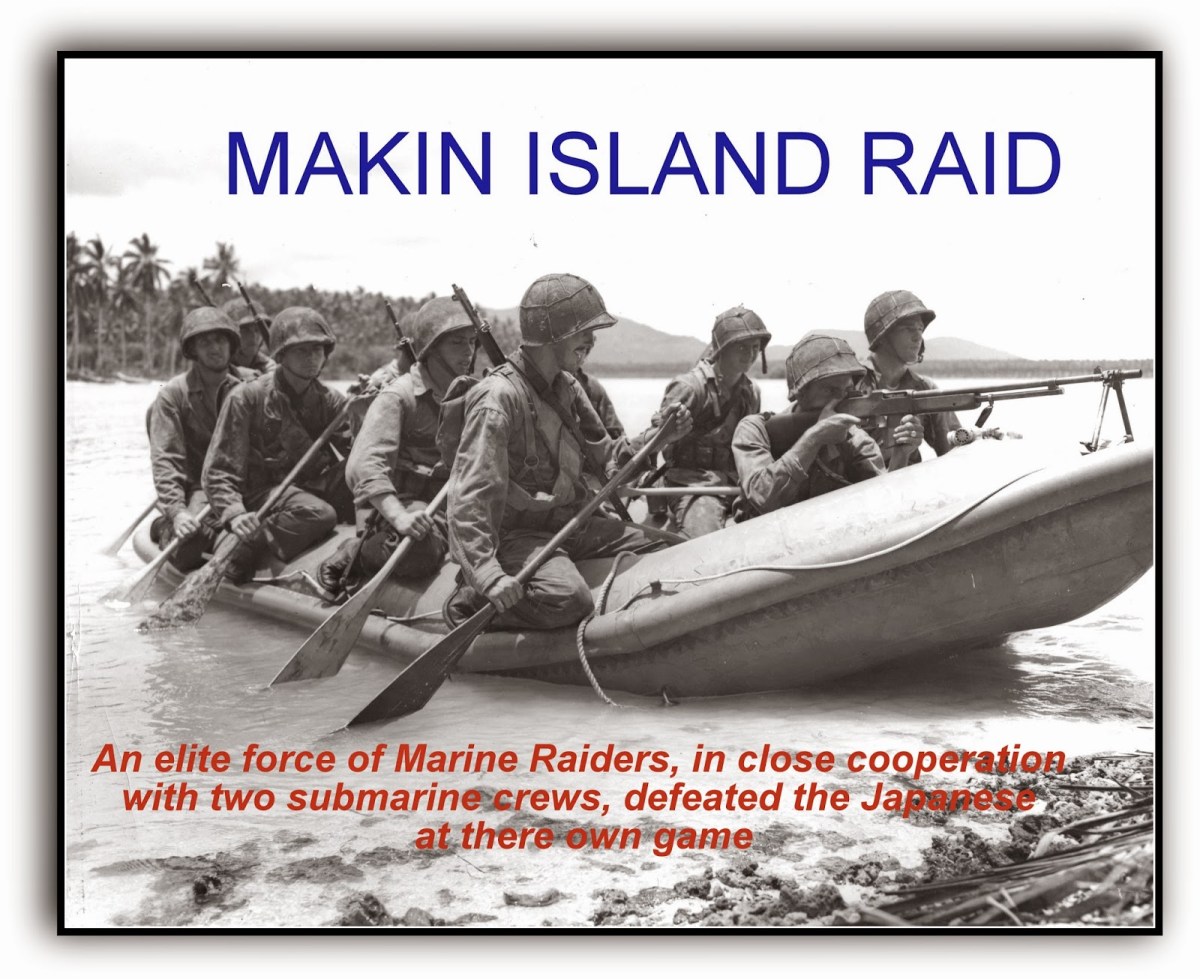
A few minutes past 00:00 (midnight) on August 17, 1942, 211 United States Marine Corps raiders designated Task Group 7.15 (TG 7.15) disembarked from the submarines Argonaut and Nautilus, and boarded inflatable rubber boats for the landing on Makin Island. The raid was among the first major American offensive ground combat operations of WW2, with the objectives of destroying Japanese installations, taking prisoners to gain intelligence on the Gilbert Islands region, and to divert Japanese reinforcement from allied landings at Guadalcanal and Tulagi.

Left), Makin Island as seen by Nautilus and, Right), Marine raiders about to embark

High surf and the failure of several outboard engines confused the night landing.  Lt. Colonel Evans Carlson in charge of the raid, decided to land all his men on one beach instead of two as originally planned, but not everyone got the word. At 5:15, a 12-man squad led by Lt. Oscar Peatross found itself isolated and alone but, undeterred by the lack of support, began to move inland in search of the enemy. Meanwhile, the balance of TG 7.15 advanced inland from the landing, encountering strong resistance from Japanese snipers and machine guns.

Two Bansai charges turned out to be a tactical mistake for Japanese forces. Meanwhile, Peatross and his small force of 12 found themselves behind the Japanese machine gun team engaging their fellow Marines.  Peatross’ unit killed eight enemy soldiers along with garrison commander Sgt. Major Kanemitsu, knocked out a machine gun and destroyed several enemy radios, while suffering three dead and two wounded of their own.

Unable to contact Carlson, what remained of Peatross’ small band withdrew to the submarines, as originally planned.  That was about the last thing that went according to plan.

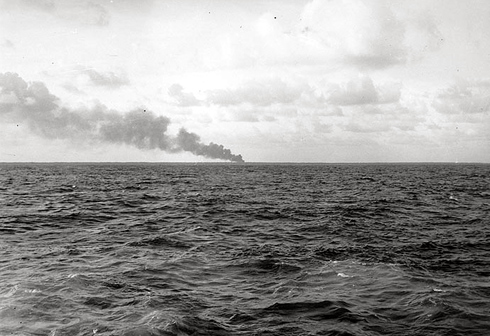
Makin Island Burning
View of Makin Island from USS Nautilus, waiting to withdraw Marine Corps raiding force

At 13:30, twelve Japanese aircraft arrived over Makin, including two “flying boats”, carrying reinforcements for the Japanese garrison. Ten aircraft bombed and strafed as the flying boats attempted to land, but both were destroyed in a hail of machine gun and anti-tank fire.

The raiders began to withdraw at 19:30, but surf conditions were far stronger than expected. Ninety-three men managed to struggle back to the waiting submarines, but eleven out of eighteen boats were forced to turn back. Despite hours of heroic effort, exhausted survivors struggled back to the beach, most now without their weapons or equipment.

Wet, dispirited and unarmed, seventy-two exhausted men were now left alone on the island, including only 20 fully-armed Marines originally left behind, to cover the withdrawal.

A Japanese messenger was dispatched to the enemy commander with offer to surrender, but this man was shot by other Marines, unaware of his purpose.  A rescue boat was dispatched on the morning of the 18th to stretch a rescue line out to the island. The craft was attacked and destroyed by enemy aircraft.  Both subs had to crash dive for the bottom where each was forced to wait out the day. Meanwhile, exhausted survivors fashioned a raft from three remaining rubber boats and a few native canoes, and battled the four miles out of Makin Lagoon, back to the waiting subs. The last survivor was withdrawn at fifty-two minutes before midnight, on August 18.

Many survivors got out with little but their underclothes, and a few souvenirs

The raid annihilated the Japanese garrison on Makin Island, but failed in its other major objectives.  In the end, Marines had asked the island people to bury their dead.  There had been no time.  Casualties at the time were recorded as eighteen killed and 12 missing in action.

The war in the Pacific continued for another three years, but the Butaritari people never forgot the barbarity of the Japanese occupier, nor the Marines who had given their lives in the attempt to throw them out.

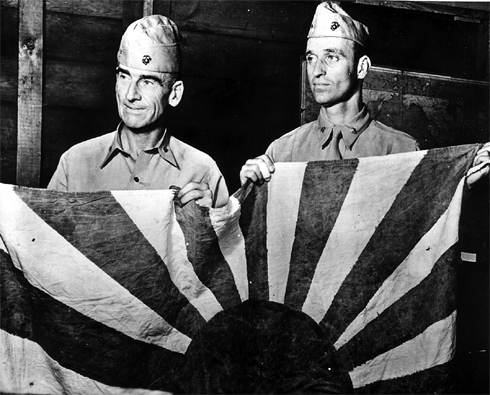
Captured Flag
Lieutenant Colonel Evans Carlson holds a souvenir with his second-in-command from the Makin Island raid, James Roosevelt.  The President’s son. 

Neither it turns out, had one Butaritari elder who, as a teenager, had helped give nineteen dead Marines a warrior’s last due.  In December 1999, representatives of the Marine Corps once again came to Butaritari island, not with weapons this time, but with caskets.

The man spoke no English, save for a single song he had memorized during those two days back in 1942, taught to him by those United States Marines:   “From the halls of Montezuma, to the shores of Tripoli…”

If you enjoyed this “Today in History”, please feel free to re-blog, “like” & share on social media, so that others may find and enjoy it as well. Please click the “follow” button on the right, to receive email updates on new articles.  Thank you for your interest, in the history we all share.

August 15, 1942 Baby Vet

During the WW2 era, it wasn’t unusual for boys to lie about their age in order to enlist.

Calvin Leon Graham was a child of the Great Depression, a poor East Texas farm kid born April 3, 1930, the youngest of seven.

By the time  Japanese military planners were outlining the surprise attack on the American anchorage at Pearl Harbor, the boy’s mother had become widowed and remarried. The man was by all accounts mean and abusive of his step-children. By sixth grade, Calvin had moved out with an older brother, living in a cheap rooming house and supporting himself selling newspapers and delivering telegrams on weekends and after school.

The boys’ mother continued to visit, sometimes only to sign their report cards, at the end of a semester.

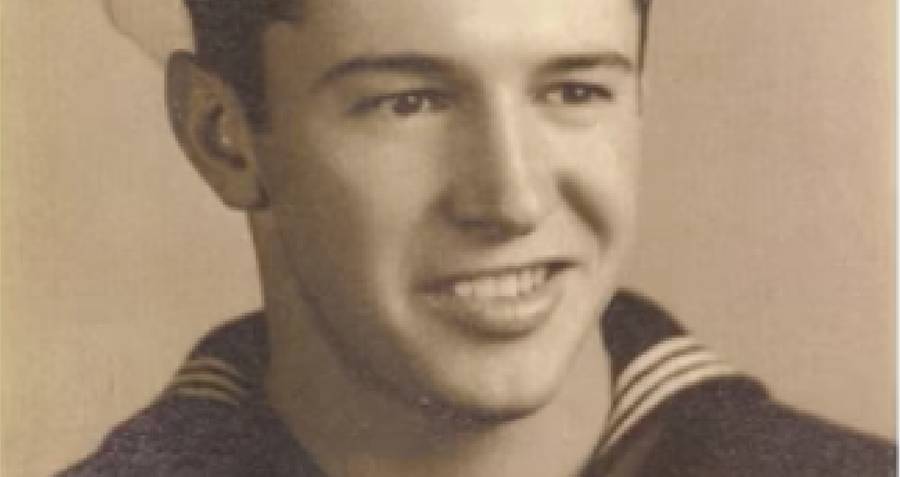
CalvinLGrahamBeing around newspapers allowed the boy to keep up on events overseas, “I didn’t like Hitler to start with“, he once told a reporter. By age eleven, some of Graham’s cousins had been killed in the war, and the boy wanted to fight.

He began to shave, believing that his facial hair would come in faster and thicker that way (it didn’t), and practiced “talking deep”.

In those days, you could join up at 16 with your parents’ consent” he later said, “but they preferred 17“. Graham forged his mother’s signature and stole a notary stamp, telling his mother he was going to see some relatives for a while.

On this day in 1942, Calvin Leon Graham showed up at a Houston recruiting office, dressed in his older brother’s clothes. All five-foot-two inches of him, and 125 pounds. He was twelve years old.

Graham was less concerned with the recruiting officer spotting that forged signature, than he was with the dentist. With good reason, this was a man with a finely tuned BS detector. “When the dentist kept saying I was 12, I said I was 17“. At last, the boy played his trump card, informing the dentist that the last two boys were fourteen and fifteen, and that the dentist had already let them through. “Finally,” Graham recalled, “he said he didn’t have time to mess with me and he let me go“.

During the WW2 era, it wasn’t unusual for boys to lie about their age in order to enlist. Ray Jackson joined the United States Marine Corps at 16, and founded a group for underage military veterans in 1991, “to assure all underage veterans that there will be no retribution from the government because of their fraudulent enlistment“. Smithsonian.com reports the organization lists over 1,200 active members.  Twenty-six of them, are women.

The boy was sent to boot camp in San Diego and on to Pearl Harbor six weeks later, and assigned to the newly christened battleship USS South Dakota.

When South Dakota steamed out of Philadelphia and cleared the Panama Canal, “No ship more eager to fight ever entered the Pacific.” Under the command of Captain Thomas Leigh Gatch, the battleship was brimming with “green boys” –  cocky, inexperienced new recruits, full of fight and eager for payback against the Japanese empire.

During the October battle for the Santa Cruz islands, South Dakota was credited with downing 26 Japanese aircraft, while taking a 500-pound bomb to the #1 gun turret.

980x (1)
The USS South Dakota engages a Japanese torpedo bomber during the Battle of Santa Cruz October 26, 1942. Photo: US Navy

Standing on the bridge, Captain Gatch watched as that 500-pounder came in, striking the main gun turret.  The impact threw the skipper off his feet and severed his jugular vein, and permanently injuring ligaments in the man’s arms. Quick-thinking quartermasters saved the unconscious captain’s life, and several later asked him, why he hadn’t ducked. “I consider it beneath the dignity of a captain of an American battleship“, he said, “to flop for a Japanese bomb“.

Before the action was over, the South Dakota’s guns had fired 890 rounds of 5-inch, 4,000 rounds of 40mm, 3,000 rounds of 1.1-inch and 52,000 rounds of 20mm ammunition. One of those gunners, was twelve-year-old Calvin Graham.

Over the November 14 night battle for Guadalcanal, USS South Dakota came under attack from three Japanese warships, receiving no fewer than forty-seven hits. With her radio communications out and radar demolished, the battleship lost track of the complicated tactical situation. Calvin Graham was manning his 40mm gun when shrapnel tore through his mouth and jaw, tearing out his front teeth. Another hit burned the boy severely and threw him off his feet, and down three stories of superstructure.

Despite his injuries, Graham did what he could to take care of his fellow sailors:

“I took belts off the dead and made tourniquets for the living and gave them cigarettes and encouraged them all night. It was a long night. It aged me… I didn’t do any complaining because half the ship was dead”.

USS South Dakota was so beat up during the confused night action, that the Japanese believed her to have been sunk.  Eventually, she would limp back to new York for repairs and, not wanting the enemy to know too much, she was stripped of her insignia.

USS South Dakota would complete her WW2 service as “Battleship X”, but that must be a story for another day.

800px-_Battleship_X__-_NARA_-_513922

Graham received a Bronze Star and a Purple Heart for his actions, but such distinctions were short-lived. His mother learned what the boy had been up to and informed the Navy of his real age. Graham was thrown in the brig for lying about his age and held for nearly three months, released only when his sister threatened to go to the media. He was stripped of his medals and dishonorably discharged from the military. At thirteen, Calvin Graham was a “Baby Vet”, no longer fitting in at school and rejected by the nation he had served.

If only our politicians, could expect such stern justice.

Graham soon chose the life of an adult, marrying and fathering a child at the age of fourteen, while working as a welder.  He was divorced by seventeen and enlisted in the Marine Corps. A fall from a pier broke his back three years later, ended his military career for good and leaving him selling magazine subscriptions for a living.

517537543_c_o-300x267For the rest of his life, Calvin Graham fought for a clean service record, and for restoration of medical benefits. President Jimmy Carter personally approved an honorable discharge in 1978, and all Graham’s medals were reinstated, save for his Purple Heart. He was awarded $337 in back pay but denied medical benefits, save for the disability status conferred by the loss of one of his teeth, back in WW2.

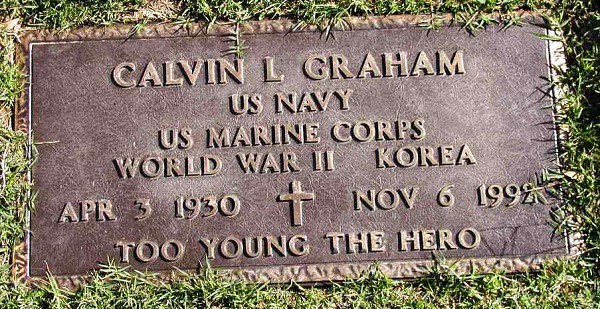
Graham came to public notice in 1988 with the made-for-TV movie Too Young the Hero starring Rick Schroder, prompting government review of his case.  Graham earned $50,000 for rights to his story, but half went to two agents and another 20% to the writer of a book, which was never published.  Graham and his wife received only $15,000, before taxes.

Calvin Graham, Medals

Calvin Leon Graham, Military Awards
1st Row: Bronze Star Medal with Combat “V”
2nd Row: Purple Heart Medal, Navy Unit Commendation with service star, American Campaign Medal
3rd Row: Asiatic-Pacific Campaign Medal with two service stars, World War II Victory Medal, National Defense Service Medal

President Ronald Reagan signed legislation granting Graham full disability benefits and increasing back pay to $4,917, and allowing $18,000 for medical expenses incurred during his military service. Lamentably, many old medical bills were permanently lost, and some of his doctors, had died. Graham received only $2,100 reimbursement for past medical expenses.

Calvin Leon Graham died at his home in Fort Worth Texas in 1992, a victim of heart failure.  He was buried at Laurel Land Memorial Park in Fort Worth, Texas.  Graham’s Purple Heart was reinstated two years later and awarded to his widow by Secretary of the Navy John Dalton. Fifty-two years after the events which led to its award.

Calvin-Leon-Graham-grave

If you enjoyed this “Today in History”, please feel free to re-blog, “like” & share on social media, so that others may find and enjoy it as well. Please click the “follow” button on the right, to receive email updates on new articles.  Thank you for your interest, in the history we all share.

August 5, 1942 Old Doctor

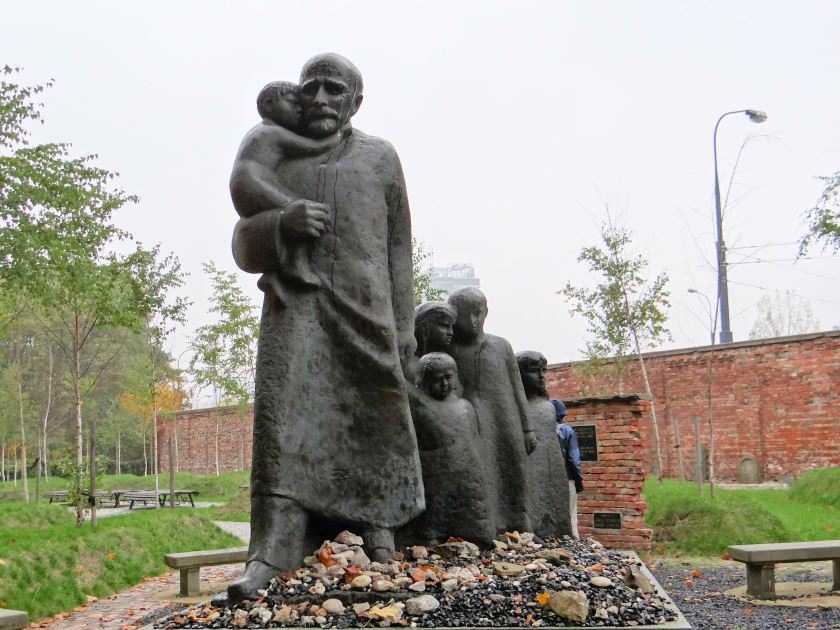
The children’s author was offered sanctuary on the “Aryan side” but the man refused, saying that he would stay with his children. Janusz Korczak and his orphaned children were last seen boarding the train to the Treblinka extermination camp on August 5 or 6.

Janusz Korczak was a children’s author and pediatrician, a teacher and himself a lifelong learner, a student of pedagogy, the art of science of education, and how children learn.

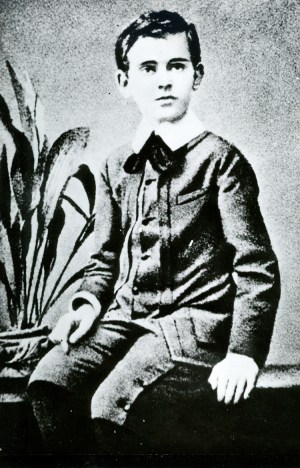
Korczak10lat0001Born Henryk Goldszmit into the Warsaw family of Józef Goldszmit, in 1878 or ’79 (the sources vary), Korczak was the pen name by which he wrote children’s books.

Henryk was an exceptional student, of above-average intelligence. His father fell ill when the boy was only eleven or twelve and was admitted into a mental hospital, where he died, six years later. As the family’s situation worsened, the boy would tutor other students, to help with household finances.

Goldszmit was a Polish Jew, though not particularly religious, who never believed in forcing religion on children.

He wrote his first book in 1896, a satirical tome on child-rearing, called Węzeł gordyjski (The Gordian Knot). He adopted the pen name Janusz Korczak two years later, writing for the Ignacy Jan Paderewski Literary Contest.

220px-Janusz_KorczakKorczak wrote for several Polish language newspapers while studying medicine at the University of Warsaw, becoming a pediatrician in 1904. Always the writer, Korczak received literary recognition in 1905 with his book Child of the Drawing Room (Dziecko salonu), while serving as medical officer during the Russo-Japanese war.

He went to Berlin to study in 1907-’08 and worked at the Orphan’s Society in 1909, where he met Stefania “Stefa” Wilczyńska, an educator who would become his associate and close collaborator.

In the years before the Great War, Korczak ran an orphanage of his own design, hiring Wilczyńska as his assistant. There he formed a kind of quasi-Republic for Jewish orphans, complete with its own small parliament, court, and newspaper. The man was born to be an educator.

1307809-Janusz-Korczak-Quote-I-am-well-versed-in-reading-the-pages-of-war

In early modern European Royalty, 15th – 18th century, a “whipping boy” was the friend and constant companion to the boy prince or King, whose job it was to get his ass kicked, for the prince’s transgressions. The Lord was not the be struck by his social inferior. It was thought that, to watch his buddy get whipped for his misdeeds would have the same instructional effect, as the beating itself.

The extent of the custom is open to debate and it may be a myth altogether, but one thing is certain.  Poland has been described as the “whipping boy of Europe”, for good reason.

JK2The Polish nation, the sixth largest in all Europe, was sectioned and partitioned for over a century, by Austrian, Prussian, and Russian imperial powers. Korczak volunteered for military service in 1914, serving as military doctor during WW1 and the series of Polish border wars between 1919-’21.
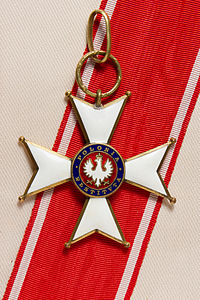
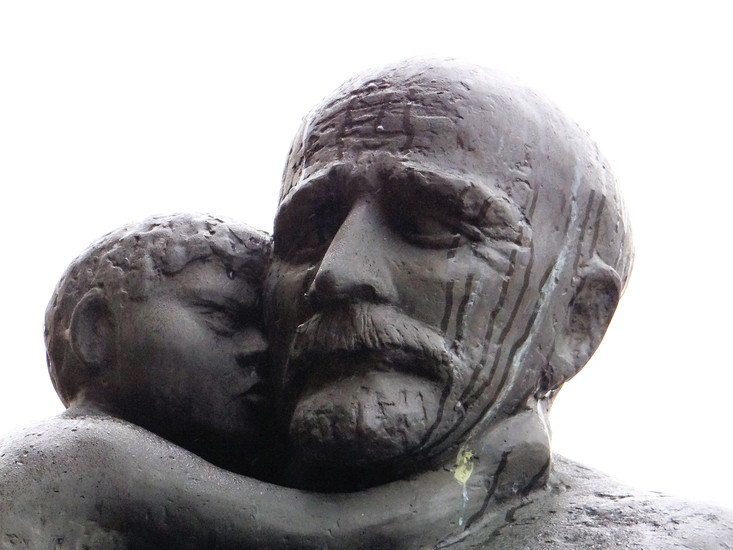
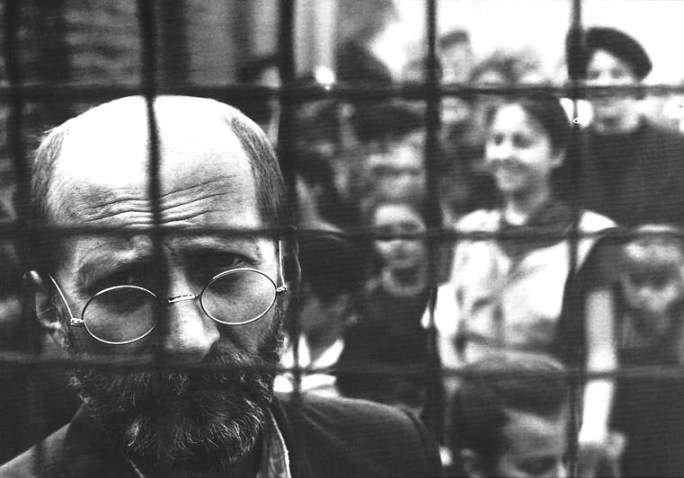
The “Second Polish Republic” emerging from all this in 1922 was roughly two-thirds Polish, the rest a kaleidoscope of ethnic, linguistic and religious minorities.  Relations were anything but harmonious between ethnic Russians, Germans, Lipka Tatars and others, and most especially Poland’s Jewish minority, the largest in pre-WW2 Europe.

Polonia_Restituta_-_Commander's_Cross_pre-1939_w_rib
Silver Cross of the Polonia Restituta

Janusz Korczak returned to his life’s work in 1921 of providing for the children of this Jewish community, all the while writing no fewer than thirteen children’s books, along with another seven on pedagogy and other subjects.

In the inter-war years, Korczak put together a children’s newspaper, the Mały Przegląd (Little Review), as a weekly supplement to the daily Polish-Jewish newspaper, Nasz Przegląd (Our Review).

Korczak had his own radio program promoting the rights of children, to whom he was known as Pan Doktor (“Mr. Doctor”) or Stary Doktor (“Old Doctor”).

The Polish government awarded “Old Doctor” the Polonia Restituta in 1933, a state order bestowed on individuals for outstanding achievements in the fields of education, science and other civic accomplishments.

Yearly visits to Mandatory Palestine, the geopolitical entity partitioned from the Ottoman Empire in 1923 and future Jewish state of Israel, led to anti-Semitic crosscurrents in the Polish press, and gradual estrangement from non-Jewish orphanages.

165210

The second Republic’s brief period of independence came to an end in September 1939, with the Nazi invasion of Poland.  Korczak volunteered once again but was refused, due to his age.

Tales of Polish courage in the face of the Wehrmacht are magnificent bordering on reckless, replete with images of horse cavalry riding out to meet German tanks. Little Poland never had a chance, particularly when the Soviet Union piled on, two weeks later.

As an independent nation-state the Sovereign Republic of Poland was dead, though Polish air crews went on to make the largest contribution to the Battle of Britain, among the United Kingdom’s thirteen non-British defenders.  Polish Resistance made significant contributions to the Allied war effort, throughout WW2.

janusz-korczak

Warsaw became the largest Jewish ghetto in Nazi-occupied Europe within the following year.  The Jews of Poland were herded into the city, barely existing on meager rations while awaiting the death squads of the SS.  Old Doctor and his orphans were forced into the Ghetto, in 1939.

There were nearly 200 of them on this day in 1942, when soldiers of the Gross-Aktion (Great Action) Warsaw, came for their “Resettlement to the East”.

ŚmierćMiasta
The Pianist, by Władysław Szpilman

The extermination camp at Treblinka, awaits.

Polish-Jewish composer and musician Władysław Szpilman, one of precious few survivors of the Jewish ghetto, describes the scene in his 1946 memoir, The Pianist:

“He told the orphans they were going out into the country, so they ought to be cheerful. At last they would be able to exchange the horrible suffocating city walls for meadows of flowers, streams where they could bathe, woods full of berries and mushrooms. He told them to wear their best clothes, and so they came out into the yard, two by two, nicely dressed and in a happy mood. The little column was led by an SS man…”

Eyewitness Joshua Perle states that:  Janusz Korczak was marching, his head bent forward, holding the hand of a child… A few nurses were followed by two hundred children, dressed in clean and meticulously cared for clothes, as they were being carried to the altar.

251012_Janusz_Korczak_monument_at_Jewish_Cemetery_in_Warsaw_-_03

At the Umschlagplatz, the rail-side assembly area on the way to Treblinka, an SS officer recognized Korczak, and called him aside.  The children’s author was offered sanctuary on the “Aryan side” but the man refused, saying that he would stay with his children.  Stary Doktor was offered deportation to the Theresienstadt concentration camp instead, but again he refused.

The man who refused freedom to die with his orphaned children was last seen boarding the train to Treblinka on August 5 or 6, where all 200 were murdered, the following day.

800px-פולין_001
Janusz Korczak memorial stone, Treblinka

“Dr. Janusz Korczak’s children’s home is empty now. A few days ago we all stood at the window and watched the Germans surround the houses. Rows of children, holding each other by their little hands, began to walk out of the doorway. There were tiny tots of two or three years among them, while the oldest ones were perhaps thirteen. Each child carried the little bundle in his hand”. — Mary Berg, The Diary