

The game was November 27, 1937. Late in the 4th quarter, Notre Dame was tied 6-6 with Southern California. The “Fighting Irish” needed a miracle. Notre Dame fullback #58 Mario “Motts” Tonelli took the hand-off deep in Notre Dame territory and ran the ball 70 yards back before being tackled. Seconds later, the 5’11”, 195lb Tonelli, scored the game winning touchdown.
In some ways, Mario Tonelli himself was the miracle. Years earlier at the age of 6, he’d been burned over 80% of his body, when a trash compactor toppled over on him. Mario’s immigrant father Celi, a laborer from a northern Italian marble quarry, refused to believe the doctor who said his son would never walk again. Fixing four wheels to a door, the elder Tonelli taught his first American-born son to move about with his arms. By 1935, Mario Tonelli was a football, basketball and track star at Chicago’s DePaul Academy.
After a year coaching at Providence College in 1939 and a year playing professional football for the Chicago Cardinals in 1940, Tonelli joined the Army early in 1941, assigned to the 200th Coast Artillery Regiment in Manila.
Tonelli hoped to fulfill his one years’ commitment and return to the Cardinals for the ’42 season, but it wasn’t meant to be. The radio crackled to life at 2:30am local time on December 7. “Air raid on Pearl Harbor. This is no drill!”
Military forces of Imperial Japan appeared unstoppable in the early months of WWII, attacking first Thailand, then the British possessions of Malaya, Singapore, and Hong Kong, as well as US military bases in Hawaii, Wake Island, Guam and the Philippines.
The United States was grotesquely unprepared to fight a World War in 1942, and dedicated itself to beating Adolf Hitler first. General Douglas MacArthur abandoned the “Alamo of the Pacific” on March 11 saying “I shall return”, leaving 90,000 American and Filipino troops without food, supplies or support with which to fight off the Japanese offensive.
On April 9, 75,000 surrendered the Bataan peninsula, beginning a 65 mile, five-day slog into captivity through the heat of the Philippine jungle. Japanese guards were sadistic. They would beat the marchers and bayonet those too weak to walk. Japanese tanks would swerve out of their way to run over anyone who had fallen and was too slow in getting up. Some were burned alive. Already crippled from tropical disease and starving from the long siege of Luzon, thousands perished in what came to be known as the Bataan Death March.
 Exhausted, sunburned and aching with thirst, Tonelli still refused when a Japanese soldier demanded his Notre Dame class ring. As the guard reached for his sword, a nearby prisoner shouted “Give it to him. It’s not worth dying for”.
Minutes later, a Japanese officer appeared, speaking perfect English. “Did one of my men take something from you?” “Yes”, Tonelli replied. “My school ring”. “Here,” said the officer, pressing the ring into his hand. “Hide it somewhere. You may not get it back next time”. Tonelli was speechless. “I was educated in America”, the officer said. “At the University of Southern California. I know a little about the famous Notre Dame football team. In fact, I watched you beat USC in 1937. I know how much this ring means to you, so I wanted to get it back to you”.
Close to 700 Americans and over 10,000 Filipinos died on the Bataan death march. For the survivors, the ordeal was only beginning. For 2½ years Tonelli suffered starvation, disease and endless beatings in the squalid prison camps known as O’Donnell, Cabanatuan, and Davao. Tonelli kept his ring throughout, buried in a soap dish. He’d take it out from time to time to remind himself: life used to be better than this. It gave him something to hope for.
 The hellish 60-day journey aboard the filthy, cramped merchant vessel began in late 1944, destined for slave labor camps in mainland Japan. Tonelli was barely 100 pounds on arrival, his body ravaged by malaria and intestinal parasites. He was barely half the man who once played fullback at Notre Dame Stadium, Soldier Field and Comiskey Park.
Arriving at Nagoya #7 prison camp, Tonelli was handed a piece of paper. Scribbled on it was a 58. He was prisoner number 58, the same number he once wore on his football Jersey. “From that point on,” he said, “I knew I was going to make it”.
An American military tribunal conducted after the war held Lieutenant General Homma Masaharu, commander of the Japanese invasion forces in the Philippines, guilty of war crimes. He was executed by firing squad on April 3, 1946.
Mario Tonelli always hoped to meet the officer who’d returned his ring, but it wasn’t meant to be. He probably didn’t survive the war. Tonelli still had that ring when he passed away in 2003.
Two weeks ago, nearly 10,000 gathered in New Mexico, to commemorate the 75th anniversary of the Bataan death march. 7,200 retired and active duty military personnel and civilians gathered in the 28th annual such event, to run the 26.2 mile “Death March” through the hilly desert terrain of the White Sands Missile Range, near Las Cruces.
Ed Broadnax of El Paso, Texas, runs the course in full uniform, boots and 45-pound backpack. “As a veteran who served 26 years in the US Army and deployed three times to combat and experienced the horrors of war, I feel pain for the men and women who suffered intensely under the deadly Japanese Imperial Forces, as they were marched through the Philippine jungle. This is what drives me to run in their honor.”
Hundreds of others walked a 14.2 mile course, including Bataan Death March survivor Ben Skardon, who turns 100 in July. Mr. Skardon walked 8½. “The word hero doesn’t apply to me, at all”, Skardon said. “As I said in my talk, ‘no greater love hath any man, than to lay down his life for his friends’. That’s in the bible”.
Ben Skardon was one of 7 survivors turning out for the March 31 event. Seven of the last survivors of the Bataan death march, fewer than fifty of whom are left alive. A year ago at last year’s event, there were 26 more.


 The fifteenth child of Josiah and Abiah Franklin was born in a little house on Milk Street, across from the Old South Church, in Boston.
 James Franklin and his literary friends loved the letters, and published every one. All of Boston was charmed with Silence Dogood’s subtle mockery of the city’s Old School Puritan elite. Proposals of marriage came into the print shop, when the widow Dogood coyly suggested that she would welcome suitors.
 All of Boston was amused by the hoax, but not James. He was furious with his little brother, who soon broke the terms of his apprenticeship and fled to Pennsylvania.
 Franklin’s diplomacy to the Court of Versailles was every bit as important to the success of the Revolution, as the Generalship of the Father of the Republic, George Washington. Signatory to both the Declaration of Independence and the Constitution, it is arguably Ben Franklin who broke the impasse of the Convention of 1787, paving the way for ratification of the United States Constitution.

 April Fools. The ancient Roman festival of Hilaria, held on March 25, may be a precursor. The Medieval Feast of Fools, held December 28, is still a day on which pranks are played in Spanish-speaking countries.
 Animals were kept at the Tower of London since the 13th century, when Emperor Frederic II sent three leopards to King Henry III. In later years, elephants, lions, even a polar bear were added to the collection, the polar bear trained to catch fish in the Thames.
 In 1957, (you can guess the date), the BBC reported the delightful news that mild winter weather had virtually eradicated the dread spaghetti weevil of Switzerland, and that Swiss farmers were now happily anticipating a bumper crop of spaghetti. Footage showed smiling Swiss peasants, pulling strands of spaghetti down from trees. Apparently, an embarrassingly large number of viewers were fooled. Many called BBC offices, asking how to grow their own spaghetti tree. “Place a piece of spaghetti in a tin of tomato sauce”, callers were told, “and hope for the best.”
 eyewear at a revolutionary price, while leading the way for socially conscious businesses”. On April 1, 2012, the company released its new line of eyeglasses for dogs, appropriately called “Warby Barker”. For only $95, your hipster pooch could be sporting the latest styles in canine eyeware, in irresistible dog treat shades like “Gravy Burst” and “Dusty Bacon.” There was a monocle option too, for those partial to that Prussian Field Marshall look. Anyone falling for the gag, got an “April Fools!” message on their on-line shopping cart.

 Melvin attended a year at Brooklyn College before being drafted into the Army, in WWII. After attending Army Specialized Training at VMI, Corporal Kaminsky joined the 1104th Combat Engineers Battalion, 78th Infantry Division in the European theater. There, he served through the end of the war. Most of his work was in finding and defusing explosives, though on five occasions his unit had to drop their tools and fight as Infantry.
 German soldiers singing a beer hall song, from the other side. Kaminsky grabbed a bullhorn and serenaded the Germans back, singing them an old tune that Al Jolson used to perform in black face, “Toot Toot Tootsie, Goodbye”. Polite applause could be heard from across the river, afterward. I can’t imagine many Allied soldiers ever tried to serenade their Nazi adversaries during World War II. The ones who actually pulled it off must number, precisely, one.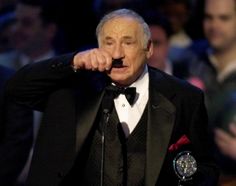
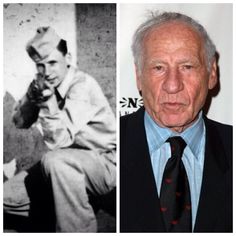
 Marvin Hamlisch, Jonathan Tunick, Mike Nichols, Whoopi Goldberg, Scott Rudin, and Robert Lopez. As of this date, Brooks only needs another Oscar to be the first “Double EGOT” in history.

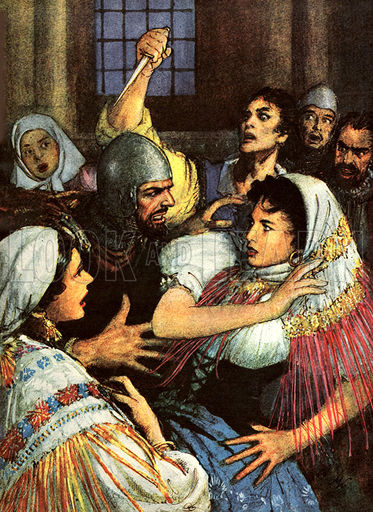 It was Easter Monday, March 30, 1282. The Church of the Holy Spirit outside Palermo was just letting out after evening vespers (prayers), when a French soldier thought he’d “inspect” a Sicilian woman for weapons.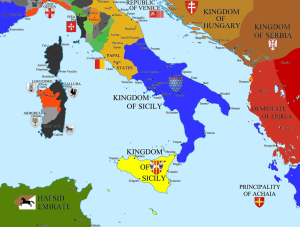


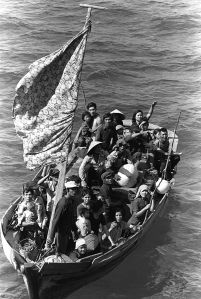
 from Vietnam, the Geneva Convention partitioning the country into the communist “Democratic Republic of Vietnam” in the north, and the State of Vietnam in the south, led by Emperor Bao Dai and Prime Minister Ngo Dinh Diem.
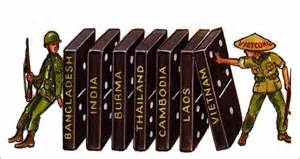 US policy makers feared a “domino” effect, and with good cause. The 15 core nations of the Soviet bloc were soon followed by Eastern Europe, as Poland, Bulgaria, Romania, Hungary and Czechoslovakia fell into the Soviet sphere of influence. Germany was partitioned into Communist and free enterprise spheres after WWII, followed by China, North Korea and so on across Southeast Asia.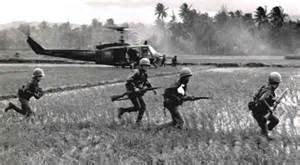
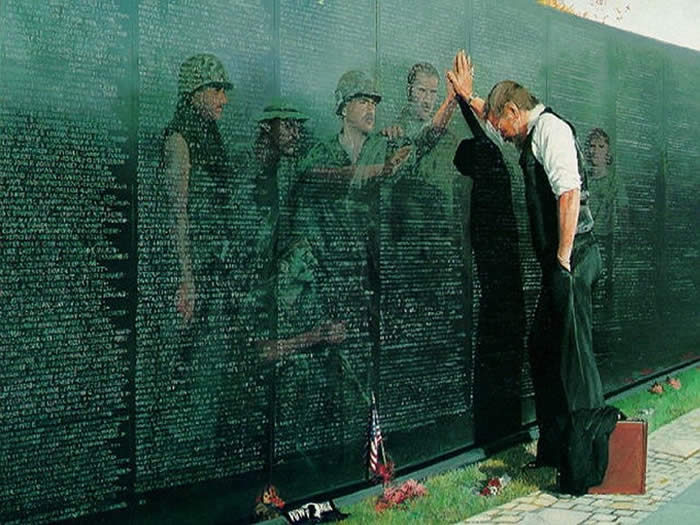
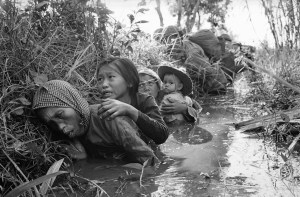 The war in Vietnam pitted as many as 1.8 million allied forces from South Vietnam, the United States, Thailand, Australia, the Philippines, Spain, South Korea and New Zealand, against about a half million from North Vietnam, China, the Soviet Union and North Korea. Begun on November 1, 1955, the conflict lasted 19 years, 5 months and a day. On March 29, 1973, two months after signing the Paris Peace accords, the last US combat troops left South Vietnam as Hanoi freed the remaining POWs held in North Vietnam.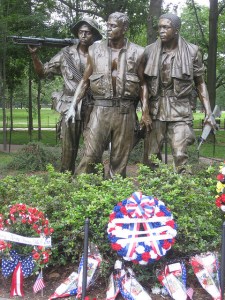





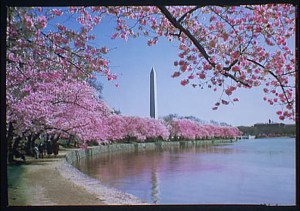 1934 city commissioners sponsored a three-day celebration of the late March blossoming cherry trees, which grew into the annual Cherry Blossom Festival.


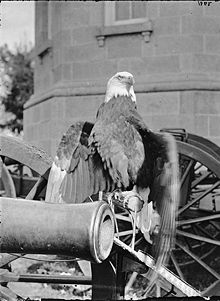 Abe became an inspirational symbol to the troops, like the battle flag carried with each regiment. Colonel Rufus Dawes of the Iron Brigade recalled, “Our eagle usually accompanied us on the bloody field, and I heard [Confederate] prisoners say they would have given more to capture the eagle of the Eighth Wisconsin, than to take a whole brigade of men.”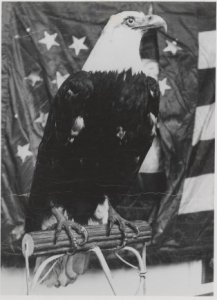


 After WWII, elements of the 101st Airborne were mobilized to Little Rock by President Eisenhower to protect the civil rights of the “Little Rock Nine”, a group of black students enrolled in Little Rock Central High School in September 1957, as the result of the US Supreme Court’s landmark ruling in the historic Brown v. Board of Education case.


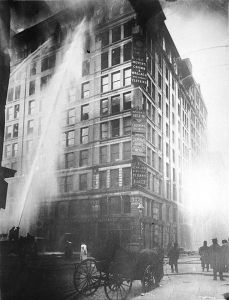
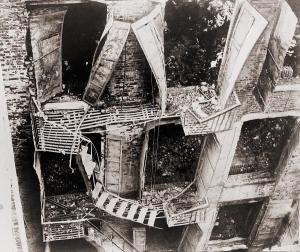
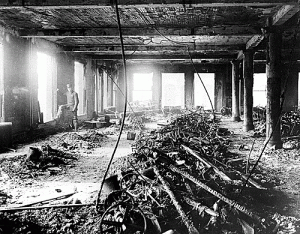
 At the turn of the century there were over 450 textile factories in Manhattan alone, employing something like 40,000 garment workers. Many of them were young, immigrant women of Jewish and Italian ethnicity, working nine hours a day on weekdays and seven on Saturdays. Wages were typically low: $7 to $12 per week, equivalent to $3.20 to $5.50 per hour, in 2016.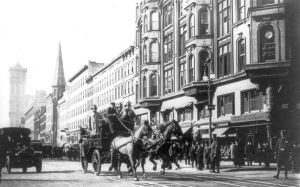


 Historical Easter Eggs - Today in History
You must be logged in to post a comment.