

When I was a boy, I once asked my mother what polio was. At the time, I didn’t understand the expression on her face. What I saw that day, was her realization that her children would never have to fear a plague that had terrified her generation and those before it.
Imagine the impact of the AIDS virus. Now, instead of the well understood vectors by which that virus is transmitted, imagine all the terrifying finality of that disease combined with the randomness of the common cold.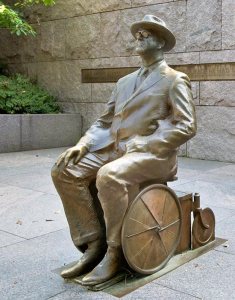
The first major polio epidemic in the United States appeared in Vermont, when 132 cases were diagnosed in 1894. A larger outbreak killed 6,000 New York City residents in 1916, with over 27,000 cases diagnosed.
Poliomyelitis tended to come out in the summer, disproportionately effecting children and young adults. 58,000 cases were reported in the 1952 epidemic alone, 3,145 of them died and another 21,269 left with mild to disabling paralysis.
A President of the United States suffered from polio, as a younger man. The press did their best to treat the matter with delicacy, but the disease left him able to stand only with great pain and difficulty, dependent on a wheelchair for the rest of his life.
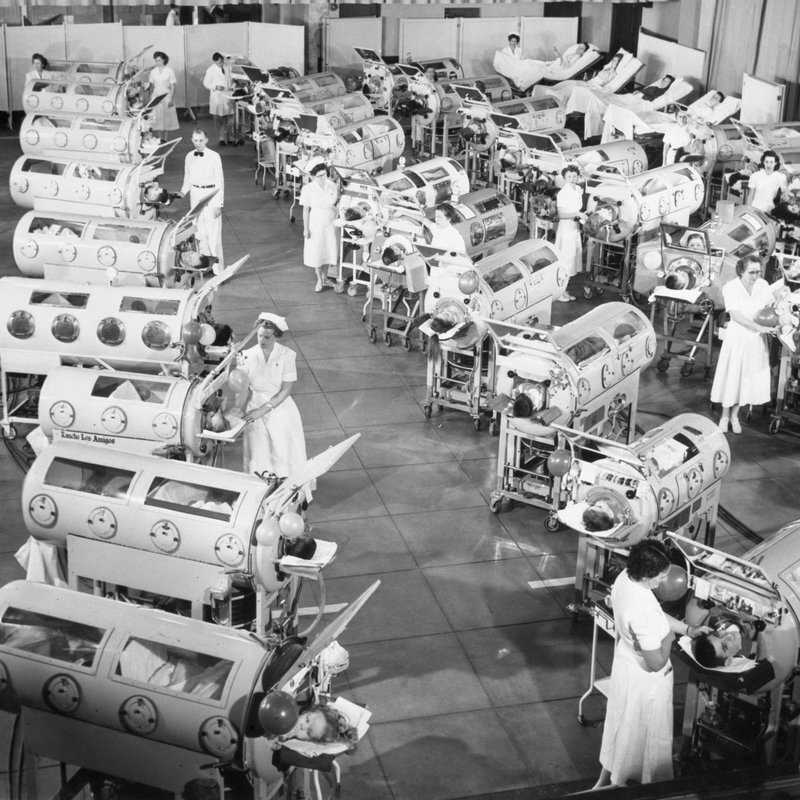
Others were doomed to 800lb monstrosities called “iron lungs”, seven-foot long, “negative pressure ventilators” which reproduced the movements of breathing. The Smithsonian Institution estimated that 1,200 Americans were dependent on iron lungs in 1959. Lattimore, North Carolina resident Martha Mason contracted polio at age 11, and spent 61 years in an iron lung before her passing in 2009.
Today, modern “biphasic” ventilators (alternating negative/positive pressure) are worn like the cuirass of the conquistadors, all but replacing the iron lung. As of 2014, there were only ten individuals left, living their lives in one of the things.
Early efforts to develop a vaccine, proved fruitless. One New York University study produced no immunity whatever, at the cost of nine dead children. Other vaccine trials used “volunteers” at state mental institutions.
Jonas Edward Salk was born on October 28, 1914, the son of Jewish immigrants of Irish descent. Daniel and Dora (Press) Salk were not themselves formally educated, but the 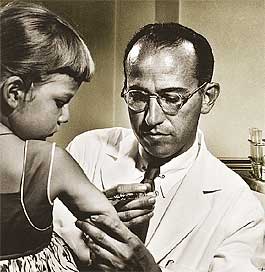 couple kept their kids focused on school.
Salk attended City College of New York and New York University School of Medicine, taking the road less traveled on graduation from Med School. Instead of becoming a practicing physician, Salk went into medical research.
Salk accepted an appointment to the University of Pittsburgh School of Medicine in 1947, the following year beginning a project funded by the National Foundation for Infantile Paralysis, which later became the March of Dimes. The grant was funded to determine the number of polio types, but Salk took it several steps further. He saw it as an opportunity to develop a vaccine.
It’s not widely known that the American Revolution took place during a smallpox pandemic. George Washington himself was a proponent of vaccinating, which, as with rabies, was always done with live virus.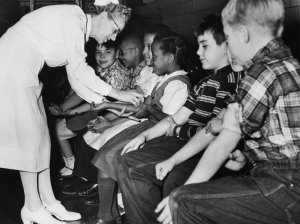
Live virus vaccination carries obvious risks, and Dr. Salk was interested in the way the body developed antibodies to killed virus. He and his team completed lab trials in 1954, when they injected themselves and a number of volunteers with inert virus. Having had no ill effects, they began field trials a short time later.
Field trials of Dr. Salk’s vaccine were some of the most extensive in history. 20,000 physicians and public health officials were involved in the trial, along with 64,000 school personnel, 220,000 volunteers, and over 1,800,000 school children.
News of the vaccine’s success was announced on April 12, 1955, and Jonas Salk was hailed as a miracle worker. David Oshinsky, history professor at New York University and author of Polio: An American Story, tells a story about that day. “The public was horribly and understandably frightened by polio,” he wrote. “There was no prevention and no cure. Everyone was at risk, especially children. There was nothing a parent could  do to protect the family. I grew up in this era. Each summer, polio would come like The Plague. Beaches and pools would close — because of the fear that the poliovirus was waterborne. Children had to stay away from crowds, so they often were banned from movie theaters, bowling alleys, and the like. My mother gave us all a ‘polio test’ each day: Could we touch our toes and put our chins to our chest? Every stomach ache or stiffness caused a panic. Was it polio? I remember the awful photos of children on crutches, in wheelchairs and iron lungs. And coming back to school in September to see the empty desks where the children hadn’t returned.”
Jonas Salk consumed over seven years of his life on his goal. When broadcast journalist Edward R. Murrow asked him “who owns the patent on this vaccine”, Dr. Salk replied: “There is no patent. Could you patent the sun?”
All those years, all that time, work and effort, and even in the end the man took no personal financial interest in the result. A mortal virus afflicted the children of his generation, and he was going to lift heaven and earth, if he had to, to stop it.
In the late 50s, Salk became interested in building his own research institute. He searched for a site for over a year, until he met San Diego Mayor Charles Dail, himself a polio survivor. Dail showed Salk 27 acres on a mesa in La Jolla, just west of the proposed site for the new UC campus then planned for San Diego. In June of 1960, the citizens of San Diego overwhelmingly voted “yes”, to donate the land for Salk’s dream. Construction began with initial funding from the National Foundation/March of Dimes, and completed in 1967.
Jonas Salk died on June 23, 1995, at the age of 80. A memorial at the Institute bearing his name reads: “Hope lies in dreams, in imagination and in the courage of those who dare to make dreams into reality.”
By 1979, the disease was eradicated from the United States. The worldwide effort to wipe out polio began in 1988, with the Global Polio Eradication Initiative. 20 million volunteers from virtually every country in the world have vaccinated over 2.5 billion children, at a cost of $11 billion. Worldwide, the incidence of new polio cases decreased by 99%. Today, the only region where polio remains endemic, are northern Nigeria and the border between Afghanistan and Pakistan.
And so it is that those of us born after 1955 can go on in blissful ignorance, having no idea of the terrors our parents endured before us.


 Jack Swigert was supposed to be the backup pilot for the Command Module, (CM), officially joining the Apollo 13 mission only 48 hours earlier, when prime crew member Ken Mattingly was exposed to German measles. Jim Lovell was the world’s most traveled astronaut, a veteran of two Gemini missions and Apollo 8. By launch day, April 11, 1970, Lovell had racked up 572 space flight hours. For Fred Haise, former backup crew member on Apollo 8 and 11, this would be his first spaceflight.
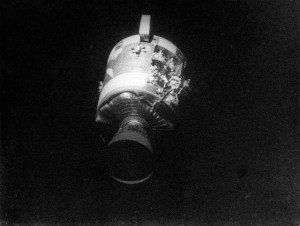
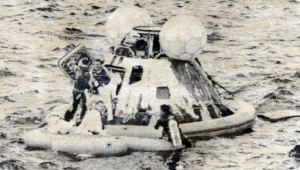
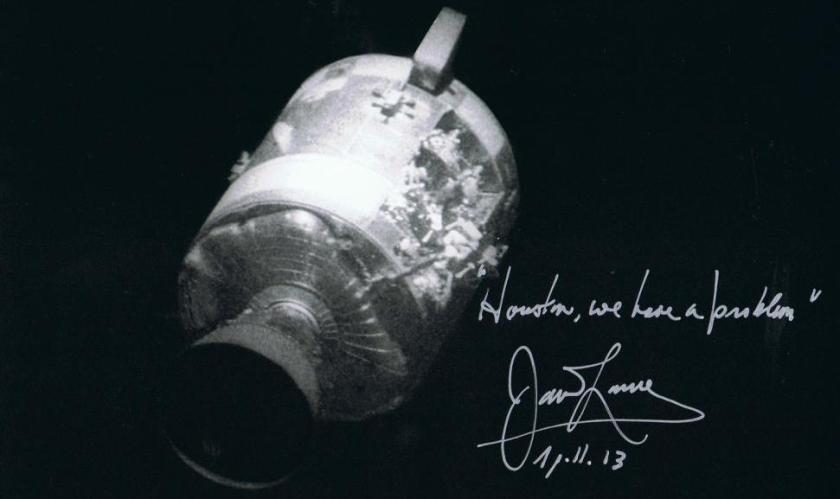
 This situation had been suggested during an earlier training simulation, but had been considered unlikely. As it happened, the accident would have been fatal without access to the Lunar Module.



 The Stuart King James had judges riding into the countryside once a year to hear cases, saving many of his subjects the arduous journey to London. The custom carried “across the pond” and, from the earliest days of the American colonies, judges could be found “riding the circuit”.
 In 1937, President Franklin Delano Roosevelt sought to increase the number of justices to 15. Then as now, the court was sharply divided along ideological lines, consisting of a four member conservative majority called the “four horsemen”, three liberals dubbed the “three musketeers” and two “swing votes”.
 There have been fewer justices in Supreme Court history than you might think. The recent passing of Antonin Scalia made way for only number 113.
 “There are some who believe that the president, having won the election, should have complete authority to appoint his nominee, that once you get beyond intellect and personal character, there should be no further question as to whether the judge should be confirmed. I disagree with this view”. The filibuster was joined by Senators Kennedy, Leahy, Durbin, Salazar, and Baucus.
 Senator Schumer once said, “We have three branches of government. We have a house, we have a senate, we have a president.” He got that wrong, but he was part right. We have three co-equal branches in our government, each having specific responsibilities as laid out in the Constitution.


 losing its National League team to Washington, DC. Only moments before, Padres’ President Buzzie Bavasi had to leave Kroc’s side to investigate concession area water in the clubhouse, when a leak was “promoted” to a flood.
 Buzzie Bavasi did the most to defuse the situation. Taking a cue from Rader’s comments, Bavasi designated the next game in the Houston series “Short Order Cook’s Night”. Any Padres fan who came wearing a chef’s hat, would be admitted into the game for free. Rader, the Astro’s team captain, took the lineup card to home plate wearing an apron with a chef’s hat, slipping the card off a skillet with a spatula and handing it over to the home plate umpire, like a pancake.


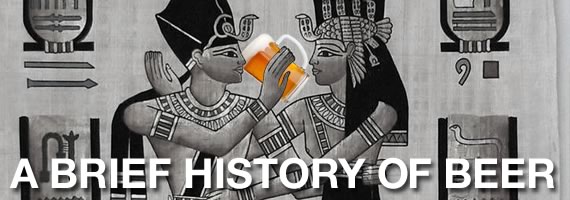


 Portable stills went on sale within a week, and organized smuggling was quick to follow. California grape growers increased acreage by over 700% over the first five years, selling dry blocks of grapes as “bricks of rhine” or “blocks of port”. The mayor of New York City sent instructions on wine making, to his constituents.
 Gaining convictions for breaking a law that everyone hated became increasingly difficult. There were over 7,000 prohibition related arrests in New York alone between 1921 and 1923. Only 27 resulted in convictions.
 “Dry” leaders tried to prohibit consumption of alcohol on military bases in 1941, but military authorities claimed it was good for morale. Brewers were required to allocate 15% of total annual production to be used by the armed forces. So essential were beer manufacturers to the war effort, that teamsters were ordered to end a labor strike against Minneapolis breweries. Near the end of WWII, the army made plans to operate recaptured French breweries, to ensure adequate supplies for the troops.
 18 states continued prohibition at the state level after the national repeal, the last state finally dropping it in 1966. Almost 2/3rds of all states adopted some form of local option, enabling residents of political subdivisions to vote for or against local prohibition. Some counties remain dry to this day. Ironically, Lynchburg County, Tennessee, home to the Jack Daniel distillery, is one such dry county.

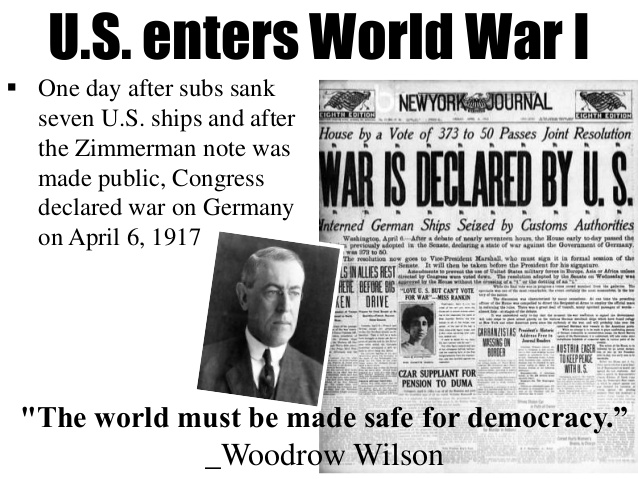
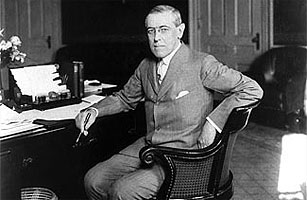 In the early days of WWI, Imperial Germany attempted to comply with standards of maritime warfare, as established by the Hague Conventions of 1899 and 1907.
 The “Zimmermann Telegram” was intercepted and decoded by British intelligence and revealed to the American government on February 24. The contents of the message outraged American public opinion and helped generate support for the United States’ declaration of war.


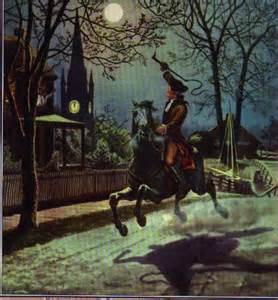 Paul Revere’s famous “midnight ride” began on the night of April 18, 1775. Revere was one of two riders, soon joined by a third, fanning out from Boston to warn of an oncoming column of “regulars”, come to destroy the stockpile of gunpowder, ammunition, and cannon in Concord.
 Patriot Colonel Joseph Cooke’s small Danbury garrison was caught and quickly overpowered on the 26th, trying to remove food supplies, uniforms, and equipment. Facing little if any opposition, Tryon’s forces went on a bender, burning homes, farms and storehouses. Thousands of barrels of pork, beef, and flour were destroyed, along with 5,000 pairs of shoes, 2,000 bushels of grain, and 1,600 tents.


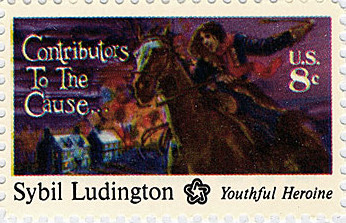

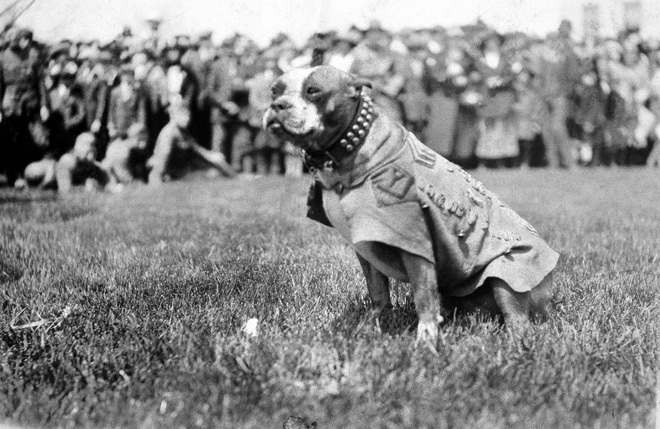
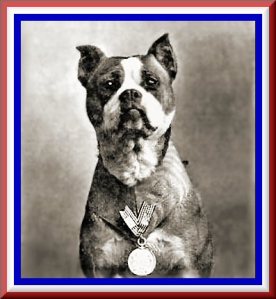 By the last year of WW1, the French, British and Belgians had at least 20,000 dogs on the battlefield, the Germans 30,000. General Headquarters of the American Expeditionary Forces recommended the use of dogs as sentries, messengers and draft animals in the spring of 1918. However, with the exception of a few sled dogs in Alaska, the US was the only country to take part in World War I with virtually no service dogs in its military.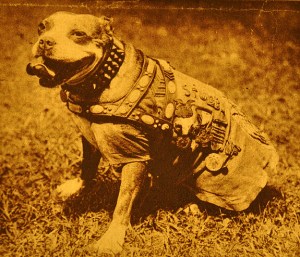
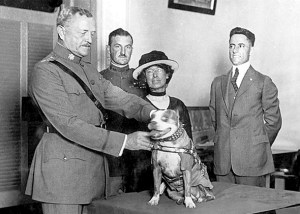 Stubby saw his first action at Chemin des Dames. Since the boom of artillery fire didn’t faze him, he learned to follow the men’s example of ducking when the big ones came close. It became a great game to see who could hit the dugout, first. After a few days, the guys were watching him for a signal. Stubby was always the first to hear incoming fire. We can only guess how many lives were spared by his early warning.


You must be logged in to post a comment.