

In modern Romanian, “Dracul” means “The Devil”. In the old language, it meant “the Dragon”, the word “Dracula” (Drăculea) translating as “Son of the Dragon”. Count Dracula, favorite of Halloween costume shoppers from time immemorial, has been with us since the 1897 publication of Bram Stoker’s novel, of the same name.
Stoker’s working titles for the manuscript were “The Un-dead”, and “Count Wampyr”. He nearly kept one of them too, until reading about Vlad Țepeș (TSE·pesh), a Wallachian Prince and 15th century warrior, who fought on the front lines of the Jihad of his day.
Stoker wrote in his notes, “in Wallachian language means DEVIL“. In a time and place remembered for its brutality, Vlad Țepeș stands out as extraordinarily cruel. There are stories that Țepeș disemboweled his own pregnant mistress. That he collected the noses of vanquished adversaries, some 24,000 of them. That he dined among forests of victims, impaled on spikes. That he even impaled the donkeys they rode in on.
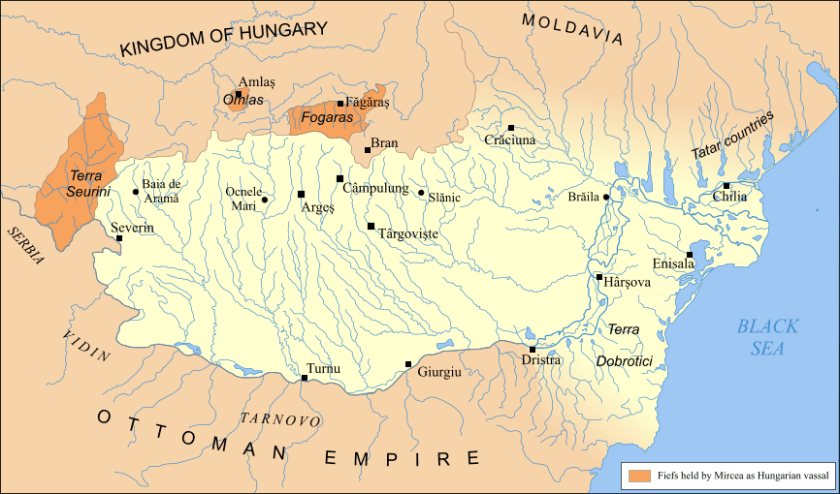
Founded in 1330, the Principality of Wallachia is a region in modern-day Romania, situated between the Lower Danube river and the Carpathian Mountains. A crossroads between East and West, the region was scene to frequent bloodshed, as Ottoman forces pushed westward into Europe, and Christian forces pushed back.
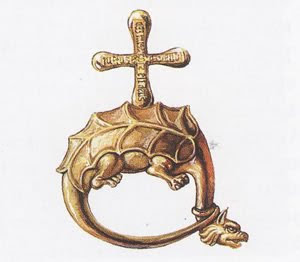 In 1436, Vlad II became voivode, (prince), of Wallachia. The sobriquet “Dracul” came from membership in the “Order of the Dragon” (literally “Society of the Dragonists”), a monarchical chivalric order founded by Holy Roman Emperor Sigismund in 1408, dedicated to stopping the Ottoman advance into Europe.
Shifting loyalties put the Wallachian prince in a weakened position, forcing him to pay homage to Ottoman Sultan Murad II, including participation in the Ottoman invasion of the nearby Romanian principality of Transylvania.
Transylvanian voivode John Hunyadi persuaded Vlad to fight with him against the Ottomans. Vlad was summoned to a diplomatic meeting in 1442 with Sultan Murad II, and brought his two younger sons, Vlad III and Radu, along. The meeting was a trap. Vlad was thrown in prison but later released in exchange for a pledge to pay annual tribute, and the promise of 500 Wallachian boys to serve as janissaries in the Ottoman army. Vlad III, age 12, and his younger brother were left behind as hostages, to ensure the loyalty of their father.
The timeline is unclear, but Vlad Dracul appears to have been convinced that his sons were “butchered for the sake of Christian peace”, sometime around 1444. Byzantine historian Michael Critobulus writes that Vlad and Radu fled to the Ottoman Empire in 1447 following the murder of their father and older brother Mircea, suggesting that the two were released, most likely following Vlad’s pledge of homage to the Sultan.
The terms of the boys’ captivity were relatively mild by the standards of the time, and Vlad became a skilled horseman and warrior. Radu went over to the Turkish side, but Vlad hated captivity, developing a deep enmity for his captors that would last all his life.
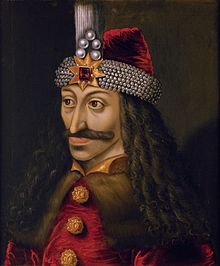
With the death of his father and older brother, Vlad III became a potential claimant for the throne in Wallachia. Vlad won back his father’s seat in 1448 with Ottoman support, only to be deposed after only two months. Sometime later, he switched sides in the Ottoman-Hungarian conflict.
Following the fall of Constantinople in 1453, the Ottoman Empire stood ready to invade all of Europe.
Vlad III regained the Wallachian throne in 1456 with military support from King Ladislaus V of Hungary. The new prince made it his first order of business to cut ties with the Ottoman Empire, terminating the annual tribute which had formerly ensured peace between Wallachia and the Caliphate.
A group of visiting Ottoman envoys declined to remove their turbans in Vlad’s court, citing religious custom. The prince commended them for their religious devotion and ordered the turbans nailed to their skulls, assuring them that now, they would never be removed.
According to stories circulated after his death, Vlad III needed to consolidate power, against his fractious nobles (boyars). Hundreds of them were invited to a banquet, only to be stabbed, their still twitching bodies then impaled on spikes.
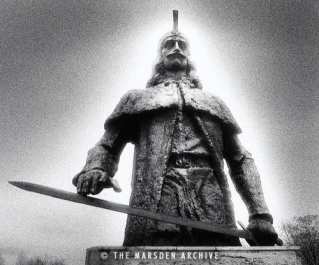 Ethnic Germans had long since emigrated to these parts, forming a distinct merchant class in Wallachian society. These Saxon merchants were allied with the boyars. It was not long before they too, found themselves impaled on spikes.
Vlad invaded the Ottoman Empire in 1461, by his own count killing “23,884 Turks and Bulgarians”.
Sultan Mehmet II, conqueror of Constantinople, invaded Wallachia at the head of an army 150,000 strong in 1462, only to find the roads lined with a “forest of the impaled”, and the capital city of Târgoviște, deserted.
The Byzantine Greek historian Laonikos Chalkokondyles writes: “The sultan’s army entered into the area of the impalements, which was seventeen stades long and seven stades wide. There were large stakes there on which, as it was said, about twenty thousand men, women, and children had been spitted, quite a sight for the Turks and the sultan himself. The sultan was seized with amazement and said that it was not possible to deprive of his country a man who had done such great deeds, who had such a diabolical understanding of how to govern his realm and its people. And he said that a man who had done such things was worth much. The rest of the Turks were dumbfounded when they saw the multitude of men on the stakes. There were infants too affixed to their mothers on the stakes, and birds had made their nests in their entrails”.
To give a sense of scale to this horror, a “stade” derives from the Greek “stadeon” – the dimensions of an ancient sports arena.
In the end, the Romanian principalities had little with which to oppose the overwhelming force of the Ottoman Empire. Vlad III Țepeș would be twice deposed only to regain power. Unable to defeat his more powerful adversary, Vlad was exiled for several years in Hungary, spending much of that time in prison. Heaven help the poor rodent who fell into his hands, in that wretched cell.
Vlad successfully stole back the throne following the death of his brother Radu at the head of an Ottoman column in 1475, but this last reign would be brief. The prince of Wallachia was marching to yet another battle with the Ottomans in 1477, when he and his small vanguard of soldiers were ambushed, and Vlad was killed.
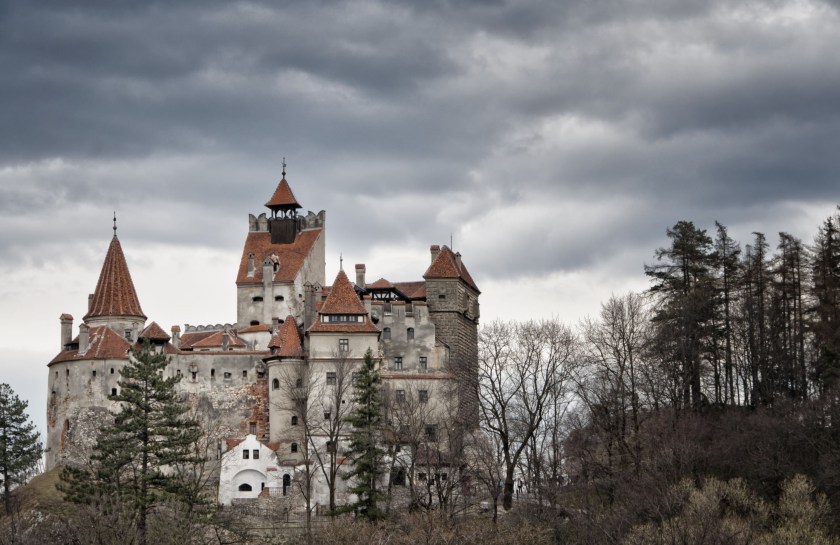
Today, the mountaintop Castle in Bran, Romania is celebrated as the “home” of Count Dracula. Ironically, neither Bram Stoker nor Vlad Țepeș ever set foot in the place. There is some debate as to the veracity of these tales, and whether they were significantly embellished. Johannes Gutenberg invented the modern movable type printing press in 1439 when Vlad III was about 8, so his contemporaries had ample opportunity to tell their stories. Many were written by his detractors, of which a guy like Vlad “the Impaler”, had many. Yet the details of these stories are virtually identical, suggesting they contain significantly more than a grain of truth.


Statues of Vlad Țepeș dot the Romanian countryside, though his burial place is unknown. In the end, we are left only with the tale of a warlord. A prince. A sadist. An impaler. A psychotic madman who, 400 years after his death, would inspire the name of Count Dracula.

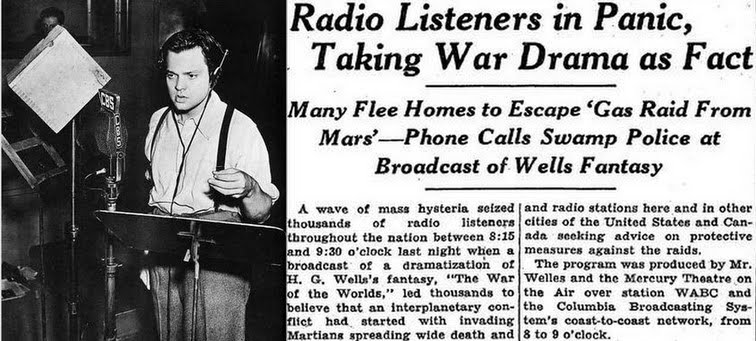
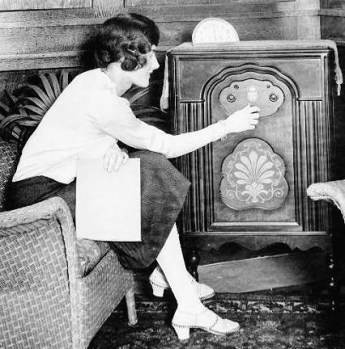 The radio drama began with a statement that what followed was fictional. The warning was repeated at the 40 and 55-minute mark, and again at the end of the broadcast. It began with a weather report, and then went to a dance band remote, featuring “Ramon Raquello and his orchestra”. The music was periodically interrupted by live “news” flashes, beginning with strange explosions on Mars. Producer Orson Welles made his first radio appearance as the “famous” (but non-existent) Princeton Professor Dr. Richard Pierson, who dismissed speculation about life on Mars.
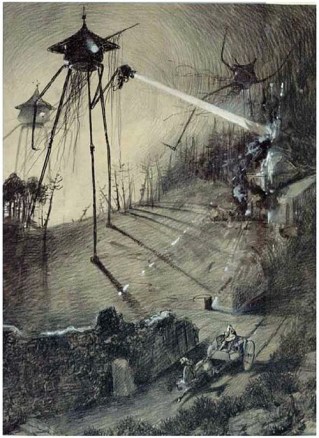 The dramatic technique was brilliant. Welles had his cast listen to the Hindenburg tape, explaining that was the “feel” that he wanted in his broadcast. Fictional on-the-spot reporter Carl Phillips describes the death ray in the same rising crescendo, only to be cut off in mid-sentence as it’s turned on him.
 The New York Times reported on Oct. 31, “In Newark, in a single block at Heddon Terrace and Hawthorne Avenue, more than 20 families rushed out of their houses with wet handkerchiefs and towels over their faces to flee from what they believed was to be a gas raid. Some began moving household furniture”.

 Born on October 29, 1921 in New Mexico and brought up in Arizona, William Henry “Bill” Mauldin was part of what Tom Brokaw called, the “Greatest Generation”.
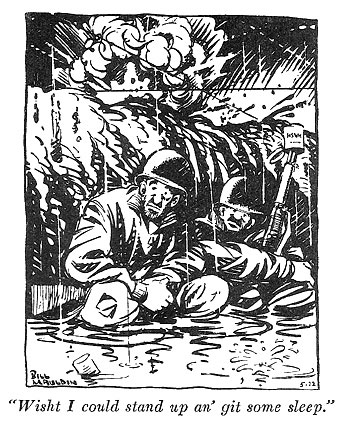 Mauldin developed two cartoon infantrymen, calling them “Willie and Joe”. He told the story of the war through their eyes. He became extremely popular within the enlisted ranks, while his humor tended to poke fun at the “spit & polish” of the officer corps. He even lampooned General George Patton one time, for insisting that his men to be clean shaven all the time. Even in combat.
 Mauldin later told an interviewer, “I always admired Patton. Oh, sure, the stupid bastard was crazy. He was insane. He thought he was living in the Dark Ages. Soldiers were peasants to him. I didn’t like that attitude, but I certainly respected his theories and the techniques he used to get his men out of their foxholes”.
 Bill Mauldin drew Willie & Joe for last time in 1998, for inclusion in Schulz’ Veteran’s Day Peanuts strip. Schulz had long described Mauldin as his hero. He signed that final strip Schulz, as always, and added “and my Hero“. Bill Mauldin’s signature, appears underneath.


 In New York city and “upstate” alike, economic ties with the south ran deep. 40¢ of every dollar paid for southern cotton stayed in New York, in the form of insurance, shipping, warehouse fees and profits.
 “Town Line”, a hamlet on the village’s eastern boundary, put it to a vote. In the fall of 1861, residents gathered in the old schoolhouse-turned blacksmith’s shop. By a margin of 85 to 40, Town Line, New York voted to secede from the Union.
 A rumor went around in 1864, that a
  Even Georgians couldn’t help themselves from commenting. 97-year-old Confederate General T.W. Dowling said: “We been rather pleased with the results since we rejoined the Union. Town Line ought to give the United States another try“. Judge A.L. Townsend of Trenton Georgia commented “Town Line ought to give the United States a good second chance“.
 Fireman’s Hall became the site of the barbecue, “The old blacksmith shop where the ruckus started” being too small for the assembled crowd. On October 28, 1945, residents adopted a resolution suspending its 1861 ordinance of secession, by a vote of 90-23. The Stars and Bars of the Lost Cause was lowered for the last time, outside the old blacksmith shop.

 This is a story of Independence, of Revolution. Of overthrowing a Spanish-speaking government, and creating an Independent Republic in the American South. Its banner was a single, five-pointed white star on a blue field. It was the original Lone Star Republic. The Republic of West Florida.
 The French first came to America in 1524, colonizing vast expanses from Quebec to Green Bay in the north, Baton Rouge to Biloxi in the south. They sought wealth, territory and a route to the Pacific Ocean. What they got was endless conflict.
 President Jefferson bought 828,000 square miles from the French in 1803, doubling the size of the United States, but the exact borders were unclear.
 That was about it. Surviving soldados fled, as the flag of the new Republic was unfurled over the fort: a dark blue field with a single white star. The whole thing had taken about a minute.


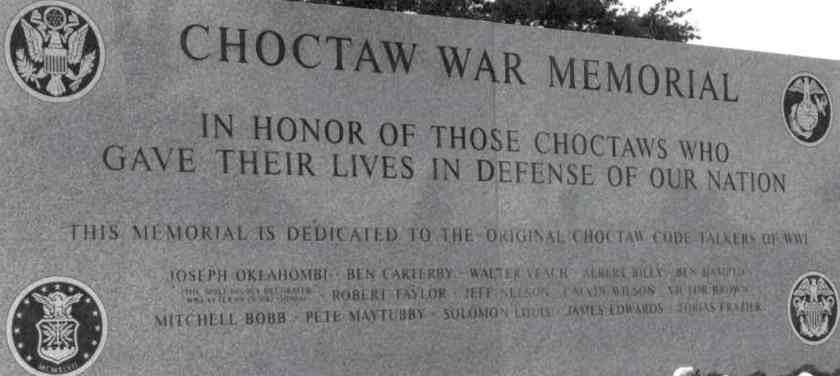
 Late in 1917, Colonel A. W. Bloor was serving in France with the 142nd Infantry Regiment. They were a Texas outfit, constituted in May of that year and including a number of Oklahoma Choctaws.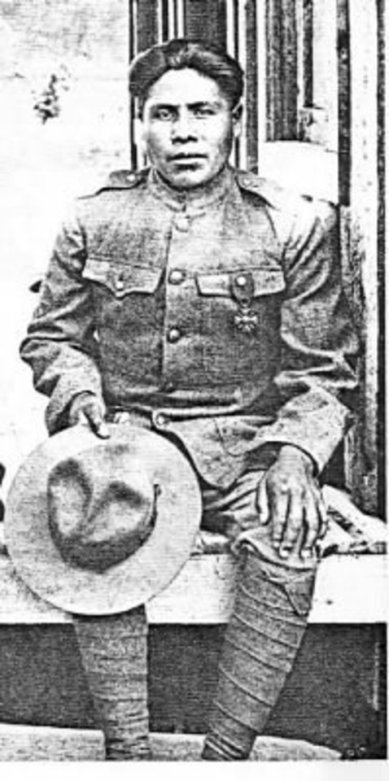






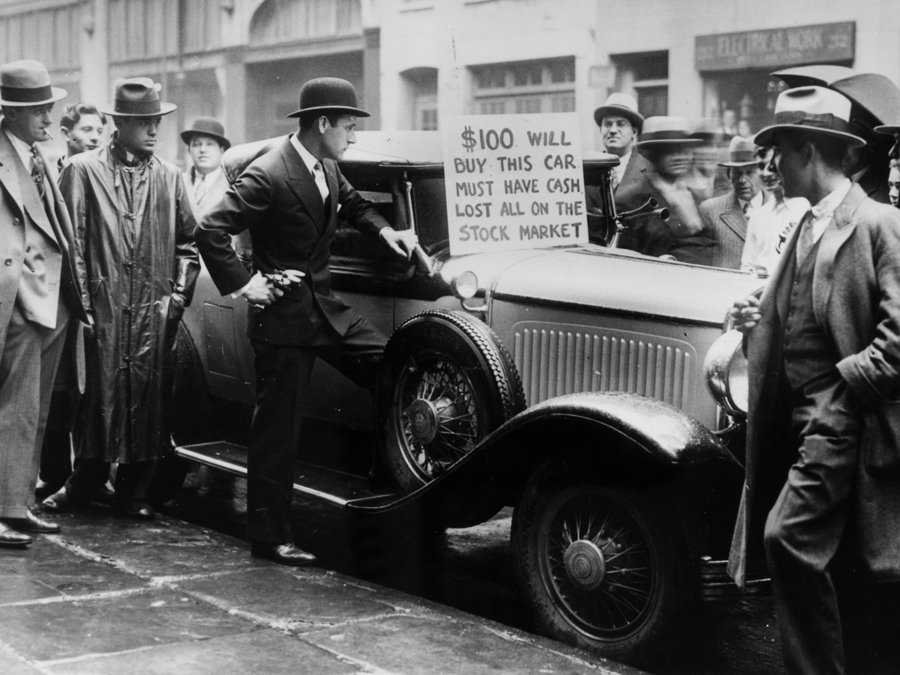
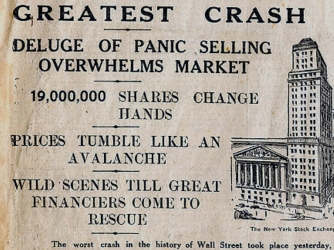 There was a brief contraction in March, but the first of the “Crash” began on “Black Thursday”, October 24, 1929. The market lost 11% at the opening bell, amidst heavy trading. To quell the frenzy, Wall Street financial firms Morgan Bank, Chase National and National City Bank of New York stepped up and bought large blocks of US Steel and other “blue chip” stocks, at prices well above where they were trading.
 Economists still argue about the interventionist policies, which followed. The guy who needed to support his family was grateful to be put to work on a WPA project, but the government doesn’t produce wealth. Every dollar spent had first to be extracted from the wealth producing, or “private”, part of the economy. You can’t fill a swimming pool, by draining one end of it into the other.


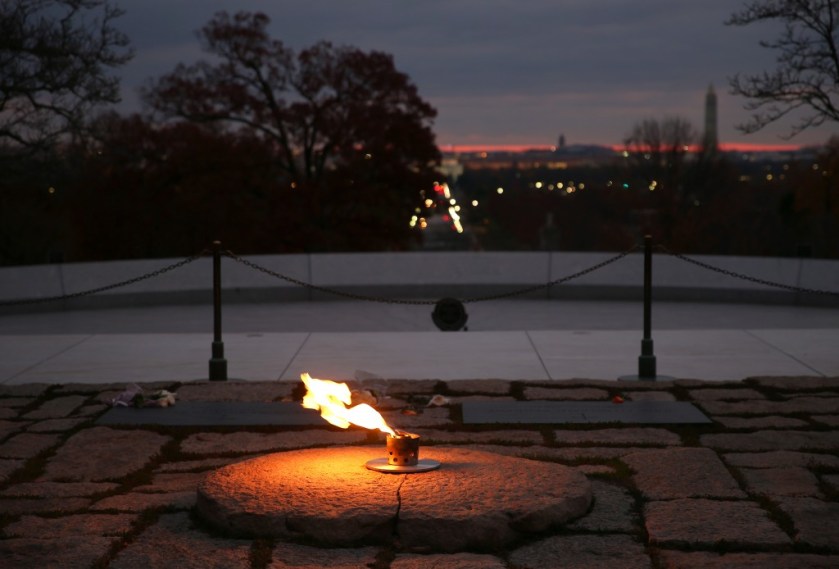
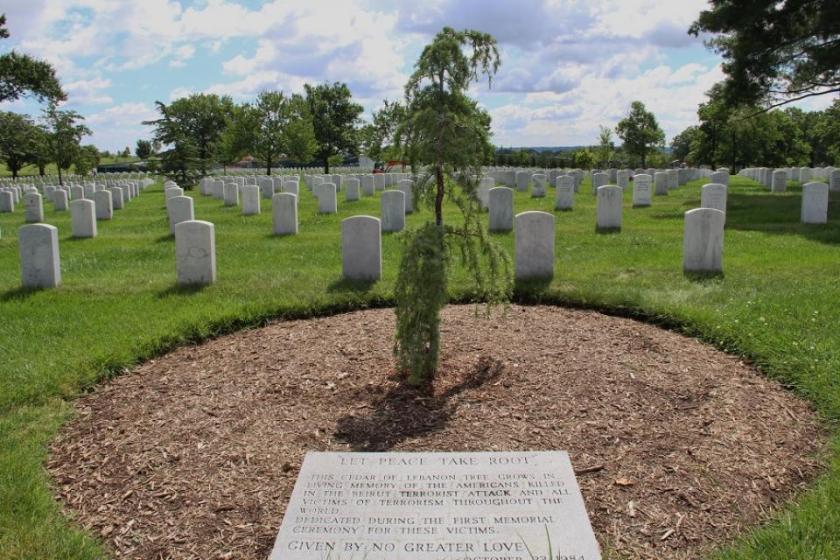


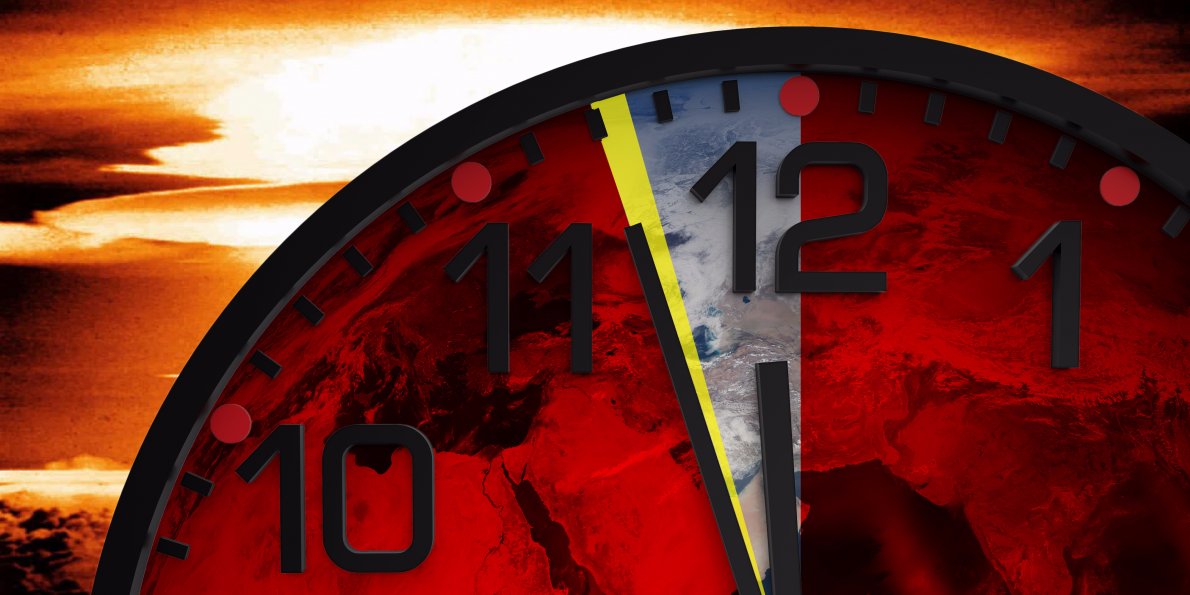
 In 1947, members of the Science and Security Board of the Bulletin of Atomic Scientists envisioned a “Doomsday Clock”, a symbolic clock face, to dramatize the threat of global nuclear catastrophe. Initially set at seven minutes to midnight, the “time” has varied from seventeen minutes ’til with the 1995 collapse of the Soviet Union, to two minutes before midnight with “Operation Ivy”, the first American thermonuclear detonation, in 1952.
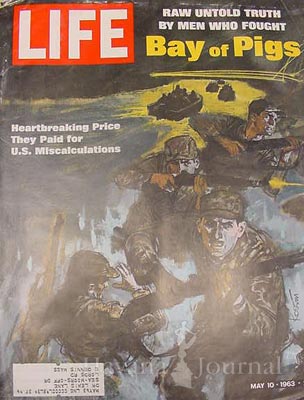 Since the Presidency of James Monroe, US foreign policy has opposed outside intervention in the American hemisphere. The government was not about to permit a communist state, 90 miles from its shore.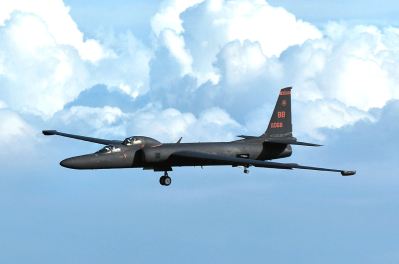
 In a televised speech on October 22, Kennedy publicly revealed the presence of Soviet missiles in Cuba, and called for their removal. A naval quarantine would close off the island, Kennedy said, until Soviet leaders agreed dismantle missile sites, and to make certain that no additional missiles were shipped to Cuba.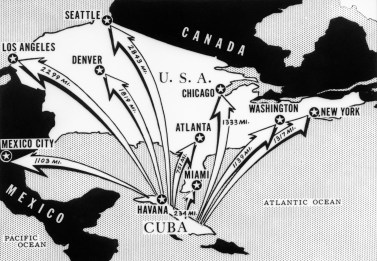



 Historical Easter Eggs - Today in History
You must be logged in to post a comment.