

 April Fools. The ancient Roman festival of Hilaria, held on March 25, may be a precursor. The Medieval Feast of Fools, held December 28, is still a day on which pranks are played in Spanish-speaking countries.
In one translation of Chaucer’s Canterbury Tales, “March 32” of 1392 is the day the vain cock Chauntecleer was tricked by a fox. The fox appealed to the rooster’s vanity by insisting he would love to hear Chauntecleer crow, just as his amazing father did. Standing on tiptoe with neck outstretched and eyes closed. The rooster obliged, with unfortunate, if not unpredictable results.
In 1582, France switched from the Julian calendar to the Gregorian moving New Year to January 1 as specified by the Council of Trent of 1563. Those who didn’t get the news and continued to celebrate New Year in late March/April 1, quickly became the butt of jokes and hoaxes. Paper fish were placed on their backs, as these “poisson d’avril” (April fish) were said to symbolize the young, naive, easily caught fish of Spring.
The Flemish children of Belgium lock their parents or teachers out, letting them in only if they promise to bring treats that evening or the next day.
In 1539, Flemish poet Eduard de Dene wrote of a nobleman who sent his servants on fool’s errands on April 1.
In Scotland, April Fools’ Day is traditionally called Hunt-the-Gowk Day. Although it’s fallen into disuse, a “gowk” is a cuckoo or a foolish person. The prank consists of asking someone to deliver a sealed message requesting some sort of help. The message reads “Dinna laugh, dinna smile. Hunt the gowk another mile”. On reading the message, the recipient will explain that to help, he’ll first need to contact another person, sending the victim to another person with the same message.
In Poland, “Prima Aprilis” is so strong that the anti-Turkish alliance with Leopold I, signed on April 1, 1683, was backdated to March 31.
 Animals were kept at the Tower of London since the 13th century, when Emperor Frederic II sent three leopards to King Henry III. In later years, elephants, lions, even a polar bear were added to the collection, the polar bear trained to catch fish in the Thames.
In 1686, John Aubrey referred to the holiday as “Fooles holy day”, the first British reference.
On April 1, 1698, citizens were invited to the Tower of London to see the “Washing of the Lions” in the tower moat. Quite a few were sucked in. The April 2 edition of Dawks’ News-Letter reported that “Yesterday being the first of April, several persons were sent to the Tower Ditch to see the Lions washed.” The “annual ceremony of washing the lions,” lasted throughout the 18th & 19th centuries, always held on April 1st.

The prank became quite elaborate by the mid-nineteenth century. Tickets were printed and distributed for the event, specifying that attendees be “Admitted only at the White Gate”, and that “It is requested that no Gratuities will be given to the Wardens on any account.”
In his “Reminiscences of an Old Bohemian”, Gustave Strauss laments his complicity in the hoax in 1848. “These wretched conspirators”, as Straus called his accomplices, “had a great number of order-cards printed, admitting “bearer and friends” to the White Tower, on the 1st day of April, to witness…the famous grand annual ceremony of washing the lions”. Pandemonium broke out when hundreds showed up, only to realize they’d been pranked. “In the midst of the turmoil” Strauss wrote, “some one spotted me to whom I had given an order of admission, and he would have set the whole mob upon me. Knowing of old that discretion is, as a rule, the better part of valour…I had to skedaddle, and keep dark for a time, until the affair had blown over a little”.
 In 1957, (you can guess the date), the BBC reported the delightful news that mild winter weather had virtually eradicated the dread spaghetti weevil of Switzerland, and that Swiss farmers were now happily anticipating a bumper crop of spaghetti. Footage showed smiling Swiss peasants, pulling strands of spaghetti down from trees. Apparently, an embarrassingly large number of viewers were fooled. Many called BBC offices, asking how to grow their own spaghetti tree. “Place a piece of spaghetti in a tin of tomato sauce”, callers were told, “and hope for the best.”
The Warby Parker Company website describes a company mission of “offer[ing] designer eyewear at a revolutionary price, while leading the way for socially conscious businesses”. On April 1, 2012, the company released its new line of eyeglasses for dogs, appropriately called “Warby Barker”. For only $95, your hipster pooch could be sporting the latest styles in canine eyeware, in irresistible dog treat shades like “Gravy Burst” and “Dusty Bacon.” There was a monocle option too, for those partial to that Prussian Field Marshall look. Anyone falling for the gag, got an “April Fools!” message on their on-line shopping cart.
Two days ago, Burger King announced the introduction of their new, Whopper flavored mouthwash, for those who just can’t get enough. I’m sure it’s true because I read it on-line, but it should be mentioned here. There is no “White Gate” at the Tower of London. Never was.


 Melvin attended a year at Brooklyn College before being drafted into the Army, in WWII. After attending Army Specialized Training at VMI, Corporal Kaminsky joined the 1104th Combat Engineers Battalion, 78th Infantry Division in the European theater. There, he served through the end of the war. Most of his work was in finding and defusing explosives, though on five occasions his unit had to drop their tools and fight as Infantry.
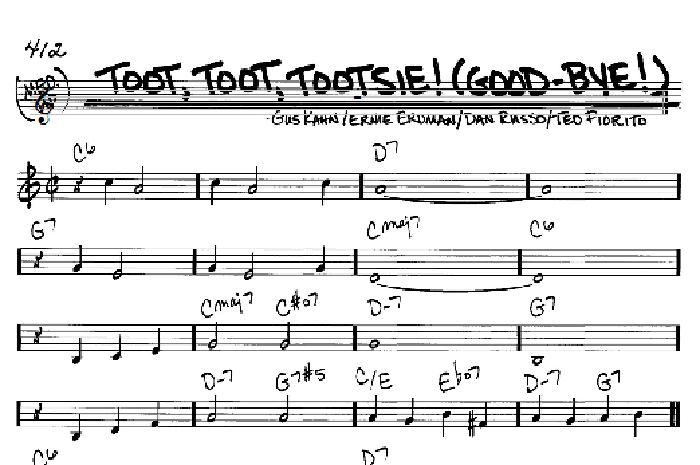
 German soldiers singing a beer hall song, from the other side. Kaminsky grabbed a bullhorn and serenaded the Germans back, singing them an old tune that Al Jolson used to perform in black face, “Toot Toot Tootsie, Goodbye”. Polite applause could be heard from across the river, afterward. I can’t imagine many Allied soldiers ever tried to serenade their Nazi adversaries during World War II. The ones who actually pulled it off must number, precisely, one.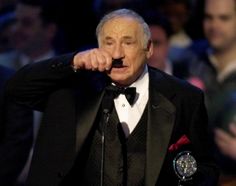
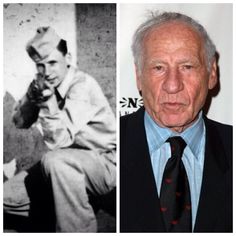
 Marvin Hamlisch, Jonathan Tunick, Mike Nichols, Whoopi Goldberg, Scott Rudin, and Robert Lopez. As of this date, Brooks only needs another Oscar to be the first “Double EGOT” in history.

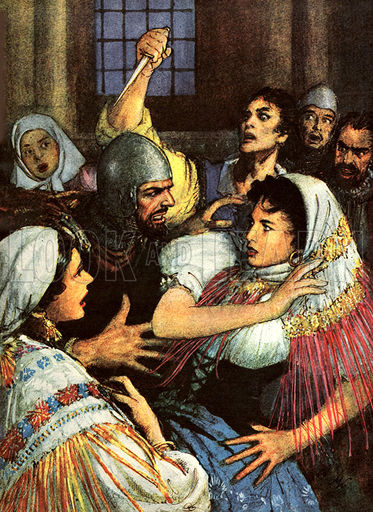 It was Easter Monday, March 30, 1282. The Church of the Holy Spirit outside Palermo was just letting out after evening vespers (prayers), when a French soldier thought he’d “inspect” a Sicilian woman for weapons.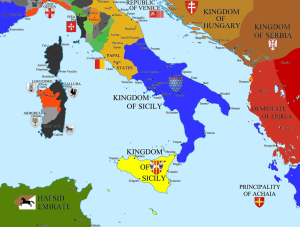


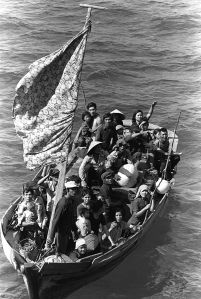
 from Vietnam, the Geneva Convention partitioning the country into the communist “Democratic Republic of Vietnam” in the north, and the State of Vietnam in the south, led by Emperor Bao Dai and Prime Minister Ngo Dinh Diem.
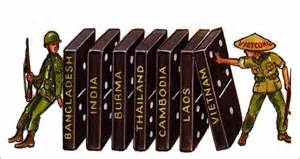 US policy makers feared a “domino” effect, and with good cause. The 15 core nations of the Soviet bloc were soon followed by Eastern Europe, as Poland, Bulgaria, Romania, Hungary and Czechoslovakia fell into the Soviet sphere of influence. Germany was partitioned into Communist and free enterprise spheres after WWII, followed by China, North Korea and so on across Southeast Asia.
 The war in Vietnam pitted as many as 1.8 million allied forces from South Vietnam, the United States, Thailand, Australia, the Philippines, Spain, South Korea and New Zealand, against about a half million from North Vietnam, China, the Soviet Union and North Korea. Begun on November 1, 1955, the conflict lasted 19 years, 5 months and a day. On March 29, 1973, two months after signing the Paris Peace accords, the last US combat troops left South Vietnam as Hanoi freed the remaining POWs held in North Vietnam.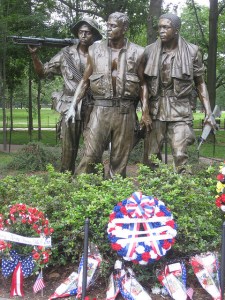




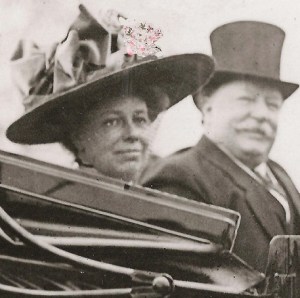

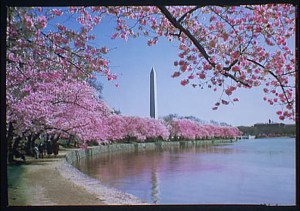 1934 city commissioners sponsored a three-day celebration of the late March blossoming cherry trees, which grew into the annual Cherry Blossom Festival.


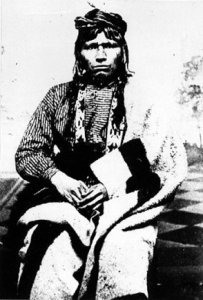
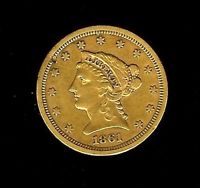
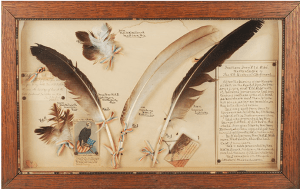
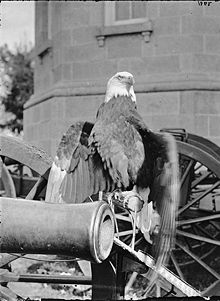 Abe became an inspirational symbol to the troops, like the battle flag carried with each regiment. Colonel Rufus Dawes of the Iron Brigade recalled, “Our eagle usually accompanied us on the bloody field, and I heard [Confederate] prisoners say they would have given more to capture the eagle of the Eighth Wisconsin, than to take a whole brigade of men.”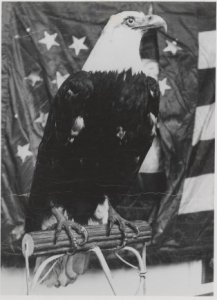


 After WWII, elements of the 101st Airborne were mobilized to Little Rock by President Eisenhower to protect the civil rights of the “Little Rock Nine”, a group of black students enrolled in Little Rock Central High School in September 1957, as the result of the US Supreme Court’s landmark ruling in the historic Brown v. Board of Education case.


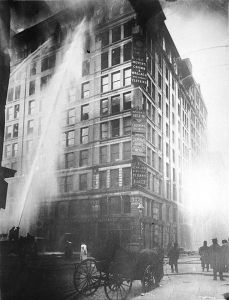
 At the turn of the century there were over 450 textile factories in Manhattan alone, employing something like 40,000 garment workers. Many of them were young, immigrant women of Jewish and Italian ethnicity, working nine hours a day on weekdays and seven on Saturdays. Wages were typically low: $7 to $12 per week, equivalent to $3.20 to $5.50 per hour, in 2016.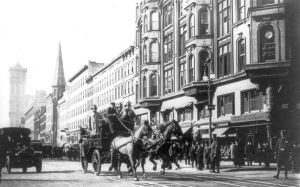








 100 years ago, “Sumerologists” labored to learn the customs and ways of this ancient civilization. One such team pieced together a stone tablet and, through years of study, managed to decipher the cuneiform words contained thereon.

 Historical Easter Eggs - Today in History
You must be logged in to post a comment.