

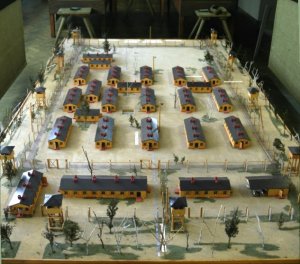
Stalag Luft III in the province of Lower Silesia was a German POW camp, built to house captured Allied airmen. The first “Kriegsgefangene” (POWs), arrived on March 21, 1942. The facility would grow to include 10,949 “kriegies”, comprising some 2,500 Royal Air force officers, 7,500 US Army Air officers, and about 900 from other Allied air forces.
Barracks were built on pilings to discourage tunneling, creating 24” of open space beneath the buildings. Seismic listening devices were placed around the camp’s perimeter. In the German mind, the place was the next best thing, to airtight.
Kriegies didn’t see it that way, three of whom concocted a gymnastic vaulting horse out of wood from Red Cross packages.
A Trojan horse was more like it. Every day, the horse would be lugged out to the perimeter. Above ground, prisoners’ gymnastic exercises masked the sound, while underground, kriegies dug with bowls into the sand, using the horse itself to hide diggers, excavated soil and tools alike. Iron rods were used to poke air holes to the surface. There was no shoring of the tunnel, except at the entrance.
Every evening for three months, plywood was placed back over the hole, and covered with the gray-brown dust of the prison yard.
On October 19, 1943, the three British officers made their escape. Lieutenant Michael Codner and Flight Lieutenant Eric Williams reached the port of Stettin in the West Pomeranian capital of Poland, where they stowed away on a Danish ship. Flight Lieutenant Oliver Philpot boarded a train to Danzig, and stowed away on a ship bound for neutral Sweden. Eventually, all three made it back to England.
RAF Squadron Leader Roger Bushell was shot down and forced to crash land on his first engagement in May 1940, but not before taking two Messerschmitt Bf 110 fighters with him. Taken to the Dulag Luft near Frankfurt, Bushell formed an escape committee along with Fleet Air Arm pilot Jimmy Buckley, and Wing Commander Harry Day.
For POWs of officer rank, escape was the first duty. Bushell escaped twice and almost made it, but each time his luck deserted him. By October, Roger Bushell found himself in the north compound of Stalag Luft III, where British officers were held.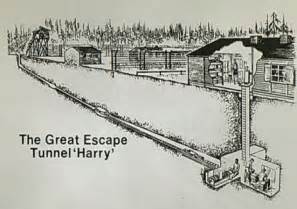
By the following spring, Bushell had concocted the most audacious escape plot in WWII history. “Everyone here in this room is living on borrowed time”, he said. “By rights we should all be dead! The only reason that God allowed us this extra ration of life is so we can make life hell for the Hun… In North Compound we are concentrating our efforts on completing and escaping through one master tunnel. No private-enterprise tunnels allowed. Three bloody deep, bloody long tunnels will be dug – Tom, Dick and Harry. One will succeed!”
The effort was unprecedented. Previous escape attempts had never involved more than twenty. Bushell, soon to be known by the code name “Big X” was proposing to get out with 200.
Civilian clothes had to be fashioned for every man. Identification and travel documents forged. “Tom” began in a darkened hallway corner. “Harry’s entrance was hidden under a stove, “Dick”‘s entrance was concealed in a drainage sump.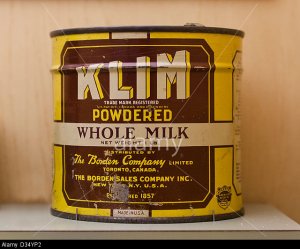
The Red Cross distributed high calorie, dehydrated whole-milk powder called “Klim” (“Spell it backwards”) throughout German POW camps. Klim tins were fashioned into tools, candle holders and vent stacks. Fat was skimmed off soups and molded into candles, using threads from old clothing for wicks.
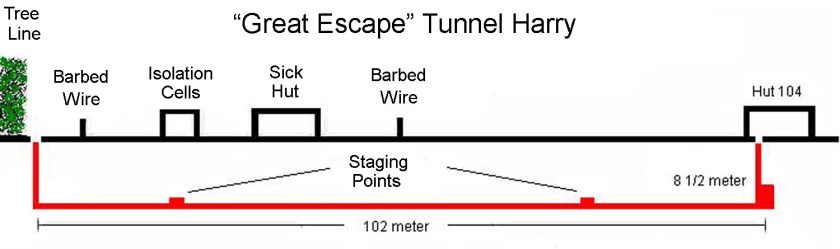
Six hundred prisoners were involved in the construction. 200 with sacks sewn under greatcoats made 25,000 trips into the prison yard, disposing of soil as Tom, Dick and Harry were excavated. 30′ down and only 2 ft. square, the three tunnels extended outward for a football field and more.
These “penguins” were running out of places to put all that soil, around the time the camp was expanded to include “Dick’s” originally planned exit point. From that time forward, “Dick” was refilled from the other two. “Tom” was discovered in September 1943, the 98th tunnel in the camp to be found out.
The escape was planned for the good weather of summer, but a Gestapo visit changed the timetable. “Harry” was ready by March. The “Great Escape” was scheduled for the next moonless night. 73 years ago – March 24, 1944.
Contrary to the Hollywood movie, no Americans were involved in the escape. At that point none were left in camp.
The escape was doomed, almost from the start. First the door was frozen shut, then a partial collapse had to be repaired. The exit came up short of the tree line, further slowing the escape. It was over when guards spotted #77 coming out of the ground.
German authorities were apoplectic on learning the scope of the project. 90 complete bunk beds had disappeared, along with 635 mattresses. 52 twenty-man tables were missing, as were 4,000 bed boards and an endless list of other objects. For the rest of the war, each bed was issued with only nine boards, and those were counted, regularly.
Gestapo members executed German workers who had not reported the disappearance of electrical wire.
In the end, only three of the 76 made it to freedom: two Norwegian and one Dutch pilot. Hitler personally ordered the execution of the other 73, 50 of which were carried out. 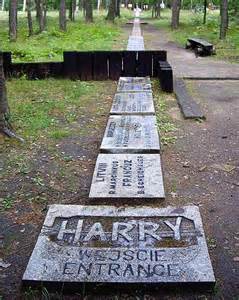
General Arthur Nebe is believed to have personally selected the 50 for execution. He was later involved with the July 20 plot to assassinate Adolf Hitler, and executed on March 21, 1945. Roger “Big X” Bushell and his partner Bernard Scheidhauer were caught while waiting for a train at the Saarbrücken railway station. They were murdered by members of the Gestapo on March 29, who were themselves tried and executed for war crimes, after the war.
New camp Kommandant Oberst Franz Braune was horrified that so many escapees had been shot. Braune allowed those kriegies who remained to build a memorial, to which he personally contributed. Stalag Luft III is gone today, but that stone memorial to “The Fifty”, still stands.
Dick Churchill was an HP.52 bomber pilot and RAF Squadron Leader. One of the 76 who escaped, Churchill was recaptured three days later, hiding in a hay loft. In a 2014 interview, he said he was fairly certain he’d been passed over for execution, because his captors thought he might be related to Prime Minister Winston Churchill. Today, Dick Churchill, age 97, is the only man among those 76, still left alive.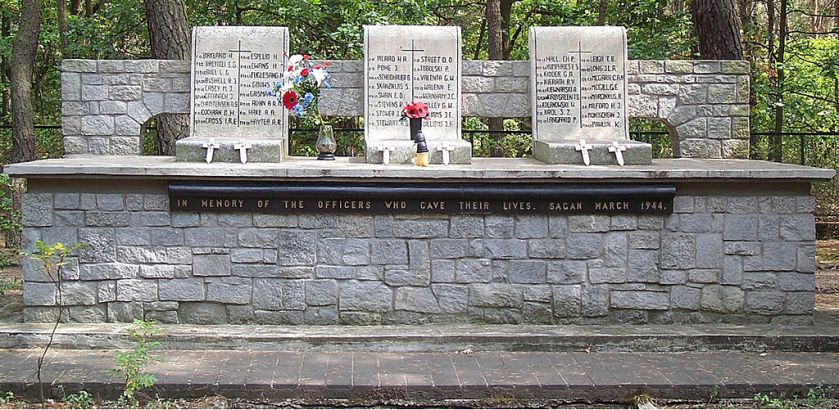


 100 years ago, “Sumerologists” labored to learn the customs and ways of this ancient civilization. One such team pieced together a stone tablet and, through years of study, managed to decipher the cuneiform words contained thereon.


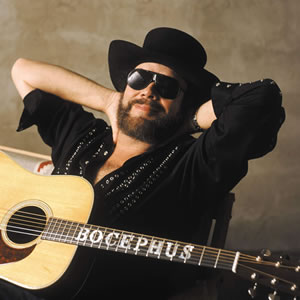
 Randall Hank Williams was born May 26, 1949 in Shreveport, Louisiana, the son of country singer/songwriter, Hiram King “Hank” Williams. Surprisingly for a guy who could neither read nor notate music and died at the age of 29, the elder Williams has been described as “one of the most significant and influential American singers and songwriters of the 20th century”.



 In a later examination of Vivian, ERO field worker Dr. Arthur Estabrook pronounced her “feeble minded” saying that she “showed backwardness”, supporting the “three generations” theory expressed in the SCOTUS opinion.

 Stationed in German East Africa and knowing that his sector would be little more than a side show in the greater war effort, Lettow-Vorbeck determined to tie up as many of his adversaries as possible.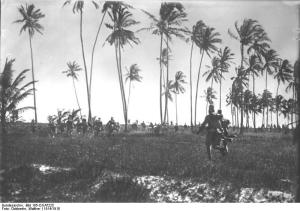
 In 1964, the year Lettow-Vorbeck died, the Bundestag voted to give back pay to former African warriors who had fought with German forces in WWI. Some 350 elderly Ascaris showed up. A few could produce certificates given them back in 1918, some had scraps of old uniforms. Precious few could prove their former service to the German Empire.

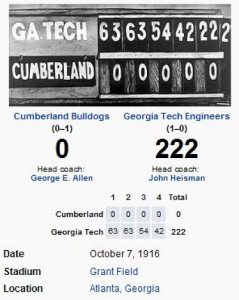

 For those of us who rooted for the New England Patriots during the losing years, the 1986 Super Bowl XX was the worst moment ever. We all had our “Berry da Bears” shirts on. Life was good when New England took the earliest lead in Super Bowl history, with a field goal at 1:19.

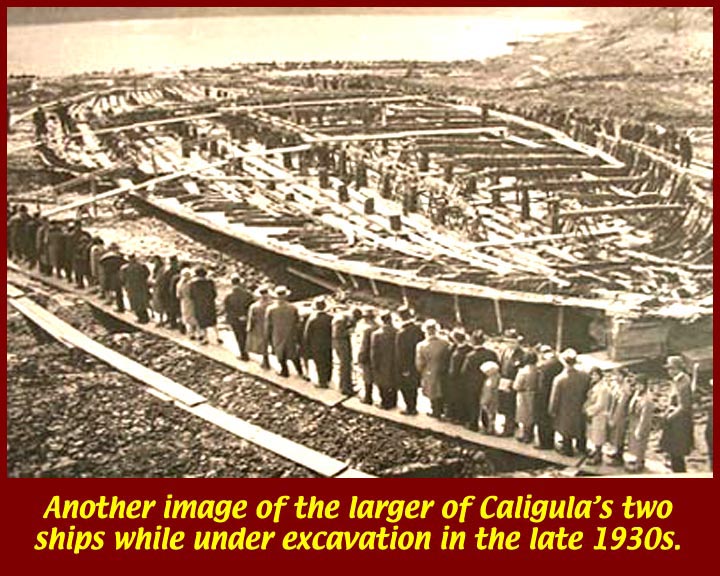
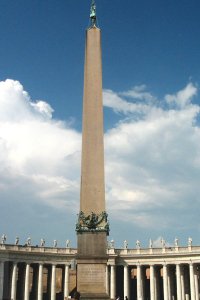 On this day in the year 37, the Roman Senate annulled the will of the Emperor Tiberius, proclaiming 24 year old Caligula, Emperor. After years of purges and treason trials, Caligula’s ascension to the throne was seen as a welcome breath of fresh air. His first two years were relatively peaceful and prosperous.
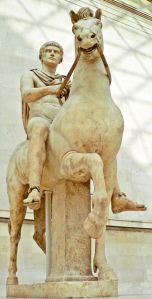 using ships as pontoons, stretching for over two miles from the resort of Baiae to the neighboring port of Puteoli. Though he could not swim, he rode his favorite horse, Incitatus, across the bridge, wearing the breastplate of Alexander the Great. The act was in defiance of a prediction by Tiberius’ soothsayer Thrasyllus of Mendes, that Caligula had “no more chance of becoming emperor than of riding a horse across the Bay of Baiae”.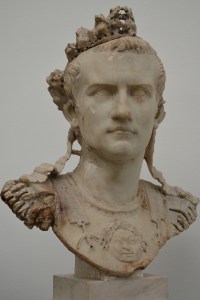


 Saint Patrick’s Day is observed on March 17, the date generally agreed to correspond with the date of his enslavement in 432, and with his death in 460. The date is celebrated in Ireland as both a liturgical and non-liturgical holiday, where in some diocese it is both a solemnity and a holy day of obligation. Outside of Ireland, the day has become a general celebration of all things Irish.
 Christian Ireland, with its green color evoking rebirth and eternal life. The three leaves symbolize the “triple goddess” of ancient Ireland. Patrick is said to have taught the Irish about the Holy Trinity, using the three leaves of the shamrock to illustrate the Christian teaching of three persons in one God: the Father, the Son, and the Holy Spirit.

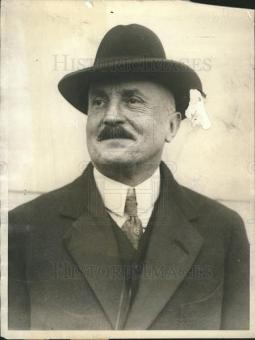
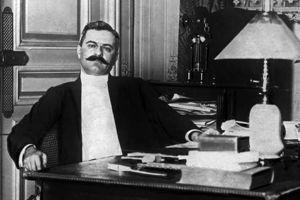
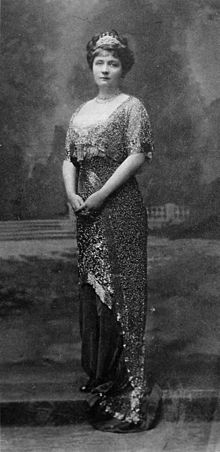
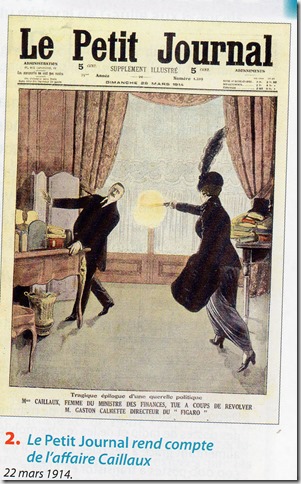 Right, the fall of the powerful, and all the salacious details anyone could ask for. Most of France was riveted by the Caillaux affair in July 1914, ignorant of the European crisis barreling down on them like the four horsemen of the apocalypse. Madame Caillaux’s trial for the murder of Gaston Calmette began on July 20.


 The partnership was doomed to fail, given the egos and animosities of the three. Crassus was killed in 52BC as Pompey became increasingly hostile to his co-ruler, who was then on campaign in Gaul. A string of military successes against Celtic and native Germanic tribes caused Caesar’s popularity to soar, posing a threat to the power of the Senate and to Pompey himself.
 Cimber presented him with a petition, as Senators crowded around. Cimber grabbed the Emperor’s shoulders and pulled down his tunic. “Ista quidem vis est!” said Caesar, “Why, this is violence!” Casca pulled a dagger and stabbed at the dictator’s neck. Caesar turned and caught him by the arm. “Casca, you villain, what are you doing?” Frightened, the Senator shouted “Help, brother!” in Greek “adelphe, boethei!” In seconds the entire group was striking at the dictator. Caesar attempted to get away but, blinded by his own blood, he tripped and fell. The men continued stabbing at him as he lay defenseless on the steps of the portico. According to Eutropius, 60 men participated in the assassination. Caesar was stabbed 23 times, though only one wound was fatal.
 Historical Easter Eggs - Today in History
You must be logged in to post a comment.