

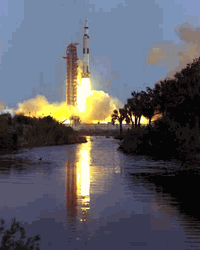
 Jack Swigert was supposed to be the backup pilot for the Command Module, (CM), officially joining the Apollo 13 mission only 48 hours earlier, when prime crew member Ken Mattingly was exposed to German measles. Jim Lovell was the world’s most traveled astronaut, a veteran of two Gemini missions and Apollo 8. By launch day, April 11, 1970, Lovell had racked up 572 space flight hours. For Fred Haise, former backup crew member on Apollo 8 and 11, this would be his first spaceflight.
The seventh manned mission in the Apollo space program was intended to be the third moon landing, launching at 13:13 central standard time, from the Kennedy Space Center in Florida.
The Apollo spacecraft comprised two separate vessels, separated by an airtight hatch. The crew lived in the Command/Service module, called “Odyssey”. The Landing Module (LM) “Aquarius”, would perform the actual moon landing.

56 hours into the mission and 5½ hours from the Moon’s sphere of gravitational influence, Apollo crew members had just finished a live TV broadcast. Haise was powering the LM down while Lovell stowed the TV camera. Mission Control asked Swigert to activate stirring fans in the SM hydrogen and oxygen tank. Two minutes later, the astronauts heard a “loud bang”.
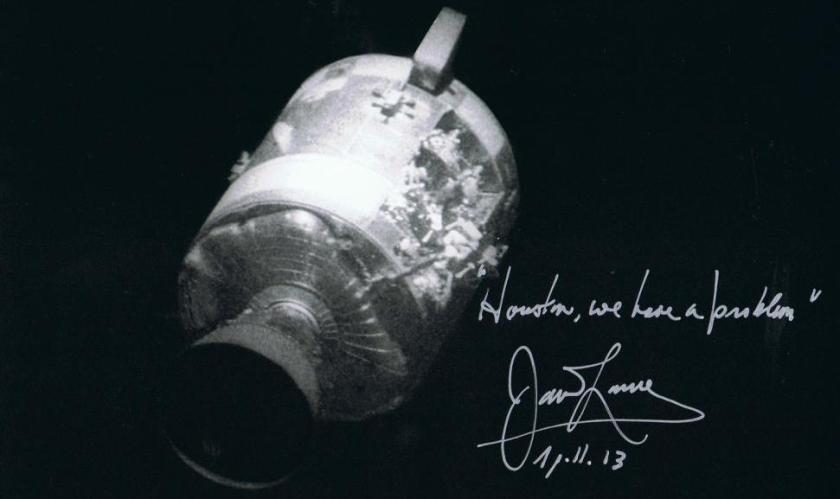
Spacecraft manufacturing and testing had both missed an exposed wire in an oxygen tank. When Swigert flipped the switch for that routine procedure, a spark set the oxygen tank on fire. Alarm lights lit up all over Odyssey and in Mission Control. The spacecraft shuddered as one oxygen tank tore itself apart and damaged another. Power began to fluctuate. Attitude control thrusters fired, and communications temporarily went dark. The crew could not have known it at the time, but the entire Sector 4 panel had just blown off.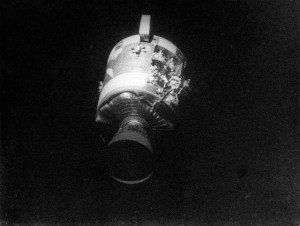
The movie takes creative license with Commander James Lovell saying “Houston, we have a problem”. On board the real Apollo 13 it was Jack Swigert who spoke, saying “Houston, we’ve had a problem”.
205,000 miles into deep space with life support systems shutting down, the Lunar Module became the only means of survival. There was no telling if the explosion had damaged Odyssey’s heat shields, but it didn’t matter. For now, the challenge was to remain, alive. Haise and Lovell frantically worked to boot up Aquarius, while Swigert shut down systems aboard Odyssey, in order to preserve power for splashdown.
 This situation had been suggested during an earlier training simulation, but had been considered unlikely. As it happened, the accident would have been fatal without access to the Lunar Module.
For four days and nights, the three-man crew lived aboard the cramped, freezing Aquarius, a landing module intended to support a crew of 2 for only 1½ days. Heat fell close to freezing and food became inedible, as mission control teams, spacecraft manufacturers and the crew itself worked around the clock to jury rig life support, navigational and propulsion systems. This “lifeboat” would have to do what it was never intended to do.
Atmospheric re-entry alone, presented almost insurmountable challenges. The earth’s atmosphere is a dense fluid medium. If you reenter at too steep an angle, you may as well be jumping off a high bridge. As it is, the human frame can withstand deceleration forces no higher than 12 Gs, equivalent to 12 individuals identical to yourself, piled on top of you. Even at that, you’re only going to survive a few minutes, at best.

We all know what it is to skip a stone off the surface of a pond. If you hit the atmosphere at too shallow an angle, the result is identical. There is no coming down a second time. You get one bounce and then nothing but the black void of space.
For four days, most of the country and much of the world held its breath, waiting for the latest update from newspaper and television news. With communications down, TV commentators used models and illustrations, to describe the unfolding drama. Onboard Odyssey, power was so low that voice-only transmissions became difficult. Visual communications with Mission Control were as impossible, as the idea that the stranded astronauts could walk home.
As Odyssey neared earth, engineers and crew jury-rigged a means of jettisoning the spent Service Module, to create enough separation for safe re-entry.
One last problem to be solved, was the crew’s final transfer from Lunar Module back to Command Module, prior to re-entry. With the “reaction control system” dead, University of Toronto engineers had only slide rules and six hours, in which to devise a way to “blow” the LM, by pressurizing the tunnel connecting it with the CM. Too much pressure might damage the hatch and its seal, too little wouldn’t provide enough separation between the two bodies. The result of either failure, would have been identical to that of the “shooting stars”, you see at night.
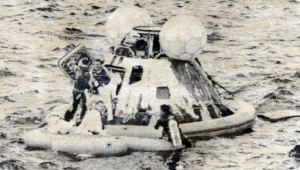
By this time the Command Module had been in “cold soak” for days. No one even knew for certain, if the thing would come back to life.
Crashing into the atmosphere at over 24,000mph, the capsule had 14 minutes in which to come to a full stop, splashing down in the waters of the Pacific Ocean. External temperatures on the CM reached 2,691° F, as the kinetic energy of re-entry was converted to heat.
The Apollo 13 mission ended safely with splashdown southeast of American Samoa on April 17, 1970, at 18:07:41 local time. Exhausted and hungry, the entire crew had lost weight. Haise had developed a kidney infection. Total duration was 142 hours, 54 minutes and 41 seconds.


 The Stuart King James had judges riding into the countryside once a year to hear cases, saving many of his subjects the arduous journey to London. The custom carried “across the pond” and, from the earliest days of the American colonies, judges could be found “riding the circuit”.
 In 1937, President Franklin Delano Roosevelt sought to increase the number of justices to 15. Then as now, the court was sharply divided along ideological lines, consisting of a four member conservative majority called the “four horsemen”, three liberals dubbed the “three musketeers” and two “swing votes”.
 There have been fewer justices in Supreme Court history than you might think. The recent passing of Antonin Scalia made way for only number 113.
 “There are some who believe that the president, having won the election, should have complete authority to appoint his nominee, that once you get beyond intellect and personal character, there should be no further question as to whether the judge should be confirmed. I disagree with this view”. The filibuster was joined by Senators Kennedy, Leahy, Durbin, Salazar, and Baucus.
 Senator Schumer once said, “We have three branches of government. We have a house, we have a senate, we have a president.” He got that wrong, but he was part right. We have three co-equal branches in our government, each having specific responsibilities as laid out in the Constitution.


 losing its National League team to Washington, DC. Only moments before, Padres’ President Buzzie Bavasi had to leave Kroc’s side to investigate concession area water in the clubhouse, when a leak was “promoted” to a flood.
 Buzzie Bavasi did the most to defuse the situation. Taking a cue from Rader’s comments, Bavasi designated the next game in the Houston series “Short Order Cook’s Night”. Any Padres fan who came wearing a chef’s hat, would be admitted into the game for free. Rader, the Astro’s team captain, took the lineup card to home plate wearing an apron with a chef’s hat, slipping the card off a skillet with a spatula and handing it over to the home plate umpire, like a pancake.


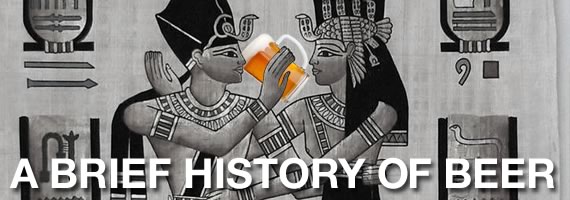


 Portable stills went on sale within a week, and organized smuggling was quick to follow. California grape growers increased acreage by over 700% over the first five years, selling dry blocks of grapes as “bricks of rhine” or “blocks of port”. The mayor of New York City sent instructions on wine making, to his constituents.
 Gaining convictions for breaking a law that everyone hated became increasingly difficult. There were over 7,000 prohibition related arrests in New York alone between 1921 and 1923. Only 27 resulted in convictions.
 “Dry” leaders tried to prohibit consumption of alcohol on military bases in 1941, but military authorities claimed it was good for morale. Brewers were required to allocate 15% of total annual production to be used by the armed forces. So essential were beer manufacturers to the war effort, that teamsters were ordered to end a labor strike against Minneapolis breweries. Near the end of WWII, the army made plans to operate recaptured French breweries, to ensure adequate supplies for the troops.
 18 states continued prohibition at the state level after the national repeal, the last state finally dropping it in 1966. Almost 2/3rds of all states adopted some form of local option, enabling residents of political subdivisions to vote for or against local prohibition. Some counties remain dry to this day. Ironically, Lynchburg County, Tennessee, home to the Jack Daniel distillery, is one such dry county.

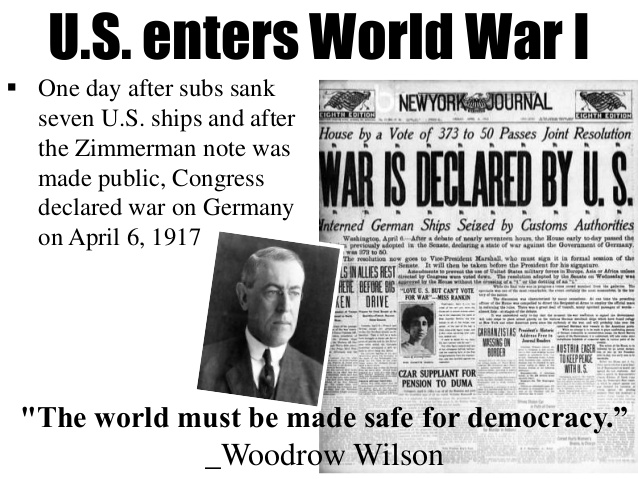
 In the early days of WWI, Imperial Germany attempted to comply with standards of maritime warfare, as established by the Hague Conventions of 1899 and 1907.
 The “Zimmermann Telegram” was intercepted and decoded by British intelligence and revealed to the American government on February 24. The contents of the message outraged American public opinion and helped generate support for the United States’ declaration of war.
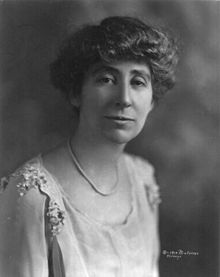


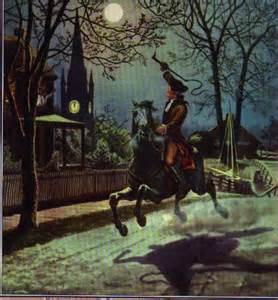 Paul Revere’s famous “midnight ride” began on the night of April 18, 1775. Revere was one of two riders, soon joined by a third, fanning out from Boston to warn of an oncoming column of “regulars”, come to destroy the stockpile of gunpowder, ammunition, and cannon in Concord.
 Patriot Colonel Joseph Cooke’s small Danbury garrison was caught and quickly overpowered on the 26th, trying to remove food supplies, uniforms, and equipment. Facing little if any opposition, Tryon’s forces went on a bender, burning homes, farms and storehouses. Thousands of barrels of pork, beef, and flour were destroyed, along with 5,000 pairs of shoes, 2,000 bushels of grain, and 1,600 tents.



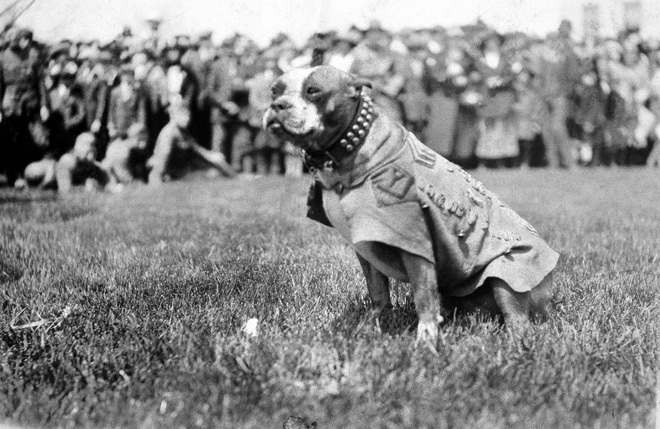
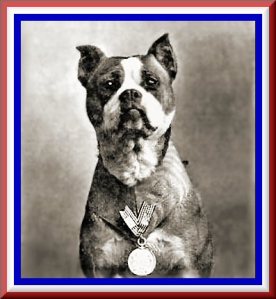 By the last year of WW1, the French, British and Belgians had at least 20,000 dogs on the battlefield, the Germans 30,000. General Headquarters of the American Expeditionary Forces recommended the use of dogs as sentries, messengers and draft animals in the spring of 1918. However, with the exception of a few sled dogs in Alaska, the US was the only country to take part in World War I with virtually no service dogs in its military.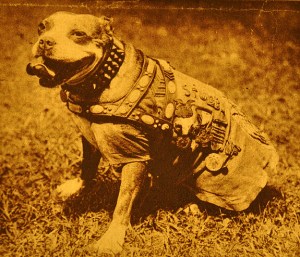
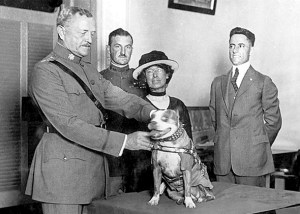 Stubby saw his first action at Chemin des Dames. Since the boom of artillery fire didn’t faze him, he learned to follow the men’s example of ducking when the big ones came close. It became a great game to see who could hit the dugout, first. After a few days, the guys were watching him for a signal. Stubby was always the first to hear incoming fire. We can only guess how many lives were spared by his early warning.


 Historical Easter Eggs - Today in History
You must be logged in to post a comment.