

Since the late 19th century, the area now known as Laos, Cambodia and Vietnam was governed as a French Colonial territory. “French Indo-China” came to be occupied by the Imperial Japanese after the fall of France, at the onset of WWII. There arose a nationalist-communist army during this period, dedicated to throwing out the Japanese occupier. It called itself the “League for the Independence of Vietnam”, or “Viet Minh”.
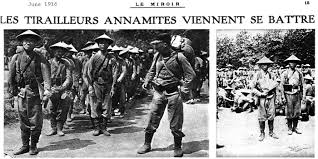 France re-occupied the region following the Japanese defeat ending WWII, but soon faced the same opposition from the army of Ho Chi Minh and Vo Nguyen Giap. What began as a low level rural insurgency, later became a full-scale modern war when Communist China entered the fray in 1949.
The disastrous defeat of French forces at Dien Bien Phu in 1953 led to French withdrawal from Vietnam, the Geneva Convention partitioning the country into the communist “Democratic Republic of Vietnam” in the north, and the State of Vietnam in the south, led by Emperor Bao Dai and Prime Minister Ngo Dinh Diem.
Communist forces of the north continued to terrorize Vietnamese patriots in north and south alike, with aid and support from communist China and the Soviet Union.
The student of history understands that nothing happens in a vacuum. US foreign policy is no exception. International Communism had attempted to assert itself since the Paris Commune rebellion of 1871, and found its first major success with the collapse of czarist Russia in 1917.
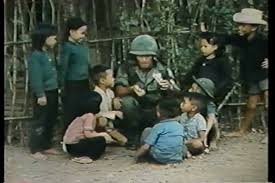 US policy makers feared a “domino” effect, and with good cause. The 15 core nations of the Soviet bloc were soon followed by Eastern Europe, as Poland, Bulgaria, Romania, Hungary and Czechoslovakia fell into the Soviet sphere of influence. Germany was partitioned into Communist and free-enterprise spheres after WWII, followed by China, North Korea and on across Southeast Asia.
This is no benign ideology. Current estimates of citizens murdered by Communist ideology in the Soviet Union alone, range from 8 to 61 million during the Stalinist period.
Agree or disagree with policy makers of the time, that’s your business, but they followed a logical thought process. US aid and support for South Vietnam increased as a way to “stem the tide” of international communism, at the same time that French support was pulling back. By the late 50s, the US was sending technical and financial aid in expectation of social and land reform. By 1960, the “National Front for the Liberation of South Vietnam” (“NLF”, or “Viet Cong”) had taken to murdering Diem supported village leaders. JFK responded by sending 1,364 American advisers into South Vietnam, in 1961.
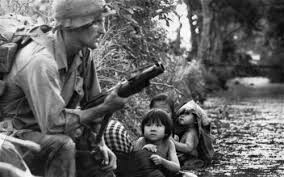
The war in Vietnam pitted as many as 1.8 million allied forces from South Vietnam, the United States, Thailand, Australia, the Philippines, Spain, South Korea and New Zealand, against about a half million from North Vietnam, China, the Soviet Union and North Korea. Begun on November 1, 1955, the conflict lasted 19 years, 5 months and a day. On March 29, 1973, two months after signing the Paris Peace accords, the last US combat troops left South Vietnam as Hanoi freed the remaining POWs held in North Vietnam.
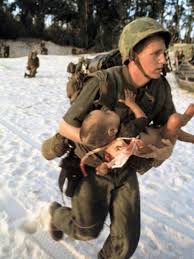 Even then it wasn’t over. Communist forces violated cease-fire agreements before they were signed. Some 7,000 US civilian Department of Defense employees stayed behind to aid South Vietnam in conducting an ongoing and ultimately futile war against communist North Vietnam.
The last, humiliating scenes of the war played themselves out on the roof of the US Embassy in Saigon on April 29 – 30, 1975, as those who could boarded helicopters, while communist forces closed around the South Vietnamese capital.
The “Killing Fields” of Cambodia followed between 1975 – ‘79, when the “Khmer Rouge”, self-described as “The one authentic people capable of building true communism”, murdered or caused the deaths of an estimated 1.4 to 2.2 million of their own people, out of a population of 7 million. All to build the perfect, agrarian, “Worker’s Paradise”.
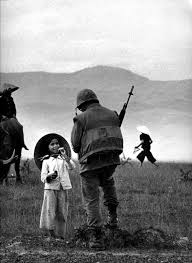 Imagine feeling so desperate, so fearful of this alien ideology invading your country, that you convert all your worldly possessions and those of your family to a single diamond, bite down on that stone so hard it embedded in your shattered teeth, and fled with your family to open ocean in a small boat. All in the faint and desperate hope, of getting out of that place. That is but one story among more than three million “boat people”. Three million from a combined population of 56 million, fleeing the Communist onslaught in hopes of temporary asylum in other countries in Southeast Asia or China.
They were the Sino-Vietnamese Hoa, and Cambodians fleeing the Khmer Rouge. Ethnic Laotians, Iu Mien, Hmong and other highland peoples of Laos. The 30 or so Degar (Montagnard) tribes in the Central Highlands, so many of whom had been our steadfast allies in the late war. Over 2.5 million of them were resettled, more than half to the United States. The other half went mostly to Canada, Europe and South Pacific nations. A half-million were repatriated, voluntarily or involuntarily. Hundreds of thousands vanished in their attempt to flee.
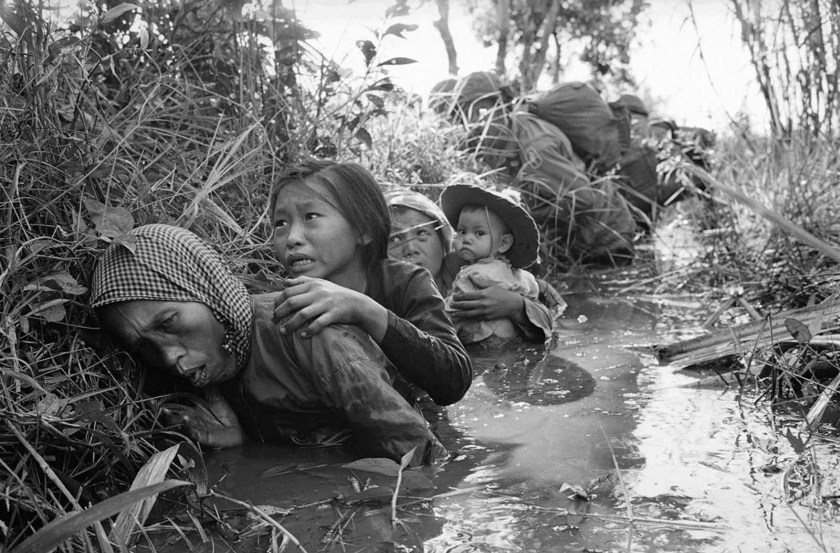
The humanitarian disaster that was the Indochina refugee crisis was particularly acute between 1979 – ’80, but reverberations continued into the 21st century.
Today, we remember John Ogonowski as Senior Captain on American Airlines flight 11, one of thousands killed by Islamist terrorists, on September 11, 2001. When he wasn’t flying jumbo jets, John Ogonowski was a farmer. For years, John mentored Cambodian farmers on his Dracut, Massachusetts “White Gate Farm“, helping them grow familiar crops, in an unfamiliar climate. Just as those old Yankee farmers had mentored his Polish immigrant ancestors, years before.


There were 57,939 names inscribed on the Vietnam Memorial Wall, the day it opened in 1982. Over the years, the names of military personnel who succumbed to wounds sustained in the war, were added to the wall. As of Memorial Day 2015, there are 58,307.

In the end, US public opinion would not sustain what too many saw as an endless war. We continue to feel the political repercussions, to this day. I was ten at the time of the Tet Offensive in 1968. I remember the way some of my fellow Americans conducted  themselves, and came to feel as I do to this day, that anyone who has a problem with our country’s war policy, needs to take it up with a politician. Not with a member of the Armed Services.
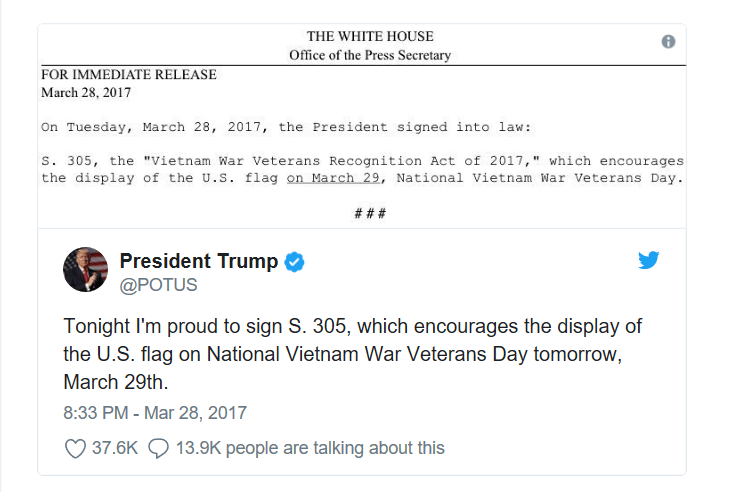
In 2017, Senator Pat Toomey (R-PA) and Joe Donnelly (D-IN) co-sponsored a measure to declare March 29 Vietnam Veterans Day, to honor US service members who served in the war in southeast Asia. The measure passed the House of Representatives on March 21 and the Senate on February 3. President Donald Trump signed the measure into law on March 28, designating the following day, March 29, Vietnam Veteran’s Day.
It’s about time.

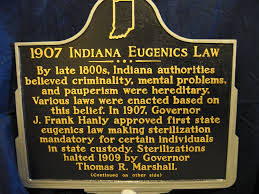
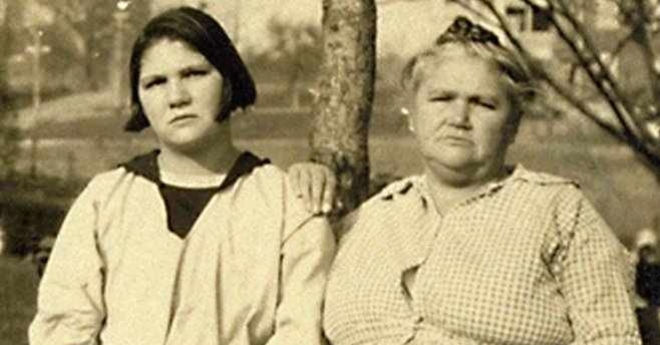
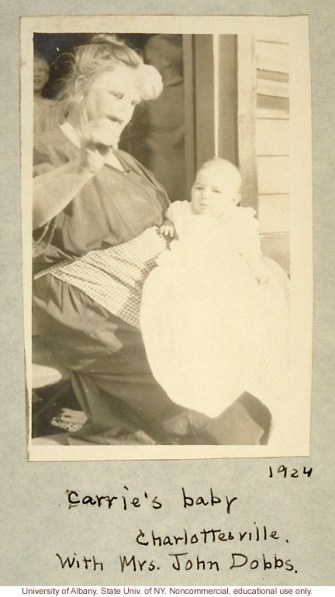
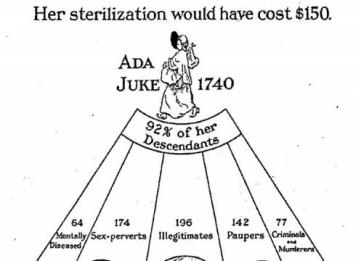 In the 19th century, Francis Galton studied the theories of his cousin Charles Darwin on the evolution of species, applying them to a system of selective breeding intended to bring “better” human beings into the world. He called it his theory of “Eugenics”.
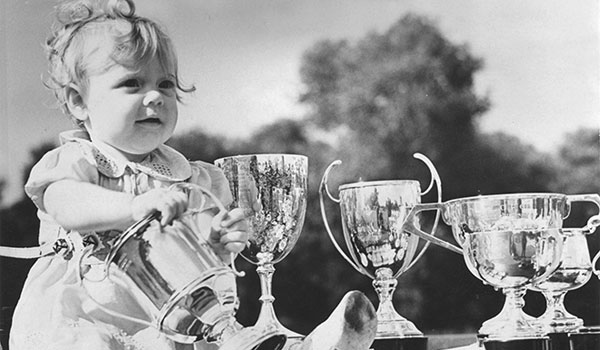
 “Better Babies” competitions sprang up at state fairs across the United States, where babies were measured, weighed, and “judged”. Like livestock. By the 20s, these events had evolved into “Fitter Family” competitions.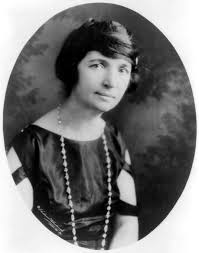
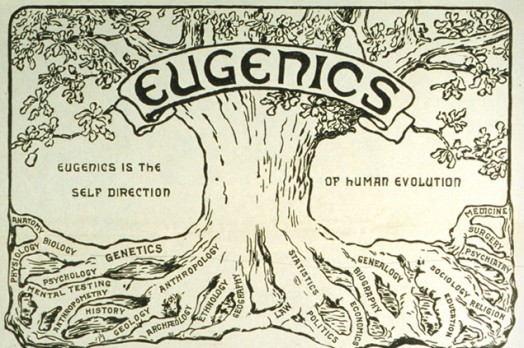
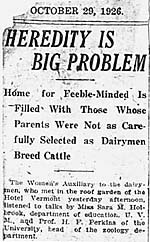 The 1912 conference was followed by two more in 1921 and 1932, both held in New York City. Colleges and universities delved into eugenics as academic discipline, with courses exploring the ethical and public policy considerations of eliminating the “degenerate” and “unfit”.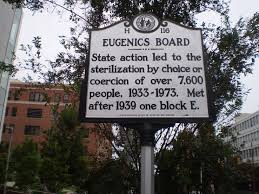


 In 1620, the 60-ton Pinnace Speedwell departed Delfshaven, meeting with Mayflower at Southampton, Hampshire. The two vessels set out on August 15, but soon had to turn back as Speedwell was taking on water. Speedwell was abandoned after a second failed attempt, Mayflower setting out alone on September 16, 1620, with an estimated 142 passengers and crew.
 As anyone familiar with the area will understand, a month in that place and time convinced them of its unsuitability. By mid-December the Mayflower had crossed Cape Cod Bay and fetched up at Plimoth Harbor.


 Years later, colonists would go to war against the Wampanoag people and ‘King Philip’, the English name for Metacomet, the son of Massasoit. The Nauset would act as warriors and scouts against the Wampanoag people in King Philip’s War, a conflict which killed some 5,000 New England inhabitants, three quarters of whom were indigenous people.

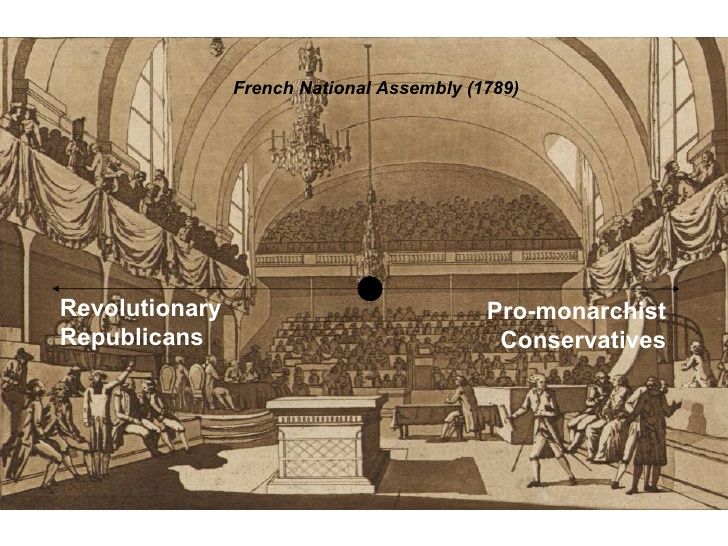 By that time it wasn’t just the “Party of Order” on the right and the “Party of Movement” on the left. Now, the terms began to describe nuances in political philosophy, as well.

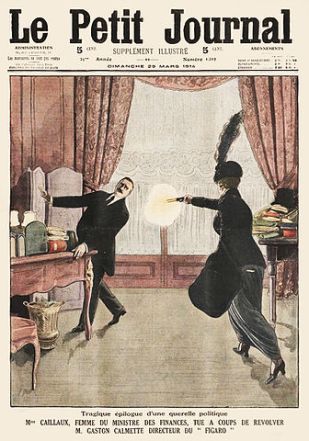 The July Crisis of 1914 was a series of diplomatic maneuverings, culminating in the ultimatum from Austria-Hungary to the Kingdom of Serbia. Vienna, with tacit support from Berlin, made plans to punish Serbia for her role in the assassination, while Russia mobilized armies in support of her Slavic ally.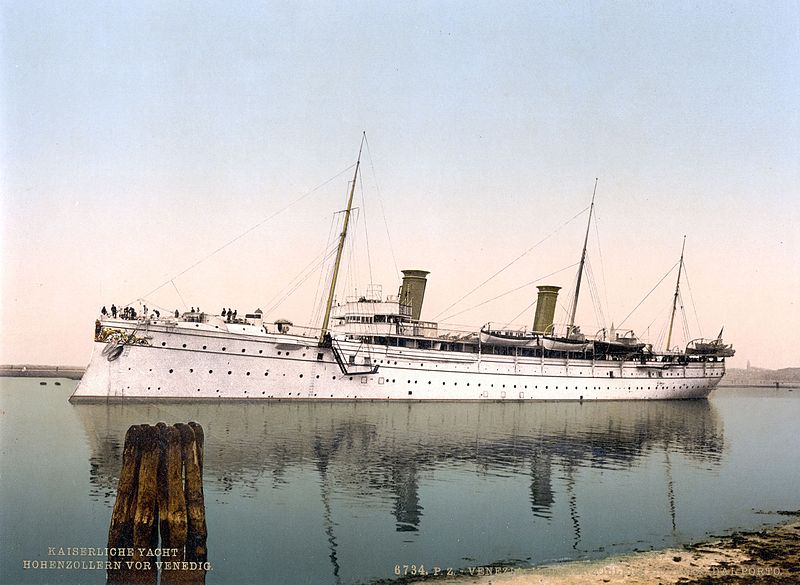
 In the days that followed, the Czar would begin the mobilization of men and machines which would place Imperial Russia on a war footing. Kaiser Wilhelm’s Germany invaded Belgium, in pursuit of the one-two punch strategy by which it sought first to defeat France, before turning to face the “Russian Steamroller”. England declared war in support of a 75-year-old commitment to protect Belgian neutrality, a treaty obligation German diplomats had dismissed as a “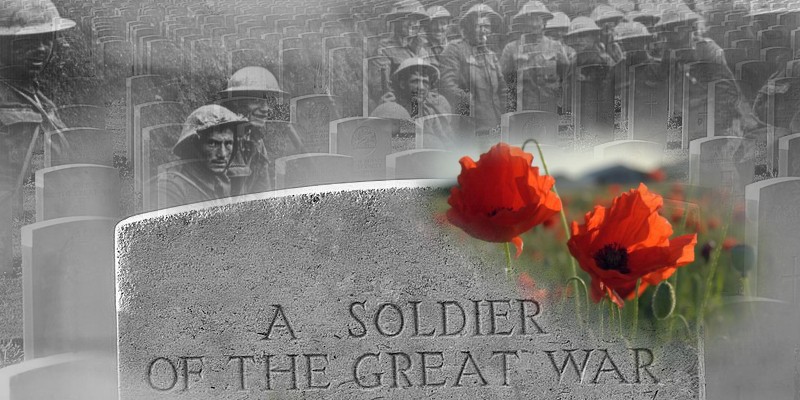


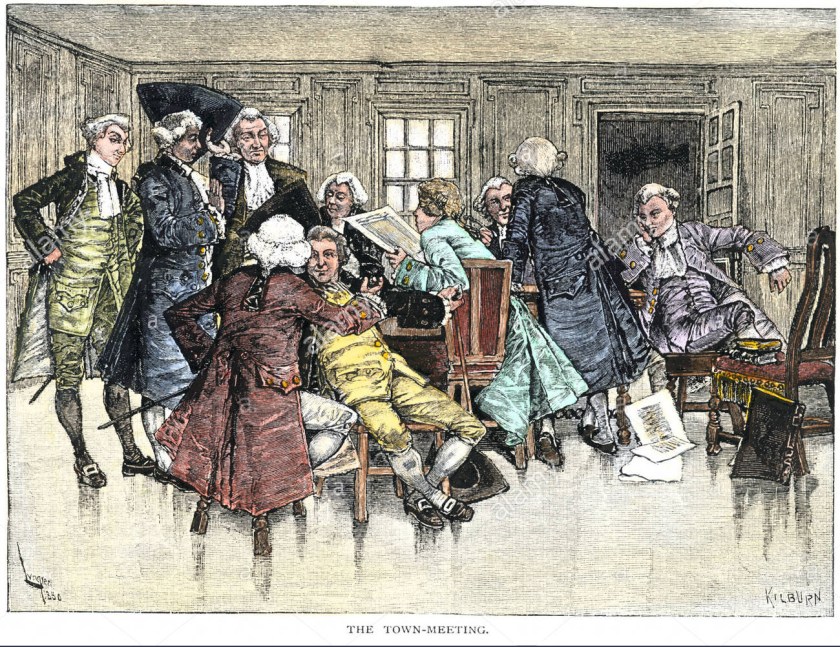
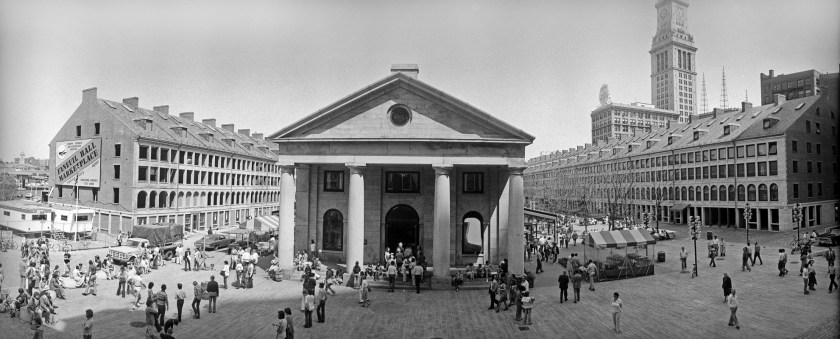
 Town meetings have been more prevalent in New England states, but not exclusively. Michigan was the first Midwestern state to adopt the system, and Minnesota townships of more than 25 regularly hold town meeting.


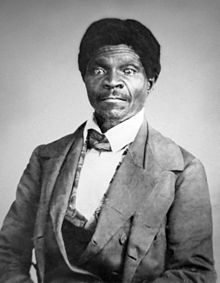
 Dr. Emerson died in 1842, leaving his estate to his wife Eliza, who continued to lease the Scotts out as hired slaves.


 Far-left anarchists mailed no fewer than 36 dynamite bombs to prominent political and business leaders in April 1919, alone. In June, another nine far more powerful bombs destroyed churches, police stations and businesses.
 To this day there are those who describe the period as the “First Red Scare”, as a way to ridicule the concerns of the era. The criticism seems unfair. The thing about history, is that we know how their story ends. The participants don’t, any more than we know what the future holds for ourselves.
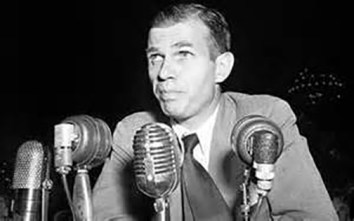
 Before defecting from the Left, Chambers had secreted documents and microfilms, some of which he hid inside a pumpkin at his Maryland farm. The collection was known as the “Pumpkin Papers”, consisting of incriminating documents, written in what appeared to Hiss’ own hand, or typed on his Woodstock no. 230099 typewriter.
 Hiss’ theory never explained why Chambers side needed another typewriter, if they’d had the original long enough to mimic its imperfections with a second.


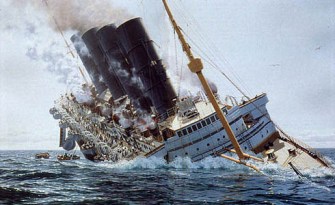 Though Wilson didn’t mention it directly, HMS Lusitania had been torpedoed only three days earlier with the loss of 1,198, 128 of whom were Americans.
 The reaction to the Lusitania sinking was immediate and vehement, portraying the attack as the act of barbarians and huns and demanding a German return to “prize rules”, requiring submarines to surface and search merchantmen while placing crews and passengers in “a place of safety”.
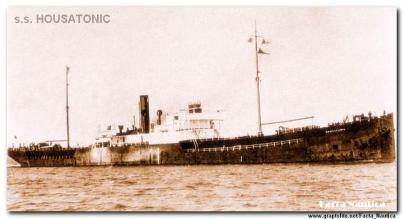 The American cargo vessel SS Housatonic was stopped off the southwest coast of England on February 3, and boarded by German submarine U-53. Captain Thomas Ensor was interviewed by Kapitänleutnant Hans Rose, who explained he was sorry, but Housatonic was “carrying food supplies to the enemy of my country”. She would be destroyed. The American Captain and crew were allowed to launch lifeboats and abandon ship, while German sailors raided the American’s soap supplies. Apparently, WWI-vintage German subs were short on soap.
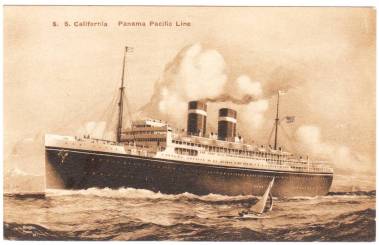 President Woodrow Wilson retaliated, breaking off diplomatic relations with Germany the following day. Three days later, a German U-boat fired two torpedoes at the
 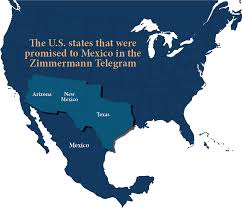 The contents of Zimmermann’s note were published in the American media on March 1. Even then, there was considerable antipathy toward the British side, particularly among Americans of German and Irish ethnicity. “Who says this thing is genuine, anyway”, they might have said. “Maybe it’s a British forgery”.


 Estimates of the Alamo garrison have ranged between 189 and 257 at this stage, but current sources indicate that defenders never numbered more than 200.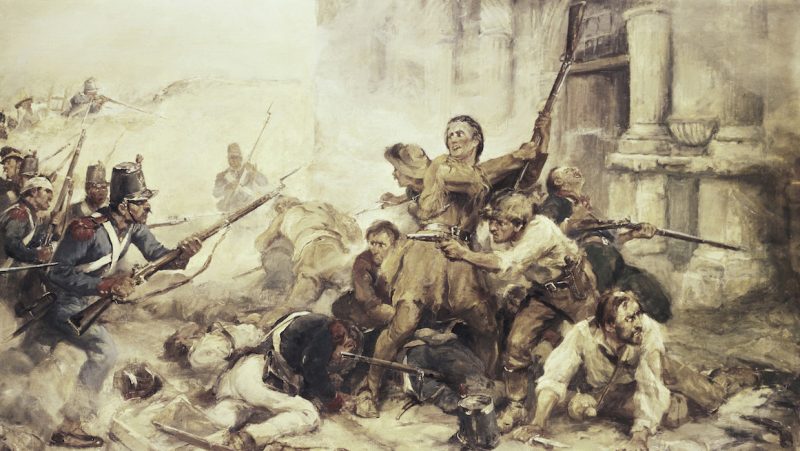


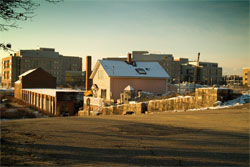
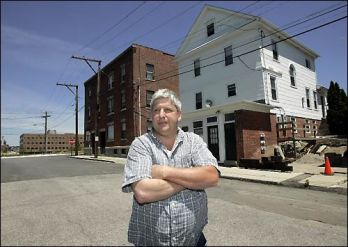

 Eminent domain exists for a purpose, but the most extreme care should be taken in its use. Plaintiffs argued that this was not a “public use”, but rather a private corporation using the power of government to take their homes for economic development, a violation of both the takings clause of the 5th amendment and the due process clause of the 14th.
 Clarence Thomas took an originalist view, stating that the majority opinion had confused “Public Use” with “Public Purpose”. “Something has gone seriously awry with this Court’s interpretation of the Constitution“, Thomas wrote. “Though citizens are safe from the government in their homes, the homes themselves are not“. Antonin Scalia concurred, seeing any tax advantage to the municipality as secondary to the taking itself.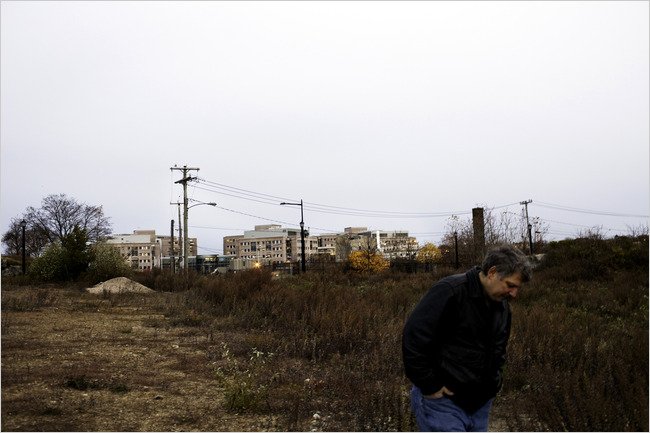


You must be logged in to post a comment.