

Yonaguni Island, the westernmost inhabited island of the Japanese archipelago, lies about 60 miles across the straits of Taiwan. The place is a popular dive destination, due to (or possibly despite) a large population of hammerhead sharks.

In 1987, divers discovered an enormous stone formation, with angles and straight lines seemingly too perfect to have been formed by nature. If this “Yonaguni Monument” is in fact a prehistoric stone megalith, it would have to have been carved 8,000 to 10,000 years ago when the area was last dry, radically changing current ideas about prehistoric construction.
A map of the world is dotted with such ancient stone megaliths, from Easter Island in the South Pacific to the Carnac Stones of France, and the stone spheres of Costa Rica. Among all of them, there is no story more mysterious, or more tragic, than the Plain of Jars.
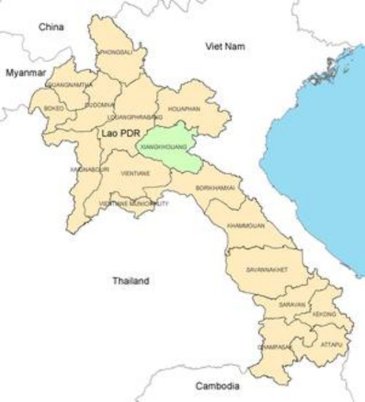
Deep in the heart of the Indochinese peninsula of mainland Southeast Asia lies the Lao People’s Democratic Republic, (LPDR), informally known as Muang Lao or just Laos. To the north of the country lies the Xiangkhouang Plateau, known in French as Plateau du Tran-Ninh, situated between the Luang Prabang mountain range separating Laos from Thailand, and the Annamite Range along the Vietnamese border.
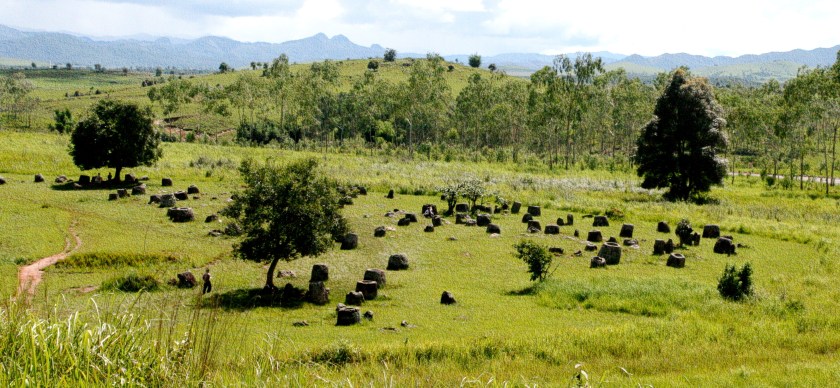
Twenty-five hundred to fifteen-hundred years ago, a now-vanished race of bronze and iron age craftsmen carved stone jars out of solid rock, ranging in size from 3 ft. to 9 ft. or more. There are thousands of these jars, located at 90 separate sites and containing between one and four hundred apiece.
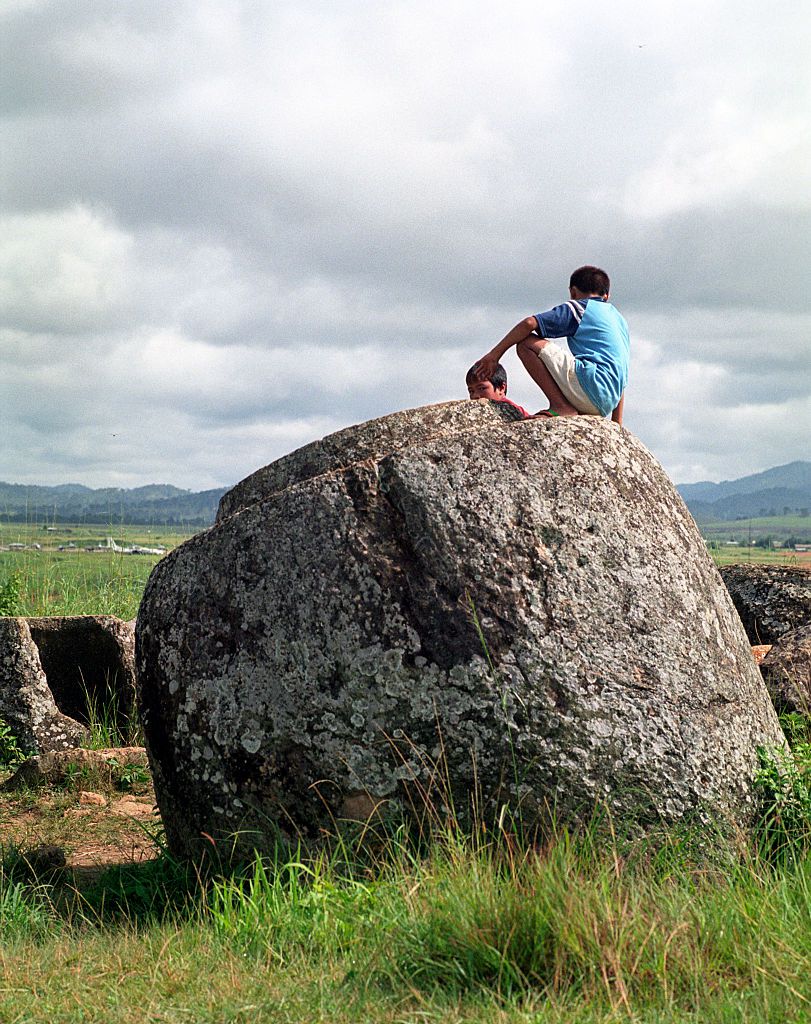
Most of these jars have carved rims but few have lids, leading researchers to speculate that lids were formed from organic material such as wood or leather.
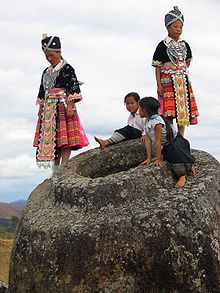
Lao legend has it that the jars belonged to a race of giants, who chiseled them out of sandstone, granite, conglomerate, limestone and breccia to hold “lau hai”, or rice beer. More likely they were part of some ancient funerary rite, where the dead and the about-to-die were inserted along with personal goods and ornaments such as beads made of glass and carnelian, cowrie shells and bronze bracelets and bells. There the deceased were “distilled” in a sitting position, later to be removed and cremated, their remains then going through secondary burial.
These “Plain of Jars” sites might be some of the oldest burial grounds in the world, but be careful if you go there. The place is the most dangerous archaeological site, on earth.
With the final French stand at Dien Bien Phu a short five months in the future, France signed the Franco–Lao Treaty of Amity and Association in 1953, establishing Laos as an independent member of the French Union. The Laotian Civil War broke out that same year between the Communist Pathet Lao and the Royal Lao Government, becoming a “proxy war” where both sides received heavy support from the global Cold War superpowers.
Concerned about a “domino effect” in Southeast Asia, US direct foreign aid to Laos began as early as 1950. Five years later the country suffered a catastrophic rice crop failure. The CIA-operated Civil Air Transport (CAT) flew over 200 missions to 25 drop zones, delivering 1,000 tons of emergency food. By 1959, the CIA “air proprietary” was operating fixed and rotary wing aircraft in Laos, under the renamed “Air America”.
 The Geneva Convention of 1954 partitioned Vietnam at the 17th parallel, and guaranteed Laotian neutrality. North Vietnamese communists had no intention of withdrawing from the country or abandoning their Laotian communist allies, any more than they were going to abandon the drive for military reunification, with the south.
Chief of Naval Operations Admiral Arleigh Burke warned the Joint Chiefs of Staff, “If we lose Laos, we will probably lose Thailand and the rest of Southeast Asia. We will have demonstrated to the world that we cannot or will not stand when challenged”.
As the American war ramped up in Vietnam, the CIA fought a “Secret War” in Laos, in support of a growing force of Laotian highland tribesmen called the Hmong, fighting the leftist Pathet Lao and North Vietnamese communists.
Primitive footpaths had existed for centuries along the Laotian border with Vietnam, facilitating trade and travel. In 1959, Hanoi established the 559th Transportation Group under Colonel Võ Bẩm, improving these trails into a logistical system connecting the Democratic Republic of Vietnam in the north, to the Republic of Vietnam in the south. At first just a means of infiltrating manpower, this “Hồ Chí Minh trail” through Laos and Cambodia soon morphed into a major logistical supply line.
In the last months of his life, President John F. Kennedy authorized the CIA to increase the size of the Hmong army. As many as 20,000 Highlanders took arms against far larger communist forces, acting as guerrillas, blowing up NVA supply depots, ambushing trucks and mining roads. The response was genocidal. As many as 18,000 – 20,000 Hmong tribesman were hunted down and murdered by Vietnamese and Laotian communists.
Air America helicopter pilot Dick Casterlin wrote to his parents that November, “The war is going great guns now. Don’t be misled [by reports] that I am only carrying rice on my missions as wars aren’t won by rice.”
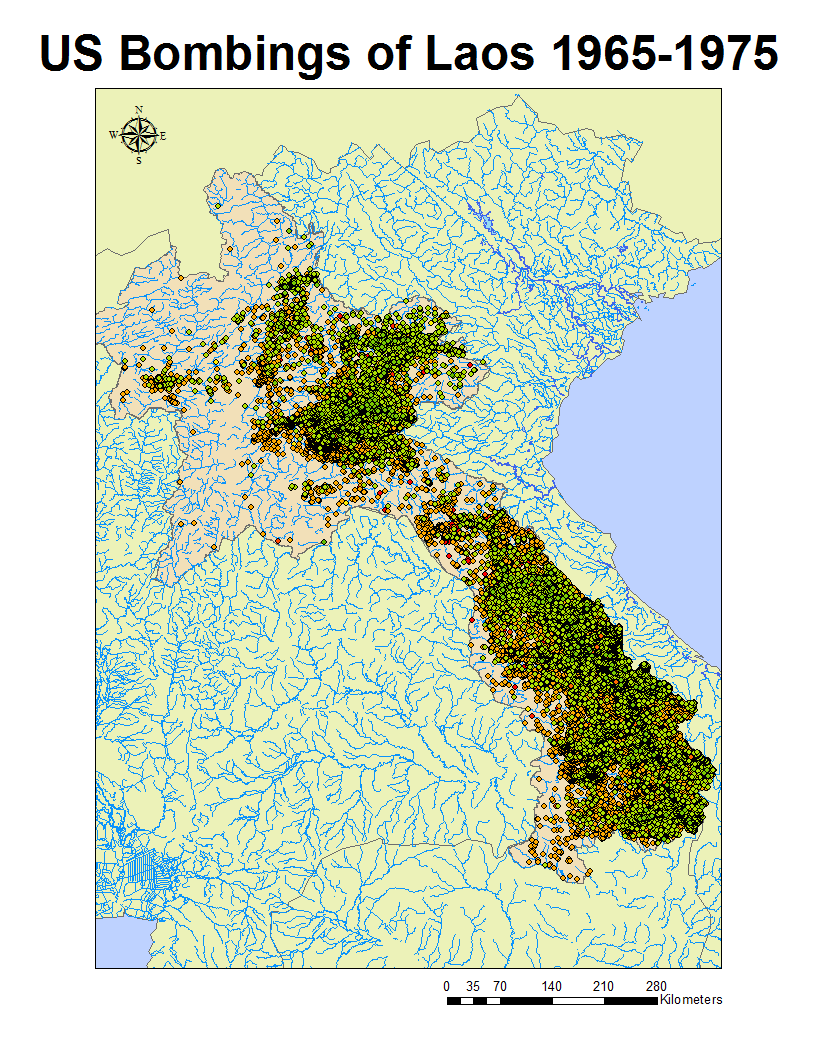
The proxy war in Laos reached a new high in 1964, in what the agency itself calls “the largest paramilitary operations ever undertaken by the CIA.” In the period 1964-’73, the US flew some 580,344 bombing missions over the Hồ Chí Minh trail and Plain of Jars, dropping an estimated 262 million bomb. Two million tons, equivalent to a B-52 bomber full of bombs every eight minutes, 24 hours a day, for nine years. More bombs than US Army Air Forces dropped in all of WW2, making Laos the most heavily bombed country, per capita, in history.
Most were “cluster munitions”, bomb shells designed to open in flight, showering the earth with hundreds of “bomblets” intended to kill people and destroy vehicles. It’s been estimated that 30% of these munitions failed to explode, 80 million of them, (the locals call them “bombies”), set to go off with the weight of a foot, or a wheel, or the touch of a garden hoe.
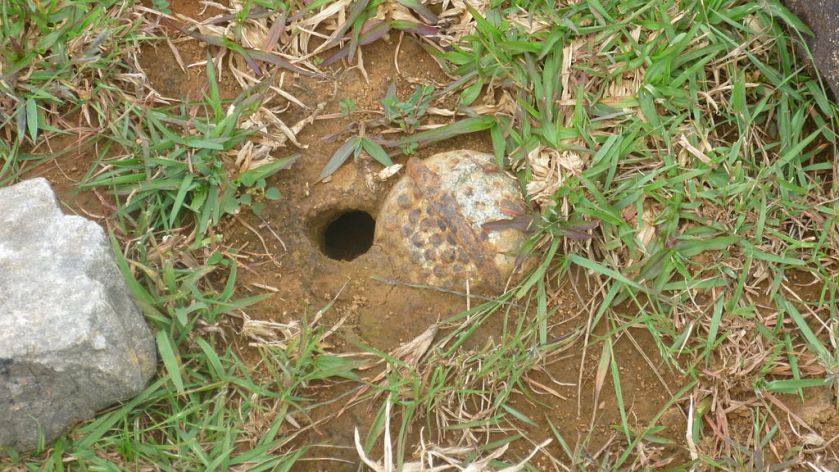
Since the end of the war, some 20,000 civilians have been killed or maimed by unexploded ordnance, called “UXO”. Four in ten of those, are children.
Removal of such vast quantities of UXO is an effort requiring considerable time and money and no small amount of personal risk. The American Mennonite community became pioneers in the effort in the years following the war, one of the few international Non-Governmental Organizations (NGO’s) trusted by the habitually suspicious communist leadership of the LPDR.
 On February 18, 1977, Murray Hiebert, now senior associate of the Southeast Asia Program at the Center for Strategic and International Studies (CSIS) in Washington, D.C. summed up the situation in a letter to the Mennonite Central Committee, US: “…a formerly prosperous people still stunned and demoralized by the destruction of their villages, the annihilation of their livestock, the cratering of their fields, and the realization that every stroke of their hoes is potentially fatal.”
Years later, Unesco archaeologists worked to unlock the secrets of the Plain of Jars, working side by side with ordnance removal teams.
In 1996, United States Special Forces began a “train the trainer” program in UXO removal, at the invitation of the LPDR government. Even so, Western Embassy officials in the Laotian capitol of Vientiane believed that, at the current pace, total removal will take “several hundred years”.
In 2004, bomb metal fetched 7.5 Pence Sterling, per kilogram. That’s eleven cents, for just over two pounds. Unexploded ordnance brought in 50 Pence per kilogram in the communist state, inviting young and old alike to attempt the dismantling of an endless supply of BLU-26 cluster bomblets. For seventy cents apiece.


If you enjoyed this “Today in History”, please feel free to re-blog, “like” & share on social media, so that others may find and enjoy it as well. Please click the “follow” button on the right, to receive email updates on new articles. Thank you for your interest, in the history we all share.



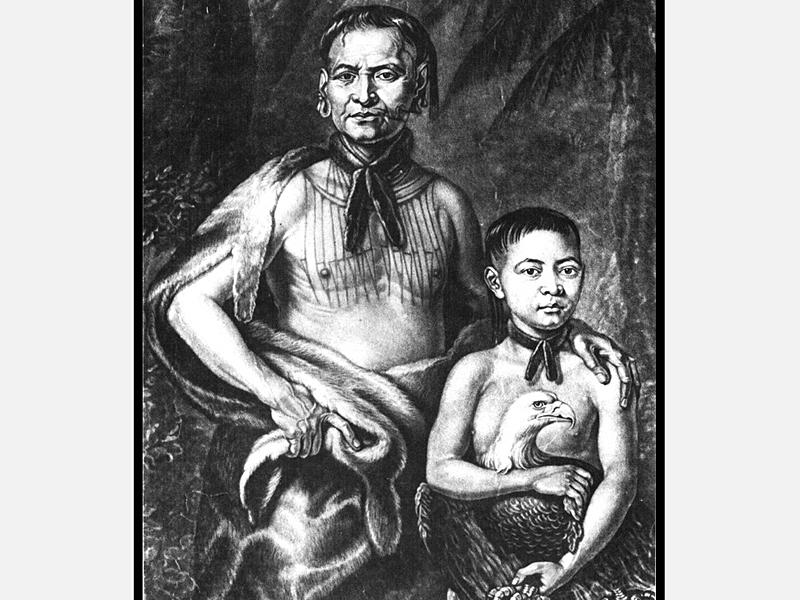


 Elbridge Gerry was born in 1744, in the north shore Massachusetts town of Marblehead. Gerry spent most of his adult life in public office, excepting a ten-year period in the family codfish packing business. First elected to the state legislature in 1772, Gerry died in office in 1814, while serving as Vice President under President James Madison.
 Benjamin Russell was a newspaper editor, and ardent Federalist. The painter Gilbert Stuart commented on the new district map hanging over Russell’s desk, saying “That will do for a salamander.” “Better say a Gerry-mander!” was Russell’s reply. A cartoonist added head, wings, and claws. The cartoon map and the name appeared in the Boston Gazette within the month.
 In the 1960s, gerrymandering was used to “crack” the voting strength of black and urban voters. A 1962 Supreme Court decision ruled that electoral districts must reflect the principle of “one man, one vote”. A 1985 decision ruled it unconstitutional to alter election districts to favor of any political party.
 Here in the home of the Gerrymander, Barney Frank’s old 4th congressional district resembles nothing so much as a grasping hand. I’m not sure if the new congressional map is much of an improvement, but hey. It seems to work for the ruling class.

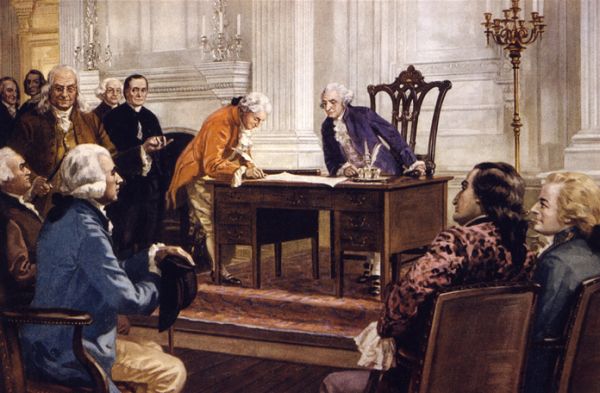
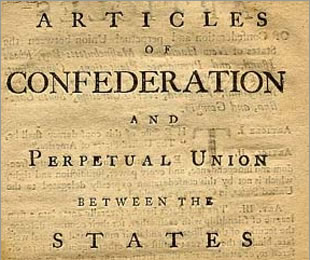 Twelve of the original thirteen states ratified these “Articles of Confederation” by February, 1779. Maryland held out for another two years, over land claims west of the Ohio River. In 1781, seven months before Cornwallis’ surrender at Yorktown, the 2nd Continental Congress formally ratified the Articles of Confederation. The young nation’s first governing document.
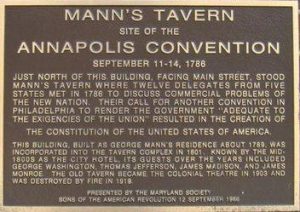 The Union would probably have broken up, had not the Articles of Confederation been amended or replaced. Twelve delegates from five states met at Mann’s Tavern in Annapolis Maryland in September 1786, to discuss the issue. The decision of the Annapolis Convention was unanimous. Representatives from all the states were invited to send delegates to a constitutional convention in Philadelphia, the following May.
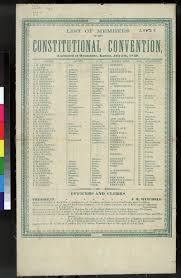 25, 1787. The building is now known as Independence Hall, the same place where the Declaration of Independence and the Articles of Confederation were drafted.
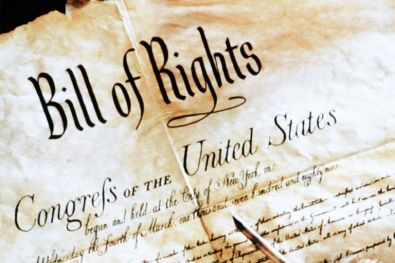 On September 25, the first Congress adopted 12 amendments, sending them to the states for ratification.

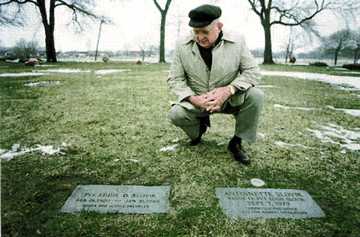
 Edward Donald “Eddie” Slovik was paroled in 1942, his criminal record making him 4F. “Registrant not acceptable for military service”. He took a job at the Montella Plumbing and Heating company in Dearborn, Michigan, where he met bookkeeper Antoinette Wisniewski, the woman who would later become his wife.
 The rapid movement of the army during this period caused difficulty for many replacements, in finding their units. Edward Slovik and John Tankey finally caught up with the 109th on October 7. The following day, Slovik asked his company commander Captain Ralph Grotte for reassignment to a rear unit, saying he was “too scared” to be part of a rifle company. Grotte refused, confirming that, were he to run away, such an act would constitute desertion.
 “I, Pvt. Eddie D. Slovik, 36896415, confess to the desertion of the United States Army. At the time of my desertion we were in Albuff [Elbeuf] in France. I came to Albuff as a replacement. They were shelling the town and we were told to dig in for the night. The following morning they were shelling us again. I was so scared, nerves and trembling, that at the time the other replacements moved out, I couldn’t move. I stayed there in my fox hole till it was quiet and I was able to move. I then walked into town. Not seeing any of our troops, so I stayed over night at a French hospital. The next morning I turned myself over to the Canadian Provost Corp. After being with them six weeks I was turned over to American M.P. They turned me loose. I told my commanding officer my story. I said that if I had to go out there again I’d run away. He said there was nothing he could do for me so I ran away again AND I’LL RUN AWAY AGAIN IF I HAVE TO GO OUT THERE. — Signed Pvt. Eddie D. Slovik A.S.N. 36896415”.
 1.7 million courts-martial were held during WWII, 1/3rd of all the criminal cases tried in the United States during the same period. The death penalty was rarely imposed. When it was, it was almost always in cases of rape or murder.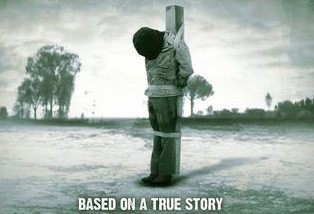


 Iva Ikuko Toguri was born in Los Angeles on July 4, 1916, the daughter of Japanese immigrants. She attended schools in Calexico and San Diego, returning to Los Angeles where she enrolled at UCLA, graduating in January, 1940 with a degree in zoology.
 She called herself “Orphan Annie,” earning 150 yen per month (about $7.00 US). She wasn’t a professional radio personality, but many of those who recalled hearing her enjoyed the program, especially the music.

 d’Aquino was sentenced to ten years and fined $10,000 for the crime of treason, only the seventh person in US history to be so convicted. She was released from the Federal Reformatory for Women at Alderson, West Virginia in 1956, having served six years and two months of her sentence.


 The United States had been in World War II for two years in 1943, when Claude Wickard, head of the War Foods Administration as well as Secretary of Agriculture, had the hare brained idea of banning sliced bread.
 Article 1, Section 8 of the Constitution includes the “Commerce Clause”, permitting the Congress “To regulate Commerce with foreign Nations, and among the several States, and with the Indian Tribes”. That’s it and, not surprisingly, the Federal District Court sided with the farmer.
 The Supreme Court, apparently afraid of President Roosevelt and his aggressive and illegal “
 The stated reasons for the ban never did make sense. At various times, Wickard claimed that it was to conserve wax paper, wheat and steel, but one reason was goofier than the one before.


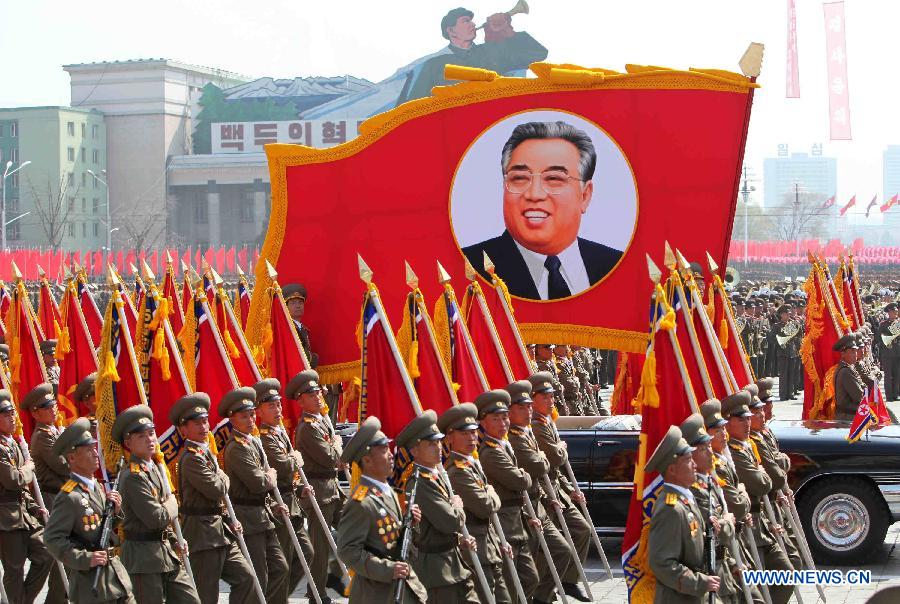
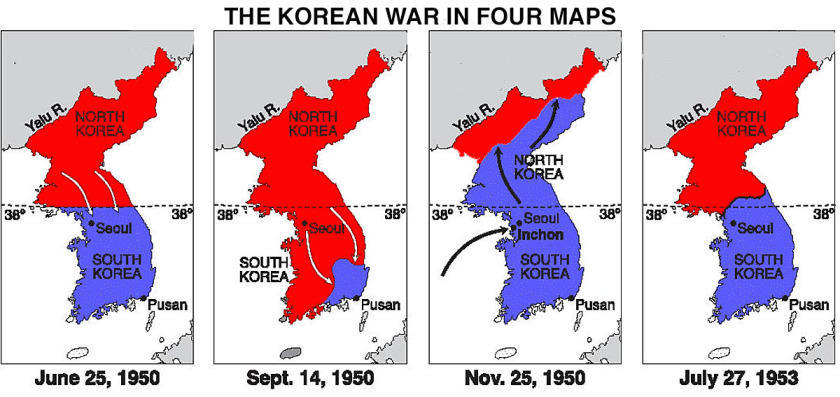 Sixteen countries sent troops to South Korea’s aid, about 90% of whom were Americans. The Soviets sent material aid to the North, while Communist China sent troops. The Korean War lasted three years, causing the death or disappearance of over 2,000,000 on all sides, combining military and civilian.
 The night-time satellite image of the two Koreas, tells the story of what happened next. In the south, the Republic of Korea (ROK) developed into a successful constitutional Republic, a G-20 nation with an economy ranking 11th in the world in nominal GDP, and 13th in terms of purchasing power parity.
 Son of the founder of the Juche Ideal, Kim Jung Il, was an enthusiastic film buff. In a move that would make Caligula blush, Kim had South Korean film maker Shin Sang Ok kidnapped along with his actress ex-wife, Choi Eun Hee. After four years spent starving in a North Korean gulag, the couple accepted Kim’s “suggestion” to re-marry and go to work for him, producing the less-than-box-office-smash “Pulgasari”, a kind of North Korean Godzilla film.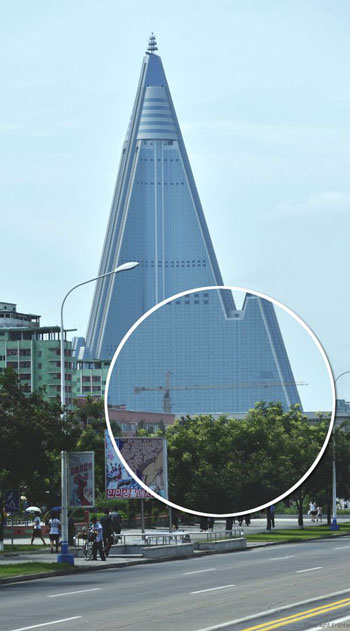


 Over time, the solution to the meat question became a matter of doubling down on what we’re already doing, as factory farms and confinement operations took the place of free ranges, and massive use of antibiotics replaced the idea of balanced biological systems.


You must be logged in to post a comment.