

The study of warfare has rarely been a source of great mirth. The history of human conflict is hardly a subject for humor, yet there are times when the irony rises from the ridiculous, to the sublime.
Confederate raider John Singleton Mosby, the “Grey Ghost“, once bagged Union General Edwin Stoughton while dead asleep, lifting the General’s nightshirt and slapping his bare ass, with a sword. Mosby and his 29 raiders made off with the Union General, two Captains, 30 enlisted men and 58 horses, without firing a shot. When the President heard the story, Lincoln lamented: “I can make another Brigadier in 5 minutes, but I can’t replace those horses”.
 In the middle ages, a French soldier once saw fit to mouth off to an Italian woman on her way home from church, causing France to lose Sicily, to Spain.
At least one WWI battle was called off, on account of an amphibious landing force being attacked, by bees.
The same occurred outside Okalana, Arkansas on April 3, 1864. Union and Confederate troops got into it in a pecan orchard, overturning several hives of honeybees, in the process. If victory goes to he who holds the ground after the battle, this one must go neither to Blue nor Butternut, but to the bugs. Brave soldiers all, no doubt, prepared to take a bullet. But not a bee sting.
120,000 Chinese troops poured into North Korea between November 27 and December 13 1950, overwhelming 20,000 American and United Nations forces at the Chosin Reservoir. Desperately low on ammunition, one Marine Corps mortar division called in re-supply, by parachute. The battle of the “Frozen Chosin” might have ended differently, had some supply clerk understood the code-name for mortar shells was “Tootsie Rolls”. As it was, the guy sent candy into the combat zone. At least those Marines had something to eat, as they broke their encirclement and headed south.

Speaking of sweet stuff. Had the Romans of 48BC brushed up on their Xenophon, the Mithradatic wars may have ended sooner. Roman troops pigged out on “Mad Honey” left for them by fleeing Persians, and were too stoned to defend themselves when they came back. A thousand or more Romans were slaughtered, with few losses to the other side. All of that, for a little taste of honey.
 In 585BC, the battle between the Medes and Lydians was stopped in its tracks, on account of a solar eclipse. In the 3rd Mithradatic War of 76-63BC, a meteor was enough to do the trick.
Who can forget that WW2 bomb disposal tech, Melvin Kaminsky. Hearing German soldiers singing a beer hall song, Kaminsky grabbed a bullhorn and serenaded them back, crooning out an old tune that Al Jolson used to sing, in black face: “Toot Toot Tootsie, Goodbye”. After he was done, polite applause could be heard, drifting across the river. In all military history, there may be one soldier who’d even think about entertaining his adversary. Melvin Kaminsky did it. We remember him today, as Mel Brooks.
 So, yes, there is irony when men make war, if not always humor. Yet, in all the annals of warfare, there may be no episode more amusing, than the time a naval force was defeated by men on horseback.
In early 1793, Austria, Prussia, Spain, Great Britain and the Dutch Republic formed the first of seven coalitions to oppose the French Republic.
France declared war on its neighbor to the north. By the end of the following year, many of Holland’s provinces as well as those of the Austrian Netherlands, were overrun.
The winter of 1794-95 was brutally cold. A number of Dutch ships sought shelter near the North Sea village of den Helder, becoming icebound near the mouth of a shallow bay called the Zuiderzee.
General Johan Willem de Winter, a former Dutch naval officer, had been in service to the Grande Armée since 1787. On the night of January 23, de Winter arrived at the head of a regiment of “hussars”, the French light cavalry. The following morning, a number of horsemen rode out over the ice to the Dutch ship-of-the-line “Admiraal Piet Heyn”, demanding its surrender. The surgeon aboard another ship, the “Snelheid”, blithely wrote “On Saturday morning, my servant informed me that a French hussar stood near our ship. I looked out my porthole, and indeed, there stood an hussar.”

This was a significant part of the Dutch fleet, 15 ships, 11 of which were manned and seaworthy. The whole thing was now in the hands of French cavalry.
At least one source will tell you the event never occurred, or at least it’s embellished , as retold by the hussars themselves. I guess you can take your pick. A number of 19th century authors have portrayed the episode as unvarnished history, as have any number of paintings and sketches.

In February 1846, French Lieutenant-General Baron Lahure published a letter in the newspaper “Echo de la Frontière”, describing the event:
“I departed immediately with a company of tirailleurs in wagons and a squadron of light cavalry; before dawn I had taken position in the dunes. When the ships saw us, they prepared their defences. I sent some tirailleurs ahead, and followed with the rest of my forces. The fleet was taken. The sailors received us ‘de bonne grace’ on board… This is the true story of the capture of the Dutch fleet, devised and executed by a 23 year old Chef de Bataillion”.
Archibald Gordon Macdonell included the episode in his 1934 “Napoleon and his Marshals”. It’s one of those stories that I Want to be true, even if it isn’t. “(When) the ragged men” Macdonell wrote, “thundered on their horses across the ice to capture with naked swords the battlefleet of Holland”. The only time in recorded history, a naval fleet was captured by a cavalry charge.


 The happy couple had yet to meet when the marriage was performed by proxy, the bride remaining in Vienna while the groom stayed in Paris. At 12 she was now the Dauphine, Marie Antoinette, wife of the 14-year-old Dauphin, future King of France.
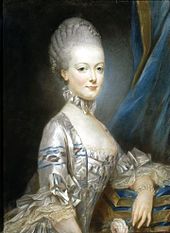 The stories you read about 18th century Court intrigue make you wonder how anyone lived like that. Antoinette was naive of the shark tank into which she’d been thrown. Relations were especially difficult with the King’s mistress, the Comtesse du Barry. Antoinette was somehow expected to work them out.
 France had serious debt problems in the 1770s, the result of endless foreign wars, but Antoinette received more than her share of the blame.

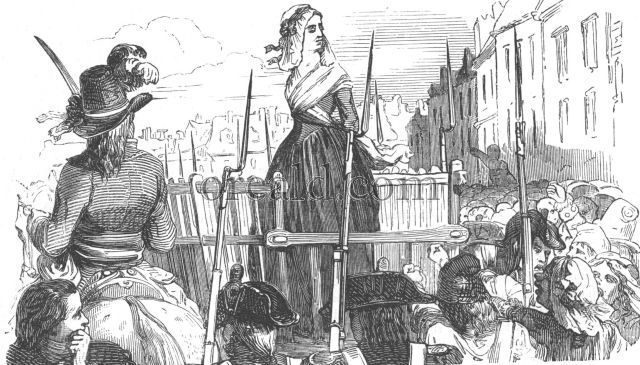
 Marie-Antoinette’s hair was cut off on October 16, 1793. She was driven through Paris in an ox cart, taken to the Place de la Révolution, and executed by decapitation. She accidentally stepped on the executioner’s foot on mounting the scaffold. Her last words were “Pardon me sir, I meant not to do it”.


 D’Estaing sent an ultimatum to British Commander Augustine Prevost on September 16, 1779. He was to surrender the city “To the arms of his Majesty the King of France”, or he would be personally answerable for what was about to happen. It could not have pleased General Benjamin Lincoln or his Patriot allies when d’Estaing added “I have not been able to refuse the army of the United States uniting itself with that of the King. The junction will probably be effected this day. If I have not an answer therefore immediately, you must confer with General Lincoln and me”.


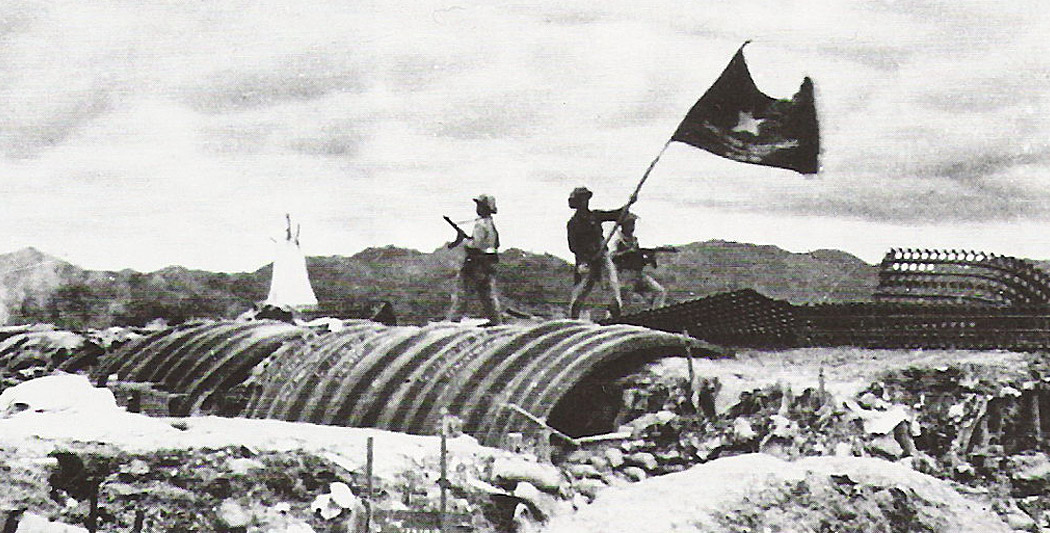
 What historians call the First Indochina War, many contemporaries called “la sale guerre”, or “dirty war”. The government forbade the use of metropolitan recruits, fearing that that would make the war more unpopular than it already was. Instead, French professional soldiers and units of the French Foreign Legion were augmented with colonial troops, including Moroccan, Algerian, Tunisian, Laotian, Cambodian, and Vietnamese ethnic minorities.
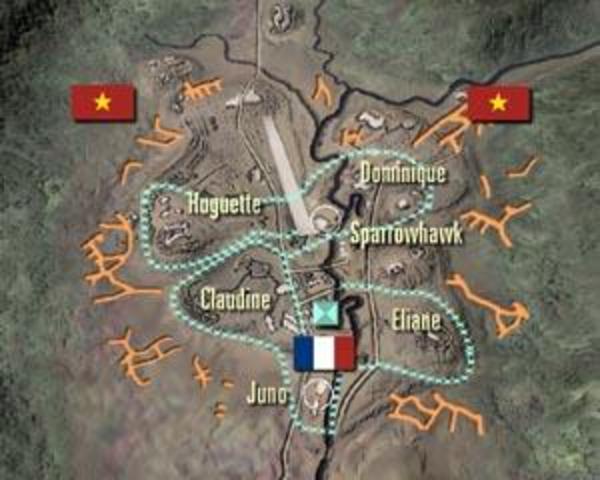
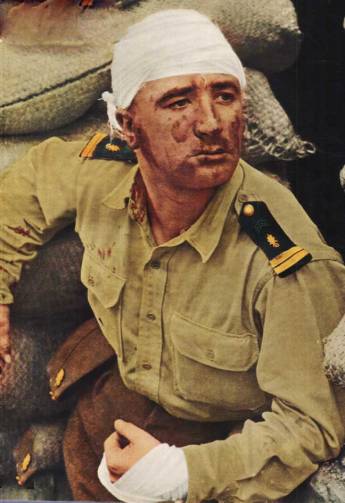 The French staff formulated their battle plan, based on the assumption that it was impossible for the Viet Minh to place enough artillery on the surrounding high ground, due to the rugged terrain. Communist forces didn’t possess enough artillery to do serious damage anyway. Or so they thought.
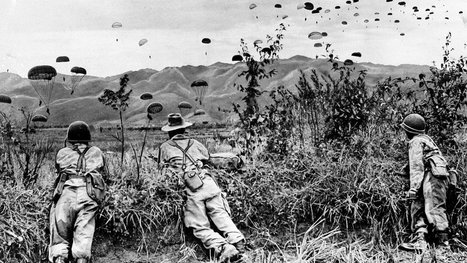 “Beatrice” was the first fire base to fall, then “Gabrielle” and “Anne-Marie”. Viet Minh controlled 90% of the airfield by the 22nd of April, making even parachute drops next to impossible. On May 7, Vo ordered an all-out assault of 25,000 troops against the 3,000 remaining in garrison. By nightfall it was over. The last words from the last radio man were “The enemy has overrun us. We are blowing up everything. Vive la France!”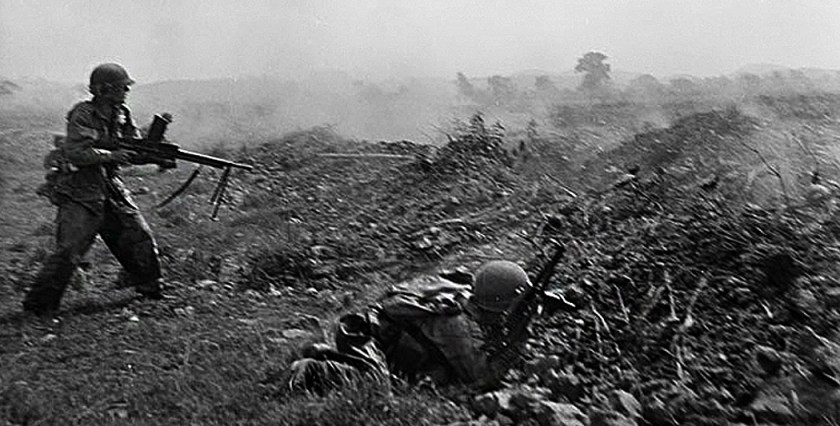
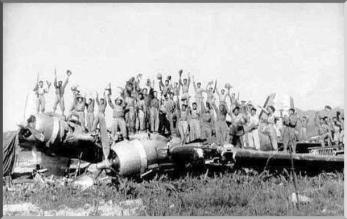 American support for the south increased as the French withdrew theirs. By the late 1950s, the United States were sending technical and financial aid in expectation of social and land reform. By 1960, the National Front for the Liberation of South Vietnam (NLF, or “Viet Cong”) had taken to murdering Diem supported village leaders. President John Fitzgerald Kennedy responded by sending 1,364 American advisers into South Vietnam, in 1961.


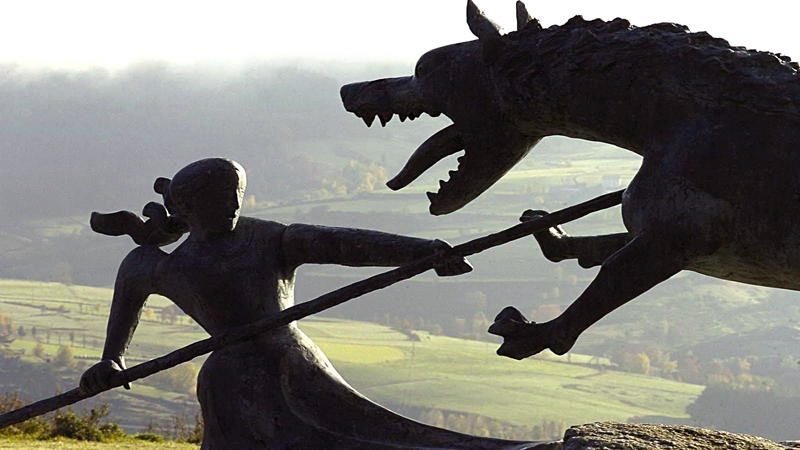

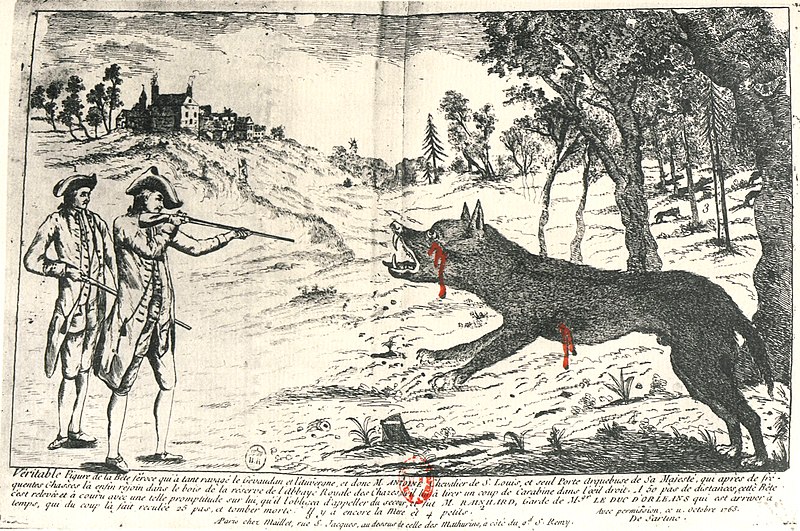
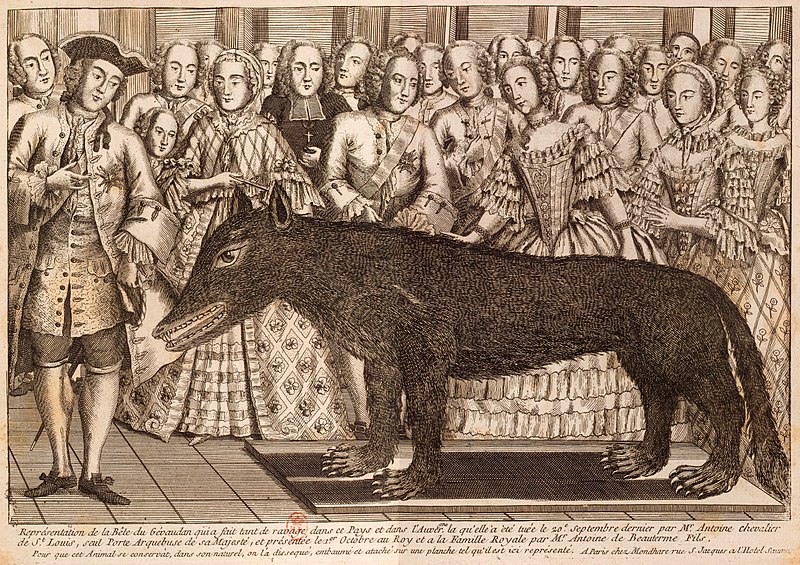
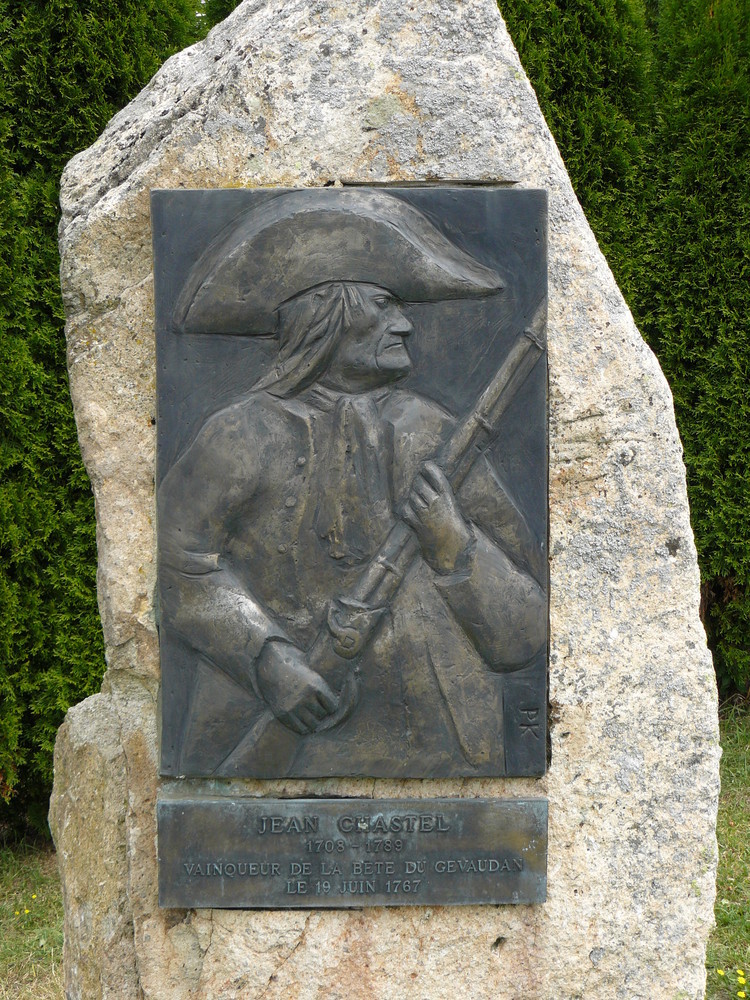
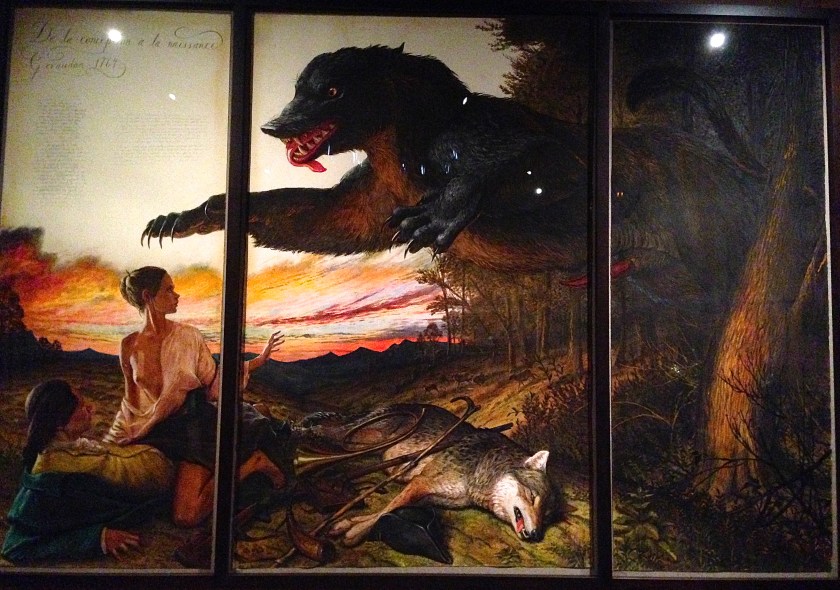
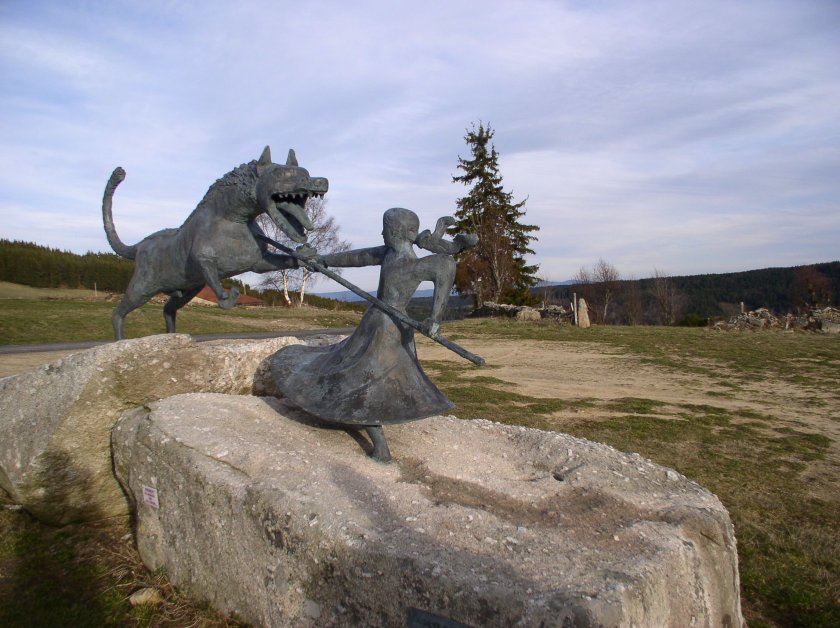
 Terror gripped the region in the later months of 1764, as the Beast attacked women, men and children. Usually while alone, and often while tending livestock.






 Massive French losses stemming from the failed Nivelle offensive of that same month (French casualties were fully ten times what was expected) combined with irrational expectations that American forces would materialize on the western front led to massive unrest in the French lines. Fully one-half of all French forces on the western front mutinied. It’s one of the great miracles of WW1 that the German side never knew, else the conflict may have ended, very differently.
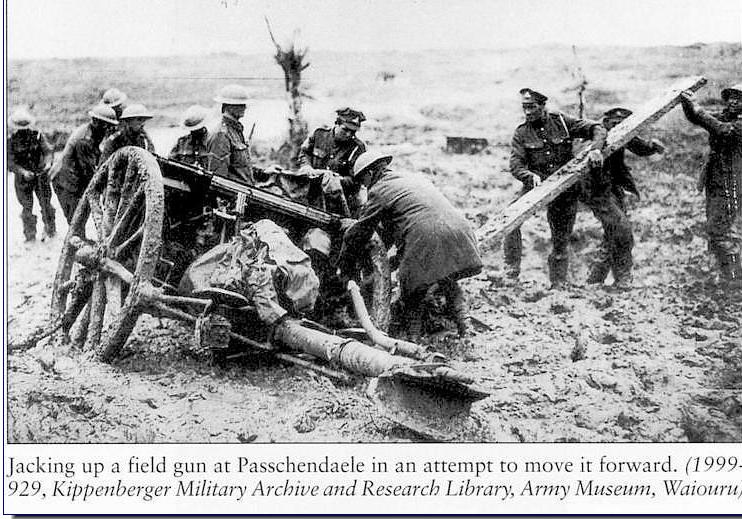 For eighteen months, British miners worked to dig tunnels under Messines Ridge, the German defensive works laid out around the Belgian town of Ypres. Nearly a million pounds of high explosive were placed in some 2,000′ of tunnels, dug 100′ deep. 10,000 German soldiers ceased to exist at 3:10am local time on June 7, in a blast that could be heard as far away, as London.
 “Squire nagged and bullied till I went to fight,


 Austrian military history professor Erik Durschmied wrote in his excellent book`
 Historical Easter Eggs - Today in History
You must be logged in to post a comment.