November 9, 2013 A Rare and Vintage Cognac

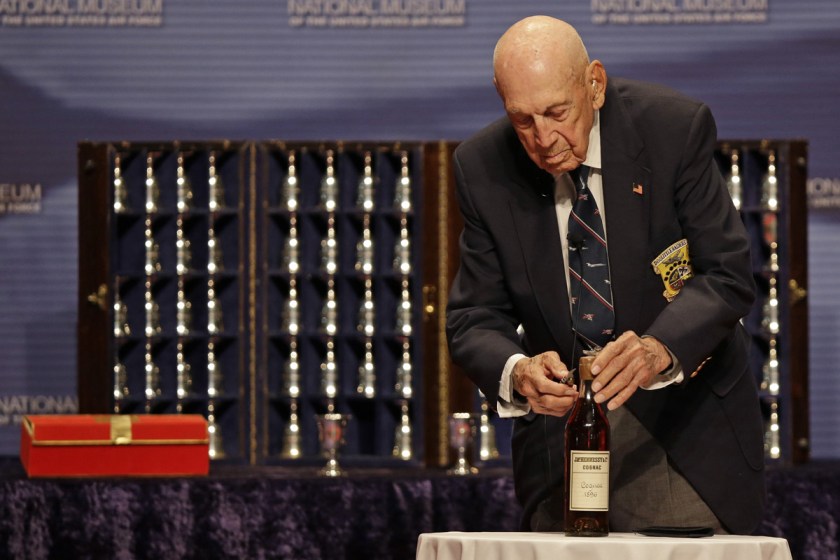
On November 9, 2013, a 117 year-old bottle of rare, vintage cognac was cracked open, and enjoyed among a company of heroes.  If there is a more magnificent act of tribute, I cannot at this moment think of what it might be.

On November 9, 2013, there occurred a gathering of four.  A tribute to fallen heroes. These four were themselves heroes, and worthy of tribute.  This was to be their last such gathering.

This story begins on April 18, 1942, when a flight of sixteen Mitchell B25 medium bombers took off from the deck of the carrier, USS Hornet.   It was a retaliatory raid on Imperial Japan, planned and led by Lieutenant Colonel James “Jimmy” Doolittle of the United States Army Air Forces.  It was payback for the sneak attack on Pearl Harbor, seven months earlier.  A demonstration that the Japanese home islands, were not immune from destruction.

Launching such massive aircraft from the decks of a carrier had never been attempted, and there were no means of bringing them back.  With extra gas tanks installed and machine guns removed to save the weight, this was to be a one-way mission, into territory occupied by a savage adversary.
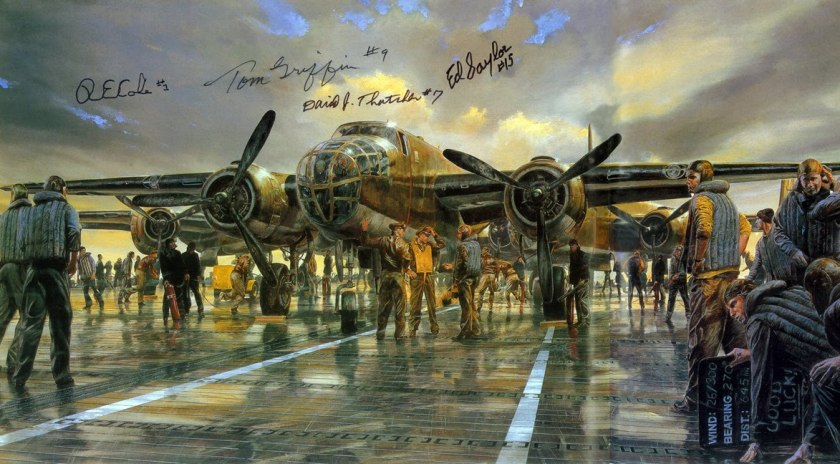
Doolittle Signatures

Fearing that mission security had been breached, the bomb run was forced to launch 200 miles before the intended departure spot.  The range made fighter escort impossible, and left the bombers themselves with only the slimmest margin of error.

Japanese Premier Hideki Tojo was inspecting military bases, at the time of the raid. One B-25 came so close he could see the pilot, though the American bomber never fired a shot.

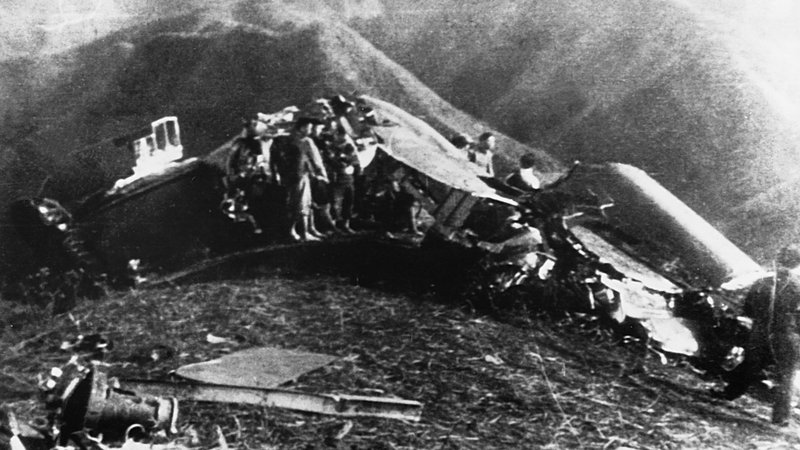
After dropping their bombs, fifteen continued west, toward Japanese occupied China.  Unbeknownst at the time, carburetors bench-marked and calibrated for low level flight had been replaced in flight #8, which now had no chance of making it to the mainland.  Twelve crash landed in the coastal provinces.  Three more, ditched at sea.  Pilot Captain Edward York pointed flight 8 toward Vladivostok, where he hoped to refuel.  The pilot and crew were instead taken into captivity, and held for thirteen months.
aftermath.jpg__800x450_q85_crop_upscale

Crew 3 Engineer-Gunner Corporal Leland Dale Faktor died in the fall after bailing out and Staff Sergeant Bombardier William Dieter and Sergeant Engineer-Gunner Donald Fitzmaurice bailed out of aircraft # 6 off the China coast, and drowned.

The heroism of the indigenous people at this point, is a little-known part of this story.  The massive sweep across the eastern coastal provinces, the Zhejiang-Jiangxi campaign, cost the lives of 250,000 Chinese.  A quarter-million murdered by Japanese soldiers, in the hunt for Doolittle’s raiders.  How many could have betrayed the Americans and refused, will never be known.

Amazingly, only eight were captured, among the seventy-seven survivors.

First Lieutenant Pilot “Bill” Farrow and Sergeant Engineer-Gunner Harold Spatz, both of Crew 16, and First Lieutenant Pilot Dean Edward Hallmark of Crew 6 were caught by the Japanese and executed by firing squad on October 15, 1942.  Crew 6 Co-Pilot First Lieutenant Robert John Meder died in a Japanese prison camp, on December 11, 1943.  Most of the 80 who began the mission, survived the war.

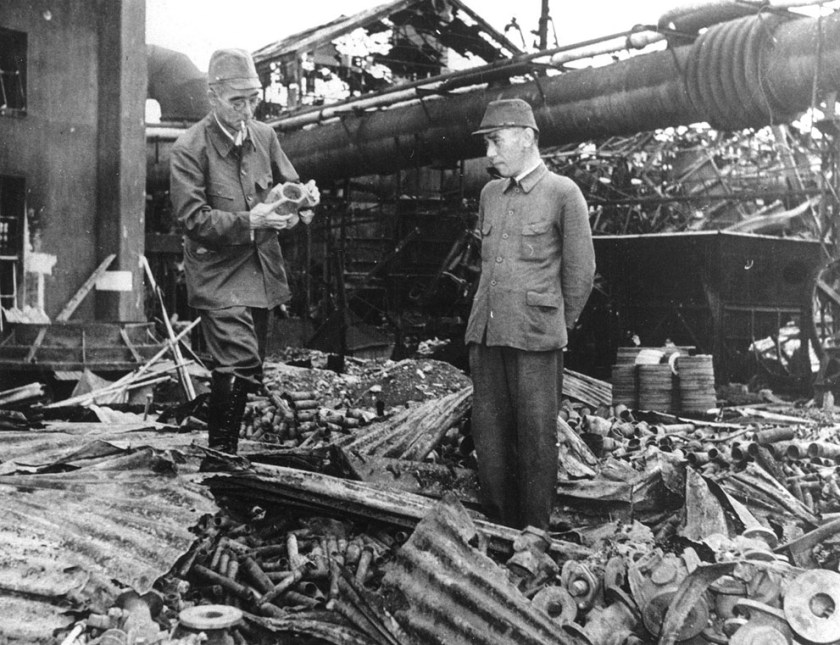
Thirteen targets were attacked, including an oil tank farm, a steel mill, and an aircraft carrier then under construction.. Fifty were killed and another 400 injured, but the mission had a decisive psychological effect.  Japan withdrew its powerful aircraft carrier force to protect the home islands. Admiral Isoroku Yamamoto attacked Midway, thinking it to have been the jump-off point for the raid. Described by military historian John Keegan as “the most stunning and decisive blow in the history of naval warfare”, the battle of Midway would be a major strategic defeat for Imperial Japan.
s_w07_20418042
Ryozo Asano, left, spokesman for a group of diversified Japanese family enterprises called the Zaibatsu, inspects the wreckage of his Tokyo steel plant

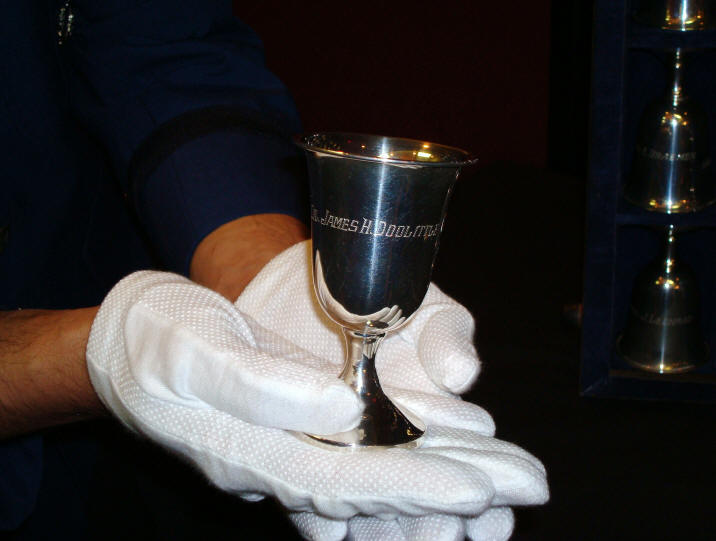
Every year since the late 1940s, the surviving Doolittle raiders have held a reunion.  In 1959, the city of Tucson presented them with 80 silver goblets, each engraved with a name. They are on display at the National Museum of the Air Force, in Dayton Ohio.

With those goblets is a fine bottle of vintage Cognac.  1896, the year Jimmy Doolittle was born. There’s been a bargain among the survivors that, one day, the last two would open that bottle, and toast their comrades.
DSC00017

In 2013 they changed their bargain.  Just a little. Jimmy Doolittle himself passed away in 1993. Twenty years later, 76 goblets had been turned over, each signifying a man who had passed on.  Now, there were only four.

  1. Lieutenant Colonel Richard E. Cole* of Dayton Ohio was co-pilot of crew No. 1.  Remained in China after the Tokyo Raid until June 1943, and served in the China-Burma-India Theater from October, 1943 until June, 1944. Relieved from active duty in January, 1947 but returned to active duty in August 1947.
  2. Lieutenant Colonel Robert L. Hite* of Odell Texas was co-pilot of crew No. 16. Captured by the Japanese and held prisoner for forty months, he watched his weight drop to eighty pounds.
  3. Lieutenant Colonel Edward J. Saylor* of Brusett Montana was engineer-gunner of crew No. 15.   Served throughout the duration of WW2 until March 1945, both Stateside, and overseas.  Accepted a commission in October 1947 and served as Aircraft Maintenance Officer at bases in Iowa, Washington, Labrador and England.
  4. Staff Sergeant David J. Thatcher* of Bridger Montana was engineer-gunner of crew No. 7.  Served in England and Africa after the Tokyo raid until June 1944, and discharged in July 1945.
*H/T, http://www.doolittleraider.com

These four agreed that they would gather one last time.  It would be these four men who would finally open that bottle.
doolittle2

Robert Hite, 93, was too frail to travel in 2013.  Wally Hite, stood in for his father.

On November 9, 2013, a 117 year-old bottle of rare, vintage cognac was cracked open, and enjoyed among a company of heroes.  If there is a more magnificent act of tribute, I cannot at this moment think of what it might be.

On April 18, 2015, Richard Cole and David Thatcher fulfilled their original bargain, as the last surviving members of the Doolittle raid.  Staff Sergeant Thatcher passed away on June 23, 2016, at the age of 94.  As I write this, only one of those eighty goblets remains upright.  Lieutenant Colonel Richard Cole, co-pilot to mission leader Jimmy Doolittle himself, is 103.  He is the only living man on the planet, who has earned the right to open that rare and vintage cognac.

If you enjoyed this “Today in History”, please feel free to re-blog, “like” & share on social media, so that others may find and enjoy it as well. Please click the “follow” button on the right, to receive email updates on new articles.  Thank you for your interest, in the history we all share.

November 6, 1944 Going Home

For the first and last time in history, a man was deliberately buried at sea, inside of the aircraft he had served.

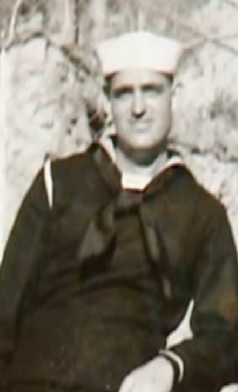
When the Great Depression fell over the nation in the 1930s, few states had a harder time of it, than Oklahoma.  Loyce Edward Deen grew up in this world, the seventh of eight children born to Grace and Allen Deen in the small town of Sulphur.

The family moved to Altus, Oklahoma where Allen worked as a schoolteacher.  Loyce would care for his younger brother Lewis, born with Down’s syndrome.  The pair became close. It must have broken Loyce’s heart when Lewis became and ill and died, while Loyce was still in Jr. High.

Loyce and his older brother Lance were busy during the High school years, caring for Grace following a debilitating stroke.

Loyce’s niece Bertha Deen Sullivan was little at the time, and still remembers.  “Loyce was a tall dark handsome young man with deep blue eyes”. He would pick her up and ask “Who loves ya?”, and then he would kiss her on the forehead.

Altus was the kind of small town, where the newspaper printed the bio of every graduating High school senior. The Times-Democrat wrote that “Loyce Deen is a young man with high ambitions. He plans to enter the US Navy aeronautical mechanics division after graduation and finds subjects such as problems of American democracy, the most interesting. He has also been active in dramatics work at school.

Loyce worked for a time with the government’s Civilian Conservation Corps (CCC), and later joined the Douglas Aircraft Company in Wichita, building wing sets for the A-26 Invader attack bomber.

Loyce_pic_Even before the Japanese attack on Pearl Harbor, Loyce had wanted to join the Navy. In October 1942, he did just that. First there was basic training in San Diego, and then gunner’s school, learning all about the weapons systems aboard a Grumman TBF Avenger torpedo bomber. Then on to Naval Air School Fort Lauderdale, before joining the new 15th Air Group, forming out of Westerly, Rhode Island.
On April 29, 1944, the Air Group reported for duty aboard the “Fightingest Ship in the Navy” at Pearl Harbor.  The aircraft carrier, USS Essex.

An Air Group consists of eighty or so aircraft, of three distinct types. First are the fighters, the fast, single seat Grumman Hellcats. Next are the two-seat dive bombers, the Curtiss Helldivers, the pilot joined by a rear-seat gunner whose job it is to lay the one-ton bomb on the target, while handling a machine gun at the same time. Third is the torpedo bomber, the Grumman Avenger, with two enlisted crewmen in addition to the pilot. The Avenger carries a ton of bombs, depth charges or aerial torpedoes and, like the Helldiver, is designed for low-level attack.

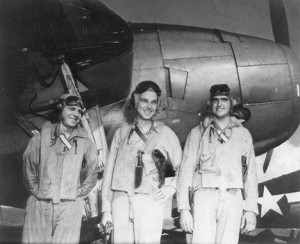
cache_3727742604Loyce was the turret gunner on one of these Avengers, assigned to protect the aircraft from above and teamed up with Pilot Lt. Robert Cosgrove from New Orleans, Louisiana and Radioman Digby Denzek, from Grand Rapids, Michigan.
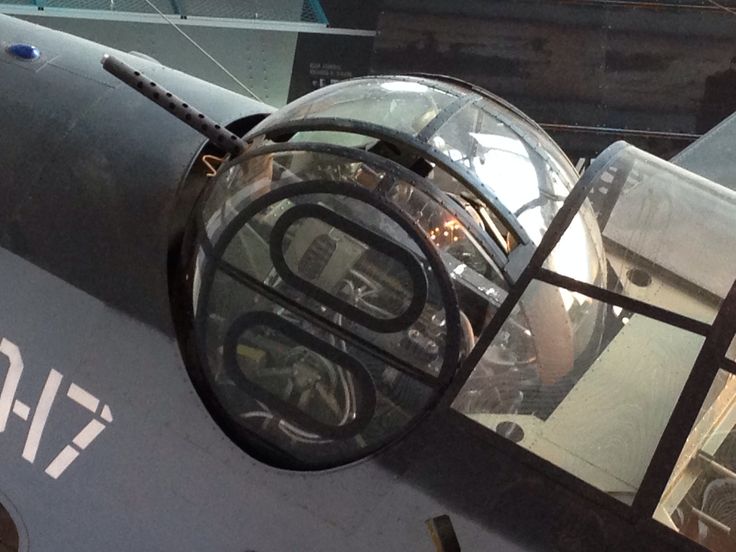
Cosgrove was a superb pilot, often returning aircraft to the carrier, so shot up as to seem unflyable. Digby had several jobs, including arming the weapons systems, and operating the radio. When the team was under fire, Digby would crawl down into a ball turret on the belly of the aircraft, his machine gun defending, from below.

The 15th Air group saw some of the most intense fighting it had ever encountered during the battle of Leyte Gulf of October 24-25, 1944. Commander Lambert, who oversaw the Avenger squadron, described “Coming in through the most intense and accurate AA yet experienced, the squadron made three hits on one battleship, two hits on another battleship, and two hits each on two different heavy cruisers“.

Dennis_Blalock
Dennis Blalock of Calhoun GA, his hands on the shoulders of shipmate, Loyce Deen. Both would be dead within ten days, of this photograph

Deen received a shrapnel wound to his foot sometime during the fighting of the 24th. He wrapped the thing up and stayed on to fight, the following day. He would receive a Purple heart medal for the wound. Posthumously.

Following rest and replenishment at Ulithi Atoll in the Caroline Islands, USS Essex was on station for the November 5 Battle of Manila Bay.  Loyce could have stayed back on a hospital ship until that foot healed, but chose to ignore the injury and rejoin his unit.

Loyce’s niece Bertha, was not surprised. On being informed of his injury, she said “I’m not surprised he stayed with his unit. Loyce would not have it any other way – he would always remain at his post to make sure his brothers came home safely with him.

Loyce Deen climbed into his gun turret for the last time on November 5. It was a two hour ride to the target zone in Manila Bay, with Japanese aircraft on the radar for most of that time, and the carriers USS Lexington and Ticonderoga, under kamikaze attack.

Lieutenant Cosgrove’s Avenger came under savage anti-aircraft fire, from a Japanese cruiser.  Loyce Deen took two direct hits and was killed, instantly.  The Avenger aircraft, tail number 93, was so smashed up as to be all but unflyable.  It took all of the pilot’s strength and skill to fly the thing back through two thunderstorms, and land on the Essex.

e281f946d5375133dd2c1afe6213dacd

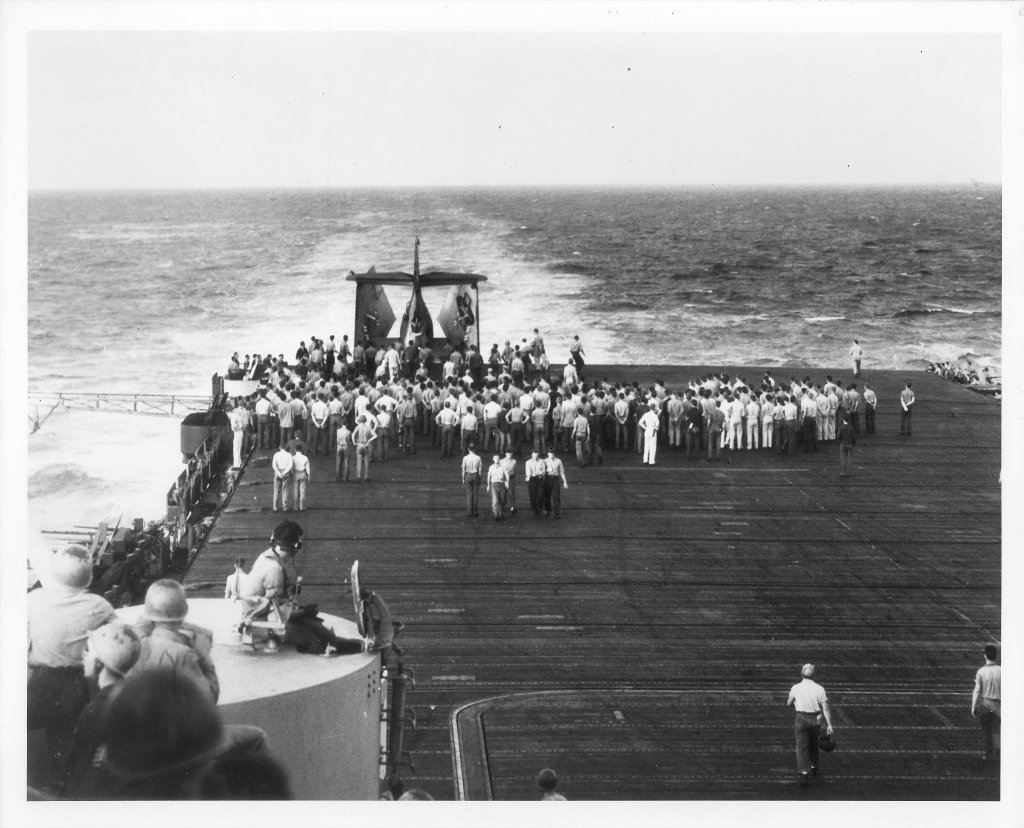
What remained of Loyce Edward Deen was so badly mangled, it was all but impossible to remove him from his smashed turret.  For the first and last time in history, a man was deliberately buried at sea, inside of the aircraft he had served.

Fingerprints were taken and dog tags removed.  This Avenger was not even scavenged, for parts.  With the crew of the USS Essex assembled on deck, the shattered aircraft was pushed over the side.  Two other Avengers flew overhead in salute, as the tail dipped beneath the waves.

Loyce Edward Deen, was going home.

Not long after the ceremony, the Essex went to General Quarters.  There were kamikazes to deal with.

Lt. Cosgrove and the rest of Air Group 15 got back into their aircraft the following day and again on the 12th, 13th and 14th, and attacked those same cruisers in Manila Bay.

The Deen family would not receive the knock on the door, until Thanksgiving week.

If you enjoyed this “Today in History”, please feel free to re-blog, “like” & share on social media, so that others may find and enjoy it as well. Please click the “follow” button on the right, to receive email updates on new articles.  Thank you for your interest, in the history we all share.

September 12, 1994 Frank Corder’s Last Flight

There must have been damage done to more than a few professional reputations.

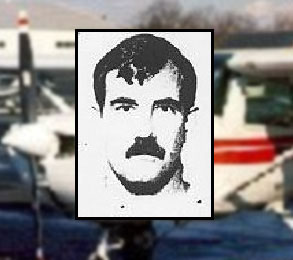
the_white_house_as_targetFor Frank Eugene Corder, life took a turn for the worse in 1993, around the time the truck driver was fired for reasons unknown.   That April, Corder was arrested for theft. Another arrest that October, this time on illegal substance charges, led to a 90-day sentence to a drug rehab center.

The following August, Corder’s third wife Lydia left the room the couple shared at Keyser’s Motel in Aberdeen, Maryland, never to return.

It’s impossible to know what was on the man’s mind.  Perhaps he was bent on suicide.  Maybe he wanted nothing more than a publicity stunt.  Like the time that German kid flew his Cessna from Helsinki to Red Square back in 1987, and embarrassed the Soviet surveillance state.

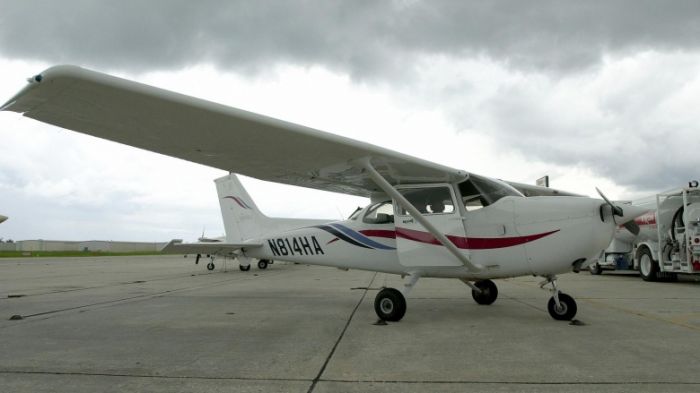
In the small hours of September 11, 1994, Frank Corder stole a single-engine Cessna 150L aircraft. Fewer than 24 hours later, he crashed the thing into the White House.

PIPER CRASHES IN THE WHITE HOUSE GARDENS
12 Sep 1994, Washington, DC, USA — PIPER CRASHES IN THE WHITE HOUSE GARDENS — Image by © Jeffrey Markowitz/Sygma/Corbis

The wreck was a national media event at the time, reported as an assassination attempt on President Clinton, or possibly a terrorist attack. It was most likely, neither.

611623_600

By this time, Corder’s personal problems were out of control.   This was one man’s suicide, performed in a manner that got himself a measure of fame on the way out.  President Clinton wasn’t even there.  At the time, there were ongoing renovations to the White House.   He was in residence at the Blair House.

Frank Corder’s death was the only fatality recorded in the incident, but there was a second, that of a Magnolia tree, planted by President Andrew Jackson.

While those were the only two killed in the wreck, there must have been damage done to more than a few professional reputations. I don’t believe anyone ever explained how a severely intoxicated man, piloting a slow, low altitude single engine aircraft, could have gotten past the vaunted air space defenses surrounding Washington DC. Let alone crashing the thing into the White House.

If you enjoyed this “Today in History”, please feel free to re-blog, “like” & share on social media, so that others may find and enjoy it as well. Please click the “follow” button on the right, to receive email updates on new articles.  Thank you for your interest, in the history we all share.


September 9, 1942 If we Knew each other

The old pilot never forgot a promise made to the place he had once tried to burn down.

In the months before the Japanese attack on Pearl Harbor, the B-1 type submarine I-25 quietly slipped from her dock, departing Yokusuka on November 21 and joining three other Japanese subs on patrol, in the waters north of Oahu.

The B-1 type was a fast cruiser submarine, built for long range and carrying on her bows a small aircraft hanger and deck catapult, designed to store and launch a single two-seater Yokosuka E14Y reconnaissance floatplane, known to the allies as a “Glen”.

sub2lq6

With twenty of them built, the B-1 series was the most numerous of some thirty nine distinct submarine types, employed by the Japanese in WW2.  The type was fairly successful, particularly in the beginning of the war. I-26 crippled the aircraft carrier USS Saratoga in August of 1942, and I-19 sank the aircraft carrier USS Wasp that September, at the same time damaging the battleship USS North Carolina and the destroyer USS O’Brien, which later sank.

I-25 launched the only piloted aircraft during World War II, to successfully attack the American mainland.

NobuoFujita-flightgearhistorical
Nobuo Fujita

Lieutenant Commander Meiji Tagami turned the I-25 into the winds off the Oregon coast on the morning of September 9, 1942, and launched the Yokosuka E14Y floatplane, piloted by Warrant Officer Nobuo Fujita and armed with two 168-lb thermite bombs.

Fujita had hoped the target would be Los Angeles or San Francisco, payback for the Doolittle raid that April but, no chance of that.   Lumbering along at 90MPH, such an aircraft is way too slow to attack such a heavily defended target.

Fujita’s target this day, was the vast forested region along the Oregon coast, near the California border.  With a little luck, the incendiary bombs would burn down a large section of the forest and a string of coastal towns along with it, diverting American resources from the war effort.

That day, the luck was on the American side. A recent rain in the Siskiyou National Forest had left the place wet, at low risk for fire. Howard “Razz” Gardner watched the aircraft come in, from the fire lookout tower on Mount Emily. He never saw the bombing itself but the plume of smoke, was easy enough to follow. Razz was able to hike to the scene while the Forest Service dispatched lookout Keith Johnson, from a nearby tower. The pair was able to keep the blaze contained overnight, and the crew arriving the next morning, put it out.

img069

The following day, area commander Lieutenant General John DeWitt announced “The Western Defense Command is investigating the circumstances surrounding the discovery on Sept. 9 of fragments of what appears to have been an incendiary bomb. These fragments were found by personnel of the United States Forestry Service near Mt. Emily nine miles northeast of Brookings, Or. Markings of the bomb fragments indicated that the missile was of Japanese origin”.

Fujita and his observer made a second attack on September 29, but the damage was negligible.  Not at all the regional conflagration he had hoped for.  Late in the war, Japanese authorities released hundreds of balloon bombs into the gulf stream, in a sustained attack on the continental United States.  One managed to kill a Sunday School class and its teacher but, the earlier attacks flown by Nobuo Fujita remained the only piloted attack on the US mainland, of WW2.

Years later, the junior chamber of commerce in Brookings Oregon, the “Jaycees”, got a bright idea over a few beers. Why not invite the only foreign pilot to successfully attack the American Mainland, as an honored guest.

5524241949_e7ddcb7a8a_z

It was a gesture of friendship, but the idea set off a firestorm in the coastal community. A full-page op-ed signed by 100 locals ran in the Brookings-Harbor Pilot, in 1962. Part of it read:

[Fujita’s] sole claim to fame is that he’s the only Nip pilot who bombed the mainland of the United States by airplane … Why stop with Fujita? Why not assemble the ashes of Judas Iscariot, the corpse of Atilla the Hun, a shovel full of dirt from the spot where Hitler died … .

Brookings resident Greg Jacques remembers, “There was a lot of turmoil. You gotta remember it was only like 16 years after the war. There were 30 to 40 to 50 percent of the men in the community at that time were in World War II.”   There were heated arguments in coffee shops and bars, all over town.  Then-Jaycees President Bill McChesney recalled, “I got a death threat it in the middle of the night.  This guy said, ‘If you walk with that Nip down the street we’re going to have rifles pointed at you, and your family.’”

In the end, the group of young businessmen, none over the age of 35, voted unanimously to extend the invitation. To hell with the consequences. President John F. Kennedy congratulated the group, on their efforts to promote international friendship.

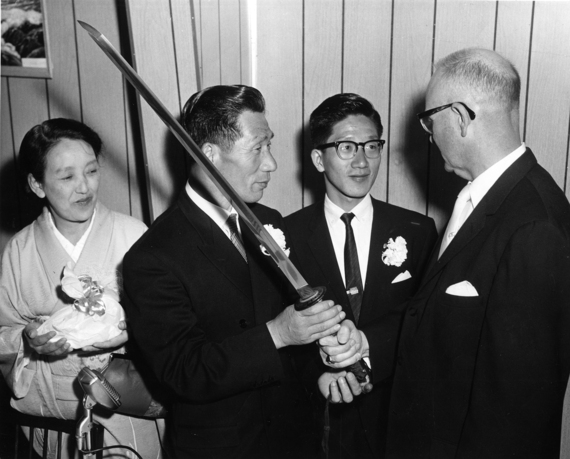
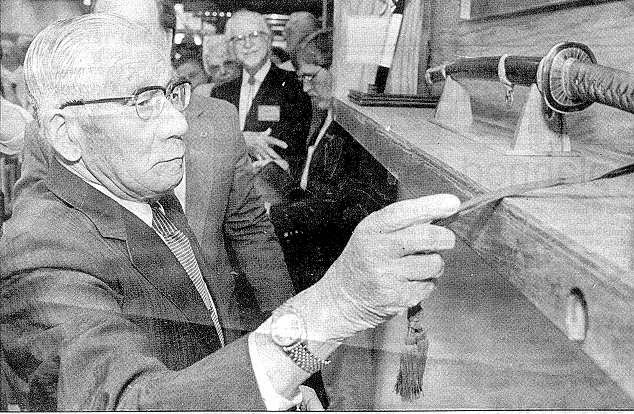
With assurances to the Japanese government that the former pilot would not be tried as a war criminal, the Fujita family left the Ibaraki Prefecture for the City of Brookings Oregon, in 1962. Nobuo, his wife Akayo, and their young son Yasuyoshi. Nobuo carried with him a prized family heirloom, a 400-year old Katana, the Samurai Sword with which he intended to perform Seppuku, ritual suicide by disembowelment, should this visit go wrong.

Nobuo Fujita presents his family's sword to the mayor of Brookin

Despite the bitterness left in the wake of that terrible war, the visit did not go wrong.
Fujita was made honorary chairman of that year’s azalea festival. The man was presented with a ceremonial key to the city, and allowed to take the controls of an aircraft, flying over the bomb site. He even tried his hand at playing a bagpipe, during a parade.

All things were not “Kumbaya” – several men were jailed during the visit, in a preemptive effort to keep the lid on.

In the end, Nobuo Fujita did not open his abdomen with that sword, nor did he pass the treasured heirloom to his son, as once intended. The sword which had accompanied him on his every mission of the late war, including the one over Brookings itself, that prized object did he give to the city of Brookings, as a symbol of friendship. The sword may be seen at the Chetco Public Library, to this day.

news_sword1-3_jxo1hl

Back in Japan, the economy was tough after the war. Fujita passed the family hardware store down to his son, but the business failed. The old pilot never forgot a promise made to the place he had once tried to burn down. Fujita worked for years to earn the money, to buy a few books every month. In 1985 he kept his promise, inviting three Brookings-Harbor High School students on a cultural exchange visit to Japan, with the money he had saved. An aide to President Ronald Reagan sent him a letter, “with admiration for your kindness and generosity.”

news_tree2-6_txpz9m
Hat tip Oregon Public Broadcasting, OPB.org, for this and the sword image.

Fujita returned to Brookings in 1990, and again in 1992, and 1995. During the 1992 visit, he planted a Pacific Redwood, at the site where his bombs fell.

fujita_nobuo_3

Nobuo Fujita died in 1997 at the age of eighty-five, only days after being made an honorary citizen of the city of Brookings. In October of the following year, Fujita’s daughter Yoriko Asakura returned to the bomb site, where she buried some of her father’s ashes. Now, his spirit would fly over that place, forever.

Fujita NYT obit Oct 3 '97

At some point, the only foreign pilot to successfully attack the American mainland, confided to his diary: “If we knew each other. If we understood each other as a friend. This foolish war would never have happened. I sincerely hope that a day would come where everyone could overcome their differences through talking and not fighting”.

Yeah…What he said.

If you enjoyed this “Today in History”, please feel free to re-blog, “like” & share on social media, so that others may find and enjoy it as well. Please click the “follow” button on the right, to receive email updates on new articles.  Thank you for your interest, in the history we all share.

September 6, 1939 Battle of Barking Creek

There is a time when every hero, is as green as the grass.

The Nazi conquest of Europe began with the Sudetenland in 1938, the border districts of Bohemia, Moravia, and German speaking parts of Czechoslovakia. Within two years, every major power on the European mainland was either neutral, or under Nazi occupation.

Ground forces of the United Kingdom were shattered in 1940, along with those of her French, Indian, Moroccan, Polish, Belgian, Canadian and Dutch allies.  The hastily assembled fleet of 933 vessels large and small were all that stood before unmitigated disaster.

338,226 soldiers were rescued from the beaches of France.  Defeated but still unbeaten, these would live to fight another day.

dunkirkevacuation

In 1940, the island nation of Great Britain stood alone and unconquered, defiant in the face of the Nazi war machine.  In Germany, street decorations were being prepared for the victory parades which were sure to follow, as Adolf Hitler considered plans for his surprise attack on his ally to the East, the Soviet Union.

After the allied armies were hurled from the beaches of Dunkirk, Hitler seemed to feel he had little to do but “mop up”.  Prime Minister Winston Churchill captured the spirit of the period as only he could, when he said that “Never in the field of human conflict was so much owed by so many to so few”.

The “so few” to whom the Prime Minister referred, were the 2,342 British aircrew of the Royal Air Force (RAF), and the 595 international air crews who were her allies, in the “Battle of Britain“.

freeborn2_1715769cJohn Connell Freeborn was a pilot with the RAF, and a good one, too. Credited with 13½ enemy aircraft shot down, Freeborn flew more operational hours during the Battle of Britain, than any other pilot, ending the war with a Distinguished Flying Cross and  Bar, and completing his RAF career as a Wing Commander.  Yet, there is a time when every hero is as green as the grass.  In the beginning, John Freeborn like everyone else, were rank amateurs.

On the third day of the war, September 6, 1939, air combat experience was precisely, zero.  Very few had so much as seen a German aircraft, when a squadron of Mk IIB Hawker Hurricane fighters took off from North Weald Air Base after an early morning air raid alert. Two reserve Hurricanes left shortly afterward, piloted by Montague Hulton-Harrop and Frank Rose.

Something went wrong, and the two reserves were identified as enemy aircraft. Three Spitfires from Hornchurch, Essex were ordered to attack. Commanding officer of the flight, Adolph “Sailor” Malan, gave the order to engage.  Flying Officer Vincent ‘Paddy’ Byrne opened fire on Rose’s aircraft, as Pilot Officer John Freeborn attacked Hulton-Harrop.

Both aircraft were shot down. Rose survived, but Hulton-Harrop was dead before he hit the ground, shot through the back of his head. He was the first RAF pilot to die in the second World War. In another unfortunate first, this was the first time any aircraft had been shot down by a Spitfire.

sqldr.-roger-joyce-bushell-mid.-90120-raf-spitfire-w760

At the ensuing court martial, Malan testified for the prosecution, against his own pilots. He claimed that Freeborn had been irresponsible, impetuous, and had not taken heed of vital communications. As for Freeborn himself, his attorney, Sir Patrick Hastings, called Malan a “bare-faced liar”.

As an interesting aside, Hastings’ co-counsel for the defense was Roger Bushell, who was later incarcerated with Paddy Byrne at Stalag Luft III.  Roger “Big X”Bushell became the mastermind of the “Great Escape“, in which he and seventy-five other allied prisoners escaped Stalag Luft III via three tunnels, dubbed “Tom”, “Dick” and “Harry”.  Bushell was caught along with Bernard Scheidhauer, while waiting for a train at the Saarbrücken railway station, and murdered by members of the Gestapo.  Only three of the 76, escaped to freedom.

The court exonerated both Spitfire pilots, ruling the case to be an unfortunate accident.

RAFHurricaneRichard Hough and Denis Richards wrote about the episode in The Battle of Britain: The Greatest Air Battle of World War II, saying “This tragic shambles, hushed up at the time, was dubbed in the RAF ‘the Battle of Barking Creek’ – a place several miles from the shooting-down but one which, like Wigan Pier, was a standing joke in the music halls.”

The “Wigan pier” joke has to do with an inland industrial town, as if such a place could possess a pier, like some seaside pleasure resort.

Many years later, Freeborn spoke of the first RAF pilot to die in WW2, the man he himself had killed in a “friendly fire” incident. “I think about him nearly every day”, he said. “I’ve had a good life, and he should have had a good life too”.

churchyard1

If you enjoyed this “Today in History”, please feel free to re-blog, “like” & share on social media, so that others may find and enjoy it as well. Please click the “follow” button on the right, to receive email updates on new articles.  Thank you for your interest, in the history we all share.

August 16, 1927 The Dole Air Race

Aviation was not for the faint of heart in 1927.  Disaster claimed the lives of competitors, before the race even began. 

In the period between the World Wars, the Wright brothers’ first flight at Kittyhawk was well within living memory. The flying Aces of the Great War seemed like some kind of modern-day knights, and many became pop-culture heroes. Wood-and-fabric biplanes gave way to sleek, metal monoplanes, while air races and daring, record-setting flights seemed a constant feature of the daily news.

The first non-stop transatlantic flight in history began on June 14, 1919, when British aviators John Alcock and Arthur Whitten Brown departed St. John’s, Newfoundland in a modified bomber, arriving in Ireland the following day.

Charles Lindbergh’s better known (and longer) New York to Ireland flight began in the early morning hours of May 20, 1927, when the custom-built, linen-skinned Ryan Aeronautical Company monoplane Spirit of St. Louis departed Roosevelt Field on Long Island, New York.

33½ hours later, thousands of spectators’ cars were caught up in “the largest traffic jam in Paris history”, to be there for the landing at Le Bourget Aerodrome.

Heavier-than-air flight, once considered an impossibility, was coming of age.

Dole-Air-Race
Oakland Field California, August 16, 1927, for the start of the Dole Air Derby

Two months after Lindbergh’s famous flight across the Atlantic, a pineapple magnate offered a prize of $25,000 to the first pilot to fly from Oakland to Honolulu, an orthodromic (Great Circle) distance of 2,406.05 miles.  A $10,000 prize was offered for a second-place finisher.

The overture from James Drummond Dole, founder of the Hawaiian Pineapple Company (now known as Dole Foods), attracted 33 entrants for the event.  14 were selected for starting positions following inspections.  By August 16, 1927, race day, the final list of starters was down to eight.

Tremaine-Humming-Bird-wreckage-10-August-1927
Wreckage of the Tremaine Hummingbird, H/T San Diego Air and Space Museum Archives

Aviation was not for the faint of heart in 1927.  Disaster claimed the lives of competitors, before the race even began.  One Pacific Aircraft Company J-30 known as the Tremaine Hummingbird crashed in heavy fog on August ten on the way to Oakland, killing Naval Lieutenants George Covell and Richard Waggener.

The pair had drawn starting position #13, for race day.

British aviator Arthur Vickers Rogers was killed the following day, just after takeoff in his Bryant Monoplane the Angel of Los Angeles.  Still another aircraft, the Miss Doran, was forced to make an emergency landing in a farm field, and the International Aircraft Corporation F-10 triplane  Pride of Los Angeles crashed into San Francisco Bay on final approach to Oakland.

International-Triplane-CF-10-Spirit-of-Los-Angeles

Happily, the occupants of neither aircraft were hurt, though the latter came away wetter for the experience.

Goddard-Special-NX5074-El-Encanto-16-August-1927
The Goddard Special, NX5074, El Encanto, favored to win the race, crashed on takeoff. (San Diego Air and Space Museum Archives)

Eight entrants remained by the morning of the 16th, but that number was whittled down, fast.

Oklahoma took off but soon returned, due to engine trouble. El Encanto and the PABCO Pacific Flyer, crashed on takeoff. Fortunately, none of the three crews were hurt.

The Golden Eagle took off without a problem, and disappeared into the west.  PABCO Pacific Flyer took her second attempt, only to crash.  Again.

Miss Doran, freshly repaired following her unscheduled landing in that farmers fieldcrashed on takeoff, but the second attempt proved successful.

On board Miss Doran were John “Auggy” Pedlar at the stick and Lieutenant Vilas Raymond Knope, U.S. Navy, Navigating. This entrant carried a passenger too, Miss Doran herself, a 22-year-old fifth-grade school teacher from Flint, Michigan.

Dallas Spirit took off, but quickly returned to Oakland. The last two entrants, a Breese-Wilde 5 Monoplane called Aloha and Woolaroc, a Travel Air 5000, took off and headed west, without a problem.

This last entrant, with Arthur Cornelius Goebel as pilot and Lieutenent (j.g.) William Virginius Davis, Jr., U.S. Navy, as navigator, won the air race, crossing the Pacific and landing in Honolulu with a time of 26 hours, 17 minutes.

GOEBEL-Arthur-C.-winner-of-1927-Dole-Air-Race-with-lei

Neither Golden Eagle nor Miss Doran were ever seen again.

Forty ships of the United States Navy scoured the ocean for Miss Doran and Golden Eagle, but to no avail. Dallas Spirit was repaired and joined in the ocean search but she too disappeared, never to be seen again.

DORAN-Mildred

Mildred Alice Doran had once said, “Life is nothing but a chance.” Miss Doran had taken her chance and lost, at the dawn of the age of aviation.

Ten years later almost to the day, another pioneering female aviator would take her chance, crossing the vast expanse of Pacific Ocean. She too would disappear without a trace, joining her sister and so many others, at the bottom of some unmarked and watery grave.

A tip of the hat to This Day in Aviation.com, for all these great photographs.

If you enjoyed this “Today in History”, please feel free to re-blog, “like” & share on social media, so that others may find and enjoy it as well. Please click the “follow” button on the right, to receive email updates on new articles.  Thank you for your interest, in the history we all share.

July 25, 1944 Most III

“This is the decisive weapon of the war. Humanity will never be able to endure it,” Hitler said, “If I had this weapon in 1939 we would not be at war now.”

In the early years of WWII, Nazi Germany fired 10,000 V1″Doodlebug” rockets at England, killing over 6,000 Londoners alone, by 1943. The subsonic V1 was an effective terror weapon but, bad as it was to be the target of one of these things, the “low and slow” trajectory and the weapon’s short range lacked the strategic punch needed by Nazi Germany to end the war in its favor.

The V2 was a different story.  This was the dawn of the ballistic missile era, and Nazi Germany was first off the starting line.

The Peenemünde Aggregat A4 V2 was an early predecessor of the Cruise Missile, delivering a 2,148 pound payload at 5 times the speed of sound over a 236-mile range. While you could hear the V1 coming and seek shelter, victims of the V2 didn’t know they were under attack, until the weapon had exploded.

When Wernher von Braun showed Adolf Hitler the launch of the V2 on color film, Hitler jumped from his seat and shook Braun’s hand with excitement. “This is the decisive weapon of the war. Humanity will never be able to endure it,” Hitler said, “If I had this weapon in 1939 we would not be at war now.”

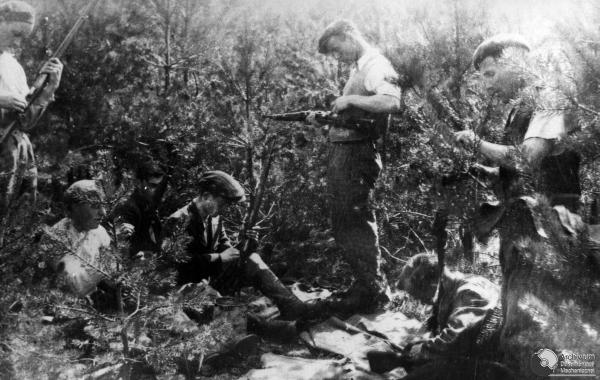
Allies were anxious to get their hands on the secret weapon and, in early 1944, they had their chance. A V2 had crashed into a muddy bank of the Bug River in Nazi-occupied Poland, without exploding. The Polish underground had been waiting for such an opportunity and quickly descended on the rocket, covering it with brush. Desperate to retrieve it, Germans conducted a week long aerial and ground search for the weapon, but failed find it under all that camouflage.

Polish Partisans preparing for battle_WW2
Polish Partisans preparing for battle, WW2

After what must have seemed an eternity, the search came to an end and partisans returned to the site. This time they brought four Polish scientists who carefully disassembled the weapon, packing the pieces in barrels. The parts were then shipped to a barn in Holowczyce, just a few miles away.

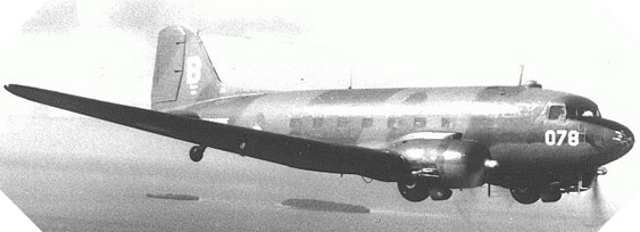
The allied effort to retrieve the stolen missile, code named “Most III”, got underway on this day in 1944, when Royal New Zealand Air Force 1st Lt Stanley George Culliford landed his Dakota C47 in the early morning darkness, at a secret air strip near Tarnow.

1920px-Home_Army_intelligence_on_V1_and_V2
Home Army intelligence on V1 & V2

The V2 chassis and several technical experts were loaded on board, but it was too much weight.  The overloaded C47 couldn’t move on the wet, muddy field – the port wheel stuck fast in the mud.  Everything had to be offloaded, Polish partisans working desperately to free the aircraft as dawn approached. They stuffed the wheel track with straw, and then laid boards in the trench.  Nothing worked.

Co-pilot Kazimierz “Paddy” Szrajer thought the parking brake must be stuck, so the hydraulic leads supplying the brake, were cut. That didn’t work, either. In the end, partisans were frantically digging trenches under the aircraft’s main wheel. Two attempts failed to get the aircraft off the ground, and Culliford was thinking about blowing up the plane and burning all the evidence.  There would be one last attempt.

The aircraft lumbered off the ground on the third try.  The last of the partisans scattered into the night, as the headlights of Nazi vehicles could be seen, approaching in the early morning darkness.

18lfbi20zpunyjpgThere would be 5 hours of unarmed, unescorted flight through Nazi-controlled air space and an emergency landing with no brakes, before those V2 rocket components finally made it to England.

Today, few remember the names of these heroes, struggling in the dark to defeat the forces of Nazi Tyranny.  We are left only to imagine a world, in which Nazi Germany remained in sole possession of the game changing super weapons, of WWII.

If you enjoyed this “Today in History”, please feel free to re-blog, “like” & share on social media, so that others may find and enjoy it as well. Please click the “follow” button on the right, to receive email updates on new articles.  Thank you for your interest, in the history we all share.

July 17, 1938 Wrong Way Corrigan

Aviation officials were apoplectic that a New York to California flight plan, would wind up in Ireland. 

In the period between the two World Wars, the Wright brothers’ first flight at Kittyhawk was well within living memory. The flying Aces of the Great War seemed like some kind of modern-day knights, and many became pop-culture heroes. Wood-and-fabric biplanes gave way to sleek, metal monoplanes, while air races and daring, record-setting flights seemed a constant feature of the daily news.

Heavier-than-air flight, once considered an impossibility, was coming of age.

Cal_banquetThe first non-stop transatlantic flight in history began on June 14, 1919, when British aviators John Alcock and Arthur Whitten Brown departed St. John’s, Newfoundland in a modified bomber, arriving in Ireland the following day.

Charles Lindbergh’s better known (and longer) New York to Ireland flight began in the early morning hours of May 20, 1927, when the custom-built, linen-skinned Ryan Aeronautical Company monoplane Spirit of St. Louis departed Roosevelt Field on Long Island, New York.

33½ hours later, thousands of spectators’ cars were caught up in “the largest traffic jam in Paris history”, to be there for the landing at Le Bourget Aerodrome.

Five years later to the day, Amelia Earhart performed the first nonstop transatlantic crossing by a female pilot, completing the 2,000 mile crossing from Newfoundland to Ireland, in fifteen hours.

Amelia_Earhart_LOC_hec.40747Five years later, “Lady Lindy” disappeared over the South Pacific, along with copilot Frederick J. Noonan.

Few events so captured the world’s imagination, as the Earhart search of 1937, and the explosion aboard the Apollo spacecraft, in 1970.  On both occasions, breathless headlines the world over followed the unfolding drama.

The Apollo 13 story had a happy ending, as astronauts James Lovell, John Swigert and Fred Haise returned safely, to earth.  It was thirty-three years since the Earhart disappearance, a mystery which remains unsolved, to this day.

The 1920s – 30s have been described as the “Golden Age of Aviation”.  This was the world of Douglas Corrigan.

Douglas_Groce_Corrigan_(afdotmil)
Douglas Corrigan

At the age of eighteen, Corrigan forked over $2.50 for a ride on a Curtiss Jenny biplane. He was hooked.  He began flying lessons a week later, making his first solo flight on March 25, 1926.

A man without the means or the fame of Charles Lindbergh, Douglas Corrigan brought himself up in the aviation world, with his hands.  He was an aircraft mechanic, and a good one.

It was Corrigan who assembled the wing and installed the fuel tanks and instrument panel, for Lindberg’s Spirit of St. Louis.  Corrigan and colleague Dan Burnett increased the lift of the aircraft, extending the wing an additional 10-ft. longer than any earlier Ryan-designed aircraft.

Following Lindbergh’s success, Corrigan set his sights on a transatlantic crossing of his own. Working as an aircraft mechanic with the Airtech Flight School in San Diego, Corrigan would work on his flight skills, during short lunch breaks. He would perform aerobatic stunts with company aircraft, much to the chagrin of his employer.   He continued to perform stunts after the company prohibited the practice, simply a little south, where the boss couldn’t see him.

Corrigan worked several jobs as aircraft mechanic, always using his employer’s planes to hone his flying skills.

In 1933, Corrigan paid $310 for a used 1929 Curtiss Robin monoplane, and began to modify it for transatlantic flight. He scavenged the parts from two old Wright Whirlwind engines, increasing the aircraft’s horsepower from 90 to 165. He installed additional fuel tanks and applied to the Bureau of Air Commerce in 1935, for permission to make the flight. The application was rejected.

corriganCorrigan made additional modifications and repeated applications over the next two years, all of which were rejected.  By 1935, the once-freelance aviation industry faced increasing government regulation.  Corrigan found his project losing ground. . In 1937, federal officials not only rebuffed his flight plan.  Authorities deemed Corrigan’s aircraft Sunshine unstable for safe flight, and denied renewal of its license to fly.

That was it.  If he couldn’t get the permit, he’d do it without.

Corrigan flew in from California, arriving in Brooklyn unannounced and nauseous from a fuel leak. All was confusion at the time, with Howard Hughes preparing to take off on a world tour. Corrigan filed his flight plan for a return trip to California and headed out at first dawn on July 17, 1938, headed east with two chocolate bars, a couple boxes of fig bars, and a quart of water.

This was not the well-backed, bountifully financed custom aircraft of the Lindbergh days.  This was the soapbox derby of airplanes, literally held together with baling wire and a quiltwork of patches, welded to the hood.  Let journalist H. R. Knickerbocker, pick up the story:

“You may say that Corrigan’s flight could not be compared to Lindbergh’s in its sensational appeal as the first solo flight across the ocean. Yes, but in another way the obscure little Irishman’s flight was the more audacious of the two. Lindbergh had a plane specially constructed, the finest money could buy. He had lavish financial backing, friends to help him at every turn. Corrigan had nothing but his own ambition, courage, and ability. His plane, a nine-year-old Curtiss Robin, was the most wretched-looking jalopy…The door behind which Corrigan crouched for twenty-eight hours was fastened together with a piece of baling wire. The reserve gasoline tanks put together by Corrigan, left him so little room that he had to sit hunched forward with his knees cramped, and not enough window space to see the ground when landing”.

Ten hours into the flight, Corrigan discovered his ‘cold feet’ were the result of gasoline, sloshing around the cockpit. He poked a hole with a screwdriver, and kept going. 26 hours in, he claimed to have discovered a “navigation error”. The Robin was still over water. 28 hours and 13 minutes after leaving Brooklyn, Corrigan touched down at Baldonnel Aerodrome, in Dublin.

Wrong_Way_Corrigan HeadlineAviation officials were apoplectic that a New York to California flight plan, would wind up in Ireland.  At a time when Western Union charged by the word, the pilot was excoriated with a 600-word diatribe, enumerating the pilot’s transgressions.  Corrigan served a 14-day suspension of his flying license, ending the day he returned with his aircraft aboard the steamship Manhattan.

“Wrong Way” Corrigan returned to a ticker-tape parade, larger than the one given Lindbergh, himself.

The flight mechanic was a celebrity, writing an autobiography and endorsing a line of “Wrongway” products, including a watch that ran backward. He appeared on a 1957 episode of To Tell the Truth, and earned $75,000 portraying himself in the RKO film, The Flying Irishman. It would have taken thirty years to earn that much, at any of his airfield jobs.

To his great disappointment, Charles Lindbergh, Corrigan’s hero and the reason he had made the flight in the first place, never acknowledged his feat.

Corrigan-autographed-500x378Wrong Way Corrigan flight tested bombers during WW2 and retired in 1950, and bought an orange grove in Santa Ana, California. He claimed he knew nothing about growing oranges, he just copied what his neighbors were doing.

The old Robin came out of its hangar one last time on the golden anniversary of the flight, reassembled and the engine restarted, successfully.  Corrigan became so excited that event organizers placed guards at the aircraft’s wings – they even considered tying the tail to a police car – fearful that the old man would once again, take off in the thing.

At age 84, Douglas Corrigan was elected an Honorary Member of the ‘Liars Club of America’, an honor which he politely, but firmly, refused. To the end of his days, Wrong Way Corrigan insisted that his transatlantic flight was nothing more than a navigation error.  He was as surprised to find himself in Ireland, as anyone else.

The autobiography is out of print but still available, if you’re interested.  It’s about fifty bucks, in hard cover, the title is That’s my Story.

If you enjoyed this “Today in History”, please feel free to re-blog, “like” & share on social media, so that others may find and enjoy it as well. Please click the “follow” button on the right, to receive email updates on new articles.  Thank you for your interest, in the history we all share.


May 5, 1945 Church Picnic

284 Japanese balloon bombs are known to have completed the Pacific crossing to the United States, Mexico and Canada. Experts estimate as many as 1,000 may have made it.

Following the eruption of the Krakatoa volcano in 1883, weather watchers described an eastbound, upper atmospheric air current described as the “equatorial smoke stream”.

In the 1920s, Japanese meteorologist Wasaburo Oishi tracked these upper level winds from a site near Mount Fuji, using pilot balloons. Oishi doomed his work to international obscurity when he published his findings in Esperanto. Inside Japan, there were those who took note, filing away this new-found knowledge of what we now call the “Jet Stream”.

In the latter half of WWII, Imperial Japanese military planners conceived the fūsen bakudan or “fire balloon”, a hydrogen filled balloon device designed to ride the jet stream, using sand ballast and a valve system to navigate the weapon system onto the North American continent.

BalloonBomb-1bWith sandbags, explosives, and the device which made the thing work, the total payload was about a thousand pounds on liftoff. The first such device was released on November 3, 1944, beginning the crossing to the west coast of North America. 9,300 such balloons were released with military payloads, between late 1944 and April, 1945.

Such a long-range attack would not be duplicated until the 1982 Falklands War, and was near unimaginable at the time.

JB41In 1945, intercontinental weapons were more in the realm of science fiction. As these devices began to appear, American authorities theorized that they originated with submarine-based beach assaults, German POW camps, and even the internment camps into which the Roosevelt administration herded Japanese Americans.

These “washi” paper balloons flew at high altitude and surprisingly quickly, completing the Pacific crossing in three days. Balloons landed from Alaska to Northern Mexico, and as far east as Detroit. Fighter aircraft shot down fewer than 20.

image011-r

A P-38 Lightning fighter shot one down near Santa Rosa, California, while Yerington, Nevada cowboys cut one up to make hay tarps. Pieces of balloon were found in the streets of Los Angeles. A prospector near Elko Nevada delivered one to local authorities, on the back of a donkey.

Among US units assigned to fight fire balloons was the 555th Parachute Infantry Battalion, which suffered one fatality and 22 injuries fighting fires.

One of the last balloons came down on March 10 near Hanford Washington, shorting out power lines supplying electricity for Manhattan Project nuclear reactor cooling pumps. The war in the Pacific could have ended very differently, had not backup safety devices restored power, almost immediately.

Colonel Sigmund Poole, head of the U.S. Geological Survey military geology unit, asked, “Where’d the damned sand come from?” Microscopic analysis of sand ballast identified diatoms and other microscopic sea life. This and the mineral content of the sand itself proved to be definitive. This stuff could only have come from the home islands of Japan, more specifically, one or two beaches on the island of Honshu.

world-war-ii-balloonAmerican authorities were alarmed. Anti-personnel and incendiary bombs were relatively low grade threats. Not so the biological weapons Japanese military authorities were known to be developing at the infamous Unit 731, in northern China.

284 of these weapons are known to have completed the Pacific crossing to the United States, Mexico and Canada. Experts estimate as many as 1,000 may have made it.

Balloon Bomb Route

Sightings were reported in seventeen US states. Pilots were ordered to shoot them down on sight, but many devices escaped detection, altogether.

In an effort to deny valuable intelligence to their Japanese adversary, US military and government authorities did everything they could to keep these “Fire Bombs” out of the media. Even though such secrecy put Americans at risk.

Japanese Authorities reported that the bombs were hitting key targets, thousands were dead or injured, and American morale was low.

Terrorballoons3
Archie & Elsie mitchell

On the morning of May 5, 1945, Pastor Archie Mitchell and his wife Elsie took their Sunday school class of five on a picnic to a forest area near Bly, Oregon. Elsie and the kids came upon a large balloon with a strange looking device attached to it, as Pastor Mitchell parked the car. There was no way they could have known, what they had found was a Japanese weapon of war. The device exploded, killing all six, instantly.

Several such devices exploded, igniting wildfires in the forests of California, Oregon and Washington, but the site near Bly is the only one known to have resulted in American casualties.

6149872687_10db3f9597_b
Shrapnel Tree – Mitchell Monument, Bly, Oregon

Today there is a small picnic area located in the Fremont-Winema National Forest, in Lake County, Oregon. It’s maintained by the US Forest Service, memorialized as the Mitchell Recreation Area and listed on the National Register of Historic Places. A small stone marker points the way to a shrapnel scarred tree.

Mitchell_Monument;_August_12,_2013

A second memorial bears these words, cast in bronze: The “only place on the American continent where death resulted from enemy action during World War II”. There are six names above those words, those of five children and their teacher, who was pregnant at the time. Elsie Mitchell, age 26. Edward Engen, age 13. Jay Gifford, age 13. Joan Patzke, age 13. Dick Patzke, age 14. Sherman Shoemaker, age 11.


If you enjoyed this “Today in History”, please feel free to re-blog, “like” & share on social media, so that others may find and enjoy it as well. Please click the “follow” button on the right, to receive email updates on new articles.  Thank you for your interest, in the history we all share.

April 22, 1918 Our Gallant and Worthy Foe

The Red Baron was buried by his enemies, with honors, on April 22, 1918.  British Third Squadron officers served as pallbearers.  Other ranks from the squadron acted as a guard of honor. Allied squadrons stationed nearby presented memorial wreaths, one of which was inscribed with these words:
“To Our Gallant and Worthy Foe”.

Early in the “Great War”, Manfred Freiherr von Richtofen was a cavalry scout, serving with the 1st Regiment of Uhlans Kaiser Alexander III in the Verdun sector. Cavalry quickly became obsolete, as the war of movement ended and armies dug in to avoid what Private Ernst Jünger later called the “Storm of Steel”.

Leutnant Richtofen served as a messenger over the winter of 1914-15, but there was no glory in crawling through the mud of shell holes and trenches. He applied to the fledgling Air Corps, writing to his superiors that “I have not gone to war in order to collect cheese and eggs, but for another purpose.”

Red Baron, mascotFollowing four months of training, Richtofen began his flying career as an observer, taking photographs of Russian troop positions on the eastern front.

After transferring to Belgium and becoming bombardier, Manfred’s first air-to-air kill occurred in late 1915, while acting as observer and rear gunner on a two-seat reconnaissance plane. The French pusher bi-plane went down over unfriendly territory and couldn’t be confirmed, so the victory was never counted. Neither was his second kill, when Richtofen shot down a French Nieuport fighter from an Albatross C.III bomber. This one too went down over enemy territory, and couldn’t be confirmed.

Richtofen achieved his first official victory on September 17, 1916, after being transferred to a fighter squadron. Manfred ordered a silver cup to mark the occasion, engraved with the date and make of the aircraft he had shot down, a British F.E. 2B. Many more silver cups would be added to the collection, before he was through.

Manfred got his 5th kill to become an ace on October 16, 1916, and the coveted “Blue Max” medal for his 16th, the following January. He shot down 22 enemy planes that April alone, four of those in a single day. Richtofen was Germany’s leading living ace, fast becoming the most famous pilot of his day.  German propagandists spread the rumor that the Allies were going to award the Victoria Cross to the man who shot him down.

Red BaronEver aware of his own celebrity, von Richtofen took to painting the wings of his aircraft a brilliant shade of red, after the colors of his old Uhlan regiment. It was only later that he had the whole thing painted. Friend and foe alike knew him as “the Red Knight”, “the Red Devil”, or “’Le Petit Rouge’” and finally, the name that stuck:  “the Red Baron”.

Like Ted Williams, who was said to be able to count the stitches on a fastball, Manfred von Richtofen was blessed with exceptional eyesight. Gifted with lightning reflexes, Richtofen became the top ace of WW1. In an age when  even a few air combat victories were exceptional, Richtofen accumulated sixty engraved silver cups before the metal became unavailable in war ravaged Germany. Even then he was far from done.

Despite the popular link between Richthofen and his Fokker Dr.I, he only scored his last 19 kills while flying his famous red triplane. Three-quarters of his victories were won in different makes of the Albatross (below, left), and the Halberstadt D.II (right).

By way of comparison, the highest scoring Allied ace of the Great War was Frenchman René Fonck, with 75 confirmed victories. The highest scoring fighter pilot from the British Empire was Canadian Billy Bishop, who was officially credited with 72. The Red Baron had 80.

Richthofen sustained a serious head wound on July 6 1917, causing severe disorientation and temporary partial blindness. He returned to duty after October 23, but many believed his injury caused lasting damage, and lead to his eventual death.

Red Baron, last flight

Richthofen chased the rookie Canadian pilot Wilfred “Wop” May behind the lines on April 21, 1918, when he found himself under attack. With a squadron of Sopwith Camels firing from above and anti-aircraft gunners on the ground, the Red Baron was shot once through the chest with a .303 round, managing to land in the beet field where he died, several minutes later. He was still wearing his pajamas, under his flight suit.

Red Baron Crash SiteThe RAF credited Canadian Pilot Captain Roy Brown with shooting Richthofen down, but the angle of the wound suggests that the bullet was fired from the ground. A 2003 PBS documentary demonstrated that Sergeant Cedric Popkin was the person most likely to have killed him, while a 2002 Discovery Channel documentary suggests that it was Gunner W. J. “Snowy” Evans, a Lewis machine gunner with the 53rd Battery, 14th Field Artillery Brigade, Royal Australian Artillery. Just who killed the Red Baron, may never be known with absolute certainty.

Manfred von Richtofen was buried by his enemies, with honors, on April 22, 1918.  British Third Squadron officers served as pallbearers, other ranks from the squadron acted as a guard of honor. Allied squadrons stationed nearby presented memorial wreaths, one of which was inscribed with these words: “To Our Gallant and Worthy Foe”.


If you enjoyed this “Today in History”, please feel free to re-blog, “like” & share on social media, so that others may find and enjoy it as well. Please click the “follow” button on the right, to receive email updates on new articles.  Thank you for your interest, in the history we all share.