

The Nazi conquest of Europe began with the Sudetenland in 1938, the border districts of Bohemia, Moravia, and German speaking parts of Czechoslovakia.
The invasion of Poland brought France and Great Britain in on the side of their ally, in 1939. Ground forces of the United Kingdom were shattered the following year, along with those of her French, Indian, Moroccan, Belgian, Canadian and Dutch allies.
The hastily assembled fleet of 933 vessels large and small were all that stood between salvation, and unmitigated disaster. 338,226 soldiers were rescued from the beaches of France. Defeated, all but disarmed yet still unbeaten, these would live to fight another day.

In 1940, every major power on the European mainland was either neutral, or under Nazi occupation. The island nation of Great Britain stood alone and unconquered, defiant in the face of the Nazi war machine. In Germany, street decorations were prepared for victory parades, as plans were laid for “Operation Sea Lion”, the planned invasion of Great Britain and final destruction of the British Isles.
After the allied armies were hurled from the beaches of Dunkirk, Hitler seemed to feel he had little to do but “mop up”. Luftwaffe commander-in-chief Hermann Göring convinced Der Fuhrer that aircraft alone could do the job.
Hitler approved, and turned his attention to the surprise attack on his “ally” to the East. The “Battle of Britain” had begun.
Two days in August 1940 saw 3,275 sorties against the British home isles, with only 120 aircraft lost to the German side. A single Junkers 88 or Heinkel 111 bomber carried 5,510-pounds of bombs.

The wrath of the Luftwaffe was spent by the end of October, Operation sea Lion postponed again and again. Great Britain would fight on alone, but for the shattered remnants of formerly allied powers, for another year and one-half. Prime Minister Winston Churchill captured the spirit of the period as only he could, when he said: “Never in the field of human conflict was so much owed by so many to so few”.


Battle of Britain
Hitler would turn his his back and launch “Operation Barbarossa” in June, 1941. The surprise invasion of the Soviet Union.
Under the terms of the tripartite pact with Fascist Italy and Imperial Japan, Nazi Germany was obliged to render aid in the event that either ally was attacked. On December 8, 1941, the day after the Japanese attack on the US naval anchorage at Pearl Harbor, Ambassador Hiroshi Ōshima came to German Foreign Minister Joachim von Ribbentrop, looking for a commitment of support.

Ribbentrop balked. With their ally having been the aggressor, Germany was under no obligation to intervene. Adolf Hitler thought otherwise. Hitler detested Roosevelt, and thought it was just a matter of time before the two powers were at war. He might as well beat the American President to the punch.
At 9:30am Washington time on December 11, German Chargé d’Affaires Hans Thomsen handed a note to American Secretary of State Cordell Hull. For the second time in the diplomatic history of the United States and Germany, the two nations were in a state of war.
Half a world away, one man went to bed to sleep the “sleep of the saved and thankful”.
“Silly people, and there were many, not only in enemy countries, might discount the force of the United States… But I had studied the American Civil War, fought out to the last desperate inch. American blood flowed in my veins. I thought of a remark which Edward Grey had made to me more than thirty years before—that the United States is like ‘a gigantic boiler’. Once the fire is lighted under it there is no limit to the power it can generate. Being saturated and satiated with emotion and sensation, I went to bed and slept the sleep of the saved and thankful”. – Prime Minister Winston Churchill
 48 days later, at Hunter Field in Savannah, Georgia, the Eighth Bomber Command was activated as part of the United States Army Air Forces. It was January 28, 1942.
The 8th was intended to support operation “Super Gymnast”, the invasion of what was then French North Africa. Super Gymnast was canceled in April. By May, the 8th Bomber Command had moved headquarters to a former girls’ school in High Wycombe, England, from where it conducted the strategic bombing campaign against Nazi Germany.
 Re-designated the Eighth Air Force on February 22, 1944, at its peak the “Mighty Eighth” could dispatch over 2,000 four engine bombers and more than 1,000 fighters on a single mission. 350,000 people served in the 8th Air Force during the war in Europe, with 200,000 at its peak in 1944.
By 1945, the Wehrmacht could tell itself a new joke: “When we see a silver plane, it’s American. A black plane, it’s British. When we see no plane, it’s German”. American aviation paid a heavy price for this little bit of black humor.

Half of US Army Air Force casualties in World War II were suffered by the 8th, over 47,000 casualties, with more than 26,000 killed. By war’s end, 8th Air Force personnel were awarded 17 Medals of Honor, 220 Distinguished Service Crosses, and 442,000 Air Medals. There were 261 fighter aces in the 8th, 31 of whom scored 15 or more confirmed kills. 305 gunners were also recognized, as aces.

Following the allied victory in Europe, 8th AF Headquarters was reassigned to Sakugawa (Kadena Airfield), Okinawa, under the command of Lieutenant General James H. “Jimmy” Doolittle. Tasked with organizing and training new bomber groups for the planned invasion of Japan, the 8th received its first B-29 Superfortress on August 8. Seven days later, the atomic bomb had ended the war in the Pacific.
With the onset of the jet age and the “Cold War” at it height, the 8th Air Force moved to Westover Air Force Base in Massachusetts on June 13, 1955, the second of three Numbered Air Force groups of the newly constituted Strategic Air Command (SAC).
Since that time, the Mighty 8th has been called on to perform combat missions from Southeast Asia to the Middle East to the Federal Republic of Yugoslavia, flying out of its current headquarters at Barksdale Air Force Base, in Louisiana.

If you’re ever in Savannah, do yourself a favor and pay a visit to the National Museum of the Mighty Eighth Air Force (http://www.mightyeighth.org/). Not only will you experience an incredible story well told, but you will meet some 90+ year old veterans who walk as straight and tall today as they did, seventy years ago.
Happy Birthday, Mighty Eighth.


 The hyoid bone at the floor of the mouth serves as a connecting-point for the tongue and other musculature, giving humans the ability to speak. A delicate structure likely to be lost in most fossilized specimens, the first Neanderthal hyoid was only discovered in 1989.


 The idea isn’t as strange as it sounds. Last year, Sir Richard Branson was in the news, claiming he’d looked into his family ancestry. Forty generations back, turns out Branson is related to Charlemagne. It’s no big deal, according to Geneticist Adam Rutherford. Speaking at the Chalke Valley History Festival, Rutherford explained: “Literally every person in Europe is directly descended from Charlemagne. Literally, not metaphorically. You have a direct lineage which leads to Charlemagne,” adding “Looking around this room, every single one of you … is directly descended between 21 and 24 generations from Edward III.”
 If you have European or Asian ancestry, the following traits might be a sign of your inner Neanderthal:
 The naturally large eyes of individuals such as Ukrainian model Masha Tyelna are believed to have been useful to Neanderthal, making their way in the dim light of northern latitudes. In fact, Neanderthal may have used more brain power processing visual input: an evolutionary disadvantage compared with early modern humans.
 Freckles? Fair skin is more efficient at producing vitamin D from weak sunlight, an advantage for those living at northern latitudes. Freckles result from clusters of cells which overproduce melanin granules, triggered by exposure to sunlight. Freckles are found in a wide range of skin colors and ethnicity, but are most prevalent on fair complexions. It is a Neanderthal gene most common in Eurasians, among whom 70% are believed to carry the gene.


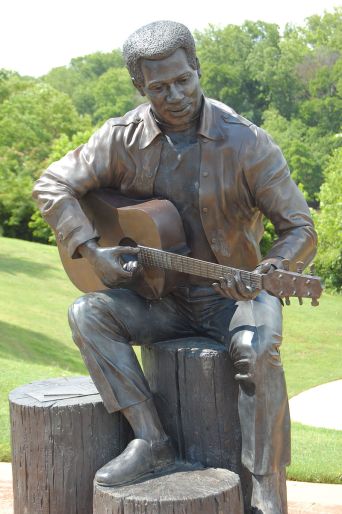 Redding joined STAX Records in 1962, a portmanteau of the founding partners and siblings Jim Stewart and his sister Estelle Axton (STewart/AXton = Stax).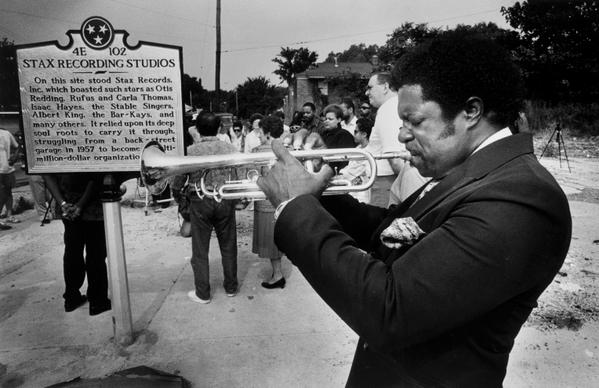



 Dr. Curtis Welch practiced medicine in Nome, Alaska, in 1925. Several children became ill with what he first diagnosed as tonsillitis. More came down with sore throats, early sufferers beginning to die as Welch observed the pseudomembrane of diphtheria. Dr. Welch had ordered fresh antitoxin the year before, but the shipment hadn’t arrived by the time the ports froze over. By January, all the serum in Nome was expired.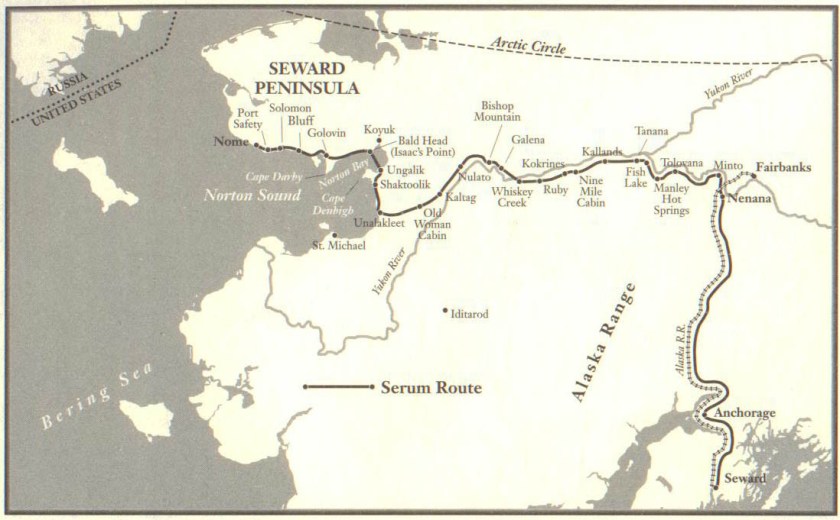
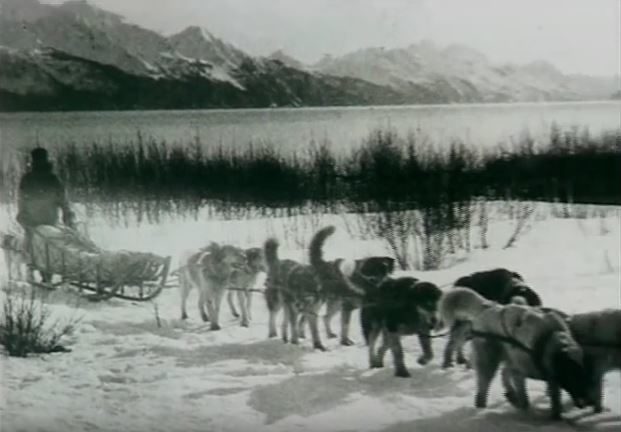

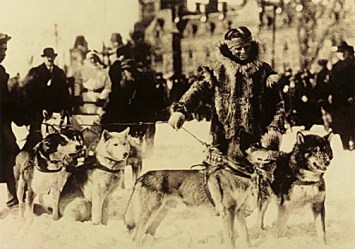 20 mushers and 150 dogs or more had covered 674 miles in 5 days, 7½ hours, a distance that normally took the mail relay 2-3 weeks. Not a single serum ampule was broken.


 “The once tight fabric covering the wings and fuselage was weak from all the rough landings as well as the wind and rain. Dirt and oil caked the engine and prop. Wires for the rudders and elevators hung from the sides of the fuselage.” Even in such disrepair, the pilots and mechanics thought one of the planes could be ready to go Nome in just three days, a flight they thought would take no more than 6-hours”.


 Local farmers were enlisted to help and by December 17, Knox was able to report to General Washington “I have had made forty two exceedingly strong sleds & have provided eighty yoke of oxen to drag them as far as Springfield where I shall get fresh cattle to carry them to camp. . . . I hope in 16 or 17 days to be able to present your Excellency a noble train of artillery.”


 In the middle ages, a French soldier once saw fit to mouth off to an
 In 585BC, the battle between the Medes and Lydians was stopped in its tracks, on account of a
  So, yes, there is irony when men make war, if not always humor. Yet, in all the annals of warfare, there may be no episode more amusing, than the time a naval force was defeated by men on horseback.




 The happy couple had yet to meet when the marriage was performed by proxy, the bride remaining in Vienna while the groom stayed in Paris. At 12 she was now the Dauphine, Marie Antoinette, wife of the 14-year-old Dauphin, future King of France.
 The stories you read about 18th century Court intrigue make you wonder how anyone lived like that. Antoinette was naive of the shark tank into which she’d been thrown. Relations were especially difficult with the King’s mistress, the Comtesse du Barry. Antoinette was somehow expected to work them out.
 France had serious debt problems in the 1770s, the result of endless foreign wars, but Antoinette received more than her share of the blame.

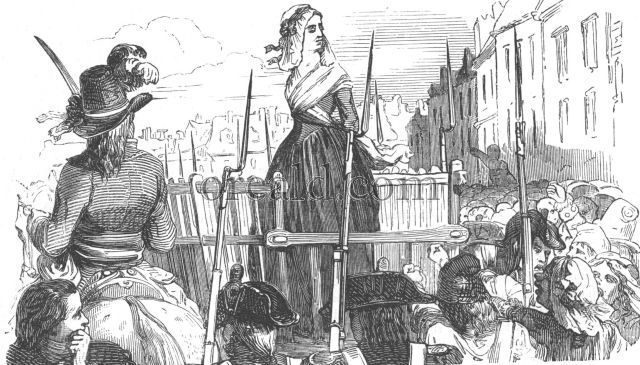
 Marie-Antoinette’s hair was cut off on October 16, 1793. She was driven through Paris in an ox cart, taken to the Place de la Révolution, and executed by decapitation. She accidentally stepped on the executioner’s foot on mounting the scaffold. Her last words were “Pardon me sir, I meant not to do it”.


 Over the years there have been many Rosie the Riveters, the last of whom was Elinor Otto, who built aircraft for fifty years before being laid off at age ninety-five. Naomi Parker-Fraley knew she was the “first”, but that battle was a long lost cause until Dr. Kimble showed up at her door, in 2015. All those years, she had known. Now the world knew.


 Former Olympian and coach of the German Olympic track & field team Josef Waitzer took an interest in the work, becoming a friend and consultant. Dassler brothers shoes were used in international competitions as early as the 1928 games in Amsterdam and the Los Angeles games, of 1932.




You must be logged in to post a comment.