
Alliances came and went throughout 18th century Europe, and treaties were often sealed by arranged marriages. One such alliance took place in 1770 when Francis I, Holy Roman Emperor and his wife Maria Theresa, the formidable Queen of Hungary and Bohemia, married their daughter Maria Antonia to Louis-Auguste, the son of Louis XV, King of France.
 The happy couple had yet to meet when the marriage was performed by proxy, the bride remaining in Vienna while the groom stayed in Paris. At 12 she was now the Dauphine, Marie Antoinette, wife of the 14-year-old Dauphin, future King of France.
There was a second, ceremonial wedding held in May, after which came the ritual bedding. This isn’t the couple quietly retiring to their own private space. This was the bizarre spectacle of a room full of courtiers, peering down at the proceedings to make sure the marriage was consummated.
It was not, and that failure did damage to both their reputations.
The people liked their new Dauphine at first, but the Royal Court was another story. Insiders had promoted several Saxon Princesses for the match, and called Marie Antoinette “The Austrian Woman”. She would come to be called far worse.
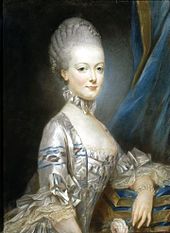 The stories you read about 18th century Court intrigue make you wonder how anyone lived like that. Antoinette was naive of the shark tank into which she’d been thrown. Relations were especially difficult with the King’s mistress, the Comtesse du Barry. Antoinette was somehow expected to work them out.
The King’s daughters, on the other hand, didn’t care for du Barry’s unsavory relations with their father. Antoinette couldn’t win. The sisters complained of feeling “betrayed” one time, when Antoinette commented to the King’s mistress “There are a lot of people at Versailles today”.
Court intrigues were accompanied by reports to Antoinette’s mother in Vienna, the Empress responding with her own stream of criticism. The Dauphin was more interested in lock making and hunting, she wrote, because Antoinette had failed to “inspire passion” in her husband. The Empress even went so far as to tell her daughter that she was no longer pretty. She had lost her grace. Antoinette came to fear her own mother more than she loved her.
Louis-Auguste was crowned Louis XVI, King of France, on June 11, 1775. Antoinette remained by his side, though she was never crowned Queen, instead remaining Louis’ “Queen Consort”.
With her marriage as yet unconsummated, Antoinette’s position became precarious when her sister in law gave birth to a son and possible heir to the throne. Antoinette spent her time gambling and shopping, while wild rumors and printed pamphlets described her supposedly bizarre sexual romps.
 France had serious debt problems in the 1770s, the result of endless foreign wars, but Antoinette received more than her share of the blame.
As first lady to the French court, Antoinette was expected to be a fashion trendsetter. Her shopping was in keeping with the role, but rumors wildly inflated her spending habits. Her lady-in-waiting protested that her habits were modest, visiting village workshops in a simple dress and straw hat. Nevertheless, Antoinette was rumored to have plastered the walls of Versailles with gold and diamonds.
The difficult winter of 1788-89 produced bread shortages and rising prices as the King withdrew from public life. The marriage had produced children by this time, but the legend of the licentious spendthrift and empty headed foreign queen took root in French mythology, as government debt overwhelmed the economy.
French politics boiled over in June 1789, leading to the storming of the Bastille on July 14. Much of the French nobility fled as the newly formed National Constituent Assembly conscripted men to serve in the Garde Nationale, while the French Constitution of 1791 weakened the King’s authority.
Food shortages magnified the unrest. In October, the King and Queen were placed under house arrest in the Tuileries Palace. In June they attempted to flee the escalating violence, but were caught and returned within days. Radical Jacobins exploited the escape attempt as a betrayal, and pushed to have the monarchy abolished altogether.
Unrest turned to barbarity in September 1792, with rumors of foreign and royalist armies, coming to oppose the revolution. Between 1,370 to 1,460 prisoners were summarily “tried” and executed by the mob, in the first twenty hours. Antoinette’s close friend and Lady in Waiting, the Princesse de Lamballe, was taken by the Paris Commune for interrogation. She was murdered at La Force prison, her head fixed on a pike and marched through the city.

There would be 65 to 75 such incidents.
Louis XVI was charged with treason against the First Republic in December, found guilty and executed by guillotine on January 21, 1793. He was 38.
Marie-Antoinette became prisoner #280, her health deteriorating in the following months. She suffered from tuberculosis by this time and was frequently bleeding, possibly from uterine cancer.

Antoinette was taken from her cell on October 14 and subjected to a sham trial, the outcome of which was never in doubt. She was accused of molesting her own son, a charge so outrageous that even the market women who had stormed the palace demanding her entrails in 1789, spoke in her support. “If I have not replied”, she said, “it is because nature itself refuses to respond to such a charge laid against a mother.”
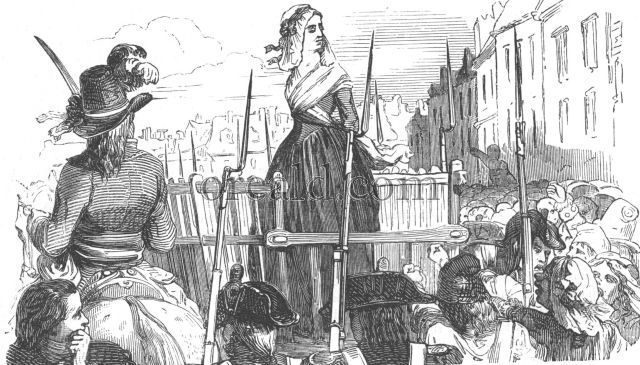
 Marie-Antoinette’s hair was cut off on October 16, 1793. She was driven through Paris in an ox cart, taken to the Place de la Révolution, and executed by decapitation. She accidentally stepped on the executioner’s foot on mounting the scaffold. Her last words were “Pardon me sir, I meant not to do it”.
Marie Antoinette is supposed to have said “Let them eat cake” (“Qu’ils mangent de la brioche”) in response to the bread riots, but there’s no evidence she ever said such a thing. It’s completely out of character and, despite her lavish lifestyle, she had always displayed sensitivity toward the poor people of France.
The phrase appears in the autobiography of Jean-Jacques Rousseau, “Les Confessions”, attributed to a “Grande Princesse” whom the book declines to name, but is probably Maria Theresa, of Spain. Considering the lifetime of cheap and mean-spirited gossip to which Marie Antoinette was subjected, it’s easy to believe that this was more of the same.


 Over the years there have been many Rosie the Riveters, the last of whom was Elinor Otto, who built aircraft for fifty years before being laid off at age ninety-five. Naomi Parker-Fraley knew she was the “first”, but that battle was a long lost cause until Dr. Kimble showed up at her door, in 2015. All those years, she had known. Now the world knew.


 Former Olympian and coach of the German Olympic track & field team Josef Waitzer took an interest in the work, becoming a friend and consultant. Dassler brothers shoes were used in international competitions as early as the 1928 games in Amsterdam and the Los Angeles games, of 1932.



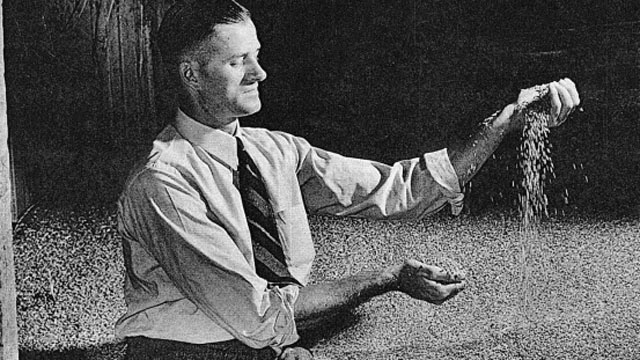
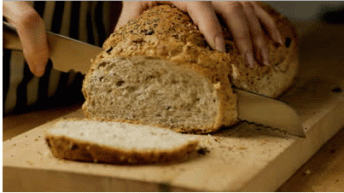 Frank Bench, a personal friend of the inventor, was the first to install the machine. The first pre-sliced loaf was sold in July of the following year. Customers loved the convenience and Bench’s bread sales shot through the roof.
 Article 1, Section 8 of the Constitution includes the “Commerce Clause”, permitting the Congress “To regulate Commerce with foreign Nations, and among the several States, and with the Indian Tribes”. That’s it.
 The United States Supreme Court, apparently afraid of President Roosevelt and his aggressive and illegal “
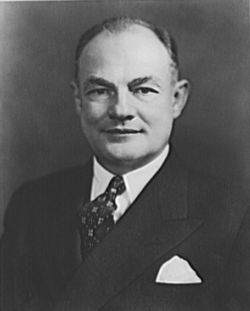
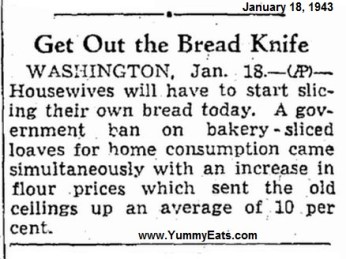
 The stated reasons for the ban never did make sense. At various times, Wickard claimed that it was to conserve wax paper, wheat or steel, but one reason was goofier than the one before. According to the War Production Board, most bakeries had plenty of wax paper supplies on hand, even if they didn’t buy any. Furthermore, the federal government had a billion bushels of wheat stockpiled at the time, about two years’ supply, and the amount of steel saved by not making bread slicers has got to be marginal, at best.


 He appeared from 1973 – ’75 on The National Lampoon Radio Hour, along with future SNL regulars Gilda Radner, Chevy Chase and Bill Murray. A number of radio segments went on to become SNL sketches in the show’s first couple of seasons.
 Animal House, the film that launched Belushi’s career on the big screen, almost didn’t happen.
 John Belushi was found dead the following morning. The cause of death was originally thought to be an accidental overdose. Cathy Smith was extradited from Canada and tried on first degree murder charges following a National Enquirer interview in which she admitted giving Belushi eleven speedballs. A plea bargain reduced the charge to involuntary manslaughter. She served fifteen months in prison.


 STS-1, the first mission of the “Space Shuttle” program launched aboard “Columbia” from the Kennedy Space Center on Merritt Island, Florida. It was April 12, 1981, the 20th anniversary of the first human spaceflight aboard the Russian capsule Vostok 1.
 STS-107 launched from the Kennedy Space Center aboard the Space Shuttle Columbia on January 16, 2003.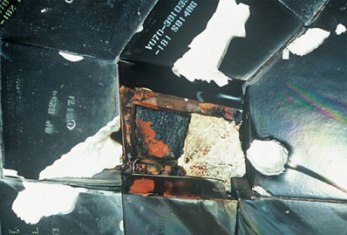
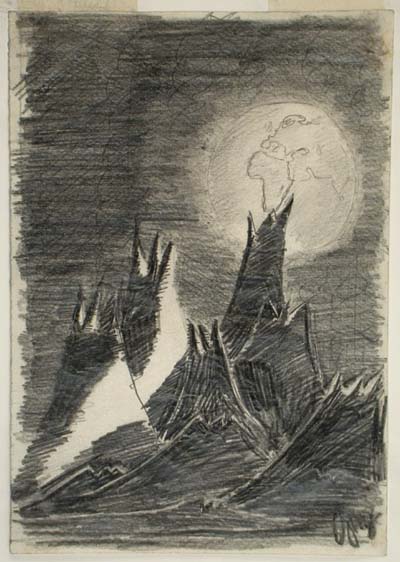






 Educated Spaniards of the era considered witchcraft to be a Protestant superstition. The Spanish Inquisition, launched in 1478 to protect Catholicism as the One True Faith, went first after forced converts from Islam (Moriscos) and Judaism (Marranos) suspected of lapsing into their prior faith.

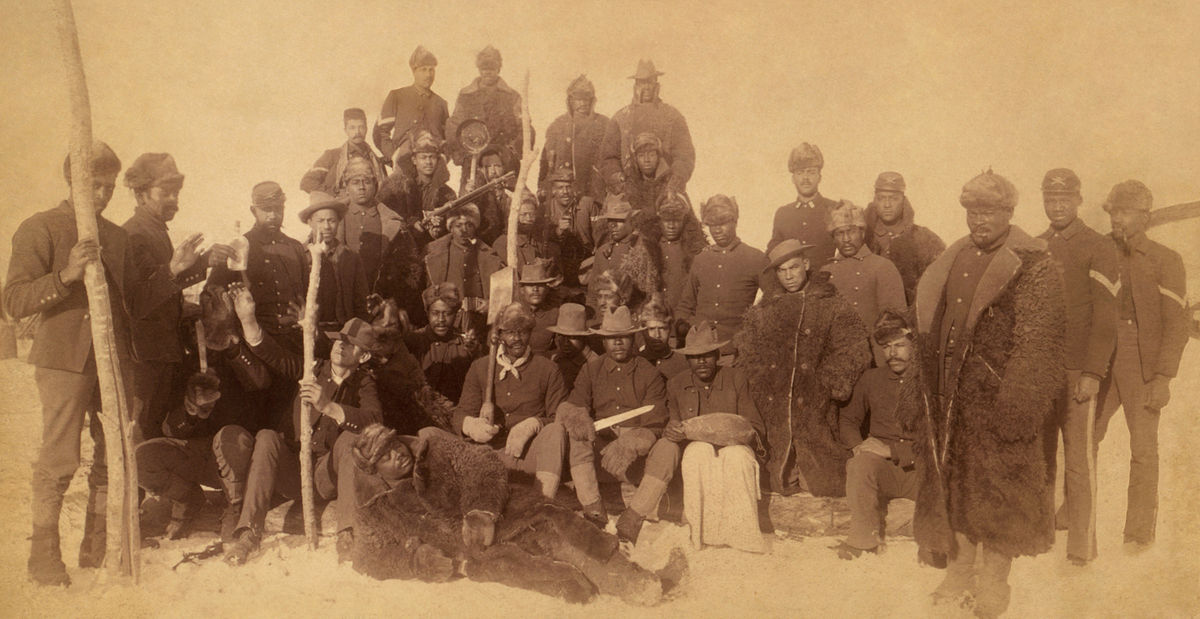
 Cornered in a washout under some railroad tracks, single handed, Randall held off the attack with his revolver, despite a gunshot wound to his shoulder and no fewer than 11 lance wounds.
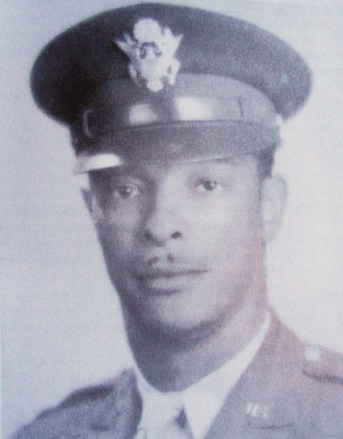
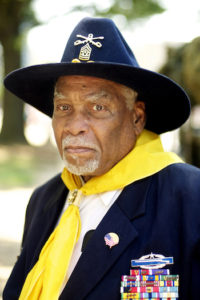 1st Sergeant Mark Matthews, the last of the Buffalo Soldiers, died of pneumonia on September 6, 2005 at age of 111. A man who forged papers in order to join at age fifteen and once had to play taps from the woods, was buried with military honors at Arlington National Cemetery, section 69, grave #4215.





 The younger Williams died of Leukemia two years later, despite a bone marrow donation from his sister. John-Henry joined his father, in 2004.
 Historical Easter Eggs - Today in History
You must be logged in to post a comment.