August 11, 1919 America’s Team

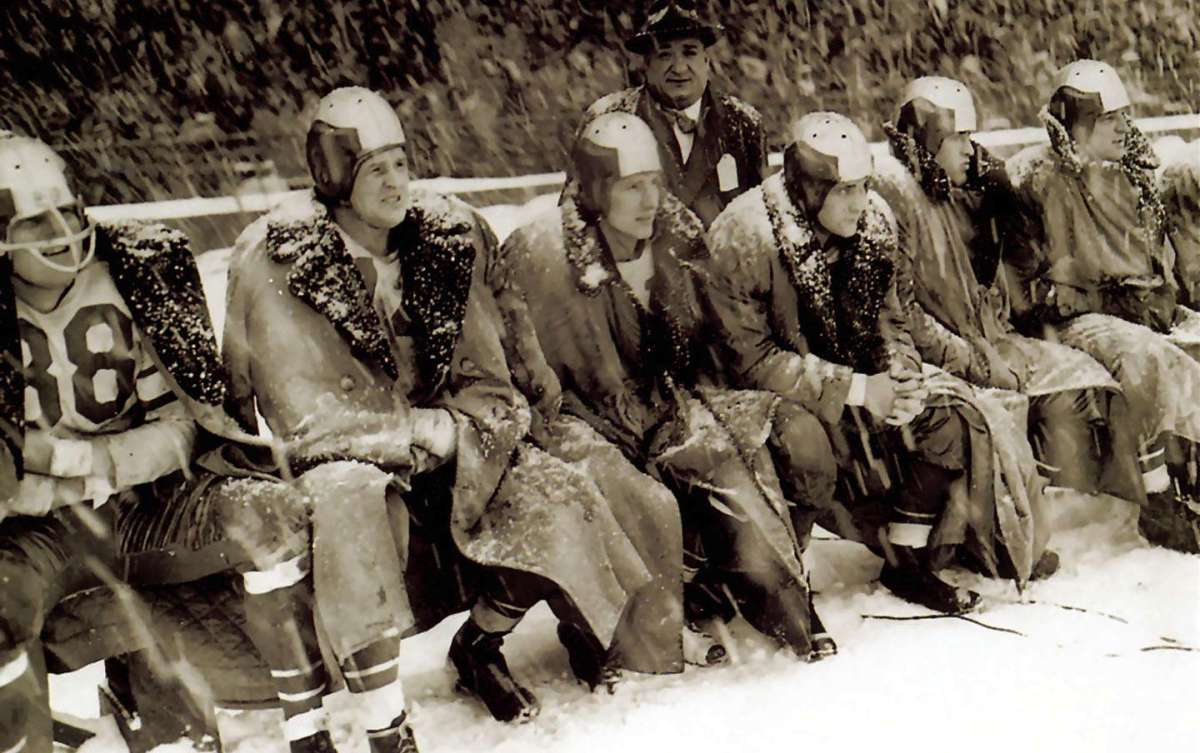
No other club in professional football history has won three consecutive championships. The Packers did it twice:  1929–1931, and 1965–1967.

The story begins with a sidewalk conversation sometime back in 1919, between Earl “Curly” Lambeau and George Whitney Calhoun. It went something like this: “Why don’t we start up a football team?” “Ok, what do we need to do”.

Curley LambeauLambeau worked for the Indian Packing Company in those days, making $250 a month as a shipping clerk. The two went to Lambeau’s employer and got a commitment for $500 for team uniforms, provided that the team use the company’s name. Today, “Green Bay Packers” is the oldest team name still in use in the NFL.

The team was founded on August 11, 1921, when Lambeau and Calhoun gathered with a group of young athletes, in the editorial room of the old Green Bay Press-Gazette building.  The team did well that first season, playing on an open field with no fences or bleachers. The money came from spectators “passing the hat”, while watching the team play to a 10-1 record.  You can imagine how that worked out.

The Packers became a professional franchise when they joined the newly formed American Professional Football Association on August 27, 1921. The league revoked their franchise at the end of the season, when the Packers were revealed to have used college players in a game. It turns out that the man who told the league about it was George Halas of the Chicago Staleys, which became “Da Bears” the following year. The incident began one of the most intense sports rivalries in history, one which rivals the Boston Red Sox and New York Yankees, and lasts to this day.

1919-team
1919 Team

In 1922, Lambeau obtained additional funding from a group of Green Bay businessmen, “The Hungry Five”, and bought the franchise back for $250, including $50 of his own money. Financial troubles continued through 1922. One game was rained out, and the insurance company wouldn’t pay off because the official amount of rain was 1/100″ short of the amount specified in the policy.

The Green Bay Football Corporation was formed to run the team in 1923, and continues to do so to this day. Other teams are owned by publicly traded corporations, such as the Atlanta Braves [Liberty Media, previously Time Warner], New York Rangers [Cablevision], and the Seattle Mariners [Nintendo of America], but the Green Bay Packers are the only franchise in American professional sports, directly owned by the public.Green Bay Uniforms

Financial troubles and micro-management persisted through the war years.  The club posted a dismal 1-10-1 record in 1958, one of the worst in league history. They hired away an assistant coach from the New York Giants that year, to be the new Head Coach.  His name was Vince Lombardi.  The first day on the job, Lombardi said “As of now, I’m in charge”.  The era of the front office running the game, was over.

The 1959 season got off to a good start, shutting out Chicago in the opener, and finishing 7-5 for their first winning record in 12 years. A 21-0 shutout of Washington on November 22 of that year, was the last Packers game to this date that didn’t sell out.

Green Bay has a population of only 105,139 according to the 2016 census, making it less than 1/10th the population of the typical NFL city. The Packers following comes from well beyond Green Bay, drawing crowds from all over Wisconsin and the Midwest. In fact, as late as 1995, the Packers played three home games a year in Milwaukee, one in pre-season, and two regular season.

SportsIllustrated_10jan1966No other club in professional football history has won three consecutive championships. The Packers did it twice:  1929–1931, and 1965–1967.

Green Bay won in 4 out of 5 Super Bowl victories, tied at 3rd with the New York Giants, behind the Pittsburgh Steelers with 6, a three-way tie at 5 each for the New England Patriots, San Francisco 49ers & Dallas Cowboys.  They’ve won 13 championships since the ‘20s, more than any team in professional football history.  Chicago comes in second with only 9.  The last three seasons have been rough on Da Bears, where rumor has it that a recent game was called due to an unknown white substance on the field.  Play was resumed after it was determined that it was only the end zone.  It was unlikely that anyone from Chicago was going to run into it again, anytime soon.

August 10, 1920, Ottoman Empire

Throughout the period, the “secret sauce” of Ottoman power was an army of elite infantry called “Janissaries”.  Janissaries were Christian slaves, usually taken as spoils of war, or sold into slavery as children. They came from all over the Ottoman Empire, though the sons of Greek, Bosnian, Serbian and Bulgarian Christians were preferred. Turkic and Jewish boys were never forced to comply with the Janissary system.

The Anatolian Peninsula is the westernmost point of Asia, forming the northern coastline of the eastern Mediterranean.  Today we call it Turkey.  In the 13th century it was home to a collection of small emirates and Ghazi (Warrior for Islam) principalities, called ‘Beyliks’.

The Turkish tribes united under Osman Bey in 1299 grew to become one of the most powerful forces in history.  A 600-year empire called the Ottomans.

The Ottoman victory at Kosovo in 1389 marked the end of Serbian power in the Balkans.  Christian Europe launched a Crusade six years later, in an effort to relieve the Byzantine capitol of Constantinople, by then virtually all that remained of the eastern Roman Empire.  This, the last of the major Crusades, was crushed at Nicopolis, in modern day Bulgaria.  After the battle, a handful of nobles were held for ransom, those judged to be younger than 20 were sold into slavery.  The rest, as many as 3,000 knights, were bound together in groups of three, and systematically beheaded.  Never again would Greater Europe be altogether free of Islamic influence.

Ottoman Cannon
Siege Cannon of Sultan Mehmet II

By the 15th century, Ottoman controlled lands surrounded the Byzantine capitol of Constantinople.  The forces of 21-year-old Sultan Mehmed II laid siege to the city in 1453, its ultimate defeat and sack punctuating the end of the Eastern Roman Empire and the birth of the “New City” – Istanbul.

Throughout this period, the “secret sauce” of Ottoman power was an army of elite infantry called “Janissaries”.  Janissaries were Christian slaves, usually taken as spoils of war, or sold into slavery as children. They came from all over the Ottoman Empire, though the sons of Greek, Bosnian, Serbian and Bulgarian Christians were preferred. Turkic and Jewish boys were never forced into compliance with the Janissary system.

Janissary_Recruitment_in_the_Balkans-Suleymanname
Janissary recruitment in the Balkans

Janissaries weren’t free, nor were they common slaves. They were subject to severe discipline, but paid salaries and retirement pensions, forming a distinct social class in Ottoman society. As boys, usually 10 to 12, they were taken from their parents and given to Turkish families to learn the language and customs. They were then enrolled in Janissary training, indoctrinated into Islam, and kept under 24-hour supervision.

Janissaries were prohibited from growing beards and taking up a skill other than war, and were forbidden to marry.

They were an elite slave army, in many ways resembling a modern army.  Janissaries were the first to wear unique uniforms, first to be paid regular salaries for their service, the first to march in cadence, to music. They lived in barracks and made extensive use of firearms, campaigning with their own medical teams of Muslim and Jewish surgeons operating mobile hospitals behind the lines.

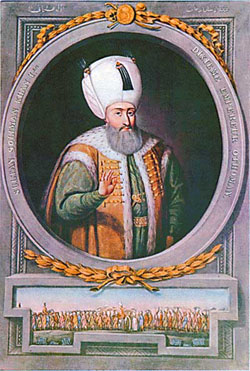
suleiman-i-2-sizedThe Ottoman Empire reached the height of its power during the 16th and 17th centuries, under the reign of Suleiman the Magnificent. One of the most powerful states in the world and ruling over 39 million subjects, the Ottoman Empire controlled a territory spanning three continents:  over two million square miles.
Serbia went to war with the Sultan for its independence in 1804, followed closely by Greece. Sultan Selim III attempted to modernize the army, but his reforms were opposed by the religious leadership and by the Janissary corps. Selim’s reforms would cost him his throne and ultimately his life, but internal order was restored in 1826, when Mahmud II put the Janissary Corps down in a bloody “reform”.

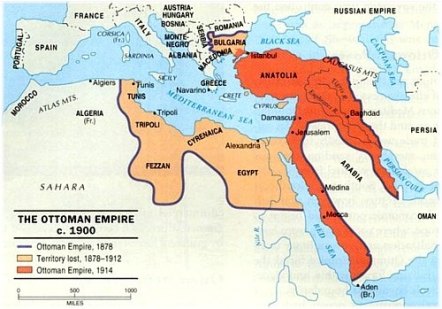
The Ottoman Empire then entered a period of decline, from which it would never emerge. Still one of the five continental Great Powers by the turn of the 20th century, the Ottoman Empire was “the Sick Man of Europe”, with its many minority populations pushing for independence.

Loyalty-obsessed to the point of paranoia, Sultan Abdul Hamid II told a reporter in 1890 that he would give his Armenian Christian minority a “box on the ear”.  Hundreds of thousands of Armenians were murdered in the pogroms of 1894-96.

The Armenian genocide began in earnest with the arrest of Armenian intellectuals, a decapitation strike intended to deprive Armenians within the Ottoman Empire of any semblance of leadership and begun on “Red Sunday”, April 24.  Detainees began to be deported within the Ottoman Empire by the end of May, their number reaching 2,345.  Most, were eventually murdered.

genocide-2

Able bodied males were exterminated outright, or worked to death as conscripted labor.   Women, children, the elderly, and infirm were driven on death marches to the farthest reaches of the Syrian desert.  Goaded like livestock by military “escorts”, they were deprived of food and water, subjected at all times to robbery, rape, and outright murder. By the early 20s, as many as 1.5 million of the Ottoman Empire’s 2 million Armenian Christians, were dead.

The Armenian spyurk, an Aramaic cognate deriving from the Hebrew Galut, or “Diaspora”,  goes back some 1,700 years.  Today, the number of ethnic Armenians around the world tracing lineage back to this modern-day diaspora, numbers in the several millions.

Since 1919, Armenians around the world have marked April 24 as Armenian Genocide Remembrance Day.

To this day, it remains illegal in Turkey, to speak of the Armenian genocide.  The New York Times wouldn’t use the term, until 2004.

This April, President Donald Trump received a furious response from Turkish President Recep Tayyip Erdoğan, for this seemingly-benign statement: “Beginning in 1915, one and a half million Armenians were deported, massacred, or marched to their deaths in the final years of the Ottoman Empire.  I join the Armenian community in America and around the world in mourning the loss of innocent lives and the suffering endured by so many”.

The Ottoman Empire aligned itself with the losing side during WWI, its ultimate disintegration beginning on August 10, 1920, when representatives of Sultan Mehmed VI signed the Treaty of Sèvres.  Future conflicts and treaties would shape and refine the borders, but the “Middle East” as we know it, was borne of the dissolution of the Ottoman Empire.

Ottoman Empire c1900

Mustafa Kemal and his “Young Turks” demanded complete independence, the Treaty of Lausanne creating the Republic of Turkey on October 29, 1923.  Kemal became the country’s first president, granted the honorific “Atatürk” (“Father of the Turks”), in 1934.  Multi-party democracy was established in 1946.  Ever since, the Turkish military and judiciary have viewed themselves as defenders of the Kemalist ideals of a secular Turkish state.

Today, the former seat of the Ottoman Empire is 95% Muslim.  The philosophical descendants of Atatürk vie with those of Erdoğan, the modern, constitutionally secular state, versus the fundamentalist theocracy.

Last year, elements of the Turkish military staged the 6th coup since 1960, in opposition to the increasingly Islamist policies of President Erdoğan, a man who once likened democracy to a bus:  It gets you to your destination…then you get off.  One man, one vote, one time.  The coup was put down with a death toll of 265. 3,000 soldiers were arrested, and some 2,700 judges, fired.

As a NATO member, Turkey is privy to some of the US’ most closely held military secrets. Some 50 thermonuclear weapons are housed at Incirlik Air Base, 68 miles from the Syrian border, currently the hottest combat zone, on the planet.  The strategic thinking behind such basing decisions are difficult to understand, at best.  No aircraft currently based in Turkey, is capable of carrying even one of these weapons.

One might wish the history unfolding before our eyes, was more of a political issue, here in the States.

August 9, 1945 Nagasaki

The 10,000lb, 10’8″ weapon was released at 28,900′. Seconds later, a perfect circle of 64 detonators exploded inside the heart of the bomb, compacting the plutonium core into a supercritical mass and  exploding with the force of 20,000 tons of high explosive.

Now I am become death, the destroyer of worlds“.

Trinity_Test_Fireball_16ms
Trinity Test Fireball

The line comes from the Bhagavad Gita, the Hindu epic which Mohandas Gandhi described as his “spiritual dictionary”. On July 16, 1945, these words were spoken by J. Robert Oppenheimer, director of the Manhattan Project, as he witnessed “Trinity”, the world’s first nuclear detonation.

The project had begun with a letter from prominent physicists Leo Szilard and Albert Einstein to President Franklin Roosevelt, warning that Nazi Germany may have been working to develop a secret “Super Weapon”.  The project ended with the explosion of the “Gadget” in the Jornada del Muerto desert, equaling the explosive force of 20 kilotons of TNT.Trinity_site_plaque

The Manhattan Project, the program to develop the Atomic Bomb, was so secret that even Vice President Harry Truman was unaware of its existence.

President Roosevelt passed away on April 14, and Harry Truman was immediately sworn in as President. He was fully briefed on the Manhattan project 10 days later, writing in his diary that night that the US was perfecting an explosive “great enough to destroy the whole world”.

Nazi Germany surrendered on May 7, but the war in the Pacific theater, ground on. By August, Truman faced the most difficult decision ever faced by an American President. Whether to drop an atomic bomb on Imperial Japan.

The morality of President Truman’s decision has been argued ever since. In the end, it was decided that to drop the bomb would end the war faster, with less loss of life on both sides, compared with the invasion of the Japanese home islands.

So it was that the second nuclear detonation in history took place on August 6 over the city of Hiroshima, Japan. “Little Boy”, as the bomb was called, was delivered by the B29 Superfortress “Enola Gay”, named after the mother of United States Army Air Forces pilot Lieutenant Colonel Paul Tibbets. 70,000 Japanese citizens were vaporized in an instant.  Another 100,000 later died from injuries and the delayed effects of radiation.

FatMan
Fat Man

Even then the Japanese Government refused to surrender. ‘Fat Man’, a plutonium bomb carried by the B29 “Bockscar”, was dropped on Nagasaki, on August 9.

The three cities originally considered for this second strike included Kokura, Kyoto and Niigata. Kyoto was withdrawn from consideration due to its religious significance. Niigata was taken out of consideration due to the distance involved.

Kokura was the primary target on this day, but local weather reduced visibility.  Bockscar criss-crossed the city for the next 50 minutes, but the bombardier was unable to see well enough to make the drop.  Japanese anti-aircraft fire became more intense with every run, and Second Lieutenant Jacob Beser reported activity on the Japanese fighter direction radio bands.

In the end, 393rd Bombardment Squadron Commander Major Charles Sweeney bypassed the city and chose the secondary target, the major shipbuilding center and military port city of Nagasaki.

The 10,000lb, 10’8″ weapon was released at 28,900′.  43 seconds later at an altitude of 1,650′, a perfect circle of 64 detonators exploded inside the heart of the bomb, compacting the plutonium core into a supercritical mass which exploded with the force of 20,000 tons of high explosive.

In the early 1960s, the Nagasaki Prefectural Office put the death count resulting from this day, at 87,000.  70% of the city’s industrial zone was destroyed.

Japan surrendered unconditionally on the 14th of August, ending the most destructive war in history.

Nazi Germany was, in fact, working on a nuclear weapon, and had begun before the allies. They chose to pursue nuclear fusion, colliding atomic particles together to form a new type of nuclear material, instead of fission, the splitting of the atom which resulted in the atomic bomb.

That one critical decision, probably taken in some laboratory or conference room, put Nazi Germany behind in the nuclear arms race. How different would the world be today, had Little Boy and Fat Man had swastikas painted on their sides.

August 8, 1969 Paul is Dead

Like the child’s game of “telephone”, the story picked up details with each retelling.  There had been an argument at a Beatles recording session. McCartney left in anger, and crashed his car. To spare the public from grief, the Beatles replaced him with “William Campbell”, the winner of a McCartney look-alike contest.

In January 1967, a car belonging to singer/songwriter and Beatles’ band member Paul McCartney, was involved in an accident.  He wasn’t driving at the time, but no matter.

The story was told and retold.  Before long, not only had McCartney himself been involved in the crash.  He’d been killed in it.

Like the child’s game of “telephone”, the story picked up details with each retelling.  There had been an argument at a Beatles recording session. McCartney left in anger, and crashed his car. To spare the public from grief, the Beatles replaced him with “William Campbell”, the winner of a McCartney look-alike contest.Paul is dead

The February issue of “The Beatles Book” fanzine tried to put the issue to rest, but some stories die hard.  A cottage industry grew up around finding “clues” to McCartney’s “death”.  Hundreds were reported by fans and followers of the legend. John Lennon’s final line in the song “Strawberry Fields Forever” sounded like “I buried Paul”.  (McCartney later said the words were “cranberry sauce”).  When “Revolution 9” from the White Album is played backwards, some said they could hear “turn me on, dead man”.

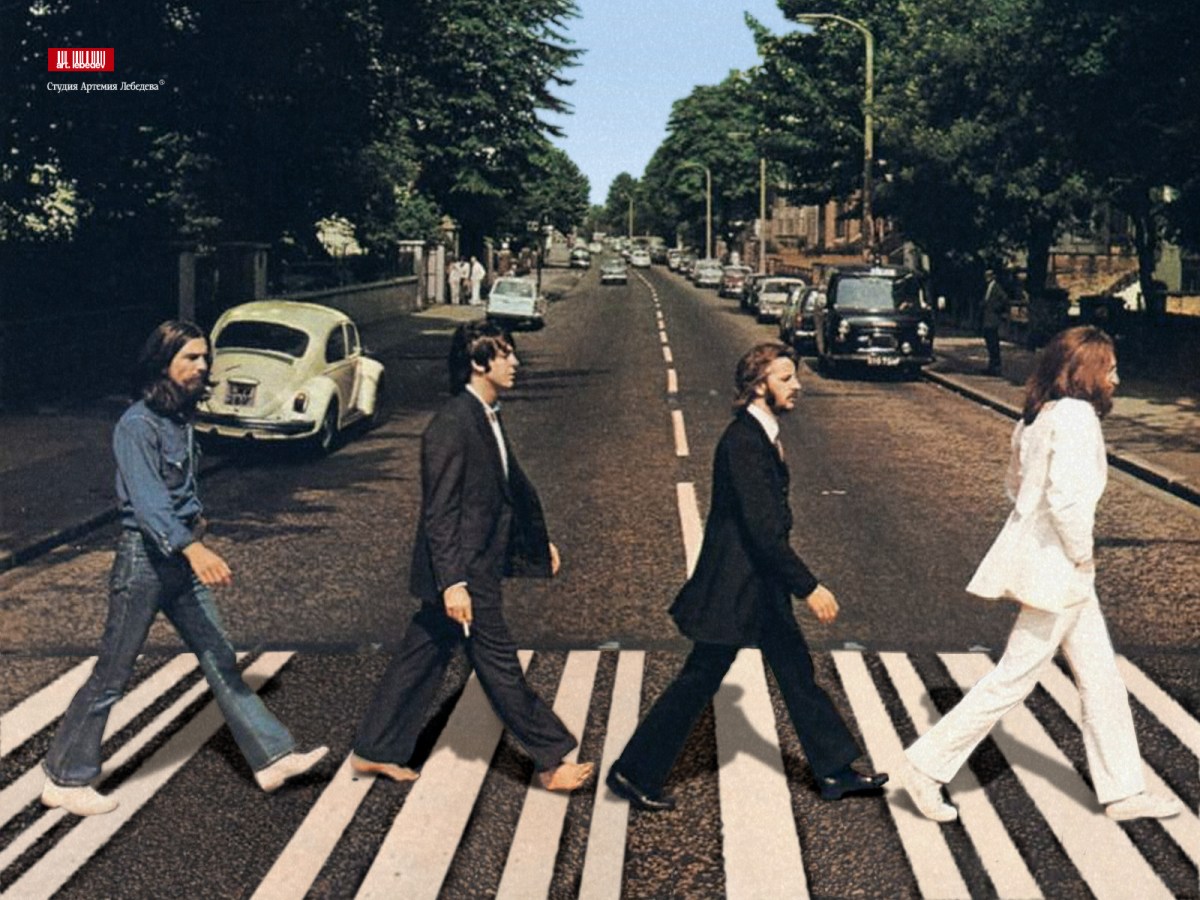
Photographer Iain MacMillan shot the cover photo for the Beatles’ last recorded album, Abbey Road, on this day in 1969. The ten-minute photo shoot produced six images, from which McCartney himself picked the cover photo. It shows the band crossing the street, walking away from the studio.

As soon as the Abby Road album hit the streets, the “Paul Is Dead” enthusiasts were off and running. It was a funeral procession, couldn’t anybody see that? Lennon, dressed in white, symbolizes the preacher. Ringo Starr was dressed in black.  He was the mourner. George Harrison was wearing blue jeans and a shirt.  Of course he was the gravedigger.Paul is dead, news

And then there was McCartney, barefoot and out of step with the other members of the band. Clearly, he symbolized the corpse. McCartney later explained that he’d been barefoot that day, because it was hot.

No one ever satisfactorily explained, nor did anyone ask, to my knowledge, how Paul McCartney got to march in his own funeral procession.  No matter, the Abby Road cover put the rumor mill over the top.

On October 12, a caller to Detroit radio station WKNR-FM told DJ Russ Gibb about the rumor and its clues. Gibb and his callers then discussed the rumor on the air for the next hour. Roby Yonge did the early AM shift at the powerhouse WABC out of New York. Yonge spent a full hour discussing the rumor, before he was pulled off-air for breaking format. WABC’s signal could be heard in 38 states at that time of night, and at times, other countries. The Beatles’ press office issued a statement denying the rumor, but it had already been reported by national and international media.

Paul is still with us-Life_magazine_nov_69The November 7, 1969, Life magazine interview with McCartney and his wife Linda finally put the story to rest. “Perhaps the rumor started because I haven’t been much in the press lately“, he said. “I have done enough press for a lifetime, and I don’t have anything to say these days. I am happy to be with my family and I will work when I work. I was switched on for ten years and I never switched off. Now I am switching off whenever I can. I would rather be a little less famous these days“.
If they’d had Photoshop in those days, we’d probably still be hearing the rumors, today.

August 7, 1782 Purple Heart

For the first time in history, recognition for meritorious service in time of war, was available to the common soldier. George Washington personally bestowed the Badge of Merit on only three non-commissioned officers, though evidence suggests that other such awards were bestowed by subordinate officers.

Prior to the the American Revolution, European armies honored only high-ranking officers who had achieved victory in battle. There was no such honor for the common soldier.

To George Washington, the “road to glory in a patriot army and a free country is…open to all”.  General Washington’s general orders of August 7, 1782, began: “The General ever desirous to cherish virtuous ambition in his soldiers, as well as to foster and encourage every species of Military merit, directs that whenever any singularly meritorious action is performed, the author of it shall be permitted to wear on his facings over the left breast, the figure of a heart in purple cloth…”

For the first time in history, recognition for meritorious service in time of war, was available to the common soldier. George Washington personally bestowed the Badge of Merit on only three non-commissioned officers, though evidence suggests that other such awards were bestowed by subordinate officers.

The Badge of Merit fell into disuse after the Revolution, though the award was never formally abolished.

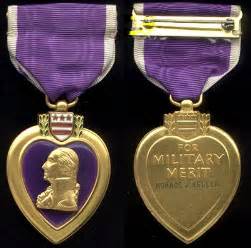
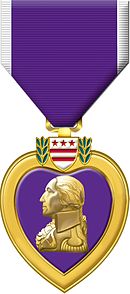
PurpleheartIn 1927, Army Chief of Staff General Charles Summerall directed that a bill be drafted and submitted to Congress, “To revive the Badge of Military Merit”.  This badge of merit came to be known as the Purple Heart. General Douglas MacArthur, Summerall’s successor, began work on a new design for the medal in 1931. Elizabeth Will, heraldic specialist with the Quartermaster General’s office, created the design we see today.
A War Department circular dated February 22, 1932 authorized the award to soldiers who had been awarded the Meritorious Service Citation Certificate, Army Wound Ribbon, or were authorized to wear Wound Chevrons on or later than April 6, 1917, the day the United States entered WWI.

At that time, the Purple Heart was awarded not only for wounds received in action against enemy forces, but also for “meritorious performance of duty”.

The first Purple Heart was awarded to Douglas MacArthur himself.

President Franklin Delano Roosevelt’s Executive Order 9277 of December 3, 1942, discontinued the award for meritorious service, and broadened service-related injury eligibility requirements to include all armed services personnel.

Following the defeat of Nazi Germany in WWII, Military planners put their minds to the invasion of Imperial Japan. Knowing nothing of the atomic bombs which would put a quick end to the war that August, authorities ordered 500,000 purple hearts. To this day, American military forces have yet to use them all up. As of 2003, 120,000 of these Purple Heart medals, remained in inventory.

On November 22, 1944, Time Magazine reported the first Purple Heart awarded to an animal.  “Chips“, a German Shepherd/Collie/Husky mix, also received the Distinguished Service Cross and Silver Star, for single “handedly” wiping out an Italian machine-gun nest, during the Allied invasion of Sicily.

Lex Purple Heart
Military Working Dog “Lex” with his (honorary) Purple Heart

William Thomas, Commander of the Order of the Purple Heart at that time, complained that giving such medals to a dog “insulted” the men who received them.

History is silent on the matter of precisely which purple recipient was thus insulted.

Accounts differ as to whether Chips was actually stripped of his medals.  Apparently, Army Adjutant General James Ulio ruled that Chips could keep them, but no more such awards would be given to dogs.  To this day, Chips remains the only “official” canine recipient of a Purple Heart.

lucca1
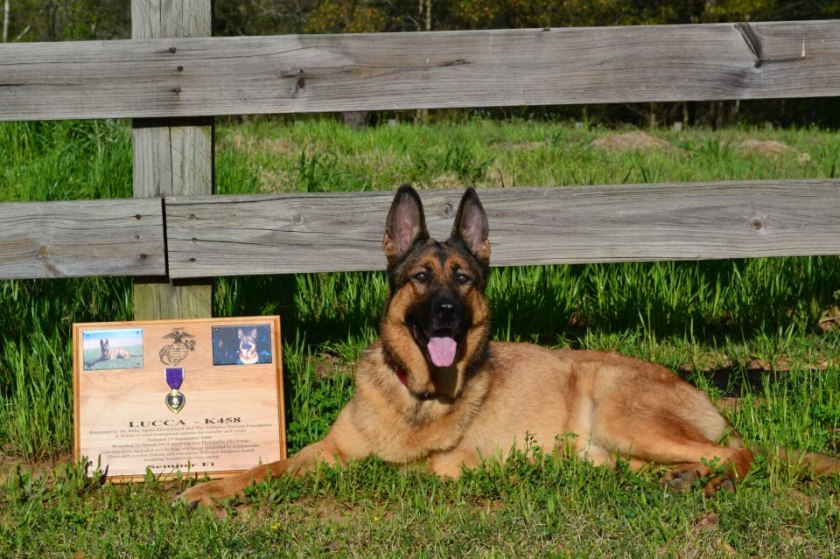
Lucca and his (honorary) Purple Heart

Lucca, a German Shepherd–Belgian Malinois mix who lost a leg to an IED in Afghanistan, received an “honorary” Purple Heart, donated by a guy who already had two.  German Shepherd “Lex” was injured in Iraq, in an incident which killed his handler, Marine Corporal Dustin J. Lee.   He too was given a medal donated by a Purple Heart recipient. Somehow, neither of those guys appear to have been insulted by the award.

August 6, 2011 NFL Films

Ed Sabol was inducted into the Professional Football Hall of Fame on August 6, 2011. Steve delivered a tribute to his father, explaining the company’s operating philosophy. “Tell me a fact”, he said, “and I’ll learn. Tell me a truth, and I’ll believe. But tell me a story, and it will live in my heart forever”.

Edwin Milton “Ed” Sabol came home from WWII and took a job selling topcoats. He was good at it and provided a decent living for his family, but his heart was elsewhere.  What he liked more than anything, was to watch his son Steve play high school football.

Sabol would take a motion picture camera, a wedding gift, and film the games. He found that he had a knack for it, and founded a small film production company called Blair Motion Pictures, named after his daughter, Blair.

Sabol successfully bid for the rights to film the 1962 NFL championship game between the Green Bay Packers and the New York Giants. The game was played in cold so severe that camera operators suffered frostbite, and a wind so strong that it blew the ball off the tee three times before opening kickoff.  Despite all that, Sabol’s work on the game was impressive.

nflfilm

The league’s 14 owners rejected commissioner Pete Rozelle’s proposal to buy Sabol out, instead giving him $20,000 apiece in seed money to shoot all NFL games and produce a highlight film for each team.

NFL Films production style is unmistakable: the “tight to the spiral” shot of the ball leaving the quarterback’s hand, the on-the-field close-ups and slow motion shots, all of it “mic’d up” in a way that let you hear every hit, every sound, as if you were on the field.

With the orchestral score and the stentorian tones of John Facenda’s narration, “the voice of God”: “They call it pro football. They play it under the autumn moon, in the heat of a Texas afternoon.”  NFL Films became “the greatest in-house P.R. machine in pro sports history” according to Salon.com television critic Matt Zoller Seitz. “An outfit that could make even a tedious stalemate seem as momentous as the battle for the Alamo.”

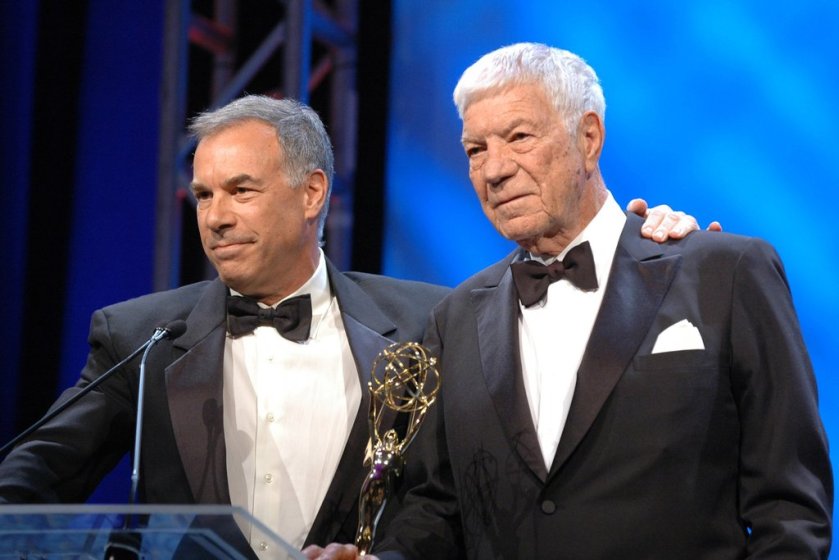
Sabols, 2004 Sports Emmys
Steve and Ed Sabol at the 2004 Sports Emmys

NFL Films won 112 Sports Emmys. While the company’s $50 million earnings are small relative to the $18 billion in revenue the NFL earns from television alone, the real value of NFL Films is how it promotes the sport. Many credit NFL Films as a key reason that the National Football League has become the most watched professional sports league in the United States.

Ed Sabol was inducted into the Professional Football Hall of Fame on August 6, 2011. Steve was suffering inoperable brain cancer at the time, a condition which would take his life the following September.   In delivering his tribute to his father, Steve Sabol explained the company’s operating philosophy. “Tell me a fact”, he said, “and I’ll learn. Tell me a truth, and I’ll believe. But tell me a story, and it will live in my heart forever”.

Sabol_Notes_Quotes

August 5, 1305 William Wallace

The Mel Gibson film “Braveheart” has it mostly right as they depict Wallace’s betrayal by Scottish Nobles. Wallace had evaded capture until August 5, 1305, when a Scottish knight loyal to Edward, John de Menteith, turned him over to English soldiers at Robroyston, near Glasgow.

Following the death of King Alexander in 1286, there were several weak claimants to the Scottish throne. Thousands of nobles met in the great feudal court held at the castle Berwick upon Tweed, for the purpose of selecting their new King.  In the end, the nobles selected John Balliol.

John was a weak king, known as “Toom Tabard”.  Empty Coat. Factions quickly coalesced around rival claimants.  Scotland was descending into civil war when nobles called on English King Edward I “Longshanks”, to arbitrate.

Edward could have entered this story as a benevolent and wise ruler, or he could have been a tyrant. He chose the latter course, passing into history as “The Hammer of the Scots”. Edward summoned King John to stand before the English Court as a common plaintiff.  Thousands of Scottish nobles were arrested as John was forced to abdicate.

william-wallace-1-728

It’s uncertain where William Wallace came from, but later events indicate that he had military training. Specifically, he was an archer. He must have been an imposing physical specimen, as the first class long bow of the era had a draw weight of 170lbs.

Rebellion arose across Scotland as Wallace assassinated William de Heselrig, the English High Sheriff of Lanark, in May 1297. He became involved with raids happening all over Scotland, joining forces with Andrew Moray on September 11, 1297 to defeat a vastly superior English army at Stirling Bridge.

After the battle, Moray and Wallace assumed the title of “Guardians of the Kingdom of Scotland”, though Moray would soon die of injuries suffered at Stirling Bridge. They were sworn to restore the reign of King John Balliol, and Wallace was knighted as he led a large scale raid into northern England in November of 1297.

Edward ordered a second invasion of Scotland in April, 1298.  Wallace was defeated at the battle Falkirk later that year. He managed to escape capture, resigning as Guardian of Scotland and traveling to the French court of King Philip IV to plead the case for assistance in the Scottish struggle for independence.

melThe Mel Gibson film “Braveheart” has it mostly right as it depicts Wallace’s betrayal by Scottish Nobles. Wallace had evaded capture until August 5, 1305, when a Scottish knight loyal to Edward, John de Menteith, turned him over to English soldiers at Robroyston, near Glasgow.
Wallace was transported to London and tried for treason and “atrocities against civilians in war.” He was crowned with a garland of oak, suggesting that he was “king of outlaws”. Responding to the treason charge, Wallace said “I could not be a traitor to Edward, for I was never his subject.” Wallace was found guilty on August 23, stripped naked, and dragged through the city by a horse to the Elms at Smithfield.

This is where the Braveheart film gets it wrong. I’m not going to dwell on the brutality which passes for medieval “justice”.  Suffice it to say that the film’s portrayal of Wallace’s execution could have been a Disney production, compared with what was dealt him. When it was over, Wallace’s head sat atop a pike on London Bridge, dipped in tar, next to the heads of the brothers John and Simon Fraser.

Scotland never did gain independence from England, though the subject has never entirely been put to rest. Last June, the Scottish electorate voted to remain in the European Union, even should the rest of the UK vote to “Brexit”. William Wallace was looking down on the proceedings with great interest.  I’m sure.

August 4, 1693 – Dom Pérignon

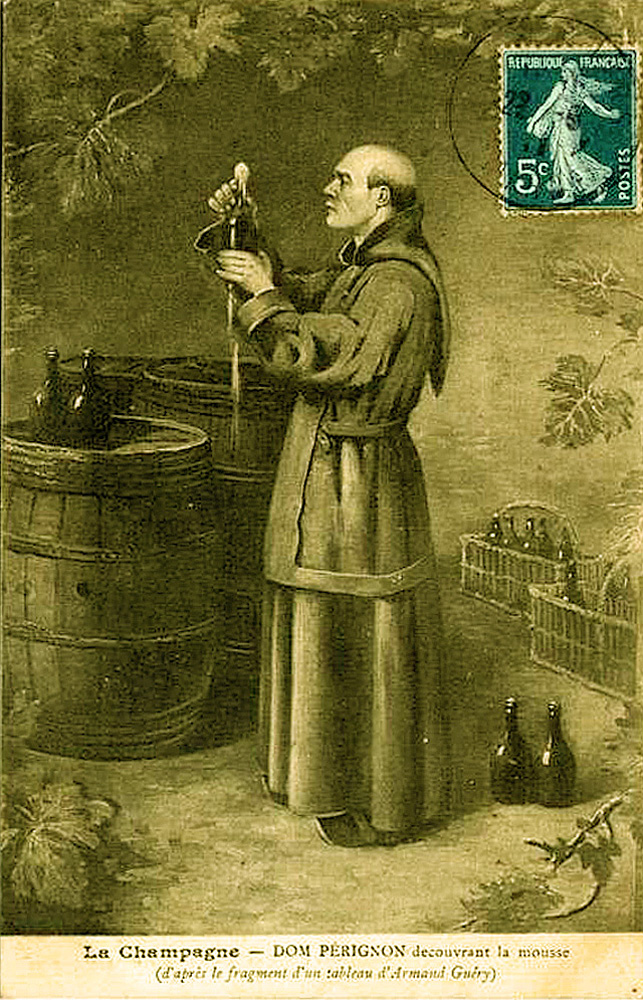
August 4, 1693 is the date traditionally ascribed to Brother (Dom) Pérignon’s invention of Champagne, when he is supposed to have said “Come quickly, I am drinking the stars!”. 

The wines of medieval and renaissance Europe tended to be almost universally red, and almost always still.  The in-bottle refermentation that gives “sparkling” wine its ‘fizz’ was a problem for winemakers.  Fermentable sugars were frequently left over when weather began to cool in the fall, particularly with the white grape varietals.  Refermentation would set in with the warm spring weather, converting bottles into literal time bombs.  Corks would pop out and wine would spoil.  Sometimes the whole batch would explode, one pressurized bottle going off in sympathetic detonation with the other.preventing-refermentation-fig1

Pierre Perignon entered the Benedictine Order when he was 19, doing his novitiate at the abbey of Saint-Vannes near Verdun, and transferring to the abbey of Hautvillers in 1668.

August 4, 1693 is the date traditionally ascribed to Brother (Dom) Pérignon’s invention of Champagne, when he is supposed to have said “Come quickly, I am drinking the stars!”.

The story seems to be an 1821 embellishment by one Dom Groussard, in an attempt to increase the prestige of the abbey.  The English scientist and physician Christopher Merret seems to have been the first to add sugars, beginning the refermentation process which resulted in the first carbonated wine.

Dom_Pérignon_découvrant_la_prise_de_mousse

Yet Dom Pérignon most certainly perfected the double fermentation process, and made important contributions to the quality of the abbey’s fine wines.  He was an early advocate of natural process, farming methods we would call “organic”, today.  He strictly avoided the addition of foreign substances, and insisted that all blending take place at the grape stage. Pérignon insisted on “blind” tasting, not wanting to know what vineyard a grape came from prior to selection.

Dom_Pérignon

Pérignon didn’t like white grapes because of their tendency to enter refermentation. He preferred the Pinot Noir, and would aggressively prune vines so that they grew no higher than three feet and produced a smaller crop. The harvest was always in the cool, damp early morning hours, and he took every precaution to avoid bruising or breaking his grapes. Over-ripe and overly large fruit was always thrown out. Pérignon did not allow grapes to be trodden, always preferring the use of multiple presses.Dom Perignon

Dom Pérignon served as the “cellarer” of the Hautvillers abbey until his death in 1715, in a time when the abbey flourished and doubled the size of its vineyards.  In a sign of honor and respect, Dom Pierre Pérignon was buried in a section of the abbey cemetery, historically reserved only for abbots.

Moët et Chandon, which began as Moët et Cie, purchased the vineyards of the Abbey of Hautvillers in 1792. To this day, Moët’s most prestigious cuvée bears the name of Dom Pérignon.

August 3, 1913 Wheatland Hop Riot

Ralph Durst, one of the largest agricultural employers in Yuba County, California, advertised widely for hops pickers for the 1913 harvest season. He got 1,000 more than he needed, which had the effect of depressing already low wages.

Organized labor was a growing force in 1913 and strikes were often violent. English cigar maker Samuel Gompers had started the American Federation of Labor (AFL) almost 30 years earlier, and Upton Sinclair’s exposé on the Chicago Stockyards, “The Jungle”, had been in print for 7 years. Yet seasonal farm workers were difficult to organize. They were an unskilled and unsettled group, largely transient and until now, mostly passed over by Union organizers.

Ralph Durst, one of the largest agricultural employers in Yuba County, California, advertised widely for hops pickers for the 1913 harvest season. He got 1,000 more than he needed, which had the effect of depressing already low wages.

Hop Pickers

Sanitary conditions quickly became deplorable.  There was one toilet per 100 workers, which quickly filled up in the July heat. Fresh drinking water was scarce.  A Durst cousin selling watered down, ersatz lemonade out of a wagon for a nickel a glass did little to improve things.

The International Workers of the World, (IWW), established in 1905, was a radical socialist labor organization.  100 of Durst’s hop pickers were members. Two of them, Richard “Blackie” Ford and Herman Suhr, managed to rally a majority to their cause with speeches, songs and slogans.

Wheatland Hop Riot104 years ago today, 1,700 seasonal hops pickers gathered in the field of the Durst Hop Farm. They demanded an increase from their $1.00/100 lbs of hops picked, and they wanted better working conditions. Durst agreed to some changes, but Ford and Suhr stuck to their full list of demands and called a strike.

A mass meeting was called on the afternoon of August 3, as a succession of speakers addressed the crowd in English, German, Greek, Italian, Arabic, and Spanish. Most were in favor of a strike.  Tensions were high when Durst arrived just after 5pm with Marysville Sheriff George Voss, a number of deputies, and Yuba County District Attorney Edward Manwell, who was also Durst’s personal attorney.

The group was surrounded as a deputy fired a warning blast into the air from a shotgun, but the warning had the opposite effect from what was intended. The crowd attacked District Attorney Manwell and Deputy Sheriff Lee Anderson and began beating them. Gunfire erupted in what soon became a full-fledged riot. Deputy Sheriff Eugene Reardon and District Attorney Manweel were both killed, along with two pickers. A third lost an arm to a shotgun blast.

There were over 100 arrests in the aftermath of the riot, the prisoners beaten and starved to extract information on strike leaders. A field worker named Alfred Nelson was hauled from one county to another and held in secret locations while being sweated, starved, and beaten.  He was repeatedly threatened with death, unless he confessed to participation in the killings. The pressure was so severe that Nels Nelson, the picker who lost his arm in the shotgun blast, hanged himself in his cell. Another prisoner tried to do the same, and a third suffered a mental breakdown and had to be committed to an asylum.WheatlandHopField-600

Blackie Ford and Herman Suhr were found guilty of second-degree murder in the following trial, and sentenced to life in the state penitentiary. Two other strike leaders, Walter Bagan and William Beck, were acquitted.

The Wheatland Hop Riot was one of the first major agricultural labor confrontations in American history, but it was far from the last. Today, the site is registered as California Historical Landmark #1003.

August 2, 216 BC Cannae

The Battle of Cannae, fought this day in 216 BC, is studied by historians and military tacticians to this day. A Roman army, estimated at 86,000 Roman and allied troops, was drawn in and enveloped by Hannibal’s far smaller force.

There were two great powers in the Mediterranean region of 264BC:  the Romans on the Italian peninsula, and Carthage, a North African maritime power settled by Phoenician travelers some 800 years earlier, in modern day Tunisia.

A dispute in Sicily that year led to war between the two powers, ending in Roman victory in 241BC and a vanquished Carthage being stripped of her Navy.

Hamilcar Barca was a great general of this, the first “Punic” war, the name deriving from the Latin word for Phoenician. Barca made his then 12-year-old son Hannibal swear undying hatred for the Romans.

At the age of 20, Hannibal Barca set out on what would become the second Punic war.  It was late Spring, 218BC, when Hannibal left the Iberian outpost of “New Carthage”, now the Spanish city of Cartagena. Crossing into hostile Gaul (France) at the head of 38,000 infantry, 8,000 cavalry, and 37 war elephants, Hannibal arrived at the Rhône River in September.

Hannibal’s crossing of the Alps that winter is one of the great feats of military history, costing almost half his force before entering Italy that December.

What followed was a series of crushing defeats for Rome. First at the Battle of Trebia, then Lake Trasimene, Hannibal’s army laid waste to the Italian peninsula.

There was almost no family in all of Rome that didn’t lose one or more members in the swath of destruction brought down on them by Hannibal and his Carthaginian army.

At this point, Rome took the extreme step of appointing one man, absolute dictator of the Roman Republic.  His name was Quintus Fabius Maximus Verrucosus.  Rather than joining the Carthaginians in pitched battle, Fabius sought to wear them down in a series of “hit & run” and “scorched earth” tactics.

Fabius was right.  His tactics were a military success and bought the Republic time in which to rebuild its military, but they were a political flop.  The Roman psyche would accept nothing short of pitched battle.  In six months, Fabius “Cunctator” (“the Delayer”) was replaced by the co-consuls Gaius Terentius Varro, and Lucius Aemilius Paullus.

cannae_battle_formation

In the co-consul system, Varro would be supreme commander of the army on one day, and Paullus the next.  Knowing full well how this system worked and wanting to draw the more aggressive Varro into pitched battle, Hannibal sprung his trap on a day when Varro was in command.

The Battle of Cannae, fought this day in 216 BC, is studied by historians and military tacticians to this day. A Roman army, estimated at 86,000 Roman and allied troops, was drawn in and enveloped by Hannibal’s far smaller force. Squeezed into a pocket so tightly they could barely raise their weapons, the Legions were attacked from all sides.

Unable to function as a disciplined unit, as many as 75,000 Romans were hacked to death, equivalent to the seating capacity of the New York Mets’ Citi Field and Harvard Stadium, combined.

Another 10,000, were captured.  Among the dead was a current Consul, the most powerful elected official in the Roman Republic, as well as both consuls from the preceding year.

80 senators, almost a third of the entire Roman Senate, were wiped out on that single day.

There was now no military force left between Hannibal and Rome itself.  Most powers would have admitted defeat, and sued for peace.  Not Rome.  Unable to defeat the Carthaginian army in open battle, Rome returned to Fabian tactics, harassing the Carthaginians and wearing them down in an endless series of scorched earth and guerrilla tactics.

For 16 years, Hannibal remained undefeated on Italian soil, while his political adversaries at home never once sent him reinforcement. He was finally recalled to Carthage to defend his homeland against Roman attacks in North Africa and Spain.  Hannibal was defeated by his own tactics at the Battle of Zama, the second Punic War ending in 201BC.

Hannibal_Louvre
Hannibal, Louvre Museum.

Carthage was a thoroughly defeated power as Hannibal grew into his old age, but some in Rome wouldn’t let it go. Misbehaving Italian children were threatened that Hannibal would come and get them if they weren’t good.  Roman politician Marcus Porcius Cato, “Cato the Elder”, ended his every speech, “Carthago delenda est”, “Carthage must be destroyed“.

The third Punic War saw the Romans attack Carthage itself. After three years of siege, the city fell in 146BC. Thousands were slaughtered, as many as 70,000 sold into slavery. Though the salting of fields is probably a later embellishment to the story, the city was sacked, then burned to the ground. Utterly destroyed.

Hannibal himself had grown elderly by the time of 181-183BC, fleeing from one town to the next to escape his Roman pursuers.  Unwilling to be paraded through Rome in a cage, Hannibal committed suicide by poison sometime that same year. In a letter found after his death, Hannibal had written “Let us relieve the great anxiety of the Romans, who have found it too weighty a task, to wait for the death of a hated old man”.