Henry Ford had a “thing”, for soybeans. At the 1934 World’s Fair in Chicago, Ford invited reporters to a feast where he served soybean cheese, soybean crackers, soy bread and butter, soy milk, soy ice cream… The man was a veritable Bubba Gump, of soybeans.
The largest museum in the United States is located in the Detroit suburb of Dearborn, the Henry Ford Museum of American Innovation. The sprawling, 12-acre indoor-outdoor complex in the old Greenfield Village is home to JFK’s Presidential limo, the Rosa Parks bus and the Wright Brothers’ bicycle shop. There you will find Abraham Lincoln’s chair from Ford’s Theater, along with Thomas Edison’s laboratory and an Oscar Mayer Wienermobile. George Washington’s camp bed is there, with Igor Sikorski’s helicopter and an enormous collection of antique automobiles, locomotives and aircraft.
Sadly, one object you will not find there, is Henry Ford’s plastic car, made from soybeans.
Ford left the family farm outside of modern-day Detroit as a young man, never to return. His father William thought the boy would one day own the place but young Henry couldn’t stand farm work. He later wrote, “I never had any particular love for the farm—it was the mother on the farm I loved”.
Henry Ford went on to other things, but part of him never left the farm. In 1941, the now-wealthy business magnate wanted to combine industry, with agriculture. At least, that’s what the museum says.
George Washington Carver, at work in his library
Ford first gave the plastic car project to yacht designer Eugene Turenne Gregorie, but later turned to the Greenfield Village soybean laboratory. To the guy in charge over there, actually, a guy with some experience in tool & die making. His name was Lowell Overly.
The car was made in Dearborn with help from the scientist and botanist George Washington Carver, (yeah, That George Washington Carver), a man born to slavery who rose to such prodigious levels accomplishment, that Time magazine labeled him the “Black Leonardo”.
The soybean car, introduced to the public this day in 1941, was made from fourteen ¼-inch thick plastic panels and plexiglass windows, attached to a tubular steel frame and weighing in at 1,900 pounds, about a third lighter than comparable automobiles of the era. The finished prototype was exhibited later that year at the Dearborn Days festival, and the Michigan State Fair Grounds.
The thing was built to run on fuel derived from industrial hemp, a related strain of the Cannibis Sativa plant beloved of stoners the world over and known simply, as “weed”.
Ford claimed he’d be able to “grow automobiles from the soil”, a hedge against the metal rationing of world War Two. He dedicated 120,000 acres of soybeans to experimentation, but to no end. The total acreage devoted to “fuel” production, is unrecorded.
Another reason for a car made from soybeans, was to help American farmers. Plus, Henry Ford seems to have had a “thing”, for soybeans. At the 1934 World’s Fair in Chicago, Ford invited reporters to a feast where he served soybean cheese, soybean crackers, soy bread and butter, soy milk, soy ice cream… The man was a veritable Bubba Gump, of soybeans. Ford was probably one of the first in this country, to regularly drink soy milk.
Henry Ford’s own car was fitted with a soybean trunk and struck with an axe to show the material’s durability, though the axe was later revealed to have a rubber boot.
Henry Ford’s experiment in making cars from soybeans never got past that first prototype, and came to a halt during WW2. The project was never revived, though several states adopted license plates stamped out of soybeans, a solution farm animals found to be quite delicious.
The car itself was destroyed long ago, the ingredients for its manufacture unrecorded, but the thing lives on in the hearts of hemp enthusiasts, everywhere.
The New York Times claimed the car body and fenders were made from soy beans, wheat and corn. Some sources opine that the car was made from Bakelite or some variant of Duroplast, a plant-based auto body substance produced in the millions, for the East German Trabant.
One newspaper claimed that nothing ever came from Henry Ford’s soybean experiments, except whipped cream.
If you enjoyed this “Today in History”, please feel free to re-blog, “like” & share on social media, so that others may find and enjoy it as well. Please click the “follow” button on the right, to receive email updates on new articles. Thank you for your interest, in the history we all share.
Today, the idea that microrganisms such as fungi, viruses and other pathogens cause infectious disease is common knowledge, but such ideas were held in disdain among scientists and doctors, well into the 19th century.
In the 12th century, French philosopher Bernard of Chartres expressed the concept of “discovering truth by building on previous discoveries”. The idea is familiar to the reader of English as expressed by the mathematician and astronomer Isaac Newton, who observed that “If I have seen further it is by standing on the shoulders of Giants.”
Dr. Ignaz Semmelweis
Nowhere is there more truth to the old adage, than in the world of medicine. In 1841, the child who survived to celebrate a fifth birthday could look forward to a life of some 55 years. Today, a five-year-old can expect to live to eighty-two, fully half again that of the earlier date.
Yet, there are times when the giants who brought us here are unknown to us, as if they had never been. One such is Dr. Ignaz Semmelweis, one of the earliest pioneers in anti-septic medicine.
Semmelweis studied law at the University of Vienna in the fall of 1837, but switched to medicine the following year. He received his MD in 1844 and, failing to gain a clinical appointment in internal medicine, decided to specialize in obstetrics.
In the third century AD, the Greek physician Galen of Pergamon first described the “miasma” theory of illness, holding that infectious diseases such as cholera, chlamydia and the Black Death were caused by noxious clouds of “bad air”. The theory is discredited today, but such ideas die hard.
The germ theory of disease was first proposed by Girolamo Fracastoro in 1546 and expanded by Marcus von Plenciz in 1762. Single-cell organisms – bacteria – were known to exist in human dental plaque as early as 1683, yet their functions were imperfectly understood. Today, the idea that microrganisms such as fungi, viruses and other pathogens cause infectious disease is common knowledge, but such ideas were held in disdain among scientists and doctors, well into the 19th century.
In the mid-19th century, birthing centers were set up all over Europe, for the care of poor and underprivileged mothers and their illegitimate infants. Care was provided free of charge, in exchange for which young mothers agreed to become training subjects for doctors and midwives.
In 1846, Semmelweis was appointed assistant to Professor Johann Klein in the First Obstetrical Clinic of the Vienna General Hospital, a position similar to the “chief resident,” of today.
At the time, Vienna General Hospital ran two such clinics, the 1st a “teaching hospital” for undergraduate medical students, the 2nd for student midwives.
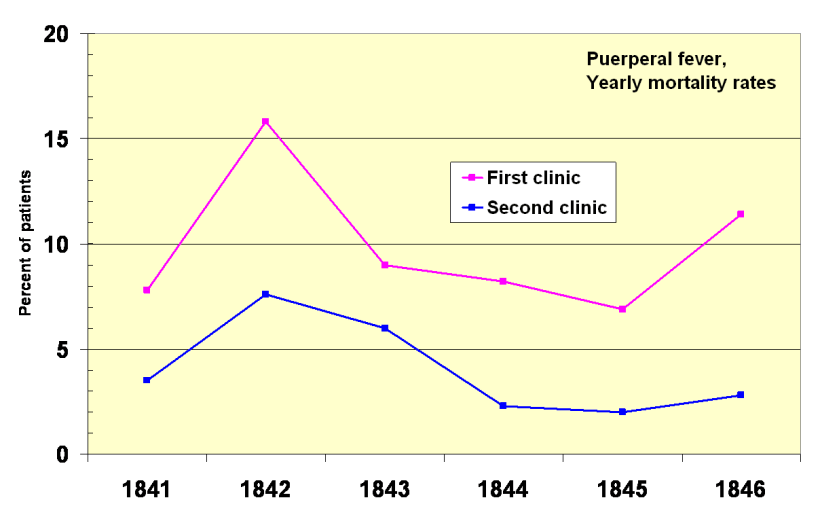
Semmelweis quickly noticed that one in ten women and sometimes one in five, were dying in the First Clinic of postpartum infection known as “childbed fever”, compared with less than 4% at the Second Clinic.
The difference was well known even outside of the hospital. Expectant mothers were admitted on alternate days into the First or Second Clinic. Desperate women begged on their knees not to be admitted into the First, some preferring even to give birth in the streets, over childbirth in that place. The disparity between the two clinics “made me so miserable”, Semmelweis said, “that life seemed worthless”. He had to know the reason why.
Childbed or “puerperal” fever was rare among these “street births”, and far more prevalent in the First Clinic, than the Second. Semmelweis carefully eliminated every difference between the two, even including religious practices. In the end, the only difference was the people who worked there.
The breakthrough came in 1847, following the death of Semmelweis’ friend and colleague, Dr. Jakob Kolletschka. Kolletschka was accidentally cut by a student’s scalpel, during a post-mortem examination. The doctor’s own autopsy showed a pathology very similar to those women, dying of childbed fever. Medical students were going from post-mortem examinations of the dead to obstetrical examinations of the living, without washing their hands.
Midwife students had no such contact with the dead. This was it. Some unknown “cadaverous material” had to be responsible for the difference.
Semmelweis instituted a mandatory handwashing policy, using a chlorinated lime solution between autopsies and live patient examinations.
Mortality rates in the First Clinic dropped by 90%, to rates comparable with the Second. In April 1847, First Clinic mortality rates were 18.3% – nearly one in five. Hand washing was instituted in mid-May, and June rates dropped to 2.2%. July was 1.2%. For two months, the rate was zero.
The European medical establishment celebrated the doctor’s findings, and Semmelweis was feted as a giant of modern medicine. No, just kidding. He wasn’t.
The imbecility of the response to Semmelweis’ findings is hard to get your head around, and the doctor didn’t help himself. The medical establishment took offense to the idea that they themselves were the cause of the mortality problem, and that the answer lay in simple cleanliness.
Semmelweis himself was anything but tactful, publicly berating those who disagreed with his hypothesis and gaining powerful enemies. For many, the doctor’s ideas were extreme and offensive, ignored or rejected and even ridiculed. Are we not Gentlemen!? Semmelweis was fired from his hospital position and harassed by the Vienna medical establishment, finally forced to move to Budapest.
Dr. Semmelweis was outraged by the indifference of the medical community, and began to write open and increasingly angry letters to prominent European obstetricians. He went so far as to denounce such people as “irresponsible murderers”, leading contemporaries and even his wife, to doubt his mental stability.
Dr. Ignaz Philipp Semmelweis was committed to an insane asylum on July 31, 1865, twenty-three years before Dr. Louis Pasteur opened his institute for the study of microbiology.
On August 12, 1865, British surgeon and scientist Dr. Joseph Lister performed the first anti-septic surgery, in medical history. Dr. Semmelweis died the following day at the age of 47, the victim of a blood infection sustained following a severe beating by asylum guards.
If you enjoyed this “Today in History”, please feel free to re-blog, “like” & share on social media, so that others may find and enjoy it as well. Please click the “follow” button on the right, to receive email updates on new articles. Thank you for your interest, in the history we all share.
Even the inebriates stepped up, when a Brooklyn home for alcoholics donated fifteen dollars. Not to be outdone, collection boxes were put out in bars and saloons all over New York City.
In the late 1860s, French sculptor Frédéric Auguste Bartholdi conceived a great work of neoclassical sculpture. An enormous statue depicting a female figure in robes, this latter-day colossus holding high her Torch of Progress and standing by the water’s edge to greet the weary traveler – to Egypt.
Today, the 120-mile Suez canal connecting the Mediterranean with the Red Sea handles nearly fifty ships per day. Around Bartholdi’s time, Ottoman authorities were just getting around to digging the thing. Bartholdi had visited Egypt as a young man, and came away captivated by the Sphinxes, the Great Pyramids, and now this.
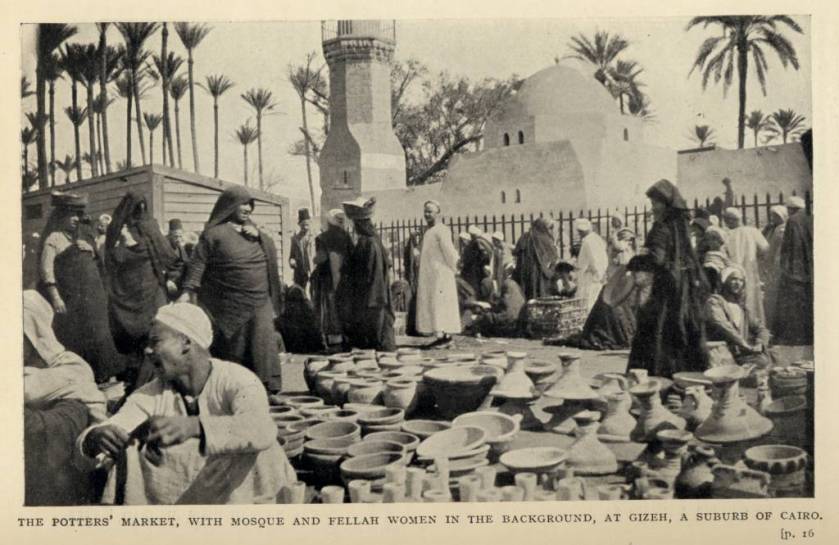
Bartholdi pitched his idea to the Khedive of Egypt in 1867, while attending the World’s Fair, in Paris. An enormous lighthouse in the form of a woman, holding high the lamp of welcome and dressed in the flowing cotton robe of the fellah, the “True Egyptian”, the peasant farmer and agricultural laborer of Egypt and North Africa.
The Egypt deal fell through, when Bartholdi came to a land where he’d never been before, to sell his colossus.
The idea was originally that of French attorney Édouard René de Laboulaye. An observer of American civic culture and passionate supporter for the Union side of the Civil War, Laboulaye wrote a three-volume work on the political history of the United States and considered the gift of “Liberty Enlightening the World” to be symbolic of values repressed at that time, by the 2nd Republique of Napoleon III.
Bartholdi pitched the idea from Niagara Falls to Washington, D.C., from Chicago to Los Angeles, but Americans were slow to appreciate the idea of a lighthouse, in the shape of a woman. Back in Paris, the sculptor put on spectacles of every kind to raise money, charging visitors admission to the dusty workshop to watch the torch’s construction, and selling souvenirs. At one point, Bartholdi even petitioned the French government, to let him hold a national lottery.
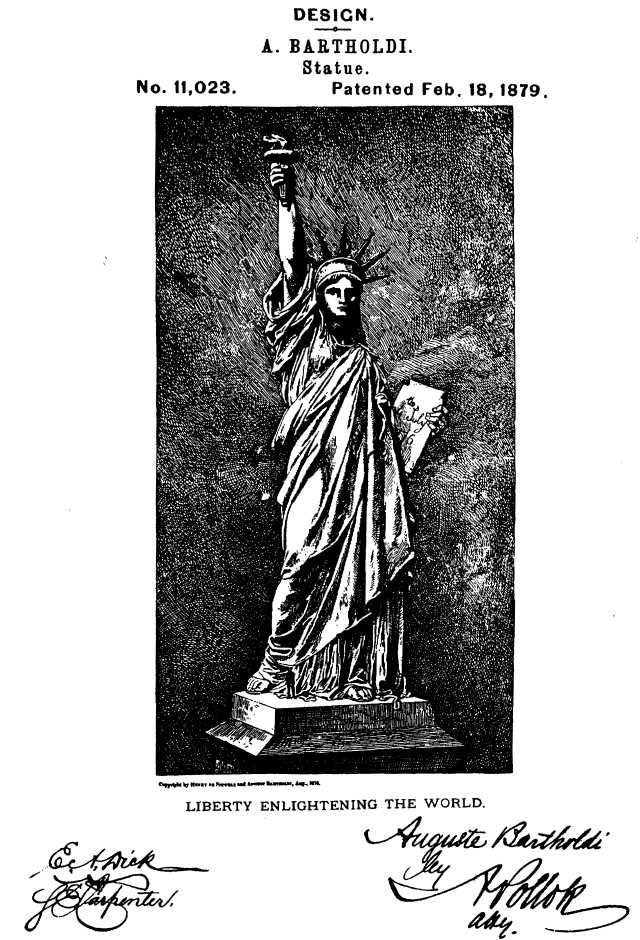
U.S. Patent D11023
The torch arrived late for the centennial festivities of 1876, celebrating the 100th birthday of the young nation. Nevertheless, the “colossal arm” proved popular with Philadelphia fairgoers, where visitors paid admission to climb up into the arm and take in the view from the balcony. The sculptor was so pleased that, for a time, he considered installing the finished statue in Philadelphia.
Fundraising committees were formed in New York, Philadelphia and Boston, to raise money for the foundation and pedestal. On his last full day in office, March 3, 1877, President Ulysses S Grant signed a joint resolution authorizing the President to accept the statue when presented by France, and to select a site for it. President Rutherford B. Hayes accepted Bartholdi’s suggestion and selected Bedloe’s Island, in New York Harbor.
Stereoscopic Image from the Centennial Exposition of 1876
Even then, fundraising went slowly for the New York committee.
With the full statue under construction in Paris, Boston made a play for the statue in 1882, offering to pay the full cost of installation provided that the statue was installed in Boston Harbor. The New York Times was miffed as only the “Newspaper of Record” can be. One editorial sniffed:
“[Boston] proposes to take our neglected statue of Liberty and warm it over for her own use and glory. Boston has probably again overestimated her powers. This statue is dear to us, though we have never looked upon it, and no third rate town is going to step in and take it from us. Philadelphia tried to do that in 1876, and failed. Let Boston be warned . . . that she can’t have our Liberty … that great light-house statue will be smashed into … fragments before it shall be stuck up in Boston Harbor”.
And here I thought that New York/Boston thing started with the Red Sox and the Yankees.
Fundraising toward the $100,000 required to complete the project was a constant and seemingly insurmountable challenge. New York Governor Grover Cleveland vetoed a bill in 1884, providing $50,000 for the effort. A bill to have the United States Congress pick the full tab the following year, was likewise defeated.
Head on display at the p 1878
With only $3,000 in the bank, the American committee organized a number of fund drives. Poet Emma Lazarus was asked to donate an original work for auction, but declined the request. At the time, Lazarus was involved in aiding Jewish refugees from the anti-Semitic pogroms of Eastern Europe. In time, Lazarus came to see the request as a way to help the cause. The resulting sonnet, The New Colossus, included the iconic lines “Give me your tired, your poor/Your huddled masses yearning to breathe free.”
New York World publisher Joseph Pulitzer pushed the project over the top, offering to print names and brief notes from contributors of every size down to a single penny. It was a brilliant marketing scheme. Newspaper circulation went through the ceiling, as readers scooped up papers to see their names in print.
One kindergarten class in Davenport, Iowa raised $1.35. A group of children sent a dollar as “the money we saved to go to the circus with.” Another dollar was sent by a “lonely and very aged woman.” Even the Big Apple’s inebriates stepped up, when a Brooklyn home for alcoholics donated fifteen dollars. Not to be outdone, collection boxes were put out in bars and saloons all over New York City. (The two cities wouldn’t be merged until 1898).
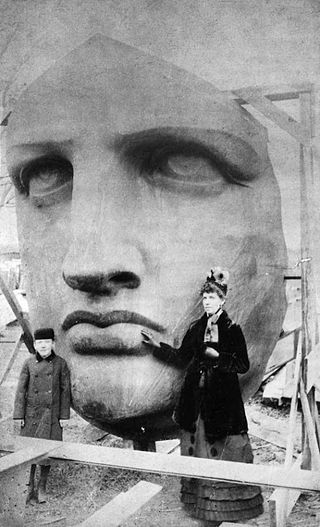
Unpacking the face, 1885
Hundreds of crates containing the disassembled Liberty Enlightening the World arrived in New York on June 17, 1885, aboard the French steamer Isère. Two months later, the final piece fell into place. On August 11, the World announced that $102,000 had been raised from 120,000 donors. 80% of the total arrived in sums of a dollar or less.
Despite the fundraising success, the pedestal wasn’t complete until April of the following year. With no room to erect scaffolding, workers descended down ropes to install skin sections to an iron armature designed by none other than Gustave Eiffel.
The formal dedication was held on the afternoon of October 28, 1886, with former New York Governor and now-President of the United States Grover Cleveland, presiding. As many as a million turned out for the parade held that morning through the streets of the city. At the New York Stock Exchange, traders showered marchers with paper strips containing stock quotes, beginning an American tradition called the ticker-tape parade.
Festivities on the future Liberty Island were for dignitaries only that day, no member of the public was allowed. Ironically, no women were permitted at all for the dedication of the world’s tallest female, save for the Sculptor’s wife, and the granddaughter of French diplomat, Ferdinand de Lesseps. It was believed that women might be injured, in all that crush of humanity.
That didn’t keep a group of offended suffragists from chartering a boat, and getting as close to the island as possible. I wonder what that sounded like.
Liberty Enlightening the World has opened and closed to the public, since that time. She has turned from a dull copper red to the rich green patina you see today. She was injured in a World War, in the Black Tom explosion of 1916. She was there to witness Annie Moore’s arrival at Ellis Island, that 15-year-old “rosy-cheeked Irish girl” from County Cork, the first of some twenty-five million immigrants who arrived at that place legally between 1892 and 1924, helping to transform this nation into the international all-star team, of the world. She witnessed that Kiss on Times Square, ending another World War in Europe. Built in the wake of the Civil War, she has watched over a nation sometimes torn along lines of race and color, as her people learned to get along with others, unlike themselves.
She has witnessed the worst terror attack of modern history and that brief, shining moment where we all seemed to be “One Nation, Under God”. Throughout it all she has remained iconic. Torch held high, the chain at her feet lying broken as she walks forward. The stone tablet in her hand is inscribed “JULY IV MDCCLXXVI”. July 4, 1776.
If you enjoyed this “Today in History”, please feel free to re-blog, “like” & share on social media, so that others may find and enjoy it as well. Please click the “follow” button on the right, to receive email updates on new articles. Thank you for your interest, in the history we all share.
A chirpy little forecast on weather2travel.com advises the Antarctic traveler to “Check How Hot & Sunny It Is Before You Book Your Next Holiday in 2019,” reporting max daytime temperatures for March, of -51°C.
Roald Amundsen always wanted to go to sea. The fourth son of a family of Norwegian shipowners and captains, Amundsen’s mother wanted no such thing for her boy, and made him vow that he’d go to school to become a doctor. Amundsen was 21 when his mother died. He kept his promise until that day. After that, there would be no more school.
Roald Amundsen
Amundsen wanted to become an explorer, taking inspiration from the doomed Franklin Arctic Expedition of 1848, and Fridtjof Nansen’s crossing of Greenland in 1888.
The period would come to be called the “Heroic Age” of polar exploration. Amundsen was drawn to the story, as much as he helped in its creation. He was part of the Antarctic expedition of 1897-99 aboard the RV Belgica, the first to winter in Antarctica. He led the first expedition to successfully navigate Canada’s Northwest Passage between the Atlantic and Pacific Oceans, in 1903–06.
Amundsen’s attempt to reach the South Pole set out on September 8, 1911. Using skis and dog sleds, Amundsen and his men created supply depots at 80°, 81° and 82° south latitude, precious stockpiles of food and equipment at 69-mile intervals on the way to the Pole. The effort proved to be premature and had to be abandoned due to extreme cold. A second attempt departed on October 19 with four sledges and 52 dogs, along the previously unknown Axel Heiberg Glacier. The team of five men and 16 dogs arrived at 90° 0′ S on December 14, 1911, the first team in history to reach the South Pole.
Robert Falcon Scott
English explorer Robert Falcon Scott attempted the South Pole in 1901–04, and was doing so once again at the time of the Amundsen expedition. Though he’d had to turn back, the earlier expedition had established the southernmost record for that time, at 88° 23′ S. Ninety-seven miles short of the pole.
Unlike Amundsen who adopted the lighter fur-skins of the Inuit, the Scott expedition wore heavy wool clothing, depending on motorized and horse-drawn transport, and man-hauling sledges for the final drive across the polar plateau. Dog teams were expected to meet them only on the way out, on March 1.
Weak ponies, poorly acclimated to the wretched conditions slowed the depot-laying part of the Scott expedition, four horses dying of cold or having to be shot because they slowed the team.
Expedition member Lawrence “Titus” Oates warned Scott against the decision to locate “One-Ton Depot” 35-miles short of its planned location at 80°. His words would prove prophetic. “Sir, I’m afraid you’ll come to regret not taking my advice.”
Unlike his previous attempt, Scott made it this time, only to find that Amundsen’s Norwegian expedition had beat him by a mere five weeks. The anguish in Scott’s diary entry for January 17, 1912, is palpable: “The worst has happened…All the day dreams must go…Great God! This is an awful place”.
“Scott captures Dr Edward Wilson sketching on Beardmore Glacier during his final expedition to the Antarctic in 1912”. H/T Guardian.com
Roald Amundsen returned safely and publicly announced his attainment of the South Pole on March 7, 1912.
Defeated, the five-man Scott party began the 800-mile, frozen slog back from the Pole on January 19. Team member Edgar “Taff” Evans’ condition began to deteriorate as early as the 23rd. A bad fall on Beardmore Glacier on February 4 left him “dull and incapable”. Another fall on the 17th left Evans dead at the foot of the glacier.
Dog teams failed to materialize at the appointed time. Within days, Oates himself was severely frostbitten, concerned that his incapacity was a threat and a burden to the team. The man left his tent for the last time and limped into the blizzard on March 17, saying “I am just going outside and may be some time”. He never returned.
Noble though it was, Lawrence Oates’ suicide came to naught. The last three made their final camp on March 19, with 400 miles to go. A howling blizzard descended on the tents the following day and lasted for days, as Scott, Henry “Birdie” Bowers and Dr. Edward Wilson wrote good-bye letters to mothers, wives, and others. In his final starved, frostbitten hours, Robert Falcon Scott wrote to his diary “It seems a pity, but I do not think I can write more.” In his final entry, Scott worried about the financial burden on his family, and those of the doomed expedition: “Last entry. For God’s sake look after our people”.
The specific meteorological conditions of those final days, went unrecorded. A chirpy little forecast on http://www.weather2travel.com advises the Antarctic traveler to “Check How Hot & Sunny It Is Before You Book Your Next Holiday in 2019,” reporting maximum daytime temperatures for March, of -51°C.
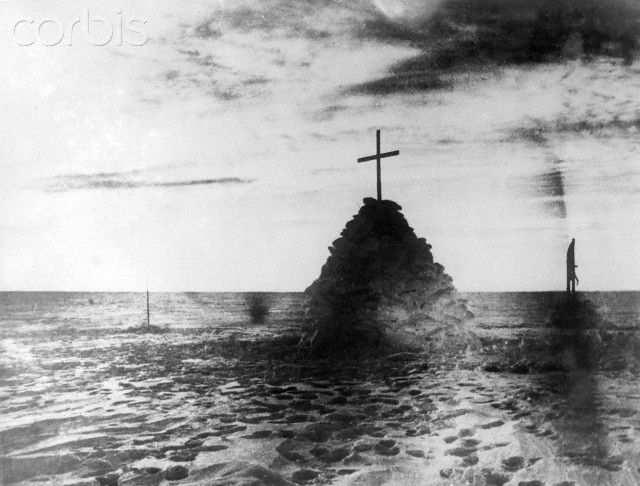
The frozen corpses of Scott and his comrades were found some eight months later, that last diary entry dated March 29, 1912. A high cairn of snow was erected over it all, that final camp becoming the three men’s tomb. Ship’s carpenters built a wooden cross, inscribing on it the names of those lost: Scott, Edward Wilson, Henry Bowers, Lawrence Oates and Edgar Evans. A line from Alfred Lord Tennyson’s poem, Ulysses, appears on the cross: “To strive, to seek, to find, and not to yield”.
The last three survivors died eleven miles from their next supply depot.
Apsley Cherry-Garrard, part of the expedition to find the doomed Scott party, survived similar conditions by some kind of miracle and wrote in The Worst Journey in the World, that his teeth chattered so violently, that some of them broke.
Satellites measured the coldest temperature in recorded history on August 10, 2010 at −93.2 °C (−135.8 °F), in East Antarctica. The Amundsen-Scott weather station at the South Pole reports the average daily temperature for March, at -50.3°C (-58.54°F).
Routes taken to the South Pole by Amundsen (Red) and Scott (Green)
On hearing of the fate of his erstwhile rival, Roald Engelbregt Gravning Amundsen is quoted as saying “I would gladly forgo any honour or money if thereby I could have saved Scott his terrible death”.
A century of ice and snow have covered the bodies, the camp and the cross alike. Pressed ever downward by the weight of the snow and ice and creeping seaward with the glacier, the corpses are encased seventy-five-feet down in the Ross Ice Shelf and inching their way outward, expected to reach the Ross Sea sometime around 2276. Perhaps to break off and float away, at the heart of some unknown future iceberg.
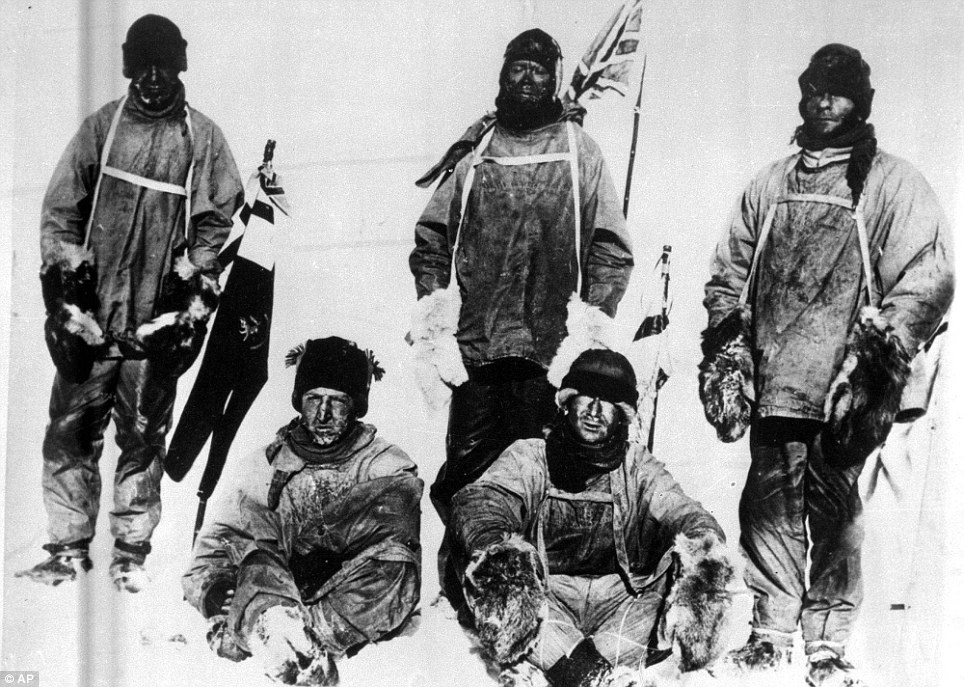
Feature image, top of page “Final call: From left-righy, Dr E. A. Wilson, Lt. H. R, Bowers, Captain Robert Falcon Scott, Petty Officer Taff Evans and Capt. L. E.G. Oates pose for a photo not long before they died on their way back from their trek“. H/T Guardian.com
If you enjoyed this “Today in History”, please feel free to re-blog, “like” & share on social media, so that others may find and enjoy it as well. Please click the “follow” button on the right, to receive email updates on new articles. Thank you for your interest, in the history we all share.
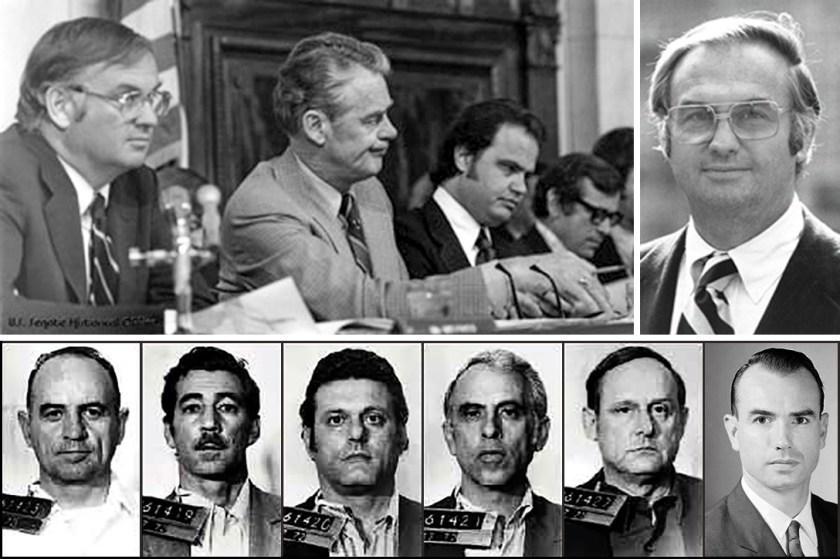
Watergate prosecutor James Neal was convinced that the President hadn’t known in advance, and the later release of Oval Office tapes seem to bear that out. At one point, you can hear the President ask “Who was the asshole who ordered it?”
The time was not yet 1:00am on June 17, 1972, when security guard Frank Wills noticed tape covering several door latches at the Watergate Complex in the Foggy Bottom neighborhood of Washington, DC. Wills removed the tape and thought little of it, but came back an hour later to see that the doors had been re-taped. This time, Wills called the police.
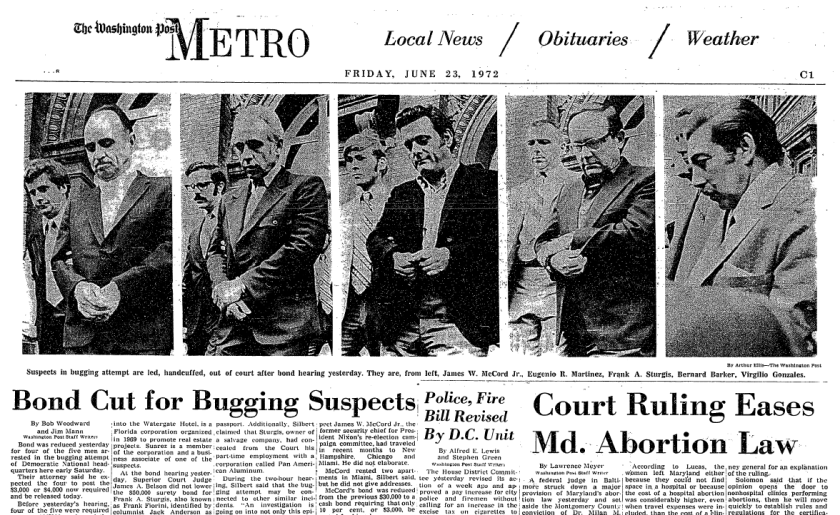
Five men were discovered inside the offices of the Democratic National Committee. These were Virgilio González, Bernard Barker, James McCord, Eugenio Martínez, and Frank Sturgis. All were arrested and charged with attempted burglary and attempted interception of telephone and other communications.
Subsequent investigation incriminated Committee to Re-elect the President (CRP) General Counsel G. Gordon Liddy, and former CIA officer E. Howard Hunt. A grand jury indicted the lot of them for conspiracy, burglary and violation of federal wiretap laws.
During the investigation and ensuing trial, it became clear that all seven had ties to the 1972 CRP. President Richard Nixon stated that his chief counsel John Dean had conducted a thorough investigation of the matter, though it later became clear that there had been no investigation at all.
Press Secretary Ron Ziegler dismissed the break-in as “a third-rate burglary attempt”.
On September 29, it was revealed that John Mitchell had controlled a secret fund while serving as Attorney General, used to finance Republican campaign intelligence gathering operations against Democrats. On October 10, the FBI reported that the Watergate break-in was only part of a comprehensive campaign of spying and political sabotage conducted on behalf of the Nixon re-election committee. The Nixon campaign was never affected by the revelations. The President was re-elected in one of the biggest landslides in American political history.
The Media wouldn’t let it go, particularly the connection between the break-in and the campaign. Relying on anonymous sources, Washington Post reporters Bob Woodward and Carl Bernstein uncovered information suggesting that there was wide-spread knowledge of the break-in and the attempt to cover it up, knowledge running through the Justice Department, FBI, CIA, and all the way to the White House.
The animosity between the media and the White House grew as Nixon and administration officials discussed plans to “get” hostile media organizations.
The scandal blew apart, the following March. Judge John Sirica, presiding over the burglary trial, read aloud in open court a letter from one of the burglars. The letter written by John McCord claimed that trial testimony had been perjured, and that defendants had been pressured to remain silent. The accusations led to the formation of a Senate select committee to investigate the Watergate burglary and subsequent cover-up, and the ultimate discovery of a secret taping system in the Oval Office.
Demands for the tapes were met with claims of Executive Privilege and refusal to hand them over. Litigation made it all the way to the Supreme Court. On July 24, 1974, the unanimous decision in United States v. Nixon voided all claims of executive privilege.
Within six days, the House Judiciary Committee approved three articles of impeachment: obstruction of justice, abuse of power and contempt of Congress.
The President’s support in Congress collapsed after the release of the “Smoking Gun” tape, demonstrating that the President himself had entered into a criminal conspiracy with the goal of obstructing justice. On August 8, Richard Nixon announced his intention to resign from office, effective at noon the following day. The first American President in history to resign from office. The Justice Department pondered an indictment, but that discussion ended a month later with a pardon from President Gerald R. Ford.
It isn’t clear whether Nixon had prior knowledge of the break-in. Watergate prosecutor James Neal was convinced that the President hadn’t known in advance, and the later release of Oval Office tapes seem to bear that out. At one point, you can hear the President ask “Who was the asshole who ordered it?”
Years later, the shoe was on the other foot, as the House considered impeachment proceedings against President Clinton for suborning perjury and obstruction of Justice. Representative John Conyers said in a September 30, 1998 Time Magazine article that “We’ve been advocating the Watergate model (of prosecution). I support it”. Contradicting himself in the next paragraph, Congressman Conyers went on to say “The notion that this review should be open ended like Watergate, as the Speaker continues to insist, is preposterous”.
At the time of the Watergate hearings, Jerry Zeifman was serving as Chief Counsel of the House Judiciary Committee’s permanent staff. Zeifman has since claimed to have fired a junior member of the temporary Impeachment Inquiry staff for dishonesty and unethical behavior, though there remains some doubt as to whether he had that authority. That staff member would continue on with the committee until its dissolution, in 1974.
Irrespective of the degree of his early involvement, Nixon himself was an active participant in the cover-up. In the end, that would prove more damaging than the burglary itself. One hopes that any such betrayal of public trust will always be worse than the underlying crime, but time will tell. Years later, that junior member of the temporary Impeachment Inquiry staff would famously ask, “What difference, at this point, does it make”?
If you enjoyed this “Today in History”, please feel free to re-blog, “like” & share on social media, so that others may find and enjoy it as well. Please click the “follow” button on the right, to receive email updates on new articles. Thank you for your interest, in the history we all share.
Twenty tons of silver and gold were captured by the raid, far too much to carry. With Spanish forces hot on their heels, Drake and his party buried part of the trove in the jungle and another part on the beach, probably feeding into later tales of pirate’s buried treasure.
When the casual student of history can hark back to a time when “Britannia ruled the waves”, it’s hard to remember that the world’s great naval powers were once Spain and Portugal.
In the late 15th century, the two determined to slice the world into “spheres of influence”, in order to minimize conflict. The Treaty of Tordesillas signed in 1494 between the Pope and the respective monarchs, bequeathed most of the Americas, to Spain.
Martin Luther nailed his 95 theses to the door of Wittenburg Church fewer than twenty years later, triggering the Protestant reformation. The non-Catholic powers of next-century Europe were not about to recognize Papal authority, nor abide by his treaties.
Treaty of Tordesillas, 1494, dividing the world into Portuguese and Spanish spheres of influence
Spanish authorities were deeply suspicious of foreign encroachment onto their territory, and murdered several hundred French Huguenot inhabitants of Fort Caroline near the future Jacksonville Florida, in 1565. At the time, the French had already surrendered.
In 1562-’63 and again in 1564-’65, the English adventurer John Hawkins engaged in trading expeditions with Spanish colonies in the New World, with tacit approval from the British crown. Such trade was technically illegal according to the 1494 treaty, but local authorities were happy to trade for slaves. Hawkins received glowing testimonials from local magistrates and governors, often in exchange for bribes, and took orders from his Spanish clients for a third such journey.
Spanish authorities were alarmed at this challenge to their monopoly. The sneak attack of September 23, 1568 at the port of San Juan de Ulúa was a humiliating defeat for the English, resulting in the loss of five British ships and the death of hundreds of British seamen. One-hundred or more survivors were stranded on the beach and later tortured, burned at the stake, or sentenced to penal servitude for life on Spanish galleys, following the arrival of the Inquisition in 1571.
The Battle of San Juan de Ulúa
Hawkins’ relative and protégé Francis Drake was forced to swim for it, and flee for his life at the helm of the Judith, one of only two ships and a mere 70 or 80 crew, to survive. Three more turned up a year later, in Nova Scotia.
Being forced like that to abandon his relative and sponsor to fend for himself was a searing humiliation, leaving Drake with a deep and abiding hatred for all things Catholic. Most especially, Spain.
Drake launched his first major undertaking in 1572, attacking Spanish operations on the Isthmus of Panama, where Peruvian silver and gold were moved overland to the coastal Caribbean town of of Nombre de Dios, where galleons awaited to remove the treasure to Spain. Drake and a crew including French privateers attacked a Spanish mule train in March 1573 with the help of local Maroons, African slaves escaped from the Spanish.
Twenty tons of silver and gold were captured by the raid, too much to carry. With Spanish forces hot on their heels, Drake and his party buried part of the trove in the jungle and another part on the beach, probably feeding into later tales of pirate’s buried treasure.
The triumphant expedition returned to Plymouth this day in 1573, heroes in England and reviled in Spain. Gonzalo González del Castillo described “El Draque”, in a letter to King Philip II, “The people of quality dislike him for having risen so high from such a lowely family; the rest say he is the main cause of wars“.
At one point during that raid of 1572-’73, Drake had climbed a tree to scout the vicinity, becoming the first English man to see the Pacific ocean. He remarked that one day, he wanted an Englishman to sail those waters. He himself gained that chance in 1577, when Elizabeth I sent Drake on an expedition against Spanish holdings along the Pacific coast of the Americas.
Historians disagree to this day, whether this was a voyage of exploration, piracy or merely an effort to poke the Spanish King in the eye. When it was over, Drake was the first Englishman to circumnavigate the globe.
This was the third such voyage. The Portuguese explorer Ferdinand Magellan was first, setting out 58 years earlier with 5 ships and 200 men. Magellan himself didn’t make it. He was killed on a Philippine beach in 1521. Eighteen of his men straggled back on two ships, in 1522.
Death of Ferdinand Magellan, 1521
Ordered by King Charles I to colonize the Spice Islands for Spain, explorer García Jofre de Loaísa would be the second, leaving in 1525 with 450 men aboard seven ships. None of his vessels ever made it back, nor did the explorer. 25 men returned to Spain in 1536, under Portuguese guard.
The Pelican left Plymouth, England on November 15, 1577 with four other ships and 164 men. The weather was so rancid they soon had to turn back, seeking shelter in Falmouth, Cornwall, and finally returning to Plymouth, where the whole thing started. The small flotilla set out once again on December 13 after making repairs and soon joined by a sixth ship, the Mary.
Drake crossed the Atlantic and made it to Patagonia, when it seems one of his people got on his last nerve. Thomas Doughty had been given command of the captured Portuguese ship Santa Maria, renamed the Mary, when he caught Drake’s brother Thomas stealing from the vessel’s cargo. One thing led to another and Doughty himself was accused as “a conjurer and a seditious person”. Doughty was brought before a shipboard trial on charges of treason and witchcraft, establishing a principle which lasts to this day, that a ship’s captain was absolute ruler, regardless of the rank or social class of the passengers.
Golden Hinde, replica
Thomas Doughty lost his head, near the spot where Magellan had put his own mutineers to death, a half century earlier. Drake renamed his flagship the “Golden Hind” (Female deer), probably to smooth over the Doughty episode with the expedition’s sponsors.
From the 16th century on, the Spanish Main was a rich source of treasure. The three sided box enclosing the Caribbean from Florida through Mexico and along the northern coast of South America was a ripe territory for pirates and buccaneers, though that became less so as you traveled south along the South American coast, and unheard of at this time in the Pacific.
Reduced to three ships by August 1578, Drake made the straits of Magellan, emerging alone into the Pacific that September.
El Draque captured a Spanish ship laden with 25,000 pesos of gold near Lima, when he heard about a galleon sailing west toward Manila. The aptly named “Cacafuego”, (“Fireshitter”) would be the richest prize of the voyage, with a golden crucifix, jewels, 13 chests full of “royals of plate” (silver coins), 80 pounds of gold and 26 tons of silver.
After a fine dinner with the Cacafuego’s officers and passengers, Drake offloaded his captives, each with a gift appropriate to his rank, and a letter of safe conduct.
Cacafuego, under full sail (left), under attack by Francis Drake
The expedition landed on the California coast in June 1579, claiming the land for the English Crown and calling it Nova Albion “New Britain”. The precise location was carefully guarded to keep it secret from the Spanish. First-hand records from the voyage were destroyed in a Whitehall Palace fire in 1698. Today Drakes Bay, about 30 miles from San Francisco, is anyone’s best guess.
Drake’s Bay
The Golden Hind sailed into Plymouth, England with Drake and 59 remaining crew on September 26, 1580. The half share owed to the queen surpassed the crown’s entire income for the year. Awarded a knighthood the following year, Sir Francis Drake was the first Englishman to circumnavigate the globe.
Dysentery brought the seafaring career of El Draque to an end in January 1596, off the coast of Panama. Dressed in his armor and buried at sea near Portobelo, Divers have searched for his coffin, to this day.
If you enjoyed this “Today in History”, please feel free to re-blog, “like” & share on social media, so that others may find and enjoy it as well. Please click the “follow” button on the right, to receive email updates on new articles. Thank you for your interest, in the history we all share.
By the siege’s end in the Spring of 1944, nine of them had starved to death, standing watch over all that food. For twenty-eight months these guys guarded their seed bank, without eating so much as a grain.
In 21st century America, “diversity” is often seen as that overly PC tendency, leading the backdrop of every political speech and college recruiting poster to feature all those smiling faces, in just the right mix of race, sex and color.
In the world of plant biology, diversity can literally mean the difference between feast and famine.
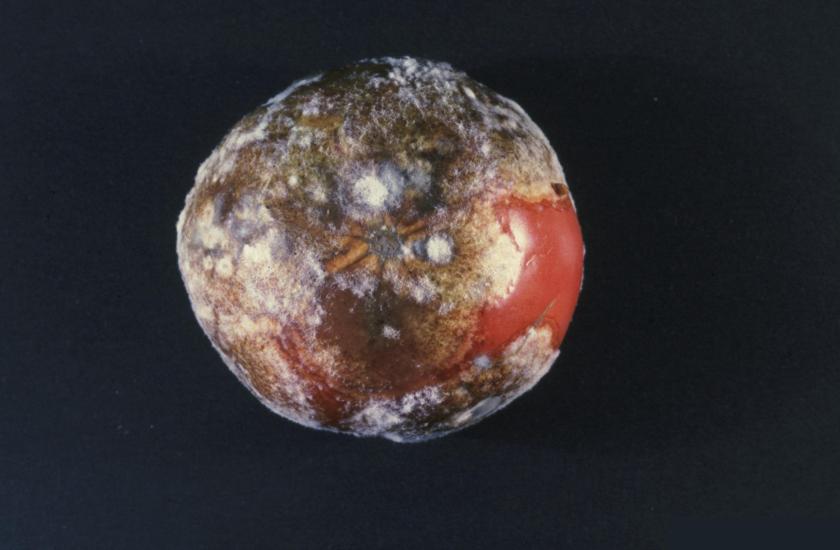
The Irish Potato Famine of the mid-19th century resulted from the failure of a single crop. The direct cause was the water mold Phytophthora infestans, but the real culprit might have been the over reliance on a single strain of potato. A million Irish starved to death and another two million departed, never to return, in a country starting out with barely 8.4 million in 1844.
Phytophthora_ nfestans (late blight) on tomato
The Irish potato famine was just one of 120 such calamities to afflict humanity in modern times, resulting in the starvation death of hundreds of millions. Blight, climate disruption and insects are but a few of the causes. Often, the only solution was having enough food-source variety that no single crop failure could lead to starvation.
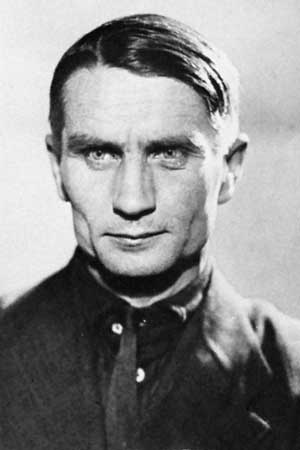
Nikolai Ivanovic Vavilov was a Russian botanist and plant biologist. Vavilov witnessed the death of millions of Russians in three such famines, and devoted his life’s work to the improvement of wheat, corn and other food crops necessary to sustain a global population.
Nikolai Vavilov
Over a lifetime of study of phytopathology and plant immunity, Vavilov organized expeditions and collected plant specimens from every corner of the world. Traveling over 5 continents and 64 countries, “The world’s greatest plant explorer” taught himself no fewer than 15 languages so that he could speak with native farmers, collecting more seeds, edible roots, tubers and fruit specimens than any person in human history.
There is hardly any part of our modern day understanding of crop diversity, that doesn’t go back to the work of this one man.
Nikolai Vavilov was a man of pure science. Not so his young protege, Trophim Denisovich Lysenko. The younger man was a political opportunist, an apparatchik and crackpot who rejected the natural selection and plant genetics of Gregor Mendel, in favor of a cockamamie theory which came to be called “Lysenkoism”.
Trophim Lysenko
Lysenko placed great confidence in the pseudo-scientific theory of environmentally acquired inheritance, by which parent plants pass down to their offspring, characteristics acquired through use or disuse during their life cycle. By this theory, rye could transform into wheat, wheat into barley, and weeds somehow transmuted into edible food grains.
In 1928, the previously unknown agronomist from peasant background performed experiments in “vernalization“, claiming to triple or quadruple wheat crop yield by accelerating the life cycle of Autumn-seeded winter wheat varieties.
Intense exposures to cold and humidity including direct seeding into snow-covered, frozen fields were known since 1854 to produce marginal increases in crop yield, but nothing remotely similar to Lysenko’s claims. Nevertheless, Lysenko was hailed as a hero of Soviet agriculture, particularly in light of the disastrous collectivization efforts of the late 1920s.
As Stalin’s Soviet Union imposed the “terror famine” of 1932-’33, the deliberate starvation of millions of Ukrainian peasant farmers known as the Holodomor.
Lysenko dove into a variety of agriculture issues with “helpful” solutions such as plucking leaves from cotton plants, cluster planting trees and outlandish & unusual fertilizer mixes. A shameless sycophant and toady to Communist ideology, Lysenko gained status among party officials with one harebrained proposition after another, following one after another, far too quickly to be disproven by the patient observation of reputable scientific method.
At this time, the hottest ideas in plant genetics were emerging from biological studies of Drosophila melanogaster, the common fruit fly. Lysenko used his increasing influence in party circles to denounce such scientists as “fly-lovers and people haters”, denouncing the lot of them as “wreckers” who were purposely trying to bring about the downfall of the Soviet government.
Scientific research into plant genetics was dead in Stalin’s Soviet Union.
As director of the Soviet Academy of Agricultural Sciences, Lysenko put his theories to work, with unsurprisingly dismal results. He’d force Soviet farmers to plant WAY too close together, on the theory that plants of the same “class” would “cooperate” with one another, and that “mutual assistance” takes place within and even across plant species.
There had to be a reason why Stalin’s agricultural program wasn’t working. There had to be scapegoats. In a 1935 speech, Lysenko compared dissenting biologists to peasants continuing to resist Soviet collectivization policies, denouncing traditional geneticists as being “against Marxism”. Josef Stalin himself was in the audience, and jumped up clapping enthusiastically, calling out “Bravo, Comrade Lysenko. Bravo.”
The gloves were now off. Lysenko and his chief ally Isaak Izrailevich Prezent savaged Lysenkoism’s opponents, including his former mentor, himself. Over 3,000 mainstream biologists were fired, “disappeared” or even executed, among them Nikolai Vavilov.
Botanist Nikolai Vavilov’s mugshot. Note the several deep scars on his right cheek, indicating severe beatings sustained by the scientist in prison
On August 6, 1940, Vavilov was on expedition in Ukraine, collecting specimens when he was snatched up and driven away in a black sedan, his staff helpless to intervene. Vavilov was sentenced to death in 1941 with sentence later commuted to twenty years. It didn’t matter. In January 1943, this man whose scientific work was at least as important as that of Norman Borlaug, starved to death in a Soviet Gulag.
Nikolai Vavilov had collected some 220,000 specimens of edible fruits, seeds and tubers over the years, which now sat in a Leningrad basement. 120,000 additional specimens were added to the hoard from other collectors, bringing the entire cache well into the tons of edible plant material.
‘Third Degree Interrogation’ from Drawings from Stalin’s Gulag Illustration: Danzig Baldaev
On September 8, 1941 the German Wehrmacht completed its encirclement of the city. The siege of Leningrad lasted for twenty-eight months. Hunger soon took hold and, before it was over, more than a million Leningrad residents starved to death.
Soviet authorities had ordered the removal of art from the Hermitage prior to the siege, but not these botanical specimens. Scientists couldn’t know where their leader was, or even whether he yet lived. They locked themselves in the basement with their trove and took turns standing guard, protecting future food crops and the survival of untold millions, yet unborn.
By the siege’s end in the Spring of 1944, nine of them had starved to death, standing watch over all that food. These guys had stood guard over their seed bank for twenty-eight months, without eating so much as a grain.
The verdict against Nikolai Vavilov was set aside in 1955, one of thousands of reversals of Stalin era death sentences. Vavilov’s reputation was publicly rehabilitated by the 1960s. In time he would come to be seen as a hero of Soviet-era science.
Trofim Lysenko would outlive his benefactor Stalin, and retained influence into the era of Nikita Khruschchev. Lysenkoism was officially renounced in 1964, the bureaucrat denounced by physicist and human rights activist, Andrei Sakharov. “He is responsible for the shameful backwardness of Soviet biology and of genetics in particular, for the dissemination of pseudo-scientific views, for adventurism, for the degradation of learning, and for the defamation, firing, arrest, even death, of many genuine scientists“. The disgraced apparatchik died in 1976. It took Soviet media two days to so much as mention his passing, with a small notice printed in the broadsheet, Izvestia.
In the funhouse mirror world of the Soviet Union, the future was always known. It was the past, that was subject to change.
Still home to the largest collection of plant genetic material in the world, the N.I. Vavilov Institute of Plant Industry in St. Petersburg was scheduled to be razed in 2010, to make way for luxury housing. Scientists from around the world petitioned Russian President Dmitri Medvedev to rethink the decision, and not destroy the largest collection of European fruits and berries in the world. At this time, the decision is undergoing “further study”.
For all the good it did the institute’s namesake, long-since murdered by the malignant ideology he had spent his life’s work, attempting to serve.
But hell, he got himself a postage stamp, in 1977.
Timeline of Genetics and Science in the Soviet Union
Feature image, top of page: Soviet Propaganda, Arkady Alexandrovich Plastov Threshing on the collective farm
The children’s author was offered sanctuary on the “Aryan side” but the man refused, saying that he would stay with his children. Janusz Korczak and his orphaned children were last seen boarding the train to the Treblinka extermination camp on August 5 or 6.
Janusz Korczak was a children’s author and pediatrician, a teacher and himself a lifelong learner, a student of pedagogy, the art of science of education, and how children learn.
Born Henryk Goldszmit into the Warsaw family of Józef Goldszmit, in 1878 or ’79 (the sources vary), Korczak was the pen name by which he wrote children’s books.
Henryk was an exceptional student, of above-average intelligence. His father fell ill when the boy was only eleven or twelve and was admitted into a mental hospital, where he died, six years later. As the family’s situation worsened, the boy would tutor other students, to help with household finances.
Goldszmit was a Polish Jew, though not particularly religious, who never believed in forcing religion on children.
He wrote his first book in 1896, a satirical tome on child-rearing, called Węzeł gordyjski (The Gordian Knot). He adopted the pen name Janusz Korczak two years later, writing for the Ignacy Jan Paderewski Literary Contest.
Korczak wrote for several Polish language newspapers while studying medicine at the University of Warsaw, becoming a pediatrician in 1904. Always the writer, Korczak received literary recognition in 1905 with his book Child of the Drawing Room (Dziecko salonu), while serving as medical officer during the Russo-Japanese war.
He went to Berlin to study in 1907-’08 and worked at the Orphan’s Society in 1909, where he met Stefania “Stefa” Wilczyńska, an educator who would become his associate and close collaborator.
In the years before the Great War, Korczak ran an orphanage of his own design, hiring Wilczyńska as his assistant. There he formed a kind of quasi-Republic for Jewish orphans, complete with its own small parliament, court, and newspaper. The man was born to be an educator.
In early modern European Royalty, 15th – 18th century, a “whipping boy” was the friend and constant companion to the boy prince or King, whose job it was to get his ass kicked, for the prince’s transgressions. The Lord was not the be struck by his social inferior. It was thought that, to watch his buddy get whipped for his misdeeds would have the same instructional effect, as the beating itself.
The extent of the custom is open to debate and it may be a myth altogether, but one thing is certain. Poland has been described as the “whipping boy of Europe”, for good reason.
The Polish nation, the sixth largest in all Europe, was sectioned and partitioned for over a century, by Austrian, Prussian, and Russian imperial powers. Korczak volunteered for military service in 1914, serving as military doctor during WW1 and the series of Polish border wars between 1919-’21.
The “Second Polish Republic” emerging from all this in 1922 was roughly two-thirds Polish, the rest a kaleidoscope of ethnic, linguistic and religious minorities. Relations were anything but harmonious between ethnic Russians, Germans, Lipka Tatars and others, and most especially Poland’s Jewish minority, the largest in pre-WW2 Europe.
Silver Cross of the Polonia Restituta
Janusz Korczak returned to his life’s work in 1921 of providing for the children of this Jewish community, all the while writing no fewer than thirteen children’s books, along with another seven on pedagogy and other subjects.
In the inter-war years, Korczak put together a children’s newspaper, the Mały Przegląd (Little Review), as a weekly supplement to the daily Polish-Jewish newspaper, Nasz Przegląd (Our Review).
Korczak had his own radio program promoting the rights of children, to whom he was known as Pan Doktor (“Mr. Doctor”) or Stary Doktor (“Old Doctor”).
The Polish government awarded “Old Doctor” the Polonia Restituta in 1933, a state order bestowed on individuals for outstanding achievements in the fields of education, science and other civic accomplishments.
Yearly visits to Mandatory Palestine, the geopolitical entity partitioned from the Ottoman Empire in 1923 and future Jewish state of Israel, led to anti-Semitic crosscurrents in the Polish press, and gradual estrangement from non-Jewish orphanages.
The second Republic’s brief period of independence came to an end in September 1939, with the Nazi invasion of Poland. Korczak volunteered once again but was refused, due to his age.
Tales of Polish courage in the face of the Wehrmacht are magnificent bordering on reckless, replete with images of horse cavalry riding out to meet German tanks. Little Poland never had a chance, particularly when the Soviet Union piled on, two weeks later.
As an independent nation-state the Sovereign Republic of Poland was dead, though Polish air crews went on to make the largest contribution to the Battle of Britain, among the United Kingdom’s thirteen non-British defenders. Polish Resistance made significant contributions to the Allied war effort, throughout WW2.
Warsaw became the largest Jewish ghetto in Nazi-occupied Europe within the following year. The Jews of Poland were herded into the city, barely existing on meager rations while awaiting the death squads of the SS. Old Doctor and his orphans were forced into the Ghetto, in 1939.
There were nearly 200 of them on this day in 1942, when soldiers of the Gross-Aktion (Great Action) Warsaw, came for their “Resettlement to the East”.
The Pianist, by Władysław Szpilman
The extermination camp at Treblinka, awaits.
Polish-Jewish composer and musician Władysław Szpilman, one of precious few survivors of the Jewish ghetto, describes the scene in his 1946 memoir, The Pianist:
“He told the orphans they were going out into the country, so they ought to be cheerful. At last they would be able to exchange the horrible suffocating city walls for meadows of flowers, streams where they could bathe, woods full of berries and mushrooms. He told them to wear their best clothes, and so they came out into the yard, two by two, nicely dressed and in a happy mood. The little column was led by an SS man…”
Eyewitness Joshua Perle states that: Janusz Korczak was marching, his head bent forward, holding the hand of a child… A few nurses were followed by two hundred children, dressed in clean and meticulously cared for clothes, as they were being carried to the altar.
At the Umschlagplatz, the rail-side assembly area on the way to Treblinka, an SS officer recognized Korczak, and called him aside. The children’s author was offered sanctuary on the “Aryan side” but the man refused, saying that he would stay with his children. Stary Doktor was offered deportation to the Theresienstadt concentration camp instead, but again he refused.
The man who refused freedom to die with his orphaned children was last seen boarding the train to Treblinka on August 5 or 6, where all 200 were murdered, the following day.
Janusz Korczak memorial stone, Treblinka
“Dr. Janusz Korczak’s children’s home is empty now. A few days ago we all stood at the window and watched the Germans surround the houses. Rows of children, holding each other by their little hands, began to walk out of the doorway. There were tiny tots of two or three years among them, while the oldest ones were perhaps thirteen. Each child carried the little bundle in his hand”. — Mary Berg, The Diary
Research suggests that we all carry Neanderthal genes and that these may have changed our immune systems, leaving us vulnerable to diseases such diabetes and cancer.
In the 17th century, the German Reformed Church teacher and hymn writer Joachim Neander liked to hike a valley outside of Düsseldorf. The beauty of nature was inspirational, clearing his mind and inspiring verses like “See how God this rolling globe/swathes with beauty as a robe…Forests, fields, and living things/each its Master’s glory sings.” The theologian contracted tuberculosis and died at the age of thirty but lived on in a way, in the valley which came to bear his name.
Nearly 200 years later, three years before Charles Darwin published the Origin of Species, workers quarrying limestone in the Neander Valley discovered an unusual skull. This was no ordinary head, elongated and nearly chinless as it was, with heavy ridges over the eyes. Heavy bones were found alongside, which fitted together, oddly.
From top, clockwise: a) Neander Valley by Friedrich Wilhelm Schreiner, oil on cardboard, 1855, b) original bones discovered the following year, and c)Artist’s conception of what he looked like, H/T Artist: Kennis & Kennis Reconstructions
The state of archaeological science had much to learn in 1856. Who knows, 22nd century historians and scientists may look back at our time, and say we had a long way to go. At the time, even to discern fossils from ordinary rock was beyond the ability of many scientists. One common method involved licking the fossil. If the thing had animal material, it would stick to your tongue.
Despite such misconceptions, scholars of the day had no shortage of theories. This was a lost Cossack, a bowlegged rider suffering from rickets, a painful condition resulting in weak and misshapen bones. To some, the life of pain resulting from such a condition made perfect sense, the bony eye ridges resulting from perpetually furrowed brow.
British geologist William King suspected something different. Something more radical. This was no aberrant human being nor even a lost ancestor. This was a member of a long lost alternate humanity. An extinct but parallel species to our own. King published a paper in 1864 hypothesizing his idea of an evolutionary dead end, naming the long lost species after the poet who had once wandered the valley in which it was discovered. He called it Homo Neanderthalensis: Neanderthal Man.
“Neanderthal sculptures, named Nana and Flint, at the Gibraltar Museum”. H/T Jaap Scheeren, New York Times
Having no context from which to draw conclusions, King fell back on the pseudo science of phrenology to describe Neanderthal man, along with preconceptions of “primitive” and “savage” races. The image of a stupid and grunting brute emerged from this analysis. King opined that “The thoughts and desires which once dwelt within it never soared beyond those of a brute.” Today we may look at such thinking as itself savage and primitive, but applying modern ideas to earlier times is a dangerous undertaking. Ideas of Eugenicssurvived well after King’s time, and into the modern era.
On this day in 1908, the brothers Amadee and Jean Bouyssonie found the most complete Neanderthal skeleton to date in a small cave near La Chapelle-aux-Saints, in France. This skeleton includes the skull, jaw, most of the vertebrae and several ribs, along with most of the long bones of his arms and legs, plus a number of smaller bones from the hands and feet.
The Old Man of La Chapelle-Aux-Saints reconstructed burial in the Musée de l’Homme de Néandertal, France
French palaeontologist Marcellin Boule studied the remains and envisioned a brutish, hairy and gorilla-like beast with opposable toes and bent spine, walking on bowed legs with bent knees. Boule’s reconstruction was influential. Decades later, scientists and popular culture viewed Neanderthal as bent and stupid brutes. Boule got it wrong that time but, to his credit, was one of the first to recognize Piltdown Man, as a paleoanthropological hoax.
Subsequent analysis of the “Old Man of La Chappelle” revealed not the bent-over beast of Boule’s imagination, but a fully erect biped, bent with advanced osteoarthritis.
What’s more, massive tooth loss and lack of mobility revealed that this specimen could neither hunt nor scavenge with ease, and would have had great difficulty in chewing his food. This and the unmolested state of the skeleton compared with animal bones found nearby suggest a man greatly cared for by his contemporaries, as well as deliberate burial of the body.
This wasn’t even an “old man” by our standards. The skeleton is currently estimated to have been that of a man between 25 and 40 years, demonstrating the Hobbesian adage that life was once indeed, “Nasty, Brutish and Short”.
Today, to call someone a “Neanderthal” is to insult him as a stupid savage. It appears that our cousin was nothing of the sort.
The hyoid bone situated at the floor of the mouth serves as a connecting-point for the tongue and other musculature, giving humans the ability to speak. A delicate structure likely to be lost in most fossilized remains, the first Neanderthal hyoid was only discovered in 1989.
An international team of researchers analysed this fossil Neanderthal bone using 3D x-ray imaging and mechanical modelling and, yes. Neanderthal could not only speak, but was capable of highly complex speech not unlike ourselves, though his voice was likely high and grating. Certainly not the base grunting commonly associated with “cave-men”.
Shorter in stature and considerably more powerful than Cro-Magnon, our direct ancestor and all but indistinguishable from ourselves, Neanderthal bodies were suited to the ice age of the early and middle Paleolithic era.
Neanderthal emerged on the Eurasian landmass between 100,000 and 200,000 years ago. Possessed of a brain only slightly smaller than Cro-Magnon, Neanderthals walked upright, formed and used simple tools and controlled fire. They even buried their own dead, at least sometimes, and some researchers theorize that they built boats and sailed the Mediterranean. Imperfectly formed tools and weapons found alongside more sophisticated specimens even suggest that he educated his children.
He might even fit in if you brought him back today, provided you dressed him right.
Despite all that, Neanderthal man is an evolutionary dead end and not our ancestor, though he did “coexist” for a time, with our Cro-Magnon forebears. It’s even possible if not probable that the two bred together and produced children, though this was likely your random hookup rather than any long-term cross-breeding.
Modern DNA analysis suggests that the two species even shared some genetic disorders, such as psoriasis, Crohn’s disease and a variety of auto-immune conditions such as Lupus.
Research even suggests that we carry Neanderthal genes, every one of us, and that these may have changed our immune systems leaving us vulnerable to diseases such diabetes and cancer.
The idea is not as strange as it sounds. Last year, Sir Richard Branson was in the news, claiming that he had looked into his family ancestry. Forty generations back, it turns out that Branson is related to Charlemagne. That’s no big deal, according to Genetecist Adam Rutherford. Speaking at the Chalke Valley History Festival, Rutherford explained that “Literally every person in Europe is directly descended from Charlemagne. Literally, not metaphorically. You have a direct lineage which leads to Charlemagne,” adding “Looking around this room, every single one of you … is directly descended between 21 and 24 generations from Edward III.” The only difference between celebrities and the rest of us it turns out, is the means to prove it.
So, maybe calling someone ‘Neanderthal’ isn’t such an insult, after all. Perhaps there’s one in there somewhere, peering back at us from our bathroom mirror.
If you enjoyed this “Today in History”, please feel free to re-blog, “like” & share on social media, so that others may find and enjoy it as well. Please click the “follow” button on the right, to receive email updates on new articles. Thank you for your interest, in the history we all share.
Named for one of it’s own private soldiers, the Mitchell Thunderbolts were not your standard military company. These guys were “organized strictly for home defense” and absolutely refused to take orders. From anyone. They recognized no superior officer and the right to criticism was reserved and freely exercised from that “splendid old gentleman” Colonel John Billups, down to the lowliest private.
In 1642, Italian gun maker Antonio Petrini conceived a double barrel cannon, with tubes joined at 45° and firing solid shot joined together, by chain. This was the year of the “Great Rebellion“, the English Civil War, when the King and Parliament raised armies to go to war – with each other. The idea must have looked good as proposed to King Charles I of England, the weapon capable of slicing through his enemies, like grass before a scythe.
The idea was to fire both barrels simultaneously, but there was the rub. Wild ideas occur to the imagination of imperfect combustion, and a chained ball swinging around to take out the gun crew. The King himself was mute on the subject, and went on to lose his head, in 1649. Petrini’s manuscript resides to this day in the tower of London. There is no documented proof that the weapon was ever fired, save for the designer’s own description of the ‘Grandissima Ruina’ left behind, by his creation.
Two-hundred years later the former British colonies in America, found themselves embroiled in their own Civil War.
In the early days of its independence, the Confederate Congress enacted a measure, allowing local cities and towns to form semi-military companies for the purpose of local defense. As the very flower of young southern manhood was called up and sent to the front, these “home guard” units often comprised themselves of middle-age and older gentlemen, and others for various reasons, unable to leave home and hearth.
Augustus Longstreet Hull was born 1847 in “The Classic City” of Athens Georgia, and enlisted in the Confederate Army on September 8, 1864.
After the war, Hull worked twenty-seven years as a banker, before publishing the Annals of Athens, in 1906. In it, Mr. Hull writes with not a little biting wit, of his own home town home guard unit, Athens’ own, Mitchell Thunderbolts.
“From the name one might readily infer that it was a company made up of fierce and savage men, eager for the fray and ready at all times to ravage and slaughter; yet such was not the case, for in all their eventful career no harm was done to a human being, no property was seized and not one drop of blood stained their spotless escutcheon.
Thus from their patriotism sprang the “Thunderbolts”, a company whose deeds must live in order that history may be complete, whose fame, though not blazoned to the world in song and story, is yet of such a character as to entitle the names of its members to be inscribed alongside those “that were not born to die.”
Named for one of it’s own private soldiers, the Mitchell Thunderbolts were not your standard military company. These guys were “organized strictly for home defense” and absolutely refused to take orders. From anyone. They recognized no superior officer and the right to criticism was reserved and freely exercised by everyone from that “splendid old gentleman” Colonel John Billups, down to the lowliest private.
Georgia Senator Middleton Pope Barrow
General Howell Cobb sent the future United States Senator Captain Middleton Pope Barrow to Athens in 1864, to inspect the Thunderbolts. Having no intention of submitting to “inspection” by any mere stripling of a Captain, Dr. Henry Hull (Augustus’ father) “politely informed him that if he wished to inspect him, he would find him on his front porch at his home every morning at 9 o’clock“.
John Gilleland, 53, was a local dentist, builder and mechanic, and member in good standing of the Mitchell Thunderbolts. Gilleland must have liked Petrini’s idea because he took up a collection in 1862, and raised $350 to build the Confederate States of America’s own, double-barrel cannon.
Measuring 13 inches wide by 4-feet 8½” inches and weighing in at some 1,300 pounds, this thing had two barrels diverging at 3° and equipped with three touch holes, one for each barrel and a third should you wish to fire them, together. It was the secret “super weapon” of the age, two cannonballs connected by a chain and designed to “mow down the enemy somewhat as a scythe cuts wheat.”
As with Mr. Petrini’s invention, the insurmountable problem remained, how to fire the two, simultaneously.
The atmosphere was festive on April 22, 1862, when a crowd gathered to watch Gilleland test his creation. The weapon was aimed at two upright poles stuck into the ground, but uneven ignition and casting imperfections sent the two balls spinning wildly off to the side, where they “plowed up about an acre of ground, tore up a cornfield, mowed down saplings, and then the chain broke, the two balls going in different directions“.
Double Barrel Cannon model, H/T ModelExpo
On its second test, two chain-connected balls shot through the air and into a stand of trees. According to one witness, the “thicket of young pines at which it was aimed looked as if a narrow cyclone or a giant mowing machine had passed through“.
On the third firing, the chain snapped right out of the barrel. One ball tore into a nearby cabin and destroyed the chimney, while the other spun off and killed a cow, who wasn’t bothering anyone.
Gilleland considered all three tests successful, but the only thing that was safe, seems to have been those target posts.
The dentist went straight to the Confederate States’ arsenal in Augusta where Colonel George Rains subjected his creation to extensive testing, before reporting the thing too unreliable for military use. The outraged inventor wrote angry letters to Georgia Governor Joseph “Joe” Brown and to the Confederate government in Richmond, but to no avail.
At last, the contraption was stuck in front of the Athens town hall and used as a signal gun, to warn the citizens of approaching Yankees.
There it remained until August 2, 1864, when the gun was hauled out to the hills west of town to meet the Federal troops of Brigadier General George Stoneman. The double-barrel cannon was positioned on a ridge near Barber’s Creek and loaded with canister shot, along with several conventional guns. Outnumbered home guards did little real damage but the noise was horrendous, and Stoneman’s raiders withdrew to quieter pastures.
There were other skirmishes in the area, but all of them minor. In the end, Athens escaped the devastation of Sherman’s march to the sea, and the weapon was moved back to town.
Gilleland’s monstrosity was sold after the war and lost, for a time. The thing was recovered and restored back in 1891, and returned to the Athens City Hall, where it remains to this day, a contributing property of the Downtown Athens Historic District. Come and see it if you’re ever in Athens, right there at the corner of Hancock and College Avenue. There you will find it, pointing north, toward the Yankees. Just in case.
If you enjoyed this “Today in History”, please feel free to re-blog, “like” & share on social media, so that others may find and enjoy it as well. Please click the “follow” button on the right, to receive email updates on new articles. Thank you for your interest, in the history we all share.


 Ford left the family farm outside of modern-day Detroit as a young man, never to return. His father William thought the boy would one day own the place but young Henry couldn’t stand farm work. He later wrote, “I never had any particular love for the farm—it was the mother on the farm I loved”.
 Ford claimed he’d be able to “grow automobiles from the soil”, a hedge against the metal rationing of world War Two. He dedicated 120,000 acres of soybeans to experimentation, but to no end. The total acreage devoted to “fuel” production, is unrecorded.
 Henry Ford’s experiment in making cars from soybeans never got past that first prototype, and came to a halt during WW2. The project was never revived, though several states adopted license plates stamped out of soybeans, a solution farm animals found to be quite delicious.


 In the mid-19th century, birthing centers were set up all over Europe, for the care of poor and underprivileged mothers and their illegitimate infants. Care was provided free of charge, in exchange for which young mothers agreed to become training subjects for doctors and midwives.
 At the time, Vienna General Hospital ran two such clinics, the 1st a “teaching hospital” for undergraduate medical students, the 2nd for student midwives.
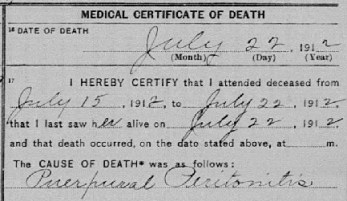 Childbed or “puerperal” fever was rare among these “street births”, and far more prevalent in the First Clinic, than the Second. Semmelweis carefully eliminated every difference between the two, even including religious practices. In the end, the only difference was the people who worked there.
 Mortality rates in the First Clinic dropped by 90%, to rates comparable with the Second. In April 1847, First Clinic mortality rates were 18.3% – nearly one in five. Hand washing was instituted in mid-May, and June rates dropped to 2.2%. July was 1.2%. For two months, the rate was zero.
 Dr. Semmelweis was outraged by the indifference of the medical community, and began to write open and increasingly angry letters to prominent European obstetricians. He went so far as to denounce such people as “irresponsible murderers”, leading contemporaries and even his wife, to doubt his mental stability.







 Noble though it was, Lawrence Oates’ suicide came to naught. The last three made their final camp on March 19, with 400 miles to go. A howling blizzard descended on the tents the following day and lasted for days, as Scott, Henry “Birdie” Bowers and Dr. Edward Wilson wrote good-bye letters to mothers, wives, and others. In his final starved, frostbitten hours, Robert Falcon Scott wrote to his diary “It seems a pity, but I do not think I can write more.” In his final entry, Scott worried about the financial burden on his family, and those of the doomed expedition: “Last entry. For God’s sake look after our people”.
 The last three survivors died eleven miles from their next supply depot.


 The animosity between the media and the White House grew as Nixon and administration officials discussed plans to “get” hostile media organizations.
 Within six days, the House Judiciary Committee approved three articles of impeachment: obstruction of justice, abuse of power and contempt of Congress.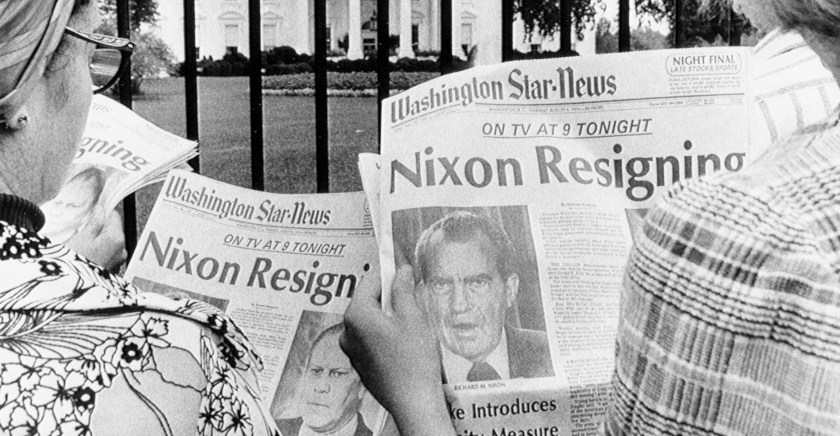


 Reduced to three ships by August 1578, Drake made the straits of Magellan, emerging alone into the Pacific that September.



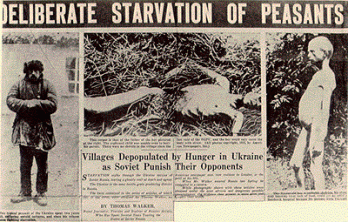 As Stalin’s Soviet Union imposed the “terror famine” of 1932-’33, the deliberate starvation of millions of Ukrainian peasant farmers known as the
  As director of the Soviet Academy of Agricultural Sciences, Lysenko put his theories to work, with unsurprisingly dismal results. He’d force Soviet farmers to plant WAY too close together, on the theory that plants of the same “class” would “cooperate” with one another, and that “mutual assistance” takes place within and even across plant species.

 By the siege’s end in the Spring of 1944, nine of them had starved to death, standing watch over all that food. These guys had stood guard over their seed bank for twenty-eight months, without eating so much as a grain.


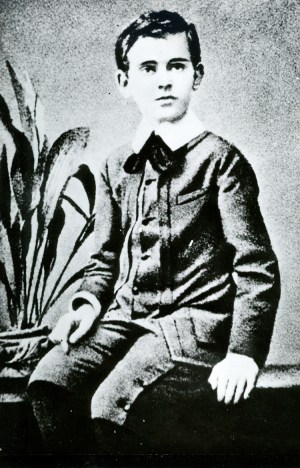 Born Henryk Goldszmit into the Warsaw family of Józef Goldszmit, in 1878 or ’79 (the sources vary), Korczak was the pen name by which he wrote children’s books.
 Korczak wrote for several Polish language newspapers while studying medicine at the University of Warsaw, becoming a pediatrician in 1904. Always the writer, Korczak received literary recognition in 1905 with his book Child of the Drawing Room (Dziecko salonu), while serving as medical officer during the Russo-Japanese war.
 The Polish nation, the sixth largest in all Europe, was sectioned and partitioned for over a century, by Austrian, Prussian, and Russian imperial powers. Korczak volunteered for military service in 1914, serving as military doctor during WW1 and the series of Polish border wars between 1919-’21.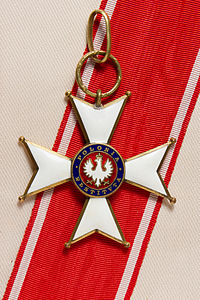
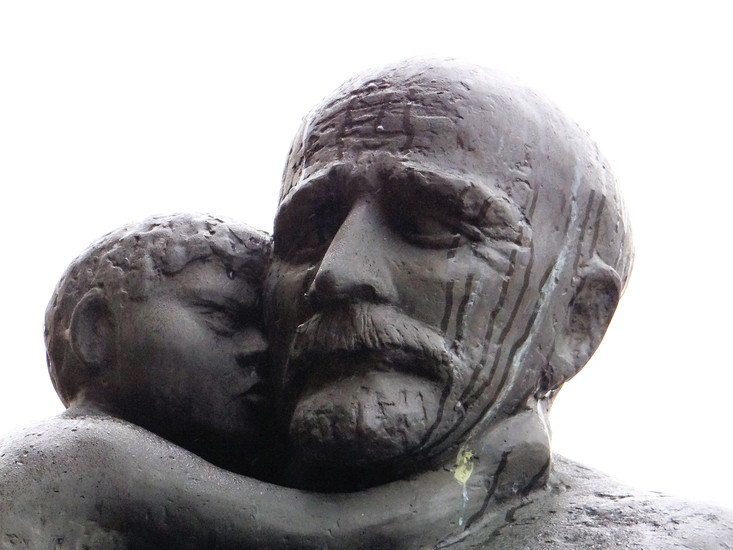
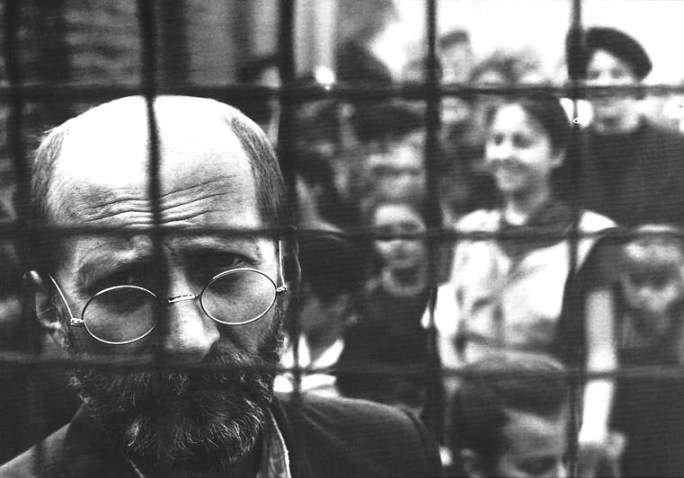

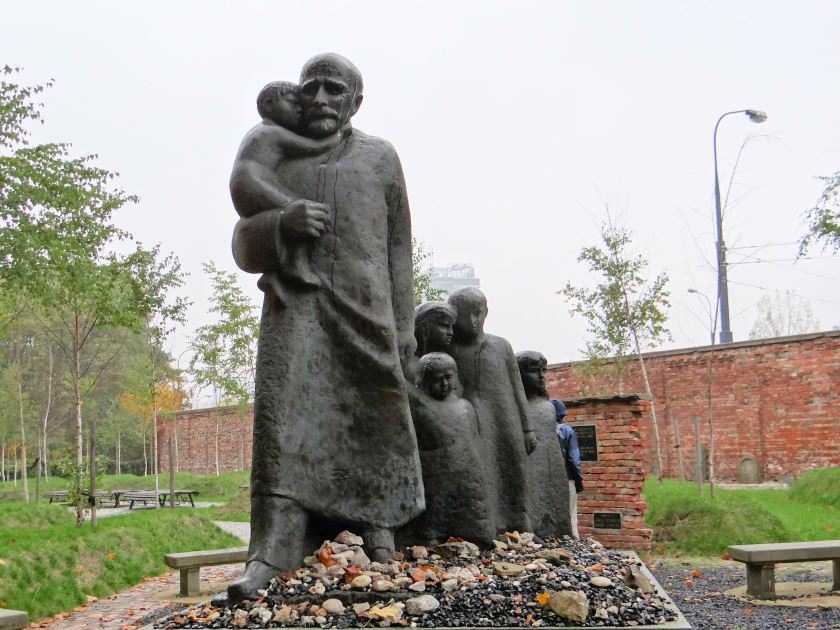





 Shorter in stature and considerably more powerful than Cro-Magnon, our direct ancestor and all but indistinguishable from ourselves, Neanderthal bodies were suited to the ice age of the early and middle Paleolithic era.


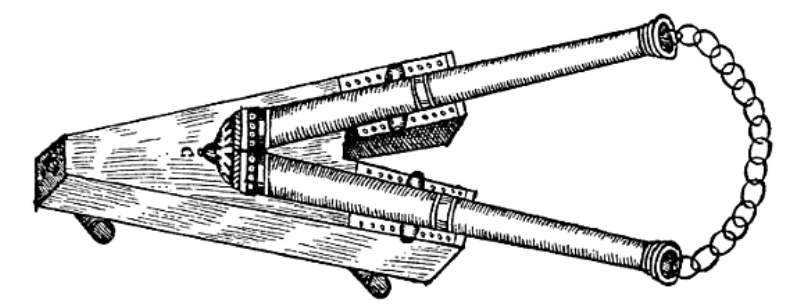
 Augustus Longstreet Hull was born 1847 in “The Classic City” of Athens Georgia, and enlisted in the Confederate Army on September 8, 1864.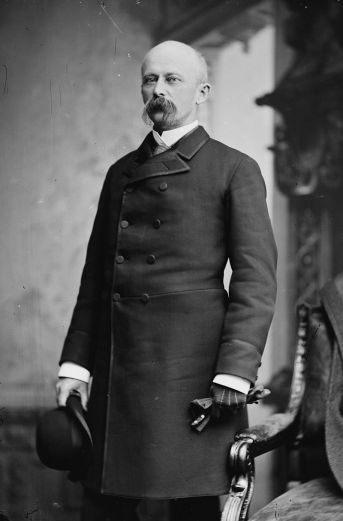

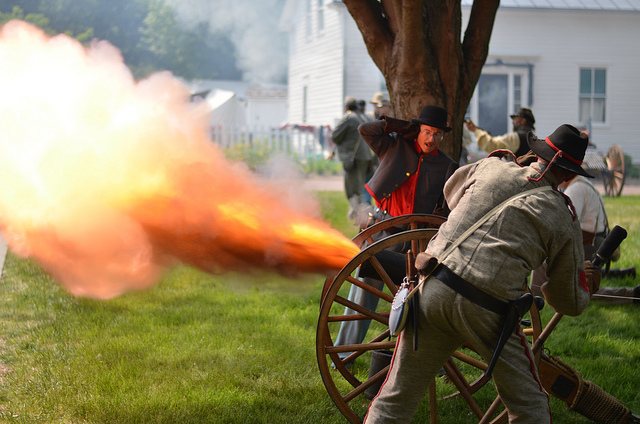


 Historical Easter Eggs - Today in History
You must be logged in to post a comment.