April 10, 1869 SCOTUS

There have been fewer justices in Supreme Court history than you might think. The recent passing of Antonin Scalia made way for only number 113

ConstitutionThe Stuart King James had judges riding into the countryside once a year to hear cases, saving many of his subjects the arduous journey to London.  The custom carried “across the pond” and, from the earliest days of the American colonies, judges could be found “riding the circuit”.

Article III of the United States Constitution establishes the judiciary as a coequal branch of the federal government, “vested in one supreme Court, and in such inferior Courts as the Congress may from time to time ordain and establish”. That’s about it.

Congress passed the Federal Judiciary Act in 1789, creating a six justice Supreme Court, and signed into law by President George Washington on September 24.  Principally written by Senator Oliver Ellsworth of Connecticut, the act established the office of Attorney General, and largely laid out the Federal court system, as it exists today.

United States Circuit courts were established in each federal judicial district, exercising jurisdiction over both original (first instance) matters and appeals, until the creation of the Federal Court of Appeals, in 1912.

Judicial Districts map
2017 Judicial Districts map

Supreme Court justices were not exempt from Circuit court duty, each justice “riding the circuit” to hear cases in his own district, in addition to his caseload, back at the capital.

Smaller districts may occupy a single federal courthouse, while larger districts stretch across thousands of miles.  This duty became increasingly onerous, until finally abolished by the Judiciary Act of 1891. Yet, the vestiges of this system remain. Today, each justice hears certain provisional appeals from specific circuits, which he or she may decide unilaterally, or refer “en banc” to the entire Court.

Increasing caseloads led Congress to increase the number of judicial districts to seven in 1807, and nine in 1837, finally raising that to ten during the Civil War.  With each new district, came another justice.

In one of the political skirmishes leading to President Andrew Johnson’s impeachment in 1868, Congress passed the Judicial Circuits Act in 1866, shrinking the number of justices to seven, thus preventing Johnson from appointing any new justices.

Congress raised the number to nine circuits with nine justices on April 10, 1869.  Today there are eleven federal judicial districts, while the number of justices remain at nine.

Supreme_Court_cartoonIn 1937, President Franklin Delano Roosevelt sought to increase the number of justices to 15. Then as now, the court was sharply divided along ideological lines, consisting of a four member conservative majority called the “four horsemen”, three liberals dubbed the “three musketeers” and two “swing votes”.

The conservative bloc became a roadblock to President Roosevelt’s New Deal programs, preferring the federal government take a hands off approach to the economy.

Buoyed by his landslide reelection in 1936, Roosevelt proposed to provide retirement at full pay for all justices over 70.  Any justice refusing retirement would be provided with an “assistant” with full voting rights, providing Roosevelt with an overwhelming liberal majority.

Not even vice president John Nance Garner would go along with Roosevelt’s aggressive and illegal “court packing scheme”, nor would a democrat-controlled congress. Yet Roosevelt’s effort had the desired result, as former swing vote Owen Roberts became a reliable vote for the liberal minority. By the time of his death 1945, Roosevelt had appointed every justice on the court, except Roberts himself.

supremecourtThere have been fewer justices in Supreme Court history than you might think.  The recent passing of Antonin Scalia made way for only number 113.

A proponent of “Judicial Originalism”, justice Scalia and his conservative allies on the court seek to decide on the constitutionality of the laws before them, based on what the framers of the constitution intended when they actually wrote the thing. In contrast, the liberal majority believes in a “living constitution”, a form of jurisprudence whose supporters believe the Constitution is a document which adapts to the times.  Detractors believe that amounts to law-making from the bench, a job more properly left the legislature.

With the ideological makeup of the Supreme Court hanging in the balance, President Obama and his allies pulled out all the stops to get his nominee confirmed and seated before the end of his presidency. The Republican controlled Senate invoked the “Biden Rule”, as described in the former Vice President’s 1992 speech on the Senate floor:  “It would be our pragmatic conclusion that once the political season is underway, and it is, action on a Supreme Court nomination must be put off until after the election campaign is over.”

Barack Obama himself tried to block the confirmation of Samuel Alito in 2006, saying Filibuster“There are some who believe that the president, having won the election, should have complete authority to appoint his nominee, that once you get beyond intellect and personal character, there should be no further question as to whether the judge should be confirmed. I disagree with this view”. The filibuster was joined by Senators Kennedy, Leahy, Durbin, Salazar, and Baucus.

In 2007, now-Senate minority leader Chuck Schumer said “We should not confirm any Bush nominee to the Supreme Court, except in extraordinary circumstances”. That was 19 months before the next presidential inauguration.

The resulting conflict is great fodder for the bicker fest that passes for our national politics, from the legacy media and the talking heads of the punditocracy, to the endless and meaningless cage matches over the rhetorical anthills of Facebook.

CapitolSenator Schumer once said, “We have three branches of government. We have a house, we have a senate, we have a president.” He got that wrong, but he was part right.  We have three co-equal branches in our government, each having specific responsibilities as laid out in the Constitution.

The “advice and consent” clause contained in Article II grants the President authority to appoint judges to the Supreme Court, “by and with the Advice and Consent of the Senate.”  The Senate, for its part, will do what the Senate will do.

Later today, Justice David Kennedy will administer the oath of office to his former law clerk, judge Neil Gorsuch.  The 113th justice of the United States Supreme Court, and the first in history to serve alongside the justice for whom he once clerked.

April 9, 1974  Open Mouth, Insert Foot

At that moment a roar went up from the crowd, as a streaker jumped out of the stands and onto the field. That’s when he lost it.

The 1974 season opened on the road for the San Diego Padres, the series ending in a humiliating, 25-2 blowout at Dodger’s Stadium.

Padres’ new owner and McDonald’s founder Ray Kroc was anything but pleased with the 0-3 start, saying “They’re snake-bit, and they’ve got the yips. They’re overanxious, trying too hard, too tense”. Kroc was positive, though, at the home opener against the Houston Astros.  Stepping up to the field microphone, Kroc said to the crowd of 39,083 at San Diego Stadium, “With your help and God’s help, we’ll give ‘em hell tonight.”

The home opener at Jack Murphy (now Qualcomm) Stadium on April 9 was no better, ending in a 9 to 5 loss.  In the middle of the eighth, the Padres were well on their way to 0 and 4, when Ray Kroc opened the door of the public address booth and told announcer John DeMott he had something to say.

Kroc had bought the club only two months earlier, when San Diego was in danger of KrocRaylosing its National League team to Washington, DC.  Only moments before,  Padres’ President Buzzie Bavasi had to leave Kroc’s side to investigate concession area water in the clubhouse, when a leak was “promoted” to a flood.

Kroc had to have been cranky when he took the mic in the first place, but it quickly got worse.  “Ladies and gentlemen,” he began, “I suffer with you.”  At that moment a roar went up from the crowd, as a streaker jumped out of the stands and onto the field.

That’s when he lost it.  “Get him out of here. Throw him in jail” Kroc shouted.  Then he continued.  “I have good news and bad news. The good news is that the Dodgers drew 31,000 for their opener and we’ve drawn 39,000 for ours. The bad news is that this is the most stupid baseball playing I’ve ever seen”.

Padres radio announcer Jerry Coleman didn’t know how to respond.  “Ladies and Gentlemen”, he said, “that was Padres owner, Ray Kroc”.

It was a bad idea.  Player representative Willie McCovey spoke for the club. “I wish Mr. Kroc hadn’t done that. I’ve never heard anything like that in my 19 years in baseball. None of us likes being called stupid. We’re pros and we’re doing the best we can. His words will ring in the players’ ears for a long time.”

Players were so angry they threatened to boycott the next game.  San Diego dentist Steve Arlin was the losing pitcher that night.  “We were all embarrassed by it,” he said. “We weren’t playing well, but we didn’t need to be reminded”.

Even opposing players jumped into the fray.  Houston player rep Denis Menke said, “That was in bad taste.”  Menke went on to protest Kroc’s comments to Marvin Miller, head of the players’ union.

Miller thought Kroc’s actions were unacceptable, too.  “Imagine what would have happened if a player, after being taken out of a game, made an announcement over the P.A. that his manager was stupid. The player would be fined or suspended. I see a direct parallel in the Kroc case.”

Astros’ third baseman Doug Rader said, “He thinks he’s in a sales convention dealing with a bunch of short-order cooks. That’s not the way to go about getting a winner. Somebody ought to sit him down and straighten him out.” Within two weeks Rader had received so many angry calls from short order cooks, that he had to make a public apology.

Houston SpatulaBuzzie Bavasi did the most to defuse the situation.  Taking a cue from Rader’s comments, Bavasi designated the next game in the Houston series “Short Order Cook’s Night”.  Any Padres fan who came wearing a chef’s hat, would be admitted into the game for free.  Rader, the Astro’s team captain, took the lineup card to home plate wearing an apron with a chef’s hat, slipping the card off a skillet with a spatula and handing it over to the home plate umpire, like a pancake.

Baseball Commissioner Bowie Kuhn later forced Kroc to make a public apology, but Sporting News columnist Melvin Durslag wasn’t buying it. “The reason (he’d never seen such stupid baseball playing) was largely due to his inexperience at watching baseball.  He knows as much about the sport as Willie McCovey knows about an Egg McMuffin.”

San Diego went on to lose 102 games that year, 42 more than archrival LA Dodgers.  The season wasn’t halfway over, when the new owner wondered what he’d gotten himself into.  I bought the team to have some fun”, Kroc said.  “But it is proving to be about as enjoyable as a wake.  Your own”.

April 8, 1740, War of Jenkin’s Ear

In the smoke and confusion, the Spanish never did figure out how puny the forces were who opposed them

A series of escalating trade disputes had already taken place between British and Spanish forces, when the Spanish patrol boat La Isabela drew alongside the British brig Rebecca in 1731. After boarding, Commander Juan de León Fandiño accused the British commander of smuggling.  The discussion became heated, when Fandiño drew his sword and cut the left ear off of Captain Robert Jenkins.  “Go, and tell your King that I will do the same”, he said, “if he dares to do the same.”jenkins-ear-1

Seven years later, Jenkins was ordered to testify before Parliament where, according to some accounts, he produced the severed ear in a pickling jar, as part of his presentation. This and other incidents of “Spanish Depredations upon the British Subjects” were considered insults to the honor of the British nation and a provocation to war.

A squadron of three 70-gun British third-rates was patrolling off the coast of Cornwall on April 8, 1740, when a mast was sighted to the north.  What at first appeared to be a French vessel was revealed to be the 70 gun ship-of-the-line Princesa, when she struck her French colors and hoist the Spanish flag.  Outnumbered 3-to-1, Princesa put up a good fight, but the issue was never in doubt.  She was brought into Portsmouth for repairs, entering British service as HMS Princess in 1742.  What had once been described as “the finest ship in the Spanish Navy”, would serve Her Britannic Majesty for another 42 years.Princesa

For the future Georgia colony, the War of Jenkins Ear was an existential threat.  Spain had laid claim to Florida, when Ponce de Leon first mapped the territory in 1513.  The territory which later became North & South Carolina joined the British Colonies to the north in 1663, leaving the areas in-between in dispute.  James Oglethorpe founded the 13th colony of Georgia as a buffer to Spanish incursion, two years after Mr. Jenkins lost his ear. Battle of Bloody Marsh (Model)

By 1736, Oglethorpe established Fort Frederica on the barrier island of St. Simon, off the Savannah coast.  The Spanish landing force of 4,500 to 5,000 men arrived on St. Simon’s Island in July of 1742, opposed by only 950 British Rangers, Colonial Militia and Indian Allies.

Oglethorpe’s forces attacked a Spanish reconnaissance in force at the Battle of Gully Hole Creek in the early morning hours of July 7, followed by the ambush of a much larger force that afternoon, in what would be known as the Battle of Bloody Marsh.  In the smoke and confusion, the Spanish never did figure out how puny the forces were who opposed them.  These two victories were as big a boost to British morale as they were a blow to that of their adversary.  The last major Spanish offensive into Georgia ended with a complete withdrawal, a week later.

GullyHoleCreekSign

The conflict which began in 1739 ended in 1748, though major operations ceased in 1742 when the War of Jenkins Ear was subsumed by the greater War of Austrian Succession, involving most of the major powers of Europe at that time. Peace arrived with the Treaty of Aix-la-Chapelle in 1748.

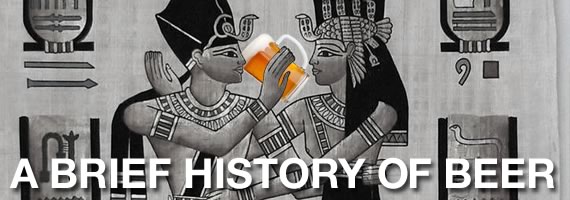
April 7, 1933 A Brief History of Beer

A team of draft horses hauled a wagon up Pennsylvania Avenue, to deliver a case of beer to the White House. It was the first public appearance of the Budweiser Clydesdales

Given the right combination of sugars, almost any cereal will undergo simple fermentation, due to the presence of wild yeasts in the air.  It seems likely our cave-dwelling ancestors experienced their first beer, as the result of this process.

Alulu_Beer_Receipt
From Wikipedia: “Alulu beer receipt – This records a purchase of “best” beer from a brewer, c. 2050 BC from the Sumerian city of Umma in ancient Iraq”.

Starch dusted stones were found with the remains of doum-palm and chamomile in the 18,000-year old Wadi Kubbaniya in upper Egypt.  While it’s difficult to confirm, University of Pennsylvania archaeologist Dr. Patrick McGovern says, “it’s very likely they were making beer there”.

Chemical analysis of pottery shards date the earliest barley beer to 3400BC, in the Zagros Mountains of Iran.

Wine seemed better suited to the sensibilities of the Roman palate, when Tacitus maligned the bitter brew of Germanic barbarians.  Nevertheless, the letters of Roman cavalry commanders from the Roman Britain period, c. 97-103 AD, include requests for more “cerevisia”, for the legionaries.

In North and South America, native peoples brewed fermented beverages from local ingredients, including agave sap, the first spring tips of the spruce tree, and maize.

beer-ingredients
“Ancient cultures used an array of ingredients to make their alcoholic beverages, including emmer wheat, wild yeast, chamomile, thyme and oregano. (Landon Nordeman)” H/T Smithsonian magazine

The Pilgrims left the Netherlands city of Leiden in 1620, hoping for rich farmland and congenial climate in the New World.  Not the frozen, rocky soil of New England.  Lookouts spotted the wind-swept shores of Cape Cod on November 9, 1620, and may have kept going, had they had enough beer.  One Mayflower passenger wrote in his diary: “We could not now take time for further search… our victuals being much spent, especially our beer…”

Prior to the invention of the drum roaster in 1817, malt was typically dried over wood, charcoal, or straw fires, leaving a smoky quality that would seem foreign to the modern beer drinker.  William Harrison wrote in his “Description of England” in 1577, “For the wood-dried malt, when it is brewed, beside that the drink is higher of colour, it doth hurt and annoy the head of him that is not used thereto, because of the smoke”.london-beer-flood

Smoky flavor didn’t trouble the true aficionado of the age.  When the Meux Brewery casks let go in 1814 spilling nearly 400,000 gallons onto the street, hundreds of Britons hurried to scoop it up in pots and pans.  Some even lapped it up, doggy-style.

1,389 were trampled to death and another 1,300 injured in a suds stampede, when someone thought the beer had run out at the coronation of Czar Nicholas II, in 1896.

The 18th amendment, better known as “prohibition”, went into effect at midnight, January 16, 1920. For thirteen years it was illegal to import, export, transport or sell liquor, wine or beer in the United States.

Prohibition PhotoPortable stills went on sale within a week, and organized smuggling was quick to follow. California grape growers increased acreage by over 700% over the first five years, selling dry blocks of grapes as “bricks of rhine” or “blocks of port”. The mayor of New York City sent instructions on wine making, to his constituents.

Smuggling operations became widespread, as cars were souped up to outrun “the law”. This would lead to competitive car racing, beginning first on the streets and back roads and later moving to dedicated race tracks.  It’s why we have NASCAR, today.

Organized crime became vastly more powerful due to the influx of enormous sums of cash.  The corruption of public officials was a national scandal.

MoonshineGaining convictions for breaking a law that everyone hated became increasingly difficult. There were over 7,000 prohibition related arrests in New York alone between 1921 and 1923.  Only 27 resulted in convictions.

Finally, even John D. Rockefeller, Jr., a lifelong teetotaler who contributed $350,000 to the Anti-Saloon League, had to announce his support for repeal.

It’s difficult to compare rates of alcohol consumption before and during prohibition.  If death by cirrhosis of the liver is any indication, alcohol consumption didn’t decrease by more than 10 to 20 per cent.

FDR signed the Cullen–Harrison Act into law on March 22, 1933, commenting “I think this would be a good time for a beer.”  The law went effect on April 7, allowing Americans to buy, sell and drink beer containing up to 3.2% alcohol.

A team of draft horses hauled a wagon up Pennsylvania Avenue, delivering a case of beer to the White House – the first public appearance of the Budweiser Clydesdales.

Clydesdale, Pennsylvania Ave“Dry” leaders tried to prohibit consumption of alcohol on military bases in 1941, but military authorities claimed it was good for morale. Brewers were required to allocate 15% of total annual production to be used by the armed forces. So essential were beer manufacturers to the war effort, that teamsters were ordered to end a labor strike against Minneapolis breweries.  Near the end of WWII, the army made plans to operate recaptured French breweries, to ensure adequate supplies for the troops.

Beer toast18 states continued prohibition at the state level after the national repeal, the last state finally dropping it in 1966. Almost 2/3rds of all states adopted some form of local option, enabling residents of political subdivisions to vote for or against local prohibition.  Some counties remain dry to this day.  Ironically, Lynchburg County, Tennessee, home to the Jack Daniel distillery, is one such dry county.

The night before Roosevelt’s law went into effect, April 6, 1933, beer lovers lined up at the doors of their favorite public houses, waiting for their first legal beer in thirteen years.  A million and a half barrels of the stuff were consumed on April 7, a date remembered today as “National Beer Day”.

So it is that, from that day to this, April 6 is celebrated as “New Beer’s Eve”.  Sláinte.

For every wound, a balm.
For every sorrow, cheer.
For every storm, a calm.
For every thirst, a beer.

timeline

April 6, 1917 Safe for Democracy

In 1916, German policy vacillated between strict adherence to prize rules and unrestricted submarine warfare. The first put their people and vessels at extreme risk, the second threatened to bring the United States into the war.

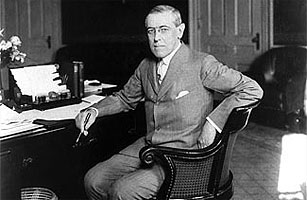
woodrow_wilsonIn the early days of WWI, Imperial Germany attempted to comply with standards of maritime warfare, as established by the Hague Conventions of 1899 and 1907.

Desperate to find an effective countermeasure to the German “Unterseeboot”, Great Britain introduced heavily armed merchant ships with concealed weaponry in 1915, phony merchantmen designed to lure submarines into making surface attacks. Britain called these secret countermeasures “Q-ships”, after their home base in Queenstown, in Ireland. German sailors called them U-Boot-Fälle. “U-boat traps”.

The “unprovoked” sinking of noncombatant vessels, including the famous Lusitania, in which 1,198 passengers lost their lives, became a primary justification for war.  The German Empire, for her part, insisted that many of these vessels carried munitions intended to kill Germans on European battlefields.

Underwater, the submarines of WWI were slow and blind, on the surface, vulnerable to attack.  In 1916, German policy vacillated between strict adherence to prize rules and unrestricted submarine warfare.  The first put their people and vessels at extreme risk, the second threatened to bring the United States into the war.q-ship-u-boat

In 1916, President Woodrow Wilson won re-election with the slogan “He kept us out of war”, a conflict begun in Europe, two years earlier.

In a January 31, 1917 memorandum from German Ambassador Count Johann von Bernstorff to US Secretary of State Robert Lansing, the Ambassador stated that “sea traffic will be stopped with every available weapon and without further notice”, effective the following day. The German government was about to resume unrestricted submarine warfare.

Anticipating this resumption and expecting the decision to draw the United States into the war, German Foreign Secretary Arthur Zimmermann delivered a message to the German ambassador in Mexico, Heinrich von Eckardt. The telegram instructed Ambassador Eckardt that, if the United States seemed likely to enter the war, he was to approach the Mexican Government with a proposal for military alliance, promising “lost territory” in Texas, New Mexico, and Arizona in exchange for a Mexican declaration of war against the United States.

Zimmerman noteThe “Zimmermann Telegram” was intercepted and decoded by British intelligence and revealed to the American government on February 24. The contents of the message outraged American public opinion and helped generate support for the United States’ declaration of war.
In the end, the German response to anticipated US action, brought about the very action it was trying to avoid.

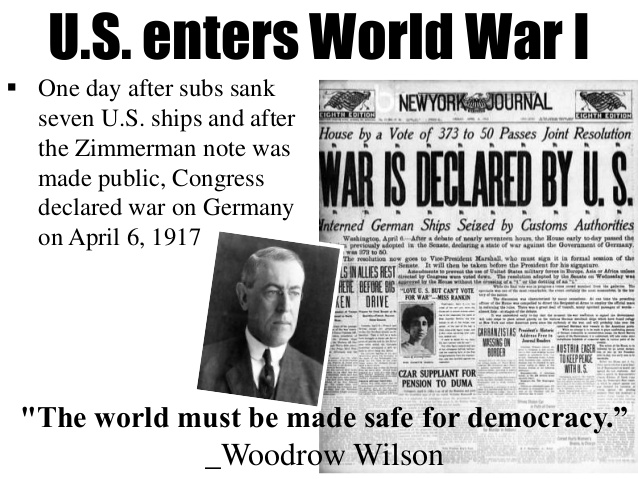
President Woodrow Wilson delivered his war message to a joint session of Congress on April 2, saying that a declaration of war on Imperial Germany would make the world “safe for democracy”. Congress voted to support American entry into the war on April 6, 1917. The “Great War”, the “War to end all Wars”, had become a world war.

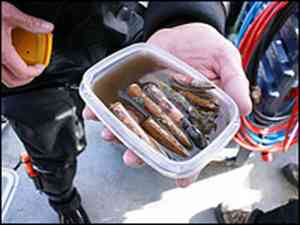
At the time, a secondary explosion within the hull of the Lusitania, caused many to believe the liner had been struck by a second torpedo.  In 1968, American businessman Gregg Bemis purchased the wreck of the Lusitania for $2,400, from the Liverpool & London War Risks Insurance Association.   In 2007 the Irish government granted Bemis a five-year license to conduct limited excavations at the site.   Lusitania, ammunition

Twelve miles off the Irish coast and 300’ down, a dive was conducted on the wreck in 2008.   Remote submersible operators discovered some 4,000,000 rounds of Remington .303 ammunition in the hold, proof of the German claim that Lusitania was, in fact, a legitimate target under international rules of war.  The UK Daily Mail quoted Bemis:  “There were literally tons and tons of stuff stored in unrefrigerated cargo holds that were dubiously marked cheese, butter and oysters’”.

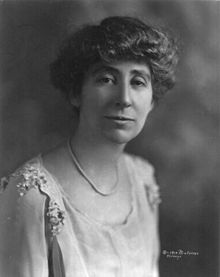
Jeannette_Rankin
Jeannette Rankin

American historian, author and journalist Wade Hampton Sides accompanied the expedition.  “They are bullets that were expressly manufactured to kill Germans in World War I” he said, “bullets that British officials in Whitehall, and American officials in Washington, have long denied were aboard the Lusitania.'”

Montana Republican Jeannette Pickering Rankin, a life-long pacifist and the first woman elected to the United States Congress, would be one of only fifty votes against entering WWI.  She would be elected to her second (non-contiguous) term in 1940, in time to be the only vote against entering WWII, following the Japanese attack on the United States’ Pacific anchorage at Pearl Harbor.

April 5, 1761 Midnight Ride

The Dutchess County Militia had to be called up. The Colonel had one night to prepare for battle, and this rider was done. The job would have to go to Colonel Ludington’s first-born. His daughter, Sybil.

“Listen my children and you shall hear,
Of the midnight ride of”…Sybil Ludington.

Wait…What?

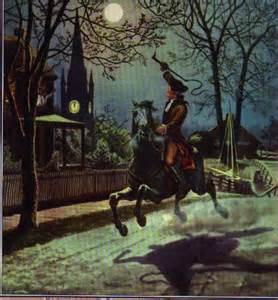
Midnight RidePaul Revere’s famous “midnight ride” began on the night of April 18, 1775.  Revere was one of two riders, soon joined by a third, fanning out from Boston to warn of an oncoming column of “regulars”, come to destroy the stockpile of gunpowder, ammunition, and cannon in Concord.

Revere himself covered barely 12 miles before being captured, his horse confiscated to replace the tired mount of a British sergeant.  Revere would finish his “ride” on foot, arriving at sunrise on the 19th to witness the last moments of the battle on Lexington Green.

Two years later, Patriot forces maintained a similar supply depot, in the southwest Connecticut town of Danbury.

William Tryon was the Royal Governor of New York, and long-standing advocate for attacks on civilian targets.  In 1777, he was also a major-general of the provincial army.  On April 25th, Tryon set sail for the Connecticut coast of Long Island Sound with a force of 1,800, intending to destroy Danbury.

Burning of DanburyPatriot Colonel Joseph Cooke’s small Danbury garrison was caught and quickly overpowered on the 26th, trying to remove food supplies, uniforms, and equipment.  Facing little if any opposition, Tryon’s forces went on a bender, burning homes, farms and storehouses.  Thousands of barrels of pork, beef, and flour were destroyed, along with 5,000 pairs of shoes, 2,000 bushels of grain, and 1,600 tents.

Colonel Henry Ludington was a farmer and father of 12, with a long military career.  A long-standing and loyal subject of the British crown, Ludington switched sides in 1773, joining the rebel cause and rising to command the 7th Regiment of the Dutchess County Militia, in New York’s Hudson Valley.

In April 1777, Ludington’s militia was disbanded for planting season, and spread across the countryside.  An exhausted rider arrived at the Ludington farm on a blown horse, on the evening of the 26th, asking for help.  15 miles away, British regulars and a force of loyalists were burning Danbury to the ground. Sybil Ludington

The Dutchess County Militia had to be called up.  The Colonel had one night to prepare for battle, and this rider was done.  The job would have to go to Colonel Ludington’s first-born, his daughter, Sybil.

Born April 5, 1761, Sybil Ludington was barely sixteen at the time of her ride.  From Poughkeepsie to what is now Putnam County and back, the “Female Paul Revere” rode across the lower Hudson River Valley, covering 40 miles in the pitch dark of night, alerting her father’s militia to the danger and urging them to come out and fight.  She’d use a stick to knock on doors, even using it once, to fight off a highway bandit.

By the time Sybil returned the next morning, cold, rain-soaked, and exhausted, most of 400 militia were ready to march.

BattleOfRidgefield
Battle of Ridgefield, from Wikipedia A: British movement to the coast B: American movements to pursue and harass the British C: Arnold’s position attempting to block the British return to the beach D: British return to New York

35 miles to the east of Danbury, General Benedict Arnold was gathering a force of 500 regular and irregular Connecticut militia, with Generals David Wooster and Gold Selleck Silliman.

Arnold’s forces arrived too late to save Danbury, but inflicted a nasty surprise on the British rearguard as the column approached nearby Ridgefield.  Never outnumbered by less than three-to-one, Connecticut militia was able to slow the British advance until Ludington’s New York Militia arrived on the following day.  The last phase of the action saw the same type of swarming harassment, as seen on the British retreat from Concord to Boston, early in the war.

Though the British operation was a tactical success, the mauling inflicted by these colonials ensured that this was the last hostile British landing on the Connecticut coast.

The British raid on Danbury destroyed at least 19 houses and 22 stores and barns.  Town officials submitted £16,000 in claims to Congress, for which town selectmen received £500 reimbursement.  Further claims were made to the General Assembly of Connecticut in 1787, for which Danbury was awarded land.  In Ohio.

Keeler_tavern_ridgefield_cannonball_2006
Keeler Tavern

The Keeler Tavern in Ridgefield is now a museum.  The British cannonball fired into the side of the building, remains there to this day.

At the time, Benedict Arnold planned to travel to Philadelphia, to protest the promotion of officers junior to himself, to Major General.  Arnold, who’d had two horses shot out from under him at Ridgefield, was promoted to Major General in recognition for his role in the battle.  Along with that promotion came a horse, “properly caparisoned as a token of … approbation of his gallant conduct … in the late enterprize to Danbury.”  For now, the pride which would one day be his undoing, was assuaged.

Henry Ludington would become Aide-de-Camp to General George Washington, and grandfather to Harrison Ludington, mayor of Milwaukee and 12th Governor of Wisconsin.

Gold Silliman was kidnapped with his son by a first marriage by Tory neighbors, and held for Nearly seven months at a New York farmhouse.  Having no hostage of equal rank with whom to exchange for the General, Patriot forces went out and kidnapped one of their own, in the person of Chief Justice Judge Thomas Jones, of Long Island.

Wooster Square
Archway at Wooster Square

Mary Silliman was left to run the farm, including caring for her own midwife, who was brutally raped by English forces for denying them the use of her home.  The 1993 made-for-TV movie “Mary Silliman’s War” tells the story of non-combatants, pregnant mothers and farm wives during the Revolution, as well as Mary’s own negotiations for her husband’s release from his Loyalist captors.

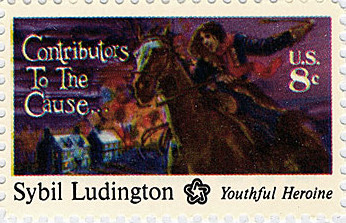
General David Wooster was mortally wounded at the Battle of Ridgefield, moments after shouting “Come on my boys! Never mind such random shots!”  Today, an archway marks the entrance to Wooster Square, in the East Rock Neighborhood of New Haven.  Sybil_Ludington_stamp

Sybil Ludington received the thanks of family and friends, even George Washington, and then stepped off the pages of history.

Paul Revere’s famous ride would likewise have faded into obscurity, but for the poetry of Henry Wadsworth Longfellow.  86 years later.

April 4, 1926  America’s 1st War Dog

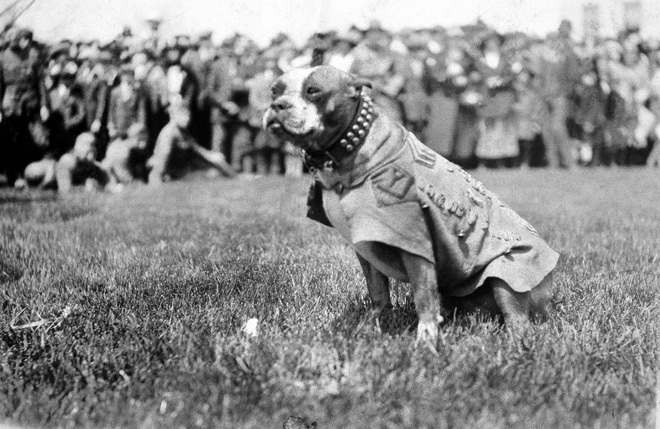
America’s first war dog, Stubby, got there by accident, and served 18 months ‘over there’

sgt_stubby_7By the last year of WW1, the French, British and Belgians had at least 20,000 dogs on the battlefield, the Germans 30,000. General Headquarters of the American Expeditionary Forces recommended the use of dogs as sentries, messengers and draft animals in the spring of 1918. However, with the exception of a few sled dogs in Alaska, the US was the only country to take part in World War I with virtually no service dogs in its military.
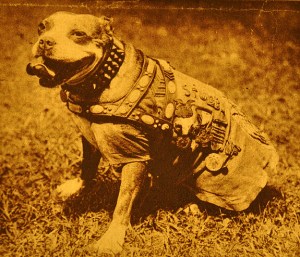
America’s first war dog, “Stubby”, got there by accident, and served 18 months ‘over there’, participating in seventeen battles on the Western Front.

He looked like a terrier of some kind, similar to a pit bull.  Nobody knows anything more about him.  He showed up as a stray at Yale Field in New Haven, Connecticut, while a group of soldiers were training. The dog hung around as the men drilled and one soldier, Corporal Robert Conroy, started taking care of him. Conroy hid Stubby on board the troop ship when the outfit shipped out in 1917.sgt_stubby_6

Stubby saved his regiment from surprise mustard gas attacks, located and comforted the wounded, and even once caught a German spy by the seat of his pants. The Hun, who’d been prowling behind allied lines at the time, was mapping trenches for artillery bombardment.   He was found spinning in circles with a large, muscular terrier affixed to his behind.  The Bosch was easily disarmed, but it took a considerable amount of coaxing before Stubby could be persuaded to let go of that German’s rear end.

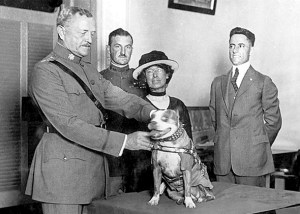
Black Jack Pershing, StubbyStubby saw his first action at Chemin des Dames. Since the boom of artillery fire didn’t faze him, he learned to follow the men’s example of ducking when the big ones came close. It became a great game to see who could hit the dugout, first.  After a few days, the guys were watching him for a signal. Stubby was always the first to hear incoming fire.  We can only guess how many lives were spared by his early warning.

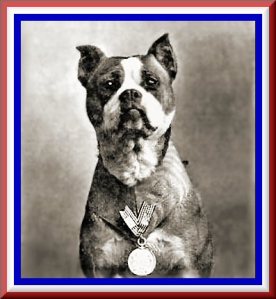
After the Armistice, Stubby returned home as a nationally acclaimed hero, and was eventually received by presidents Harding and Coolidge. Even General John “Black Jack” Pershing, who commanded the AEF during the war, presented Stubby with a gold medal made by the Humane Society, declaring him to be a “hero of the highest caliber.”Stubby on parade

Stubby toured the country by invitation and probably led more parades than any dog in American history:  he was promoted to honorary Sergeant by the Legion, becoming the highest ranking dog to ever serve in the Army.

Old age finally caught up with the small warrior on April 4th, 1926, as he took ill and died in his master’s arms.

Sergeant Stubby and a few of his contemporaries were instrumental in inspiring the creation of the US K-9 Corps, just in time for World War ll.

April 2, 1722 Silence Dogood

On December 3, James Franklin ran an ad. “If any Person . . . will give a true Account of Mrs. Silence Dogood, whether Dead or alive, Married or unmarried, in Town or Country, . . . they shall have Thanks for their Pains.”

Franklin BirthplaceThe fifteenth child of Josiah and Abiah Franklin was born in a little house on Milk Street, across from the Old South Church, in Boston.

The family moved to a larger house at Union & Hanover Street, when little Ben was six. As the tenth son, Benjamin Franklin was destined to be “tithed” to the church, but Josiah changed his mind after the boy’s first year in Boston Latin School. In light of the small salary, it was too expensive to educate a minister of the church.

He was sent to George Brownell’s English school for writing and arithmetic where he stayed until age ten, when he went to work in his father’s shop making tallow candles and boiling soap. After 1714, “Dr.” Benjamin Franklin’s education came exclusively from the books he picked up along the way.

By twelve the boy was “Hankering to go to sea”, and his father was concerned about his running away. Knowing of the boy’s love of books, the elder Franklin apprenticed his son to the print shop of James Franklin, one of his older sons, where he went to work setting type for books. And reading them.  He would often “borrow” a book at night, returning it “early in the Morning lest it should be miss’d or wanted.”Benjamin Franklin, printer

By 1720, James Franklin began to publish The New England Courant, only the second newspaper to appear in the American colony.

Franklin often published essays and articles written by his friends, a group described as “The Hell-Fire Club”. Benjamin desperately wanted to be one of them, but James seemed to feel that sixteen-year-old little brothers should be seen, and not heard..

Sometime in March 1722, a letter appeared beneath the print shop door. “Sir, It may not be improper in the first Place to inform your Readers, that I intend once a Fortnight to present them, by the Help of this Paper, with a short Epistle, which I presume will add somewhat to their Entertainment”. The letter went on in some detail to describe the life of its author, Mrs. Silence Dogood.

That first letter was published on April 2.  True to her word, Silence Dogood wrote again in two weeks.  And then again, and again.  Once every two weeks, for 28 weeks.  Her letters were delightful, cleverly mocking the manners of Boston “Society”, and freely giving advice, particularly on the way that women should be treated. Nothing was sacred.  One letter suggested that the only thing students learned at Harvard College, was conceit.

dogood_illustrationJames Franklin and his literary friends loved the letters, and published every one. All of Boston was charmed with Silence Dogood’s subtle mockery of the city’s Old School Puritan elite. Proposals of marriage came into the print shop, when the widow Dogood coyly suggested that she would welcome suitors.

James was jailed at one point, for printing “scandalous libel” about Massachusetts Governor Joseph Dudley.  The younger Franklin ran the shop in his absence, when Mrs. Dogood came to his defense.  Quoting Cato, she proclaimed:  “Without freedom of thought there can be no such thing as wisdom and no such thing as public liberty without freedom of speech.”

And then the letters stopped, much to the dismay of the Courant and its readership. One wrote to the editor, saying the paper had “lost a very valuable Correspondent, and the Public been depriv’d of many profitable Amusements.”

On December 3, James Franklin ran an ad. “If any Person . . . will give a true Account of Mrs. Silence Dogood, whether Dead or alive, Married or unmarried, in Town or Country, . . . they shall have Thanks for their Pains.” It was only then that his sixteen-year-old brother fessed up.  Benjamin Franklin was the author of the Silence Dogood letters.

benjamin--james-franklin-grangerAll of Boston was amused by the hoax, but not James. He was furious with his little brother, who soon broke the terms of his apprenticeship and fled to Pennsylvania.

And so it was that a future Founding Father of the Republic, the inventor, scientist, writer and philosopher, the statesmen who appears on our $100 bill, came to Philadelphia.  Within a few years Franklin had set up his own print shop, publishing the Philadelphia Gazette as well as his own book bindery, in addition to buying and selling books.

Benjamin Franklin’s efforts are in no small part a reason why literacy standards were higher in Colonial America, than among the landed gentry of 18th century England. Higher even, I believe, than today.

FranklinFranklin’s diplomacy to the Court of Versailles was every bit as important to the success of the Revolution, as the Generalship of the Father of the Republic, George Washington. Signatory to both the Declaration of Independence and the Constitution, it is arguably Ben Franklin who broke the impasse of the Convention of 1787, paving the way for ratification of the United States Constitution.

By then too old and frail to deliver his own speech, Franklin had someone else read his words to the deadlocked convention.

“On the whole, sir, I can not help expressing a wish that every member of the convention who may still have objections to it, would, with me, on this occasion, doubt a little of his own infallibility, and, to make manifest our unanimity, put his name to this instrument”.

As I witness the aftermath of this election year 2016, easily the most divisive of my two-score and eighteen years, I can’t deny the wish that I and my countrymen, too, might doubt a little of our own infallibility.

April 1, 1698 Washing the Lions

Pandemonium broke out when hundreds showed up, only to realize they’d been pranked.

Festival of FoolsApril Fools.  The ancient Roman festival of Hilaria, held on March 25, may be a precursor.  The Medieval Feast of Fools, held December 28, is still a day on which pranks are played in Spanish-speaking countries.
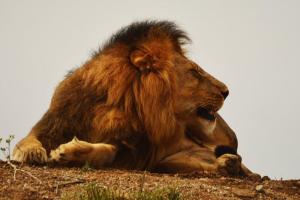
In one translation of Chaucer’s Canterbury Tales, “March 32” of 1392 is the day the vain cock Chauntecleer was tricked by a fox. The fox appealed to the rooster’s vanity by insisting he would love to hear Chauntecleer crow, just as his amazing father did.  Standing on tiptoe with neck outstretched and eyes closed. The rooster obliged, with unfortunate, if not unpredictable results.

In 1582, France switched from the Julian calendar to the Gregorian moving New Year to January 1 as specified by the Council of Trent of 1563. Those who didn’t get the news and continued to celebrate New Year in late March/April 1, quickly became the butt of jokes and hoaxes. Paper fish were placed on their backs, as these “poisson d’avril” (April fish) were said to symbolize the young, naive, easily caught fish of Spring.poisson-davril

The Flemish children of Belgium lock their parents or teachers out, letting them in only if they promise to bring treats that evening or the next day.

In 1539, Flemish poet Eduard de Dene wrote of a nobleman who sent his servants on fool’s errands on April 1.

In Scotland, April Fools’ Day is traditionally called Hunt-the-Gowk Day. Although it’s fallen into disuse, a “gowk” is a cuckoo or a foolish person. The prank consists of asking someone to deliver a sealed message requesting some sort of help. The message reads “Dinna laugh, dinna smile. Hunt the gowk another mile”. On reading the message, the recipient will explain that to help, he’ll first need to contact another person, sending the victim to another person with the same message.

In Poland, “Prima Aprilis” is so strong that the anti-Turkish alliance with Leopold I, signed on April 1, 1683, was backdated to March 31.

LeoAnimals were kept at the Tower of London since the 13th century, when Emperor Frederic II sent three leopards to King Henry III. In later years, elephants, lions, even a polar bear were added to the collection, the polar bear trained to catch fish in the Thames.

In 1686, John Aubrey referred to the holiday as “Fooles holy day”, the first British reference.

On April 1, 1698, citizens were invited to the Tower of London to see the “Washing of the Lions” in the tower moat. Quite a few were sucked in.  The April 2 edition of Dawks’ News-Letter reported that “Yesterday being the first of April, several persons were sent to the Tower Ditch to see the Lions washed.” The “annual ceremony of washing the lions,” lasted throughout the 18th & 19th centuries, always held on April 1st.

tower-of-london
Tower of London

The prank became quite elaborate by the mid-nineteenth century. Tickets were printed and distributed for the event, specifying that attendees be “Admitted only at the White Gate”, and that “It is requested that no Gratuities will be given to the Wardens on any account.”

In his “Reminiscences of an Old Bohemian”, Gustave Strauss laments his complicity in the hoax in 1848. “These wretched conspirators”, as Straus called his accomplices, “had a great number of order-cards printed, admitting “bearer and friends” to the White Tower, on the 1st day of April, to witness…the famous grand annual ceremony of washing the lions”. Pandemonium broke out when hundreds showed up, only to realize they’d been pranked. “In the midst of the turmoil” Strauss wrote, “some one spotted me to whom I had given an order of admission, and he would have set the whole mob upon me. Knowing of old that discretion is, as a rule, the better part of valour…I had to skedaddle, and keep dark for a time, until the affair had blown over a little”.

spagtreeIn 1957, (you can guess the date), the BBC reported the delightful news that mild winter weather had virtually eradicated the dread spaghetti weevil of Switzerland, and that Swiss farmers were now happily anticipating a bumper crop of spaghetti.  Footage showed smiling Swiss peasants, pulling strands of spaghetti down from trees.  Apparently, an embarrassingly large number of viewers were fooled.  Many called BBC offices, asking how to grow their own spaghetti tree. “Place a piece of spaghetti in a tin of tomato sauce”, callers were told, “and hope for the best.”

The Warby Parker Company website describes a company mission of “offer[ing] designerWarby Barker eyewear at a revolutionary price, while leading the way for socially conscious businesses”.  On April 1, 2012, the company released its new line of eyeglasses for dogs, appropriately called “Warby Barker”.  For only $95, your hipster pooch could be sporting the latest styles in canine eyeware, in irresistible dog treat shades like “Gravy Burst” and “Dusty Bacon.”  There was a monocle option too, for those partial to that Prussian Field Marshall look.  Anyone falling for the gag, got an “April Fools!” message on their on-line shopping cart.

Two days ago, Burger King announced the introduction of their new, Whopper flavored mouthwash, for those who just can’t get enough.  I’m sure it’s true because I read it on-line, but it should be mentioned here. There is no “White Gate” at the Tower of London.  Never was.

Left-Handed Whopper

March 31, 2016 Toot Toot Tootsie, Goodbye

I can’t imagine many Allied soldiers ever tried to serenade their Nazi adversaries during World War II. The ones who actually pulled it off must number, precisely, one.

James and Kate Kaminski’s little bundle of joy came into the world on June 26th 1926, in Brooklyn. They named this, their fourth son, Melvin James. James died of tuberculosis at 34, when the boy was only two. A small Jewish kid growing up in a tough Brooklyn neighborhood, Kaminsky learned the value of being able to crack a joke. “Growing up in Williamsburg”, he said, “I learned to clothe it in comedy to spare myself problems—like a punch in the face”.

The boy had a talent for music. He was taught by another kid from Williamsburg, Buddy Rich.  By 14 he was good enough to be playing drums for money.

Melvin Kaminsky, 1Melvin attended a year at Brooklyn College before being drafted into the Army, in WWII. After attending Army Specialized Training at VMI, Corporal Kaminsky joined the 1104th Combat Engineers Battalion, 78th Infantry Division in the European theater.  There, he served through the end of the war. Most of his work was in finding and defusing explosives, though on five occasions his unit had to drop their tools and fight as Infantry.

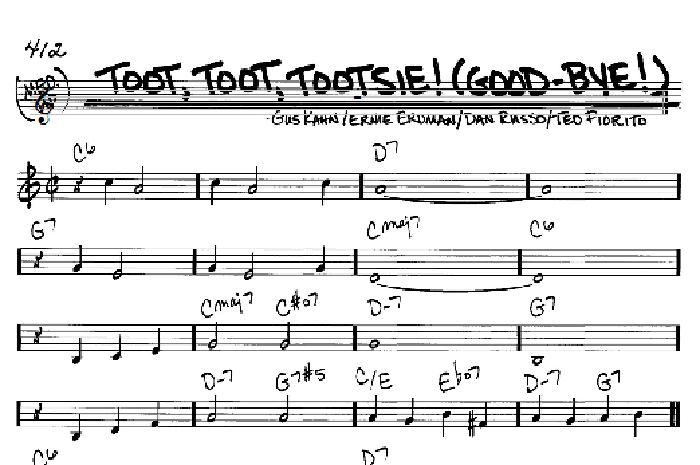
At one point Kaminsky’s unit gathered along a River. They were so close they could hear Jolson, BlackfaceGerman soldiers singing a beer hall song, from the other side. Kaminsky grabbed a bullhorn and serenaded the Germans back, singing them an old tune that Al Jolson used to perform in black face, “Toot Toot Tootsie, Goodbye”.  Polite applause could be heard from across the river, afterward. I can’t imagine many Allied soldiers ever tried to serenade their Nazi adversaries during World War II.  The ones who actually pulled it off must number, precisely, one.
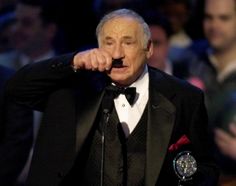
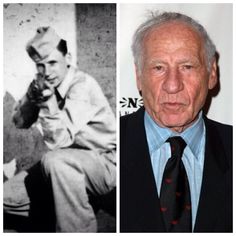
Kaminski went into show business after the war, playing drums and piano in the Borscht Belt resorts and nightclubs of the Catskills. It was around this time that he took his professional name, adopting his mother’s maiden name of Brookman and calling himself “Mel Brooks”.

Brooks started doing stand-up, when the regular comedian at one of the clubs was too sick to perform. By ’49 he was “Tummler”, the master entertainer at Grossinger’s, one of the most famous resorts in the Borscht Belt.  He was making $50 a week writing for his buddy Sid Caesar and his NBC “The Admiral Broadway Review”.Mel Brooks

In 1968, Mel Brooks wrote and produced the satirical comedy film “The Producers”, about a theatrical producer and an accountant who set out to fleece their investors. The scheme was to do a play so bad that it was sure to flop on Broadway, then to abscond to Brazil with their money when the play closed. Problem was, the show turned out to be a hit. The fictional play is a musical, called “Springtime for Hitler”. Even before the age of suffocating PC, I don’t know many guys beside Mel Brooks, who could have gotten away with that one.Melvin Kaminsky, 2

There isn’t one of us who doesn’t know his work. From the 2,000 year old man with “over forty-two thousand children, and not one comes to visit me” to Blazing Saddles’ “Candygram for Mongo” (“Mongo likes candy”).

Brooks has risen to the top of his chosen profession, winning the coveted “EGOT”, an acronym for the entertainment industry’s four major awards, the Emmy, Grammy, Oscar and Tony. Only eleven others have ever risen to this level: Richard Rodgers, Helen Hayes, Rita Moreno, John Gielgud, Audrey Hepburn, Young FrankensteinMarvin Hamlisch, Jonathan Tunick, Mike Nichols, Whoopi Goldberg, Scott Rudin, and Robert Lopez.  As of this date, Brooks only needs another Oscar to be the first “Double EGOT” in history.

Melvin Kaminsky will be 92 in a couple of months. Last year, March 31, 2016, the Averhill Park K-12 School District in upstate New York kicked off a three day production of “Young Frankenstein”.  Let me know if you can think of another 92-year-old guy, who remains that current.  I can’t think of one.