

Except for the Naval Air Station at Boca Chica and Coast Guard installations in Key West, Marathon and Islamorada, most if not all economic activity in the Florida Keys comes from tourism. It’s no wonder then, that when the federal government shuts down the only road into town, the locals are going to get cranky.
On April 18, 1982, the Mariel boatlift was a mere two years in the past, and very much in the public memory. The United States still had a border in those days, or at least a federal government that tried to enforce it. Border Patrol set up a roadblock in front of Skeeter’s Last Chance Saloon in Florida City, blocking Rt.1, the only road into the Keys. Originally intended to intercept illegals entering the country, the roadblock soon morphed into a hunt for illegal drugs, as well.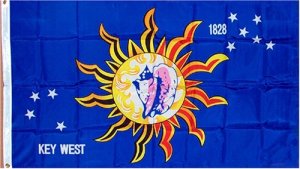
Cars waited for hours, in lines that stretched for 19 miles. Predictably, the attitude of federal officials was one of towering indifference, but not so local business owners. Robert Kerstein wrote in his Key West on the Edge — Inventing the Conch Republic, “No one in Key West doubted that drugs were trafficked widely in the Keys by road and by boat. But tourism’s boosters had little tolerance for interruptions to their business.”
Dennis Wardlow, then-mayor of Key West, contacted the chief of police, the Monroe County sheriff, and his State Rep, as well as Governor Bob Graham, demanding the roadblock’s removal. With none of the above having any knowledge of the barrier and lacking the authority to pull it down, Wardlow contacted INS directly. When the Border Patrol told him it was “none of his business,” the Mayor’s response could best be summed up in the words of Bugs Bunny: “Of course you know, this means war!”
Suffering a blizzard of hotel cancellations, this “attack on Key West’s sovereignty” could not stand. On April 22, Mayor Wardlow, local attorney & pilot David Horan and Old Town Trolley Tours operator Ed Swift flew to Miami seeking legal relief. When District Court Judge C. Clyde Atkins failed to issue an injunction, the Key West delegation took to the courthouse steps.
“What are you going to do, Mr. Mayor”, asked the assembled media. Swift leaned over and whispered into the Mayor’s ear, “Tell them we are going to go home and secede” “We are going to go home and secede!”, said Wardlow, and that’s what they did.
Over the next 24 hours, a group of secessionist co-conspirators worked feverishly to form the new government, filling cabinet positions such as “Secretary of Underwater Affairs” and “Minister of Nutrition”.

On April 23, with federal agents on scene to monitor the proceedings, a crowd gathered before the old customs building. Mayor Wardlow and a gaggle of allies mounted the back of a flatbed truck to read the proclamation of secession. “We serve notice on the government in Washington”, it read, “to remove the roadblock or get ready to put up a permanent border to a new foreign land. We as a people, may have suffered in the past, but we have no intention of suffering in the future at the hands of fools and bureaucrats”.

With that, Mayor Wardlow declared “war” on the United States. The “Great Battle of the Conch Republic” broke out in the harbor, when the Schooner Western Union commanded by Captain John Kraus, attacked the Coast Guard Cutter Diligence with water balloons, Conch fritters and toilet paper. Diligence fought back with water hoses, as the new “Prime Minister” broke a loaf of stale Cuban bread over the head of a man dressed in a Navy uniform. Others launched stale bread and conch fritters at federal agents, Navy sailors and Coast Guard personnel in attendance.
 One minute after declaring his “verbal shot” at the feds, Wardlow “surrendered” to a nearby naval officer, demanding a billion dollars in “foreign aid” in compensation for “the long federal siege.”
Apparently, that’s what it takes to get the attention of a federal bureaucrat. The roadblock lifted, and soon the restaurants, stores and hotels of the Keys were once again filled with smiling tourists. Key West never got their “foreign aid”, but they never received so much as a letter saying they couldn’t secede, either.
So it is that Key West celebrates its independence this day, April 23. The “Conch Republic’ issues its own passports, and sells t-shirts and bumper stickers with the slogan “We seceded where others failed”. And if the federal government ever comes back to mess with the micro-nation, they’d better be prepared to deal with the Conch Republic’s very own “Special Forces”, whose motto is “Sanctus Merda”. “Holy Shit”.
Tip of the hat to
“Conch Republic Military Forces
The Official Site of the Conch Republic Military”
Linked Here
for the “Conch Battle Hymn of the Republic”
words by First Sea Lord, Admiral Finbar Gittelman • October 14, 2012 © Finbar Gittelman
Mine eyes have seen the glory of the sunshine and the sea
Right here upon our islands, where we love to live so free
But in April 1982, the peace was not to be
And we went rolling on
CHORUS
Glory glory Conch Republic
Glory glory Conch Republic
Glory glory Conch Republic
From Key to shining Key
They were setting up a check point, tween the mainland and the Keys
They had put a US Border, where it shouldn’t ‘oughta’ be
So that’s when we seceded, and declared our sovereignty
And the fun had just begun
(CHORUS)
We went forth into the harbor and a cutter we did spy
And we sailed up along side her and we took her by surprise
We hoisted up our battle flag, so proudly and so high
And we went sailing on
(CHORUS)
The water and Conch fritters and the Cuban bread did fly
Our bombers, they were raining toilet paper from the sky
Our cannons they did thunder to proclaim our victory
And we fought bravely on
(CHORUS)
We have faced the silly forces of misguided zealotry
We have stood up to their foolishness for all the world to see
And we’ve showed the other nations what America can be From
Key to shining Key
(CHORUS)


 Richthofen chased the rookie Canadian pilot Wilfred “Wop” May behind the lines on April 21, 1918, when he found himself under attack. With a squadron of Sopwith Camels firing from above and anti-aircraft gunners on the ground, he was shot once through the chest with a .303 round, managing to land in a beet field before dying several minutes later. He was still wearing his pajamas, under his flight suit.


 According to legend, Romulus and Remus were the sons of Rhea Silvia, the daughter of King Numitor of Alba Longa, a mythical city located in the Alban Hills southeast of what would become Rome. Numitor was deposed by his younger brother Amulius, who forced Rhea to become a vestal virgin so that she would not give birth to rival claimants to his title. However, Rhea was already pregnant by the war god Mars, and destined to give birth to Romulus and Remus.


 Founded by Byzas, son of the Greek King Nisos circa 657BC, the earliest days of Byzantium are clouded by legend. Located on the easternmost peninsula where Europe becomes Asia, the city is surrounded on three sides, by water.
 21-year-old Mehmed II began the final siege of Constantinople on April 6, 1453. Commanding 120,000 attackers with an estimated 126 ships, Ottoman forces faced 7,000 to 12,000 Christian defenders with 26 ships, defending almost 3½ miles of land wall and another 9 miles of sea wall facing the Sea of Marmara and the Golden Horn.
 Mehmed placed his cannon into positions facing the wall. The largest, the monster “Basilica” was 27′ long, weighed 18 tons, and required a team of 60 oxen and 400 men to move it. It had a diameter of 30″, large enough for a grown man to crawl inside. Its 150lb powder charge was capable of hurling a half-ton stone ball a distance of over a mile. While the weapon did catastrophic damage to the city walls, it took over three hours to reset after firing, and frantic efforts by the defenders were able to repair much of the damage between shots.
 Serbian Sappers dug tunnels under the city, intending to undermine and blow out the walls, but Christian counter-miners broke into the tunnels and attacked them with swords, axes and Greek fire, an early form of napalm.
 These were the cannon fodder, their purpose to wear down the defenders in preparation for attacks by professional soldiers, the Bashi-Bazouks. Then came the Janissaries, Christian slave warriors raised from childhood to be the elite of the Ottoman army, Attackers stormed the walls by the tens of thousands, while Ottoman ships pounded the city from the harbor.


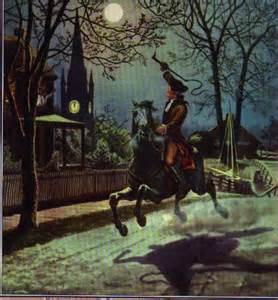 Boston Patriots had been preparing for such an event. Sexton Robert John Newman and Captain John Pulling carried two lanterns to the steeple of the Old North church, signaling that the Regulars were crossing the Charles River to Cambridge. Dr. Joseph Warren ordered Paul Revere and Samuel Dawes to ride out and warn surrounding villages and towns, the two soon joined by a third rider, Samuel Prescott. It was Prescott alone who would make it as far as Concord, though hundreds of riders would fan out across the countryside before the night was through.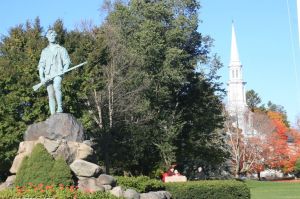
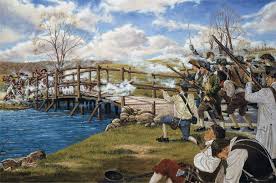 Some British soldiers marched 35 miles over those two days, their final retreat coming under increasing attack from militia members firing from behind stone walls, buildings and trees. One taking up such a firing position was Samuel Whittemore of Menotomy Village, now Arlington Massachusetts. At 80 he was the oldest known combatant of the Revolution.


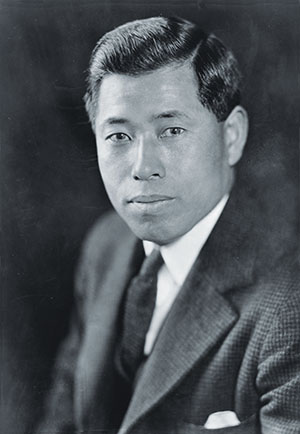 Isoroku Takano was born in Niigata, the son of a middle-ranked samurai of the Nagaoka Domain. His first name “Isoroku”, translating as “56”, refers to his father’s age at the birth of his son. At this time, it was common practice that samurai families without sons would “adopt” suitable young men, in order to carry on the family name, rank, and the income that came with it. The young man so adopted would carry the family name. So it was that Isoroku Takano became Isoroku Yamamoto in 1916, at the age of 32.
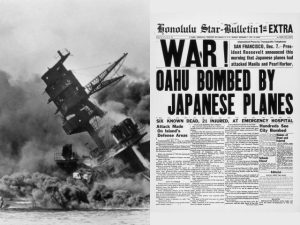 Many believed that Yamamoto’s career was finished when his old adversary Hideki Tōjō ascended to the Prime Ministership in 1941. Yet there was none better to run the combined fleet. When the pro-war faction took control of the Japanese government, he bowed to the will of his superiors. It was Isoroku Yamamoto who was tasked with planning the attack on Pearl Harbor.
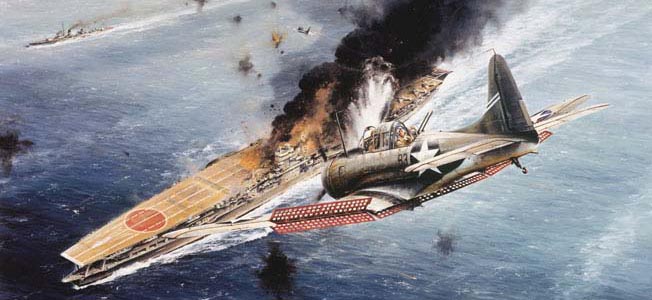 American carrier based Torpedo bombers were slaughtered in their attack, with 36 out of 42 shot down. Yet Japanese defenses had been caught off-guard, their carriers busy rearming and refueling planes when American dive-bombers arrived.
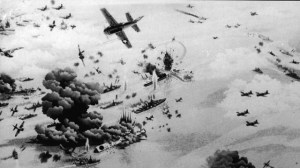 Midway was a disaster for the Imperial Japanese navy. The carriers Akagi, Kaga, Soryu and Hiryu, the entire strength of the task force, went to the bottom. The Japanese also lost the heavy cruiser Mikuma, along with 344 aircraft and 5,000 sailors. Much has been made of the loss of Japanese aircrews at Midway, but two-thirds of them survived. The greater long term disaster, may have been the loss of all those trained aircraft mechanics and ground crew who went down with their carriers.
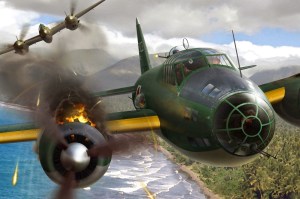 tour throughout the South Pacific. US naval intelligence intercepted and decoded his schedule. The order for “Operation Vengeance” went down the chain of command from President Roosevelt to Secretary of the Navy Frank Knox to Naval Operations Admiral Ernest King to Admiral Chester Nimitz at Pearl Harbor. Sixteen Lockheed P-38 Lightnings, the only fighters capable of the ranges involved, were dispatched from Guadalcanal on April 17 with the order: “Get Yamamoto”.
 intercepted over Rabaul on April 18, 1943. Knowing only that his target was “an important high value officer”, 1st Lieutenant Rex Barber opened up on the first Japanese transport until smoke billowed from its left engine. Yamamoto’s body was found in the wreckage the following day with a .50 caliber bullet wound in his shoulder, another in his head. He was dead before he hit the ground.


 Castro proclaimed his administration to be an example of “direct democracy”, and dismissed the need for elections. The Cuban people could assemble demonstrations and express their democratic will to him personally, he said. Who needs elections?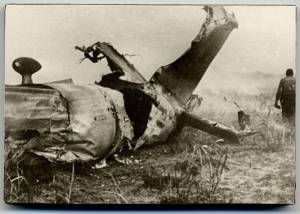
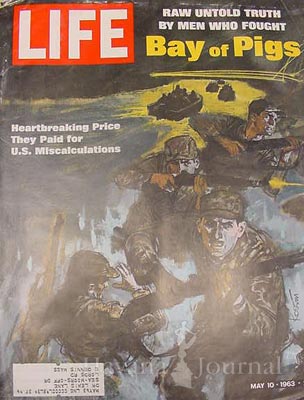 Kennedy was finally persuaded to authorize unmarked US fighter jets from the aircraft carrier Essex to provide escort cover for the invasion’s B-26 bombers, most of which were flown by CIA personnel in support of the ground invasion. Fighters missed their rendezvous by an hour, due to a misunderstanding about time zones. Unescorted bombers are easy targets, and two of them were shot down with four Americans killed. Fighting ended on April 20, 1961 in what had become an unmitigated fiasco.

 By 1916 it was generally understood in Germany, that the war effort was “shackled to a corpse”, referring to Germany’s Austro-Hungarian ally. Italy, the third member of the “Triple Alliance”, was little better. On the Triple Entente side, the French countryside was literally torn to pieces, the English economy close to breaking. The Russian Empire, the largest nation on the planet, was on the edge of the precipice.
 the more extreme road. While Reds and Whites both wanted to bring socialism to the Russian people, the Mensheviks argued for predominantly legal methods and trade union work, while Bolsheviks favored armed violence.




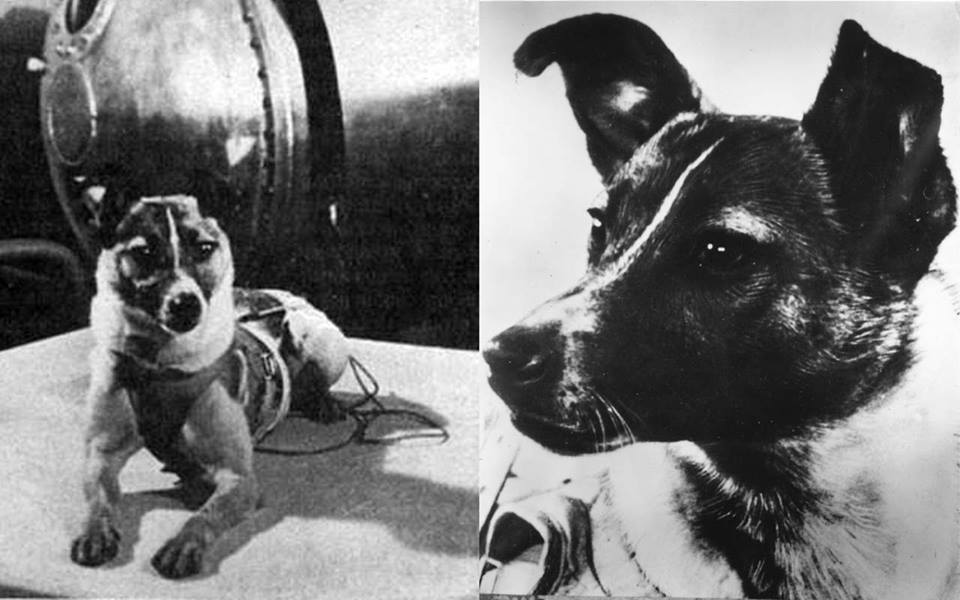
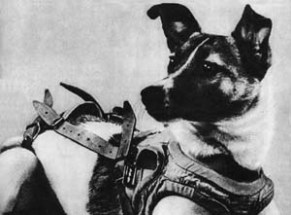
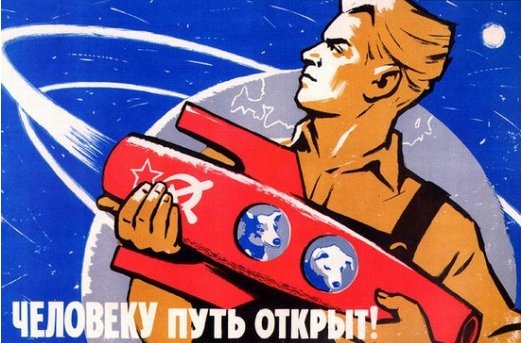
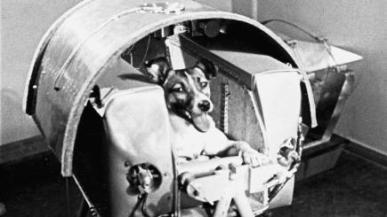 allowed her to stand, sit and lie down. Finally, it was November 3, 1957. Launch day. One of the technicians “kissed her nose and wished her bon voyage, knowing that she would not survive the flight”.
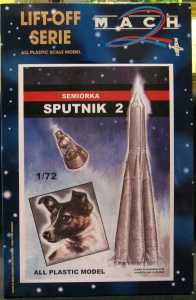 In the beginning, the US News media focused on the politics of the launch. It was all about the “Space Race”, and the Soviet Union running up the score. First had been the unoccupied Sputnik 1, now Sputnik 2 had put the first living creature into space. The more smartass specimens among the American media, called the launch “Muttnik”.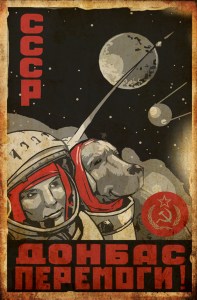
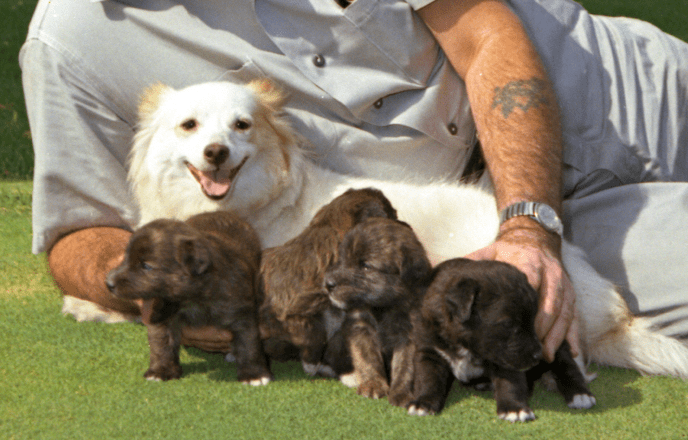
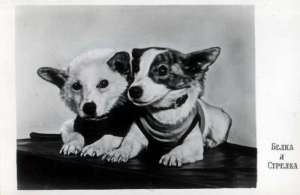 As a dog lover, I feel the need to add a more upbeat postscript, to this thoroughly depressing story.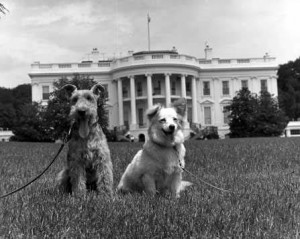

 Historical Easter Eggs - Today in History
You must be logged in to post a comment.