No free citizen of a self-governing Republic, should ever forget where we come from. Or the prices paid by our forebears, to get us here.
John McCrae was a physician and amateur poet from Guelph, Ontario. Following the outbreak of WWI, McCrae enlisted in the Canadian Expeditionary Force at the age of 41. He had the option of joining the medical corps based on his training and his age, but volunteered instead to join a fighting unit as gunner and medical officer. McCrae had previously served in the Boer War, this would be his second tour of duty in the Canadian military.
McCrae fought in one of the most horrendous battles of WWI, the second battle of Ypres, in the Flanders region of Belgium. Imperial Germany launched one of the first chemical attacks in history, attacking the Canadian position with chlorine gas on April 22, 1915. The Canadian line was broken but quickly reformed, in near-constant fighting that lasted for over two weeks.
Dr. McCrae later wrote to his mother, describing the nightmare. “For seventeen days and seventeen nights”, he wrote, “none of us have had our clothes off, nor our boots even, except occasionally. In all that time while I was awake, gunfire and rifle fire never ceased for sixty seconds … and behind it all was the constant background of the sights of the dead, the wounded, the maimed, and a terrible anxiety lest the line should give way”.
On May 3, Dr. McCrae presided over the funeral of his friend and fellow soldier Alexis Helmer, who had died in the battle. He performed the burial service himself, when he noted how quickly the red poppies grew on the graves of the fallen. He composed this poem the next day, while sitting in the back of an ambulance.
Moina Michael was browsing through the Ladies Home Journal when she came across McCrae’s poem. It was Saturday morning, November 9, 1918, two days before the armistice. She was so moved that she made a personal pledge to “keep the faith”, vowing always to wear a red poppy as a sign of remembrance of the dead. She scribbled down a response on the back of a used envelope, calling her poem “We Shall Keep the Faith“.
The vivid red flower blooming on the battlefields of Belgium, France and Gallipoli came to symbolize the staggering loss of life in that war. Since then, the red poppy has become an internationally recognized symbol of remembrance of the lives lost in all wars. I keep a red poppy pinned to my briefcase and another on the visor of my car. A reminder that no free citizen of a self-governing Republic, should ever forget where we come from. Or the prices paid by our forebears, to get us here.
The Yankees were in Detroit on May 2 when Gehrig told manager Joe McCarthy “I’m benching myself, Joe”. It’s “for the good of the team”. The Iron Horse’s streak of 2,130 consecutive games, had come to an end.
The Lane Tech high school baseball team was at home on June 26, 1920. 10,000 spectators had assembled to watch the game at Cubs Park, now Wrigley Field. New York’s Commerce High was ahead 8–6 in the top of the 9th, when a left handed batter hit a grand slam out of the park. No 17 year-old had ever hit a baseball out of a major league park before, and I don’t believe it’s happened, since. It was the first time the country heard the name Lou Gehrig.
Gehrig was pitching for Columbia University against Williams College on April 18, 1923, the day that Babe Ruth hit the first home run out of the brand new Yankee Stadium. Though Columbia would lose the game, Gehrig struck out seventeen batters to set a team record.
The loss didn’t matter to Paul Krichell, the Yankee scout who’d been following Gehrig. Krichell didn’t care about the arm either, as much as he did that powerful left-handed bat. He had seen Gehrig hit some of the longest home runs ever seen on several eastern campuses, including a 450′ home run at Columbia’s South Field that cleared the stands and landed at 116th Street and Broadway.
NY Giants manager John McGraw persuaded a young Gehrig to play pro ball under a false name, Henry Lewis, despite the fact that it could jeopardize his collegiate sports eligibility. Gehrig played only a dozen games for the Hartford Senators before being found out, and suspended for a time from college ball. This period, and a couple of brief stints in the minor leagues in the ’23 and ’24 seasons, were the only times Gehrig didn’t play for a New York team.
Gehrig started as a pinch hitter with the NY Yankees on June 15, 1923. He came into his own in the ‘26 season. In 1927 he batted fourth on “Murderers’ Row”, the first six hitters in the Yankee’s batting order: Earle Combs, Mark Koenig, Babe Ruth, Lou Gehrig, Bob Meusel and Tony Lazzeri.
He had one of the greatest seasons of any batter in history that year, hitting .373, with 218 hits: 52 doubles, 18 triples, 47 home runs, a then-record 175 RBIs, and a .765 slugging percentage. Gehrig’s bat helped the 1927 Yankees to a 110–44 record, the American League pennant, and a four game World Series sweep of the Pittsburgh Pirates.
He was the “Iron Horse”, playing in more consecutive games than any player in history. It was an “unbreakable” record, standing for 56 years, until surpassed in 1995 by Cal Ripken, Jr. Gehrig hit his 23rd and last major league grand slam in August 1938, a record that would stand until fellow Yankee Alex Rodriquez tied it in 2012.
Lou Gehrig collapsed in 1939 spring training, going into an abrupt decline early in the season. The Yankees were in Detroit on May 2 when Gehrig told manager Joe McCarthy “I’m benching myself, Joe”. It’s “for the good of the team”. McCarthy put Babe Dahlgren in at first and the Yankees won 22-2, but that was it. The Iron Horse’s streak of 2,130 consecutive games, had come to an end.
Sports reporter James Kahn wrote: “I think there is something wrong with him. Physically wrong, I mean. I don’t know what it is, but I am satisfied that it goes far beyond his ball-playing”.
Gehrig left the team in June, arriving at the Mayo Clinic on the 13th. The diagnosis of Amyotrophic Lateral Sclerosis (ALS) was confirmed six days later, on June 19. It was his 36th birthday. It was a cruel prognosis: rapidly increasing paralysis, difficulty in swallowing and speaking, and a life expectancy of fewer than three years.
Gehrig briefly rejoined the Yankees in Washington, D.C. He was greeted by a group of Boy Scouts at Union Station, happily waving and wishing him luck. Gehrig waved back, but he leaned forward to a reporter. “They’re wishing me luck”, he said, “and I’m dying.”
Gehrig appeared at Yankee Stadium on “Lou Gehrig Appreciation Day”, July 4, 1939. He was awarded trophies and other tokens of affection by the New York sports media, fellow players and groundskeepers. He would place each one on the ground, already too weak to hold them. Addressing his fans, Gehrig described himself as “The Luckiest Man on the Face of the Earth”.
Henry Louis Gehrig died on June 2, 1941, at the age 37.
I drove by Yankee Stadium back in 2013, the week after the Boston Marathon bombing. The sign out front said “United we Stand”. With it was a giant Red Sox logo. That night, thousands of Yankees fans interrupted a game with the Arizona Diamondbacks, to belt out Neil Diamond’s “Sweet Caroline,” a staple of Red Sox home games since 1997.
I thought about Lou Gehrig. I’ve always been a Boston guy myself, I think I’m required by Massachusetts state law to hate the Yankees. But seriously. What a Class Act.
I find it infinitely preferable that we learn from our history, rather than hide from it.
Last week, New Orleans authorities took to the dead of night, to remove monuments to the history of their own city. The recent fuss about the “Confederate Flag” has faded away, sort of, not so the political atmosphere that gave it birth. For all that, it seems worth pointing out: the “Stars and Bars” with which we’ve all become so familiar, never was the flag of the Confederate States of America. It wasn’t even the real Stars & Bars.
Battle of Sullivan’s Island, 1776
On June 28, 1776, British General Sir Henry Clinton ordered the ship Thunder to attack the Continental fortification on Sullivan’s Island, in Charleston Harbor. The fighting was furious and lasted 16 hours and more. At one point, a British shell tore the flagstaff away. In full view and under constant fire, Sergeant William Jasper of the 2nd South Carolina retrieved the fallen flag of his regiment and fixed it to an artilleryman’s sponge pole. There he stood on the parapet, holding the flag under fire until a new pole could be installed.
Jasper’s heroism had rallied his forces to fight on. Governor John Rutledge gave him his personal sword, in recognition of his bravery. The battle was a humiliating defeat for a British fleet that hadn’t been beaten in 100 years. It was four years before they’d take another run at Charleston.
SC Secession Flag
The Liberty Flag or Moultrie flag became a standard for South Carolina militia. A palmetto was added in 1861, a reference to the palm trunks laid over the sand walls of Fort Moultrie, which had helped withstand that British bombardment of 85 years earlier. A variant of this flag appeared at South Carolina’s secession conventions, as did militia and state flags in all the state secession conventions.
Bonnie Blue Flag
When Mississippi seceded in January 1861, a blue flag with a single white star was flown from the capitol dome. This, the first and unofficial flag of the Confederacy, came to be called the “Bonnie Blue Flag”, closely patterned after the flag flown over the short-lived Republic of West Florida in 1810, and adopted by the Congress of the Republic of Texas on December 10, 1836.
The first national flag of the Confederate States of America, the real Stars and Bars, was similar in design to the United States flag. A blue field containing seven, nine, eleven and finally thirteen stars, depending on the period, appeared in the “canton”, or upper left corner. Three stripes of equal height ran from hoist to fly end, alternating red to white and back to red.
Stars and Bars
Regiments of the era carried flags to help commanders observe and assess the progress of battle. At a distance, the Stars and Bars and the Stars and Stripes were hard to tell apart, particularly in still conditions, or when smoke clouded the view.
The similarity between the two national flags led to confusion at the first battle of Manassas, also known as the first battle of Bull Run. After the battle, Confederate General Pierre Gustave Toutant Beauregard wrote that he was “resolved then to have [our flag] changed if possible, or to adopt for my command a ‘Battle flag’, which would be entirely different from any State or Federal flag”.
The star studded diagonal stripes of the St. Andrew’s Cross is what resulted, becoming Beauregard’s battle flag, as well as that of the Army of Tennessee, the Army of Northern Virginia, and the ensign of the Confederate Navy.
Most submissions for the second national flag incorporated the battle flag into the design. The winning design adopted on May 1, 1863, was called the “Stainless Banner”, placing the Saint Andrews Cross in the canton, the rest of the flag pure white. Visibility remained an issue with this design as with the first; as it was often misinterpreted as a flag of surrender.
Stainless Banner
The third national flag, also known as the “Blood Stained Banner”, was adopted March 4, 1865. This last design retained the white background with the same canton as before, but now there was a vertical red stripe on the fly end.
The Confederate battle flag enjoyed renewed popularity during the first half of the 20th century. Several WWII military units with Southern nicknames, made the flag their unofficial emblem. The USS Columbia flew a Confederate Navy Ensign throughout combat in the South Pacific. A Confederate battle flag was raised over Shuri Castle after the Battle of Okinawa, by a Marine from Company A of the 1st Battalion, 5th Marines; the self-styled “Rebel Company”. It was visible for miles and was taken down after three days on the orders of General Simon Bolivar Buckner, Jr., son of Confederate general Simon Bolivar Buckner. “Americans from all over are involved in this battle”, said Buckner, replacing it with the US flag.
Blood Stained Banner
According to Civil War historian and native Southerner Shelby Foote, the flag traditionally represented the South’s resistance to Northern political dominance.
The symbol became highly controversial during the Civil Rights era, and disagreement continues over its symbolism. Supporters of the flag view it as a symbol of southern heritage and the independence of the distinct cultural tradition of the American South. Civil rights groups associate it with a history of racial discrimination and the institution of slavery.
Now, we have the current government in New Orleans, taking to the dark of night, to remove Confederate memorials from the streets of that city.
In writing these history essays, I hope to learn something new about a subject which interests me. I enjoy the responses of those who feel the same way. There’s plenty of time for politics and I don’t intend that this blog be the place for it. Except to say: I find it infinitely preferable that we learn from our history, rather than hiding from it.
The idea was a head fake, disinformation planted into the hands of Nazi Germany, to make them believe the allies planned to invade Sardinia and Greece in 1943
The idea was a head fake, disinformation planted into the hands of Nazi Germany, making them believe the allies planned to invade Sardinia and Greece in 1943, rather than the real targets of North Africa and Sicily. British Military Intelligence called it “Operation Mincemeat”.
The London coroner obtained the body of a 34-year-old homeless man named Glyndwr Michael, on condition that his real identity never be revealed. The Welshman had died of rat poison, though it’s uncertain whether the death was accidental or suicide. This particular poison came in a paste, and was spread on bread crusts to attract rats. Michael may have died, merely because he was hungry.
Be that as it may, the cause of death was difficult to detect, the condition of the corpse close to that of someone who had died at sea, of hypothermia and drowning. The dead man’s parents were both deceased, there were no known relatives and the man died friendless. So it was that Glyndwr Michael became the Man who Never Was.
The next step was to create a “past” for the dead man. Michael became “(Acting) Major William “Bill” Martin, Royal Marines”, born 1907, in Cardiff, Wales, assigned to Headquarters, Combined Operations. As a Royal Marine, “Martin” could wear battle dress rather than a naval uniform. This was important, because Naval uniforms at the time were tailor-made by Gieves & Hawkes of Saville Row. Authorities could hardly ask Gieves’ tailors to measure a corpse, without raising eyebrows.
The rank of acting major made him senior enough to be entrusted with sensitive documents, but not so prominent that anyone would expect to know him. The name “Martin” was chosen because there were several Martins of about that rank, already serving in the Royal Marines.
A “fiancé” was furnished for Major Martin, in the form of an MI5 clerk named “Pam”. “Major Martin” carried her snapshot, along with two love letters, and a jeweler’s bill for a diamond engagement ring.
In keeping with his rank, Martin was given some good quality underwear, to increase his authenticity. Extremely difficult to obtain due to rationing, the underwear was purloined from the Master of the New College Oxford, who’d been run over and killed by a truck.
Scene from “The Man Who Never Was”, 1956, Directed by Ronald Neame
Made to look like the victim of a plane crash, the plan was to drop the body at sea, at a place where the tide would bring it ashore and into German Hands.
On April 30, 1943, Lt. Norman Jewell, commander of the submarine Seraph, read the 39th Psalm. The body of the man who never was, complete with briefcase padlocked to his wrist containing “secret” documents, was gently pushed into the ocean off the Spanish Atlantic coast.
The hoax worked out, nicely. A Spanish fisherman recovered the body and a Nazi agent intercepted the papers, as intended. Mussolini insisted correctly that the allied attack would come through Sicily, but Hitler wasn’t buying it. He had swallowed the Mincemeat scam whole, insisting that the Sicilian attack was nothing but a diversion from the real objective.
When the Allies invaded Sicily on the 9th of July, the Germans were so convinced it was a feint that they kept forces out of action for two full weeks. After that, it was far too late to effect the outcome.
The non-existent Major William Martin was buried with full military honors in the Huelva cemetery of Nuestra Señora. The headstone reads:
“William Martin, born 29 March 1907, died 24 April 1943, beloved son of John Glyndwyr Martin and the late Antonia Martin of Cardiff, Wales, Dulce et Decorum est pro Patria Mori, R.I.P.” The Latin phrase means “It is sweet and fitting to die for one’s country.”
In 1998, the British Government revealed Martin’s true identity, and “Glyndwr Michael; Served as Major William Martin, RM”, was added to the gravestone.
There is a war memorial in the small South Wales town of Aberbargoed, in memory of Glyndwr Michael. A plaque is inscribed with the Welsh phrase “Y Dyn Na Fu Erioed“. It means “The Man Who Never Was”.
My favorite among the classified ads has to be the “Flammenwerfer” – Flame Thrower. “Guaranteed absolutely harmless.” “Instructive – Amusing”.
As chief of the Imperial German general staff from 1891-1905, German Field Marshal Alfred von Schlieffen devised the strategic roadmap by which Germany prosecuted the first world war. The “Schlieffen Plan” could be likened to a bar fight, where a fighter (Germany) had to take out one guy fast (France), before turning and facing his buddy (Imperial Russia). Of infinite importance to Schlieffen’s plan was the westward sweep through France, rolling the country into a ball on a timetable before his armies could turn east to face the “Russian Steamroller”. “When you march into France”, Schlieffen had said, “let the last man on the right brush the Channel with his sleeve.”
Field Marshall Helmuth von Moltke once said “No battle plan ever survives contact with the enemy”. So it was in the tiny Belgian city where German plans were broken, on the road to Dunkirk. Native Dutch speakers called it Leper, today we know it as Ypres (Ee-press), since the battle maps of the time were drawn up in French. The Tommys of the British Expeditionary Force (BEF), called the place “Wipers”.
What had hitherto been a war of movement ground to a halt in the apocalyptic fighting around Ypres, in October-November, 1914. 104,920 on all sides were killed, wounded or missing, around a city roughly the size of my little town of Falmouth, on Cape Cod.
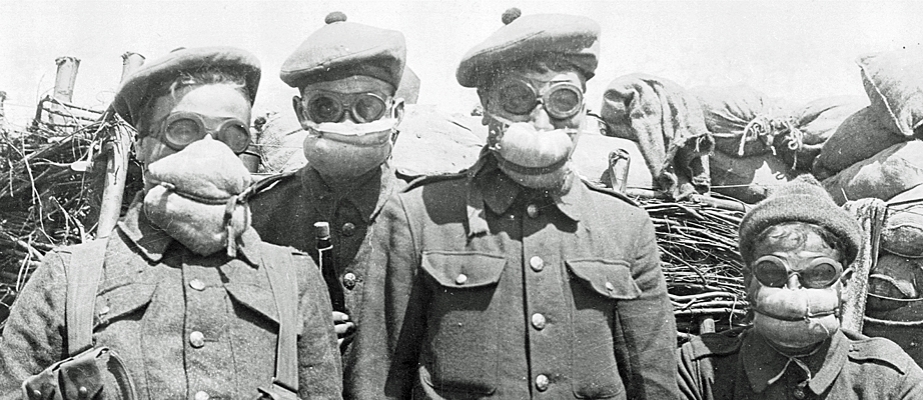
The second Battle of Ypres began with a new and terrifying weapon, on April 22, 1915. German troops placed 5,730 gas cylinders weighing 90 pounds apiece, along a four mile front. Allied troops must have looked on in wonder, as that vast yellow-green carpet crept toward their lines. Chlorine gas forms hypochlorous acid when combined with water, destroying the moist tissues of the lungs and eyes. Heavier than air, the stuff crept along the ground and poured into the trenches, forcing troops out into heavy German fire. 6,000 casualties were sustained in the gas attack alone, opening a four mile gap in the allied line. Thousands retched and coughed out their last breath, as others tossed their equipment and ran in terror.
After the war, German losses were estimated at 34,933 between April 21 and May 30, BEF casualties numbered 59,275. The French recorded about 18,000 on April 22 alone, with another 3,973 by the 29th of April. All told, 2nd Ypres cost allied forces 87,223 killed, wounded or missing.
The third Battle of Ypres would begin in July of 1917, lasting almost until the end of the war. 3rd Ypres would result in 570,000 losses on all sides, but in early 1916, that was all part of some unknown and terrible future.
It’s hard to imagine anything remotely humorous coming out of the horrors of Ypres, but such a thing became possible in the early months of 1916.
The “Sherwood Foresters” were line infantry Regiments of the British Army, stationed at the front lines of the Ypres salient. Coming across a printing press, a sergeant who had been a printer in peacetime got the thing going. They began to print a trench magazine, the first published on February 12. The paper included poems and reflections, “adverts” and plenty of dark humor. Written for fellow soldiers, not civilians, some in-jokes are so obscure that their meaning is lost to the modern reader. Others are clearly understandable, even 101 years into their future.
Richly typeset advertisements for “Music Hall Extravaganzas” include “Tickling Fritz” by the P.B.I. (Poor Bloody Infantry) Film Co. of the United Kingdom and Canada, advising the enthusiast to “Book Early”. There were Real Estate ads for property in no-man’s land. “BUILD THAT HOUSE ON HILL 60. BRIGHT-BREEZY-&-INVIGORATING. COMMANDS AN EXCELLENT VIEW OF HISTORIC TOWN OF YPRES”. Another one read “FOR SALE, THE SALIENT ESTATE – COMPLETE IN EVERY DETAIL! UNDERGROUND RESIDENCES READY FOR HABITATION. Splendid Motoring Estate! Shooting Perfect !! Fishing Good!!!”
There were news features, this one of a bungled trench raid: “”…They climbed into the trench and surprised the sentry, but unfortunately the revolver which was held to his head missed fire. Attempts were made to throttle him quietly, but he succeeded in raising the alarm, and had to be killed.” editor’s note, “This we consider real bad luck for the sentry after the previous heroic efforts to keep him alive””.
There were weather reports, laying odds on the forecast. “5 to 1 Mist, 11 to 2 East Wind or Frost, 8 to 1 Chlorine”. My favorite among the classified ads has to be the “Flammenwerfer” – Flame Thrower. “Guaranteed absolutely harmless.” “Instructive – Amusing”.
It turns out that units of all sizes, from individual companies to army corps, lightened their load with some kind of unit journal in WWI.
The Wipers Times ran through the end of the war, with the exception of the “Operation Michael” period, the last gasp German Western Front offensive of 1918. The final edition, titled “The Better Times”, was published in December 1918, just short of two months after the armistice. The banner read “Xmas, Peace and Final Number.”
The Grand Master of the Assassins dispatched his killers to Karakorum in the early 1250s, to murder the grandson of Genghis Khan, the Great Khan of the “Golden Horde”, Möngke. Bad idea.
For the Islamic world, the 11th century was a time of political instability. The Fatimid Caliphate, established in 909 and by this time headquartered in Cairo, was in sharp decline by 1090. The Fatimids were destined to disappear within the next 100 years, eclipsed by the Abbasid Caliphate of An-Nasir Salah ad-Din Yusuf ibn Ayyub, better known to anyone familiar with the story of Richard Lionheart, as Saladin.
To the east lay the Great Seljuk Empire, the Turko-Persian, Sunni Muslim state established in 1037 and stretching from the former Sassanid domains of modern-day Iran and Iraq, to the Hindu Kush. An “appanage” or “family federation” state, the Seljuk empire was itself in flux after a series of succession contests, destined to disappear altogether in 1194.
Into the gap stepped the “Old Man of the Mountain”, Hassan-i Sabbah, and his fanatically loyal, secret sect of “Nizari Ismaili” followers, the Assassins.
The name derives from the Arabic “Hashashin”, meaning “those faithful to the foundation”. Marco Polo reported a story that the old man of the mountain got such fervent loyalty from his young followers, by drugging and leading them to a “paradise” of earthly delights, to which only he could return them. The story is probably apocryphal, there is little evidence that hashish was ever used by the Assassins’ sect. Sabbah’s followers believed him to be divine, personally selected by Allah. The man didn’t need to drug his “Fida’i” (self-sacrificing agents), he was infallible. His every whim would be obeyed, as the literal Word of God.
Assassin stronghold at Masyaf, in Northern Syria
The mountain fortification of Alamut in northern Persia was probably impervious todefeat by military means, but not to the two-years long campaign of stealth and pretend friendship practiced by Sabbah and his followers. In 1090, Alamut fell in a virtually bloodless takeover, becoming the headquarters of the Nizari Ismaili state.
Why Sabbah would have founded such an order is unclear, if not in pursuit of his own personal and political goals. By the time of the first Crusade, 1095-1099, he found himself pitted against rival Muslims and invading Christian forces, alike.
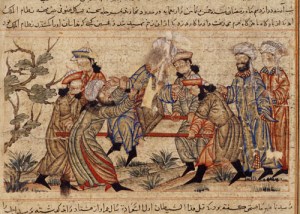
Sabbah would order the elimination of rivals, usually up close, with the dagger. From religious figures to politicians and generals, assassinations were preferably performed in broad daylight, in as public a manner as possible. It was important that everyone absorb the intended message.
Assassination of the Seljuk Vizier Nizam al-Mulk
Though the “Fida’in” occupied the lowest rank of the order, great care was devoted to their education and training. Possessed of all the physical prowess of youth, the individual Assassin was also intelligent and well-read, highly trained in combat tactics, the art of disguise and the skills of the expert horseman. All the necessary traits, for anyone who would penetrate enemy territory, insinuate himself into their ranks, and murder the victim who had learned to trust him.
Sometimes, a credible threat of assassination was as effective as an actual killing. When the new Seljuk Sultan Ahmad Sanjar rebuffed Hashashin diplomatic overtures in 1097, he awoke one morning to find a dagger stuck into the ground, next to his bed. A messenger arrived sometime later from the old man of the mountain. “Did I not wish the sultan well” he said, “that the dagger which was struck in the hard ground would have been planted on your soft breast?” The technique worked nicely. For the rest of his days, Sanjar was happy to allow the Hashashin to collect tolls from travelers in his realm. The Sultan even provided them with a pension, collected from the inhabitants of the lands they occupied.
Saladin himself awoke one morning, to find a note resting on his breast, along with a poisoned cake. The message was clear. Sultan of all Egypt and Syria though he was, Saladin made an alliance with the rebel sect. There would be no more such attempts on his life.
Conrad of Montferrat was elected King of Jerusalem in 1192, though he would never be crowned. Stabbed at least twice by a pair of Hashashin on April 28, on the way home, the Kurdish historian and biographer wrote “[T]he Frankish marquis, the ruler of Tyre, and the greatest devil of all the Franks, Conrad of Montferrat — God damn him! — was killed.”
In the 200+ years of its existence, the Assassins occupied scores of mountain redoubts, though Alamut would remain its principle quarters.
It’s impossible to know how many of the hundreds of political assassinations of this period, were attributable to the followers of Hassan-i Sabbah. Without a doubt, their fearsome reputation ascribed more political murder to the sect, than they were actually responsible for.
The Fida’in of Hassan-i Sabbah were some of the most feared killers of the middle ages. Scary as they were, there came a time when the Order of the Assassins tangled with someone far scarier than themselves.
The Grand Master of the Assassins dispatched his killers to Karakorum in the early 1250s, to murder the grandson of Genghis Khan, the Great Khan of the “Golden Horde”, Möngke. Bad idea.
Hulagu Khan
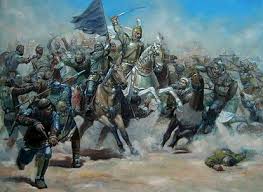
The Nestorian Christian ally of the Mongol Empire Kitbuqa Noyan, was ordered to destroy several Hashashin fortresses in 1253. Möngke’s brother Hulagu rode out at the head of the largest Mongol army ever seen in 1255, with no fewer than 1,000 Chinese engineer squads. Their orders were to treat those who submitted with kindness, and to utterly destroy those who opposed them.
That they did. Rukn al-Dīn Khurshāh, fifth and final Imam who ruled at Alamut, submitted after four days of preliminary bombardment. Mongol forces under the command of Hulagu Khan entered and destroyed the Hashshashin stronghold at Alamut Castle on December 15, 1256.
Hulagu went on to subjugate the 5+ million Lurs people of western and southwestern Iran, the Abbasid Caliphate in Baghdad, the Ayyubid state of Damascus, and the Bahri Mamluke Sultanate of Egypt. Mongol and Muslim accounts alike, agree that the Caliph of Baghdad was rolled up in a Persian rug, whereupon the horsemen of Hulagu rode over him, because Mongols believed that the earth was offended if touched by royal blood.
Estimates of Americans killed in the D-Day rehearsal range from 639 to 946, nearly five times the number killed on the actual Utah Beach landing.
The largest amphibious attack in history began on June 6, 1944, on the northern coast of France. British and Canadian forces came ashore at beaches code named Gold, Juno and Sword. Americans faced light opposition at Utah Beach, while heavy resistance at Omaha Beach resulted in over 2,000 American casualties.
By end of day, some 156,000 Allied troops had successfully stormed the beaches of Normandy. Within a week that number had risen to 326,000 troops, over 50,000 vehicles and more than 100,000 tons of equipment.
The success of “Operation Overlord” resulted from lessons learned from the largest amphibious training exercise of the war, the six phases of “Operation Fabius”, itself following the unmitigated disaster of a training exercise that killed more Americans, than the actual landing at Utah beach.
Slapton Sands
Slapton is a village and civil parish in the River Meadows of DevonCounty, where the southwest coast of England meets the English Channel. Archaeological evidence suggests human habitation from at least the bronze age. The “Domesday Book”, the recorded manuscript of the “Great Survey” of England and Wales completed in 1086 by order of William the Conqueror, names the place as “Sladone”, with a population of 200.
In late 1943, 750 families, some 3,000 locals, were evacuated with their livestock to make way for “Operation Tiger”, a D-Day landing rehearsal scheduled for the following spring. Some had never so much as left their village.
Thousands of US military personnel were moved into the region during the winter of 1943-44. The area was mined and bounded with barbed wire, and patrolled by sentries. Secrecy was so tight, that even those in surrounding villages, had no idea of what was happening.
Exercise Tiger was scheduled to begin on April 22, covering all aspects of the “Force U” landing on Utah beach, culminating in a live-fire beach landing at Slapton Sands at first light, on April 27.
Slapton Sands Landing
Nine large tank landing ships (LSTs) shoved off with 30,000 troops on the evening of the 26th, simulating the overnight channel crossing. Live ammunition was used in the exercise, to harden troops off to the sights, sounds and smells of actual battle. Naval bombardment was to commence 50 minutes before H-Hour, however delays and scheduling confusion resulted in landing forces coming under direct naval bombardment. An unknown number were killed in this “friendly fire” incident. Fleet rumors put the number as high as 450.
Two Royal Navy Corvettes, HMS Azalea and Scimitar, were to guard the exercise from German “Schnellboots” (“S-Boots” – the allies called the “E-Boats”), the fast attack craft based across the channel, at Cherbourg.
German Fast Attack Boats known as ‘Schnell-Boots” or, “Fast Boats”
Scimitar withdrew for repairs following a collision with an LST on the 27th. In the earlymorning darkness of the following day, the single corvette was leading 8 LSTs carrying vehicles and combat engineers of the 1st Engineer Special Brigade through Lyme Bay, when the convoy was spotted by a nine vessel E-Boat patrol.
8 landing craft in single-file didn’t have a chance against fast-attack craft capable of 55mph. LST-531 was torpedoed and sunk in minutes, killing 424 Army and Navy personnel. LST-507 suffered the same fate, with the loss of 202. LST-289 made it to shore in flames, with the loss of 123. LST-511 was damaged in yet another friendly fire incident.
Unable to wear their lifebelts correctly due to the large backpacks they wore, many men placed them around their waists. That only turned them upside down in the water and that’s how they died, with nothing but legs visible above the waves. Dale Rodman, who survived the sinking of LST-507, said “The worst memory I have is setting off in the lifeboat away from the sinking ship and watching bodies float by.”
Survivors were sworn to secrecy due to official embarrassment, and the possibility of revealing the real invasion, scheduled for June. Ten officers with high level clearance were killed in the incident, but no one knew that for sure until their bodies were recovered. The D-Day invasion was nearly called off. Any of them could have been captured alive, revealing pending invasion plans to German interrogators. Particularly under torture.
There’s a surprising amount of confusion about the final death toll. Estimates range from 639 to 946, nearly five times the number killed in the actual Utah Beach landing. Some or all of the personnel from that damaged LST may have been aboard the other 8 on the 28th, but log books went down along with everything else. Many of the remains, have never been found.
Even that number would surely have been higher, had not Captain John Doyle disobeyed orders and turned his LST-515 around, plucking 134 men from the frigid water.
Today the Exercise Tiger disaster is largely forgotten. Some have charged official cover-up, though information from SHAEF press releases appeared in the August edition of Stars & Stripes. At least three books contain the information. It seems more likely that the immediate need for secrecy and subsequent D-Day invasion swallowed the Tiger disaster, whole. History has a way of doing that.
Some of Slapton’s residents came home to rebuild their lives after the war, but many never returned. In the early 1970s, Devon resident and civilian Ken Small discovered an artifact of the Tiger exercise, while beachcombing on Slapton Sands.
With little or no help from either the American or British governments, Small purchased rights to a submerged Sherman tank from the 70th Tank Battalion, from the United States Government. The tank was raised in 1984 with the help of local residents and dive shops, and now stands as a memorial to Exercise Tiger, not far from a monument remembering those villagers who never came home.
A plaque was erected at Arlington National Cemetery in 1995, inscribed with the words “Exercise Tiger Memorial”. A 5,000-pound LST stern anchor bears silent witness to Exercise Tiger in Mexico, Missouri, as does an M4 Sherman tank at Fort Rodman Park in New Bedford, Massachusetts.
In 2012, a granite memorial was erected at Utah Beach, engraved with the words in French and English: “In memory of the 946 American servicemen who died in the night of 27 April 1944 off the coast of Slapton Sands (G.B.) during exercise Tiger the rehearsals for the D-Day landing on Utah Beach”.
Just in case you thought your own member of congress was a piece of work…
With apologies to A. Lincoln, “It is altogether fitting and proper” that the first use of the insanity defense in an American courtroom, was for the murder of a District Attorney, by a member of the United States Congress.
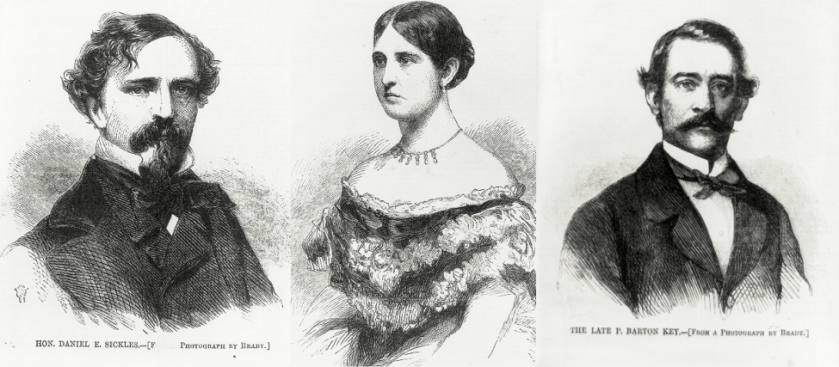
In case you think your own member of congress is a piece of work, he or she probably has nothing on Tammany Hall’s own, Daniel “Devil Dan” Edgar Sickles. Sickles carried on an “indiscreet affair” for years, with well-known prostitute Fanny White. No fan of Victorian era propriety, Sickles loved nothing more than to introduce her to scandalized breakfast guests. As a member of the New York assembly in 1847, Sickles earned a censure from the opposition Whig party, for bringing White into the assembly chamber.
He almost certainly arranged the mortgage on White’s brothel, using the name of his friend and future father-in-law Antonio Bagioli. Sickles married Teresa Bagioli in 1852 when he was 33 and she 15 and pregnant, much to the chagrin of both families. Fanny White was so angry she followed him to a hotel room, where she attacked him with a riding whip.
As personal secretary for the Ambassador to the Court of St. James and future US President James Buchanan, Sickles left his pregnant wife behind, bringing Fanny White instead. Meeting Queen Victoria herself at Buckingham palace, Sickles introduced the prostitute as “Miss Bennett”, using the name of the hated editor of the New York Herald, James Gordon Bennett, Sr. Queen Victoria never got wise to the ruse, but Bennett was furious at the use of his name.
Carrying on with a known prostitute was one thing, but the Mrs. having an affair with a United States District Attorney, was quite another.
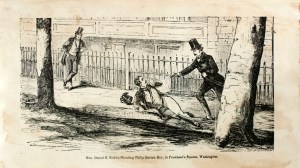
After Teresa’s confession of her adultery with the US Attorney for the Washington District, Congressman Sickles shot and killed him in Lafayette Park, across from the White House. He was Philip Barton Key, son of Francis Scott Key, author of “The Star-Spangled Banner”.
Sickles immediately surrendered and went on trial for premeditated murder. He obtained the services of future Secretary of War Edwin M. Stanton. By the time the defense was at rest, Washington newspapers were praising Sickles for “saving all the ladies of Washington from this rogue named Key”.
He was acquitted on April 26, 1859, in the first use of the temporary insanity defense in US legal history. I’d always thought that stuff like this only happened in the age of social media, but apparently not. Supporters and detractors alike seemed more upset with Sickles’public reconciliation with his wife, than with the original charges.
As a “War Democrat”, a Democrat in favor of the civil war, Sickles became an important political ally to Republican President Lincoln, receiving a commission as Brigadier General despite having no previous military experience.
Sickles III Corp position, Gettysburg, day 2
At the Battle of Gettysburg, Sickles defied orders on the second day. Ordered to anchor the Union left at the base of Little Round Top, Sickles insubordinately moved his 3rd corps a mile out front, taking a position in a peach orchard.
Virtually alone, III Corps was shattered in the Confederate assault. Sickles himself lost a leg to a cannon ball, watching the destruction from the sidelines, while propped up on one elbow and smoking a cigar.
The footrace to the undefended crest of Little Round Top and the savage hand to hand fighting which followed, were very possibly all that saved the Union army that day.
Sickles donated his leg to the newly founded Army Medical Museum in Washington, DC, along with a visiting card marked, “With the compliments of Major General D.E.S.” He visited his leg for several years thereafter, on the anniversary of the amputation.
Sickles was awarded the medal of honor despite his insubordination, and continued his service through the end of the war, though he was disgusted that he never received another battlefield command.
Sickles commanded several military districts during Reconstruction, and served as U.S. Minister to Spain, reputedly carrying on with none other than the deposed Queen Isabella II. Eventually returning to the US Congress, Sickles made important legislative contributions to the preservation of the Battlefield at Gettysburg.
Dan Sickles is one of only two Union Corps commanders not represented by his own statue at Gettysburg. One had been planned for him, but Sickles himself “reappropriated” the funds. He was once asked where his monument was. Devil Dan Sickles replied, “The whole park is my monument.”
Rick Monday was playing Center Field for the Cubs. Describing the “protesters”, Monday said “He got down on his knees, and I could tell he wasn’t throwing holy water on it”.
The bottom of the fourth had just started out in Dodger Stadium, when two “protesters” jumped out of the left field bleachers and ran onto the field.
The pair succeeded in soaking an American flag with lighter fluid, but they weren’t quite fast enough with the match.
Rick Monday was playing Center Field for the Cubs. Describing the scene, Monday said “He got down on his knees, and I could tell he wasn’t throwing holy water on it”.
Monday dashed over and grabbed the flag, to thunderous applause from the 25,167 in attendance. All but two, that is. By that time. those two were being led off in handcuffs.
When Monday came out to bat in the top of the 5th, he got a standing ovation from Dodger fans, while the message board flashed “RICK MONDAY… YOU MADE A GREAT PLAY…”
The arrested were identified as 37-year old William Errol Thomas, and his eleven year old son. Poor kid. He’d be 52 now. I wonder how he turned out.
Thomas was convicted of trespassing, and ordered to pay a $60 fine or spend three days in jail. He was unemployed and didn’t have anything better to do, so he took the time.
Rick Monday had served a tour in the Marine Corp Reserve, in fulfillment of his ROTC obligation after leaving Arizona State. “If you’re going to burn the flag”, he said, “don’t do it around me. I’ve been to too many veterans’ hospitals and seen too many broken bodies of guys who tried to protect it.”
The flag Rick Monday rescued that day was presented to him nine days later by a Dodgers’ executive, during a pregame ceremony at Wrigley Field. He has been offered up to a million dollars to sell the flag. As of this date he has declined all offers.
You can see the whole episode at the link below. My favorite part has to be that impotent little temper tantrum at the end, when the protester throws his little lighter at the outfielder’s back. Like a runt possum, hissing at a passing stallion.
A boy named Don McLean heard about the plane crash while doing his morning paper route. One day, the future singer/songwriter would pen the words “February made me shiver, with every paper I’d deliver”.
Jiles Richardson was a Texas DJ in 1958, the year he found recording success of his own with a song called “Chantilly Lace”.
Richie Valenzuela was only 16 when Del-Fi Records producer Bob Keane discovered the singer in California. “Donna”, a song he had written for his high school sweetheart Donna Ludwig, was on the way to #2 on the Billboard Hot 100, right alongside the 45’s “B” side, an old Mexican standard turned Rock & Roll tune called “La Bamba”. By 1958 he was one of the hottest young recording artists of his time.
Charles Hardin Holley, “Buddy” to his friends and family, learned guitar, four-string banjo and lap steel guitar from his older brothers, Travis and Larry. The boy took to music at an early age, winning his first talent contest at the age of five. A music critic would one day describe the Lubbock Texas native as “the single most influential creative force in early rock and roll.” Contemporary and later musicians claiming inspiration from his work include the Beatles, the Rolling Stones, Bob Dylan, and Elvis Costello.
58 years ago, his name changed as the result of a misspelling in a recording contract, Holly was headliner of the “The Winter Dance Party Tour”. Richardson, performing as the “Big Bopper” and Valenzuela, professionally known as Ritchie Valens, were on the tour, along with Dion and the Belmonts, Holly’s friend from Lubbock and fellow musician Waylon Jennings, and a young Owasso, Oklahoma Rockabilly musician and former “Crickets” band member, an enrolled member of the Cherokee Nation named Tommy Allsup.
The musical tour included 24 cities in 3 weeks, a grueling schedule under the best of circumstances, but theirs were anything but the best. The tour bus had no heat, and a three-week winter bus tour of the upper Midwest is no place to be without heat. It was so cold that Holly’s drummer, Carl Bunch, suffered frostbite in his feet and left the tour in Clear Lake, Iowa.
Holly was sick of it, and decided to charter a plane for himself and some of his guys. At least that would give him time to do laundry before the next performance.
Dwyer Flying Service got the charter with a 1947 Beechcraft Bonanza, at $36 per person. There’s a popular story that the four-seater aircraft was called “American Pie”, but the story is a myth. The single engine airplane bore only the tail number: N3794N.
Richardson was running a fever at the time, so Waylon Jennings gave up his seat so the Big Bopper could ride in comfort. Allsup and Valens flipped a coin for the last seat, the coin landing heads up. Ritchie Valens had won the coin toss.
On learning that Jennings wasn’t going to fly, Holly said “Well, I hope your old bus freezes up.” Jennings replied “Well, I hope your plane crashes.” It was just a good ribbing between friends, but the comment would haunt Jennings for the rest of his life.
N3794N left the ground in a snowstorm, shortly after 1:00am on February 3. The pilot, Roger Peterson, may have been inexperienced with the instrumentation, or he may have become disoriented in near whiteout conditions. One wing hit the ground in a cornfield outside of Clear Lake, and the aircraft corkscrewed into the ground, throwing the three musicians clear of the plane. There was no fire, just a small aircraft being swallowed up in a snow covered cornfield. The bodies would lie in the field until late that afternoon.
The show would go on. Needing to fill in at the next stop in Moorhead, Minnesota, they found a 15 year old talent across the state line in Fargo, and so began the musical career of Bobby Vee.
A boy named Don McLean heard about the plane crash while doing his morning paper route. One day, the future singer/songwriter would pen the words “February made me shiver, with every paper I’d deliver”.
Allsup returned to Odessa, resuming his musical career and opening a club in Dallas. in 1979. He called it “Tommy’s Heads Up Saloon”, after the coin toss that saved his life.
Distraught, Buddy Holly’s widow miscarried their only child shortly after the wreck. His last song, “It Doesn’t Matter Anymore”, reached #1 on the UK charts on April 24, 1959, the first posthumous release ever to do so. In the US the song charted at 13 on the Billboard Hot 100, it would be his last top 20 hit in the country. Inscribed on Ritchie Valens’ gravestone are the words, “Come On, Let’s Go.” The last surviving member of Buddy Holly’s 1959 touring band “The Crickets” passed away earlier this year, on January 11. Tommy Allsup was 85.


 McCrae fought in one of the most horrendous battles of WWI, the second battle of Ypres, in the Flanders region of Belgium. Imperial Germany launched one of the first chemical attacks in history, attacking the Canadian position with chlorine gas on April 22, 1915. The Canadian line was broken but quickly reformed, in near-constant fighting that lasted for over two weeks.


 The vivid red flower blooming on the battlefields of Belgium, France and Gallipoli came to symbolize the staggering loss of life in that war. Since then, the red poppy has become an internationally recognized symbol of remembrance of the lives lost in all wars. I keep a red poppy pinned to my briefcase and another on the visor of my car. A reminder that no free citizen of a self-governing Republic, should ever forget where we come from. Or the prices paid by our forebears, to get us here.


 Gehrig was pitching for Columbia University against Williams College on April 18, 1923, the day that Babe Ruth hit the first home run out of the brand new Yankee Stadium. Though Columbia would lose the game, Gehrig struck out seventeen batters to set a team record.
 Gehrig appeared at Yankee Stadium on “Lou Gehrig Appreciation Day”, July 4, 1939. He was awarded trophies and other tokens of affection by the New York sports media, fellow players and groundskeepers. He would place each one on the ground, already too weak to hold them. Addressing his fans, Gehrig described himself as “The Luckiest Man on the Face of the Earth”.


 Be that as it may, the cause of death was difficult to detect, the condition of the corpse close to that of someone who had died at sea, of hypothermia and drowning. The dead man’s parents were both deceased, there were no known relatives and the man died friendless. So it was that Glyndwr Michael became the Man who Never Was.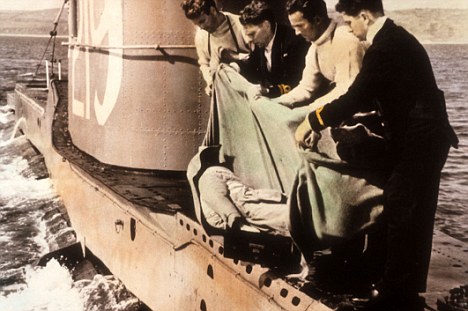
 The non-existent Major William Martin was buried with full military honors in the Huelva cemetery of Nuestra Señora. The headstone reads:
 As chief of the Imperial German general staff from 1891-1905, German Field Marshal Alfred von Schlieffen devised the strategic roadmap by which Germany prosecuted the first world war. The “Schlieffen Plan” could be likened to a bar fight, where a fighter (Germany) had to take out one guy fast (France), before turning and facing his buddy (Imperial Russia). Of infinite importance to Schlieffen’s plan was the westward sweep through France, rolling the country into a ball on a timetable before his armies could turn east to face the “Russian Steamroller”. “When you march into France”, Schlieffen had said, “let the last man on the right brush the Channel with his sleeve.”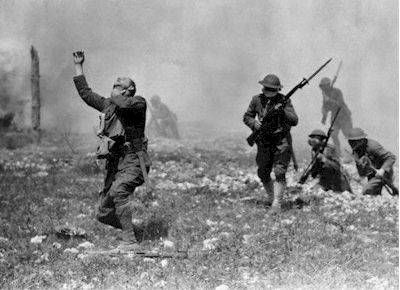
 The second Battle of Ypres began with a new and terrifying weapon, on April 22, 1915. German troops placed 5,730 gas cylinders weighing 90 pounds apiece, along a four mile front. Allied troops must have looked on in wonder, as that vast yellow-green carpet crept toward their lines. Chlorine gas forms hypochlorous acid when combined with water, destroying the moist tissues of the lungs and eyes. Heavier than air, the stuff crept along the ground and poured into the trenches, forcing troops out into heavy German fire. 6,000 casualties were sustained in the gas attack alone, opening a four mile gap in the allied line. Thousands retched and coughed out their last breath, as others tossed their equipment and ran in terror.
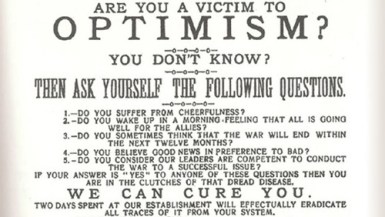 Richly typeset advertisements for “Music Hall Extravaganzas” include “Tickling Fritz” by the P.B.I. (Poor Bloody Infantry) Film Co. of the United Kingdom and Canada, advising the enthusiast to “Book Early”. There were Real Estate ads for property in no-man’s land. “BUILD THAT HOUSE ON HILL 60. BRIGHT-BREEZY-&-INVIGORATING. COMMANDS AN EXCELLENT VIEW OF HISTORIC TOWN OF YPRES”. Another one read “FOR SALE, THE SALIENT ESTATE – COMPLETE IN EVERY DETAIL! UNDERGROUND RESIDENCES READY FOR HABITATION. Splendid Motoring Estate! Shooting Perfect !! Fishing Good!!!”


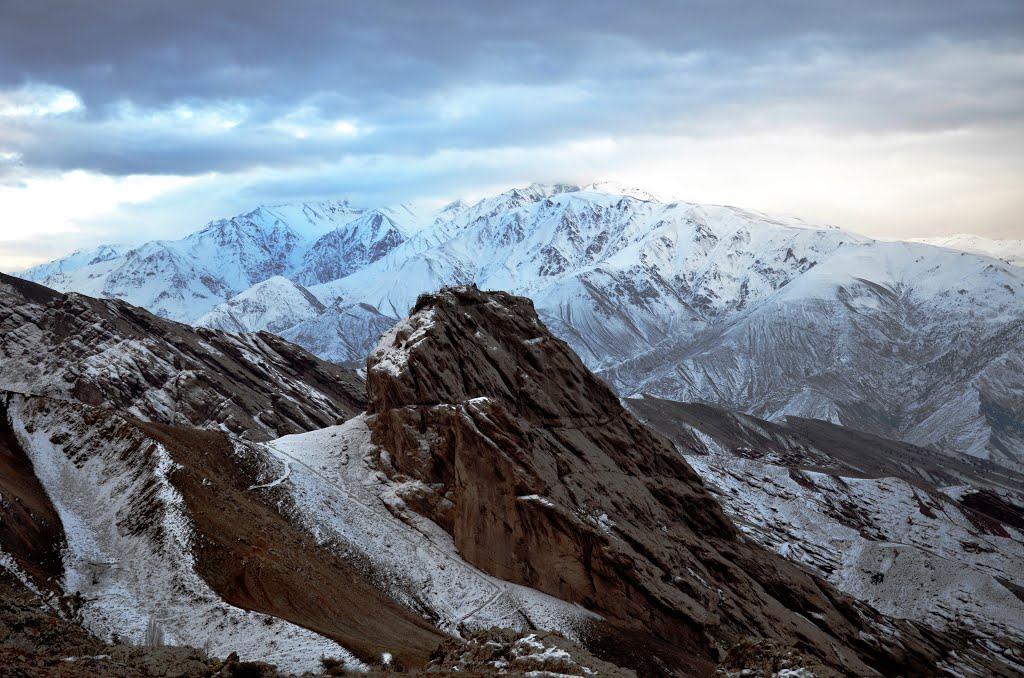
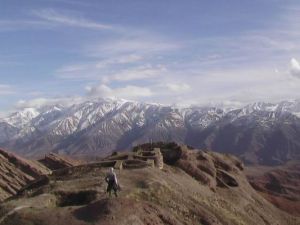 Into the gap stepped the “Old Man of the Mountain”, Hassan-i Sabbah, and his fanatically loyal, secret sect of “Nizari Ismaili” followers, the Assassins.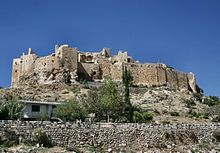



 Today the Exercise Tiger disaster is largely forgotten. Some have charged official cover-up, though information from SHAEF press releases appeared in the August edition of Stars & Stripes. At least three books contain the information. It seems more likely that the immediate need for secrecy and subsequent D-Day invasion swallowed the Tiger disaster, whole. History has a way of doing that.


 Carrying on with a known prostitute was one thing, but the Mrs. having an affair with a United States District Attorney, was quite another.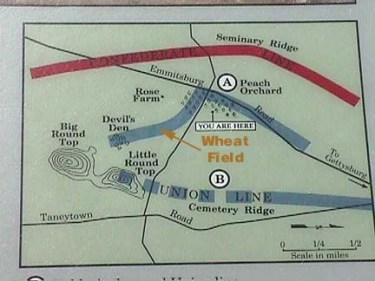
 Sickles donated his leg to the newly founded Army Medical Museum in Washington, DC, along with a visiting card marked, “With the compliments of Major General D.E.S.” He visited his leg for several years thereafter, on the anniversary of the amputation.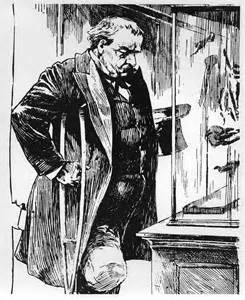

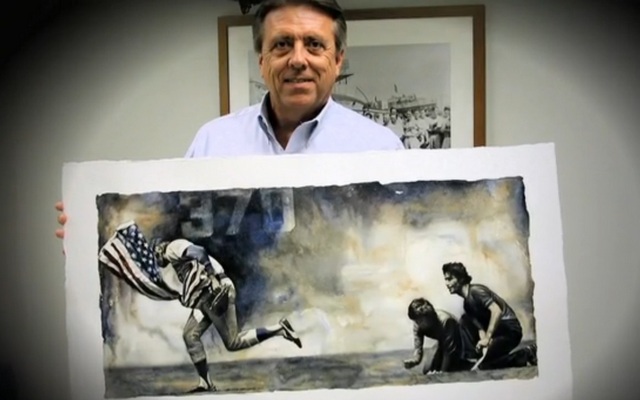

 Rick Monday had served a tour in the Marine Corp Reserve, in fulfillment of his ROTC obligation after leaving Arizona State. “If you’re going to burn the flag”, he said, “don’t do it around me. I’ve been to too many veterans’ hospitals and seen too many broken bodies of guys who tried to protect it.”


 On learning that Jennings wasn’t going to fly, Holly said “Well, I hope your old bus freezes up.” Jennings replied “Well, I hope your plane crashes.” It was just a good ribbing between friends, but the comment would haunt Jennings for the rest of his life.


You must be logged in to post a comment.