November 19, 1864 Lincoln’s Avenger

Women’s groups, tent meetings and Sunday schools clamored to hear from “Lincoln’s avenger”, but his speeches were wandering and incoherent.  Nobody ever clamored to hear the man speak, a second time.  

Thomas Corbett was born in London England in 1832, immigrating with his family to the United States at age 7, and settling in Troy, New York.  There he apprenticed to a hat maker, a profession he would hold off and on for the rest of his life.

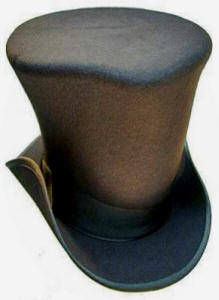
19th century hat makers used an orange colored mercury solution to treat fur, and to make felt in a process called “carroting”.  Mercury attacks the nervous system, causing drooling, hair loss, a lurching gait, difficulty in speaking, “brain fog” and a convulsive shaking called “hatter’s shakes”.

felt-hat
Felt hat

There were plenty of “Mad hatters,” in Lewis Carroll’s time, long before Alice’s Wonderland.  Danbury Connecticut was once the hat making capital of the world, with 56 factories producing five million hats a year.  By the time of the Civil War, mercury poisoning had reduced countless numbers of factory workers, to physical wrecks.  Everybody knew the “Danbury shakes”.

Erethism mercurialis or “Mad hatter’s Disease”, goes a long way to understanding Thomas Corbett.

As a young man, Corbett married.  It nearly broke him to lose his young wife in childbirth.  He moved to Boston and continued to work as a hatter, but heavy drinking left him unable to keep a job for long and eventually, homeless.  One night, Corbett was confronted by a street preacher, who changed his life.

He immediately quit drinking and became fanatically, religious.  He was “the Glory to God man,” growing his hair long to emulate Jesus.  The “local eccentric’ who took up his own street ministry and changed his name to “Boston” after the city of his re-birth.

“God has called on you to preach, my son, about four blocks, that way”.

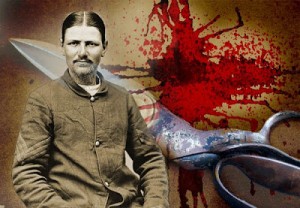
Corbett was propositioned by two prostitutes in 1858, while walking home from a church meeting. Deeply troubled by his own temptation, he returned to his boardinghouse room and took up the Gospel, according to Matthew: “And if thy right eye offend thee, pluck it out and cast it from thee….and there be eunuchs, which have made themselves eunuchs for the kingdom of heaven’s sake“.  He knew what he needed to do.  He castrated himself, with a pair of scissors.  Then he ate dinner and went to a prayer meeting before seeking medical attention.

boston-c-300x208In the first months of the Civil War, Boston Corbett enlisted as a private in the 12th Regiment of the New York state militia. Eccentric behavior quickly got him into trouble. He would carry a bible with him at all times, reading passages aloud and holding unauthorized prayer meetings.  He would argue with superior officers, once reprimanding Colonel Daniel Butterfield for using profane language and using the Lord’s name, in vain. That got him a stay in the guardhouse, where he continued to argue.

Corbett decided an arbitrary date, on which his enlistment would end.  When that day arrived, he laid down his gun at midnight, and walked away.  That got him court-martialled and sentenced to be shot, but the sentence was reduced. He was discharged in August, 1863, and re-enlisted the same month.

Harper’s Weekly of May 13, 1865 described the annoying habit of adding “er” to his words, as in “O Lord-er, hear-er our prayerer.” His shrill, sharp voice would shout out “Amen,” and “Glory to God,” whenever anything pleased him. He was often thrown in the guard-house, with a knapsack full of bricks as punishment. There he would be, Testament in hand, “preaching temperance, and calling upon his wild companions to “seek the Lord.””

Boston CorbettOn June 24, 1864, fifteen members of Corbett’s company were hemmed in and captured, by Confederate Colonel John Singleton Mosby’s men in Culpeper Virginia.

They were sent to the notorious prison camp in Andersonville Georgia, where he escaped once, but the bloodhounds put an end to that.  Only two, ever returned.  Starved and skeletal, his body wracked with scurvy, Boston Corbett was paroled on November 19, 1864.

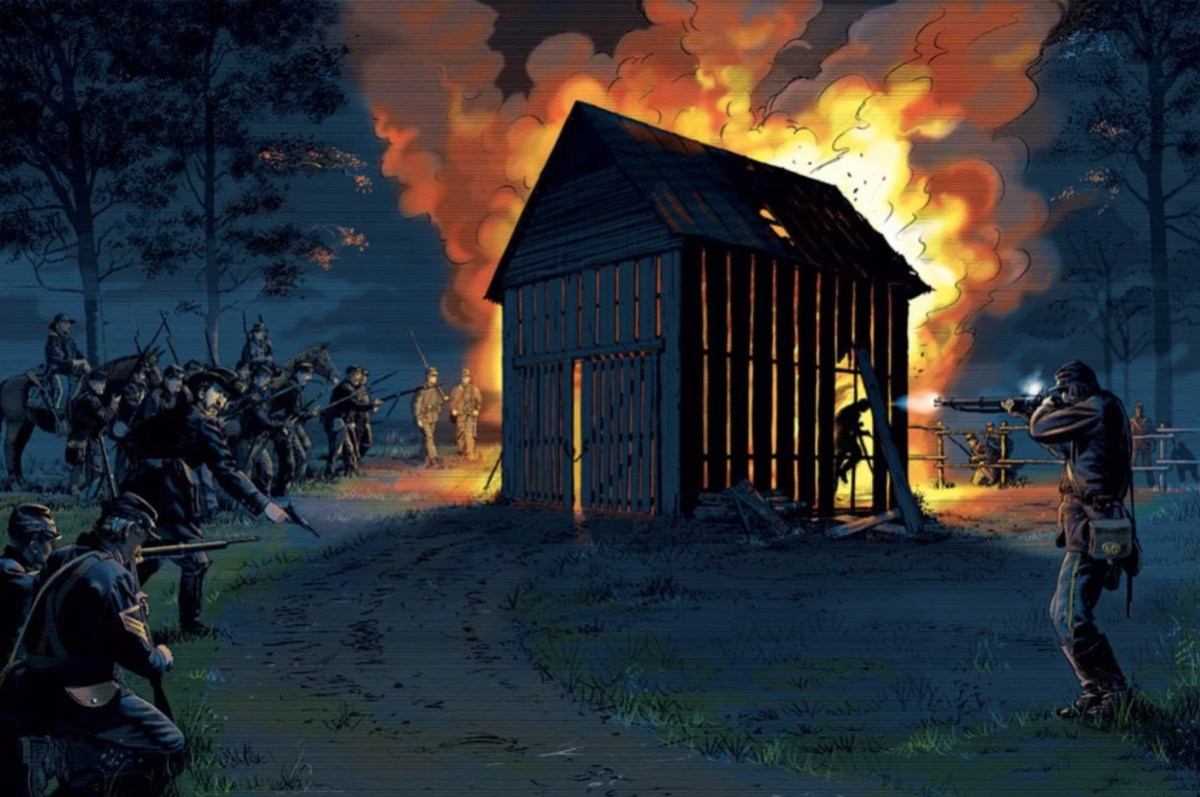
Following the Lincoln assassination, a twelve-day manhunt led to the farm of Richard Henry Garrett near Port Royal, Virginia. The life of John Wilkes Booth came to an end in a burning tobacco barn in the pre-dawn hours of April 26, the bullet fired through a crack in the boards and entering his spine, just below the point where his own bullet had entered the President’s head.

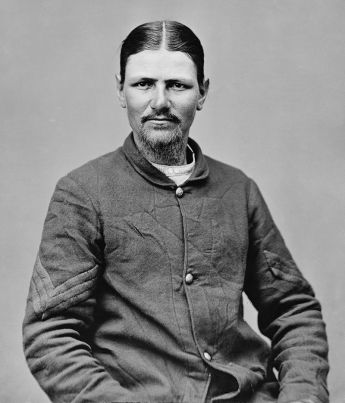
800px-Boston_Corbett_-_Brady-Handy
Thomas “Boston” Corbett

The paralyzed, dying man was dragged from the barn, and onto the porch of the Garrett farmhouse. In his dying moments he asked that his hands be lifted where he could see them.  John Wilkes Booth uttered his last words. “Useless. Useless”.

In his report to Secretary of War Edwin Stanton, Lieutenant Colonel Everton Conger recommended that Sergeant Boston Corbett be punished for disobeying orders that Booth be taken alive, stating that Corbett had fired “without order, pretext or excuse.”

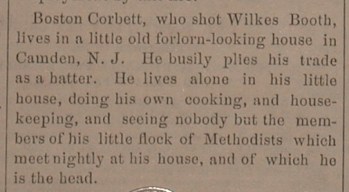
Corbett was treated like a conquering hero, despite Conger’s recommendation.  He returned to making hats after the war, returning first to Boston and then to Danbury and finally, Camden New Jersey.  He could never hold a job for long.  Frequent pauses to pray for co-workers, did little to endear him to supervisors.

Women’s groups, tent meetings and Sunday schools clamored to hear from “Lincoln’s avenger”, but his speeches were wandering and incoherent.  Nobody ever clamored to hear the man speak, a second time.

Corbett became increasingly paranoid over time, convinced that important men in Washington, were out to “get him”.  Hate mail directed to Wilkes Booth’s killer, didn’t help.  At a Blue & Gray reunion in 1878, Corbett pulled a gun on several former soldiers, during an argument over whether Booth still lived.  He was hustled off before he could fire, but this was only one of several such episodes.

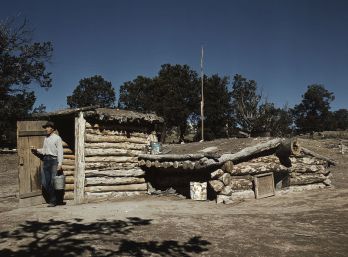
800px-Dugout_home2
Example of a dugout house, this one in New Mexico

He moved to Kansas in 1878 and built a dugout home, and tried his hand at homesteading.  That didn’t work out, either.

Corbett received an invalid’s pension in 1880 and the Grand Army of the Republic made him a doorman to the Kansas state legislature, seven years later.  The man’s mental status was questionable before the war and put beyond dispute in 1887, when he entered the legislative chamber, with two loaded revolvers.  Lawmakers dove for the exits and hid behind garbage cans and doors, as Corbett shot up the Kansas House of Representatives.  Two guns, twelve bullets.  It was a miracle that no one was hit.

The following day, a judge declared Corbett to be out of his mind, and remanded him to the Topeka Asylum for the Insane.  On May 26, 1888, Corbett was marching along a road with other inmates, when he spotted a horse, tied to a post.  Corbett dashed from the line and jumped into the saddle, and rode off into history.

Boston Corbett is believed to have died in the Great Hinckley Fire on September 1, 1894, a conflagration which killed more than 400 and destroyed over 200,000 acres of Minnesota pine forest, but there is no proof.  The fate of the man who shot the man who shot Abraham Lincoln, remains unknown.

If you enjoyed this “Today in History”, please feel free to re-blog, “like” & share on social media, so that others may find and enjoy it as well. Please click the “follow” button on the right, to receive email updates on new articles.  Thank you for your interest, in the history we all share.

November 18, 1944 The Cages of Münster

The European Reformation exploded with startling intensity, spawning a “peasant rebellion” in 1524 in which about a third of 300,000 poorly armed farmers, were slaughtered.  There were any number of reformers, few more radical than the baker turned Anabaptist prophet, Jan Matthias.

A popular legend depicts the Augustinian monk Martin Luther nailing a parchment to the door of the Wittenberg Palace Church in 1517, his “ninety five theses” a direct challenge to the authority of the pope, and the Catholic church. It likely never happened that way. Luther had no intention of confronting the Church. This was a list of topics, an academic work.  Ninety-five propositions framed and submitted for scholarly debate.

Luther enclosed his “ninety five theses” in a letter to the Archbishop of Mainz on October 31, the date now considered to be the beginning of the Protestant Reformation.

Major Christian Denominations

H/T Wikipedia

To the modern reader, theological issues such as the “moral bank account” of saints or the transubstantiation of the body and blood of Christ, may seem mere doctrinal interpretations. In the late middle and early modern ages, such theological issues were matters of life and death.  The Czech theologian Jan Hus was burned at the stake for such heresy, in 1415. The English philosopher John Wycliffe, dead some forty-four years by this time, was dug up and burned, his ashes cast on the waters of the River Swift.

The European Reformation exploded with startling intensity, spawning a “peasant rebellion” in 1524 in which about a third of 300,000 poorly armed farmers, were slaughtered.  There were any number of reformers, few more radical than the baker turned Anabaptist prophet, Jan Matthias.

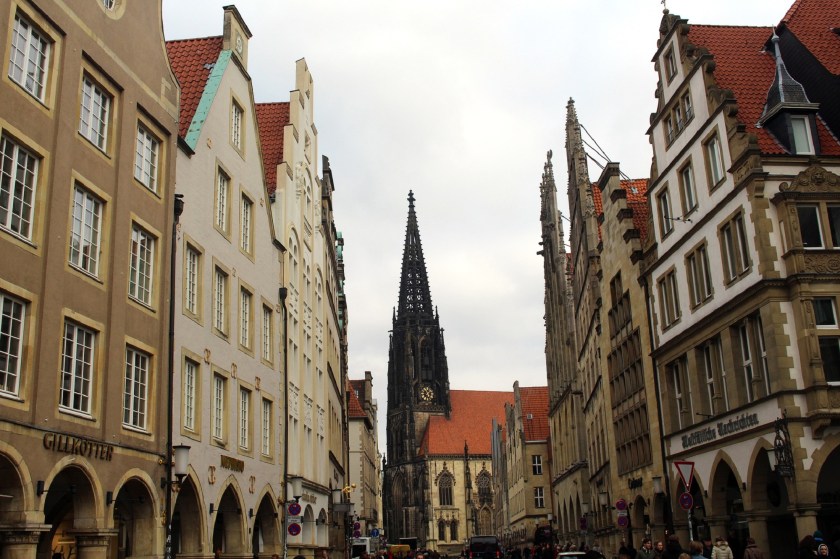
Münster was a divided city in 1530, made even more so when the evangelical Lutheran minister Bernard Rothmann, began preaching against Catholic doctrine.  Rothmann was tireless, vitriolic, a relentless stream of anti-Catholic invective both from the pulpit, and a series of pamphlets financed and printed by his ally, the wealthy wool merchant Bernard Knipperdolling.

muensterjohannvanleydentaufe

Alarmed at Rothmann’s growing influence, church authorities banned him from the pulpit.  A mob of supporters stormed St. Lambert’s church in February of 1532, and installed Rothmann as its preacher. Conflict escalated and took the form of armed rebellion that December, between nine-hundred armed townspeople and the highest ranking Church official in town, prince-bishop Franz von Waldeck. This time, the conflict was settled peaceably. Von Waldeck signed a treaty of religious toleration on February 14, 1533, allowing Protestant pastors to preach from the parish churches of Münster.

The next time, would be different.

Word got back to Matthias and his followers, who came to see Münster as the “New Jerusalem”.  Jan Matthias and his Anabaptist followers were radicals even among their fellow “protestants”, and Rothmann was happy to come along.  Theirs was an extreme, radical egalitarian ideology with no use for childhood baptism.  They believed that Jesus Christ would descend to earth that Easter and bring about the End of Time.  The Apocalypse was nigh. All good Christians needed to prepare, and only adult baptism held the key to salvation.

Four years earlier, Holy Roman Emperor Charles V ordered that every Anabaptist he could get hold of “shall be brought from natural life to death with fire, sword, or the like.”  Now Anabaptists poured into Münster, baptizing some 1,400 adults in the first week after their arrival, about 20% of the adult population.

Equal numbers fled the city, and the “share-the-wealth” economic policies that would make the most fervent communist, blush.  Armed city employees warning those who refused adult baptism to flee:  “Get out of here, you godless. God will punish you!

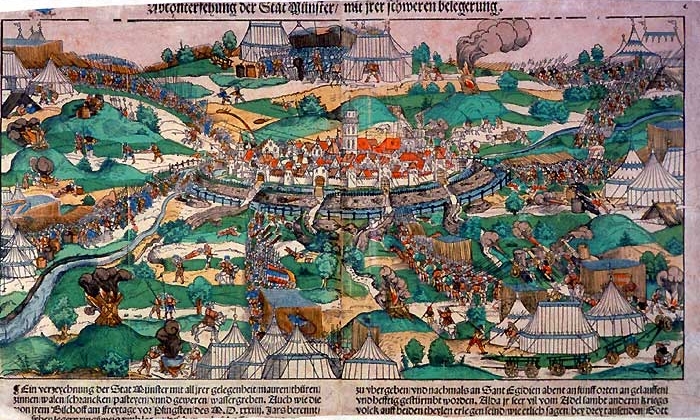
muensterundersiege1534

Matthias demanded the execution of all Catholics and Lutherans, warning that “Everywhere we are surrounded by dogs and sorcerers and whores and killers and the godless and all who love lies and commit them!”  That was a bit too much even for the crazies, so Catholics and moderate Protestants were expelled from the city.  About 2,000 of them, as equal numbers of Anabaptist radicals, poured in from the countryside.

Matthias ordered every contract, account and ledger in town destroyed, in an attempt to abolish all debt.  Rothmann preached from the pulpit of St. Lambert’s “Everything that Christian brothers and sisters have belongs to the one as well as to the other.”

Waldeck looked on with increasing alarm and before long, a mercenary army was assembled outside the city walls of Münster.  The place was now under siege.

Easter Sunday arrived, April 5, 1534, but Jesus, did not. With his apocalyptic prophesy shattered, Matthias claimed to have a new, divine vision. He would ride forth from the city walls, and personally break von Waldeck’s siege of the city. So it was that the Anabaptist prophet saddled up and rode forth with an entourage of twelve, only to be run through with a spear, his head mounted on a spike, for all the town to see.

lambarti

Up stepped the dead prophet’s right-hand man, the charismatic twenty-five year old tailor Jan van Leiden, who delivered a speech reinterpreting the day’s events, and postponing doomsday.

Münster became heavily militarized as Waldeck’s besieging force cut off all access to the city.  Jan van Leiden ruled over the city as the new King David, according to his own prophesy.  He seemed to think he had a direct line “upstairs” and could conjure up fresh prophesy at a moment’s notice.  The seventy-five hundred inhabitants of Münster, believed so as well.

The siege dragged on through 1534 and into the following year.  In May 1535, the Anabaptist carpenter Heinrich Gresbeck attempted to escape, only to be caught.  In exchange for his life, Gresbeck agreed to show Waldeck a lightly defended gate.

200px-MuensterHinrichtungTaeuferThe prince-bishop’s forces fought their way through the streets of Münster for hours, killing some 600 Anabaptists before the city surrendered.

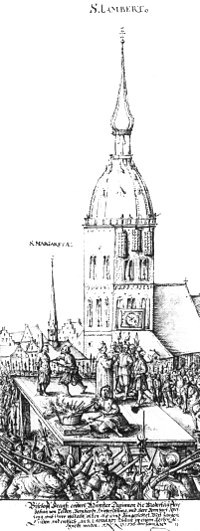
Jan van Leiden, his “viceroy” Bernhard Knipperdolling and Anabaptist leader Bernhard Krechting were taken to the public square and physically torn to pieces, with white-hot pliers. Their corpses were placed in cages and hanged from the steeple of St. Lambert’s Church, as a warning to others.

The bones were removed some fifty years later, but not those cages.  The old steeple was torn down and a new one built around 1880, and those three cages, reinstalled.

British bombs hit St. Lambert’s church on November 18, 1944, knocking the highest, van Leiden’s, to the ground. Another fell into the organ loft, leaving the third, hanging only by a thread. The church rebuilt the tower, four years later.  Workers repaired and replaced the cages, commenting favorably on their sturdy construction.

Thirty years ago, St. Lambert’s church installed a small yellow bulb in each of those cages, a small concession “in memory of their departed souls.”  The cages of Münster remain there, to this day.


November 17, 1968 The Heidi Bowl

“Short of pre-empting Heidi for a skin flick, NBC could not have managed to alienate more viewers that evening.”

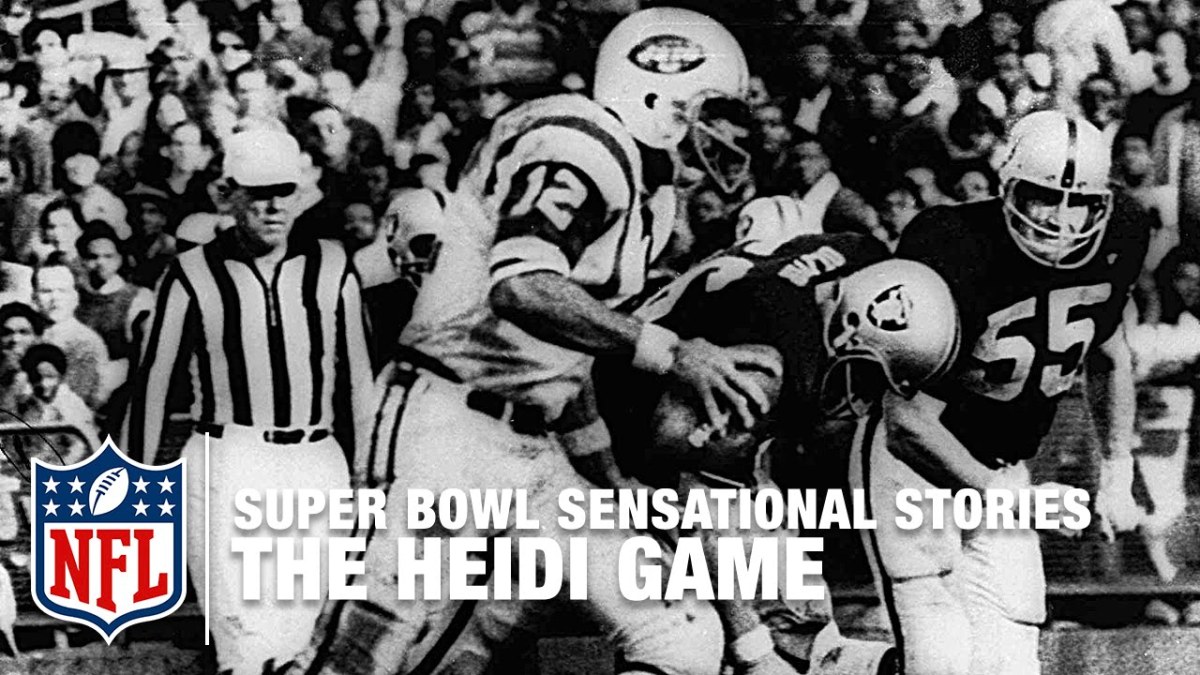
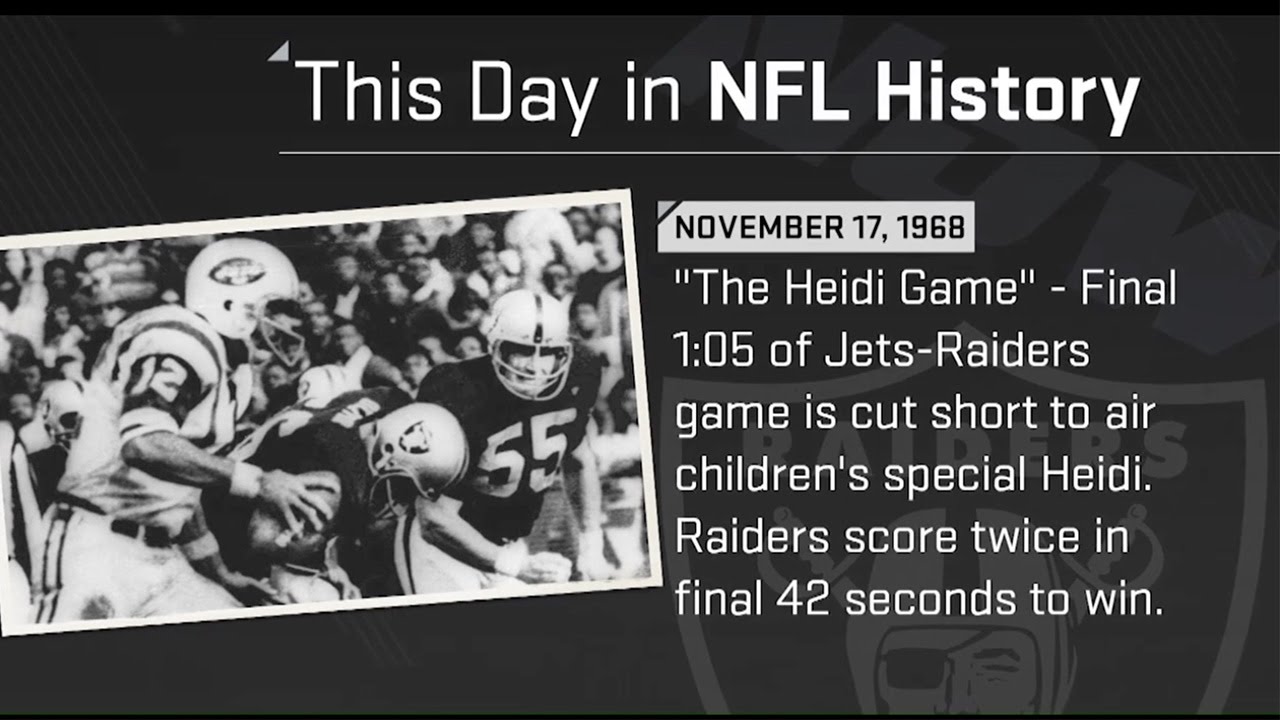
For a football fan, November 17, 1968 was shaping up to be one hell of a game.  The second-best team in the world Oakland Raiders if the results of Super Bowl II were any indication, against the future American Football League champion and Super Bowl III winner, New York Jets.

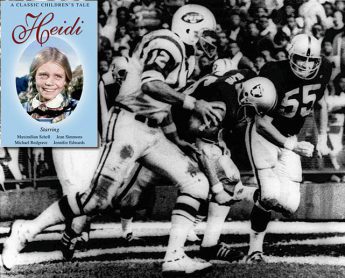
raiders-jets-heidi-bowlNBC executives, were thrilled.  The AFL was only eight years old in 1968 and as yet unproven compared with the older league, the NFL/AFL merger still two years in the future. 

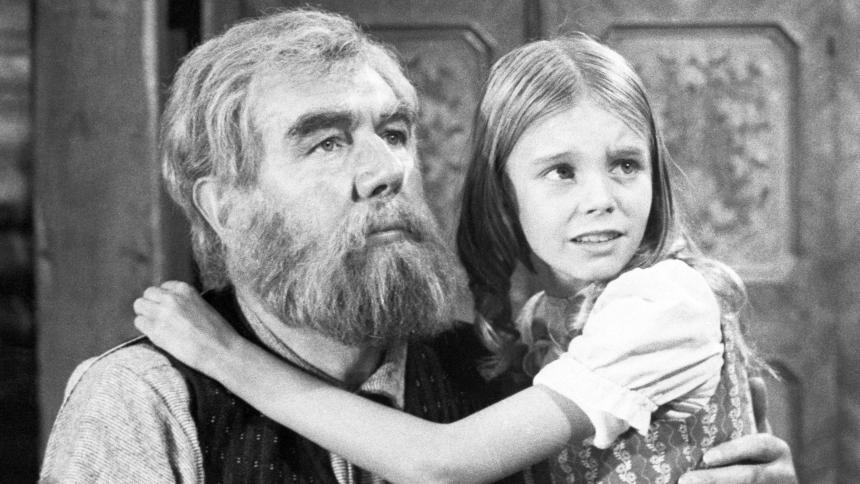
This game was expected to keep viewers in their seats, adding to the already large audience expected for the 7:00pm presentation of Heidi, a modern remake of the children’s classic story from 1880.

Most pro football games were played in 2½ hours in those days, and league executives scheduled this one, for three.  The contract with Heidi prime sponsor Timex specified a 7:00 start and so the order went down.  There would be no delays.

The game did not disappoint, voted among the ten most memorable games in professional football history in 1997, and the most memorable regular season contest, ever.  The rivalry between the two clubs was intense, a high-scoring game where the lead changed, no fewer than eight times.  

image-952333-860_poster_16x9-yegb-952333

Network brass began to worry as early as 6:20 E.T., that the game wouldn’t end on time.  7:00 arrived with a minute & five seconds left to play and the Jets ahead, 32-29. 

Network and affiliate switchboards began to light up, fans demanding the game be broadcast in its entirety, while others asked if Heidi would begin, on time.  

6a00d8341c630a53ef0105360145c0970c-800wi

NBC Sports executive producer Don “Scotty” Connal and network president Julian Goodman had by this time agreed to “slide the network”, to begin Heidi as soon as Curt Gowdy signed off from the game.

By this time phone switchboards were jammed, solid.  NBC’s CIrcle-7 phone exchange blew twenty-six fuses, in an hour.  Broadcast Operations Control (BOC) supervisor Dick Cline nervously watched the clock as Connal frantically tried to call, but couldn’t get through.

The television audience watched Oakland running back Charlie Smith return the kickoff from the end zone to the Oakland 22-yard line with 1:01 remaining on the clock, when the feed was broken.

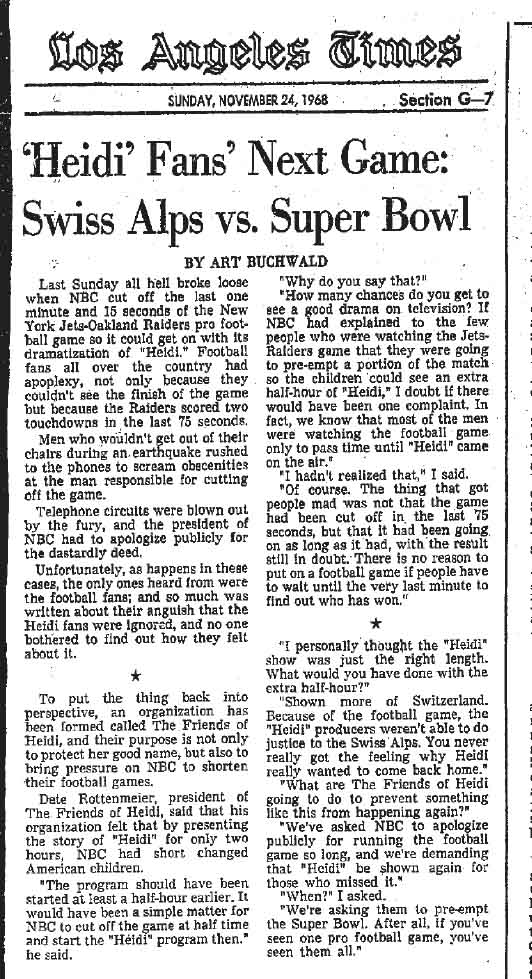
Heads exploded across the nation as callers reached out to newspapers and television stations, even local police departments, to demand the score.  And to bitch.   Humorist Art Buchwald wrote “Men who wouldn’t get out of their chairs in an earthquake rushed to the phone to scream obscenities [at the network].”

Meanwhile, the Oakland Raiders staged the most amazing come-from-behind rally in the history of sport, scoring two touchdowns in nine seconds.  Gamblers were apoplectic on learning the news, that the Raiders had beat the 7½ point spread. 

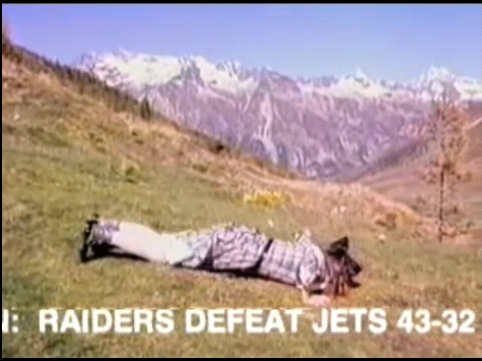
The film was just reaching a most tear-jerking moment as Heidi’s paralyzed cousin Clara was taking her first halting steps, as NBC broke in: “SPORTS BULLETIN: RAIDERS DEFEAT JETS 43-32”.

If half the nation hated NBC at that moment, now the other half did, as well. Sportswriter Jack Clary quipped, “The football fans were indignant when they saw what they had missed. The Heidi audience was peeved at having an ambulatory football score intrude on one of the story’s more touching moments. Short of pre-empting Heidi for a skin flick, NBC could not have managed to alienate more viewers that evening.”

heidi-game-news-bulletin-4-e1348762143862The “Heidi Bowl” was prime time news the following night, on all three networks. NBC’s Huntley-Brinkley Report aired the last sixty seconds while ABC Evening News anchor Frank Reynolds read excerpts from the movie, with clips of the Raiders’ two touchdowns cut in. CBS Evening News’ Harry Reasoner announced the “result” of the game: “Heidi married the goat-herder“.

NBC had no option but self-mockery, to redeem itself from the fiasco. One testimonial read “I didn’t get a chance to see it, but I hear it was great”. It was signed by Joe Namath.

A special “Heidi phone” was installed in the BOC, to prevent future such disasters. In 2005, TV Guide listed the Heidi Bowl at #6 of the “100 Most Unexpected TV Moments” in television history.

Actress Jennifer Edwards in the title role of the film, may have had the final word: “My gravestone is gonna say, ‘She was a great moment in sports'”.

maxresdefault (18)

If you enjoyed this “Today in History”, please feel free to re-blog, “like” & share on social media, so that others may find and enjoy it as well. Please click the “follow” button on the right, to receive email updates on new articles.  Thank you for your interest, in the history we all share.



November 16, 1776 The First Salute

242 years ago today, three thousand American Patriots fought a desperate and losing battle against 8,000 British forces and their Hessian allies for Washington Heights, in New York.  1776 miles away at that very moment, little Sint Eustatius had just become the first nation in history, to recognize American independence.

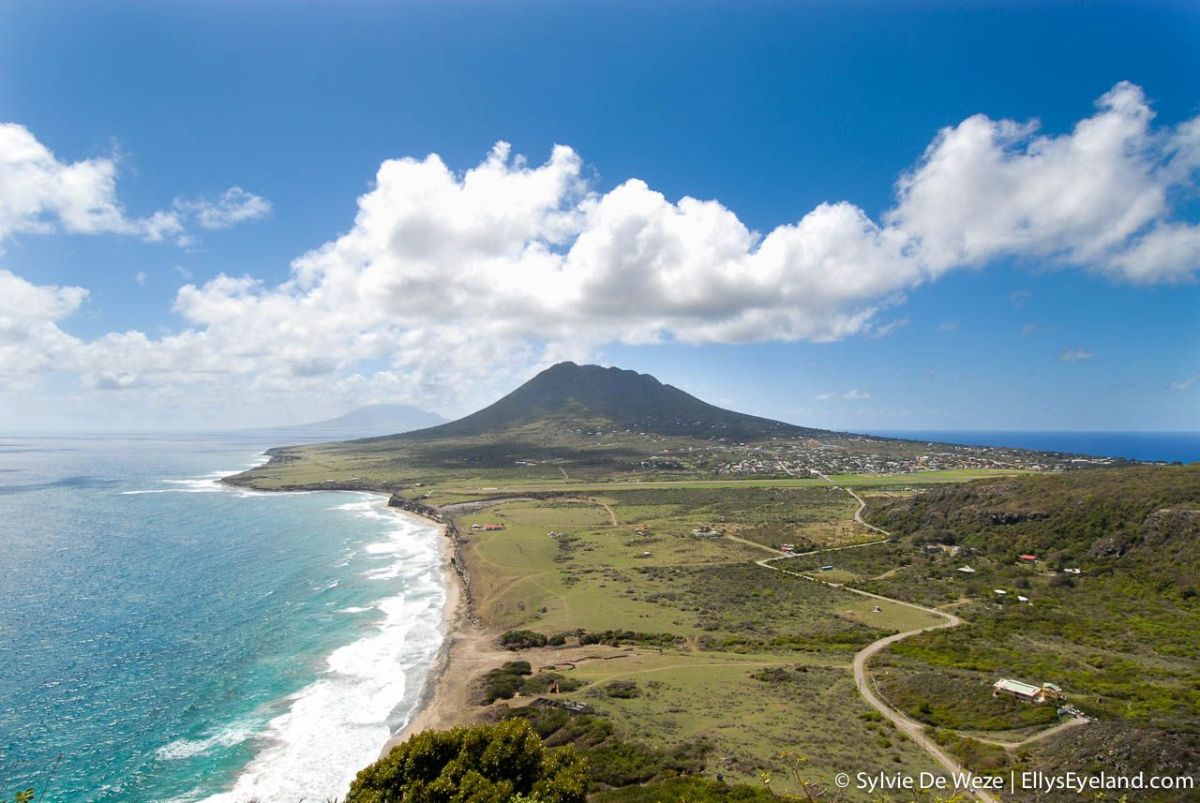
Sint Eustatius, known to locals as “Statia”, is a Caribbean island of 8.1 sq. miles in the northeastern Caribbean, located between St. Kitts and Puerto Rico.

Throughout the 18th century, Sint Eustatius had close ties with North America, and became wealthy from the trade in a variety of goods.  Sugar, molasses, gin, rum and cotton were only a few of the goods shipped from, or through, Sint Eustatius. Colonial ports from Maine to Virginia shipped products to the island in return, including barrel staves, beans, flour, cod, horses, lumber and tobacco.

At its height, the island was handling over 3,000 vessels per year, making St. Eustatius the “Golden Rock” of the Caribbean.

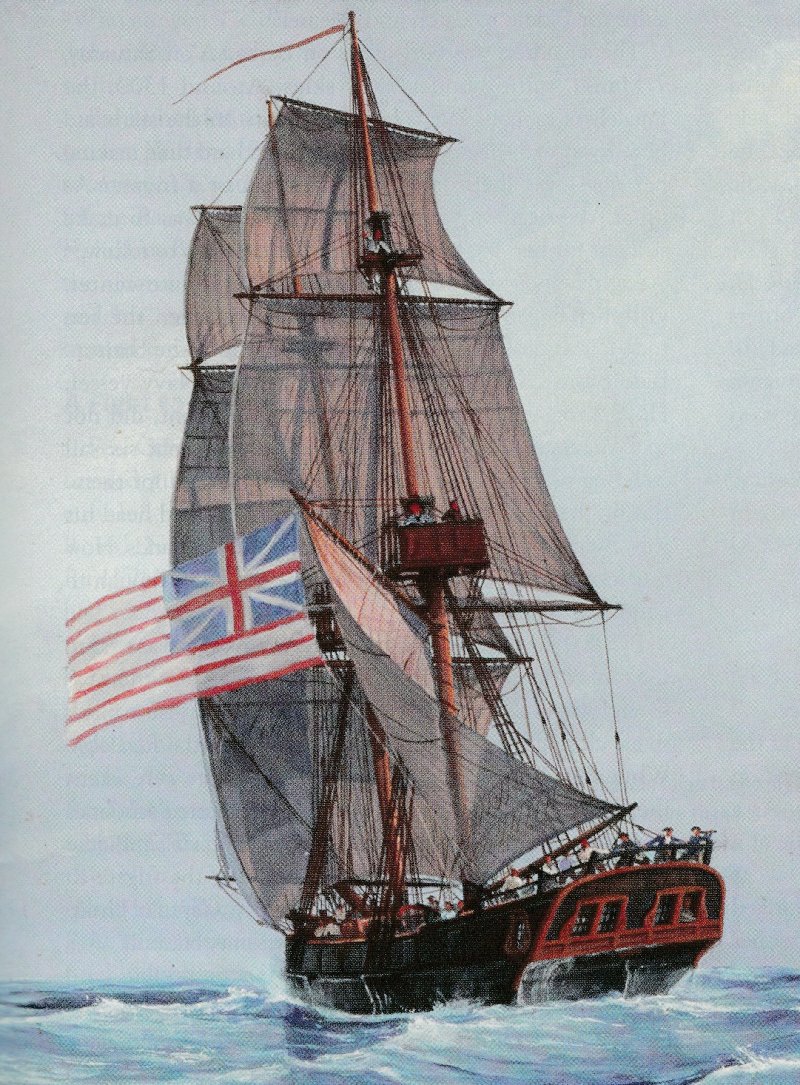
Andrew Doria
Andrew Doria

As a Dutch Colony, Sint Eustatius was required to remain neutral during the American Revolution. The government in Holland warned Governor Johannes de Graaff to stay away from the American “rebels” fighting for independence, but de Graaff didn’t see it that way.  The trade in powder, ammunition and arms continued throughout the Revolutionary period, with covert support smuggled in from Spain, France and dissident interests in Holland.

For a time, little Sint Eustatius was the only link between Europe, and the American colonies.

On November 16, 1776, the Brig Andrew Doria sailed into Sint Eustatius’ principle anchorage in Oranje Bay, flying the Continental Colors, the first national flag of the fledgling United States.  The brig, under command of Captain Isaiah Robinson, was there to obtain munitions and military supplies. Andrew Doria also carried a precious cargo, a copy of the Declaration of Independence.

This was the Americans’ second attempt to send the Declaration to their Dutch associates, the first having been captured on the way to Holland.  Wrapped in papers containing some obscure espionage code, British investigators labored in vain to unlock this strange new cipher. They could have spared themselves the effort.  That first copy of the declaration was sheathed in notes written in Yiddish, personal greetings to some of the Jewish merchants of Holland.

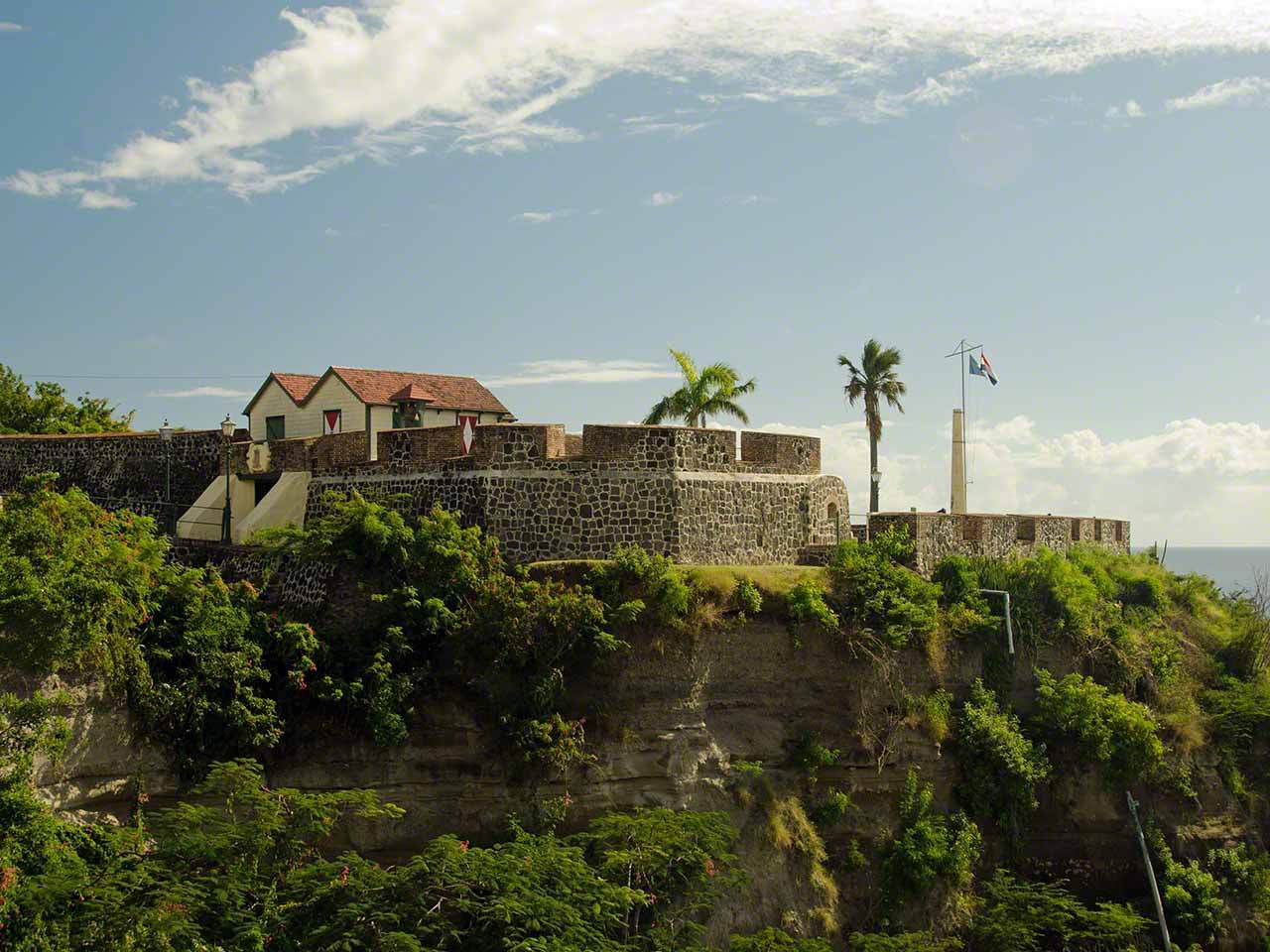
Fort Oranje on Statia
Fort Oranje, Sint Eustatius

It was traditional in those days, that vessels approaching a foreign harbor fire a gun salute upon entering. Captain Robinson fired a 13-gun volley on entering the bay, one for each of the thirteen American colonies.

Tradition dictated that a salute be fired in return, typically two guns fewer than that discharged by the incoming vessel, but such an act carried meaning.  Such a return salute was an act of overt recognition, that a sovereign state had entered the harbor. Such a salute would amount to formal recognition of the thirteen American colonies, as free and independent states.

St Eustatius 1st Salute
First Salute

The commander at Fort Oranje, overlooking the anchorage, didn’t know how to respond. Governor de Graaff ordered an 11-gun return salute fired from the guns of Fort Oranje.

At the time, none could have known:  242 years ago today, three thousand American Patriots fought a desperate and losing battle against 8,000 British forces and their Hessian allies for Washington Heights, in New York.  1776 miles away at that very moment, little Sint Eustatius had just become the first nation in history, to recognize American independence.

Playing the role of the young tattle-tale to an older sibling, nearby Saint Kitts immediately dispatched a vessel to England, to inform the British government of the event. The British were furious, of course. The trade between St. Eustatius and the American Colonies became the principal cause of the fourth Anglo-Dutch war, begun on December 12, 1780.

Admiral George Bridges Rodney forced the surrender of Sint Eustatius the following February, complaining that “This rock, of only six miles in length and three in breadth, has done England more harm than all the arms of her most potent enemies, and alone supported the infamous rebellion. When I leave the island of St. Eustatius, it will be as barren a rock as the day it erupted from the sea. Instead of one of the greatest emporiums on earth, it will be a mere desert and known only by report.”

Sint_Eustatius_wapenAdmiral Rodney pretty much had his way. The census of 1790 shows 8,124 on the Dutch island nation. In 1950, the population stood at only 790. It would take 150 years from Rodney’s departure, before tourism even began to restore the economic well-being of the tiny island.

Today, Sint Eustatius celebrates the 16th of November as “Statia America Day”, in recognition of that first salute.

An official coat of arms was designed by Sint Eustatius’ Director of Monuments Walter Hellebrand, and adopted on this day in 2004. On the left is a Golden Rock, in memory of the trade that made the island rich. On the right is Fort Oranje, Sint Eustatius’ most important landmark. The angel fish of this pristine diving destination is at the bottom, symbolizing the island’s future. Below is the Latin motto, “SUPERBA ET CONFIDENS”.  Proud and Confident.

Happy Statia America Day!

Feature image, top of page: The silky mosses, orchids and sweet smelling bromeliads of a pocket-sized tropical rain forest occupies the crater of Sint Eustatius’ dormant volcano, known as “The Quill”.

If you enjoyed this “Today in History”, please feel free to re-blog, “like” & share on social media, so that others may find and enjoy it as well. Please click the “follow” button on the right, to receive email updates on new articles.  Thank you for your interest, in the history we all share.
November 15, 1873 The Heart of a Dog

When it comes to loyalty, there is nothing to beat the heart of a dog.

The first dog may have approached some campfire, looking for a morsel.  Maybe someone took in a sick or injured pup. A wolf pack could have learned to shadow human hunting parties, and the two groups learned to work together for their mutual benefit. The facts surrounding the domestication of that first dog some fifteen thousand years ago, are lost to history.  But one thing is certain. When it comes to loyalty, there is nothing to beat the heart of a dog.

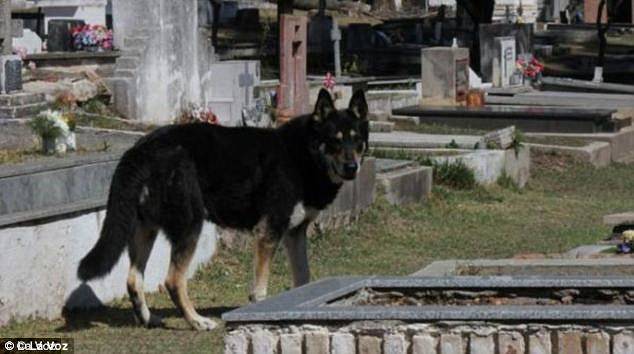
Miguel Guzmán of Cordoba Argentina, died in 2006. The following day Capitán, the family’s German Shepherd, disappeared. Mrs. Guzmán and the couple’s son launched a day-long search, until the dog arrived at the cemetery, some forty-five minutes, away. No one knows how he got there. The family claims they never brought him. Cemetery director Hector Baccega remembers when he first saw the dog: ‘He turned up here one day, all on his own, and started wandering all around the cemetery until he eventually found the tomb of his master”.

Capitán was taken home but he was back, the following day. Baccega describes what has since become, routine: “During the day he sometimes has a walk around the cemetery, but always rushes back to the grave. And every day, at six o’clock sharp, he lies down on top of the grave stays there all night”.

434B6A2000000578-0-image-a-116_1502877093313
Capitan. H/T Guardian, for this image

Capitán lived to fifteen or sixteen, old for a large breed, and died this February, in the cemetery in which he had lived. In the end he was crippled and blind, when he went to join his “Dad”.  Who knows, I certainly don’t:  maybe they are together again.

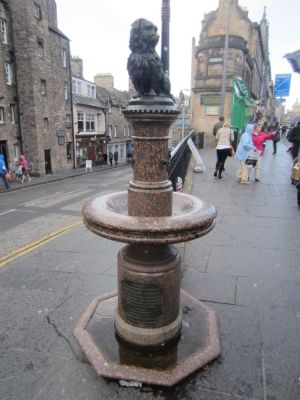
200365253-114256-400“Greyfriar’s Bobby” was a Skye Terrier in 19th-century Edinburgh, who waited 14 years by the grave of his owner, Police nightwatchman, John Gray.  There he died in 1872 and was buried in the Greyfriars Kirkyard, not far from where his master lay.

Artist William Brodie created a life-sized likeness atop the Greyfriars Bobby Fountain in Edinburgh,  paid for by a local aristocrat, Baroness Burdett-Coutts and dedicated on this day, in 1873

Hachikō, an Akita known to Japanese children as chūken Hachikō (“faithful dog Hachikō”), used to tag along with his owner Hidesaburō Ueno, a professor of agriculture at Tokyo University. Ueno would commute to work and every evening, Hachikō would wait at the Shibuya Station, for the professor’s return. Hidesaburō stopped coming home in May 1925, when a cerebral hemorrhage took him away, while delivering a lecture. Every day for nine years, nine months and fifteen days, the golden colored Akita appeared at Shibuya Station, precisely in time for that evening train.

Feeling Ruswarp StatueRuswarp was a fourteen-year old Border Collie who went hiking with Graham Nuttall on January 20, 1990 in the Welsh Mountains, near Llandrindod. On April 7, a hiker discovered Nuttall’s body near a mountain stream, where the dog had been standing guard for eleven weeks.  Ruswarp was so weak he had to be carried off the mountain, and died shortly after.  Today, there is a statue in his memory, on a platform near the Garsdale railway station.

In the early morning hours of August 6, 2011, Thirty American military service personnel including 22 US Navy SEALs were killed along with eight Afghans, SEAL Team 6 handler John “Jet Li” Douangdara and his Military Working Dog (MWD) “Bart”, when their Chinook helicopter was shot down by a rocket-propelled grenade in the Kunar Province, of Afghanistan.

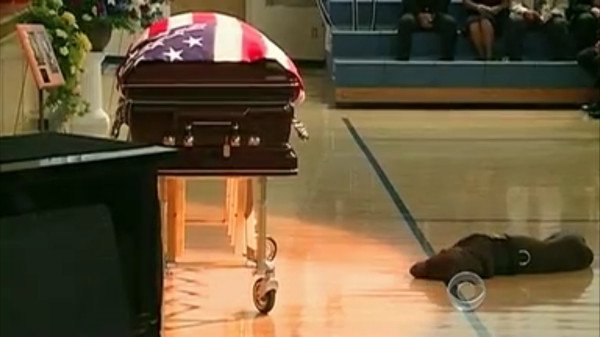
To anyone around at that time, those images of “Hawkeye”, together for the last time with slain Navy SEAL Jon Tumilson,  are hard to forget.

Hawkeye-and-Tumilson

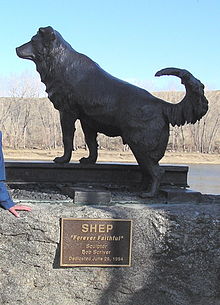
“Shep” belonged to an unknown sheep herder near Fort Benton, in Montana. In 1936, the man fell ill, and was taken to a local hospital.

For over a week, Shep waited at the hospital, for his master to return. On the 11th day the man died, his casket taken to the local train station and placed in the cargo hold, to be returned home for burial.

220px-ShepDogFortBenton
Shep

Shep was there throughout and watched the train chug away with the body of his “Dad”. He’d return to that hospital door where a kindly nun would feed him a scrap, but every time he heard that train whistle, there was a sheepdog waiting at the station.

In those days, there were four trains a day. For nearly six years, Shep returned to the station, every time he heard that whistle. He even dug a den for himself, near the track.

Passengers took the Havre to Great Falls rail line just to see the dog. Shep received so much fan mail, the Great Northern Railroad assigned a secretary to help pen responses.

In time, the dog wasn’t quite so fast as he used to be, his hearing not so good.  On January 12, 1942, “Forever Faithful” Shep was struck and killed on the tracks, waiting for a man who could never return.

Stories such as these are enough to fill a book, if not  library.  I see a bumper sticker sometimes, in traffic.  I’m not a big one for those things but, if I were.  This would be my first:  “Lord, make me half the man my dog thinks I am“.

If you enjoyed this “Today in History”, please feel free to re-blog, “like” & share on social media, so that others may find and enjoy it as well. Please click the “follow” button on the right, to receive email updates on new articles.  Thank you for your interest, in the history we all share.

November 14, 1851 The Real Moby Dick

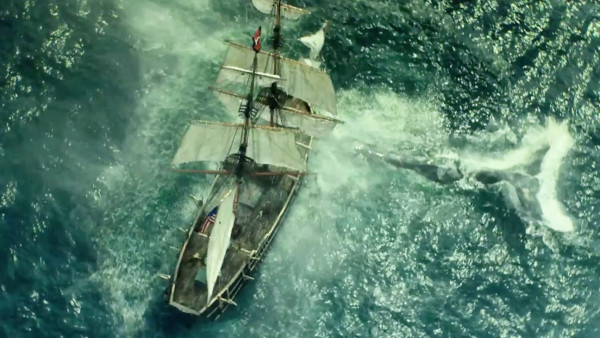
The eighty-foot bull sperm whale charged in at the great speed of 24 knots according to First Mate Owen Chase, ramming the port bow and driving the stern into the water. Oak planking cracked and splintered as the whale worked his tail up and down, driving the 238-ton vessel backward. Essex had already started to go down when the whale broke off his attack, diving below the surface, never to return.

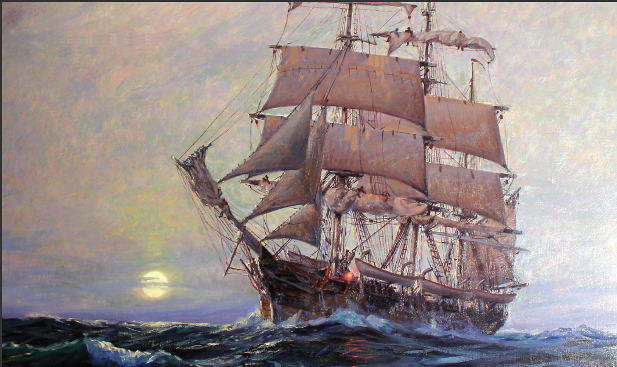
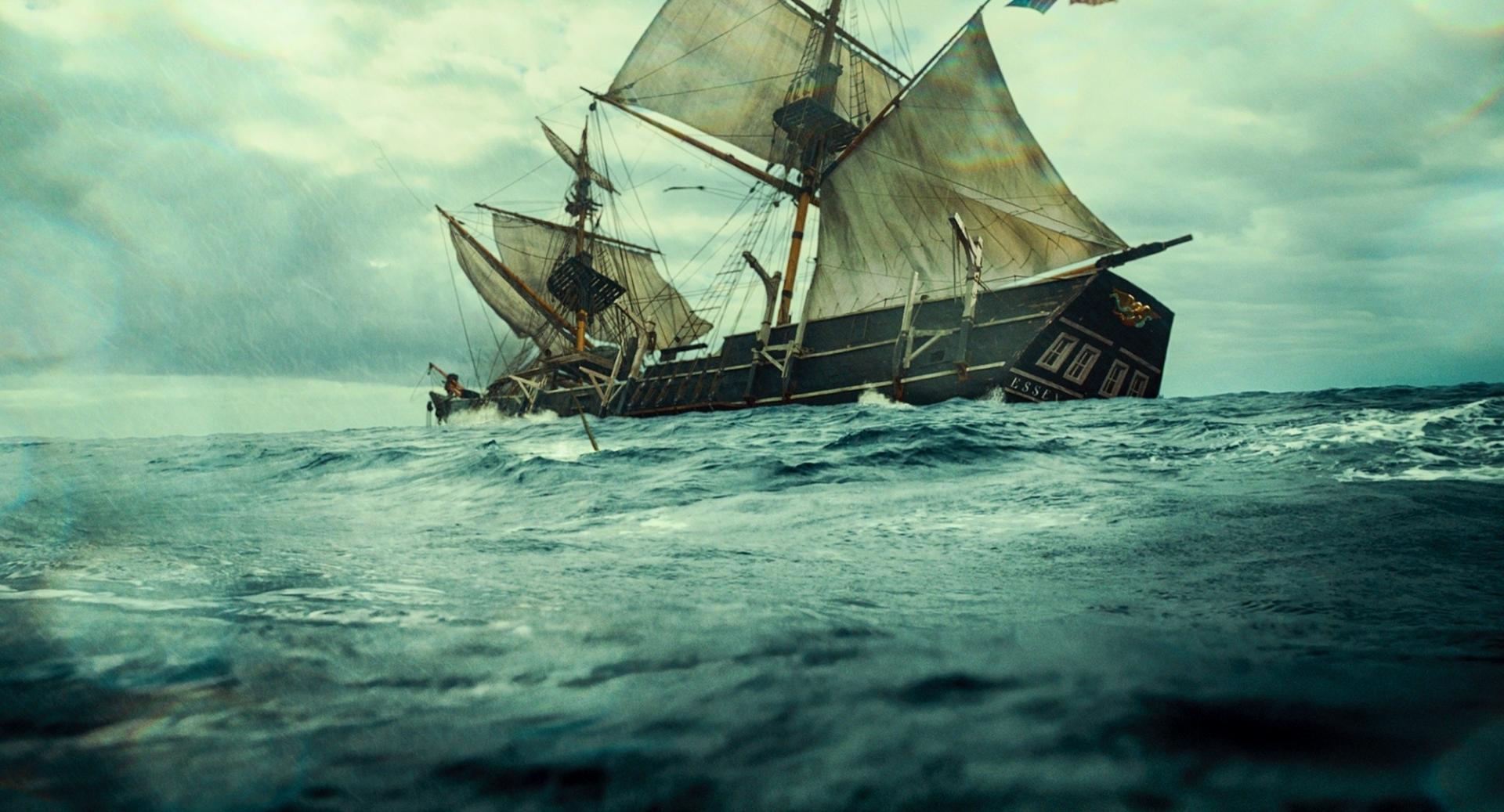
The whale ship Essex set sail from Nantucket in August of 1819, the month Herman Melville was born. The 21-man crew expected to spend two to three years hunting sperm whales, filling the ship’s hold with oil before returning to split the profits of the voyage.

Essex sailed down the coast of South America, rounding the Horn and entering the Pacific Ocean. The word from other whalers, was that the fishing grounds off the Chilean coast were exhausted, so Essex sailed for the “offshore grounds”, almost 2,000 miles from the nearest land.

cde992e6edd27a574f090a6eef22f5b7

Essex was plying the offshore grounds on November 20, 1820, with two of three boats out hunting whales. The lookout spotted a huge bull sperm whale, much larger than normal, estimated at 85 feet long and 80 tons. The animal was behaving oddly, lying motionless on the surface with his head facing the ship. In moments the whale began to move, slowly at first and then picking up speed as he charged the ship. Never in the history of the whale fishery had a whale been known to attack a ship unprovoked. This one hit the port side so hard, it shook the entire ship.

essex-hit-e1423695603699

The huge animal seemed dazed by the impact, floating to the surface and resting by the ship’s side. He then turned and swam away for several hundred yards, before turning to resume his attack. He charged in at the great speed of 24 knots according to First Mate Owen Chase, ramming the port bow and driving the stern into the water. Oak planking cracked and splintered as the whale worked his tail up and down, driving the 238-ton vessel backward. Essex had already started to go down when the whale broke off his attack, diving below the surface, never to return.

seconda-gallery-ufficiale-per-in-the-heart-of-the-sea-le-origini-di-moby-dick

Captain George Pollard’s boat was the first to make it back, and he stared in disbelief. “My God, Mr. Chase, what is the matter?” he asked. “We have been stove by a whale” came the reply.

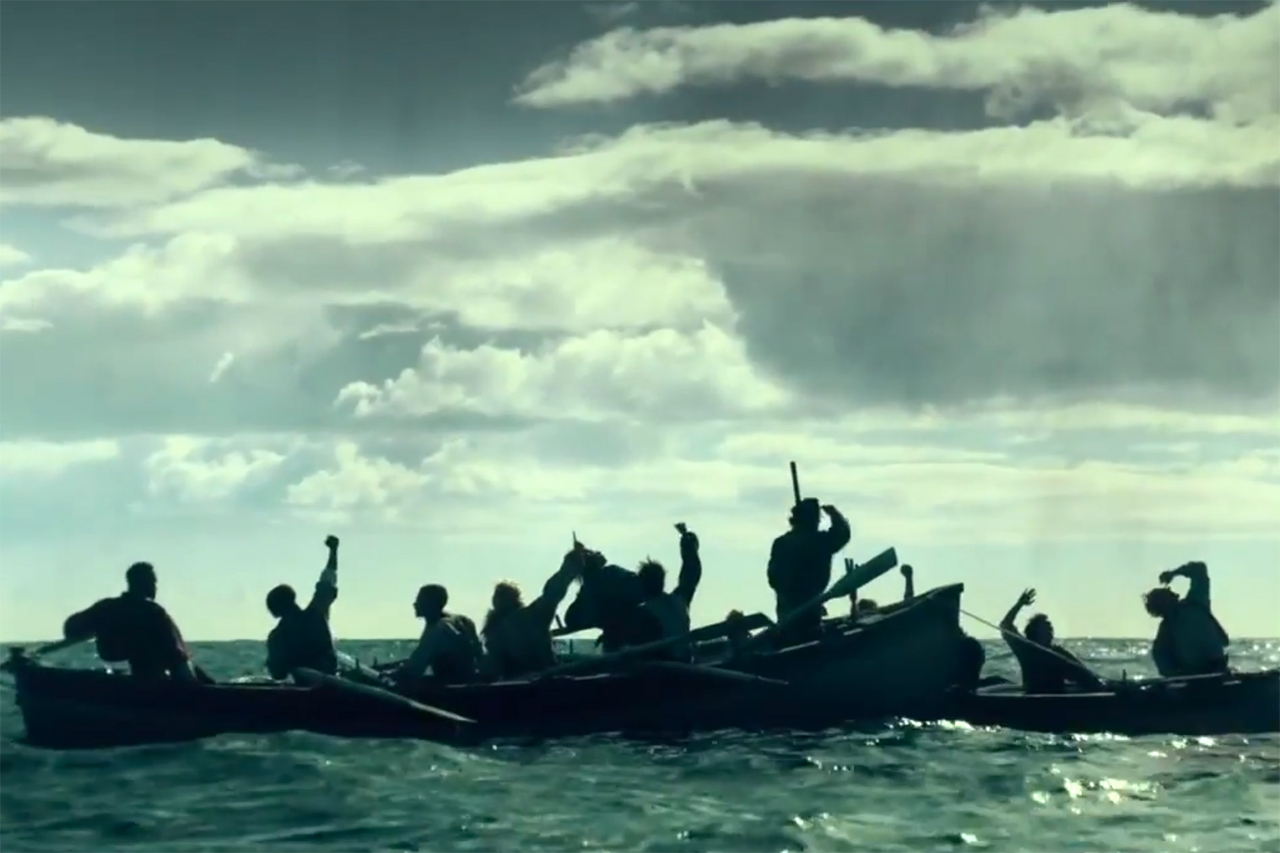
No force on earth could save the stricken whale ship. The crew divided into groups of seven and boarded the three boats. It wasn’t long before Essex sank out of sight and they were alone, stranded in 28-foot open boats, and about as far from land as it was mathematically possible to be.

In-the-Heart-of-the-Sea-2-Full

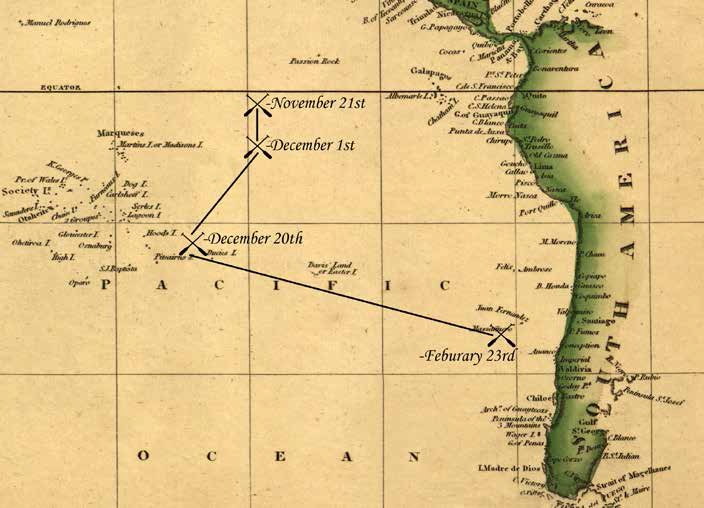
The whalers believed that cannibals inhabited the Marquesa islands 1,200 miles to the west, so they headed south, parallel to the coast of South America. Before their ordeal was over, they themselves would become the cannibals.

With good winds, they might reach the coast of Chile in 56 days. They had taken enough rations to last 60, provided they were distributed at starvation levels, but most of it had been ruined by salt water. There was a brief reprieve in December, when the three small boats landed on a small island in the Pitcairn chain. There they were able to get their fill of birds, eggs, crabs, and peppergrass, but within a week the island was stripped clean. They decided to move on, except for three who refused to get back in the boats.

cd8717566c2952f0745f257428198647

They never knew that this was Henderson Island, only 104 miles from Pitcairn Island, for eighteen years the refuge of the last survivors from the 1789 Mutiny on HMS Bounty.

After two months at sea, the boats had long since separated. Starving men were beginning to die, and the survivors came to an unthinkable conclusion. The living, would have to eat their own dead.

EssexMap

When those were gone, survivors drew lots to see who would die, that the others might live. Captain Pollard’s 17-year-old cousin Owen Coffin, whom he had sworn to protect, drew the black spot. Pollard protested, offering to take his place, but the boy declined. “No”, he said, “I like my lot as well as any other.” Again, lots were drawn to see who would be Coffin’s executioner. Owen’s friend, Charles Ramsdell, drew the black spot.

On February 18, the British whale ship Indian spotted a boat containing Owen Chase, Benjamin Lawrence and Thomas Nickerson. It was 90 days after Essex’ sinking. Five days later, the Nantucket whale ship Dauphin pulled alongside another boat, to find Captain Pollard and Charles Ramsdell. The pair was so far gone they didn’t notice at first, gnawing on the bones of their comrades.

The three who were left on Henderson Island were later rescued.  Several years later, the last whaleboat was found beached on a Pacific island, four skeletons on board.

approaching pitcairn

The Essex was the first ship recorded to have been sunk by a whale.  She would not be the last. The Pusie Hall was attacked in 1835. The Lydia and the Two Generals were both sunk by whales in 1836, and the Pocahontas and the Ann Alexander came under attack in 1850 and ’51.  The clipper ship Herald of the Morning was struck by a sperm whale off Cape Horn in 1859, but not fatally.

On this day in 1851, a sailor-turned novelist published his sixth volume, beginning with the words, “Call me Ishmael”.  Thirty-one years nearly to the day, after the sinking of the whale ship Essex.

If you enjoyed this “Today in History”, please feel free to re-blog, “like” & share on social media, so that others may find and enjoy it as well. Please click the “follow” button on the right, to receive email updates on new articles.  Thank you for your interest, in the history we all share.

November 13, 1982 Vietnam Veteran’s Memorial

Eight years ago, the Vietnam Veterans Memorial Fund, http://www.vvmf.org began work on a virtual “Wall of Faces”, where each name is remembered with a face, and a story to go with it.  As I write this, the organization is still in need of some 6,000 photographs.

Check it out. Pass it around. You might be able to help.

Several years ago, my brother was working in Washington, part of his work in military aviation. I was passing through, and it was a rare opportunity to spend some time together. There were a few things that we needed to see while we were there. The grave of our father’s father, at Arlington. The Tomb of the Unknown. The memorials to the second world war, and the war in Korea.

And before it was over, we wanted to see the Vietnam Veteran’s Memorial.

AP_967246486244-840x1256“The Wall” was dedicated on this day, November 13, 1982. Thirty-one years later, we had come to pay a debt of honor to Uncle Gary’s shipmates, the 134 names inscribed on panel 24E, victims of the 1967 disaster aboard the Supercarrier, USS Forrestal.
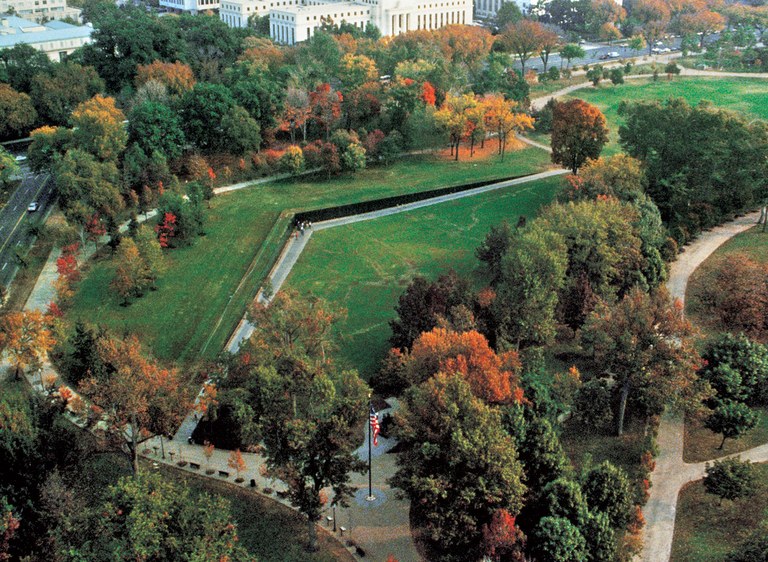
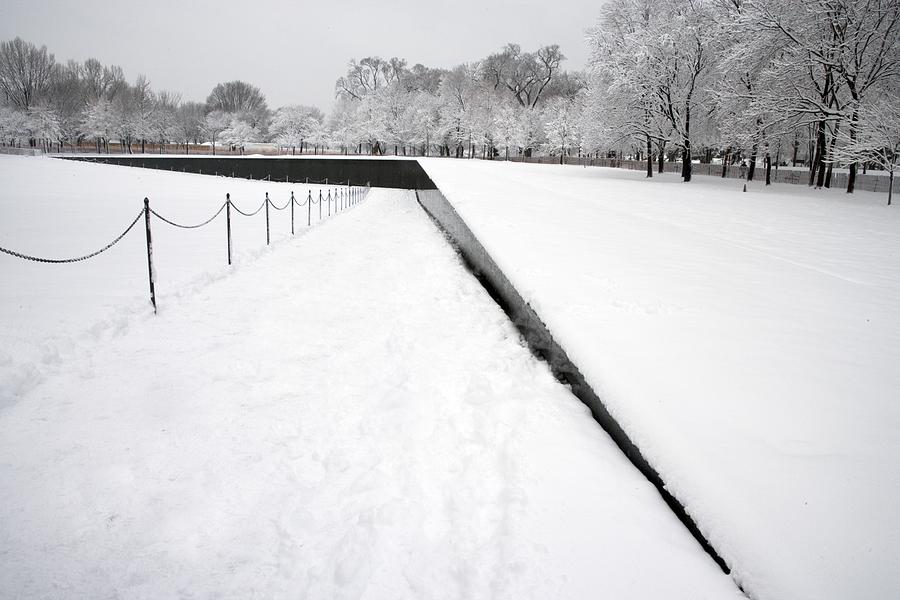
We were soon absorbed in the majesty and the solemnity, of the place.

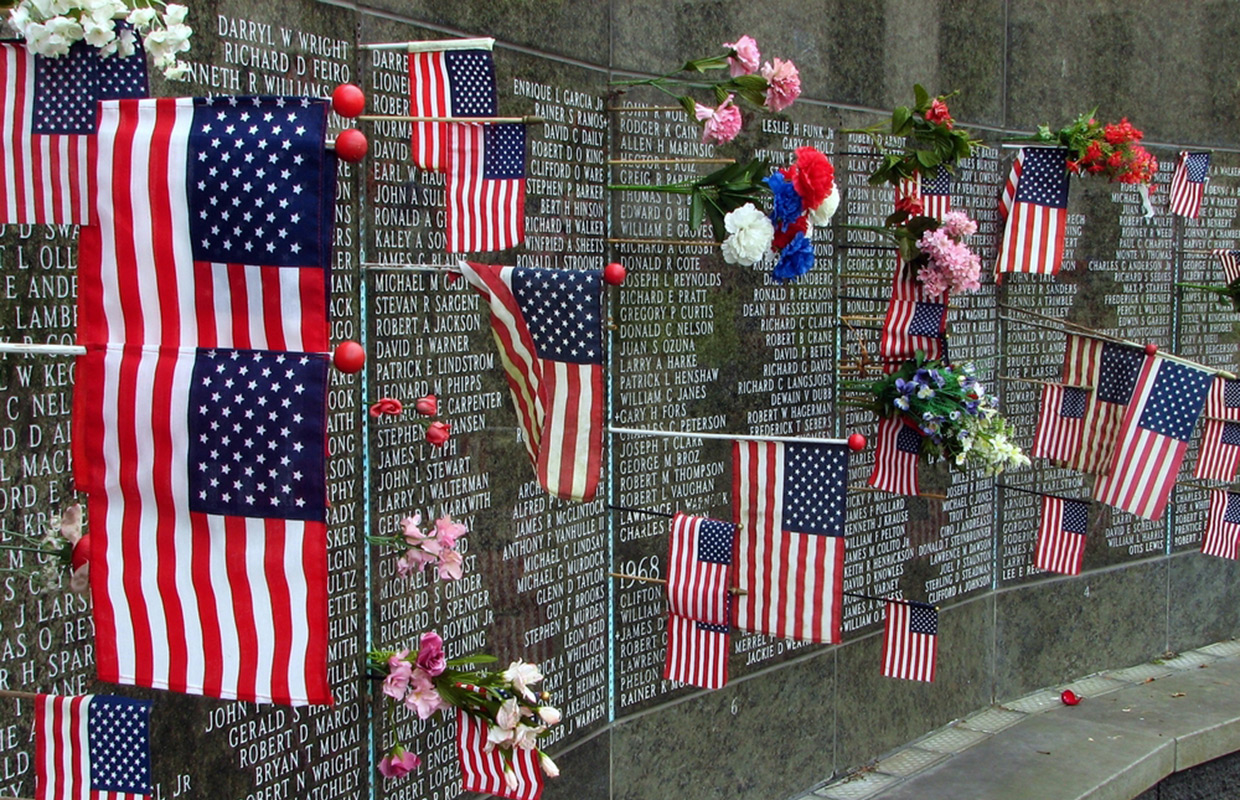
The Vietnam Veteran’s Memorial is a black granite wall, 493½-feet long and 10-feet, 3-inches high at its peak, laid out in a great wedge of stone which seems to rise from the earth and return to it. The name of every person lost in the war in Vietnam is engraved on that wall, appearing in the order in which they were lost.

Go to the highest point of the memorial, panel 1E, the very first name is that of Air Force Tech Sgt. Richard B. Fitzgibbon, Jr., of Stoneham, Massachusetts, killed on June 8, 1956. Some distance to his right you will find the name of Marine Corps Lance Cpl. Richard B. Fitzgibbon III, killed on Sept. 7, 1965. They are one of three Father/Son pairs, so remembered.

image (4)

The names begin at the center and move outward, the east wing ending on May 25, 1968. The same day continues at the far end of the west wing, moving back toward the center at panel 1W. The last name on the wall, the last person killed in the war, meets the first.  The circle is closed.

vietnam-veterans-memorial-wall-designed-everett

There, you will find the name of Kelton Rena Turner of Los Angeles, an 18-year old Marine, killed in action on May 15, 1975 in the “Mayaguez incident”, two weeks after the evacuation of Saigon. Most sources list Gary L. Hall, Joseph N. Hargrove and Danny G. Marshall as the last to die in Vietnam, though their fate remains, unknown. These three were United States Marines, an M-60 machine gun squad, mistakenly left behind while covering the evacuation of their comrades, from the beaches of Koh Tang Island. Their names appear along with Turner’s, on panel 1W, lines 130-131.

Left to right:  PFC Gary Hall, KIA age 19, LCPL Joseph Hargrove, KIA on his 24th birthday, Pvt Danny Marshall, KIA age 19, PFC Dan Bullock, KIA age 15

There were 57,939 names inscribed on the Memorial when it opened in 1982. 39,996 died at age 22 or younger.  8,283 were 19 years old. The 18-year-olds are the largest age group, with 33,103. Twelve of them were 17, and five were 16. There is one name on panel 23W, line 096, that of PFC Dan Bullock, United States Marine Corps.  He was 15 years old on June 7, 1969.  The day he died.

Eight names are those of women, killed while nursing the wounded. 997 soldiers were killed on their first day in Vietnam.   1,448 died on their last. There are 31 pairs of brothers on the Wall: 62 parents who lost two of their sons.

16722980372_b210acb1a3_b

As of Memorial Day 2015, there are 58,307, as the names of military personnel who succumbed to wounds sustained during the war, were added to the wall.

Over the years, the Wall has inspired a number of tributes, including a traveling 3/5ths scale model of the original and countless smaller ones, bringing the grandeur of this object to untold numbers without the means or opportunity, to travel to the nation’s capital.

best_crop_ab22a934fd024b8b443c_unnamed-221@2x

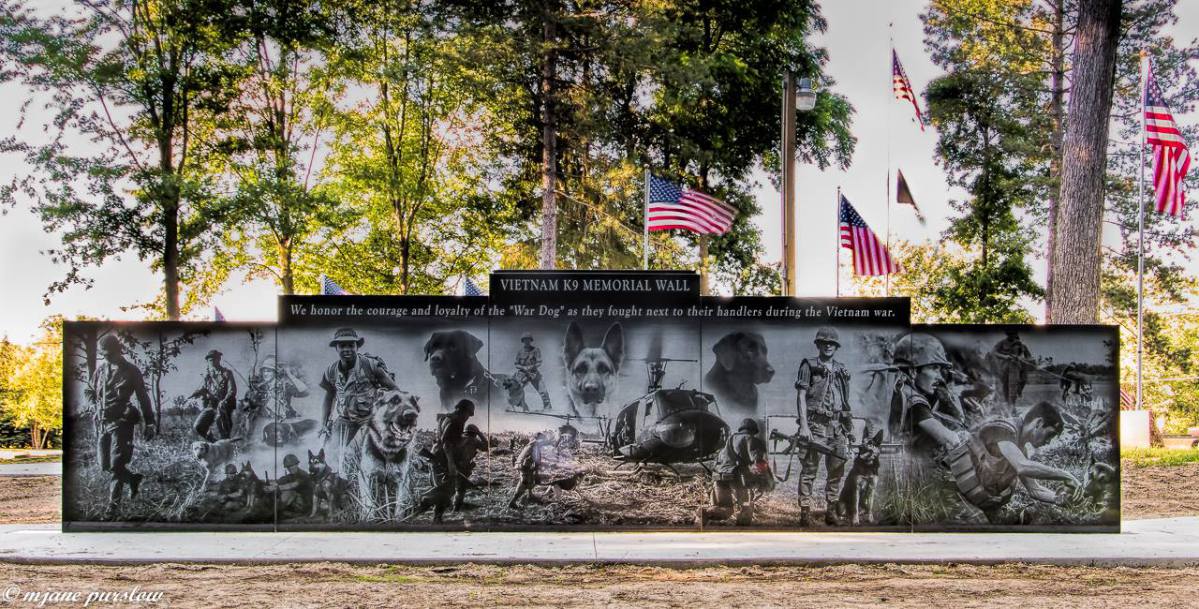
In South Lyons Michigan, the black marble Michigan War Dog Memorial pays tribute to the names and tattoo numbers of 4,234 “War Dogs” who served in Southeast Asia, the vast majority of whom were left behind as “surplus equipment”.

War dog wall

There is even a Vietnam Veterans Dog Tag Memorial, in Chicago.

above-and-beyond-vietnam-dog-tag-910

Eight years ago, the Vietnam Veterans Memorial Fund, www.vvmf.org began work on a virtual “Wall of Faces”, where each name is remembered with a face, and a story to go with it.  As I write this, the organization is still in need of some 6,000 photographs.

Check it out. Pass it around. You might be able to help.

I was nine years old in May 1968, the single deadliest month of that war, with 2,415 killed. Fifty years later, I still remember the way so many disgraced themselves, by the way they treated those returning home from Vietnam.

I can only hope that today, veterans of the war in Vietnam have some sense of the appreciation that is their due, the recognition too often denied them, those many years ago.  And I trust that my countrymen will remember, if they ever have an issue with United States war policy, they need to take it up with a politician. Not with the Armed Services member who is doing what his country asked him to do.

vietnam-memorial (1)

Check it out. Pass it around. You might be able to help.

November 12, 1912 Frozen in Time

Over a hundred years later you can still feel anguish from the man’s diary: “The worst has happened…All the day dreams must go…Great God! This is an awful place”.

Roald AmundsenAs long as he could remember, Roald Amundsen wanted to be an explorer.  As a boy, he would read about the doomed Franklin Arctic Expedition, of 1848.  A sixteen-year-old Amundsen took inspiration from Fridtjof Nansen’s epic crossing of Greenland, in 1888.
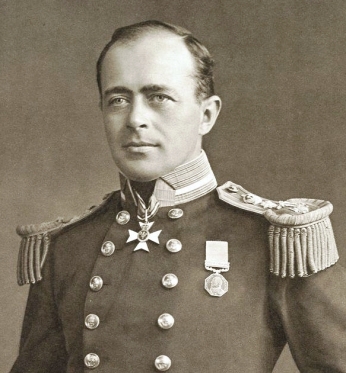
The period would come to be called the “Heroic Age” of polar exploration.  Amundsen was born to take part.

Not so, Robert Falcon Scott.   A career officer with the British Royal Navy, Scott would take a different path to this story.

Clements Markham, President of the British Royal Geographical Society (RGS), was known to “collect” promising young naval officers with an eye toward future polar exploration.  The two first met on March 1, 1887, when the eighteen-year old midshipman’s cutter won a sailing race, across St. Kitt’s Bay.

In 1894, Scott’s father John made a disastrous mistake, selling the family brewery and investing the proceeds, badly.  The elder Scott’s death of heart disease three years later brought on fresh family crisis, leaving John’s widow Hannah and her two unmarried daughters, dependent on Robert and his younger brother, Archie.

Now more than ever, Scott was eager to distinguish himself with an eye toward promotion, and the increase in income which came with it.

RobertFalconScott.jpgIn the Royal Navy, limited opportunities for career advancement were eagerly sought after, by any number of ambitious officers.  Home on leave in 1899, Scott chanced once again to meet the now-knighted “Sir” Clements Markham, and learned of an impending RGS Antarctic expedition, aboard the barque-rigged auxiliary steamship, RRS Discovery.  What passed between the two went unrecorded but, a few days later, Scott showed up at the Markham residence, and volunteered to lead the expedition.

The Discovery expedition of 1901-’04 was one of science as well as exploration.  Despite a combined polar experience of near-zero, the fifty officers and men under Robert Falcon Scott made a number of important biological, zoological and geological findings, proving that the Antarctic continent was once, forested.  Though later criticized as clumsy and amateurish, a journey south in the direction of the pole discovered the polar plateau, establishing the southernmost record for its time at 82° 17′ S, only 530 miles short of the pole.

a0a85691e405edb91673335150d4f571--robert-falcon-scott-robert-scott
Kathleen Bruce Scott

Discovery returned in September 1904, the expedition hailed by one writer as “one of the great polar journeys”, of its time.  Once an obscure naval officer, Scott now entered Edwardian society, and moved among the higher social and economic circles, of the day.

A brief but stormy relationship ensued with Kathleen Bruce, a sculptress who studied under Auguste Rodin, and counted among her personal friends, the likes of Pablo Picasso, Aleister Crowley and Isadora Duncan.  The couple was married on September 2, 1908 and the marriage produced one child, Peter Markham Scott, who went on to found the World Wide Fund for Nature (WWF).

The elder Scott would not live to see it.

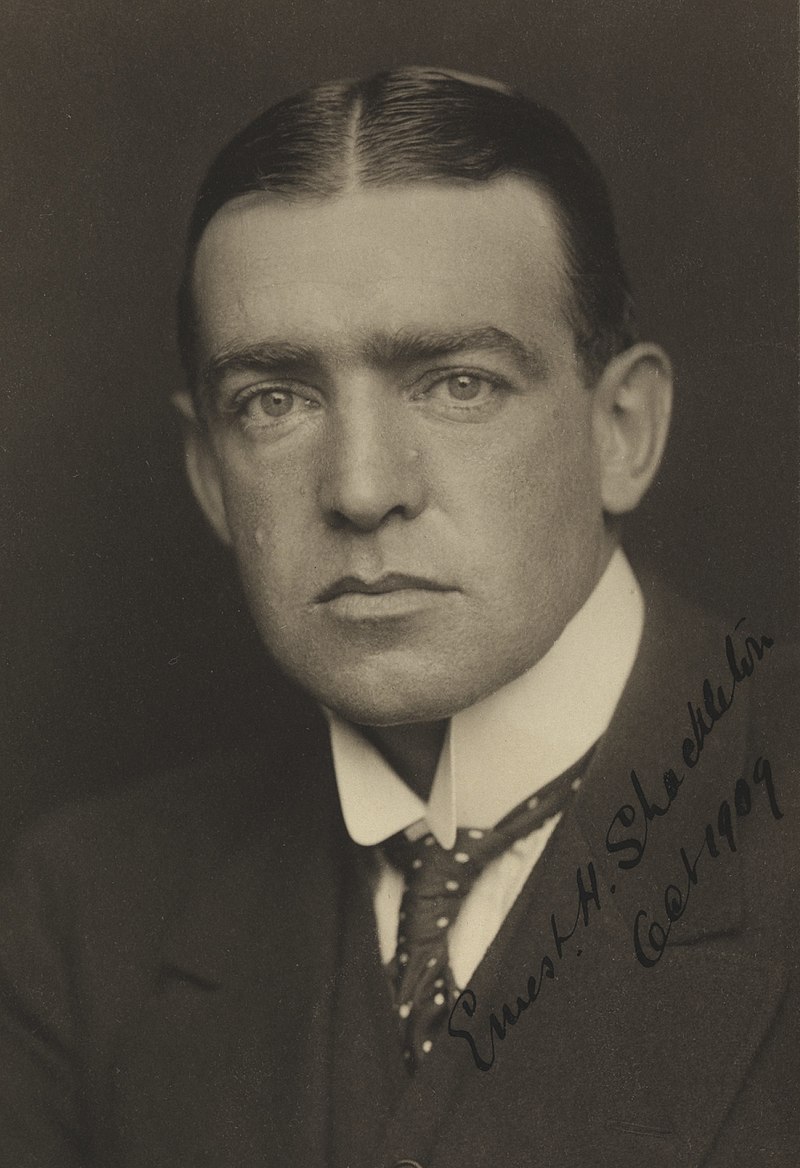
800px-Ernest_Shackleton_before_1909
Ernest Shackleton, ca 1909

The “Great Southern Journey” of Scott’s Discovery officer Ernest Shackleton, arrived at a point 112 miles short of the pole on January 9, 1909, providing Scott with the impetus for a second attempt, the following year.  Scott was still fundraising for the expedition when the old converted whaler Terra Nova departed Cardiff, in South Wales.  Scott joined the ship in South Africa and arrived in Melbourne Australia in October, 1910.

Meanwhile, and unbeknownst to Scott, Roald Amundsen was preparing for his own drive on the south pole, aboard the ship “Fram” (Forward).

It was in Melbourne that Scott received the telegram: “Beg leave to inform you Fram proceeding Antarctic Amundsen“.  Robert Falcon Scott now faced a race to the pole.

Unlike Amundsen who adopted the lighter fur-skins of the Inuit, the Scott expedition wore heavy wool clothing, depending on motorized and horse-drawn transport, and man-hauling sledges for the final drive across the polar plateau. Dog teams were expected to meet them only on the way out, on March 1.

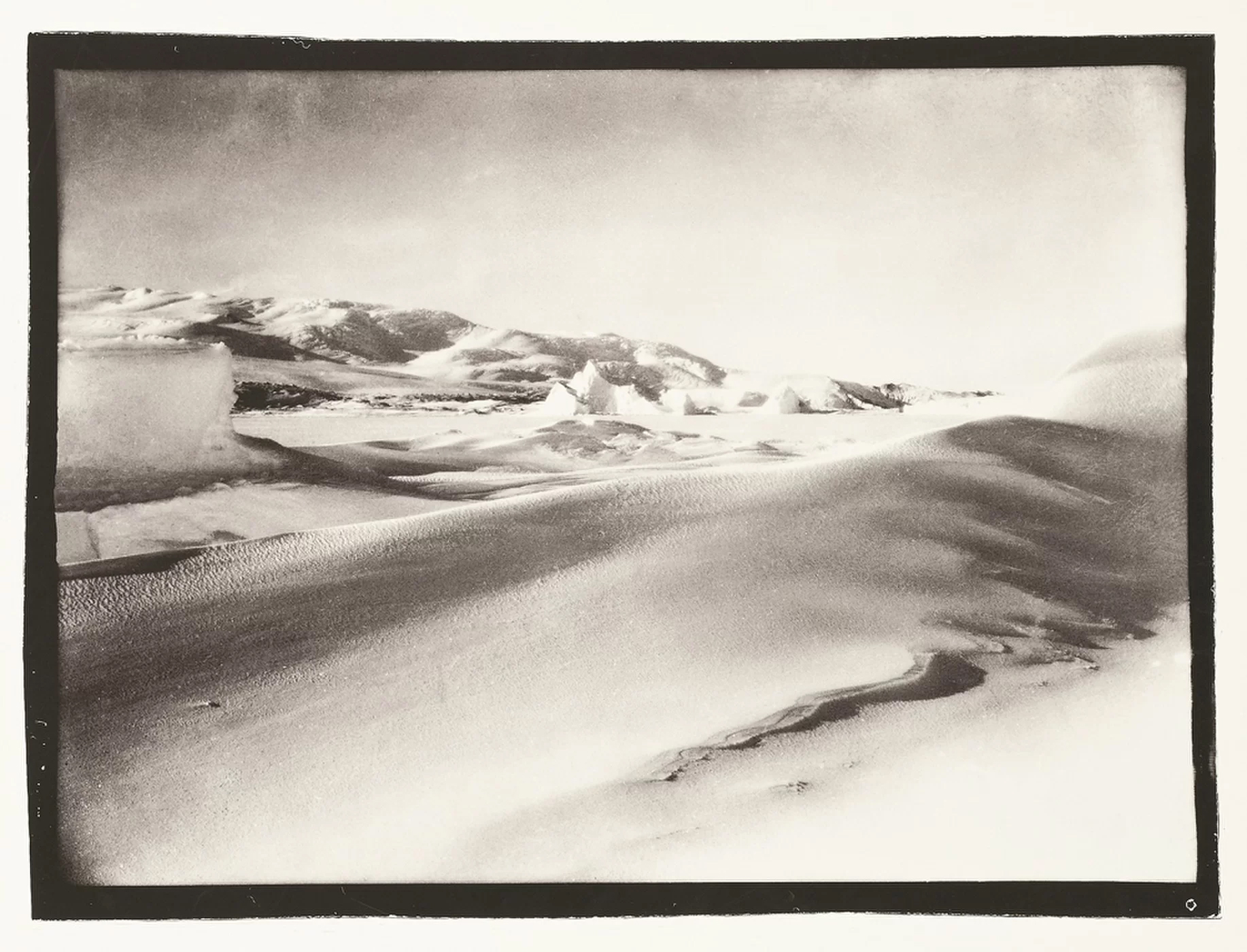
Mount Erebus
Mount Erebus, the southernmost active volcano, in the world. Robert Falcon Scott took this photograph in 1911

Weak ponies, poorly acclimatized to the wretched conditions of Antarctica, slowed the depot-laying part of the Scott expedition.  Four horses died of cold or had to be shot, because they slowed the team.

Expedition member Lawrence “Titus” Oates warned Scott against the decision to locate “One-Ton Depot” 35-miles short of the planned location at 80°.  “Sir, I’m afraid you’ll come to regret not taking my advice.”  His words would prove prophetic.

Scott Expedition

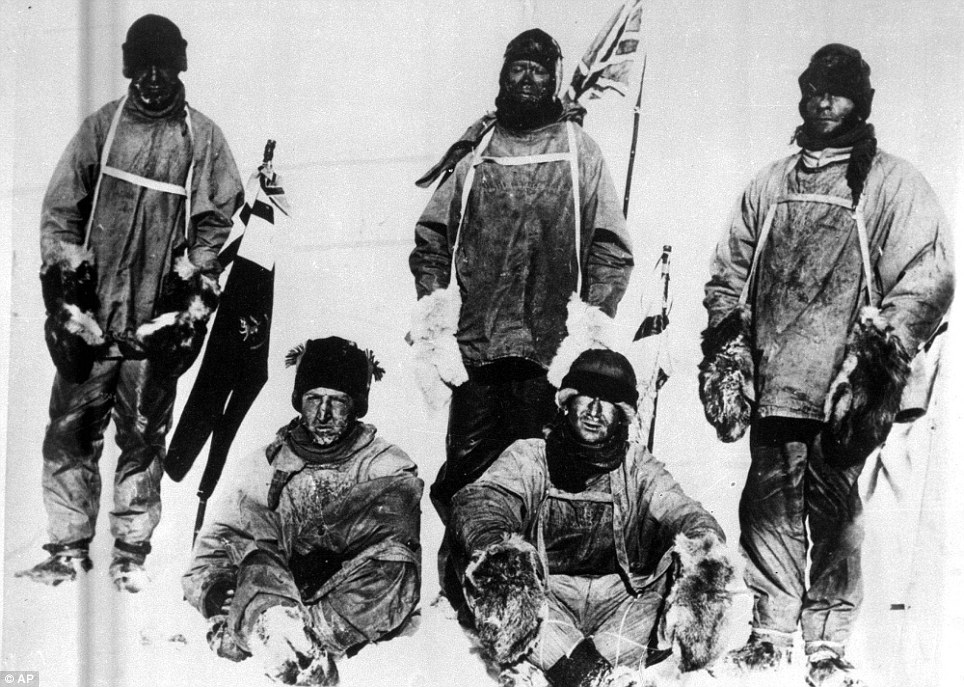
Unlike the earlier attempt, Robert Falcon Scott made it to the pole this time, only to find that Amundsen’s Norwegian team had beat him there, by a mere five weeks. Over a hundred years later you can still feel anguish from the man’s diary: “The worst has happened…All the day dreams must go…Great God! This is an awful place”.

Defeated, the five-man Scott party turned and began the 800-mile, frozen slog back from the Pole on January 19, 1912.  Team member Edgar “Taff” Evans’ condition began to deteriorate as early as the 23rd. A bad fall on Beardmore Glacier left the man concussed on February 4, “dull and incapable”.  Another fall two weeks later, left Evans dead at the foot of the glacier.

Man-hauled sledges

Dog teams failed to materialize at the appointed time.  Within days, Titus himself was severely frostbitten, concerned that his incapacity would become a threat and a burden to the team. He left his tent for the last time and limped into a blizzard on March 17, saying “I am just going outside and may be some time”.  He never returned.

Noble as it was, Lawrence Oates’ suicide, came to naught.  The last three made their final camp on March 19, with 400 miles yet to go.   A howling blizzard descended on the tents the following day and lasted for days, as Scott, Henry “Birdie” Bowers and Dr. Edward Wilson wrote good-bye letters to mothers, wives, and others.

Amundsen_-_Scott_Antarctic_expedition_map.svg

Starving and frostbitten, Robert Falcon Scott wrote to his diary in the final hours of his life “It seems a pity, but I do not think I can write more.” In his final entry, he worried about the financial burden on his family, and those of the doomed expedition: “Last entry.  For God’s sake look after our people”.

The lowest ground level temperature ever recorded was −128.6° Fahrenheit at the Soviet Vostok Antarctic Station, in 1983.  Meteorological conditions for those last days in the Scott camp, went undocumented.

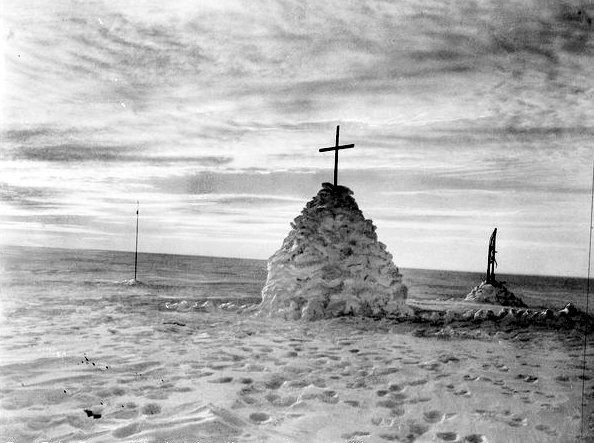
The frozen corpses of Robert Falcon Scott and his comrades were found on November 12, 1912, that last diary entry dated March 29.  A high cairn of snow was erected over it all, that final camp becoming the three men’s tomb. Ship’s carpenters built a wooden cross, inscribing on it the names of those lost: Scott, Edward Wilson, Henry Bowers, Lawrence Oates and Edgar Evans. A line from Alfred Lord Tennyson’s poem, Ulysses, was carved into the cross:

To strive, to seek, to find, and not to yield”.

article-2087811-001f786700000258-615_964x687 (1)
Defeated by only weeks, the Scott party spends a moment at the south pole, before turning for the frozen, 800-mile slog, back.

It was eleven miles short of the next supply depot.

On hearing the fate of his rival, Roald Amundsen said “I would gladly forgo any honor or money if thereby I could have saved Scott his terrible death”.

A century later, ice and snow have covered the last camp of the southern party.  Pressed ever downward by the weight of snow and ice, their corpses are encased seventy-five-feet down in the Ross Ice Shelf and inching their way outward, expected to reach the Ross Sea sometime around 2276.  One day to break off and float away, at the heart of some unknown and nameless iceberg.

Feature image, top of page:  Last Camp of the Southern Party, of Robert Scott Falcon

November 11, 1918 The Eleventh Hour

The final surrender was signed at 5:10am on November 11, and back-timed to 5:00am Paris time, scheduled to go into effect later that morning. The 11th hour, of the 11th day, of the 11th month.

In an alternate history, the June 1914 assassination of the heir-apparent to the Habsburg Empire could have led to nothing more than a regional squabble.  A policing action, in the Balkans.

As it was, mutual distrust and entangling alliances combined with slavish obedience to mobilization timetables, to draw the Great Powers of Europe, into the vortex.  On August 3, the “War to End All Wars” exploded across the European continent.

Many of the soldiers who went off to war in those days, viewed the conflict as some kind of grand adventure. Many of them singing patriotic songs, the young men and boys of Russia, Germany, Austria and France stole last kisses from wives and sweethearts, and boarded their ships and trains.

Believing overwhelming manpower to be the key to victory, British Secretary of State for War Lord Horatio Kitchener recruited friends and neighbors by the tens of thousands into “Pal’s Battalions”, to fight for King and country.

140604153439-19-wwi-main-timeline-0604-restricted-horizontal-large-gallery
The signs could have been written in any number of languages, in the early phase of the war

Four years later, an entire generation had been chewed up and spit out, in pieces.

Any single day’s fighting during the great battles of 1916 produced more casualties than every European war of the preceding 100 years, civilian and military, combined.

6,503 Americans lost their lives during the savage, month-long battle for Iwo Jima, in 1945. The first day’s fighting during the 1916 Battle of the Somme, killed three times that number on the British and Commonwealth side, alone.

battle_of_the_somme_in_pictures_1
Over 1.5 million shells were fired in the days leading to the battle of the Somme

Over 16 million were killed and another 20 million wounded, while vast stretches of the European countryside were literally, torn to pieces. Tens of thousands remain missing, to this day.

Had you found yourself in the mud and the blood, the rats and the lice of the trenches during the New Year of 1917-’18, you could have heard a plaintive refrain drifting across the barbed wire and frozen wastes of no man’s land, sung to the tune of ‘Auld Lang Syne”.

We’re here, because we’re here,
because we’re here, because we’re here,
we’re here, because we’re here,
because we’re here, because we’re here.

cher-ami
Cher Ami

Those who fought the “Great War”, were not always human.  The carrier pigeon Cher Ami escaped a hail of bullets and returned twenty-five miles to her coop despite a sucking chest wound, the loss of an eye and a leg that hung on, by a single tendon.  The message she’d been given to carry, saved the lives of 190 men.

“Warrior” was the thoroughbred mount to General “Galloper” Jack Seely, arriving in August 1914 and serving four years “over there”. “The horse the Germans can’t kill” survived snipers, poison gas and shellfire to be twice buried alive in great explosions, only to return home to the Isle of Wight, and live to the ripe old age of 33.

18-03-23-thumb
First division Rags

First Division Rags” ran through a torrent of shells, gassed and blinded in one eye, a shell fragment damaging his front paw, yet still, he got his message through.

Jackie the baboon lost a leg during heavy bombardment from German guns, while frantically building a protective rock wall around himself, and his comrades.

Tirpitz the German pig jumped clear of the sinking light cruiser SMS Dresden, to become mascot to the HMS Glasgow.

Sixteen million animals served on all sides and in all theaters of WW1:  from cats to canaries, to pigeons and mules, camels, donkeys and dogs.  As “dumb animals”, these were never given the choice to “volunteer”.  And yet they served, some nine million of them making the supreme sacrifice.

WW1-animals
British Army mules in the mud of the western front, 1918

In the end, starvation and malnutrition stalked the land at home as well as the front, with riots at home and mutiny in the trenches. The Russian Empire of the Czars had collapsed into a Bolshevik hellhole, never to return.  Nearly every combatant saw the disintegration of its domestic economy, or teetering on the brink.

A strange bugle call came out of the night of November 7, 1918. French soldiers of the 171st Régiment d’Infanterie, stationed near Haudroy, advanced into the fog and the darkness, expecting that they were about to be attacked. Instead, they were shocked to see the apparitions of three sedans, their sides displaying the German Imperial Eagle.

Imperial Germany, its army disintegrating in the field and threatened with revolution at home had sent a peace delegation, headed by the 43-year-old German politician Matthias Erzberger.

The delegation was escorted to the Compiegne Forest near Paris, to a conference room fashioned out of a railroad dining car. There they were met by a delegation headed by Ferdinand Foch, Marshall of France.

Adolf Hitler would gleefully accept French surrender in the same rail car, some twenty-two years later.

original-french-postcard-showing-the-wagon-in-which-the-ww1-armistice-M1B0DJ

The German delegation was shocked at the words that came out of Foch’s mouth. ‘Ask these gentlemen what they want,’ he said to his interpreter. Stunned, Erzberger responded. The German believed that they were there to discuss terms of an armistice. Foch dropped the hammer: “Tell these gentlemen that I have no proposals to make”.

Ferdinand Foch had seen his country destroyed by war, and had vowed “to pursue the Feldgrauen (Field Grays) with a sword at their backs”. He had no intention of letting up.

Marshall Foch now produced a list of thirty-four demands, each one a sledgehammer blow on the German delegation. Germany was to divest herself of all means of self-defense, from her high seas fleet to the last machine gun. She was to withdraw from all lands occupied since 1870. With the German population at home facing starvation, the allies were to confiscate 5,000 locomotives, 150,000 railroad cars, and 5,000 trucks.

1200px-Waffenstillstand_gr

By this time, 2,250 were dying every day on the Western Front.  Foch informed Ertzberger that he had 72 hours in which to respond. “For God’s sake, Monsieur le Marechal”, responded the German, “do not wait for those 72 hours. Stop the hostilities this very day”.  Even so, the plea fell on deaf ears. Fighting would continue until the last minute, of the last day.

The German King, Kaiser Wilhelm, abdicated on the 10th, as riots broke out in the streets of Germany. The final surrender was signed at 5:10am on November 11, and back-timed to 5:00am Paris time, scheduled to go into effect later that morning. The 11th hour, of the 11th day, of the 11th month.

The order went out to that effect. The war would be over in hours, but there were no other instructions.

Some field commanders ordered their men to stand down. Why fight and die over ground they could walk over, in a few hours?

the-last-soldier-killed-in-wwi-died-one-minute-before-the-war-ended
The last six hours

Many continued the attack, believing that Germany had to be well and truly beaten. Others saw their last chance at glory or promotion. An artillery captain named Harry S Truman, kept his battery firing until only minutes before 11:00.

English teacher turned Major General Charles Summerall had a fondness for the turn of phrase. Ordering his subordinates across the Meuse River in those final hours, Summerall said “We are swinging the door by its hinges. It has got to move…Get into action and get across. I don’t expect to see any of you again…

No fewer than 320 Americans were killed in those final six hours, another 3,240 seriously wounded.

7fe16b6c9f770b107480c9ca6c28e87c

Still smarting from the disastrous defeat at Mons back in 1914, British High Command was determined to take the place back, on the final day of the war. The British Empire lost more than 2,400 in those last 6 hours.

The French 80th Régiment d’Infanterie received two orders that morning – to launch an attack at 9:00, and cease-fire at 11:00. French losses for the final day amounted to 1,170. The already retreating Germans suffered 4,120.

One-hundred years ago today, all sides suffered over 11,000 dead, wounded, and missing in those final six hours. Some have estimated that more men died per hour after the signing of the armistice, than during the D-Day invasion, 26 years later.

Over in the Meuse-Argonne sector, Henry Gunther was “visibly angry”.   Perhaps this American grandson of German immigrants felt he had something to prove.  Anti-German bias had not reached levels of the next war, when President Roosevelt interned Americans of Japanese descent.  Yet, such bias was very real.  Gunther’s fiancé had already broken up with him, and he’d recently been busted in rank, after writing home complaining about conditions at the front.

Bayonet fixed, Gunther charged the enemy machine gun position, as German soldiers frantically waved and yelled for him, to go back. He got off a “shot or two”, before the five round burst tore into his head. Henry Nicholas John Gunther of Baltimore Maryland, was the last man to die in combat, in the Great War.  It was 10:59am.  The war would be over, in sixty seconds.

Sargeant-Henry-Gunther

After eight months on the front lines of France, Corporal Joe Rodier of Worcester Massachusetts, was jubilant.   “Another day of days“.   Rodier wrote in his diary.  “Armistice signed with Germany to take effect at 11 a.m. this date. Great manifestations. Town lighted up at night. Everybody drunk, even to the dog. Moonlight, cool night & not a shot heard“.

Matthias Erzberger was assassinated in 1921, for his role in the surrender. The “Stab in the Back” mythology destined to become Nazi propaganda, had already begun.

AEF Commander General John “Black Jack” Pershing believed the armistice to be a grave error. He believed that Germany had been defeated but not beaten, and that failure to smash the German homeland meant that the war would have to be fought, all over again. Ferdinand Foch agreed. On reading the Versailles treaty in 1919, Foch said “This isn’t peace! This is a truce that will last for 20 years”.

The man got it wrong, by 36 days.

Norman Francis Long

A personal note:

I am old enough at age sixty, to enjoy the memories of a five-year-old, fishing with his grandfather.

PFC Norman Francis Long was wounded during the Great War, a member of the United States Army, 33rd Pennsylvania Infantry.  He left us on December 18, 1963, only hours before his namesake and my brother Norman, was born.

A 1977 fire in the national archives, left us without the means to learn the details of his service.

My father’s father went to his final rest on Christmas eve of 1963, in Arlington National Cemetery.  Section 41, grave marker 2161.

Rest in peace, Grampa.  You left us, too soon.


If you enjoyed this “Today in History”, please feel free to re-blog, “like” & share on social media, so that others may find and enjoy it as well. Please click the “follow” button on the right, to receive email updates on new articles.  Thank you for your interest, in the history we all share.

November 10, 1775 Semper Fi

Happy 243rd birthday, United States Marine Corps.  Semper Fi.

The Navy had been in existence for less than a month and the Battles of Lexington and Concord a mere seven months in the past, when the Continental Marines were formed by an act of the 2nd Continental Congress, convened on November 10, 1775.

“Resolved, That two Battalions of Marines be raised, consisting of one Colonel, two Lieutenant Colonels, two Majors, and other officers as usual in other regiments; and that they consist of an equal number of privates with other battalions; that particular care be taken, that no persons be appointed to office, or inlisted into said Battalion, but such are good seamen, or so acquainted with maritime affairs as to be able to serve to advantage by sea when required: that they be inlisted and commissioned to serve for and during the present war between Great Britain and the colonies, unless dismissed by order of Congress: that they be distinguished by the names of the first and second battalion of American Marines, and that they be considered as part of the number which the continental Army before Boston is ordered to consist of.”

Happy-Birthday-US-Marine-Corps

Historians differ on the location of the first recruiting station. Some will tell you that it was the “Conestoga Waggon” tavern in Philadelphia. Tradition holds it to have been the “Tun Tavern”, a name coming from the Olde English “Tun”, meaning a barrel or a keg of beer.

Continental Marines served a number of important functions during the Revolution, including ship-board security, amphibious assault and ship to ship combat. Then as now, Marines were riflemen first. During naval engagements they could be found in the masts and rigging, their sharpshooters’ skills taking out opposing helmsmen, gunners and ship’s officers.

tun-tavern--birthplace-of-the-marine-corps-bill-cannon
Tun Tavern, birthplace of the Marine Corps, by Bill Cannon

The first Marine landing on a hostile shore took place in March the following year, when a Marine force under the former Quaker, Captain Samuel Nicholas, captured New Province Island in the Bahamas. The island’s British governor managed to ship out 150 barrels of powder, but several brass cannon and mortars were captured, and later put to use with George Washington’s Continental Army.

Captain Nicholas was the first commissioned officer in the Continental Marines, and is now remembered as the first commandant of the Marine Corps.

list-us-marine-Battle_of_Nassau-E
First Marine landing, New Providence Island Bahamas, March 3, 1776

The Continental Congress disbanded the Marines in 1783, following their help in winning American independence. Increasing conflict and the coming “quasi-war” with revolutionary France would soon bring them back.

President John Adams signed a bill establishing the United States Marine Corps as a permanent military force under Navy jurisdiction on July 11, 1798.

The most famous action of the early period occurred during the Tripolitan War of 1801–’05, against the Barbary states of Tripoli, Algiers, Tunis, and the independent Sultanate of Morocco. US Army Lieutenant William Eaton and United States Marine Corps 1st Lieutenant Presley O’Bannon led eight Marines and 500 mercenaries on a 600-mile forced march through the desert, against a much larger force defending the city of Derna, in Libya.

list-us-marinesAttack_on_Derna_by_Charles_Waterhouse_01
US Marine attack Derna, by Charles Waterhouse

Ottoman viceroy Prince Hamet awarded a Mameluke sword to O’Bannon on December 8, 1805, in a gesture of respect for the Marines’ conduct. That curved, cross-hilted scimitar became the model for swords worn by Marine officers to this day, the victory at Derna memorialized in a line from the Marine Corps Hymn “From the halls of Montezuma, to the shores of Tripoli”.

Marine-Corps-Mameluke-sword

Since then, the Marine Corps has participated in virtually every conflict ever fought by the United States, and usually the first ones in. To date, United States Marines have executed over 300 landings on foreign shores.

Badly outnumbered in 1918 near the French hunting preserve of Belleau Wood, Marines under General James Harbord, were urged to withdraw.  One captain retorted “Retreat? Hell, we just got here.”  Over three weeks, US Marines and Army troops made a half-dozen assaults on German positions in the Wood, enduring poison gas, withering machine gun fire and hand to hand combat.  Belleau Wood killed more Marines than every battle in Marine Corps history combined, and proved for all time the Marine Corps’ reputation as an elite fighting force.

Marines in the World War II era are best known for Pacific “island hopping” battles such as Guadalcanal, Tarawa and Iwo Jima, but 6,000 Marines took part in nearly every theater, of the war.  Always riflemen first, it was Marine Corps sharpshooters who cleared the way for the D-Day landing, picking off floating mines on the morning of June 6.

To the Germans of Belleau Wood, this new and unfamiliar fighting force were “Höllenhunde” (“hellhound”), “Teufelshunde”, (“Devil Dogs.”), an appellation which survives, to this day.  Devil Dog and Marine Corps mascot “Chesty XV” arrived at Marine barracks Washington DC on March 19, 2018, the phase I recruit to begin training, immediately.

marines-chesty-bulldog.jpg

The original Tun Tavern burned down in 1781, shortly before the end of the Revolution. Today, the site is part of Interstate 95, where the highway passes Penn’s landing. You can still visit the Tun Tavern-styled restaurant at the National Marine Corps Museum in Quantico, where a beer and a bread pudding is always part of the lunch menu.

The USMC has 182,000 active duty members as of 2016, with 38,500 in reserve. They are separated into three divisions, headquartered at Camp Lejeune, North Carolina, Camp Pendleton in California; and Okinawa, Japan. Each division maintains one or more expeditionary units, prepared for major operations anywhere in the world on two weeks’ notice.

Happy-Birthday-USMC-1.jpg

Over the course of Marine Corps history, fewer than 100 people have ever received the title of Honorary Marine, including Brigadier General Bob Hope, Master Sergeant Bugs Bunny, Corporal Jim Nabors and Gary Sinise of the “Lieutenant Dan Band”. Such a title may only be bestowed by the Commandant of the Marine Corps, the license plate of whose car will always read “1775”.

Happy 243rd birthday, United States Marine Corps.  Semper Fi.

If you enjoyed this “Today in History”, please feel free to re-blog, “like” & share on social media, so that others may find and enjoy it as well. Please click the “follow” button on the right, to receive email updates on new articles.  Thank you for your interest, in the history we all share.