

At the end of WWI, Rudolf Walter Richard Hess enrolled in the University of Munich. He’d been wounded several times in the Great War, serving in the 7th Bavarian Field Artillery Regiment. As a student, Hess studied geopolitics under Karl Haushofer, an early proponent of “Lebensraum” (“living space”), the philosophy which later became a central plank in the Nazi Party political platform.
 Hess was an early and ardent proponent of Nazi ideology. A True Believer. He was at Hitler’s side during the failed revolution of 1923, the “Beer Hall Putsch”. He served time with Hitler in prison, and helped him write his political opus “Mein Kampf” (My Struggle). Hess was appointed to Hitler’s cabinet when the National Socialist German Workers’ Party seized power in 1933, becoming Deputy Führer, #3 after Hermann Göring and Hitler himself. Hess signed many statutes into law, including the Nuremberg Laws of 1935, depriving the Jews of Germany of their rights and property.
Obsessed as he was with race theory, Hitler believed that, as fellow Anglo Saxons, the British people were meant to be natural allies to Germany. If only they could get rid of Churchill, he believed, the two nations might be able to work things out. Churchill and Hitler deeply hated one another, but there were many in Great Britain, including much of the landowning aristocracy, London financiers and media moguls, who regarded the Soviet Union as the greater threat.
Rudolf Hess flew into Scotland on May 10, 1941, parachuting to earth as his Messerschmidt two-seat aircraft ran out of gas. It’s unclear whether the scheme was Hess’ own idea or if it had official sanction. It was a cockamamie scheme, in which he intended to arrange peace talks with Douglas Douglas-Hamilton, 14th Duke of Hamilton, believing him to be a prominent opponent of the British government. The Deputy Führer was immediately arrested, remaining in British custody until the end of the war, when he was returned to Germany for the 1946 Nuremberg Trials.
Hess mental state seems to have declined while under British custody and questions were raised about his sanity and fitness to stand trial. Judges decided that he understood the charges against him and was capable of defending himself. Hess did himself no good at trial, declaring his late Führer to be “the greatest son my Volk has brought forth in its thousand-year history”. He testified that he wouldn’t change a thing about having worked for the man, saying “I regret nothing.”
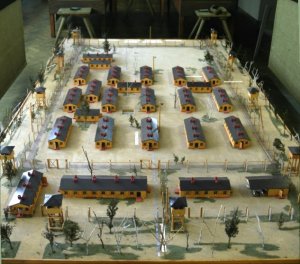
Nine months later, the court acquitted Hess of war crimes and crimes against humanity, apparently deciding that his earlier persecution of Jews to be insufficiently connected to their later annihilation. Hess was convicted of conspiracy to wage aggressive war and of crimes against peace and sentenced to life in prison, transferred to Spandau Prison in West Berlin, and placed under the authority of the four major allied powers. Spandau had once housed as many as 600 prisoners. There he was stripped of his name and given a number, #7, one of 8 former Nazi officials imprisoned there. After July 18, 1947, those eight became the only inmates to occupy the facility.
Hess’ fellow convicts were gradually released from the prison, as their terms expired or on compassionate grounds. His main companion at this time was his jailer, warden Eugene K. Bird, with whom Hess became close friends. The last of the other inmates had left by 1966, leaving #7 the prison’s only occupant. Warden Bird wrote a book in 1974, titled “The Loneliest Man in the World”, about his relationship with Hess during his 30 years’ confinement.

Attempts by family members and prominent politicians to get him released were blocked by Soviet authorities, who believed him to be a principle architect of Barbarossa, the Nazi sneak attack on the Soviet Union in 1941. On August 17, 1987, #7 tied a lamp cord to a window latch and hanged himself with it. He was 93.
Spandau prison was demolished following the death of its final remaining prisoner, the rubble dumped into the North Sea to prevent the place from becoming a Neo-Nazi shrine,

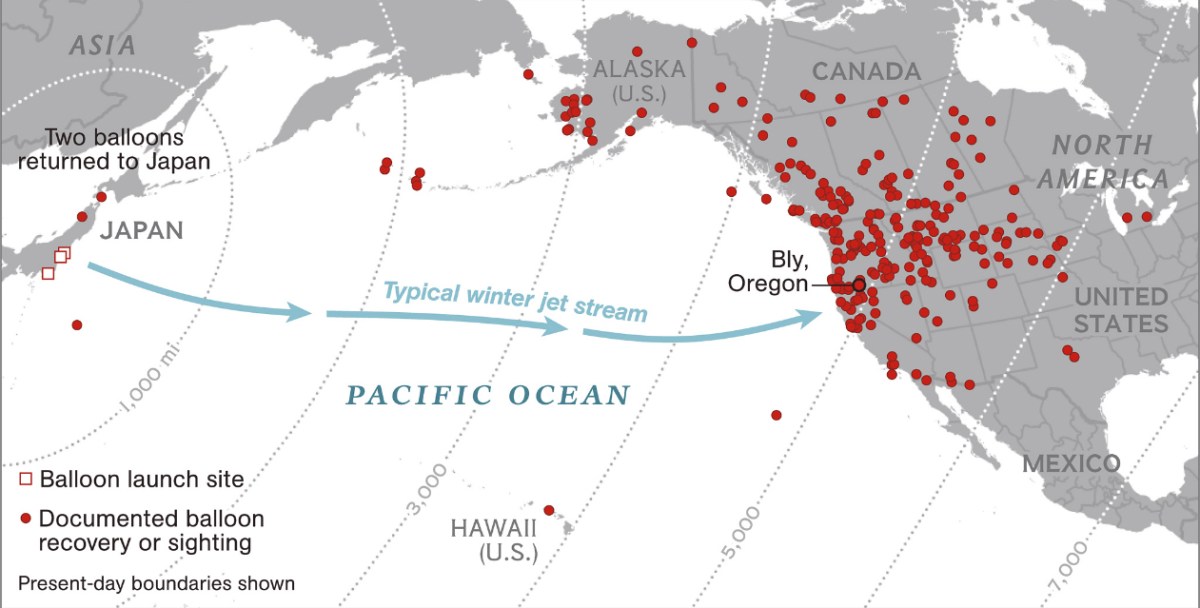
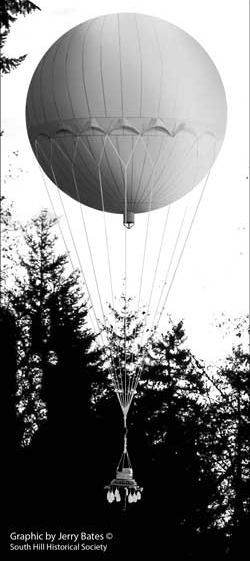
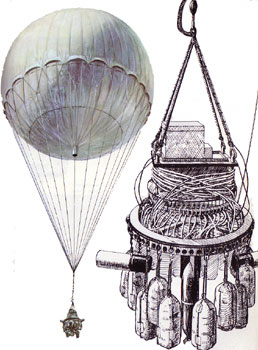 In the latter half of WWII, Imperial Japanese military thinkers conceived the fūsen bakudan or “fire balloon”, a hydrogen filled balloon device designed to ride the jet stream, using sand ballast and a valve system to navigate the weapon system onto the North American continent.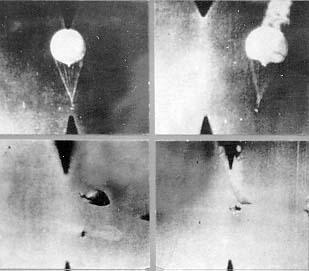
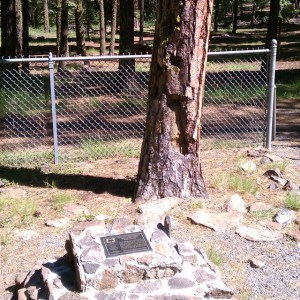


 Itter Castle appeared in the land records of the Austrian Tyrol as early as 1240. When Germany annexed Austria in 1938, Schloss Itter was first leased and later requisitioned outright by the German government, for unspecified “Official use”.

 It was late afternoon as the convoy left for Castle Itter. Leaving Boche Buster and a few Infantry to guard the largest bridge into town. What remained of the convoy fought its way through its last SS roadblock in the early evening, roaring across the last bridge and lurching to a stop in front of Itter’s gate as night began to fall. Itter’s prisoners looked on in dismay. They had expected a column of American tanks and a heavily armed infantry force. What they had here, was a single tank with seven Americans, and a truckload of armed Germans.
 concentration camp administration for the Third Reich and some of the most fanatical soldiers of WWII. Even at this late date SS units were putting up fierce resistance across northern Austria. 100-150 of them attacked on the morning of May 5. Fighting was furious around Castle Itter, the one Sherman providing machine-gun fire support until it was destroyed by a German 88mm gun. By early afternoon Lee was able to get a desperate plea for reinforcements through to the 142nd Infantry, before being cut off. Aware that he’d been unable to give complete information on the enemy’s troop strength and disposition, Lee accepted Jean Borotra’s gallant offer of assistance.
 Literally vaulting over the castle wall, the tennis star ran through a gauntlet of SS strongpoints and ambushes to deliver his message, before donning an American uniform to help fight through to the castle’s defenders. The relief force arrived at around 4pm, as defenders were firing their last ammunition.

 Be that as it may, the cause of death was difficult to detect, the condition of the corpse close to that of someone who had died at sea, of hypothermia and drowning. The dead man’s parents were both deceased, there were no known relatives and the man died friendless. So it was that Glyndwr Michael became the Man who Never Was.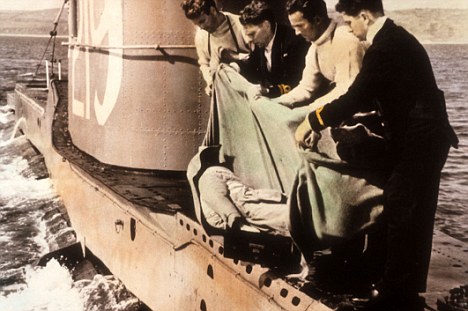
 The non-existent Major William Martin was buried with full military honors in the Huelva cemetery of Nuestra Señora. The headstone reads:


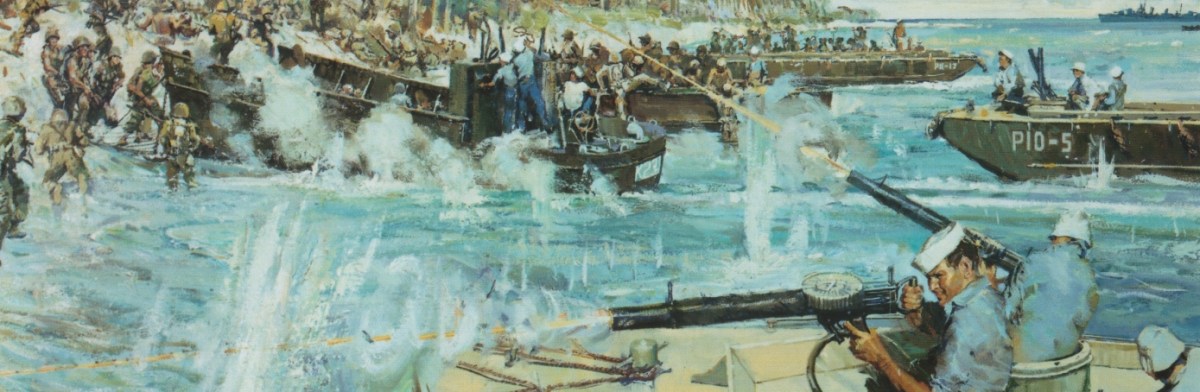
 Today the Exercise Tiger disaster is largely forgotten. Some have charged official cover-up, though information from SHAEF press releases appeared in the August edition of Stars & Stripes. At least three books contain the information. It seems more likely that the immediate need for secrecy and subsequent D-Day invasion swallowed the Tiger disaster, whole. History has a way of doing that.


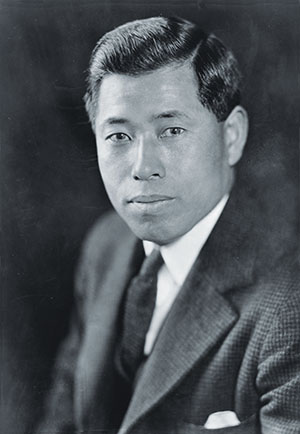 Isoroku Takano was born in Niigata, the son of a middle-ranked samurai of the Nagaoka Domain. His first name “Isoroku”, translating as “56”, refers to his father’s age at the birth of his son. At this time, it was common practice that samurai families without sons would “adopt” suitable young men, in order to carry on the family name, rank, and the income that came with it. The young man so adopted would carry the family name. So it was that Isoroku Takano became Isoroku Yamamoto in 1916, at the age of 32.
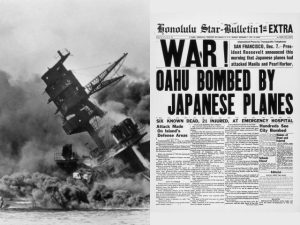 Many believed that Yamamoto’s career was finished when his old adversary Hideki Tōjō ascended to the Prime Ministership in 1941. Yet there was none better to run the combined fleet. When the pro-war faction took control of the Japanese government, he bowed to the will of his superiors. It was Isoroku Yamamoto who was tasked with planning the attack on Pearl Harbor.
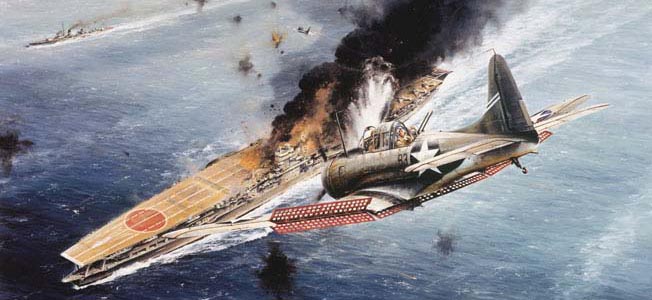 American carrier based Torpedo bombers were slaughtered in their attack, with 36 out of 42 shot down. Yet Japanese defenses had been caught off-guard, their carriers busy rearming and refueling planes when American dive-bombers arrived.
 Midway was a disaster for the Imperial Japanese navy. The carriers Akagi, Kaga, Soryu and Hiryu, the entire strength of the task force, went to the bottom. The Japanese also lost the heavy cruiser Mikuma, along with 344 aircraft and 5,000 sailors. Much has been made of the loss of Japanese aircrews at Midway, but two-thirds of them survived. The greater long term disaster, may have been the loss of all those trained aircraft mechanics and ground crew who went down with their carriers.
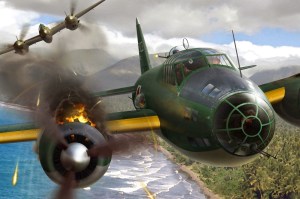 tour throughout the South Pacific. US naval intelligence intercepted and decoded his schedule. The order for “Operation Vengeance” went down the chain of command from President Roosevelt to Secretary of the Navy Frank Knox to Naval Operations Admiral Ernest King to Admiral Chester Nimitz at Pearl Harbor. Sixteen Lockheed P-38 Lightnings, the only fighters capable of the ranges involved, were dispatched from Guadalcanal on April 17 with the order: “Get Yamamoto”.
 intercepted over Rabaul on April 18, 1943. Knowing only that his target was “an important high value officer”, 1st Lieutenant Rex Barber opened up on the first Japanese transport until smoke billowed from its left engine. Yamamoto’s body was found in the wreckage the following day with a .50 caliber bullet wound in his shoulder, another in his head. He was dead before he hit the ground.


 Exhausted, sunburned and aching with thirst, Tonelli still refused when a Japanese soldier demanded his Notre Dame class ring. As the guard reached for his sword, a nearby prisoner shouted “Give it to him. It’s not worth dying for”.
 The hellish 60-day journey aboard the filthy, cramped merchant vessel began in late 1944, destined for slave labor camps in mainland Japan. Tonelli was barely 100 pounds on arrival, his body ravaged by malaria and intestinal parasites. He was barely half the man who once played fullback at Notre Dame Stadium, Soldier Field and Comiskey Park.


 Melvin attended a year at Brooklyn College before being drafted into the Army, in WWII. After attending Army Specialized Training at VMI, Corporal Kaminsky joined the 1104th Combat Engineers Battalion, 78th Infantry Division in the European theater. There, he served through the end of the war. Most of his work was in finding and defusing explosives, though on five occasions his unit had to drop their tools and fight as Infantry.
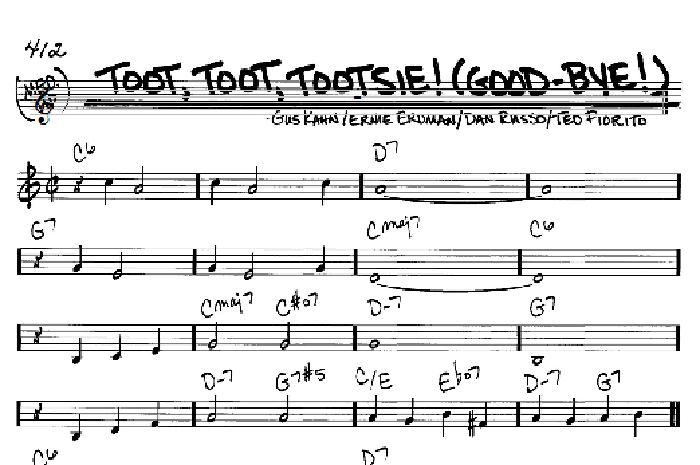
 German soldiers singing a beer hall song, from the other side. Kaminsky grabbed a bullhorn and serenaded the Germans back, singing them an old tune that Al Jolson used to perform in black face, “Toot Toot Tootsie, Goodbye”. Polite applause could be heard from across the river, afterward. I can’t imagine many Allied soldiers ever tried to serenade their Nazi adversaries during World War II. The ones who actually pulled it off must number, precisely, one.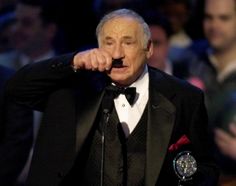
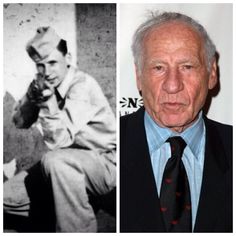
 Marvin Hamlisch, Jonathan Tunick, Mike Nichols, Whoopi Goldberg, Scott Rudin, and Robert Lopez. As of this date, Brooks only needs another Oscar to be the first “Double EGOT” in history.

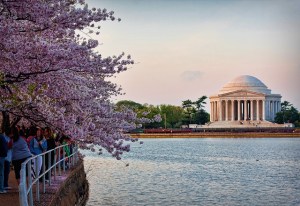
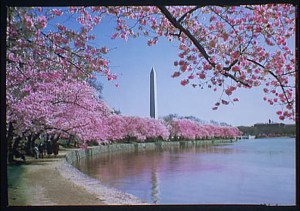 1934 city commissioners sponsored a three-day celebration of the late March blossoming cherry trees, which grew into the annual Cherry Blossom Festival.




You must be logged in to post a comment.