

The Municipal Airport in Portsmouth NH was opened in the 1930s, expanding in 1951 to become a Strategic Air Command (SAC) base. The name was changed to Pease Air Force Base in 1957, in honor of Harl Pease, Jr., recipient of the Medal of Honor and Distinguished Flying Cross for heroism that led to his death in World War II.
The Japanese war machine seemed unstoppable in the early part of the war. In 1942, that machine was advancing on the Philippines.
United States Army Air Corps Captain Harl Pease was ordered to lead three battered B-17 Flying Fortresses to Del Monte field in Mindanao, to evacuate General Douglas MacArthur, his family and staff, to Australia. One of the planes was forced to abort early, while the other developed engine trouble and crashed. Pease alone was able to land his Fortress, despite inoperative wheel brakes and used ration tins covering bullet holes.

MacArthur was horrified at the sight of that beat up aircraft, and refused to put his wife and son on board. The family would wait two more days before MacArthur made his famous exit, saying, “I shall return”.
Harl Pease wasn’t supposed to go on the “maximum effort” mission against Rabaul, since his aircraft was down for repairs. But he was determined. Harl Pease and a few volunteers grabbed an old trainer aircraft on August 7, too beat up for combat service. Its engines needed overhaul, some armament had been dismounted, and the electric fuel-transfer pump had been scavenged for parts. Pease had a fuel tank installed in the bomb bay and a hand pump was rigged to transfer fuel. In fewer than three hours, he and his crew were on their way.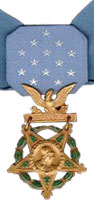
Captain Pease’ Medal of Honor citation tells the story: “When 1 engine of the bombardment airplane of which he was pilot failed during a bombing mission over New Guinea, Capt. Pease was forced to return to a base in Australia. Knowing that all available airplanes of his group were to participate the next day in an attack on an enemy-held airdrome near Rabaul, New Britain, although he was not scheduled to take part in this mission, Capt. Pease selected the most serviceable airplane at this base and prepared it for combat, knowing that it had been found and declared unserviceable for combat missions. With the members of his combat crew, who volunteered to accompany him, he rejoined his squadron at Port Moresby, New Guinea, at 1 a.m. on 7 August, after having flown almost continuously since early the preceding morning. With only 3 hours’ rest, he took off with his squadron for the attack. Throughout the long flight to Rabaul, New Britain, he managed by skillful flying of his unserviceable airplane to maintain his position in the group. When the formation was intercepted by about 30 enemy fighter airplanes before reaching the target, Capt. Pease, on the wing which bore the brunt of the hostile attack, by gallant action and the accurate shooting by his crew, succeeded in destroying several Zeros before dropping his bombs on the hostile base as planned, this in spite of continuous enemy attacks. The fight with the enemy pursuit lasted 25 minutes until the group dived into cloud cover. After leaving the target, Capt. Pease’s aircraft fell behind the balance of the group due to unknown difficulties as a result of the combat, and was unable to reach this cover before the enemy pursuit succeeded in igniting 1 of his bomb bay tanks. He was seen to drop the flaming tank. It is believed that Capt. Pease’s airplane and crew were subsequently shot down in flames, as they did not return to their base. In voluntarily performing this mission Capt. Pease contributed materially to the success of the group, and displayed high devotion to duty, valor, and complete contempt for personal danger. His undaunted bravery has been a great inspiration to the officers and men of his unit”.
Pease was presumed lost, until Father George Lepping was captured, finding him and one of his airmen languishing in a Japanese POW camp. Captain Pease was well respected by the other POWs, and even some of his Japanese guards. “You, you ah, Captain Boeing?“, they would say. Pease would stand up straight and say, “Me, me Captain Boeing.”
Japanese officers were a different story. They would beat the prisoners savagely on any provocation, or none at all.
On October 8, 1942, Captain Harl Pease, Jr. was taken into the jungle along with three other Americans and two Australian prisoners. They were given picks and shovels and forced to dig their own graves. And then each was beheaded, by sword. Captain Pease was 25.
Decades later, an elderly Japanese veteran passed away, and his family found his war diary. This man had been one of the guards ordered along, on the day of Pease’ murder.
 The diary tells of a respect this man had for “Captain Boeing”. Beaten almost senseless, his arms tied so tightly that his elbows touched behind his back, Captain Pease was driven to his knees in the last moments of his life. Knowing he was about to die, Harl Pease uttered the most searing insult possible against an expert swordsman and self-styled “samurai”. Particularly one with such a helpless victim. It was the single word, in Japanese. “Once!“.


 Once, the small dog was able to perform a task in minutes that otherwise would have taken an airstrip out of service for three days, and exposed an entire construction battalion to enemy fire. The air field at Lingayen Gulf, Luzon, was crucial to the Allied war effort, and the signal corps needed to run a telegraph wire across the field. A 70′ long, 8” pipe crossed underneath the air strip, half filled with dirt.
 Smoky toured all over the world after the war, appearing in over 42 television programs and entertaining thousands at veteran’s hospitals. In June 1945, Smoky toured the 120th General Hospital in Manila, visiting with wounded GIs from the Battle of Luzon. She’s considered to be the first therapy dog, and credited with expanding interest in what had hitherto been an obscure breed.
 Bill Wynne was 90 years old in 2012, when he was “flabbergasted” to be approached by Australian authorities. They explained that an Australian army nurse had purchased the dog from a Queen Street pet store, becoming separated in the jungles of New Guinea. 68 years later, the Australians had come to award his dog a medal.
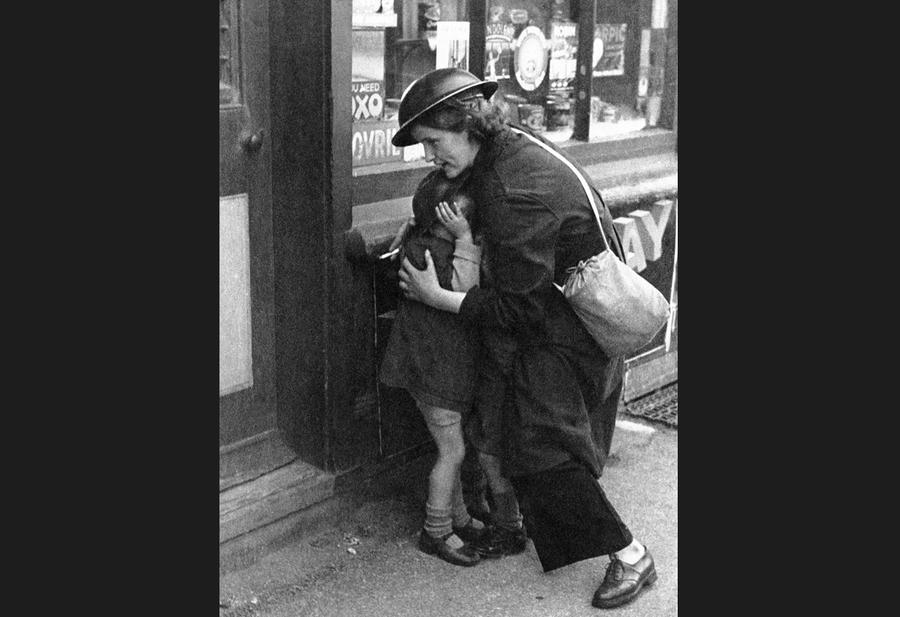


 Germany needed air supremacy before “Operation Sea Lion”, the amphibious invasion of England, could begin. Luftwaffe commander Hermann Göring said he would have it in four days.


 Czechoslovakia fell to the Nazis on the Ides of March, 1939, Czech armed forces having been ordered to offer no resistance. Some 4,000 Czech soldiers and airmen managed to get out, most escaping to neighboring Poland.
 British military authorities were slow to recognize the flying skills of the Polskie Siły Powietrzne (Polish Air Forces), the first fighter squadrons only seeing action in the third phase of the Battle of Britain. Despite the late start, Polish flying skills proved superior to those of less-experienced Commonwealth pilots. The 303rd Polish fighter squadron became the most successful RAF fighter unit of the period, its most prolific flying ace being Czech Sergeant Josef František. He was killed in action in the last phase of the Battle of Britain, the day after his 26th birthday.


 Mad Jack was sent off to Burma, following the defeat of Nazi Germany. He was disappointed by the swift end to the war brought about by the American bombings at Hiroshima and Nagasaki, saying “If it wasn’t for those damn Yanks, we could have kept the war going another 10 years!”



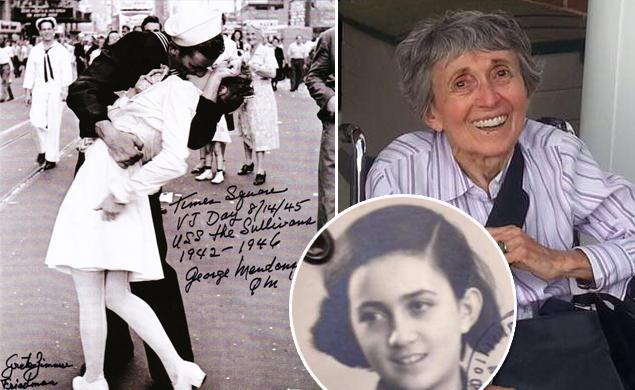
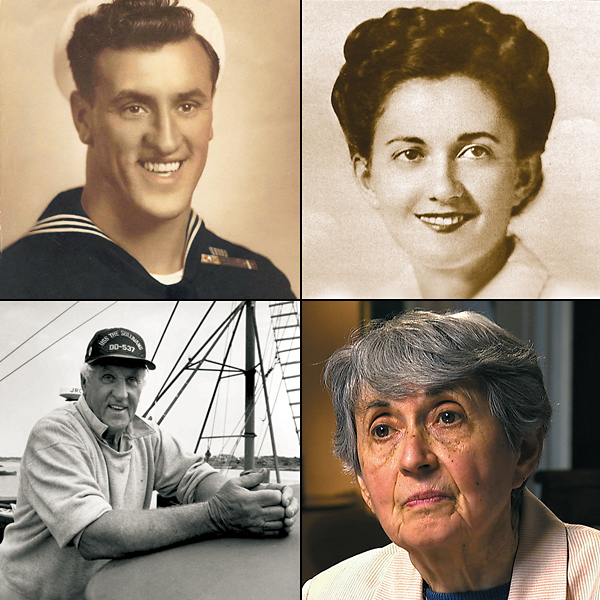
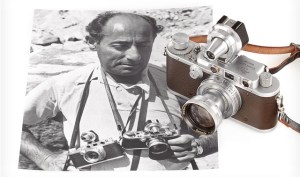 Reporters from the AP, NY Times, NY Daily News and others descended on Times Square to record the spontaneous celebration.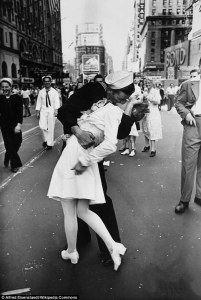
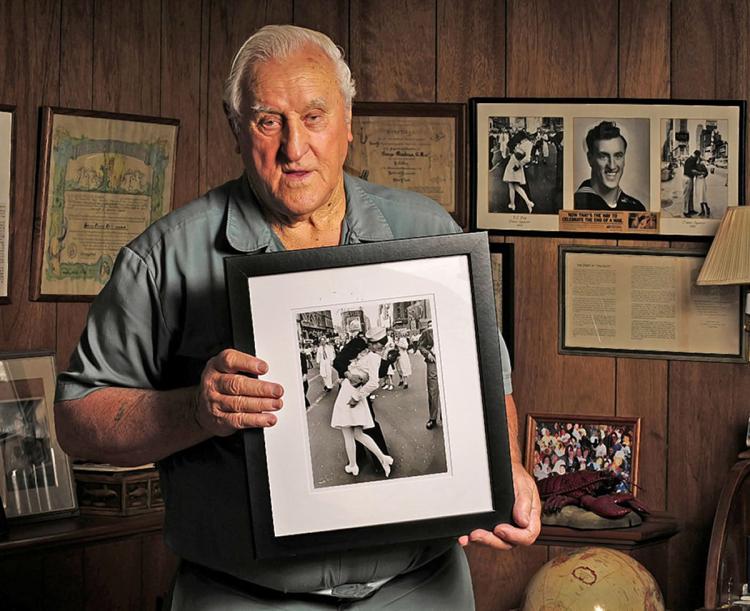 This year, the couple celebrates their 68th wedding anniversary. Rita says she wasn’t angry that her husband kissed another woman on their first date. She points out that she can been seen grinning in the background of the famous picture. She will admit, however, ‘In all these years, George has never kissed me like that.’


 Kennedy and Willy remained aboard as BQ-8 completed its first remote controlled turn at 2,000′, near the North Sea coast. They removed the safety pin arming the explosive, Kennedy sending the code “Spade Flush”, to signal the task was complete. They were his last words. The aircraft exploded two minutes later, a shower of wreckage coming to earth near the village of Blythburgh in Suffolk, England. A series of small fires were started and 59 buildings were damaged, but there were no casualties on the ground. The bodies of Kennedy and Willy were never recovered.
 When Joseph Kennedy Jr. was born, his grandfather John F. Fitzgerald, then Mayor of Boston, said, “This child is the future President of the nation”. He had been a delegate to the Democrat’s National Convention in 1940, and planned to run for Massachusetts’ 11th congressional district in 1946.


 Indianapolis made her delivery on July 26, arriving at Guam two days later and then heading for Leyte to take part in the planned invasion of Japan. She was expected to arrive on the 31st.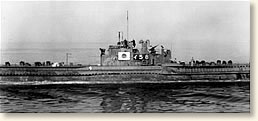


You must be logged in to post a comment.