

Jiles Richardson was a Texas DJ in 1958, the year he found recording success of his own with a song called “Chantilly Lace”.
Richie Valenzuela was only 16 when Del-Fi Records producer Bob Keane discovered the singer in California. “Donna”, a song he had written for his high school sweetheart Donna Ludwig, was on the way to #2 on the Billboard Hot 100, right alongside the 45’s “B” side, an old Mexican standard turned Rock & Roll tune called “La Bamba”. By 1958 he was one of the hottest young recording artists of his time.
Charles Hardin Holley, “Buddy” to his friends and family, learned guitar, four-string banjo and lap steel guitar from his older brothers, Travis and Larry. The boy took to music at an early age, winning his first talent contest at the age of five. A music critic would one day describe the Lubbock Texas native as “the single most influential creative force in early rock and roll.” Contemporary and later musicians claiming inspiration from his work include the Beatles, the Rolling Stones, Bob Dylan, and Elvis Costello.
58 years ago, his name changed as the result of a misspelling in a recording contract, Holly was headliner of the “The Winter Dance Party Tour”. Richardson, performing as the “Big Bopper” and Valenzuela, professionally known as Ritchie Valens, were on the tour, along with Dion and the Belmonts, Holly’s friend from Lubbock and fellow musician Waylon Jennings, and a young Owasso, Oklahoma Rockabilly musician and former “Crickets” band member, an enrolled member of the Cherokee Nation named Tommy Allsup.
The musical tour included 24 cities in 3 weeks, a grueling schedule under the best of circumstances, but theirs were anything but the best. The tour bus had no heat, and a three-week winter bus tour of the upper Midwest is no place to be without heat. It was so cold that Holly’s drummer, Carl Bunch, suffered frostbite in his feet and left the tour in Clear Lake, Iowa.
Holly was sick of it, and decided to charter a plane for himself and some of his guys. At least that would give him time to do laundry before the next performance.
Dwyer Flying Service got the charter with a 1947 Beechcraft Bonanza, at $36 per person. There’s a popular story that the four-seater aircraft was called “American Pie”, but the story is a myth. The single engine airplane bore only the tail number: N3794N.
Richardson was running a fever at the time, so Waylon Jennings gave up his seat so the Big Bopper could ride in comfort. Allsup and Valens flipped a coin for the last seat, the coin landing heads up. Ritchie Valens had won the coin toss.
 On learning that Jennings wasn’t going to fly, Holly said “Well, I hope your old bus freezes up.” Jennings replied “Well, I hope your plane crashes.” It was just a good ribbing between friends, but the comment would haunt Jennings for the rest of his life.
N3794N left the ground in a snowstorm, shortly after 1:00am on February 3. The pilot, Roger Peterson, may have been inexperienced with the instrumentation, or he may have become disoriented in near whiteout conditions. One wing hit the ground in a cornfield outside of Clear Lake, and the aircraft corkscrewed into the ground, throwing the three musicians clear of the plane. There was no fire, just a small aircraft being swallowed up in a snow covered cornfield. The bodies would lie in the field until late that afternoon.
The show would go on. Needing to fill in at the next stop in Moorhead, Minnesota, they found a 15 year old talent across the state line in Fargo, and so began the musical career of Bobby Vee.
A boy named Don McLean heard about the plane crash while doing his morning paper route. One day, the future singer/songwriter would pen the words “February made me shiver, with every paper I’d deliver”.
Allsup returned to Odessa, resuming his musical career and opening a club in Dallas. in 1979. He called it “Tommy’s Heads Up Saloon”, after the coin toss that saved his life.
Distraught, Buddy Holly’s widow miscarried their only child shortly after the wreck. His last song, “It Doesn’t Matter Anymore”, reached #1 on the UK charts on April 24, 1959, the first posthumous release ever to do so. In the US the song charted at 13 on the Billboard Hot 100, it would be his last top 20 hit in the country. Inscribed on Ritchie Valens’ gravestone are the words, “Come On, Let’s Go.” The last surviving member of Buddy Holly’s 1959 touring band “The Crickets” passed away earlier this year, on January 11. Tommy Allsup was 85.


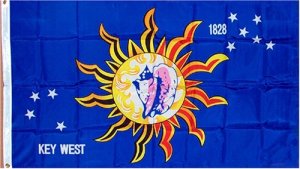


 One minute after declaring his “verbal shot” at the feds, Wardlow “surrendered” to a nearby naval officer, demanding a billion dollars in “foreign aid” in compensation for “the long federal siege.”

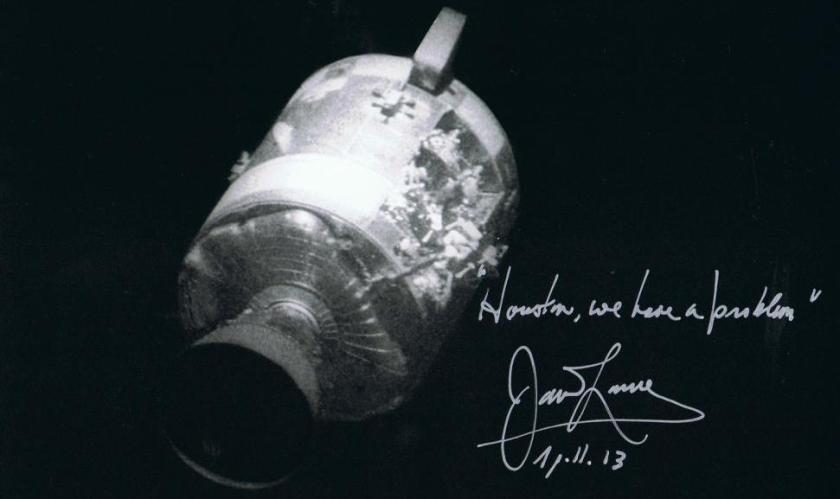
 Jack Swigert was supposed to be the backup pilot for the Command Module, (CM), officially joining the Apollo 13 mission only 48 hours earlier, when prime crew member Ken Mattingly was exposed to German measles. Jim Lovell was the world’s most traveled astronaut, a veteran of two Gemini missions and Apollo 8. By launch day, April 11, 1970, Lovell had racked up 572 space flight hours. For Fred Haise, former backup crew member on Apollo 8 and 11, this would be his first spaceflight.
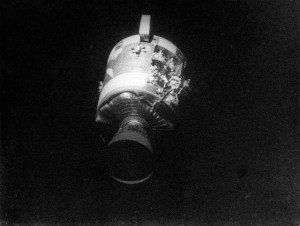
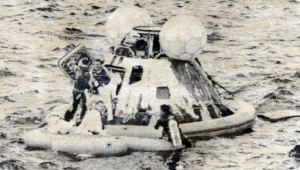
 This situation had been suggested during an earlier training simulation, but had been considered unlikely. As it happened, the accident would have been fatal without access to the Lunar Module.



 losing its National League team to Washington, DC. Only moments before, Padres’ President Buzzie Bavasi had to leave Kroc’s side to investigate concession area water in the clubhouse, when a leak was “promoted” to a flood.
 Buzzie Bavasi did the most to defuse the situation. Taking a cue from Rader’s comments, Bavasi designated the next game in the Houston series “Short Order Cook’s Night”. Any Padres fan who came wearing a chef’s hat, would be admitted into the game for free. Rader, the Astro’s team captain, took the lineup card to home plate wearing an apron with a chef’s hat, slipping the card off a skillet with a spatula and handing it over to the home plate umpire, like a pancake.
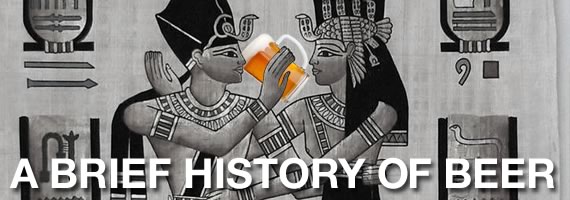


 Portable stills went on sale within a week, and organized smuggling was quick to follow. California grape growers increased acreage by over 700% over the first five years, selling dry blocks of grapes as “bricks of rhine” or “blocks of port”. The mayor of New York City sent instructions on wine making, to his constituents.
 Gaining convictions for breaking a law that everyone hated became increasingly difficult. There were over 7,000 prohibition related arrests in New York alone between 1921 and 1923. Only 27 resulted in convictions.
 “Dry” leaders tried to prohibit consumption of alcohol on military bases in 1941, but military authorities claimed it was good for morale. Brewers were required to allocate 15% of total annual production to be used by the armed forces. So essential were beer manufacturers to the war effort, that teamsters were ordered to end a labor strike against Minneapolis breweries. Near the end of WWII, the army made plans to operate recaptured French breweries, to ensure adequate supplies for the troops.
 18 states continued prohibition at the state level after the national repeal, the last state finally dropping it in 1966. Almost 2/3rds of all states adopted some form of local option, enabling residents of political subdivisions to vote for or against local prohibition. Some counties remain dry to this day. Ironically, Lynchburg County, Tennessee, home to the Jack Daniel distillery, is one such dry county.


 April Fools. The ancient Roman festival of Hilaria, held on March 25, may be a precursor. The Medieval Feast of Fools, held December 28, is still a day on which pranks are played in Spanish-speaking countries.
 Animals were kept at the Tower of London since the 13th century, when Emperor Frederic II sent three leopards to King Henry III. In later years, elephants, lions, even a polar bear were added to the collection, the polar bear trained to catch fish in the Thames.
 In 1957, (you can guess the date), the BBC reported the delightful news that mild winter weather had virtually eradicated the dread spaghetti weevil of Switzerland, and that Swiss farmers were now happily anticipating a bumper crop of spaghetti. Footage showed smiling Swiss peasants, pulling strands of spaghetti down from trees. Apparently, an embarrassingly large number of viewers were fooled. Many called BBC offices, asking how to grow their own spaghetti tree. “Place a piece of spaghetti in a tin of tomato sauce”, callers were told, “and hope for the best.”
 eyewear at a revolutionary price, while leading the way for socially conscious businesses”. On April 1, 2012, the company released its new line of eyeglasses for dogs, appropriately called “Warby Barker”. For only $95, your hipster pooch could be sporting the latest styles in canine eyeware, in irresistible dog treat shades like “Gravy Burst” and “Dusty Bacon.” There was a monocle option too, for those partial to that Prussian Field Marshall look. Anyone falling for the gag, got an “April Fools!” message on their on-line shopping cart.

 Melvin attended a year at Brooklyn College before being drafted into the Army, in WWII. After attending Army Specialized Training at VMI, Corporal Kaminsky joined the 1104th Combat Engineers Battalion, 78th Infantry Division in the European theater. There, he served through the end of the war. Most of his work was in finding and defusing explosives, though on five occasions his unit had to drop their tools and fight as Infantry.
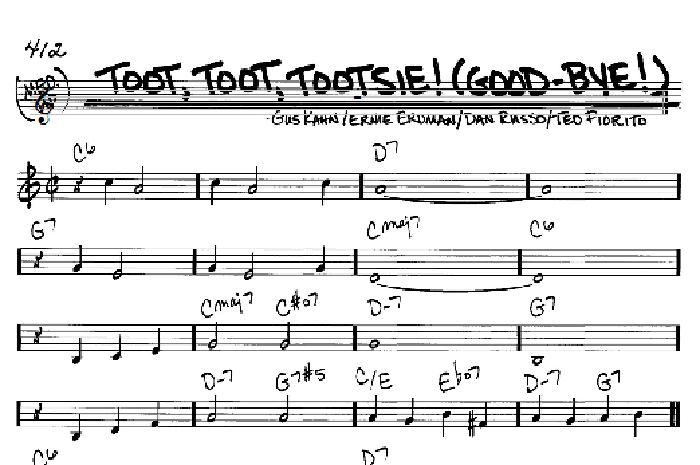
 German soldiers singing a beer hall song, from the other side. Kaminsky grabbed a bullhorn and serenaded the Germans back, singing them an old tune that Al Jolson used to perform in black face, “Toot Toot Tootsie, Goodbye”. Polite applause could be heard from across the river, afterward. I can’t imagine many Allied soldiers ever tried to serenade their Nazi adversaries during World War II. The ones who actually pulled it off must number, precisely, one.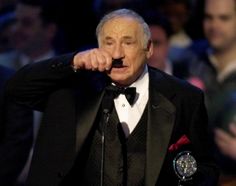
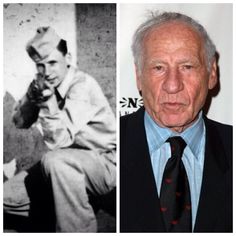
 Marvin Hamlisch, Jonathan Tunick, Mike Nichols, Whoopi Goldberg, Scott Rudin, and Robert Lopez. As of this date, Brooks only needs another Oscar to be the first “Double EGOT” in history.

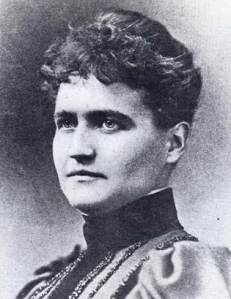
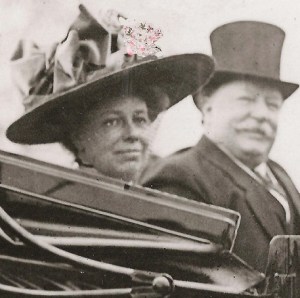

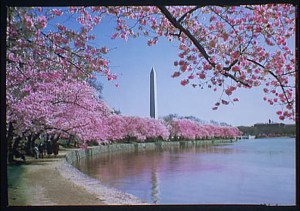 1934 city commissioners sponsored a three-day celebration of the late March blossoming cherry trees, which grew into the annual Cherry Blossom Festival.


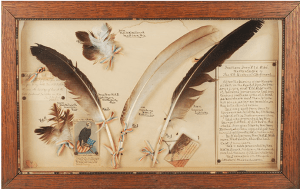
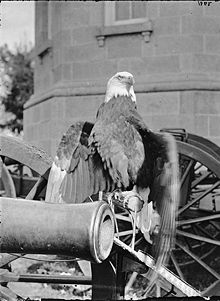 Abe became an inspirational symbol to the troops, like the battle flag carried with each regiment. Colonel Rufus Dawes of the Iron Brigade recalled, “Our eagle usually accompanied us on the bloody field, and I heard [Confederate] prisoners say they would have given more to capture the eagle of the Eighth Wisconsin, than to take a whole brigade of men.”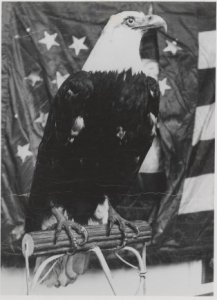


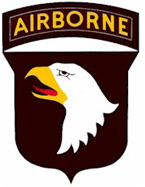 After WWII, elements of the 101st Airborne were mobilized to Little Rock by President Eisenhower to protect the civil rights of the “Little Rock Nine”, a group of black students enrolled in Little Rock Central High School in September 1957, as the result of the US Supreme Court’s landmark ruling in the historic Brown v. Board of Education case.


 100 years ago, “Sumerologists” labored to learn the customs and ways of this ancient civilization. One such team pieced together a stone tablet and, through years of study, managed to decipher the cuneiform words contained thereon.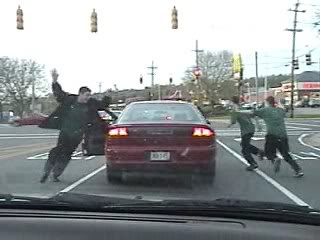


You must be logged in to post a comment.