

Boston was a two-team town in 1914, when the American League Red Sox hired 6’2″, 200lb left handed rookie George Herman “Babe” Ruth from the Baltimore Orioles. The American League hadn’t yet adopted the designated hitter rule, they wouldn’t do that until 1973. The Red Sox started Ruth as pitcher, but it was his bat that made him one of the best. Unlike most power hitters, Babe Ruth maintained his high batting average, ending his career with a .342 lifetime average.
Four years later, Red Sox owner and theatrical producer Harry Frazee sold Ruth to the arch-rival New York Yankees, to finance the production of a Broadway musical. Thus began an 86-year World Series drought, ending only in 2004. To this day, Boston-area mothers use the “Curse of the Bambino” to scare wayward children into acting right. But that’s a story for another day.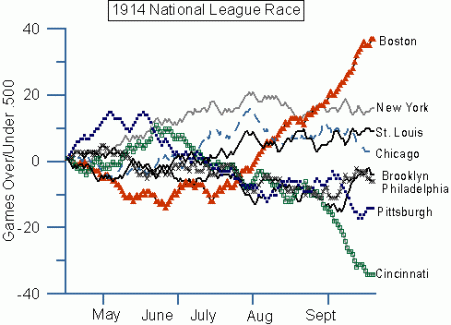
On the National League side, the Boston Braves were in dead last place in July 1914, with a record of 26 wins and 40 losses, 11½ games behind the first place Giants. As with the last ten years straight, the view this year was shaping up to be one from the basement. The Braves didn’t even have a home field advantage for the playoffs that year, they had abandoned their 43-year old home at South End Grounds that August. In post-season the Boston Braves were renting Fenway Park from their cross-town rival Red Sox.
The turnaround started on this day with a three game road trip to Redland Field, in Cincinnati, where the Braves won three consecutive games with 1-0, 6-2 and 3-2 victories over the Reds.
The Braves played 37 games through the end of the regular season, winning all but two.
They must have been underdogs going into the World Series against the Philadelphia Athletics, who had just won their fourth American League pennant in 5 years, 8½ games ahead of second place.
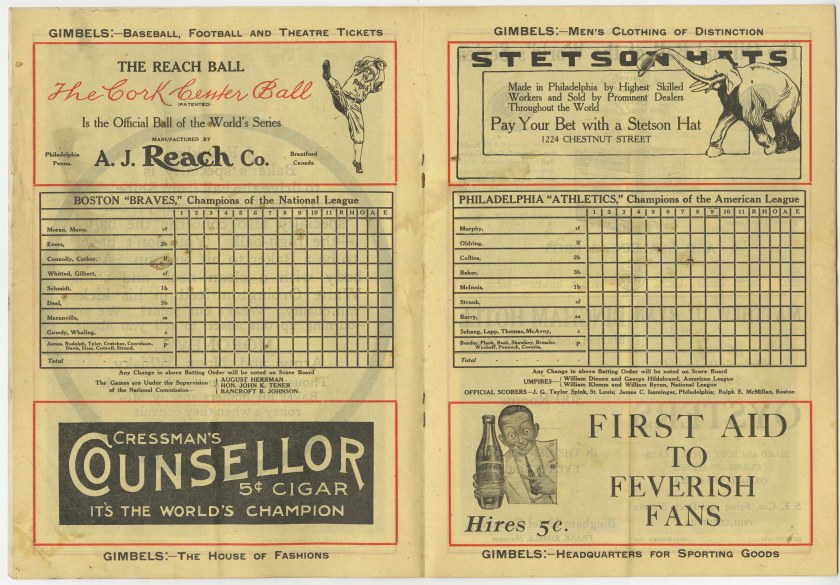
Game one in Philadelphia was a Boston Romp, ending with a 7-1 victory. Game two had to be a cliff hanger, going into the 9th inning with the score tied at 0. Infielder Charlie Deal found himself on second when A’s center fielder Amos Strunk lost the ball in the sun. Deal scored the game’s only run on Les Mann’s two-out single to center field.
Game 3 in Boston was the real thriller. The score was tied at two at the end of regulation play, with the Athletics scoring two runs in the top of the 10th. Boston came back with two runs in the bottom of the inning, and won the game in the 12th when A’s second baseman Donnie Bush threw a wild ball past third, with outfielder and pinch runner Les Mann scoring the winning run from second.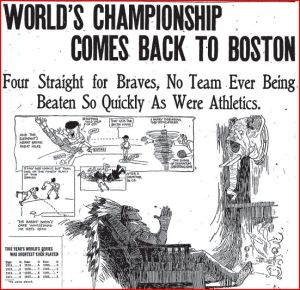
It was two outs in the 5th inning when Braves shortstop Johnny Evers hit a two-run single to center field, putting Boston ahead 3-1 in game 4. The A’s never responded.
The “Miracle Braves” had emerged from dead-last to defeat the defending World Champion Philadelphia Athletics, in the first four-game sweep in World Series history.
In 2011, a descendant of shortstop Johnny Evers consigned his ancestor’s 1914 World Series ring to auction, raising an intriguing question. Today we take team-issued Championship rings for granted, but the practice is not thought to have begun, until many years later. Prior to that and dating well back to the previous century, World Series winners were rewarded with team-issued pins.
This was the second such ring known t exist, the first issued to shortstop Walter James Vincent “Rabbit” Maranville. It may be that Evers and Maranville had the rings made for themselves, or maybe players were offered a choice of reward. Perhaps rings were offered to all players, but only at their own expense, causing most of them to pass.


Perhaps these two rings are merely the only two known to have survived. Be that as it may, at least some players had begun to associate rings with championships, long before their first official issue, in 1922.


 The states turned over control of immigration to the Federal Government in 1890, and an immigration control office was opened on a Barge on the Battery at the tip of Manhattan.

 In 1857, President James Buchanan appointed Lieutenant Edward Beale to survey and build a 1,000-mile wagon road from Fort Defiance, New Mexico to the Arizona/California border. The survey continued an experiment first suggested by Secretary of War and future President of the Confederate States of America Jefferson Davis, in the use of camels as draft animals.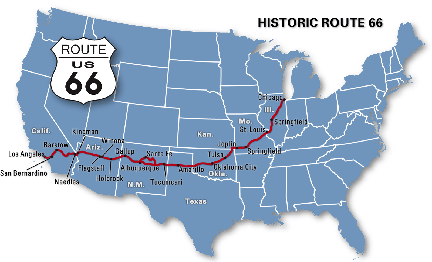
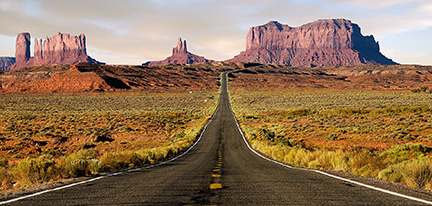


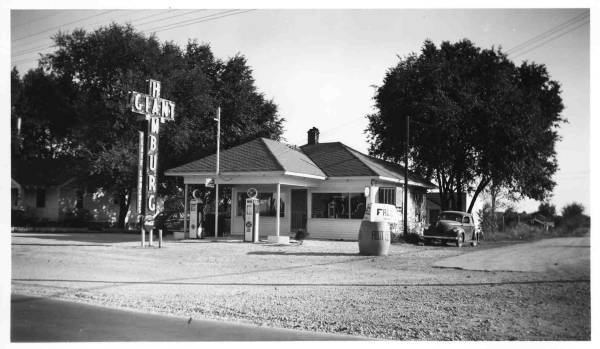


 By the mid-50s, Missouri upgraded its sections of US 66 to four lanes, by-passing town centers and the businesses that went with them.
 The last parts of Route 66 were decertified by state highway and transportation officials on this day in 1985. In some cities, the old road is now the “Business Loop”. It’s been carefully preserved in many areas, and abandoned in others.

 As the story goes, it was 1853, at an upscale resort in Saratoga Springs New York. A wealthy and somewhat unpleasant customer sent his fried potatoes back to the kitchen, complaining that they were too soggy, and they didn’t have enough salt. George Crum, back in the kitchen, doesn’t seem to have been a very nice guy, himself. Crum thought he’d fix this guy, so he sliced some potatoes wafer-thin, fried them up and doused the hell out of them, with salt. Sending them out to the table and fully expecting the customer to choke on them, Crum was astonished to learn that the guy loved them. He ordered more, and George Crum decided to add “Saratoga Chips” to the menu. The potato chip was born.
 Lay began buying up small regional competitors at the same time that another company specializing in corn chips was doing the same. “Frito”, the Spanish word for “fried”, merged with Lay in 1961 to become – you got it – Frito-Lay. By 1965, the year Frito-Lay merged with Pepsi-Cola to become PepsiCo, Lay’s was the #1 potato chip brand in every state in America.

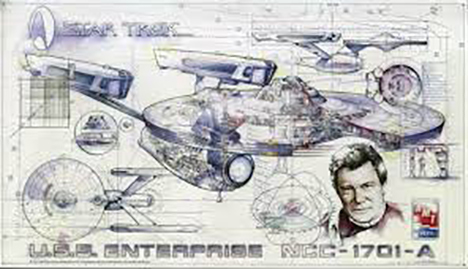
 Roddenberry decided on James T. Kirk, based on a journal entry of the 18th century British explorer, Captain James Cook: “ambition leads me … farther than any other man has been before me”.


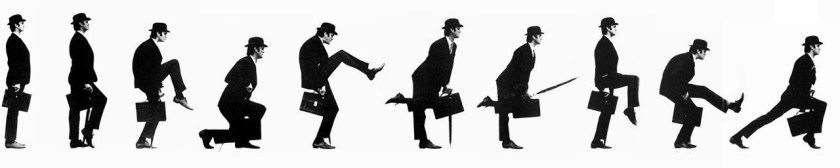


 The group reunited in 1974 to do the Holy Grail, which was filmed on location in Scotland, on a budget of £229,000. The money was raised in part by investments from musical figures like Pink Floyd, Jethro Tull and Led Zeppelin backer Tony Stratton-Smith. Investors in the film wanted to cut the famous Black Knight scene, (“None shall pass”), but were eventually persuaded to keep it in the film. Good thing, the scene became second only to the Holy Hand Grenade of Antioch and the Killer Rabbit. “What’s he going to do, nibble my bum?”

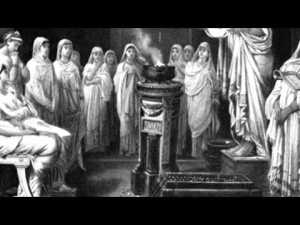
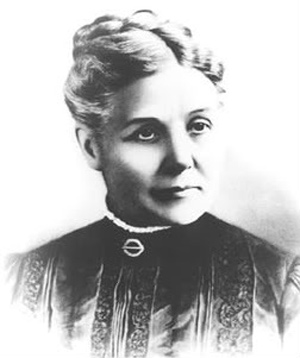

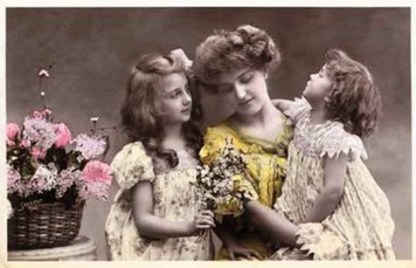 Anna Jarvis believed Mother’s Day to be a time of personal celebration, a time when families would gather to love and honor their mother.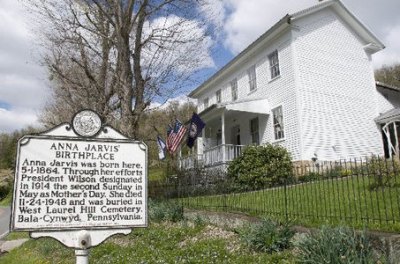


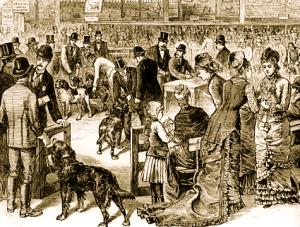 The world’s most famous dog show was first held on May 8, 1877, and called the “First Annual NY Bench Show.” The venue was Gilmore’s Garden at the corner of Madison Avenue and 26th Street, a hall which would later be known as Madison Square Garden. Interestingly, another popular Gilmore Garden event of the era was boxing. Competitive boxing was illegal in New York in those days, so events were billed as “exhibitions” or “illustrated lectures.” I love that last one.
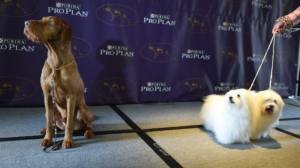 1,200 dogs arrived for that first show, in an event so popular that the originally planned three days morphed into four. The Westminster Kennel Club donated all proceeds from the fourth day to the ASPCA, for the creation of a home for stray and disabled dogs. The organization remains supportive of animal charities, to this day.
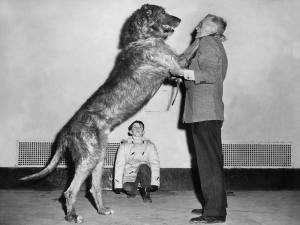 one in 1946. Even so, “Best in Show” was awarded fifteen minutes earlier than it had been, the year before. I wonder how many puppies were named “Tug” that year. The Westminster dog show was first televised in 1948, three years before the first nationally televised college football game.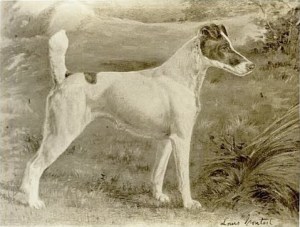
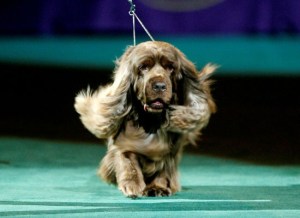
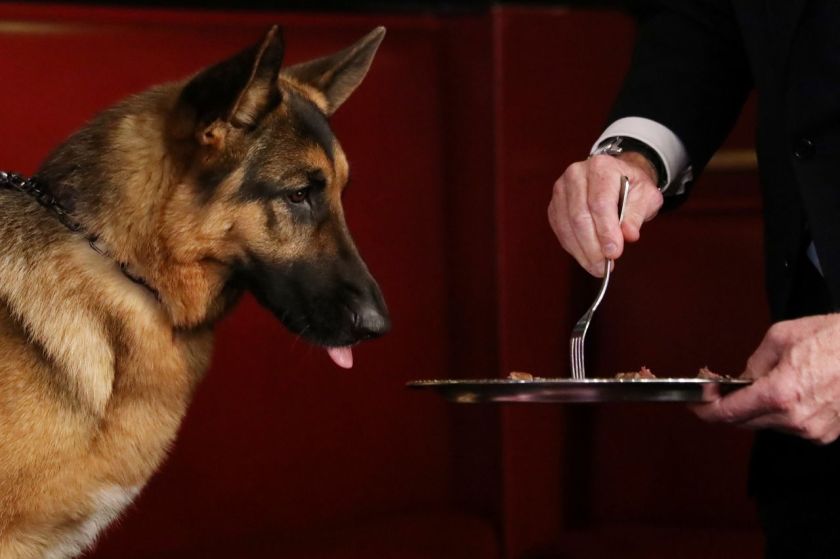
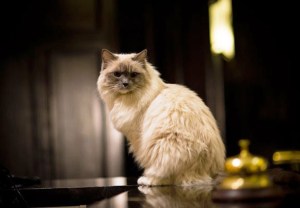 Since the late 60s, the Westminster Best in Show winner has celebrated at Sardi’s, a popular mid-town eatery in the theater district and birthplace of the Tony award. And then the Nanny State descended, pronouncing that 2012 would be their last. There shalt be no dogs dining any restaurants, not while Mayor Bloomberg is around.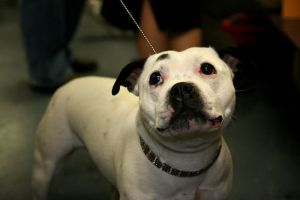


 McCrae fought in one of the most horrendous battles of WWI, the second battle of Ypres, in the Flanders region of Belgium. Imperial Germany launched one of the first chemical attacks in history, attacking the Canadian position with chlorine gas on April 22, 1915. The Canadian line was broken but quickly reformed, in near-constant fighting that lasted for over two weeks.


 The vivid red flower blooming on the battlefields of Belgium, France and Gallipoli came to symbolize the staggering loss of life in that war. Since then, the red poppy has become an internationally recognized symbol of remembrance of the lives lost in all wars. I keep a red poppy pinned to my briefcase and another on the visor of my car. A reminder that no free citizen of a self-governing Republic, should ever forget where we come from. Or the prices paid by our forebears, to get us here.


 Gehrig was pitching for Columbia University against Williams College on April 18, 1923, the day that Babe Ruth hit the first home run out of the brand new Yankee Stadium. Though Columbia would lose the game, Gehrig struck out seventeen batters to set a team record.
 Gehrig appeared at Yankee Stadium on “Lou Gehrig Appreciation Day”, July 4, 1939. He was awarded trophies and other tokens of affection by the New York sports media, fellow players and groundskeepers. He would place each one on the ground, already too weak to hold them. Addressing his fans, Gehrig described himself as “The Luckiest Man on the Face of the Earth”.


You must be logged in to post a comment.