

 Randall Hank Williams was born May 26, 1949 in Shreveport, Louisiana, the son of country singer/songwriter, Hiram King “Hank” Williams. Surprisingly for a guy who could neither read nor notate music and died at the age of 29, the elder Williams has been described as “one of the most significant and influential American singers and songwriters of the 20th century”.
His father called the younger Williams “Bocephus” after the ventriloquist’s dummy used by Grand Ole Opry comedian Rod Brasfield.
A lifelong problem with drugs and alcohol ended the elder Williams’ life, way too early. All that police found in his Cadillac, were empty beer cans and handwritten, unfinished song lyrics.
The younger Williams was raised by his mother Audrey, after his father’s untimely death in 1953. The apple didn’t fall far from the musical tree. Audrey encouraged the boy to copy his father’s dress and musical style. “Hank Williams Jr.” made his stage debut in Swainsboro Georgia, on March 22, 1958, at the age of 8. 
Some of the top musicians, singers and songwriters of the era came to visit the family: Johnny Cash, Fats Domino, Earl Scruggs, and Jerry Lee Lewis, to name a few. They all taught Bocephus a little of their musical instruments, and musical styles.
Bocephus was nearly killed in 1975, while climbing Ajax Peak in Montana. The snow collapsed beneath him, plunging him nearly 500 feet to the rocks below. There were multiple skull and facial fractures. Williams required several reconstructive surgeries, and had to learn to talk, and to sing, all over again. The signature look of beard, sunglasses and cowboy hat have all become part of his brand, but it all began to hide the scars from that mountain climbing accident.
Williams’ work in the 60s and 70s earned him a string of country music hits, but he wanted to be more than a “Hank Williams impersonator”. A prodigously talented musician in his own right, Williams’ repertoire includes guitar, bass guitar, upright bass, steel guitar, banjo, dobro, piano, keyboards, harmonica, fiddle, and drums.
The country music establishment was slow to accept the new sound, but Hank Williams Jr. would not be denied. Sometimes recording and releasing two albums a year, Williams released 21 albums between 1979 and 1990, all certified “gold” by the Recording Industry Association of America. There were 44 Top Ten singles on the Billboard Country charts, including 10 No. 1 singles over the course of his career. In 1982, Bocephus had nine albums on the Billboard Top Country Albums chart, simultaneously.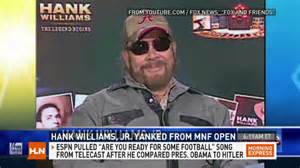
From 1989 to 2011, a version of Bocephus’ song “All My Rowdy Friends Are Coming Over Tonight” opened Monday Night Football broadcasts. In an October 3, 2011 interview with Fox News’ “Fox & Friends”, Williams described a June golf game between President Barack Obama and Speaker John Boehner as “one of the biggest political mistakes ever”. Asked to explain, Williams said, “Come on. That’d be like Hitler playing golf with Netanyahu … in the shape this country is in?”
Predictably, the media outrage machine came to life – this would not do. ESPN pulled the song from that night’s football game, the first of the season. Williams described his analogy as “extreme – but it was to make a point…I was simply trying to explain how stupid it seemed to me – how ludicrous that pairing was. They’re polar opposites, and it made no sense. They don’t see eye-to-eye and never will.” No matter. ESPN announced three days later that, after 22 years, Williams and his song were being pulled from all future broadcasts. ABC and the National Football League, were quick to follow suit. 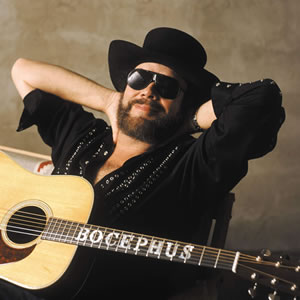
For the media, the business model depends on renting an audience to a sponsor. The “controversy” would be squeezed for all it was worth, but Bocephus would have the last word. He responded with a song, criticizing President Obama, ESPN and Fox & Friends, calling it “Keep the Change”. As I write this, the song has had over 988,000 views on You Tube. Williams released the track on iTunes and via free download at his website, where it was downloaded over 180,000 times in just two days.
In the words of the song, Bocephus and all his rowdy friends were “outta there”. A demonstration that, in an age of suffocating and humorless political correctness, even then, “A Country Boy will Survive”.


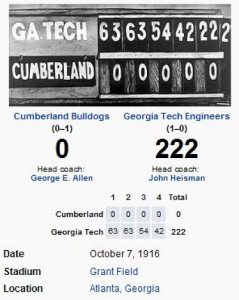
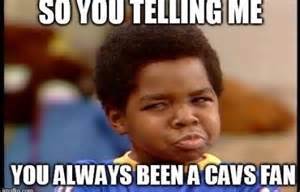
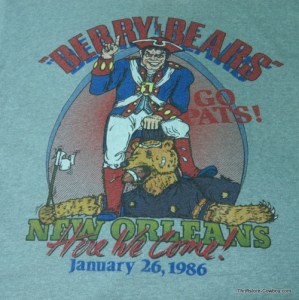 For those of us who rooted for the New England Patriots during the losing years, the 1986 Super Bowl XX was the worst moment ever. We all had our “Berry da Bears” shirts on. Life was good when New England took the earliest lead in Super Bowl history, with a field goal at 1:19.

 Saint Patrick’s Day is observed on March 17, the date generally agreed to correspond with the date of his enslavement in 432, and with his death in 460. The date is celebrated in Ireland as both a liturgical and non-liturgical holiday, where in some diocese it is both a solemnity and a holy day of obligation. Outside of Ireland, the day has become a general celebration of all things Irish.
 Christian Ireland, with its green color evoking rebirth and eternal life. The three leaves symbolize the “triple goddess” of ancient Ireland. Patrick is said to have taught the Irish about the Holy Trinity, using the three leaves of the shamrock to illustrate the Christian teaching of three persons in one God: the Father, the Son, and the Holy Spirit.

 As with cartoonist Charles M Shulz, those who knew Jacob Rubenstein called him “Sparky”. Some say the nickname was due to a resemblance to “Sparkplug”, the old nag with the patchwork blanket, from the Snuffy Smith cartoon strip. Rubenstein hated the nickname and was quick to fight anyone who called him that. It may have been that quick temper, that made the name stick.
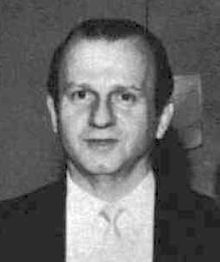 prostitution. There were rumored associations with Mafia boss Santo Trafficante. The less-than-honest part of the Dallas police force knew that Ruby was always good for free booze, prostitutes, and other favors. This was one unsavory guy.
 Part of the roof had either blown off this joint, or burned off, depending on which version you read. Jack, the owner, tore off the rest of it and kept the insurance money, calling it the “Skyline Lounge”. There was no need to pay for security, even without the roof. Jack said “Boys, this building ain’t exactly secure enough for you to leave your musical equipment unattended.” Band members were told they’d best stay overnight, with guns, lest anyone come over the wall to steal their equipment. Problem solved.
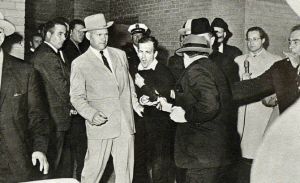 Half the country watched on live TV, as a man came out of the crowd, firing a single bullet from his .38 into the belly of Lee Harvey Oswald. Four musicians were shocked to realize the shooter was the man they had worked for months earlier, at that burned out dive bar. Jack Ruby.
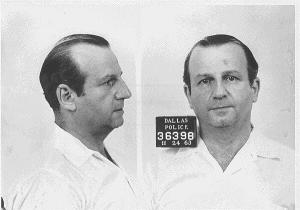 Jack Ruby was sentenced to death in the murder of Lee Harvey Oswald, on March 14, 1964. The Texas Court of Criminal Appeals overturned Ruby’s conviction in October 1966, on the grounds that the trial should have taken place in a different county than that in which his high profile crime had taken place. Ruby died of lung cancer the following January, while awaiting retrial.


 The most famous rivalry in the soft drink business began in the 1930s, when Pepsi offered a 12oz bottle for the same 5¢ as Coca Cola’s six ounces.
 “no sacred cows” among their products. He meant it. The company launched the top secret “Project Kansas”, to test and perfect the flavor for a new version of Coke. The company’s marketing department fanned out, holding taste tests, surveys, and focus groups.
 On an April Friday in 1985, Coke let the media know that a major announcement was coming the following Tuesday. Coca Cola officials spent a busy weekend preparing for the re-launch, while Pepsi Executives announced a company-wide holiday, taking out a full page New York Times ad proclaiming that “Pepsi had Won the Cola Wars”.




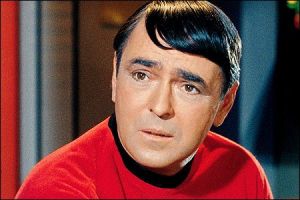
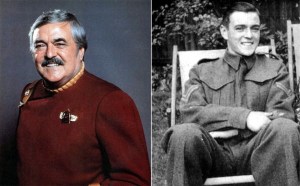 Doohan’s health declined in his later years. He developed Parkinson’s disease and diabetes, along with fibrosis of the lung, blamed on his exposure to noxious chemicals during WWII. He was experiencing symptoms of Alzheimer’s by 2004, though he was able to attend the ceremony held in his honor after receiving a star on the Hollywood Walk of Fame, that August.


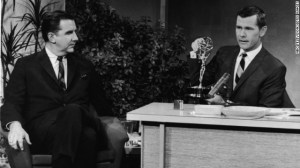
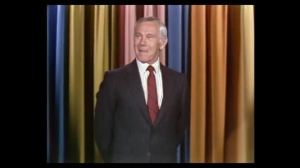
 The Tonight Show Starring Johnny Carson was a late-night fixture through seven US Presidents: John F. Kennedy, Lyndon Johnson, Richard Nixon, Gerald Ford, Jimmy Carter, Ronald Reagan, and George H.W. Bush. Almost every American over the age of 30 will remember “Heeeeeeeeeeere’s Johnny!”. The opening monologue, and the imaginary golf swing. “Carnac the Magnificent”, holding the envelope to his head, reciting the punchline to the joke sealed inside. “Saucepan… Who was Peter Pan’s wino brother?” When the joke bombed, there was the comedic curse. “May a bloated yak change the temperature of your jacuzzi!”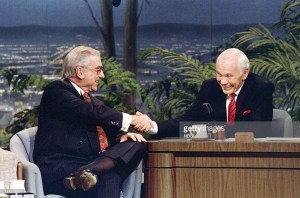


 It was the “dead-ball” era, when an “inside baseball” style of play relied on stolen bases, hit-and-run plays and, more than anything else, speed.
 causing the ball to drop. Sandpapered, cut or scarred balls tended to “break” to the side of the scuff mark. Balls were rarely replaced in those days. By the end of a game, the ball was scarred, misshapen and entirely unpredictable. Major League Baseball outlawed “doctored” pitches on February 10, 1920, though it remained customary to play an entire game with the same ball.
 facing “submarine” pitcher Carl Mays. These are not to be confused with the windmill underhand pitches we see in softball. Submarine pitchers throw side-arm to under-handed, their upper bodies so low that some of them scuff their hands on the ground, the ball rising as it approaches the strike zone.
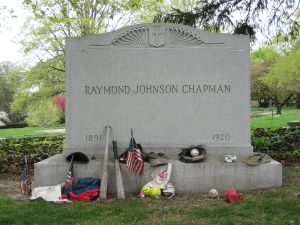 29-year-old Ray Chapman had said this was his last year playing ball. He wanted to spend more time in the family business he had just married into. The man was right. Raymond Johnson Chapman died 12 hours later, the only player in the history of Major League Baseball, to die from injuries sustained during a game.
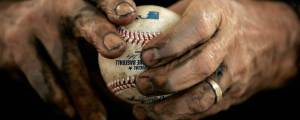 Philadelphia Athletics third base coach Lena Blackburne took up the challenge in 1938, scouring the riverbanks of New Jersey for just the right mud. Blackburne found his mud hole, describing the stuff as “resembling a cross between chocolate pudding and whipped cold cream”. By his death in the late fifties, Blackburne was selling his “Baseball Rubbing Mud” to every major league ball club in the country, and most minor league teams.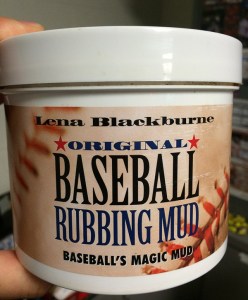


 At 256 tons with a barrel of 111′ 7″, the “Paris Gun” hurled 38″ shells into the city from a range of 75 miles. If you were in Paris in 1918, you may never have heard of the German “super gun”. You’d have been well acquainted with the damage it caused. You never knew you were under attack until the explosion. The lucky ones were those who lived to see the 4’ deep, 10’-12’ wide crater.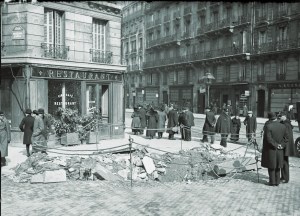
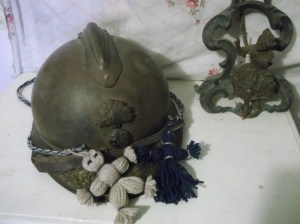 These little yarn dolls had names. They were Nénette and Rintintin.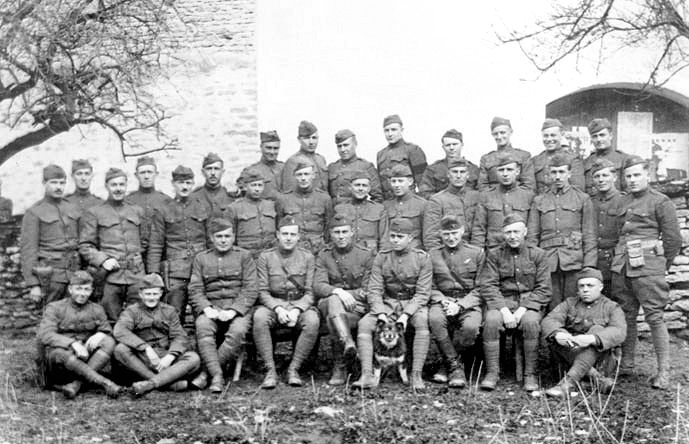
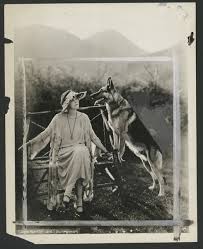
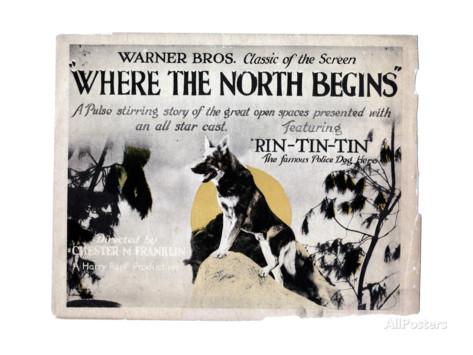 Walking the dog on “Poverty Row”, 1920s slang for B movie studios, did the trick. Rin Tin Tin got his first film break in 1922, replacing a camera shy wolf in “The Man from Hell’s River”. His first starring role in the 1923 “Where the North begins”, is credited with saving Warner Brothers Studios from bankruptcy.
 Rin Tin Tin appeared in 27 feature length silent films, 4 “talkies”, and countless commercials and short films. Regular programming was interrupted to announce his passing on August 10, 1932, at the age of 13. An hour-long program about his life was broadcast the following day.
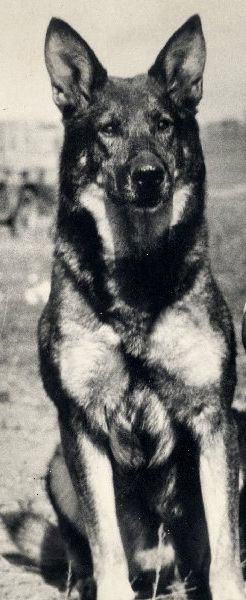 bloodlines. Rin Tin Tin and Nanette II produced at least 48 puppies. Duncan may have been obsessive about it, at least according to Mrs. Duncan. When she filed for divorce, she named Rin Tin Tin as co-respondent.
 On March 24, 2000, the New England Patriots broke ground on their new stadium home in Foxborough, Massachusetts. The internet company CMGI won naming rights, agreeing to pay $114 million over 15 years for the privilege. The 2002 season opened on September 9 in the Patriots’ new home, tickets bearing the name, CMGI Stadium.
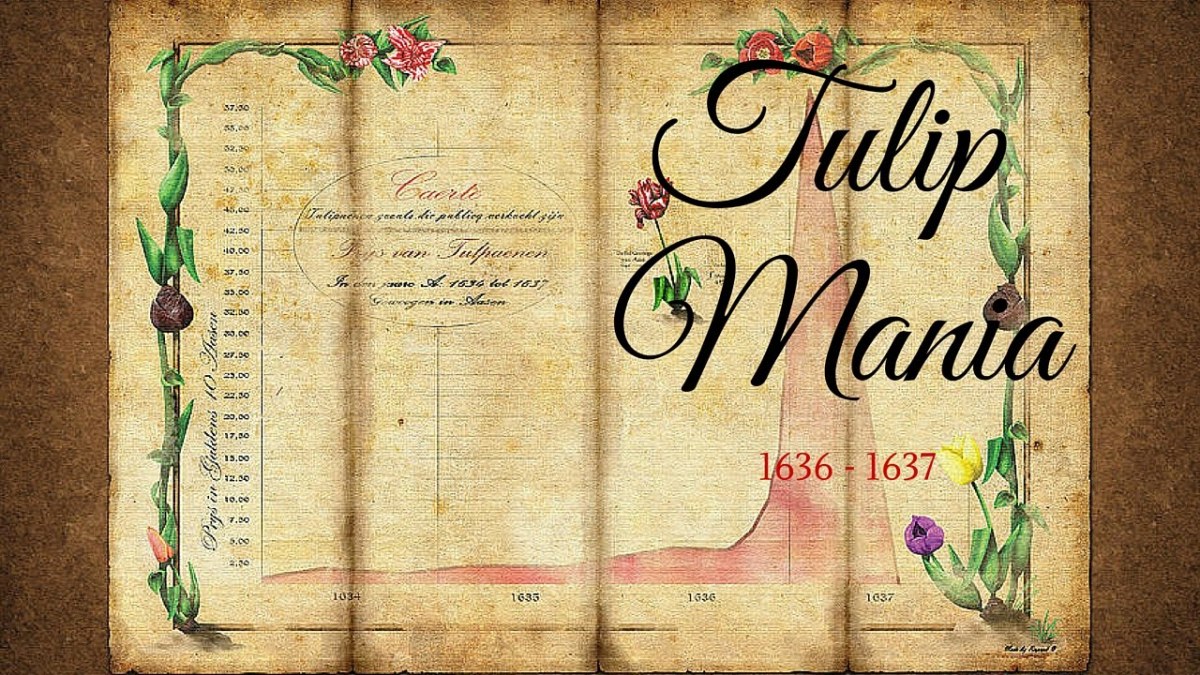
 produced single voyage profits of 400% and more, as merchants built grand estates surrounded by flower gardens. The hyacinth enjoyed early popularity, but the plant at the center of it all was the spectacular, magnificent, tulip.
 the vivid streaks of yellow or white on the red, brown or purple backgrounds of the “Bizarden” (Bizarres). Ironically, these were the most sickly specimens, victims of a “Tulip breaking virus” which “broke” petals into two or more hues.
 guidelines that year, imposing a 30% quota and raising it to 50% by the end of the Clinton era. By 2007 under President Bush, 55% of all mortgages purchased by the mortgage giants were “sub-prime”.
 2003: “I want to roll the dice a little bit more in this situation toward subsidized housing.”
 That was the year when gas first hit $4/gallon. Those living closest to the financial cliff began to fall off, and foreclosures went through the roof. Highest risk mortgage holders were the first to default, people with $20,000 incomes and multiple investment properties. We all remember 2009. I myself lost a job of 15 years when my employer went under, briefly making my family part of the “zero percent”. Some will tell you that we haven’t emerged from the “Great Recession”, to this day.


You must be logged in to post a comment.