
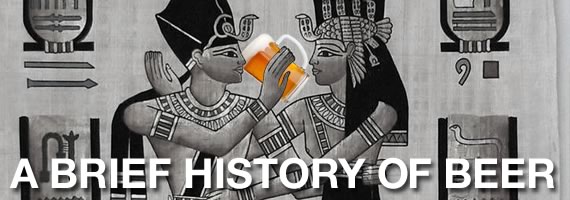
Given the right combination of sugars, almost any cereal will undergo simple fermentation, due to the presence of wild yeasts in the air. It seems likely our cave-dwelling ancestors experienced their first beer, as the result of this process.

Starch dusted stones were found with the remains of doum-palm and chamomile in the 18,000-year old Wadi Kubbaniya in upper Egypt. While it’s difficult to confirm, University of Pennsylvania archaeologist Dr. Patrick McGovern says, “it’s very likely they were making beer there”.
Chemical analysis of pottery shards date the earliest barley beer to 3400BC, in the Zagros Mountains of Iran.
Wine seemed better suited to the sensibilities of the Roman palate, when Tacitus maligned the bitter brew of Germanic barbarians. Nevertheless, the letters of Roman cavalry commanders from the Roman Britain period, c. 97-103 AD, include requests for more “cerevisia”, for the legionaries.
In North and South America, native peoples brewed fermented beverages from local ingredients, including agave sap, the first spring tips of the spruce tree, and maize.

The Pilgrims left the Netherlands city of Leiden in 1620, hoping for rich farmland and congenial climate in the New World. Not the frozen, rocky soil of New England. Lookouts spotted the wind-swept shores of Cape Cod on November 9, 1620, and may have kept going, had they had enough beer. One Mayflower passenger wrote in his diary: “We could not now take time for further search… our victuals being much spent, especially our beer…”
Prior to the invention of the drum roaster in 1817, malt was typically dried over wood, charcoal, or straw fires, leaving a smoky quality that would seem foreign to the modern beer drinker. William Harrison wrote in his “Description of England” in 1577, “For the wood-dried malt, when it is brewed, beside that the drink is higher of colour, it doth hurt and annoy the head of him that is not used thereto, because of the smoke”.
Smoky flavor didn’t trouble the true aficionado of the age. When the Meux Brewery casks let go in 1814 spilling nearly 400,000 gallons onto the street, hundreds of Britons hurried to scoop it up in pots and pans. Some even lapped it up, doggy-style.
1,389 were trampled to death and another 1,300 injured in a suds stampede, when someone thought the beer had run out at the coronation of Czar Nicholas II, in 1896.
The 18th amendment, better known as “prohibition”, went into effect at midnight, January 16, 1920. For thirteen years it was illegal to import, export, transport or sell liquor, wine or beer in the United States.
 Portable stills went on sale within a week, and organized smuggling was quick to follow. California grape growers increased acreage by over 700% over the first five years, selling dry blocks of grapes as “bricks of rhine” or “blocks of port”. The mayor of New York City sent instructions on wine making, to his constituents.
Smuggling operations became widespread, as cars were souped up to outrun “the law”. This would lead to competitive car racing, beginning first on the streets and back roads and later moving to dedicated race tracks. It’s why we have NASCAR, today.
Organized crime became vastly more powerful due to the influx of enormous sums of cash. The corruption of public officials was a national scandal.
 Gaining convictions for breaking a law that everyone hated became increasingly difficult. There were over 7,000 prohibition related arrests in New York alone between 1921 and 1923. Only 27 resulted in convictions.
Finally, even John D. Rockefeller, Jr., a lifelong teetotaler who contributed $350,000 to the Anti-Saloon League, had to announce his support for repeal.
It’s difficult to compare rates of alcohol consumption before and during prohibition. If death by cirrhosis of the liver is any indication, alcohol consumption didn’t decrease by more than 10 to 20 per cent.
FDR signed the Cullen–Harrison Act into law on March 22, 1933, commenting “I think this would be a good time for a beer.” The law went effect on April 7, allowing Americans to buy, sell and drink beer containing up to 3.2% alcohol.
A team of draft horses hauled a wagon up Pennsylvania Avenue, delivering a case of beer to the White House – the first public appearance of the Budweiser Clydesdales.
 “Dry” leaders tried to prohibit consumption of alcohol on military bases in 1941, but military authorities claimed it was good for morale. Brewers were required to allocate 15% of total annual production to be used by the armed forces. So essential were beer manufacturers to the war effort, that teamsters were ordered to end a labor strike against Minneapolis breweries. Near the end of WWII, the army made plans to operate recaptured French breweries, to ensure adequate supplies for the troops.
 18 states continued prohibition at the state level after the national repeal, the last state finally dropping it in 1966. Almost 2/3rds of all states adopted some form of local option, enabling residents of political subdivisions to vote for or against local prohibition. Some counties remain dry to this day. Ironically, Lynchburg County, Tennessee, home to the Jack Daniel distillery, is one such dry county.
The night before Roosevelt’s law went into effect, April 6, 1933, beer lovers lined up at the doors of their favorite public houses, waiting for their first legal beer in thirteen years. A million and a half barrels of the stuff were consumed on April 7, a date remembered today as “National Beer Day”.
So it is that, from that day to this, April 6 is celebrated as “New Beer’s Eve”. Sláinte.
For every wound, a balm.
For every sorrow, cheer.
For every storm, a calm.
For every thirst, a beer.


 April Fools. The ancient Roman festival of Hilaria, held on March 25, may be a precursor. The Medieval Feast of Fools, held December 28, is still a day on which pranks are played in Spanish-speaking countries.
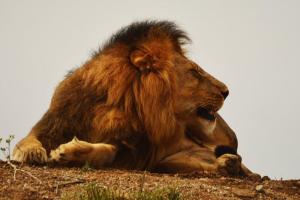 Animals were kept at the Tower of London since the 13th century, when Emperor Frederic II sent three leopards to King Henry III. In later years, elephants, lions, even a polar bear were added to the collection, the polar bear trained to catch fish in the Thames.
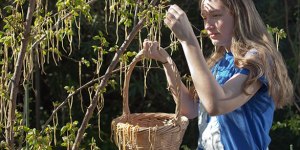 In 1957, (you can guess the date), the BBC reported the delightful news that mild winter weather had virtually eradicated the dread spaghetti weevil of Switzerland, and that Swiss farmers were now happily anticipating a bumper crop of spaghetti. Footage showed smiling Swiss peasants, pulling strands of spaghetti down from trees. Apparently, an embarrassingly large number of viewers were fooled. Many called BBC offices, asking how to grow their own spaghetti tree. “Place a piece of spaghetti in a tin of tomato sauce”, callers were told, “and hope for the best.”
 eyewear at a revolutionary price, while leading the way for socially conscious businesses”. On April 1, 2012, the company released its new line of eyeglasses for dogs, appropriately called “Warby Barker”. For only $95, your hipster pooch could be sporting the latest styles in canine eyeware, in irresistible dog treat shades like “Gravy Burst” and “Dusty Bacon.” There was a monocle option too, for those partial to that Prussian Field Marshall look. Anyone falling for the gag, got an “April Fools!” message on their on-line shopping cart.

 Melvin attended a year at Brooklyn College before being drafted into the Army, in WWII. After attending Army Specialized Training at VMI, Corporal Kaminsky joined the 1104th Combat Engineers Battalion, 78th Infantry Division in the European theater. There, he served through the end of the war. Most of his work was in finding and defusing explosives, though on five occasions his unit had to drop their tools and fight as Infantry.
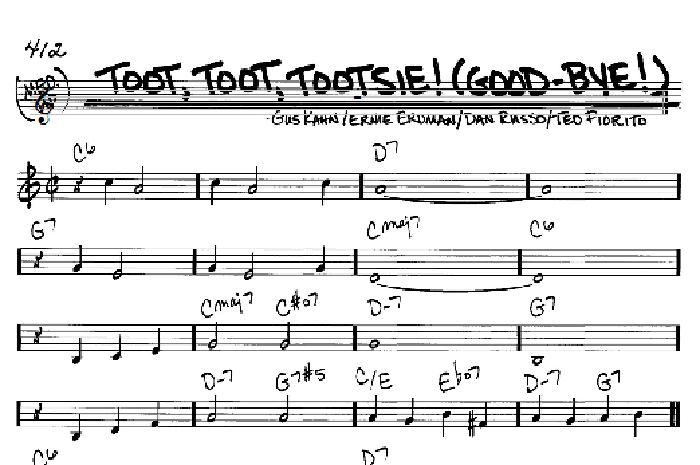
 German soldiers singing a beer hall song, from the other side. Kaminsky grabbed a bullhorn and serenaded the Germans back, singing them an old tune that Al Jolson used to perform in black face, “Toot Toot Tootsie, Goodbye”. Polite applause could be heard from across the river, afterward. I can’t imagine many Allied soldiers ever tried to serenade their Nazi adversaries during World War II. The ones who actually pulled it off must number, precisely, one.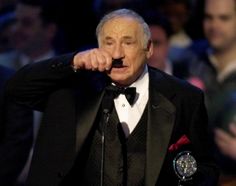
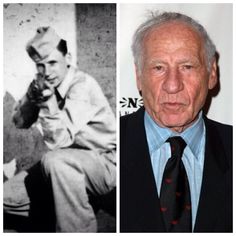
 Marvin Hamlisch, Jonathan Tunick, Mike Nichols, Whoopi Goldberg, Scott Rudin, and Robert Lopez. As of this date, Brooks only needs another Oscar to be the first “Double EGOT” in history.

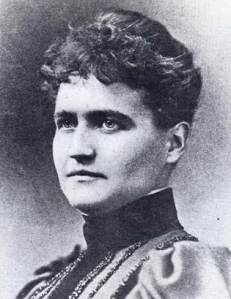
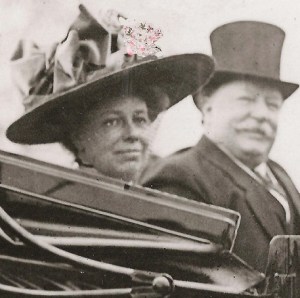
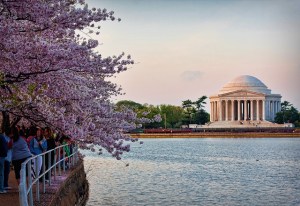
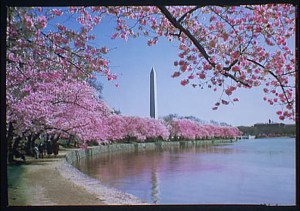 1934 city commissioners sponsored a three-day celebration of the late March blossoming cherry trees, which grew into the annual Cherry Blossom Festival.


 100 years ago, “Sumerologists” labored to learn the customs and ways of this ancient civilization. One such team pieced together a stone tablet and, through years of study, managed to decipher the cuneiform words contained thereon.
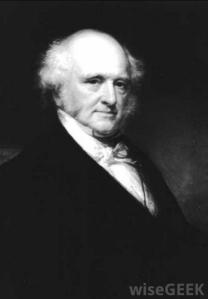


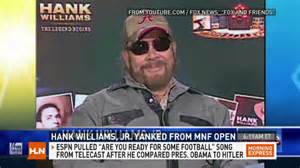
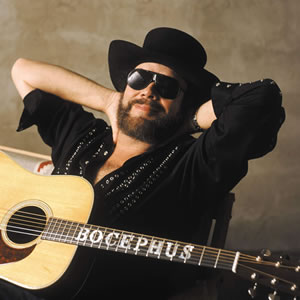
 Randall Hank Williams was born May 26, 1949 in Shreveport, Louisiana, the son of country singer/songwriter, Hiram King “Hank” Williams. Surprisingly for a guy who could neither read nor notate music and died at the age of 29, the elder Williams has been described as “one of the most significant and influential American singers and songwriters of the 20th century”.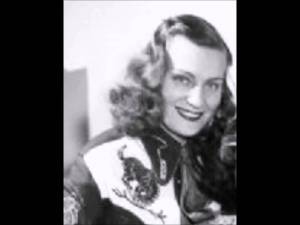


 In a later examination of Vivian, ERO field worker Dr. Arthur Estabrook pronounced her “feeble minded” saying that she “showed backwardness”, supporting the “three generations” theory expressed in the SCOTUS opinion.

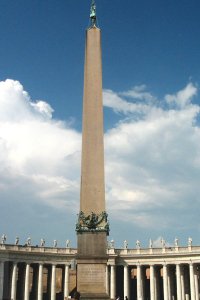 On this day in the year 37, the Roman Senate annulled the will of the Emperor Tiberius, proclaiming 24 year old Caligula, Emperor. After years of purges and treason trials, Caligula’s ascension to the throne was seen as a welcome breath of fresh air. His first two years were relatively peaceful and prosperous.
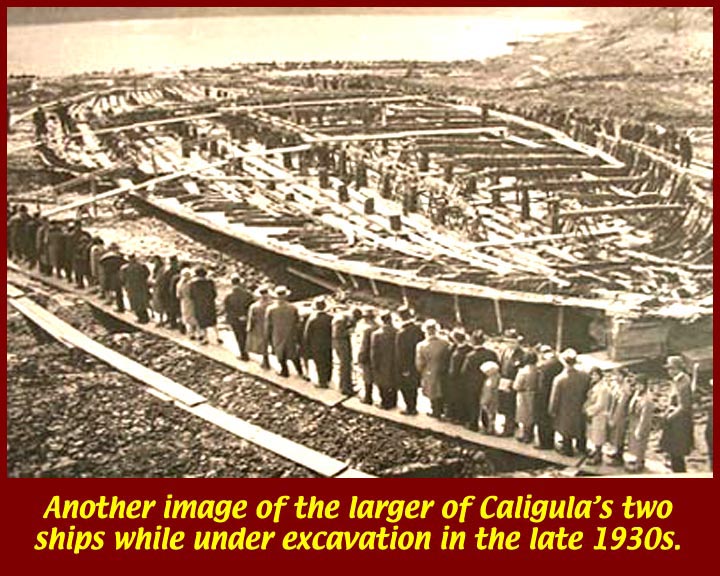
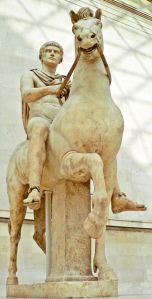 using ships as pontoons, stretching for over two miles from the resort of Baiae to the neighboring port of Puteoli. Though he could not swim, he rode his favorite horse, Incitatus, across the bridge, wearing the breastplate of Alexander the Great. The act was in defiance of a prediction by Tiberius’ soothsayer Thrasyllus of Mendes, that Caligula had “no more chance of becoming emperor than of riding a horse across the Bay of Baiae”.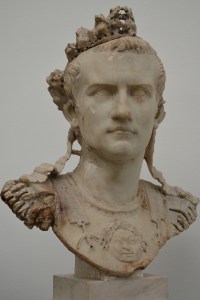


 As with cartoonist Charles M Shulz, those who knew Jacob Rubenstein called him “Sparky”. Some say the nickname was due to a resemblance to “Sparkplug”, the old nag with the patchwork blanket, from the Snuffy Smith cartoon strip. Rubenstein hated the nickname and was quick to fight anyone who called him that. It may have been that quick temper, that made the name stick.
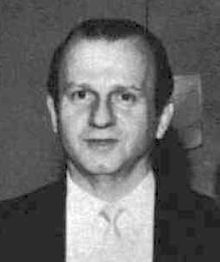 prostitution. There were rumored associations with Mafia boss Santo Trafficante. The less-than-honest part of the Dallas police force knew that Ruby was always good for free booze, prostitutes, and other favors. This was one unsavory guy.
 Part of the roof had either blown off this joint, or burned off, depending on which version you read. Jack, the owner, tore off the rest of it and kept the insurance money, calling it the “Skyline Lounge”. There was no need to pay for security, even without the roof. Jack said “Boys, this building ain’t exactly secure enough for you to leave your musical equipment unattended.” Band members were told they’d best stay overnight, with guns, lest anyone come over the wall to steal their equipment. Problem solved.
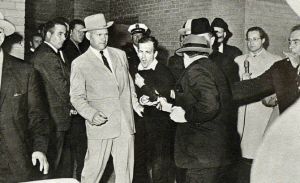 Half the country watched on live TV, as a man came out of the crowd, firing a single bullet from his .38 into the belly of Lee Harvey Oswald. Four musicians were shocked to realize the shooter was the man they had worked for months earlier, at that burned out dive bar. Jack Ruby.
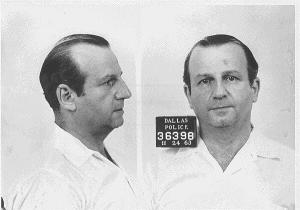 Jack Ruby was sentenced to death in the murder of Lee Harvey Oswald, on March 14, 1964. The Texas Court of Criminal Appeals overturned Ruby’s conviction in October 1966, on the grounds that the trial should have taken place in a different county than that in which his high profile crime had taken place. Ruby died of lung cancer the following January, while awaiting retrial.


 The most famous rivalry in the soft drink business began in the 1930s, when Pepsi offered a 12oz bottle for the same 5¢ as Coca Cola’s six ounces.
 “no sacred cows” among their products. He meant it. The company launched the top secret “Project Kansas”, to test and perfect the flavor for a new version of Coke. The company’s marketing department fanned out, holding taste tests, surveys, and focus groups.
 On an April Friday in 1985, Coke let the media know that a major announcement was coming the following Tuesday. Coca Cola officials spent a busy weekend preparing for the re-launch, while Pepsi Executives announced a company-wide holiday, taking out a full page New York Times ad proclaiming that “Pepsi had Won the Cola Wars”.


You must be logged in to post a comment.