

Graham Chapman was trained and educated to be a physician, but that career trajectory was never meant to be. John Cleese was writing for TV personality David Frost and actor/comedian Marty Feldman at the time, when he recruited Chapman as a writing partner and “sounding board”. BBC offered the pair a show of their own in 1969, when Cleese reached out to former How To Irritate People writing partner Michael Palin, to join the team. Palin invited his own writing partner Terry Jones and colleague Eric Idle over from rival ITV, who in turn wanted American-born Terry Gilliam for his animations.
The British comedy troupe that formed this day in 1969 was amused at the idea of a haughty Lord Montgomery, patterned after Field Marshal Bernard Law Montgomery, 1st Viscount Montgomery of Alamein, KG, GCB, DSO, PC, DL, etc. “Python” seemed just slippery enough to make the whole thing work.
The Pythons considered several names for their new program, including “Owl Stretching Time”, “The Toad Elevating Moment”, “Vaseline Review” and “A Horse, a Spoon and a Bucket”. “Flying Circus” had come up as well. The name stuck when BBC revealed that they had already printed flyers, and weren’t about to go back to the printer.
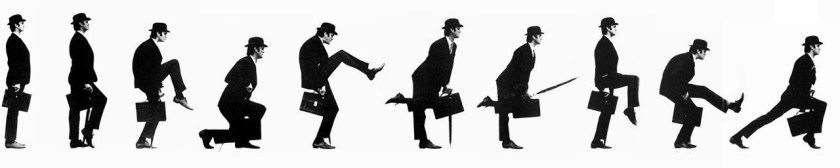
The show was a collaborative process, beginning with the first broadcast on October 5, 1969. With no writers of their own, the six would divide into groups and write their own material. Whether any given sketch would make it into the program, was always a democratic process.
Different Python factions were responsible for different elements of the team’s humor. The work of the Oxford educated Terry Jones and Michael Palin was more visual, and a little more off the wall. The Spanish Inquisition arriving in a suburban apartment is a prime example, while the Cambridge educated John Cleese and Graham Chapman were more confrontational – “This is abuse. I came here for an argument”. Cleese said “anything that got utterly involved with words and disappeared up any personal orifice was Eric’s”, like the Man who Spoke in Anagrams. Terry Gilliam was the guy behind the animation.
The Flying Circus broke new ground with techniques like the “cold open”. With no titles, credits, or opening theme, Michael Palin would crawl across the tundra a la Robinson Crusoe, looking into the camera and saying “It’s“… And off they went. The cold open sometimes lasted until the middle of the show. Occasionally, the Pythons fooled viewers by rolling closing credits halfway through, usually continuing the gag by fading to the BBC logo while Cleese parodied the tones of a BBC announcer. On one occasion the closing credits ran directly after the opening titles.
I personally learned to never leave a Python film during closing credits, finding my reward for sticking around at the end of the Life of Brian was to learn who wiped the moose’s noses. (As I recall, it was John J. Llama).
The “Iron Lady”, Prime Minister Margaret Thatcher herself, seems to have been a fan, doing a more than passable version of the Dead Parrot sketch at a Conservative Party Conference in 1990.
The Pythons shared a dislike for “capping” bits with punchlines, and experimented with ending sketches by cutting abruptly to another scene, or breaking the rules altogether by addressing the camera directly. Two examples were the knight in armor, played by Terry Gilliam, who would wander onto the set and whack people over the head with a rubber chicken. Or Chapman’s “Colonel” character, who would walk into sketches and order them stopped because things were becoming “far too silly.”
Gilliam’s animations were a favorite technique, when a 16 ton weight would drop from the sky, or else it was Cupid’s foot – yes, that’s Cupid’s foot – cut from a reproduction of the Renaissance masterpiece “Venus, Cupid, Folly, and Time” by Il Bronzino.
John Cleese left the Flying Circus at the end of the third season. He had considered doing so at the end of the second, feeling that he had little original material to offer the show. He found Chapman difficult to work with, who was at this time a full tilt alcoholic. Cleese could be difficult himself. Eric Idle once said of John Cleese. “He’s so funny because he never wanted to be liked. That gives him a certain fascinating, arrogant freedom”.
 The group reunited in 1974 to do the Holy Grail, which was filmed on location in Scotland, on a budget of £229,000. The money was raised in part by investments from musical figures like Pink Floyd, Jethro Tull and Led Zeppelin backer Tony Stratton-Smith. Investors in the film wanted to cut the famous Black Knight scene, (“None shall pass”), but were eventually persuaded to keep it in the film. Good thing, the scene became second only to the Holy Hand Grenade of Antioch and the Killer Rabbit. “What’s he going to do, nibble my bum?”
Graham Chapman is best remembered as King Arthur in the Holy Grail, and Brian Cohen in the Life of Brian. He died of spinal and throat cancer on the 20th anniversary of their first broadcast. John Cleese delivered a uniquely Pythonesque eulogy, which sounded a lot like the Dead Parrot sketch. “”Graham Chapman, co-author of the Parrot sketch, is no more,” he began. “He has ceased to be, bereft of life, he rests in peace, he has kicked the bucket, hopped the twig, bit the dust, snuffed it, breathed his last, and gone to meet the Great Head of Light Entertainment in the sky…”
I don’t believe he’d have had it any other way. Silly bunt.


 Hess was an early and ardent proponent of Nazi ideology. A True Believer. He was at Hitler’s side during the failed revolution of 1923, the “Beer Hall Putsch”. He served time with Hitler in prison, and helped him write his political opus “Mein Kampf” (My Struggle). Hess was appointed to Hitler’s cabinet when the National Socialist German Workers’ Party seized power in 1933, becoming Deputy Führer, #3 after Hermann Göring and Hitler himself. Hess signed many statutes into law, including the Nuremberg Laws of 1935, depriving the Jews of Germany of their rights and property.


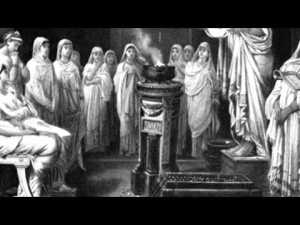
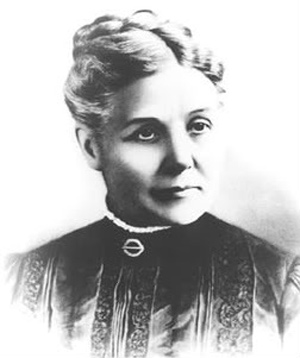

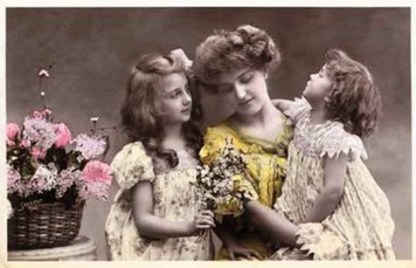 Anna Jarvis believed Mother’s Day to be a time of personal celebration, a time when families would gather to love and honor their mother.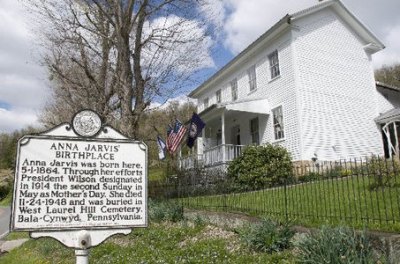


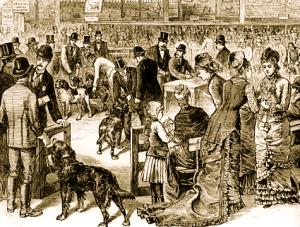 The world’s most famous dog show was first held on May 8, 1877, and called the “First Annual NY Bench Show.” The venue was Gilmore’s Garden at the corner of Madison Avenue and 26th Street, a hall which would later be known as Madison Square Garden. Interestingly, another popular Gilmore Garden event of the era was boxing. Competitive boxing was illegal in New York in those days, so events were billed as “exhibitions” or “illustrated lectures.” I love that last one.
 1,200 dogs arrived for that first show, in an event so popular that the originally planned three days morphed into four. The Westminster Kennel Club donated all proceeds from the fourth day to the ASPCA, for the creation of a home for stray and disabled dogs. The organization remains supportive of animal charities, to this day.
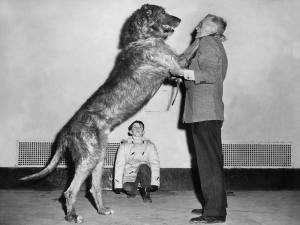 one in 1946. Even so, “Best in Show” was awarded fifteen minutes earlier than it had been, the year before. I wonder how many puppies were named “Tug” that year. The Westminster dog show was first televised in 1948, three years before the first nationally televised college football game.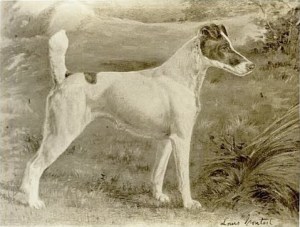
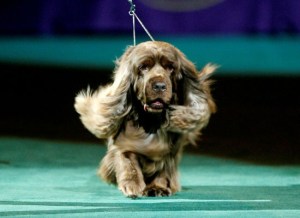
 Since the late 60s, the Westminster Best in Show winner has celebrated at Sardi’s, a popular mid-town eatery in the theater district and birthplace of the Tony award. And then the Nanny State descended, pronouncing that 2012 would be their last. There shalt be no dogs dining any restaurants, not while Mayor Bloomberg is around.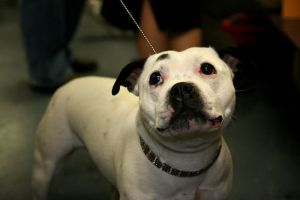


 As chief of the Imperial German general staff from 1891-1905, German Field Marshal Alfred von Schlieffen devised the strategic roadmap by which Germany prosecuted the first world war. The “Schlieffen Plan” could be likened to a bar fight, where a fighter (Germany) had to take out one guy fast (France), before turning and facing his buddy (Imperial Russia). Of infinite importance to Schlieffen’s plan was the westward sweep through France, rolling the country into a ball on a timetable before his armies could turn east to face the “Russian Steamroller”. “When you march into France”, Schlieffen had said, “let the last man on the right brush the Channel with his sleeve.”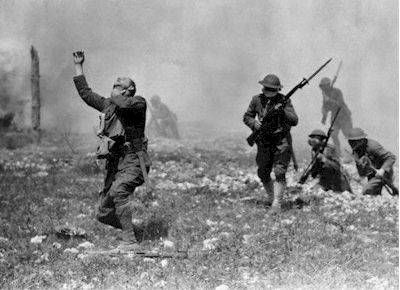
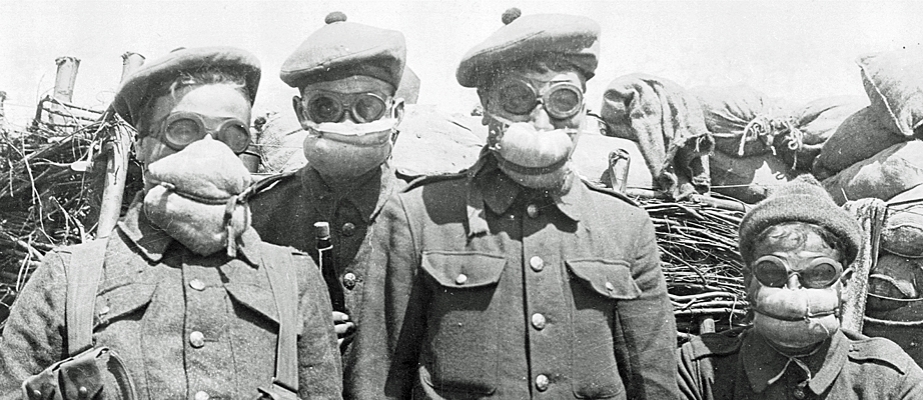
 The second Battle of Ypres began with a new and terrifying weapon, on April 22, 1915. German troops placed 5,730 gas cylinders weighing 90 pounds apiece, along a four mile front. Allied troops must have looked on in wonder, as that vast yellow-green carpet crept toward their lines. Chlorine gas forms hypochlorous acid when combined with water, destroying the moist tissues of the lungs and eyes. Heavier than air, the stuff crept along the ground and poured into the trenches, forcing troops out into heavy German fire. 6,000 casualties were sustained in the gas attack alone, opening a four mile gap in the allied line. Thousands retched and coughed out their last breath, as others tossed their equipment and ran in terror.
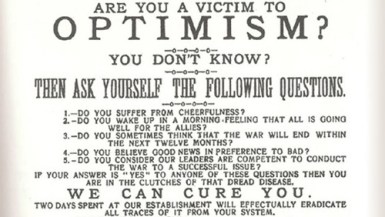 Richly typeset advertisements for “Music Hall Extravaganzas” include “Tickling Fritz” by the P.B.I. (Poor Bloody Infantry) Film Co. of the United Kingdom and Canada, advising the enthusiast to “Book Early”. There were Real Estate ads for property in no-man’s land. “BUILD THAT HOUSE ON HILL 60. BRIGHT-BREEZY-&-INVIGORATING. COMMANDS AN EXCELLENT VIEW OF HISTORIC TOWN OF YPRES”. Another one read “FOR SALE, THE SALIENT ESTATE – COMPLETE IN EVERY DETAIL! UNDERGROUND RESIDENCES READY FOR HABITATION. Splendid Motoring Estate! Shooting Perfect !! Fishing Good!!!”




 Rick Monday had served a tour in the Marine Corp Reserve, in fulfillment of his ROTC obligation after leaving Arizona State. “If you’re going to burn the flag”, he said, “don’t do it around me. I’ve been to too many veterans’ hospitals and seen too many broken bodies of guys who tried to protect it.”


 On learning that Jennings wasn’t going to fly, Holly said “Well, I hope your old bus freezes up.” Jennings replied “Well, I hope your plane crashes.” It was just a good ribbing between friends, but the comment would haunt Jennings for the rest of his life.


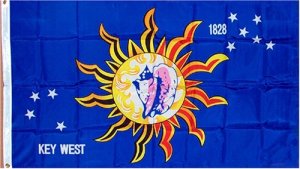


 One minute after declaring his “verbal shot” at the feds, Wardlow “surrendered” to a nearby naval officer, demanding a billion dollars in “foreign aid” in compensation for “the long federal siege.”

 losing its National League team to Washington, DC. Only moments before, Padres’ President Buzzie Bavasi had to leave Kroc’s side to investigate concession area water in the clubhouse, when a leak was “promoted” to a flood.
 Buzzie Bavasi did the most to defuse the situation. Taking a cue from Rader’s comments, Bavasi designated the next game in the Houston series “Short Order Cook’s Night”. Any Padres fan who came wearing a chef’s hat, would be admitted into the game for free. Rader, the Astro’s team captain, took the lineup card to home plate wearing an apron with a chef’s hat, slipping the card off a skillet with a spatula and handing it over to the home plate umpire, like a pancake.


You must be logged in to post a comment.