In the smoke and confusion, the Spanish never did figure out how puny the forces were who opposed them
A series of escalating trade disputes had already taken place between British and Spanish forces, when the Spanish patrol boat La Isabela drew alongside the British brig Rebecca in 1731. After boarding, Commander Juan de León Fandiño accused the British commander of smuggling. The discussion became heated, when Fandiño drew his sword and cut the left ear off of Captain Robert Jenkins. “Go, and tell your King that I will do the same”, he said, “if he dares to do the same.”
Seven years later, Jenkins was ordered to testify before Parliament where, according to some accounts, he produced the severed ear in a pickling jar, as part of his presentation. This and other incidents of “Spanish Depredations upon the British Subjects” were considered insults to the honor of the British nation and a provocation to war.
A squadron of three 70-gun British third-rates was patrolling off the coast of Cornwall on April 8, 1740, when a mast was sighted to the north. What at first appeared to be a French vessel was revealed to be the 70 gun ship-of-the-line Princesa, when she struck her French colors and hoist the Spanish flag. Outnumbered 3-to-1, Princesa put up a good fight, but the issue was never in doubt. She was brought into Portsmouth for repairs, entering British service as HMS Princess in 1742. What had once been described as “the finest ship in the Spanish Navy”, would serve Her Britannic Majesty for another 42 years.
For the future Georgia colony, the War of Jenkins Ear was an existential threat. Spain had laid claim to Florida, when Ponce de Leon first mapped the territory in 1513. The territory which later became North & South Carolina joined the British Colonies to the north in 1663, leaving the areas in-between in dispute. James Oglethorpe founded the 13th colony of Georgia as a buffer to Spanish incursion, two years after Mr. Jenkins lost his ear.
By 1736, Oglethorpe established Fort Frederica on the barrier island of St. Simon, off the Savannah coast. The Spanish landing force of 4,500 to 5,000 men arrived on St. Simon’s Island in July of 1742, opposed by only 950 British Rangers, Colonial Militia and Indian Allies.
Oglethorpe’s forces attacked a Spanish reconnaissance in force at the Battle of Gully Hole Creek in the early morning hours of July 7, followed by the ambush of a much larger force that afternoon, in what would be known as the Battle of Bloody Marsh. In the smoke and confusion, the Spanish never did figure out how puny the forces were who opposed them. These two victories were as big a boost to British morale as they were a blow to that of their adversary. The last major Spanish offensive into Georgia ended with a complete withdrawal, a week later.
The conflict which began in 1739 ended in 1748, though major operations ceased in 1742 when the War of Jenkins Ear was subsumed by the greater War of Austrian Succession, involving most of the major powers of Europe at that time. Peace arrived with the Treaty of Aix-la-Chapelle in 1748.
A team of draft horses hauled a wagon up Pennsylvania Avenue, to deliver a case of beer to the White House. It was the first public appearance of the Budweiser Clydesdales
Given the right combination of sugars, almost any cereal will undergo simple fermentation, due to the presence of wild yeasts in the air. It seems likely our cave-dwelling ancestors experienced their first beer, as the result of this process.
From Wikipedia: “Alulu beer receipt – This records a purchase of “best” beer from a brewer, c. 2050 BC from the Sumerian city of Umma in ancient Iraq”.
Starch dusted stones were found with the remains of doum-palm and chamomile in the 18,000-year old Wadi Kubbaniya in upper Egypt. While it’s difficult to confirm, University of Pennsylvania archaeologist Dr. Patrick McGovern says, “it’s very likely they were making beer there”.
Chemical analysis of pottery shards date the earliest barley beer to 3400BC, in the Zagros Mountains of Iran.
Wine seemed better suited to the sensibilities of the Roman palate, when Tacitus maligned the bitter brew of Germanic barbarians. Nevertheless, the letters of Roman cavalry commanders from the Roman Britain period, c. 97-103 AD, include requests for more “cerevisia”, for the legionaries.
In North and South America, native peoples brewed fermented beverages from local ingredients, including agave sap, the first spring tips of the spruce tree, and maize.
“Ancient cultures used an array of ingredients to make their alcoholic beverages, including emmer wheat, wild yeast, chamomile, thyme and oregano. (Landon Nordeman)” H/T Smithsonian magazine
The Pilgrims left the Netherlands city of Leiden in 1620, hoping for rich farmland and congenial climate in the New World. Not the frozen, rocky soil of New England. Lookouts spotted the wind-swept shores of Cape Cod on November 9, 1620, and may have kept going, had they had enough beer. One Mayflower passenger wrote in his diary: “We could not now take time for further search… our victuals being much spent, especially our beer…”
Prior to the invention of the drum roaster in 1817, malt was typically dried over wood, charcoal, or straw fires, leaving a smoky quality that would seem foreign to the modern beer drinker. William Harrison wrote in his “Description of England” in 1577, “For the wood-dried malt, when it is brewed, beside that the drink is higher of colour, it doth hurt and annoy the head of him that is not used thereto, because of the smoke”.
Smoky flavor didn’t trouble the true aficionado of the age. When the Meux Brewery casks let go in 1814 spilling nearly 400,000 gallons onto the street, hundreds of Britons hurried to scoop it up in pots and pans. Some even lapped it up, doggy-style.
1,389 were trampled to death and another 1,300 injured in a suds stampede, when someone thought the beer had run out at the coronation of Czar Nicholas II, in 1896.
The 18th amendment, better known as “prohibition”, went into effect at midnight, January 16, 1920. For thirteen years it was illegal to import, export, transport or sell liquor, wine or beer in the United States.
Portable stills went on sale within a week, and organized smuggling was quick to follow. California grape growers increased acreage by over 700% over the first five years, selling dry blocks of grapes as “bricks of rhine” or “blocks of port”. The mayor of New York City sent instructions on wine making, to his constituents.
Smuggling operations became widespread, as cars were souped up to outrun “the law”. This would lead to competitive car racing, beginning first on the streets and back roads and later moving to dedicated race tracks. It’s why we have NASCAR, today.
Organized crime became vastly more powerful due to the influx of enormous sums of cash. The corruption of public officials was a national scandal.
Gaining convictions for breaking a law that everyone hated became increasingly difficult. There were over 7,000 prohibition related arrests in New York alone between 1921 and 1923. Only 27 resulted in convictions.
Finally, even John D. Rockefeller, Jr., a lifelong teetotaler who contributed $350,000 to the Anti-Saloon League, had to announce his support for repeal.
It’s difficult to compare rates of alcohol consumption before and during prohibition. If death by cirrhosis of the liver is any indication, alcohol consumption didn’t decrease by more than 10 to 20 per cent.
FDR signed the Cullen–Harrison Act into law on March 22, 1933, commenting “I think this would be a good time for a beer.” The law went effect on April 7, allowing Americans to buy, sell and drink beer containing up to 3.2% alcohol.
A team of draft horses hauled a wagon up Pennsylvania Avenue, delivering a case of beer to the White House – the first public appearance of the Budweiser Clydesdales.
“Dry” leaders tried to prohibit consumption of alcohol on military bases in 1941, but military authorities claimed it was good for morale. Brewers were required to allocate 15% of total annual production to be used by the armed forces. So essential were beer manufacturers to the war effort, that teamsters were ordered to end a labor strike against Minneapolis breweries. Near the end of WWII, the army made plans to operate recaptured French breweries, to ensure adequate supplies for the troops.
18 states continued prohibition at the state level after the national repeal, the last state finally dropping it in 1966. Almost 2/3rds of all states adopted some form of local option, enabling residents of political subdivisions to vote for or against local prohibition. Some counties remain dry to this day. Ironically, Lynchburg County, Tennessee, home to the Jack Daniel distillery, is one such dry county.
The night before Roosevelt’s law went into effect, April 6, 1933, beer lovers lined up at the doors of their favorite public houses, waiting for their first legal beer in thirteen years. A million and a half barrels of the stuff were consumed on April 7, a date remembered today as “National Beer Day”.
So it is that, from that day to this, April 6 is celebrated as “New Beer’s Eve”. Sláinte.
For every wound, a balm. For every sorrow, cheer. For every storm, a calm. For every thirst, a beer.
In 1916, German policy vacillated between strict adherence to prize rules and unrestricted submarine warfare. The first put their people and vessels at extreme risk, the second threatened to bring the United States into the war.
In the early days of WWI, Imperial Germany attempted to comply with standards of maritime warfare, as established by the Hague Conventions of 1899 and 1907.
Desperate to find an effective countermeasure to the German “Unterseeboot”, Great Britain introduced heavily armed merchant ships with concealed weaponry in 1915, phony merchantmen designed to lure submarines into making surface attacks. Britain called these secret countermeasures “Q-ships”, after their home base in Queenstown, in Ireland. German sailors called them U-Boot-Fälle. “U-boat traps”.
The “unprovoked” sinking of noncombatant vessels, including the famous Lusitania, in which 1,198 passengers lost their lives, became a primary justification for war. The German Empire, for her part, insisted that many of these vessels carried munitions intended to kill Germans on European battlefields.
Underwater, the submarines of WWI were slow and blind, on the surface, vulnerable to attack. In 1916, German policy vacillated between strict adherence to prize rules and unrestricted submarine warfare. The first put their people and vessels at extreme risk, the second threatened to bring the United States into the war.
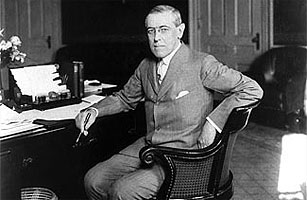
In 1916, President Woodrow Wilson won re-election with the slogan “He kept us out of war”, a conflict begun in Europe, two years earlier.
In a January 31, 1917 memorandum from German Ambassador Count Johann von Bernstorff to US Secretary of State Robert Lansing, the Ambassador stated that “sea traffic will be stopped with every available weapon and without further notice”, effective the following day. The German government was about to resume unrestricted submarine warfare.
Anticipating this resumption and expecting the decision to draw the United States into the war, German Foreign Secretary Arthur Zimmermann delivered a message to the German ambassador in Mexico, Heinrich von Eckardt. The telegram instructed Ambassador Eckardt that, if the United States seemed likely to enter the war, he was to approach the Mexican Government with a proposal for military alliance, promising “lost territory” in Texas, New Mexico, and Arizona in exchange for a Mexican declaration of war against the United States.
The “Zimmermann Telegram” was intercepted and decoded by British intelligence and revealed to the American government on February 24. The contents of the message outraged American public opinion and helped generate support for the United States’ declaration of war.
In the end, the German response to anticipated US action, brought about the very action it was trying to avoid.
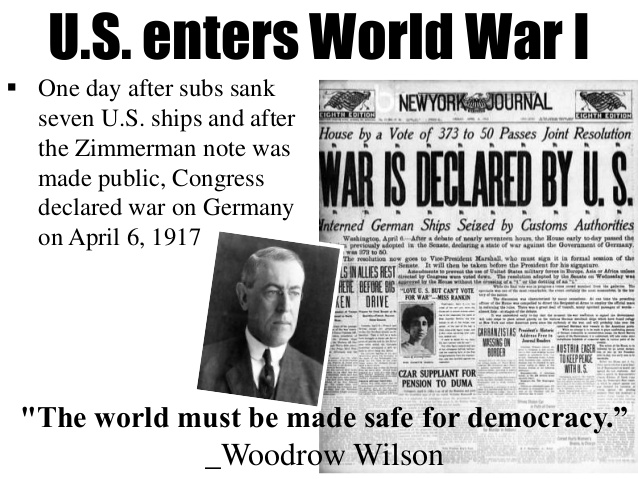
President Woodrow Wilson delivered his war message to a joint session of Congress on April 2, saying that a declaration of war on Imperial Germany would make the world “safe for democracy”. Congress voted to support American entry into the war on April 6, 1917. The “Great War”, the “War to end all Wars”, had become a world war.
At the time, a secondary explosion within the hull of the Lusitania, caused many to believe the liner had been struck by a second torpedo. In 1968, American businessman Gregg Bemis purchased the wreck of the Lusitania for $2,400, from the Liverpool & London War Risks Insurance Association. In 2007 the Irish government granted Bemis a five-year license to conduct limited excavations at the site.
Twelve miles off the Irish coast and 300’ down, a dive was conducted on the wreck in 2008. Remote submersible operators discovered some 4,000,000 rounds of Remington .303 ammunition in the hold, proof of the German claim that Lusitania was, in fact, a legitimate target under international rules of war. The UK Daily Mail quoted Bemis: “There were literally tons and tons of stuff stored in unrefrigerated cargo holds that were dubiously marked cheese, butter and oysters’”.
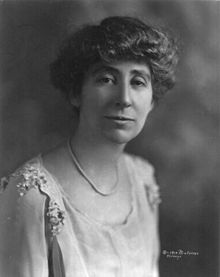
Jeannette Rankin
American historian, author and journalist Wade Hampton Sides accompanied the expedition. “They are bullets that were expressly manufactured to kill Germans in World War I” he said, “bullets that British officials in Whitehall, and American officials in Washington, have long denied were aboard the Lusitania.'”
Montana Republican Jeannette Pickering Rankin, a life-long pacifist and the first woman elected to the United States Congress, would be one of only fifty votes against entering WWI. She would be elected to her second (non-contiguous) term in 1940, in time to be the only vote against entering WWII, following the Japanese attack on the United States’ Pacific anchorage at Pearl Harbor.
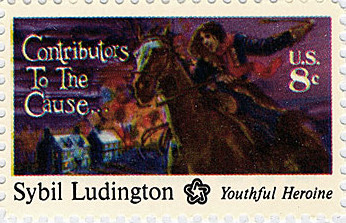
The Dutchess County Militia had to be called up. The Colonel had one night to prepare for battle, and this rider was done. The job would have to go to Colonel Ludington’s first-born. His daughter, Sybil.
“Listen my children and you shall hear, Of the midnight ride of”…Sybil Ludington.
Wait…What?
Paul Revere’s famous “midnight ride” began on the night of April 18, 1775. Revere was one of two riders, soon joined by a third, fanning out from Boston to warn of an oncoming column of “regulars”, come to destroy the stockpile of gunpowder, ammunition, and cannon in Concord.
Revere himself covered barely 12 miles before being captured, his horse confiscated to replace the tired mount of a British sergeant. Revere would finish his “ride” on foot, arriving at sunrise on the 19th to witness the last moments of the battle on Lexington Green.
Two years later, Patriot forces maintained a similar supply depot, in the southwest Connecticut town of Danbury.
William Tryon was the Royal Governor of New York, and long-standing advocate for attacks on civilian targets. In 1777, he was also a major-general of the provincial army. On April 25th, Tryon set sail for the Connecticut coast of Long Island Sound with a force of 1,800, intending to destroy Danbury.
Patriot Colonel Joseph Cooke’s small Danbury garrison was caught and quickly overpowered on the 26th, trying to remove food supplies, uniforms, and equipment. Facing little if any opposition, Tryon’s forces went on a bender, burning homes, farms and storehouses. Thousands of barrels of pork, beef, and flour were destroyed, along with 5,000 pairs of shoes, 2,000 bushels of grain, and 1,600 tents.
Colonel Henry Ludington was a farmer and father of 12, with a long military career. A long-standing and loyal subject of the British crown, Ludington switched sides in 1773, joining the rebel cause and rising to command the 7th Regiment of the Dutchess County Militia, in New York’s Hudson Valley.
In April 1777, Ludington’s militia was disbanded for planting season, and spread across the countryside. An exhausted rider arrived at the Ludington farm on a blown horse, on the evening of the 26th, asking for help. 15 miles away, British regulars and a force of loyalists were burning Danbury to the ground.
The Dutchess County Militia had to be called up. The Colonel had one night to prepare for battle, and this rider was done. The job would have to go to Colonel Ludington’s first-born, his daughter, Sybil.
Born April 5, 1761, Sybil Ludington was barely sixteen at the time of her ride. From Poughkeepsie to what is now Putnam County and back, the “Female Paul Revere” rode across the lower Hudson River Valley, covering 40 miles in the pitch dark of night, alerting her father’s militia to the danger and urging them to come out and fight. She’d use a stick to knock on doors, even using it once, to fight off a highway bandit.
By the time Sybil returned the next morning, cold, rain-soaked, and exhausted, most of 400 militia were ready to march.
Battle of Ridgefield, from Wikipedia A: British movement to the coast B: American movements to pursue and harass the British C: Arnold’s position attempting to block the British return to the beach D: British return to New York
35 miles to the east of Danbury, General Benedict Arnold was gathering a force of 500 regular and irregular Connecticut militia, with Generals David Wooster and Gold Selleck Silliman.
Arnold’s forces arrived too late to save Danbury, but inflicted a nasty surprise on the British rearguard as the column approached nearby Ridgefield. Never outnumbered by less than three-to-one, Connecticut militia was able to slow the British advance until Ludington’s New York Militia arrived on the following day. The last phase of the action saw the same type of swarming harassment, as seen on the British retreat from Concord to Boston, early in the war.
Though the British operation was a tactical success, the mauling inflicted by these colonials ensured that this was the last hostile British landing on the Connecticut coast.
The British raid on Danbury destroyed at least 19 houses and 22 stores and barns. Town officials submitted £16,000 in claims to Congress, for which town selectmen received £500 reimbursement. Further claims were made to the General Assembly of Connecticut in 1787, for which Danbury was awarded land. In Ohio.
Keeler Tavern
The Keeler Tavern in Ridgefield is now a museum. The British cannonball fired into the side of the building, remains there to this day.
At the time, Benedict Arnold planned to travel to Philadelphia, to protest the promotion of officers junior to himself, to Major General. Arnold, who’d had two horses shot out from under him at Ridgefield, was promoted to Major General in recognition for his role in the battle. Along with that promotion came a horse, “properly caparisoned as a token of … approbation of his gallant conduct … in the late enterprize to Danbury.” For now, the pride which would one day be his undoing, was assuaged.
Henry Ludington would become Aide-de-Camp to General George Washington, and grandfather to Harrison Ludington, mayor of Milwaukee and 12th Governor of Wisconsin.
Gold Silliman was kidnapped with his son by a first marriage by Tory neighbors, and held for Nearly seven months at a New York farmhouse. Having no hostage of equal rank with whom to exchange for the General, Patriot forces went out and kidnapped one of their own, in the person of Chief Justice Judge Thomas Jones, of Long Island.
Archway at Wooster Square
Mary Silliman was left to run the farm, including caring for her own midwife, who was brutally raped by English forces for denying them the use of her home. The 1993 made-for-TV movie “Mary Silliman’s War” tells the story of non-combatants, pregnant mothers and farm wives during the Revolution, as well as Mary’s own negotiations for her husband’s release from his Loyalist captors.
General David Wooster was mortally wounded at the Battle of Ridgefield, moments after shouting “Come on my boys! Never mind such random shots!” Today, an archway marks the entrance to Wooster Square, in the East Rock Neighborhood of New Haven.
Sybil Ludington received the thanks of family and friends, even George Washington, and then stepped off the pages of history.
Paul Revere’s famous ride would likewise have faded into obscurity, but for the poetry of Henry Wadsworth Longfellow. 86 years later.
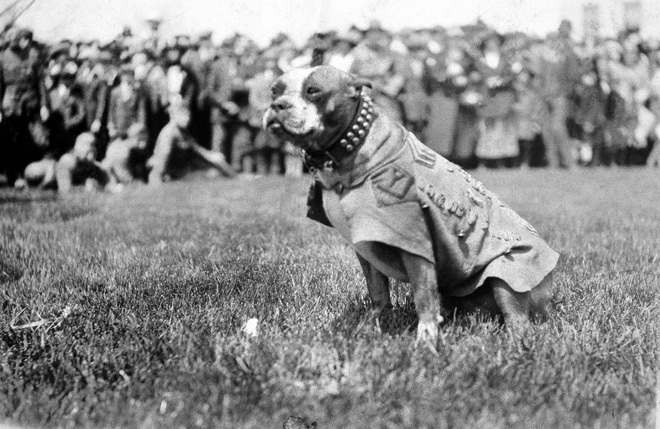
America’s first war dog, Stubby, got there by accident, and served 18 months ‘over there’
By the last year of WW1, the French, British and Belgians had at least 20,000 dogs on the battlefield, the Germans 30,000. General Headquarters of the American Expeditionary Forces recommended the use of dogs as sentries, messengers and draft animals in the spring of 1918. However, with the exception of a few sled dogs in Alaska, the US was the only country to take part in World War I with virtually no service dogs in its military.
America’s first war dog, “Stubby”, got there by accident, and served 18 months ‘over there’, participating in seventeen battles on the Western Front.
He looked like a terrier of some kind, similar to a pit bull. Nobody knows anything more about him. He showed up as a stray at Yale Field in New Haven, Connecticut, while a group of soldiers were training. The dog hung around as the men drilled and one soldier, Corporal Robert Conroy, started taking care of him. Conroy hid Stubby on board the troop ship when the outfit shipped out in 1917.
Stubby saved his regiment from surprise mustard gas attacks, located and comforted the wounded, and even once caught a German spy by the seat of his pants. The Hun, who’d been prowling behind allied lines at the time, was mapping trenches for artillery bombardment. He was found spinning in circles with a large, muscular terrier affixed to his behind. The Bosch was easily disarmed, but it took a considerable amount of coaxing before Stubby could be persuaded to let go of that German’s rear end.
Stubby saw his first action at Chemin des Dames. Since the boom of artillery fire didn’t faze him, he learned to follow the men’s example of ducking when the big ones came close. It became a great game to see who could hit the dugout, first. After a few days, the guys were watching him for a signal. Stubby was always the first to hear incoming fire. We can only guess how many lives were spared by his early warning.
After the Armistice, Stubby returned home as a nationally acclaimed hero, and was eventually received by presidents Harding and Coolidge. Even General John “Black Jack” Pershing, who commanded the AEF during the war, presented Stubby with a gold medal made by the Humane Society, declaring him to be a “hero of the highest caliber.”
Stubby toured the country by invitation and probably led more parades than any dog in American history: he was promoted to honorary Sergeant by the Legion, becoming the highest ranking dog to ever serve in the Army.
Old age finally caught up with the small warrior on April 4th, 1926, as he took ill and died in his master’s arms.
Sergeant Stubby and a few of his contemporaries were instrumental in inspiring the creation of the US K-9 Corps, just in time for World War ll.
The United States was grotesquely unprepared to fight a World War in 1942, and dedicated itself to beating Adolf Hitler first. General Douglas MacArthur abandoned the “Alamo of the Pacific” on March 11 saying “I shall return”
The game was November 27, 1937. Late in the 4th quarter, Notre Dame was tied 6-6 with Southern California. The “Fighting Irish” needed a miracle. Notre Dame fullback #58 Mario “Motts” Tonelli took the hand-off deep in Notre Dame territory and ran the ball 70 yards back before being tackled. Seconds later, the 5’11”, 195lb Tonelli, scored the game winning touchdown.
In some ways, Mario Tonelli himself was the miracle. Years earlier at the age of 6, he’d been burned over 80% of his body, when a trash compactor toppled over on him. Mario’s immigrant father Celi, a laborer from a northern Italian marble quarry, refused to believe the doctor who said his son would never walk again. Fixing four wheels to a door, the elder Tonelli taught his first American-born son to move about with his arms. By 1935, Mario Tonelli was a football, basketball and track star at Chicago’s DePaul Academy.
After a year coaching at Providence College in 1939 and a year playing professional football for the Chicago Cardinals in 1940, Tonelli joined the Army early in 1941, assigned to the 200th Coast Artillery Regiment in Manila.
Tonelli hoped to fulfill his one years’ commitment and return to the Cardinals for the ’42 season, but it wasn’t meant to be. The radio crackled to life at 2:30am local time on December 7. “Air raid on Pearl Harbor. This is no drill!”
Military forces of Imperial Japan appeared unstoppable in the early months of WWII, attacking first Thailand, then the British possessions of Malaya, Singapore, and Hong Kong, as well as US military bases in Hawaii, Wake Island, Guam and the Philippines.
The United States was grotesquely unprepared to fight a World War in 1942, and dedicated itself to beating Adolf Hitler first. General Douglas MacArthur abandoned the “Alamo of the Pacific” on March 11 saying “I shall return”, leaving 90,000 American and Filipino troops without food, supplies or support with which to fight off the Japanese offensive.
On April 9, 75,000 surrendered the Bataan peninsula, beginning a 65 mile, five-day slog into captivity through the heat of the Philippine jungle. Japanese guards were sadistic. They would beat the marchers and bayonet those too weak to walk. Japanese tanks would swerve out of their way to run over anyone who had fallen and was too slow in getting up. Some were burned alive. Already crippled from tropical disease and starving from the long siege of Luzon, thousands perished in what came to be known as the Bataan Death March.
Exhausted, sunburned and aching with thirst, Tonelli still refused when a Japanese soldier demanded his Notre Dame class ring. As the guard reached for his sword, a nearby prisoner shouted “Give it to him. It’s not worth dying for”.
Minutes later, a Japanese officer appeared, speaking perfect English. “Did one of my men take something from you?” “Yes”, Tonelli replied. “My school ring”. “Here,” said the officer, pressing the ring into his hand. “Hide it somewhere. You may not get it back next time”. Tonelli was speechless. “I was educated in America”, the officer said. “At the University of Southern California. I know a little about the famous Notre Dame football team. In fact, I watched you beat USC in 1937. I know how much this ring means to you, so I wanted to get it back to you”.
Close to 700 Americans and over 10,000 Filipinos died on the Bataan death march. For the survivors, the ordeal was only beginning. For 2½ years Tonelli suffered starvation, disease and endless beatings in the squalid prison camps known as O’Donnell, Cabanatuan, and Davao. Tonelli kept his ring throughout, buried in a soap dish. He’d take it out from time to time to remind himself: life used to be better than this. It gave him something to hope for.
The hellish 60-day journey aboard the filthy, cramped merchant vessel began in late 1944, destined for slave labor camps in mainland Japan. Tonelli was barely 100 pounds on arrival, his body ravaged by malaria and intestinal parasites. He was barely half the man who once played fullback at Notre Dame Stadium, Soldier Field and Comiskey Park.
Arriving at Nagoya #7 prison camp, Tonelli was handed a piece of paper. Scribbled on it was a 58. He was prisoner number 58, the same number he once wore on his football Jersey. “From that point on,” he said, “I knew I was going to make it”.
An American military tribunal conducted after the war held Lieutenant General Homma Masaharu, commander of the Japanese invasion forces in the Philippines, guilty of war crimes. He was executed by firing squad on April 3, 1946.
Mario Tonelli always hoped to meet the officer who’d returned his ring, but it wasn’t meant to be. He probably didn’t survive the war. Tonelli still had that ring when he passed away in 2003.
Two weeks ago, nearly 10,000 gathered in New Mexico, to commemorate the 75th anniversary of the Bataan death march. 7,200 retired and active duty military personnel and civilians gathered in the 28th annual such event, to run the 26.2 mile “Death March” through the hilly desert terrain of the White Sands Missile Range, near Las Cruces.
Ed Broadnax of El Paso, Texas, runs the course in full uniform, boots and 45-pound backpack. “As a veteran who served 26 years in the US Army and deployed three times to combat and experienced the horrors of war, I feel pain for the men and women who suffered intensely under the deadly Japanese Imperial Forces, as they were marched through the Philippine jungle. This is what drives me to run in their honor.”
Hundreds of others walked a 14.2 mile course, including Bataan Death March survivor Ben Skardon, who turns 100 in July. Mr. Skardon walked 8½. “The word hero doesn’t apply to me, at all”, Skardon said. “As I said in my talk, ‘no greater love hath any man, than to lay down his life for his friends’. That’s in the bible”.
Ben Skardon was one of 7 survivors turning out for the March 31 event. Seven of the last survivors of the Bataan death march, fewer than fifty of whom are left alive. A year ago at last year’s event, there were 26 more.
On December 3, James Franklin ran an ad. “If any Person . . . will give a true Account of Mrs. Silence Dogood, whether Dead or alive, Married or unmarried, in Town or Country, . . . they shall have Thanks for their Pains.”
The fifteenth child of Josiah and Abiah Franklin was born in a little house on Milk Street, across from the Old South Church, in Boston.
The family moved to a larger house at Union & Hanover Street, when little Ben was six. As the tenth son, Benjamin Franklin was destined to be “tithed” to the church, but Josiah changed his mind after the boy’s first year in Boston Latin School. In light of the small salary, it was too expensive to educate a minister of the church.
He was sent to George Brownell’s English school for writing and arithmetic where he stayed until age ten, when he went to work in his father’s shop making tallow candles and boiling soap. After 1714, “Dr.” Benjamin Franklin’s education came exclusively from the books he picked up along the way.
By twelve the boy was “Hankering to go to sea”, and his father was concerned about his running away. Knowing of the boy’s love of books, the elder Franklin apprenticed his son to the print shop of James Franklin, one of his older sons, where he went to work setting type for books. And reading them. He would often “borrow” a book at night, returning it “early in the Morning lest it should be miss’d or wanted.”
By 1720, James Franklin began to publish The New England Courant, only the second newspaper to appear in the American colony.
Franklin often published essays and articles written by his friends, a group described as “The Hell-Fire Club”. Benjamin desperately wanted to be one of them, but James seemed to feel that sixteen-year-old little brothers should be seen, and not heard..
Sometime in March 1722, a letter appeared beneath the print shop door. “Sir, It may not be improper in the first Place to inform your Readers, that I intend once a Fortnight to present them, by the Help of this Paper, with a short Epistle, which I presume will add somewhat to their Entertainment”. The letter went on in some detail to describe the life of its author, Mrs. Silence Dogood.
That first letter was published on April 2. True to her word, Silence Dogood wrote again in two weeks. And then again, and again. Once every two weeks, for 28 weeks. Her letters were delightful, cleverly mocking the manners of Boston “Society”, and freely giving advice, particularly on the way that women should be treated. Nothing was sacred. One letter suggested that the only thing students learned at Harvard College, was conceit.
James Franklin and his literary friends loved the letters, and published every one. All of Boston was charmed with Silence Dogood’s subtle mockery of the city’s Old School Puritan elite. Proposals of marriage came into the print shop, when the widow Dogood coyly suggested that she would welcome suitors.
James was jailed at one point, for printing “scandalous libel” about Massachusetts Governor Joseph Dudley. The younger Franklin ran the shop in his absence, when Mrs. Dogood came to his defense. Quoting Cato, she proclaimed: “Without freedom of thought there can be no such thing as wisdom and no such thing as public liberty without freedom of speech.”
And then the letters stopped, much to the dismay of the Courant and its readership. One wrote to the editor, saying the paper had “lost a very valuable Correspondent, and the Public been depriv’d of many profitable Amusements.”
On December 3, James Franklin ran an ad. “If any Person . . . will give a true Account of Mrs. Silence Dogood, whether Dead or alive, Married or unmarried, in Town or Country, . . . they shall have Thanks for their Pains.” It was only then that his sixteen-year-old brother fessed up. Benjamin Franklin was the author of the Silence Dogood letters.
All of Boston was amused by the hoax, but not James. He was furious with his little brother, who soon broke the terms of his apprenticeship and fled to Pennsylvania.
And so it was that a future Founding Father of the Republic, the inventor, scientist, writer and philosopher, the statesmen who appears on our $100 bill, came to Philadelphia. Within a few years Franklin had set up his own print shop, publishing the Philadelphia Gazette as well as his own book bindery, in addition to buying and selling books.
Benjamin Franklin’s efforts are in no small part a reason why literacy standards were higher in Colonial America, than among the landed gentry of 18th century England. Higher even, I believe, than today.
Franklin’s diplomacy to the Court of Versailles was every bit as important to the success of the Revolution, as the Generalship of the Father of the Republic, George Washington. Signatory to both the Declaration of Independence and the Constitution, it is arguably Ben Franklin who broke the impasse of the Convention of 1787, paving the way for ratification of the United States Constitution.
By then too old and frail to deliver his own speech, Franklin had someone else read his words to the deadlocked convention.
“On the whole, sir, I can not help expressing a wish that every member of the convention who may still have objections to it, would, with me, on this occasion, doubt a little of his own infallibility, and, to make manifest our unanimity, put his name to this instrument”.
As I witness the aftermath of this election year 2016, easily the most divisive of my two-score and eighteen years, I can’t deny the wish that I and my countrymen, too, might doubt a little of our own infallibility.
I can’t imagine many Allied soldiers ever tried to serenade their Nazi adversaries during World War II. The ones who actually pulled it off must number, precisely, one.
James and Kate Kaminski’s little bundle of joy came into the world on June 26th 1926, in Brooklyn. They named this, their fourth son, Melvin James. James died of tuberculosis at 34, when the boy was only two. A small Jewish kid growing up in a tough Brooklyn neighborhood, Kaminsky learned the value of being able to crack a joke. “Growing up in Williamsburg”, he said, “I learned to clothe it in comedy to spare myself problems—like a punch in the face”.
The boy had a talent for music. He was taught by another kid from Williamsburg, Buddy Rich. By 14 he was good enough to be playing drums for money.
Melvin attended a year at Brooklyn College before being drafted into the Army, in WWII. After attending Army Specialized Training at VMI, Corporal Kaminsky joined the 1104th Combat Engineers Battalion, 78th Infantry Division in the European theater. There, he served through the end of the war. Most of his work was in finding and defusing explosives, though on five occasions his unit had to drop their tools and fight as Infantry.
At one point Kaminsky’s unit gathered along a River. They were so close they could hear German soldiers singing a beer hall song, from the other side. Kaminsky grabbed a bullhorn and serenaded the Germans back, singing them an old tune that Al Jolson used to perform in black face, “Toot Toot Tootsie, Goodbye”. Polite applause could be heard from across the river, afterward. I can’t imagine many Allied soldiers ever tried to serenade their Nazi adversaries during World War II. The ones who actually pulled it off must number, precisely, one.
Kaminski went into show business after the war, playing drums and piano in the Borscht Belt resorts and nightclubs of the Catskills. It was around this time that he took his professional name, adopting his mother’s maiden name of Brookman and calling himself “Mel Brooks”.
Brooks started doing stand-up, when the regular comedian at one of the clubs was too sick to perform. By ’49 he was “Tummler”, the master entertainer at Grossinger’s, one of the most famous resorts in the Borscht Belt. He was making $50 a week writing for his buddy Sid Caesar and his NBC “The Admiral Broadway Review”.
In 1968, Mel Brooks wrote and produced the satirical comedy film “The Producers”, about a theatrical producer and an accountant who set out to fleece their investors. The scheme was to do a play so bad that it was sure to flop on Broadway, then to abscond to Brazil with their money when the play closed. Problem was, the show turned out to be a hit. The fictional play is a musical, called “Springtime for Hitler”. Even before the age of suffocating PC, I don’t know many guys beside Mel Brooks, who could have gotten away with that one.
There isn’t one of us who doesn’t know his work. From the 2,000 year old man with “over forty-two thousand children, and not one comes to visit me” to Blazing Saddles’ “Candygram for Mongo” (“Mongo likes candy”).
Brooks has risen to the top of his chosen profession, winning the coveted “EGOT”, an acronym for the entertainment industry’s four major awards, the Emmy, Grammy, Oscar and Tony. Only eleven others have ever risen to this level: Richard Rodgers, Helen Hayes, Rita Moreno, John Gielgud, Audrey Hepburn, Marvin Hamlisch, Jonathan Tunick, Mike Nichols, Whoopi Goldberg, Scott Rudin, and Robert Lopez. As of this date, Brooks only needs another Oscar to be the first “Double EGOT” in history.
Melvin Kaminsky will be 92 in a couple of months. Last year, March 31, 2016, the Averhill Park K-12 School District in upstate New York kicked off a three day production of “Young Frankenstein”. Let me know if you can think of another 92-year-old guy, who remains that current. I can’t think of one.
This is no benign ideology we’re talking about, current estimates of citizens murdered by their own government in the Soviet Union alone, range from 8 to 61 million during the Stalinist period.
French Indo-China, the area now known as Laos, Cambodia and Vietnam, was governed as a French Colonial territory since the late 19th century. The region came to be occupied by the Imperial Japanese after the fall of France, at the onset of WWII. There arose a nationalist-communist army during this period, dedicated to throwing out the Japanese occupier. It called itself the “League for the Independence of Vietnam”, or “Viet Minh”.
France re-occupied the region following the Japanese defeat in WWII, but soon faced the same opposition from the army of Ho Chi Minh and Vo Nguyen Giap. What began as a low level, rural insurgency, later became a full-scale modern war when Communist China entered the fray in 1949.
The disastrous defeat of French forces at Dien Bien Phu in 1953 led to French withdrawal from Vietnam, the Geneva Convention partitioning the country into the communist “Democratic Republic of Vietnam” in the north, and the State of Vietnam in the south, led by Emperor Bao Dai and Prime Minister Ngo Dinh Diem.
Communist forces of the north continued to terrorize Vietnamese patriots in the north and south, with aid and support from communist China and the Soviet Union.
The student of history understands that nothing happens in a vacuum. US foreign policy is no exception. International Communism had attempted to assert itself since the Paris Commune rebellion of 1871, and found its first major success with the collapse of czarist Russia in 1917.
US policy makers feared a “domino” effect, and with good cause. The 15 core nations of the Soviet bloc were soon followed by Eastern Europe, as Poland, Bulgaria, Romania, Hungary and Czechoslovakia fell into the Soviet sphere of influence. Germany was partitioned into Communist and free enterprise spheres after WWII, followed by China, North Korea and so on across Southeast Asia.
This is no benign ideology we’re talking about, current estimates of citizens murdered by their own government in the Soviet Union alone, range from 8 to 61 million during the Stalinist period.
Agree or disagree with policy makers of the time, that’s your business, but they followed a logical thought process. US aid and support for South Vietnam increased as a way to “stem the tide” of international communism, at the same time that French support was pulling back. By the late 50s, the US was sending technical and financial aid in expectation of social and land reform. By 1960, the “National Front for the Liberation of South Vietnam” (“NLF”, or “Viet Cong”) had taken to murdering Diem supported village leaders. JFK responded by sending 1,364 American advisers into South Vietnam in 1961.
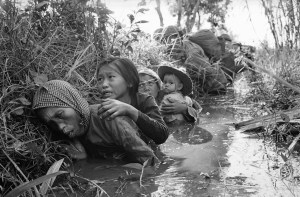
The war in Vietnam pitted as many as 1.8 million allied forces from South Vietnam, the United States, Thailand, Australia, the Philippines, Spain, South Korea and New Zealand, against about a half million from North Vietnam, China, the Soviet Union and North Korea. Begun on November 1, 1955, the conflict lasted 19 years, 5 months and a day. On March 29, 1973, two months after signing the Paris Peace accords, the last US combat troops left South Vietnam as Hanoi freed the remaining POWs held in North Vietnam.
Even then it wasn’t over. Communist forces violated cease-fire agreements before they were signed. Some 7,000 US civilian Department of Defense employees stayed behind to aid South Vietnam in conducting an ongoing and ultimately futile war against communist North Vietnam.
The last, humiliating scenes of the war played themselves out on the roof of the US Embassy in Saigon on April 29 and 30, 1975, as those who could boarded helicopters, while communist forces closed around the South Vietnamese capital.
In the end, US public opinion would not sustain what too many saw as an endless war. We continue to feel the political repercussions, to this day. I was ten at the time of the Tet Offensive in 1968. I remember feeling horrified at the way some of my fellow Americans conducted themselves. I came to feel at that time as I do to this day, that anyone who has a problem with our country’s war policy, needs to take it up with a politician. Not a member of the military,
.The “Killing Fields” of Cambodia followed between 1975-‘79, when the “Khmer Rouge”, self-described as “The one authentic people capable of building true communism”, murdered or caused the deaths of an estimated 1.4 to 2.2 million of their own people, out of a population of 7 million. All to build their perfect, agrarian, “Worker’s Paradise”.
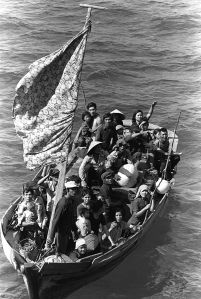
Imagine feeling so desperate, so fearful of the alien ideology invading your country, that you convert all your worldly possessions and those of your family to a single diamond, bite down on that stone until it embedded in your shattered teeth, and fled with your family to open ocean in a small boat. All in the faint and desperate hope, of getting out of that place. That is but one story among the more than three million “boat people”. Three million from a combined population of 56 million, fleeing the Communist onslaught in hopes of temporary asylum in other countries in Southeast Asia or China.
They were the Sino-Vietnamese Hoa, and Cambodians fleeing the Khmer Rouge. Ethnic Laotians, Iu Mien, Hmong and other highland peoples of Laos. The 30 or so Degar (Montagnard) tribes in the Central Highlands, so many of whom had been our steadfast allies in the late war. Over 2.5 million of them were resettled, more than half to the United States. The other half went mostly to Canada, Europe and South Pacific nations. A half-million were repatriated, voluntarily or involuntarily. Hundreds of thousands vanished in their attempt to flee.
The humanitarian disaster that was the Indochina refugee crisis was particularly acute between 1979-’80, but reverberations continued into the 21st century. The last boat people were repatriated from Malaysia in 2005. Thailand deported 4,000 Hmong refugees in 2009.
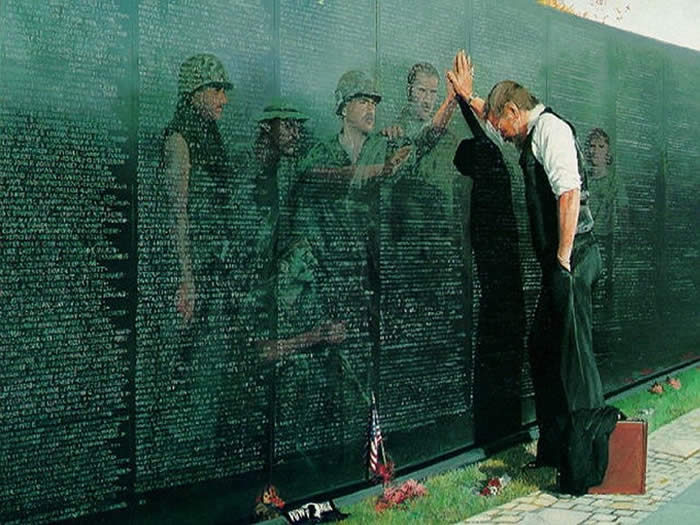
There were 57,939 names inscribed on the Vietnam Memorial Wall, the day it opened in 1982. Over the years, the names of military personnel who succumbed to wounds sustained in the war, were added to the wall. As of Memorial Day 2015, there are 58,307.
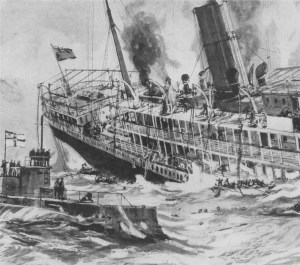
That March, the 31-year-old Hardwick, Massachusetts native was leaving Liverpool, returning to a job on the Gold Coast of British West Africa aboard the cargo-passenger ship RMS Falaba
102 years ago, the Great War was in its 8th month. The war of mobility of the early months was long gone, replaced by the lines of trench works which would characterize the rest of the war. Off the battlefield, the German and British governments each sought to choke the life out of the other’s economy. Great Britain held the upper hand, with the superior deep-water surface fleet. To the Kaiser’s way of thinking, parity would come in the form of a submarine.
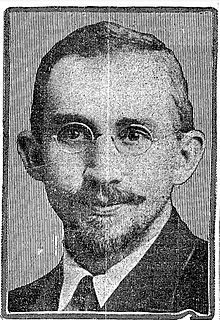
Leon Chester Thrasher 1st American killed in WW!
Leon Chester Thrasher was an American mining engineer. That March, the 31-year-old Hardwick, Massachusetts native was leaving Liverpool, returning to a job on the Gold Coast of British West Africa aboard the cargo-passenger ship RMS Falaba.
The German submarine U-28 stopped Falaba on this day in 1915, sinking the ship to the bottom with a single torpedo and killing 104, including Leon Thrasher. The first American killed in the “War to End all Wars”.
German policy varied over the course of the war, from unrestrained submarine warfare, to strict adherence with international law. U-28 Commander Freiherr Georg-Günther von Forstner claimed to have given Falaba 23 minutes to evacuate, cutting that short and firing his torpedo only in response to Falaba’s distress rockets and wireless messages for help. British authorities claim to have been given only 7 minutes’ warning.
The death of the first American in the European war set off a diplomatic row which threatened for a time to bring the Americans into the war. American newspapers called it the “Thrasher Incident”, denouncing the sinking as a “massacre”. An act of “piracy”.
The Germans claimed that subsequent explosions proved Falaba to be carrying contraband ammunition, intended to kill German boys on European battlefields. Eyewitness accounts failed to settle the matter, some even tended to support the German view.
President Woodrow Wilson stayed his hand, winning re-election the following year with the slogan, “He Kept Us Out of War”.
What remained of Leon Thrasher washed ashore on the coast of Ireland on July 11, 1915, after 106 days in the water. Authorities mistakenly believed him to be a victim of the RMS Lusitania sinking, designating him Body No. 248.
The U-boat U-20 had torpedoed the Cunard liner RMS Lusitania off the coast of Ireland 40 days earlier, killing 1,198, 124 of whom were Americans. The US came close to the brink of war that time too, but the last and final straw wouldn’t come for another two years. In the form of a German telegram, to the government of Mexico.




 Portable stills went on sale within a week, and organized smuggling was quick to follow. California grape growers increased acreage by over 700% over the first five years, selling dry blocks of grapes as “bricks of rhine” or “blocks of port”. The mayor of New York City sent instructions on wine making, to his constituents.
 Gaining convictions for breaking a law that everyone hated became increasingly difficult. There were over 7,000 prohibition related arrests in New York alone between 1921 and 1923. Only 27 resulted in convictions.
 “Dry” leaders tried to prohibit consumption of alcohol on military bases in 1941, but military authorities claimed it was good for morale. Brewers were required to allocate 15% of total annual production to be used by the armed forces. So essential were beer manufacturers to the war effort, that teamsters were ordered to end a labor strike against Minneapolis breweries. Near the end of WWII, the army made plans to operate recaptured French breweries, to ensure adequate supplies for the troops.
 18 states continued prohibition at the state level after the national repeal, the last state finally dropping it in 1966. Almost 2/3rds of all states adopted some form of local option, enabling residents of political subdivisions to vote for or against local prohibition. Some counties remain dry to this day. Ironically, Lynchburg County, Tennessee, home to the Jack Daniel distillery, is one such dry county.

 In the early days of WWI, Imperial Germany attempted to comply with standards of maritime warfare, as established by the Hague Conventions of 1899 and 1907.
 The “Zimmermann Telegram” was intercepted and decoded by British intelligence and revealed to the American government on February 24. The contents of the message outraged American public opinion and helped generate support for the United States’ declaration of war.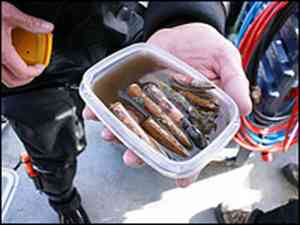


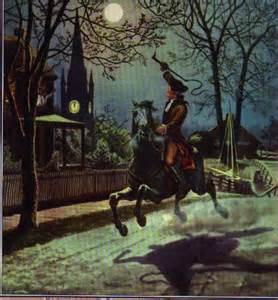 Paul Revere’s famous “midnight ride” began on the night of April 18, 1775. Revere was one of two riders, soon joined by a third, fanning out from Boston to warn of an oncoming column of “regulars”, come to destroy the stockpile of gunpowder, ammunition, and cannon in Concord.
 Patriot Colonel Joseph Cooke’s small Danbury garrison was caught and quickly overpowered on the 26th, trying to remove food supplies, uniforms, and equipment. Facing little if any opposition, Tryon’s forces went on a bender, burning homes, farms and storehouses. Thousands of barrels of pork, beef, and flour were destroyed, along with 5,000 pairs of shoes, 2,000 bushels of grain, and 1,600 tents.



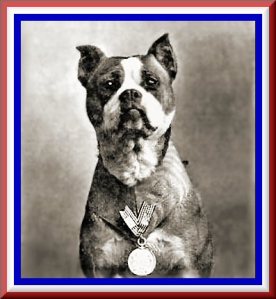 By the last year of WW1, the French, British and Belgians had at least 20,000 dogs on the battlefield, the Germans 30,000. General Headquarters of the American Expeditionary Forces recommended the use of dogs as sentries, messengers and draft animals in the spring of 1918. However, with the exception of a few sled dogs in Alaska, the US was the only country to take part in World War I with virtually no service dogs in its military.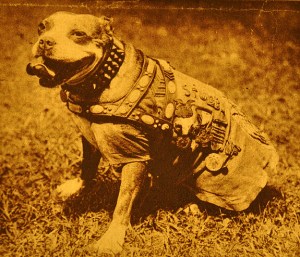
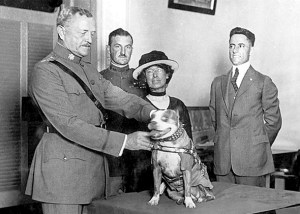 Stubby saw his first action at Chemin des Dames. Since the boom of artillery fire didn’t faze him, he learned to follow the men’s example of ducking when the big ones came close. It became a great game to see who could hit the dugout, first. After a few days, the guys were watching him for a signal. Stubby was always the first to hear incoming fire. We can only guess how many lives were spared by his early warning.


 Exhausted, sunburned and aching with thirst, Tonelli still refused when a Japanese soldier demanded his Notre Dame class ring. As the guard reached for his sword, a nearby prisoner shouted “Give it to him. It’s not worth dying for”.
 The hellish 60-day journey aboard the filthy, cramped merchant vessel began in late 1944, destined for slave labor camps in mainland Japan. Tonelli was barely 100 pounds on arrival, his body ravaged by malaria and intestinal parasites. He was barely half the man who once played fullback at Notre Dame Stadium, Soldier Field and Comiskey Park.


 The fifteenth child of Josiah and Abiah Franklin was born in a little house on Milk Street, across from the Old South Church, in Boston.
 James Franklin and his literary friends loved the letters, and published every one. All of Boston was charmed with Silence Dogood’s subtle mockery of the city’s Old School Puritan elite. Proposals of marriage came into the print shop, when the widow Dogood coyly suggested that she would welcome suitors.
 All of Boston was amused by the hoax, but not James. He was furious with his little brother, who soon broke the terms of his apprenticeship and fled to Pennsylvania.
 Franklin’s diplomacy to the Court of Versailles was every bit as important to the success of the Revolution, as the Generalship of the Father of the Republic, George Washington. Signatory to both the Declaration of Independence and the Constitution, it is arguably Ben Franklin who broke the impasse of the Convention of 1787, paving the way for ratification of the United States Constitution.
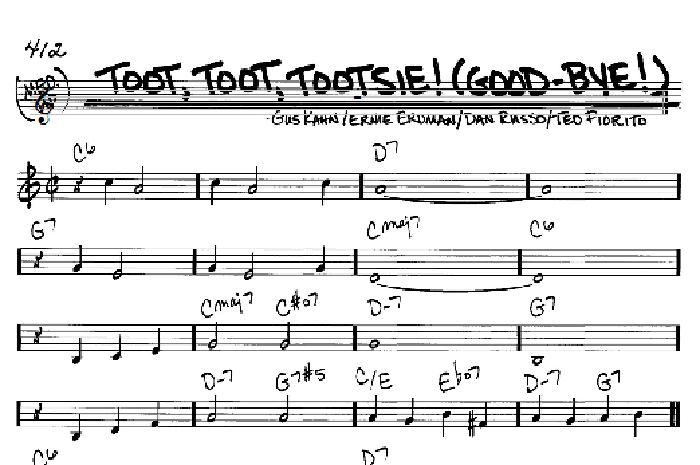
 Melvin attended a year at Brooklyn College before being drafted into the Army, in WWII. After attending Army Specialized Training at VMI, Corporal Kaminsky joined the 1104th Combat Engineers Battalion, 78th Infantry Division in the European theater. There, he served through the end of the war. Most of his work was in finding and defusing explosives, though on five occasions his unit had to drop their tools and fight as Infantry.
 German soldiers singing a beer hall song, from the other side. Kaminsky grabbed a bullhorn and serenaded the Germans back, singing them an old tune that Al Jolson used to perform in black face, “Toot Toot Tootsie, Goodbye”. Polite applause could be heard from across the river, afterward. I can’t imagine many Allied soldiers ever tried to serenade their Nazi adversaries during World War II. The ones who actually pulled it off must number, precisely, one.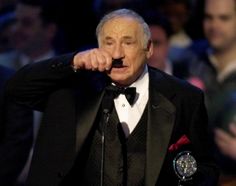
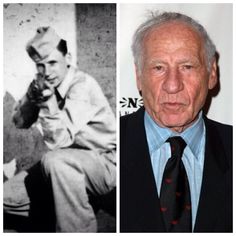
 Marvin Hamlisch, Jonathan Tunick, Mike Nichols, Whoopi Goldberg, Scott Rudin, and Robert Lopez. As of this date, Brooks only needs another Oscar to be the first “Double EGOT” in history.

 from Vietnam, the Geneva Convention partitioning the country into the communist “Democratic Republic of Vietnam” in the north, and the State of Vietnam in the south, led by Emperor Bao Dai and Prime Minister Ngo Dinh Diem.
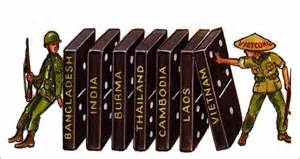 US policy makers feared a “domino” effect, and with good cause. The 15 core nations of the Soviet bloc were soon followed by Eastern Europe, as Poland, Bulgaria, Romania, Hungary and Czechoslovakia fell into the Soviet sphere of influence. Germany was partitioned into Communist and free enterprise spheres after WWII, followed by China, North Korea and so on across Southeast Asia.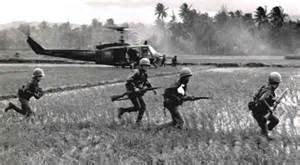
 The war in Vietnam pitted as many as 1.8 million allied forces from South Vietnam, the United States, Thailand, Australia, the Philippines, Spain, South Korea and New Zealand, against about a half million from North Vietnam, China, the Soviet Union and North Korea. Begun on November 1, 1955, the conflict lasted 19 years, 5 months and a day. On March 29, 1973, two months after signing the Paris Peace accords, the last US combat troops left South Vietnam as Hanoi freed the remaining POWs held in North Vietnam.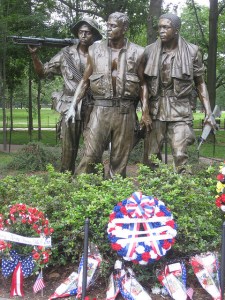



 Historical Easter Eggs - Today in History
You must be logged in to post a comment.