March 4, 1942 Pearl Harbor, Version 2.0

If successful, this would be an endurance mission, one of the longest bombing raids ever attempted, and carried out entirely without fighter escort.  The mission was designated “Operation K”, and scheduled for March 4, 1942.

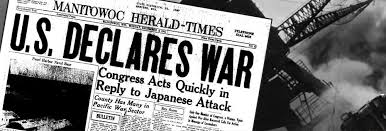
On December 7, 1941, forces of the Imperial Japanese Navy attacked the United States’ Pacific naval Anchorage, at Pearl Harbor. President Franklin Delano Roosevelt addressed a joint session of Congress the following day, requesting a declaration that, since the attack, a state of war had existied between the United States, and Japan. Three days later, Nazi Germany declared war on the United States, reciprocated by an American declaration against Nazi Germany, and their Italian allies. A two-years long conflict in Europe, had become a World War.

450px-Operation_K.svgIn the months that followed, the United States ramped up its war capacity, significantly.  Realizing this but having little information, the Imperial Japanese Navy (IJN) determined to visit Pearl Harbor once again, to have a look around.

For the IJN, this was an opportunity to test the new Kawanishi H8K1 “Emily” flying boat, an amphibious bomber designed to carry out long distance bombing raids. So it was that a second, albeit smaller attack was launched against Pearl Harbor.

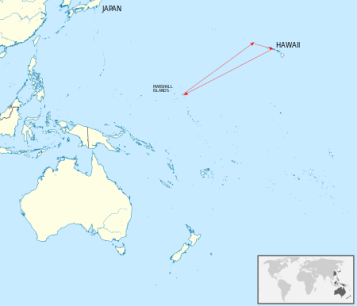
The IJN plan was complex.  This, the first Kawanishi H8K1 operation in Japanese military service, involved a small formation of flying boats to be sent to Wotje Atoll in the Marshall Islands, from there to stage the long-range attack.  The five flying boats would be loaded with four 550lb bombs apiece and flown to French Frigate Shoals northwest of Oahu, there to rendezvous with three Japanese submarines, waiting to refuel them.  Ten miles south of Oahu, the 356’ diesel-powered submarine I-23 was to hold watch over the operation, reporting weather and acting as “lifeguard” in case any aircraft had to ditch in the ocean.

HighFlight-OperationK2-300x181
“A Kawanishi H8K1 of the 802nd Kokutai is lifted out of the water onto the decks of the HIJMS Akitsushima, 1942, off Shortland Island”. H/T fly.historicwings.com, for this image

After refueling, the bomber – reconnaissance mission would approach Pearl Harbor and attack the “10-10 dock”, so-called because it was 1,010 feet long and a key naval asset for the US Pacific Fleet.

If successful, this would be an endurance mission, one of the longest bombing raids ever attempted, and carried out entirely without fighter escort.  The mission was designated “Operation K”, and scheduled for March 4, 1942.

As it turned out, the raid was a “comedy of errors”, on both sides.

Things began to go wrong, almost from the beginning.  I-23 vanished.  To this day nobody knows where the submarine went. American forces reported several engagements with possible subs during this time frame.  Maybe one of those depth charges did its job.  It is equally possible that, unknown to the Imperial Japanese Navy, I-23 was involved in an accident, lost at sea with all hands.

cb33f4104e2bbd353f6d2db6accd356c

As it was, only two of the new flying boats were ready for the operation, the lead plane (Y-71) flown by Lieutenant Hisao Hashizume, and his “wingman” Ensign Shosuke Sasao flying the second aircraft, Y-72.

The staging and refueling parts of the operation were carried out but, absent weather intelligence from the missing I-23, the two-aircraft bombing formation was ignorant of weather conditions over the target.  As it was, a thick cloud cover woud leave the Japanese pilots all but blind.

HighFlight-OperationK3-285x300
Captain Joseph J. Rochefort, USN

On the American side, Captain Joseph J. Rochefort, USN, worked in the Combat Intelligence Unit, tasked with intercepting enemy communications and breaking Japanese codes.  US code breakers had intercepted and decoded Japanese radio communications prior to the attack of four months earlier, but urgent warnings were ignored by naval authorities at Pearl Harbor.

Once again, Rochefort’s team did its job and urgent warnings were sent to Commander in Chief Pacific (CINCPAC) and to Com-14.  Incredibly, these warnings too, fell on deaf ears.  Rochefort was incredulous.  Years later, he would describe his reaction, at the time “I just threw up my hands and said it might be a good idea to remind everybody concerned that this nation was at war.”

American radar stations on Kauai picked up and tracked the incoming aircraft, but that same cloud cover prevented defenders from spotting them.  Curtiss P-40 Warhawk fighters were scrambled to search for the attackers, while Consolidated PBY Catalina flying boats were sent to look for non-existent Japanese aircraft carriers, assumed to have launched the two bombers.

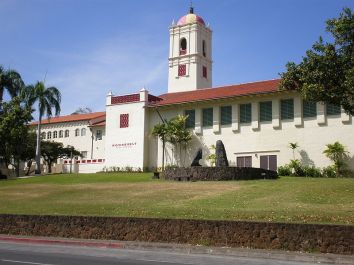
Meanwhile, the two Japanese pilots became confused, and separated.  Hashizume dropped his bombs on the side of Mt. Tantalus, about 1,000 ft. from nearby Roosevelt High School.  Hashizume’s bombs left craters 6-10 ft deep and 20-30 ft across on the side of the extinct volcano.  Sasao is presumed to have dropped his bombs, over the ocean.

800px-President-Theodore-Roosevelt-High-School
President Theodore Roosevelt High School, Honolulu

A Los Angeles radio station reported “considerable damage to Pearl Harbor”, with 30 dead sailors and civilians, and 70 wounded.  Japanese military authorities took the broadcast to heart, and considered the operation to have been a great success.  Talk about ‘fake news’.  As it was, the damage was limited to those craters on Mt. Tantalus, and shattered windows at Roosevelt High.

The United States Army and the US Navy blamed each other for the explosions, each accusing the other of jettisoning munitions over the volcano.

The IJN planned another such armed reconnaissance mission for the 6th or 7th of March, but rescheduled for the 10th because of damage to Hashizume’s aircraft, and the exhaustion of air crew.  The second raid was carried out on March 10, but Hashizume was shot down and killed near Midway atoll, by Brewster F2A “Buffalo” fighters.

HighFlight-OperationK7
The results of the second Japanese raid on Pearl Harbor, carried out on March 4, 1942, were limited to four craters on the side of an extinct volcano.

A follow-up to Operation K was scheduled for May 30, but by that time, US military intelligence had gotten wise to the IJN meet-up point.  Japanese submarines arriving at French Frigate Shoals found the place mined, and swarming with American warships.

In the end, the Imperial Japanese Navy was unable to observe US Navy activity, or to keep track of American aircraft carriers.  Days later, this blindness would have a catastrophic effect on the Japanese war effort, at a place called Midway.

DiscoverHawaiiTours_PearlHarbor_USSMissouri_2

If you enjoyed this “Today in History”, please feel free to re-blog, “like” & share on social media, so that others may find and enjoy it as well. Please click the “follow” button on the right, to receive email updates on new articles.  Thank you for your interest, in the history we all share.

March 3, 1634 Watering Hole

In early colonial America, tavern keepers would put out an “Ale Stick” or “Ale Stake”, a wooden pole with a bush of barley tied to the top, informing thirsty travelers that sustenance could be found, inside.  Sometimes a hoop of woven barley hanging outside, would tell you that you had arrived.

Despite seemingly inexhaustible supplies of pristine drinking water, colonists to the New World were first and foremost Englishmen, every one of whom understood that drinking water could make you deathly ill. The connection between sanitation and the boiling to make beer was ill understood, but everyone knew. Those who drank beer and ale didn’t get sick.  The brewhouse was an indispensable priority in every new settlement.

The earliest settlers to Jamestown, Virginia neglected the brewer’s art. Their first pleas for relief from England, included advertisements seeking “two brewers’ to join them.

When Pilgrims fetched up on the shores of Cape Cod and the later Plimoth colony in 1620, it was not in search of a beach vacation, but because of dwindling beer supplies.

330px-Boston,_1775bsmall1
Today, much of the bay has been filled in and developed, forming the core of downtown Boston. This is the Shawmut Peninsula, as it looked during Cole’s time.

Little brother Benjamin Franklin describes his earliest experience working in his brother’s print shop, with frequent reference to fetching ale for the journeyman printers.

Beer and ale were dietary staples in the era, a source of nourishment as well as refreshment. Infants drank beer and it was especially recommended for nursing mothers. Many households added a small brewing room to the outside of the building, so that the heat and risk of fire associated with brewing and cooking could be kept outside of living quarters. To this day, the lower rooflines of these “brew rooms” can be found, jutting out from the sides of the oldest American homes.

In early colonial America, tavern keepers would put out an “Ale Stick” or “Ale Stake”, a wooden pole with a bush of barley tied to the top, informing thirsty travelers that sustenance could be found, inside.  Sometimes a hoop of woven barley hanging outside, would tell you that you had arrived.

Samuel Cole was an early settler in the Massachusetts Bay colony, arriving with the Winthrop fleet in 1630 and establishing himself on the Shawmut peninsula.  Four years later, he opened the first house of entertainment in Boston, calling his place “Cole’s Inn”, established March 3, 1634.

Taverns were common in England from as early as the 1200s, where women called “Ale Wives” would fetch beer, wine, mead and ale for the guests. Though lodgings were a common feature of the ale houses of the time, it would not be until the early 1700s that Colonial taverns commonly offered such amenities.

185

Later taverns posted elaborate signs, carved from wood, stone, or even terra cotta, and hanged from wooden posts mounted to the building or to a nearby tree. Barley, the universal symbol for beer, remained a common feature of such signs, and continues in use on the labels of many brands sold to this day.

download (17)The signs of the time frequently included horses, indicating that lodgings and stables were available. Many such establishments came to be called after such signs, and names such as “Chestnut Mare” and “White Stallion” were common.

Today, a Google search of the term “Black Horse Tavern” yields some 1,090,000 hits.  Cheers.

“Filled with mingled cream and amber
I will drain that glass again.
Such hilarious visions clamber
Through the chambers of my brain –
Quaintest thoughts — queerest fancies
Come to life and fade away;
Who cares how time advances?
I am drinking ale today.” – Edgar Allen Poe


If you enjoyed this “Today in History”, please feel free to re-blog, “like” & share on social media, so that others may find and enjoy it as well. Please click the “follow” button on the right, to receive email updates on new articles.  Thank you for your interest, in the history we all share.

February 24, 1917  The Zimmermann Telegram

“We intend to begin on the first of February unrestricted submarine warfare. We shall endeavor in spite of this to keep the United States of America neutral. In the event of this not succeeding, we make Mexico a proposal of alliance on the following basis: make war together, make peace together, generous financial support and an understanding on our part that Mexico is to reconquer the lost territory in Texas, New Mexico, and Arizona”.

On May 10, 1915, President Woodrow Wilson gave what came to be known as his “Too Proud to Fight Speech” in which he said:  “The example of America must be the example not merely of peace because it will not fight, but of peace because peace is the healing and elevating influence of the world and strife is not. There is such a thing as a man being so right it does not need to convince others by force that it is right”.

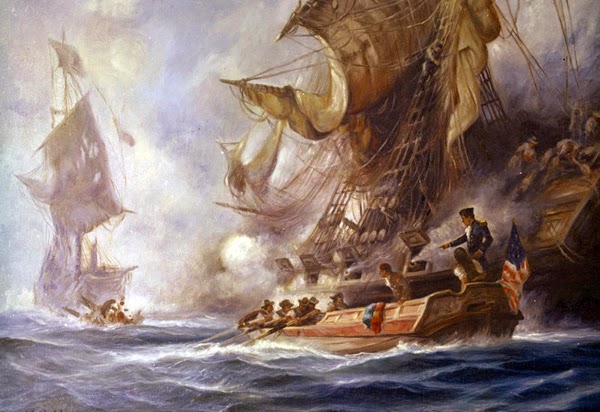
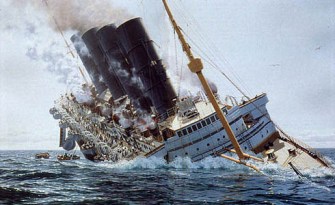
Lusitania sinkingThough Wilson didn’t mention it directly, HMS Lusitania had been torpedoed only three days earlier with the loss of 1,198, 128 of whom were Americans.

No one doubted that the attack on the civilian liner was foremost on the President’s mind.  Back in February, Imperial Germany had declared a naval blockade against Great Britain, warning that “On and after February 18th every enemy merchant vessel found in this region will be destroyed, without its always being possible to warn the crews or passengers of the dangers threatening“.  “Neutral ships” the announcement continued, “will also incur danger in the war region“.

Lusitania warningThe reaction to the Lusitania sinking was immediate and vehement, portraying the attack as the act of barbarians and huns and demanding a German return to “prize rules”, requiring submarines to surface and search merchantmen while placing crews and passengers in “a place of safety”.
Imperial Germany protested that Lusitania was fair game, as she was illegally transporting munitions intended to kill German boys on European battlefields. Furthermore, the embassy pointed out that ads had been taken out in the New York Times and other newspapers, specifically warning that the liner was subject to attack.

Nevertheless, the German policy of unrestricted submarine warfare was suspended for a time, for fear of bringing the US into the war against Germany.

President Wilson was elected back in 1912, talking about the sort of agrarian utopia favored by Thomas Jefferson.  In 1916, the election was about war and peace.  Wilson won re-election on the slogan “He kept us out of war”, but it hadn’t been easy.  In Europe, WWI was in its second year while, to our south, Mexico was going through a full-blown revolution.  Public opinion had shifted in favor of England and France by this time.  The German resumption of unrestricted submarine warfare, threatened to tip the balance.

With Great Britain holding naval superiority on the surface, Germany had to do something to starve the British war effort.  In early 1917, chief of the Admiralty Staff Admiral Henning von Holtzendorff argued successfully for the resumption of unrestricted submarine warfare, the policy to take effect on February 1.

Anticipating the results of such a move, German Foreign Secretary Arthur Zimmermann dispatched a telegram to German ambassador to Mexico Heinrich von Eckardt on January 19, authorizing the ambassador to propose a military alliance with Mexico, in the event of American entry into the war.  “We intend to begin on the first of February unrestricted submarine warfare. We shall endeavor in spite of this to keep the United States of America neutral. In the event of this not succeeding, we make Mexico a proposal of alliance on the following basis: make war together, make peace together, generous financial support and an understanding on our part that Mexico is to reconquer the lost territory in Texas, New Mexico, and Arizona”.

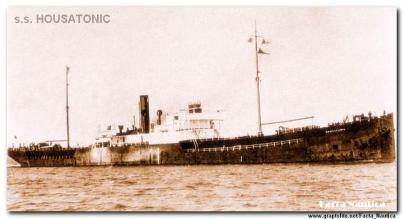
housatonic-4-facta-nautica-1000x544The American cargo vessel SS Housatonic was stopped off the southwest coast of England on February 3, and boarded by German submarine U-53.  Captain Thomas Ensor was interviewed by Kapitänleutnant Hans Rose, who explained he was sorry, but Housatonic was “carrying food supplies to the enemy of my country”.  She would be destroyed.  The American Captain and crew were allowed to launch lifeboats and abandon ship, while German sailors raided the American’s soap supplies.  Apparently, WWI-vintage German subs were short on soap.
Housatonic was sunk with a single torpedo, the U-Boat towing the now-stranded Americans toward the English coast.  Sighting the trawler Salvator, Rose fired his deck guns to be sure they’d been spotted, and then slipped away.  It was February 3, 1917.

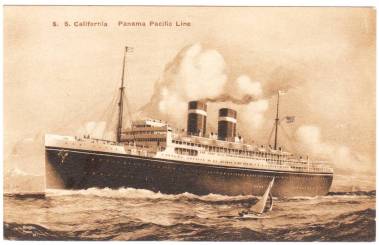
SS_CaliforniaPresident Woodrow Wilson retaliated, breaking off diplomatic relations with Germany the following day. Three days later, a German U-boat fired two torpedoes at the SS California, off the Irish coast. One missed, but the second tore into the port side of the 470-foot, 9,000-ton steamer. California sank in nine minutes, killing 43 of her 205 passengers and crew.
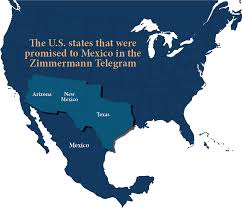
In Mexico, a military commission convened by President Venustiano Carranza quickly concluded that the German proposal was unviable, but the damage was done.  British code breakers intercepted the Zimmermann telegram, divulging the contents to the American government on February 24.

images (22)The contents of Zimmermann’s note were published in the American media on March 1.  Even then, there was considerable antipathy toward the British side, particularly among Americans of German and Irish ethnicity.  “Who says this thing is genuine, anyway”, they might have said.  “Maybe it’s a British forgery”.
Zimmermann himself put an end to such speculation two days later, telling an American journalist, “I cannot deny it. It is true.” What Zimmermann had hoped that Americans would see as mere contingency, public opinion in the US saw as an unforgivable betrayal of American neutrality.

The combination of events was the last straw.  Wilson’s War Cabinet voted unanimously for a declaration of war on March 20.  The President himself delivered his war address before a joint session of Congress, two weeks later.  The United States entered the “war to end all wars”, on April 6.

Afterward

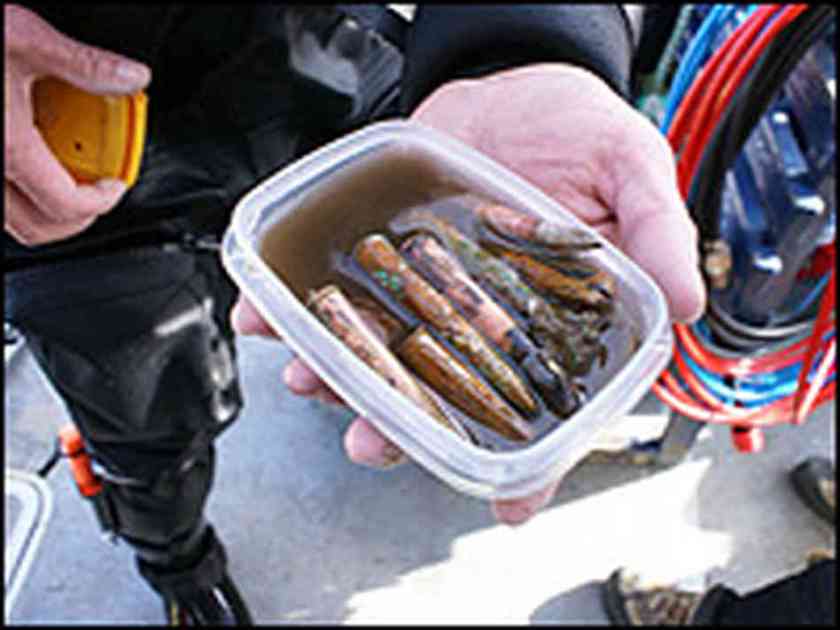
At the time, the German claim that Lusitania carried contraband munitions seemed to be supported by survivors’ reports of secondary explosions within the stricken liner’s hull. In 2008, the UK Daily Mail reported that dive teams had reached the wreck, lying at a depth of 300′. Divers reported finding tons of US manufactured Remington .303 ammunition, about 4 million rounds, stored in unrefrigerated cargo holds in cases marked “Cheese”, “Butter”, and “Oysters”.

Lusitania, ammunition

February 23, 1836  The Lexington of Texas

“If my countrymen do not rally to my relief, I am determined to perish in the defense of this place, and my bones shall reproach my country for her neglect.”

Following the Mexican War of Independence with Spain, (1810 – 1821), Texas became a part of Mexico.  In 1831, Mexican authorities gave the settlers of Gonzales a small swivel cannon, a defense against the raids of the Comanche.  The political situation deteriorated in the following years.  By 1835, several Mexican states were in open revolt.  That September, commander of “Centralist” (Mexican) troops in Texas Colonel Domingo de Ugartechea, came to take it back.

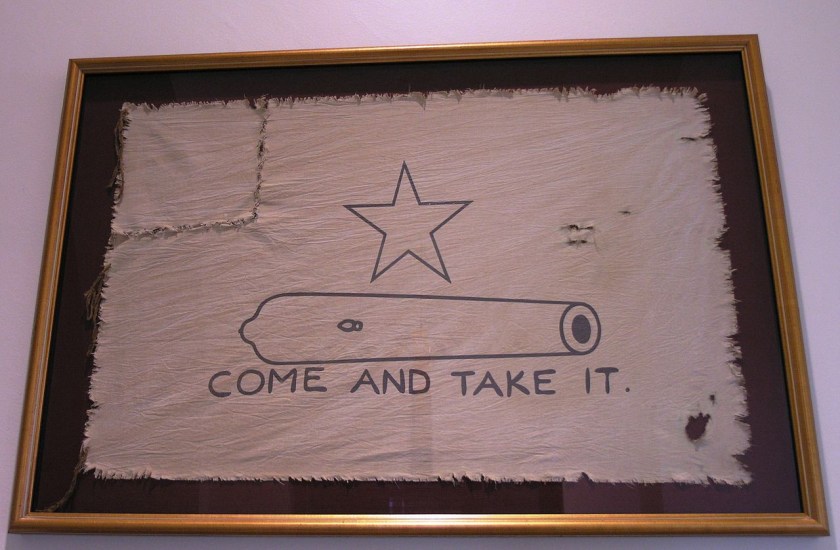
Dissatisfied with the increasingly dictatorial policies of President and General Antonio Lopez de Santa Anna, the colonists had no intention of handing over that cannon.  One excuse was given after another to keep the Mexican dragoons out of Gonzalez, while secret pleas for help went out to surrounding communities.  Within two days, 140 “Texians” had gathered in Gonzalez, fashioning a flag that echoed some 2,315 years through history, King Leonidas’ defiant response to the Persian tyrant, Xerxes:   “Come and Take it.”

1_w8rDKtbIBYgc6dg2Nn9t1g

Militarily, the skirmish of October 2 had little significance, much the same as the early battles in the Massachusetts colony, some sixty years earlier.  Politically, the “Lexington of Texas” marked a break between Texian settlers, and the Mexican government.

Settlers continued to gather, electing the well-respected local and former legislator of the Missouri territory Stephen F. Austin, as their leader.  Santa Anna sent his brother-in-law, General Martin Perfecto de Cos to reinforce the settlement of San Antonio de Béxar, near the modern city of San Antonio.  On the 13th, Austin led his Federalist army of Texians and their Tejano allies to Béxar, to confront the garrison.  Austin’s forces captured the town that December, following a prolonged siege. It was only a matter of time before Santa Anna himself came to take it back.

Two forts – more like lonely outposts – blocked the only approaches from the Mexican interior into Texas: Presidio La Bahía (Nuestra Señora de Loreto Presidio) at Goliad and the Alamo at San Antonio de Béxar.  That December, a group of volunteers led by George Collinsworth and Benjamin Milam overwhelmed the Mexican garrison at the Alamo, and captured the fort  The Mexican President arrived on February 23 at the head of an army of 3,000, demanding its surrender.  Lieutenant Colonel William Barret “Buck” Travis, responded with a cannon ball.

Knowing that his small force couldn’t hold for long against such an army, Travis sent out a series of pleas for help and reinforcement, writing “If my countrymen do not rally to my relief, I am determined to perish in the defense of this place, and my bones shall reproach my country for her neglect.” 32 troops attached to Lt. George Kimbell’s Gonzales ranging company made their way through the enemy cordon and into the Alamo on March 1. There would be no more.

Alamo-Weight-Loss-Motivation-2Estimates of the Alamo garrison have ranged between 189 and 257 at this stage, but current sources indicate that defenders never numbered more than 200.
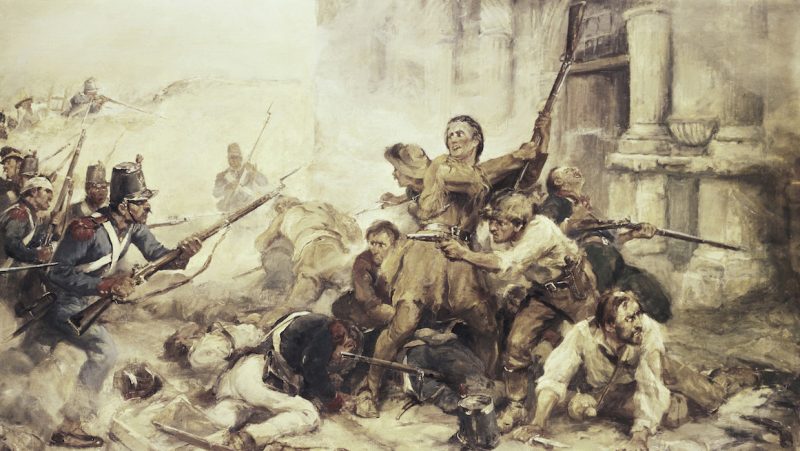
On March 2, 1836, the interim government of Texas signed the Texas Declaration of Independence.  The final assault on the Alamo began at 5:00am, four days later. 1,800 troops attacked from four directions.  600 to 1,600 were killed from concentrated artillery fire and close combat, but the numbers were overwhelming. Hand to hand fighting moved to the barracks after the walls were breached, and ended in the chapel.

Remember-the-Alamo-3-6-17-e1488801582528-800x451

As many as seven defenders still lived when it was over, many believe that former Congressman Davy Crockett was among them. Santa Anna ordered them summarily executed. By 8:00am there were no survivors, except for a handful of noncombatant women, children, and slaves, slowly emerging from the smoking ruins. These were provided with blankets and two dollars apiece, and given safe passage through Mexican lines with the warning:  a similar fate awaited any Texan who continued in their revolt.

Three weeks later following the Battle of Coleto, 350 Texian prisoners were murdered by the Mexican army under direct orders from Santa Anna, an event remembered as the Goliad massacre.

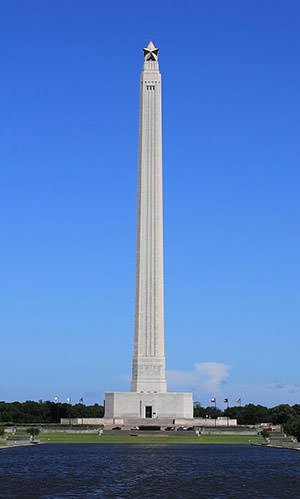
San-Jacinto-Monument
Measuring 570′, the San Jacinto Monument is the world’s longest masonry column

The ranks of Sam Houston’s unit swelled with volunteers, as Houston’s army retreated eastward, along with the provisional government and hordes of civilians.  Houston’s green and inexperienced force of 1,400, were now all that stood on the side of Texan independence.

On April 21, a force of some 900 Texans shouting “Remember the Alamo!” & “Remember Goliad!” and led by Sam Houston defeated Santa Anna’s force of some 1,300 at San Jacinto, near modern day Houston.  In “one of the most one-sided victories in history” 650 Mexican soldiers were killed in eighteen minutes and another 300 captured, compared with 11 Texians dead and another 30 wounded, including Houston itself.    Mexican troops occupying San Antonio were ordered to withdraw, by May.

Intermittent conflicts continued into the 1840s between Texas and Mexico, but the outcome was never again placed in doubt.  Texas became the 28th state of the United States on December 29, 1845.

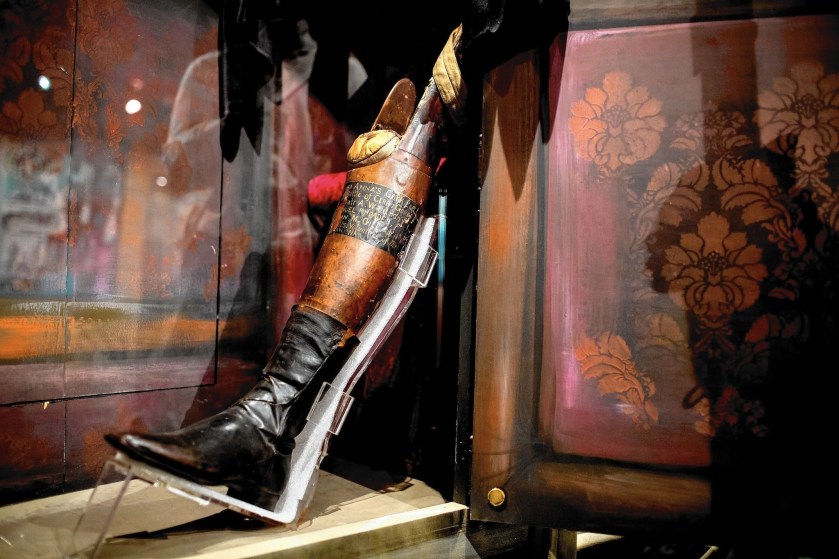
As for Santa Anna, he went on to lose a leg to a cannon ball two years later, fighting the French at the Battle of Veracruz. Following amputation, the leg spent four years buried at Santa Anna’s hacienda, Manga de Clavo. When Santa Anna resumed the presidency in late 1841, he had the leg dug up and placed in a crystal vase, brought amidst a full military dress parade to Mexico City and escorted by the Presidential bodyguard, the army, and cadets from the military academy. This guy was nothing if not a self-promoter.

The leg was reburied in an elaborate ceremony in 1842, including cannon salvos, speeches, and poetry read in the General’s honor. The state funeral for Santa Anna’s leg was attended by his entire cabinet, the diplomatic corps, and the Congress.

ct-santa-anna-leg-dispute-illinois-texas-edit-20161111

Antonio Lopez de Santa Anna served 11 non-consecutive terms as Mexican President, spending most of his later years in exile in Jamaica, Cuba, the United States, Colombia, and St. Thomas. In 1869, the 74-year-old former President was living in Staten Island, trying to raise money for an army to return and take over Mexico City. Santa Anna is credited with bringing the first shipments of chicle to America, a gum-like substance made from the tree species, Manilkara chicle, and trying to use the stuff as rubber on carriage tires.

Thomas Adams, the American assigned to aid Santa Anna while he was in the US, also experimented with chicle as a substitute for rubber. He bought a ton of the stuff from the General, but his experiments would likewise prove unsuccessful. Instead, Adams helped to found the American chewing gum industry with a product called “Chiclets”.

If you enjoyed this “Today in History”, please feel free to re-blog, “like” & share on social media, so that others may find and enjoy it as well. Please click the “follow” button on the right, to receive email updates on new articles.  Thank you for your interest, in the history we all share.

February 17, 1864  My life Preserver

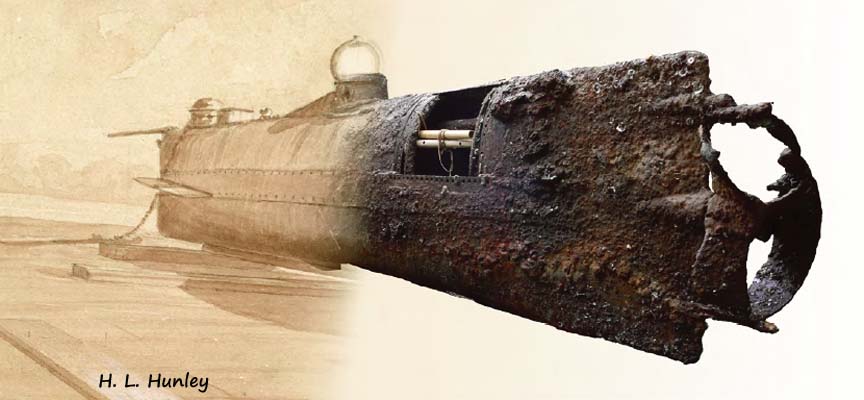
Author and adventurer Clive Cussler found the sub in 1995, buried in silt under 32′ of water. 

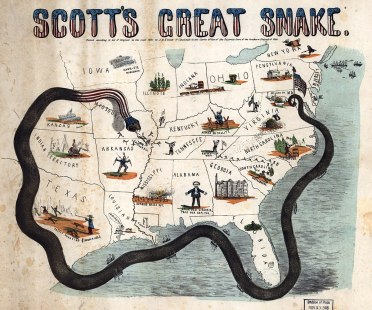
1200px-Scott-anaconda
Civil War-era cartoon depicts Winfield Scott’s “Great Snake”

In the 1850s, the economy of the southern United States was mostly agrarian.  When civil war broke out in 1861, the Confederate states depended to a greater degree on imported manufactured goods, compared with the more industrialized states to the north.  For the Union, there was strategic advantage in cutting off this flow of manufactured goods.  So it was the “Anaconda Plan” was initiated, to choke off traffic to southern ports and harbors.

Few in the Confederacy understood the need to keep southern ports open, as well as the planter, legislator, and southern patriot Horace Lawson Hunley.

In 1861, Hunley joined forces with James McClintock and Baxter Watson to design and build a secret Super Weapon for the Confederacy.  A submarine.  The trio completed construction on its first effort, the Pioneer, that same year in New Orleans.  The team went on to build two more submarines in Mobile, Alabama:  the American Diver, and the last and most successful creation, the “Fishboat“, later renamed HL Hunley.

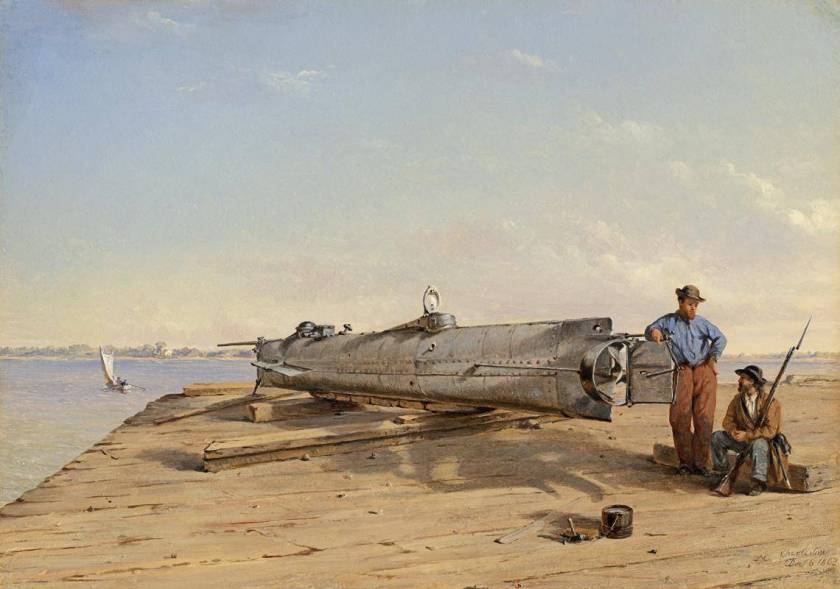
Conrad_Wise_Chapman_-_Submarine_Torpedo_Boat_H.L._Hunley,_Dec._6,_1863
An oil painting by Conrad Wise Chapman, “Submarine Torpedo Boat H.L. Hunley, Dec. 6, 1863”

After a short sea trial in Mobile, the Hunley was put on a train and shipped up to Charleston, South Carolina, to help break the blockade.  Arriving on August 12, 1863, she was 40′ long by 4′ wide, displacing about 7½ tons.  She was designed for a crew of 8, with 7 operating a hand crank and the 8th steering the boat.

A test run on August 29 ended in disaster, when Skipper John A. Payne accidentally stepped on the lever controlling the diving planes, with the hatches open.  Payne and two others escaped, but the other five crew members went to the bottom.

confederatesA second crew tested the submarine on October 15, this one including Horace Hunley himself.  The submarine conducted a mock attack but failed to surface afterward, this time drowning all 8 crew members.
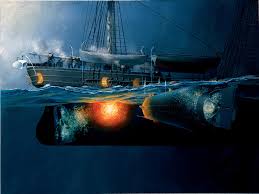
Despite those two disastrous test runs, there was no shortage of volunteers.  Once again, the Hunley was fished up from the bottom.

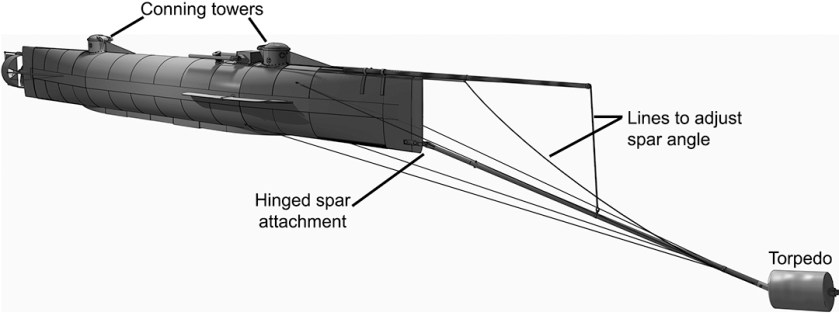
The original plan was to tow a floating mine called a “torpedo”, with a contact fuse.  They would dive beneath their victim and surface on the other side, pulling the torpedo into the side of the target.

images (21)Tide and current conditions in Charleston proved very different from those in Mobile.  On several test runs, the torpedo floated out ahead of the sub.  That wouldn’t do, so a spar was fashioned and mounted to the bow.  At the end of the spar was a 137lb waterproof cask of powder, attached to a harpoon-like device with which Hunley would ram its target.
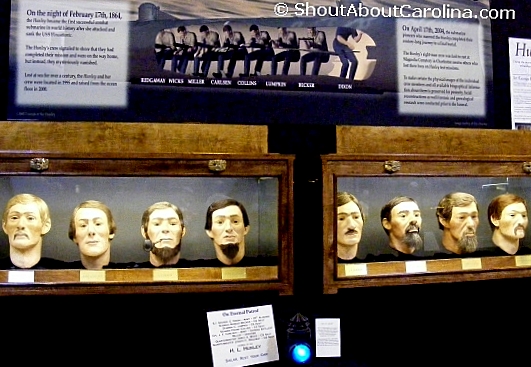
Hunley made her first live attack run four miles outside of Charleston Harbor, on the night of February 17, 1864. Lieutenant George Dixon and a crew of seven attacked USS Housatonic, a 1,240 ton steam powered sloop of war, embedding the spar torpedo into Housatonic’s hull.  It must have been a sight to see.  The torpedo ignited a 4,000 lb store of black powder in the hull of the ship, exploding with a deafening roar and a towering column of flame that lit up the night.

Housatonic was gone in three minutes, killing five sailors.  What happened next, is a mystery.  The first successful attack sub in history, vanished.  The Hunley crew would not be seen again, for 136 years.

hunley-submarine-crew-facial-reconstruction
Forensic facial reconstructions techniques bring back the faces of the last crew of HL Hunley

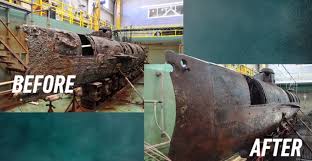
Author and adventurer Clive Cussler found the sub in 1995, buried in silt under 32′ of water.  A painstaking, five year effort was launched to bring Hunley to the surface, and on August 8, 2000, HL Hunley returned to the light of day.  The sub was moved to the Warren Lasch Conservation Center in the Charleston Navy Yard, and submerged in 55,000 gallons of chilled, fresh water, where scientists and historians worked on unlocking its secrets.

images (20)

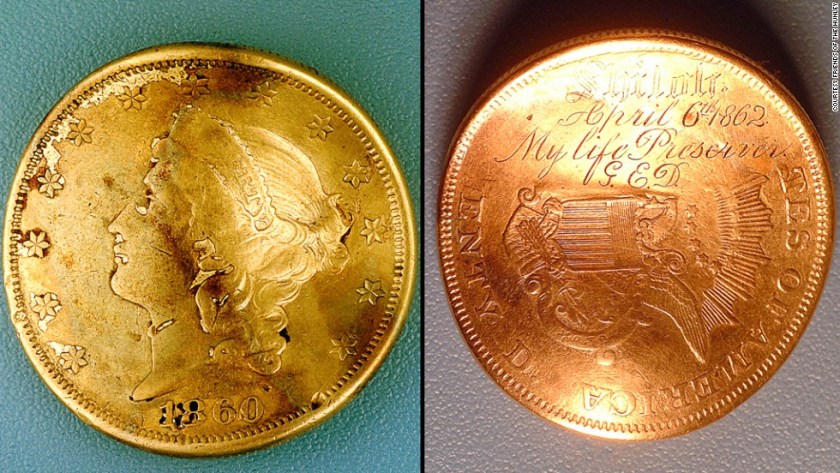
There was an old rumor that Lt. Dixon left a girlfriend in Mobile, Alabama, a woman named Queenie Bennett.  She had given him a $20 gold piece, a good luck charm and token of her affection.  Dixon was shot in the hip at Shiloh, the story goes, a wound that should have killed him.  If the bullet hadn’t struck the gold piece in his pocket.

No one knew if the story was true, until excavation started inside the sub.  Senior Archaeologist Maria Jacobsen found the coin, next to the remains of George E. Dixon.  “Some people may think this is a stroke of luck,” she said, “but perhaps it’s something else. They tell me that Lt. Dixon was a lady’s man, perhaps he winked at us yesterday to remind us that he still is”.

140214143335-07-hl-hunley-coin-horizontal-large-galleryOn the coin, clearly showing signs of having been struck by a bullet, are inscribed these words:

Shiloh

April 6, 1862

My life Preserver

G.E.D.


If you enjoyed this “Today in History”, please feel free to re-blog, “like” & share on social media, so that others may find and enjoy it as well. Please click the “follow” button on the right, to receive email updates on new articles.  Thank you for your interest, in the history we all share.

February 16, 1804  The Most Daring Act of the Age

Even a former adversary couldn’t help but admire the feat.  Days later, British Vice Admiral Lord Horatio Nelson called Decatur’s raid the “most bold and daring act of the age.”

Historic accounts differ as to the early success of the Islamic conquests.  Contemporary Christian sources saw them as God’s punishment for the sins of fellow Christians.  Early Muslim sources describe the rising empire as evidence of divine favor, reflections of the religious zeal of the conquerors.

Be that is it may, Islamic expansion enveloped the Arabian Peninsula in the last ten years of the life of Muhammad (622-632), at the expense of the Roman Byzantines and the Sassanid Empire of the Persians.  Syria fell in 634, followed by Egypt, Mesopotamia and Persia.  By 750, the Umayyad Caliphs had subjugated much of the Balkan states, part of the Indian sub-continent, all of North Africa, most of Spain, and parts of Southern France and Sicily.  By the age of Columbus, the Mediterranean was a place where you traveled at your own risk.

Those of us of European ancestry owe our heritage, if not our existence, to the Christian warriors who defeated the Jihadist time after time. There was Pelagius, who stopped a military force of the Umayyad Caliphate at Covadonga in 722, without which there would be no Reconquista, no Ferdinand and Isabella, and we wouldn’t know the name of Christopher Columbus.

The father of Charlemagne, Charles “The Hammer” Martel, blocked the Muslim advance into Western Europe at the Battle of Tours, in 732.

charles-martel-c688-741-granger

If Marcantonio Bragadin is remembered at all, it is for being betrayed, tortured and skinned alive by Lala Mustafa Pasha. Yet, it is Bragadin’s stubborn defense of the eastern Mediterranean outpost of Famagusta in 1571, which gave European principalities time to assemble naval forces in numbers sufficient to defend the European coast, near a place called Lepanto.

The 1683 Siege of Vienna, at the crossroads of eastern and western Europe, was a hard fought contest which could have gone either way, until the arrival of a Polish army under King Jan Sobieski. The Ottomans were defeated and turned back from the conquest of Eastern Europe by the largest cavalry charge in all of history, 18,000 horsemen of the Polish King and the Holy Roman Emperor, thundering down the hill and into the lines of Mustafa Pasha.

reversing

Throughout the period, “Saracens” plundered everything that could be carried away: animals, provisions, fabrics, precious metals and money:  especially men, women and children who could be sold for a good price at the slave markets.  Redemption of captives being among the corporal works of mercy, the “Mathurins” Order of the Holy Trinity was founded in 1198 for the purpose of paying the ransom of Christians held captive by non-Christians, as a consequence of crusading and pirating along the southern European coastline.

Even Ireland, with its northern latitude, wasn’t immune to such raids. The renegade Dutchman-turned Barbary pirate Murat Reis attacked the village of Baltimore in County Cork, in 1631. With him were pirates from Algiers and armed troops of the Ottoman Empire, who captured all the villagers they could find, taking 107 away to the slave markets of North Africa.  Years later, three women were ransomed and returned to Ireland.  The rest lived out their lives as slaves, or locked away in harems or inside the walls of the sultan’s palace.

From-Baltimore-to-Barbary-the-1631-sack-of-Baltimore-2
“Engraving of a Moorish slave auction from Pierre Dan’s Historie van Barbaryan en des zelfs Zee-Roovers (Amsterdam, 1684). There they were paraded, chained and nearly naked, while prospective buyers inspected the merchandise”. H/T Historyireland.com

Sidi Muhammad ibn Abdallah, Sultan of Morocco, opened his ports to trade with the fledgling United States in 1777, making Morocco the first country whose head of state publicly recognized the United States.  Abdallah saw the future for his country in foreign trade, and actively sought a treaty relationship with the US, well before war ended with Great Britain.  The treaty signed by Thomas Barclay and Sultan Muhammad III in 1786 and ratified by the Confederation Congress the following July is still in effect today, the longest continuous treaty relationship in United States history.

Diplomacy had succeeded with Morocco, but not with Algiers, Tunis or Tripoli, each of which demanded $660,000 in tribute.

Algeria captured the schooners Maria and Dauphin in 1785, the captured crews held in conditions of slavery for over a decade. The sum negotiated for their release exceeded $1 million, more than 1/6th the entire budget of the United States.  Eleven American ships were captured in 1793 alone, their crews and stores held for ransom.

Yusuf Karamanli, Pasha of Tripoli, demanded $225,000 in tribute on President Jefferson’s inauguration, in 1801.  At this time, Federal revenues were barely over $10 million.  Jefferson refused, resulting in the first Barbary War, a conflict memorialized in a line from the Marine Corps Hymn “From the Halls of Montezuma to the Shores of Tripoli”.

USS-Enterprise-barbary-war
USS Enterprise, Barbary war

Limited to small confrontations for the first two years, more sustained combat began in June 1803 when a small American force attacked Tripoli Harbor in modern Libya.

While giving chase and firing on a pirate vessel, USS Philadelphia ran aground on an uncharted reef, two miles outside of Tripoli.  Fearing the 1,240 ton, 36-gun frigate would be captured and added to the Tripolitan navy, Lieutenant Stephen Decatur led a daring expedition into Tripoli harbor to destroy the captured vessel.

hqdefaultOn the evening of February 16, 1804, Decatur entered Tripoli Harbor with a force of 74 Marines.  With them were five Sicilian volunteers, including pilot Salvador Catalano, who spoke fluent Arabic.  Disguised as Maltese sailors and careful not to draw fire from shore batteries, Decatur’s force boarded the frigate, killing or capturing all but two of its Tripolitan crew.  Decatur and his marines had hoped to sail Philadelphia out of harbor, but soon found she was in no condition to leave.  Setting combustibles about the deck, they set the frigate ablaze.  Ropes burned off, setting the Philadelphia adrift in the harbor.  Loaded cannon cooked off as the blaze spread, firing random balls into the town. It must have been a sight, when gunpowder stores ignited and the entire ship exploded.

By that time Decatur and his men had slipped away, without the loss of a single man.  Even a former adversary couldn’t help but admire the feat.  Days later, British Vice Admiral Lord Horatio Nelson called Decatur’s raid the “most bold and daring act of the age.”

February 12, 1733 The Last Colony

Tomochichi presented a symbol of power to the King of England, a bald eagle feather, the first time this symbol of our nation was connected to the American colonies.

In 1727 England, the anonymously published book “The Sailor’s Advocate”, argued for improvements in the terrible working conditions, that sailors of the day were forced to endure.

The pamphlet’s “unknown” author was James Oglethorpe, a crusader, an idealist, and member of the British Parliament.  Oglethorpe saw urbanization as the great evil of his day, the stripping of the productively employed from the countryside, while depositing them in cities with no opportunity for meaningful work.

Oglethorpe chaired a committee on prison reform the following year, calling attention to the horrendous conditions in English debtors’ prisons, and the hopeless plight of those released with no means of support.

To deal with the problem, Oglethorpe and others petitioned in 1730 to form a committee of trustees, to form the 13th Colony in America. They would call this new colony “Georgia”, a new start for the worthy poor, and a military buffer against Spanish Florida to the south, and French Louisiana to the west.  The charter was signed by King George II on April 21, 1732.slide_11

Thousands applied to go, trustees narrowing the number down to an initial 114 colonists. Those who couldn’t pay their own way would be subject to a period of indenture, typically 5-7 years.

It was November of that year, when the first group of colonists left aboard the “Anne”, bound for the new world.  James Oglethorpe and his 114 pilgrims scrambled up the 40′ banks of the Savannah River on February 12, 1733, there to establish the Province of Georgia and its Colonial Capital of Savannah.

tumblr_oeuwsvcOCx1s9fj4po1_500
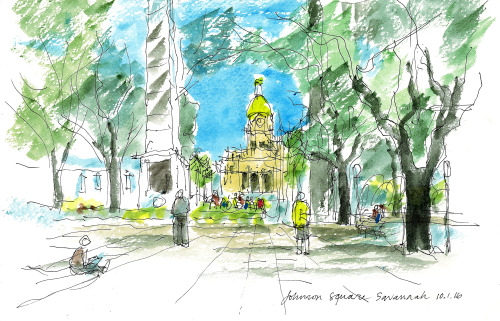
Artist’s depiction of Johnson Square, the earliest public square in Savannah

A personal friendship developed between Oglethorpe and native Chieftan Tomochichi, Mico (Leader) of the Yamacraw, a formal treaty of friendship signed in May of that year.

The Trustees obtained £10,000 for the Georgia colony that first year, the subsidy becoming smaller in the following years. Georgia was the only American colony thus dependent on a Parliamentary allowance.

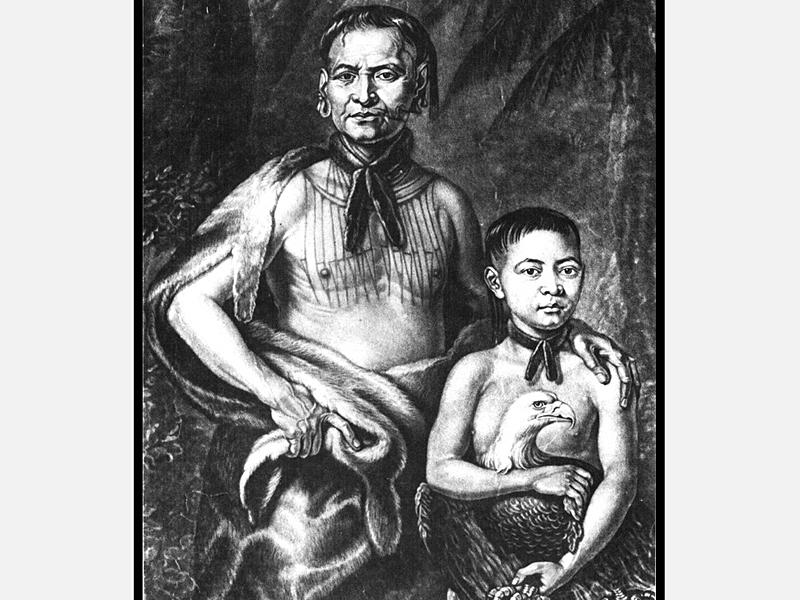
Oglethorpe returned to England two years later along with several “goodwill ambassadors”, among them Chief Tomochichi himself, his wife Senauki, their nephew Toonahowi, and six other members of the Lower Creek tribes. Members of the Indian delegation were treated as celebrities, entertained by Trustees and personal guests of the King and Queen, after which the group became tourists, visiting the Tower of London, St. Paul’s Cathedral and enjoying a number of plays, from Shakespearean dramas to comic farces.

Tomochichi presented a symbol of power to the King of England, a bald eagle feather, the first time this symbol of our nation was connected to the American colonies.

m-1123
“As the principal mediator between the native population and the new English settlers during the first years of Georgia’s settlement, Tomochichi (left) contributed much to the establishment of peaceful relations between the two groups and to the ultimate success of Georgia. His nephew, Toonahowi, is seated on the right in this engraving, circa 1734-35, by John Faber Jr.” – Hat tip for this image, to the Hargrett Rare Book and Manuscript Library, University of Georgia Libraries

The home town to Oglethorpe’s Utopian experiment, Savannah, was founded around four wards, each containing eight blocks situated around its own central square. Established to help the poor and to produce materials like silk and olives for England, Georgia issued each colonist 50 acres of land – perfect for the yeoman farmer, but too small for major landholders.  Its motto was “Non Sibi Sed Allis”. “Not for Themselves But for Others”.  Oglethorpe outlined four by-laws for the Georgia province, four prohibitions forming the legal framework of his Utopian experiment.

1. No rum, Brandy or spirits were allowed in Georgia, though beer, wine and ale, were OK.
2. No African slaves were permitted, though they were occasionally “borrowed” for construction projects.
3. Oglethorpe believed that every man ought to be able to speak for himself. Hence, no lawyers were allowed.
4. No Catholics were allowed either, as it was feared that they’d be too sympathetic with co-religionist Spain, then in control of the Florida territory.

“If we allow slaves,” Oglethorpe had said, “we act against the very Principles by which we associated together, which was to relieve the distressed.”

Returning to England, Oglethorpe continued to serve on the Board of Trustees, though he often found himself outvoted.  Despite his opposition, the Board of Trustees gradually relaxed their restrictions on land ownership, on hard liquor, and on slavery. By 1750, Georgia’s founding father was no longer involved with the board which had given it life. Oglethorpe’s grand experiment was over in 1754, when Trustees voted to dissolve their governing charter, making Georgia the 13th of Great Britain’s American colonies.

Tomochichis-Grave-in-Wright-Square
Mico Tomochichi’s monument, Wright Square, Savannah, Georgia

Chief Tomochichi died in 1739 at age 97, requesting that he be buried among his English friends. The Mico of the Yamacraw was interred in Wright Square, and saluted with cannon and musket fire. James Oglethorpe himself was one of the pall bearers. If you ever visit the city of my childhood, there you will find Wright Square and Tomochichi’s monument, dedicated on April 21, 1899. A bronze tablet is engraved with Cherokee roses and arrowheads, and inscribed with these words. “In memory of Tomochichi – the Mico of the Yamacraws – the companion of Oglethorpe – and the friend and ally of the Colony of Georgia”.

Featured image, top:  LaFayette Square, Savannah, named for the Frenchman and Aide-de-Camp to General George Washington, Marie-Joseph Paul Yves Roch Gilbert du Motier, Marquis de Lafayette.

February 11, 1812 Gerry-mander

In 1842, Federal law required that voting districts be compact, and contiguous. That worked out for about a hot minute.

The dictionary defines “Gerrymander” as a verb: “To divide (a geographic area) into voting districts in a way that gives one party an unfair advantage in elections”. In the Old Country the practice goes way back, the earliest instance in the American colonies dates back to early 1700s, Pennsylvania.

In 1788, Virginia voted to ratify the Constitution and join the Union. Former Governor Patrick Henry persuaded the state legislature to reconfigure the 5th Congressional District, thereby forcing his political adversary James Madison to run against a powerful opponent named James Monroe. Henry’s redistricting tactic failed and Madison won, anyway. One day he would become the nation’s fourth president. All was not over for the loser, though. James Monroe would become #5.

73703-004-17E3CF79Elbridge Gerry was born in 1744, in the north shore Massachusetts town of Marblehead. Gerry spent most of his adult life in public office, excepting a ten-year period in the family codfish packing business. First elected to the state legislature in 1772, Gerry died in office in 1814, while serving as Vice President under President James Madison.

Politics are as ugly these days as any time in living memory, but that’s nothing new. Back in 1812, parties were split between Federalists supporting strong central government and favoring business & industry, pitted against Jeffersonian Democratic-Republicans, suspicious of centralized power and favoring small landowning family farmers to secure the well-being of the nation. Both parties believed the other would destroy the young nation, and campaigns were as nasty as they get.

GerrymanderContext

Elbridge Gerry was elected Massachusetts Governor in 1810. Soon, his Democratic-Republican supporters were doing everything they could to get the man re-elected. The redistricting plan that emerged on February 11, 1812 confined Federalist precincts to a handful of congressional districts, while Democratic-Republican precincts were spread across many. In the end, 50,164 Democratic-Republican votes resulted in 29 seats in the state legislature and only 11 Federalist Party seats, despite a favorable vote tally of 51,766.

gerrymanderBenjamin Russell was a newspaper editor, and ardent Federalist. The painter Gilbert Stuart commented on the new district map hanging over Russell’s desk, saying “That will do for a salamander.” “Better say a Gerry-mander!” was Russell’s reply. A cartoonist added head, wings, and claws. The cartoon map and the name appeared in the Boston Gazette within the month.

Ever since, “gerrymandering” has been a bi-partisan favorite for keeping “public servants” firmly ensconced at the public trough.

In 1842, Federal law required that voting districts be compact, and contiguous. That worked out for about a hot minute. In the 1870s, Mississippi gerrymandered a “shoestring” district some 300 miles long and only 32 miles wide. Other states have “packed” voters into districts shaped like frying pans, dumbbells, and turkey feet.

slide_3In the 1960s, gerrymandering was used to “crack” the voting strength of black and urban voters. A 1962 Supreme Court decision ruled that electoral districts must reflect the principle of “one man, one vote”. A 1985 decision ruled it unconstitutional to alter election districts to favor of any political party.

These days, voting districts are intentionally drawn up to favor or disfavor parties, racial, and other “interest” groups, ensuring that we look on one another as “us and them”, rather than just, plain, fellow Americans. Talk about “the conduct of public affairs for private advantage”. (Hat tip to my favorite curmudgeon, Ambrose Bierce, for that one).

Massachusetts's_4th_congressional_districtHere in the home of the Gerrymander, Barney Frank’s old 4th congressional district resembles nothing so much as a grasping hand. I’m not sure if the new congressional map is much of an improvement, but hey. It seems to work for the ruling class.

In 2000, California’s two major parties worked together to redraw state and Federal legislative districts, in such a way as to preserve the status quo, in perpetuity. It worked. 53 congressional, 20 state senate, and 80 state assembly seats were at risk in the 2004 election. Not one of them changed parties. 28th state senate district Senator Jenny Oropeza (D) won re-election in 2010.  About a month, after she died.

How_to_Steal_an_Election_-_Gerrymandering.svg

If you enjoyed this “Today in History”, please feel free to re-blog, “like” & share on social media, so that others may find and enjoy it as well. Please click the “follow” button on the right, to receive email updates on new articles.  Thank you for your interest, in the history we all share.

February 7, 1775  Bringing A Knife to a Gunfight

It is often said that you should never bring a knife to a gunfight.  You probably don’t want to draw a rhetorical popgun, either.  Not if the other guy is carrying a cannon.

In early 1775, Benjamin Franklin was on an extended diplomatic mission to England.  The balance had not yet tipped toward Revolution, though things were headed in that direction.

113An unnamed British military officer felt the need to run his mouth before the Parliament, at the expense of his fellow British subjects in the American colonies.  “Americans are unequal to the People of this Country”, he said, “in Devotion to Women, and in Courage, and worse than all, they are religious”.

On this day in London, February 7, 1775, the man who would be called “The First American” for his early and tireless campaign for colonial unity, published his response.

Franklin himself was not the most religious man, but he reminded his readers that it was the zealous Puritans who rid Great Britain of the hated King Charles I.

Franklin went on to relate a history of the Seven Years’ War, in which the colonial militia were forever saving inept and blundering British regulars from themselves.

“Indiscriminate Accusations against the Absent are cowardly Calumnies”, he wrote, but old Ben saved his best for the crack about American men not liking women.  Franklin noted that the British population was declining at the time, while in the American colonies, numbers were increasing.  American men, he concluded, are clearly more “effectually devoted to the Fair Sex”, than their counterparts across the pond.

franklin (1)

It is often said that you should never bring a knife to a gunfight.  You probably don’t want to draw a rhetorical popgun, either.  Not if the other guy is carrying a cannon.


If you enjoyed this “Today in History”, please feel free to re-blog, “like” & share on social media, so that others may find and enjoy it too. Please click the “follow” button on the right, to receive email updates on new articles.  Thank you for your interest, in the history we all share.

February 6, 1788 Founding Documents

That original 2nd amendment, which read “No law, varying the compensation for the services of the Senators and Representatives, shall take effect, until an election of Representatives shall have intervened”, took effect in 1992 as the 27th amendment, following a ratification period stretching out 202 years, 7 months, and 12 days.

Early discussions of the American experiment in self-government began almost 20 years before the Revolution, with the Albany Congress of 1754, and Benjamin Franklin’s proposed Albany Plan of Union. The 2nd Continental Congress appointed a drafting committee to write our first constitution in 1776, the work beginning on July 12. The finished document was sent to the states for ratification on November 15 of the following year.

ArticlesOfConfederationTwelve of the original thirteen states ratified these “Articles of Confederation” by February, 1779. Maryland held out for another two years, over land claims west of the Ohio River. In 1781, seven months before Cornwallis’ surrender at Yorktown, the 2nd Continental Congress formally ratified the Articles of Confederation. The young nation’s first governing document.

The document provided for a loose confederation of sovereign states. At the center stood a congress, a unicameral legislature, and that’s about it. There was no Executive, there was no Judiciary.

In theory, Congress had the authority to govern foreign affairs, conduct war, and to regulate currency. In practice, these powers were limited since Congress had no authority to enforce requests made on the states, for either money or manpower.

Manns-Tavern-300x212The Union would probably have broken up, had not the Articles of Confederation been amended or replaced. Twelve delegates from five states met at Mann’s Tavern in Annapolis Maryland in September 1786, to discuss the issue. The decision of the Annapolis Convention was unanimous. Representatives from all the states were invited to send delegates to a constitutional convention in Philadelphia, the following May.

The United States won its independence from England four years earlier, when 55 state delegates convened in Philadelphia to compose a new Constitution.

Delegates from 12 of the 13 original colonies, only Rhode Island abstaining, met at Philadelphia’s Pennsylvania State House on May images (19)25, 1787. The building is now known as Independence Hall, the same place where the Declaration of Independence and the Articles of Confederation were drafted.

The assembly immediately discarded amending the Articles, crafting in their stead a brilliant Federal system of checks and balances over three months of debate. The Federal Republic envisioned by the framers delegates specific, limited powers to the Federal Government, with authority outside those specific powers devolving to the states.

Even at the convention, there was concern about the larger, more populous states governing at the expense of the smaller ones. The “Connecticut Compromise” solved the problem, creating a bicameral legislature with proportional representation in the lower house (House of Representatives) and equal representation of the states themselves in the upper house (Senate).

The Constitution was signed by 38 of 41 delegates on September 17, 1787. As dictated by Article VII, the document would become binding following ratifiication by nine of the 13 states.

US-Constitution-777x437

Five states: Delaware, Pennsylvania, New Jersey, Georgia, and Connecticut, ratified the document in quick succession. Some states objected to the new Constitution, especially Massachusetts, which wanted more protection for basic political rights such as freedom of speech, religion, and of the press. These wanted the document to specify, that those powers left undelegated to the Federal government, were reserved to the states.

A compromise was reached in February, 1788 whereby Massachusetts and other states would ratify the document, with the assurance that such amendments would be immediately proposed.

With these assurances, Massachusetts ratified the Constitution by a two-vote margin on this day in 1788, followed by Maryland and South Carolina. New Hampshire became the ninth state on June 21. The new Constitutional Government would take effect on March 4 of the following year.

82638952-56a9aadd5f9b58b7d0fdcec6On September 25, the first Congress adopted 12 amendments, sending them to the states for ratification.

The states got rid of the first two, so it is that the Congress’ original 3rd amendment became 1st, of what we now call the “Bill of Rights”. Today, the United States Constitution is the oldest written national constitution in operation, in the world.

It’s interesting to note the priorities of that first Congress, as expressed in their original 1st and 2nd amendments. The ones that were thrown out. The first had to do with proportional representation, and would have led us to a 6,000 member House of Representatives, instead of the 435 we currently have. The second most important thing in the world, judging by the priorities of that first Congress, was that any future Congress could not change their own salaries. Any such change could effect only future Congresses.

That original 2nd amendment, stating that “No law, varying the compensation for the services of the Senators and Representatives, shall take effect, until an election of Representatives shall have intervened”, took effect in 1992 as the 27th amendment, following a ratification period stretching out 202 years, 7 months, and 12 days. One must not not be too hasty about these things.