December 29, 1778 The Siege of Savannah

For the Americans and their allies, the frontal assault of October 9 was one of the bloodiest engagements, of the Revolution.  It could have been worse.  As battered American and French soldiers fell back, 500 free men of color known as the Chasseurs Volontaires de Saint-Domingue stepped up, to cover their retreat.

Many of these Haitian soldiers went on to win their own war of independence, and credited their military experience, to Savannah.

As 1778 drew to a close, British military planners could look back on five years of trying to suppress rebellion in the American colonies, with little to show for it.   In March of that year, the British defeat at Saratoga had brought France into the war, on the side of the Rebels.

Two years of open warfare had centered mostly on the north.   Now, a “southern strategy” was devised to conquer rebellious colonies in the south, while isolating those to the north. Key to the Southern Strategy was Georgia and the colonial capital at Savannah, the southernmost commercial port of the thirteen Colonies.

General sir Henry Clinton dispatched a force of some 3,100 from New York under Lieutenant Colonel Archibald Campbell, along with an unknown quantity of artillery. Campbell arrived outside Tybee Island on December 23.

Georgia was defended by two separate forces at this time, units of the Continental Army under the command of General Robert Howe, and state militia under the command of Governor John Houstoun.  The two men had a history of squabbling for control and most of their troops, had yet to be tried.

ArchibaldCampbell-by-George-Romney-239x300
Lieutenant Colonel Archibald Campbell, British commander at the capture of Savannah in December 1778

The 850 under General Howe never really had a chance, against the battle hardened Regulars, Hessian auxiliaries and Loyalist militia, coming ashore on December 29.  Defeat turned to rout when Howe’s forces threw down their weapons and ran.  Campbell reported that “It was scarcely possible to come up with them, their retreat was rapid beyond conception.

Patriot forces suffered 83 killed, 11 wounded and 453 captured. Campbell suffered 7 killed and 17 wounded.

Howe was court-marshaled for the disaster, while Campbell bragged about being “the first British officer to [rend] a star and stripe from the flag of Congress

Brigadier General Augustine Prevost arrived from St. Augustine Florida two weeks later, with a mixed force of Regulars and Creek and Cherokee allies.   Campbell and a force of 1,000 would take the provisional capital at Augusta that February but soon retreated to Savannah, citing insufficient support among Loyalist and Native American populations.

American hopes soon fell back on their new-found alliance with France. During the following summer, French Admiral Count Charles-Hector Theodat d’Estaing captured St. Vincent and Grenada in the British West Indies, clearing the way to the Georgia coast. The powerful 47-ship French fleet arrived with 4,000 troops on September 1, surprising and capturing several British ships outside the mouth of the Savannah River.

french-shipsD’Estaing sent an ultimatum to British Commander Augustine Prevost on September 16, 1779. He was to surrender the city “To the arms of his Majesty the King of France”, or he would be personally answerable for what was about to happen. It could not have pleased General Benjamin Lincoln or his Patriot allies when d’Estaing added “I have not been able to refuse the army of the United States uniting itself with that of the King. The junction will probably be effected this day. If I have not an answer therefore immediately, you must confer with General Lincoln and me”.

“Bullet Head Prevost”, so called because of a circular scar on his temple, stalled for 24 hours, using the time in furiously building up his defenses and calling up 800 reinforcements from South Carolina.

Lincoln joined d’Estaing on September 23 with an army of 3,000 militia and Continental soldiers, laying siege to Savannah and the 2,500 British and Loyalist troops in occupation.

On October 1, a British relief column under one Captain French was coming to the city’s aid, camped on the banks of the Ogeechee River. Georgia Continental Colonel John White had two officers, a sergeant and three privates with him, when he tricked French into surrendering. These guys ran through the woods lighting so many fires that the British thought the entire continental Army was bivouacked around them. Captain French was unavailable for comment but, it must be a special feeling, knowing that you just surrendered 111 guys to six, without firing a shot.

Scene-of-Savannah
View of the siege works against the town at the Siege of Savannah September and October 1779 in the American Revolutionary War: contemporary picture by a French officer

Lack of horses and artillery carriages delayed the allies’ moving their cannon ashore, so French warships bombarded the city from the sea. At one point shortly after Midnight on October 3, with rum rations flowing far too freely, fire from French gunners became more dangerous to themselves than to the city itself.

For the Americans and their allies, the frontal assault of October 9 was one of the bloodiest engagements, of the Revolution.  It could have been worse.  As battered American and French soldiers fell back, 500 free men of color known as the Chasseurs Volontaires de Saint-Domingue stepped up, to cover their retreat.

Many of these Haitian soldiers went on to win their own war of independence, and credited their military experience, to Savannah.

Franklin-Sq-Monument
Franklin Square Monument remembers the contributions of the Haitian militia, in the Siege of Savannah

 The siege of Savannah inflicted untold misery among the population, but Patriot forces and their French allies, never did break the city’s defenses. The siege broke a short time later, amidst recriminations on both sides.   D’Estaing returned to France, where he lost his head to the guillotine in 1794.

Savannah would remain in British hands until the end of the war, finally evacuated on July 11, 1782. A coquina marker in a small Savannah park; that soft, seashell limestone common throughout the Caribbean basin to Florida and beyond, bears a small brass plaque, darkened with the patina of age.

COMMEMORATIVE OF THE BRITISH EVACUATION OF SAVANNAH 1782
PRESENTED TO THE CITY OF SAVANNAH
BY THE
LACHLAN McINTOSH CHAPTER
DAUGHTERS OF THE AMERICAN REVOLUTION
1904

british-attack-on-american-forces-in-savannah-georgia-in-the-revolutionary-adw8m3-1
Attack of 2nd South Carolina Continentals on the Spring Hill Redoubt at the Siege of Savannah on 9th October 1779 in the American Revolutionary War: picture by A.I. Keller

December 26, 1776 Hell Ships of the Revolution

British and American forces and their allies fought no less than seventy-one major engagements from the April 19, 1775 battles of Lexington and Concord, to the 1783 Battle of Arkansas Post.  The prison ships of the British killed more Americans than every single one of them, combined.

Since the first Geneva Convention of 1864, nations have attempted to codify a system of international law, concerning acceptable limits on the conduct of war.  These laws address a range of considerations including declarations of war, acceptance of surrender and proper treatment of prisoners.

Such discussions are nothing new, the earliest examples dating to the ancient Sanskrit epic Mahābhārata, and to the old testament (Torah) Book of Deuteronomy. The first Caliph, Abu Bakr, laid down ten rules of warfare for his Muslim army, in the 7th century.

In the New World British colony in North America, one of twenty-seven grievances enumerated in the Declaration of Independence was that King George IIIhas endeavoured to bring on the inhabitants of our frontiers the merciless Indian Savages whose known rule of warfare is an undistinguished destruction of all ages, sexes and conditions“.

unknown-8-1489678956-1972The American Revolution was on its last legs in December 1776. The year had started out well for the Patriot cause but turned into a string of disasters, beginning in August. Food, ammunition and equipment were in short supply by December.  Men were deserting as the string of defeats brought morale to a new low.   Most of those who remained, ended enlistments at the end of the year.

General George Washington and a force of 5,000 performed the famous crossing of the Delaware River in the howling blizzard of Christmas day, 1776. The assault on the Hessian garrison at Trenton, was do or die. The cause of Independence needed decisive victory, or it was over. The pass word on that frigid night was “Victory”.  There was only one acceptable response: “Or Death”.

The tactical surprise was complete in the early morning hours of December 26.  Hessian losses were 22 killed, 92 wounded and 918 captured.  Only 400 escaped. The Americans suffered two who had frozen to death in the march on Trenton, and five wounded. It was the colonist’s first major victory of the Revolution.

What to do with all those prisoners was a new problem for Washington, who ordered his troops to treat them with humanity.  “Let them have no reason to complain of our copying the brutal example of the British army in their treatment of our unfortunate brethren who have fallen into their hands.”

Washington’s position on the treatment of prisoners was clear and consistent. On September 14 of the previous year, the General wrote to Colonel Benedict Arnold then in camp in Cambridge Massachusetts: “Should any American soldier be so base and infamous as to injure any [prisoner]…I do most earnestly enjoin you to bring him to such severe and exemplary punishment as the enormity of the crime may require.”

No such consideration was given American prisoners of his Majesty’s government.  King George III personally declared American revolutionaries to be traitors in 1775, denying them prisoner of war status.  Land based detention facilities in British-occupied cities such as New York, Philadelphia and Charleston quickly filled up when the hulks of spent vessels were brought into service as prison ships, little more than waterlogged coffins.

1024px-HMS_Jersey_Prison_Ship_1782_(cropped)
Prison Ship HMS Jersey

Conditions on board these prison ships, were gruesome.  The stifling hold of  HMS Jersey alone held no fewer than 1,000 men in Wallabout Bay, modern-day site of the Brooklyn Navy Yard.

Authorities were loath to execute detainees for “treason” for fear of inciting sympathy.  Prisoners were left instead to wallow in their own filth, starved and tormented by most every disease and parasite, known to modern medicine.   The Connecticut Gazette recounted the experience of one Robert Sheffield in July 1778, one of precious few to escape:

The heat was so intense that [the 300-plus prisoners] were all naked, which also served the well to get rid of vermin, but the sick were eaten up alive. Their sickly countenances, and ghastly looks were truly horrible; some swearing and blaspheming; others crying, praying, and wringing their hands; and stalking about like ghosts; others delirious, raving and storming, all panting for breath; some dead, and corrupting. The air was so foul that at times a lamp could not be kept burning, by reason of which the bodies were not missed until they had been dead ten days. One person alone was admitted on deck at a time, after sunset, which occasioned much filth to run into the hold, and mingle with the bilge water …

Bodies of the dead were tossed overboard, ten or fifteen every day from Jersey, alone.  Thousands of dead fouled the brackish waters of Wallabout Bay, from which water was drawn to boil “soup” for survivors, more like a toxic sludge, sometimes augmented with moldy bread or rancid meat.

Even after Cornwallis’ surrender in 1781, prisoners languished in the holds of Jersey and other Hell ships until the Treaty of Paris formally ended the war, in 1783.

A host of place names enter the popular imagination, when we think of the American Revolution.  Bunker Hill.  Trenton.  SaratogaYorktown.  British and American forces and their allies fought no fewer than seventy-one major engagements from the April 19, 1775 battles of Lexington and Concord, to the 1783 Battle of Arkansas Post.  The prison ships of the British killed more Americans than every one of them, combined.

Thousands of remains washed up on the shores of Brooklyn.  Bones were still being found in 1801, during construction of the Brooklyn Navy Yard.

Prison-Ship-Martyrs-Memorial-Fort-Greene-Park-Brooklyn
Prison Ship Martyrs Memorial Fort Greene Park Brooklyn

Locals collected as many as they could for burial in a local tomb.  The bones were eventually moved to a crypt in Fort Greene Park, a half-mile south of Wallabout Bay.  Today, a 149-foot martyrs memorial topped with an eight-ton bronze brazier marks the location of their Fort Greene crypt.

In eight years, an estimated eleven to twelve thousand men perished of the filth, abuse, neglect and disease of these Hell Ships.  Untold thousands more passed through their stinking holds, and lived to tell the tale.

That such men ever lived, may be counted among the blessings of Liberty.

Brooklyn Parks Commissioner Martin “Marty” Maher is quoted in Smithsonian.com“These were ordinary citizens, fighting for a country that had barely been born. Every man was offered freedom if he would swear to stop fighting. But there’s no record that anyone took up the offer. No prisoner renounced the revolution to gain his freedom. Not one.”

fort-greene-park-brooklyn

If you enjoyed this “Today in History”, please feel free to re-blog, “like” & share on social media, so that others may find and enjoy it as well. Please click the “follow” button on the right, to receive email updates on new articles.  Thank you for your interest, in the history we all share.

December 23, 1884 Lake Bacon

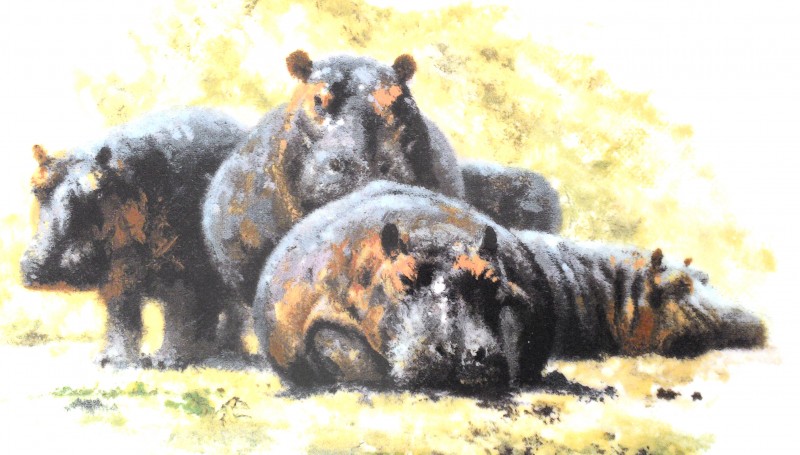
The meadows and the bayous of our southern lands shall swarm with herds of hippopotami

Only hours from now, families will gather from across the nation, for the Christmas table.  There will be moist and savory stuffing, and green bean casserole.  Creamy mashed potatoes and orange cranberry sauce.  And there, the centerpiece of the feast.  Slow-roasted and steaming in its tray, golden brown and delicious, the roast hippopotamus.

Wait…What?

water-hyacinth-eichornia-crassipes
Water Hyacinth

On this day in 1884, the World Cotton Centennial and World’s Fair was beginning its second week, in New Orleans. Among the many wonders on display was the never-before seen, Eichornia crassipes, a gift of the Japanese delegation.  The Water Hyacinth.

Visitors marveled at this beautiful aquatic herb, its yellow spots accentuating the petals of beautiful delicate purple and blue flowers, floating across tranquil ponds on thick, dark green leaves.

The seeds of Eichornia crassipes are spread by wind, flood, birds and humans, and remain viable for 30 years.  Beautiful as it is to look at, the Water Hyacinth is an “alpha plant”, an aquatic equivalent to the Japanese invasive perennial Kudzu, the “vine that ate the south”.  Impenetrable floating mats choke out native habitats and species, while thick roots impede the passage of vessels, large and small.  The stuff is toxic if ingested by humans and most animals, and costs a fortune to remove.

This plant native from the Amazon basin quickly broke the bounds of the 1884 World’s Fair, spreading across the bayous and waterways of Louisiana, and beyond.

Eichhornia_crassipes_field_at_Langkawi

During the first decade of the 20th century, an exploding American population could barely keep up with its own need for food, especially, meat.  The problem reached crisis proportions in 1910, with over grazing and a severe cattle shortage.  Americans were seriously discussing the idea, of eating dogs.

Enter Louisiana member of the House of Representatives, New Iberia’s own Robert Foligny Broussard, with a solution to both problems.  “Lake Bacon”.

The attorney from Louisiana’s 3rd Congressional district proposed the “American Hippo” bill, H.R. 23621, in 1910, with enthusiastic support from Theodore Roosevelt and the New York Times.  One Agricultural official estimated that such a free-range hippo herd would produce up to a million tons of meat, per year.

Lippincott’s monthly magazine, waxed rhapsodic:  “This animal, homely as a steamroller, is the embodiment of salvation.  Peace, plenty and contentment lie before us, and a new life with new experiences, new opportunities, new vigour, new romance, folded in that golden future, when the meadows and the bayous of our southern lands shall swarm with herds of hippopotami”.

With a name deriving from the Greek term “River Horse”, the common hippopotamus is the third largest land animal living today.  Despite a physical resemblance to hogs and other even-toed ungulates, Hippopotamidae’s closest living relatives are cetaceans such as whales, dolphins and porpoises.

All well and good.  The problem is, these things are dangerous.

hippo-crocodile_1887702i

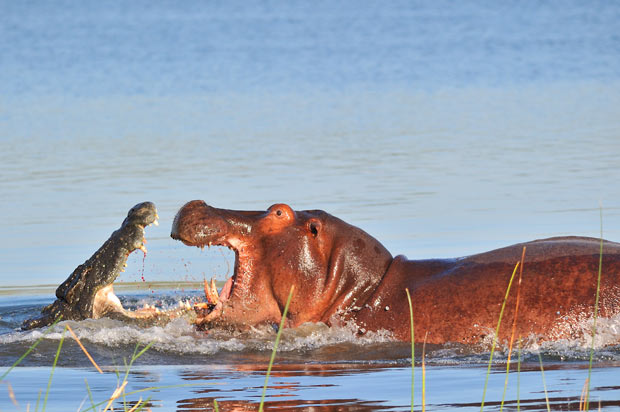
The adult bull hippopotamus is extremely aggressive, unpredictable and highly territorial.  And heaven help anyone caught between a cow, and her young.  Hippos can gallop at short sprints of 19 mph, only a little slower than Jamaican Sprinter Usain Bolt, “the fastest man who ever lived”.

To search the “10 most dangerous animals in Africa” is to learn that hippos are #1, responsible for more human fatalities than any other large animal, in Africa.

p-hippo-1_1467398cBe that at it as it may, the animal is a voracious herbivore, spending daylight hours at the bottom of rivers & lakes, happily munching on vegetation.

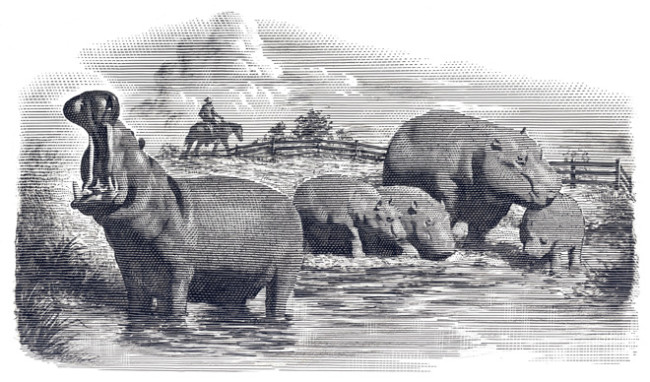
What could be better than taking care of two problems at once.  Otherwise unproductive swamps and bayous from Florida to Louisiana would become home to great hordes of free-range hippos.  The meat crisis would be solved.  America would become a nation of hippo ranchers.

As Broussard’s bill wended its way through Congress, the measure picked up steam with the enthusiastic support of two men, mortal enemies who’d spent ten years in the African bush, trying to kill each other. No, really.

Frederick Russell Burnham had argued for the introduction of African wildlife into the American food stream, some four years earlier.  A freelance scout and American adventurer, Burnham was known for his service to the British South Africa company, and to the British army in colonial Africa. The “King of Scouts’, commanding officers described Burnham as “half jackrabbit and half wolf”.  A “man totally without fear.”  One writer described Burnham’s life as “an endless chain of impossible achievements”, another “a man whose senses and abilities approached that of a wild predator”.  He was the inspiration for the Indiana Jones character and for the Boy Scouts.  Frederick Burnham was the “most complete human being who ever lived “.

Frederick Russell Burnham (left), Fritz Joubert Duquesne (right)

Frederick “Fritz” Joubert Duquesne was a Boer of French Huguenot ancestry, descended from Dutch settlers to South Africa.  A smooth talking guerrilla fighter, the self-styled “Black Panther” once described himself as every bit the wild African animal, as any creature of the veld.  An incandescent tower of hate for all things British, Duquesne was a liar, a chameleon, a man of 1,000 aliases who once spent seven months feigning paralysis, so he could fool his jailers long enough to cut through his prison bars.

Duquesne was destined to be a German spy and saboteur, through two world wars.  Frederick Burnham described his mortal adversary, thus:  “He was one of the craftiest men I ever met. He had something of a genius of the Apache for avoiding a combat except in his own terms; yet he would be the last man I should choose to meet in a dark room for a finish fight armed only with knives“.

in-1910-President-Roosevelt-supported-a-bill-that-would-have-released-hippopotamuses-into-Louisiana-to-eat-an-invasive-plant-species-and-to-provide-delicious-hippo-bacon-to-hungry-AmericDuring the 2nd Boer war, the pair had sworn to kill each other.  In 1910, these two men became partners in a mission to bring hippos, to America’s dinner table.
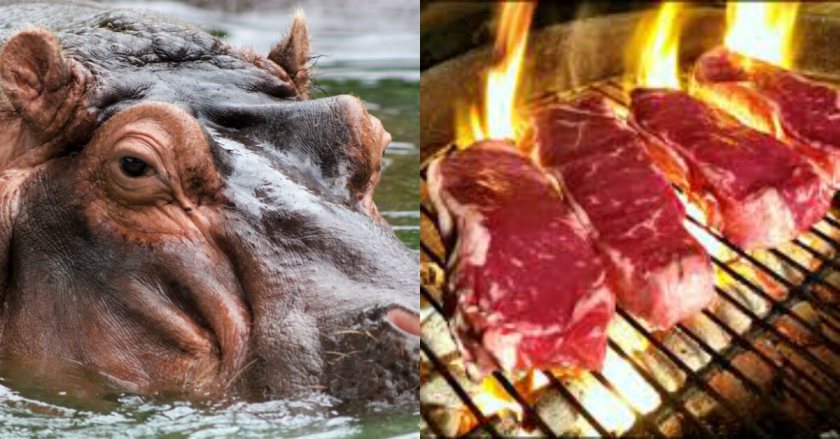

Biologically, there is little reason to believe that Hippo ranching couldn’t have worked along the Gulf coast.  Colombian officials estimate that, within a few years, the hippo descendants of drug kingpin Pablo Escobar’s exotic animal menagerie will number 100 or more individuals.

Hippo Steak

Broussard’s measure went down to defeat by a single vote, but never entirely went away.  Always the political calculator, Representative and later-Senator Broussard died with the bill on his legislative agenda, waiting for the right moment to reintroduce the thing.

Over time, the solution to the meat question became a matter of doubling down on what we’re already doing, as factory farms and confinement operations took the place of free ranges, and massive use of antibiotics replaced the idea of balanced biological systems.

We may or may not have “traded up”.  Today, we contend with ever more antibiotic-resistant strains of “Superbug”. Louisiana spends $2 million per year on herbicidal control of the water hyacinth. The effluent of factory farms from Montana to Pennsylvania works its way into the nation’s rivers and streams, washing out to the Mississippi Delta to a biological dead zone, the size of New Jersey.

13453_gulf-of-mexico-dead-zone-image-credit-noaa
Gulf of Mexico dead zone, image credit NOAA

That golden future of Lippincott’s hippo herds roam only in the meadows and bayous of the imagination.  Who knows, it may be for the best.  I don’t know if any of us could’ve seen each other across the table, anyway.  Not when the roast hippopotamus, got there.

If you enjoyed this “Today in History”, please feel free to re-blog, “like” & share on social media, so that others may find and enjoy it as well. Please click the “follow” button on the right, to receive email updates on new articles.  Thank you for your interest, in the history we all share.


December 19, 1843  A Christmas Carol

This quintessentially English tale is said to have drawn much from the work of Shakespeare, and others.  Perhaps the Old World drew inspiration from the New, as well. 

It’s hard not to love the traditions of the Christmas season.  Getting together with loved ones, good food, the exchange of gifts, and our favorite Christmas specials on TV.  I always liked a Charlie Brown’s Christmas, and of course there’s the Charles Dickens classic, “A Christmas Carol”, set against the vast brick factory buildings of Lowell, Massachusetts, along the Merrimack River.

Wait … What?

The 29-year-old Charles Dickens was already a well-known and popular author when he stepped onto the shores of Boston Harbor on January 22, 1842.  New Yorkers had literally lined the docks the year before, greeting ships bearing copies of the author’s latest, The Old Curiosity Shop.

“The Pickwick Papers,” “Oliver Twist,” “Nicholas Nickleby”; all were behind the young writer when he came to America, perhaps to write a travelogue, or maybe looking for material for a new novel.

LowellMillGirls
The “Mill Girls”, of Lowell

Dickens traveled to Watertown, to the Perkins School for the Blind, where Helen Keller and her teacher Anne Sullivan underwent their mutual education, a half-century later.  He visited a school for neglected boys, in Boylston.

Dickins must have thought the charitable institutions in his native England suffered by comparison, for he later wrote “I sincerely believe that the public institutions and charities of this capital of Massachusetts are as nearly perfect as the most considerate wisdom, benevolence, and humanity, can make them.”

In February, Dickens took a train north to the factory town of Lowell, visiting the textile mills and speaking with the “mill girls”, the women who worked there.  Once again, he seemed to believe that his native England came up short, in the comparison.  Dickens spoke of the new buildings and the well dressed, healthy young women who worked in them, perhaps comparing them with his own traumatic childhood experience of working in the mills back home, with his father confined in debtor’s prison.

v_Lowell_Offering_1The celebrity novelist enjoyed the finest sights of Boston and New York, and took in a steamship ride, down the Mississippi. He visited one of the great wonders of the natural world, the spectacular Niagara Falls.

And yet, the author described that visit to the industrial city of Lowell as “the happiest day” of his American vacation.

Dickens left the mill girls with a copy of “The Lowell Offering”, a literary magazine written by those same women, which he later described as “four hundred good solid pages, which I have read from beginning to end.”

More than a century and a half later, Natalie McKnight, professor of English and Dean at Boston University, noticed similarities between the two while preparing a talk for the Lowell Historical Society.

She read the same 400 pages as Dickens, and couldn’t help noticing parallels between the work of the mill girls, and “A Christmas Carol,” published about a year and a half after the author’s visit.  Chelsea Bray was a senior English major at the time.  Professor McKnight asked her to read those same pages.

v_Marleys_Ghost_John_Leech_1843
Marley’s Ghost, by John Leech, 1843

One story, “A Visit from Hope,” begins, “‘Past twelve!’ said a sweet, musical voice, as I was seated by the expiring embers of a wood fire. I turned hastily to see who had thus intruded on my presence, when, lo! I beheld an old man. His thin white locks were parted on his forehead, his form was bent, and as he extended his thin, bony hand toward me, it shook like an aspen leaf.”’

Makes it hard not to think of the ghost of Jacob Marley, Ebenezar Scrooge’s “dead as a doornail”, former partner.

Christmas,” another Lowell essay, describes Christmas as “the best day in the whole year” for what it brings out in people. The theme pops up again with Scrooge’s nephew, as in: “[T]he only time I know of, in the long calendar of the year, when men and women seem by one consent to open their shut-up hearts freely, and to think of people below them as if they really were fellow-passengers to the grave, and not another race of creatures bound on other journeys.”

Another piece, “The Blessings of Memory,” speaks of joyful recollections, too soon overridden by “unreal phantoms.” Scrooge’s redemption is all about Memory: Bray writes, “Scrooge’s conversion begins when the Ghost of Christmas Past makes him relive his memories and reconnect to past sorrows and joys.”

ChristmasCarol-OV_nov17-2

The research performed by the two was published in the form of a thesis, and later fleshed out to a full-length book:

“Dickens and Massachusetts
The Lasting Legacy of the Commonwealth Visits
(University of Massachusetts Press, 2015)

The book describes a number of similarities between the two works, making the argument that Dickens’ familiar story draws much from his experience in Lowell.  The authors specifically reject any accusation of plagiarism.  The Lowell essays possess neither the character development nor the linguistic richness of Dickens’ masterwork.

This quintessentially English tale is said to have drawn much from the work of Shakespeare, and others.  Perhaps the Old World drew inspiration from the New, as well.   Charles Dickens’ masterpiece, A Christmas Carol, was published for the first time 175 years ago today, December 19, 1843.

If you enjoyed this “Today in History”, please feel free to re-blog, “like” & share on social media, so that others may find and enjoy it as well. Please click the “follow” button on the right, to receive email updates on new articles.  Thank you for your interest, in the history we all share.

December 18, 1943 Bat Bomb

What if thousands of these creatures were equipped with tiny little fire bombs, and dropped on Japanese cities. All that bamboo & paper construction, the place oughtta go up like a match head.

In a letter dated January 7, 1941, Marshall Admiral Isoroku Yamamoto directed Rear Admiral Onishi Takijiro under conditions of utmost secrecy, to study the feasibility of an attack on the American Naval anchorage at Pearl Harbor.  Half a world away in Irwin Pennsylvania, American dentist Dr. Lytle S. Adams was planning a driving vacation to the Carlsbad Caverns, in New Mexico.

Dr. Adams was gripped with amazement that day in December, on witnessing millions of bats, exiting the cave.  It was December 7 and word came over the radio, of a sneak attack in Hawaii. Millions of Americans must have been thinking about payback that day, Dr. Adams among them.  His thoughts returned to those bats. What if thousands of these creatures were equipped with tiny little fire bombs, and dropped on Japanese cities. All that bamboo & paper construction, the place oughtta go up like a match head.

635830388988624957-Bats-in-Flight

Lytle Adams was a personal friend of First Lady Eleanor Roosevelt and submitted the idea, the following month.  Zoology professor Donald Griffin was conducting studies at this time of echolocation among animals, and recommended the White House approve the idea. The Presidential memorandum read: “This man is not a nut. It sounds like a perfectly wild idea but is worth looking into.” The mammalian super weapon that never was, was born.

Bat_Bomb_Canister

Four biological factors lent promise to the plan. First, they’re the most plentiful mammal in North America.  A single cave can hold several million individuals. Second, load-carrying tests conducted in the dirigible hangar at Moffett Field in Sunnyvale, California, demonstrated that bats can carry more than their own weight. Third, they hibernate, making them easy to handle and, last, bats like secluded places such as buildings to hide during daylight.

Professor Louis Fieser, the inventor of military napalm, devised a tiny little canister to be carried by the bats. A suitable species was selected by March 1943, the Mexican Free-tailed Bat (Tadarida brasiliensis mexicanus).  “Bat bombs” were devised including 26 stacked trays, each containing compartments for 40 bats. Carriers would be dropped from 5,000-feet with parachutes deployed at 1,000-feet, allowing hibernating bats sufficient time to “snap out” of it.

Carlsbad_AAF_Fire_after_Bat_Bomb_Accident
Carlsbad AAF Fire, following Bat Bomb Accident

Early tests were promising. Too promising. On May 15, armed bats were accidentally released at the Carlsbad Army Airfield Auxiliary Air Base near Carlsbad, New Mexico, and incinerated the place when some of them came to roost under a fuel tank.

Despite the setback or possibly because of it, the program was handed off to the Navy that August, and code named Project X-Ray. The project was handed off once again that year, placed under control of the Marine Corps Air Station at El Centro, California, by December 18.

A “Japanese Village” was mocked up by the Chemical Warfare Service at the Dugway Proving Ground in Utah.  National Defense Research Committee (NDRC) observers were positive, one stating: “It was concluded that X-Ray is an effective weapon.” The Chief Chemist’s report was more enthusiastic: “Expressed in another way, the regular bombs would give probably 167 to 400 fires per bomb load where X-Ray would give 3,625 to 4,748 fires.”

Project X-Ray was scheduled for further tests in mid-1944 and not expected for combat readiness for another year, when the program was cancelled by Fleet Admiral Ernest J. King.  The project had already cost $2 million, equal to over $29 million today.  It was too much, for too little.

BatHouse

Die Fledermaus (“The Bat”) was a German operetta by composer Johann Strauss II, featuring a prolonged and drunken soliloquy by one Frosch, (the jailer), in act 2. Stanley Lovell was director of research and development for the OSS at the time (Office of Strategic Services), precursor to the CIA.  Ordered to evaluate the bat bomb by OSS Director “Wild Bill” Donovan, Lovell may have had the last word.  “Die Fledermaus Farce” he called it, noting that the things were dropping to the ground, like stones.

Fun Fact:
During WW2, the British Special Operations Executive (SOE) devised a “Rat Bomb”, for use against German targets. 100 rat carcasses were sewn up with plastic explosives, to be distributed near German boiler rooms and locomotives. The idea was that the carcass would be disposed of by burning, resulting in a boiler explosion. The explosive rats were never put to use as the Germans intercepted the first and only shipment. The project was deemed a success anyway, due to the enormous time and manpower resources expended by the Germans, looking for booby trapped rats.

If you enjoyed this “Today in History”, please feel free to re-blog, “like” & share on social media, so that others may find and enjoy it as well. Please click the “follow” button on the right, to receive email updates on new articles.  Thank you for your interest, in the history we all share.

December 16, 1773 The Boston Tea Party

The Tea Act of 1773 actually reduced the price of tea, but Colonists saw the measure as an effort to buy popular support for taxes already in force, and refused the cargo.  In Philadelphia and New York, tea ships were turned away and sent back to Britain while in Charleston, the cargo was left to rot on the docks. 7,000 gathered at Old South Meeting house in Boston, to decide what they would do.

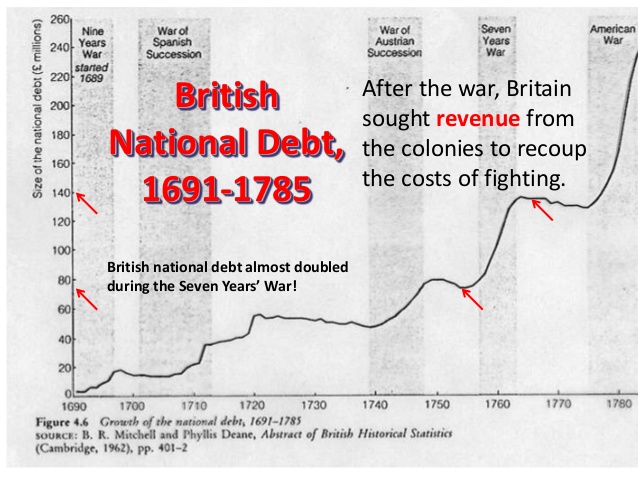
In the time of Henry VIII, British military outlays averaged 29.4% as a percentage of central government expenses.   That number skyrocketed to 74.6% in the 18th century, and never dropped below 55%.

The Seven Years’ War alone, fought on a global scale from 1756 – ‘63, saw England borrow the unprecedented sum of £58 million, doubling the national debt and straining the British economy.

the-american-revolution-10-638For the American colonies, the conflict took the form of the French and Indian War.   Across the “pond”, the never-ending succession of English wars meant that, not only were colonists left alone to run their own affairs, but individual colonists learned an interdependence of one upon another, resulting in significant economic growth during every decade of the 1700s.
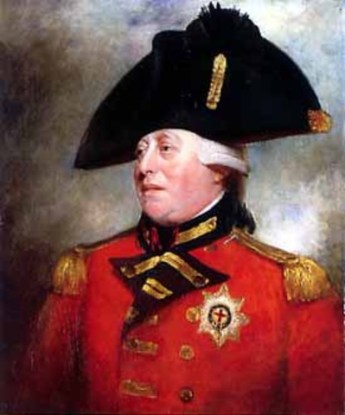
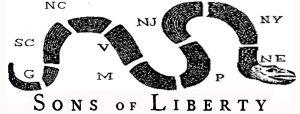
Some among the British government saw in the American colonies, the classically “Liberal” notion of the Free Market, as described by intellectuals such as John Locke:   “No People ever yet grew rich by Policies,” wrote Sir Dudley North. “But it is Peace, Industry, and Freedom that brings Trade and Wealth“.  These, were in the minority.  The prevailing attitude at the time, saw the colonies as the beneficiary of much of British government expense.  These wanted some help, picking up the tab.

king-george-iii_1_
King George, III

Several measures were taken to collect revenues during the 1760s.  Colonists bristled at what was seen as heavy handed taxation policies.  The Sugar Act, the Currency Act:  in one 12-month period alone, Parliament passed the Stamp Act, Quartering Act, and the Declaratory Act, while deputizing Royal Navy Sea Officers to enforce customs laws in colonial ports.

The merchants and traders of Boston specifically cited “the late war” and the expenses related to it, concluding the Boston Non-Importation Agreement of August 1, 1768. The agreement prohibited the importation of a long list of goods, ending with the statement ”That we will not, from and after the 1st of January 1769, import into this province any tea, paper, glass, or painters colours, until the act imposing duties on those articles shall be repealed”.

The ‘Boston Massacre’ of 1770 was a direct result of the tensions between colonists and

gaspee-shippey
Burning of the Gaspee, Narragansett Bay, Rhode Island

the “Regulars” sent to enforce the will of the Crown.  Two years later, Sons of Liberty looted and burned the HMS Gaspee in Narragansett Bay, Rhode Island.

The Tea Act, passed by Parliament on May 10, 1773, was less a revenue measure than it was an effort to prop up the British East India Company, by that time burdened with debt and holding some eighteen million pounds of unsold tea.  The measure actually reduced the price of tea, but Colonists saw it as an effort to buy popular support for taxes already in force, and refused the cargo.  In Philadelphia and New York, tea ships were turned away and sent back to Britain while in Charleston, the cargo was left to rot on the docks.

British law required a tea ship to offload and pay customs duty within 20 days, or the cargo was forfeit.  The Dartmouth arrived in Boston at the end of November with a cargo of tea, followed by the tea ships Eleanor and Beaver.  Samuel Adams called for a meeting at Faneuil Hall on the 29th, which then moved to Old South Meeting House to accommodate the crowd.  25 men were assigned to watch Dartmouth, making sure she didn’t unload.

sons-of-liberty7,000 gathered at Old South Meeting House on December 16th, 1773, the last day of deadline, for Dartmouth’s cargo.  Royal Governor Hutchinson held his ground, refusing the vessel permission to leave.  Adams announced that “This meeting can do nothing further to save the country.”

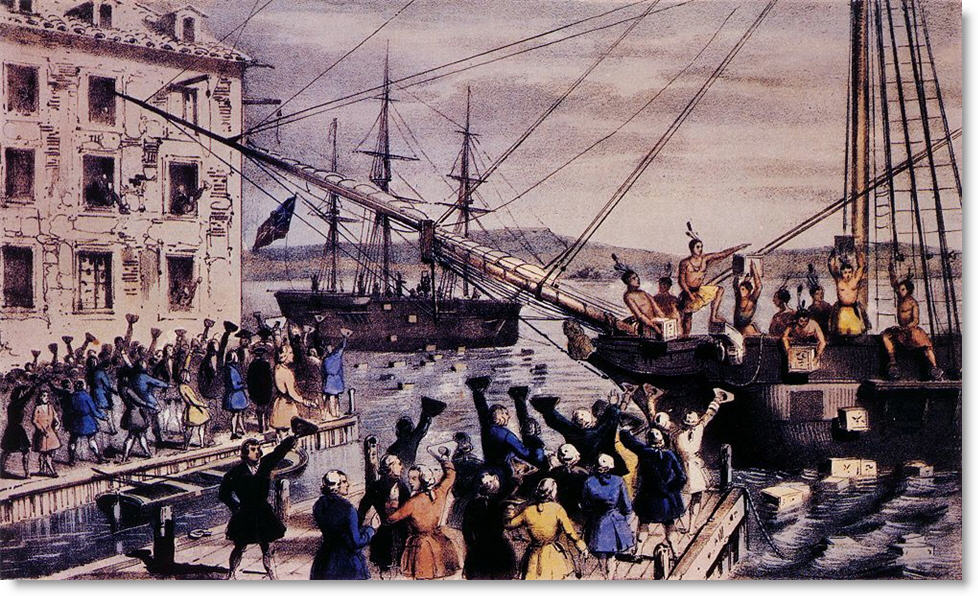
That night, anywhere between 30 and 130 Sons of Liberty, many dressed as Mohawk Indians, boarded the three ships in Boston Harbor.  There they threw 342 chests of tea, 90,000 pounds in all, into Boston Harbor.  £9,000 worth of tea was destroyed, worth about $1.5 million in today’s dollars.

In the following months, other protesters staged their own “Tea Parties”, destroying imported British tea in New York, Philadelphia, Charleston, and Greenwich, NJ.  There was even a second Boston Tea Party on March 7, 1774, when 60 Sons of Liberty, again dressed as Mohawks, boarded the “Fortune”.  This time they dumped a ton and one-half of the stuff, into the harbor.  That October in Annapolis Maryland, the Peggy Stewart was burned to the water line.

For decades to come, the December 16 incident in Boston Harbor was blithely referred to as “the destruction of the tea.” The earliest newspaper reference to “tea party” wouldn’t come down to us, until 1826.

the_boston_tea_party_1773

John Crane of Braintree is one of the few original tea partiers ever identified, and the only man injured in the event. An original member of the Massachusetts Society of the Cincinnati and early member of the Sons of Liberty, Crane was struck on the head by a tea crate and thought to be dead.  His body was carried away and hidden under a pile of shavings at a Boston cabinet maker’s shop.  It must have been a sight when John Crane “rose from the dead”, the following morning.

Great Britain responded with the “Intolerable Acts” of 1774, including the occupation of intolerable-actsBoston by British troops.    Minutemen clashed with “Lobster backs” a few months later, on April 19, 1775.  When it was over, eight Lexington men lay dead or dying, another ten wounded. One British soldier was wounded.  No one alive today knows who fired the first shot at Lexington Green.  History would remember the events of that day as “The shot heard ’round the world”.

If you enjoyed this “Today in History”, please feel free to re-blog, “like” & share on social media, so that others may find and enjoy it as well. Please click the “follow” button on the right, to receive email updates on new articles.  Thank you for your interest, in the history we all share.

December 14, 1944 Palawan Massacre

The bones of Americans captured at Bataan and Corregidor and burned alive at Palawan, were discovered soon after liberation.  Most were huddled together where they had died, trying to escape the flames.

The United States was unprepared to fight a World War in 1942, and dedicated itself to beating Adolf Hitler. General Douglas MacArthur abandoned the “Alamo of the Pacific” on March 11 saying “I shall return”, leaving 90,000 American and Filipino troops without food, supplies or support with which to fight off the Japanese offensive.

On April 9, 75,000 surrendered the Bataan peninsula, only to be herded off on a 65-mile, five-day slog into captivity through the heat of the Philippine jungle. Japanese guards were sadistic. They would beat the marchers and bayonet those too weak to walk. Japanese tanks would swerve out of their way to run over anyone who had fallen and was too slow in getting up. Some were burned alive. Already crippled from tropical disease and starving from the long siege of Luzon, some 700 Americans and more than 10,000 Filipinos perished in what came to be known as the Bataan Death March.

Palawan_Massacre_POW_Burial_Site_1945 (1)
Palawan Massacre POW Burial Site, 1945

That August, 346 men were sent 350-miles north to Palawan Island, on the western perimeter of the Sulu sea. The prisoners of “camp 10-A” were expected to build an airfield for their Japanese captors, hauling and crushing coral gravel by hand and pouring concrete, seven days a week.

The daily food ration was nothing more than a handful of wormy Cambodian rice and a thin soup made from boiling camote vines, a type of local sweet potato. Prisoners unable to work had even this thin ration, cut by 30 per cent.

The abuses these men received at the hands of the kempeitai, the Japanese army’s military police and intelligence unit, were unremitting, and savage. Prisoners were beaten with pick handles, kicked and slapped on a daily basis. Anyone who attempted to escape, was summarily executed.

Caught stealing food, six American POWs were tied to coconut trees and whipped with wire and then beaten with a wooden club, 3-inches in diameter. The six were then forced to stand at attention while a guard beat them unconscious, only to be revived to undergo further beatings. One Japanese private named Nishitani broke the left arms of two Americans with an iron bar, for taking green papayas off a tree.

Radioman 1st Class Joseph Barta described the Japanese guards at Palawan, as “the meanest bastards who ever walked the earth”.

Medical care was non-existent. One Marine, Pfc Glen McDole of Des Moines Iowa, was forced to endure an appendectomy with no anesthesia, and no infection fighting drugs.

The war was going badly for the Japanese, by late 1944.  US forces under General Douglas MacArthur landed at Leyte, that October. Morale soared for the 150 American prisoners remaining at Palawan, when a single Consolidated B-24 Liberator bomber sank two enemy ships and damaged several aircraft. More Liberators returned on October 28 and destroyed 60 enemy aircraft on the ground, as treatment of the prisoners grew even worse.

72e6168ba2

By early December, Allied aircraft were a near-constant presence overhead. Deliverance must have seemed imminent to the 150 American prisoners left on Palawan island, but it wasn’t meant to be. On December 14, some fifty to sixty soldiers under the leadership of 1st Lt. Yoshikazu Sato, prisoners called him the Buzzard, doused the remaining prisoners with gasoline and set them on fire. One hundred and thirty-nine were burned to death, or clubbed, or machine gunned as they tried to get away. The sound of screams were punctuated with shouts and laughter, from the guards.

Some closed to hand-to-hand combat with their tormentors and even managed to kill a few, but most never had a chance. Lieutenant Carl Mango of the U.S. Army Medical Corps ran toward the Japanese with his clothes on fire, pleading with them to use some sense. He too, was machine-gunned.

palawan-war-memorial-002
Palawan Massacre Memorial Marker for the American victims of December 14, 1944, Palawan Philippines

Thirty or forty managed to escape the kill zone, only to be hunted down, and murdered. From his hiding place on the beach, Eugene Nielsen of the 59th Coast Artillery observed several begging to be shot in the head, only to be bayoneted in the stomach and left to an agonizing death, by laughing guards. Erving August Evans of Nielsen’s unit stood up and said “All right, you Jap bastards, here I am and don’t miss me“.  He was shot, and his body set alight.

The killing went on until well after dark yet, somehow, some were able to escape detection and managed to swim the 5-mile bay to be picked up by friendly Filipino guerrillas, and taken to U.S. Rangers.   Rufus Smith was badly bitten on the left arm and shoulder by a shark, but manged to reach the other side.  USMC Pfc Donald Martyn reached the opposite side and turned in a direction opposite the others, and was never seen again.Glen McDole, the marine who survived the appendectomy, hid in a garbage dump, and witnessed one marine repeatedly poked with bayonets. Bleeding profusely, the man begged to be shot, only to have first one foot doused with gasoline and set on fire and then the other and finally, a hand. At last, his five or six tormentors tired of this game and he too, was set alight.

One Japanese soldier recorded the atrocity in a diary, later found in the camp:

“December 15–Due to the sudden change of situation, 150 prisoners of war were executed. Although they were prisoners of war, they truly died a pitiful death. The prisoners who worked in the repair shop really worked hard. From today on I will not hear the familiar greeting, ‘Good morning, sergeant major.’ January 9–After a long absence, I visited the motor vehicle repair shop. Today, the shop is a lonely place. The prisoners of war who were assisting in repair work are now just white bones on the beach washed by the waves. Furthermore, there are numerous corpses in the nearby garage and the smell is unbearable. It gives me the creeps”.

BurnedAtBaatan

Eugene Nielsen’s testimony sparked a series of POW rescues by American forces in 1945, including the raid on Cabanatuan of January 30, the surprise attack at Santo Tomas on February 3, 1945, the raid of Bilibid Prison on February 4 and the assault at Los Baños on February 23.  Starving prisoners were so emaciated, that Rangers were able to carry them out, two at a time.

The bones of Americans captured at Bataan and Corregidor and burned alive at Palawan, were discovered soon after.  Most were huddled together where they had died, trying to escape the flames.

Sixteen Japanese soldiers were tried and convicted of the massacre in August 1948 and several sentenced to death.  All were later released, in a general amnesty.

Of 146 enlisted men and four officers held in the Palawan prison camp, eleven survived the massacre of December 14, 1944.   Glen McDole was one of them.  Author Bob Wilbanks wrote a book if you’re interested, a biography really, entitled:  Last Man Out: Glenn McDole, USMC, Survivor of the Palawan Massacre in World War II.

In 1952, 123 of the 139 victims of the Palawan massacre were buried in a common grave.  They came from forty-two states and the Philippines, reverently interred in a mass burial site in Section 85 at the Jefferson Barracks National Cemetery, near St. Louis, Missouri. Today, their graves are visited by those who remember.  And by the deer, grazing among the stones most evenings, as the sun drops out of sight. It is the largest such group burial, at Jefferson Barracks.

0b7a90f8bc535c8d7124061f42913082

How many such massacres were carried out with no one left alive to tell the tale, remains anyone’s guess.

If you enjoyed this “Today in History”, please feel free to re-blog, “like” & share on social media, so that others may find and enjoy it as well. Please click the “follow” button on the right, to receive email updates on new articles.  Thank you for your interest, in the history we all share.

December 13, 1941 Cook’s Assistant

There is no telling, how many lives could have been lost.  But for the actions, of a sixteen-year-old cook’s assistant.

Similar to the Base Exchange system serving American military personnel, the British Navy, Army and Air Force Institutes (NAAFI) is the UK-government organization operating clubs, bars, shops and supermarkets in service to British armed forces, as well as naval canteen services (NCS) aboard Royal Navy ships.

naafiNAAFI personnel serving on ships are assigned to duty stations and wear uniforms, while technically remaining civilians.
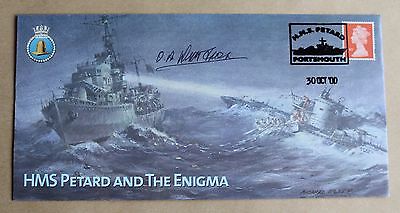
Tommy Brown was fifteen when he lied about his age, enlisting in the NAAFI on this day in 1941 and assigned as canteen assistant to the “P-class” destroyer, HMS Petard.

On October 30, 1942, Petard joined three other destroyers and a squadron of Vickers Wellesley light bombers off the coast of Port Said Egypt, in a 16-hour hunt for the German “Unterseeboot”, U–559.

Hours of depth charge attacks were rewarded when the crippled U-559 came to the surface, the 4-inch guns of HMS Petard, permanently ending the career of the German sub.

The U-559 crew abandoned ship, but not before opening the boat’s seacocks.   Water was pouring into the submarine as Lieutenant Francis Anthony Blair Fasson and Able Seaman Colin Grazier dived into the water and swam to the submarine, with Junior canteen assistant Tommy Brown close behind.

Ww2-Hms-Petard-The-Enigma-2000-Cover

With the submarine sinking fast, Fasson and Grazier made their way into the captain’s cabin.   Finding a set of keys, Fasson opened a drawer, to discover a number of documents, including two sets of code books.

With one hand on the conning ladder and the other clutching those documents, Brown made three trips up and down from the hatch, to Petard’s whaler.

war (1)

With the sub beginning to sink, the canteen assistant called for his shipmates to get out of the boat, but the other two were trapped. Brown himself was dragged under, but managed to kick free and come to the surface.  Colin Grazier and Francis Fasson, did not escape.

The episode brought Brown to the attention of the authorities, ending his posting aboard Petard with the revelation of his true age.  He never was discharged from the NAAFI, and later returned to sea on board the HMS Belfast.

grazier 2

By 1945 he was Leading Seaman Tommy Brown, home on shore leave when fire broke out at the family home in South Shields.  He died while trying to rescue his youngest sister Maureen, and was buried with full military honors in Tynemouth cemetery.

Fasson and Grazier were awarded the George Cross, the second-highest award of the United Kingdom system of military honors.  Since he was a civilian due to his NAAFI employment, Brown was awarded the George medal.

Fasson Memorial

None of the three would ever learn that their actions had helped to end the war.

For German U-boat commanders, the period between the fall of France and the American entry into WW2 was known as “Die Glückliche Zeit” – “The Happy Time” – in the North Sea and North Atlantic.  From July through October 1940 alone, 282 Allied ships were sunk off the northwest approach to Ireland, for a combined loss of 1.5 million tons of merchant shipping.

tmp791791015303315457

Tommy Brown’s Mediterranean episode took place in 1942, in the midst of the “Second Happy Time”, also known among German submarine commanders as the American shooting season. U-boats inflicted massive damage during this period, sinking 609 ships totaling 3.1 million tons with the loss of thousands of lives, against a cost of only 22 U-boats.

According to USMM.org, the United States Merchant marine suffered a higher percentage of fatalities at 3.9%, than any other American service branch during WW2.

enigma2Early versions of the German “Enigma” code were broken as early as 1932, thanks to cryptanalysts of the Polish Cipher Bureau, and French spy Hans Thilo Schmidt.
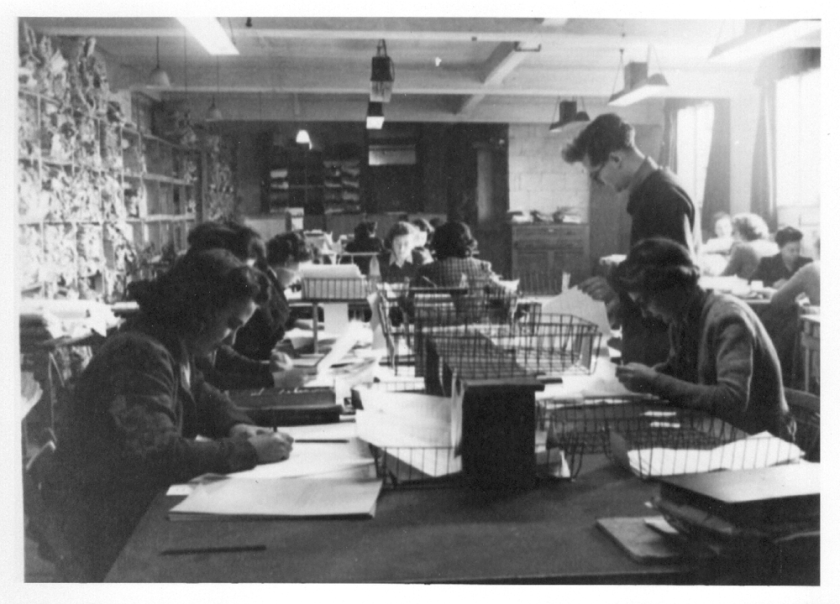
French and British military intelligence were read into Polish decryption techniques in 1939, \methods which were later improved upon by the British code breakers of Bletchley Park.  Vast numbers of messages were intercepted and decoded from Wehrmacht and Luftwaffe sources, shortening the war by at least a year, and possibly two.

The Kriegsmarine was a different story.  Maniacally jealous of security, Admiral Karl Dönitz introduced a third-generation enigma machine (M4) into the submarine service around May 1941, a system so secret that neither Wehrmacht nor Luftwaffe, were aware of its existence.  The system requires identical cipher machines at both ends of the transmission and took a while to put into place, with German subs being spread around the world.

By early 1942, all M4 machines were in place.  On February 2, German submarine communications went dark.  For code breakers at Bletchley Park, the blackout was sudden and complete.  Like the flipping of a switch.  For a period of nine months, Allies had not the foggiest notion of what the German submarine service was up to.  The result was disastrous.

BletchleyThe beginning of the end of darkness came to an end on October 30, when a ship’s cook climbed up that conning ladder.  Code sheets allowed British cryptanalysts to attack the “Triton” key used by the U-boat service.  It would not be long, before the U-boats themselves, were under attack.
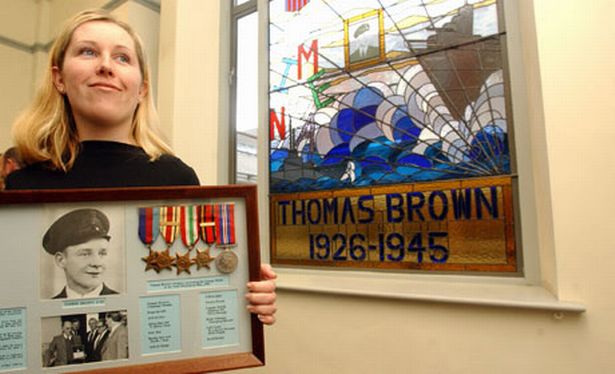
Tommy Brown never knew what was in those documents.  The entire enterprise would remain Top Secret, until years after his death.  Winston Churchill would later write, that the actions of the crew of Petard, were crucial to the outcome of the war.  There is no telling, how many lives could have been lost.  But for the actions, of a sixteen-year-old cook’s assistant.

thomas-brown-sharon-carley-462946894

If you enjoyed this “Today in History”, please feel free to re-blog, “like” & share on social media, so that others may find and enjoy it as well. Please click the “follow” button on the right, to receive email updates on new articles.  Thank you for your interest, in the history we all share.

December 12, 1985 Arrow Air Flight 1285

The CASB minority report stated that the accident could have been caused by an onboard explosion of unknown origin prior to impact, and later testified before a US Congressional committee, that it was impossible for a thin layer of ice to bring down the aircraft.

The McDonnell Douglas DC-8 departed Cairo, Egypt at 20:35 Greenwich Mean Time on Wednesday, December 11, 1985. The flight was the first of three legs, scheduled for refueling stops in Cologne and Gander International Airport, then on to a final destination at Fort Campbell, Kentucky, home of the “Screaming Eagles” of the United States Army 101st Airborne Division.

This was Arrow Air Flight 1285, an international charter flight returning with 248 military personnel, following a six-month deployment in the Sinai, part of a Multinational Force and Observers (MFO) peacekeeping mission, overseeing terms of the peace treaty between Egypt and Israel.

Passengers departed the aircraft while refueling in Newfoundland, as the flight engineer conducted his external inspection. Then came the new air crew of eight, after which passengers re-boarded the aircraft. Arrow Air Flight 1285 achieved flight velocity at 10:15 on December 12, 167 KIAS (“Knots-Indicated Air Speed”) and accelerating.

There was no way to know. 256 passengers and crew, had only seconds to live.

Airspeed reached 172 KIAS and then began to drop, the aircraft crossing the Trans-Canada Highway some 900-feet from the runway and beginning to descend. Witnesses on the highway below reported seeing a bright light, emanating from inside of the aircraft. Seconds later, flight 1285 crashed some 3,500-feet from departure, breaking apart and striking an unoccupied building near Gander lake, before bursting into flames.

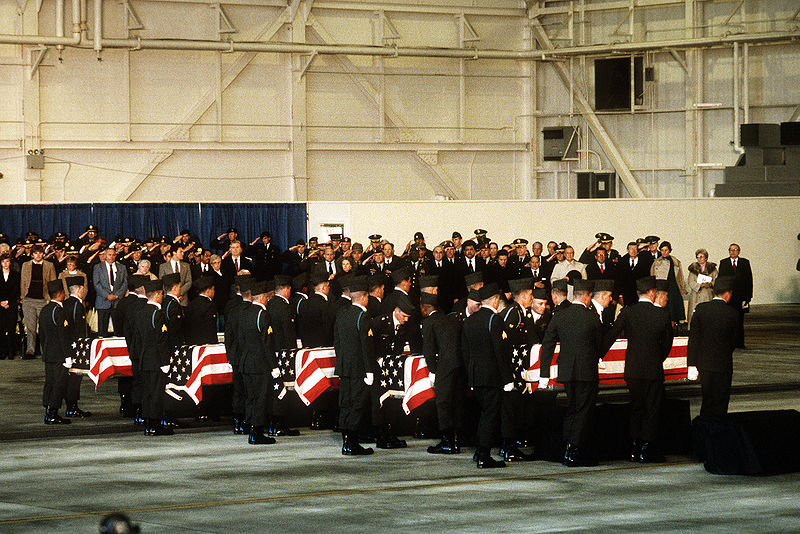
Of the 248 servicemen, all but twelve were members of 101st Airborne Division (Air Assault), mostly from the 3d Battalion, 502nd Infantry.  Eleven others were from other Forces Command units.  One was an agent with the Criminal Investigations Command (CID).  It was the deadliest accident to occur on Canadian soil, the United States Army’s single deadliest air crash in peacetime.  There were no survivors.

Hours later, an anonymous caller phoned a French news agency in Beirut, claiming responsibility for the crash on behalf of Islamic Jihad, a wing of Ḥizbu ‘llāh, (literally “Party of Allah” or “Party of God”) a Shi’a Islamist political party and militant group based in Lebanon. According to United Press International “Hours after the crash the Islamic Jihad – a Shiite Muslim extremist group – claimed it destroyed the plane to prove [its] ability to strike at the Americans anywhere.”

Canadian and Pentagon government authorities dismissed the claim.

The nine-member Canadian Aviation Safety Board (CASB) investigated the crash and issued a report, over the signature of five members:

“The Canadian Aviation Safety Board was unable to determine the exact sequence of events which led to this accident. The Board believes, however, that the weight of evidence supports the conclusion that, shortly after lift-off, the aircraft experienced an increase in drag and reduction in lift which resulted in a stall at low altitude from which recovery was not possible. The most probable cause of the stall was determined to be ice contamination on the leading edge and upper surface of the wing. Other possible factors such as a loss of thrust from the number four engine and inappropriate take-off reference speeds may have compounded the effects of the contamination”.

The report went on to criticize the antiquated foil-tape Flight Data Recorder as inadequate, as well as a non-functioning cockpit-area microphone.  No one would ever know what flight 1285 sounded like, in those final seconds.

The CASB minority report stated that the accident could have been caused by an onboard explosion of unknown origin prior to impact, and later testified before a US Congressional committee, that it was impossible for a thin layer of ice to bring down the aircraft.

Memorial_service_for_Arrow_Air_Flight_1285
Memorial service at Dover AFB, December 6, 1985

There were changes in de-icing procedures, but little confidence in the CASB’s official report.  The Canadian government disbanded the board five years later, replacing it with an independent, multi-modal investigative agency – the Transportation Safety Board of Canada.

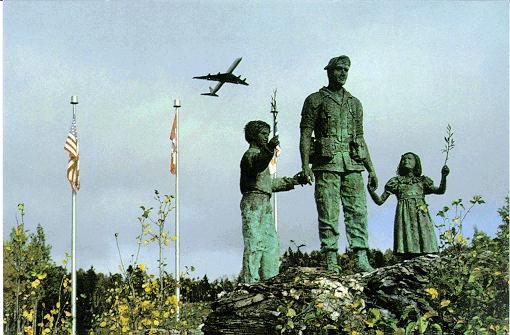
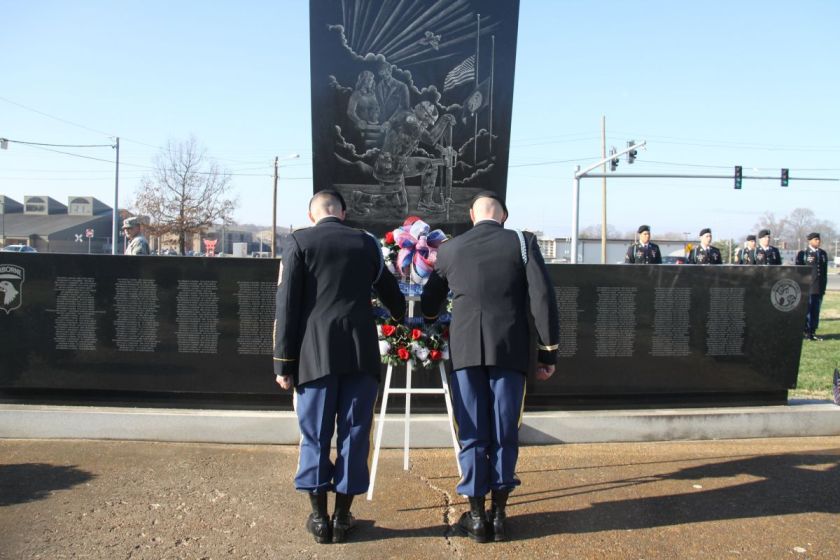
A memorial was erected at the crash site overlooking Gander Lake, a “Silent Witness”, designed by Kentucky artist, Steve Shields.  A stone memorial was erected at Fort Campbell, the Gander Memorial bearing the names of the 248, slain.  The scar on the ground is easily seen from the ground as well as from satellite, and remains there, to this day.

Gander-Memorial-5

Feature image, top of page:  “Silent Witness” by Kentucky artist Steve Shields. Arrow Air Flight 1285 memorial at Gander Lake, with a DC-8 taking off in the background. H/T wikipedia

Afterward

Canadian teenager Janice Johnson wanted to find a way to honor the fallen from flight 1285. “I wanted these Families to know that we as Canadians cared.

Johnson (now Nikkel) came up with $20 earned from babysitting, and a letter to the Toronto Star.  Nikkel’s letter sparked an international campaign, resulting in 256 Canadian sugar maple trees in 1986, a living memorial to the fallen soldiers and crew, of flight 1285.

What a Canadian could have told you and Kentucky had to learn the hard way, is that 20-ft. spacing isn’t enough room, for a grove of sugar maples.

Thirty-two years later, the Gander Memorial grove is crowded and tangled and, sadly, no longer viable. The old memorial closed this year, to be replaced in April 2019, if the schedule holds. You can read about it in the Fort Campbell Courier, if you’d like to know more.

If you enjoyed this “Today in History”, please feel free to re-blog, “like” & share on social media, so that others may find and enjoy it as well. Please click the “follow” button on the right, to receive email updates on new articles.  Thank you for your interest, in the history we all share.

December 9, 1952 Gasping for Air

When such a weather system occurs over areas with high levels of atmospheric contaminants, the resulting ground fog can be catastrophic. 63 people perished during a similar episode in 1930, in the Meuse River Valley area of Belgium. In 1950, 22 people were killed in Poza Rica, Mexico. In 1952, the infamous “Great Smog of London” claimed the lives of thousands, over a course of five days.

schwarzenegger-ap-18337474166966
“Actor Arnold Schwarzenegger delivers a speech during the opening of COP24 UN Climate Change Conference 2018 in Katowice, Poland, Monday, Dec. 3, 2018.
Czarek Sokolowski / AP” H/T CBS News, Inc.

Last week, climate activists and world leaders gathered in Poland to discuss carbon pollution resulting from the use of fossil fuels, and ways to combat what they see as a future of anthropogenic global warming.

Adherents to current climate change theories hold onto such ideas with a fervor bordering on the religious while skeptics raise any number of questions but, one thing is certain. There was a time when the air and water around us was tainted with impunity, with sometimes deadly results.

In 1969, the Cuyahoga River in Cleveland Ohio caught fire, resulting in property damage worth $100,000, equivalent to nearly $700,000, today. The fire resulted in important strategies to clean up the river, but this wasn’t the first such fire. The Cuyahoga wasn’t even the first river to catch fire. There were at least thirteen such incidents on the Cuyahoga, the first occurring in 1868. The Rouge River in Michigan caught fire in the area around Detroit in 1969, and a welder’s torch lit up the Buffalo River in New York, the year before. The Schuylkill River in Philadelphia caught fire from a match tossed into the water, in 1892.

Fire on the Cuyahoga River
Cuyahoga River burning, in 1952. H/T Getty Images

Today, the coal silts, oil and chemical contaminants at the heart of these episodes are largely under control in the developed world, but not the world over. One section of Meiyu River in Wenzhou, Zhejiang China burst into flame in the early morning of March 5, 2014. Toxic chemical pollution and other garbage dumped into Bellandur Lake in Bangalore India resulted in part of the lake catching fire the following year, the fire spreading to the nearby Sun City apartments.

If you happen to visit the “Iron City”, Pittsburgh Pennsylvania, photographs may be found of streetlights turned on in the middle of the day. In November 1939, St. Louis brought a new meaning to the term “Black Tuesday”, when photographs of the Federal building at Twelfth Boulevard and Market Street show the sun little more than a “pale lemon disk” and streetlights on at 9:00 in the morning.

Federal Building, St. Louis

Air pollution turned deadly in the early morning hours of October 26, 1948 when an atmospheric inversion trapped flourine gases over Donora Pennsylvania, home of US Steel Corporation’s Donora Zinc Works and American Steel and Wire. By the 29th, the inversion had trapped so much grime that spectators gathered to watch a high school football game, couldn’t see the kids on the field. The “Death Fog” hung over Donora for four days, killing 22 and putting half the town, in the hospital.

mid-day
Donora Smog at Midday with streetlights on. H/T Donora Historical Society

The Donora episode was caused by an “anticyclone”, a weather event in which a large high pressure front draws air down through the system and out in a clockwise motion.

When such a weather system occurs over areas with high levels of atmospheric contaminants, the resulting ground fog can be catastrophic. 63 people perished during a similar episode in 1930, in the Meuse River Valley area of Belgium. In 1950, 22 people were killed in Poza Rica, Mexico. In 1952, the infamous “Great Smog of London” claimed the lives of thousands, over a course of five days.

Nelson's_Column_during_the_Great_Smog_of_1952
Nelson’s Column during the Great Smog of 1952

On December 5, a body of cold, stagnant air descended over a near-windless London, trapped under a “lid” of warm air. London had suffered poor air quality since the 13th century and airborne pollutants had combined to create “pea soupers” in the past, but this was unlike anything in living memory. The smoke from home and industrial chimneys and other pollutants such as sulphur dioxide combined with automobile exhaust, with nowhere to go.

Yellow-black particles of the stuff built and accumulated at an unprecedented rate. Visibility was down to a meter and driving all but impossible. Public transportation shut down, requiring those rendered sick by the fog, to transport themselves to the hospital.  Outdoor sporting events were canceled and even indoor air quality, was affected.  Weather conditions held until December 9, when the fog dispersed.

hith-london-fog-2660357-ABThere was no panic, Londoners are quite accustomed to the fog, but this one was different. Over the weeks that followed, public health authorities estimated that 4,000 people had died as a direct result of the smog by December 8, and another 100,000 made permanently ill. Research pointed to another 6,000 losing their lives in the following months, as a result of the event.

More recently, research puts the death toll of the Great Smog at 12,000.

A similar event took place about ten years later in December 1962, but without the same lethal impact. A spate of environmental legislation in the wake of the 1952 disaster began to remove black smoke from chimneys.  Financial incentives moved homeowners away from open coal fires toward less polluting alternatives such as gas or oil, or less polluting coke.

Today, the wealthier, developed nations have made great strides toward improvement in air and water quality, though problems persist in the developing world.  In the United States, the Environmental Protection Agency (EPA) reports that:

“[B]etween 1980 and 2017, gross domestic product increased 165 percent, vehicle miles traveled increased 110 percent, energy consumption increased 25 percent, and U.S. population grew by 44 percent. During the same time period, total emissions of the six principal air pollutants dropped by 67 percent”.

The same report shows that, during the same period, CO2 emissions have increased by 12 percent.  Policy makers continue to wrangle with the long-term effects of carbon.  Now, it’s hard to separate the politics from the science.

While politicians and climate activists jet around the planet to devise trillion dollar “solutions”, let us hope that cooler heads than that of Arnold Schwarzenegger, prevail.  There is scarcely a man, woman or child among us who do not want clean air and clean water, and a beautiful, natural environment around us, for ourselves and our posterity.  It’s only a matter of how we get there.

If you enjoyed this “Today in History”, please feel free to re-blog, “like” & share on social media, so that others may find and enjoy it as well. Please click the “follow” button on the right, to receive email updates on new articles.  Thank you for your interest, in the history we all share.