"Tell me a factand I'll learn. Tell me a truth, and I'll believe. But tell me a story, and it will live in my heart forever." – Steve Sabol, NFL Films
Author: Cape Cod Curmudgeon
I'm not an academic "Historian". I'm a father, a son and a grandfather. A history geek and sometimes curmudgeon who still likes to learn new things. I make every effort to get my facts straight but I'm as good at being wrong as the next guy. I offer these stories hoping you'll enjoy them as much as I do. This is the history we all share. I'm glad you're here.
Rick Long, the “Cape Cod Curmudgeon”
Dueling was illegal in both New York and New Jersey by this time, though enforcement was far more aggressive in NY. The two rowed across the Hudson River from Manhattan to Weehawken, New Jersey in the early morning hours of July 11, 1804, dueling pistols tucked safely in a leather bag.
What would it be like to turn on CNN or Fox News, to learn that Former Secretary of the Treasury Jacob (‘Jack’) Lew was party to a duel and that he was near death, after being shot by the sitting Vice President of the United States, Mike Pence.
The year was 1804, and President Jefferson’s Vice President, Aaron Burr, had a long standing personal conflict with one of the Founding Fathers. Alexander Hamilton had been Secretary of the Treasury under George Washington; the first Secretary of the Treasury, and the only signer of the US Constitution from the state of New York.
The animosity between the two began in 1791, when Burr defeated Hamilton’s father-in-law Philip Schuyler in a US Senate election. Hostilities escalated when the Electoral College deadlocked in the 1800 Presidential election, moving the selection of President and Vice President to the House of Representatives. Hamilton exerted his influence on behalf of Jefferson, who was elected on the 36th ballot, making Burr his VP.
Burr knew that Jefferson wouldn’t keep him on as VP for the 1804 election, and so he ran for Governor of New York. He blamed Hamilton for his defeat, and challenged the man to a duel over comments made during the election.
Dueling was illegal in both New York and New Jersey by this time, though enforcement was far more aggressive in NY. The two rowed across the Hudson River from Manhattan to Weehawken, New Jersey in the early morning hours of July 11, 1804, dueling pistols tucked safely in a leather bag.
Both men’s “seconds” stood with their backs to the duelists, enabling both to later state under oath that they didn’t see either the weapons or the duel itself. “Plausible deniability” was preserved, but it’s hard to have a first-hand account when the only witnesses have turned their backs. Accounts vary, but it seems that Hamilton fired first, apparently “throwing away his shot” as he had once advised his son Philip to do when the younger man was in this position.
This account is supported by a letter that Hamilton wrote the night before the duel, stating that he was “strongly opposed to the practice of dueling” for both religious and practical reasons. The letter went on, “I have resolved, if our interview is conducted in the usual manner, and it pleases God to give me the opportunity, to reserve and throw away my first fire, and I have thoughts even of reserving my second fire”.
Aaron Burr had no such reservations. The Vice President fired with intent to kill, the shot hitting Hamilton in the lower abdomen. The wound was clearly fatal, even to Hamilton himself, who said “This is a mortal wound, doctor”.
The man whose likeness appears on the $10 bill died the next day. Among his last words were “Pendleton knows,” (Judge Nathaniel Pendleton, his second), “that I did not intend to fire at him”.
Weehawken, today
If you enjoyed this “Today in History”, please feel free to re-blog, “like” & share on social media, so that others may find and enjoy it as well. Please click the “follow” button on the right, to receive email updates on new articles. Thank you for your interest, in the history we all share.
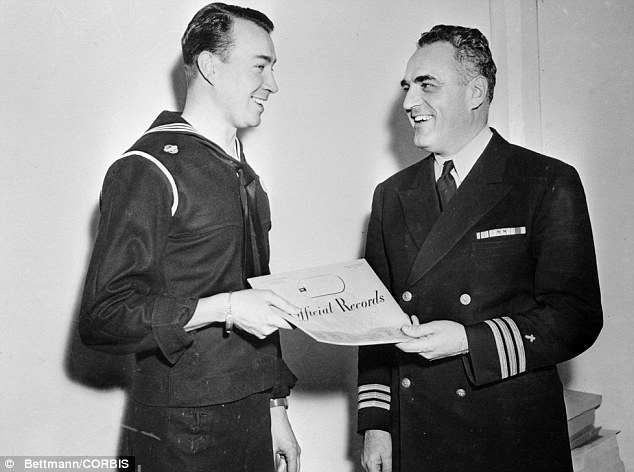
William Patrick Hitler petitioned President Roosevelt for permission to fight on the American side, receiving permission in 1944. Drafted into the Navy, the induction officer asked his name. The reply came, “Hitler”. “Glad to see you Hitler,” the officer replied, “My name’s Hess.”
Suppose for a moment, that Gallup or Ipsos were to conduct a survey, naming the top ten bad guys, in all history. One name I daresay would top every list, would be that of the National Socialist German Workers’ Party leader, Adolf Hitler.
Hitler himself wouldn’t have the term, “Nazi”. That was bitter insult, coined long before the rise of the Nazi party. In German, Hitler would have referred to the Nationalsozialistische Deutsche Arbeiterpartei, or NSDAP for short.
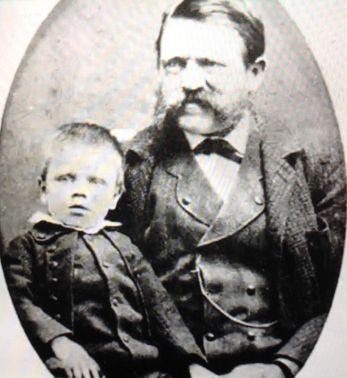
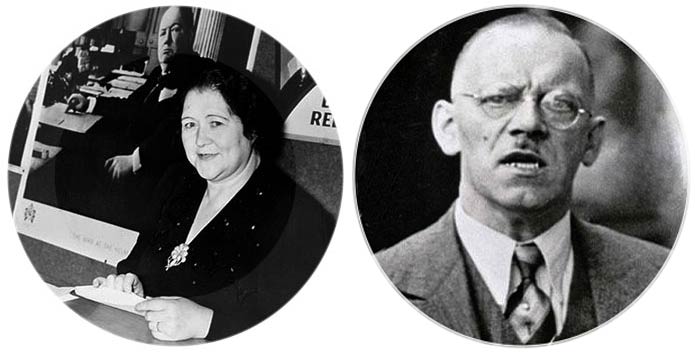
Alois Johann Schicklgruber was born on June 7, 1837, to the 42-year-old unmarried peasant Maria Schicklgruber. The boy’s father was known to her, the priest wrote “illegitimate” on the baptismal certificate. Johann Georg Hiedler married the peasant woman when the boy was five. By ten, Alois was sent to live with Heidler’s brother, Johann Nepomuk Hiedler. Three years later, Alois Schicklgruber moved to Vienna where he worked as a cobbler’s apprentice, finally becoming a low level civil servant in the Austrian Finance Ministry.
There are plenty of variations on the Hiedler family surname. ‘Hiedler’ apparently derives from an Austro-Bavarian dialect, meaning one who lives by a Hiedl, or underground spring. Other derivations come from the German Hutte (hut), as in “one who lives in a hut”. Be that as it may, the variations appear to have been interchangeable. Common variations included Hitler, Hiedler, Hüttler, Hytler, and Hittler.
There are plenty of tales regarding the man’s paternity, but none are any more than that. Alois Schicklgruber ‘legitimized’ himself in 1877, adopting a variant on the name of his stepfather and calling himself ‘Hitler”.
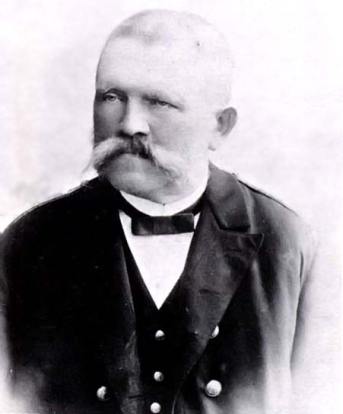
Historian Alan Bullock has described Alois Hitler as “hard, unsympathetic and short-tempered”. He seems to have had a problem with marital fidelity, as well. Alois was thirty-six when he married Anna Glasl-Hörer, the 50-year-old, invalid daughter of a customs official. By age 43, he was carrying on with the 19-year-old servant girl, Franziska “Fanni” Matzelsberger, with whom he had an illegitimate son, Alois Jr.
Alois Sr. was for all intents and purposes ‘married’ to the Matzelsberger girl for the next two years, while his lawful wife Anna, sickened and died. Hitler, 45, married Matzelsberger, age 21 in May, 1883. The couple’s second child Angela, was born two months later.
Sixteen-year-old Klara Pölzl moved in years earlier as household servant, and no woman was going to do to the new Mrs. Hitler, that which she had done to another woman. Frau Hitler demanded that the “servant girl” be sent away but Pölzl would return the following year, as Fanni herself sickened and died.
Pölzl was by this time pregnant with the first of the couple’s four children, but there was a problem. There are many candidates for Alois (Schicklgruber) Hitler’s biological father. If Hitler’s step-father was in fact his real sire as implied by the name change, that made Klara Pölzl his first cousin once removed, at least by law. The couple was too close to marry.
Alois petitioned the church for a humanitarian waiver. The waiver was granted and Klara Pölzl became the third Frau Hitler in January 1885. The first-born child was born five months later.
Adolf Hitler as an infant
The future leader of the National Socialist Party was born fours later, by that time the only child born to his mother Klara. Her first three children Gustav, Ida and Otto, all died in childhood.
Alois Hitler, Sr. seems to have been a thoroughly unlikable man, lording it over neighbors and brutalizing his own family. Historian Robert Waite notes that, “Even one of his closest friends admitted that Alois was ‘awfully rough’ with his wife and ‘hardly ever spoke a word to her at home’.” The man would berate Klara and children alike, and apparently beat them on a regular basis. Alois Jr. left home never to return, following a violent argument with his father. The elder Alois swore that he would never give the boy a single mark of inheritance, over what the law required. The youngest, Adolf, grew up a frail and sickly child, doted on by his mother and often at the center of violent rages by his father.
Alois Hitler
Alois tried to browbeat his youngest into following him, into the civil service. The boy feared and detested his father, and wanted nothing to do with him. Adolf Hitler would follow the path which would bring him to that list of the great monsters of the 20th century, as his brother Alois Jr., made his own way in the world.
Some apples don’t fall far from the tree. Alois Hitler Jr. went to Ireland, where he met Bridget Dowling at the Dublin Horse Show. Nothing more than a poor kitchen porter at the Shelbourne Hotel, Hitler managed to convince her that he was, in fact, a wealthy hotelier, touring Europe. The couple eloped to London in June 1910. Bridget’s father William threatened to bring Hitler up on charges of kidnapping, and only relented when Bridget pleaded with him to stop.
It was a decision she would come to regret.
Dowling-Hitler
The couple had their only child in 1911, William Patrick Hitler. Alois left home in Liverpool in May 1914 to establish himself in the safety razor business. He had become violent by this time and begun to beat the boy. Bridget refused to go with William’s father and would end up, raising the boy alone.
War descended over Europe in 1914, when the elder Hitler met and (bigamously) married his second wife, Hedwig Heidemann.
Heinz Hitler was captured by Soviet Forces in 1942, and tortured to death
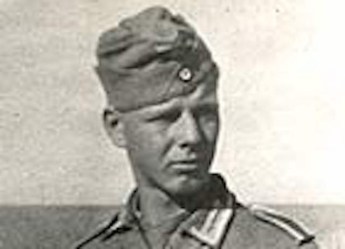
Alois’ second marriage produced a son, Heinz, who went on to become a committed Nazi. In 1933, William moved to Germany, in an effort to take advantage of his uncle’s rise to power. He got a job at an Opel factory and later worked as a car salesman, but badgered his uncle for a better job. At last, he threatened to sell embarrassing family stories to the newspapers, if Uncle Adolf didn’t do something to improve his “personal circumstances”.
Ironically, Nazi party regulations precluded Adolf Hitler himself from proving his own “Aryan Purity”, based on his father’s unknown paternity. For years, Hitler had been dogged by hushed speculation about “Jewish blood”. Quiet rumor became front-page headline this day in 1933, when Austrian newspapers published reports that the German Chancellor, sworn enemy of all things Jewish, was himself, a Jew. That same day, all political parties but the Nazi party, were banned from Germany.
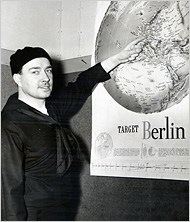
Pharmacists Mate William Patrick Hitler
Der Führer of the fledgling thousand-year Reich promised his nephew a “high ranking post” in 1938, in exchange for renunciation of his British citizenship. Suspecting a trap, the younger Hitler fled Germany, traveling to the United States in 1939. William Patrick Hitler petitioned President Roosevelt for permission to join the American side, receiving permission in 1944.
Drafted into the Navy, the induction officer asked his name. The reply came, “Hitler”. “Glad to see you Hitler,” the officer replied, “My name’s Hess.”
William Patrick Hitler served honorably for the duration of the war, holding the rank of Pharmacists Mate (a designation later changed to Hospital Corpsman) and earning a purple heart in the process. Hitler’s half-brother Heinz was captured by Soviet forces in 1942, and tortured to death. Their more famous uncle took his own life in 1945 and died, childless.
Ironically, Hitler’s childhood home in Liverpool was destroyed in the last air raid of the Liverpool Blitz, in 1942.
Alexander
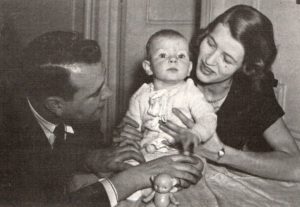
Wishing to live a life of anonymity, “Willy” Hitler changed his name to William Patrick Stuart-Houston at the end of the war, and married fellow German emigre Phyllis Jean-Jacques in 1947. The couple made a home in Patchogue, New York and raised four sons: Alexander Adolf (b. 1949), Louis (b. 1951), Howard Ronald (1957–1989), and Brian William (b. 1965).
William Patrick Stuart-Houston, nephew to one of the worst dictators in history and a man who fought with honor on the side of his uncle’s mortal enemy, died this day in 1987, leaving no grandchildren.
Alexander Adolf Stuart-Houston,, an American social worker, dismissed speculation of a pact to end the Hitler line. There was no such agreement among the last four boys in the family. Things just turned out that way.
If you enjoyed this “Today in History”, please feel free to re-blog, “like” & share on social media, so that others may find and enjoy it as well. Please click the “follow” button on the right, to receive email updates on new articles. Thank you for your interest, in the history we all share.
The “Tunguska Event” was the largest such impact event in recorded history, but far from the first. Or the last.
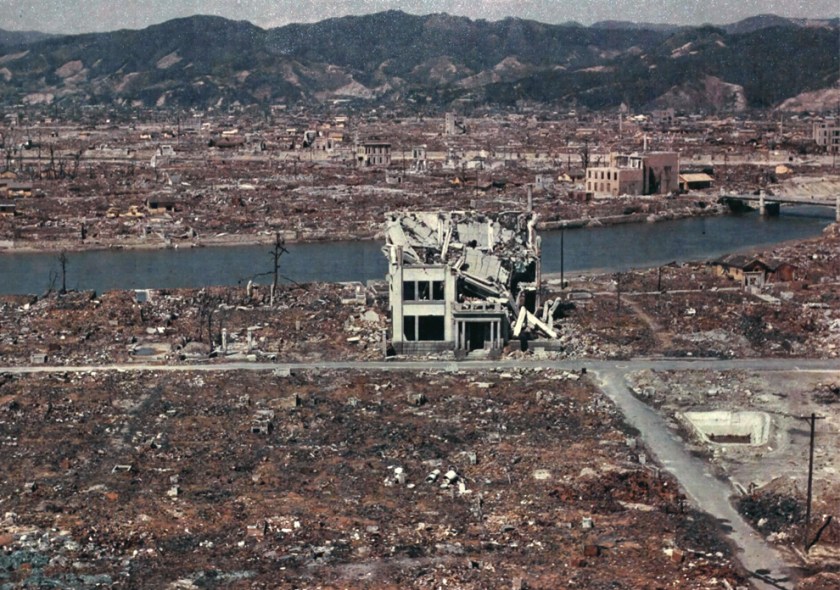
The first atomic bomb in the history of human conflict exploded in the skies over Japan on August 6, 1945. The bomb, code named “Little Boy”, reached an altitude of 1,900-ft. over the city of Hiroshima at 8:15am, Japanese Standard Time.
A “gun-triggered” fission bomb, barometric-pressure sensors initiated the explosion of four cordite charges, propelling a small “bullet” of enriched uranium the length of a fixed barrel and into a sphere of the same material. Within picoseconds (1/.000000000001 of a second), the collision of the two bodies initiated a fission reaction, releasing an energy yield roughly equivalent to 15,000 tons of TNT.
66,000 were killed by the effects of the blast, the shock wave spreading outward at a velocity greater than the speed of sound and flattening virtually everything in its path, for a distance of a mile in all directions.
Thirty-seven years earlier, the boreal forests of Siberia lit up with an explosion 1,000 times greater than the atomic bomb dropped over Hiroshima. At the time, no one had the foggiest notion that it was coming.
The Taiga occupies the high latitudes of the world’s northern regions, a vast international belt line of coniferous forests consisting mostly of pines, spruces and larches between the high tundra, and the temperate forest. An enormous community of plants and animals, this trans-continental ecosystem comprises a vast biome, second only to the world’s oceans.
The Eastern Taiga is a region in the east of Siberia, an area 1.6 times the size of the continental United States. The Stony Tunguska River wends its way along an 1,160-mile length of the region, its entire course flowing under great pebble fields with no open water.
On the morning of June 30, 1908, the Tunguska River lit up with a bluish-white light. At 7:17a local time, a column of light far too bright to look at moved across the skies above the Tunguska. Minutes later, a vast explosion knocked people off their feet, flattening buildings, crops and as many as 80 million trees over an area of 830-square miles. A vast “thump” was heard, the shock wave equivalent to an earthquake measuring 5.0 on the Richter scale. Within minutes came a second and then a third shock wave and finally a fourth, more distant this time and described by eyewitnesses as the “sun going to sleep”.
On July 13, 1908, the Krasnoyaretz newspaper reported “At 7:43 the noise akin to a strong wind was heard. Immediately afterward a horrific thump sounded, followed by an earthquake that literally shook the buildings as if they were hit by a large log or a heavy rock”.
Fluctuations in atmospheric pressure were detectable as far away as Great Britain. Night skies were set aglow from Asia to Europe for days on end, theorized to have been caused by light, passing through high-altitude ice particles.
In the United States, lookout posts from the Smithsonian Astrophysical Observatory headquartered in Cambridge, Massachusetts, to the Mount Wilson Observatory in Los Angeles recorded a several months-long decrease in atmospheric transparency, attributed to an increase in dust, suspended in the atmosphere.
The “Tunguska Event” was the largest such impact event in recorded history, but far from the first, or the last. Mistastin Lake in northern Labrador was formed during the Eocene era of 36-million years ago, cubic Zirconium deposits suggesting an impact-zone temperature of some 4,300° Fahrenheit. Halfway to the temperature of the sun.
“A bolide – a very bright meteor of an apparent magnitude of &−14 or brighter” H/T Wikimedia
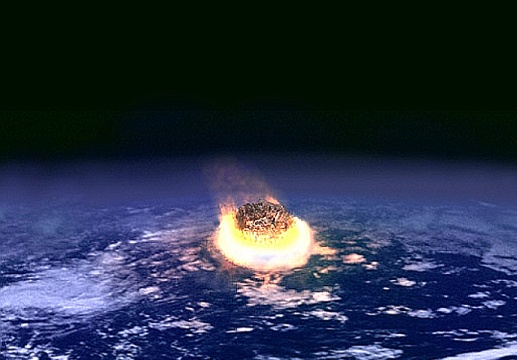
Some sixty-six million years ago, the “Chicxulub impactor” struck the Yucatan Peninsula of Mexico, unleashing a mega-tsunami of 330-ft in height from Texas to Florida. Superheated steam, ash and vapor towered over the impact zone, as colossal shock waves triggered global earthquakes and volcanic eruptions. Vast clouds of dust blotted out the sun for months on end, leading to mass extinction events the world over.
The official history of the Ming Dynasty records the Ch’ing-yang event of 1490, a meteor shower in China, in which “stones fell like rain”, killing some 10,000 people.
In 2013, a twenty-meter (66-ft) space rock estimated at 13,000-14,000 tons flashed across the skies of Chelyabinsk, Russia, breaking apart with a kinetic impact estimated at 26-times the nuclear blast over Hiroshima. The Superbolide (a bolide is “an extremely bright meteor, especially one that explodes in the atmosphere”) entered the earth’s atmosphere on February 15, burning exposed skin and damaging retinas for miles around. No fatalities were reported, though 1,500 were injured seriously enough to require medical attention.
The 450-ton Chicora Meteor collided with western Pennsylvania on June 24, 1938, in a cataclysm comparable to the Halifax Explosion of 1917. The good luck held, that time, the object making impact in a sparsely populated region. The only reported casualty, was a cow. Investigators F.W. Preston, E.P. Henderson and James R. Randolph remarked that “If it had landed on Pittsburgh there would have been few survivors”.
In 2018, the non-profit B612 Foundation dedicated to the study of near-Earth object impacts, reported that “It’s a 100 per cent certain we’ll be hit [by a devastating asteroid]”. Comfortingly, the organization’s statement concluded “we’re [just] not 100 per cent sure when.”
If you enjoyed this “Today in History”, please feel free to re-blog, “like” & share on social media, so that others may find and enjoy it as well. Please click the “follow” button on the right, to receive email updates on new articles. Thank you for your interest, in the history we all share.
As inflation approached escape velocity, the government responded by changing the name, and the color, of the currency. The Pengö was replaced by the Milpengö (1,000,000 Pengö), and then the Bilpengö (1,000,000,000,000) and, finally by the (supposedly) inflation-indexed Adopengö. This spiral resulted in the largest denominated note in history, the Milliard Bilpengö. A Billion Trillion Pengö. The thing was worth twelve cents.
You’ve worked all your life. You’ve supported your family, paid your taxes, and paid your bills. You’ve even managed to put a few bucks aside, in hopes of a long and happy retirement.
The subject of currency devaluation is normally left to eggheads and academics, the very term sufficient to make most of us tip over and hit our heads on the floor, from boredom. But, what happens to that “nest egg”, if the cost of the coffee in your hand doubles in the time it takes, to drink it?
History records 58 such instances of hyperinflation. Current events in Venezuela constitute #59 despite the largest proven oil reserves on the planet, while certain American politicians and celebrity types, are nowhere to be found.
In antiquity, Roman law required a high silver content in the coinage of the republic. Precious metal made the coins themselves objects of value, and the Roman economy remained relatively stable for 500 years. Republic morphed into Empire over the 1st century BC, leading to a conga line of Emperors minting mountains of coins in their own likenesses. Slaves worked to death in Spanish silver mines. Birds fell from the sky over vast smelting fires, yet there was never enough to go around. Silver content inexorably reduced, until the currency itself collapsed in the 3rd century reign of Diocletian. An Empire and its citizens were left to barter as best they could, in a world where currency had no value.
The assistance of French King Louis XIV was invaluable to Revolutionary era Americans, at a time when American inflation rates approached 50% per month. Yet, French state income was only about 357 million livres at that time, with expenses exceeding one-half Billion. France descended into its own Revolution, as the government printed “assignat”, notes purportedly backed by 4 billion livres in property expropriated form the church. 912 million livres were in circulation in 1791, rising to nearly 46 billion in 1796. One historian described the economic policy of the Jacobins, the leftist radicals behind the Reign of Terror: “The attitude of the Jacobins about finances can be quite simply stated as an utter exhaustion of the present at the expense of the future”.
Somehow, that sounds familiar.
Confederate Inflation
In the waning days of the Civil War, the Confederate dollar wasn’t worth the paper it was printed on. Paper money crashed in the post-Revolutionary Articles of Confederation period as well, when you could buy a live sheep for two silver dollars, or 150 paper “Continental” dollars. Roles reversed and creditors hid from debtors, not wanting to be repaid in worthless paper money. Generations after our founding, a thing could be described as worthless as “Not worth a Continental”.
Germany was a prosperous country in 1914, with a gold-backed currency and thriving industries in optics, chemicals and machinery. The German Mark had approximately equal value with the British shilling, the French Franc and the Italian Lira, with an exchange rate of four or five to the dollar.
That was then.
While the French third Republic levied an income tax to pay for the “Great War”, the Kaiser suspended the gold standard and fought the war on borrowed money, believing he could get it back from conquered territories.
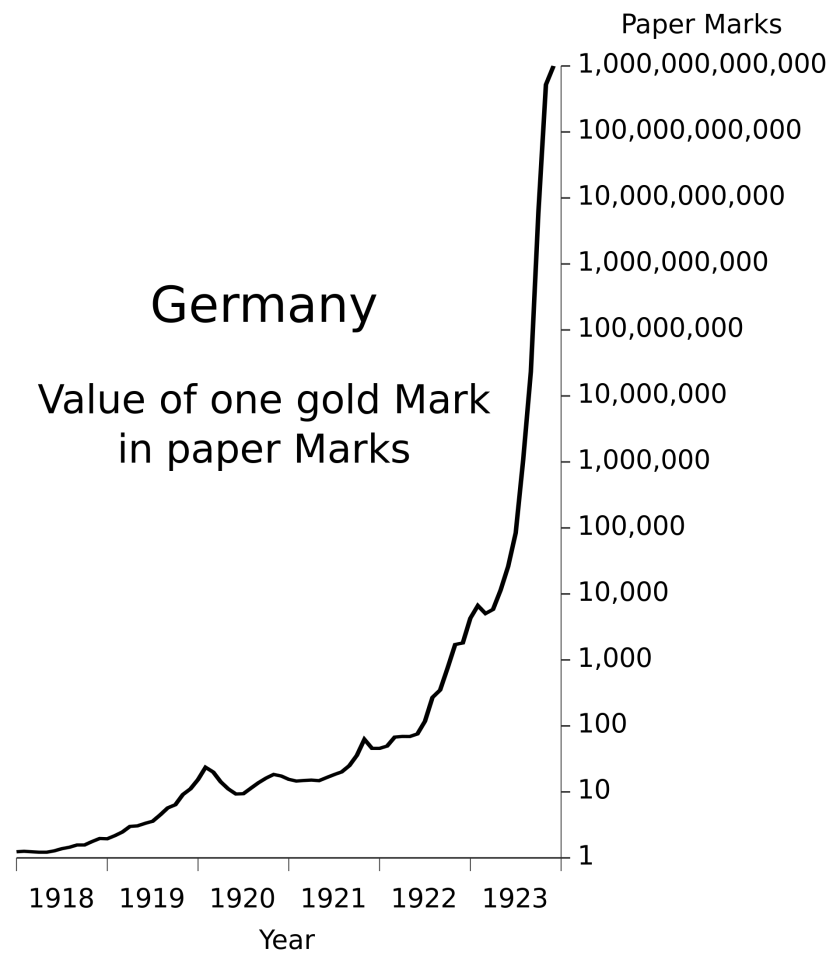
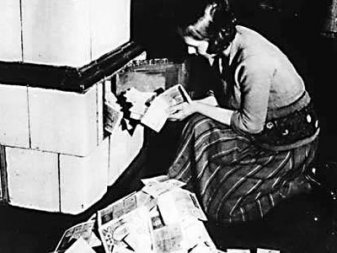
Except, Germany lost. The “Carthaginian peace” described by British economist John Maynard Keynes saddled an economy already massively burdened by war debt, with reparations. Children built ‘forts’ with bundles of hyperinflated, worthless marks. Women fed banknotes into wood stoves, while men papered walls. By November 1923, one US dollar bought 4,210,500,000,000 German marks.
The despair of the ‘Weimar Republic’ period resulted in massive political instability, providing rich soil for the growth of the National Socialist German Workers’ Party (‘Nationalsozialistische Deutsche Arbeiterpartei’) of Adolf Hitler.
Papering the walls with worthless currency in 1923 Weimar Germany
The Austro-Hungarian Empire was also on the losing side, and broken up after the war. Lacking the governmental structures of established states, a newly independent Hungary began to experience inflation. Before the war, one US Dollar bought you 5 Kronen. In 1924, it was 70,000. Hungary replaced the Kronen with the Pengö in 1926, pegged to a rate of 12,500/1.
Hungary became a battleground in the latter stages of WW2, between the military forces of Nazi Germany and the USSR. 90% of Hungarian industrial capacity was damaged, half destroyed altogether. Transportation became difficult with most of the nation’s rail capacity, damaged or destroyed. What remained was either carted off to Germany, or seized by the Russians as reparations.
The loss of all that productive capacity led to scarcity of goods, and prices began to rise. The government responded by printing money. Total currency in circulation in July 1945 stood at 25 Billion Pengö. Money supply rose to 1.65 Trillion by January, 65 Quadrillion and 47 Septillion July. That’s a Trillion Trillion. Twenty-four zeroes.
Banks received low rate loans, so that money could be loaned to companies to rebuild. The government hired workers directly, giving out loans to others and in many cases, outright grants. The country was flooded with money, the stuff virtually grew on trees, but there was nothing to back it up.
Inflation approached escape velocity. The item that cost you 379 Pengö in September 1945, cost 1,872,910 by March, 35,790,276 in April, and 862 Billion in June. Inflation neared 150,000% per day, making the currency all but worthless. Massive printing of money accomplished the cube root of zero. The worst hyperinflation in history peaked on this day in 1946, when the item that cost you 379 Pengö last September, now cost 1,000,000,000,000,000,000,000,000.
The government responded by changing the name, and the color, of the currency. The Pengö was replaced by the Milpengö (1,000,000 Pengö), which was replaced by the Bilpengö (1,000,000,000,000), and finally by the (supposedly) inflation-indexed Adopengö. This spiral resulted in the largest denominated note in history, the Milliard Bilpengö. A Billion Trillion Pengö. The thing was worth twelve cents.
One more currency replacement and all that Keynesian largesse would finally stabilize the currency, but at what price? Real wages were reduced by 80% and creditors wiped out. The fate of the nation was sealed when communists seized power in 1949. Hungarians could now share in that old Soviet joke. “They pretend to pay us, and we pretend to work”.
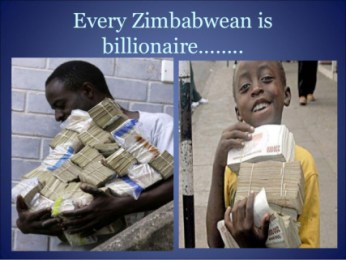
The ten worst hyperinflations in history occurred during the 20th century, including Zimbabwe in 2008, Yugoslavia 1994, Germany 1923, Greece 1944, Poland 1921, Mexico 1982, Brazil 1994, Argentina 1981, and Taiwan 1949. The common denominator in all ten were massive government debt and a currency with no inherent value, excepting what a willing buyer and a willing seller agreed it was worth.
In 2015, Boston University economist Laurence Kotlikoff testified before the Senate Budget Committee. “The first point I want to get across” he said, “is that our nation is broke. Our nation’s broke, and it’s not broke in 75 years or 50 years or 25 years or 10 years. It’s broke today”. Kotlikoff went on to describe the “fiscal gap”, the difference between US’ projected revenue, and the obligations our government has saddled us with. “We have a $210 trillion fiscal gap at this point”. Nearly twelve times GDP – the sum total of all goods and services produced in the United States.
This morning, Treasurydirect.govquotes US’ total outstanding public debt at $21,205,959,245,607.94, more than the combined GDP of the bottom 174 nations, on earth. All that, in a currency unmoored from anything objective value. What could go wrong?
The machine gun episode ended with a final score of Chips 4, Italian machine-gun team 0, but he wasn’t done. Before the day was over, Chips had helped to bag ten more.
By the end of the “Great War”, France, Great Britain and Belgium had at least 20,000 dogs on the battlefield, Imperial Germany as many as 30,000. Some sources report that over a million dogs served over the course of the war.
Dogs performed a variety of roles in WWI, from ratters in the trenches, to sentries, scouts and runners. “Mercy” dogs were trained to seek out the wounded on battlefields, carrying medical supplies with which the stricken could treat themselves. Sometimes, these dogs simply provided the comfort of another living soul, so that the gravely wounded should not die alone.
French propaganda postcard of WW1
The famous Rin Tin Tin canine movie star of the 1920s was rescued as a puppy, from the bombed out remains of a German Army kennel, in 1917.
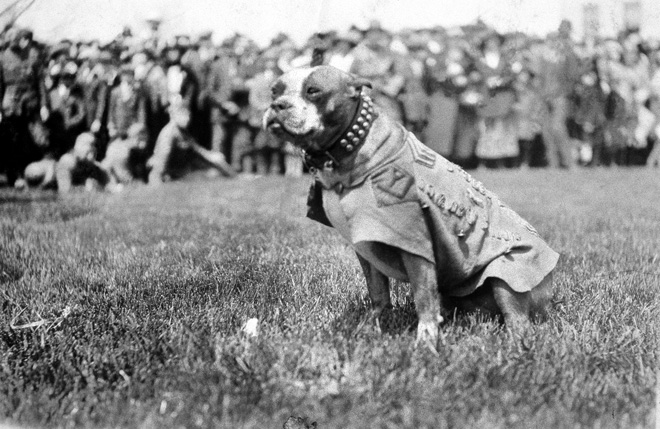
Leaders of the American Expeditionary Force (AEF) discussed the use of dogs as sentries, messengers and draft animals, but the war was over before US forces put together any kind of a War Dog program. America’s first war dog, “Sgt. Stubby”, went “over there” by accident, serving 18 months on the Western Front before coming home to a well-earned retirement.
Sergeant Stubby
In March 1942, the US Army Quartermaster Corps began training dogs for an American “K-9 Corps.” In the beginning, the owners of healthy animals were encouraged to “loan” their dogs to the Quartermaster Corps, where they were trained for service with the Army, Navy, Marine Corps and Coast Guard.
One such dog was “Chips”, the German Shepherd/Collie/Husky mix who would become the most decorated K-9 of WWII.
Chips belonged to the Wren family of Pleasantville New York, who “enlisted” their dog in the “Dogs for Defense (DfD) program in 1942. He was trained at the War Dog Training Center in Front Royal Virginia, and served in the 3rd Infantry Division of Patton’s 7th Army, along with with his handler, Private John Rowell.
Tip of the hat to my son-in-law Nate who also served in the 3rd ID in the Wardak Province of Afghanistan, partnered as handler and “battle buddy” with a four-year-old German Shepard and Tactical Explosives Detection Dog (TEDD) named “Zino”.
Back to WW2. Chips and his handler took part in North Africa, Italy, France and Germany. He served as a sentry dog for the Casablanca Conference of 1943, where he met the American President Franklin Roosevelt and the British Prime Minister Winston Churchill.
The Allied invasion of Sicily was a large scale amphibious and airborne operation, beginning this day in 1943 and lasting through the 17th of August. The Rowell/Chips team was part of the landings, beginning six weeks of land combat in an action code named “Operation Husky”.
Chips
During the night landing phase on July 10, Private Rowell and Chips were pinned down in the darkness by an Italian machine gun team, operating out of a nearby hut. The dog broke free from his handler as the platoon dived for shelter, covering the beach in a flash and jumping into the building.
Private Rowell described the scene. “There was an awful lot of noise and the firing stopped. Then I saw one soldier come out of the door with Chips at his throat. I called him off before he could kill the man.”
Three others were quick to follow, hands up. Chips had grabbed the Italian’s machine gun by the barrel, knocking the gun off its mount before turning his attentions on the team. The dog sustained a scalp wound and powder burns, demonstrating that someone had tried to shoot him during the brawl. How many lives were spared by the actions of a single dog, is anyone’s guess.
That episode ended with a final score of Chips 4, Italian machine-gun team 0, but he wasn’t done. Before the day was over, Chips had helped to bag ten more.
“Chips” goes to war, 1942
Chips was awarded the Distinguished Service Cross, Silver Star, and Purple Heart, but those awards were later revoked. At that time the army didn’t permit commendations to be given to animals. His unit awarded him a Theater Ribbon with an Arrowhead for the assault landing anyway, along with eight Battle stars. One for each of his campaigns.
Chips was discharged in December, 1945, and returned home to live out the rest of his days with the Wren family in Pleasantville, New York. In 1990, Disney produced a made-for-TV movie based on the life of the most highly decorated K-9 of WW2, calling it “Chips, the War Dog”.
Afterward
In 1917, the British animal welfare pioneer Maria Dickin founded the People’s Dispensary for Sick Animals (PDSA), to “provide care for sick and injured animals of the poor”. Today, the PDSA is the largest veterinary charity in England, carrying out a million or more free veterinary visits every year and employing the largest number of veterinary surgeons and nurses in the United Kingdom.
Dickin_Medal
The Dickin Medal was established in 1943, to recognize animals displaying “conspicuous gallantry or devotion to duty while serving or associated with any branch of the Armed Forces or Civil Defence Units“. Sometimes referred to as “the animals’ Victoria Cross”, the Dickin medal has been awarded only 75 times as of November 2017, plus an honorary Dickin Medal for all animals who served during WW1.
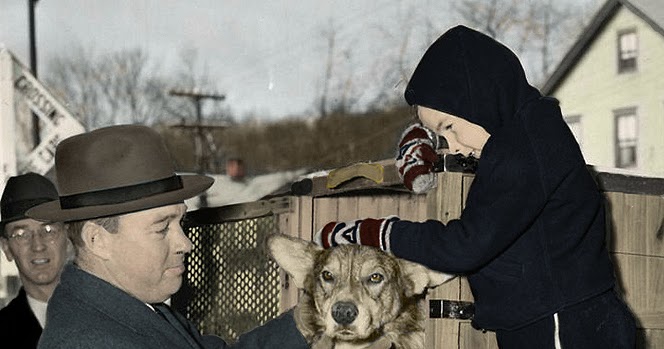
On January 15, 2018, seventy-five years to the day following the Casablanca Conference, Chips was posthumously awarded the Dickin Medal. John Wren, who was only four when Chips went to war, accepted the award in Chips’ honor. United States Army Lieutenant Colonel Alan Throop and Military Working Dog (MWD) Handler Staff Sergeant Jeremy Mayerhoffer of the United States Air Force were also there, along with MWD Ayron, who stood in for Chips to wear his Dickin Medal.
The medal reads “For Gallantry” and “We Also Serve.” Previous recipients include 33 dogs, 32 messenger pigeons, four horses and a ship’s cat.
“John Wren (left), who was four years old when Chips the family pet returned from the war effort, with military working dog Ayron and his handler Staff Sergeant Jeremy Mayerhoffer (centre) and US Lieutenant Colonel Alan Throop (right) in London today” H/T Daily Mail
In Denver, a group of blind girls were allowed to touch the Bell. One of them wanted to read the letters. You could have heard a pin drop, as a hushed crowd heard a small, sightless girl, pronounce these words: “Proclaim…Liberty…throughout…all…the…land.”
For thousands of years, bells have rung out to announce religious and civic occasions, weddings, funerals and other public announcements. The rich tones of a well-cast bell is capable of carrying for miles. Great Britain has so many bells, the place has been called the “Ringing Isle”.
The first bell in the city of Philadelphia would ring out to alert citizens of civic events and proclamations, and to the occasional public danger. Originally hung from a tree near the Pennsylvania State House, (now known as Independence Hall), that first bell dates back as far as the city itself, around 1682.
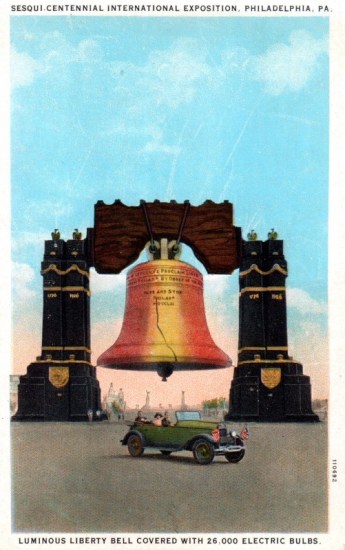
Eighty-foot-high replica of the Liberty Bell, built for the Sesquicentennial International Exposition in 1926
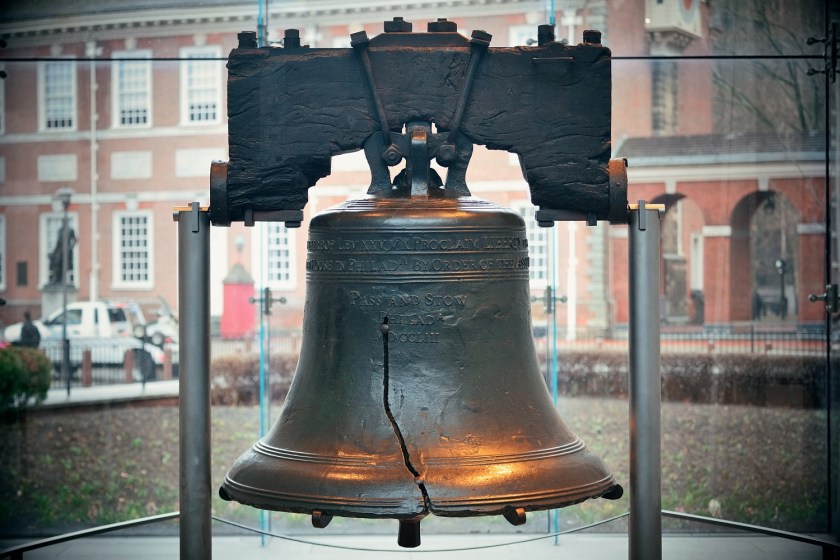
The “Liberty Bell” was ordered from the London bell foundry of Lester and Pack in 1752, (today the Whitechapel Bell Foundry), though that name wouldn’t come around until much later. Weighing in at 2,080 lbs, the bell arrived in August of that year. Written upon it was a passage from the Book of Leviticus, the third book of the Hebrew Bible; the third of five books of the Torah. “Proclaim LIBERTY throughout all the land unto all the inhabitants thereof”.
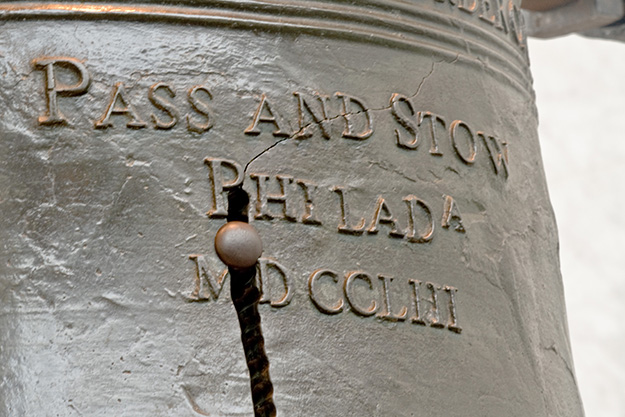
Mounted to a stand to test the sound, the first strike of the clapper cracked the bell’s rim. Authorities attempted to return it, but the ship’s master couldn’t take it on board. The bell was broken into pieces, melted down and re-cast by two local workmen, John Pass and John Stow.
The recast bell used 10% copper, making the metal less brittle. Pass and Snow bragged that the bell’s lettering was clearer on this second casting than the original. The newly re-cast bell was ready in March 1753, when City officials scheduled a public celebration to test the sound. There was free food and drink all around, but the crowd gasped and started to laugh when the bell was struck. It didn’t break this time, it was worse. Somebody said the thing sounded like two coal scuttles, banging together.
Humiliated, Pass and Stow hurriedly took the bell away, and once again broke it into pieces, and melted it down.
The whole performance was repeated, three months later. This time, most thought the sound to be satisfactory, and the bell was hung in the steeple of the State House. One who did not like the sound was Isaac Norris, speaker of the Pennsylvania Provincial Assembly. Norris ordered a second bell in 1754 and attempted to return the old one for credit, but his efforts proved unsuccessful.
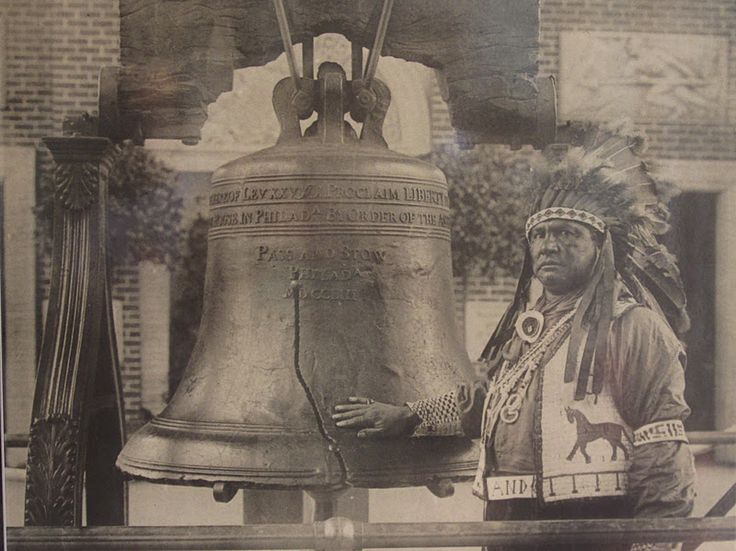
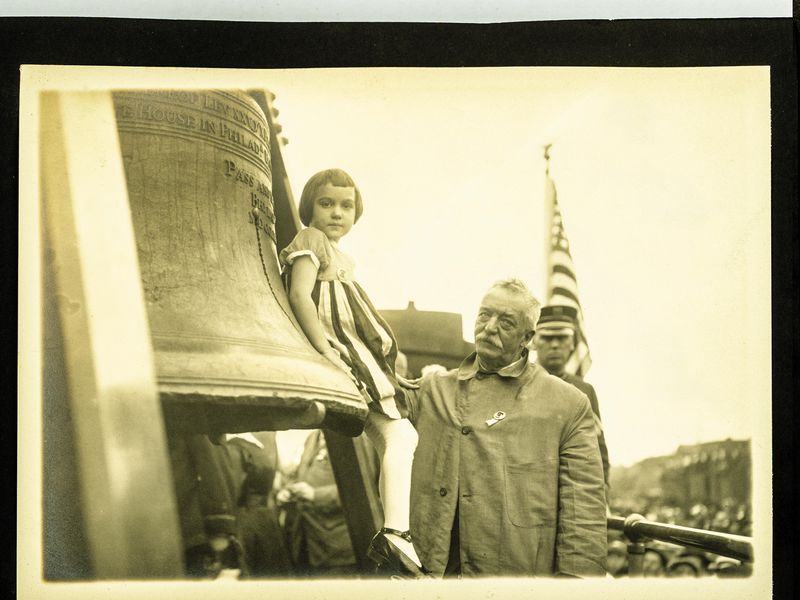
Chief Little Bear with Liberty Bell, 1915
The new bell was attached to the tower clock, while the old one was, by vote of the Assembly, devoted “to such Uses as this House may hereafter appoint.” One of the earliest documented uses of the old bell comes to us in a letter from Benjamin Franklin to Catherine Ray, dated October 16, 1755: “Adieu. The Bell rings, and I must go among the Grave ones, and talk Politiks.”
Legends have grown around the bell, ringing in the public reading of the Declaration of independence on July 4, 1776. The story is a myth. There was no such reading on that day. The 2nd Continental Congress’ Declaration was announced to the public four days later on July 8, to a great ringing of bells. Whether the old bell itself rang on this day, remains uncertain. John C. Paige, author of an historical study of the bell for the National
Liberty Bell, 1908
Park Service, wrote “We do not know whether or not the steeple was still strong enough to permit the State House bell to ring on this day. If it could possibly be rung, we can assume it was. Whether or not it did, it has come to symbolize all of the bells throughout the United States which proclaimed Independence.”
Bells are easily melted down and recast as bullets, and the bell was removed for safekeeping before the British occupation of Philadelphia, in 1777. The distinctive large crack began to develop sometime in the early 19th century, around the time when abolitionist societies adopted the symbol and began calling it “The Liberty Bell”.
The Philadelphia Public Ledger reported the last clear note ever sounded by the Liberty Bell, in its February 26, 1846 edition:
“The old Independence Bell rang its last clear note on Monday last in honor of the birthday of Washington and now hangs in the great city steeple irreparably cracked and dumb. It had been cracked before but was set in order of that day by having the edges of the fracture filed so as not to vibrate against each other … It gave out clear notes and loud, and appeared to be in excellent condition until noon, when it received a sort of compound fracture in a zig-zag direction through one of its sides which put it completely out of tune and left it a mere wreck of what it was.”
The bell would periodically travel to expositions and celebrations, but souvenir hunters would break off pieces from the rim. Additional cracking developed after several of these trips, and the bell’s travels were sharply curtailed after its return from Chicago, in 1893.
With the 1915 World’s Fair about to open in San Francisco, there were discussions of sending the Liberty Bell to California. The bell had never been west of St. Louis at that time, and the Philadelphia establishment balked. Former Pennsylvania governor Samuel Pennypacker complained that “The Bell is injured every time it leaves…children have seen this sacred Metal at fairs associated with fat pigs and fancy furniture. They lose all the benefit of the associations that cling to Independence Hall, and the bell should, therefore, never be separated from [Philadelphia].”
With the California tour off for now, Philadelphia Mayor Rudolph Blankenburg offered the next best thing. Bell Telephone had just completed a new transcontinental line, 3,400 miles of wire suspended from 130,000 poles. Three hundred dignitaries gathered at Bell offices in Philadelphia and San Francisco on February 11, 1915. With Alexander Graham Bell himself listening in from his own private line in Washington DC, the Liberty bell was sounded at 5pm, with all of them listening in on candlestick phones.
The California trip gained fresh impetus following the May 7 sinking ofn the British liner Lusitania. A cross-country whistle stop tour was planned for the bell, using the “best cushioned” rail car, in history.
As the nation’s most prominent German-American, Mayor Blankenburg himself came along, delivering “loyalty lectures” to immigrant groups on the importance of devotion to their adopted home country. “It is important to prepare against a possible foe abroad“, he would say, “….Let us, therefore, abolish all distinctions that may lead to ill feeling and let us call ourselves, before the whole world, Americans, first, last and all the time.”
“A quarter of the U.S. population (including a girl in Moline, Illinois) turned out for the Liberty Bell”. H/T Smithsonian
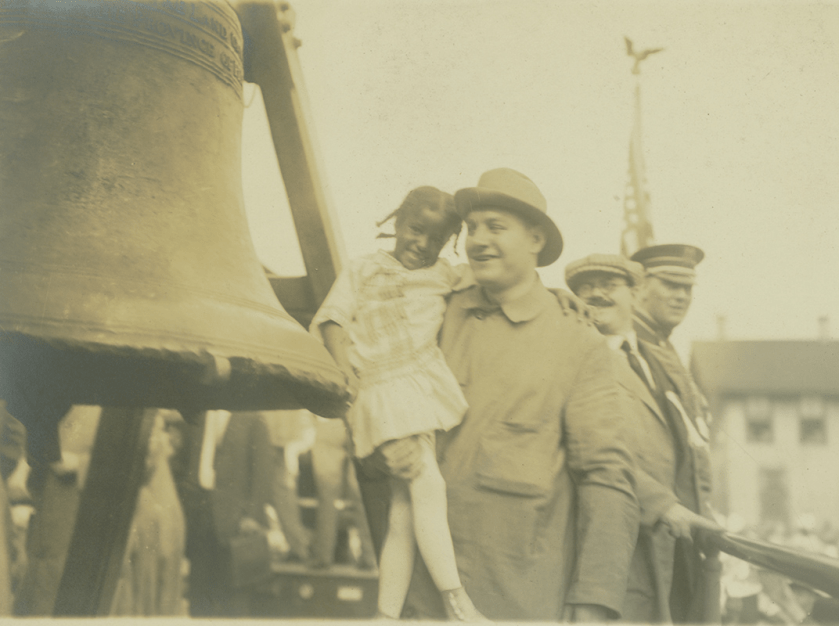
The Liberty Bell drew crowds beyond anyone’s wildest expectations. Fully one- quarter of the American population turned out to see the liberty bell, a generator rigged so the bell could be seen by day or night. In many cities, those on the train couldn’t see where the crowd ended.
“Big Jim” Quirk, one of the police officers assigned to the train, recalled “In Kansas City, an old colored man who had been a slave came to touch it—he was 100 years old.” When the train pulled into another town, “an aged Mammie hobbled to the door of her cabin near the tracks, raised her hands and with her eyes streaming tears called out, ‘God Bless the Bell! God Bless the Dear Bell!’ It got to us somehow.”
In Denver, a group of blind girls were allowed to touch the Bell. One of them wanted to read the letters. You could have heard a pin drop, as a hushed crowd heard a small, sightless girl, pronounce these words: “Proclaim…Liberty…throughout…all…the…land.”
Liberty Bell 1915, Atchison, Kansas. H/T Smithsonian Magazine, for this image
The Liberty Bell was enlisted once again in 1917 as the United States prepared to send her soldiers “over there” in the first democratically financed war, in history. Americans hurried to buy up war bonds, far exceeding the national goal of $2 Billion.
Today, two other bells join the Liberty Bell in the Independence National Historical Park in Philadelphia, PA. Weighing in at 13,000lbs, a half-ton for every original colony, the Centennial Bell was cast for America’s 100th birthday in 1876. To this day, this enormous bell rings once an hour, in the tower at Independence Hall.
In 1976, the people of Great Britain presented a gift to the people of the United States, in recognition of the friendship between the former adversaries. Weighing in at six tons and cast at the same foundry which produced the original bell, the “Bicentennial Bell” was dedicated by her Royal Highness, Queen Elizabeth, II, on July 6, 1976. On the side of the bell are inscribed these words:
FOR THE PEOPLE OF THE UNITED STATES FROM THE PEOPLE OF BRITAIN 4 JULY 1976 LET FREEDOM RING
Back in 1893, the Liberty Bell passed through Indianapolis. Former President Benjamin Harrison may have had the last word on the subject, a sentiment fit to be inscribed on the old bell itself, below that verse from the Torah. “This old bell was made in England”, Harrison said, “but it had to be re-cast in America before it was attuned to proclaim the right of self-government and the equal rights of men.”
If you enjoyed this “Today in History”, please feel free to re-blog, “like” & share on social media, so that others may find and enjoy it as well. Please click the “follow” button on the right, to receive email updates on new articles. Thank you for your interest, in the history we all share.
America’s “quasi-war” with France, begun this day in 1798, would see the first combat service of the heavy frigate USS Constitution, better known as “Old Ironsides” and today, the oldest commissioned warship in the world, still afloat.
Imagine that you’ve always considered your own beliefs to be somewhere in the political center. Maybe a little to the left. Now imagine that, in the space of two years, your country’s politics have shifted so radically that you find yourself on the “Reactionary Right”, on the way to execution by your government.
And your personal convictions have never changed.
America’s strongest Revolution-era ally lost its collective mind in 1792, when France descended into a revolution of its own. 17,000 Frenchmen were officially tried and executed during the 1793-94 “Reign of Terror” (la Terreur) alone, including King Louis XVI himself and his queen, Marie Antoinette. Untold thousands died in prison or without benefit of trial. The monarchical powers of Europe were quick to intervene. For the 32nd time since the Norman invasion of 1066, England and France once again found themselves at war.
France had been the strongest ally the Americans had during the late revolution, yet the United States remained neutral in the later conflict, straining relations between the former allies. Making matters worse, America repudiated its war debt in 1794, arguing that it owed the money to “l’ancien régime”, and not to the French First Republic which had overthrown it, and executed its King.
The Marquis de Lafayette was shocked on October 15, 1795, when his cell door opened and in walked his wife and three daughters. The four women would remain with him in his prison cell, for another two years
By this time, Revolution-era America’s most important French allies were off the stage, the Comte de Grasse dead, the Marquis de Lafayette and the Comte de Rochambeau languishing, in prison.
Both sides in the European conflict seized neutral ships which were trading with their adversary. The “Treaty of Amity, Commerce, and Navigation” with Great Britain, ratified in 1795 and better known as the “Jay Treaty”, put an end for now to such conflict with Great Britain, but destroyed relations with the French Republic.
French privateers cruised the length of the Atlantic seaboard preying on American merchant shipping, seizing 316 civilian ships in one eleven-month period, alone.
At this point, the United States had virtually no means of fighting back. The government had disbanded the Navy along with its Marine contingent at the end of the Revolution, selling the last warship in 1785 and retaining only a handful of “revenue cutters” for customs enforcement. The Naval Act of 1794 had established a standing Navy for the first time in American history and begun construction on six heavy frigates, the first three of which would launch in 1797: the USS United States, USS Constellation, and USS Constitution.
In 1796, France formally broke diplomatic relations with the United States by rejecting the credentials of President Washington’s representative, Ambassador Charles Cotesworth Pinckney.
The following year, President John Adams dispatched a delegation of two, with instructions to join with Pinckney in negotiating a treaty with France, on terms similar to those of the Jay treaty with Great Britain.
Charles Cotesworth Pinckney
These were the future Chief Justice of the Supreme Court John Marshall, and future Massachusetts Governor Elbridge Gerry, a man who later became the 5th Vice President and lent his name to the term “Gerrymander”.
The American commission arrived in Paris in October 1797, requesting a meeting with French Foreign Minister Charles Maurice de Talleyrand. Talleyrand, unkindly disposed toward the Adams administration to begin with, demanded bribes before meeting with the American delegation. The practice was not uncommon in European diplomacy of the time, but the Americans refused.
Documents later released by the Adams administration describe Nicholas Hubbard, an English banker identified only as “W”. W introduced “X” (Baron Jean-Conrad Hottinguer) as a “man of honor”, who wished an informal meeting with Pinckney. Pinckney agreed and Hottinguer reiterated Talleyrand’s demands, specifying the payment of a $12 million “loan” to the French government, and a personal bribe of some $250,000 to Talleyrand himself. Met with flat refusal by the American commission, X then introduced Pierre Bellamy (“Y”) to the American delegation, followed by Lucien Hauteval (“Z”), sent by Talleyrand to meet with Elbridge Gerry. X, Y and Z, each in their turn, reiterated the Foreign Minister’s demand for a loan, and a personal bribe.
Believing that Adams sought war by exaggerating the French position, Jeffersonian members of Congress joined with the more warlike Federalists in demanding the release of the commissioner’s communications. It was these dispatches, released in redacted form, which gave the name “X-Y-Z Affair” to the diplomatic and military crisis which followed.
American politics were sharply divided over the European war. President Adams and his Federalists, always the believers in strong, central government, took the side of the Monarchists. Thomas Jefferson and his “Democratic-Republicans” found more in common with the liberté, égalité and fraternité espoused by French revolutionaries.
In the United Kingdom, the ruling class appeared to enjoy the chaos. A British political cartoon of the time depicted the United States, represented by a woman being groped by five Frenchmen while John Bull, the fictional personification of all England, looks on in amusement from a nearby hilltop.
Adams’ commission left without entering formal negotiations, their failure leading to a political firestorm in the United States. Congress rescinded all existing treaties with France on July 7, 1798, the date now regarded as the beginning of the undeclared “Quasi-War” with France.
Four days later, President John Adams signed “An Act for Establishing and Organizing a Marine Corps,” permanently establishing the United States Marine Corps as an independent service branch, in order to defend the American merchant fleet.
Talleyrand himself raised the stakes, saying that attacks on American shipping would cease if the United States paid him $250,000 and gave France 50,000 pounds sterling and a loan for $100 million. At a 1798 Philadelphia dinner in honor of John Marshall, South Carolina Congressman Robert Goodloe Harper’s toast, spoke for the American side: “Millions for defense but not one cent for tribute.”
America’s “quasi-war” with France, begun this day in 1798, would see the first combat service of the heavy frigate USS Constitution, better known as “Old Ironsides” and today, the oldest commissioned warship in the world, still afloat. The undeclared war would be fought across the world’s oceans, from the Atlantic to the Caribbean, to the Indian Ocean, and the Mediterranean Sea.
20th century illustration depicts American Marines escorting French prisoners
The Convention of 1800 ended the Quasi-War on September 30, nullifying the Franco-American alliance of 1778 and ensuring American neutrality in the Napoleonic wars. $20,000,000 in American “Spoliation Claims” would remain, unpaid.
For the United States, military escalation proved decisive. Before naval intervention, the conflict with France resulted in the loss of over 2,000 merchant ships captured, with 28 Americans killed and another 42 wounded. Military escalation with the French First Republic cost the Americans 54 killed and 43 wounded, and an unknown number of French. Only a single ship was lost, the aptly named USS Retaliation, and that one was later recaptured.
If you enjoyed this “Today in History”, please feel free to re-blog, “like” & share on social media, so that others may find and enjoy it as well. Please click the “follow” button on the right, to receive email updates on new articles. Thank you for your interest, in the history we all share.
There was barely a man in the regiment, who wouldn’t have walked over the proverbial “bad road & broken glass”, for that dog.
Irish Brigade Memorial sculpted by William R. O’Donovan, a former Confederate soldier who fought at Gettysburg H/T Gettysburg.stonesentinels.com
Sallie was four weeks old in 1861, when she was given as a gift to 1st Lieutenant William Terry, of the 11th Pennsylvania Volunteer Infantry. Terry made her the regimental mascot, a post she would hold for the duration of the Civil War.
Sallie was a Staffordshire Bull Terrier, or possibly a Pit Bull, brindle in color. She would tag along on long marches, and kept the men of the regiment company in their camps. She learned the drum roll announcing reveille, and loved to help wake the sleeping soldiers in the morning.
If you’ve ever had a dog in your life, you know how that goes.
There was barely a man in the regiment, who wouldn’t have walked over the proverbial “bad road & broken glass”, for that dog. Sallie’s first battle came at Cedar Mountain, in 1862. No one thought of sending her to the rear before things got hot, so Sallie took up a position along with the colors, barking ferociously at the adversary.
There she remained throughout the entire engagement, as she would do at Antietam, Fredericksburg, Chancellorsville and Spotsylvania.
Sallie, the smallest member of the 11th PA Infantry Regiment, is one of only two dogs so memorialized at Gettysburg, the only dog who was actually In the battle.
It was said that Sallie only hated three things: Rebels, Democrats, and Women.
Sallie marched with “her” soldiers in review, in the spring of 1863. Abraham Lincoln was reviewing the army at the time, when he spotted the dog from the center of the reviewing stand, and raised his famous top hat in salute.
At Gettysburg, Sallie was separated from her unit in the chaos of the first day’s fighting. They found her five days later, on July 6, parched with thirst and weakened by hunger.
She’d been standing guard over her dead and dying comrades, since July 1.
It’s been said that only a dog is capable of that kind of loyalty, yet virtue in one is capable of inspiring virtue in another. So it was on February 5, 1865. Sallie was struck in the head by a bullet at Hatcher’s Run. She was killed instantly. Several men of the 11th PA laid down their arms and buried her, right then and there. Even though they were still under fire from the Confederate side.
There is a tale about Sallie, I don’t know if it’s true. Probably not but it’s a nice story.
After the battle in which Sallie was killed, the soldiers were moving out when a small whining was heard from within a hollowed-out tree. Someone went to the tree and found several small puppies, believed to be Sallie’s. They’d had no idea that she was pregnant, or how puppies came to be in that hollowed out tree. The soldiers gave them to local civilians, so that Sallie’s bloodline might live on.
Twenty-seven years after Gettysburg, surviving veterans of the regiment returned to dedicate a memorial to those members of the 11th Pennsylvania, who lost their lives on that field of battle.
Today, 1,320 memorial statues, monuments and markers dot the landscape of the Gettysburg battlefield. Among all of them there are only two, raised in the memory of a dog. The first is a Celtic cross, erected in honor of New York’s Irish Brigade. Ironically, it is sculpted by a Confederate veteran of the battle. At the foot of the cross rests a life-sized likeness of an Irish wolfhound, symbolizing honor and fidelity..
The other includes a brindle colored Terrier, named Sallie. The only one of the two to have actually participated in the battle.
The monument depicts an upright Union soldier, rifle at the ready. By unanimous consent of the veterans themselves, Sallie’s likeness looks out from the foot of the statue, where she guards over the spirits of “her boys”, for all eternity.
“Sallie was a lady, she was a soldier too. She marched beside the colors, our own red white and blue. It was in the days of our civil war, that she lived her life so true”.
Feature image, top of page: Only known picture of Sallie, herself. Photographer unknown.
If you enjoyed this “Today in History”, please feel free to re-blog, “like” & share on social media, so that others may find and enjoy it as well. Please click the “follow” button on the right, to receive email updates on new articles. Thank you for your interest, in the history we all share.
Governor Montiano bought the ruse, hook, line and sinker. The Spanish invaders left St. Simons island for good on July 25, never to return. One of the most brilliant head fakes in colonial history had ended the invasion, leaving the 13th colony in the undisputed hands of the British Crown.
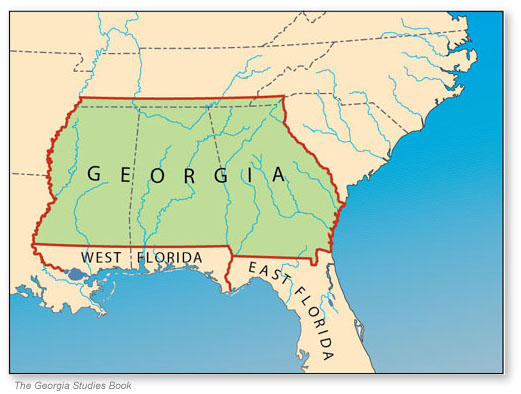
The territory which would come to be occupied by the colony of Georgia was a subject for dispute between Great Britain and Spain, since long before the state became a colony.
Spain had taken Florida for its own, dating the claim back to explorer Ponce de Leon’s first mapping the territory in 1513 and claiming Georgia to be part of it. James Oglethorpe founded the 13th colony as a buffer colony for the British in 1733, serving as a protective zone against Spanish invasion, for her twelve sister colonies to the north.
The Convention of Pardo concluded in early 1739 attempted to settle issues relating to smuggling and to the slave trade, but Spain suspected “cheating” and continued to board foreign vessels at will. The War of Jenkins’ Ear broke out later that year, when Commander Juan de León Fandiño hacked off the ear of Commander Robert Jenkins, informing the unfortunate ship’s master that he could “Go, and tell your King that I will do the same”, to him.
Spain immediately began to draw up plans to invade the Georgia colony.
One day, St. Simons Island would be made notable for having provided the 2,000 southern Live Oak trees, forming the hull of the USS Constitution, “Old Ironsides”. On July 5, 1742, that day was far in the future. On this day, a Spanish invasion force of somewhere between 4,500 and 5,000 men landed on the island, in 36 ships.
A much smaller force of approximately 950 British Regulars, Colonial Militia and Indian Allies was under the command of James Oglethorpe, founder of the Georgia Colony. Oglethorpe withdrew his forces in in the face of the much larger invasion, and later attacked a Spanish reconnaissance in Force at a place called Gully Hole Creek. The Spanish were routed, with almost a third of their number either killed or captured. Falling back in the face of superior numbers of Spanish reinforcements, the British attacked the Spaniards a second time as they stacked arms and pulled out their pots and pans preparing for dinner. The “Battle of Bloody Marsh” was another victory for the British, and would prove to be decisive.
“Bloody Marsh” in 2008
A few days later, Oglethorpe launched what can only be described a a psychological warfare operation. A Spanish prisoner was released to the other side, with information that a massive British force was on the way. Fearing that Montiano might learn the true size of his puny force, Oglethorpe spread drummers out until their sound seemed to come from all directions.
Governor Montiano bought the ruse, hook, line and sinker. The Spanish invaders left St. Simons island for good on July 25, never to return. One of the most brilliant head fakes in colonial history had ended the invasion, leaving the 13th colony in the undisputed hands of the British Crown.
Georgia colony, 1764
If you enjoyed this “Today in History”, please feel free to re-blog, “like” & share on social media, so that others may find and enjoy it as well. Please click the “follow” button on the right, to receive email updates on new articles. Thank you for your interest, in the history we all share.
In an ending no fiction writer would dare put to paper, both men died on the same day, July 4, 1826. Fifty years to the day from the birth of the Republic, they had helped to create.
Delegates to the 2nd Continental Congress originally pushed for Richard Henry Lee to write the Declaration of Independence. It was he who delivered the all-important resolution on June 1, 1776: “Resolved, that these United Colonies are, and of right ought to be, free and independent States...”
Lee was appointed to the Committee of Confederation, assigned to write the Articles by which the fledgling nation would govern itself. Lee believed that two such committees were too much and, soon, he would be called home to care for a critically ill wife.
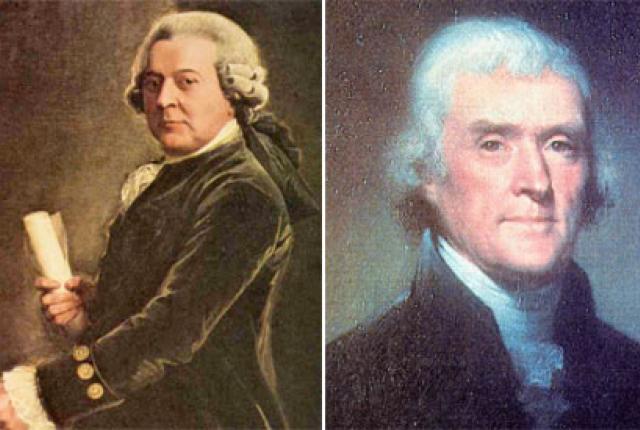
So it is that a committee of five were appointed to write the Declaration of Independence, including Massachusetts attorney John Adams, and a young Virginia delegate named Thomas Jefferson.
Jefferson had no interest in writing the Declaration of Independence and suggested that Adams pen the first draft. Adams declined, and described the following conversation, in a letter to Massachusetts politician Timothy Pickering:
“Jefferson proposed to me to make the draft. I said, ‘I will not,’ ‘You should do it.’ ‘Oh! no.’ ‘Why will you not? You ought to do it.’ ‘I will not.’ ‘Why?’ ‘Reasons enough.’ ‘What can be your reasons?’ ‘Reason first, you are a Virginian, and a Virginian ought to appear at the head of this business. Reason second, I am obnoxious, suspected, and unpopular. You are very much otherwise. Reason third, you can write ten times better than I can.’ ‘Well,’ said Jefferson, ‘if you are decided, I will do as well as I can.’ ‘Very well. When you have drawn it up, we will have a meeting.”
Thomas Jefferson would spend the following seventeen days, writing the first draft. He and Adams had only just met during the Continental Congress in Philadelphia. The two would develop a close personal friendship which would last for most of their lives.
The friendship between the two men came to an ugly ending during the Presidential election of 1800, in which the mudslinging from both sides rose to levels never before witnessed in a national election.
Jefferson defeated one-term incumbent Adams and went on to serve two terms as President of the United States. Upon Jefferson’s retirement in 1809, one of the Declaration’s signers, Dr. Benjamin Rush, took it upon himself to patch up the broken friendship between the two founding fathers.
Dr. Rush worked on this personal diplomatic mission for two years. In 1811, he finally succeeded.
Jefferson Seal
There followed a series of letters between John Adams and Thomas Jefferson, which together constitute one of the most comprehensive historical and philosophical assessments ever written about the American founding.
The correspondence between the pair touched on a variety of topics, from the birth of a self-governing Constitutional Republic, to then-current political issues, to matters of philosophy and religion and issues related to their advancing years.
Both men understood that they were writing not only to one another, but also to generations yet unborn. Each went to great lengths to explain the philosophical underpinnings of his views, Adams the firm believer in strong, centralized government, Jefferson advocating a smaller federal government which was more deferential to the states.
By 1826, Jefferson and Adams were among the very last survivors among the founding generation. James Monroe alone, would survive these two.
In an ending no fiction writer would dare put to paper, both men died on the same day, July 4, 1826. Fifty years to the day from the birth of the Republic, they had helped to create. Adams was 90 as he lay on his deathbed, suffering from congestive heart failure. His last words were “Thomas Jefferson still survives”. There was no way of knowing. The author of the Declaration of Independence had died of a fever, five hours earlier at his Monticello home near Charlottesville, Virginia. Jefferson was 82.
John Adams son John Quincy was himself President at the time of the two men’s passing, and remarked that the coincidence was among the “visible and palpable remarks of Divine Favor”.
A month after the two men passed, Daniel Webster spoke of the pair at Faneuil Hall, in Boston.
“No two men now live, (or) any two men have ever lived, in one age, who (have) given a more lasting direction to the current of human thought. No age will come, in which the American Revolution will appear less than it is, one of the greatest events in human history. No age will come, in which it will cease to be seen and felt, on either continent, that a mighty step, a great advance, not only in American affairs, but in human affairs, was made on the 4th of July 1776″.
If you enjoyed this “Today in History”, please feel free to re-blog, “like” & share on social media, so that others may find and enjoy it as well. Please click the “follow” button on the right, to receive email updates on new articles. Thank you for your interest, in the history we all share.


 What would it be like to turn on CNN or Fox News, to learn that Former Secretary of the Treasury Jacob (‘Jack’) Lew was party to a duel and that he was near death, after being shot by the sitting Vice President of the United States, Mike Pence.


 There are plenty of tales regarding the man’s paternity, but none are any more than that. Alois Schicklgruber ‘legitimized’ himself in 1877, adopting a variant on the name of his stepfather and calling himself ‘Hitler”.


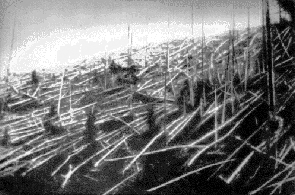 On the morning of June 30, 1908, the Tunguska River lit up with a bluish-white light. At 7:17a local time, a column of light far too bright to look at moved across the skies above the Tunguska. Minutes later, a vast explosion knocked people off their feet, flattening buildings, crops and as many as 80 million trees over an area of 830-square miles. A vast “thump” was heard, the shock wave equivalent to an earthquake measuring 5.0 on the Richter scale. Within minutes came a second and then a third shock wave and finally a fourth, more distant this time and described by eyewitnesses as the “sun going to sleep”.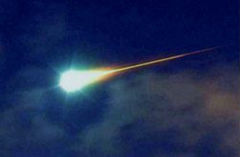


 History records 58 such instances of hyperinflation. Current events in Venezuela constitute #59 despite the largest proven oil reserves on the planet, while certain American politicians and celebrity types, are nowhere to be found.


 The loss of all that productive capacity led to scarcity of goods, and prices began to rise. The government responded by printing money. Total currency in circulation in July 1945 stood at 25 Billion Pengö. Money supply rose to 1.65 Trillion by January, 65 Quadrillion and 47 Septillion July. That’s a Trillion Trillion. Twenty-four zeroes.
 The ten worst hyperinflations in history occurred during the 20th century, including Zimbabwe in 2008, Yugoslavia 1994, Germany 1923, Greece 1944, Poland 1921, Mexico 1982, Brazil 1994, Argentina 1981, and Taiwan 1949. The common denominator in all ten were massive government debt and a currency with no inherent value, excepting what a willing buyer and a willing seller agreed it was worth.


 One such dog was “Chips”, the German Shepherd/Collie/Husky mix who would become the most decorated K-9 of WWII.






 Twenty-seven years after Gettysburg, surviving veterans of the regiment returned to dedicate a memorial to those members of the 11th Pennsylvania, who lost their lives on that field of battle.
 The other includes a brindle colored Terrier, named Sallie. The only one of the two to have actually participated in the battle.

 The territory which would come to be occupied by the colony of Georgia was a subject for dispute between Great Britain and Spain, since long before the state became a colony.
 off the ear of Commander Robert Jenkins, informing the unfortunate ship’s master that he could “Go, and tell your King that I will do the same”, to him.


 Lee was appointed to the Committee of Confederation, assigned to write the Articles by which the fledgling nation would govern itself. Lee believed that two such committees were too much and, soon, he would be called home to care for a critically ill wife.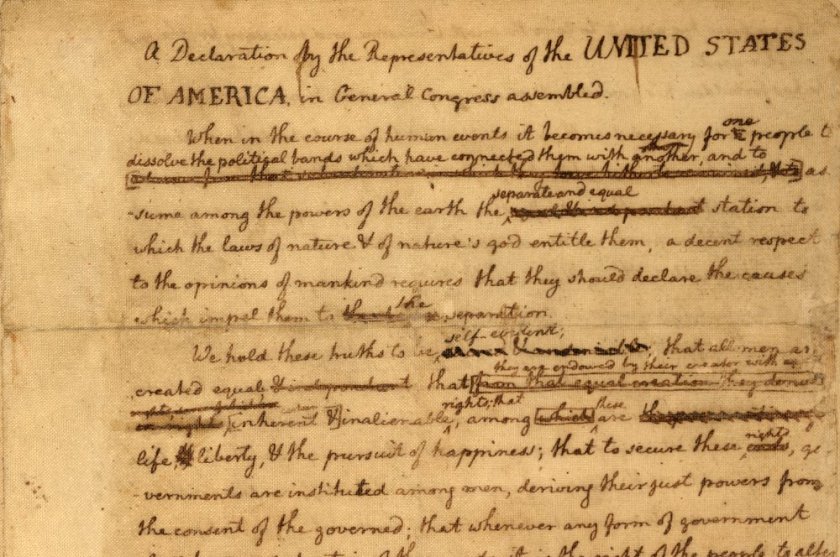



You must be logged in to post a comment.