

France and Great Britain have been allies throughout most of modern history, both in times of war and peace. This wasn’t always the case. From the Norman Invasion of 1066 to the Napoleonic Wars of 1802-1815, England and France have been in a state of war at least forty times. Throughout most of that history, the two sides would clash until one or the other ran out of money, then yet another treaty would be trotted out and signed.
New taxes would be levied to bolster the King’s treasury, and the cycle would begin all over. The change in this cycle which began in the late 17th century can be summed up in a single word: Debt.
In the time of Henry VIII, British military outlays as a percentage of central government expenses averaged 29.4%. By 1694 the Nine Years’ War had left the English Government’s finances in tatters. £1.2 million were borrowed by the national treasury at a rate of 8% from the newly formed Bank of England. The age of national deficit financing, had arrived.
 In one of the earliest known debt issues in history, Prime Minister Henry Pelham converted the entire national debt into consolidated annuities known as “consols”, in 1752. Consols paid interest like regular bonds, with no requirement that the government ever repay the face value. 18th century British debt soared as high as 74.6%, and never dropped below 55%.
The Seven Years’ War alone, fought on a global scale from 1756 to 1763, saw British debt double to the unprecedented sum of £150 million, straining the national economy.
American colonists experienced the conflict in the form of the French and Indian War, for which the Crown laid out £70,000,000. The British government saw its American colonies as beneficiary of their expense, while the tax burden on their colonists remained comparatively light. 
For the colonists, the never ending succession of English wars accustomed them to running their own affairs. The “Townshend Revenue Acts” of 1767 sought to force American colonies to pick up the tab for their own administration, a perfectly reasonable idea in the British mind. The colonists had other ideas. They didn’t object to the amount of taxation as much as whether the British had the right to tax them at all. They were deeply suspicious of the motives behind these new taxes, and were not about to be subjugated by a distant monarch.
The political atmosphere was brittle in 1768, as troops were sent to Boston to enforce the will of the King. Rioters ransacked the home of a newly appointed stamp commissioner, who resigned the post following day. No stamp commissioner was actually tarred and feathered, a barbarity which had been around since the days of Richard III “Lionheart”, though several such incidents occurred at New England seaports. More than a few loyalists were ridden out of town on the backs of mules.
The Massachusetts House of Representatives sent a petition to King George III asking for the repeal of the Townshend Act. A Circular Letter sent to the other colonial assemblies, called for a boycott of merchants importing those goods affected by the act. Lord Hillsborough responded with a letter of his own, instructing colonial governors in America to dissolve those assemblies which responded to the Massachusetts body.
The fifty gun HMS Romney arrived in May. Customs officials seized John Hancock’s “Liberty” the following month, on allegations the sloop had been involved in smuggling. Already agitated over Romney’s captain’s impressment of local sailors, Bostonians began to riot. By October, the first of four regular British army regiments had arrived in Boston.
On February 22, 1770, 11 year old Christopher Seider joined a mob outside the shop of loyalist Theophilus Lillie. Customs official Ebenezer Richardson attempted to disperse the crowd. Soon the mob was outside his North End home. Rocks were thrown and windows broken. One hit Richardson’s wife. Ebenezer Richardson fired into the crowd, striking Christopher Seider. By nightfall, he was dead. 2,000 locals attended the boy’s funeral, the first victim of the American Revolution.
 On March 5, wigmaker’s apprentice Edward Garrick taunted British Captain-Lieutenant John Goldfinch, claiming he had not paid a bill owed to his master. The officer had paid the bill and ignored the insult, but Private Hugh White, on guard outside the State House on King Street, said the boy should be more respectful, striking him with his musket. Garrick’s companion Bartholomew Broaders argued with White, as an angry crowd began to gather.
The shouting mob soon had White backed up to the State House steps, as Officer of the Watch Captain Thomas Preston dispatched a non-commissioned officer and six privates of the 29th Regiment of Foot, bayonets fixed, to back up Private White. The crowd began to throw stones and snowballs. Private Hugh Montgomery was knocked to the ground, and came up shooting. Then they all fired, killing three outright, and wounding six more. Two more lay dying.
Future President John Adams and Josiah Quincy defended the troopers in the following trial, in what would be the first time a judge used the phrase “reasonable doubt.” Two were convicted, but escaped hanging by invoking a medieval legal remnant called “benefit of clergy”. They would be branded on the thumb with “M” for murder. The others were acquitted, leaving both sides complaining of unfair treatment. The only conservative revolution in history, was fewer than six years in the future.
There is a circle of stones in front of the Old State House on what is now State Street, marking the site of the Boston Massacre. British taxpayers continue to this day, to pay interest on the debt left to them, by the decisions of their ancestors.


 Twelve of the original thirteen states ratified these “Articles of Confederation” by February, 1779. Maryland would hold out for another two years, over land claims west of the Ohio River. In 1781, seven months before Cornwallis’ surrender at Yorktown, the 2nd Continental Congress formally ratified the Articles of Confederation. The young nation’s first governing document.
 Philadelphia’s Pennsylvania State House. The building is now known as Independence Hall, the same place where the Declaration of Independence and the Articles of Confederation were drafted.
 The Constitution was signed by 38 of the 41 delegates on September 17, 1787. As dictated by Article VII, the document would not become binding until it was ratified by nine of the 13 states.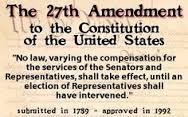


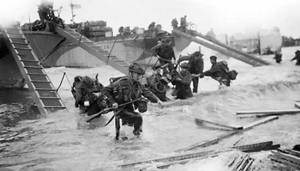
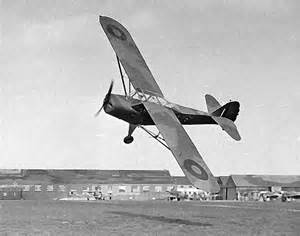
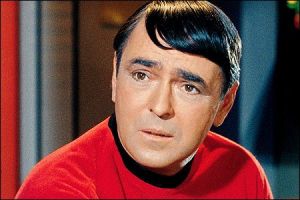
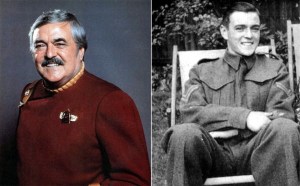 Doohan’s health declined in his later years. He developed Parkinson’s disease and diabetes, along with fibrosis of the lung, blamed on his exposure to noxious chemicals during WWII. He was experiencing symptoms of Alzheimer’s by 2004, though he was able to attend the ceremony held in his honor after receiving a star on the Hollywood Walk of Fame, that August.


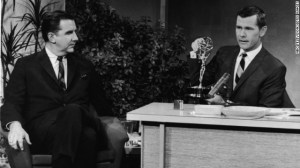
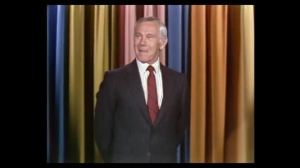
 The Tonight Show Starring Johnny Carson was a late-night fixture through seven US Presidents: John F. Kennedy, Lyndon Johnson, Richard Nixon, Gerald Ford, Jimmy Carter, Ronald Reagan, and George H.W. Bush. Almost every American over the age of 30 will remember “Heeeeeeeeeeere’s Johnny!”. The opening monologue, and the imaginary golf swing. “Carnac the Magnificent”, holding the envelope to his head, reciting the punchline to the joke sealed inside. “Saucepan… Who was Peter Pan’s wino brother?” When the joke bombed, there was the comedic curse. “May a bloated yak change the temperature of your jacuzzi!”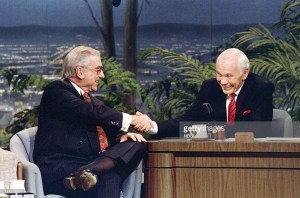


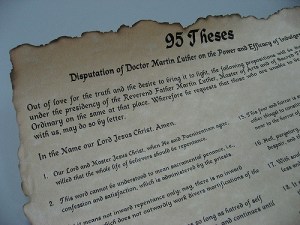
 Martin Luther wrote to Archbishop Albrecht on October 31, 1517, objecting to this sale of indulgences. He enclosed a copy of his “Disputation of Martin Luther on the Power and Efficacy of Indulgences”, a document which came to be known as his “95 Theses”. A popular story has him nailing the document to the door of the Wittenberg Palace Church, but it likely never happened. Luther appears to have had no intention of confronting the Church. This was intended to be an academic work, 95 topics offered for scholarly disputation, but Martin Luther’s ideas would rock the Christian world.
 Luther went into hiding at Wartburg Castle. In 1516, Erasmus had expressed the wish that the holy text should be available in every language, “so that even Scots and Irishmen might read it”. It was there that Luther translated the New Testament from Greek into German, laying the foundation for other vernacular translations and, for the first time, making the bible accessible to the common man.
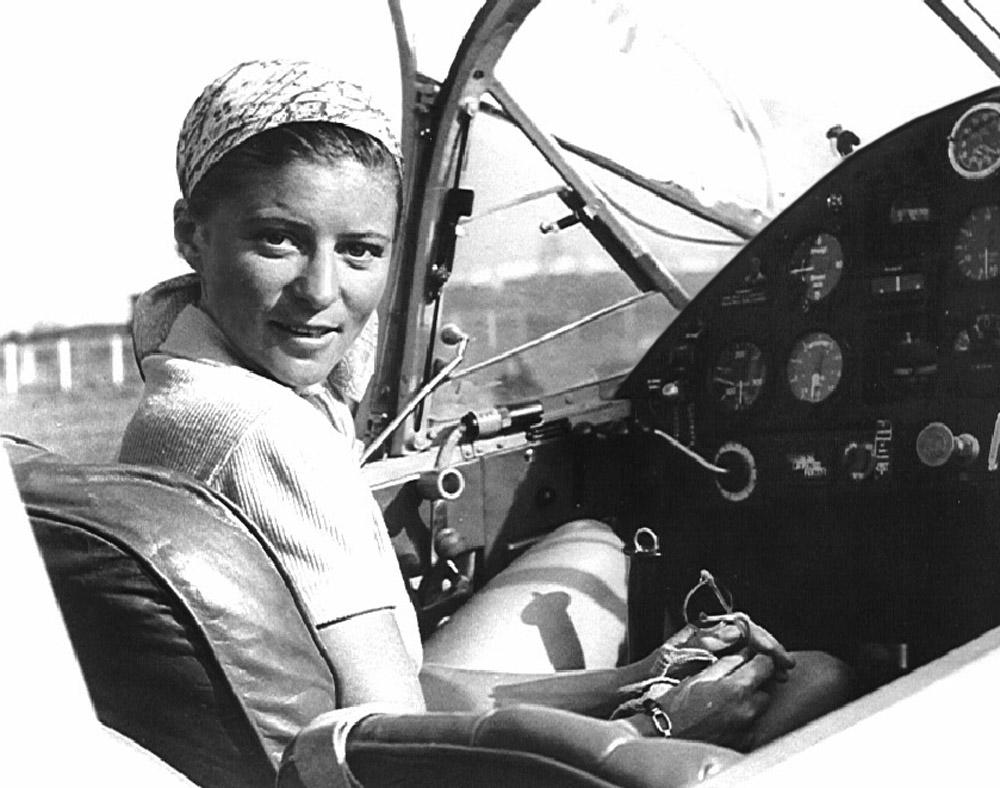
 As a test pilot, Reitsch won an Iron Cross, Second Class, for risking her life trying to cut British barrage-balloon cables. On one test flight of the rocket powered Messerschmitt 163 Komet in 1942, she flew the thing at speeds of 500 mph, a speed nearly unheard of at the time. She spun out of control and crash-landed on her 5th flight, leaving her with severe injuries. Her nose was all but torn off, her skull fractured in four places. Two facial bones were broken, and her upper and lower jaws out of alignment. Even then, she managed to write down what had happened before passing out.
 Gold Medal for Military Flying on this day in 1944. Adolf Hitler personally awarded her an Iron Cross, First Class.


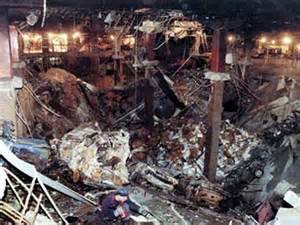
 The plan was to attack the north tower of the World Trade Center in Manhattan, toppling it into the south tower and taking them both down.
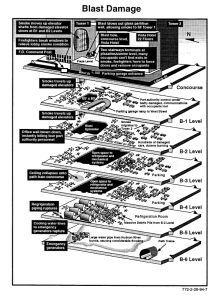 The terrorist device exploded at 12:17:37, hurling super-heated gasses from the blast center at thirteen times the speed of sound. Estimated pressure reached 150,000 psi, equivalent to the weight of 10 bull elephants.


 over the international tableau of the time, there appeared great cause for concern. The largest nation on the planet had just fallen to communism, in 1917.
 Hiss flatly denied Chambers’ charges, filing suit that December for defamation of character. Chambers doubled down in his 1948 deposition, claiming that Hiss was not only a communist sympathizer, he was also a spy.
 Historians John Earl Haynes and Harvey Klehr report that the Venona transcripts tied 349 Americans to Soviet intelligence, though fewer than half have ever been identified. The Office of Strategic Services alone, precursor to the CIA, housed between fifteen and twenty Soviet spies.

 The Soviets attacked ferociously, but Craig let nothing past. Altogether the Soviet team made 39 shots on goal to the Americans’ 16, but the score held.


You must be logged in to post a comment.