The Hundred Years’ War began as a succession dispute over the French throne, with an alliance of Burgundians and English on one side, against a coalition of Royalists led by the Armagnacs on the other.
Europe was not far removed from the latest outbreak of the Black Death at this time, as the scorched earth tactics employed by the English army laid waste to the countryside and devastated the French economy.
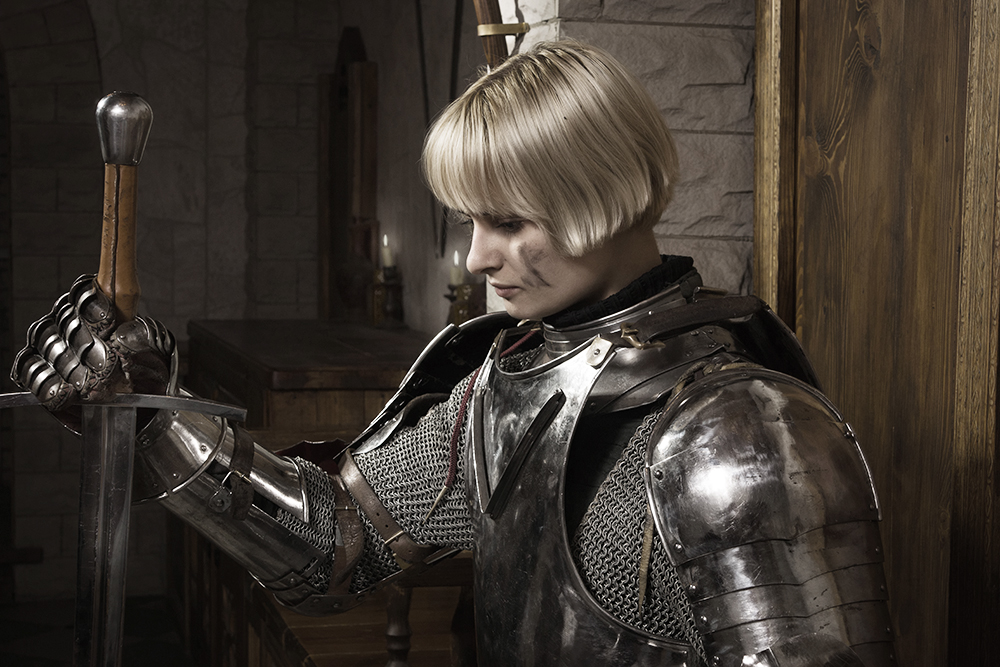
Charles, Dauphin and heir apparent to the French throne was up against a wall, when a teenage peasant girl approached him in 1429.
 For the 14-year-old boy-king, even listening to her was an act of desperation, borne of years of humiliating defeats at the hands of the English army. Yet this illiterate peasant girl had made some uncanny predictions concerning battlefield successes. Now she claimed to have had visions from God and the Saints, commanding her to help him gain the throne. Her name was Jeanne d’Arc.
The siege of Orléans was six months old at this time, when the Dauphin decided it couldn’t hurt to let her take part. She dressed herself in borrowed armor and set out, arriving on the 29th of April, 1429.
History has repeatedly demonstrated the truth of Taylor Owen’s comment on the subject of leadership: “An army of donkeys led by a lion is better than an army of lions led by a donkey.” So it was in the days after Jeanne’s arrival at Orléans.
Though repeatedly excluded from war councils, Jeanne managed to insert herself anyway, putting the French back on the offensive and handing them one victory after another.
Nine days after her arrival, Orléans turned into an unexpected victory for the French, despite Jeanne’s being shot through the neck and left shoulder by an English longbow, while holding a ladder at the siege of Tourelles. The Dauphin granted her co-command of the army with Duke John II of Alençon. The French army enjoyed a string of successes, recovering Jargeau on June 12, Meung-sur-Loire on the 15th, and Beaugency two days later, leading to a humiliating English defeat at the battle at Patay on the 18th.
Several more Armagnac victories followed. On July 17, 1429, Charles was consecrated King Charles VII of France, fifth King of the House of Valois, with Jeanne at his side. Despite her loyalty, Charles’ support began to waver. Court favorite Georges de La Trémoille had convinced the king that she was becoming too powerful. An archer pulled Jeanne from her horse during the siege of 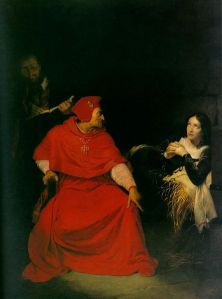 Compiègne in May, 1430, and her allies failed to come to her aid. Left outside the town’s gates when they closed, she was captured and taken to the castle of Bouvreuil.
Some 70 charges were made against her by the pro-English Bishop of Beauvais, Pierre Cauchon, including witchcraft, heresy, and dressing like a man.
Representatives of the judge were dispatched to Jeanne’s home village of Domremy, to ascertain the prisoner’s virginity, character, habits and associations. Nicolas Bailly, the man responsible for collecting testimony, reported that he “had found nothing concerning Joan that he would not have liked to find about his own sister”. This Bishop Cauchon must have been some piece of work. The report so angered the man, that he called Bailly “a traitor and a bad man” and refused to pay him for his work.
Jean Le Maistre, whose presence as Vice-Inquisitor for Rouen was required by canon law, objected to the proceedings and refused to appear, until the English threatened his life.
Interrogation of the prisoner began on February 21, 1431. The outcome was never in doubt. Transcripts were falsified and witnesses intimidated. Even then, trial records reveal this illiterate peasant girl to be brighter than all her inquisitors, combined.
One example from her third interrogation, was the Question: “Do you know whether or not you are in God’s grace?”. The question was a trap. Church doctrine stated that no one could be certain of being in God’s grace, yet a “no” answer would have been held against her. “If I am not”, she said, “may God put me there; and if I am, may God so keep me. I should be the saddest creature in the world if I knew I were not in His grace.”
After fifteen such interrogations her inquisitors still had nothing on her, save for the wearing of soldier’s garb, and her visions. Yet, the outcome of her “trial” was already determined. She was found guilty of heresy, and sentenced to be burned at the stake. On May 24, Jeanne was taken to a scaffold. Threatened that she would be immediately burned alive if she didn’t disavow her visions and abjure the wearing of soldier’s clothing, Jeanne agreed to sign such an abjuration, but recanted four days later.
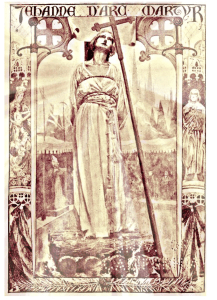 The death sentence was carried out on May 30, 1431, in the old marketplace at Rouen. She was 19. After she died, the coals were raked back to expose her charred body. No one would be able to claim she’d escaped alive. Her body was then burned twice more, so no one could collect the relics. Her ashes were then cast into a river.
Guillaume Manchon, one of the court scribes, later recalled: “And she was then dressed in male clothing, and was complaining that she could not give it up, fearing lest in the night her guards would inflict some act of [sexual] outrage upon her; and she had complained once or twice to the Bishop of Beauvais, the Vice-Inquisitor, and Master Nicholas Loiseleur that one of the aforesaid guards had tried to rape her.”
Her executioner, Geoffroy Therage, later said that he “Greatly feared to be damned”.
An inquisitorial court authorized by Pope Calixtus III re-examined the evidence, 25 years later. The court exonerated her of all charges, pronouncing her innocent on July 7, 1456, and later declaring her a martyr.
A National Heroine to the French, Joan of Arc was canonized a saint of the Roman Catholic Church, in 1920. It was small consolation for this child who had been set up for a fall by her enemies, and abandoned to be incinerated alive, by her friends.
Sharing Today in History:

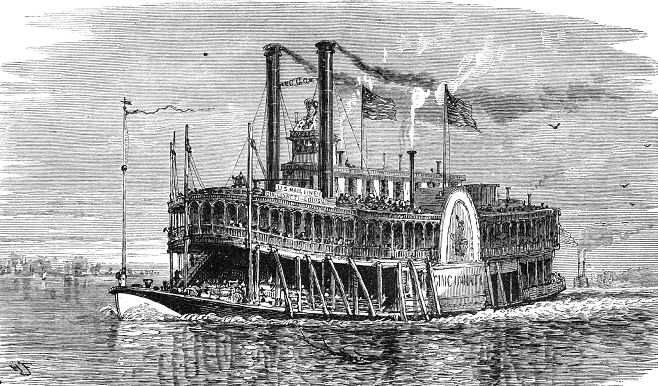
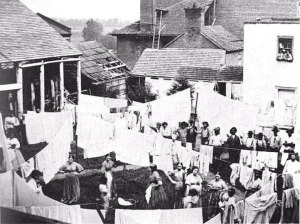
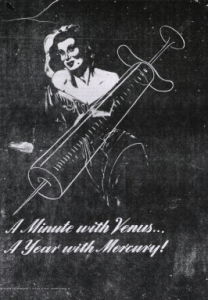 Spalding, Provost Marshal of Nashville, to get rid of them. Though a Catholic, “Old Rosy’s” objection wasn’t based on moral grounds. He was afraid of disease. 8.2% of all Union soldiers were afflicted with syphilis or gonorrhea in 1862, over half the battle casualty rate of 17.5% Venereal disease was a major problem, and the only available treatments at the time involved mercury. Without getting into details, that could take a man out for weeks. Advanced cases were nothing short of grotesque.


 For newly divorced paramedic Susette Kelo, the house overlooking the Fort Trumbull waterfront was the home of her dreams. Long abandoned and overgrown with vines, the little Victorian cottage needed a lot of work, but where else would she ever find a waterfront view at this asking price? It was 1997, about the same time that Connecticut and New London politicians resurrected the long-dormant New London Development Corporation (NLDC), charging it with developing a plan to revitalize the New London waterfront.
 harassment of the reluctant ones, including late-night phone calls, waste dumped on property, and tenants locked out of apartments during cold winter weather.
 District Court, with Susette Kelo lead plaintiff, “split the baby”, ruling that 11 out of 15 takings were illegal and unconstitutional. At that point it wasn’t good enough for the seven homeowners. They had been through too much. All of them would stay, or they would all go.
 In the end, most of the homes were destroyed or relocated. State and city governments spent $78 million and bulldozed 70 acres. The 3,169 new jobs and the $1.2 million in new tax revenue anticipated from the waterfront project, never materialized. Pfizer backed out of the project and moved away, taking 1,500 existing jobs with them. Just about the time when existing tax breaks were set to expire, raising the company’s tax bill by 400%.


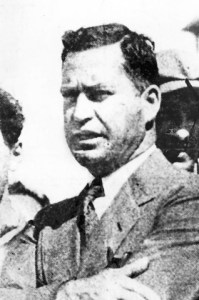 and joined a law firm. Operating dog tracks in Chicago, Boston and Miami, O’Hare made a considerable fortune working for Owen Smith, the high commissioner for the International Greyhound Racing Association, who patented the mechanical rabbit used in dog racing. EJ and Selma Anna (Lauth) O’Hare had three children between 1914 and 1924, – Edward (“Butch”), Patricia, and Marilyn.
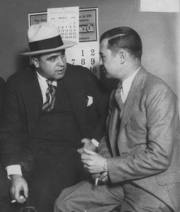 EJ and Selma divorced in 1927. He left St. Louis for good, moving to Chicago while Butch attended WMA. It was there that the elder O’Hare met Al Capone, later earning his second fortune working as the gangster’s business manager and lawyer.
 eligible for early release in 1939 due to syphilitic dementia. On November 8 of that year, EJ left his office at Sportsman’s Park racetrack in Cicero in his black ’39 Lincoln Zephyr. Two shotgun wielding gunmen pulled alongside, firing a volley of big game slugs and killing O’Hare, instantly. No arrest was ever made.
 It was February 20, 1942, when Butch O’Hare became the first American flying Ace of WWII. The carrier Lexington was discovered by Japanese reconnaissance aircraft, 450 miles outside of Rabaul. Six Grumman F4F Wildcat fighters and Lexington’s anti-aircraft guns were engaged with an incoming formation of nine Japanese bombers, when nine more bombers were reported incoming.
 34 seconds. What followed was so close to the Lexington, that pilots could hear the carrier’s AA guns. Full throttle and diving from the high side, O’Hare fired short, accurate bursts, the outermost bomber’s right-hand engine literally jumping from its mount. Ducking to the other side and smashing the port engine on another “Betty”, O’Hare’s Wildcat attacked one bomber after another, single handedly taking out five bombers with an average of only 60 rounds apiece.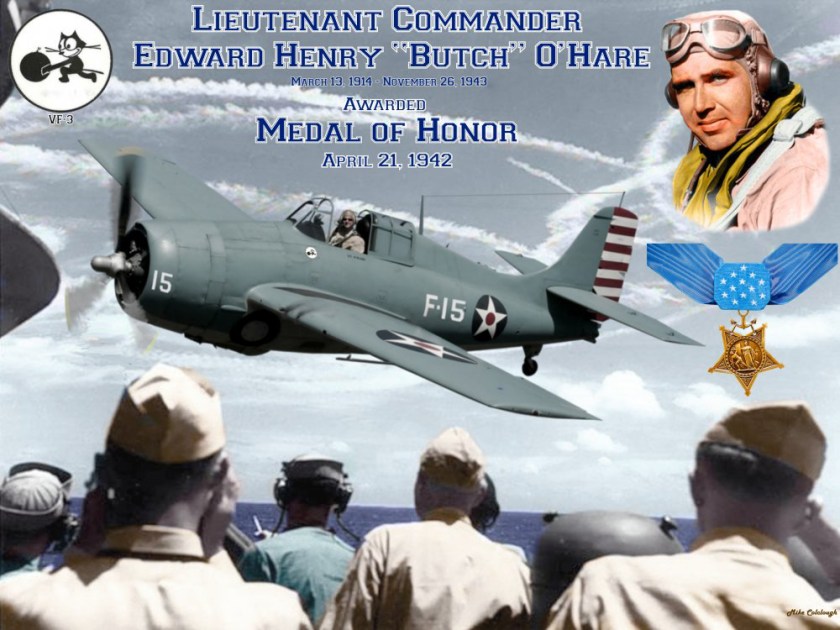



 Burr blamed Hamilton for his defeat, challenging him to a duel over comments made during the election. Dueling was illegal at this time but enforcement was comparatively lax in New Jersey. The pair rowed across the Hudson River with their “seconds”, meeting at the waterfront town of Weehawken, New Jersey. It was July 11, 1804. Hamilton “threw away” his shot, firing into the air. Aaron Burr shot to kill.


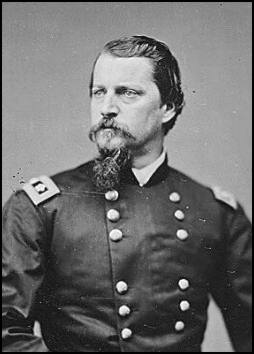
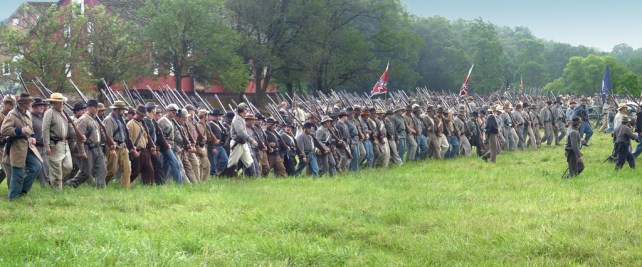
 help a sense of relief as you step across a low spot and your objective, the “copse of trees”, drops out of sight. If you can’t see them they can’t shoot at you. Then you look to your right and realize that cannon would be firing down the length of your lines from Little Round Top, as would those on Cemetery Hill to your left. Rising out of the draw you are now in full sight of Union infantry. You quicken your pace as your lines are torn apart from the front and sides. Fences hold in some spots along the Emmitsburg Road. Hundreds of your comrades are shot down in the attempt to climb over.
 The “High tide of the Confederacy” marks the point between the corner of a stone wall and that copse of trees, the farthest the shattered remnants of Longstreet’s assault would ever get. Lewis Armistead made it over that wall before being shot down, falling beside the wheels of a Union cannon.


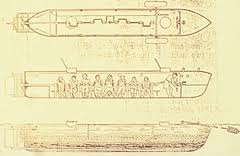 build a secret Super Weapon for the Confederacy. A submarine. They completed construction on their first effort, the “Pioneer”, that same year in New Orleans. The trio went on to build two more submarines in Mobile, Alabama, the “American Diver”, and their last and most successful creation, the “Fishboat”, later renamed HL Hunley.
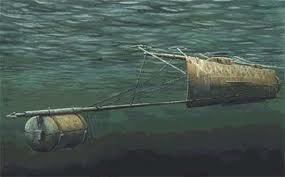 The original plan was to tow a floating mine called a “torpedo”, with a contact fuse. They would dive beneath their victim and surface on the other side, pulling the torpedo into the side of the target.

 Charleston Navy Yard, and submerged in 55,000 gallons of chilled, fresh water, where scientists and historians worked on unlocking its secrets.


 into Western Europe at the Battle of Tours, in 732.


 A funeral may be for a young military service member killed in the wars in Iraq or Afghanistan, or a veteran of Korea or WWII, who spent his last days in the old soldier’s home. It could be a four-star General or a Private. It doesn’t matter.


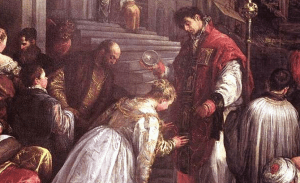 He was condemned to be beaten to death with clubs and beheaded, the sentence carried out on February 14, 269.
 13-15 in honor of the goddess Februata Juno. Greek historian Plutarch described the occasion as follows: “Lupercalia, [when] many of the noble youths and of the magistrates run up and down through the city naked, for sport and laughter striking those they meet with shaggy thongs. And many women of rank also purposely get in their way, and like children at school present their hands to be struck, believing that the pregnant will thus be helped in delivery, and the barren to pregnancy.”
 on November 3, or maybe you’d like to get a head start with St. Valentine of Raetia on January 7. Maybe you’d prefer the only female St. Valentine (Valentina), a virgin martyred in Palestine on July 25, A.D. 308.


You must be logged in to post a comment.