September 4, 1886 Geronimo

Much has been written of the conflicts between Natives and American settlers.  That story has little to compare with the level of distrust and mutual butchery, which took place between the Spanish colonists to the North American continent, and the migratory bands of native Americans, known as Apache.

Much has been written of the conflicts between Natives and American settlers.  That story has little to compare with the level of distrust and mutual butchery, which took place between the Spanish colonists to the North American continent, and the migratory bands of native Americans, known as Apache.

First contact between the Crown of Castile and the roving bands of Apache they called Querechos, took place in the Texas panhandle, in 1541.

Relations were friendly for a time, but 17th century Spanish slave raids were met by Apache attacks on Spanish and Pueblo settlements in the province of Santa Fe de Nuevo México in the viceroyalty of New Spain.

Geronimo, younger

By 1685, several bands of Apache were in open conflict with the polity which, in 1821, would become known as Los Estados Unidos de Mexico.  The United States of Mexico. Attacks and counter attacks were commonplace, as Presidios – Spanish fortresses – dotted the landscape of Sonora, Chihuahua and Fronteras. 5,000 Mexicans died in Apache raids between 1820 and 1835 alone.

On June 16, 1829, a child was born to the Chiricahua Apache, in the Mexican-occupied territory of Bedonkoheland, in modern-day New Mexico. One of eight brothers and sisters, the boy was called by the singularly forgettable name of “Goyahkla”, translating as “one who yawns”.

Over 100 Mexican settlements were destroyed in that time. The Mexican government placed a bounty on Apache scalps in 1835, the year in which Goyahkla turned 6.

In his seventeenth year, Goyahkla married Alope of the Nedni-Chiricahua band of Apache. Together the couple had three children.

01f/17/arve/g2061/052

On March 6, 1858, a company of 400 Mexican soldiers led by Colonel Jose Maria Carrasco attacked the native camp as the men were in town, trading. Goyahkla came back to find his wife, children, and his mother, murdered.

He swore that he would hate the Mexicans for the rest of his life.

Chief Mangas Coloradas sent Goyahkla to Cochise’ band to help exact retribution on the Mexicans. It was here that the young man earned a name that was anything but forgettable.

Ignoring the hail of bullets, he repeatedly attacked the soldiers with a knife, killing so many that they began to call out to Saint Jerome for protection. The Spanish name for the 4th century Saint was often the last word to leave their lips: “Geronimo”.

Geronimo Portrait

Geronimo would marry eight more times, but most of his life was spent at war with Mexico, and later with the United States. According to National Geographic, he and his band of 16 warriors slaughtered 500 to 600 Mexicans in their last five months alone.

Geronimo_in_a_1905_Locomobile_Model_CGeronimo and his band of 38 men, women and children evaded thousands of Mexican and US soldiers. By the end of his military career, he was “the worst Indian who ever lived”, according to the white settlers.  Geronimo was captured on this day in 1886, by Civil War veteran and Westminster, Massachusetts native, General Nelson Miles. With the capture of Geronimo, the last of the major US-Indian wars had come to an end.

Geronimo in old ageGeronimo became a celebrity in his old age, marching in Theodore Roosevelt’s inaugural parade in 1905. He converted to Christianity and appeared in county fairs and Wild West shows around the country.

In his 1909 memoirs, Geronimo wrote of the 1904 St. Louis World’s Fair: “I am glad I went to the Fair. I saw many interesting things and learned much of the white people. They are a very kind and peaceful people. During all the time I was at the Fair no one tried to harm me in any way. Had this been among the Mexicans I am sure I should have been compelled to defend myself often”.

In February 1909, Geronimo was thrown from a horse and contracted pneumonia following a long, cold night lying injured, on the ground. On his deathbed, he confessed that he regretted his decision to surrender. Geronimo’s last known words were spoken to his nephew, when he said “I should have never surrendered.  I should have fought until I was the last man alive”.

If you enjoyed this “Today in History”, please feel free to re-blog, “like” & share on social media, so that others may find and enjoy it as well. Please click the “follow” button on the right, to receive email updates on new articles.  Thank you for your interest, in the history we all share.

September 3, 1752 The Day that Never Was

When you went to bed last night, it was September 2.  This morning when you got up, it was September 14.  The days in-between just ‘disappeared’. 

Had you lived in England 266 years ago, or one of her American colonies, this day did not exist.  Neither, for that matter, did the better part of the next two weeks.  When you went to bed last night, it was September 2.  This morning when you got up, it was September 14.  The days in-between just ‘disappeared’.

The reason goes back nearly two thousand years.

For seven hundred years, the Roman calendar attempted to follow the cycles of the moon. The method frequently fell out of phase with the change of seasons, requiring the random addition of days. The Pontifices, the Roman body charged with overseeing the calendar, made matters worse. The body was known to add days to extend political terms, and to interfere with elections. Military campaigns were won or lost due to confusion over dates. By the time of Julius Caesar, things needed to change.

Museo_del_Teatro_Romano_de_Caesaraugusta.43

When Caesar went to Egypt in 48BC, he was impressed with the way they handled their calendar. Ol’ Julius hired the Alexandrian astronomer Sosigenes to help straighten things out. The astronomer calculated that a proper year was 365¼ days,  more accurately tracking the solar, rather than the lunar year. “Do like the Egyptians”, he might have said.  The new “Julian” calendar went into effect in 46BC.

The problem was, that ¼-day.  The Julian calendar miscalculated the solar cycle by 11 minutes per year, resulting in a built-in error of a day for every 128 years. By the late 16th century, the seasonal equinoxes were ten days out of sync, causing a problem with the holiest days of the Catholic church.

In 1579, Pope Gregory XIII commissioned the Jesuit mathematician and astronomer Christopher Clavius, to devise a new calendar and correct this “drift”. The “Gregorian” calendar was adopted in 1582, omitting ten days that October, and changing the manner in which “leap” years were calculated.

prague-clock.jpg

The Catholic countries such as Italy, Portugal and Spain were quick to adopt the Gregorian calendar, and much of western Europe, followed suit. England and its overseas colonies continued to use the Julian calendar well into the 18th century, resulting in immense confusion. Legal contracts, civic calendars, and the payments of rents and taxes were all complicated by the two calendar system.

Between 1582 and 1752, some English and colonial records included both “Old Style” and “New Style” year. The system was known as “double dating”, and resulted in date notations such as March 19, 1602/3. Others merely changed dates.

Perform a keyword search on “George Washington’s birthday” for instance, and you’ll be rewarded with the information that the father of our country was born on February 22, 1732. The man was actually born on February 11, 1731, under the Julian Calendar. It was only after 1752 that Washington himself recognized the date of his birth as February 22, 1732, reflecting the adoption of the Gregorian Calendar.

Tragically, the number of historians’ and geneologists’ heads to have exploded over the difference, remains uncertain.

virginia-almanack-1752The “Calendar Act of 1750” set out a two-step process for adopting the Gregorian calendar. Since the Roman calendar began on March 25, the year 1751 was to have only 282 days so that January 1 could be synchronized with that date. That left 11 days to deal with.

Thus it was decreed that Wednesday, September 2, 1782, would be followed by Thursday, September 14.

You can read about “calendar riots” around this time, though those appear to be little more than a late Georgian-era urban myth.  Philip Stanhope, 4th Earl of Chesterfield, was a prime sponsor of the calendar measure. Stanhope’s use of the term “Mobs” was probably a description of the bill’s opponents, in Parliament.

Even so, some genuinely believed that their lives were being shortened by those 11 days, and others who considered the Gregorian calendar to be a “Popish Plot”. The subject would become a very real campaign issue between the Tories and the Whigs, in 1754.

There’s a story concerning one William Willett, who lived in Endon. Willett wagered that he could dance non-stop for 12 days and 12 nights, starting his jig about town the evening of September 2nd, 1752. Willett stopped the next morning, and went out to collect his bets. I was unable to determine, how many actually paid up.

The official beginning of the British tax year was changed in 1753, so as not to “lose” those 11 days of revenue. Revolution was still 23 years away in the American colonies, but the reaction “across the pond”, could not have been one of unbridled joy.

ben franklinBenjamin Franklin seems to have liked the idea, writing that, “It is pleasant for an old man to be able to go to bed on September 2, and not have to get up until September 14.

The Gregorian calendar gets ahead of the solar cycle by 26 seconds every year, despite some very clever methods of synchronizing the two cycles. Several hours have already been added but the issue will have to be dealt with, around the year 4909.

I wonder how Mr. Franklin would feel, to wake up and find that it’s still yesterday.

If you enjoyed this “Today in History”, please feel free to re-blog, “like” & share on social media, so that others may find and enjoy it as well. Please click the “follow” button on the right, to receive email updates on new articles.  Thank you for your interest, in the history we all share.

September 2, 1945 Unit 731

To perform even the most cursory examination of WW2 is to walk among a catalog of atrocities, unimaginable to the modern reader. As if the very nightmare pits of hell had opened and unleashed horrors, unthinkable even to the blackest visions of the perverted and depraved. A true reckoning of the horrors of that war, is capable of producing psychological damage.

As Western historians tell the tale of WW2, the deadliest conflict in history began in September 1939, with the Nazi invasion of Poland. The United States joined the conflagration two years later, following the sneak attack on the American Naval anchorage at Pearl Harbor, by naval air forces of the Empire of Japan.

To perform even the most cursory examination of WW2 is to walk among a catalog of atrocities, unimaginable to the modern reader. As if the very nightmare pits of hell had opened and unleashed horrors, unthinkable even to the blackest visions of the perverted and depraved. A true reckoning of the horrors of that war, is capable of producing psychological damage.

auschwits-birkenau
Auschwitz-Birkenau

The mountains of gold teeth, of eyeglasses and hair and children’s shoes, testify in mute witness to the systematic extermination of eleven million souls in the gas chambers and ovens of the “Master Race”.  The Untermenschen:  The Jews.  The Roma (“gypsies”).  The physically and mentally disabled.  The Poles and other Slavic races, Jehovah‘s Witnesses, homosexuals, and members of political opposition groups.

Mass graves and savage reprisals by Nazi death squads for the imaginary “collective guilt” of civil populations. The vicious brutality inflicted upon the diseased and starving captives of the countless prison camps, of the “Greater East Asia Co-Prosperity Sphere“.

JapanesePowCamps-WWII-front
“Imperial Japanese-run prisoner-of-war camps within the Greater East Asia Co-Prosperity Sphere known during World War II from 1941 to 1945”. H/T Wikipedia

The tales are widely told and deservedly so.  Never should such atrocities be forgotten, any more than the cataclysmic fire bombing campaigns of entire cities, nor the nuclear annihilation which brought this whole ghastly conflagration, to a close.

Yet, of 100 randomly selected adults, how many are aware of “Unit 731″ and the other “medical experimentation” centers of the Kempetai, possibly the most hideous episode in this entire parade of horribles?

Shiro-ishii
General Shirō Ishii, Commandant of Unit 731

In the East, the war which began in 1939 dates back to 1931, and the Japanese invasion of Manchuria beginning on September 18.

The invasion followed the Mukden incident, an entirely staged “false flag” operation and bald pretext to war, carried out by Japanese military personnel and identical in purpose, to that carried out against Poland by Nazi aggressors eight years later, almost to the day.

The puppet state of Manchukuo now joined most of the Korean peninsula under Japanese subjugation.  This and subsequent invasions and the famine and civil wars which ensued, killed more people during this eight-year period, than the modern populations of Canada and Australia.  Combined.

The covert biological and chemical warfare research program conducted by Unit 731 began operations two years before the European war, during the “second Sino-Japanese War” of 1937-’45. Originally set up by the Kempeitai military police arm of the Imperial Japanese army, Unit 731 was taken over and commanded until the end of the war by General Shirō Ishii, a combat medic officer of the Kwantung Army.

Thousands of so-called “logs” (“Maruta”, in Japanese) were brought through the 150 buildings comprising Unit 731, and smaller facilities known as Unit 100 and Unit 516.  They were men, women and children, captives subjected to unspeakable acts of barbarity, in the name of medical “science”.   70% of Unit 731’s victims were ethnic Chinese, but the list includes Soviet, Mongolian and Korean nationals and possibly European, American and Australian POWs, as well.

unit-731-frostbite
Frostbite “experiment”

One example of the work there, is physiologist Yoshimura Hisato’s interest in hypothermia. The arms and legs of prisoners were submerged in ice or exposed to sub-zero winter cold until frozen solid, with ice accumulated on skin. Limbs were judged “ready” when they made a sound like a wooden board, when struck with a cane. Re-warming methods were carried out, from exposure to open fire to dousing in hot water. Sometimes the subject was simply left alone, to see how long a person’s own blood took to warm up the now-destroyed limbs.

germ-warfare
“Japanese personnel in protective suits carry a stretcher through Yiwu, China during Unit 731’s germ warfare tests. June 1942”. H/T allthatsinteresting.com

Human beings were intentionally infected with diseases such as cholera, anthrax or venereal disease, or nerve, chemical and biological warfare agents of every description. Then, as always, the live dissections, and examination of the prisoner’s organs.

unit-731-germs
“Germ” warfare experiment, being carried out at Unit 731

Female prisoners were subjected to rape and forced pregnancy, to test the “vertical transmission” of all of it, from mother to child.

Unit 731 museum
Unit 731 Museum, Harbin. “A permanent lab of the Troop No.731 to research the formation, therapy and prevention of frostbite. Before 1939, the troop did frostbite experiments generally in the fields.” Credit Samuel Kim, China Chronicles

Such “medical experiments” were carried out with no regard for the subjects’ survival.  In fact, live dissections were performed on fully aware and un-anesthetized victims, unless they were merely buried alive.  Such humane measures as unconsciousness, were thought to skew the “data”.  Not a single prisoner assigned to Unit 731, survived.  Not one.

Photographs may be found on-line if you wish, of the vivisection of live and fully conscious human beings.  I didn’t go there.   The images I decided to show, are bad enough.

Unit 731 prisoners were herded together onto firing ranges, to measure the damage done by weapons from swords to the Nambu 8mm pistol, to machine guns or bayonets and grenades.  Even flame throwers.

Bubonic plague-infected fleas were bred in laboratories at Unit 731 and Unit 1644, and spread by low flying aircraft in the coastal city of Ningbo and Changde in the Province of Hunan. Chinese civilians killed in outbreaks of bubonic plague, number thirty thousand or more.

children-researchers
“Unit 731 researchers conduct bacteriological experiments with captive child subjects in Nongan County of northeast China’s Jilin Province. November 1940”. H/T allthatsinteresting.com

Throughout the eight years of its existence, 1937 -1945, Unit 731 and its counterparts received generous support from the Japanese government.

On this day in 1945, Representatives of the Imperial Japanese government signed the formal instrument of surrender aboard the “Mighty Mo”, the Iowa-class battleship USS Missouri, ending World War 2 in the Pacific.

douglas-macarthur-and-hsu-yungchang-P
September 2, 1945

After the war, Unit 731 records were burned and researchers resumed civilian lives, as if nothing had happened. Many went back to faculty positions. Like “Operation Paperclip”, the combined British – American effort to scour the German talent pool for scientists and technicians of every sort, Japanese researchers were given immunity from prosecution, in exchange for what they knew.

Shirō Ishii was arrested by US occupation authorities after the war, and managed to negotiate immunity, in exchange for their full disclosure of germ warfare data based on human experimentation. On May 6 1947, General Douglas MacArthur wrote to Washington that “additional data, possibly some statements from Ishii probably can be obtained by informing Japanese involved that information will be retained in intelligence channels and will not be employed as ‘War Crimes’ evidence.”

After that, Ishii all but stepped off the pages of history.

Building_on_the_site_of_the_Harbin_bioweapon_facility_of_Unit_731
Today, the former Unit 731 bioweapon facility at Harbin is open to the public, as a war crimes museum

Cambridge University history lecturer Richard Drayton claims that he showed up in Maryland, to advise on bioweapons. Some sources place him on the Korean peninsula in 1951, still others claim he never left Japan where he died of throat cancer, at the age of 67.

In April of this year, the National Archives of Japan disclosed for the first time, a full list of the 3,607 people who worked for Unit 731. The Japanese government has yet to apologize for its acts of barbarity, nor is it likely to, anytime soon.  No more than the government in China, is likely to forget.

harbin-facility
Unit 731 facility, in Harbin

September 1, 911 We Are Not Amused

In that moment, the personal dignity of the King of France, ceased to exist. The Duchy of Normandy, was born.

VictoriaA story comes down to us from the Royal Residence of Queen Victoria, of the hapless attendant who told a spicy story one night, at dinner.  You could have watched the icicles grow, when the Queen of the United Kingdom of Great Britain and Ireland turned and said: “We are not amused“.
The story may be little more than a tale told “out of school”, no better than “a guy told me at the pub…”  Despite the ‘pluralis majestatis’, the ‘Royal We’,  Vicky herself is said to have been an enjoyable companion if not exactly a zany funster. At least in private.

The “Grandmother of Europe” was never given to public displays of mirth. Her lighter side would forever remain, Victoria’s secret.  Yet for the rest of us, some of the Royals of history have been very amusing, indeed.

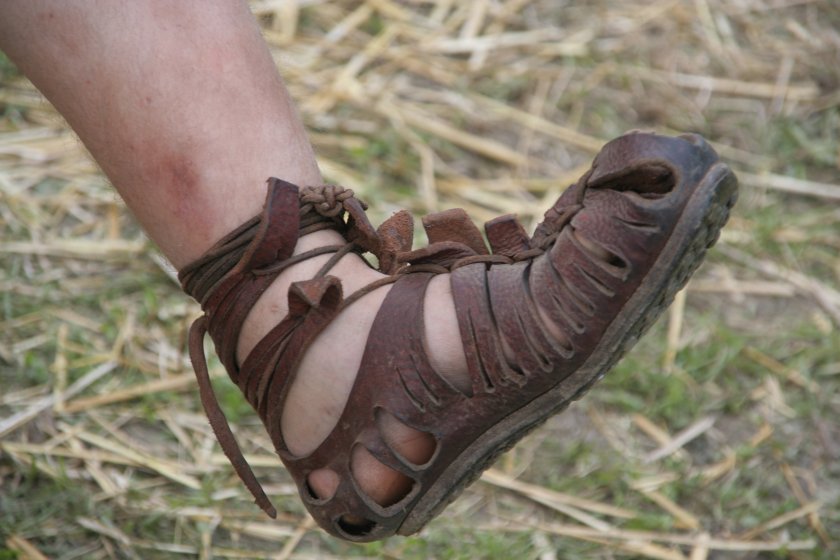
Roman Emperor Caligula (“Little Boots“), so-called for the tiny soldier’s boots, the Caligae, the boy liked to wear on campaign with his father,  famously appointed his horse Incitatus, Consul of Rome.  At least he planned to.   Elagabalus ranked his Imperial cabinet according to the size of his officer’s ummm…well, never mind that.  Charles VI, “the Beloved and the Mad”, King of France from 1380 to 1422, would sit motionless for hours on-end, thinking himself made of glass.

Caligae_from_side
Caligae

Russian Emperor Peter III was married to the formidable Catherine the Great, though all that greatness seems not to have rubbed off on ol’ Pete.  Given as he was to playing with toy soldiers in bed, it’s uncertain whether the Royal Marriage, was ever consummated. A mean drunk and a child in a man’s body, one story contends that Peter held a full court martial followed by a hanging on a tiny gallows of his own construction, for the rat who chewed off the head of one of his precious toy soldiers.

Some contend that the infamous Jack the Ripper, was a member of the Royal family.

The warlike men who sailed their longboats out of the north tormented the coastal United Kingdom and northwestern Europe, since their first appearance at Lindisfarne Monastery in 793.

Lindisfarne Castle Holy Island
Lindisfarne Castle

These “Norsemen”, or “Normans” attacked Paris in early 911. By July they were holding the nearby town of Chartres, under siege. Normans had burned the place to the ground back in 858 and would probably have done so again, but for their defeat at the battle of Chartres, on July 20.

Even in defeat, these men of the North presented a formidable threat. The Frankish King approached them with a solution.

Rollo the Walker
Rollo “The Walker”

King Charles III, known as “Charles the Simple” after his plain, straightforward ways, proposed to give the Normans the region from the English Channel to the river Seine. It would be the Duchy of Normandy, some of the finest farmlands in northwest Europe, and it would be theirs in exchange for an oath of personal loyalty, to Charles himself.

The deal made sense for the King, since he had already bankrupted his treasury, paying these people tribute. And what better way to deal with future Viking raids down the coast, than to make them the Vikings’ own problem?

So it was that the Treaty of Saint-Clair-sur-Epte was concluded on this day in 911, when the Viking Chieftain Rollo pledged feudal allegiance to the King of Western Francia.

Rollo was called “The Walker”, because the man was so huge that no horse could carry him. He must have been some scary character with a two-handed battle axe.

At some point in the proceedings, the Viking chieftain was expected to stoop down and kiss the king’s foot, in token of obeisance. Rollo recognized the symbolic importance of the gesture, but wasn’t about to submit to such degradation, himself.

Rollo motioned to one of his lieutenants, a man almost as enormous as himself, to kiss the foot of the King.  The man shrugged, reached down and lifted King Charles off the ground by his ankle. He kissed the foot, and then tossed the King of the Franks aside.  Like a sack of potatoes.

Treaty of Saint-Clair-sur-Epte

In that moment, the personal dignity of the King of France, ceased to exist. The Duchy of Normandy, was born.

Richard III reigned as King of England from 1483 until his death on August 22, 1485, at the Battle of Bosworth Field. After the battle, the last Plantagenet King was thrown in some anonymous hole in the ground, and forgotten.

For five centuries, Richard’s body was believed to have been thrown into the River soar. In 2012, Richard’s remains were discovered under a parking lot, once occupied by Greyfriars Priory Church.

Mitochondrial DNA, that passed from mother to child, demonstrated beyond the shadow of a doubt that the body was that of King Richard III, the last King of the House of York.

Mitochondrial_DNA
Mitochondrial DNA

But, there was a problem.

The Y-chromosome haplotypes, those passed through the male line, didn’t match the living descendants of the King. The conclusion was inescapable. Somewhere along the Royal line, the chain of paternal DNA was broken. The proverbial “Mailman” had, er, inserted himself, into the family tree.

If true, that de-legitimizes John’s son Henry IV and everyone descended from him, down to the ruling house of Windsor.  Had such a break taken place in more modern times, the paternity of only a few minor Dukes, would be affected.

Professor Kevin Schurer of the University of Leicester, warned: “The first thing we need to get out of the way is that we are not indicating that Her Majesty should not be on the throne. There are 19 links where the chain could have been broken so it is statistically more probable that it happened at a time where it didn’t matter. However, there are parts of the chain which, if broken, could hypothetically affect royalty.”

Without exhuming a whole lot of bodies, there’s no knowing who the illegitimate child was, along those five-hundred years of “Royalty”. Nineteen links in the chain. Suspicion centers on John of Gaunt (1340 – 1399), the alleged son of Edward III, but whose Real father, may have been a Flemish butcher.

I’m not a betting man but if I were, my money’s on those old guys, staying in the ground.

Feature image, top of page:  King Charles VI of France, “the Beloved and the Mad”, by Gillot Saint-Evre

If you enjoyed this “Today in History”, please feel free to re-blog, “like” & share on social media, so that others may find and enjoy it as well. Please click the “follow” button on the right, to receive email updates on new articles.  Thank you for your interest, in the history we all share.

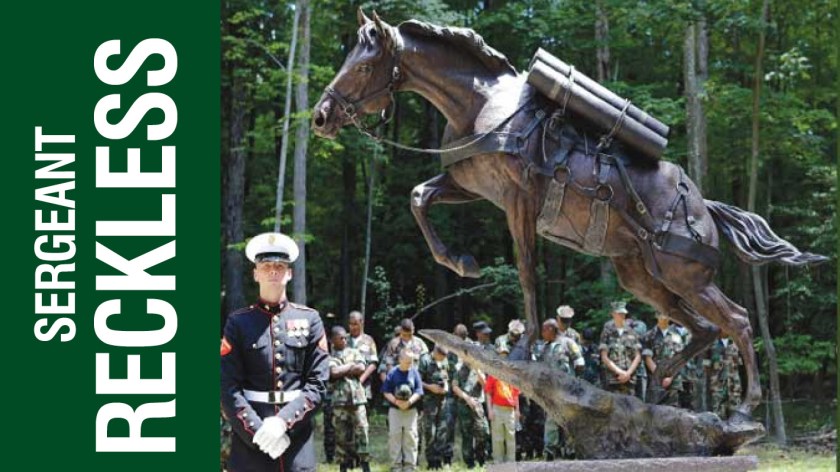
August 31, 1959 Sgt. Reckless

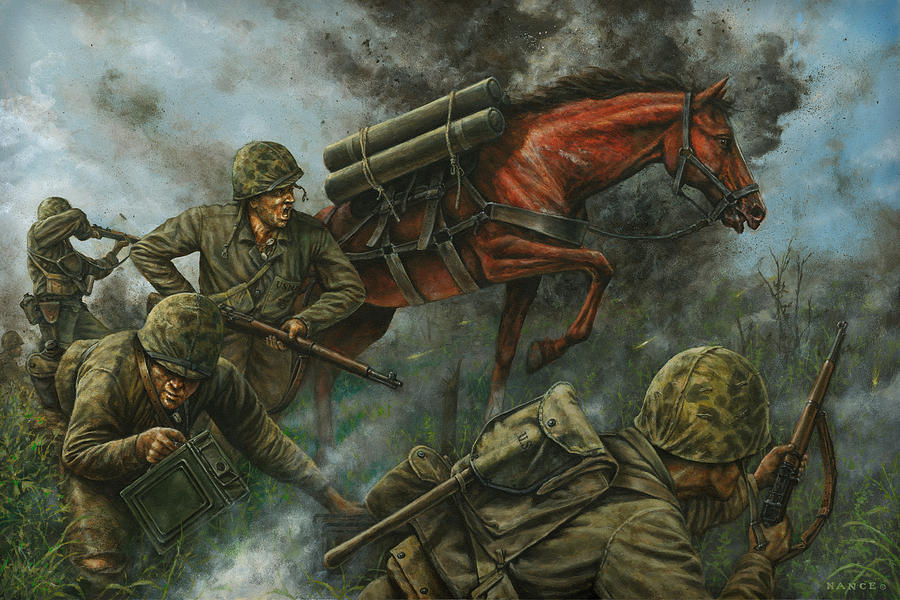
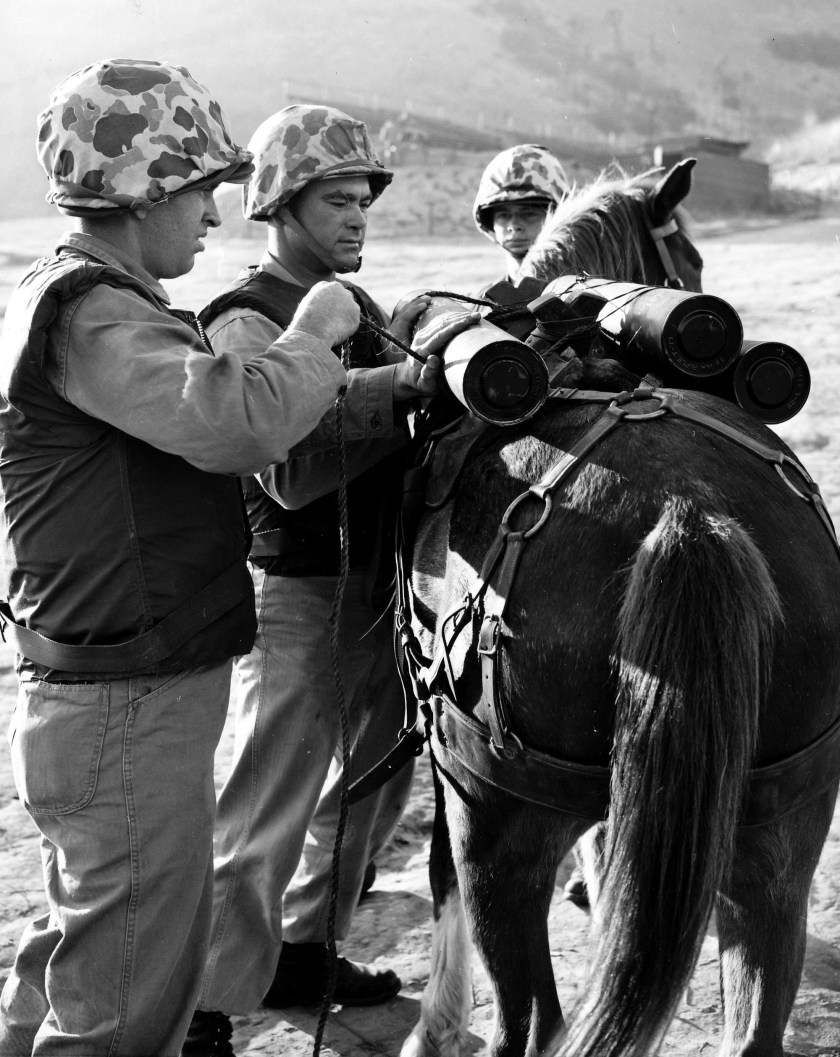
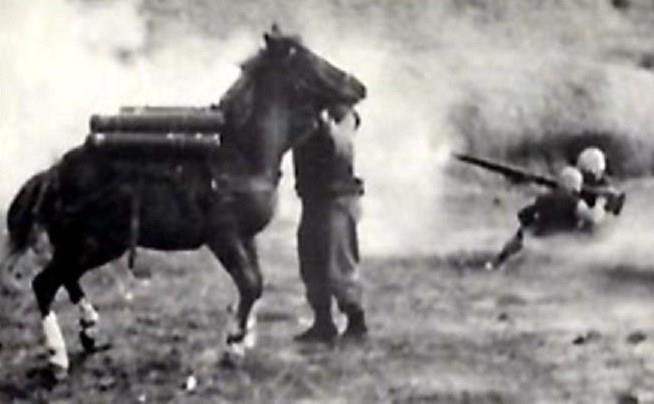
Reckless “went straight up” the first time she heard an RCLR go off, despite being loaded down with six shells. All four feet left the ground and she came down trembling with fear, but Coleman was able to soothe her. The second time she snorted. By the fourth she didn’t bother to look up.  She was happily munching on a discarded helmet liner.

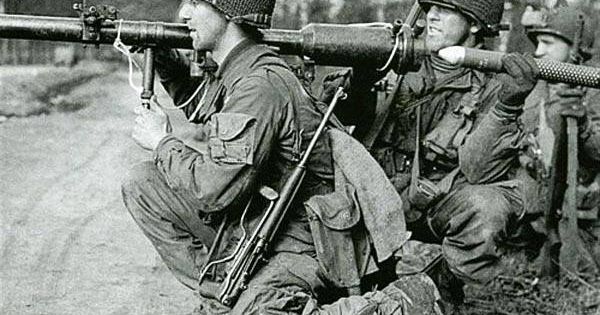
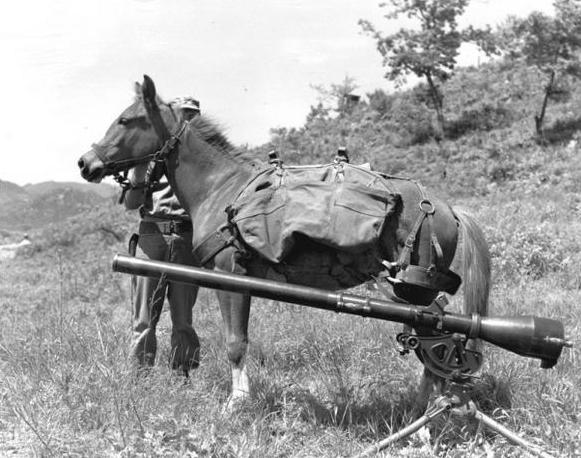
A Recoilless Rifle is a type of lightweight tube artillery. Think of a portable cannon. Kind of a bazooka, really, only the Recoilless fires modified shells rather than rockets. The back blast of these shells compensates for the mule’s kick which would otherwise be expected from such a weapon, making the rifle “recoilless”.

While that reduces projectile range, reduced gas pressures permit a thinner-walled barrel, resulting in a weapon light enough to be served by a 2 to 3-man crew, and shoulder fired by a single infantryman.

5d719499852b439ca042d1937e3727e8

The “RCLR” weapon system has provided the punch of artillery to mobile troop formations since the early days of WWII, including Airborne, Special Forces and Mountain units.

The problem arises when combat operations consume ammunition faster than the supply chain can replace it. Mountainous terrain makes the situation worse. Even today in the more mountainous regions of Afghanistan, there are times when the best solution for the problem, is horsepower.

sgt-reckless

Ah Chim-hai was a chestnut mare of mixed Mongolian and Thoroughbred lineage, a race horse at the track in Seoul, South Korea. Her name translated as “Flame of the Morning”.
Lieutenant Eric Pedersen of the recoilless rifle platoon, anti-tank company of the 5th Marine Regiment, needed a pack animal to carry the weapon’s 24-lb shells up Korean mountain passes. In October 1952, Pederson received permission from regimental commander Colonel Eustace P. Smoak, to buy a horse for his platoon.

Lt. Pederson and stable boy Kim Huk-moon agreed on a price of $250, and Pederson paid with his own money. Kim cried on watching his “Flame” leave the stable, but the sale had a higher purpose.  The boy’s sister had stepped on a land mine, and badly needed a prosthetic leg.

sgt-reckless_PHOTO_D

The Marines called the new recruit “Reckless” – a nod to the weapon system she was meant to serve, and to the fighting spirit of the 5th Marines.

Pederson wrote to his wife in California to send a pack saddle, while Gunnery Sergeant Joseph Latham and Private First Class Monroe Coleman provided for her care and training.

p44-4

Navy Hospitalman First Class George “Doc” Mitchell provided most of Reckless’ medical care, Latham taught her battlefield skills: how to step over communication wires, when to lie down under fire, how to avoid becoming entangled in barbed wire. She learned to run for cover, at the cry “Incoming!”

The platoon built her a bunker and fenced off a pasture, but soon Reckless was allowed to roam freely throughout the camp. She’d enter tents at will, sometimes spending the night if it was cold.

sgt-reckless_PHOTO_D

She’d eat anything: bacon, mashed potatoes, shredded wheat.  She loved scrambled eggs.  Just about anything else that a Marine wasn’t watching closely enough, as well. Reckless even ate her horse blanket once, and she loved a beer. Mitchell had to warn his fellow Marines against giving her more than two Cokes a day, which she’d drink out of a helmet. Once, she ate $30 worth of winning poker chips.

General Randolph McCall Pate, a veteran of Guadalcanal, Iwo Jima and Korea, served as the 21st Commandant of the Marine Corps from 1956 – ’59.  Pate wrote: “I was surprised at her beauty and intelligence, and believe it or not, her esprit de corps. Like any other Marine, she was enjoying a bottle of beer with her comrades. She was constantly the center of attraction and was fully aware of her importance. If she failed to receive the attention she felt her due, she would deliberately walk into a group of Marines and, in effect, enter the conversation. It was obvious the Marines loved her.”  Reckless was a Marine.

eae75db58fc3a2ec2c20c4273d5b9435

Reckless “went straight up” the first time she heard an RCLR go off, despite being loaded down with six shells. All four feet left the ground and she came down trembling with fear, but Coleman was able to soothe her. The second time she snorted. By the fourth she didn’t bother to look up.  She was happily munching on a discarded helmet liner.

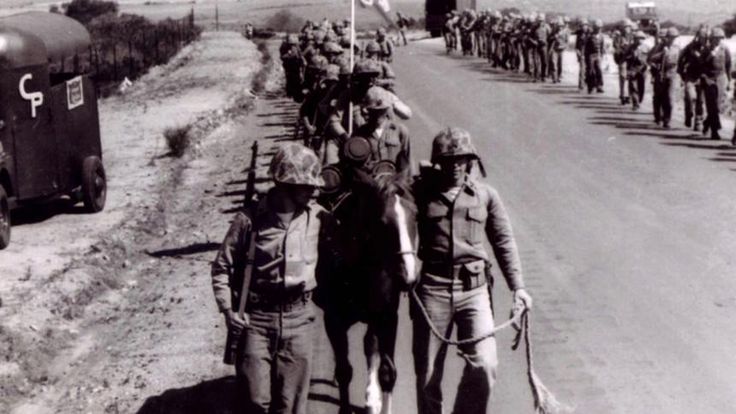
Recoilless rifle tactics call for fire teams to fire four or five rounds, and then relocate before the enemy can shoot back. Reckless usually learned the route after one or two trips, often traveling alone to deliver supplies on the way up, and evacuate wounded on the way down.

379_4846200240062_674245243_n

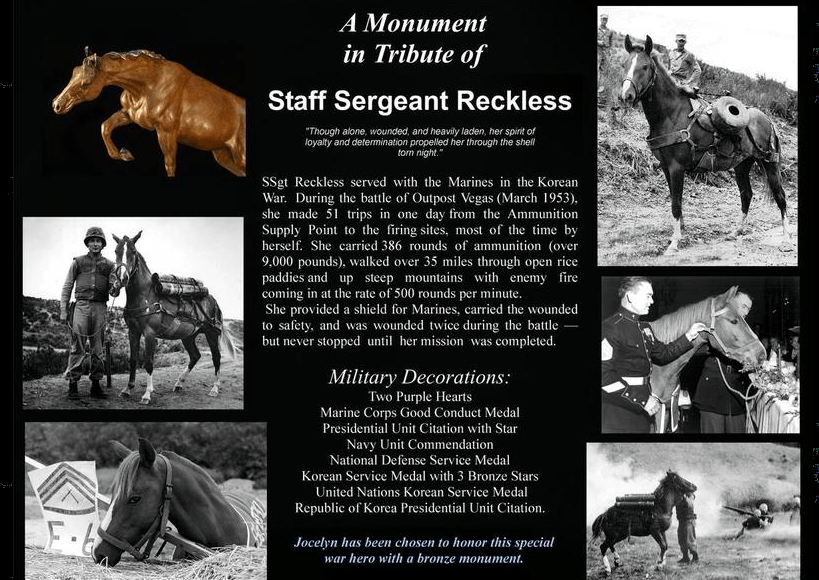
In February 1953, Captain Dick Kurth and his Fox Company were fighting for a hill called “Detroit”. Reckless made 24 trips by herself, carrying a total 3,500lbs of ammunition over 20 miles. She made 51 solo trips that March, during the battle for Outpost Vegas. Reckless carried 9,000lbs of ammunition in a single day, over 35 miles of open rice paddies and steep hills. At times, artillery exploded around her at the rate of 500 rounds per minute. She was wounded twice during the battle. That night, she was too exhausted to do anything but hang her head while they rubbed her down.

Reckless was the first horse in Marine Corps history to participate in an amphibious landing. She was wounded twice, and later awarded two Purple Hearts and a Marine Corps Good Conduct Medal. Her name appears on Presidential Unit citations from the United States and the Republic of Korea.

1000w_q75

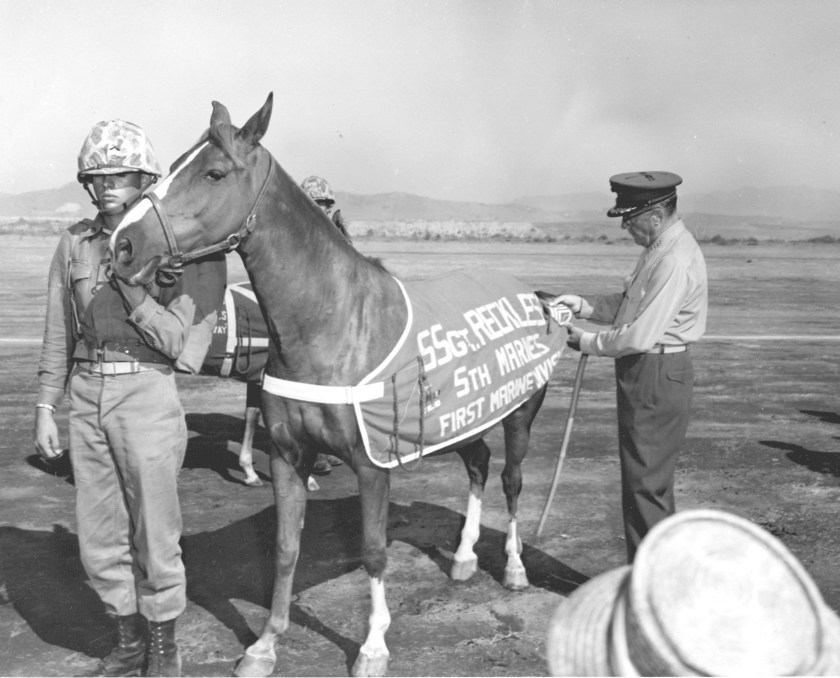
On August 31, 1959, Reckless was promoted to Staff Sergeant in a ceremony at Camp Pendleton. 1,900 of her 5th Marine comrades attended, as did two of her sons, “Fearless” and “Dauntless”. A third, “Chesty”, was unavailable to attend.

General Pate wrote: “In my career I have seen many animals that have been adopted by Marines, but never in all my experience have I seen one which won the hearts of so many as did. . .Reckless.”

HP_SeptOct13_SergeantReckless_MarkTenally

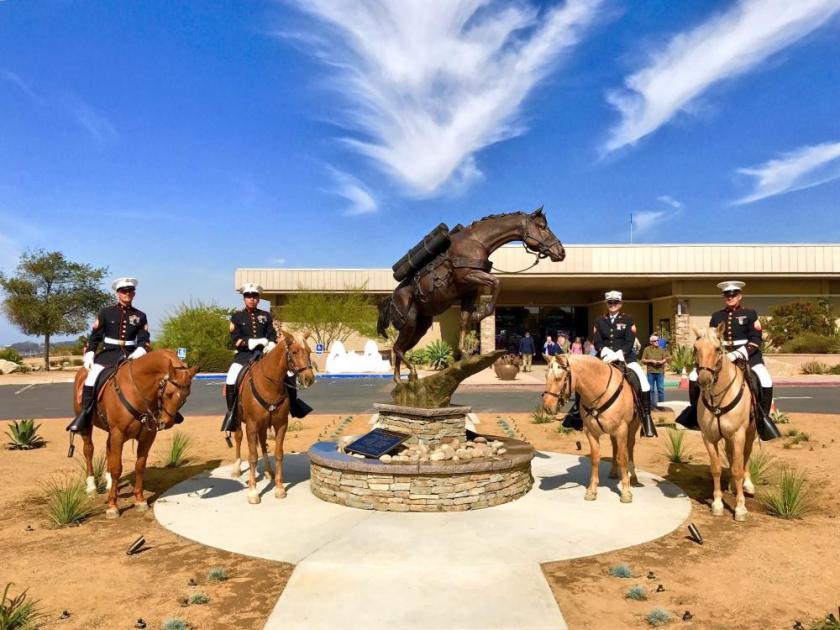
Life Magazine published a collector’s edition in 1997, listing 100 heroes from American history. Alongside the names of George Washington and Thomas Jefferson, Sally Ride and Abraham Lincoln, was that of a small Mongolian horse. Sergeant Reckless.

Screen-Shot-2014-09-11-at-10.42.17-AM

August 30, 1776 A Damn Close-Run Thing

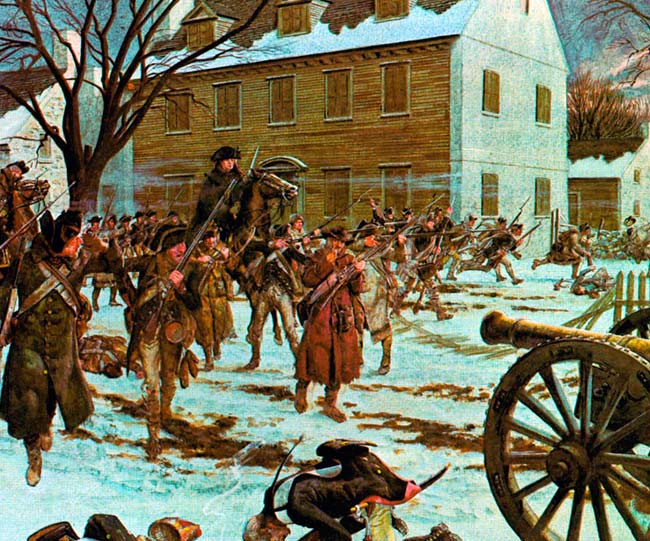
The silent evacuation over the night of August 29-30 had averted disaster, a feat made possible only through the nautical skills of the merchants and rum traders, the sailors and the fishermen of Colonel John Glover’s Marblehead, Massachusetts militia, the “Amphibious Regiment”.

When General George Washington raised his sword under the branches of that ancient elm on Cambridge commons, by that act did he take command of an “army”, equipped with with an average of only nine rounds per man.

116037-040507-01.tif1776 started out well for the cause of American independence, when the twenty-six-year-old bookseller Henry Knox emerged from a six week slog through a New England winter, at the head of a “Noble train of artillery’.

Manhandled all the way from the frozen wilderness of upstate New York, the guns of Fort Ticonderoga were wrestled to the top of Dorchester Heights, overlooking the British fleet anchored in Boston Harbor.

General sir William Howe faced the prospect of another Bunker Hill.   A British victory, yes, but one which came at a cost that  Howe could ill afford to pay again.

The eleven-month siege of Boston came to an end on March 17 when that fleet evacuated Boston Harbor, and removed to Nova Scotia.  Three months later, a force of some 400 South Carolina patriots fought a day-long battle with the nine warships of Admiral Sir Peter Parker, before the heavily damaged fleet was forced to withdraw.  The British eventually captured Fort Moultrie and Charleston Harbor along with it but, for now, 1776 was shaping up to be a very good year.

Declaration of IndependenceThe Continental Congress adopted the Declaration of Independence, that July.
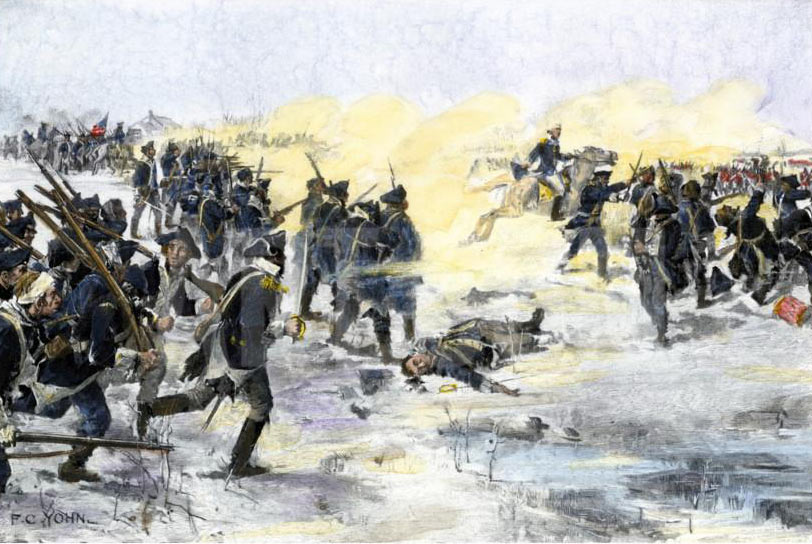
King’s Regular and Rebel alike understood the strategic importance of New York, as the center of communications between the New England colonies, and those in the south.  Beginning that April, Washington moved his forces from Boston to New York, placing his troops along the west end of Long Island in anticipation of the British arrival.

The British fleet was not long in coming, the first arrivals dropping anchor by the end of June.  Within the week, 130 ships were anchored off Staten Island, under the command of Admiral sir Richard Howe, the General’s brother.  By August 12 the British force numbered 400 vessels with 73 warships, with a force of some 32,000 camped on Staten island.

American forces were badly defeated at the Battle of Brooklyn, fought on August 27, 1776. The British dug in for a siege, confident that their adversary was cornered and waiting to be destroyed at their convenience, while the main Patriot army retreated to Brooklyn Heights.

British_flat-bottomed_boat_American_Revolution
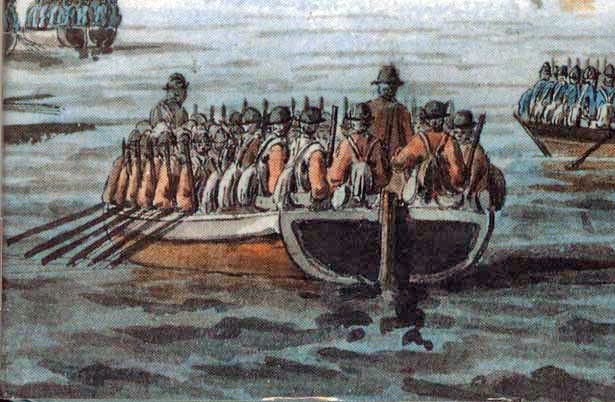
“British troops in the type of flat-bottomed boat used for the invasion of Long Island. Hessians in their blue uniforms are in the two boats that are only partly visible”. H/T Wikipedia

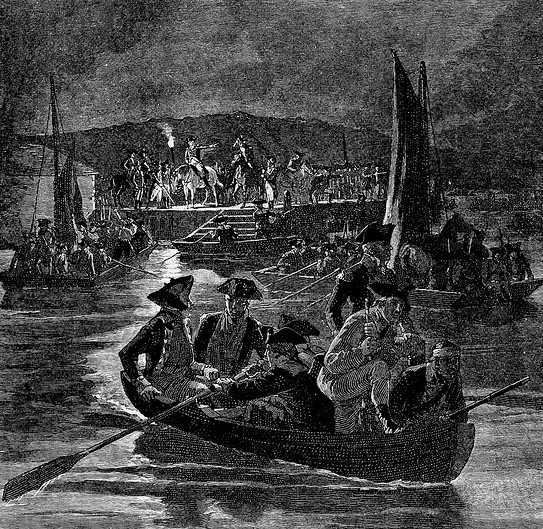
Cornered on land with the British-controlled East River to their backs, it may have been all over for the Patriot cause, but for one of the great feats of military history.   The surprise was complete for the British side on waking for the morning of August 30, to discover that the American army, had vanished. The silent evacuation over the night of August 29-30 had averted disaster, a feat made possible through the nautical skills of the merchants and rum traders, the sailors and the fishermen of Colonel John Glover’s Marblehead, Massachusetts militia, the “Amphibious Regiment”.

Retreat from LI
Retreat from long island, August 29-30, 1776

That October, the defeat of General Benedict Arnold’s home-grown “Navy” on the waters near Valcour Island in Vermont, cost the British fleet dearly enough that it had to turn back, buying another year of life for the Patriot cause.

By December, the Continental army had fled New York, to the south of New Jersey.  Already reduced to a puny force of only 4,707 fit for duty, Washington faced a decimation of his army by the New Year, with the end of enlistment for fully two-thirds of those.  With nowhere to go but on offense, Washington crossed the Delaware river in the teeth of a straight-up gale over the night of December 25, defeating a Hessian garrison at Trenton in a surprise attack on the morning of December 26.

trenton

While minor skirmishes by British standards, the January 2-3 American victories at Assunpink Creek and Princeton demonstrated an American willingness, to stand up to the most powerful military of its time.  Cornwallis had suffered three defeats in the last ten days, and withdrew his forces from the south of New Jersey.  American morale soared, as enlistments came flooding in.

american-troops-charging-the-british-at-the-battle-of-princeton-new-jersey-c-1777
Battle of Princeton, January 3, 1777

The American war for independence would not be over, for another six years.  Before it was through, more Americans would die in the fetid holds of British prison ships than in every battle of the Revolution, combined.  Yet, that first year had come and gone, and the former colonies were still in the fight.

A generation later, Lord Arthur Wellesley described the final defeat of a certain “Corsican corporal” at a place called Waterloo.  Wellesley might have been talking about the whole year of 1776 in describing that day in 1815:  “It was a damn close run thing“.

If you enjoyed this “Today in History”, please feel free to re-blog, “like” & share on social media, so that others may find and enjoy it as well. Please click the “follow” button on the right, to receive email updates on new articles.  Thank you for your interest, in the history we all share.

August 29, 1854 The Resolute Desk

The British government presented a large partner’s desk to President Rutherford B. Hayes in 1880, a token of gratitude for the return of HMS Resolute, 24 years earlier. Excepting a brief period following the assassination of President John F. Kennedy, the desk has been in the oval office or a private study in the White House, from that day to this.

Since the time of Columbus, European explorers searched for a navigable shortcut by open water, from Europe to Asia.   The “Corps of Discovery“, better known as the Lewis and Clark expedition, departed the Indiana Territory in 1804 with, among other purposes, and intention of finding a water route to the Pacific.

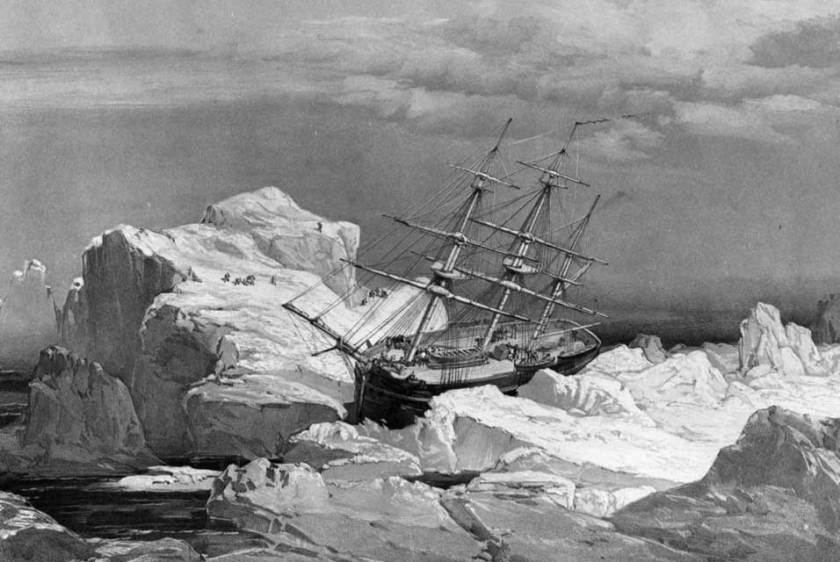
Forty years later, Captain sir John Franklin departed England aboard two ships, HMS Erebus and HMS Terror, to discover the mythical Northwest Passage.

The two ships became icebound in Victoria Strait near King William Island, in the Canadian Arctic.

Ship

Prodded by Lady Jane Franklin, the hunt for her husband’s expedition would continue for years, at one time involving as any as eleven British and two American ships.  Clues were found including notes and isolated graves, telling the story of a long and fruitless effort to stay alive in a hostile climate.  The wreck of HMS Erebus would not be discovered until 2014, her sister ship, two years later.

In 1848, the British Admiralty possessed few ships suitable for arctic service. Two civilian steamships were purchased and converted to exploration vessels: HMS Pioneer and HMS Intrepid, along with four seagoing sailing vessels, Resolute, Assistance, Enterprise and Investigator.

e9b3482e7a0e242654668c20479b9fb4HMS Resolute was a Barque rigged merchant ship, purchased in 1850 as the Ptarmigan, and refitted for Arctic exploration. Re-named Resolute, the vessel became part of a five ship squadron leaving England in April 1852, sailing into the Canadian arctic in search of the doomed Franklin expedition.
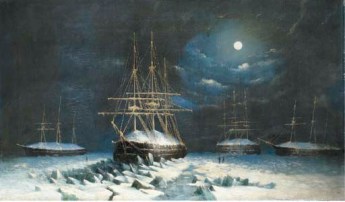
Neither Franklin nor any of his 128 officers and men would ever return alive.  HMS Resolute found and rescued the long suffering crew of the HMS Investigator, hopelessly encased in ice where, three years earlier, she too had been searching for the lost expedition.

resoluteice2Three of the HMS Resolute expedition’s ships themselves became trapped in floe ice in August 1853, including Resolute, herself. There was no choice but to abandon ship, striking out across the ice pack in search of their supply ships. Most of them made it, despite egregious hardship, straggling into Beechey Island in the Canadian Arctic Archipelago, between May and August of the following year.
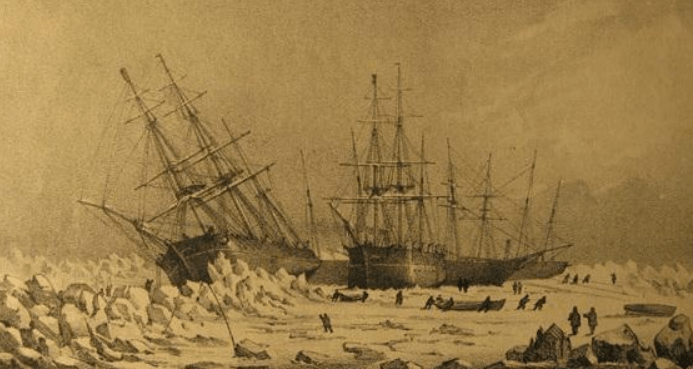
The expedition’s survivors left Beechey Island on August 29, 1854, never to return.
Meanwhile Resolute, alone and abandoned among the ice floes, continued to drift eastward at a rate of 1½ nautical miles per day.

The American whale ship George Henry discovered the drifting Resolute on September 10, 1855, 1,200 miles from her last known position. Captain James Buddington split his crew, half of them now manning the abandoned ship. Fourteen of them sailed Resolute back to their base in Groton CT, arriving on Christmas eve.

download (2)

The so-called ‘Pig and Potato War” of 1859 was resolved between the British and American governments with the loss of no more than a single hog, yet a number of border disputes made the late 1850s a difficult time, for American-British relations. Senator James Mason of Virginia presented a bill in Congress to fix up the Resolute, giving her back to her Majesty Queen Victoria’s government as a token of friendship between the two nations.

$40,000 were spent on the refit, and Resolute sailed for England later that year. Commander Henry J. Hartstene presented her to Queen Victoria on December 13. HMS Resolute served in the British navy until being retired and broken up in 1879. The British government ordered two desks to be fashioned from English oak of the ship’s timbers, the work being done by the skilled cabinet makers of the Chatham dockyards. The British government presented a large partner’s desk to President Rutherford B. Hayes in 1880. A token of gratitude for HMS Resolute’s return, 24 years earlier.

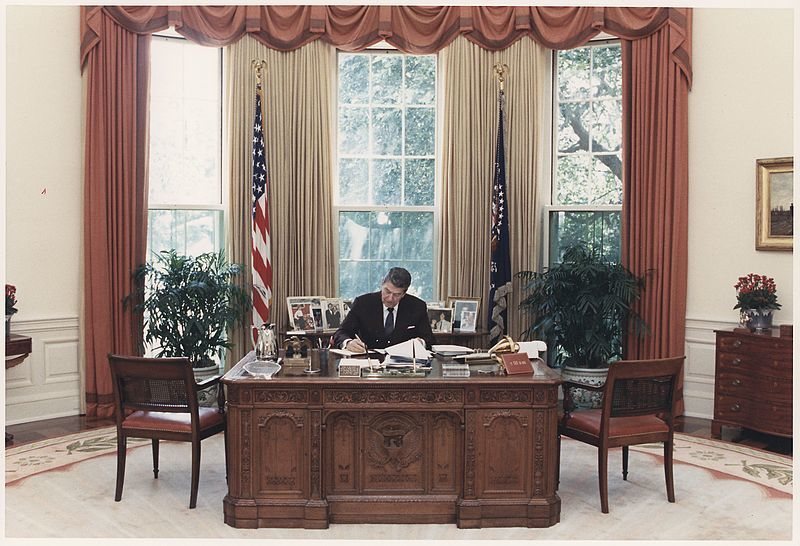
Resolute, ReaganThe desk, known as the Resolute Desk, has been used by nearly every American President since, whether in a private study or the oval office.
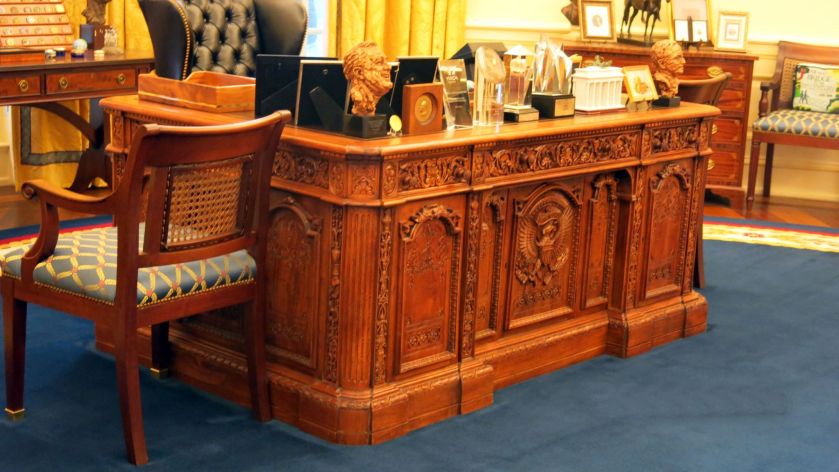
FDR had a panel installed in the opening, since he was self conscious about his leg braces. It was Jackie Kennedy who brought the desk into the Oval Office. There are pictures of JFK working at the desk, while his young son JFK, Jr., played under it.
Presidents Johnson, Nixon and Ford were the only ones not to use the Resolute desk, as LBJ allowed it to leave the White House, after the Kennedy assassination.

The Resolute Desk spent several years in the Kennedy Library and later the Smithsonian Institute, the only time the desk has been out of the White House.

Jimmy Carter returned the desk to the Oval Office, where it has remained through the Presidencies of Ronald Reagan, George H.W. Bush, Bill Clinton, George W. Bush, Barack Obama and, thus far, Donald J. Trump.

cl-resolute-desk-replica

If you enjoyed this “Today in History”, please feel free to re-blog, “like” & share on social media, so that others may find and enjoy it as well. Please click the “follow” button on the right, to receive email updates on new articles.  Thank you for your interest, in the history we all share.

August 28, 1854 Broad Street Well

If you’re ever in London, stop and hoist a glass to an unsung hero.  One of the Founding Fathers, of modern epidemiology.

The waterborne bacterium Vibrio cholerae (V. cholerae) lives in the warm waters of coastal estuaries and rivers, and the waters along coastal plains. Most of the time, those contracting the bacterium do so by consuming contaminated water, developing only mild symptoms or none at all.

Most times the infection resolves itself yet, at times, urban density has combined with poor sanitation, to produce some of the most hideous pandemics, in medical history.

The origins of Cholera, are unknown. The Portuguese explorer Gaspar Correa described a flare-up in the Ganges Delta city of Bangladesh in the spring of 1543, an outbreak so virulent that it killed most victims within eight hours, with a mortality rate so high that locals struggled to bury all the dead.

vibrio-cholerae-louisa-howard-and-charles-daghlian-and-photo-researchers

V. Cholerae populations undergo explosive growth in the intestines of the sufferer, releasing a toxin and causing cells to expel massive quantities of fluid. Severe cramps lead to “rice water” diarrhea and the rapid loss of electrolytes.  Dehydration is so severe that it leads to plummeting blood pressures and often, death.  It’s easy to see how the disease can “spike”.  One such episode can cause a million-fold increase in bacterial populations in the environment, according to the CDC.

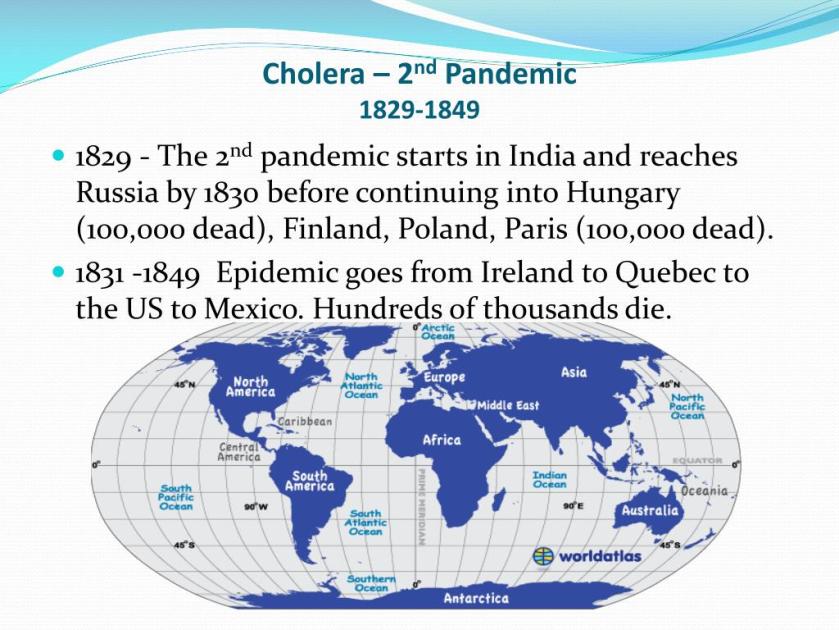
The first pandemic emerged out of the Ganges Delta in 1817, spreading to Thailand, Indonesia and the Philippines. 100,000 were killed on the island of Java, alone. The severe winter of 1823-’24 appears to have killed off much of the bacteria living in water supplies, but not for long.

cholera-2-nd-pandemic-1829-1849-l
H/T Cholera. Between Life and Death Fr. Scott Binet MD, MI CTF-SOS D RS Sao Paulo, Brazil – October 20, 2011

The second Cholera pandemic began in 1830-’31, spreading throughout Poland, Russia and Germany. The disease reached Great Britain in 1832, when authorities undertook quarantines and other measures, to contain the outbreak.

Four years earlier, William Burke and William Hare had carried out 16 murders over a ten-month period in Edinburgh, selling the corpses to Doctor Robert Knox for dissection during his anatomy lectures. Now, quarantines were met with pubic fear, and distrust of government and medical authorities. ‘Cholera riots’ broke out in Liverpool and London, with demands to ‘Bring out the Burkers”.

burke_and_hare-600x450The world would see four more cholera pandemics between 1852 and 1923, with the first being by far, the deadliest. This one devastated much of Asia, North America and Africa. in 1854, the worst year of the outbreak, 23,000 died in Great Britain, alone.
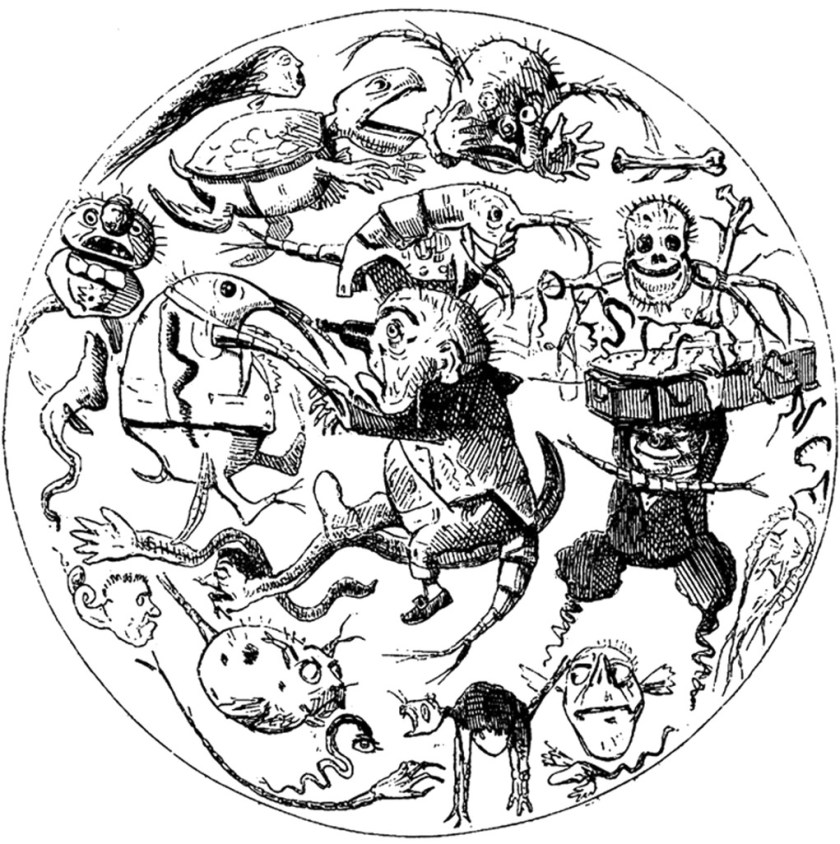
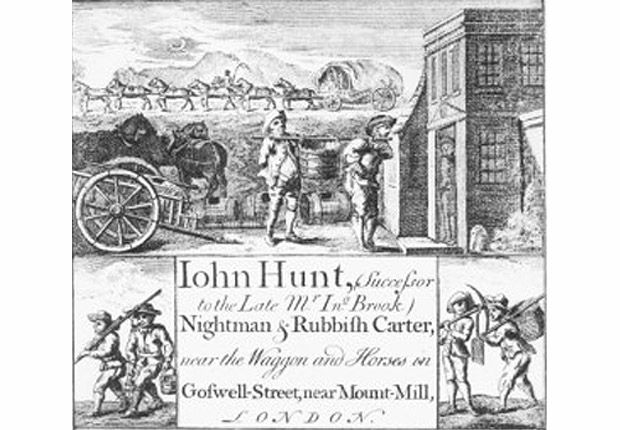
In 1760, the British capital of London was home to some 740,000 souls. One-hundred years later, population shifts had ballooned that number to nearly 3.2 million, in a city without running water.

A_Drop_of_Thames_Water,_by_Punch,_1850
A Drop of Thames Water, by Punch,,1850

At one time, the many farms surrounding the city of London used the, er…”stuff” provided by “Gong Farmers”, the ‘nightsoilmen’ whose execrable job it was to shovel out the growing numbers of cesspits throughout the city, for fertilizer.  Transportation costs grew as the city expanded, and the farms moved away.  In 1847, solidified bird droppings (guano) were brought in from South America at a cost far below that of the local stuff, leaving London’s poorer quarters increasingly, to their own filth.

The “Great Stink” of Victorian-era London is beyond the scope of this essay, save to point out that formal portraits may be found of Queen Victoria herself, with a clothespin on her nose.  Today the topic is mildly amusing and not a little disgusting however, in an era before public sewage, we’re talking about life and death.

nightman

In 1854, police constable Thomas Lewis lived with his wife Mary and five-month-old Frances, at 40 Broad Street in the Soho neighborhood of London.  The baby developed severe diarrhea over August 28-29, as Mrs Lewis soaked the soiled ‘nappies’ in pails of water.  These she dumped into the pit in front of her house, as first her baby and then her husband, sickened and died.

The pit was three feet away from the Broad Street well, where much of the neighborhood came to pump drinking water.

homePageImageSeveral other outbreaks had occurred that year, but this one was particularly acute.  Within the next three days, 127 died within a short distance of the Broad Street address.  By September 10, there were five-hundred more.

In the third century AD, the Greek physician Galen of Pergamon first described the “miasma” theory of illness, holding that infectious disease such as Cholera were caused by noxious clouds of “bad air”. Today the theory is discredited but, such ideas die hard.

Most everyone blamed the fetid air for the cholera outbreak, but Dr. John Snow was different.  Snow suspected there was something in the water and, through door-to-door interviews and careful analysis of mortality rates, devised a ‘dot map’ identifying the Broad Street address.

“On proceeding to the spot, I found that nearly all the deaths had taken place within a short distance of the [Broad Street] pump. There were only ten deaths in houses situated decidedly nearer to another street-pump. In five of these cases the families of the deceased persons informed me that they always sent to the pump in Broad Street, as they preferred the water to that of the pumps which were nearer. In three other cases, the deceased were children who went to school near the pump in Broad Street …”

Snow himself believed in the Miasma theory of disease as did Reverend Henry Whitehead, who helped him collect his data. Yet somehow, the pair became convinced that infectious agents were somehow concentrated in the water, and they had found the “Index Case”.

Despite near-universal skepticism regarding Dr. Snow’s theories, the pump handle at 40 Broad Street was removed.  It was later re-installed but, by that time, the danger had passed.  Untold numbers of lives were saved by Dr. Snow’s intervention.

Dr. Snow succumbed to a stroke in 1858 and died at the age of 45, never learning how right he had been.  Dr. Louis Pasteur opened his institute for the study of microbiology, thirty years later.

Today, the place is known as “Broadwick Street”.  There’s a replica of the old water pump out front of #40, across from the John Snow pub.  If you’re ever in London, stop and hoist a glass to an unsung hero.  One of the Founding Fathers, of modern epidemiology.

If you enjoyed this “Today in History”, please feel free to re-blog, “like” & share on social media, so that others may find and enjoy it as well. Please click the “follow” button on the right, to receive email updates on new articles.  Thank you for your interest, in the history we all share.

August 27, 1955 Guinness Book of World Records

The free reference book once intended to inform barroom squabbles has spawned a franchise including museums and television programs, becoming the leading  international authority for the certification of every world record you can think of, from the longest fingernail (2 feet, 11 inches), to the longest mustache (14 feet), to slam dunking basketball bunnies.

Hugh Campbell Beaver was a British engineer and industrialist and, at the time of this story, Managing Director of the brewery founded by Arthur Guinness, about two hundred years earlier. Beaver was on a hunting trip in County Rexford in Ireland, when a friendly argument broke out among the group. Which is the fastest game bird in Europe, the golden plover, or the grouse?

StjamesgateThe information was surprisingly difficult to find, and no reference book was available to settle the matter.


MI-Julia-Gnuse-Guinness-World-Record-most-tatooed
Julia Gnuse, Guinness World Record most tatooed woman H/T IrishCentral.com

At that time, there were some 81,400 pubs in Great Britain and Ireland. What if they all had a reference book to settle such weighty matters, while enjoying a Guinness Draught, of course.

Beaver turned out to be more correct, than he realized.

gwr-tease_e2822c8ab1faa697621e8ba4b5853865.today-ss-slide-desktop
H/T Today.com

At that time, Norris and Ross McWhirter were running a fact-finding agency in London “to supply facts and figures to newspapers, yearbooks, encyclopedias and advertisers” and working as sports reporters, on the side. One of the athletes they covered was the middle and long-distance runner Christopher Chataway, who just happened to work for the Guinness Brewery.

ss-141113-guinness-01.today-ss-slide-desktop
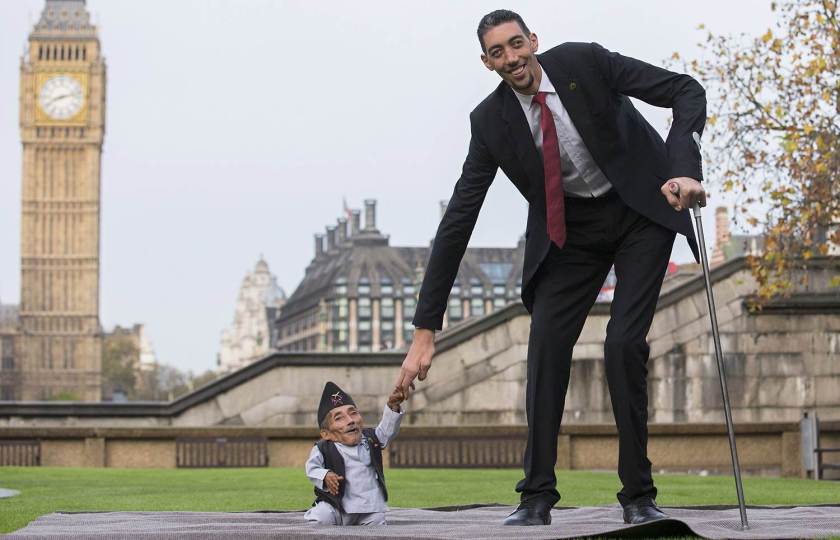
“Chandra Bahadur Dangi, from Nepal, left, the shortest adult to have ever been verified by Guinness World Records, poses for pictures with the world’s tallest man Sultan Kosen from Turkey, in London on November 13, 2014, to mark Guinness World Records Day.” H/T Today.com

Chattaway introduced the pair to Beaver in 1954. Guinness’ directors were impressed with the encyclopedic knowledge possessed by the McWhirter twins, when it came to facts and figures. The brothers agreed to take up work and, on this day in 1955, the 198-page Guinness Book of Records was first published in Great Britain.

Guinness-World-Records-Day-733284
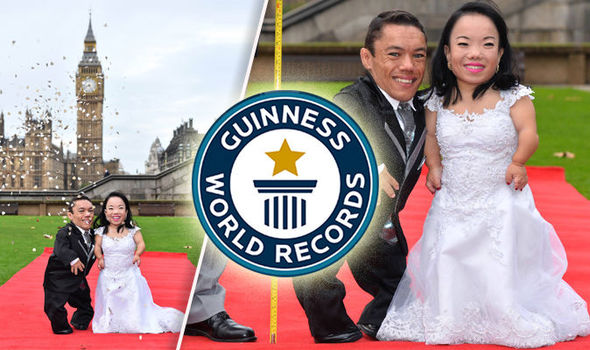
“Guinness World Records Day: The world’s shortest married couple”  H/T Express.co.uk

The book was intended to be given out for free, but proved to be far more popular than anyone had expected. The company began selling it that fall. Within four months, the book was non-fiction best-seller, in all the United Kingdom.

Norris_McWhirter_(1977)
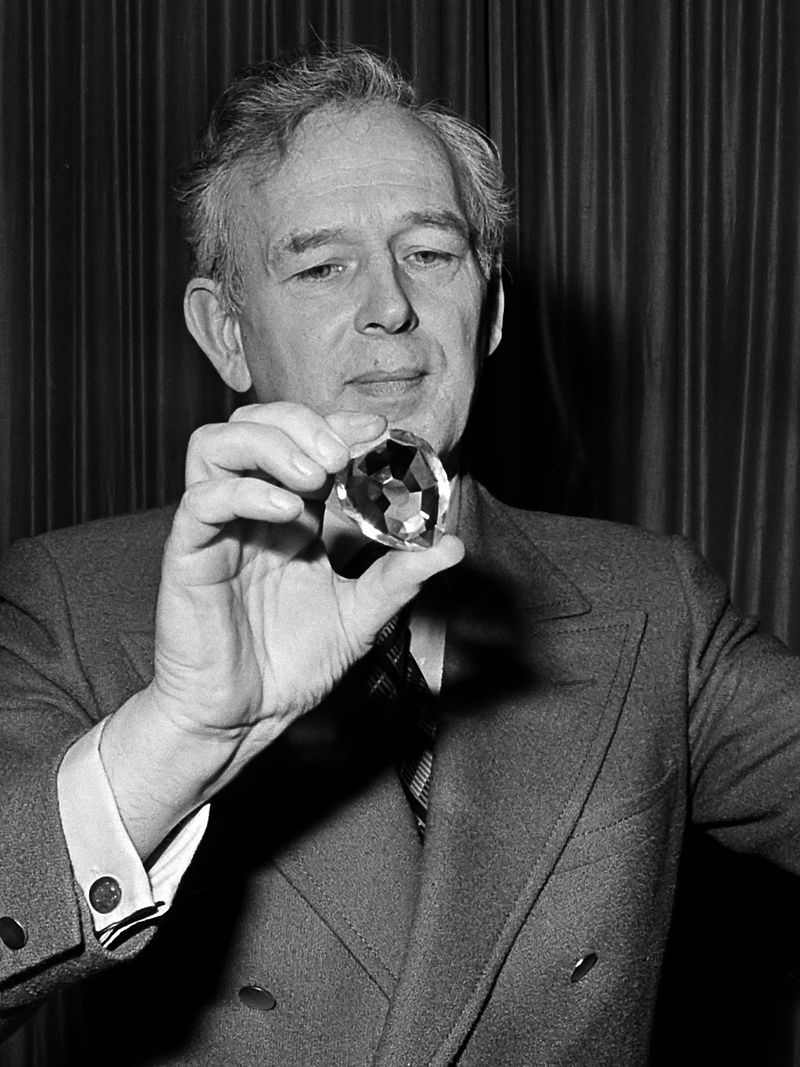
“Norris McWhirter holding a copy of the largest diamond in the world (1977)” HWikipedia

Soon, the McWhirter brothers were traveling the world over, to research and verify records. The first American edition was published in 1956, followed by editions in other countries.

Nikon-biggest-human-camera-Guinness-Book-of-World-Records1
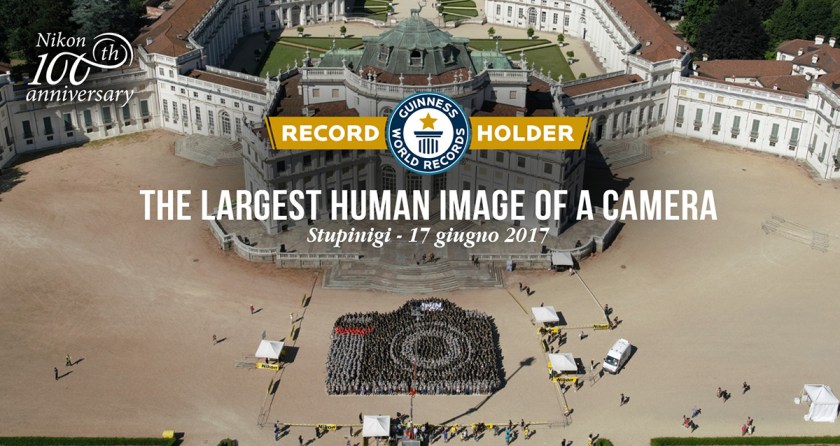
Largest human image, of a camera. H/T Nikon

In the early 1960s, the McWhirter twins became involved in British Conservative party politics, bringing the pair into conflict with the Provisional Irish Republican Army. Ross was hunted down and murdered in front of his home in 1975, by IRA gunmen. His brother Norris continued to serve as the book’s editor until retiring, in 1986.

Guinness-World-Records-2017-stars-main_tcm55-443157The free reference book once intended to inform barroom squabbles has spawned a franchise including museums and television programs, becoming the leading  international authority for the certification of every world record you can think of, from the longest fingernail (2 feet, 11 inches), to the longest mustache (14 feet), to slam dunking basketball bunnies.


As of this year the book is in its 63rd year of publication, published in 100 countries and 23 languages and itself holding a world record, as the best-selling copyrighted book of all time.

If you enjoyed this “Today in History”, please feel free to re-blog, “like” & share on social media, so that others may find and enjoy it as well. Please click the “follow” button on the right, to receive email updates on new articles.  Thank you for your interest, in the history we all share.

August 26, 1883 Krakatoa

Roughly 90% of all earthquakes and 75% of potentially active volcanoes in the world, occur along a horseshoe shaped Ring of Fire, encircling the Pacific Ocean.
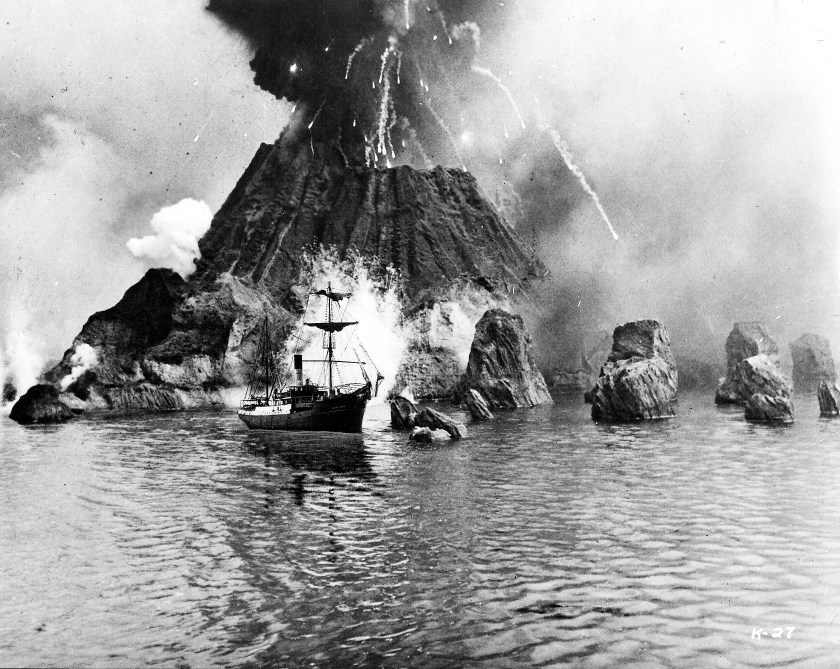
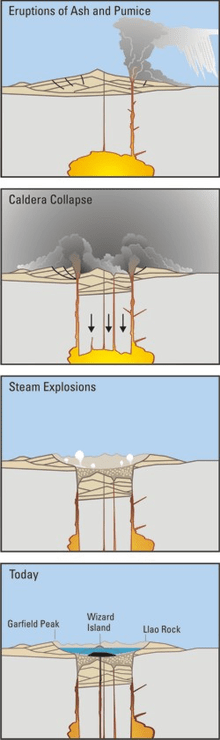
Within living memory, the “greatest generation” fought the most destructive war, in human history. Had any of them survived the experience, the parents and grandparents of that generation could’ve gazed into the abyss, at a force capable of breaking the very world, on which the great contest was won.

aHR0cDovL3d3dy5saXZlc2NpZW5jZS5jb20vaW1hZ2VzL2kvMDAwLzAzOS80NTAvb3JpZ2luYWwvZWFydGgtbGF5ZXJzLmpwZw==
H/T LiveScience.com

Deep in the ground beneath our feet, a rocky shell comprising an outer Crust and an inner Mantle forms a hard and rigid outer layer, closing off and containing the solid inner core of our planet.  Between these hard inner and outer layers exists a liquid core of molten material, comprising approximately two-thirds the cross-section of planet Earth.

The air around us is a liquid, exerting a ‘weight’ or barometric pressure at sea level, of approximately 14.696 pounds per square inch. Scientists estimate the pressures within this outer core to be approximately 3.3 million times atmospheric pressure, generating temperatures of 10,800° Fahrenheit, a temperature comparable to the surface of the sun.

ABWCWW Earth s Core
ABWCWW Earth s Core

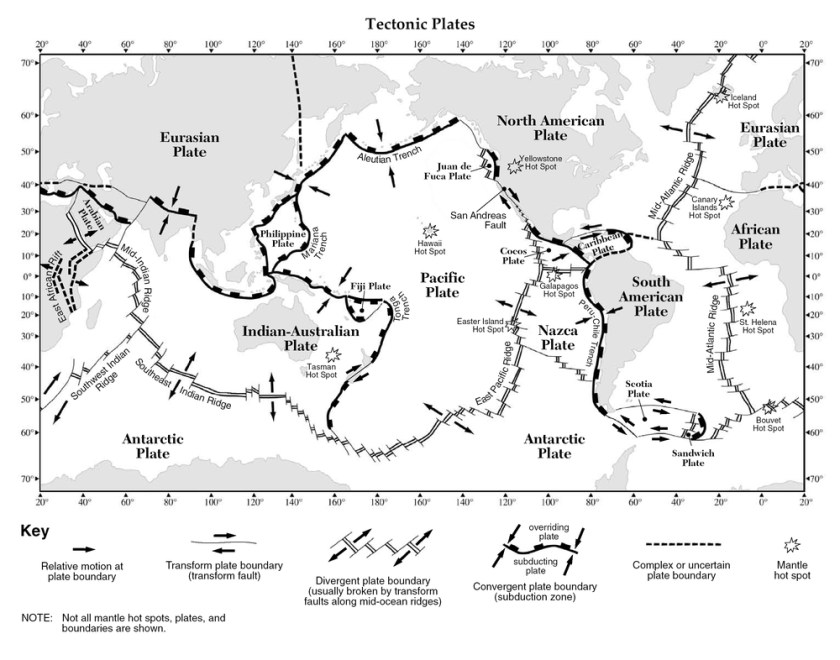
That rocky shell closing us off from all that is actually quite elastic, broken into seven or eight major pieces, (depending on how you define them), and several minor bits called Tectonic Plates.

Over millions of years, these plates move apart along constructive boundaries, where oceanic plates form mid-oceanic ridges. Roughly equal and opposite to these are the Subduction zones, where one plate moves under another and down into the mantle.

This movement in what we’d like to regard as Terra Firma, results in deep ocean trenches (the Aleutian Trench reaches depths of 25,194 feet) and mountain ranges such as the Andes along the border with Argentina and Chile, where towering peaks reach a height of over 22,500 feet or more.tectonic+plates+map

800px-Subduction-en.svgRoughly 90% of all earthquakes and 75% of potentially active volcanoes in the world, occur along a horseshoe shaped Ring of Fire, encircling the Pacific Ocean.

One hundred and thirty five years ago today, a mere blink of an eye in geologic time, the most destructive volcano in recorded history erupted along the western reaches of this ring of fire on the Indonesian island of Krakatau (Krakatoa).

Early seismic activity began several years before the 1883 eruption, with earthquakes felt as far away, as Australia. Steam began to vent in May of that year, from the northernmost of three cones comprising the island group of Krakatau. Explosions could be heard from as much as 99 miles away by the end of May, propelling thick clouds of ash to an estimated altitude of 20,000 feet, before activity died down in early June.

Eruptions at Krakatoa resumed around the 16th of June, and continued until the 24th. The violence of these ongoing eruptions caused tides in the area to be unusually high, while ships at anchor, had to be moored with heavy chains.

This thing was only yawning and stretching.  Just getting out of bed.

The-eruption-of-Krakatau-1883-4
Dutch topographical engineer Captain H. J. G. Ferzenaar investigated the Krakatoa islands on August 11, reporting three major ash columns and steam plumes from at least eleven other vents. All vegetation was extinct by this time, leaving only tree stumps, buried beneath nearly two feet of ash.

Eruptions intensified on August 25, while ships twelve miles away reported softball-sized pieces of hot pumice, raining down on their decks.  A small tsunami hit the shores of Java and Sumatra, twenty-five miles away.  Krakatoa entered its paroxysmal stage on August 26 followed by four prodigious explosions, the following day.

220px-Mount_Mazama_eruption_timeline
Mount Mazama in the Cascade Range of Oregon, collapses into the magma chamber below. Crater Lake reaches a depth of 1,943 feet, the deepest freshwater body in the United States. H/T Wikipedia

The first explosion at 5:30am triggered a Tsunami of 98-feet or more, wiping out much of the island of Sumatra.  The second explosion at 6:44 triggered a second tsunami.  The third and largest explosion at 10:02 am was so violent it could be heard 1,930 miles away in Perth, in Western Australia.  On the Indian Ocean islands near Mauritius, 3,000 miles distant, the sound was mistaken for cannon fire, from a nearby ship.

It’s reported to have been the loudest sound in recorded history, equal to the explosive force of 200,000 tons of TNT, four times the explosive force of the Soviet Tsar Bomba explosion of October 30 1961, the most powerful thermonuclear weapon, ever detonated.

The colossal fourth and final explosion generated pressure waves racing outward from Krakatoa, at 675 mph. The sound was so loud as to be heard clearly from the United States to Great Britain, the pressure wave rounding the globe and returning to the volcano no fewer than 3½ times.

Barometric pressure gauges spiked 2½ inches of mercury, equivalent to 180 decibels, of sound pressure.  As a point of reference, short-term hearing damage can occur at 120, and the threshold for human pain, is 134.

Untold millions of tons of super heated ash rose fifty miles and more, into the air. Ships as far away as South Africa, were rocked by the series of tsunamis.

The combined effects of the explosions, tsunamis and the Pyroclastic Flow, the fast-moving air current of superheated gases and volcanic material capable of reaching ground speeds of 430 miles per hour, resulted in an official death toll of 36,417.  Some estimates put the number as high as 120,000.

When it was over, all but the bottom third of the island was gone, swallowed whole by the empty magma chamber, below. Fifty-six miles distant, the westernmost provinces of Java have been reclaimed by jungle and remain depopulated, to this day.

scream-16_6155Following the 1883 eruption, temperatures in the northern hemisphere fell by an average of 2.2°, Fahrenheit. Weather patterns were disrupted for years on end.
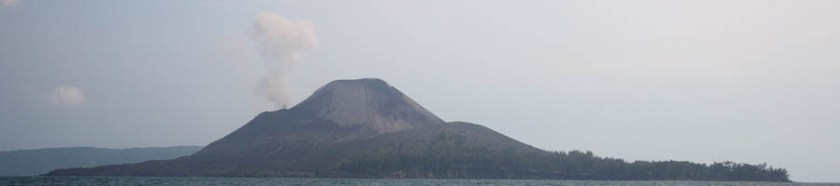
Particulate matter in the atmosphere refracted light worldwide resulting in glowing white clouds at night, and some of the most spectacular red sunsets, ever seen. Edvard Munch’s painting “The Scream“, is thought to be an accurate depiction of the colors. Fire trucks were called out in Poughkeepsie and New York, for what many believed to be a raging fire.

In 1927, a new island emerged from the caldera left by the 1883 cataclysm.  Anak Krakatau (“Child of Krakatoa”) is currently the site of eruptive activity, one of 1,500 potentially active volcanoes, according to the United States Geological Survey (USGS.gov).  Approximately five hundred of these were active, in historic times.

KRAK08_0995panorama
Anak Krakatau, “Child of Krakatoa” in modern times

The ability to predict such an eruption, remains elusive.  Iceberg tremors, gas emissions, thermal monitoring and relative rates of ground deformation remain areas, for continued study. When Mount St. Helens erupted in May 1980, USGS scientists were able to provide about three weeks warning.

Feature Image, top of page:  Anak Krakatau