

The 1974 season opened on the road for the San Diego Padres, the series ending in a humiliating, 25-2 blowout at Dodger’s Stadium.
Padres’ new owner and McDonald’s founder Ray Kroc was anything but pleased with the 0-3 start, saying “They’re snake-bit, and they’ve got the yips. They’re overanxious, trying too hard, too tense”. Kroc was positive, though, at the home opener against the Houston Astros. Stepping up to the field microphone, Kroc said to the crowd of 39,083 at San Diego Stadium, “With your help and God’s help, we’ll give ‘em hell tonight.”
The home opener at Jack Murphy (now Qualcomm) Stadium on April 9 was no better, ending in a 9 to 5 loss. In the middle of the eighth, the Padres were well on their way to 0 and 4, when Ray Kroc opened the door of the public address booth and told announcer John DeMott he had something to say.
Kroc had bought the club only two months earlier, when San Diego was in danger of  losing its National League team to Washington, DC. Only moments before, Padres’ President Buzzie Bavasi had to leave Kroc’s side to investigate concession area water in the clubhouse, when a leak was “promoted” to a flood.
Kroc had to have been cranky when he took the mic in the first place, but it quickly got worse. “Ladies and gentlemen,” he began, “I suffer with you.” At that moment a roar went up from the crowd, as a streaker jumped out of the stands and onto the field.
That’s when he lost it. “Get him out of here. Throw him in jail” Kroc shouted. Then he continued. “I have good news and bad news. The good news is that the Dodgers drew 31,000 for their opener and we’ve drawn 39,000 for ours. The bad news is that this is the most stupid baseball playing I’ve ever seen”.
Padres radio announcer Jerry Coleman didn’t know how to respond. “Ladies and Gentlemen”, he said, “that was Padres owner, Ray Kroc”.
It was a bad idea. Player representative Willie McCovey spoke for the club. “I wish Mr. Kroc hadn’t done that. I’ve never heard anything like that in my 19 years in baseball. None of us likes being called stupid. We’re pros and we’re doing the best we can. His words will ring in the players’ ears for a long time.”
Players were so angry they threatened to boycott the next game. San Diego dentist Steve Arlin was the losing pitcher that night. “We were all embarrassed by it,” he said. “We weren’t playing well, but we didn’t need to be reminded”.
Even opposing players jumped into the fray. Houston player rep Denis Menke said, “That was in bad taste.” Menke went on to protest Kroc’s comments to Marvin Miller, head of the players’ union.
Miller thought Kroc’s actions were unacceptable, too. “Imagine what would have happened if a player, after being taken out of a game, made an announcement over the P.A. that his manager was stupid. The player would be fined or suspended. I see a direct parallel in the Kroc case.”
Astros’ third baseman Doug Rader said, “He thinks he’s in a sales convention dealing with a bunch of short-order cooks. That’s not the way to go about getting a winner. Somebody ought to sit him down and straighten him out.” Within two weeks Rader had received so many angry calls from short order cooks, that he had to make a public apology.
 Buzzie Bavasi did the most to defuse the situation. Taking a cue from Rader’s comments, Bavasi designated the next game in the Houston series “Short Order Cook’s Night”. Any Padres fan who came wearing a chef’s hat, would be admitted into the game for free. Rader, the Astro’s team captain, took the lineup card to home plate wearing an apron with a chef’s hat, slipping the card off a skillet with a spatula and handing it over to the home plate umpire, like a pancake.
Baseball Commissioner Bowie Kuhn later forced Kroc to make a public apology, but Sporting News columnist Melvin Durslag wasn’t buying it. “The reason (he’d never seen such stupid baseball playing) was largely due to his inexperience at watching baseball. He knows as much about the sport as Willie McCovey knows about an Egg McMuffin.”
San Diego went on to lose 102 games that year, 42 more than archrival LA Dodgers. The season wasn’t halfway over, when the new owner wondered what he’d gotten himself into. I bought the team to have some fun”, Kroc said. “But it is proving to be about as enjoyable as a wake. Your own”.




 Portable stills went on sale within a week, and organized smuggling was quick to follow. California grape growers increased acreage by over 700% over the first five years, selling dry blocks of grapes as “bricks of rhine” or “blocks of port”. The mayor of New York City sent instructions on wine making, to his constituents.
 Gaining convictions for breaking a law that everyone hated became increasingly difficult. There were over 7,000 prohibition related arrests in New York alone between 1921 and 1923. Only 27 resulted in convictions.
 “Dry” leaders tried to prohibit consumption of alcohol on military bases in 1941, but military authorities claimed it was good for morale. Brewers were required to allocate 15% of total annual production to be used by the armed forces. So essential were beer manufacturers to the war effort, that teamsters were ordered to end a labor strike against Minneapolis breweries. Near the end of WWII, the army made plans to operate recaptured French breweries, to ensure adequate supplies for the troops.
 18 states continued prohibition at the state level after the national repeal, the last state finally dropping it in 1966. Almost 2/3rds of all states adopted some form of local option, enabling residents of political subdivisions to vote for or against local prohibition. Some counties remain dry to this day. Ironically, Lynchburg County, Tennessee, home to the Jack Daniel distillery, is one such dry county.

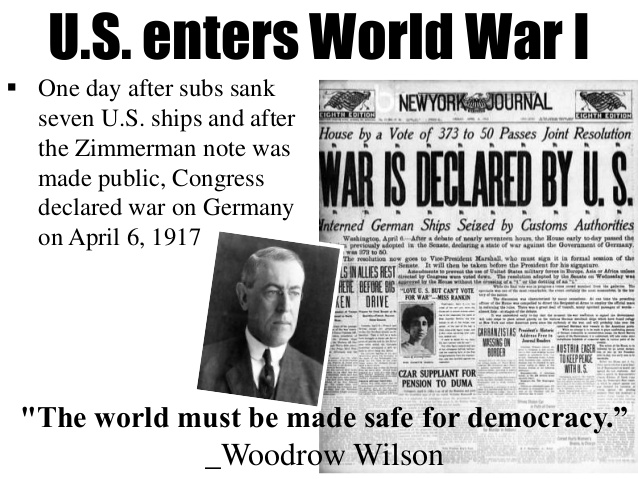
 In the early days of WWI, Imperial Germany attempted to comply with standards of maritime warfare, as established by the Hague Conventions of 1899 and 1907.
 The “Zimmermann Telegram” was intercepted and decoded by British intelligence and revealed to the American government on February 24. The contents of the message outraged American public opinion and helped generate support for the United States’ declaration of war.


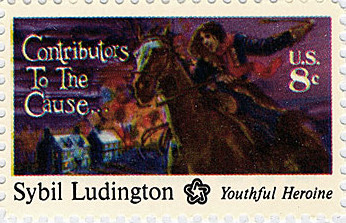
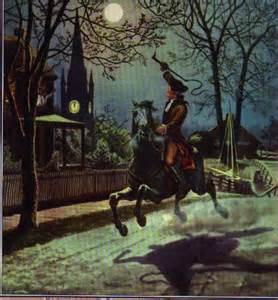 Paul Revere’s famous “midnight ride” began on the night of April 18, 1775. Revere was one of two riders, soon joined by a third, fanning out from Boston to warn of an oncoming column of “regulars”, come to destroy the stockpile of gunpowder, ammunition, and cannon in Concord.
 Patriot Colonel Joseph Cooke’s small Danbury garrison was caught and quickly overpowered on the 26th, trying to remove food supplies, uniforms, and equipment. Facing little if any opposition, Tryon’s forces went on a bender, burning homes, farms and storehouses. Thousands of barrels of pork, beef, and flour were destroyed, along with 5,000 pairs of shoes, 2,000 bushels of grain, and 1,600 tents.



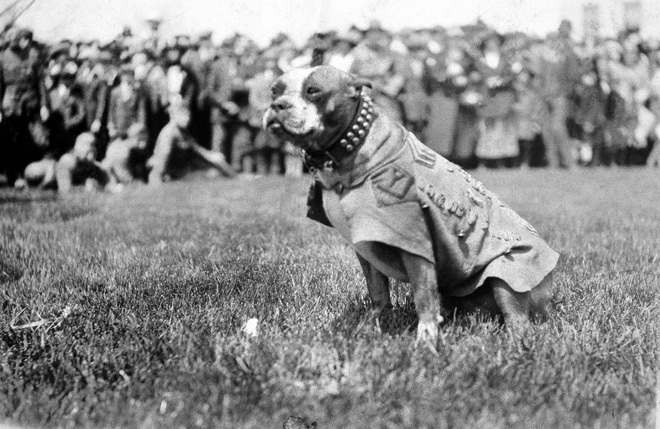
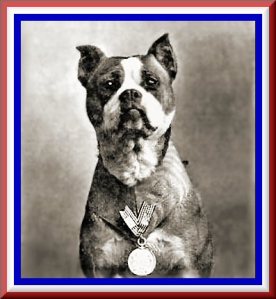 By the last year of WW1, the French, British and Belgians had at least 20,000 dogs on the battlefield, the Germans 30,000. General Headquarters of the American Expeditionary Forces recommended the use of dogs as sentries, messengers and draft animals in the spring of 1918. However, with the exception of a few sled dogs in Alaska, the US was the only country to take part in World War I with virtually no service dogs in its military.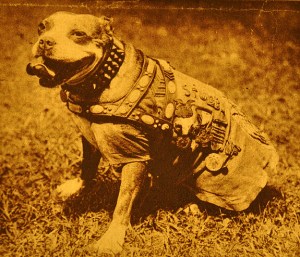
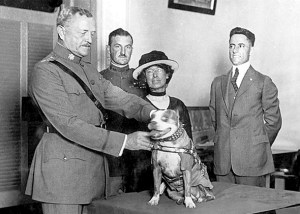 Stubby saw his first action at Chemin des Dames. Since the boom of artillery fire didn’t faze him, he learned to follow the men’s example of ducking when the big ones came close. It became a great game to see who could hit the dugout, first. After a few days, the guys were watching him for a signal. Stubby was always the first to hear incoming fire. We can only guess how many lives were spared by his early warning.


 Exhausted, sunburned and aching with thirst, Tonelli still refused when a Japanese soldier demanded his Notre Dame class ring. As the guard reached for his sword, a nearby prisoner shouted “Give it to him. It’s not worth dying for”.
 The hellish 60-day journey aboard the filthy, cramped merchant vessel began in late 1944, destined for slave labor camps in mainland Japan. Tonelli was barely 100 pounds on arrival, his body ravaged by malaria and intestinal parasites. He was barely half the man who once played fullback at Notre Dame Stadium, Soldier Field and Comiskey Park.


 The fifteenth child of Josiah and Abiah Franklin was born in a little house on Milk Street, across from the Old South Church, in Boston.
 James Franklin and his literary friends loved the letters, and published every one. All of Boston was charmed with Silence Dogood’s subtle mockery of the city’s Old School Puritan elite. Proposals of marriage came into the print shop, when the widow Dogood coyly suggested that she would welcome suitors.
 All of Boston was amused by the hoax, but not James. He was furious with his little brother, who soon broke the terms of his apprenticeship and fled to Pennsylvania.
 Franklin’s diplomacy to the Court of Versailles was every bit as important to the success of the Revolution, as the Generalship of the Father of the Republic, George Washington. Signatory to both the Declaration of Independence and the Constitution, it is arguably Ben Franklin who broke the impasse of the Convention of 1787, paving the way for ratification of the United States Constitution.

 April Fools. The ancient Roman festival of Hilaria, held on March 25, may be a precursor. The Medieval Feast of Fools, held December 28, is still a day on which pranks are played in Spanish-speaking countries.
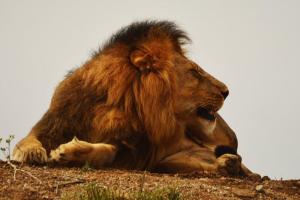 Animals were kept at the Tower of London since the 13th century, when Emperor Frederic II sent three leopards to King Henry III. In later years, elephants, lions, even a polar bear were added to the collection, the polar bear trained to catch fish in the Thames.
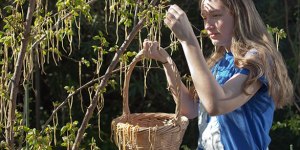 In 1957, (you can guess the date), the BBC reported the delightful news that mild winter weather had virtually eradicated the dread spaghetti weevil of Switzerland, and that Swiss farmers were now happily anticipating a bumper crop of spaghetti. Footage showed smiling Swiss peasants, pulling strands of spaghetti down from trees. Apparently, an embarrassingly large number of viewers were fooled. Many called BBC offices, asking how to grow their own spaghetti tree. “Place a piece of spaghetti in a tin of tomato sauce”, callers were told, “and hope for the best.”
 eyewear at a revolutionary price, while leading the way for socially conscious businesses”. On April 1, 2012, the company released its new line of eyeglasses for dogs, appropriately called “Warby Barker”. For only $95, your hipster pooch could be sporting the latest styles in canine eyeware, in irresistible dog treat shades like “Gravy Burst” and “Dusty Bacon.” There was a monocle option too, for those partial to that Prussian Field Marshall look. Anyone falling for the gag, got an “April Fools!” message on their on-line shopping cart.

 Historical Easter Eggs - Today in History
You must be logged in to post a comment.