

Early in the “Great War”, Manfred Freiherr von Richtofen was a cavalry scout, serving with the 1st Regiment of Uhlans Kaiser Alexander III in the Verdun sector. Cavalry quickly became obsolete, as the war of movement ended and armies dug in. Leutnant Richtofen served as a messenger over the winter of 1914-15, but there was no glory in crawling through the mud of shell holes and trenches. He applied to the fledgling Air Corps, writing to his superiors that “I have not gone to war in order to collect cheese and eggs, but for another purpose.”
Following four months of training, Richtofen began his flying career as an observer, taking photographs of Russian troop positions on the eastern front.
After transferring to Belgium and becoming bombardier, Manfred’s first air-to-air kill occurred in late 1915, while acting as observer and rear gunner on a two seat reconnaissance plane. The French pusher bi-plane went down over unfriendly territory and couldn’t be confirmed, so the victory was never counted. Neither was his second kill, when Richtofen shot down a French Nieuport fighter from an Albatross C.III bomber. This one too went down over enemy territory, and couldn’t be confirmed.
Richtofen had his first official victory on September 17, 1916, after being transferred to a fighter squadron. Manfred ordered a silver cup to mark the occasion, engraved with the date and make of the aircraft he had shot down, a British F.E. 2B. Richtofen would add many more silver cups to his collection, before he was through.
Manfred got his 5th kill to become an ace on October 16, 1916, and the coveted “Blue Max” medal for his 16th, the following January. He shot down 22 enemy planes in April alone, four of those in a single day. Richtofen was Germany’s leading living ace, fast becoming the most famous pilot of his day, as German propagandists spread the rumor that the Allies were going to award the Victoria Cross to the man who shot him down.
Ever aware of his own celebrity, von Richtofen took to painting the wings of his aircraft a brilliant shade of red, after the colors of his old Uhlan regiment. It was only later that he had the whole thing painted. Friend and foe alike knew him as “the Red Knight”, “the Red Devil”, “’Le Petit Rouge’” and the name that finally stuck, “the Red Baron”.
Like Ted Williams, who was said to be able to count the stitches on a fastball, Richtofen was blessed with exceptional eyesight. Gifted with lightning fast reflexes, he became the top ace of the war. In an age when it was exceptional to score even a few air combat victories, Richtofen accumulated sixty engraved silver cups before the metal became unavailable in war ravaged Germany. Even then he was far from done.
Despite the popular link between Richthofen and his Fokker Dr.I, he only scored his last 19 kills while flying his famous red triplane. Three quarters of his victories were won in different makes of the Albatross and Halberstadt D.II.
By way of comparison, the highest scoring Allied ace of the Great War was Frenchman René Fonck, with 75 confirmed victories. The highest scoring fighter pilot from the British Empire was Canadian Billy Bishop, who was officially credited with 72. The Red Baron had 80.
Richthofen sustained a serious head wound on July 6 1917, causing severe disorientation and temporary partial blindness. He returned to duty after October 23, but many believed his injury caused lasting damage, leading to his eventual death.
 Richthofen chased the rookie Canadian pilot Wilfred “Wop” May behind the lines on April 21, 1918, when he found himself under attack. With a squadron of Sopwith Camels firing from above and anti-aircraft gunners on the ground, he was shot once through the chest with a .303 round, managing to land in a beet field before dying several minutes later. He was still wearing his pajamas, under his flight suit.
The RAF credited Canadian Pilot Captain Roy Brown with shooting the Red Baron down, but the angle of the wound suggests that the bullet was fired from the ground. A 2003 PBS documentary demonstrated that Sergeant Cedric Popkin was the person most likely to have killed Richthofen, while a 2002 Discovery Channel documentary suggests that it was Gunner W. J. “Snowy” Evans, a Lewis machine gunner with the 53rd Battery, 14th Field Artillery Brigade, Royal Australian Artillery. It may never be known with absolute certainty, who killed the Red Baron.
British Third Squadron officers served as pallbearers and other ranks from the squadron acted as a guard of honor for the Red Baron’s funeral on April 22, 1918. Allied squadrons stationed nearby presented memorial wreaths, one of which was inscribed with the words, “To Our Gallant and Worthy Foe”.


 According to legend, Romulus and Remus were the sons of Rhea Silvia, the daughter of King Numitor of Alba Longa, a mythical city located in the Alban Hills southeast of what would become Rome. Numitor was deposed by his younger brother Amulius, who forced Rhea to become a vestal virgin so that she would not give birth to rival claimants to his title. However, Rhea was already pregnant by the war god Mars, and destined to give birth to Romulus and Remus.


 Founded by Byzas, son of the Greek King Nisos circa 657BC, the earliest days of Byzantium are clouded by legend. Located on the easternmost peninsula where Europe becomes Asia, the city is surrounded on three sides, by water.
 21-year-old Mehmed II began the final siege of Constantinople on April 6, 1453. Commanding 120,000 attackers with an estimated 126 ships, Ottoman forces faced 7,000 to 12,000 Christian defenders with 26 ships, defending almost 3½ miles of land wall and another 9 miles of sea wall facing the Sea of Marmara and the Golden Horn.
 Mehmed placed his cannon into positions facing the wall. The largest, the monster “Basilica” was 27′ long, weighed 18 tons, and required a team of 60 oxen and 400 men to move it. It had a diameter of 30″, large enough for a grown man to crawl inside. Its 150lb powder charge was capable of hurling a half-ton stone ball a distance of over a mile. While the weapon did catastrophic damage to the city walls, it took over three hours to reset after firing, and frantic efforts by the defenders were able to repair much of the damage between shots.
 Serbian Sappers dug tunnels under the city, intending to undermine and blow out the walls, but Christian counter-miners broke into the tunnels and attacked them with swords, axes and Greek fire, an early form of napalm.
 These were the cannon fodder, their purpose to wear down the defenders in preparation for attacks by professional soldiers, the Bashi-Bazouks. Then came the Janissaries, Christian slave warriors raised from childhood to be the elite of the Ottoman army, Attackers stormed the walls by the tens of thousands, while Ottoman ships pounded the city from the harbor.


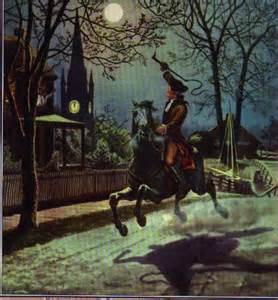 Boston Patriots had been preparing for such an event. Sexton Robert John Newman and Captain John Pulling carried two lanterns to the steeple of the Old North church, signaling that the Regulars were crossing the Charles River to Cambridge. Dr. Joseph Warren ordered Paul Revere and Samuel Dawes to ride out and warn surrounding villages and towns, the two soon joined by a third rider, Samuel Prescott. It was Prescott alone who would make it as far as Concord, though hundreds of riders would fan out across the countryside before the night was through.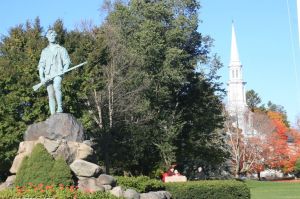
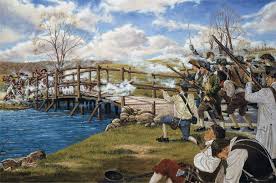 Some British soldiers marched 35 miles over those two days, their final retreat coming under increasing attack from militia members firing from behind stone walls, buildings and trees. One taking up such a firing position was Samuel Whittemore of Menotomy Village, now Arlington Massachusetts. At 80 he was the oldest known combatant of the Revolution.


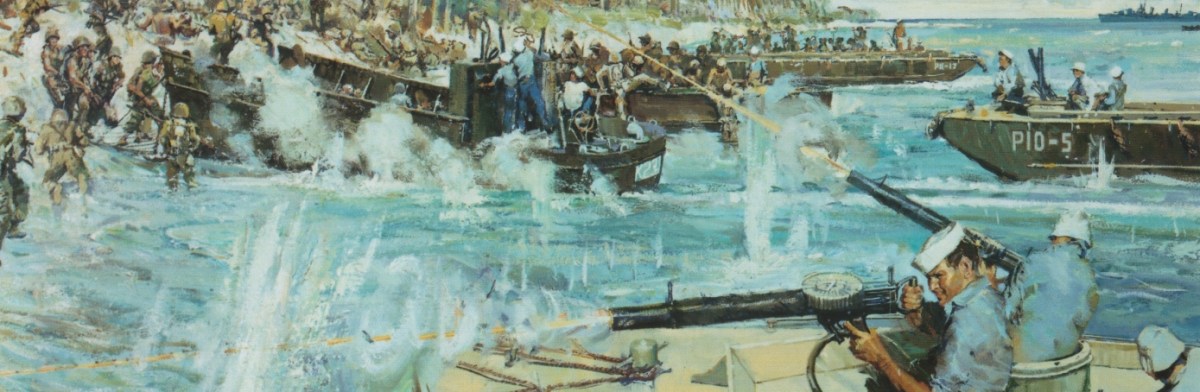
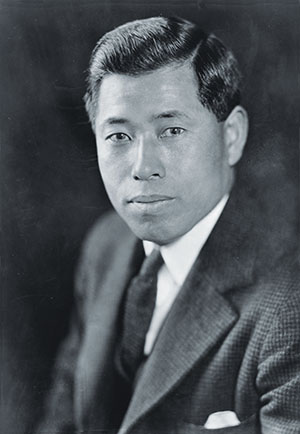 Isoroku Takano was born in Niigata, the son of a middle-ranked samurai of the Nagaoka Domain. His first name “Isoroku”, translating as “56”, refers to his father’s age at the birth of his son. At this time, it was common practice that samurai families without sons would “adopt” suitable young men, in order to carry on the family name, rank, and the income that came with it. The young man so adopted would carry the family name. So it was that Isoroku Takano became Isoroku Yamamoto in 1916, at the age of 32.
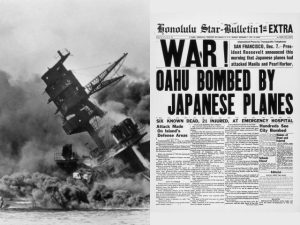 Many believed that Yamamoto’s career was finished when his old adversary Hideki Tōjō ascended to the Prime Ministership in 1941. Yet there was none better to run the combined fleet. When the pro-war faction took control of the Japanese government, he bowed to the will of his superiors. It was Isoroku Yamamoto who was tasked with planning the attack on Pearl Harbor.
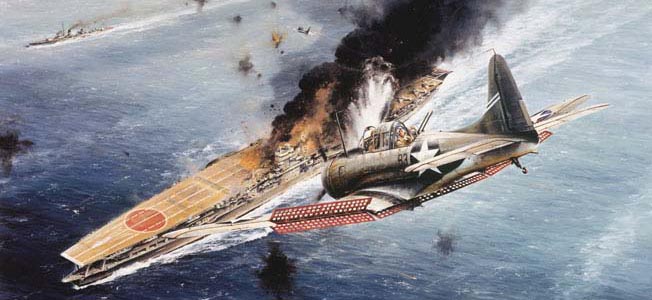 American carrier based Torpedo bombers were slaughtered in their attack, with 36 out of 42 shot down. Yet Japanese defenses had been caught off-guard, their carriers busy rearming and refueling planes when American dive-bombers arrived.
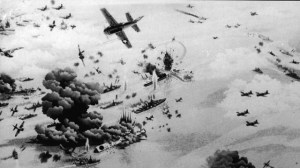 Midway was a disaster for the Imperial Japanese navy. The carriers Akagi, Kaga, Soryu and Hiryu, the entire strength of the task force, went to the bottom. The Japanese also lost the heavy cruiser Mikuma, along with 344 aircraft and 5,000 sailors. Much has been made of the loss of Japanese aircrews at Midway, but two-thirds of them survived. The greater long term disaster, may have been the loss of all those trained aircraft mechanics and ground crew who went down with their carriers.
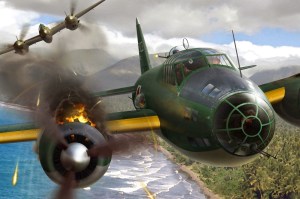 tour throughout the South Pacific. US naval intelligence intercepted and decoded his schedule. The order for “Operation Vengeance” went down the chain of command from President Roosevelt to Secretary of the Navy Frank Knox to Naval Operations Admiral Ernest King to Admiral Chester Nimitz at Pearl Harbor. Sixteen Lockheed P-38 Lightnings, the only fighters capable of the ranges involved, were dispatched from Guadalcanal on April 17 with the order: “Get Yamamoto”.
 intercepted over Rabaul on April 18, 1943. Knowing only that his target was “an important high value officer”, 1st Lieutenant Rex Barber opened up on the first Japanese transport until smoke billowed from its left engine. Yamamoto’s body was found in the wreckage the following day with a .50 caliber bullet wound in his shoulder, another in his head. He was dead before he hit the ground.


 Castro proclaimed his administration to be an example of “direct democracy”, and dismissed the need for elections. The Cuban people could assemble demonstrations and express their democratic will to him personally, he said. Who needs elections?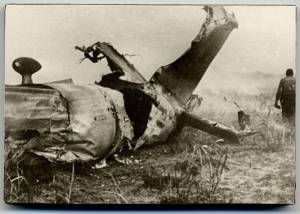
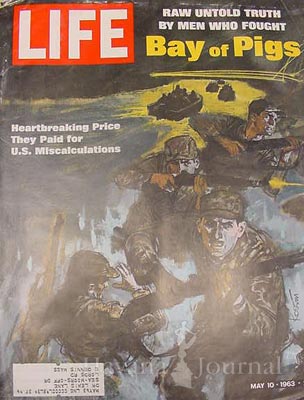 Kennedy was finally persuaded to authorize unmarked US fighter jets from the aircraft carrier Essex to provide escort cover for the invasion’s B-26 bombers, most of which were flown by CIA personnel in support of the ground invasion. Fighters missed their rendezvous by an hour, due to a misunderstanding about time zones. Unescorted bombers are easy targets, and two of them were shot down with four Americans killed. Fighting ended on April 20, 1961 in what had become an unmitigated fiasco.


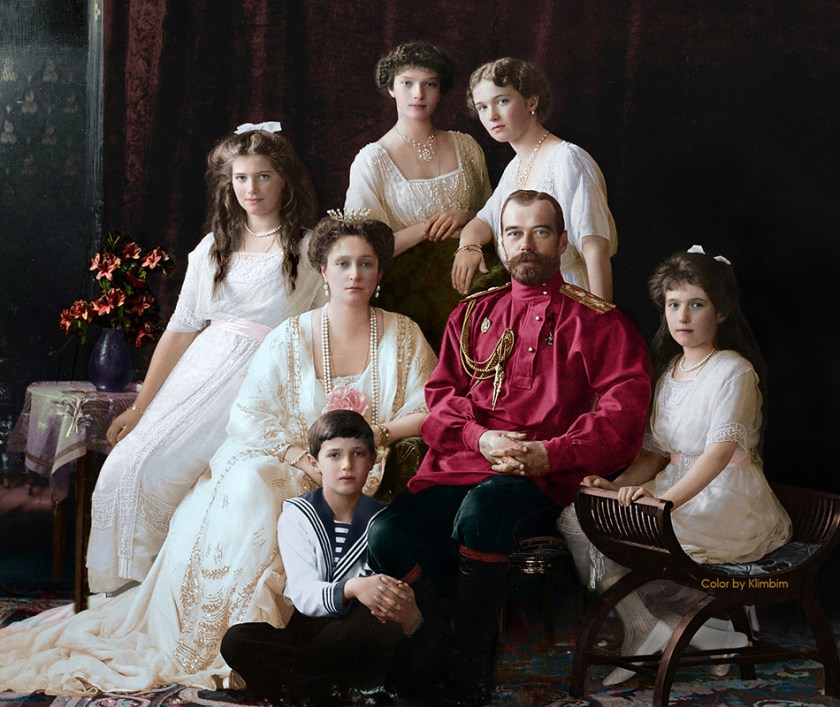
 By 1916 it was generally understood in Germany, that the war effort was “shackled to a corpse”, referring to Germany’s Austro-Hungarian ally. Italy, the third member of the “Triple Alliance”, was little better. On the Triple Entente side, the French countryside was literally torn to pieces, the English economy close to breaking. The Russian Empire, the largest nation on the planet, was on the edge of the precipice.
 the more extreme road. While Reds and Whites both wanted to bring socialism to the Russian people, the Mensheviks argued for predominantly legal methods and trade union work, while Bolsheviks favored armed violence.




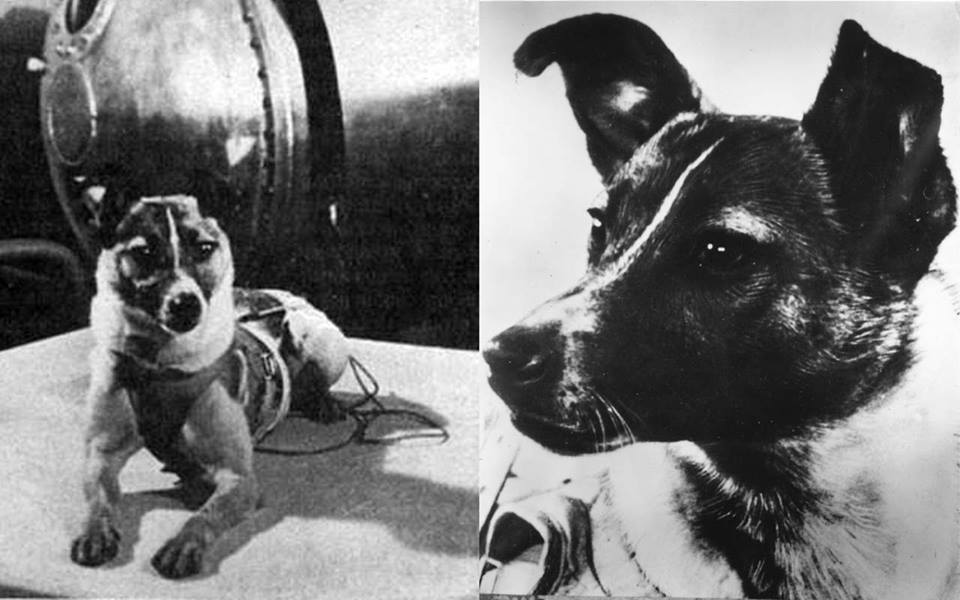
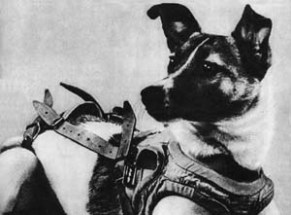
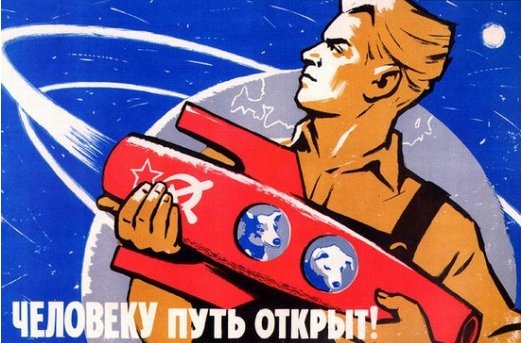
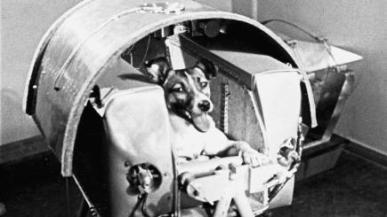 allowed her to stand, sit and lie down. Finally, it was November 3, 1957. Launch day. One of the technicians “kissed her nose and wished her bon voyage, knowing that she would not survive the flight”.
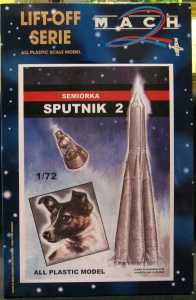 In the beginning, the US News media focused on the politics of the launch. It was all about the “Space Race”, and the Soviet Union running up the score. First had been the unoccupied Sputnik 1, now Sputnik 2 had put the first living creature into space. The more smartass specimens among the American media, called the launch “Muttnik”.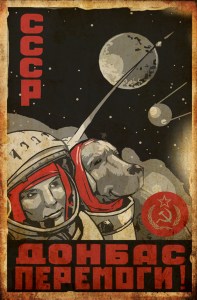
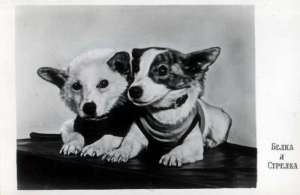 As a dog lover, I feel the need to add a more upbeat postscript, to this thoroughly depressing story.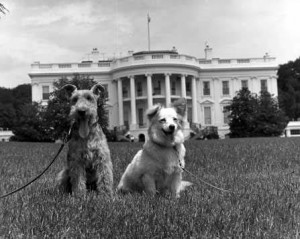


 Historical Easter Eggs - Today in History
You must be logged in to post a comment.