

Long before he became President of the Confederate States of America, Jefferson Davis was a young Army Officer. At one time, Davis was approached with the idea of using camels as pack animals. To Davis, the idea made sense. The beast’s ability to survive in the desert, its massive strength and great stamina, made him wonder if this wasn’t the weapon of the future.
Twenty years later, then-US Secretary of War Jefferson Davis ordered the creation of the 1st United States Camel Corps. Major Henry Wayne was sent to Turkey to acquire 62 of the animals, along with trainers who could teach American soldiers how to properly handle and care for them.
 The camels arrived on May 14, 1856, and set out for the newly established Camp Verde in West Texas, with elements of the US Cavalry and seven handlers.
Major Wayne became an enthusiastic salesman for the camel program, putting on demonstrations for cavalry groups. He would order what seemed an impossible load to be placed on a kneeling camel, and then step back and frown, “concerned” that he might have overdone it. Mule drivers would smile and jab each other with their elbows – now he’s done it – then he would step forward and pile on more weight. On command, the camel would stand up and stroll away, completely unconcerned.
One of the handlers, a Syrian named Hadji Ali, (“Hi Jolly” to the soldiers), established a successful breeding program while stationed at Camp Verde. The program was not without problems. Camels don’t play well with other pack animals, and they don’t accept the whips and prods used to handle horses and mules. They tend to retaliate. A camel will spit or rake your face with its teeth if given the chance, and they can turn and charge in a manner that’s terrifying.
Camp Verde had about 60 camels when Civil War broke out in 1861. The King of Siam seems to have been the only one who grasped the military advantage to the Confederacy. Seeing a business opportunity, the King wrote to President Abraham Lincoln, saying “here, we use elephants”. It seems that Lincoln never responded to the King’s overture, and the animal arms race got no further than this single letter. It makes the imagination run wild, though, at the idea of War Elephants at Gettysburg.

Some of Camp Verde’s camels were sold off. One poor brute was pushed over a cliff by frustrated cavalrymen. Most were simply turned loose to fend for themselves. The fates of these animals are mostly unknown, except for one who made his way to Mississippi in 1863, where he was taken into service with the 43rd Infantry Regiment. “Douglas the Confederate Camel” was a common sight throughout the siege of Vicksburg, until being shot and killed by a Union sharpshooter. Lieutenant Colonel Robert Bevier of the 5th Regiment, Missouri Confederate Infantry was furious, enlisting six of his best snipers to rain down hell on Douglas’ killer. Bevier later said of the Federal soldier “I refused to hear his name, and was rejoiced to learn that he had been severely wounded.”

The Apache wars were drawing to a close in 1883, but southeastern Arizona could still be a dangerous place. Renegade bands of Apache were on the move, and isolated ranches were in a constant state of siege.
Two men rode out to check on their livestock one day, leaving their wives at the ranch with the kids. One of the women went down to the spring for a bucket of water while the other remained in the house with the children. Suddenly there was a terrifying scream, and the dogs began to bark. The woman inside saw what she described as a huge, reddish beast, being ridden by a devil.

She barricaded herself inside the house and hysterically prayed while she waited for the men to return. They returned that night and found the body of the other woman by the stream. She’d been trampled almost flat, with huge, cloven hoof prints in the mud around her body and a few red hairs in the brush.
Gold prospectors awakened in the night a few days later, as their tent crashed down around them to the sound of thundering hoofs. They clawed their way out of the mess and saw a huge beast, much larger than a horse, run off into the moonlight. The next day, they too found red hairs in the brush.
The stories became more fantastic and more terrifying with each telling. One man claimed that he personally saw the beast kill and eat a grizzly. Another claimed that he had chased the “Red Ghost”, only to have it vanish before his eyes.
 A few months later, a Salt River rancher named Cyrus Hamblin spotted the animal while rounding up cows. It was a camel, and Hamblin saw that it had something that looked like the skeleton of a man tied to its back. Nobody believed his story, but a group of prospectors fired on the animal several weeks later. Though their shots missed, they saw the animal bolt and run, and a human skull with some parts of flesh and hair still attached fell to the ground.
There were further incidents over the next year, mostly at prospector camps. A cowboy near Phoenix came upon the Red Ghost while eating grass in a corral. Cowboys seem to think they can rope anything with hair on it, and this guy was no exception. He lashed the rope onto the pommel of his saddle, and tossed it over the camel’s head. The angry beast turned and charged, knocking horse and rider to the ground. As the camel galloped off, the astonished cowboy could clearly see the skeletal remains of a man lashed to its back.
The beast last appeared nine years later in the garden of a rancher. He aimed his Winchester and fired, dropping the animal with one shot. On the back of the poor, tormented beast was the body of a man, tied down with heavy rawhide straps that cruelly scarred the animal’s flesh. The story of the Red Ghost ends here. How the body of a man came to be tied to its back remains a cruel mystery.

If you enjoyed this “Today in History”, please feel free to re-blog, “like” & share on social media, so that others may find and enjoy it as well. Please click the “follow” button on the right, to receive email updates on new articles. Thank you for your interest, in the history we all share.


 In 1866, the Quartermaster ordered the remains of 2,111 unknown Civil War dead to be exhumed and placed inside a vault in the Lees’ rose garden.


 At the height of its depravity, the Khmere Rouge smashed the heads of infants and children against Chankiri (Killing) Trees so that they “wouldn’t grow up and take revenge for their parents’ deaths”. Soldiers laughed as they carried out these grim executions. Failure to do so would have shown sympathy, making the killer him/herself, a target.
 On May 12, the American flagged container ship SS Mayaguez passed the coast of Cambodia bound for Sattahip, in southwest Thailand. At 2:18pm, two fast patrol craft of the Khmere Rouge approached the vessel, firing machine guns and then rocket-propelled grenades across its bows.
 The cargo vessel was being towed to Kompong Som on the Cambodian mainland, as word of the incident reached the White House. A government made to look weak and indecisive by what President Ford himself called the “humiliating withdrawal” of only days earlier, could ill afford another drawn-out hostage drama, similar to that of the USS Pueblo. Massive force would be brought to bear against the Khmere Rouge, and time was of the essence.
 Expecting only light resistance, US forces were met with savage force on May 15, from a heavily armed contingent of some 150-200 Khmere Rouge. Three of the nine helicopters participating in the operation were shot down, and another four too heavily heavily damaged to continue
 The cost of the Mayaguez Incident, officially the last battle of the Vietnam war, was heavy. Eighteen Marines, Airmen and Navy corpsmen were killed or missing in the assault and evacuation of Kho-Tang Island. Another twenty-three were killed in a helicopter crash. The last of 230 Marines would not get out until well after dark.




 Following liberation, French women were beaten and humiliated in the streets, their heads shaved, for being “collaborators” with their German occupiers.
 Sixty-five years later, Jan Gregor of the East German state of Brandenburg, can still remember the day his mother told him that she’d been “made pregnant by force”. He was five, at the time.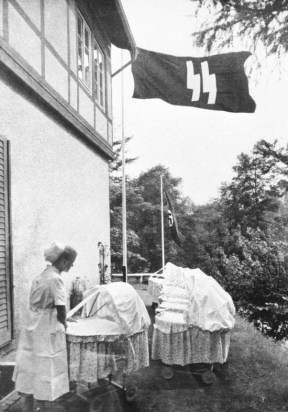

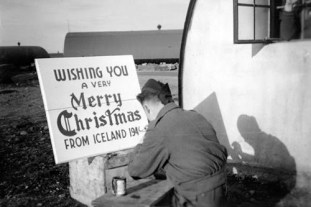 Icelandic public opinion was sharply divided at the invasion and subsequent occupation. Some described this as the “blessað stríðið”, the “Lovely War”, and celebrated the building of roads, hospitals, harbors, airfields and bridges as a boon to the local economy. Many resented the occupation, which in some years equaled 50% of the native male population.


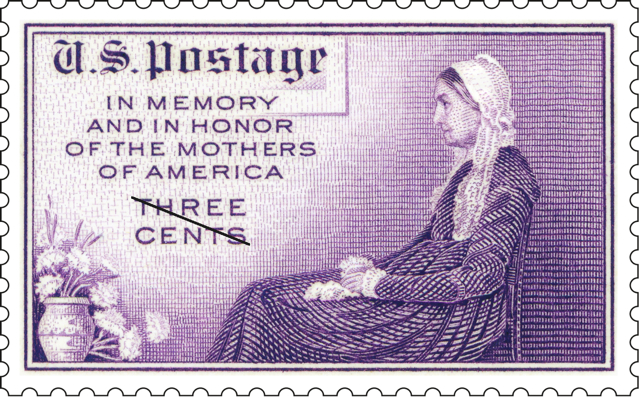


 A group of hunters used to meet at the Westminster Hotel at Irving Place & 16th Street, “to drink and lie about their shooting accomplishments”. The Westminster Kennel Club was formed when the group first decided to hold a dog show.
 1,201 dogs arrived for that first show, in an event so popular that the originally planned three days morphed into four. The Westminster Kennel Club donated all proceeds from the fourth day to the ASPCA, for the creation of a home for stray and disabled dogs. The organization remains supportive of animal charities, to this day.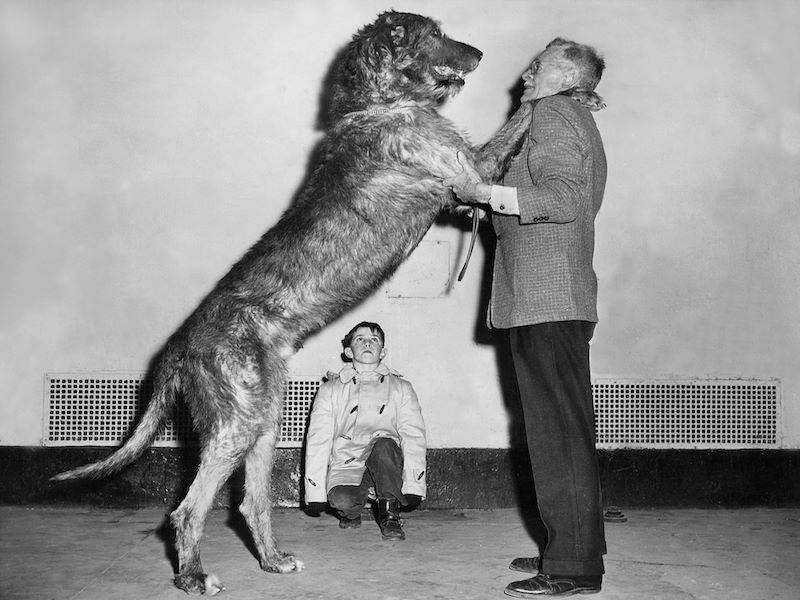


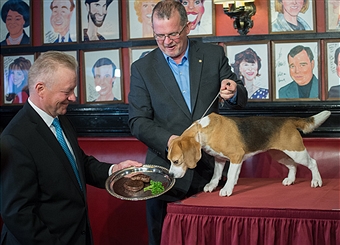 Since the late 1960s, winner of the Westminster Best in Show has celebrated at Sardi’s, a popular mid-town eatery in the theater district and birthplace of the Tony award.


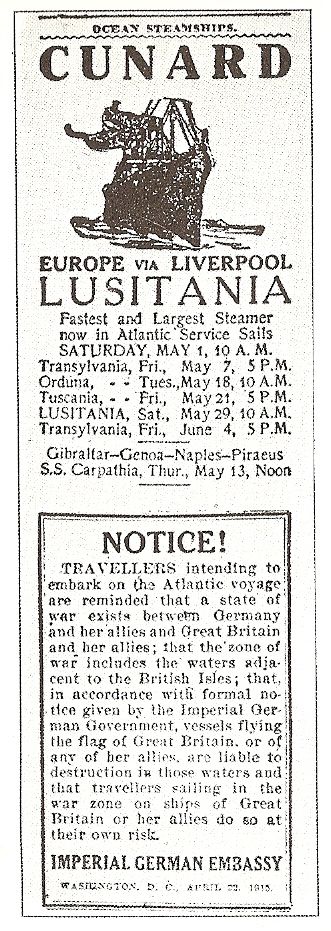 Germany adopted a policy of unrestricted submarine warfare on February 18, 1915. The German embassy took out ads in American newspapers, warning that ships sailing into the war zone, did so at their own risk. That didn’t seem to bother anyone as they boarded RMS Lusitania.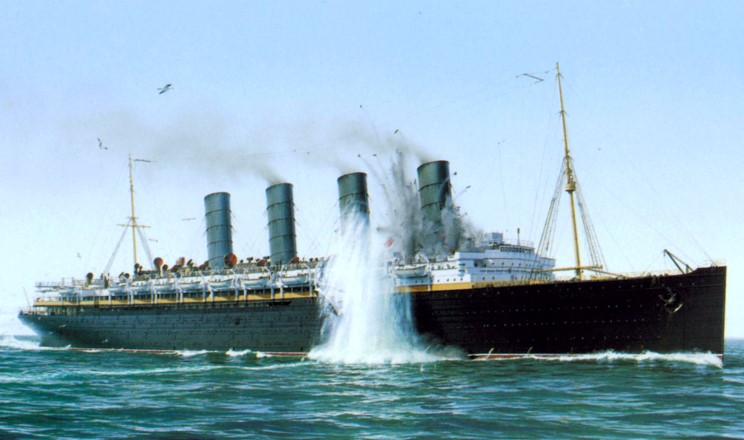
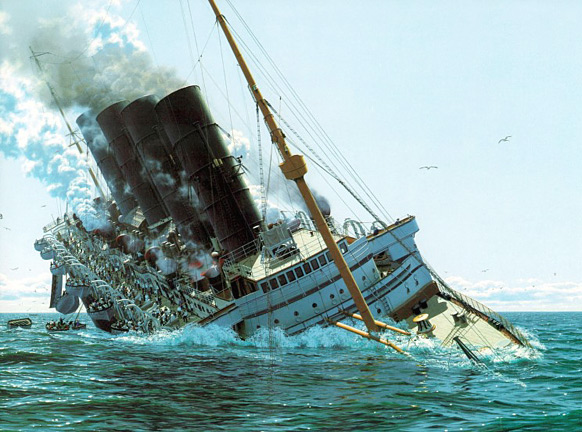
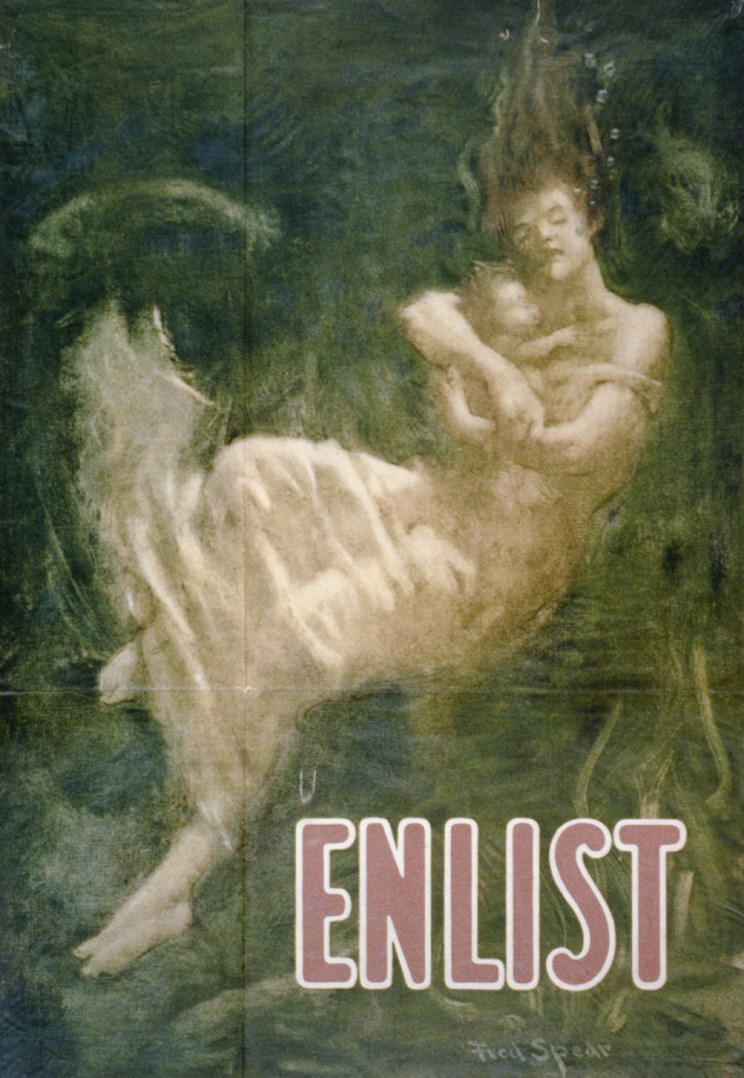
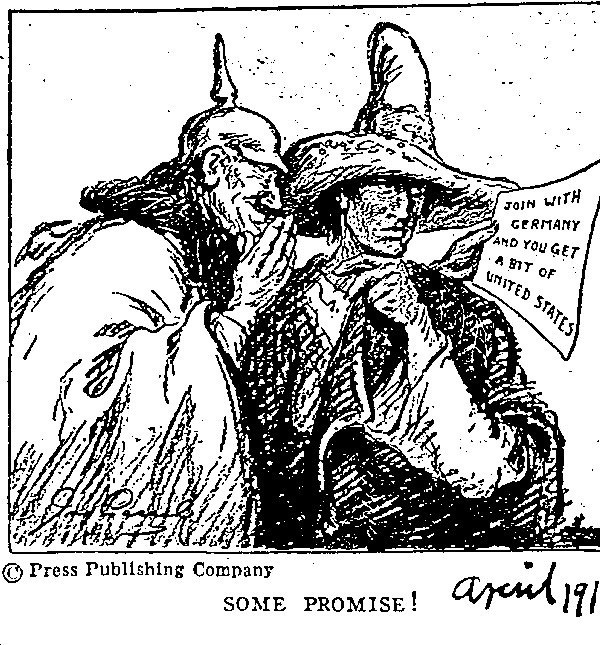 Unrestricted submarine warfare was resumed the same month. In February a German U-boat fired two torpedoes at the SS California off the Irish coast, killing 43 of her 205 passengers and crew. President Wilson asked for a declaration of war in a speech to a joint session of Congress on April 2. From the text of the speech, it seems the Germans were right. It was the resumption of unrestricted submarine warfare which provoked the United States to enter the war against Germany, which it did when Congress declared war on April 6.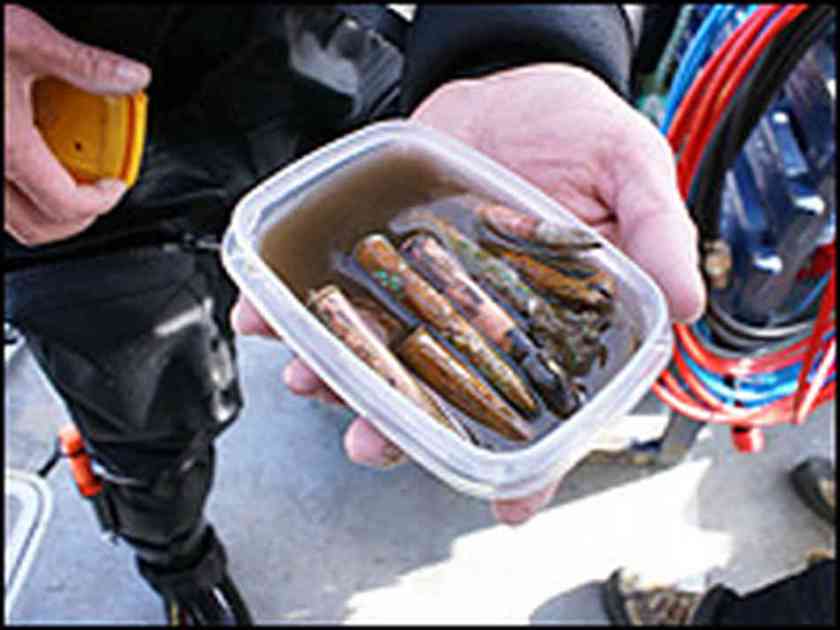

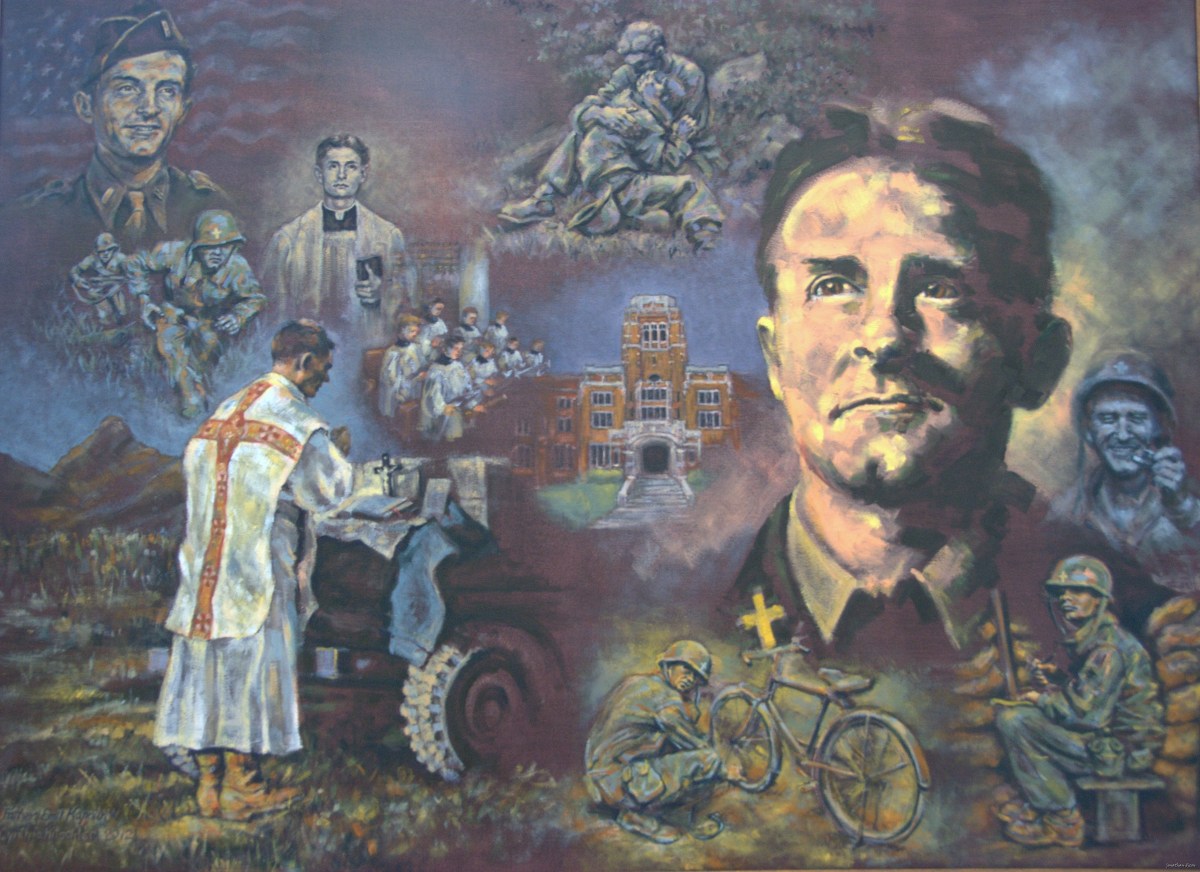
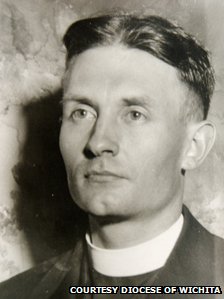 Kapaun served as military chaplain toward the end of WWII, before leaving the army in 1946, and rejoining in 1948.
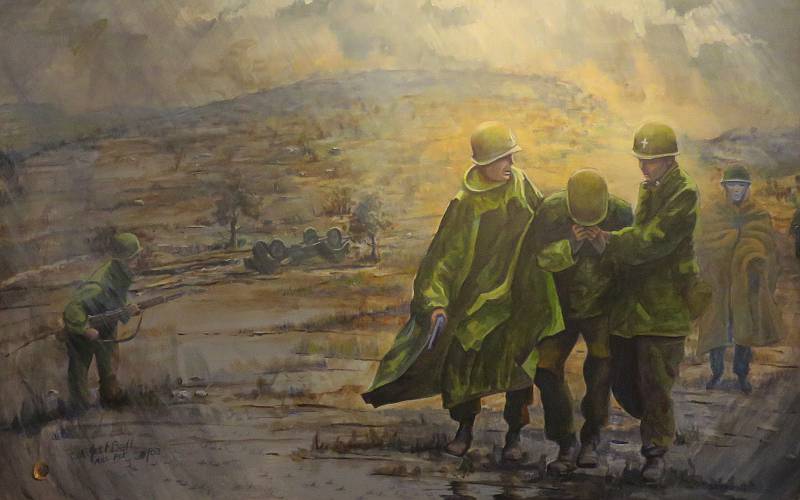
 Starving, suffering from a blood clot in his leg and a severe eye infection, Father Kapaun led Easter services in April, 1951. He was incapacitated a short time later. Chinese guards carried him off to a “hospital” – a fetid, stinking part of the camp known to prisoners as the “Death House”, from which few ever returned. “If I don’t come back”, he said, “tell my Bishop that I died a happy death.”
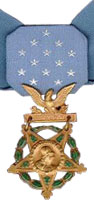 Pope John Paul II named Father Kapaun a “Servant of God” in 1993, the first step toward Roman Catholic Sainthood. On November 9, 2015, the Catholic Diocese of Wichita submitted a 1,066 page report on the life of Chaplain Kapaun, to the Roman Curia at the Vatican. A team of six historians reviewed the case for beatification. On June 21, 2016, the committee unanimously approved the petition. At the time I write this, Father Emil Joseph Kapaun’s supporters continue working to have him declared a Saint of the Roman Catholic Church, for his lifesaving ministrations at Pyoktong.

 With sandbags, explosives, and the device which made the thing work, the total payload was about a thousand pounds on liftoff. The first such device was released on November 3, 1944, beginning the crossing to the west coast of North America. 9,300 such balloons were released with military payloads, between late 1944 and April, 1945.
 In 1945, intercontinental weapons were more in the realm of science fiction. As these devices began to appear, American authorities theorized that they originated with submarine-based beach assaults, German POW camps, and even the internment camps into which the Roosevelt administration herded Japanese Americans.
 American authorities were alarmed. Anti-personnel and incendiary bombs were relatively low grade threats. Not so the biological weapons Japanese military authorities were known to be developing at the infamous Unit 731, in northern China.


You must be logged in to post a comment.