

The Cold War was at its peak in 1950, the war in Korea, just begun. US policy makers were convinced that the conflict represented a Kremlin-backed expansion of international communism. The US began sending military advisers into French Indochina that year, in support of a colonial war which had been off and on since before the American Civil War.
 France would leave the country following defeat by Viet Minh forces at Dien Bien Phu (May, 1954), while US involvement continued and escalated through the early ’60s.
US Troop levels tripled and then tripled again. Combat units were deployed, beginning in 1965.
The American war in Vietnam began to lose public support by the late ’60s, ultimately driving an American President out of office. In a March 31, 1968 address carried on live television, President Lyndon Johnson stated “I shall not seek, and I will not accept, the nomination of my party for another term as your president.”
North Vietnam invaded the South that year on the Lunar New Year “Tet” holiday. The “Tet Offensive” was a crushing military defeat for communist forces, but a public relations setback for the American side. TV news and AP crews brought the events into living rooms, across America.
No TV news crews were on-hand in the ancient city of Huế, to record the communist murder of thousands of prisoners and civilians, including women, men, children, and infants.
 Richard M. Nixon won overwhelming victory in the Presidential election of 1968, running on a platform including a “secret plan” to end the war in Vietnam.
US combat fatalities exceeded 3,600 in the first two months of the new administration, as Nixon secretly expanded the war effort, bombing neighboring Cambodia and sending US Marines into Laos.
US public opinion went ballistic in May 1969, as the New York Times revealed expanded military operations on the Indochinese peninsula. The President was furious, and ordered government officials and journalists to be wiretapped, to track down the leak.
Opposition increased later that year, in response to the massacre of civilians at the village of My Lai, and the re-institution of involuntary military conscription by US Selective Service, later that year. The First Draft Lottery was held on December 1, 1969.
Draft-age Americans didn’t want to be conscripted into a war they strongly opposed, and demonstrations erupted across the American countryside. In Ohio, full-scale riots broke out at Kent State University, part of what Time Magazine called “a nation-wide student strike”.
Kent State University, a large, multi-campus public research university located in Northeastern Ohio, (the Kent Campus had 28,972 students in 2017), had long been a focal point for antiwar protests. In the 1966 homecoming parade, protesters marched in military uniforms, wearing gas masks.
 Students for a Democratic Society (SDS) and other “New Left” organizations staged sit-ins in the fall of 1968. Demonstrations became violent six months later, resulting in 58 arrests. Four SDS leaders spent six months in prison.
In April 1970, “Youth International” (“Yippie”) Party leader Jerry Rubin spoke on campus, stating that “The first part of the Yippie program is to kill your parents. They are the first oppressors.” Two weeks later, SDS member Bill Anthrell distributed flyers to a campus event, in which the former student announced his intention to “napalm a dog”.
For traditionally-oriented Americans, such language was alarming, to say the least.

Cambodia’s political neutrality and military weakness had long turned the eastern border regions of that country into “safe zones” for Vietnamese communist forces.
President Nixon announced a US incursion into Cambodia in late April 1970, at a time when the war seemed to be winding down.
Kent State University students held rallies on the following day, at which about 500 burned draft cards. Some burned a copy of the United States Constitution. Another rally was planned for the fourth, but violence broke out that night. A toxic mix of approximately 120 students, bikers, and out-of-town troublemakers set fires, threw bottles at police, shouted obscenities and smashed Kent store fronts. Mayor LeRoy Satrom declared a state of emergency and closed the bars, adding to the crowds in the streets.
Mayor Satrom requested that Governor Jim Rhodes call out the National Guard. Satrom’s request was granted, as a large demonstration formed on the Kent State campus. The campus ROTC building was set on fire late on May 2, as over a thousand demonstrators surrounded the building and cheered as it burned.
Radical revolutionaries, agitators and other non-students had by this time infiltrated the crowd, though their numbers are uncertain. Several Kent firemen and police officers were hit by rocks and other projectiles while attempting to put out the fire. Several fire engine companies were called in while protesters slashed hoses and hurled projectiles at fire fighters, police officers, National Guard soldiers, and Highway Patrol troopers. The ROTC building burned to the ground.
An emotional Governor Rhodes pounded the table during a press conference, the following day. “They’re worse than the brown shirts and the communist element and also the night riders and the vigilantes. They’re the worst type of people that we harbor in America. Now I want to say this. They are not going to take over [the] campus. I think that we’re up against the strongest, well-trained, militant, revolutionary group that has ever assembled in America. This is when we’re going to use every part of the law enforcement agency of Ohio to drive them out of Kent. We are going to eradicate the problem. We’re not going to treat the symptoms“.
University authorities attempted without success to stop the May 4 demonstration, planned three days earlier. Shortly before noon, campus patrolman Harold Rice approached demonstrators in a National Guard Jeep, and read the order to disperse. Over 2,000 protesters responded by hurling rocks, injuring one campus police officer and forcing the Jeep into retreat.
 Tear gas failed to break up the crowd and several canisters were thrown back, with near-constant volleys of rocks, bottles and other projectiles. 77 National Guardsmen advanced in line-abreast, as screaming protesters closed behind them. Guardsmen briefly assumed firing positions when cornered near a chain link fence, though no one fired.
At 12:24, the Guardsmen once again assumed firing position. Witnesses later testified that a sniper opened first, but the story was never proven nor debunked. 67 rounds were fired. 13 seconds later it was over, with four dead and nine wounded. Two of the dead, Allison Krause and Jeffrey Miller, had participated in the protest. The other two, Sandra Scheuer and William Schroeder, were walking to class at the time they died. Schroeder was a member of the Kent State ROTC battalion.
One National Guardsman was wounded severely enough to require medical treatment.

Christine Ellen “Chrissie” Hynde, future lead singer of The Pretenders, was a KSU student at that time. She was there. Let the words she wrote in her 2015 autobiography, finish this story: “Then I heard the tatatatatatatatatat sound. I thought it was fireworks. An eerie sound fell over the common. The quiet felt like gravity pulling us to the ground. Then a young man’s voice: “They fucking killed somebody!” Everything slowed down and the silence got heavier… The guardsmen themselves looked stunned. We looked at them and they looked at us. They were just kids, 19 years old, like us. But in uniform. Like our boys in Vietnam”.
The arsonist(s) were never found.


 Gold Selleck Silliman, himself a widower, merged his household with that of Mary on May 24, 1775, in a marriage described as “rooted in lasting friendship, deep affection, and mutual respect”. The two would have two children together, who survived into adulthood: Gold Selleck (called Sellek) born in October 1777, and Benjamin, born in August 1779.


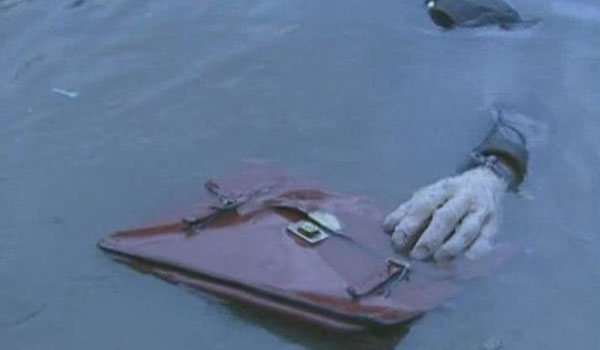
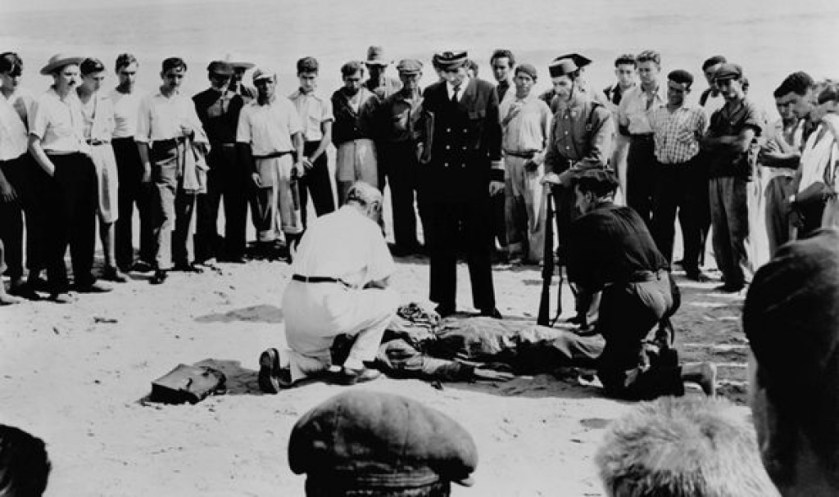
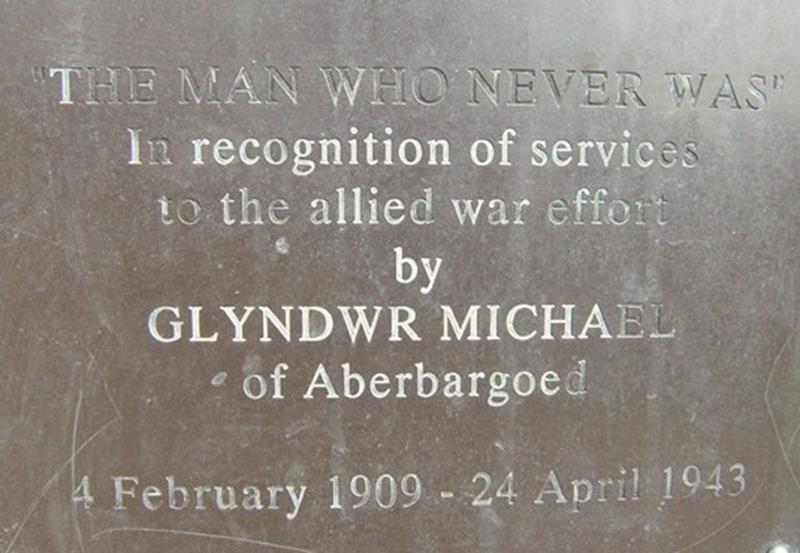
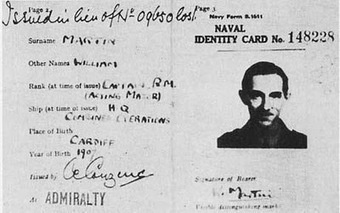 Be that as it may, this cause of death is difficult to detect, The condition of the corpse was close to that of someone who had died at sea, of hypothermia and drowning. The dead man’s parents were both deceased, there were no known relatives and the man died friendless. So it was that Glyndwr Michael became the “Man who Never Was”.
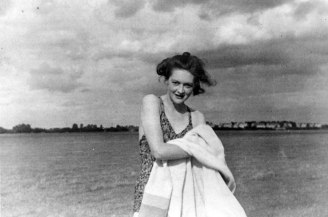 A “fiancée” was furnished for Major Martin, in the form of MI5 clerk “Pam”. “Major Martin” carried her snapshot, along with two love letters, and a jeweler’s bill for a diamond engagement ring.


 Field Marshall Helmuth von Moltke once said “No battle plan ever survives contact with the enemy”. So it was in the tiny Belgian city where German plans met with ruin, on the road to Dunkirk. Native Dutch speakers called the place Leper. Today we know it as Ypres (Ee-pres), since battle maps of the time were drawn up in French. To the Tommys of the British Expeditionary Force, the place was “Wipers”.
 The second Battle for Ypres began with a new and terrifying weapon on April 22, 1915. German troops placed 5,730 gas cylinders weighing 90 pounds apiece, along a four-mile front. Allied troops must have looked on in wonder, as that vast yellow-green carpet crept toward their lines.


 Units of all sizes, from individual companies to army corps, lightened the load of the “War to end all Wars”, with some kind of unit journal.


 Mark Kurlansky, author of “Cod: A Biography of the Fish That Changed the World”, laments the 1990s collapse of the Cod fishery, saying the species finds itself “at the wrong end of a 1,000-year fishing spree.”




 Two years later, Patriot forces maintained a similar supply depot, in the southwest Connecticut town of Danbury.


 Mary Silliman was left to run the farm, and negotiate for the release of her husband. The 1993 made-for-TV movie “Mary Silliman’s War” tells a story of non-combatants, pregnant mothers and farm wives, during the Revolution.








You must be logged in to post a comment.