

In 1924, the United States Congress passed the “World War Adjusted Compensation Act”, promising cash bonuses to veterans of the “Great War” in which the nation had been involved between 1917 and ’18.
 3,662,374 military service certificates were issued to qualifying veterans, bearing a face value equal to $1 per day of domestic service and $1.25 a day for overseas service, plus interest. Total face value of these certificates was $3.638 billion, equivalent to $43.7 billion in today’s dollars and coming to full maturity in 1945.
 The Great Depression was two years old in 1932, and thousands of veterans had been out of work since the beginning. Certificate holders could borrow up to 50% of the face value of their service certificates, but direct funds remained unavailable for another 13 years.
On May 29, WWI veterans began to arrive in Washington to press their case for immediate cash redemption, setting up encampments between the Capitol and the Lincoln Memorial, and around Washington DC. Former Army sergeant Walter W. Waters led the group, which called itself the “Bonus Expeditionary Force” after the AEF of the late war. True to form, the Media insultingly dubbed them the “Bonus Army”.
 This had happened before. Hundreds of Pennsylvania veterans of the Revolution had marched on Washington in 1783, after the Continental Army was disbanded without pay.
On that occasion the Congress fled to Princeton New Jersey, and the Army was called up to expel war veterans from the Capitol. Washington, DC was later excluded from the restrictions of the Posse Comitatus Act of 1878, making it the only part of the United States where the military may be used for domestic police activity.
17,000 veterans and their families, 43,000 all told, gathered in and around Washington. Men, women and children living in tents or in make-shift shelters built out of old lumber, packing boxes and scrap tin scavenged from nearby junkyards.
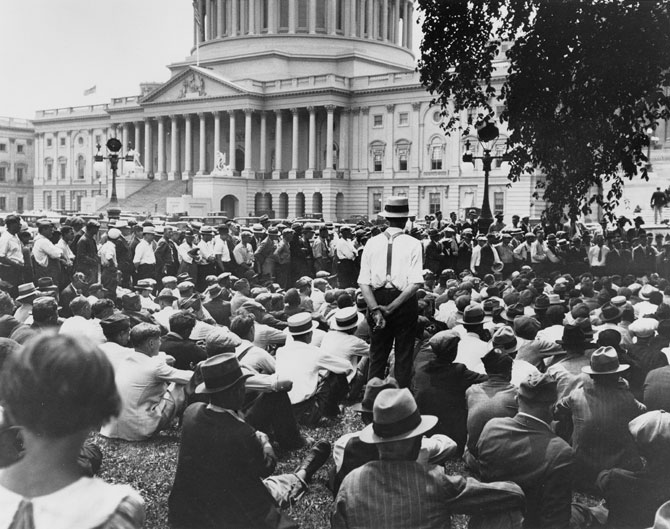
The House passed a bill to redress the situation, which went to the Senate for a vote on June 17, a day one newspaper described as “the tensest day in the capital since the war.” 10,000 marchers crowding the Capitol grounds responded with stunned silence when they got the news. The Senate had voted it down, 62 to 18. “Sing America and go back to your billets”, said Waters, and so they did. Marchers would hold a silent vigil in front of the Capitol until July 17, the day that Congress adjourned.
 Marchers and their families were in their camps on July 28 when Attorney General William Mitchell ordered them evicted. Two policemen became trapped on the second floor of a building when they drew their revolvers and shot two veterans, William Hushka and Eric Carlson, both of whom died of their injuries.
 President Herbert Hoover ordered the Army under General Douglas MacArthur to evict the Bonus Army from Washington. 500 Cavalry formed up on Pennsylvania Avenue at 4:45pm, supported by 500 Infantry, 800 police and six battle tanks under the command of then-Major George S. Patton. Civil Service employees came out to watch as bonus marchers cheered, thinking that the Army had gathered in their support.
And then the Cavalry was ordered to charge. The infantry followed with tear gas and fixed bayonets, entering the camps and evicting men, women and children alike.
 Bonus marchers fled to their largest encampment across the Anacostia River, when President Hoover ordered the assault stopped. Feeling that the Bonus March was an attempt to overthrow the government, General MacArthur ignored the President and ordered a new attack, the army routing 10,000 and leaving their camps in flames. 1,017 were injured and 135 arrested.
The wife of one veteran miscarried. 12-week old Bernard Myers died after being caught in the gas attack. A government investigation later claimed he died of inflammation of the small intestine, but a hospital employee said the tear gas “didn’t do it any good.”
 Then-Major Dwight D. Eisenhower was one of MacArthur’s aides at the time. Eisenhower believed that it was wrong for the Army’s highest ranking officer to lead an action against fellow war veterans. “I told that dumb son-of-a-bitch not to go down there”, he said.
 The bonus march debacle doomed any chance that Hoover had of being re-elected. Franklin D. Roosevelt opposed the veterans’ bonus demands during the election, but was able to negotiate a solution when veterans organized a second demonstration in 1933. Roosevelt’s wife Eleanor was instrumental in these negotiations, leading one veteran to quip: “Hoover sent the army. Roosevelt sent his wife”.




 Thorne was soon headed to Special Forces, the elite warrior becoming an instructor of skiing, mountaineering, survival and guerrilla tactics.
 As part of the 10th Special Forces Group, Thorne served in a search-and-rescue capacity in West Germany, earning a reputation for courage in operations to recover bodies and classified documents, following a plane in the Zagros Mountains of Iran.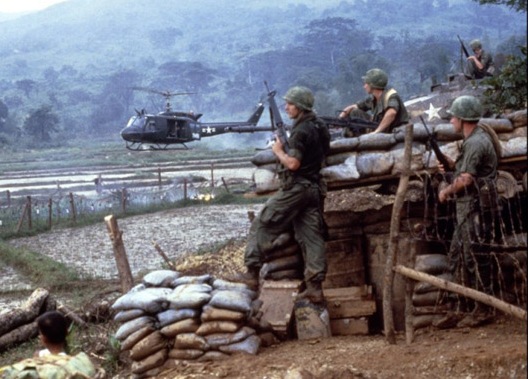


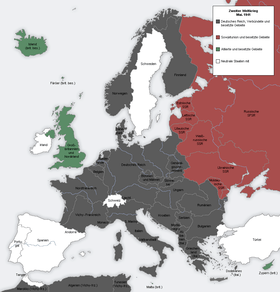
 The island nation of Great Britain alone escaped occupation, but British armed forces were shattered and defenseless in the face of the German war machine.
 Hitler ordered his Panzer groups to resume the advance on May 26, while a National Day of Prayer was declared at Westminster Abbey. That night Winston Churchill ordered “Operation Dynamo”. One of the most miraculous evacuations in military history had begun from the beaches of Dunkirk.
 Larger ships were boarded from piers, while thousands waded into the surf and waited in shoulder deep water for smaller vessels. They came from everywhere: merchant marine boats, fishing boats, pleasure craft, lifeboats and tugs. The smallest among them was the 14’7″ fishing boat “Tamzine”, now in the Imperial War Museum.
 A thousand copies of navigational charts helped organize shipping in and out of Dunkirk, as buoys were laid around Goodwin Sands to prevent strandings. Abandoned vehicles were driven into the water at low tide, weighted down with sand bags and connected by wooden planks, forming makeshift jetties.
 7,669 were evacuated on the first full day of the evacuation, May 27, and none too soon. The following day, members of the SS Totenkopf Division marched 100 captured members of the 2nd Battalion of the Royal Norfolk Regiment off to a pit, and machine gunned the lot of them. A group of the 2nd Battalion of the Royal Warwickshire Regiment were captured that same day, herded into a barn and murdered with grenades.
 Most light equipment and virtually all heavy equipment had to be left behind, just to get what remained of the allied armies out alive. But now, with the United States still the better part of a year away from entering the war, the allies had a military fighting force that would live to fight on.


 If you’ve raised a child, you are well acquainted with the triumphs and the terrors of giving those little tykes the sword with which they will conquer their world.



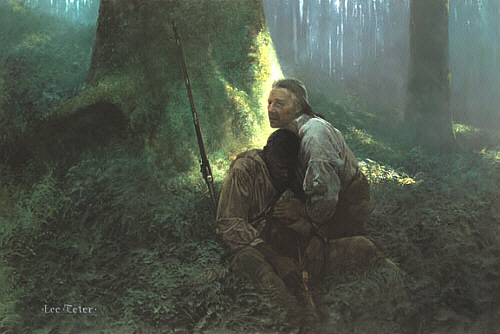
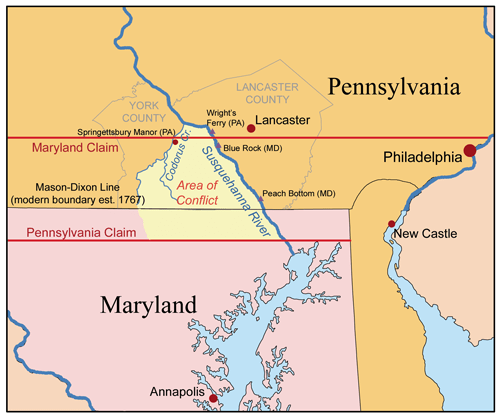
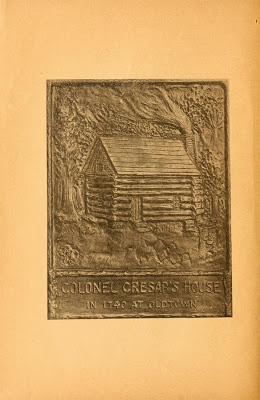 Business was good. By 1730, Wright had applied for a ferry license. With Lord Baltimore fearing a loss of control in the area (read – taxes), Maryland resident Thomas Cresap established a second ferry service up the river. Maryland granted Cresap some 500 acres along the west bank, serenely unconcerned that much of the area was already inhabited by Pennsylvania farmers.
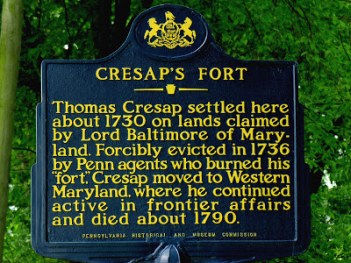 Maryland authorities petitioned George II, King of Great Britain and Ireland, imploring the King to restore order among his subjects. King George’s proclamation of August 18, 1737 instructed the governments of both colonies to cease hostilities. When that failed to stop the fighting, the Crown organized direct negotiations between the two. Peace was signed in London on May 25, 1738, the agreement providing for an exchange of prisoners and a provisional boundary to be drawn fifteen miles south of the southernmost home in Philadelphia, and mandating that neither Maryland nor Pennsylvania “permit or suffer any Tumults Riots or other Outragious Disorders to be committed on the Borders of their respective Provinces.”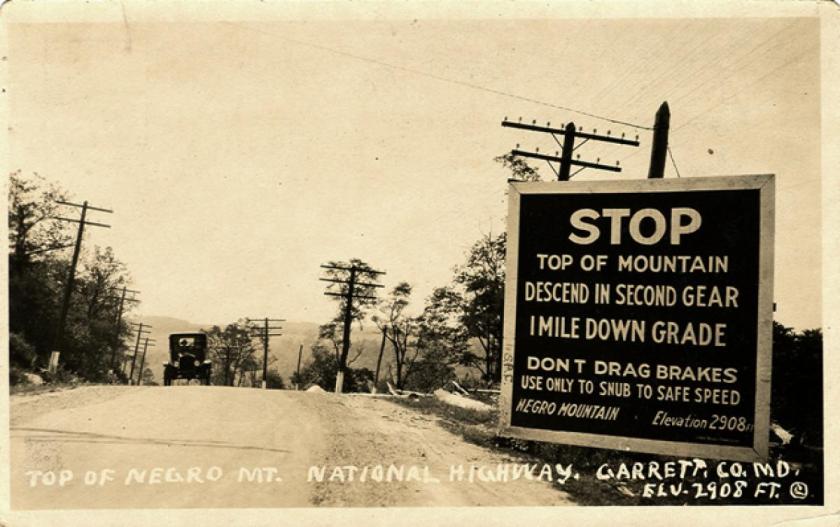


 In 18th century London, it was a bad idea to go out at night. Not without a lantern in one hand, and a club in the other.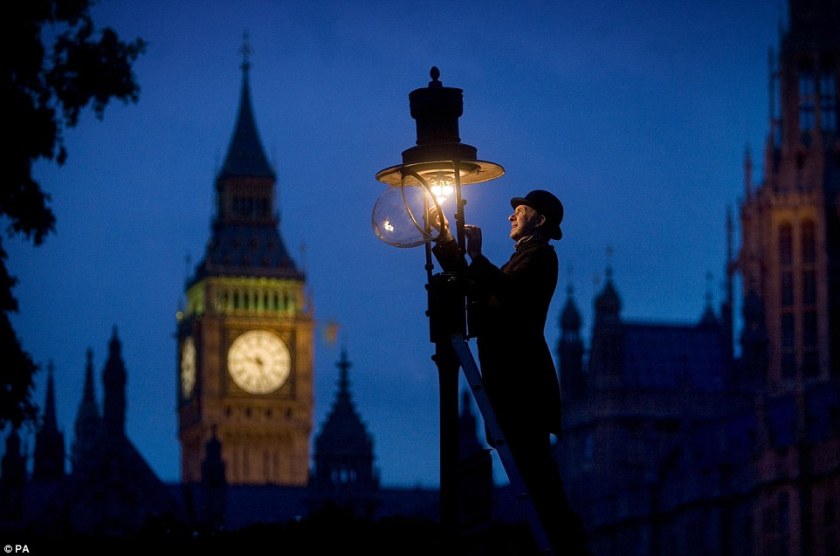
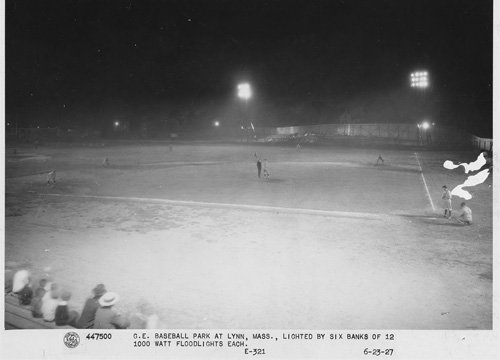 When the Great Depression descended across the land, minor league clubs folded by the bushel. Small town owners were desperate to innovate. The first-ever night game in professional baseball was played on May 2, 1930, when Des Moines, Iowa hosted Wichita for a Western League game.





 In the first half of the 19th century, 90% of federal government revenue came from tariffs on foreign manufactured goods. A lion’s share of this revenue was collected in the south, with the region’s greater dependence on imported goods. Much of this federal largesse was spent in the north, with the construction of railroads, canals and other infrastructure.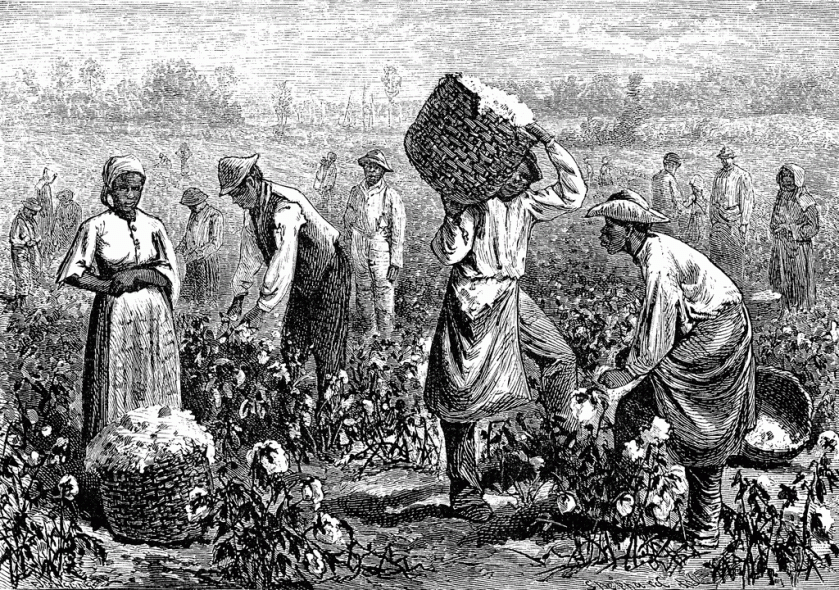
 The issue of slavery had joined and become so intertwined with ideas of self-determination, as to be indistinguishable.
 In Washington, Republicans backed the anti-slavery side, while most Democrats supported their opponents. On May 20, 1856, Massachusetts Senator Charles Sumner took to the floor of the Senate and denounced the Kansas-Nebraska Act. Never known for verbal restraint, Sumner attacked the measure’s sponsors Stephen A. Douglas of Illinois (he of the later Lincoln-Douglas debates), and Andrew Butler of South Carolina by name, accusing the pair of “consorting with the harlot, slavery”. Douglas was in the audience at the time and quipped “this damn fool Sumner is going to get himself shot by some other damn fool”.


 The trio approached Sumner, who was sitting at his desk writing letters. “Mr. Sumner”, Brooks said, “I have read your speech twice over carefully. It is a libel on South Carolina, and Mr. Butler, who is a relative of mine.”
 In the next two days, a group of unarmed men will be hacked to pieces by anti-slavery radicals, on the banks of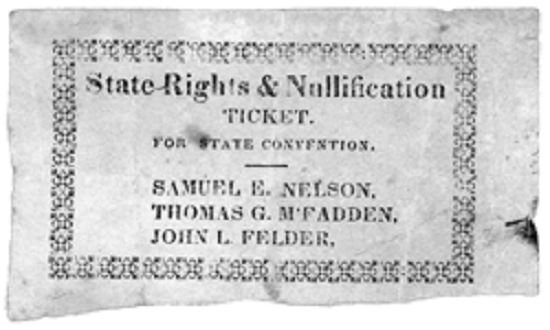


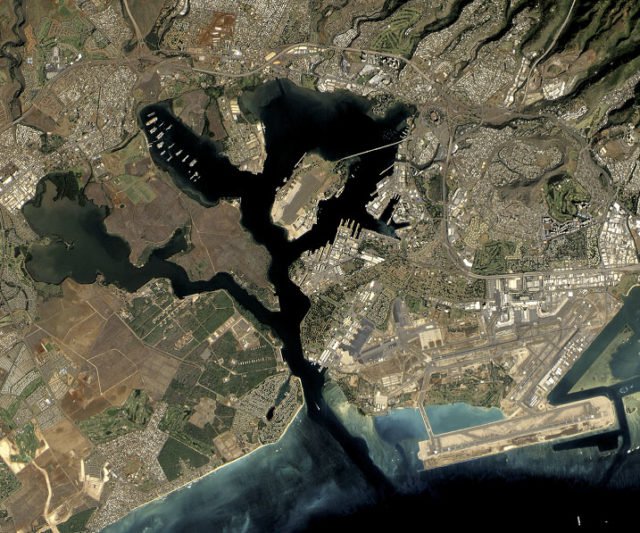

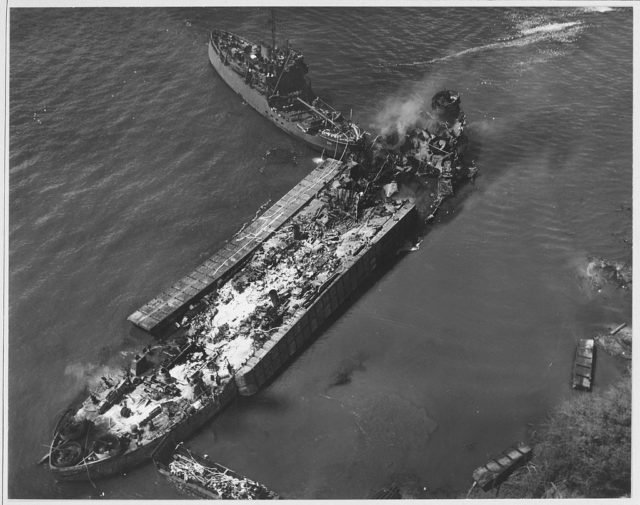

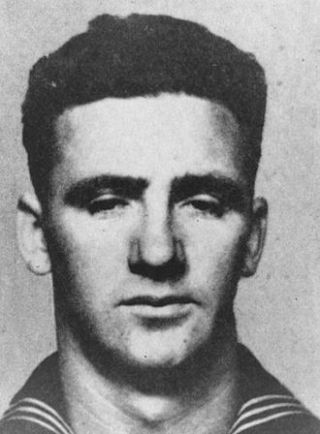
 “…Venturing still farther under the buried hulk, he held tenaciously to his purpose, reaching a place immediately above the other man just as another cave-in occurred and a heavy piece of steel pinned him crosswise over his shipmate in a position which protected the man beneath from further injury while placing the full brunt of terrific pressure on himself. Although he succumbed in agony 18 hours after he had gone to the aid of his fellow divers, Hammerberg, by his cool judgment, unfaltering professional skill and consistent disregard of all personal danger in the face of tremendous odds, had contributed effectively to the saving of his 2 comrades…”.

 Carlos Norman Hathcock, born this day in Little Rock in 1942, was a Marine Corps Gunnery Sergeant and sniper with a record of 93 confirmed and greater than 300 unconfirmed kills during the American war in Vietnam.
 The sniper’s choice of target could at times be intensely personal. One female Vietcong sniper, the platoon leader and interrogator called ‘Apache’ due to her interrogation techniques, would torture Marines and ARVN soldiers until they bled to death. Her signature was to cut the eyelids off her victims. After she skinned one Marine alive and left him emasculated within earshot of his base, Hatchcock spent weeks hunting this one sniper.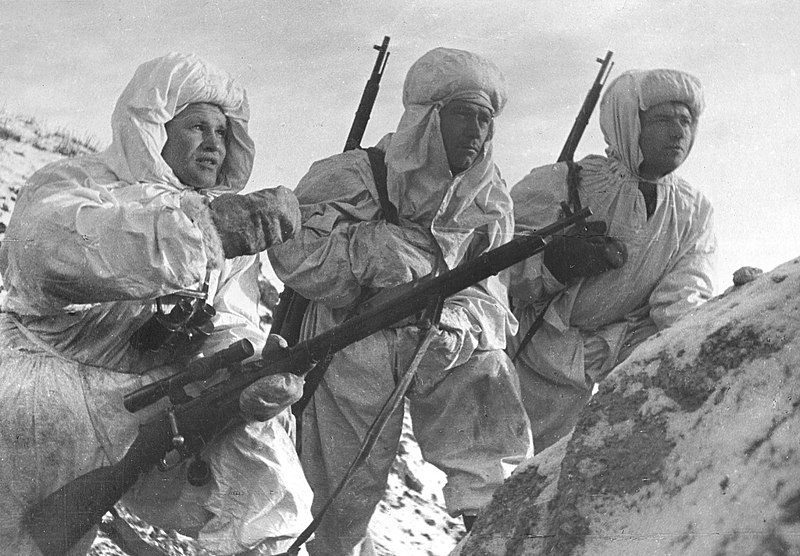


 Historical Easter Eggs - Today in History
You must be logged in to post a comment.