
In times of peace, the United States Coast Guard is charged with protecting the security of the nation’s borders, maritime law enforcement and rescue operations. One of seven uniformed military service branches, Coast Guard operations may be expanded in time of conflict, or by order of the Commander-in-Chief.
During WW2, the Coast Guard operated hundreds of vessels from patrol frigates to troop ships, performing convoy escort, anti-submarine and replenishment operations. Many of the landing craft used in amphibious operations were operated by Coast Guardsmen. There may be no group in the employ of the United States government, better qualified to navigate the shoals, surf and strong currents encountered by small boats, in shallow water.
Semper Paratus. Always Ready.
 In the winter of 1937, the Coast Guard cutter USCGC George W. Campell steamed out of New York harbor, patrolling the east coast with a mission of life-saving and national defense. The night before, Chief Boatswain’s Mate A. A. “Blackie” Roth (the name is also given as “Rother”) had given his girlfriend, a puppy. She couldn’t keep him, the landlord wouldn’t allow it. No other crewman could take the small dog. It was either leave him astray and hope for the best, or smuggle the puppy on board.
The Captain addressed the assembled crew on the first day of the cruise. Oh, to have been a fly on the wall, when one of them, barked back.
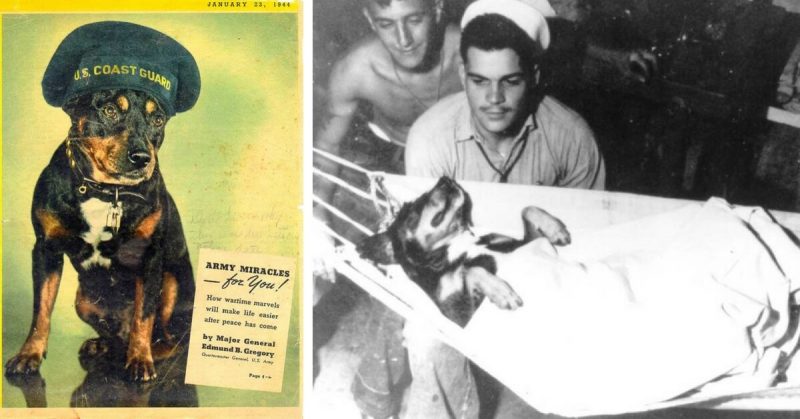
They called him “Sinbad”, and gave him a uniform, a service record and a rank. Dog, 1st class.
Sinbad quickly learned ship’s routine, and often “racked” with other sailors. He could always be found near the galley knowing that’s where the food comes from, and he loved himself a cup of black coffee.
 Sinbad’s favorite toys were the large metal washers which he’d hide, until someone came to play with him. They even built him a hammock, much more comfy to sleep in, in those long Atlantic swells.
Sinbad was possessed of the best qualities of the sailor and of his own kind, and of the worst. In 1940, he nearly set off an international incident.
With the dark clouds of WW2 already over Europe, Denmark was overrun and occupied, by Nazis. Greenland was once a Danish territory, and the allies hoped to keep the place out of German hands. Campbell was sent to secure diplomatic ties with the Danes and the Greenlanders, who lived there.
Greenland is thinly populated, a place where locals mainly fish and raise sheep, for a living. On shore for a week, Sinbad was quick to discover the pastures and the great fun of chasing sheep. The sheep themselves were not amused and some died of exhaustion. Others became too nervous to go out and eat. The owners weren’t amused either, and one demanded that Sinbad be shot.
The captain thought that too severe a punishment and Sinbad was banished, never to set foot on Greenland, again. There was no end of amusement among the crew of the Campbell, that Sinbad had been brought before a Captain’s mast. It would not be his last.

When war came, the cutter was transferred to the Navy, and the patrols became longer.

In the winter of 1943, Campbell was assigned to convoy protection, defending the vital north Atlantic supply route from roving “wolf packs” of German submarines. Sinbad never did get used to the sound of gunfire or depth charges, and would hide below decks, his paws over his ears. On February 22, the German submarine U-606 unleashed a barrage of torpedoes, against an allied convoy.
A day-long game of cat & mouse ensued in which the sub would pop up for another attack, only to be swarmed and driven into yet another crash dive. A periscope was spotted at 7:26 pm and Campbell charged in with a string of depth charges, colliding with the sub at the end of the run. U-606 was destroyed and Campbell badly damaged, disabled and without power, due to flooding.
All but “essential personnel” were evacuated. Captain James Hirschfield felt that Sinbad was good luck. No harm could befall the cutter while he was on board, and so he remained, essential personnel, taken under tow for repairs by the Polish destroyer, Burza. Sinbad had remained on deck with “his boys”, throughout the action.
Sinbad’s breed was best described as “liberty-rum-chow-hound, with a bit of Bulldog, Doberman, Pinscher, and what-not. Mostly what-not”- Martin Sheridan Life Magazine, December 1943.
Sinbad was promoted in 1943 to the rank of K9C, “Chief Dog” – equivalent to Chief Petty Officer – the second of only two dogs to be classified as non-commissioned officers. Since that time, ‘regulations’ have transformed all subsequent animals into “property” rather than personnel.
Fun fact: The first was Sergeant Stubby, the Staffordshire Terrier who was smuggled “over there” during the Great War, and once caught a German spy by the arse while he was prowling about allied trenches.
Campbell served the duration of WW2, with Sinbad on board, the entire time. In 1948, he was ready to retire. Sinbad had been at sea for eleven years. He was finally ready for shore detail.
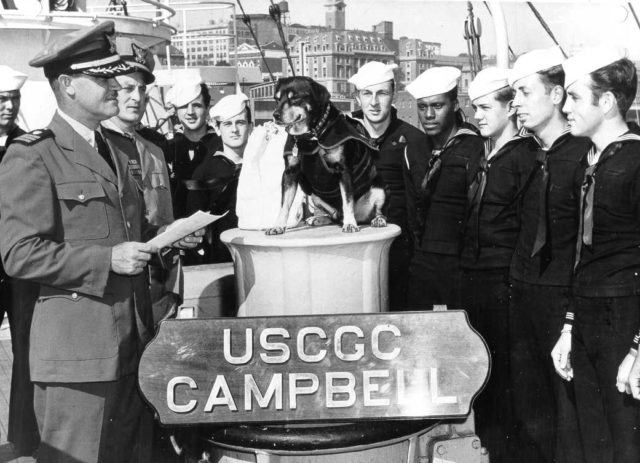
The assembled media and photographers were too much that day, and Sinbad bolted across the gang plank, and down the dock. To be AWOL from a United States Coast Guard cutter is a serious offense, and Sinbad was busted in rank, back to Dog, 1st class. He was probably just as happy to be back with the enlisted guys.
Sinbad was transferred to the Barnegat Light Small Boat Station in New Jersey, where he served as station mascot for the duration of his military career.

Chief Dog Sinbad served all of his fourteen years with the United States Coast Guard. He passed away on this day in 1951 at the Barnegat light station and is buried there, at the base of the flagpole. A sailor always, Sinbad could drink with the best of them, and always enjoyed that cuppa black coffee. Irrespective of his latest rank, he was many years, a media celebrity. Life magazine may have said it best: “An Old Sea Dog Has Favorite Bars and Plenty of Girls in Every Port.”
Throughout her 46 years of service, USCGC Campbell was referred to as “The Queen of the Seas”. She was sunk as a training target in November 1984, a single harpoon missile leaving her nearly intact, as she went out of sight. The final radio message, broadcast as she disappeared beneath the waves: The Queen is dead. Long live the Queen.
Today, the USCGC Campbell (WMEC-909) patrols the east coast out of the Portsmouth Naval Shipyard in Kittery, Maine, the sixth Coast Guard Cutter to bear the name.


 D’Estaing sent an ultimatum to British Commander Augustine Prevost on September 16, 1779. He was to surrender the city “To the arms of his Majesty the King of France”, or he would be personally answerable for what was about to happen. It could not have pleased General Benjamin Lincoln or his Patriot allies when d’Estaing added “I have not been able to refuse the army of the United States uniting itself with that of the King. The junction will probably be effected this day. If I have not an answer therefore immediately, you must confer with General Lincoln and me”.


 In Mexico as well as Spain and most Latin countries, pranksters practice their craft not on April 1 but on December 28. The custom goes back to the biblical story of King Herod, who is said to have killed all the baby boys in Bethlehem, to rid himself of the future ‘King of the Jews. The “Massacre of the Innocents” is a sad story but the ‘joke’ was on Herod. Mary and Joseph had taken the baby Jesus away, to Egypt.
 For two-hundred years now, the citizens of Ibi, Alicante on the Spanish Mediterranean coast have celebrated December 28, with a giant food fight. The practice was suspended for a time following the Spanish Civil War but revived, in 1981. Now, it’s a big tourist attraction, and the event makes a ton of money, for charity.


 Marcus and Laura never had much money, but were both inveterate readers who instilled a lifelong love of books in their young son, Ambrose. At 15, Bierce left home to become a “printer’s devil”, fetching type and mixing ink, following in the footsteps of Benjamin Franklin, Thomas Jefferson, and his own contemporary, Mark Twain.
 Bierce worked for the Hearst Newspaper San Francisco Examiner in 1896, when he was sent to Washington to cover a railroad bill at that time, working its way through Congress.
 Bierce’s mocking definitions became so numerous that they were compiled and published in 1906 as “The Cynic’s Word Book”. It is still in print today as the “Devil’s Dictionary”.
 an ending to this story as any, as one hundred and five years ago today is as good a day as any on which to end it. The fact is that in that 105 years, there’s never been a trace of what became of him, and probably never will be.


 The American Revolution was on its last legs in December 1776. The year had started out well for the Patriot cause but turned into a string of disasters, beginning in August. Food, ammunition and equipment were in short supply by December. Men were deserting as the string of defeats brought morale to a new low. Most of those who remained, ended enlistments at the end of the year.


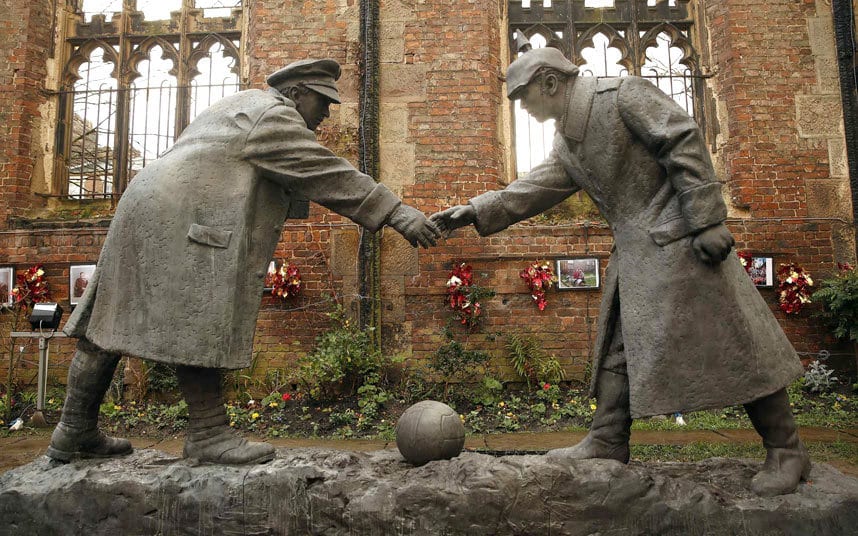

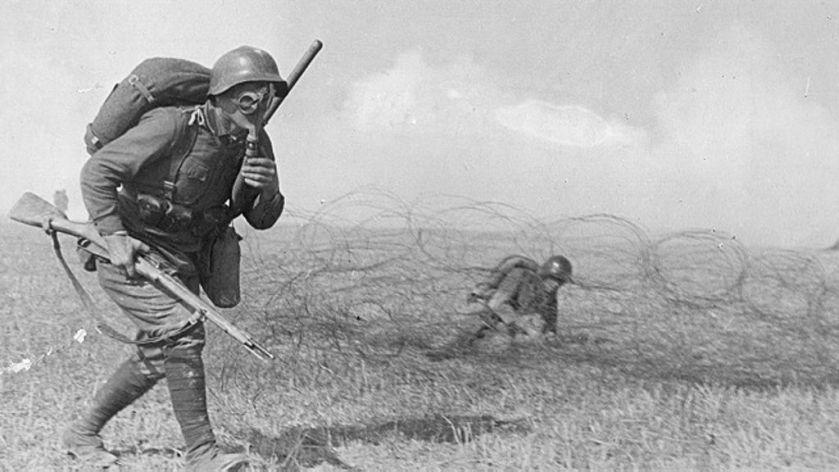
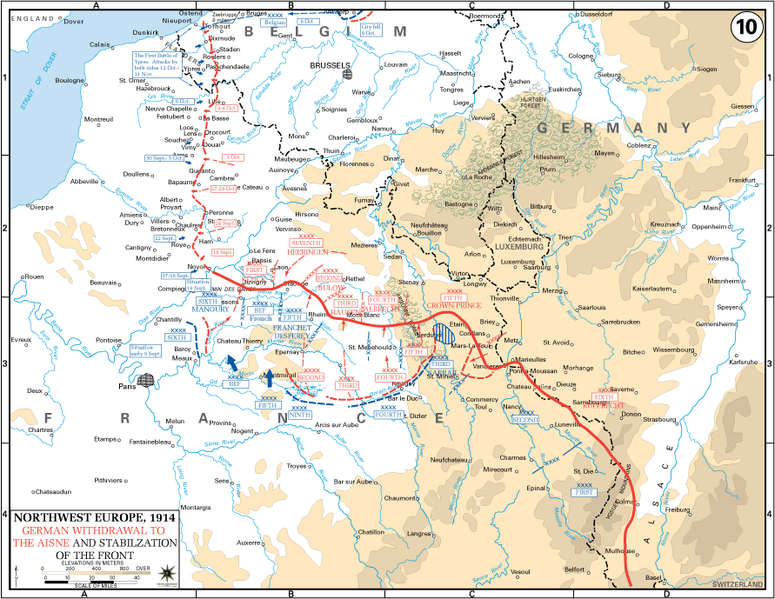 On the Western Front, it rained for much of November and December that first year. The no man’s land between British and German trenches was a wasteland of mud and barbed wire. Christmas Eve, 1914 dawned cold and clear. The frozen ground allowed men to move about for the first time in weeks. That evening, English soldiers heard singing. The low sound of a Christmas carol, drifting across no man’s land…Stille Nacht, heilige Nacht…Silent Night.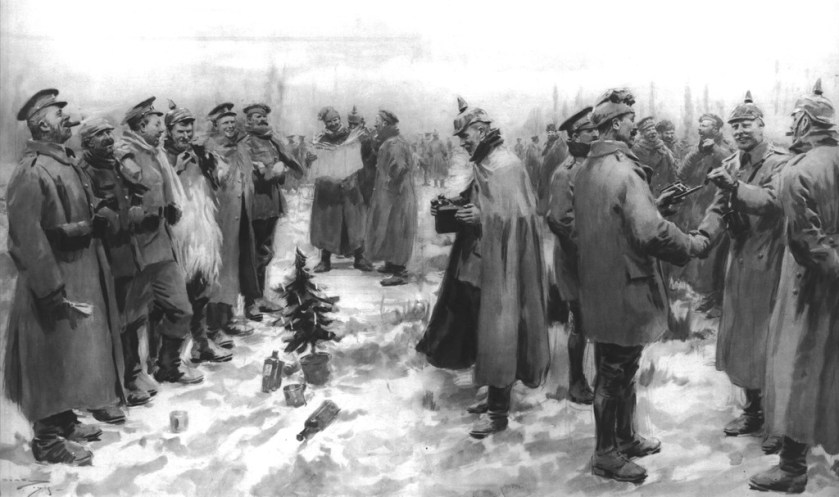
 Captain Sir Edward Hulse Bart reported a sing-song which “ended up with ‘Auld lang syne’ which we all, English, Scots, Irish, Prussians, Wurttenbergers, etc, joined in. It was absolutely astounding, and if I had seen it on a cinematograph film I should have sworn that it was faked!”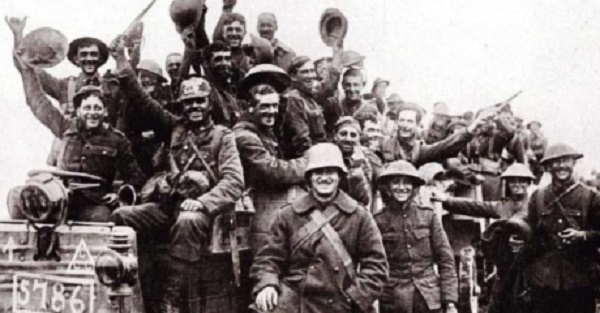

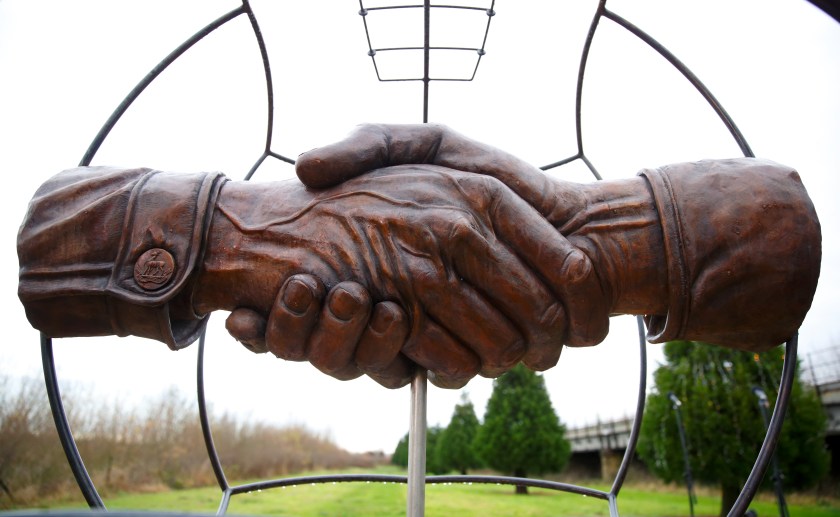

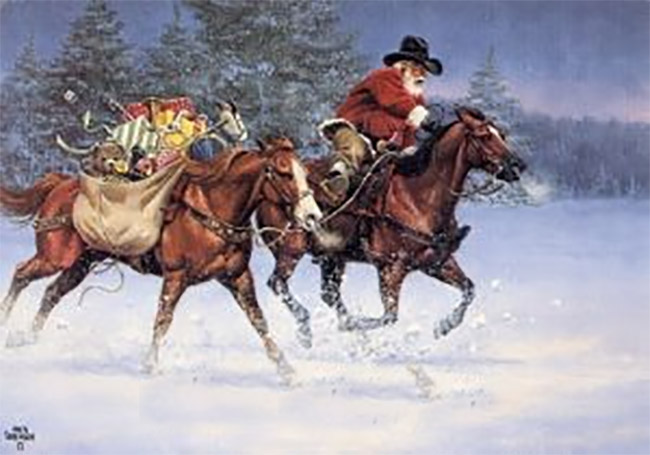



 The Feast of St. Nicholas took hold around the 6th of December. Children and other marginal groups such as old women and slaves could receive gifts, but only by demanding them. The secret giving of gifts appeared sometime around the year 1200.
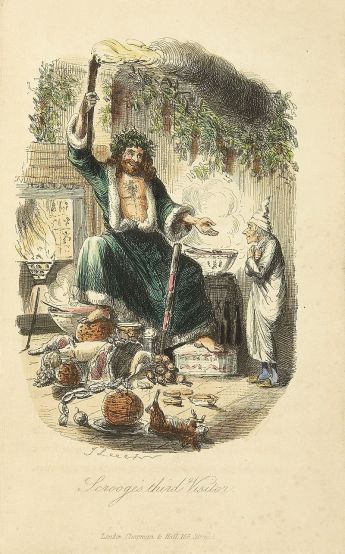
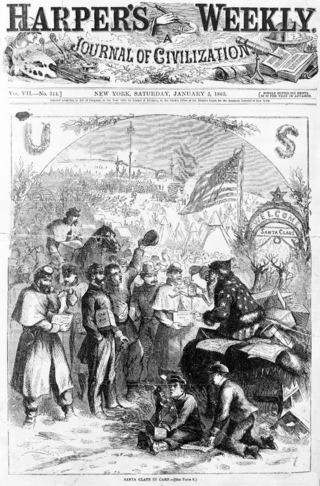
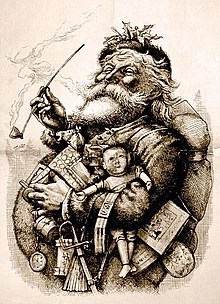 The unknown genius who published and illustrated






 Be that at it as it may, the animal is a voracious herbivore, spending daylight hours at the bottom of rivers & lakes, happily munching on vegetation.

 During the 2nd Boer war, the pair had sworn to kill each other. In 1910, these two men became partners in a mission to bring hippos, to America’s dinner table.



 The terrain was considered unsuitable for such an attack. The tactical surprise was complete, British and American forces separated and driven back, their positions forming an inward “bulge” on wartime battle maps.
 Historian Stephen Ambrose wrote “Band of Brothers” nearly fifty years later, a non-fiction account later broadcast as an HBO mini-series, of the same name. The story refers to a black nurse named Anna. There is a brief appearance and then she is gone. No one knew who Anna was, or even if she was real.
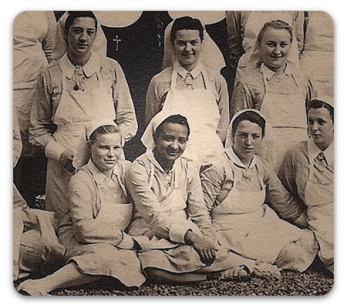 Augusta Chiwy came back to Belgium when she was nine, one of the luckier of thousands born to European fathers, and African mothers. Back to the doctor’s home in Bastogne, a small town of 9,000 where Augusta was loved and cared for by her father and his sister, whom the girl knew as “aunt Caroline”.

 Augusta Chiwy was in a neighboring building at the time. The explosion blew the petite nurse through a wall but, unhurt, she picked herself up and went back to work. There were grisly injuries and many died due to inadequate medical facilities, but many lived, their families reunited thanks to the tireless work of Dr. Jack Prior, and nurse Augusta Chiwy.
 Augusta Chiwy suffered symptoms of post-traumatic stress disorder, a condition poorly understood at that time. She would go long periods without speaking, becoming quiet and withdrawn even years later. She married a Belgian soldier in 1959 and the couple had two children. It would be twenty years, before she resumed her nursing career. She almost never spoke of her experience in Bastogne.
 Albert II of Belgium. Six months later she received the U.S. Army’s Civilian Award for Humanitarian Service. And on March 21, 2014, Augusta was recognized by her hometown as a Bastogne Citizen of Honor”.


 Turns out that Mary Bateman, the bird’s owner and a serial fraudster, was writing these messages with some kind of “corrosive ink”, maybe an acid, and reinserting them into the poor chicken. The “Yorkshire Witch” met her end on a gibbet, hanged for the poisoned pudding she gave that couple to relieve their chest pain. But I digress.
 5,000 years ago, the Mayan civilization of modern-day Mexico and Central America developed a sophisticated calendar, working with a base numerical system of 20.


You must be logged in to post a comment.