
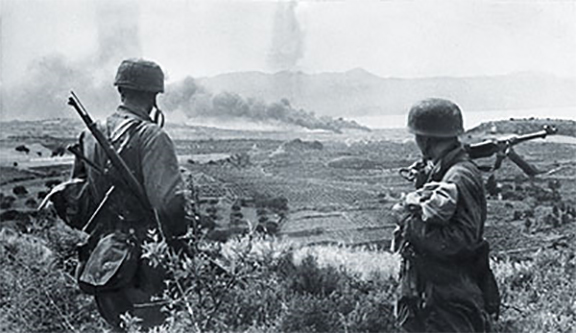
Throughout the history of armed conflict, men who have endured combat together have formed a special bond. Prior to the David vs. Goliath battle at Agincourt, Henry V spoke of “We few, we happy few, we band of brothers“. The men who fought the “War to end all wars” spoke not of God and Country, but of the man to his left and right. What then does it look like, when the man you’re fighting for is literally your own brother?
Hellenic forces enjoyed early success when fascist Italy invaded Greece on October 28, 1940, the Greek army driving the intruder into neighboring Albania in the first Allied land victory of the second World War.
Until the intervention of Nazi Germany and her Bulgarian ally.
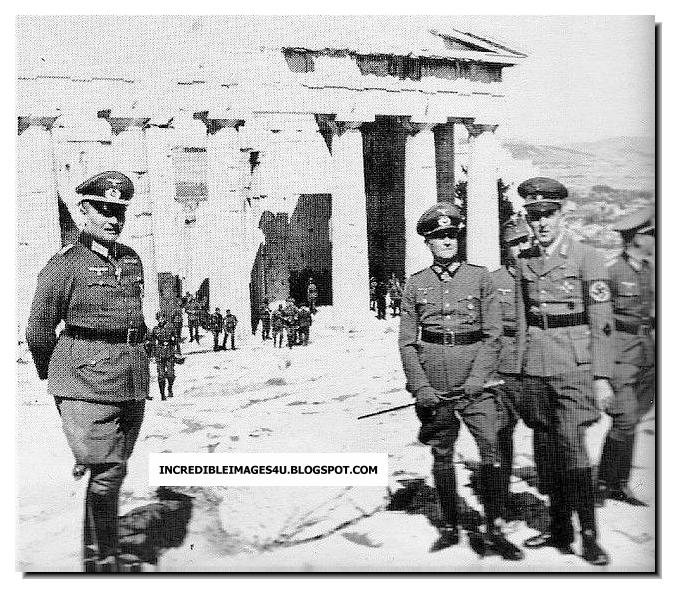
British commonwealth troops moved from Libya on orders from Winston Churchill proved too little, too late. The Greek capital at Athens fell on April, 27. Greece suffered axis occupation for the rest of the war, with devastating results. Some 80% of Greek industry was destroyed along with 90 percent of ports, roads, bridges and other infrastructure. 40,000 civilians died of starvation, in Athens alone. Tens of thousands more died in Nazi reprisals, or at the hands of Nazi collaborators.
Fearful of losing the strategically important island of Crete, Prime minister Winston Churchill sent a telegram to the Chief of the Imperial General Staff General Sir John Dill: “To lose Crete because we had not sufficient bulk of forces there would be a crime.”
By the end of April, the Royal Navy evacuated 57,000 troops to Crete, largest of the islands comprising the modern Greek state. They’d been sent to bolster the Cretan garrison until the arrival of fresh forces, but this was a spent force. Most had lost heavy equipment in the hasty evacuation. Many were unarmed, altogether.
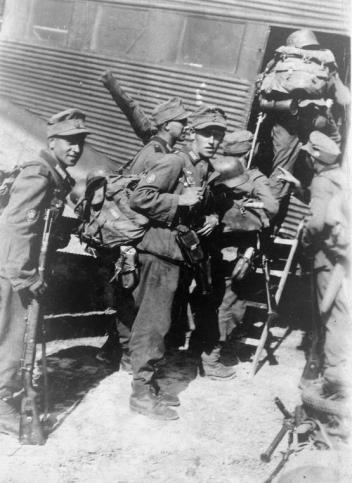
Occupied at this time with operation Barbarossa, Hitler’s surprise invasion of his erstwhile Soviet ally, German Army command had little desire to go after Crete. Eager to redeem themselves following the failure to destroy an all-but prostrate adversary during the Battle of Britain, Luftwaffe High Command was a different story.
Hitler recognized the strategic importance of Crete, both to the air war in the eastern Mediterranean and for the protection of the Axis southern flank.
By the time of the German invasion, Allied forces were reduced to 42,000 on Crete of which only 15,000, were combat ready. New Zealand Army Major-General Bernard Freyberg in command of these troops, requested evacuation of 10,000 who had “little or no employment other than getting into trouble with the civil population“.
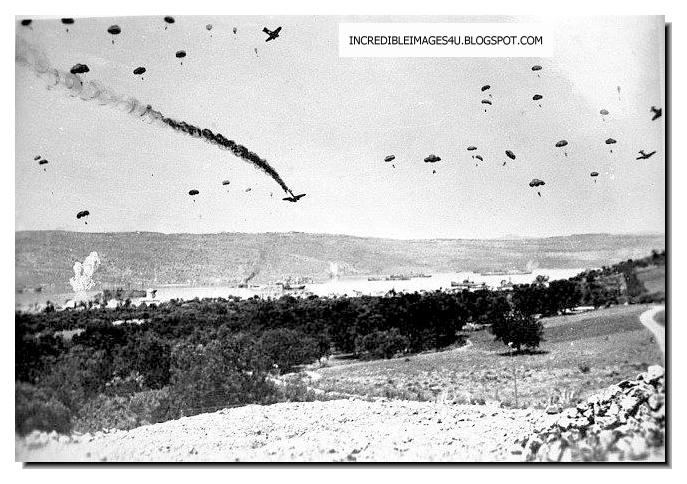
Once again it was too little, to late. The first mainly airborne invasion in military history and the only such German operation of WW2 began on May 20, 1941.
The Luftwaffe sent 280 long-range bombers, 150 dive-bombers, 180 fighters and 40 reconnaissance aircraft into the attack, along with 530 transport aircraft and 100 gliders.
The allied garrison was soon outnumbered and fighting for their lives. Recognizing that the battle was lost, leadership in London instructed Freyberg to abandon the island, on May 27.
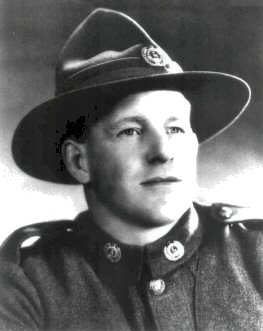
The “Victoria Cross” is the highest accolade in the British system of military honors, equivalent to the American Medal of Honor. Sergeant Clive Hulme of the New Zealand 2nd Division was part of that fighting withdrawal. He was 30 years old at the time of the battle for Crete where his actions, earned him the Victoria Cross. Let Sergeant Hulme’s citation, tell his story:
“On ground overlooking Malene Aerodrome on 20th and 21st May [Sergeant Hulme] personally led parties of his men from the area held by the forward position and destroyed enemy organised parties who had established themselves out in front of our position, from which they brought heavy rifle, machine-gun and mortar fire to bear on our defensive posts. Numerous snipers in the area were dealt with by Serjeant Hulme personally; 130 dead were counted here. On 22nd, 23rd and 24th May, Serjeant Hulme was continuously going out alone or with one or two men and destroying enemy snipers. On 25th May, when Serjeant Hulme had rejoined his Battalion, this unit counter-attacked Galatas Village. The attack was partially held up by a large party of the enemy holding the school, from which they were inflicting heavy casualties on our troops. Serjeant Hulme went forward alone, threw grenades into the school and so disorganised the defence, that the counter-attack was able to proceed successfully.”
On this day in 1941, Sergeant Clive Hulme learned of the death of his brother Harold, also fighting in the battle for Crete. The life expectancy for German snipers was about to become noticeably shorter. Again, from Hulme’s VC citation:
On Tuesday, 27th May, when our troops were holding a defensive line in Suda Bay during the final retirement, five enemy snipers had worked into position on the hillside overlooking the flank of the Battalion line. Serjeant Hulme volunteered to deal with the situation, and stalked and killed the snipers in turn. He continued similar work successfully through the day. On 28th May at Stylos, when an enemy heavy mortar was severely bombing a very important ridge held by the Battalion rearguard troops, inflicting severe casualties, Serjeant Hulme, on his own initiative, penetrated the enemy lines, killed the mortar crew of four…From the enemy mortar position he then worked to the left flank and killed three snipers who were causing concern to the rearguard. This made his score of enemy snipers 33 stalked and shot. Shortly afterwards Serjeant Hulme was severely wounded in the shoulder while stalking another sniper. When ordered to the rear, in spite of his wound, he directed traffic under fire and organised stragglers of various units into section groups.”
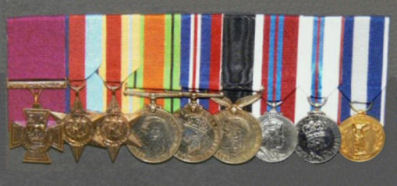
The man took out 33 German snipers by himself in 8 days and still assisted in the withdrawal, after being shot badly enough to put him out for the rest of the war.
Some guys are not to be trifled with.


 In the Roman imagination, Britain was a faraway and exotic place, a misty, forested land inhabited by fierce, blue painted warriors.
 Militarily, there was no reason to attack the British home isles. The channel itself formed as fine a protector of the western flank, as could be hoped for.

 Apoplectic with rage and determined to avenge her family, Boudicca was not a woman to be trifled with. She led the Iceni, the Trinovantes and others among the Celtic, pre-Roman peoples of Britain, in a full-scale, bloody revolt.
 For the Celtic peoples, the hour of payback had arrived. For the seizure of lands to provide estates for Roman veterans to their own forced labor in building the Temple of Claudius to the sudden recall of loans and destruction of estates and properties. The Roman historian Tacitus writes of the last stand at the Temple of Claudius: “In the attack everything was broken down and burnt. The temple where the soldiers had congregated was besieged for two days and then sacked“.
 Outnumbered 23 to 1, the 10,000 strong Roman legion was battle hardened, well-equipped and disciplined, facing off against a mob of nearly a quarter-million unarmored, poorly disciplined individuals.
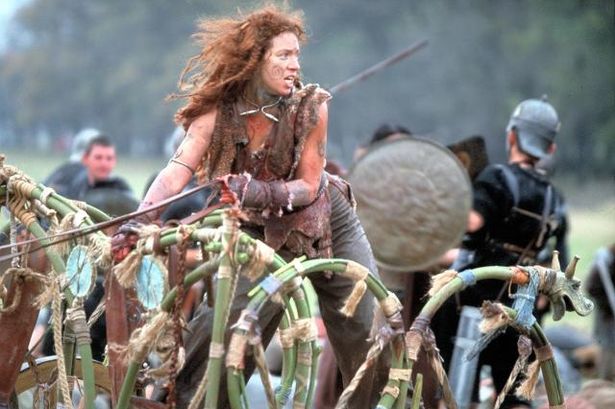 What must it look like, when 230,000 screaming warriors charge a fixed force of 10,000 disciplined soldiers. First came the Pila, the Roman javelins tearing into the tightly packed front, of the adversary. Then the Legion advanced, shields out front with the short swords, the long swords and farm implements of the Celts unable to move in the crush of humanity. The wedge formation advanced unbroken, slaughtering all who came before it as a scythe before the grass. The turning and the attempt to flee, only to be boxed in by their own tightly packed crescent formed wagon train.
 80,000 of Boudicca’s men lay dead before the slaughter was ended, against 400 dead Romans. Queen Boudicca poisoned herself according to Tacitus, Cassius Dio claims she became ill.


 To search on the term “Serial killers with the highest known victim count” is to be rewarded with the knowledge that the top 32 serial killers of the modern era, are responsible for a proven list of 1,661 victims and a probable count, several times that number.
 Filho says he first wanted to kill at age 13, when he tried to push an older cousin into a sugar cane press. His first victim came a year later. Filho murdered the deputy mayor of Santa Rita do Sapucaí with a shotgun in front of city hall, for firing his father from the school where he worked as security guard. It was claimed the elder Filho, was stealing food. Pedro then killed the guard whom he believed to be the real thief.
 He was once attacked by five gang members before killing three by himself and chasing off, the other two. Brazilian law dictates a maximum of 30 years. By the time he got out the Brazilian Dexter had killed another 47.

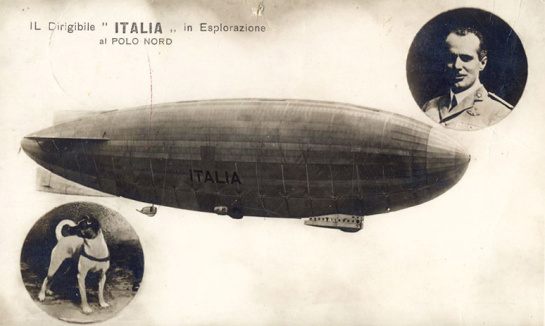
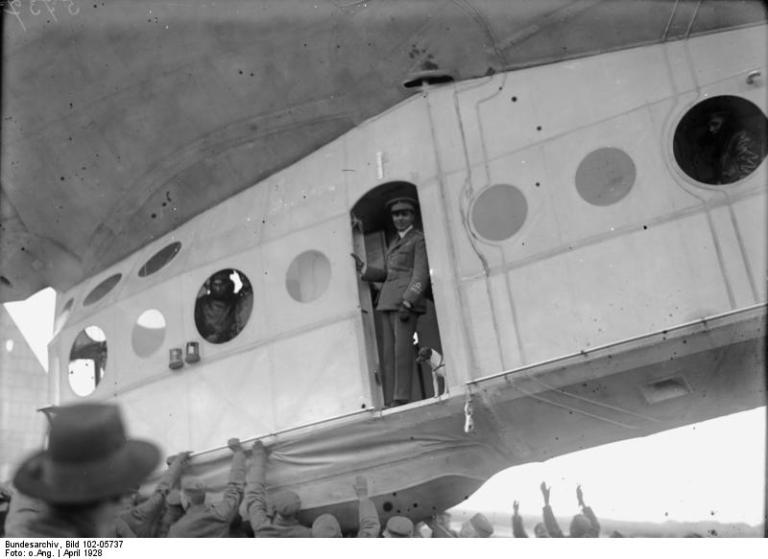
 Two years earlier, the Norge (“NOR-gay”) had demonstrated that such an airship, could reach the north pole. This time they were coming back, for further exploration.
 The first of five planned sorties began on May 11, before turning back only eight hours later in near-blizzard conditions. The second trip took place in virtually perfect weather conditions with unlimited visibility. The craft covered 4,000 km (2,500 miles), setting the stage for the third and final trip.


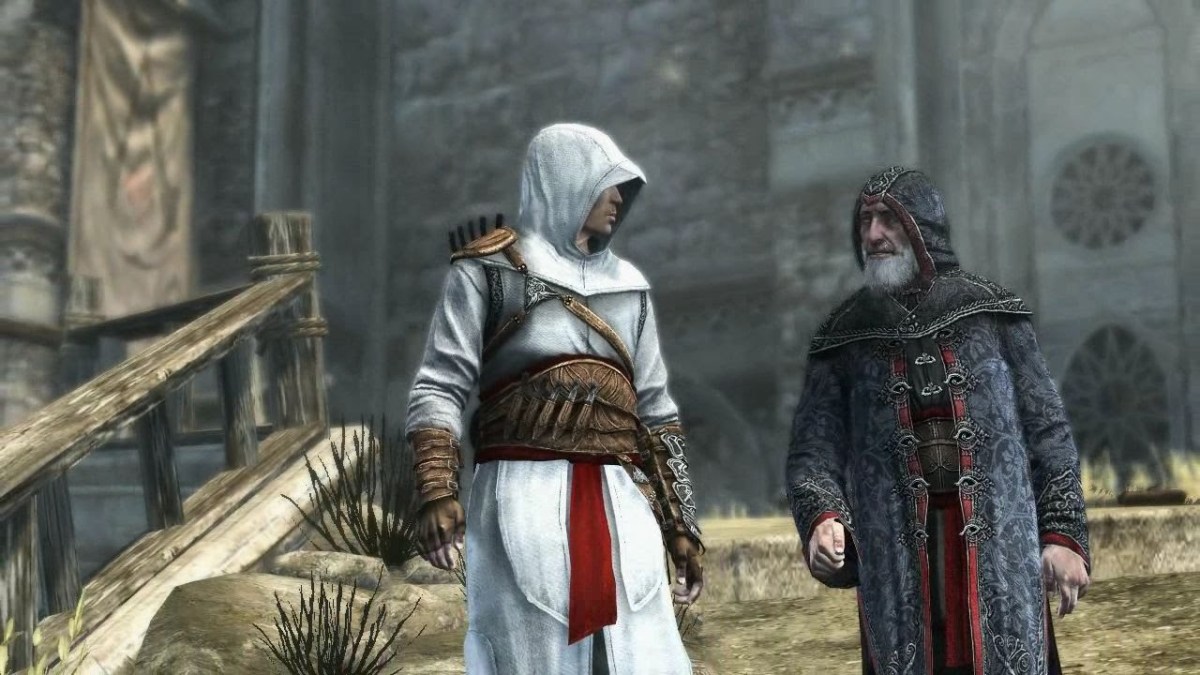
 To the east lay the Great Seljuk Empire, the Turko-Persian, Sunni Muslim state established in 1037 and stretching from the former Sassanid domains of modern-day Iran and Iraq to the Hindu Kush. An “appanage” or “family federation” state, the Seljuk empire was itself in flux after a series of succession contests, destined to disappear altogether in 1194.
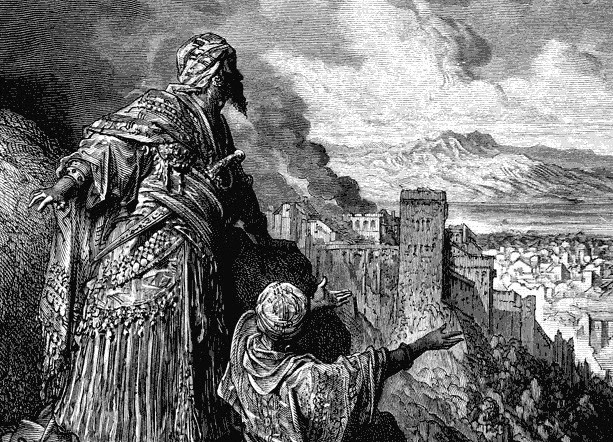 The name derives from the Arabic “Hashashin”, meaning “those faithful to the foundation”. Marco Polo reported a story that the old man of the mountain got such fervent loyalty from his young followers, by drugging and leading them to a “paradise” of earthly delights, to which only he could bring them back. The story is probably apocryphal, there is little evidence that hashish was ever used by the Assassins’ sect. Sabbah’s followers believed him to be divine, personally selected by Allah. The man didn’t need to drug his “Fida’i” (self-sacrificing agents). He was infallible in their eyes, his every whim to be obeyed, as the literal Word of God.
 Why Sabbah would have founded such an order is unclear, if not in pursuit of his own personal and political goals. By the time of the first Crusade, 1095-1099, the Old Man of the Mountain found himself pitted against rival Muslims and invading Christian forces, alike.
 Sometimes, a credible threat of assassination did as much an actual killing. When the new Seljuk Sultan Ahmad Sanjar rebuffed Hashashin diplomatic overtures in 1097, he awoke one morning to find a dagger stuck into the ground, next to his bed. A messenger arrived sometime later from the Old Man of the Mountain. “Did I not wish the sultan well” he said, “that the dagger which was struck in the hard ground would have been planted on your soft breast?” The tactic worked nicely. For the rest of his days, Sanjar was happy to allow the Hashashin to collect tolls from travelers in his realm. The Sultan even provided them with a pension, collected from the inhabitants of the lands they occupied.
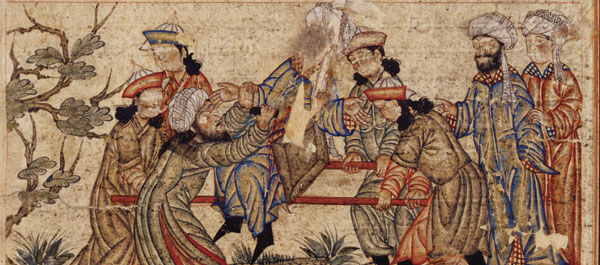
 Conrad of Montferrat was elected King of Jerusalem in 1192, though he would never be crowned. Stabbed at least twice by a pair of Hashashin on April 28, on the way home, the Kurdish historian and biographer wrote “[T]he Frankish marquis, the ruler of Tyre, and the greatest devil of all the Franks, Conrad of Montferrat — God damn him! — was killed.”
 The Grand Master of the Assassins dispatched his killers to Karakorum in the early 1250s, to murder the grandson of Genghis Khan, the Great Khan of the “Golden Horde”, Möngke. It was a Bad idea.
 Hulagu went on to subjugate the 5+ million Lurs people of western and southwestern Iran, the Abbasid Caliphate in Baghdad, the Ayyubid state of Damascus, and the Bahri Mamluke Sultanate of Egypt. Mongol and Muslim accounts alike, agree that the Caliph of Baghdad was rolled up in a Persian rug, whereupon the horsemen of Hulagu rode over him. Mongols believed that the earth was offended if touched by royal blood.

 Circus-like performing dwarves were common enough at this time but the Ovitz siblings were different. These were talented musicians playing quarter-sized instruments, performing a variety show throughout the 1930s and early ’40s as the “Lilliput Troupe”. The family performed throughout Romania, Hungary and Czechoslovakia, with their normal height siblings serving as “roadies”. And then came the day. The whole lot of them were swept up by the Nazis and deported to the concentration camp and extermination center, at Auschwitz-Birkenau.
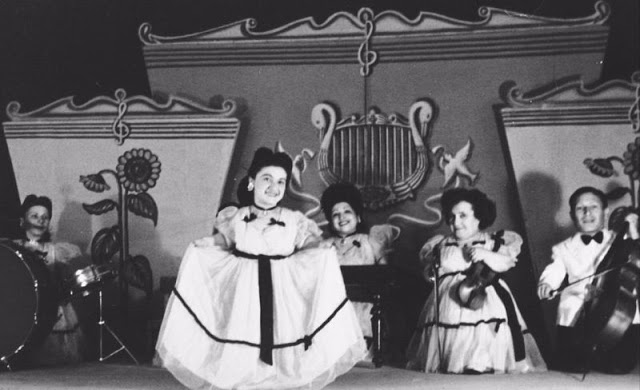
 On one occasion, the Angel of Death told the family they were “going to a beautiful place”. Terrified, the siblings were given makeup, and told to dress themselves. Brought to a nearby theater and placed onstage, the family must have thought they’d be asked to perform. Instead, Mengele ordered them to undress, leaving all seven naked before a room full of SS men. Mengele then gave a speech and invited the audience onstage, to poke and prod at the humiliated family.
 Only 50 of the 650 Jewish inhabitants of the village ever returned. In 1949, the family emigrated to Israel and resumed their musical tour, performing until the group retired in 1955.
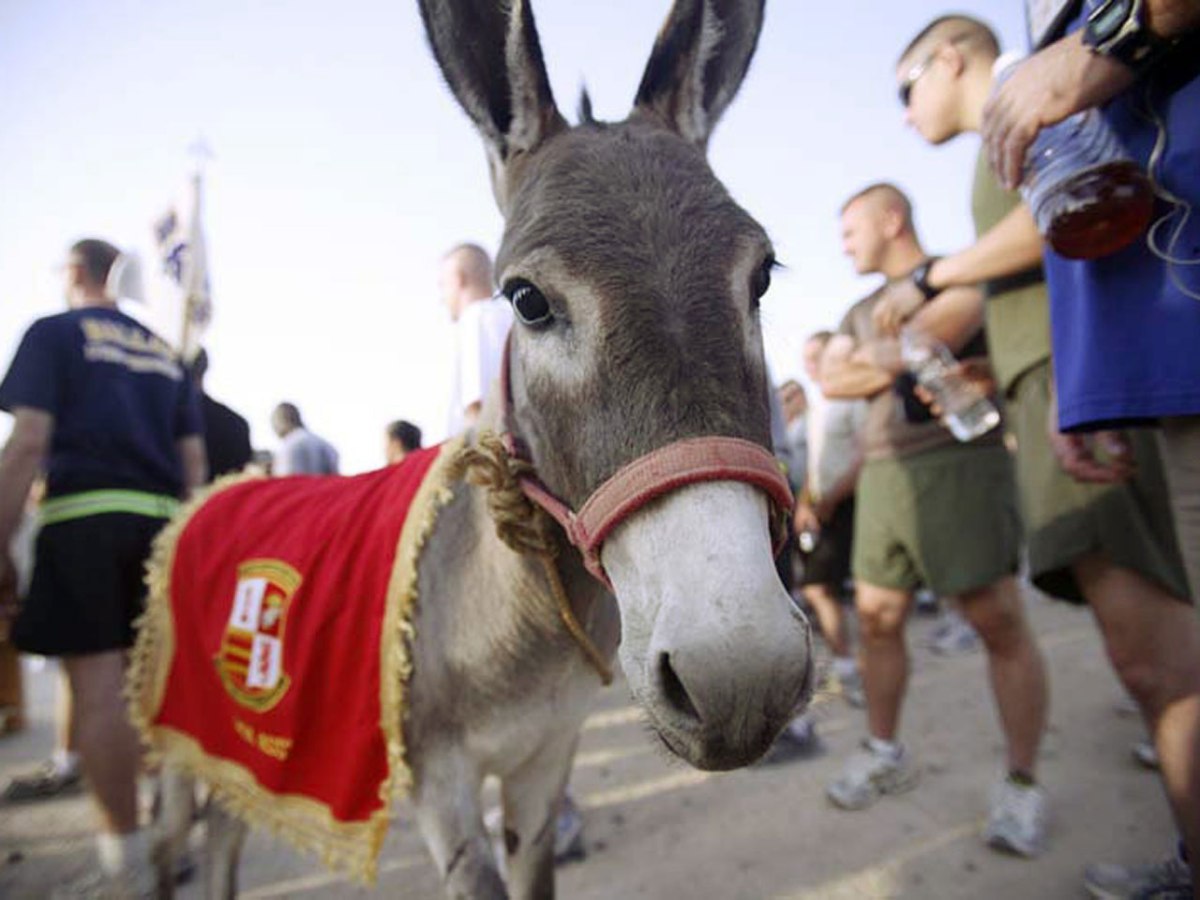

 Marines took him in, this malnourished Iraqi donkey, and built him a stable, and corral. The donkey would stroll into offices where he learned to open desk drawers in search of a goody. An apple, a carrot or some other sweet treat, planted there by some Marine. He loved to steal cigarettes whether lit or unlit and so it was, they called him “Smoke”.
 Smoke had his very own blanket, bright red and emblazoned with unit insignia, for the camp’s September 11 parade. On the side were these words, “Kick Ass”.
 Regulations prohibited keeping the animal on base but Colonel Folsom found a Navy psychologist, willing to designate Smoke a therapy animal. He was good for morale.
 After half a life serving the United States Marine Corps, John Folsom returned home to Omaha. He’d often think of his “battle buddy” and those long walks, around the base.
 Thus began “Operation Donkey Drop”, Folsom’s 18-month odyssey first to raise the funds and then to wrangle the red tape thrown in his way through multiple jurisdictions, on Smoke’s journey to his new home in Nebraska.
 Terri Crisp heads SPCAI’s “Baghdad pups”, reuniting US troops with dogs and cats they had once bonded with, while serving overseas. This was her first donkey.
 For Colonel John Folsom, USMC (retired), “semper fidelis” (“always faithful”) had become “semper fi(nally).”


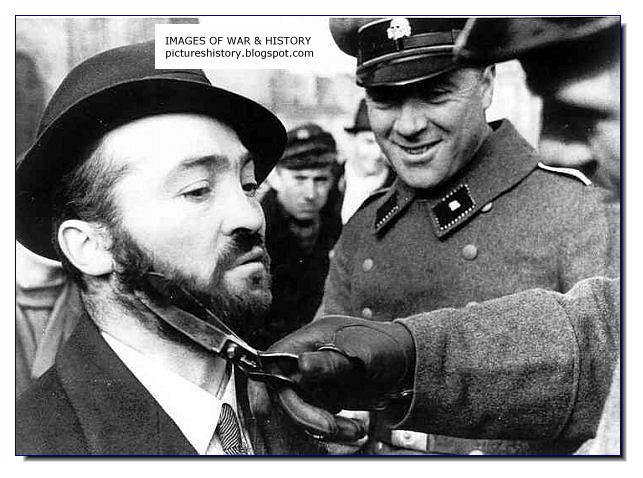
 March elections failed to produce a Nazi party majority. For the time being, Herr Hitler was forced to rely on his coalition partner the German National People’s Party (DNVP), to hold a majority in the new Reichstag.
 Nazi propaganda was relentless. Hitler himself had written back in 1924, that propaganda’s “task is not to make an objective study of the truth, in so far as it favors the enemy, and then set it before the masses with academic fairness; its task is to serve our own right, always and unflinchingly.”
 Jacob and Pauline Levinsons came to Berlin in 1928, a few years before Hitler came to power. Both Latvian Jews, the couple gave birth to a beautiful baby girl on this day in 1934. Later that year, the proud parents brought wide-eyed, curly haired, chubby little Hessy to photographer Hans Ballin of Berlin.
 And that’s where the story ends, except, no. Unbeknownst to the Levinsons, the photographer submitted the portrait in a contest, a search for the perfect Aryan child.


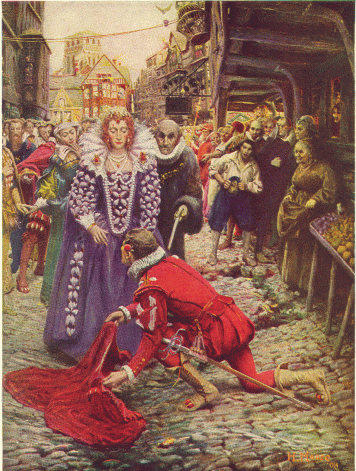 Queen Elizabeth I of England granted Walter Raleigh a charter to establish a colony north of Spanish Florida in 1583, the area called “Virginia” in honor of the
  Following the coastline, Gosnold discovered an island covered with wild grapes. Naming it after his deceased daughter, he called the place Martha’s Vineyard. The expedition came ashore on Cuttyhunk in the Elizabethan island chain where they briefly ran a trading post, before heading back to England. Today, Gosnold is the smallest town in Massachusetts with a population of 75 with most of the land owned by the Forbes family.
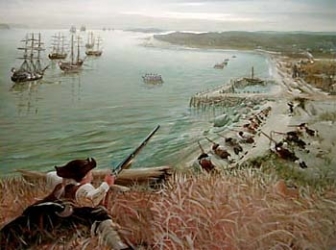 The British warship HMS Nimrod fired on my little town during the War of 1812. It’s closed now, but the building formerly housing the Nimrod Restaurant, still sports a hole in the wall where the cannon ball came in.
 The dredging of a canal connecting the Manomet and Scusset rivers and cutting 62 miles off the water route from Boston to New York had been talked about since the time of Miles Standish. Construction of a privately owned toll canal began on June 22, 1909. Giant boulders left by the glaciers and ghastly winter weather hampered construction, the canal finally opening on July 29, 1914 and charging a maximum of $16 per vessel. Navigation was difficult, due to a 5-plus mile-per-hour current combined with a maximum width of 100′ and a max. depth of 25-feet. Several accidents damaged the canal’s reputation and toll revenues failed to meet investors’ expectations.
 Despite the WuFlu, millions of tourists will wait countless hours this year in a sea of brake lights, to cross those two narrow roadways onto “the Cape” to enjoy that brief blessed moment of warmth hidden amidst our four seasons, known locally as “almost winter, winter, still winter and bridge construction”.

 Childhood memories of standing in line. Smiling. Trusting. And then…the Gun. That sound. Whack! The scream. That feeling of betrayal…being shuffled along. Next!
 And did you know? The American Revolution was fought out, entirely in the midst of a smallpox pandemic.
 The idea of inoculation was not new. Terrible outbreaks occurred in Colonial Boston in 1640, 1660, 1677-1680, 1690, 1702, and 1721, killing hundreds, each time. At the time, sickness was considered the act of an angry God. Religious faith frowned on experimentation on the human body.
 Colonists were chary of the procedure, deeply suspicious of how deliberately infecting a healthy person, could produce a desirable outcome. John Adams submitted to the procedure in 1764 and gave the following account:
 As Supreme Commander, General Washington had a problem. An inoculated soldier would be unfit for weeks before returning to duty. Doing nothing and hoping for the best was to invite catastrophe but so was the inoculation route, as even mildly ill soldiers were contagious and could set off a major outbreak.

 So it was on December 9, 1979, smallpox was officially described, as eradicated. The only infectious disease ever so declared.
 Historical Easter Eggs - Today in History
You must be logged in to post a comment.