

With Jack Parr about to sign off the “Tonight Show” for the last time, NBC executives were anxious to find a replacement. Bob Newhart, Jackie Gleason, Groucho Marx, and Joey Bishop all declined the opportunity, when a United States Navy veteran, amateur magician and amateur boxer with a 10/0 record agreed to take the job.
Back when late-night comedians were expected to be funny, Johnny Carson had misgivings, believing himself unequal to the task of producing 90 minutes of fresh content, every day.
A series of guest hosts followed including Merv Griffin, Art Linkletter, Joey Bishop, Jerry Lewis and Groucho Marx, as Carson finished out the last six months of a contract with ABC. Despite his apprehensions, Carson started the new gig on October 1, 1962.
No sooner had NBC announced that Johnny Carson would be joining “The Tonight Show,” than the national press gaggle came after him, looking for interviews. Paradoxically, the future “King of late night comedy” was averse to publicity. Carson resisted at first, but finally relented, providing a list of answers to which journalists could apply any question they pleased:
- “Yes, I did”.
- “Not a bit of truth in that rumor”.
- “Only twice in my life, both times on Saturday”.
- “I can do either, but prefer the first”.
- “NO”.
- “Kumquats”.
- “I can’t answer that question”.
- “Toads and tarantulas”.
- “Turkestan, Denmark, Chile, and the Komandorskie Islands”.
- “As often as possible, but I’m not very good at it yet”.
- “I need much more practice”.
- “It happened to some old friends of mine, and it’s a story I’ll never forget”.

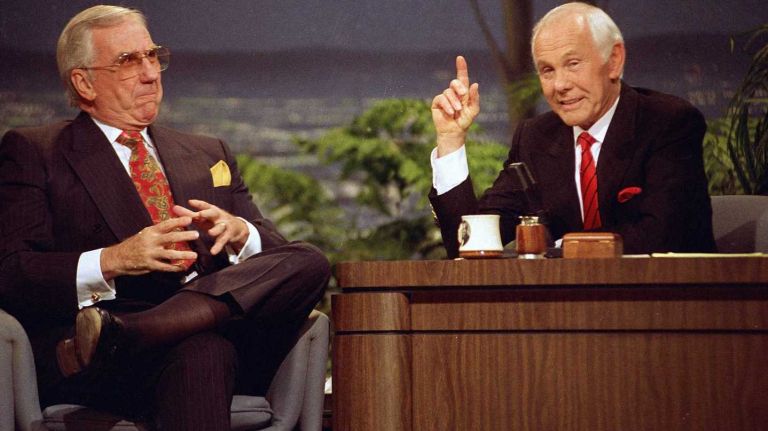
A Marine Corps aviator and flight instructor from Lowell, Massachusetts joined Carson from that first show, back in 1962. The Marine earned his carrier landing qualifications around the time the atomic bomb ended the war in the Pacific, and went on to fly 85 combat missions in Korea, earning six air medals and retiring with the rank of Colonel in 1966. His name was Ed McMahon.
In those days, the Tonight Show was a whopping 105 minutes long. Groucho Marx delivered a fifteen-minute monologue before introducing the host for that first program. After that and for years afterward, the monologue segment fell to McMahon himself.

When the Tonight Show first aired, everyone on the set including Carson himself, smoked. The “Public Health Cigarette Smoking Act” was introduced in Congress in 1969. Ironically, it was President Richard Nixon, an avid pipe smoker who lit up as many as eight bowls a day, who signed the measure into law on April 1, 1970. The measure included a permanent ban on television cigarette advertising, scheduled to take effect  January 2, the following year. The last cigarette ad in the history of American television was a Virginia Slims ad, broadcast at 11:59p.m., January 1, 1971, on the Tonight Show, Starring Johnny Carson. Smoking on-air became a thing of the past sometime in the mid-80s, but that cigarette box remained on Carson’s desk until his final episode, in 1992. You’ve come a long way, baby.
For NBC, the Tonight Show was a cash cow. Many years the program grossed over $100 million, accounting for 15-20% of the profits earned by the entire network. Carson threatened to walk in 1980, ending up with a deal unprecedented in the history of American broadcasting: $5 million a year and series commitments estimated at $50 million. Just as important, show content would no longer belong to the network, but to Carson himself.
 Carson began taking Mondays off in 1972, when the show moved from New York to California. There followed a period of rotating guest hosts, including George Carlin and Joan Rivers, who became permanent guest host between 1983 and 1986.
The Tonight Show Starring Johnny Carson was a late-night fixture through seven US Presidents: John Kennedy, Lyndon Johnson, Richard Nixon, Gerald Ford, Jimmy Carter, Ronald Reagan, and George HW Bush. Nearly every American over the age of 30 and some younger will remember the opening, “Heeeeeeeeeeere’s Johnny!”. There was the opening monologue, and the imaginary golf swing. “Carnac the Magnificent”, holding the envelope to his head, reciting the punchline to the joke sealed inside. “Saucepan… Who was Peter Pan’s wino brother?” When a joke bombed, there was the comedic curse. “May a bloated yak change the temperature of your jacuzzi!”
 Jay Leno appeared on the Tonight Show with Johnny Carson for the first time on March 2, 1977. He would frequently guest, and served as permanent host from May 1992 to May 2009.
Five years after Carson’s final show, 10,000 taped episodes were moved to a salt mine in Kansas, to protect them from deterioration. There they remain, 54 stories underground, where the average temperature is 68° Fahrenheit, with a uniform 40% humidity.
Excepting Conan O’Brien’s eight months in 2010, Leno remained permanent host of the Tonight Show until February 2014, recording more episodes (4,610) than even Carson himself, with 4,531. Saturday Night live veteran Jimmy Fallon took over the reins in February 2014, where he remains to this day.
The world’s longest running talk show began in 1954, when Steve Allen sat down at his piano on September 27. This show is gonna go on… forever”, Allen quipped. So far, he seems to have gotten that right.


 On March 1, 2011, L/Cpl Tasker was killed by a Taliban sniper while on patrol in Helmand Province, and brought back to base by his fellow soldiers. Theo suffered a seizure after returning to base and never recovered. He died that afternoon. It was believed that Theo’s seizure was brought on by the stresses of Tasker’s death, but the autopsy proved inconclusive. Liam’s mother Jane Duffy later said, “I think Theo died of a broken heart, nobody will convince me any different.”
 On a more upbeat note, and this story needs one, our daughter Carolyn and son-in-law Nate transferred to Savannah in 2013, where Nate deployed to the Wardak province of Afghanistan as a TEDD handler and paired with “MWD Zino”, a four-year-old German Shepherd trained to detect up to 64 explosive compounds.

 Reitsch began flying gliders in 1932, as the treaty of Versailles prohibited anyone flying “war planes” in Germany. In 1934, she broke the world’s altitude record for women (9,184 feet). In 1936, Reitsch was working on developing dive brakes for gliders, when she was awarded the honorary rank of Flugkapitän, the first woman ever so honored. In 1937 she became a Luftwaffe civilian test pilot. She would hold the position until the end of WW2.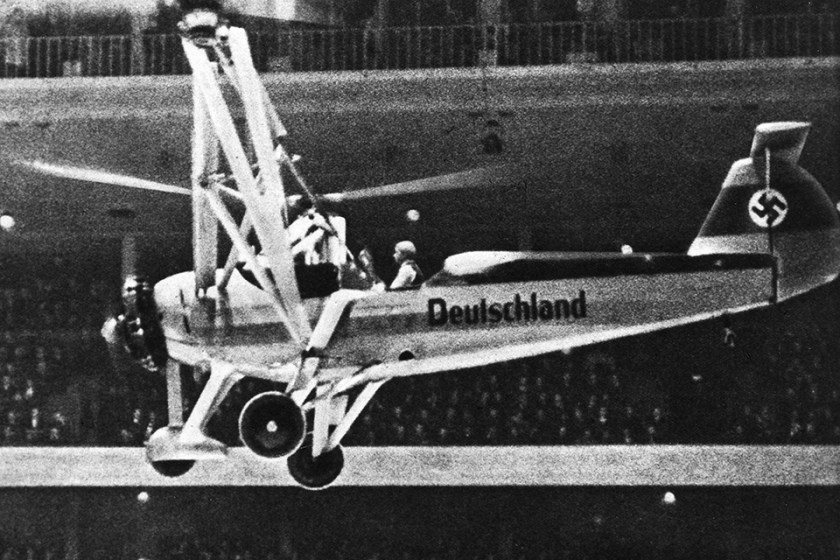
 Doctors did not expect her to live, let alone fly again. She spent five months in hospital, and suffered from debilitating dizzy spells. She put herself on a program of climbing trees and rooftops, to regain her sense of balance. Soon, she was test flying again.
 Hitler was initially put off by the idea, though she finally persuaded him to look into modifying a Messerschmitt Me-328B fighter for the purpose. Reitsch put together a suicide group, becoming the first to take the pledge, though the idea would never take shape. The pledge read, in part: “I hereby voluntarily apply to be enrolled in the suicide group as a pilot of a human glider-bomb. I fully understand that employment in this capacity will entail my own death.”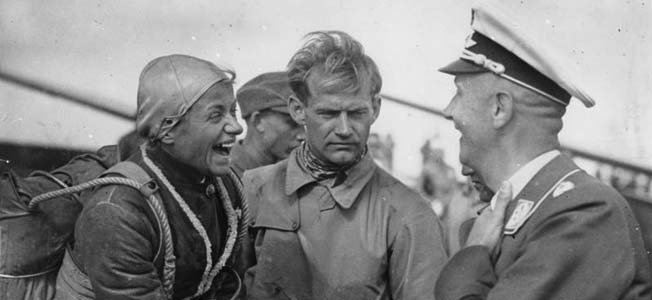
 Toward the end of her life, she was interviewed by the Jewish-American photo-journalist, Ron Laytner. Even then she was defiant: “And what have we now in Germany? A land of bankers and car-makers. Even our great army has gone soft. Soldiers wear beards and question orders. I am not ashamed to say I believed in National Socialism. I still wear the Iron Cross with diamonds Hitler gave me. But today in all Germany you can’t find a single person who voted Adolf Hitler into power … Many Germans feel guilty about the war. But they don’t explain the real guilt we share – that we lost“.

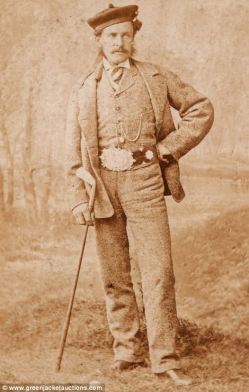


 The Father/Son team tee’d off in match against the brothers Willie and Mungo Park on September 11, 1875. With two holes to go, Young Tom received a telegram with upsetting news. His wife Margaret had gone into a difficult labor. The Morrises finished those last two holes winning the match, and hurried home by ship across the Firth of Forth and up the coast. Too late. Tom Morris Jr. got home to find that his young wife and newborn baby, had died in childbirth.

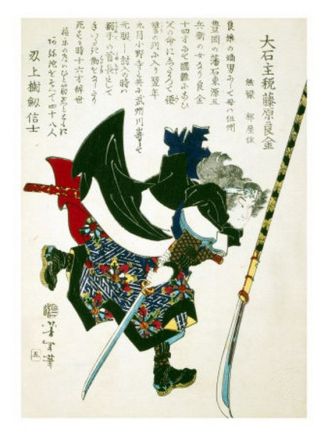 The military and governing structure of the time was based on a rigid and inflexible class system, placing the feudal lords or daimyō at the top, followed by a warrior-caste of samurai, and a lower caste of merchants and artisans. At the bottom of it all stood some 80% of the population, the peasant farmer forbidden to engage in non-agricultural work, and expected to provide the income to make the whole system work.
 In time, these internal Japanese issues and the growing pressure of western encroachment led to the end of the Tokugawa period and the restoration of the Meiji Emperor, in 1868. The divisions would last, well into the 20th century.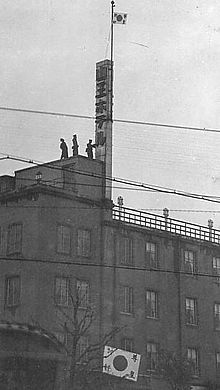
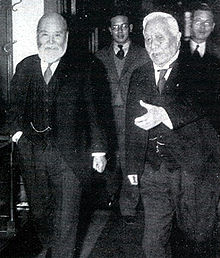


 Far-left anarchists mailed no fewer than 36 dynamite bombs to prominent political and business leaders in April 1919, alone. In June, another nine far more powerful bombs destroyed churches, police stations and businesses.
 To this day there are those who describe the period as the “First Red Scare”, as a way to ridicule the concerns of the era. The criticism seems unfair. The thing about history, is that we know how their story ends. The participants don’t, any more than we know what the future holds for ourselves.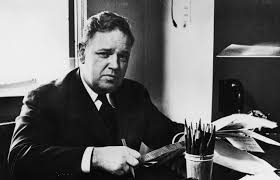
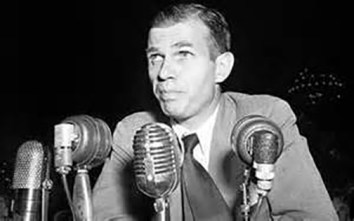
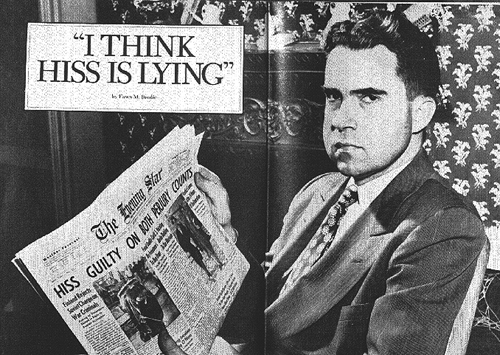
 Before defecting from the Left, Chambers had secreted documents and microfilms, some of which he hid inside a pumpkin at his Maryland farm. The collection was known as the “Pumpkin Papers”, consisting of incriminating documents, written in what appeared to Hiss’ own hand, or typed on his Woodstock no. 230099 typewriter.
 Hiss’ theory never explained why Chambers side needed another typewriter, if they’d had the original long enough to mimic its imperfections with a second.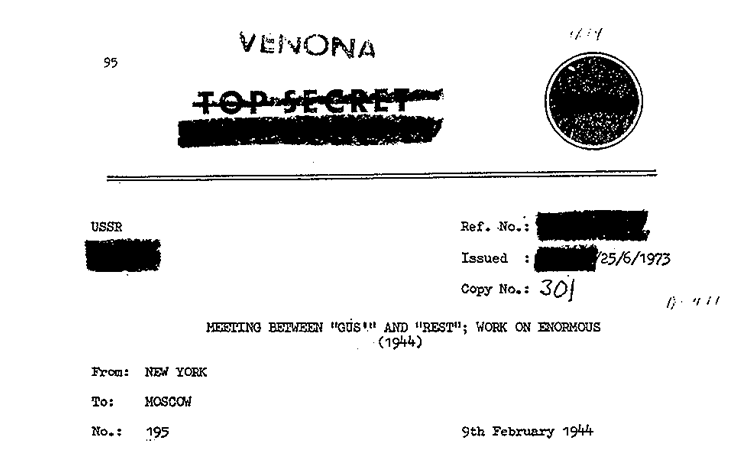


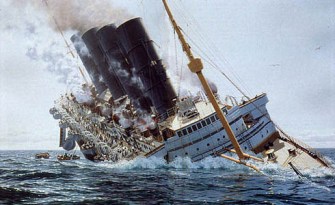 Though Wilson didn’t mention it directly, HMS Lusitania had been torpedoed only three days earlier with the loss of 1,198, 128 of whom were Americans.
 The reaction to the Lusitania sinking was immediate and vehement, portraying the attack as the act of barbarians and huns and demanding a German return to “prize rules”, requiring submarines to surface and search merchantmen while placing crews and passengers in “a place of safety”.
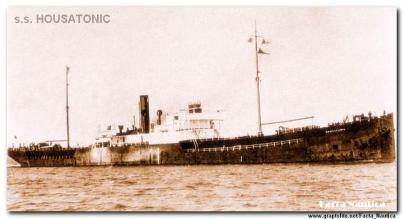 The American cargo vessel SS Housatonic was stopped off the southwest coast of England on February 3, and boarded by German submarine U-53. Captain Thomas Ensor was interviewed by Kapitänleutnant Hans Rose, who explained he was sorry, but Housatonic was “carrying food supplies to the enemy of my country”. She would be destroyed. The American Captain and crew were allowed to launch lifeboats and abandon ship, while German sailors raided the American’s soap supplies. Apparently, WWI-vintage German subs were short on soap.
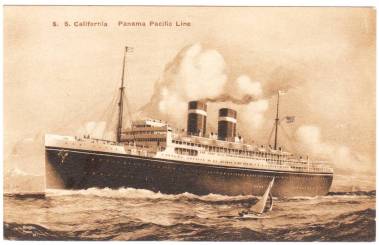 President Woodrow Wilson retaliated, breaking off diplomatic relations with Germany the following day. Three days later, a German U-boat fired two torpedoes at the
 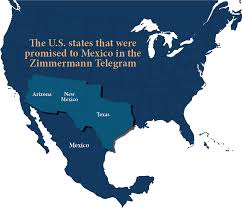 The contents of Zimmermann’s note were published in the American media on March 1. Even then, there was considerable antipathy toward the British side, particularly among Americans of German and Irish ethnicity. “Who says this thing is genuine, anyway”, they might have said. “Maybe it’s a British forgery”.


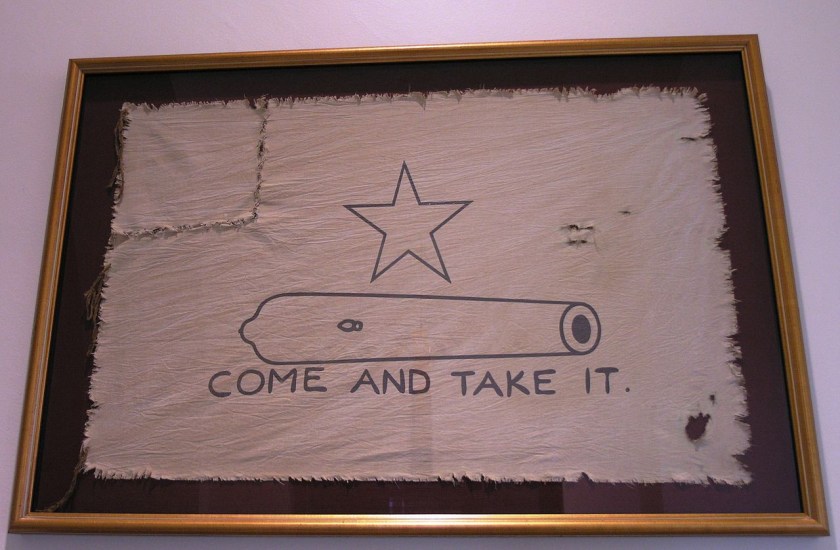
 Estimates of the Alamo garrison have ranged between 189 and 257 at this stage, but current sources indicate that defenders never numbered more than 200.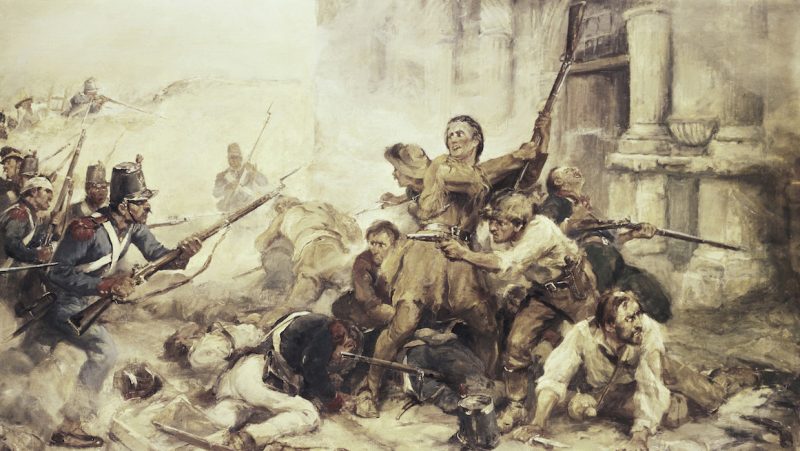


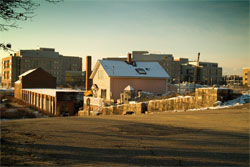


 Eminent domain exists for a purpose, but the most extreme care should be taken in its use. Plaintiffs argued that this was not a “public use”, but rather a private corporation using the power of government to take their homes for economic development, a violation of both the takings clause of the 5th amendment and the due process clause of the 14th.
 Clarence Thomas took an originalist view, stating that the majority opinion had confused “Public Use” with “Public Purpose”. “Something has gone seriously awry with this Court’s interpretation of the Constitution“, Thomas wrote. “Though citizens are safe from the government in their homes, the homes themselves are not“. Antonin Scalia concurred, seeing any tax advantage to the municipality as secondary to the taking itself.


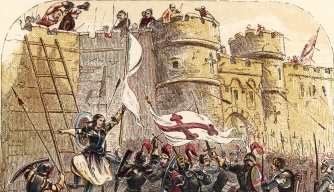
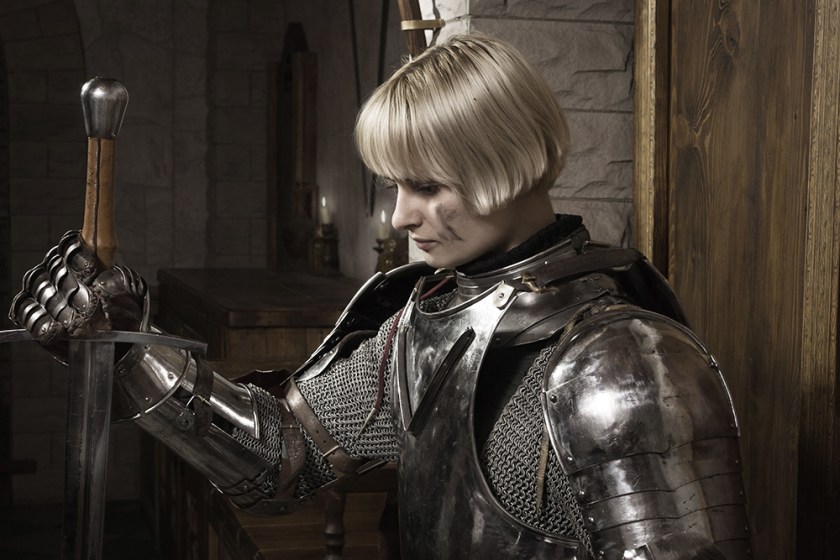
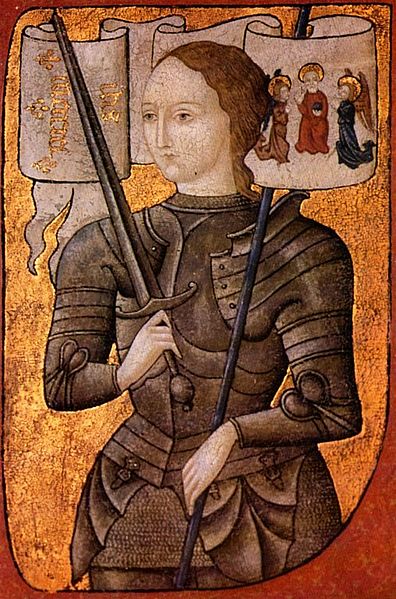 Some 70 charges were made against her by the pro-English Bishop of Beauvais, Pierre Cauchon, including witchcraft, heresy, and perjury.
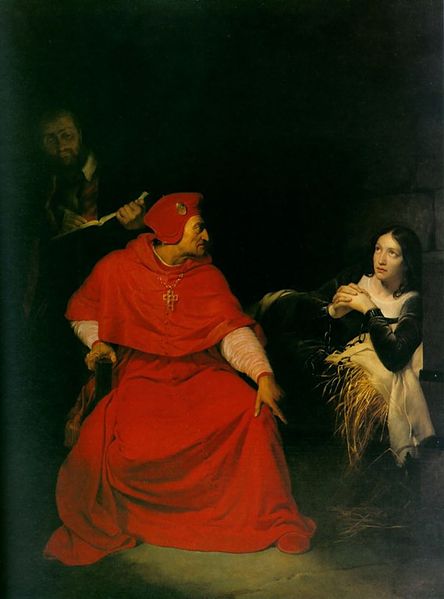 After fifteen such interrogations her inquisitors still had nothing on her, save for the wearing of soldier’s garb, and her visions. Yet, the outcome of her “trial” was already determined. She was found guilty of heresy, and sentenced to be burned at the stake.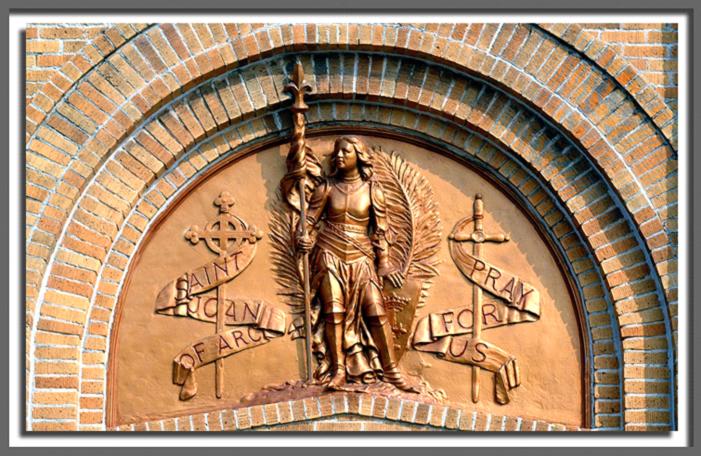

 Historical Easter Eggs - Today in History
You must be logged in to post a comment.