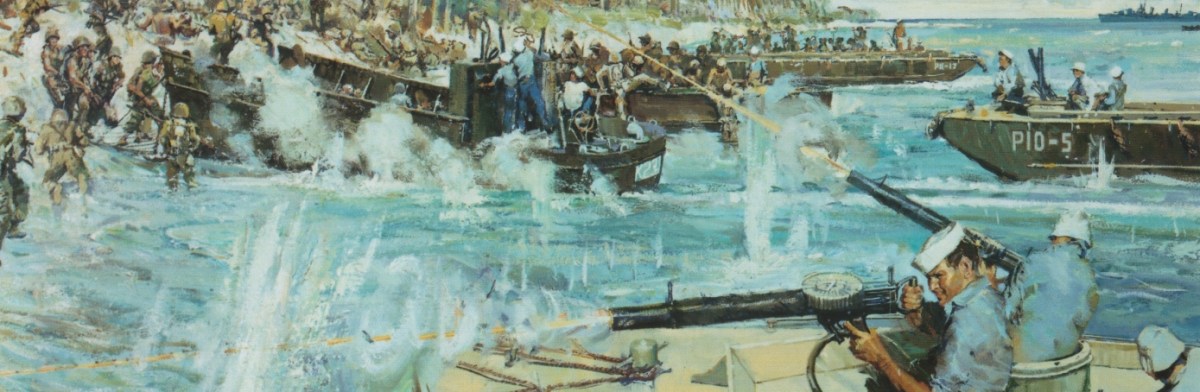
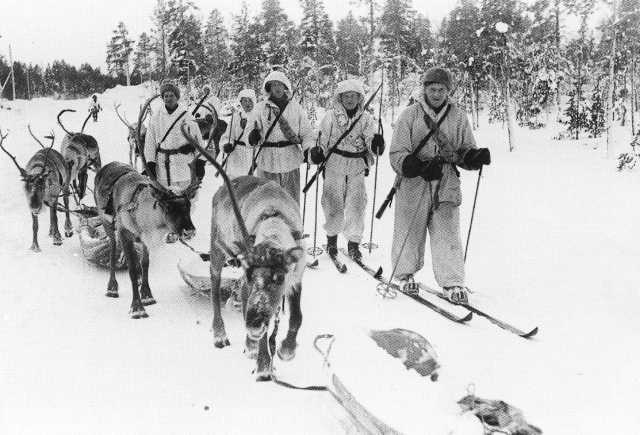
May 4, 1945 The Strangest Battle of WWII

72 years ago today, Wehrmacht infantry fought side by side with American soldiers and French civilians, against Nazi SS.

Itter CastleItter Castle appeared in the land records of the Austrian Tyrol as early as 1240.  When Germany annexed Austria in 1938, Schloss Itter was first leased and later requisitioned outright by the German government, for unspecified “Official use”.

Fun Fact:  Most WWII-era Nazis didn’t merely abstain from tobacco use.  Nazis were rabid anti-smokers.  Adolf Hitler himself once smoked two packs a day.  By the start of WWII he had a standing offer of a gold watch to anyone among his inner circle who quit the habit.  In 1942, Castle Itter became home to the “German Association for Combating the Dangers of Tobacco”.

Nazi anti-smoking Propaganda
Nazi anti-tobacco propaganda

By April 1943, Itter had become a prison for individuals of value to the Reich.  Among them were tennis player Jean Borotra and former French Prime Ministers Édouard Daladier and Paul Reynaud.  Former commanders-in-chief Maxime Weygand and Maurice Gamelin were interned there, as was Marie-Agnès Cailliau, the older sister of Charles de Gaulle.  A number of Eastern Europeans were also interned at Itter, mostly employed in maintenance and other menial work around the castle.

In the early weeks of 1945, the 23rd Tank Battalion of the American 12th Armored Division fought its way across France, through Germany and into the Austrian Tyrol.  27 year-old 1st Lt. John “Jack” Lee Jr. was leading the three tank “Company B’, spearheading the drive into Kufstein and on to Munich.  The unit had just fought a pitched battle at a German roadblock before clearing the town.  With lead elements of the 36th Infantry moving in to take possession on May 4, Lee’s unit could finally take a rest.

By this time, Wehrmacht Major Josef Gangel and a few of his soldiers had changed sides, joining the Austrian resistance in Wörgl against roving bands of SS then in possession of the town.

Back at Itter, the last commander of the Dachau concentration camp, Eduard Weiter, had fled his command and made his way to the safety of Itter Castle.  He was murdered by an unnamed SS officer on May 2, for insufficient devotion to the cause.  Fearing for his own life, Itter commanding officer Sebastian Wimmer fled the Castle on May 4, followed by his guards.  The now-former prisoners of Schloss Itter were alone for now, but the presence of SS units in the area made it imperative – they had to do something.  While breaking into the weapons room and arming themselves with pistols, rifles, and submachine guns, Zoonimir Cuckovic, AKA “André”, purloined a bicycle and went looking for help.

SchlossItter1979c_SJMorgan
Schloss Itter (Itter Castle) in July 1979. Photo by S.J. Morgan.

André’s mad bicycle ride resulted in the one of the strangest rescues in military history. Lt. Lee tapped eight volunteers and two tanks, his own “Besotten Jenny” and Lt. Wallace Holbrook’s “Boche Buster.”  Riding atop the two Shermans were six members of the all–black Company D, 17th Armored Infantry Battalion, a couple of crews from the 142nd Infantry Regiment, and the Wehrmacht’s own Josef Gangel with a Kübelwagen full of German soldiers bringing up the rear.

KübelwagenIt was late afternoon as the convoy left for Castle Itter.  Leaving Boche Buster and a few Infantry to guard the largest bridge into town.  What remained of the convoy fought its way through its last SS roadblock in the early evening, roaring across the last bridge and lurching to a stop in front of Itter’s gate as night began to fall.  Itter’s prisoners looked on in dismay.  They had expected a column of American tanks and a heavily armed infantry force.  What they had here, was a single tank with seven Americans, and a truckload of armed Germans.

The castle’s defenders came under attack almost at once, by harrying forces sent to assess their strength and to probe the fortress for weakness.  Lee ordered French prisoners to hide inside, but they refused, remaining outside and fighting alongside American and German soldiers.  Frantic calls for reinforcements resulted in two more German soldiers and a teenage Austrian resistance member arriving overnight, but that would be all.

The Totenkopf, or “Death’s head” units was the SS organization responsible for ittercdamageconcentration camp administration for the Third Reich and some of the most fanatical soldiers of WWII.  Even at this late date SS units were putting up fierce resistance across northern Austria.  100-150 of them attacked on the morning of May 5.   Fighting was furious around Castle Itter, the one Sherman providing machine-gun fire support until it was destroyed by a German 88mm gun.  By early afternoon Lee was able to get a desperate plea for reinforcements through to the 142nd Infantry, before being cut off.  Aware that he’d been unable to give complete information on the enemy’s troop strength and disposition, Lee accepted Jean Borotra’s gallant offer of assistance.

Jean_BorotraLiterally vaulting over the castle wall, the tennis star ran through a gauntlet of SS strongpoints and ambushes to deliver his message, before donning an American uniform to help fight through to the castle’s defenders.  The relief force arrived at around 4pm, as defenders were firing their last ammunition.

100 SS were captured.  Lee later received the Distinguished Service Cross for his actions.  Josef Gangel was killed by a sniper while trying to move Prime Minister Reynaud out of harm’s way.  Today, there is a street in Wörgl which bears his name.  Germany signed the unconditional surrender two days later.  So ended the first and only battle in which Americans and Germans fought side by side.

Paul Reynaud didn’t like Jack Lee, remembering the American Lieutenant as “crude in both looks and manners”.  “If Lee is a reflection of America’s policies”, he sniffed, “Europe is in for a hard time”.  How very French of him.  All that, before he got to learn the lyrics of the Horst Wessel song.

 April 30, 1943 The Man Who Never Was

The idea was a head fake, disinformation planted into the hands of Nazi Germany, to make them believe the allies planned to invade Sardinia and Greece in 1943

The idea was a head fake, disinformation planted into the hands of Nazi Germany, making them believe the allies planned to invade Sardinia and Greece in 1943, rather than the real targets of North Africa and Sicily. British Military Intelligence called it “Operation Mincemeat”.

The London coroner obtained the body of a 34-year-old homeless man named Glyndwr Michael, on condition that his real identity never be revealed. The Welshman had died of rat poison, though it’s uncertain whether the death was accidental or suicide.  This particular poison came in a paste, and was spread on bread crusts to attract rats.  Michael may have died, merely because he was hungry.

glyndwr-martinBe that as it may, the cause of death was difficult to detect, the condition of the corpse close to that of someone who had died at sea, of hypothermia and drowning. The dead man’s parents were both deceased, there were no known relatives and the man died friendless.  So it was that Glyndwr Michael became the Man who Never Was.
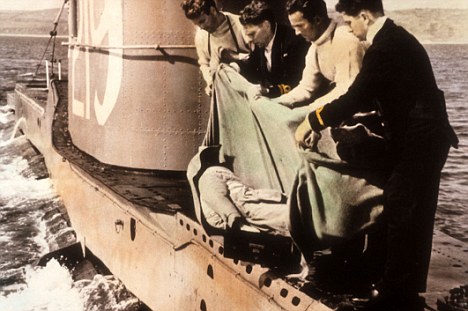
The next step was to create a “past” for the dead man. Michael became “(Acting) Major William “Bill” Martin, Royal Marines”, born 1907, in Cardiff, Wales, assigned to Headquarters, Combined Operations. As a Royal Marine, “Martin” could wear battle dress rather than a naval uniform. This was important, because Naval uniforms at the time were tailor-made by Gieves & Hawkes of Saville Row.  Authorities could hardly ask Gieves’ tailors to measure a corpse, without raising eyebrows.

The rank of acting major made him senior enough to be entrusted with sensitive documents, but not so prominent that anyone would expect to know him. The name “Martin” was chosen because there were several Martins of about that rank, already serving in the Royal Marines.

A “fiancé” was furnished for Major Martin, in the form of an MI5 clerk named “Pam”. “Major Martin” carried her snapshot, along with two love letters, and a jeweler’s bill for a diamond engagement ring.

In keeping with his rank, Martin was given some good quality underwear, to increase his authenticity. Extremely difficult to obtain due to rationing, the underwear was purloined from the Master of the New College Oxford, who’d been run over and killed by a truck.

The Man Who Never Was Year 1956 Director Ronald Neame
Scene from “The Man Who Never Was”, 1956, Directed by Ronald Neame

Made to look like the victim of a plane crash, the plan was to drop the body at sea, at a place where the tide would bring it ashore and into German Hands.

On April 30, 1943, Lt. Norman Jewell, commander of the submarine Seraph, read the 39th Psalm.  The body of the man who never was, complete with briefcase padlocked to his wrist containing “secret” documents, was gently pushed into the ocean off the Spanish Atlantic coast.

The hoax worked out, nicely.  A Spanish fisherman recovered the body and a Nazi agent intercepted the papers, as intended.  Mussolini insisted correctly that the allied attack would come through Sicily, but Hitler wasn’t buying it.  He had swallowed the Mincemeat scam whole, insisting that the Sicilian attack was nothing but a diversion from the real objective.

When the Allies invaded Sicily on the 9th of July, the Germans were so convinced it was a feint that they kept forces out of action for two full weeks.  After that, it was far too late to effect the outcome.

Glyndwr-Michael-memorialThe non-existent Major William Martin was buried with full military honors in the Huelva cemetery of Nuestra Señora. The headstone reads:

“William Martin, born 29 March 1907, died 24 April 1943, beloved son of John Glyndwyr Martin and the late Antonia Martin of Cardiff, Wales, Dulce et Decorum est pro Patria Mori, R.I.P.”  The Latin phrase means “It is sweet and fitting to die for one’s country.”

In 1998, the British Government revealed Martin’s true identity, and “Glyndwr Michael; Served as Major William Martin, RM”, was added to the gravestone.

There is a war memorial in the small South Wales town of Aberbargoed, in memory of Glyndwr Michael. A plaque is inscribed with the Welsh phrase “Y Dyn Na Fu Erioed“.  It means “The Man Who Never Was”.

April 27, 1944 Exercise Tiger

Estimates of Americans killed in the D-Day rehearsal range from 639 to 946, nearly five times the number killed on the actual Utah Beach landing.

The largest amphibious attack in history began on June 6, 1944, on the northern coast of France.  British and Canadian forces came ashore at beaches code named Gold, Juno and Sword.  Americans faced light opposition at Utah Beach, while heavy resistance at Omaha Beach resulted in over 2,000 American casualties.

By end of day, some 156,000 Allied troops had successfully stormed the beaches of Normandy.  Within a week that number had risen to 326,000 troops, over 50,000 vehicles and more than 100,000 tons of equipment.

The success of “Operation Overlord” resulted from lessons learned from the largest amphibious training exercise of the war, the six phases of “Operation Fabius”, itself following the unmitigated disaster of a training exercise that killed more Americans, than the actual landing at Utah beach.

Slapton_Sands
Slapton Sands

Slapton is a village and civil parish in the River Meadows of Devon County, where the southwest coast of England meets the English Channel.  Archaeological evidence suggests human habitation from at least the bronze age.  The “Domesday Book”, the recorded manuscript of the “Great Survey” of England and Wales completed in 1086 by order of William the Conqueror, names the place as “Sladone”, with a population of 200.

In late 1943, 750 families, some 3,000 locals, were evacuated with their livestock to make way for “Operation Tiger”, a D-Day landing rehearsal scheduled for the following spring.   Some had never so much as left their village.Channel map

Thousands of US military personnel were moved into the region during the winter of 1943-44. The area was mined and bounded with barbed wire, and patrolled by sentries.  Secrecy was so tight, that even those in surrounding villages, had no idea of what was happening.

Exercise Tiger was scheduled to begin on April 22, covering all aspects of the “Force U” landing on Utah beach, culminating in a live-fire beach landing at Slapton Sands at first light, on April 27.

220px-D-Day_rehearsal_cph.3c32795
Slapton Sands Landing

Nine large tank landing ships (LSTs) shoved off with 30,000 troops on the evening of the 26th, simulating the overnight channel crossing. Live ammunition was used in the exercise, to harden troops off to the sights, sounds and smells of actual battle. Naval bombardment was to commence 50 minutes before H-Hour, however delays and scheduling confusion resulted in landing forces coming under direct naval bombardment. An unknown number were killed in this “friendly fire” incident. Fleet rumors put the number as high as 450.

Two Royal Navy Corvettes, HMS Azalea and Scimitar, were to guard the exercise from German “Schnellboots” (“S-Boots” – the allies called the “E-Boats”), the fast attack craft based across the channel, at Cherbourg.

German_S-Boat_S_204
German Fast Attack Boats known as ‘Schnell-Boots” or, “Fast Boats”

Scimitar withdrew for repairs following a collision with an LST on the 27th. In the earlymorning darkness of the following day, the single corvette was leading 8 LSTs carrying vehicles and combat engineers of the 1st Engineer Special Brigade through Lyme Bay, when the convoy was spotted by a nine vessel E-Boat patrol.

8 landing craft in single-file didn’t have a chance against fast-attack craft capable of 55mph.  LST-531 was torpedoed and sunk in minutes, killing 424 Army and Navy personnel. LST-507 suffered the same fate, with the loss of 202. LST-289 made it to shore in flames, with the loss of 123. LST-511 was damaged in yet another friendly fire incident.

Unable to wear their lifebelts correctly due to the large backpacks they wore, many men placed them around their waists. That only turned them upside down in the water and that’s how they died, with nothing but legs visible above the waves. Dale Rodman, who survived the sinking of LST-507, said “The worst memory I have is setting off in the lifeboat away from the sinking ship and watching bodies float by.”

Survivors were sworn to secrecy due to official embarrassment, and the possibility of revealing the real invasion, scheduled for June.  Ten officers with high level clearance were killed in the incident, but no one knew that for sure until their bodies were recovered.  The D-Day invasion was nearly called off.  Any of them could have been captured alive, revealing pending invasion plans to German interrogators.  Particularly under torture.

There’s a surprising amount of confusion about the final death toll.  Estimates range from 639 to 946, nearly five times the number killed in the actual Utah Beach landing.  Some or all of the personnel from that damaged LST may have been aboard the other 8 on the 28th, but log books went down along with everything else.  Many of the remains, have never been found.

Even that number would surely have been higher, had not Captain John Doyle disobeyed orders and turned his LST-515 around, plucking 134 men from the frigid water.

Sherman_Tank_Operation_TigerToday the Exercise Tiger disaster is largely forgotten.  Some have charged official cover-up, though information from SHAEF press releases appeared in the August edition of Stars & Stripes.  At least three books contain the information.  It seems more likely that the immediate need for secrecy and subsequent D-Day invasion swallowed the Tiger disaster, whole.  History has a way of doing that.

Some of Slapton’s residents came home to rebuild their lives after the war, but many never returned.  In the early 1970s, Devon resident and civilian Ken Small discovered an artifact of the Tiger exercise, while beachcombing on Slapton Sands.

With little or no help from either the American or British governments, Small purchased rights to a submerged Sherman tank from the 70th Tank Battalion, from the United States Government.  The tank was raised in 1984 with the help of local residents and dive shops, and now stands as a memorial to Exercise Tiger, not far from a monument remembering those villagers who never came home.Slaptonmemorial

A plaque was erected at Arlington National Cemetery in 1995, inscribed with the words “Exercise Tiger Memorial”.  A 5,000-pound LST stern anchor bears silent witness to Exercise Tiger in Mexico, Missouri, as does an M4 Sherman tank at Fort Rodman Park in New Bedford, Massachusetts.

In 2012, a granite memorial was erected at Utah Beach, engraved with the words in French and English: “In memory of the 946 American servicemen who died in the night of 27 April 1944 off the coast of Slapton Sands (G.B.) during exercise Tiger the rehearsals for the D-Day landing on Utah Beach”.

SONY DSC


April 18, 1943 Terrible Resolve

Painfully aware of the overwhelming productive capacity of the American economy, Yamamoto sought to neuter the US High Seas fleet in the Pacific, while simultaneously striking at the oil and rubber rich resources of Southeast Asia

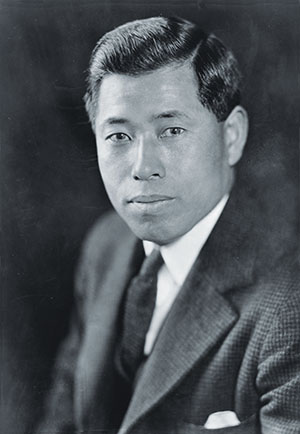
Captian Isoroku YamamotoIsoroku Takano was born in Niigata, the son of a middle-ranked samurai of the Nagaoka Domain. His first name “Isoroku”, translating as “56”, refers to his father’s age at the birth of his son. At this time, it was common practice that samurai families without sons would “adopt” suitable young men, in order to carry on the family name, rank, and the income that came with it. The young man so adopted would carry the family name.  So it was that Isoroku Takano became Isoroku Yamamoto in 1916, at the age of 32.
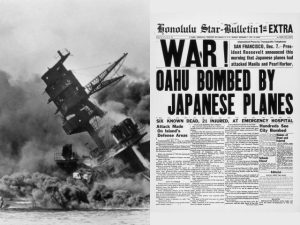
After graduating from the Imperial Japanese Naval Academy, Yamamoto went on to serve in the Russo-Japanese war of 1904, later returning to the Navy Staff College and emerging as Lieutenant Commander in 1916. He attended Harvard University from 1919-1921, learning fluent English. A later tour of duty in the US enabled him to travel extensively, and to study American customs and business practices.

Like most of the Japanese Navy establishment, Yamamoto promoted a strong Naval policy, at odds with the far more aggressive Army establishment. For those officers, particularly those of the Kwantung army, the Navy existed only to ferry invasion forces about the globe.

Yamamoto opposed the invasion of Manchuria in 1931 and the 1937 land war with

uss_panay
Panay

China. As Deputy Navy Minister, it was Yamamoto who apologized to Ambassador Joseph Grew, following the “accidental” bombing of the USS Panay in 1937. Even when he was the target of assassination threats by pro-war militarists, Yamamoto still opposed the attack on Pearl Harbor, which he believed would “awaken a sleeping giant and fill him with a terrible resolve”.

Yamamoto received a steady stream of hate mail and death threats in 1938, as a growing number of army and navy officers spoke publicly against him. Irritated with Yamamoto’s immovable opposition to the tripartite pact with Nazi Germany and Fascist Italy, army hardliners dispatched military police to “guard” him. In one of the last acts of his short-lived administration, Navy Minister Mitsumasa Yonai reassigned Yamamoto to sea as Commander-in-Chief of the Combined Fleet, making it harder for assassins to get at him.

USS-Arizona-Sinking-Pearl-Harbor-Newspaper-December-7-1941-AP-Getty-640x480Many believed that Yamamoto’s career was finished when his old adversary Hideki Tōjō ascended to the Prime Ministership in 1941. Yet there was none better to run the combined fleet. When the pro-war faction took control of the Japanese government, he bowed to the will of his superiors. It was Isoroku Yamamoto who was tasked with planning the attack on Pearl Harbor.
Nothing worked against the Japanese war effort as much as time and resources. Painfully aware of the overwhelming productive capacity of the American economy, Yamamoto sought to emasculate the US High Seas fleet in the Pacific, while simultaneously striking at the oil and rubber rich resources of Southeast Asia. To accomplish this first objective, he planned to attack the anchorage at Pearl Harbor, followed by an offensive naval victory which would bring the Americans to the bargaining table. It’s not clear if he believed all that, or merely hoped that it might work out.

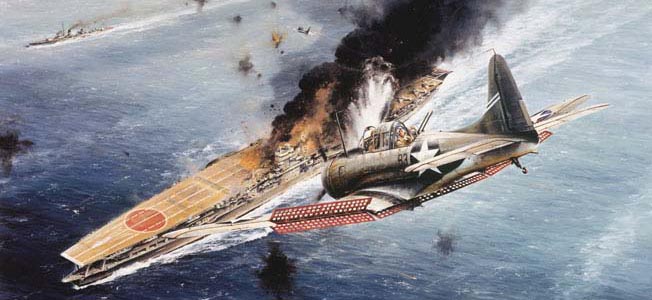
Yamamoto got his decisive naval engagement six months after Pearl Harbor, near Midway Island. Intended to be the second surprise that finished the carriers which had escaped destruction on December 7, American code breakers turned the tables. This time it was Japanese commanders who would be surprised.

Battle-Of-Midway-Turns-Tide-Of-Pacific-War-2American carrier based Torpedo bombers were slaughtered in their attack, with 36 out of 42 shot down.  Yet Japanese defenses had been caught off-guard, their carriers busy rearming and refueling planes when American dive-bombers arrived.
midway-copyMidway was a disaster for the Imperial Japanese navy. The carriers Akagi, Kaga, Soryu and Hiryu, the entire strength of the task force, went to the bottom. The Japanese also lost the heavy cruiser Mikuma, along with 344 aircraft and 5,000 sailors. Much has been made of the loss of Japanese aircrews at Midway, but two-thirds of them survived. The greater long term disaster, may have been the loss of all those trained aircraft mechanics and ground crew who went down with their carriers.
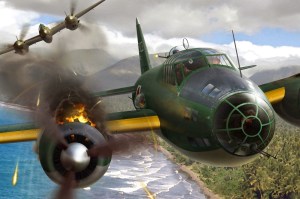
The Guadalcanal campaign, fought between August 1942 and February ’43, was the first major allied offensive of the Pacific war and, like Midway, a decisive victory for the allies.

Needing to boost morale after the string of defeats, Yamamoto planned an inspection 2013-Yamamoto-10.1tour throughout the South Pacific. US naval intelligence intercepted and decoded his schedule.  The order for “Operation Vengeance” went down the chain of command from President Roosevelt to Secretary of the Navy Frank Knox to Naval Operations Admiral Ernest King to Admiral Chester Nimitz at Pearl Harbor. Sixteen Lockheed P-38 Lightnings, the only fighters capable of the ranges involved, were dispatched from Guadalcanal on April 17 with the order: “Get Yamamoto”.

Yamamoto’s two Mitsubishi G4M bombers with six Mitsubishi A6M Zeroes in escort were Yamamoto Wreckintercepted over Rabaul on April 18, 1943. Knowing only that his target was “an important high value officer”, 1st Lieutenant Rex Barber opened up on the first Japanese transport until smoke billowed from its left engine. Yamamoto’s body was found in the wreckage the following day with a .50 caliber bullet wound in his shoulder, another in his head. He was dead before he hit the ground.

Isoroku Yamamoto had the unenviable task of planning the attack on Pearl Harbor, but he was an unwilling participant in his own history. “In the first six to twelve months of a war with the United States and Great Britain”, he had said, “I will run wild and win victory upon victory. But then, if the war continues after that, I have no expectation of success”.Yamamoto

April 3, 1946 Bataan Death March

The United States was grotesquely unprepared to fight a World War in 1942, and dedicated itself to beating Adolf Hitler first. General Douglas MacArthur abandoned the “Alamo of the Pacific” on March 11 saying “I shall return”

The game was November 27, 1937.  Late in the 4th quarter, Notre Dame was tied 6-6 with Southern California. The “Fighting Irish” needed a miracle. Notre Dame fullback #58 Mario “Motts” Tonelli took the hand-off deep in Notre Dame territory and ran the ball 70 yards back before being tackled. Seconds later, the 5’11”, 195lb Tonelli, scored the game winning touchdown.Tonelli

In some ways, Mario Tonelli himself was the miracle. Years earlier at the age of 6, he’d been burned over 80% of his body, when a trash compactor toppled over on him. Mario’s immigrant father Celi, a laborer from a northern Italian marble quarry, refused to believe the doctor who said his son would never walk again. Fixing four wheels to a door, the elder Tonelli taught his first American-born son to move about with his arms. By 1935, Mario Tonelli was a football, basketball and track star at Chicago’s DePaul Academy.

After a year coaching at Providence College in 1939 and a year playing professional football for the Chicago Cardinals in 1940, Tonelli joined the Army early in 1941, assigned to the 200th Coast Artillery Regiment in Manila.

Tonelli hoped to fulfill his one years’ commitment and return to the Cardinals for the ’42 season, but it wasn’t meant to be. The radio crackled to life at 2:30am local time on December 7. “Air raid on Pearl Harbor. This is no drill!”

Military forces of Imperial Japan appeared unstoppable in the early months of WWII, attacking first Thailand, then the British possessions of Malaya, Singapore, and Hong Kong, as well as US military bases in Hawaii, Wake Island, Guam and the Philippines.Bataan1

The United States was grotesquely unprepared to fight a World War in 1942, and dedicated itself to beating Adolf Hitler first. General Douglas MacArthur abandoned the “Alamo of the Pacific” on March 11 saying “I shall return”, leaving 90,000 American and Filipino troops without food, supplies or support with which to fight off the Japanese offensive.

On April 9, 75,000 surrendered the Bataan peninsula, beginning a 65 mile, five-day slog into captivity through the heat of the Philippine jungle. Japanese guards were sadistic. They would beat the marchers and bayonet those too weak to walk. Japanese tanks would swerve out of their way to run over anyone who had fallen and was too slow in getting up. Some were burned alive. Already crippled from tropical disease and starving from the long siege of Luzon, thousands perished in what came to be known as the Bataan Death March.

bataanExhausted, sunburned and aching with thirst, Tonelli still refused when a Japanese soldier demanded his Notre Dame class ring. As the guard reached for his sword, a nearby prisoner shouted “Give it to him. It’s not worth dying for”.

Minutes later, a Japanese officer appeared, speaking perfect English. “Did one of my men take something from you?” “Yes”, Tonelli replied. “My school ring”. “Here,” said the officer, pressing the ring into his hand. “Hide it somewhere. You may not get it back next time”. Tonelli was speechless. “I was educated in America”, the officer said. “At the University of Southern California. I know a little about the famous Notre Dame football team. In fact, I watched you beat USC in 1937. I know how much this ring means to you, so I wanted to get it back to you”.

Close to 700 Americans and over 10,000 Filipinos died on the Bataan death march. For the survivors, the ordeal was only beginning. For 2½ years Tonelli suffered starvation, disease and endless beatings in the squalid prison camps known as O’Donnell, Cabanatuan, and Davao. Tonelli kept his ring throughout, buried in a soap dish. He’d take it out from time to time to remind himself:  life used to be better than this. It gave him something to hope for.

tonelli2The hellish 60-day journey aboard the filthy, cramped merchant vessel began in late 1944, destined for slave labor camps in mainland Japan. Tonelli was barely 100 pounds on arrival, his body ravaged by malaria and intestinal parasites. He was barely half the man who once played fullback at Notre Dame Stadium, Soldier Field and Comiskey Park.

Arriving at Nagoya #7 prison camp, Tonelli was handed a piece of paper. Scribbled on it was a 58. He was prisoner number 58, the same number he once wore on his football Jersey. “From that point on,” he said, “I knew I was going to make it”.

An American military tribunal conducted after the war held Lieutenant General Homma Masaharu, commander of the Japanese invasion forces in the Philippines, guilty of war crimes. He was executed by firing squad on April 3, 1946.Mario Tonelli Ring

Mario Tonelli always hoped to meet the officer who’d returned his ring, but it wasn’t meant to be. He probably didn’t survive the war. Tonelli still had that ring when he passed away in 2003.

Two weeks ago, nearly 10,000 gathered in New Mexico, to commemorate the 75th anniversary of the Bataan death march. 7,200 retired and active duty military personnel and civilians gathered in the 28th annual such event, to run the 26.2 mile “Death March” through the hilly desert terrain of the White Sands Missile Range, near Las Cruces.

Ed Broadnax of El Paso, Texas, runs the course in full uniform, boots and 45-pound backpack. “As a veteran who served 26 years in the US Army and deployed three times to combat and experienced the horrors of war, I feel pain for the men and women who suffered intensely under the deadly Japanese Imperial Forces, as they were marched through the Philippine jungle. This is what drives me to run in their honor.”Ben Skardon

Hundreds of others walked a 14.2 mile course, including Bataan Death March survivor Ben Skardon, who turns 100 in July.  Mr. Skardon walked 8½.  “The word hero doesn’t apply to me, at all”, Skardon said.  “As I said in my talk, ‘no greater love hath any man, than to lay down his life for his friends’.  That’s in the bible”.

Ben Skardon was one of 7 survivors turning out for the March 31 event.   Seven of the last survivors of the Bataan death march, fewer than fifty of whom are left alive. A year ago at last year’s event, there were 26 more.

Bataan, 75th
75th anniversary White Sands “Death March” https://www.facebook.com/Bataan-Memorial-Death-March-112650288784723/


March 31, 2016 Toot Toot Tootsie, Goodbye

I can’t imagine many Allied soldiers ever tried to serenade their Nazi adversaries during World War II. The ones who actually pulled it off must number, precisely, one.

James and Kate Kaminski’s little bundle of joy came into the world on June 26th 1926, in Brooklyn. They named this, their fourth son, Melvin James. James died of tuberculosis at 34, when the boy was only two. A small Jewish kid growing up in a tough Brooklyn neighborhood, Kaminsky learned the value of being able to crack a joke. “Growing up in Williamsburg”, he said, “I learned to clothe it in comedy to spare myself problems—like a punch in the face”.

The boy had a talent for music. He was taught by another kid from Williamsburg, Buddy Rich.  By 14 he was good enough to be playing drums for money.

Melvin Kaminsky, 1Melvin attended a year at Brooklyn College before being drafted into the Army, in WWII. After attending Army Specialized Training at VMI, Corporal Kaminsky joined the 1104th Combat Engineers Battalion, 78th Infantry Division in the European theater.  There, he served through the end of the war. Most of his work was in finding and defusing explosives, though on five occasions his unit had to drop their tools and fight as Infantry.

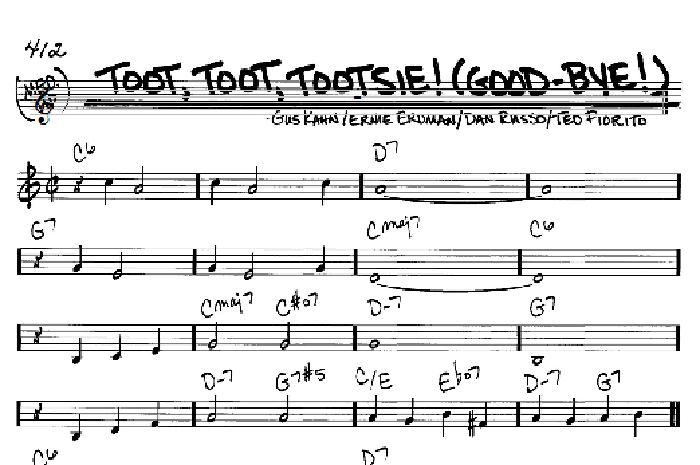
At one point Kaminsky’s unit gathered along a River. They were so close they could hear Jolson, BlackfaceGerman soldiers singing a beer hall song, from the other side. Kaminsky grabbed a bullhorn and serenaded the Germans back, singing them an old tune that Al Jolson used to perform in black face, “Toot Toot Tootsie, Goodbye”.  Polite applause could be heard from across the river, afterward. I can’t imagine many Allied soldiers ever tried to serenade their Nazi adversaries during World War II.  The ones who actually pulled it off must number, precisely, one.
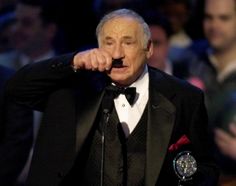
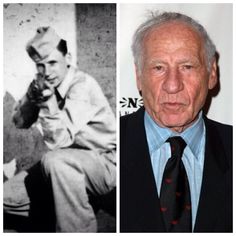
Kaminski went into show business after the war, playing drums and piano in the Borscht Belt resorts and nightclubs of the Catskills. It was around this time that he took his professional name, adopting his mother’s maiden name of Brookman and calling himself “Mel Brooks”.

Brooks started doing stand-up, when the regular comedian at one of the clubs was too sick to perform. By ’49 he was “Tummler”, the master entertainer at Grossinger’s, one of the most famous resorts in the Borscht Belt.  He was making $50 a week writing for his buddy Sid Caesar and his NBC “The Admiral Broadway Review”.Mel Brooks

In 1968, Mel Brooks wrote and produced the satirical comedy film “The Producers”, about a theatrical producer and an accountant who set out to fleece their investors. The scheme was to do a play so bad that it was sure to flop on Broadway, then to abscond to Brazil with their money when the play closed. Problem was, the show turned out to be a hit. The fictional play is a musical, called “Springtime for Hitler”. Even before the age of suffocating PC, I don’t know many guys beside Mel Brooks, who could have gotten away with that one.Melvin Kaminsky, 2

There isn’t one of us who doesn’t know his work. From the 2,000 year old man with “over forty-two thousand children, and not one comes to visit me” to Blazing Saddles’ “Candygram for Mongo” (“Mongo likes candy”).

Brooks has risen to the top of his chosen profession, winning the coveted “EGOT”, an acronym for the entertainment industry’s four major awards, the Emmy, Grammy, Oscar and Tony. Only eleven others have ever risen to this level: Richard Rodgers, Helen Hayes, Rita Moreno, John Gielgud, Audrey Hepburn, Young FrankensteinMarvin Hamlisch, Jonathan Tunick, Mike Nichols, Whoopi Goldberg, Scott Rudin, and Robert Lopez.  As of this date, Brooks only needs another Oscar to be the first “Double EGOT” in history.

Melvin Kaminsky will be 92 in a couple of months. Last year, March 31, 2016, the Averhill Park K-12 School District in upstate New York kicked off a three day production of “Young Frankenstein”.  Let me know if you can think of another 92-year-old guy, who remains that current.  I can’t think of one.

March 27, 1912 Cherry Trees of the Potomac

While the future President Taft labored in the Philippines, Helen Herron Taft took up residence in Japan, where she came to appreciate the beauty of the native cherry trees.

Eliza_Ruhamah_Scidmore
Eliza Ruhamah Scidmore

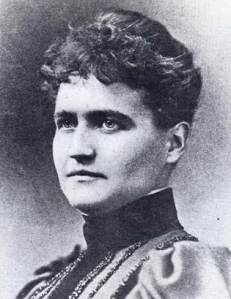
Eliza Scidmore was an American journalist, world traveler, author and socialite.  The first female board member of the National Geographic Society, her brother was a career diplomat, who served 38 years in the Asian Pacific. Frequent visits led to a passionate interest in all things Japanese, most especially the ‘Sakura’, the Japanese blossoming cherry tree, which she called “the most beautiful thing in the world”.

In January 1900, Federal judge William Howard Taft was summoned to Washington, to meet with the President. He hoped it was to discuss a Supreme Court appointment, but it wasn’t meant to be. One day judge Taft would get his wish, becoming the only man in United States history to serve both as President, and as Chief Justice of the Supreme Court. For now, the American war in the Philippines was ongoing. Taft would head up the commission to organize civilian self-government in the island nation.

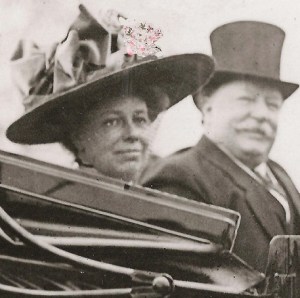
Helen & William Taft
1st Lady & President Taft

While the future President Taft labored in the Philippines, Helen Herron Taft took up residence in Japan, where she came to appreciate the beauty of the native cherry trees.

Years later the Japanese Consul in New York learned of the First Lady’s interest in the Sakura, and suggested the city of Tokyo make a gift of Cherry trees, to the government of the United States.

For Eliza Scidmore, it was a dream 34 years in the making.  It was she who raised the money to make it happen.

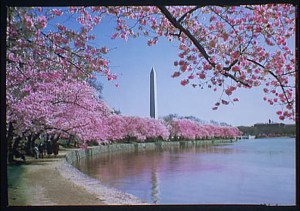
On March 27, 1912, the Viscountess Chinda, wife of the Japanese ambassador to the United States joined First Lady Helen Taft, in planting two Japanese Yoshina cherry trees on the bank of the Potomac River, near the Jefferson memorial. The two were planted in a formal ceremony, the first of 3,020 trees.Jefferson cherry trees

It was the second such effort. 2,000 trees had arrived from Japan two years earlier, in January 1910, but they had fallen prey to disease along their journey. A private Japanese citizen donated the funds to transport a new batch of trees. The 3,020 were taken from the bank of the Arakawa River in the Adachi Ward suburb of Tokyo, to be planted along the Potomac River Basin, East Potomac Park, and the White House grounds.

The blossoming trees were overwhelmingly popular with visitors to the Washington Mall. Inpotomac_blossoms 1934 city commissioners sponsored a three-day celebration of the late March blossoming cherry trees, which grew into the annual Cherry Blossom Festival.

During WWII, aerial bombardment laid waste to Tokyo and its surrounding suburbs. After the war, cuttings from the cherry trees of Washington were sent back to Japan, to restore the Tokyo collection.

It’s not clear to me, if the trees along the Arakawa River today are entirely from the Potomac collection, or some combination of American and native stock.  After the conflagration that was the war in the Pacific, I’m not sure it matters. It may even be the whole point.

Cherry Trees along the Arakawa

Cherry Trees along the Arakawa

March 24, 1944 Tom, Dick and Harry

Barracks were built on pilings to discourage tunneling, creating 24” of open space beneath the buildings. Seismic listening devices were placed around the camp’s perimeter. In the German mind, the place was the next best thing, to airtight. “Kriegies” didn’t see it that way.

Stalag Luft III in the province of Lower Silesia was a German POW camp, built to house captured Allied airmen.  The first “Kriegsgefangene” (POWs), arrived on March 21, 1942. The facility would grow to include 10,949 “kriegies”, comprising some 2,500 Royal Air force officers, 7,500 US Army Air officers, and about 900 from other Allied air forces.

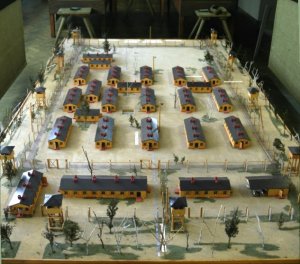
Barracks were built on pilings to discourage tunneling, creating 24” of open space beneath the buildings. Seismic listening devices were placed around the camp’s perimeter. In the German mind, the place was the next best thing, to airtight.

Model_Stalag_Luft_III
Model of the set used to film the movie The Great Escape

Kriegies didn’t see it that way, three of whom concocted a gymnastic vaulting horse out of wood from Red Cross packages.

A Trojan horse was more like it. Every day, the horse would be lugged out to the perimeter. Above ground, prisoners’ gymnastic exercises masked the sound, while underground, kriegies dug with bowls into the sand, using the horse itself to hide diggers, excavated soil and tools alike. Iron rods were used to poke air holes to the surface.  There was no shoring of the tunnel, except at the entrance.

Every evening for three months, plywood was placed back over the hole, and covered with the gray-brown dust of the prison yard.

On October 19, 1943, the three British officers made their escape.  Lieutenant Michael Codner and Flight Lieutenant Eric Williams reached the port of Stettin in the West Pomeranian capital of Poland, where they stowed away on a Danish ship. Flight Lieutenant Oliver Philpot boarded a train to Danzig, and stowed away on a ship bound for neutral Sweden. Eventually, all three made it back to England.

RAF Squadron Leader Roger Bushell was shot down and forced to crash land on his first engagement in May 1940, but not before taking two Messerschmitt Bf 110 fighters with him. Taken to the Dulag Luft near Frankfurt, Bushell formed an escape committee along with Fleet Air Arm pilot Jimmy Buckley, and Wing Commander Harry Day.

For POWs of officer rank, escape was the first duty.  Bushell escaped twice and almost made it, but each time his luck deserted him. By October, Roger Bushell found himself in the north compound of Stalag Luft III, where British officers were held.Harry

By the following spring, Bushell had concocted the most audacious escape plot in WWII history. “Everyone here in this room is living on borrowed time”, he said. “By rights we should all be dead! The only reason that God allowed us this extra ration of life is so we can make life hell for the Hun… In North Compound we are concentrating our efforts on completing and escaping through one master tunnel. No private-enterprise tunnels allowed. Three bloody deep, bloody long tunnels will be dug – Tom, Dick and Harry. One will succeed!”

The effort was unprecedented. Previous escape attempts had never involved more than twenty. Bushell, soon to be known by the code name “Big X” was proposing to get out with 200.

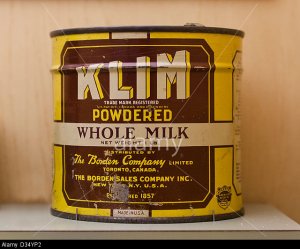
Civilian clothes had to be fashioned for every man.  Identification and travel documents forged. “Tom” began in a darkened hallway corner. “Harry’s entrance was hidden under a stove, “Dick”‘s entrance was concealed in a drainage sump.Vintage KLIM Powdered Whole Milk tin can - circa 1940

The Red Cross distributed high calorie, dehydrated whole-milk powder called “Klim” (“Spell it backwards”) throughout German POW camps. Klim tins were fashioned into tools, candle holders and vent stacks.  Fat was skimmed off soups and molded into candles, using threads from old clothing for wicks.

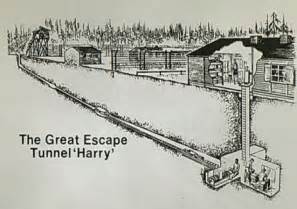
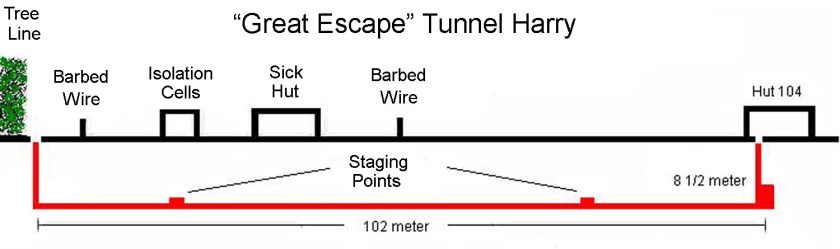
Six hundred prisoners were involved in the construction.  200 with sacks sewn under greatcoats made 25,000 trips into the prison yard, disposing of soil as Tom, Dick and Harry were excavated.  30′ down and only 2 ft. square, the three tunnels extended outward for a football field and more.

These “penguins” were running out of places to put all that soil, around the time the camp was expanded to include “Dick’s” originally planned exit point.  From that time forward, “Dick” was refilled from the other two.  “Tom” was discovered in September 1943, the 98th tunnel in the camp to be found out.

The escape was planned for the good weather of summer, but a Gestapo visit changed the timetable.  “Harry” was ready by March.   The “Great Escape” was scheduled for the next moonless night.  73 years ago – March 24,  1944.

Tunnel_Harry

Contrary to the Hollywood movie, no Americans were involved in the escape.  At that point none were left in camp.

The escape was doomed, almost from the start.  First the door was frozen shut, then a partial collapse had to be repaired.  The exit came up short of the tree line, further slowing the escape.  It was over when guards spotted #77 coming out of the ground.

German authorities were apoplectic on learning the scope of the project.  90 complete bunk beds had disappeared, along with 635 mattresses.  52 twenty-man tables were missing, as were 4,000 bed boards and an endless list of other objects. For the rest of the war, each bed was issued with only nine boards, and those were counted, regularly.

Gestapo members executed German workers who had not reported the disappearance of electrical wire.

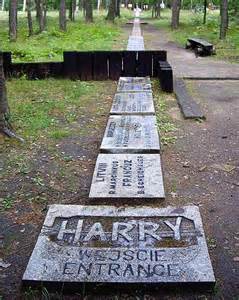
In the end, only three of the 76 made it to freedom:  two Norwegian and one Dutch pilot.  Hitler personally ordered the execution of the other 73, 50 of which were carried out.  Harry Entrance

General Arthur Nebe is believed to have personally selected the 50 for execution.  He was later involved with the July 20 plot to assassinate Adolf Hitler, and executed on March 21, 1945.  Roger “Big X” Bushell and his partner Bernard Scheidhauer were caught while waiting for a train at the Saarbrücken railway station.  They were murdered by members of the Gestapo on March 29, who were themselves tried and executed for war crimes, after the war.

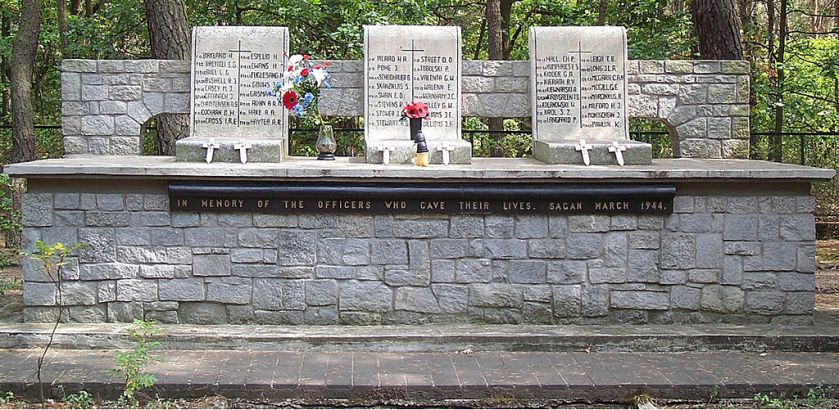
New camp Kommandant Oberst Franz Braune was horrified that so many escapees had been shot. Braune allowed those kriegies who remained to build a memorial, to which he personally contributed. Stalag Luft III is gone today, but that stone memorial to “The Fifty”, still stands.

Dick Churchill was an HP.52 bomber pilot and RAF Squadron Leader.  One of the 76 who escaped, Churchill was recaptured three days later, hiding in a hay loft.  In a 2014 interview, he said he was fairly certain he’d been passed over for execution, because his captors thought he might be related to Prime Minister Winston Churchill.  Today, Dick Churchill, age 97, is the only man among those 76, still left alive.The50Memorial

March 13, 1942 US Canine Corps

It’s K-9 Veteran’s Day. March 13, 2017. I could tell you no other story today, half as fitting as this.

The history of war dogs is as old as history itself.  The war-dogdogs of King Alyattes of Lydia killed some of his Cimmerian adversaries and routed the rest around 600BC, permanently driving the invader from Asia Minor in the earliest known use of war dogs in battle.
King Molossus of Epirus, grandson of the mighty Achilles, used a large, powerfully built breed specifically trained for battle. Today, “molosser” describes a body type more than any specific breed.  Modern molossers include the Mastiff, Bernese Mountain Dog, Newfoundland and Saint Bernard.

Ancient Greeks, Romans and Egyptians often used dogs as sentries or on patrol. In late antiquity, Xerxes I, the Persian King who faced the Spartan King Leonidas across the pass at Thermopylae, was accompanied by a pack of Indian hounds.

Attila the Hun went to war with a pack of hounds, as did the Spanish Conquistadors of the 1500s.

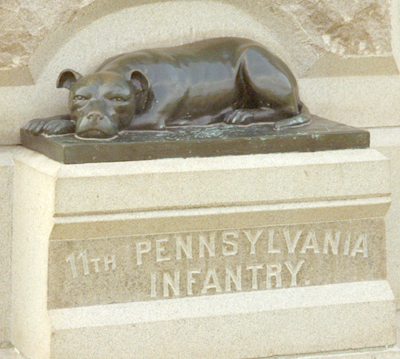
Sallie statue
Sallie’s likeness rests at the foot of a statue in Gettysburg, looking out for the spirits of “her boys” for all eternity

A Staffordshire Bull Terrier named Sallie “joined up” in 1861, serving the rest of the Civil War with the 11th Pennsylvania Volunteer Infantry.  At Cedar Mountain, Antietam, Fredericksburg, Chancellorsville, and Spotsylvania, Sallie would take her position alongside the colors, barking ferociously at the adversary.

Abraham Lincoln spotted Sallie from a reviewing stand in 1863, and tipped his hat.

Sallie was killed at Hatcher’s Run in February 1865.  Several of “her” men laid down their arms then and there to bury her, despite being under Confederate fire.

messengerdog
WWI Messenger Dog

Dogs performed a variety of roles in WWI, from ratters in the trenches, to sentries, scouts and runners. “Mercy” dogs were trained to seek out the wounded on the battlefield, carrying medical supplies with which the stricken could treat themselves.

Sometimes, these dogs simply provided the comfort of another living soul, so that the gravely wounded should not die alone.

By the end of the “Great War”, France, Great Britain and Belgium had at least 20,000 dogs on the battlefield, Imperial Germany over 30,000. Some sources report that over a million dogs served over the course of the war.

duncan-rin-tin-tin
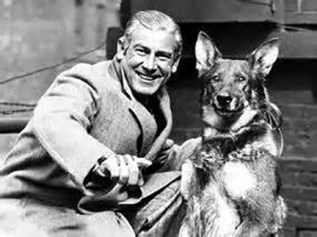
Lee Duncan & Rin Tin Tin

The famous Rin Tin Tin canine movie star of the 1920s was rescued as a puppy, from the bombed out remains of a German Army kennel, in 1917. (Read more about him, Here).

GHQ of the American Expeditionary Force recommended using dogs as sentries, messengers and draft animals in the spring of 1918, however the war was over before US forces put together any kind of a War Dog program.

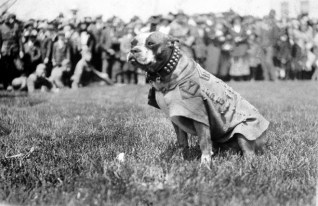
America’s first war dog, “Sgt. Stubby”, went “Over There” by accident, serving 18 months on the Western Front before coming home to a well-earned retirement.

sgt_stubby_5
Sgt. Stubby

On March 13, 1942, the Quartermaster Corps began training dogs for the US Army “K-9 Corps.” In the beginning, the owners of healthy dogs were encouraged to “loan” their dogs to the Quartermaster Corps, where they were trained for service with the Army, Navy, Marine Corps and Coast Guard.

The program initially accepted over 30 breeds of dog, but the list soon narrowed to German Shepherds, Belgian Sheep Dogs, Doberman Pinschers, Collies, Siberian Huskies, Malamutes and Eskimo Dogs.

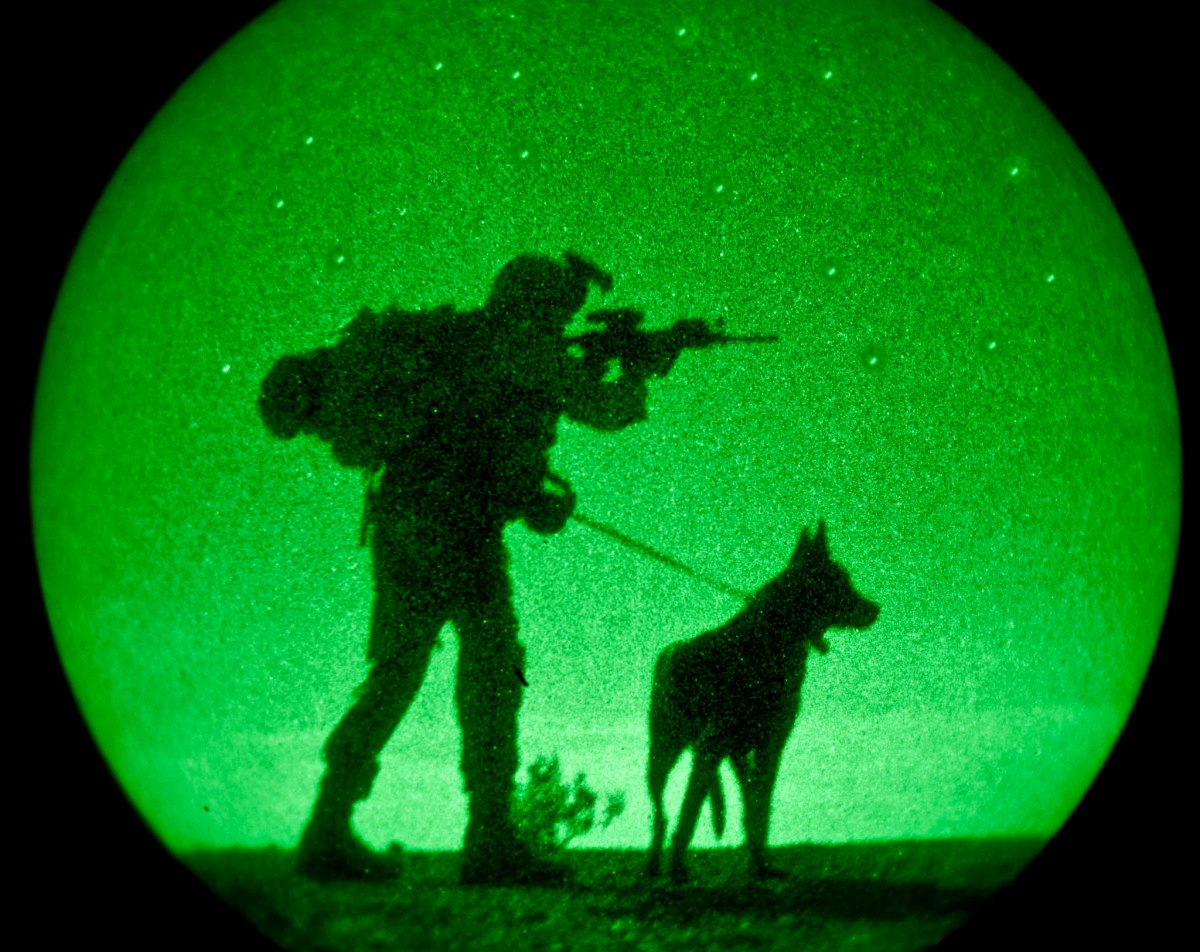
WWII-era Military Working Dogs (MWDs) served on sentry, scout and patrol missions, in addition to performing messenger and mine-detection work. The keen senses of scout dogs saved countless lives, by alerting to the approach of enemy forces, incoming fire, and hidden booby traps & mines.

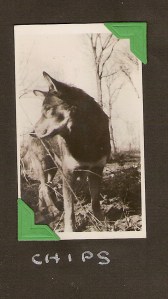
ChipsThe most famous MWD of WWII was “Chips”, a German Shepherd assigned to the 3rd Infantry Division in Italy. Trained as a sentry dog, Chips broke away from his handler and attacked an enemy machine gun nest. Wounded in the process, his singed fur demonstrated the point-blank fire with which the enemy fought back.  To no avail.  Chips single-handedly forced the surrender of the entire gun crew.
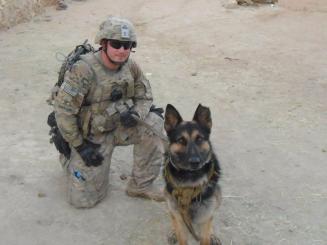
Chips was awarded the Distinguished Service Cross, Silver Star and Purple Heart, the honors later revoked due to an Army policy against the commendation of animals. It makes me wonder if the author of such a policy ever saw service beyond his own desk.

Of the 549 dogs who returned from service in WWII, all but four were able to return to civilian life.

Over 500 dogs died on the battlefields of Vietnam, of injuries, illnesses, and combat wounds. 10,000 servicemen served as dog handlers during the war, with an estimated 4,000 Military Working Dogs.  261 handlers paid the ultimate price.  K9 units are estimated to have saved over 10,000 human lives.

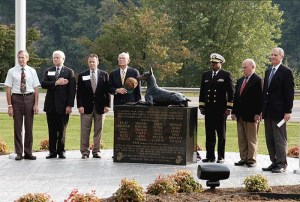
War dog memorial Univ. Tenn.
War dog memorial, University of Tennessee

It’s only a guess, but, having an MWD handler in the family, I believe I’m right:  hell would freeze before any handler walked away from his dog. The military bureaucracy, is another matter. The vast majority of MWDs were left behind during the Vietnam era. Only about 200 dogs survived the war to be assigned to other bases. The remaining dogs were either euthanized or left behind as “surplus equipment”.

In 2011, a Belgian Malinois named “Cairo” accompanied the Navy SEAL “Neptune Spear” operation that took out Osama bin Laden.

Today there are about 2,500 dogs in active service.  Approximately 700 deployed overseas. The American Humane Association estimates that each MWD saves an average 150-200 human lives over the course of its career.

Nate & Zino
Nate & Zino

NPR’s “Here & Now” broadcast an excellent segment out of their Boston affiliate WBUR in 2014, when our son-in-law Nate was reunited with “Zino”, the Tactical Explosives Detection Dog (TEDD) with whom he served in Afghanistan.

Their story ends well, but that isn’t always the case. Many have been left behind, no longer qualified to travel on military transport after being “retired” on foreign soil.

In 2015, Congressman Frank LoBiondo (R-NJ) and Senator Claire McCaskill (D-MO) introduced language in their respective bodies, mandating that MWDs be returned to American soil upon retirement, and that their handlers and/or handlers’ families be given first right of adoption.

LoBiondo’s & McCaskill’s language became law on November 25, when the President signed the 2016 National Defense Authorization Act (NDAA). It’s a small step in recognizing what we owe to those who have stepped up in defense of our nation, both two legged and four.

Boston’s NPR Station WBUR broadcast a segment on Nate & Zino’s reunion, if you’re interested in listening to it.  It’s a great story.

 http://hereandnow.wbur.org/2014/03/21/soldier-dog-reunion 

March 6, 1940 White Death

Dressed in white camouflage, the most deadly sniper in history would surround himself with hard-packed snow, his mouth filled with snow so no one would see his breath.

The Republic of Finland is a sovereign state in the north of Europe.  The 8th largest country on the European continent, with a population roughly equal to that of Minnesota. In 2015, the World Bank ranked the country 44th in GDP, behind Ireland, Chile and Pakistan.

finlandWith Sweden to the west and Russia to the east, the region has been a zone of conflict since the early 12th century, finally gaining independence as the result of the first World War and collapse of the Russian Empire.

In 1938, the Soviet Union demanded Finnish territory in exchange for land elsewhere, ostensibly as a security zone. Leningrad was at that time only 20 miles from the border. Finland refused, on November 30, 1939, 3 months after the outbreak of WWII, the Red Army invaded.

The “Winter War” is a David vs. Goliath story. The Soviets had three times as many troops, thirty times the number of aircraft, and a hundred times as many tanks. The Red Army officer corps, however, was dangerously inexperienced, with over 30,000 of its most experienced mid-level and senior officers imprisoned or executed following Josef Stalin’s “Great Purge” of 1937.

Expecting a short conflict, Soviet forces were poorly equipped for an extended winter war. Few if any possessed the white camouflage of the other side. For the Finnish side, morale was high, and Finnish forces inflicted far heavier casualties, than anyone had anticipated.

Simo “Simuna” Häyhä was a farmer and hunter, born in what was then the Grand Duchy of Finland, near the border with Russia. Häyhä enjoyed shooting competitions in Viipuri Province, and was quite good at it. It was said that his house was full of trophies. He joined the Finnish voluntary militia in 1925 at the age of 20. During the Winter War of 1939-40, Häyhä served as a sniper for the Finnish Army.

He was the “White Death”.  Over the 100 days of his wartime service, Simo Häyhä racked up 505 confirmed kills, more than any sniper in history. Many of his kills went unconfirmed. The true count is probably closer to 800. An average of eight per day, in a place where December daylight hours number no more than six.

simo_hayha_honorary_rifleThe Battle of Kollaa took place in temperatures ranging from −4° to −40°, Fahrenheit. In February, the temperature averages only 18.5°. Dressed in white camouflage, Häyhä would surround himself with hard-packed snow, his mouth filled with snow so no one would see his breath.

At 5’3″, he liked the shorter, White Guard version of the five shot, bolt action Mosin–Nagant, because it fit his small frame. He preferred the open “Pystykorva” or “Spitz” sight, so-called because of its resemblance to a Spitz dog. It made for a smaller target, as a shooter must raise his head ever so slightly higher, when using a telescopic sight.

The Red Army was desperate to kill this man. Russian counter-snipers and entire artillery barrages were sent to take him out. On March 6, 1940, Häyhä was hit on the left side of his jaw, by a high-explosive incendiary/armor-piercing (HEIAP) round, fired by a Russian soldier. The damage was catastrophic. Soldiers who went to pick him up, said “half his face was missing”. He regained consciousness eight days later, the day that peace was declared.

The bullet had crushed his jaw and taken away his left cheek, but he did not die. It wouldsimo_hayha_second_lieutenant_1940 take several years to recover from his wound, but Häyhä went on to become a successful dog breeder and moose hunter, once hunting with Finnish President Urho Kekkonen.

Häyhä passed away in a war veterans’ nursing home in Hamina in 2002, at the age of 96.  In 1998, someone asked how he became such a good shot. He answered “Practice.”  He must have been a man of few words.

To this day, Simo Häyhä remains the most successful sniper in history, with a confirmed kill rate three times that of Chris Kyle, and five times that of Carlos Hathcock. Asked if he regretted killing so many people, he replied “I only did my duty, and what I was told to do, as well as I could.”